Syowa sword Nagamitsu saku(Jailer Nagamitsu) with Marines (Japanese Navy) three types Gunto Koshirae.
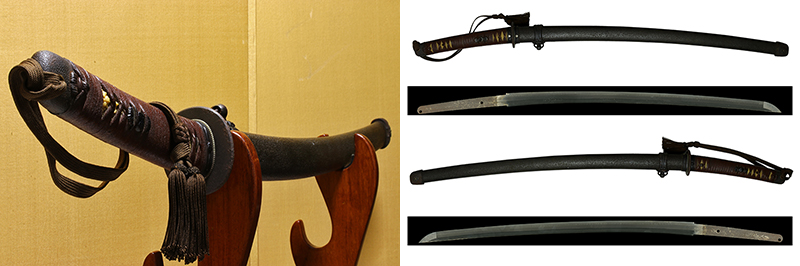
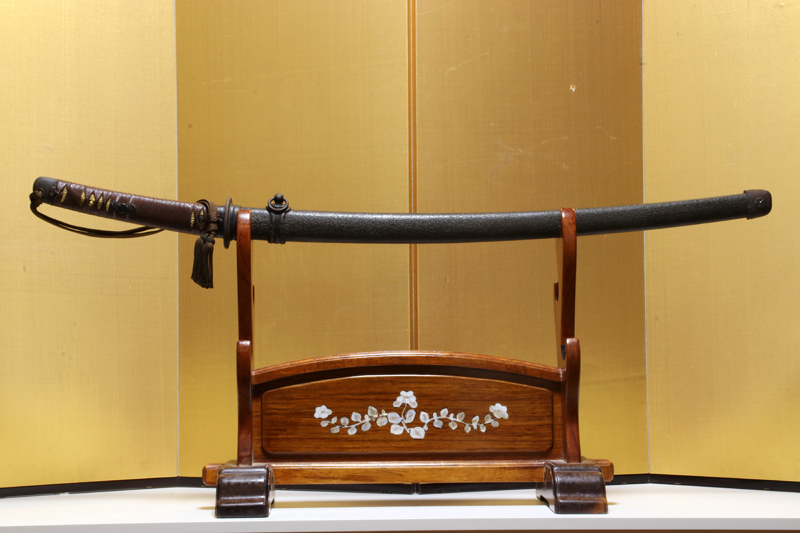
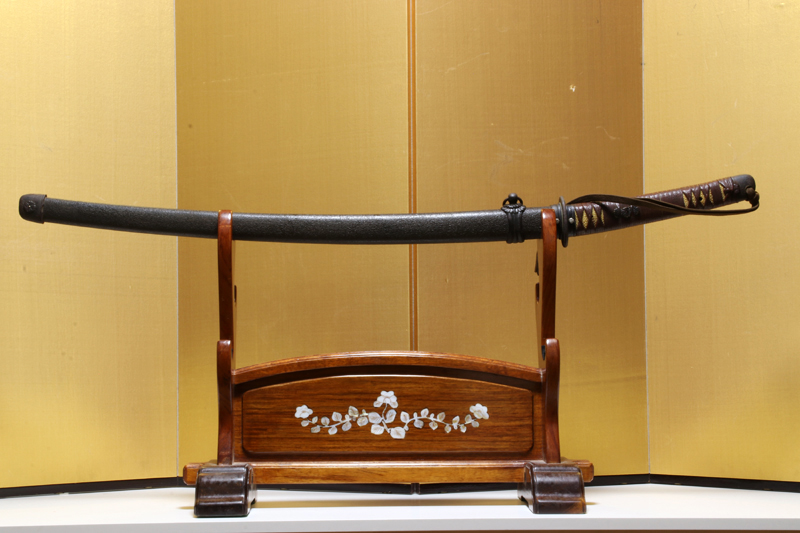
This is a Jailer Nagamitsu sword housed in a San-shiki Gunto Koshirae in good condition.
The polish is the original from the Great War and is cloudy, but it is a valuable item.
Military sword collectors, please do not miss this opportunity!
This is a Jailer Nagamitsu sword in a good condition three types Gunto Koshirae.
The blade is cloudy due to original WWII polishing, but is valuable.
If you are a military sword collector, don’t miss this opportunity!
「Taihai style」
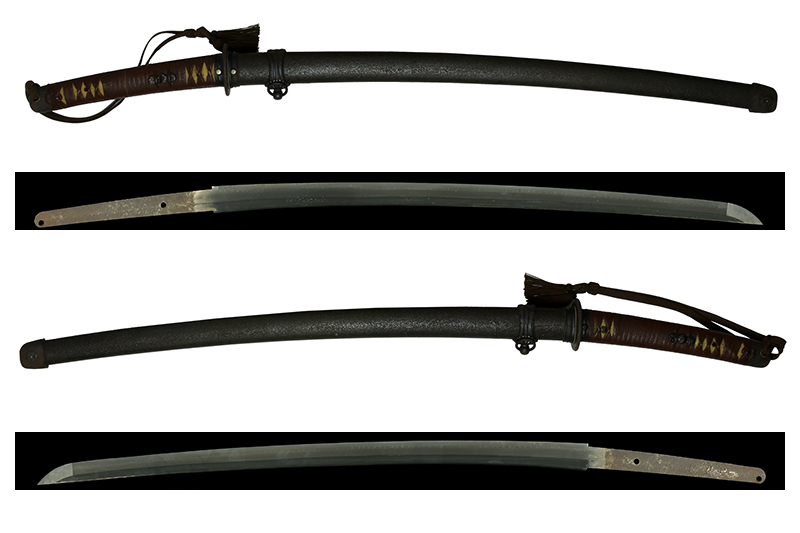
The taihai is shinogi-zukuri, iori-mune, the mihaba is normal, the kasane is slightly thick, koshi-zori, and chu-kissaki. The nakago is ubu, the yasurime is kiri, and the nakago-jiri is kuri-jiri.
「Jigane」
The jigane is well-forged itame-hada with ji-nie.
「Hamon」
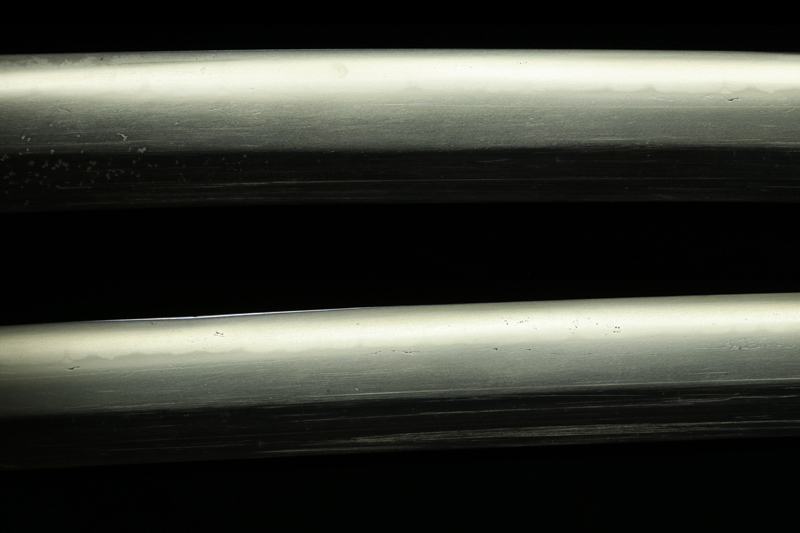
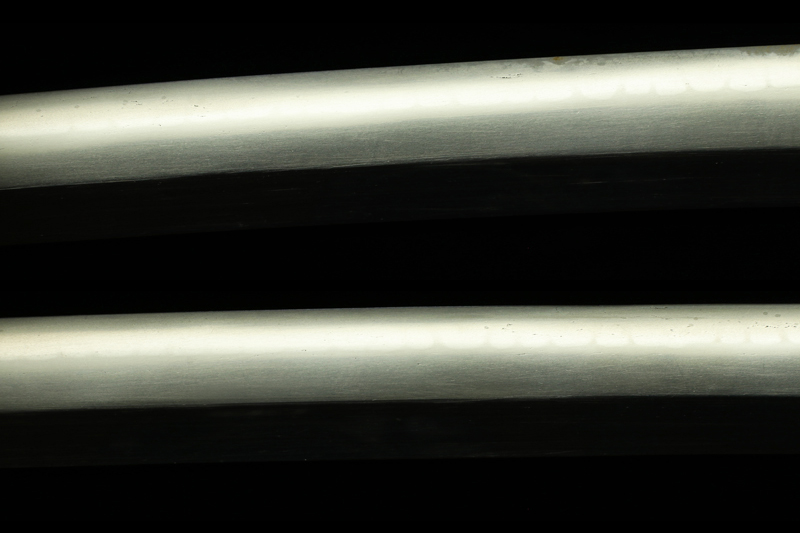
The hamon is a small choji resembling a juzu-ba with good ashi, and there are yo in the ha. The boshi is midare-komi and turns back in a ko-maru.
「Detailed」
Nagamitsu, Ichihara Nagamitsu, go is Ichiryushi, an army-commissioned swordsmith, also called "Kangoku Nagamitsu" (Jailer Nagamitsu) because he also forged swords at the training facility inside the Okayama prison. Selected for the Showa 19 Army Gunto Technical Encouragement Association. Famous as a strong sword for kabutowari test cutting.
This work is a Nagamitsu in an ubu San-shiki Gunto Koshirae, and the condition of the koshirae is also good. The tososhin remains in its wartime polish, but there is only a slight amount of light rust.
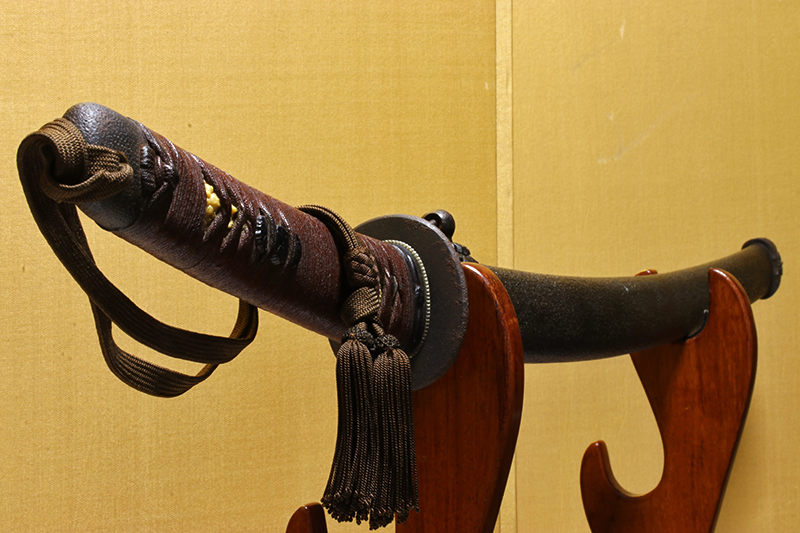
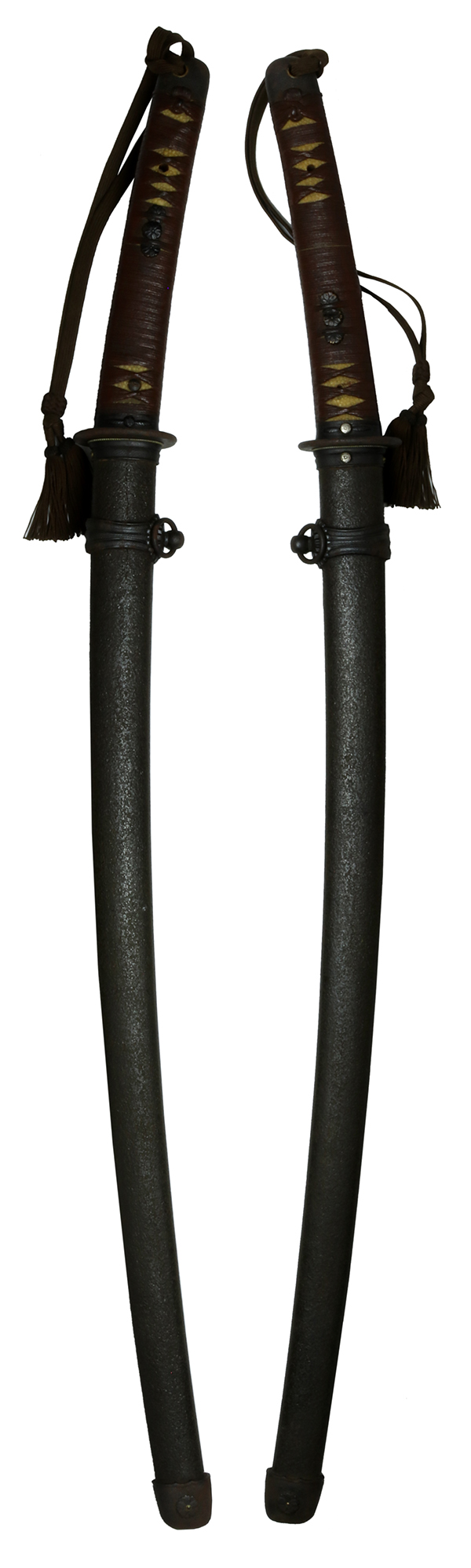
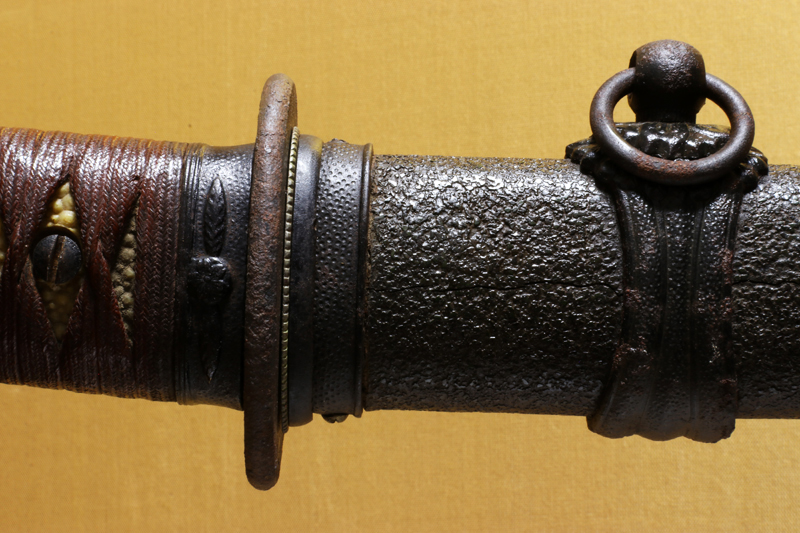
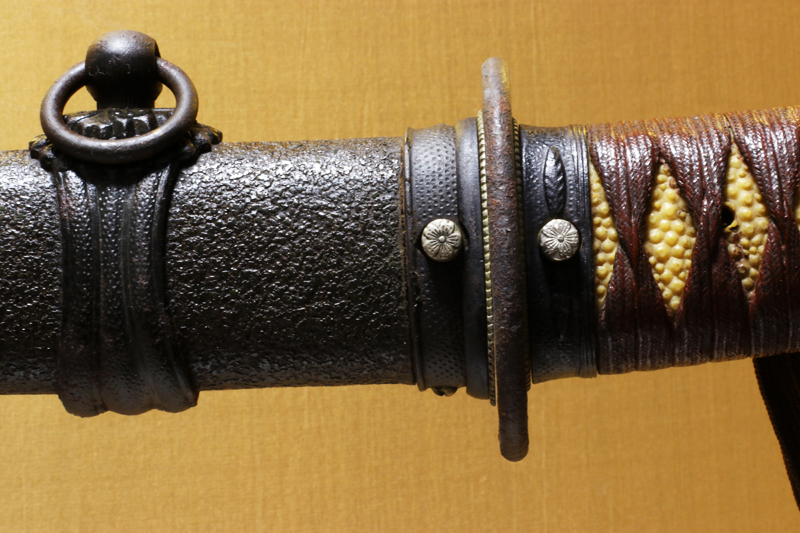
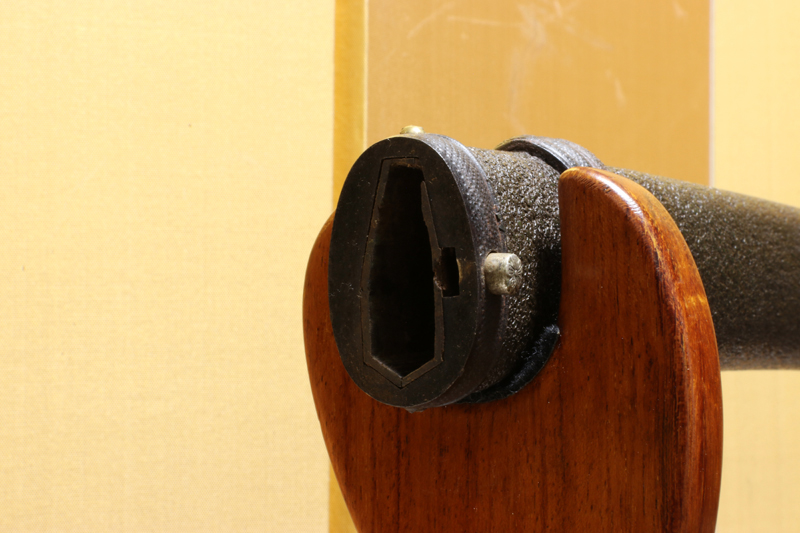
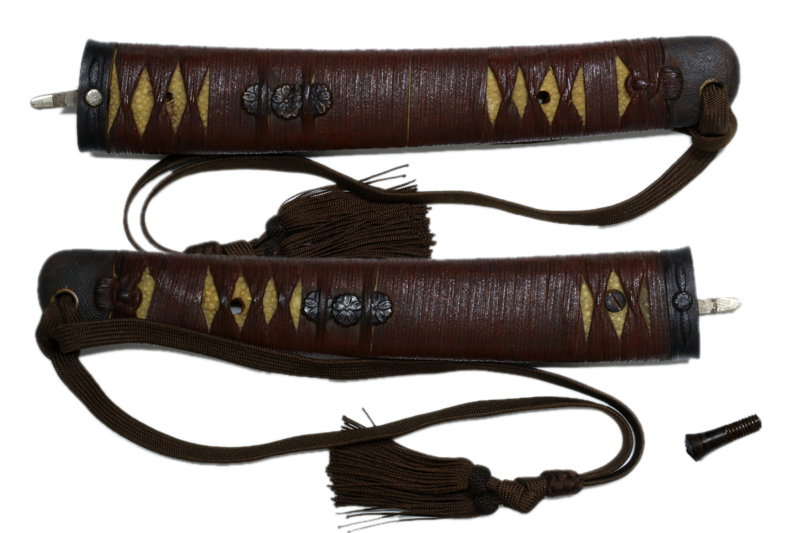
The San-shiki Gunto Koshirae comes with a sword knot for a Navy Marine officer (the San-shiki Gunto was used by the Navy Marines while remaining in Army specifications), and genuine ray skin is used instead of celluloid. The mekugi near the fuchi is the original screw type, and the chuzume clicks into place. Also, there is a dust cover that fits into the koiguchi of the saya, which is also rare.
A San-shiki Gunto by Nagamitsu in good condition is rare and very valuable, so please do not miss this opportunity to acquire it.
「Koshirae」
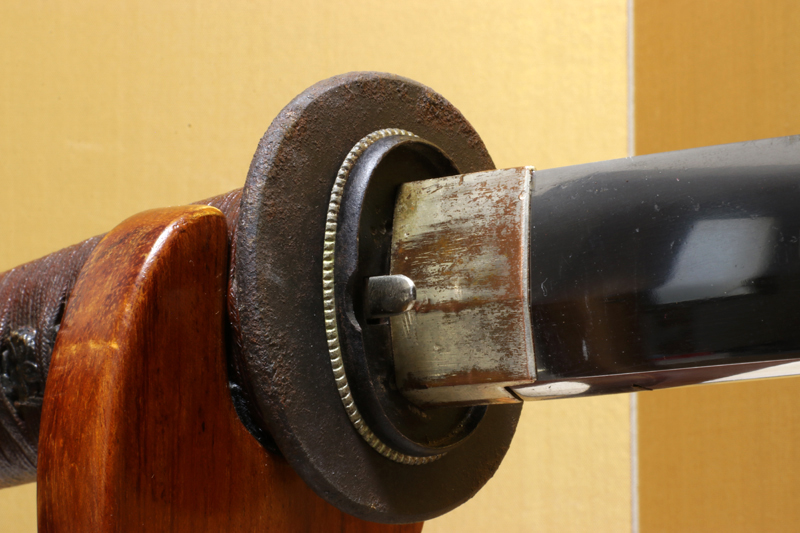
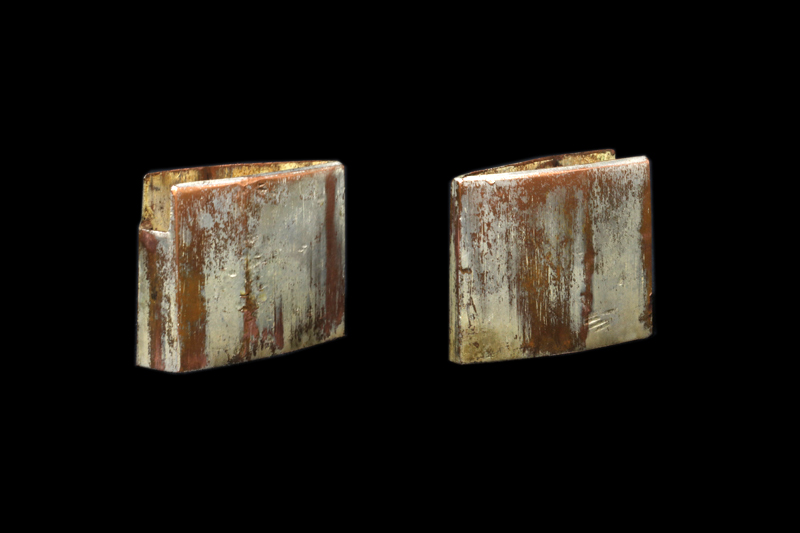
Habaki: Suaka silver-plated single-piece tachi-habaki.
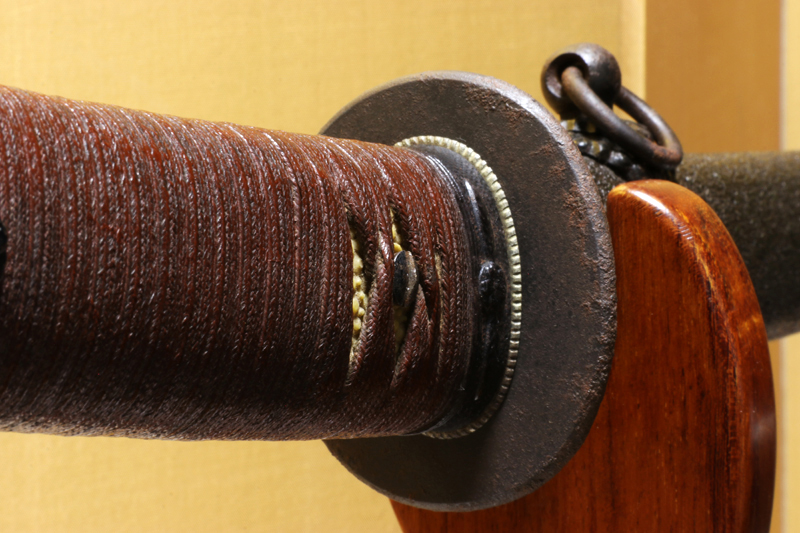
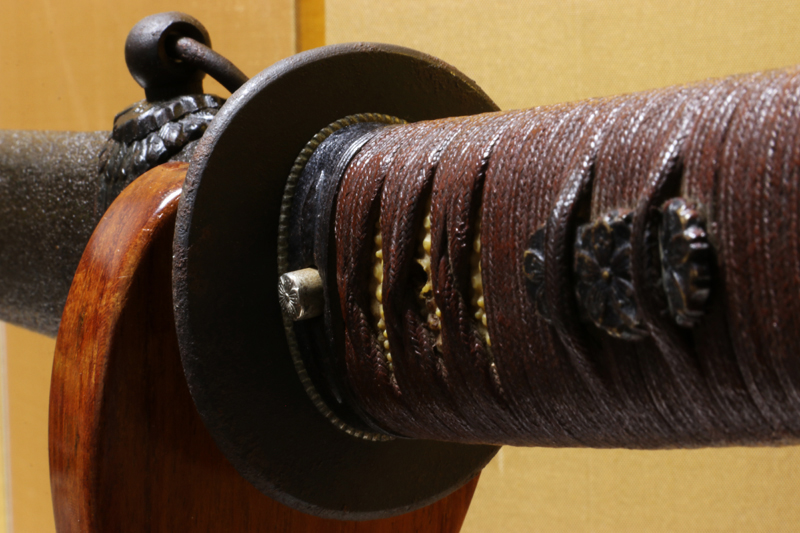
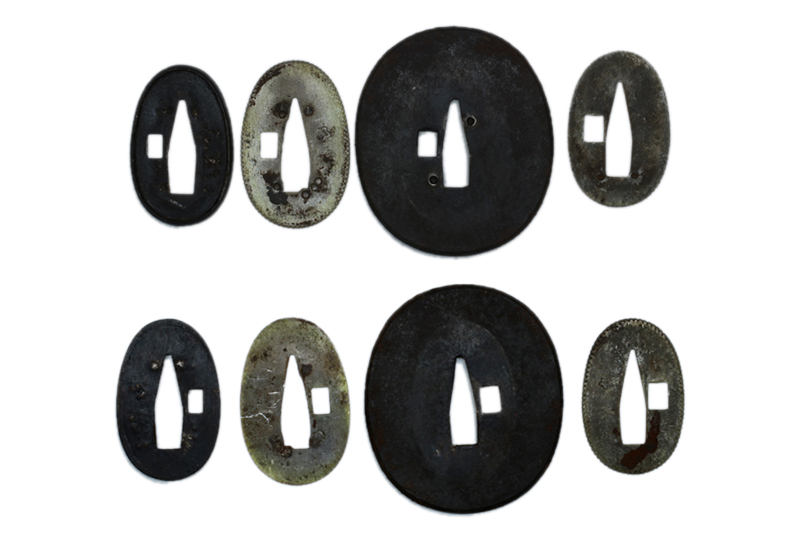
Tsuba: Iron tsuba for San-shiki Gunto.
FuchiKashira: Iron fuchi-kashira for San-shiki Gunto.
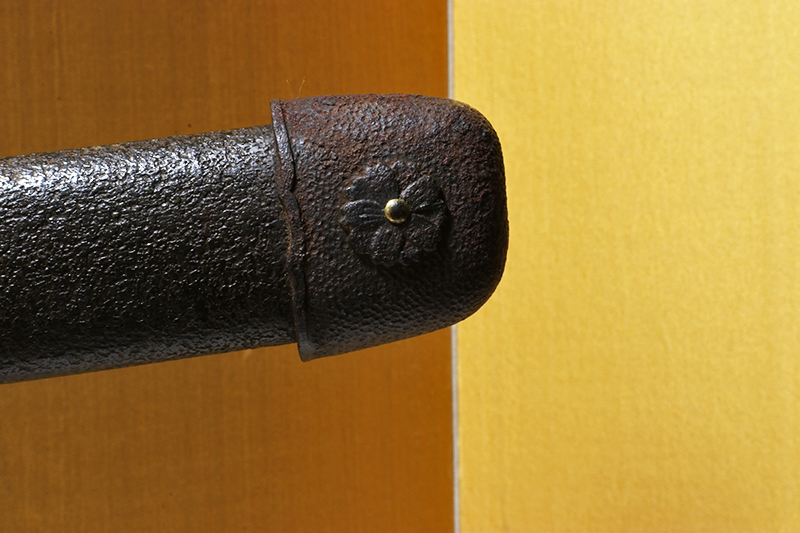
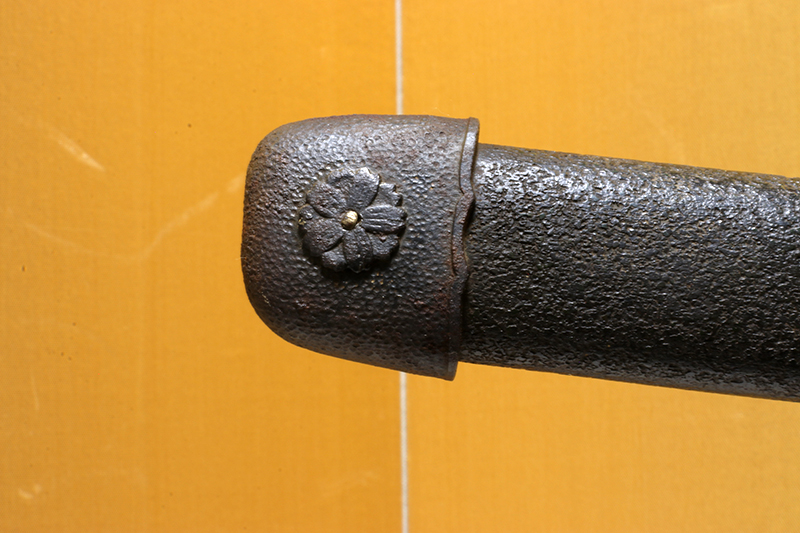
Kojiri: Iron kojiri for San-shiki Gunto, with a chrysanthemum crest and gold zogan in the center.
Menuki: Iron triple cherry blossom.
Tsuka: Wrapped in genuine ray skin, the tsukamaki is cotton thread in ikkan-maki style and coated with lacquer.
Saya: Dark brown rough ishime.
「Condition of blade」
Polishing: Due to the Great War era polish, the entire blade is cloudy, and there is a little light rust.
Scratches: There are no scratches that would be considered defects.
Machine translation from the shop's Japanese · may contain errors ·
Syowa sword Nagamitsu saku(Jailer Nagamitsu) with Marines (Japanese Navy) three types Gunto Koshirae.
This is a Jailer Nagamitsu sword housed in a San-shiki Gunto Koshirae in good condition.
The polish is the original from the Great War and is cloudy, but it is a valuable item.
Military sword collectors, please do not miss this opportunity!
This is a Jailer Nagamitsu sword in a good condition three types Gunto Koshirae.
The blade is cloudy due to original WWII polishing, but is valuable.
If you are a military sword collector, don’t miss this opportunity!
「Taihai style」
The taihai is shinogi-zukuri, iori-mune, the mihaba is normal, the kasane is slightly thick, koshi-zori, and chu-kissaki. The nakago is ubu, the yasurime is kiri, and the nakago-jiri is kuri-jiri.
「Jigane」
The jigane is well-forged itame-hada with ji-nie.
「Hamon」
The hamon is a small choji resembling a juzu-ba with good ashi, and there are yo in the ha. The boshi is midare-komi and turns back in a ko-maru.
「Detailed」
Nagamitsu, Ichihara Nagamitsu, go is Ichiryushi, an army-commissioned swordsmith, also called "Kangoku Nagamitsu" (Jailer Nagamitsu) because he also forged swords at the training facility inside the Okayama prison. Selected for the Showa 19 Army Gunto Technical Encouragement Association. Famous as a strong sword for kabutowari test cutting.
This work is a Nagamitsu in an ubu San-shiki Gunto Koshirae, and the condition of the koshirae is also good. The tososhin remains in its wartime polish, but there is only a slight amount of light rust.
The San-shiki Gunto Koshirae comes with a sword knot for a Navy Marine officer (the San-shiki Gunto was used by the Navy Marines while remaining in Army specifications), and genuine ray skin is used instead of celluloid. The mekugi near the fuchi is the original screw type, and the chuzume clicks into place. Also, there is a dust cover that fits into the koiguchi of the saya, which is also rare.
A San-shiki Gunto by Nagamitsu in good condition is rare and very valuable, so please do not miss this opportunity to acquire it.
「Koshirae」
Habaki: Suaka silver-plated single-piece tachi-habaki.
Tsuba: Iron tsuba for San-shiki Gunto.
FuchiKashira: Iron fuchi-kashira for San-shiki Gunto.
Kojiri: Iron kojiri for San-shiki Gunto, with a chrysanthemum crest and gold zogan in the center.
Menuki: Iron triple cherry blossom.
Tsuka: Wrapped in genuine ray skin, the tsukamaki is cotton thread in ikkan-maki style and coated with lacquer.
Saya: Dark brown rough ishime.
「Condition of blade」
Polishing: Due to the Great War era polish, the entire blade is cloudy, and there is a little light rust.
Scratches: There are no scratches that would be considered defects.
The twentieth century nearly killed the craft twice: wartime distortion, then the occupation ban. The NBTHK’s founding in 1948 and licensed forging from 1953 rebuilt the sword as an art, crowned by Living National Treasures and the mukansa rank.
Within 3 days of the item's arrival, we offer a refund or an exchange. Return shipping and the bank transfer fee for the refund are at the customer's expense.


 NihontoWatch