Modern Japan made the sword an exile, then an artwork: the 1876 Haitōrei ended sword wearing, the postwar ban nearly ended the craft, and the revival built on the NBTHK’s founding in 1948 remade it as a licensed art.
 NihontoWatchNihontoWatch
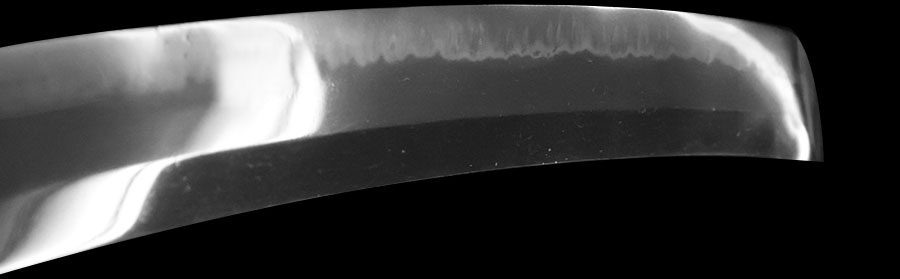
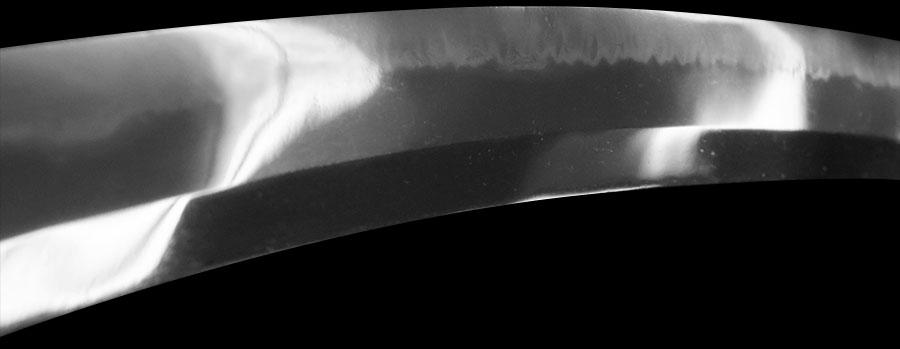
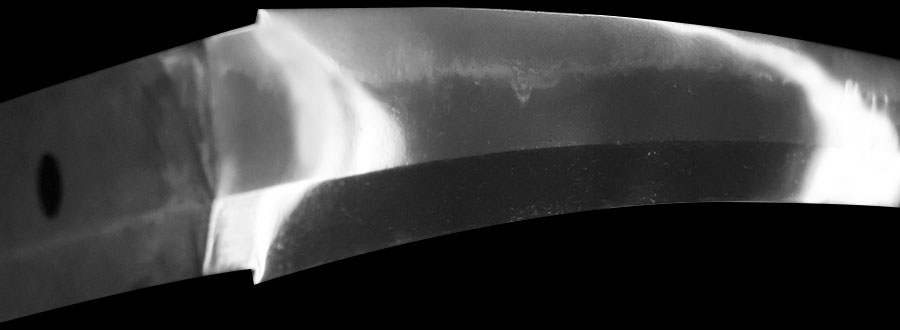
It has appeared, it has appeared, a masterwork by Ichihara Nagamitsu forged in a truly authentic manner has appeared. This sword is a work by the famous Ichihara Ichiryushi Nagamitsu from the Taisho to Showa eras. Ichiryushi Nagamitsu was the warden of Okayama Prison, and within a single generation, he established a large sword forging facility inside Okayama Prison, devoting himself to the production of swords and sending many masterpieces out into the world. It is said that the warden's personality was bold and cheerful, captivating everyone he met with his charm. This sword exhibits a sugata suitable for the one-handed katatenuchi style of Sue-Bizen, with a difference between the moto-mihaba and saki-mihaba; the jigane is forged in itame hada with mokume hada appearing in the ji and ha, showing a powerful jigane; the hamon is gunome-choji in nioi-deki with konie, containing many gunome-choji ashi, and is a magnificent sword with a wonderfully bright and well-tempered edge from the moto to the saki, displaying a very high level of skill. Ichihara Ichiryushi Nagamitsu is a highly popular swordsmith for the fact that his blades cut wonderfully well, but his extant works are few, and he is such a popular smith that any available work sells immediately. As this has appeared in the world for the first time, it is offered at a specially low price. Please cherish and pass down this wonderful masterwork by Ichihara Nagamitsu to future generations.
NihontoWatchOffered by Nipponto













Machine translation of the shop's Japanese ·
Machine translation from the shop's Japanese · may contain errors ·
Okayama · around 1926-1989
2 pieces on the market now
The modern era (1868 to today)
Modern Japan made the sword an exile, then an artwork: the 1876 Haitōrei ended sword wearing, the postwar ban nearly ended the craft, and the revival built on the NBTHK’s founding in 1948 remade it as a licensed art.
We could not find an authenticity certificate on the seller’s listing. Japanese swords and fittings are normally papered by the NBTHK (or the NTHK). Without one, the attribution is the seller’s own assessment and has not been independently verified — treat it with caution and ask the dealer about certification before buying.
For returns due to customer circumstances, the cost is the customer's responsibility. For returns due to our mis-shipment or a defective item, we bear the cost.
¥280,000