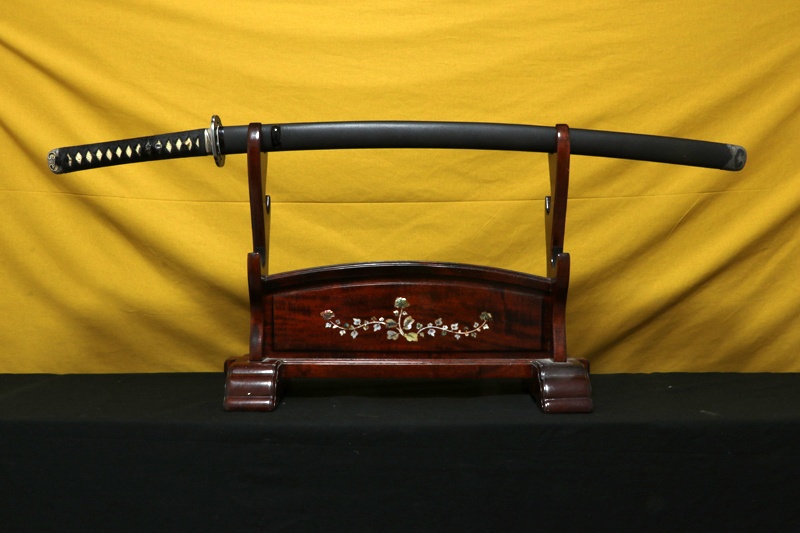
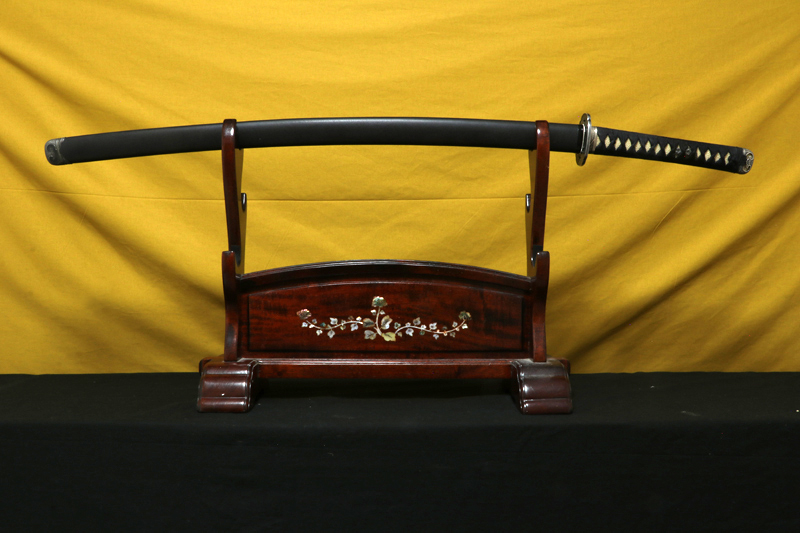
Modern sword Chikusyu ju Kunitada saku with Koshirae.
This is a work by Chikusyu ju Kunitada, a master swordsmith of the historic Omuta Shiro Kunimitsu lineage.
As this piece is believed to be a product made by Noshudo, the quality of the koshirae is high; furthermore, the weight of the blade is light and the hi is deep and well-balanced, making it ideal for Iai.
This sword is a product made by Noshudo, so, Koshirae has high quality,
The weight of the blade is light and the HI is deep and well balanced, so perfect for Iai-do.
"sword figure"
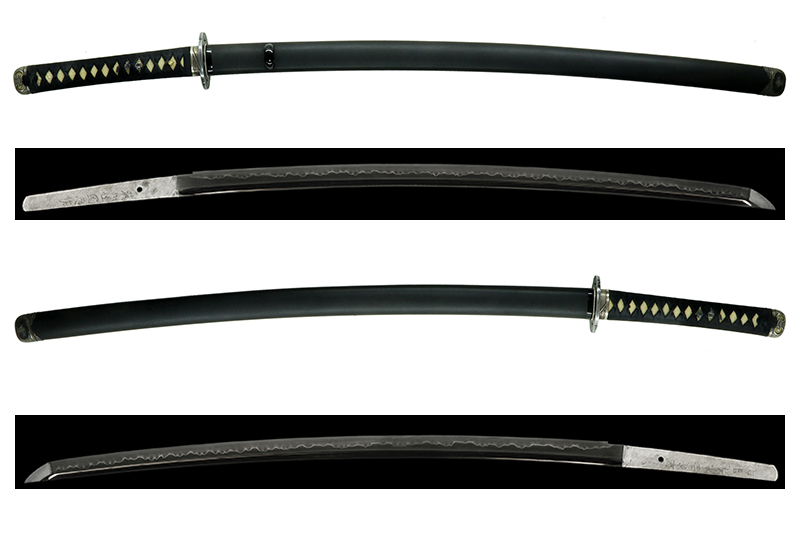
The taihai is shinogi-zukuri, iori-mune, with ordinary mihaba and kasane, and a torii-zori with an extended chu-kissaki. The nakago is ubu with sujikai yasurime, and the nakago-jiri is ha-agari kurijiri.
"carving"
The carvings consist of bo-hi with kaki-nagashi below the habaki and kata-chiri on both sides.
"jigane"
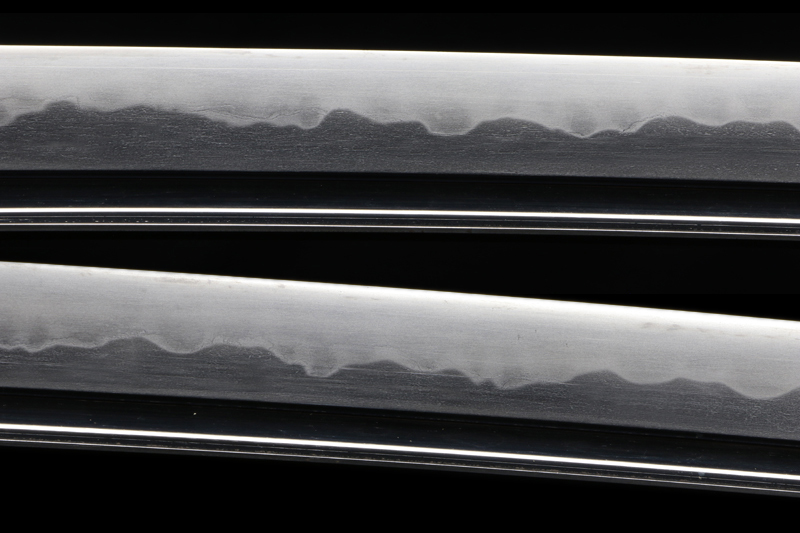
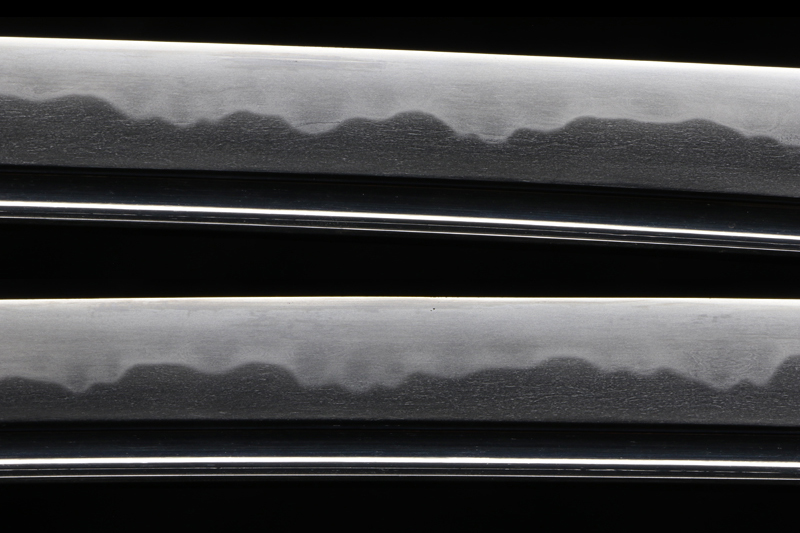
The jigane is flowing ko-itame with thick ji-nie.
"hamon"
The hamon is gunome choji midare with many ashi. Within the ha, kinsuji are intertwined. The boshi is midare-komi, returning in ko-maru.
"detailed"
Chikusyu ju Kunitada, who also signs his mei as Miike ju Kunitada saku, has the real name Komiya Yokimitsu. He resides in Omuta-shi, Fukuoka-ken, and is the eldest son of the swordsmith Komiya Kuniharu and the uncle of the swordsmith Kuniten. He has a history of numerous prizes in the Shinsakuto-ten.
Because this piece is a Noshudo product, the weight is light, the hi is deep with a pleasant hi-nari sound, and the balance in the hand is superb. It can be used for Iai immediately after purchase.
"Koshirae"
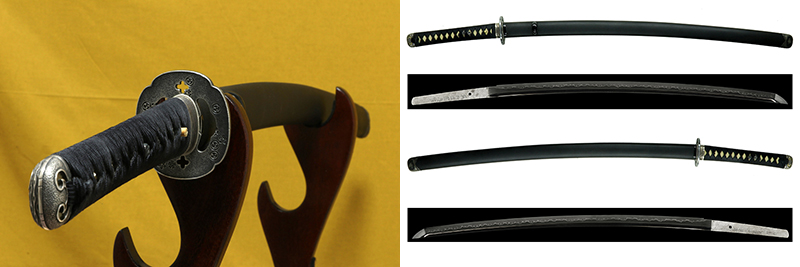
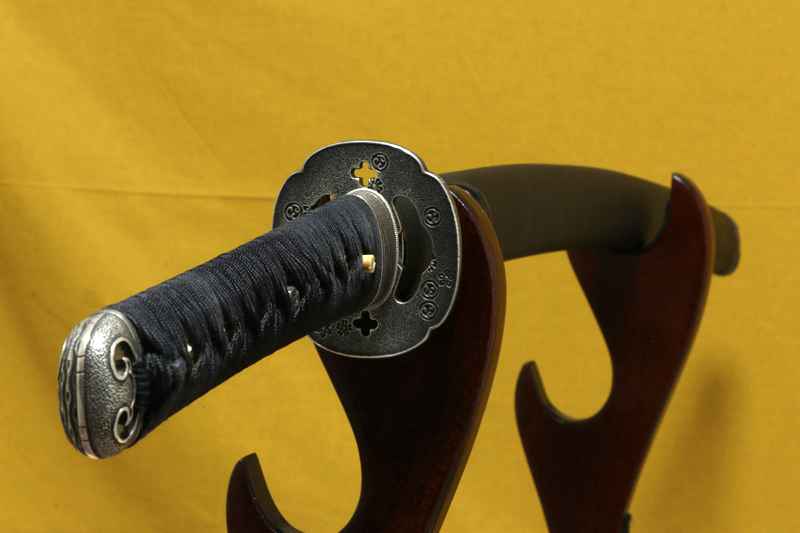
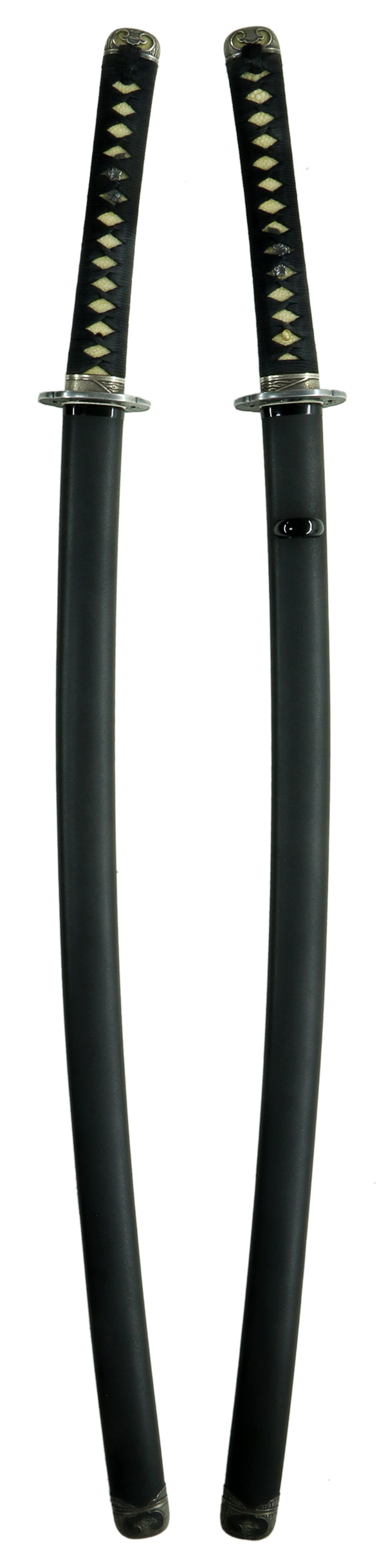
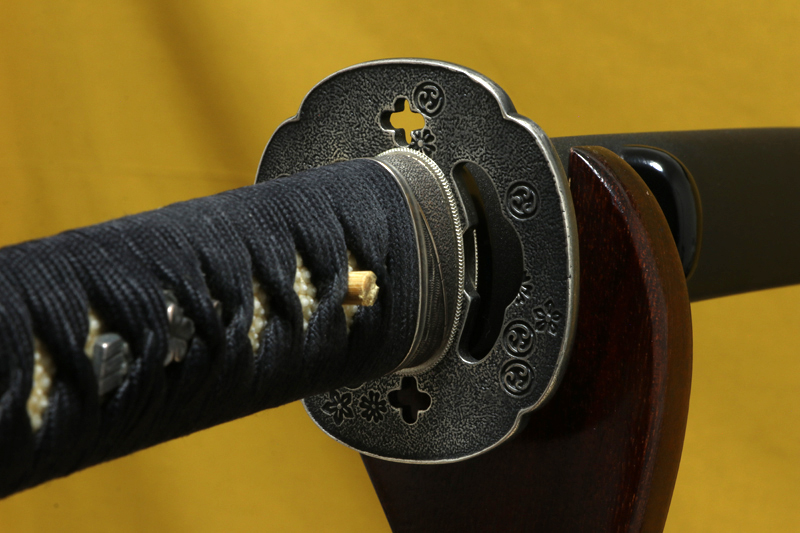
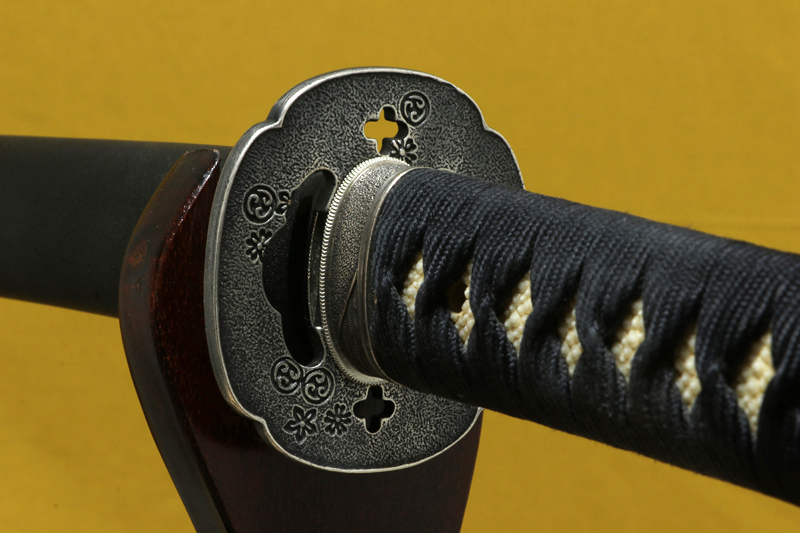
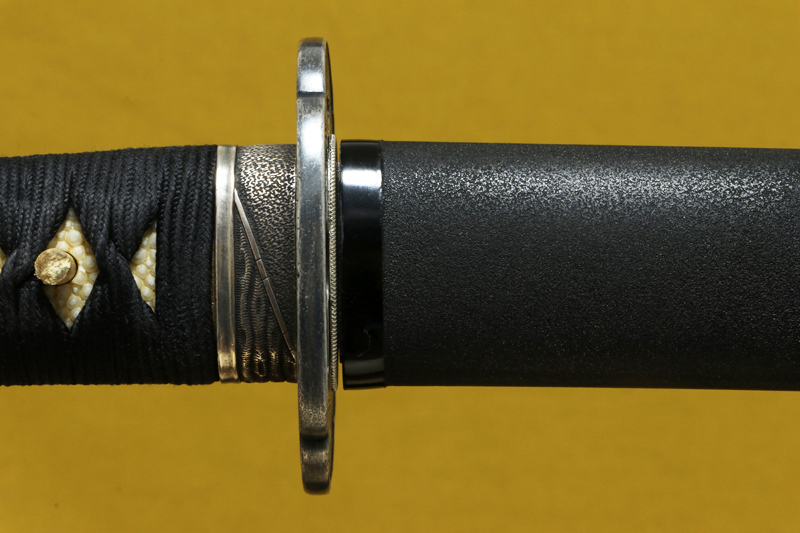
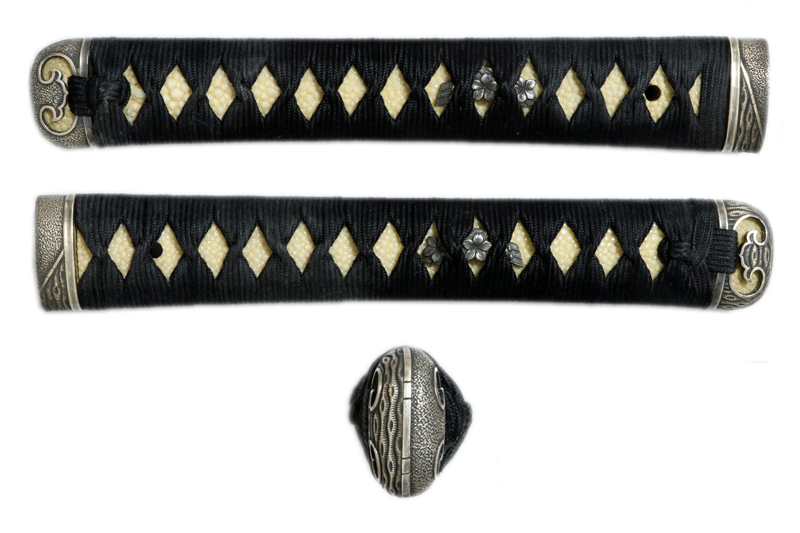
As it is a Noshudo koshirae, the kanagu are all Noshudo products, and the fuchi-kashira, kojiri, and menuki are solid silver. Additionally, it is believed that a bakelite reinforcement of about 10cm has been inserted on the ha side of the koiguchi of the saya.
Also, the samegawa of the tsuka is maki-same, but it is joined in a place that cannot be seen. The condition of the koshirae is good with very little signs of use.
habaki: Solid silver single-piece koshi-yujo.
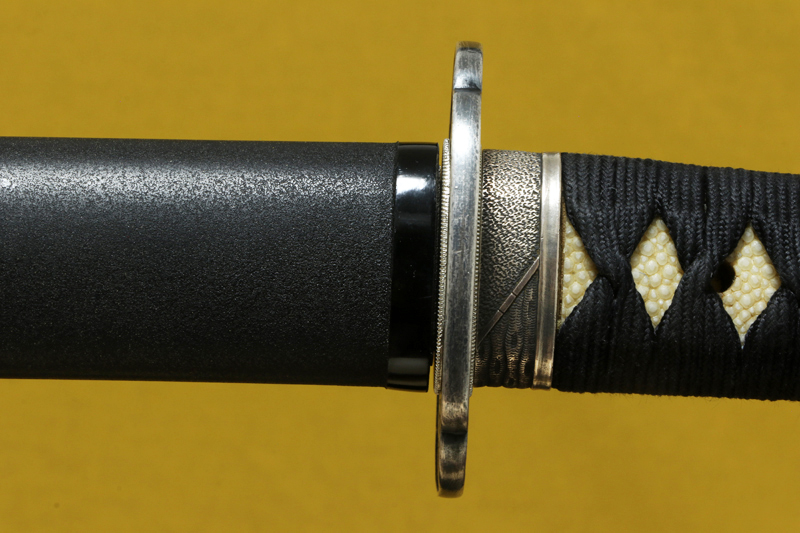
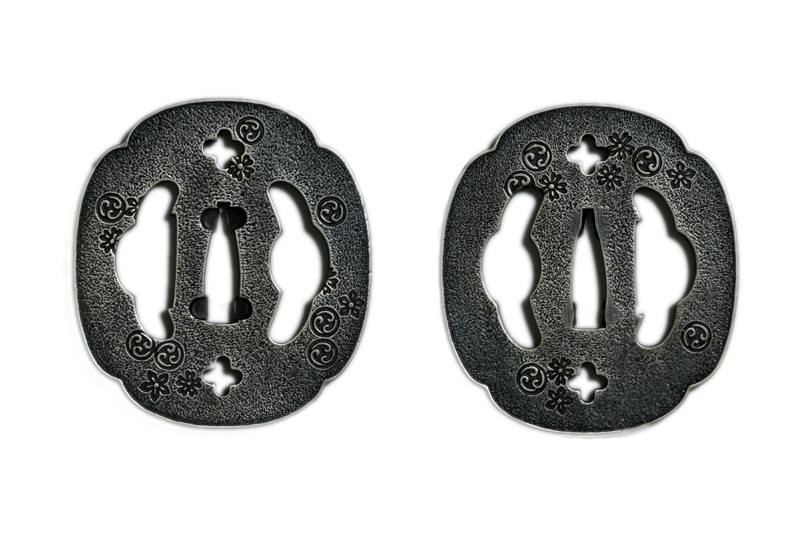
tsuba: Iron mokko-gata Awa (made by Noshudo).
fuchi-kashira: Solid silver Awa (made by Noshudo).
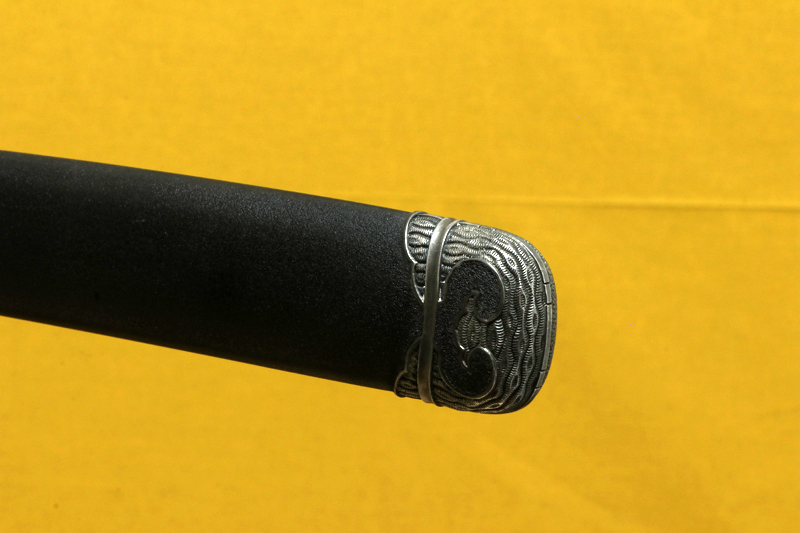
kojiri: Solid silver Awa (made by Noshudo).
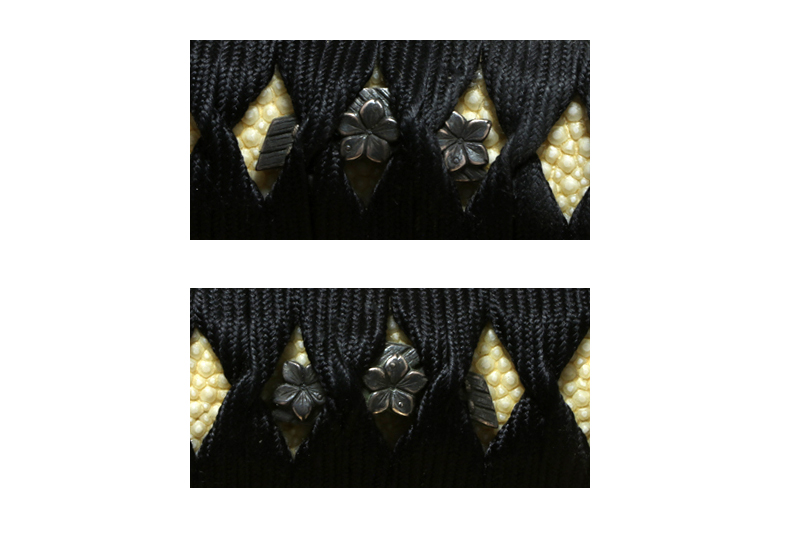
menuki: Solid silver with a design of hana-ikada (made by Noshudo).
tsuka: Same has an oya-tsubu and is maki-same; the tsuka-ito is black pure silk moro-tsunagi-maki.
saya: Kuro-ishime saya.
"condition of blade"
Togi: As it is believed to have been used for Iai, there are some hike, but there is no rust and it is in good condition.
Kizu: There are no kizu that would constitute a defect.
Machine translation from the shop's Japanese · may contain errors ·
Modern sword Chikusyu ju Kunitada saku with Koshirae.
This is a work by Chikusyu ju Kunitada, a master swordsmith of the historic Omuta Shiro Kunimitsu lineage.
As this piece is believed to be a product made by Noshudo, the quality of the koshirae is high; furthermore, the weight of the blade is light and the hi is deep and well-balanced, making it ideal for Iai.
This sword is a product made by Noshudo, so, Koshirae has high quality,
The weight of the blade is light and the HI is deep and well balanced, so perfect for Iai-do.
"sword figure"
The taihai is shinogi-zukuri, iori-mune, with ordinary mihaba and kasane, and a torii-zori with an extended chu-kissaki. The nakago is ubu with sujikai yasurime, and the nakago-jiri is ha-agari kurijiri.
"carving"
The carvings consist of bo-hi with kaki-nagashi below the habaki and kata-chiri on both sides.
"jigane"
The jigane is flowing ko-itame with thick ji-nie.
"hamon"
The hamon is gunome choji midare with many ashi. Within the ha, kinsuji are intertwined. The boshi is midare-komi, returning in ko-maru.
"detailed"
Chikusyu ju Kunitada, who also signs his mei as Miike ju Kunitada saku, has the real name Komiya Yokimitsu. He resides in Omuta-shi, Fukuoka-ken, and is the eldest son of the swordsmith Komiya Kuniharu and the uncle of the swordsmith Kuniten. He has a history of numerous prizes in the Shinsakuto-ten.
Because this piece is a Noshudo product, the weight is light, the hi is deep with a pleasant hi-nari sound, and the balance in the hand is superb. It can be used for Iai immediately after purchase.
"Koshirae"
As it is a Noshudo koshirae, the kanagu are all Noshudo products, and the fuchi-kashira, kojiri, and menuki are solid silver. Additionally, it is believed that a bakelite reinforcement of about 10cm has been inserted on the ha side of the koiguchi of the saya.
Also, the samegawa of the tsuka is maki-same, but it is joined in a place that cannot be seen. The condition of the koshirae is good with very little signs of use.
habaki: Solid silver single-piece koshi-yujo.
tsuba: Iron mokko-gata Awa (made by Noshudo).
fuchi-kashira: Solid silver Awa (made by Noshudo).
kojiri: Solid silver Awa (made by Noshudo).
menuki: Solid silver with a design of hana-ikada (made by Noshudo).
tsuka: Same has an oya-tsubu and is maki-same; the tsuka-ito is black pure silk moro-tsunagi-maki.
saya: Kuro-ishime saya.
"condition of blade"
Togi: As it is believed to have been used for Iai, there are some hike, but there is no rust and it is in good condition.
Kizu: There are no kizu that would constitute a defect.
The twentieth century nearly killed the craft twice: wartime distortion, then the occupation ban. The NBTHK’s founding in 1948 and licensed forging from 1953 rebuilt the sword as an art, crowned by Living National Treasures and the mukansa rank.
Within 3 days of the item's arrival, we offer a refund or an exchange. Return shipping and the bank transfer fee for the refund are at the customer's expense.


 NihontoWatch