Swordsmith Shiro Kunitada, whose real name is Komiya Yokimitsu, resides in Omuta City, Fukuoka Prefecture. Born in Showa 29. He began forging swords under his grandfather Kunimitsu in Showa 47, and in Heisei 4, he was selected for the first time at the Shinsakuto-ten; since then, he has continued to exhibit consecutively. The Shiro Kunimitsu family (Komiya family) is a prestigious lineage where all members are active as swordsmiths, including Komiya Shiro Kunimitsu, famous by the nickname "Showa no O-wazamono," as well as his son (Kuniharu) and grandsons (Kunitada, Yasumitsu, Kunimitsu). The origin of the family traces back to sword makers who served as Goban-kaji for the Tachibana family of the Yanagawa Domain in Chikugo during the Edo period. In the finals of the "All Japan Sword Tameshigiri Competition" hosted by the Dai Nippon Tosho Kyokai held in Showa 14, a sword by Shiro Kunimitsu defeated a Kotetsu to win the championship, earning the title of number one cutting ability in Japan. The "Kagotsurube" carved into the nakago is a saidanmei meaning "cutting ability that does not leak even a drop of water," like a tsurube bucket made from a kago basket.
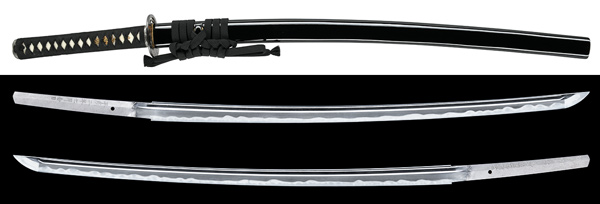
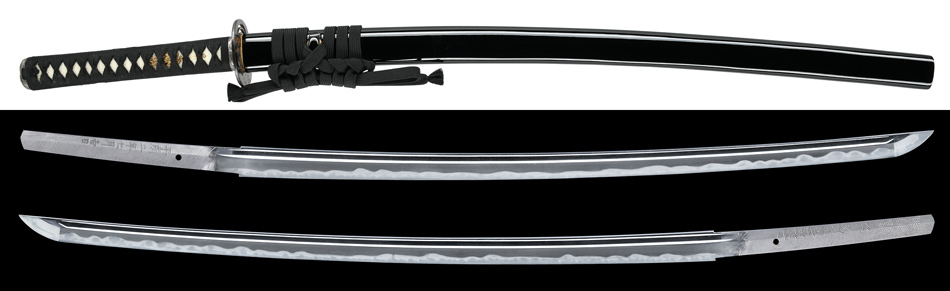
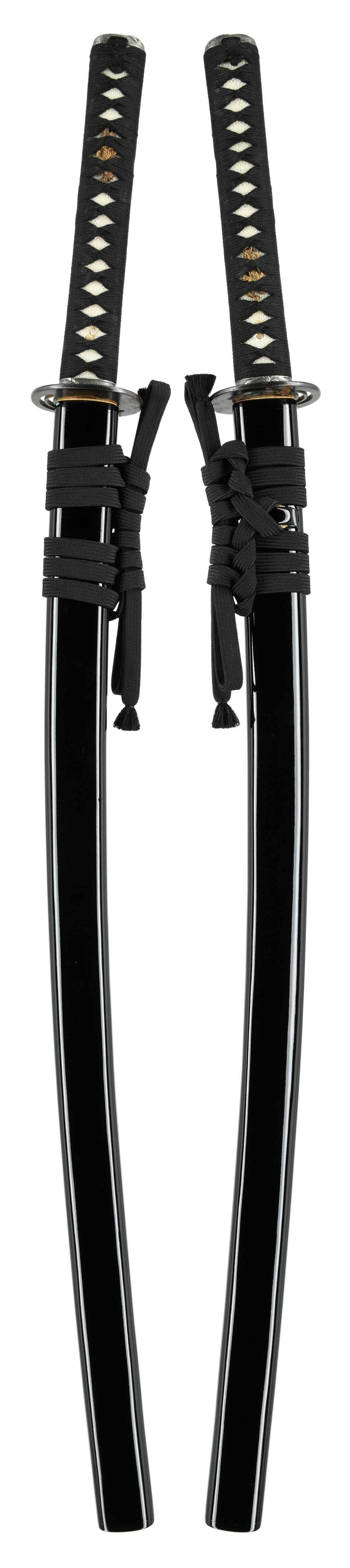
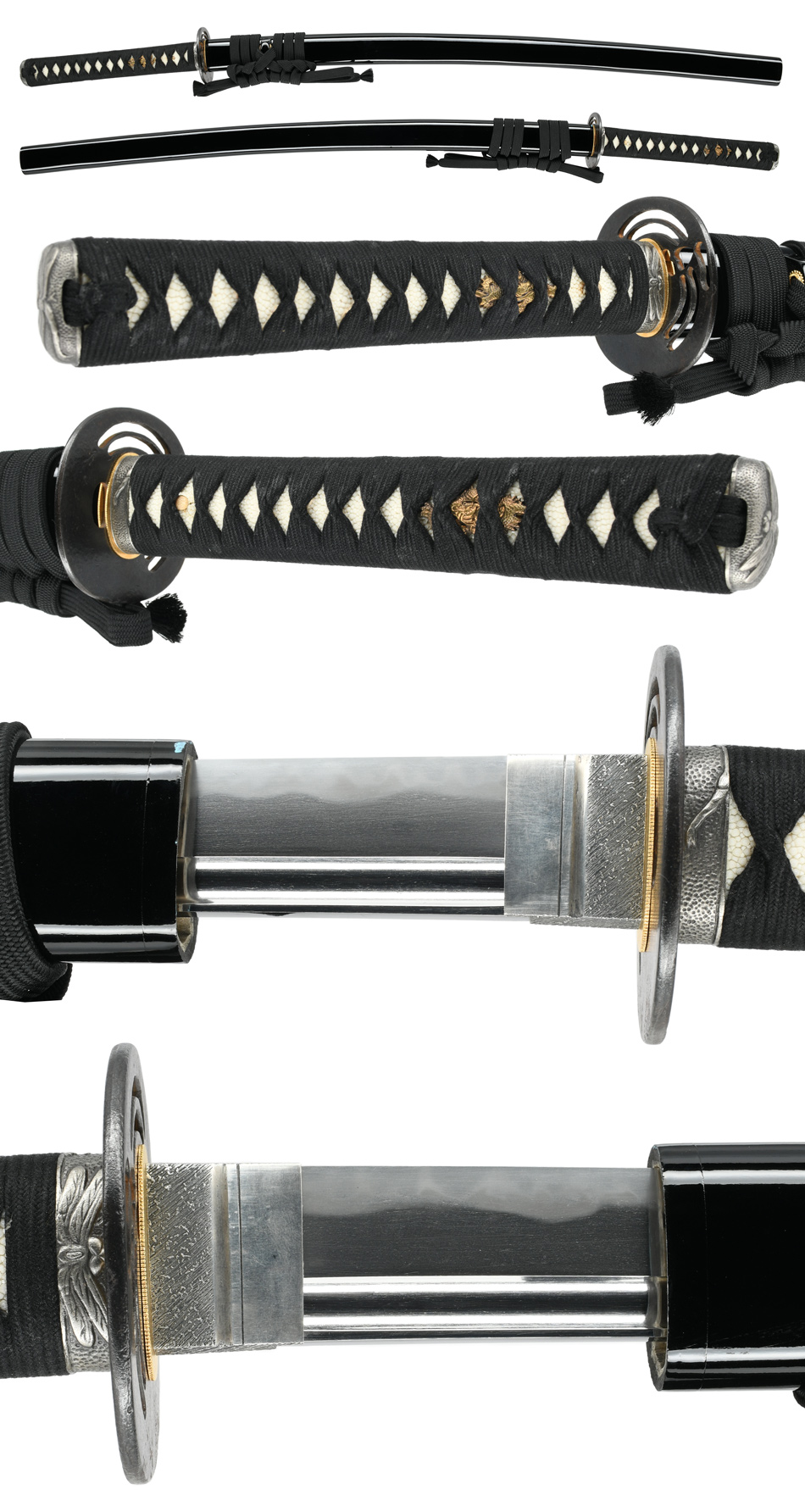
This katana has a nagasa of 2 shaku 4 sun 2 rin, with hi carved on both sides. The jigane is a strong kitae where itame hada appears with masame-gakari and jinie attaches. The hamon is choji midare, with large and small nie attaching and shining like stars. Within the ha, there are ashi, and sunagashi and kinsen work actively, showing great haki. The boshi continues as midare and returns in komaru. The nakago is carefully finished with kesho sujikai yasurime, and the mei is carved sharply. This work is a highly attractive sword recommended as an iaito for advanced practitioners by the popular modern swordsmith Kunitada, and of course as a sword for appreciation. It is housed in a kuro-ro-nuri saya uchigatana koshirae, with a gin-kise ichiju habaki.
Details from the shop
Stock No
SKA-050122
Paper(Certificate)
None
Country(Kuni)/Period(Jidai)
Fukuoka, Heisei era 1990
Blade length(Cutting edge)
72.8cm
Curve(SORI)
1.5cm
Width at the hamachi(Moto-Haba)
3.20cm
Thickness at the Moto-Kasane
0.73cm
Wide at the Kissaki(Saki-Haba)
2.55cm
Thickness at the Saki-Kasane
0.55cm
Length of Koshirae
about 103cm
Weight including handle
998g
Sword tang(Nakago)
Unaltered,Sujikaiyasuri with Keshoyasuri file pattern
Unaltered,Sujikaiyasuri with Keshoyasuri file pattern
Mekugi-ana
1
Registration
Fukuoka
Description from World Seiyudo
Machine translation from the shop's Japanese · may contain errors ·
Swordsmith Shiro Kunitada, whose real name is Komiya Yokimitsu, resides in Omuta City, Fukuoka Prefecture. Born in Showa 29. He began forging swords under his grandfather Kunimitsu in Showa 47, and in Heisei 4, he was selected for the first time at the Shinsakuto-ten; since then, he has continued to exhibit consecutively. The Shiro Kunimitsu family (Komiya family) is a prestigious lineage where all members are active as swordsmiths, including Komiya Shiro Kunimitsu, famous by the nickname "Showa no O-wazamono," as well as his son (Kuniharu) and grandsons (Kunitada, Yasumitsu, Kunimitsu). The origin of the family traces back to sword makers who served as Goban-kaji for the Tachibana family of the Yanagawa Domain in Chikugo during the Edo period. In the finals of the "All Japan Sword Tameshigiri Competition" hosted by the Dai Nippon Tosho Kyokai held in Showa 14, a sword by Shiro Kunimitsu defeated a Kotetsu to win the championship, earning the title of number one cutting ability in Japan. The "Kagotsurube" carved into the nakago is a saidanmei meaning "cutting ability that does not leak even a drop of water," like a tsurube bucket made from a kago basket.
This katana has a nagasa of 2 shaku 4 sun 2 rin, with hi carved on both sides. The jigane is a strong kitae where itame hada appears with masame-gakari and jinie attaches. The hamon is choji midare, with large and small nie attaching and shining like stars. Within the ha, there are ashi, and sunagashi and kinsen work actively, showing great haki. The boshi continues as midare and returns in komaru. The nakago is carefully finished with kesho sujikai yasurime, and the mei is carved sharply. This work is a highly attractive sword recommended as an iaito for advanced practitioners by the popular modern swordsmith Kunitada, and of course as a sword for appreciation. It is housed in a kuro-ro-nuri saya uchigatana koshirae, with a gin-kise ichiju habaki.
The twentieth century nearly killed the craft twice: wartime distortion, then the occupation ban. The NBTHK’s founding in 1948 and licensed forging from 1953 rebuilt the sword as an art, crowned by Living National Treasures and the mukansa rank.
No cooling-off period or returns; refund only if the purchased sword is proven fake, capped at purchase price (excludes commission sales, accessories, auction items).


 NihontoWatch