The twentieth century nearly killed the craft twice: wartime distortion, then the occupation ban. The NBTHK’s founding in 1948 and licensed forging from 1953 rebuilt the sword as an art, crowned by Living National Treasures and the mukansa rank.
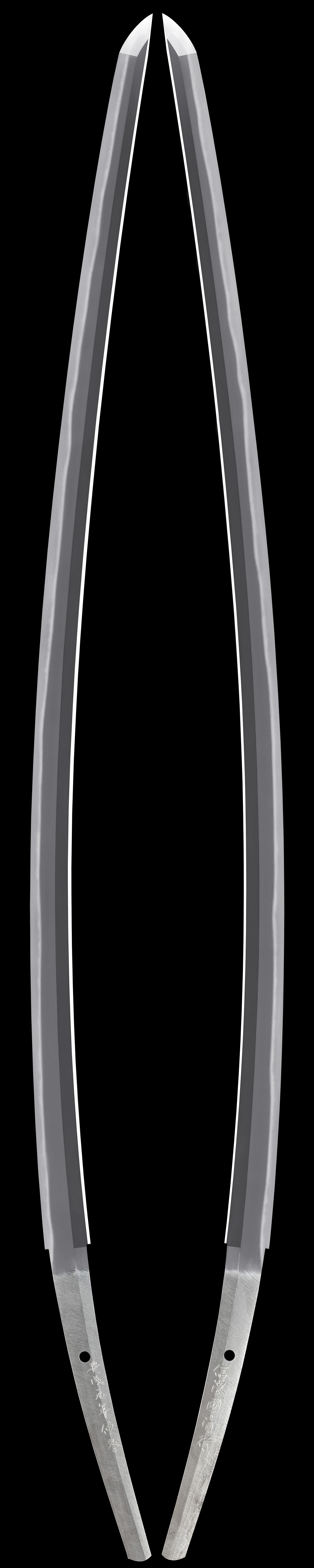
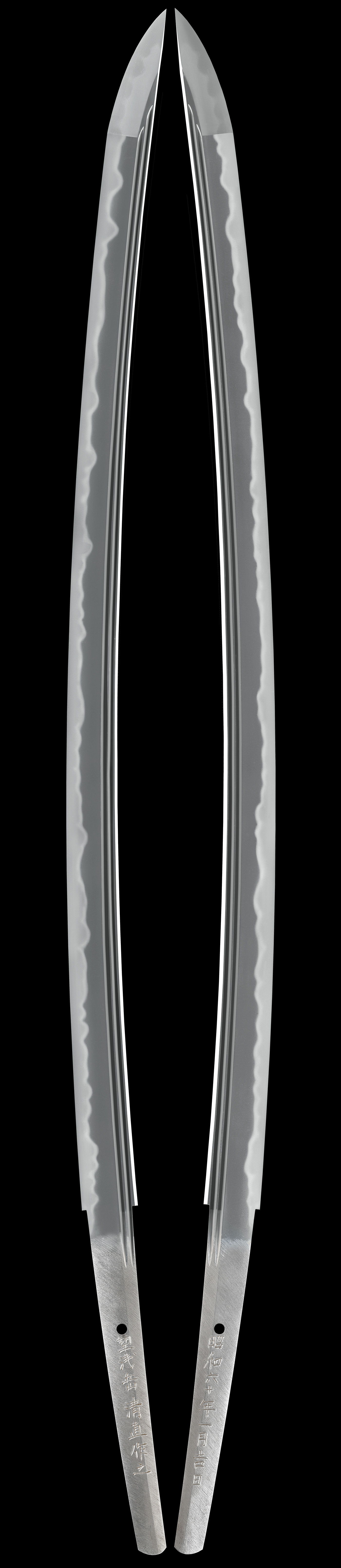
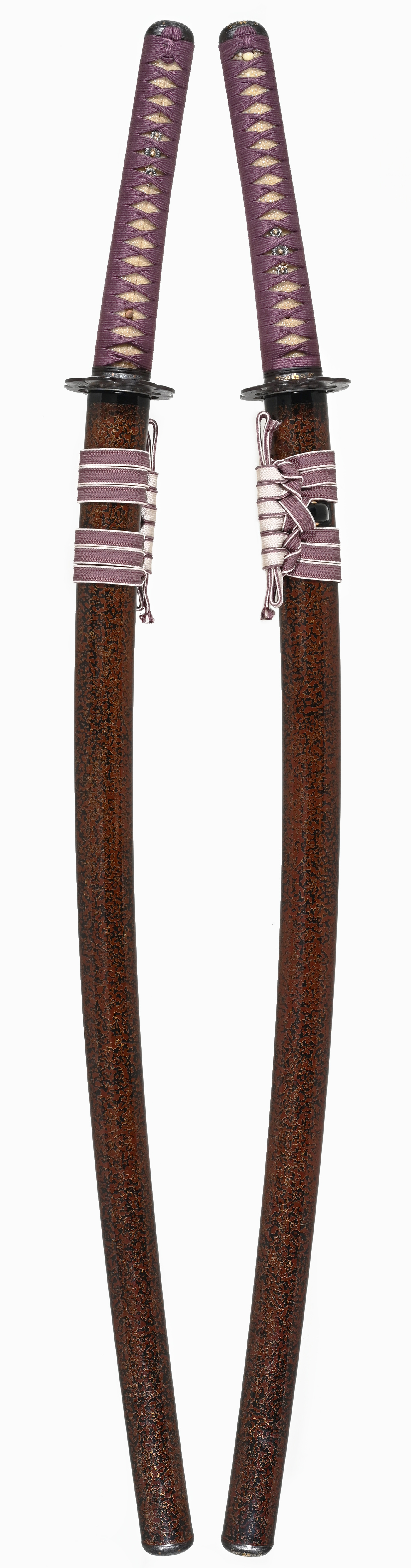
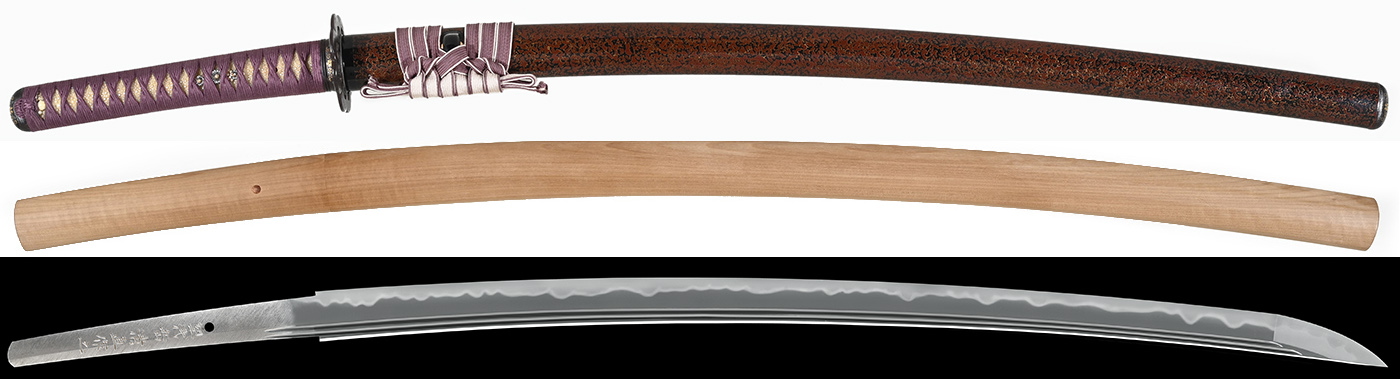
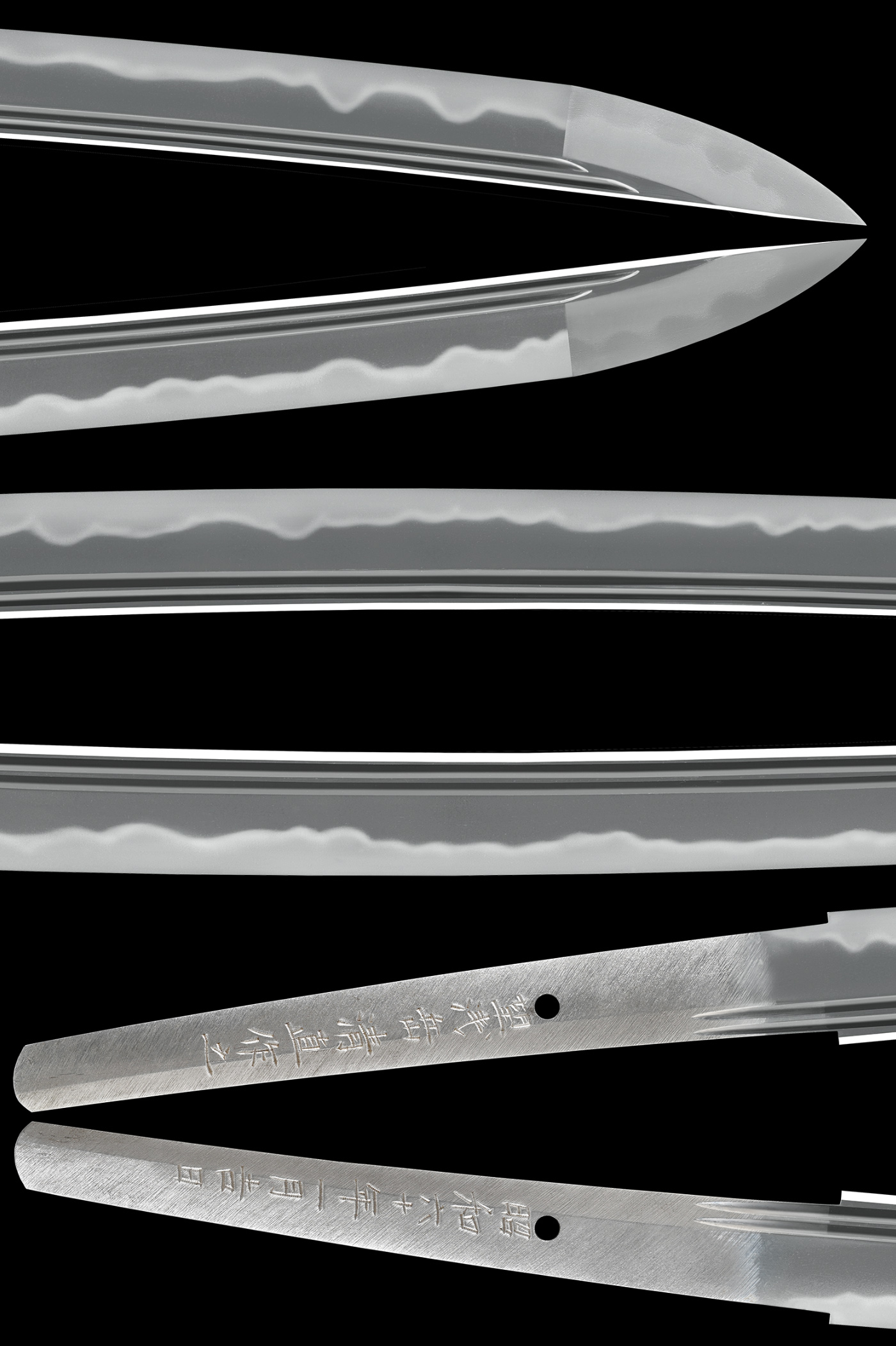
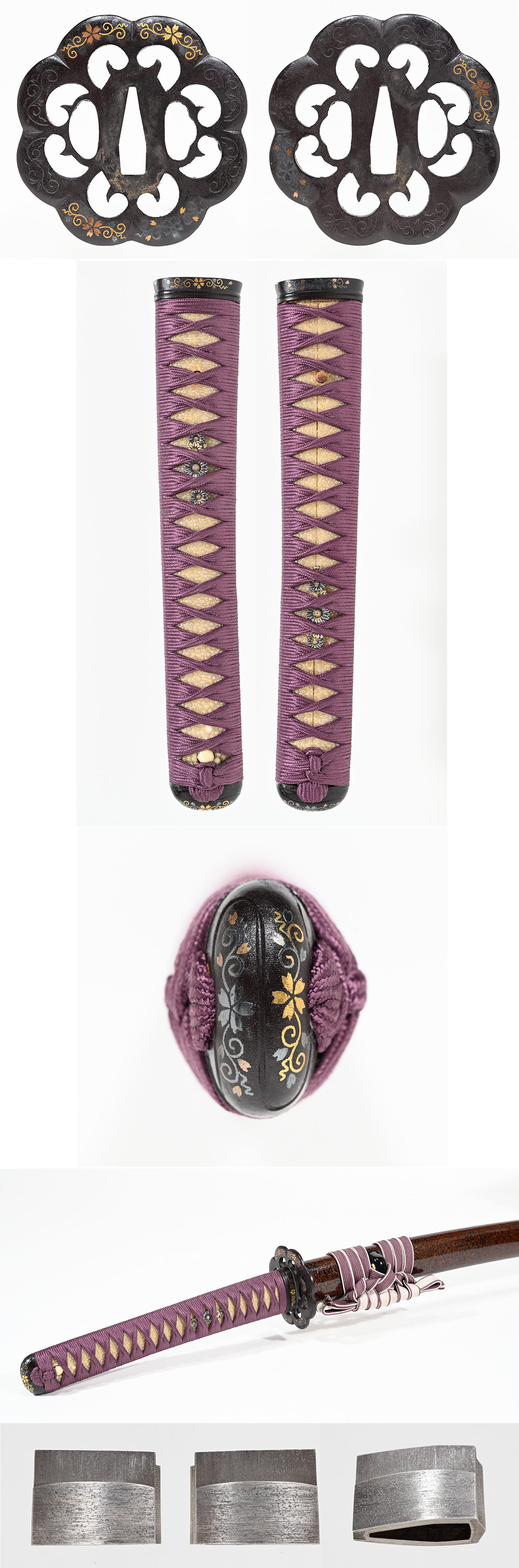
This is a katana made by Matsukawa Kiyonao, dated January 1985. Kiyonao, born in Nagano Prefecture in 1955, was a student of Miyairi Kiyomune, the brother of Living National Treasure Miyairi Akihira. He is known for his high skill, having received numerous awards at the NBTHK's new sword exhibitions, and this piece is a masterful copy of a Soshu Sadamune blade.
 NihontoWatch
mei · Miyairi · Gendaito · nagasa 73cm · sori 2.2cm
Shōwa to the present: destruction and revival
The twentieth century nearly killed the craft twice: wartime distortion, then the occupation ban. The NBTHK’s founding in 1948 and licensed forging from 1953 rebuilt the sword as an art, crowned by Living National Treasures and the mukansa rank.
We could not find an authenticity certificate on the seller’s listing. Japanese swords and fittings are normally papered by the NBTHK (or the NTHK). Without one, the attribution is the seller’s own assessment and has not been independently verified — treat it with caution and ask the dealer about certification before buying.
Returns possible within 3 days of arrival. Customer pays return shipping and bank transfer fees. Excluded: condition differs from sale, 3+ days passed, overseas delivery, in-store purchases, and deposit transactions.
¥880,000
This is a katana made by Matsukawa Kiyonao, dated January 1985. Kiyonao, born in Nagano Prefecture in 1955, was a student of Miyairi Kiyomune, the brother of Living National Treasure Miyairi Akihira. He is known for his high skill, having received numerous awards at the NBTHK's new sword exhibitions, and this piece is a masterful copy of a Soshu Sadamune blade.
NihontoWatchmei · Miyairi · Gendaito · nagasa 73cm · sori 2.2cm
Shōwa to the present: destruction and revival
The twentieth century nearly killed the craft twice: wartime distortion, then the occupation ban. The NBTHK’s founding in 1948 and licensed forging from 1953 rebuilt the sword as an art, crowned by Living National Treasures and the mukansa rank.
We could not find an authenticity certificate on the seller’s listing. Japanese swords and fittings are normally papered by the NBTHK (or the NTHK). Without one, the attribution is the seller’s own assessment and has not been independently verified — treat it with caution and ask the dealer about certification before buying.
Returns possible within 3 days of arrival. Customer pays return shipping and bank transfer fees. Excluded: condition differs from sale, 3+ days passed, overseas delivery, in-store purchases, and deposit transactions.
¥880,000