Swordsmith Miyairi Norihiro was born in Sakaki-machi, Nagano Prefecture in Showa 31 (1956) as the eldest son of swordsmith Miyairi Kiyohira (Kiyomune), who was the younger brother of Living National Treasure swordsmith Miyairi Shohei (Yukihira); Miyairi Shohei (Yukihira) is his uncle.
In Showa 53 (1978), after graduating from Kokugakuin University, he apprenticed under Living National Treasure swordsmith Sumitani Masamine of Ishikawa Prefecture.
In Showa 58 (1983), he became independent after five years of training, and until the later year of Heisei 7 (1995), he devoted himself to sword making alongside his father, swordsmith Kiyohira, in Sakaki-machi.
In Heisei 7 (1995), at the age of 39, he was certified as the youngest ever Mukansa swordsmith.
In Heisei 8 (1996), he established a sword forging dojo in Yaehara, Tomi City (formerly Kitamimaki Village), Nagano Prefecture.
In Heisei 22 (2010), he received the Masamune-sho, the highest peak of the sword world, at the youngest age ever in the Shinsaku Meito Ten exhibition. (The Masamune-sho is the highest award in the sword world and is not awarded every year.)
The Miyairi school, including his father Kiyomune and uncle Miyairi Shohei (Yukihira), has specialized in the Soshu-den for generations, but swordsmith Sumitani Masamine, whom Norihiro apprenticed under, specialized in the Bizen-den and is famous as the swordsmith who created a unique and beautiful choji-ba called "Sumitani Choji."
By daring to apprentice in a school different from the Miyairi lineage, swordsmith Norihiro carved out his own style through unique self-expression unbound by school traditions; the artistry of his "choji-ba," formed of unique and beautiful continuous folds, is highly acclaimed, and he is the leading swordsmith expected to be certified as the next Living National Treasure.
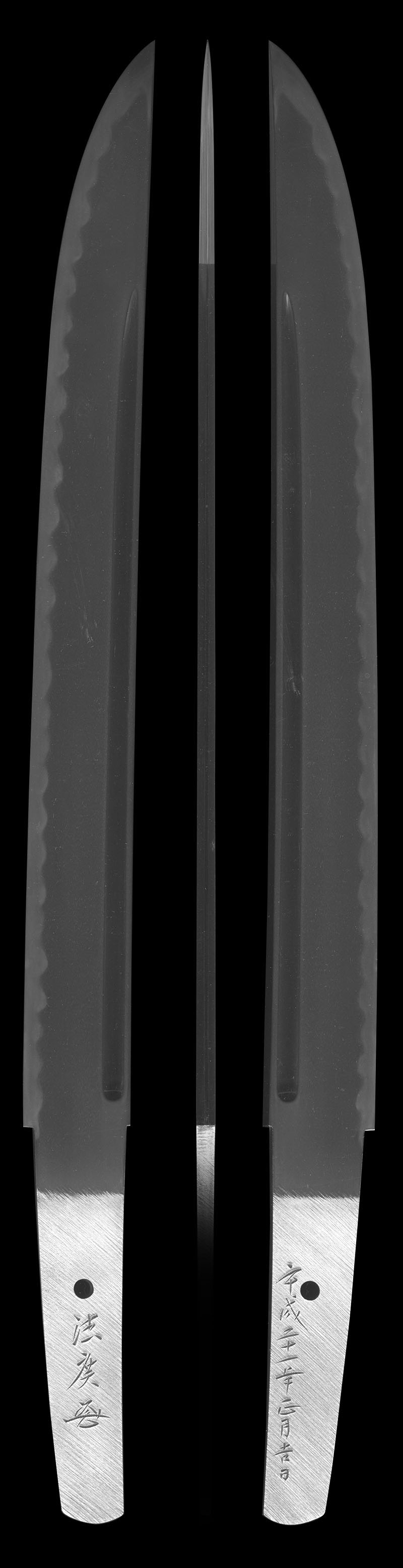
This work is modeled after the Bizen master Kanemitsu, and the kataochi-gunome is impressive to behold.
*What is Mukansa? This is a certification by the Nihon Bijutsu Token Hozon Kyokai (Public Interest Incorporated Foundation), given to those who have won any of the special prizes eight or more times in the Shinsaku Token Ten hosted by the association, or those who have won special prizes six or more times, including the Takamatsunomiya-sho two or more times.
The association certifies this, and it is also required that the individual be excellent in both character and skill.
Normally, from among these Mukansa swordsmiths, those who produce outstanding works such as winning the Masamune-sho are recommended as "Holders of Important Intangible Cultural Properties" (Living National Treasures).
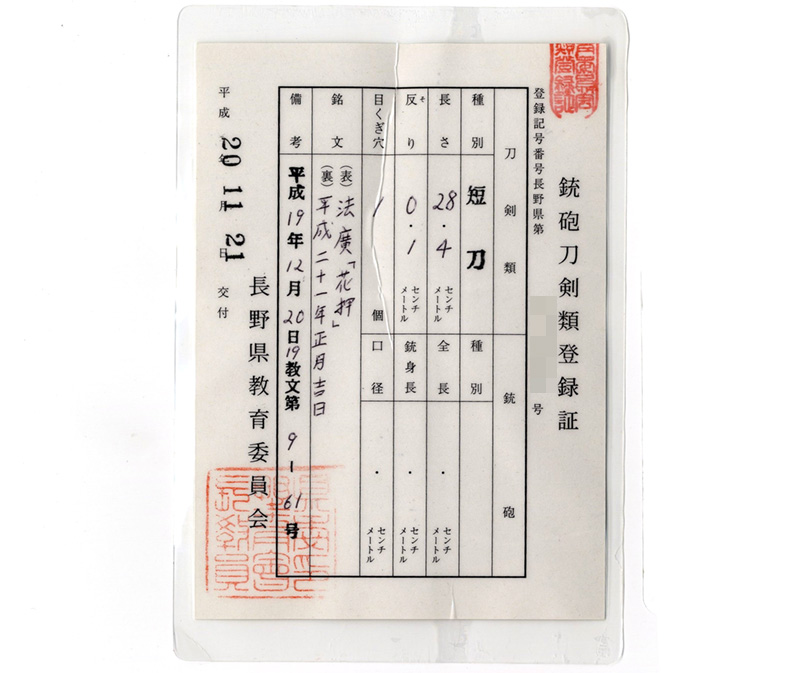
Tanto: Norihiro (Kao) (Reproduction in the style of Kanemitsu) (Miyairi Norihiro) (Mukansa Swordsmith) (Masamune Award Winning Swordsmith) (Miyairi Yukihira family and Sumitani Masamine school)
Machine translation from the shop's Japanese · may contain errors ·
Swordsmith Miyairi Norihiro was born in Sakaki-machi, Nagano Prefecture in Showa 31 (1956) as the eldest son of swordsmith Miyairi Kiyohira (Kiyomune), who was the younger brother of Living National Treasure swordsmith Miyairi Shohei (Yukihira); Miyairi Shohei (Yukihira) is his uncle.
In Showa 53 (1978), after graduating from Kokugakuin University, he apprenticed under Living National Treasure swordsmith Sumitani Masamine of Ishikawa Prefecture.
In Showa 58 (1983), he became independent after five years of training, and until the later year of Heisei 7 (1995), he devoted himself to sword making alongside his father, swordsmith Kiyohira, in Sakaki-machi.
In Heisei 7 (1995), at the age of 39, he was certified as the youngest ever Mukansa swordsmith.
In Heisei 8 (1996), he established a sword forging dojo in Yaehara, Tomi City (formerly Kitamimaki Village), Nagano Prefecture.
In Heisei 22 (2010), he received the Masamune-sho, the highest peak of the sword world, at the youngest age ever in the Shinsaku Meito Ten exhibition. (The Masamune-sho is the highest award in the sword world and is not awarded every year.)
The Miyairi school, including his father Kiyomune and uncle Miyairi Shohei (Yukihira), has specialized in the Soshu-den for generations, but swordsmith Sumitani Masamine, whom Norihiro apprenticed under, specialized in the Bizen-den and is famous as the swordsmith who created a unique and beautiful choji-ba called "Sumitani Choji."
By daring to apprentice in a school different from the Miyairi lineage, swordsmith Norihiro carved out his own style through unique self-expression unbound by school traditions; the artistry of his "choji-ba," formed of unique and beautiful continuous folds, is highly acclaimed, and he is the leading swordsmith expected to be certified as the next Living National Treasure.
This work is modeled after the Bizen master Kanemitsu, and the kataochi-gunome is impressive to behold.
*What is Mukansa? This is a certification by the Nihon Bijutsu Token Hozon Kyokai (Public Interest Incorporated Foundation), given to those who have won any of the special prizes eight or more times in the Shinsaku Token Ten hosted by the association, or those who have won special prizes six or more times, including the Takamatsunomiya-sho two or more times.
The association certifies this, and it is also required that the individual be excellent in both character and skill.
Normally, from among these Mukansa swordsmiths, those who produce outstanding works such as winning the Masamune-sho are recommended as "Holders of Important Intangible Cultural Properties" (Living National Treasures).
Historical context
Shōwa to the present: destruction and revival
›
The twentieth century nearly killed the craft twice: wartime distortion, then the occupation ban. The NBTHK’s founding in 1948 and licensed forging from 1953 rebuilt the sword as an art, crowned by Living National Treasures and the mukansa rank.
We could not find an authenticity certificate on the seller’s listing. Japanese swords and fittings are normally papered by the NBTHK (or the NTHK). Without one, the attribution is the seller’s own assessment and has not been independently verified — treat it with caution and ask the dealer about certification before buying.
Cooling-off (returns or exchanges) is accepted within 3 days of the item's arrival. Return shipping and refund transfer fees are the customer's responsibility. Fees other than the item price (transfer fees, credit card fees, etc.) cannot be refunded. Returns and refunds are not available for overseas destinations.


 NihontoWatch