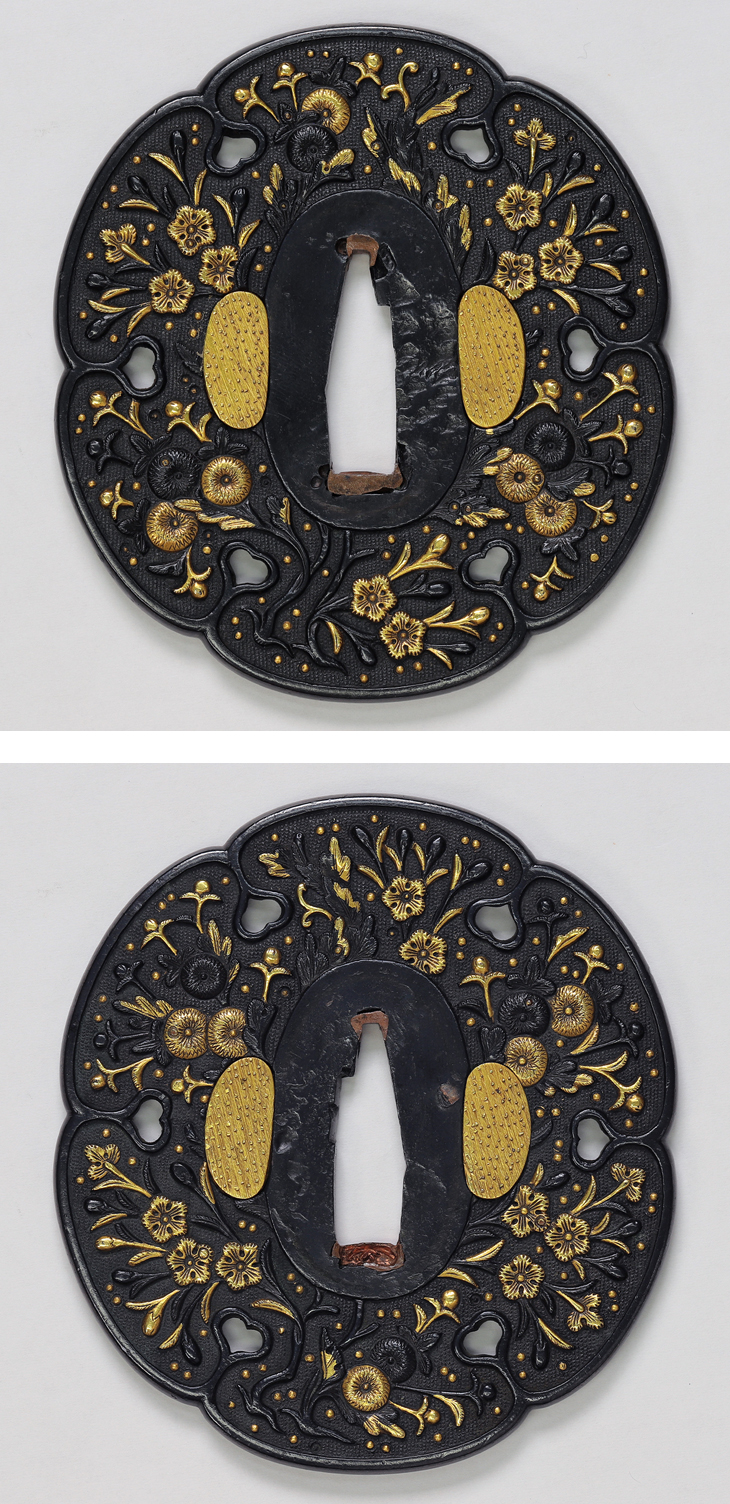
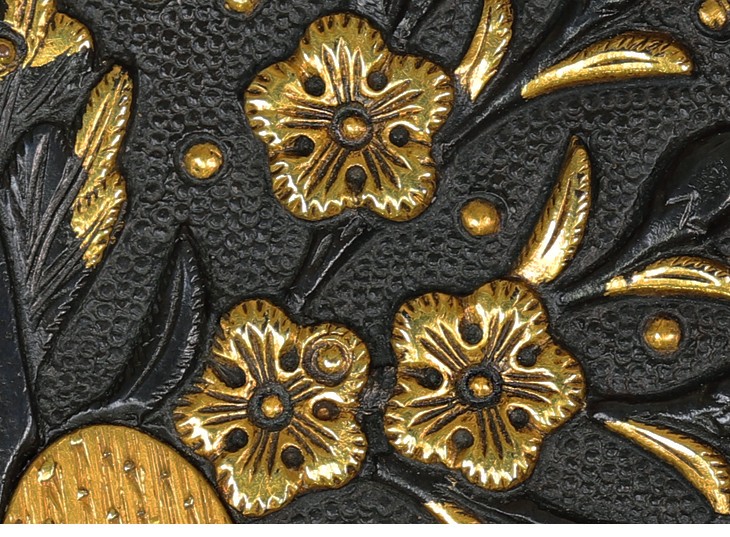
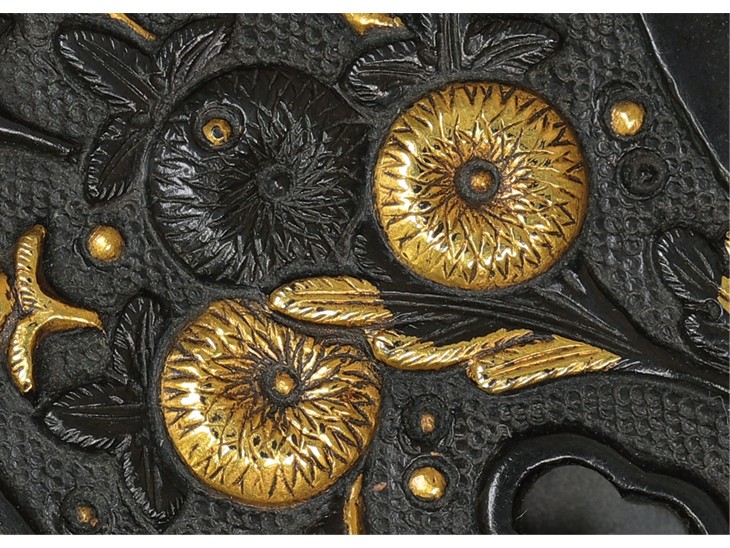
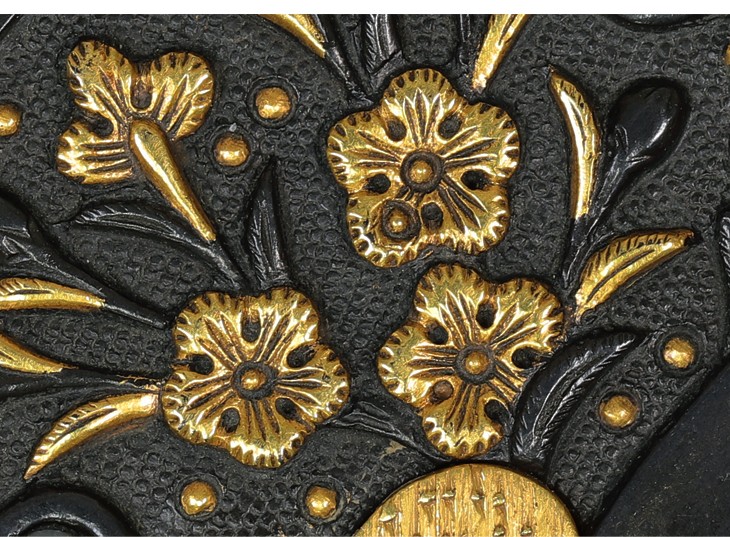
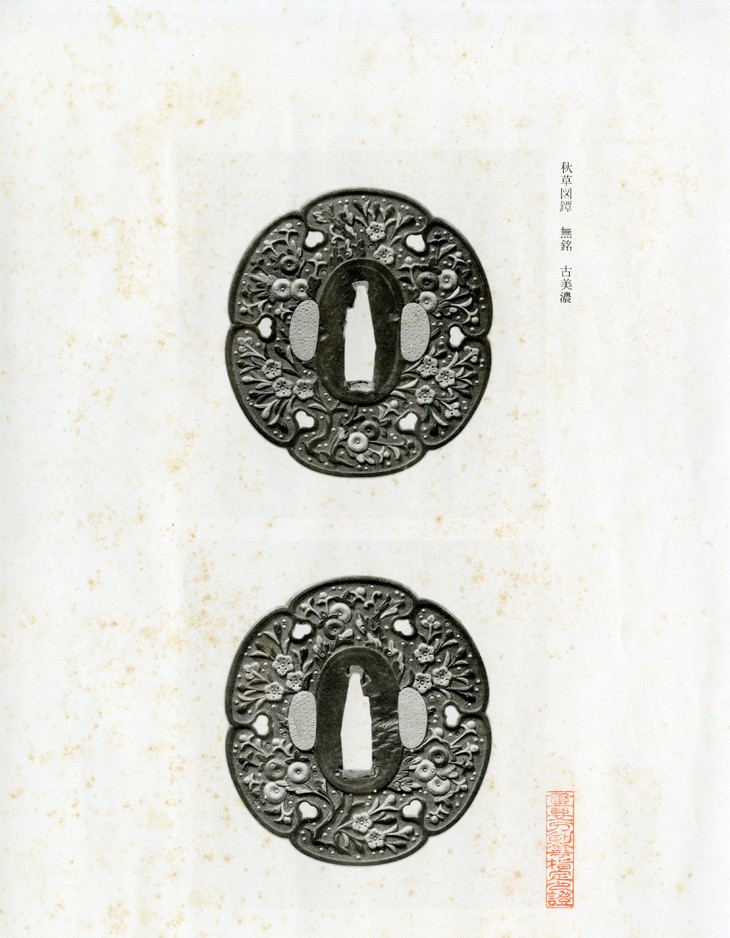
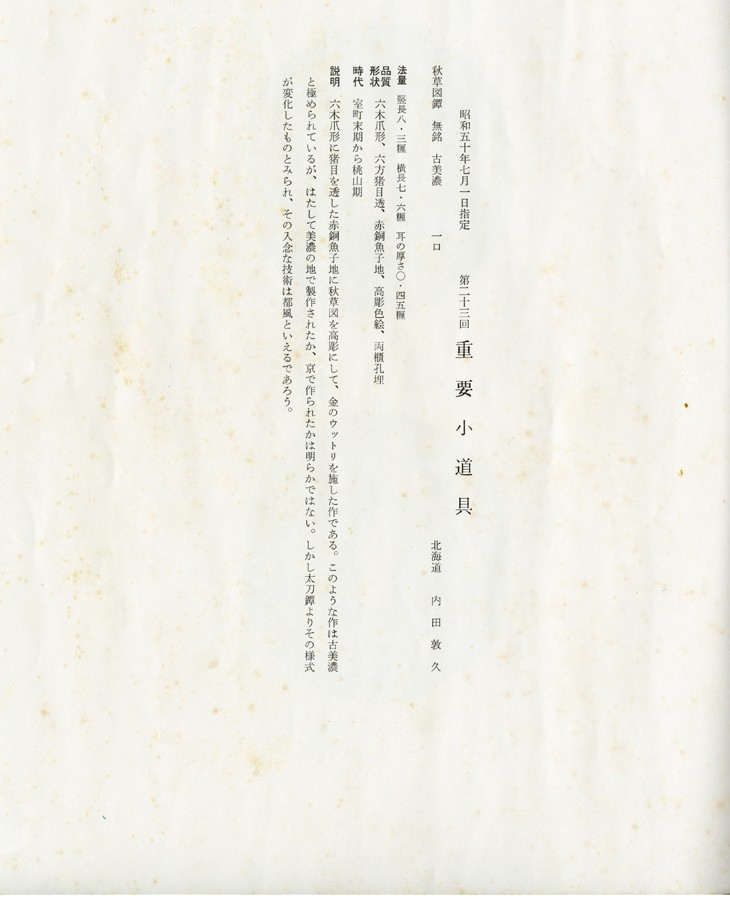
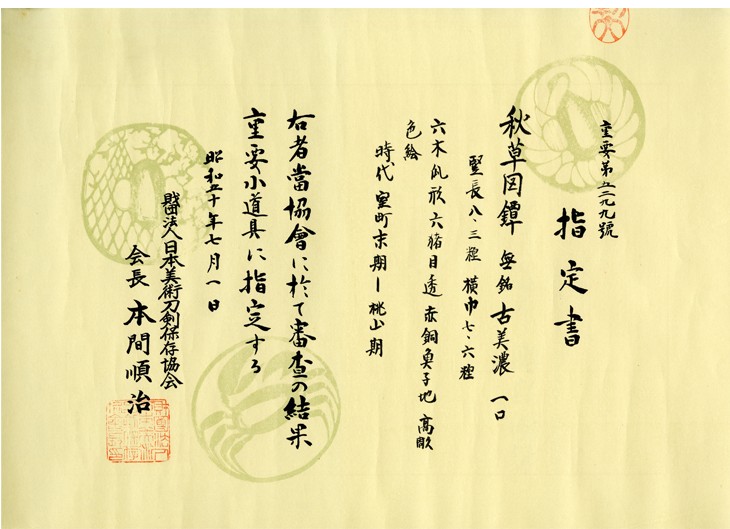
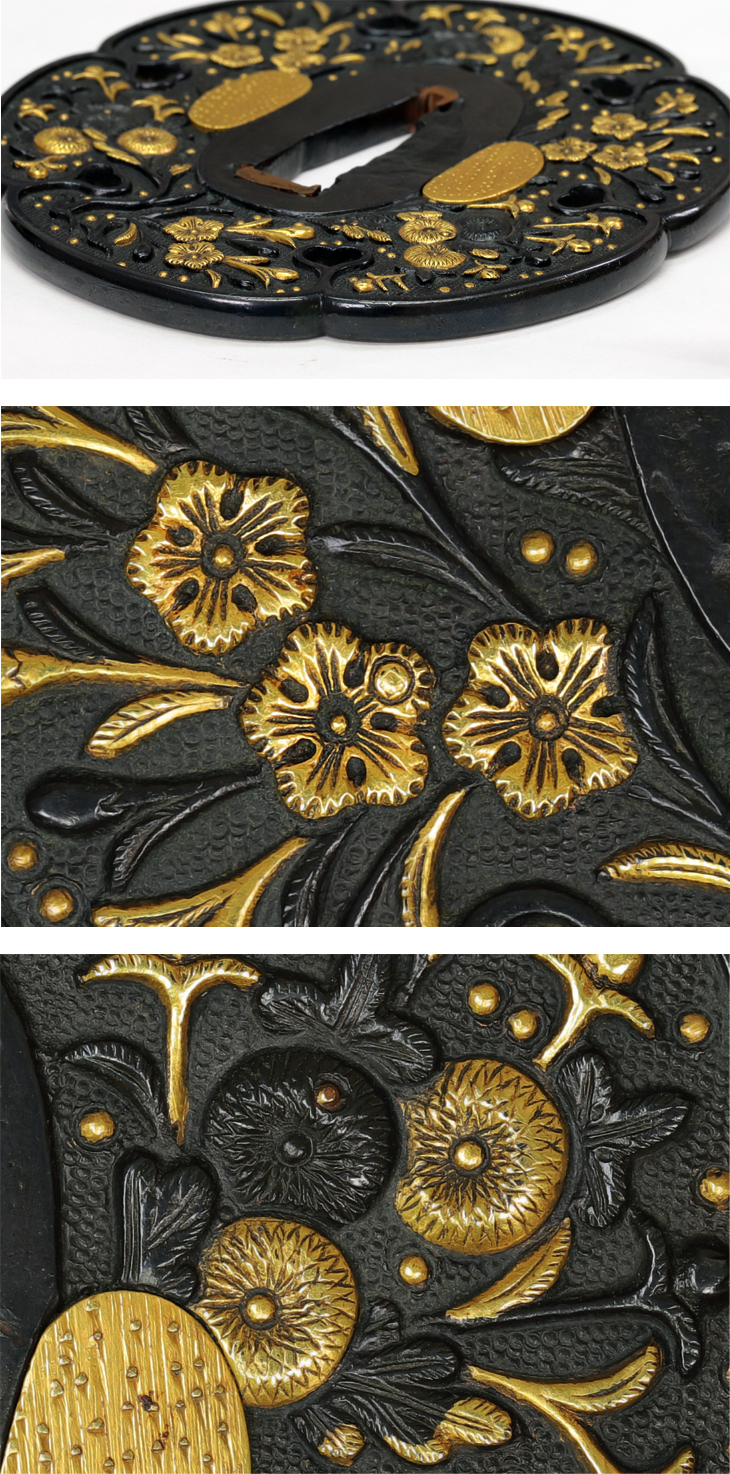
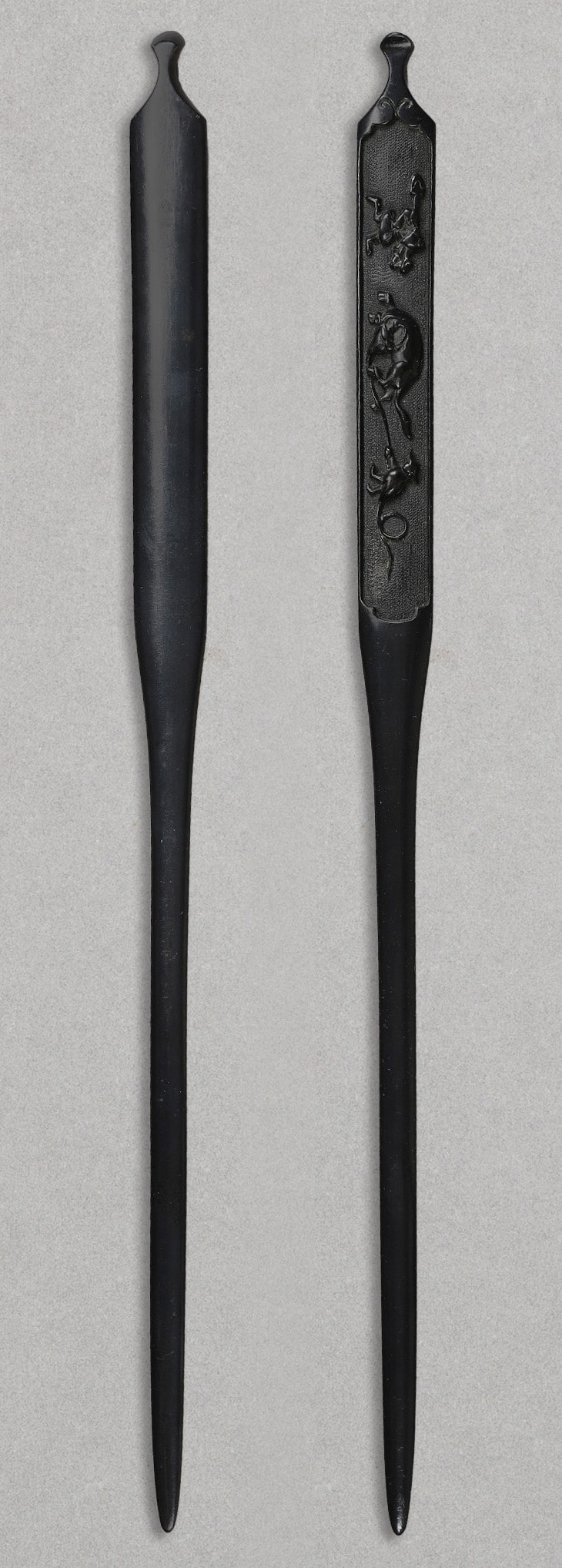
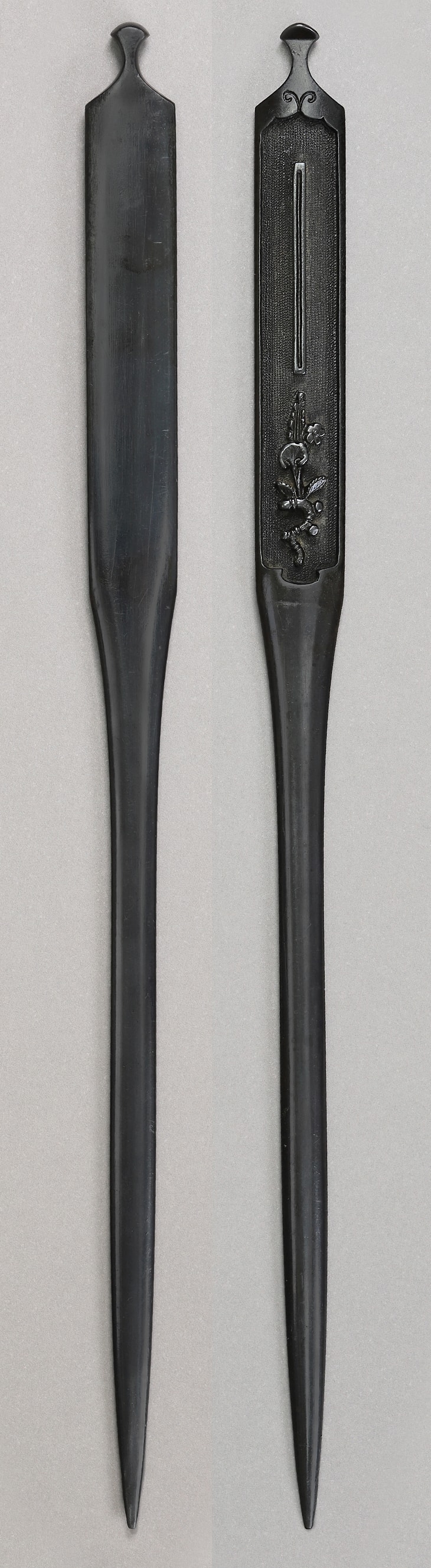
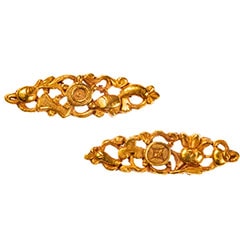
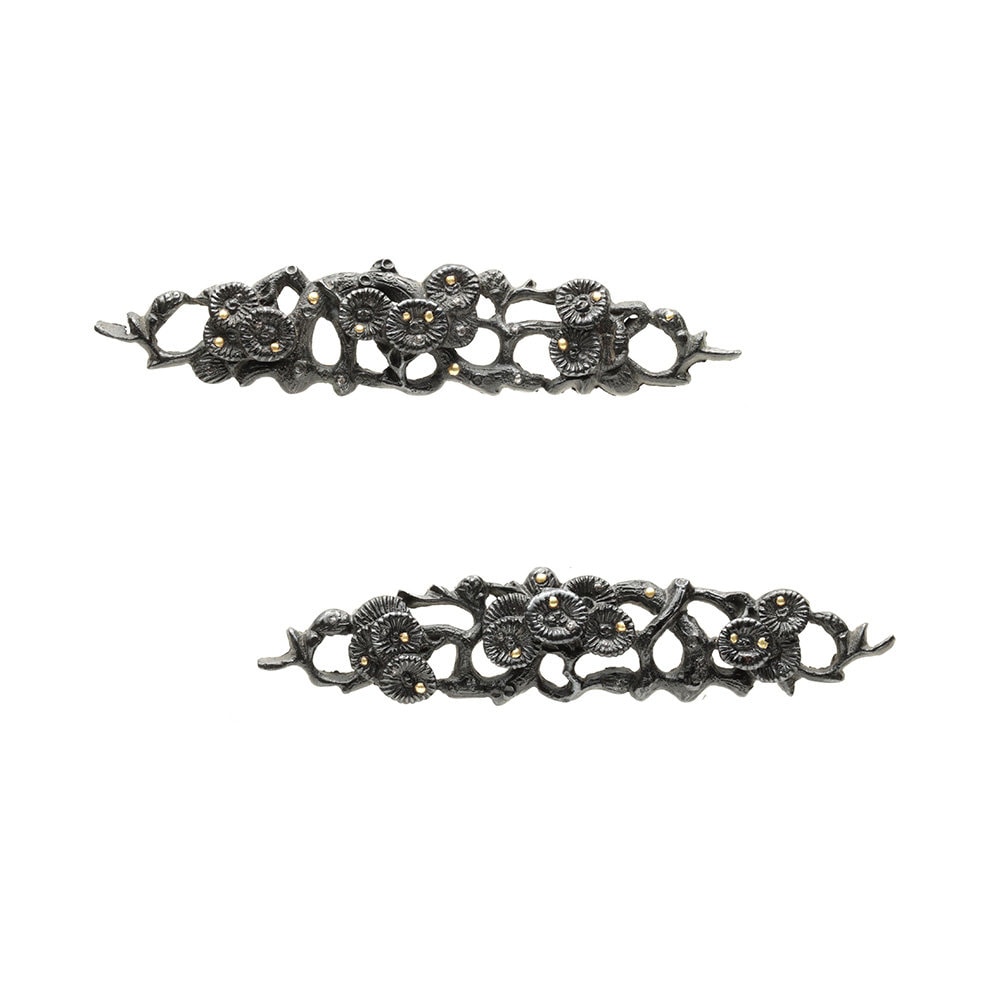
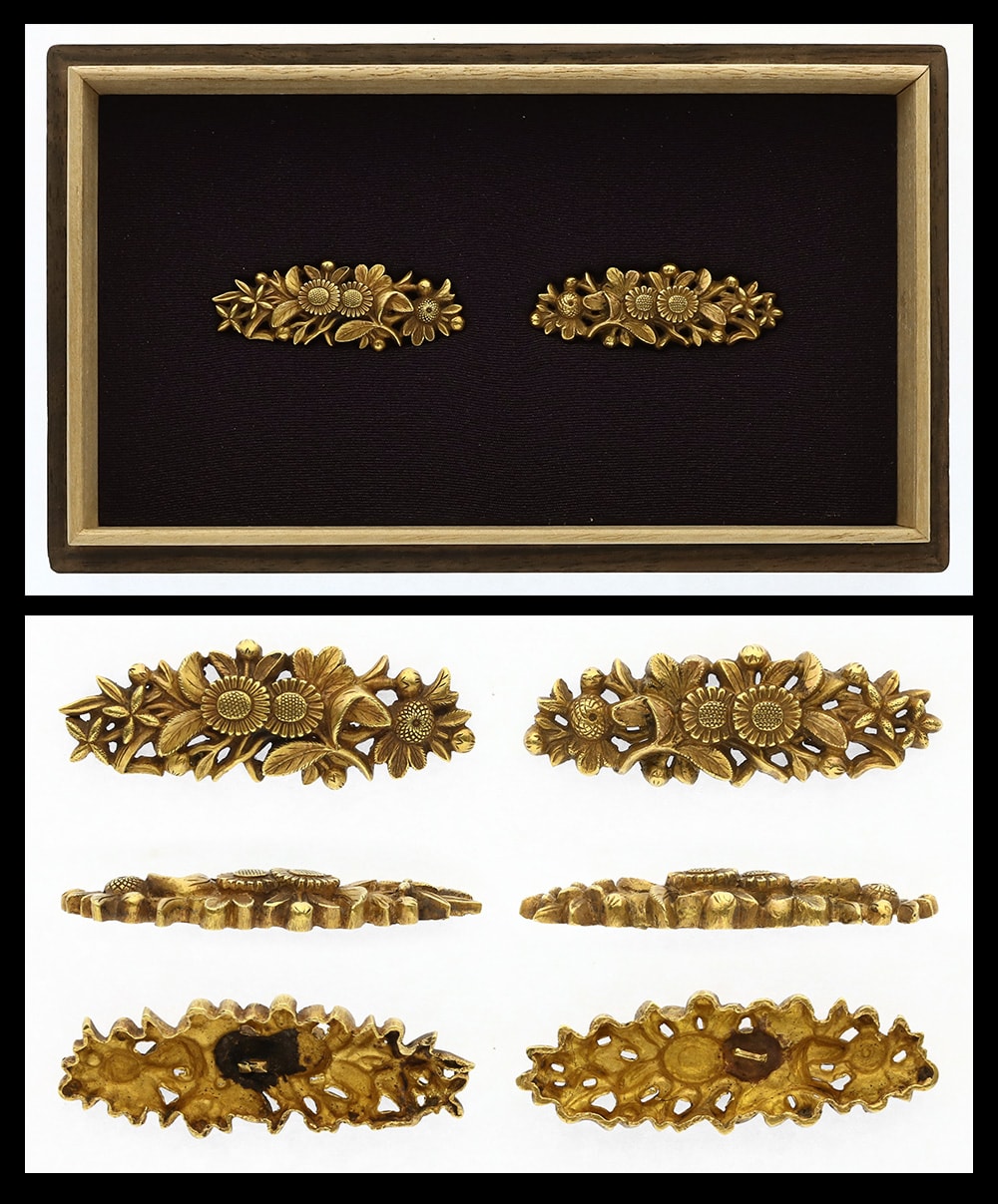
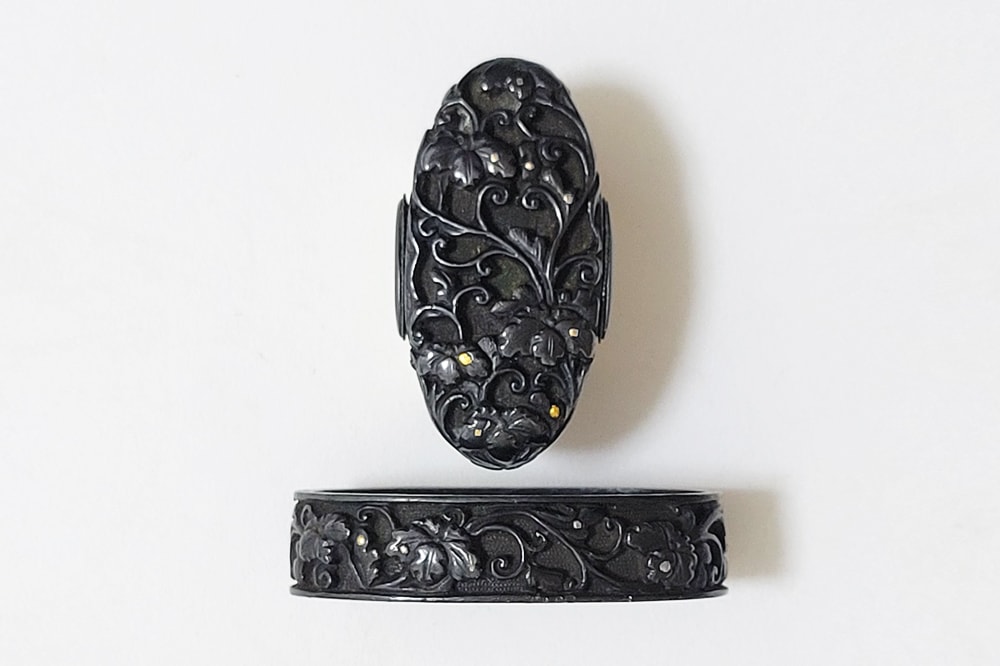
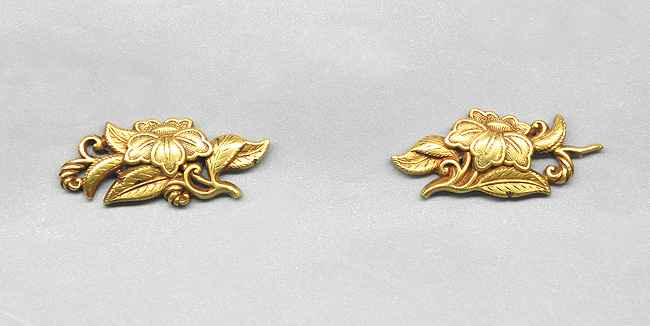
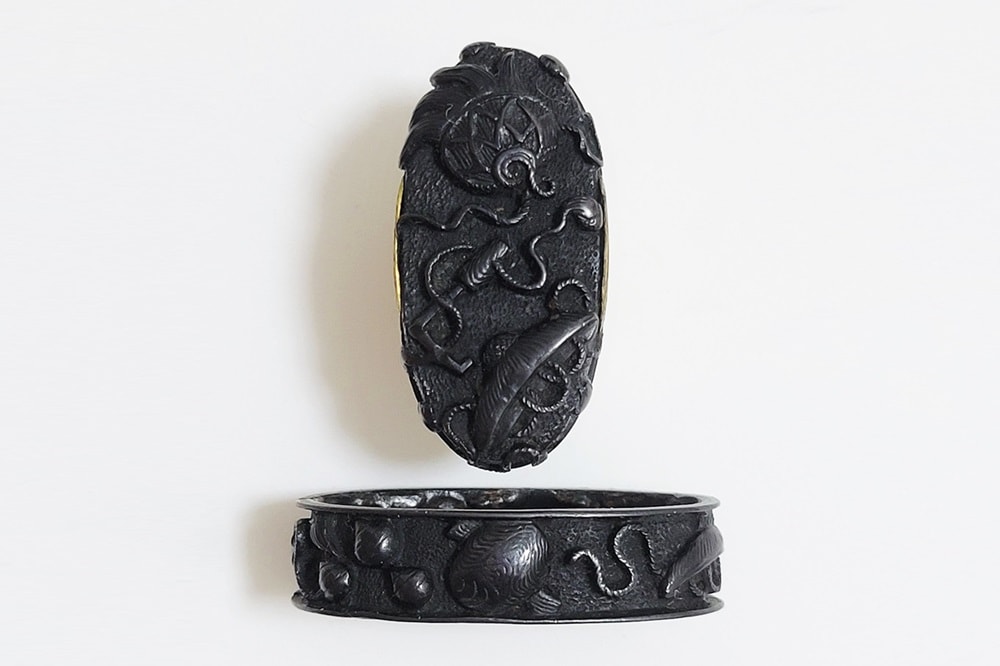
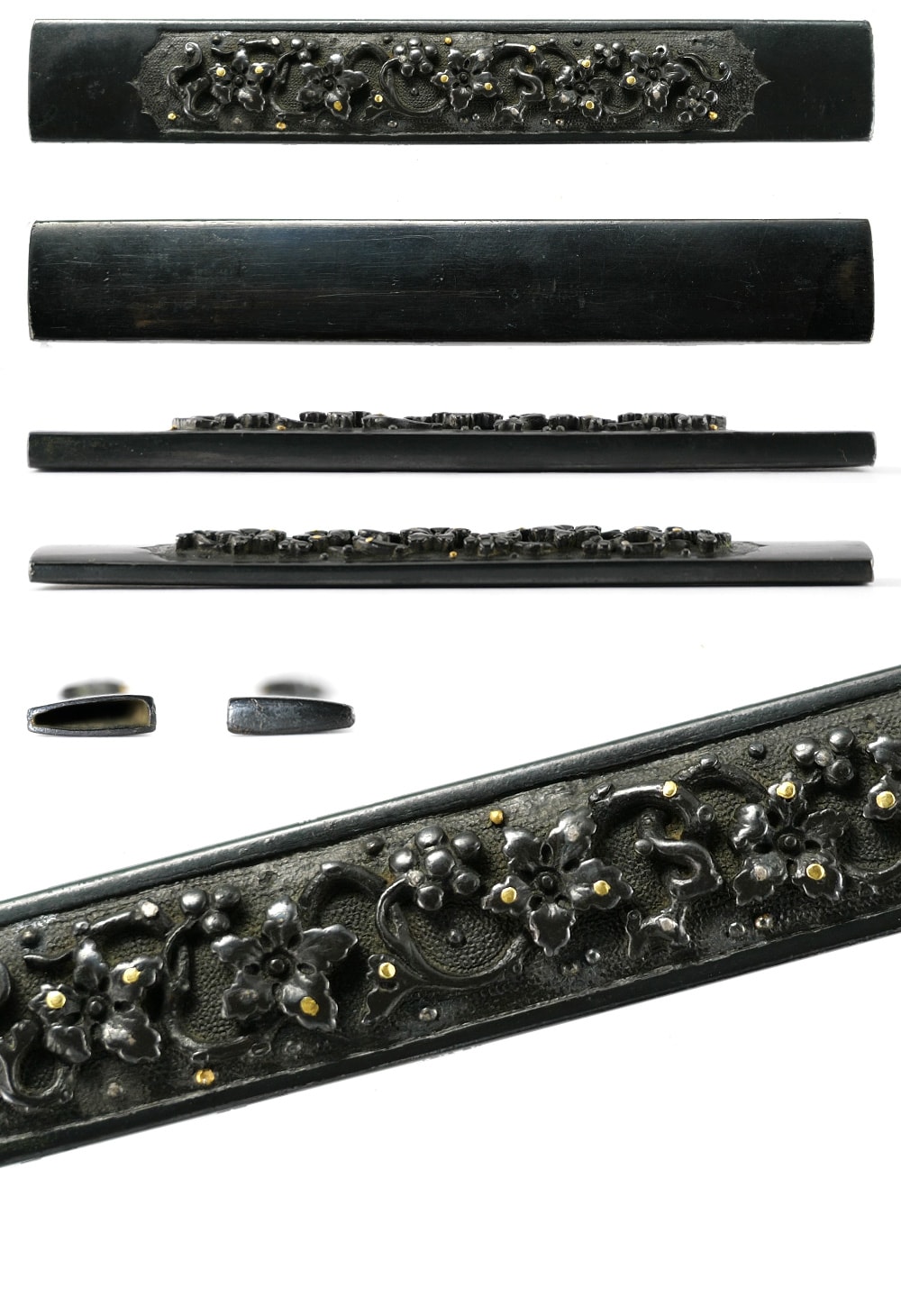
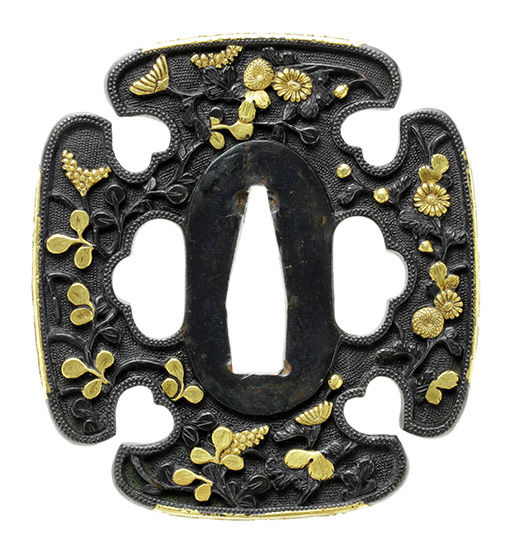
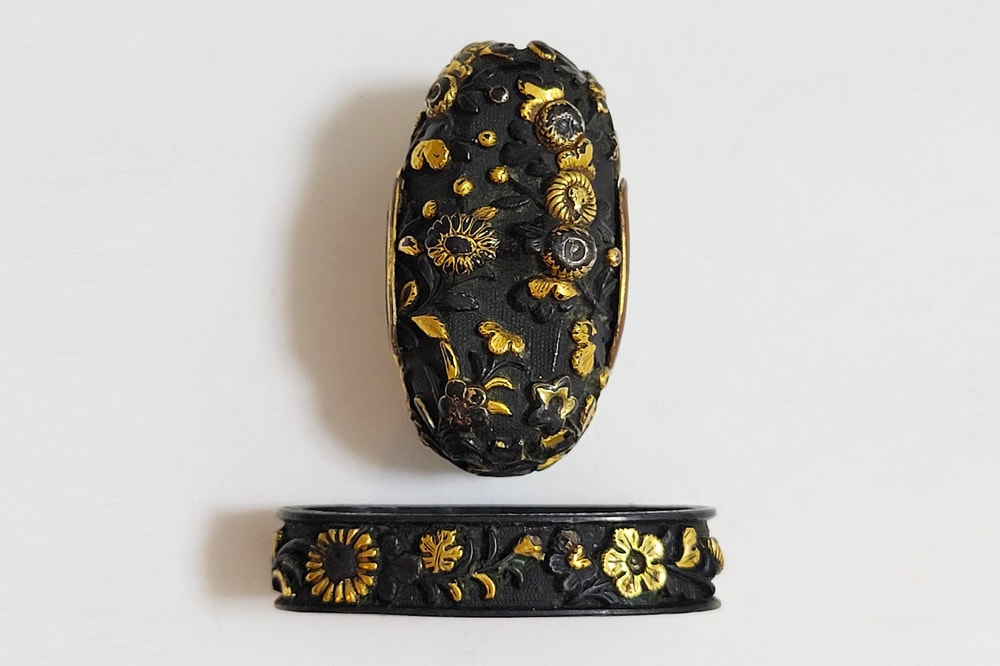
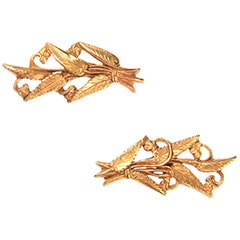
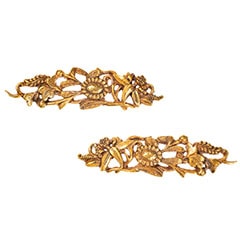
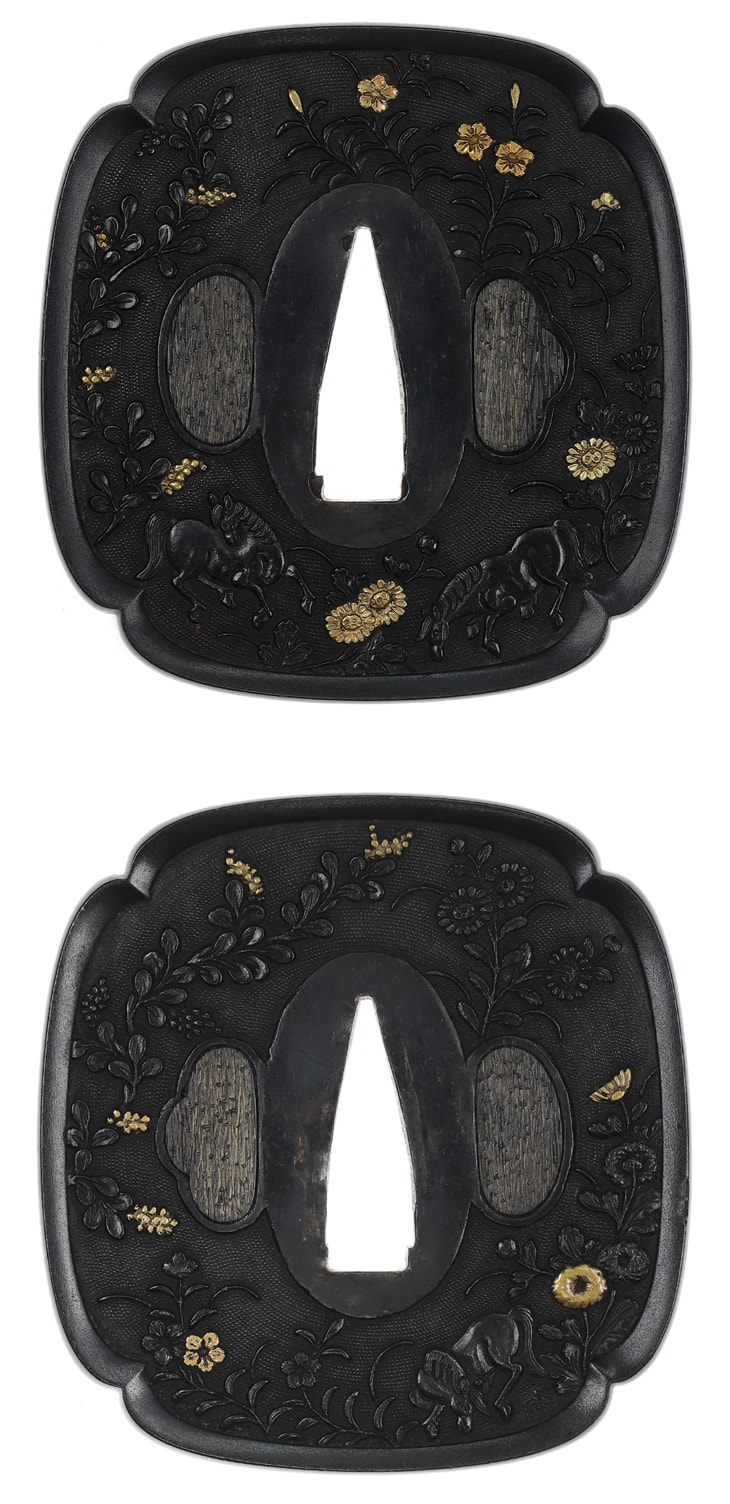
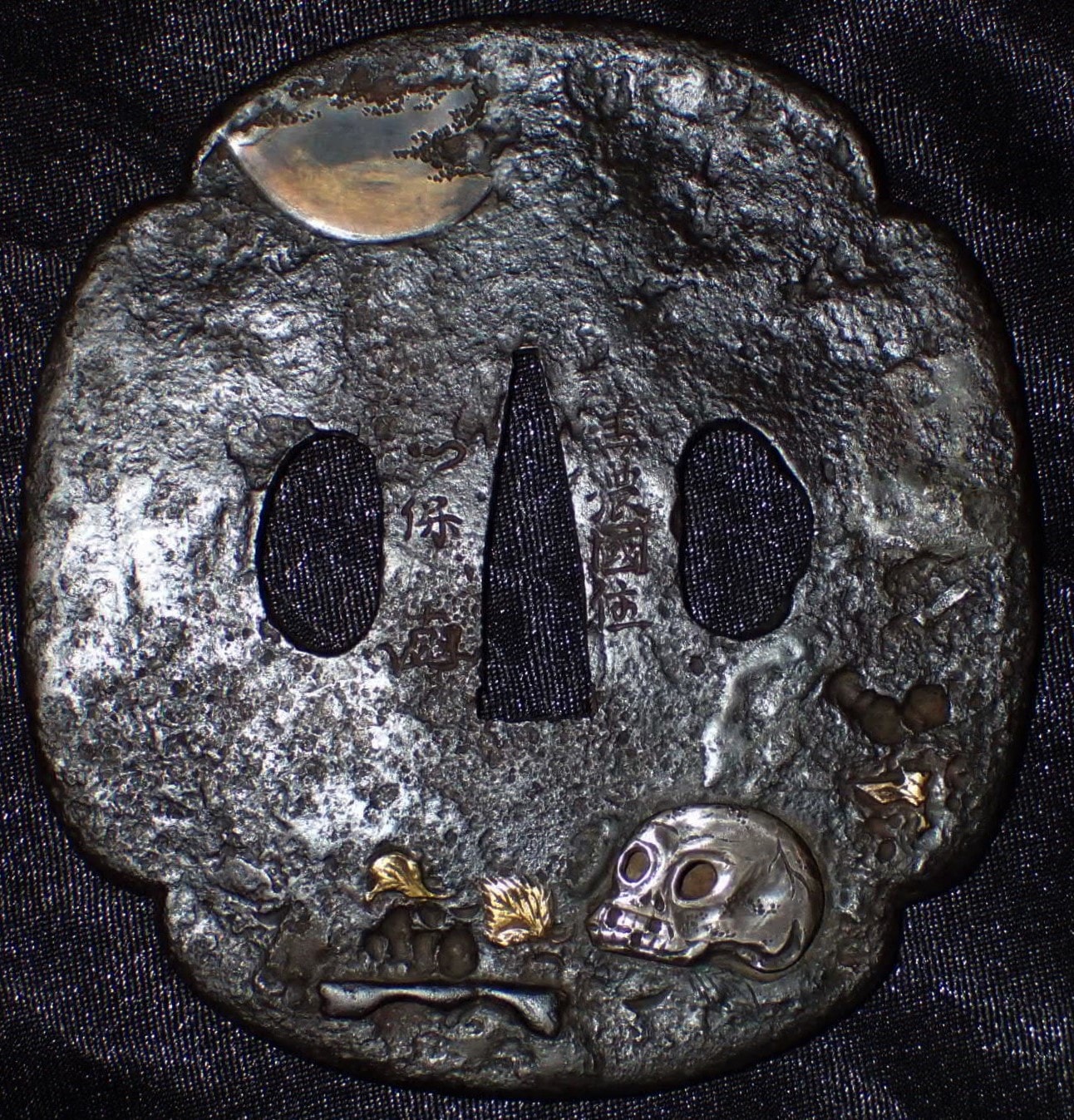
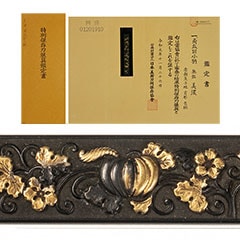
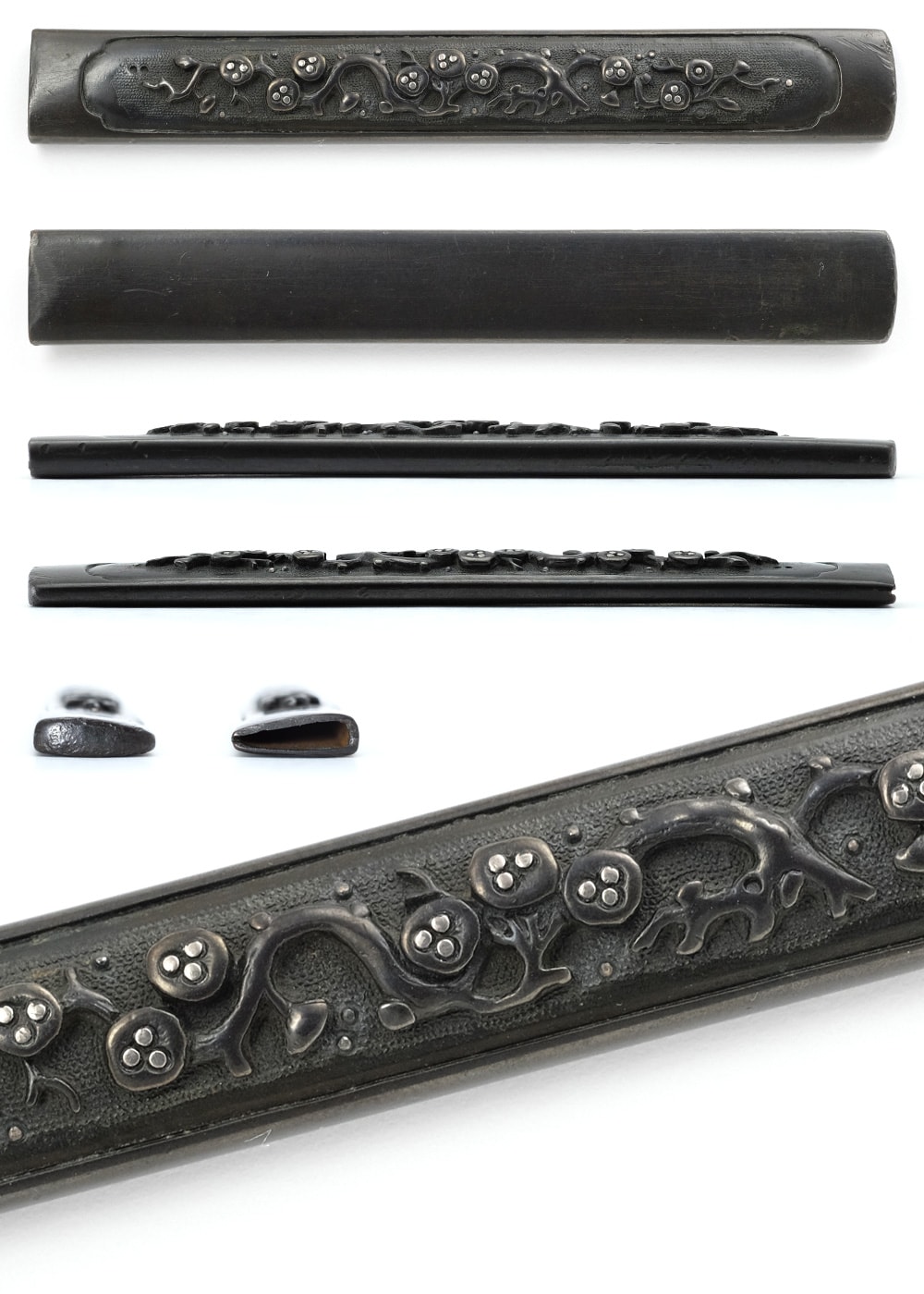
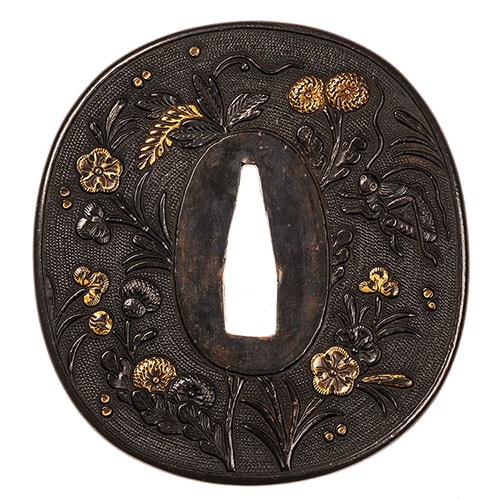
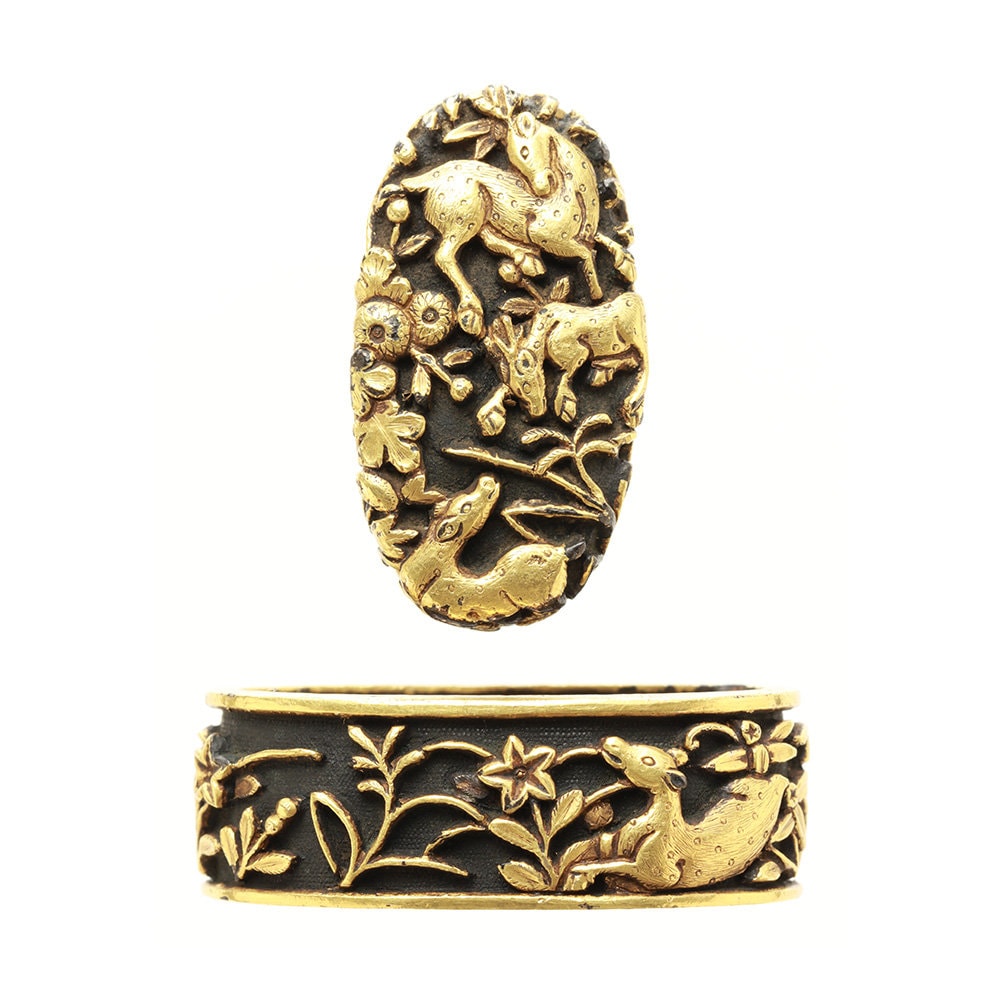
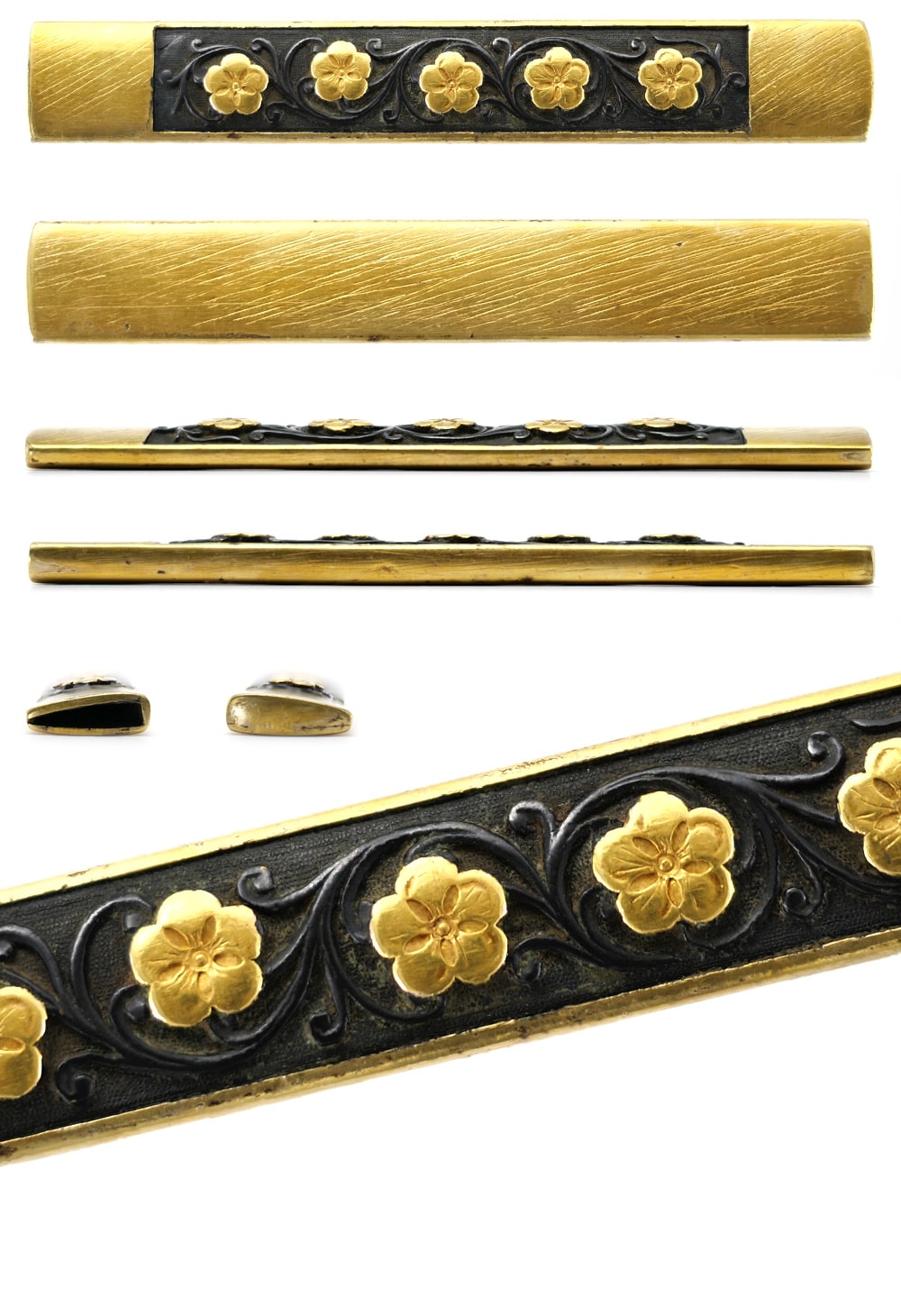
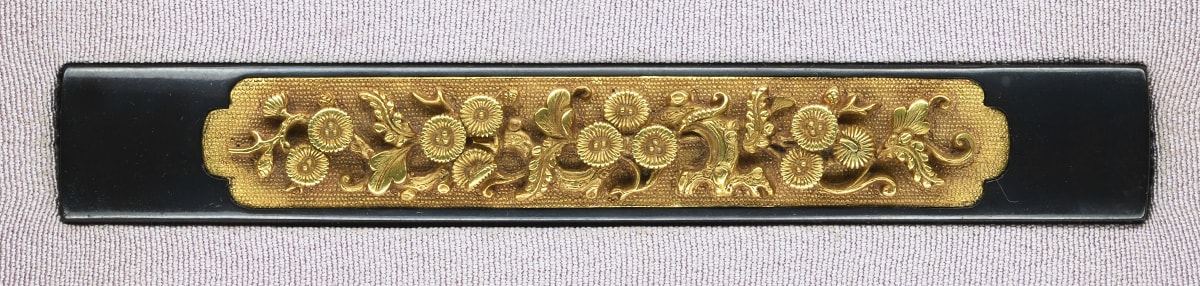
The Ko-Mino school emerged during the mid-to-late Muromachi period, arising at approximately the same time as the Gotō family within the broader tradition of early metalworkers (ko-kinkō). While the Gotō lineage served the Ashikaga shogunal house from the first master Yūjō onward, Ko-Mino artisans operated outside official patronage, maintaining independence and at times working within the cultural sphere of the imperial capital. The school's chronological span extended through the Momoyama period, resulting in a notably wide range of workmanship across generations. Despite this temporal breadth, Ko-Mino developed a distinctive aesthetic identity separate from contemporary schools, establishing patterns and techniques that would define the tradition for generations. The defining characteristic of Ko-Mino work lies in its powerfully sculptural carving method, often described as "Mino's deep carving" (Mino no fukabori). On tsuba, kōgai, and kozuka, crests and motifs are executed with sharply rising chisel edges and pronounced three-dimensional relief achieved through sukidashi-bori and takabori techniques. In menuki, thin metal plates are worked with dramatic alternations of height and depth, frequently incorporating extensive openwork piercings (sukashi) that heighten the sense of movement and sculptural presence.
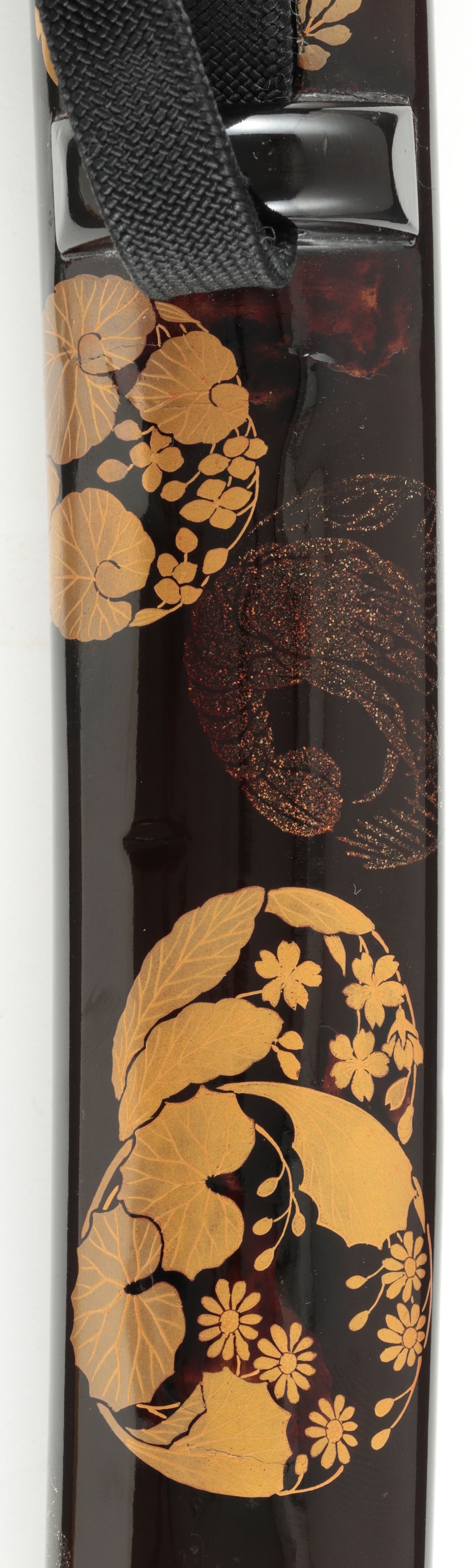
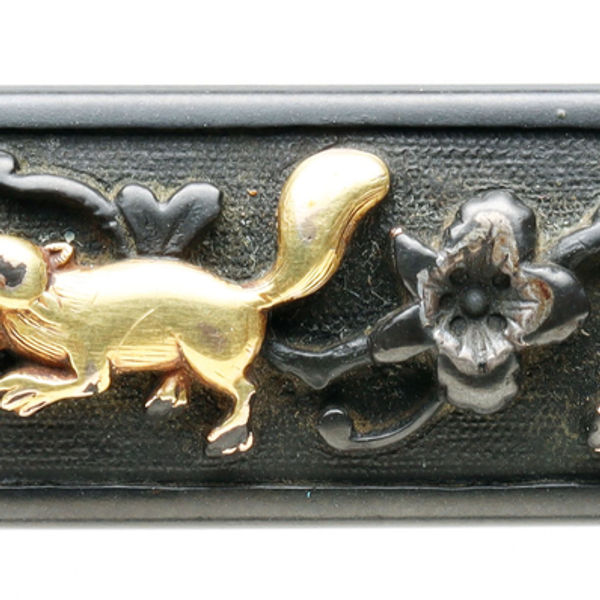
Materials typically include shakudō and yamagane with nanako-ji grounds, embellished with refined gold and silver iroe applied either through uttori (smooth, untextured reserves) or delicate inlay (zōgan). Thematically, Ko-Mino artisans favored autumn grasses—chrysanthemums, bush clover, patrinia—rendered with rich poetic sentiment, as well as grapevines (symbolizing the martial way through wordplay on budō), seaweed and shells (mogai-zu), pine trees, peonies with lions, and dragons. The so-called "Mino dragon" (Mino-ryū) represents a particularly distinctive motif, characterized by a tightly drawn body with numerous piercings and the dragon grasping the sacred jewel from the side, in marked contrast to Gotō dragons. " The school's impact on sword-fitting metalwork extended beyond technical innovation to encompass aesthetic philosophy—balancing sculptural dynamism with refined elegance (gami), and harmonizing powerful carving with delicate surface enrichment. Works exhibit characteristic structural features such as slender kōgai forms with long shafts, finely constricted necks, sharply rising mimikaki heads, and typical warabite terminals. The school's influence persisted into the Edo period, when appreciation for its bold relief carving gave rise to the designation "Mino deep carving," though later works in this manner represent a distinct development from the original Ko-Mino tradition. Through their mastery of three-dimensional carving and their introduction of fresh currents into sword-mounting aesthetics, Ko-Mino artisans established an enduring legacy that balances sculptural presence with courtly refinement. Learn more →