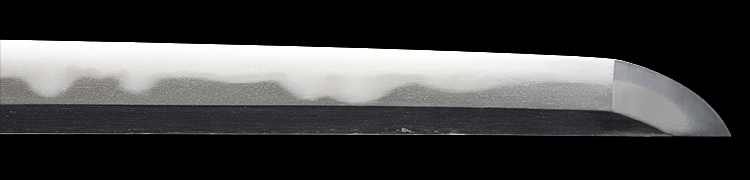
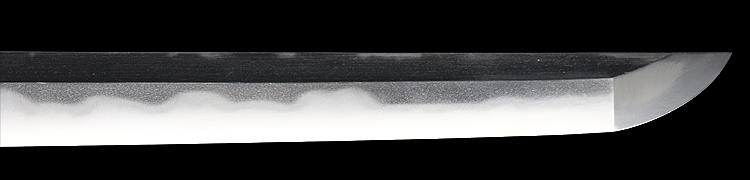
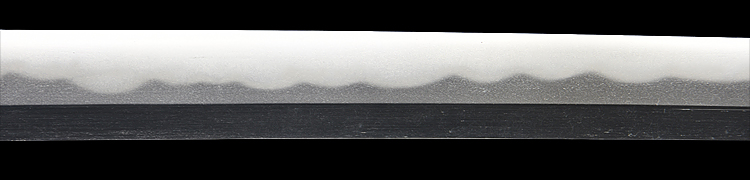
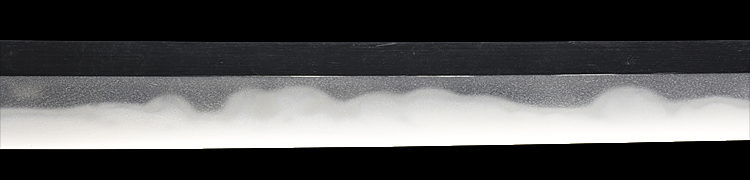
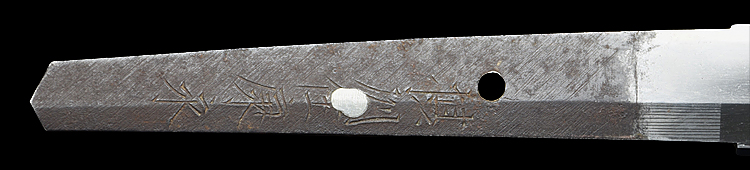
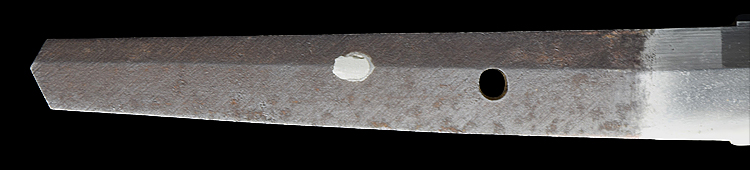
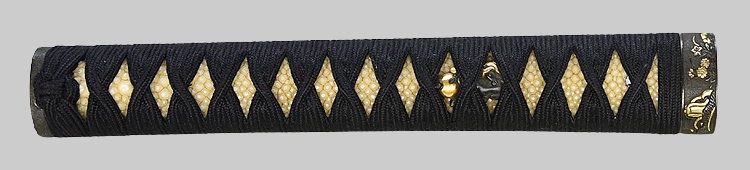
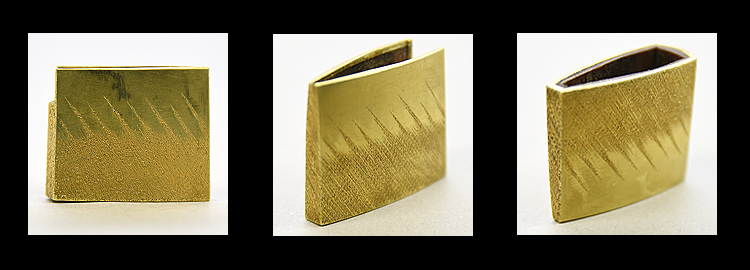
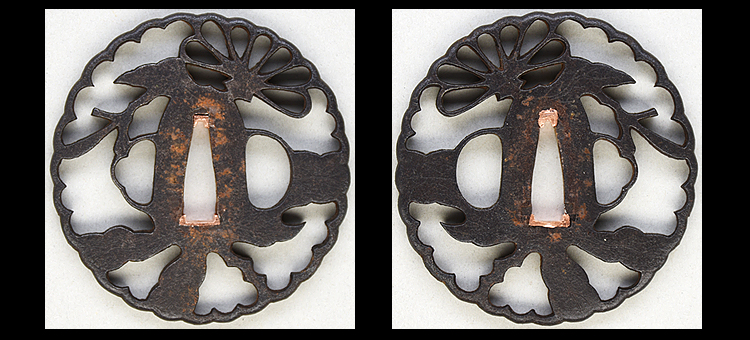
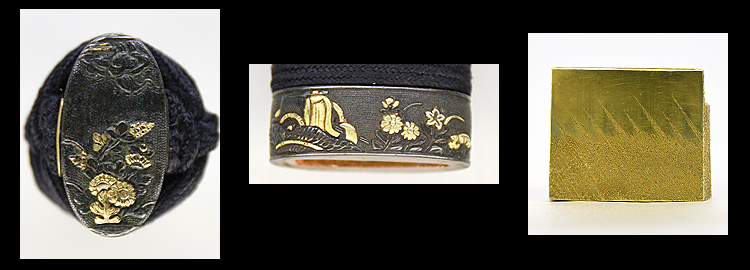
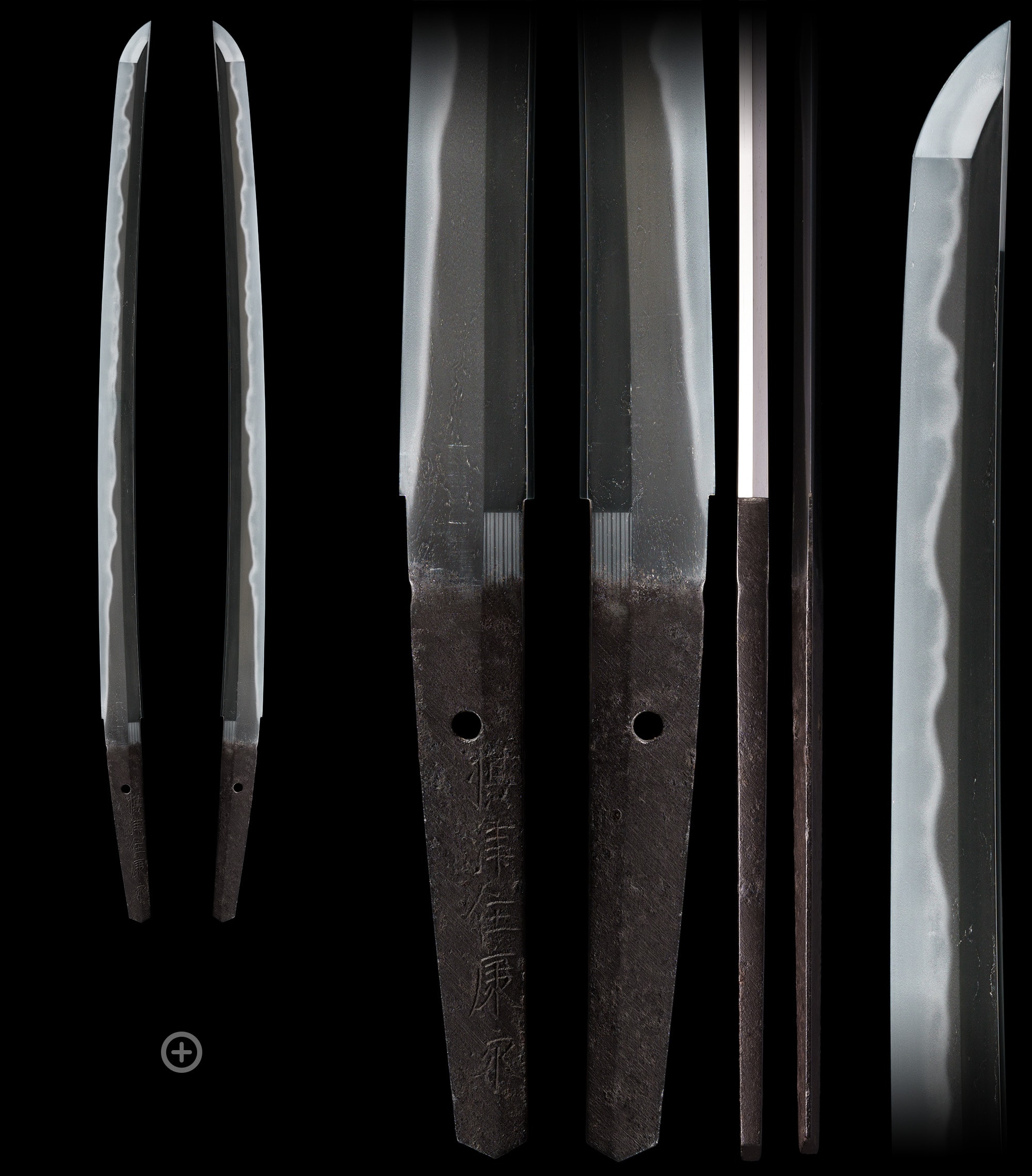
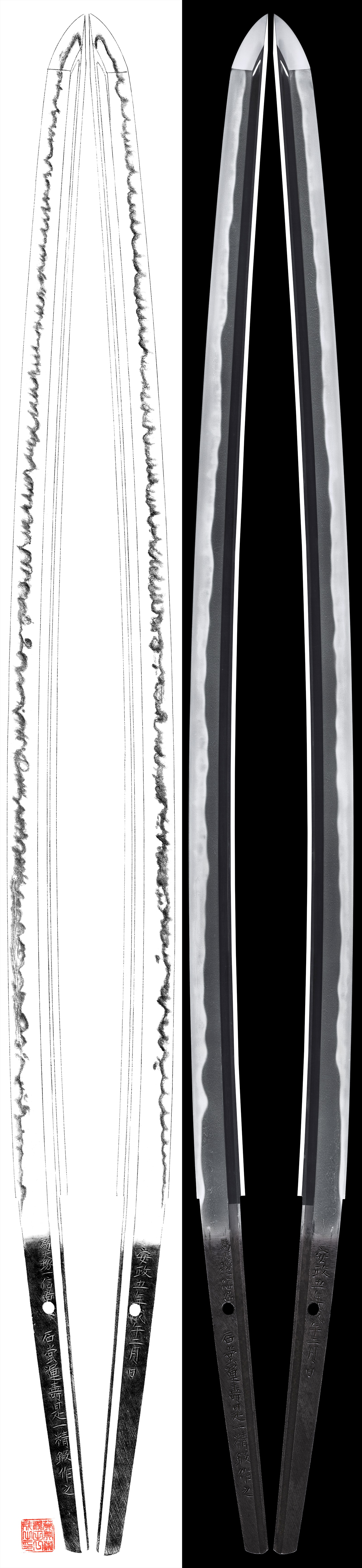
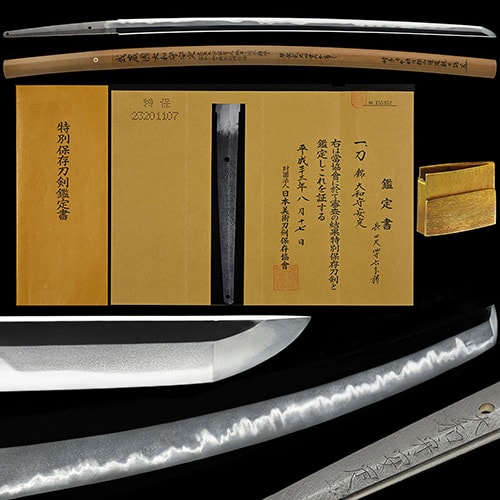
This katana is signed by Yasunaga, a smith from Settsu province and part of the Osaka Ishido school. He was originally from Kishu and a teacher of Tatara Nagayuki, also known to have forged in Dewa. The blade features a robust ko-itame hada mixed with mokume, thick nie, and a vibrant hamon of gunome, choji midare, and togari-ba. It comes with a black roiro saya uchigatana koshirae and is certified as Tokubetsu Hozon by the NBTHK.
mei · Osaka Ishido · Kanbun (1661-1673) · nagasa 72.5cm · sori 1.1cm


Shinto · Settsu · around 1661-1673
Fujishiro Jo saku · Tōken Taikan top 76%
1 piece on the market now
Where Yasunaga stands among comparable artisans: across all of nihontō, and within tradition, era, and period. The tiers (Foremost · Leading · Major · Notable) weigh official designations from the NBTHK and Japan's Agency for Cultural Affairs, together with historical honors of lasting repute such as the Sansaku and Meibutsu-chō.
Select a lens to see how it's measured.
Shinto · Settsu
2 pieces on the market now
Settsu Province, and Osaka in particular, gathered the smiths the setsumei group under the name Osaka Ishido (大坂石堂). " Within that movement the setsumei trace a clear chain of teaching. Bicchu no Kami Yasuhiro stood at the head of the Kishu group, his followers sharing the "yasu"[[c:1]] element in their names; Kawachi no Kami Yasunaga, styled Hachizaemon, studied under Yasuhiro, moved from Kishu to Osaka, and took the title Kawachi no Kami. Learn more →
| Smith | Era | Designated |
|---|---|---|
| Nagayuki長幸 | 1673-1681 | 10 |
| Sukeharu祐春 | 1661-1690 | 0 |
| Sukekuni祐國 | 1661-1673 | 1 |
| Yasunaga康永 | 1661-1673 | 1 |
A Hozon-certified blade judged to show notably superior workmanship and a better state of preservation. The bar is higher: re-tempered blades and most unsigned Muromachi/Edo works are excluded.
The NBTHK (Nihon Bijutsu Tōken Hozon Kyōkai, the Society for the Preservation of Japanese Art Swords) is a public-interest incorporated foundation founded in 1948 and supervised by Japan’s Agency for Cultural Affairs (Bunkachō); it is based at the Japanese Sword Museum in Tokyo. Its expert panels physically examine each submitted work (shinsa) and issue a certificate (kanteishō) ranking it by artistic and historical merit. NBTHK papers are the most widely recognized standard of authentication for Japanese swords and fittings.
NBTHK official siteWithin one week of the item's arrival (cooling-off is possible within Japan only). For defects that differ from the purchase conditions, we will accept the return and refund the payment. For other cases such as overseas, we will consult separately.
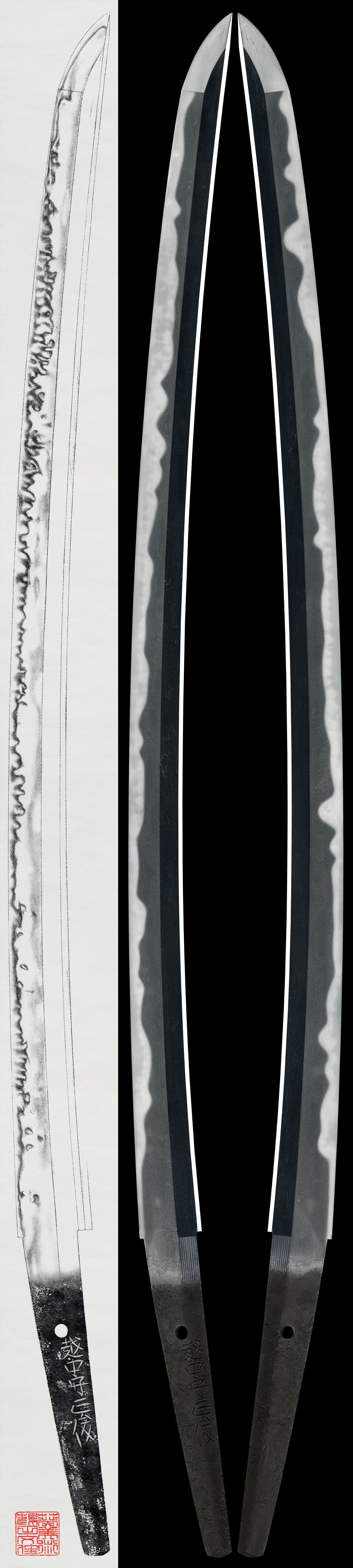
This katana is signed by Yasunaga, a smith from Settsu province and part of the Osaka Ishido school. He was originally from Kishu and a teacher of Tatara Nagayuki, also known to have forged in Dewa. The blade features a robust ko-itame hada mixed with mokume, thick nie, and a vibrant hamon of gunome, choji midare, and togari-ba. It comes with a black roiro saya uchigatana koshirae and is certified as Tokubetsu Hozon by the NBTHK.
mei · Osaka Ishido · Kanbun (1661-1673) · nagasa 72.5cm · sori 1.1cm


Shinto · Settsu · around 1661-1673
Fujishiro Jo saku · Tōken Taikan top 76%
1 piece on the market now
Where Yasunaga stands among comparable artisans: across all of nihontō, and within tradition, era, and period. The tiers (Foremost · Leading · Major · Notable) weigh official designations from the NBTHK and Japan's Agency for Cultural Affairs, together with historical honors of lasting repute such as the Sansaku and Meibutsu-chō.
Select a lens to see how it's measured.
Shinto · Settsu
2 pieces on the market now
Settsu Province, and Osaka in particular, gathered the smiths the setsumei group under the name Osaka Ishido (大坂石堂). " Within that movement the setsumei trace a clear chain of teaching. Bicchu no Kami Yasuhiro stood at the head of the Kishu group, his followers sharing the "yasu"[[c:1]] element in their names; Kawachi no Kami Yasunaga, styled Hachizaemon, studied under Yasuhiro, moved from Kishu to Osaka, and took the title Kawachi no Kami. Learn more →
| Smith | Era | Designated |
|---|---|---|
| Nagayuki長幸 | 1673-1681 | 10 |
| Sukeharu祐春 | 1661-1690 | 0 |
| Sukekuni祐國 | 1661-1673 | 1 |
| Yasunaga康永 | 1661-1673 | 1 |
A Hozon-certified blade judged to show notably superior workmanship and a better state of preservation. The bar is higher: re-tempered blades and most unsigned Muromachi/Edo works are excluded.
The NBTHK (Nihon Bijutsu Tōken Hozon Kyōkai, the Society for the Preservation of Japanese Art Swords) is a public-interest incorporated foundation founded in 1948 and supervised by Japan’s Agency for Cultural Affairs (Bunkachō); it is based at the Japanese Sword Museum in Tokyo. Its expert panels physically examine each submitted work (shinsa) and issue a certificate (kanteishō) ranking it by artistic and historical merit. NBTHK papers are the most widely recognized standard of authentication for Japanese swords and fittings.
NBTHK official siteWithin one week of the item's arrival (cooling-off is possible within Japan only). For defects that differ from the purchase conditions, we will accept the return and refund the payment. For other cases such as overseas, we will consult separately.