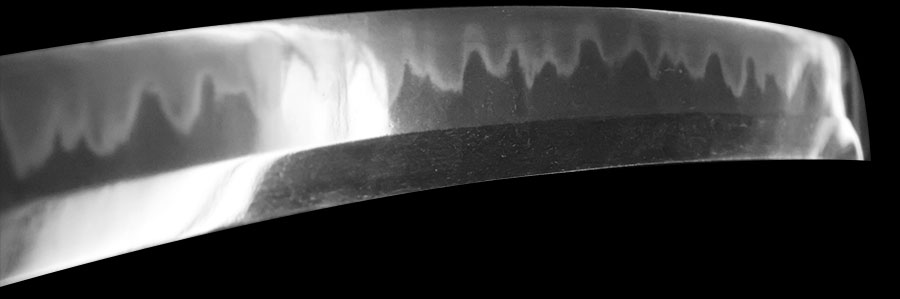
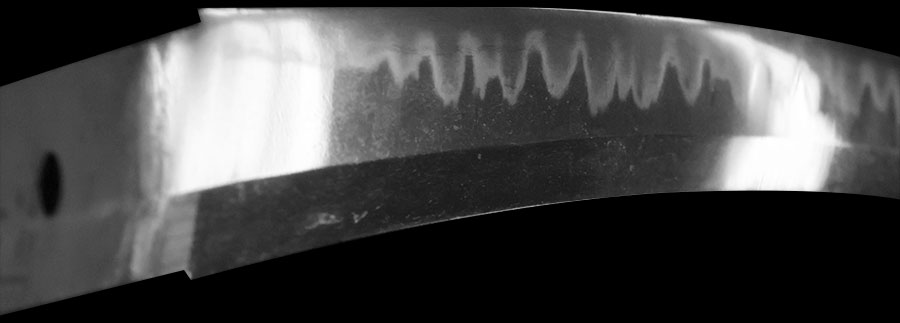
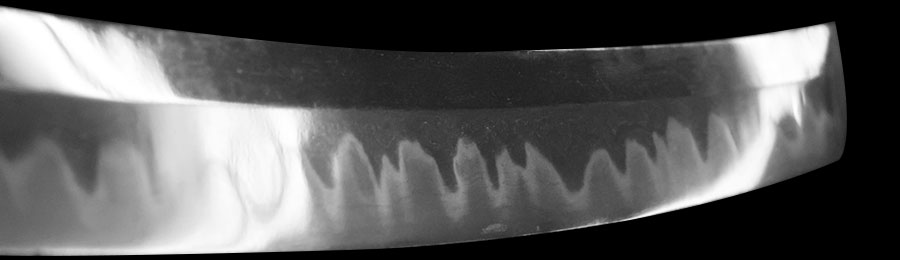
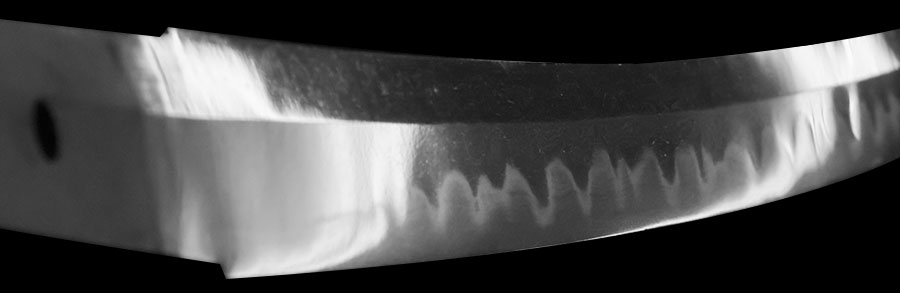
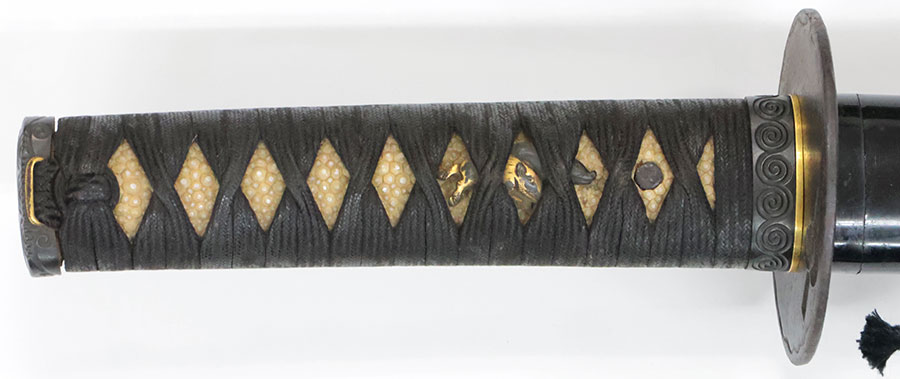
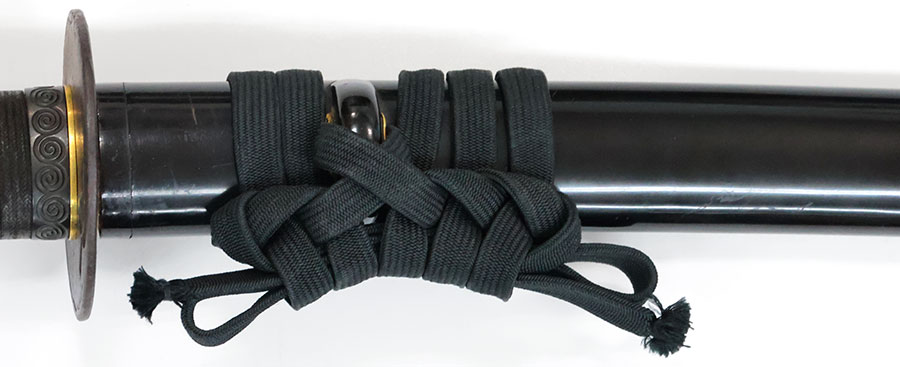
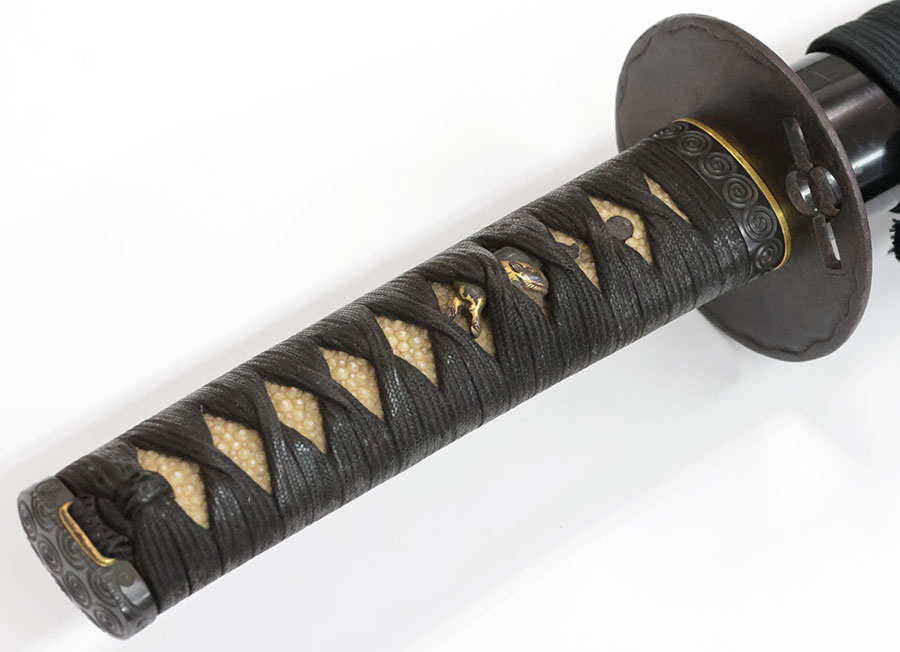
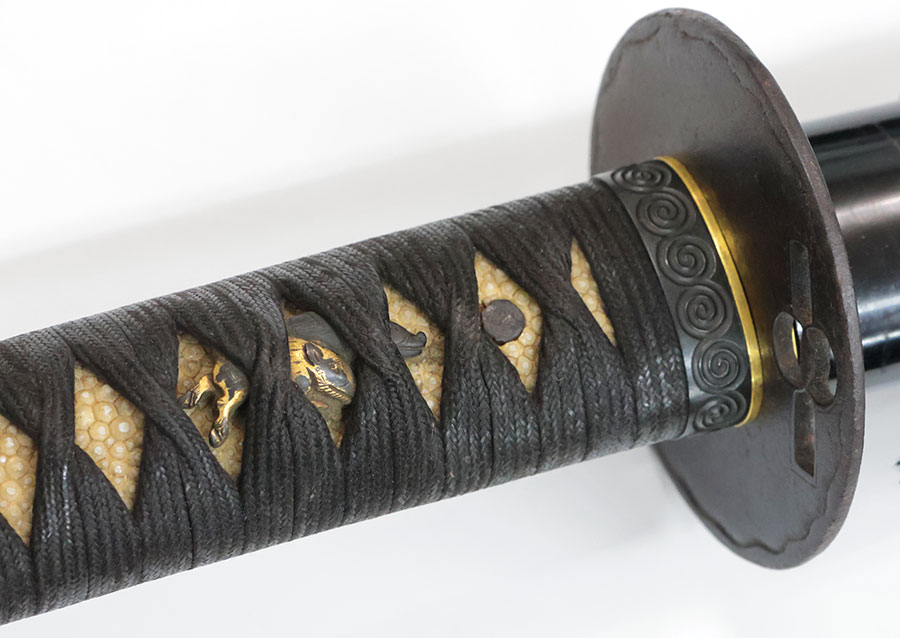
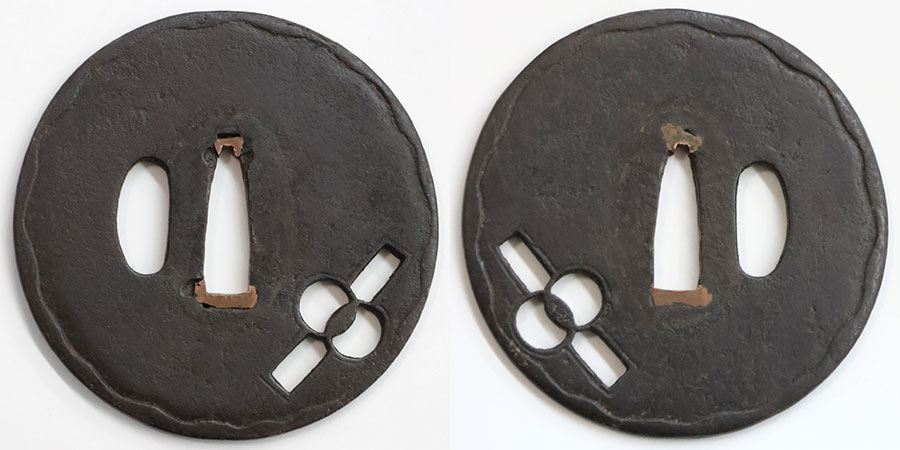
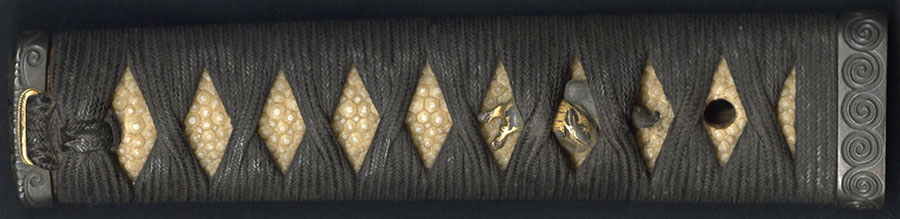
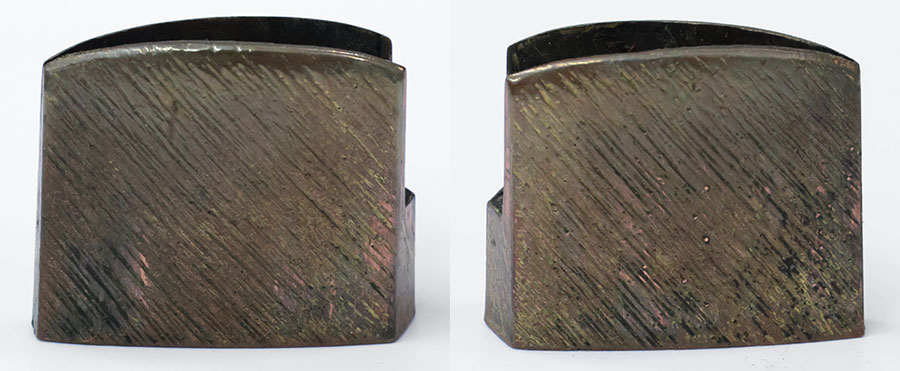
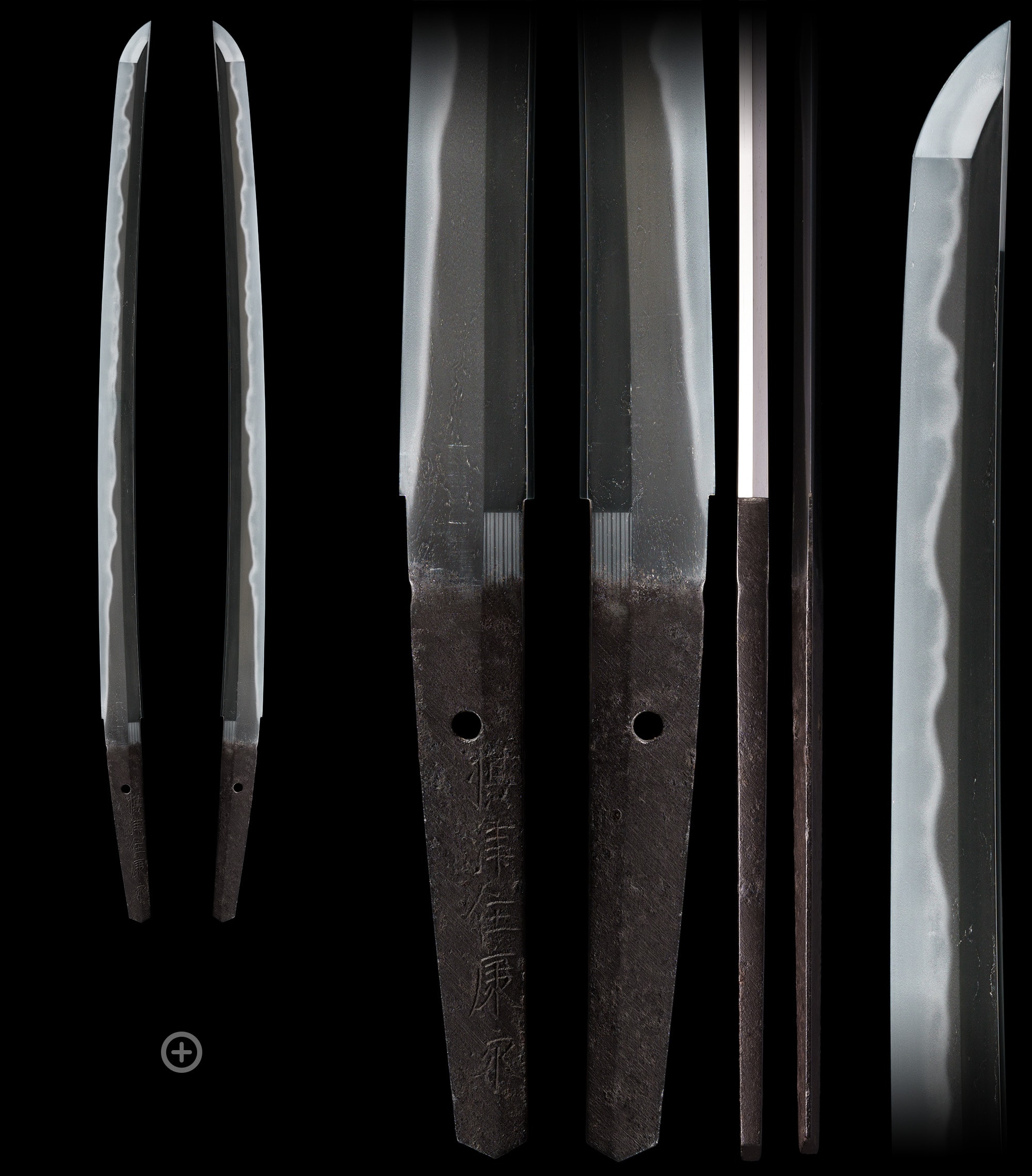
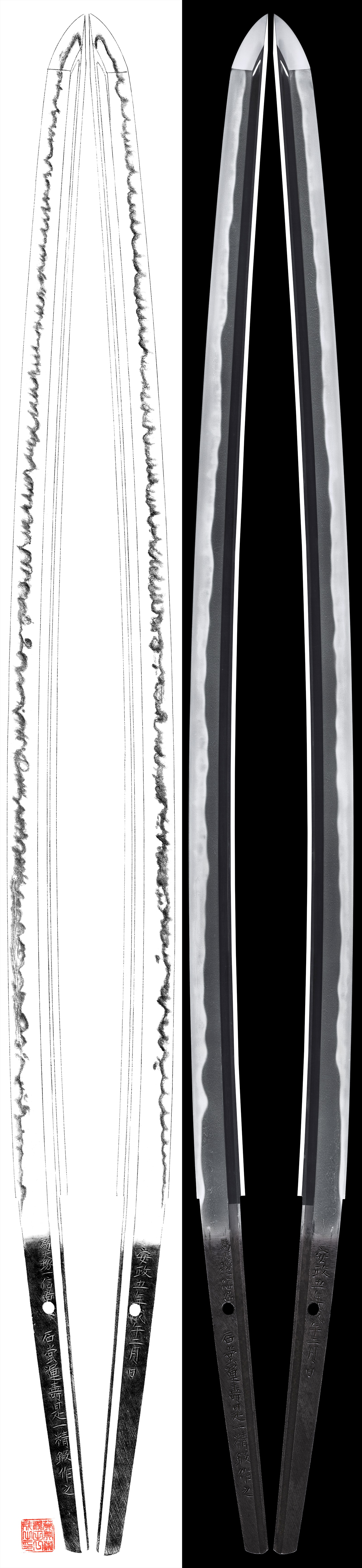
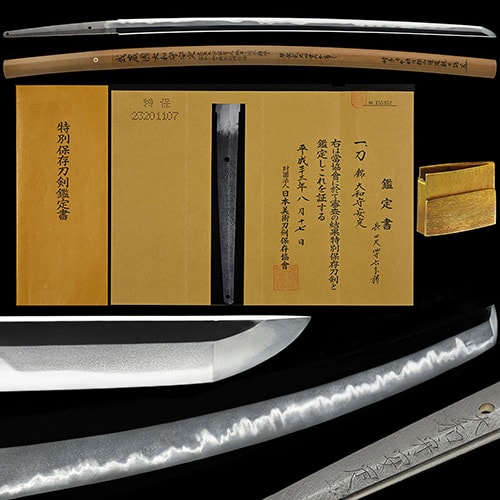
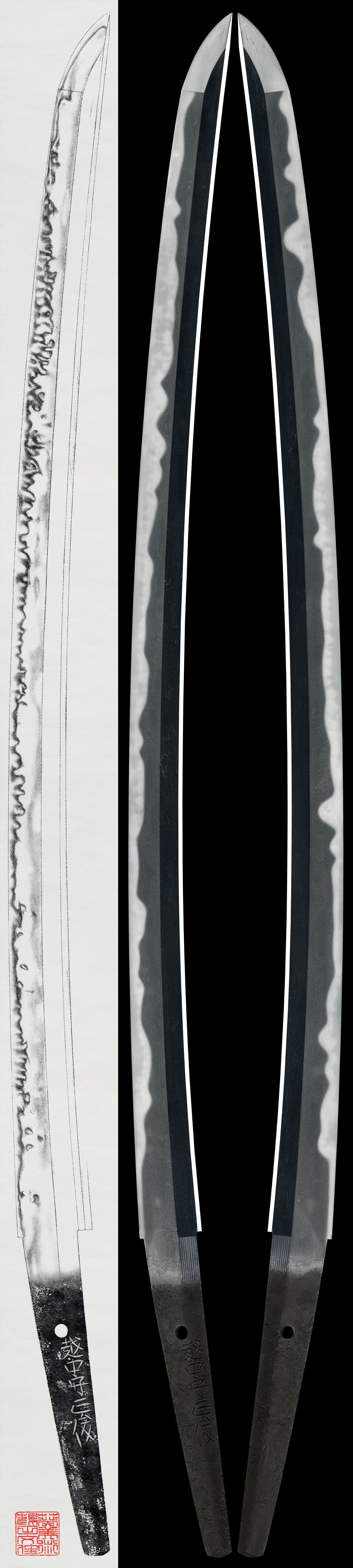
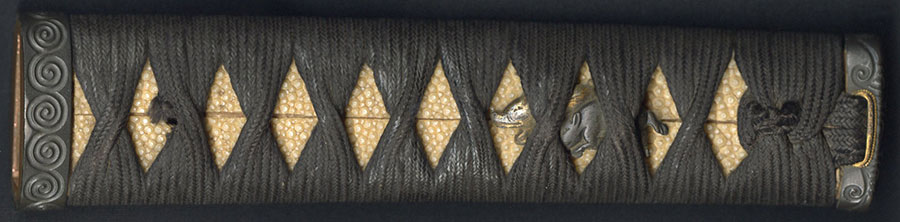
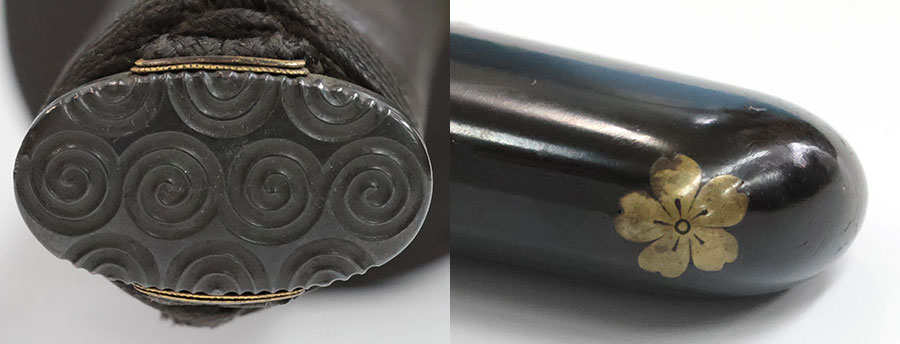
It has arrived, it has arrived—a precious wakizashi by Kawachi no Kami Minamoto Yasunaga, famously known as the master of the renowned Saijo Owazamono smith, Tatara Nagayuki. Kawachi no Kami Minamoto Yasunaga was the younger brother of Tachibana Yasuhiro, who is said to be the founder of the Kishu Ishido school, and he later relocated to Osaka. He was a master smith of the Osaka Ishido school who was active during the Enpo era (1673) (353 years ago), the same period as Inoue Shinkai and Tsuda Echizen no Kami Sukehiro. This wakizashi exhibits a sugata similar to the works of Kotetsu in Edo, with a thick moto-kasane and a noticeable difference between the moto-mihaba and saki-mihaba, featuring shallow sori. The jigane is forged in ko-itame hada, presenting a powerful texture. The hamon is composed of nioi-deki with ko-nie, fired in a high-set gunome choji-ba that displays a magnificent and spirited temperament. The koshirae, featuring fuchi-kashira made of shakudo-ji with guri-bori (scroll carving) by Yamagata Shonai kinko smiths, adds further elegance to this wakizashi. This wakizashi has been carefully preserved for generations by a high-ranking samurai family of the old Yamagata Shonai Domain. Because the owners have grown old and requested that it be passed on cheaply to someone who will cherish it, and because there is some light rust due to age, we are offering it at a special bargain price of one-third its value for those who enjoy performing their own maintenance. Please enjoy this wakizashi by the Osaka Shinto master smith Kawachi no Kami Minamoto Yasunaga, the teacher of Tatara Nagayuki.
Edo · nagasa 57.6cm · sori 1.1cm


Shinto · Settsu · around 1661-1673
Fujishiro Jo saku · Tōken Taikan top 76%
1 piece on the market now
Where Yasunaga stands among comparable artisans: across all of nihontō, and within tradition, era, and period. The tiers (Foremost · Leading · Major · Notable) weigh official designations from the NBTHK and Japan's Agency for Cultural Affairs, together with historical honors of lasting repute such as the Sansaku and Meibutsu-chō.
Select a lens to see how it's measured.
Shinto · Settsu
2 pieces on the market now
Settsu Province, and Osaka in particular, gathered the smiths the setsumei group under the name Osaka Ishido (大坂石堂). " Within that movement the setsumei trace a clear chain of teaching. Bicchu no Kami Yasuhiro stood at the head of the Kishu group, his followers sharing the "yasu"[[c:1]] element in their names; Kawachi no Kami Yasunaga, styled Hachizaemon, studied under Yasuhiro, moved from Kishu to Osaka, and took the title Kawachi no Kami. Learn more →
| Smith | Era | Designated |
|---|---|---|
| Nagayuki長幸 | 1673-1681 | 10 |
| Sukeharu祐春 | 1661-1690 | 0 |
| Sukekuni祐國 | 1661-1673 | 1 |
| Yasunaga康永 | 1661-1673 | 1 |
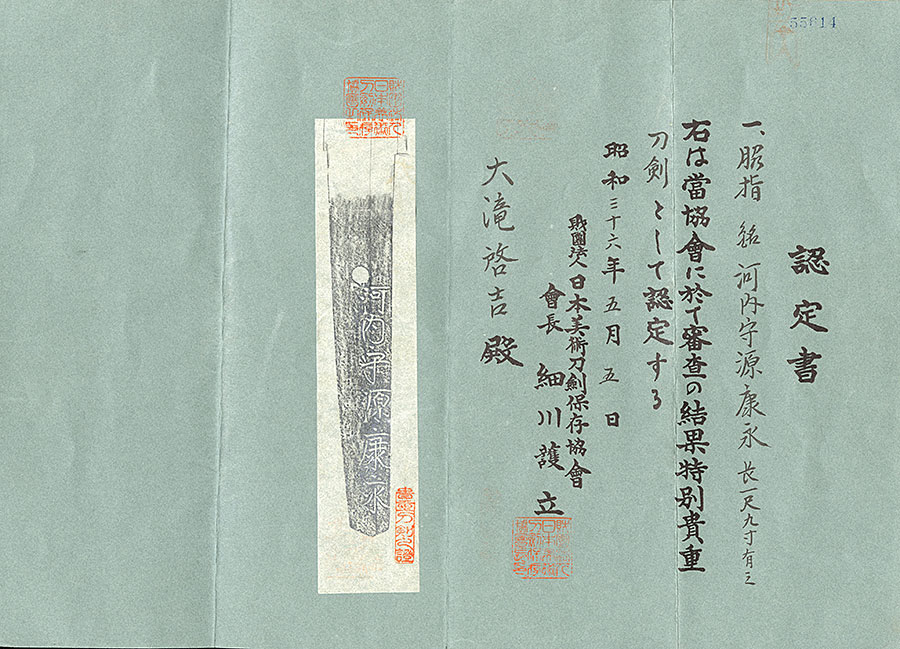
This work carries older NBTHK “Kichō”-era papers, which the NBTHK no longer issues and now regards as unreliable. To confirm the attribution, submission to an official Japanese examination body (such as the NBTHK or NTHK) for modern certification could be considered.
For returns due to customer circumstances, the cost is the customer's responsibility. For returns due to our mis-shipment or a defective item, we bear the cost.
It has arrived, it has arrived—a precious wakizashi by Kawachi no Kami Minamoto Yasunaga, famously known as the master of the renowned Saijo Owazamono smith, Tatara Nagayuki. Kawachi no Kami Minamoto Yasunaga was the younger brother of Tachibana Yasuhiro, who is said to be the founder of the Kishu Ishido school, and he later relocated to Osaka. He was a master smith of the Osaka Ishido school who was active during the Enpo era (1673) (353 years ago), the same period as Inoue Shinkai and Tsuda Echizen no Kami Sukehiro. This wakizashi exhibits a sugata similar to the works of Kotetsu in Edo, with a thick moto-kasane and a noticeable difference between the moto-mihaba and saki-mihaba, featuring shallow sori. The jigane is forged in ko-itame hada, presenting a powerful texture. The hamon is composed of nioi-deki with ko-nie, fired in a high-set gunome choji-ba that displays a magnificent and spirited temperament. The koshirae, featuring fuchi-kashira made of shakudo-ji with guri-bori (scroll carving) by Yamagata Shonai kinko smiths, adds further elegance to this wakizashi. This wakizashi has been carefully preserved for generations by a high-ranking samurai family of the old Yamagata Shonai Domain. Because the owners have grown old and requested that it be passed on cheaply to someone who will cherish it, and because there is some light rust due to age, we are offering it at a special bargain price of one-third its value for those who enjoy performing their own maintenance. Please enjoy this wakizashi by the Osaka Shinto master smith Kawachi no Kami Minamoto Yasunaga, the teacher of Tatara Nagayuki.
Edo · nagasa 57.6cm · sori 1.1cm


Shinto · Settsu · around 1661-1673
Fujishiro Jo saku · Tōken Taikan top 76%
1 piece on the market now
Where Yasunaga stands among comparable artisans: across all of nihontō, and within tradition, era, and period. The tiers (Foremost · Leading · Major · Notable) weigh official designations from the NBTHK and Japan's Agency for Cultural Affairs, together with historical honors of lasting repute such as the Sansaku and Meibutsu-chō.
Select a lens to see how it's measured.
Shinto · Settsu
2 pieces on the market now
Settsu Province, and Osaka in particular, gathered the smiths the setsumei group under the name Osaka Ishido (大坂石堂). " Within that movement the setsumei trace a clear chain of teaching. Bicchu no Kami Yasuhiro stood at the head of the Kishu group, his followers sharing the "yasu"[[c:1]] element in their names; Kawachi no Kami Yasunaga, styled Hachizaemon, studied under Yasuhiro, moved from Kishu to Osaka, and took the title Kawachi no Kami. Learn more →
| Smith | Era | Designated |
|---|---|---|
| Nagayuki長幸 | 1673-1681 | 10 |
| Sukeharu祐春 | 1661-1690 | 0 |
| Sukekuni祐國 | 1661-1673 | 1 |
| Yasunaga康永 | 1661-1673 | 1 |
This work carries older NBTHK “Kichō”-era papers, which the NBTHK no longer issues and now regards as unreliable. To confirm the attribution, submission to an official Japanese examination body (such as the NBTHK or NTHK) for modern certification could be considered.
For returns due to customer circumstances, the cost is the customer's responsibility. For returns due to our mis-shipment or a defective item, we bear the cost.