NihontoWatch MonNihontoWatch
Market
Encyclopedia
Kantei
NihontoWatch MonNihontoWatch
Market
Encyclopedia
Kantei

Description

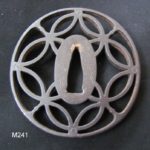
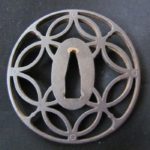
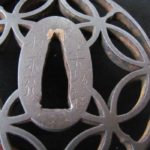
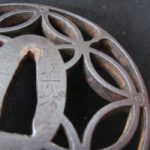
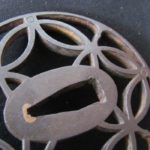
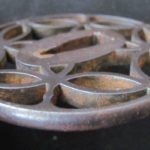
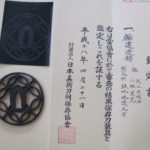
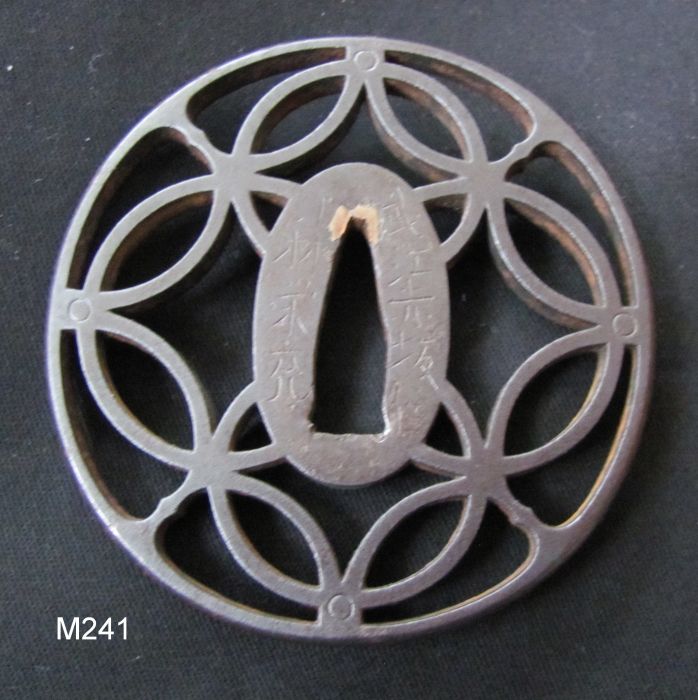
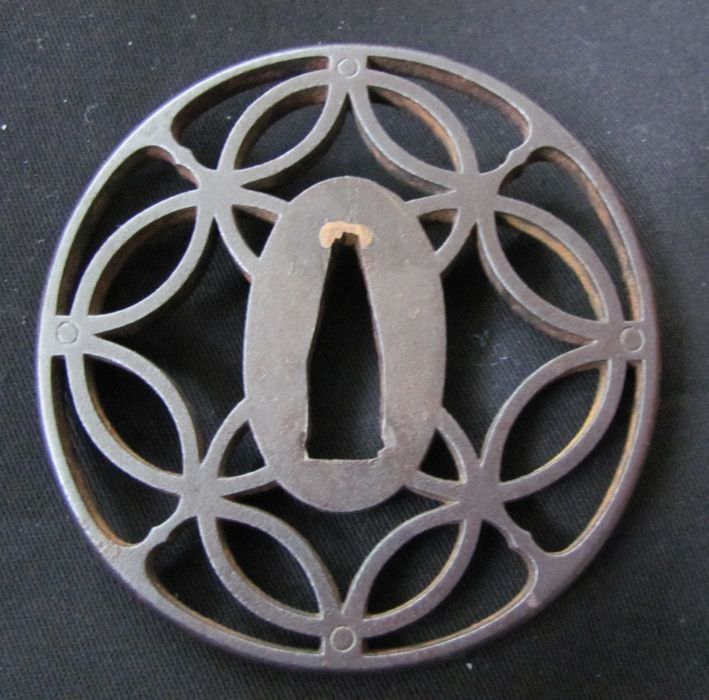
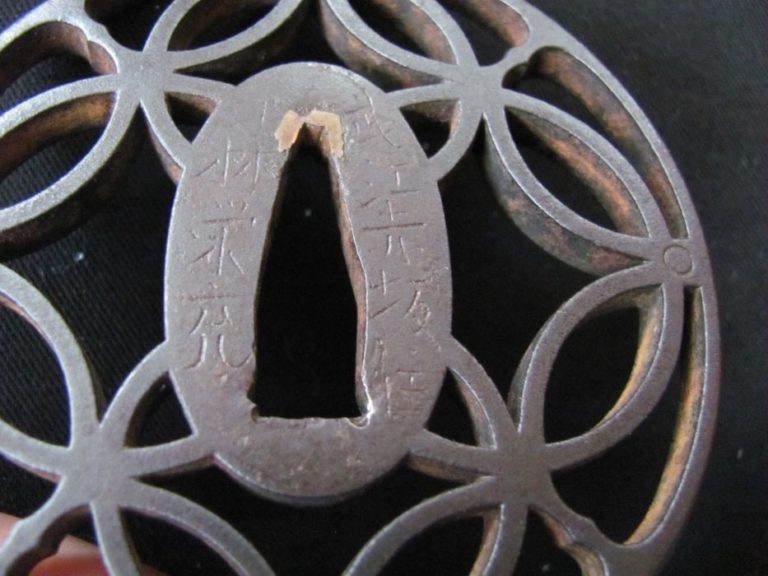
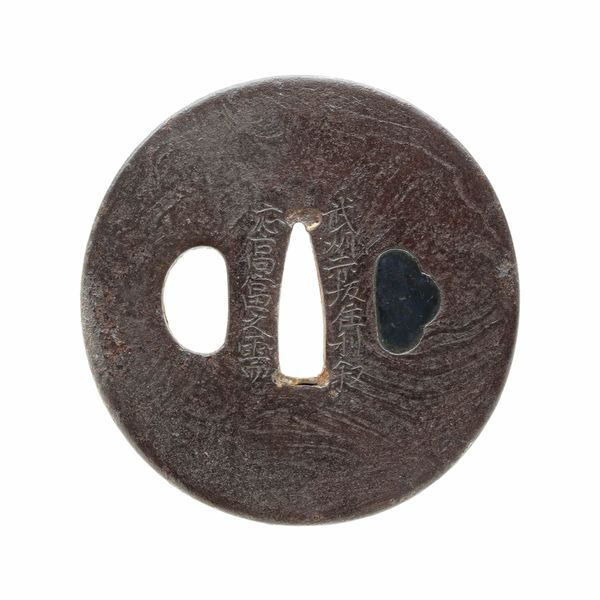
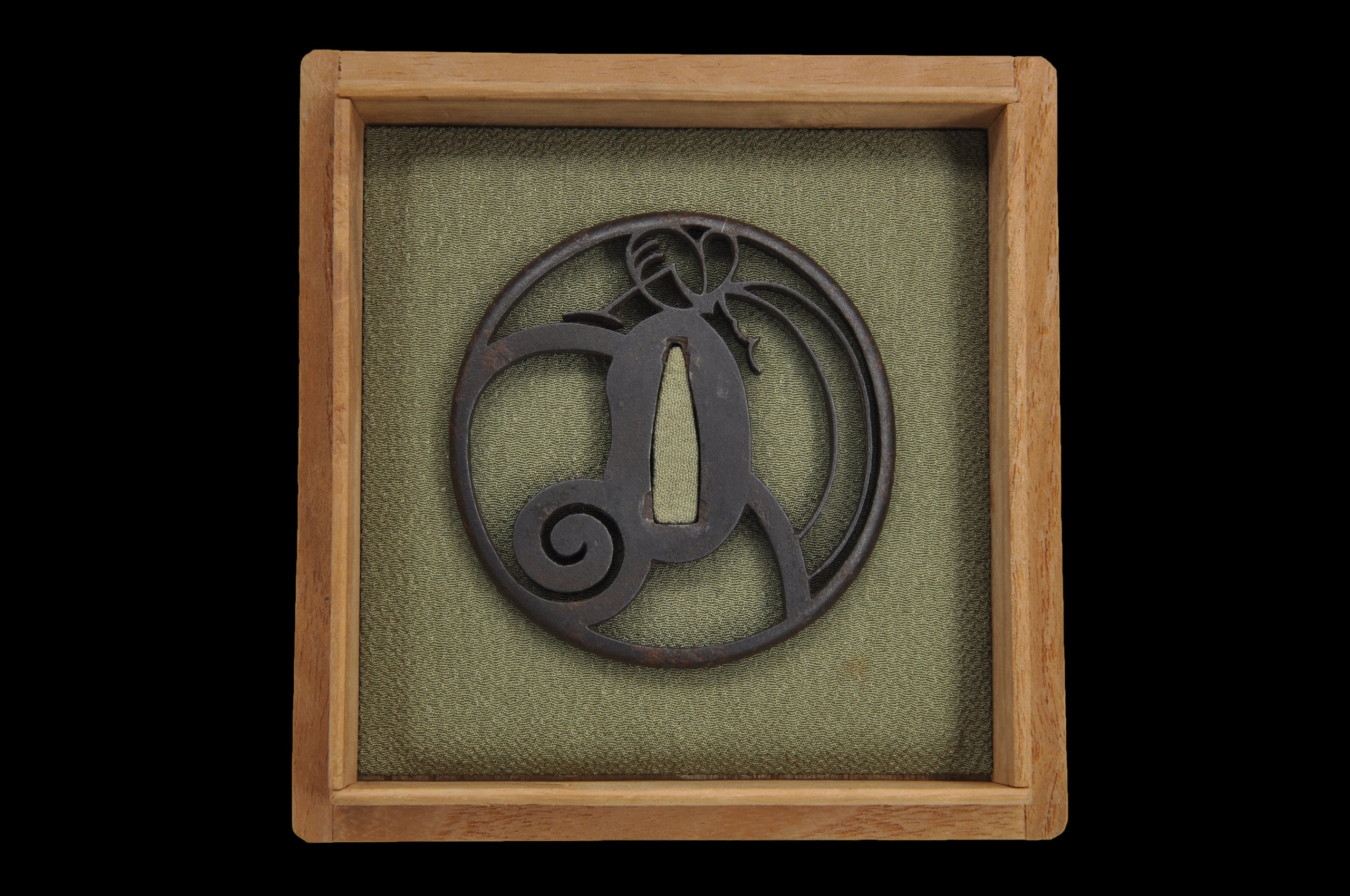
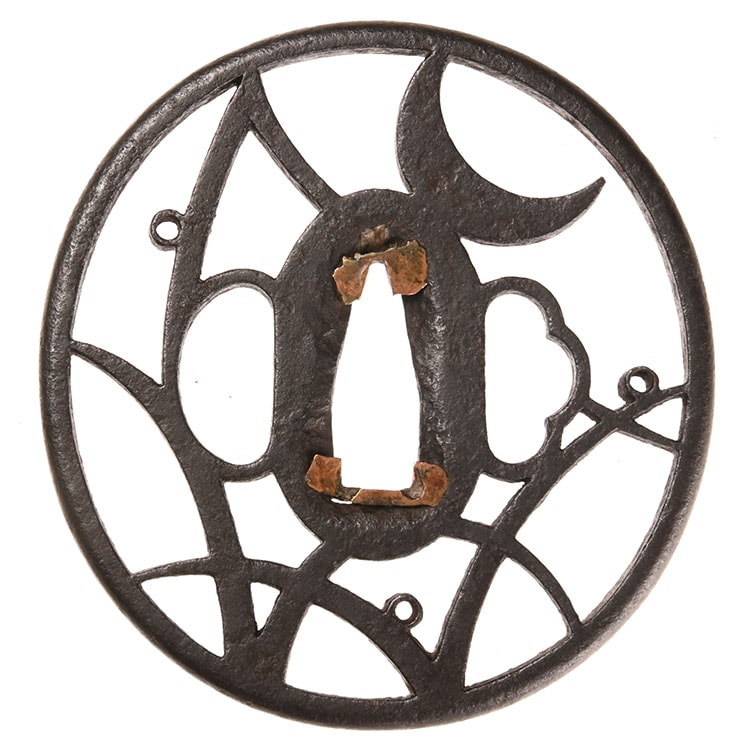
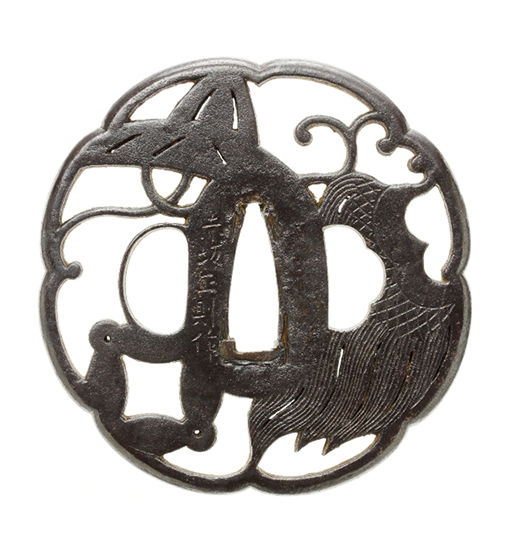
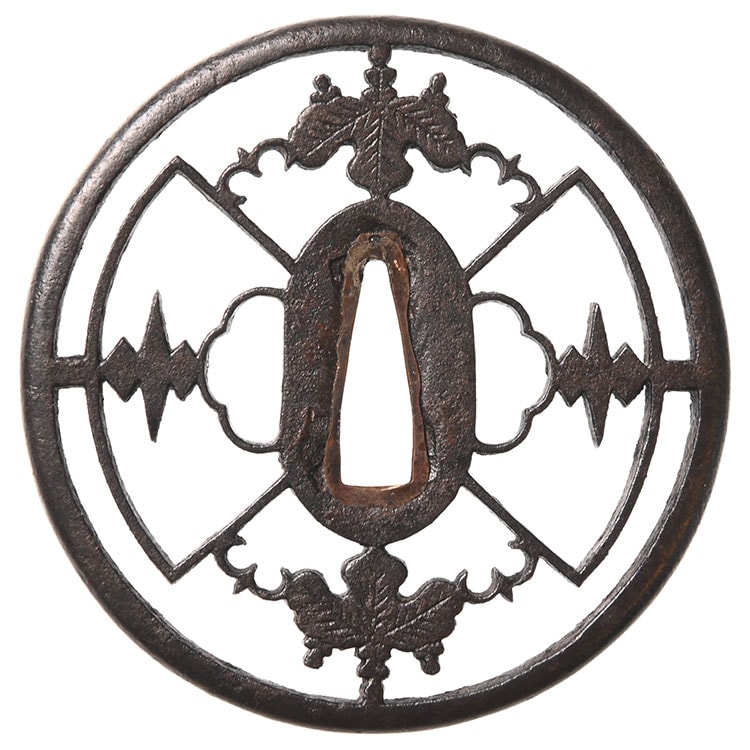
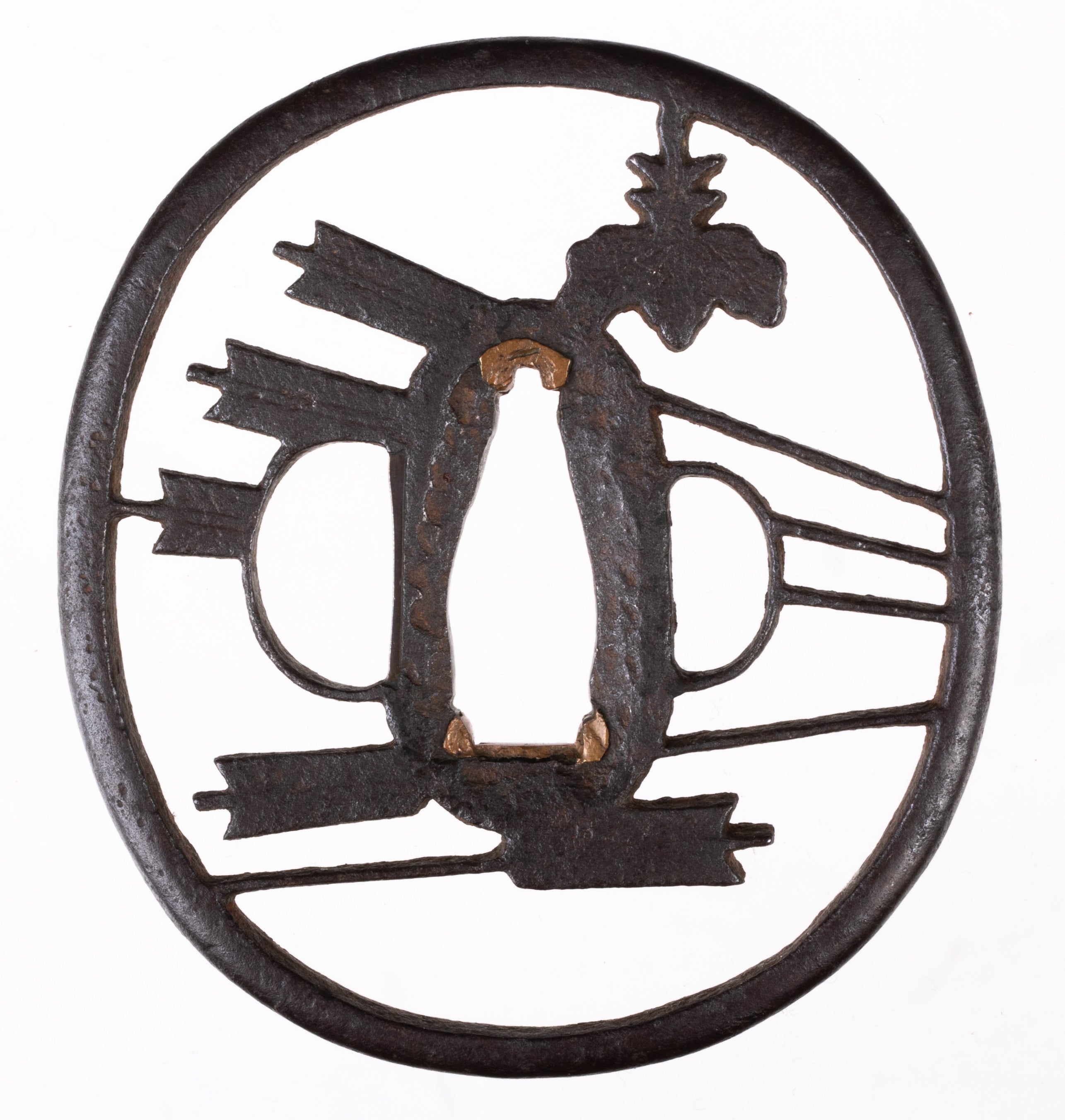
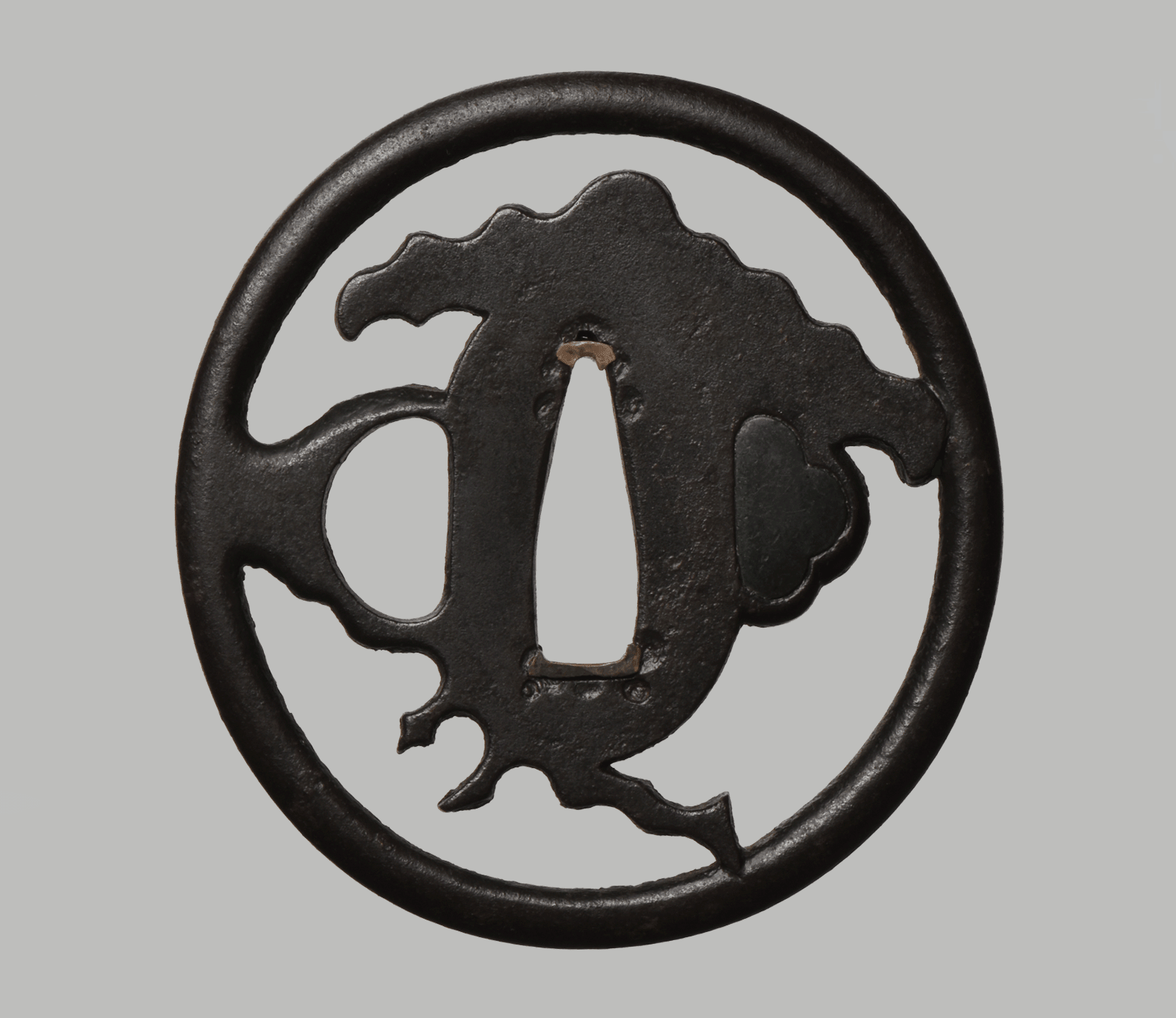
This is a signed Akasaka sukashi tsuba by Eiju, measuring 7.4 x 7.6 x 0.45 cm. It comes with an NBTHK Hozon paper from 2006, confirming its authenticity. The tsuba is in excellent condition and features a nakago hitsu-ana of 0.8 x 2.5 cm.

NihontoWatch MonNihontoWatch
MarketEncyclopediaKantei
Swords›Akasaka›Akasaka Sukashi Tsuba by Eiju, Papered
unknown
Akasaka School

Akasaka Sukashi Tsuba by Eiju, Papered

mei · Akasaka · Edo

SOLD
Could you name the smith from the blade alone? Today’s kantei →
Akasaka School — 1 of 10
Akasaka School — 2 of 10
Akasaka School — 3 of 10
Akasaka School — 4 of 10
Akasaka School — 5 of 10
Akasaka School — 6 of 10
Akasaka School — 7 of 10
Akasaka School — 8 of 10
Akasaka School — 9 of 10
Akasaka School — 10 of 10
1 / 10
1 / 10
Akasaka School — 1 of 10Akasaka School — 2 of 10Akasaka School — 3 of 10Akasaka School — 4 of 10Akasaka School — 5 of 10Akasaka School — 6 of 10Akasaka School — 7 of 10Akasaka School — 8 of 10Akasaka School — 9 of 10Akasaka School — 10 of 10
Could you name the smith from the blade alone? Today’s kantei →
Measurements & details
Smith

Akasaka

Era

Edo

Province

Musashi

Signature

Signed

Description

This is a signed Akasaka sukashi tsuba by Eiju, measuring 7.4 x 7.6 x 0.45 cm. It comes with an NBTHK Hozon paper from 2006, confirming its authenticity. The tsuba is in excellent condition and features a nakago hitsu-ana of 0.8 x 2.5 cm.

About the school

Akasaka

赤坂

Iron-tsuba · Edo

80 pieces on the market now

›

The Akasaka school comprises a lineage of iron tsubako (鐔工) who relocated from Kyoto to the Akasaka district of Edo at the beginning of the Edo period, thereafter flourishing until the end of the Tokugawa shogunate. The founding master, Shozaemon Tadamasa (忠正), is traditionally held to have been active from the Kan'ei to Meireki eras (1624--1658); a genealogical statement (yui-shogaki) submitted during the Bunsei era records that shodai Tadamasa died in Meireki 3 (1657) and nidai Tadamasa in Enpo 5 (1677). The so-called "upper three generations" (jo sandai) of Ko-Akasaka -- shodai Tadamasa, nidai Tadamasa, and sandai Tadatora (忠虎) -- produced no confirmed signed works. It is only with the fourth generation, Hikojuro Tadatoshi[[c:1]], around the Genroku era, that signed pieces appear, bearing inscriptions such as "Bushu-ju Akasaka Hikojuro Tadatoshi saku"[[c:2]]; thereafter, through the ninth generation, the main line continued to bear the name Tadatoshi. A notable branch was established by Tayuemon Tadashige[[c:3]], who entered the school under the fourth-generation Tadatoshi -- his practical teacher being the fifth -- and whose eldest son Tadayoshi (忠好) carried on his line. As iron ji-sukashi (地透) tsuba makers, the Akasaka school is renowned alongside the Kyoto, Owari, and Higo traditions. In the school's ironwork one encounters a forging method referred to as sanmai-awase[[c:4]], a form of composite laminate construction. Their subjects frequently express natural scenery, famous places, and episodes from classical precedent (koji), rendered through inventive designs: established motifs include Hachi-no-ki, Shiguretei, Musashino, wind and bamboo, praying mantis, interlocking rings, and aged pines. In construction, the plate's nikuoki (肉置き) typically rises to a gentle central swell (nakadaka); the connecting bridges of the openwork broaden near the rim, producing a stable visual balance; and the rim is customarily finished as a rounded maru-mimi (丸耳).

The seppa-dai narrows toward the top into an almost pointed form, and the kogai-hitsu is typically smaller than the kozuka-hitsu -- a diagnostic feature especially pronounced in works of the first and second generations. In the earlier Ko-Akasaka phase, the workmanship is marked by a calm, restrained tsuchime (槌目) finish and a powerful maru-mimi, with designs unconstrained by strict symmetry, showing instead a free spirit and tenacious strength; one can sense the influence of Kyo-sukashi, Owari-sukashi, and early Ko-Shoami. The openwork carving possesses a distinctive, sharply pointed character, and striped iron bones (tekkotsu) visible on the rim further convey an old style of pronounced dignity. One of the principal attractions of Akasaka tsuba lies in the novelty of their compositions, and in this regard the school's most celebrated later master, Tadashige, is outstanding. A long-lived artisan whose late-life signature "at the age of eighty-four, made by Tadashige"[[c:5]] is recorded, he has been praised as among the finest of all Akasaka masters from the fourth through ninth generations. His progressive temperament led him to incorporate decorative pattern ideas associated with Ogata Korin, and his designs -- such as the sankai-matsukaze (三階松風) motif, which is his own invention "not found even among Higo tsuba" -- demonstrate a striking originality within the iron sukashi idiom. His work displays a characteristic reduction of volume at the rim edge, superb forging, and a patinated rust tone possessing a distinctive sheen. Together with the dignified unsigned works of Ko-Akasaka and the refined productions of Tadayoshi, the Akasaka school's body of work testifies to a tradition that synthesized the elegance of Kyoto openwork with the strength of Owari into a distinctive Edo aesthetic -- one whose "true specialty," in the words of the NBTHK examiners, "is a stylish and tasteful openwork aesthetic" (iki na sukashi o honryo to shita). Learn more →

3 recorded smiths16 designated works
Leading smiths
SmithEraDesignated
Tadamasa忠正1624-16587
Tadashige忠重1730-18165
Tadatoki忠時1704-17640
Tadanao忠直1661-16880
Tadamune忠宗1707-17460
Explore the Akasaka school →
Warning — certificate not found

We could not find an authenticity certificate on the seller’s listing. Japanese swords and fittings are normally papered by the NBTHK (or the NTHK). Without one, the attribution is the seller’s own assessment and has not been independently verified — treat it with caution and ask the dealer about certification before buying.

Seller
J
Japanese Sword Books and Tsuba
Established 1990 · 36 yrs on the market
🇺🇸Ships from United States
›
✓Verified dealerjapaneseswordbooksandtsuba.com
✓Ships worldwide✓English supportWire transferPayPal
Return policy

3-day return window from receipt.

View all of Japanese Sword Books and Tsuba’s listings→View this item on the dealer’s site→

More Akasaka School works

View all →
Choshuya
Tsuba - by Akasaka School - Wood Grain Pattern Tsuba: Signed Bushu Akasaka ju Toshinobu, made at the request of Taka Tomiyuki, Kansei 7, 2nd monthTsuba - by Akasaka School - Wood Grain Pattern Tsuba: Signed Bushu Akasaka ju Toshinobu, made at the request of Taka Tomiyuki, Kansei 7, 2nd month

Tsuba

ByAkasaka School
¥100,000
Bushido Antique Japanese Swords
Tsuba - by Akasaka School - Akasaka Tsuba or Ginko Leaf motifTsuba - by Akasaka School - Akasaka Tsuba or Ginko Leaf motif

Tsuba

ByAkasaka School
¥350
Eirakudo
Tokuho
Tsuba - Tokuho - by Akasaka School - Akasaka Kikukiri-sukashi TsubaTsuba - Tokuho - by Akasaka School - Akasaka Kikukiri-sukashi Tsuba

Tsuba

ByAkasaka School
¥250,000
Eirakudo
Tokuho
Tsuba - Tokuho - by Akasaka School - Akasaka Wachigai Matsukawa Hishimon-sukashi TsubaTsuba - Tokuho - by Akasaka School - Akasaka Wachigai Matsukawa Hishimon-sukashi Tsuba

Tsuba

ByAkasaka School
¥260,000
Nihon Collection
Hozon
Tsuba - Hozon - by Akasaka School - Akasaka - Bell CricketTsuba - Hozon - by Akasaka School - Akasaka - Bell Cricket

Tsuba

ByAkasaka School
¥800
Eirakudo
Tokuho
Tsuba - Tokuho - by Akasaka School - Akasaka Musashino-sukashi TsubaTsuba - Tokuho - by Akasaka School - Akasaka Musashino-sukashi Tsuba

Tsuba

ByAkasaka School
¥280,000
Nihonto Art
Tokubetsu Kichō
Tsuba - Tokubetsu Kichō - by Akasaka School - Akasaka Tadafusa NBHTK Tokubetsu Kicho TokenTsuba - Tokubetsu Kichō - by Akasaka School - Akasaka Tadafusa NBHTK Tokubetsu Kicho Token

Tsuba

ByAkasaka School
¥1,200
Eirakudo
Tokuho
Tsuba - Tokuho - by Akasaka School - Akasaka Musashino Sukashi Tsuba Tokubetsu Hozon TousouguTsuba - Tokuho - by Akasaka School - Akasaka Musashino Sukashi Tsuba Tokubetsu Hozon Tousougu

Tsuba

ByAkasaka School
¥260,000

Previously sold — Akasaka School

View all →
Aoi Art
Tosogu - by Akasaka School - Mumei (Akasaka)Tosogu - by Akasaka School - Mumei (Akasaka)
Sold

Tosogu

ByAkasaka School
SOLD
Aoi Art
Tosogu - by Akasaka School - Unsigned (Akasaka School)Tosogu - by Akasaka School - Unsigned (Akasaka School)
Sold

Tosogu

ByAkasaka School
SOLD
Aoi Art
Tosogu - by Akasaka School - Unsigned (Akasaka)Tosogu - by Akasaka School - Unsigned (Akasaka)
Sold

Tosogu

ByAkasaka School
SOLD
Choshuya
Hozon
Tsuba - Hozon - by Akasaka School - Collection of Treasures Design, Akasaka MasanoriTsuba - Hozon - by Akasaka School - Collection of Treasures Design, Akasaka Masanori
Sold

Tsuba

ByAkasaka School
SOLD
Eirakudo
Hozon
Tsuba - Hozon - by Akasaka School - Akasaka Tenchi Kirimon-sukashi TsubaTsuba - Hozon - by Akasaka School - Akasaka Tenchi Kirimon-sukashi Tsuba
Sold

Tsuba

ByAkasaka School
SOLD
Touken Matsumoto
Hozon
Tsuba - Hozon - by Akasaka School - Suifu ju Katsumura Tokukatsu sakuTsuba - Hozon - by Akasaka School - Suifu ju Katsumura Tokukatsu saku
Sold

Tsuba

ByAkasaka School
SOLD
Soryu
Hozon
Tsuba - Hozon - by Akasaka School - Iron Sukashi Ko-Akasaka Tsuba with NBTHK Hozon TosoguTsuba - Hozon - by Akasaka School - Iron Sukashi Ko-Akasaka Tsuba with NBTHK Hozon Tosogu
Sold

Tsuba

ByAkasaka School
SOLD
Eirakudo
Hozon
Tsuba - Hozon - by Akasaka School - Akasaka Moonlight Pine Tree Sukashi Tsuba / Hozon TosoguTsuba - Hozon - by Akasaka School - Akasaka Moonlight Pine Tree Sukashi Tsuba / Hozon Tosogu
Sold

Tsuba

ByAkasaka School
SOLD

Swords

  • Katana
  • Wakizashi
  • Tantō
  • Tachi
  • Naginata
  • Yari
  • Japanese Swords
  • Samurai Swords

Fittings

  • Tsuba
  • Fuchi-Kashira
  • Kozuka
  • Menuki
  • Sword Guards (Tsuba)

Armor

  • Kabuto
  • Samurai Armor
  • All Samurai Armor

By Certification

  • Tokujū
  • Jūyō
  • Tokuho
  • Hozon

Resources

  • Dealer Directory
  • Artist Directory
  • The Daily Kantei
  • Glossary
  • Browse All
Nihontowatch© 2026
TermsPrivacyCookiesAbout
Sold

Description

This is a signed Akasaka sukashi tsuba by Eiju, measuring 7.4 x 7.6 x 0.45 cm. It comes with an NBTHK Hozon paper from 2006, confirming its authenticity. The tsuba is in excellent condition and features a nakago hitsu-ana of 0.8 x 2.5 cm.

NihontoWatch MonNihontoWatch
MarketEncyclopediaKantei
Swords›Akasaka›Akasaka Sukashi Tsuba by Eiju, Papered
unknown
Akasaka School

Akasaka Sukashi Tsuba by Eiju, Papered

mei · Akasaka · Edo

SOLD
Could you name the smith from the blade alone? Today’s kantei →
Akasaka School — 1 of 10
Akasaka School — 2 of 10
Akasaka School — 3 of 10
Akasaka School — 4 of 10
Akasaka School — 5 of 10
Akasaka School — 6 of 10
Akasaka School — 7 of 10
Akasaka School — 8 of 10
Akasaka School — 9 of 10
Akasaka School — 10 of 10
1 / 10
1 / 10
Akasaka School — 1 of 10Akasaka School — 2 of 10Akasaka School — 3 of 10Akasaka School — 4 of 10Akasaka School — 5 of 10Akasaka School — 6 of 10Akasaka School — 7 of 10Akasaka School — 8 of 10Akasaka School — 9 of 10Akasaka School — 10 of 10
Could you name the smith from the blade alone? Today’s kantei →
Measurements & details
Smith

Akasaka

Era

Edo

Province

Musashi

Signature

Signed

Description

This is a signed Akasaka sukashi tsuba by Eiju, measuring 7.4 x 7.6 x 0.45 cm. It comes with an NBTHK Hozon paper from 2006, confirming its authenticity. The tsuba is in excellent condition and features a nakago hitsu-ana of 0.8 x 2.5 cm.

About the school

Akasaka

赤坂

Iron-tsuba · Edo

80 pieces on the market now

›

The Akasaka school comprises a lineage of iron tsubako (鐔工) who relocated from Kyoto to the Akasaka district of Edo at the beginning of the Edo period, thereafter flourishing until the end of the Tokugawa shogunate. The founding master, Shozaemon Tadamasa (忠正), is traditionally held to have been active from the Kan'ei to Meireki eras (1624--1658); a genealogical statement (yui-shogaki) submitted during the Bunsei era records that shodai Tadamasa died in Meireki 3 (1657) and nidai Tadamasa in Enpo 5 (1677). The so-called "upper three generations" (jo sandai) of Ko-Akasaka -- shodai Tadamasa, nidai Tadamasa, and sandai Tadatora (忠虎) -- produced no confirmed signed works. It is only with the fourth generation, Hikojuro Tadatoshi[[c:1]], around the Genroku era, that signed pieces appear, bearing inscriptions such as "Bushu-ju Akasaka Hikojuro Tadatoshi saku"[[c:2]]; thereafter, through the ninth generation, the main line continued to bear the name Tadatoshi. A notable branch was established by Tayuemon Tadashige[[c:3]], who entered the school under the fourth-generation Tadatoshi -- his practical teacher being the fifth -- and whose eldest son Tadayoshi (忠好) carried on his line. As iron ji-sukashi (地透) tsuba makers, the Akasaka school is renowned alongside the Kyoto, Owari, and Higo traditions. In the school's ironwork one encounters a forging method referred to as sanmai-awase[[c:4]], a form of composite laminate construction. Their subjects frequently express natural scenery, famous places, and episodes from classical precedent (koji), rendered through inventive designs: established motifs include Hachi-no-ki, Shiguretei, Musashino, wind and bamboo, praying mantis, interlocking rings, and aged pines. In construction, the plate's nikuoki (肉置き) typically rises to a gentle central swell (nakadaka); the connecting bridges of the openwork broaden near the rim, producing a stable visual balance; and the rim is customarily finished as a rounded maru-mimi (丸耳).

The seppa-dai narrows toward the top into an almost pointed form, and the kogai-hitsu is typically smaller than the kozuka-hitsu -- a diagnostic feature especially pronounced in works of the first and second generations. In the earlier Ko-Akasaka phase, the workmanship is marked by a calm, restrained tsuchime (槌目) finish and a powerful maru-mimi, with designs unconstrained by strict symmetry, showing instead a free spirit and tenacious strength; one can sense the influence of Kyo-sukashi, Owari-sukashi, and early Ko-Shoami. The openwork carving possesses a distinctive, sharply pointed character, and striped iron bones (tekkotsu) visible on the rim further convey an old style of pronounced dignity. One of the principal attractions of Akasaka tsuba lies in the novelty of their compositions, and in this regard the school's most celebrated later master, Tadashige, is outstanding. A long-lived artisan whose late-life signature "at the age of eighty-four, made by Tadashige"[[c:5]] is recorded, he has been praised as among the finest of all Akasaka masters from the fourth through ninth generations. His progressive temperament led him to incorporate decorative pattern ideas associated with Ogata Korin, and his designs -- such as the sankai-matsukaze (三階松風) motif, which is his own invention "not found even among Higo tsuba" -- demonstrate a striking originality within the iron sukashi idiom. His work displays a characteristic reduction of volume at the rim edge, superb forging, and a patinated rust tone possessing a distinctive sheen. Together with the dignified unsigned works of Ko-Akasaka and the refined productions of Tadayoshi, the Akasaka school's body of work testifies to a tradition that synthesized the elegance of Kyoto openwork with the strength of Owari into a distinctive Edo aesthetic -- one whose "true specialty," in the words of the NBTHK examiners, "is a stylish and tasteful openwork aesthetic" (iki na sukashi o honryo to shita). Learn more →

3 recorded smiths16 designated works
Leading smiths
SmithEraDesignated
Tadamasa忠正1624-16587
Tadashige忠重1730-18165
Tadatoki忠時1704-17640
Tadanao忠直1661-16880
Tadamune忠宗1707-17460
Explore the Akasaka school →
Warning — certificate not found

We could not find an authenticity certificate on the seller’s listing. Japanese swords and fittings are normally papered by the NBTHK (or the NTHK). Without one, the attribution is the seller’s own assessment and has not been independently verified — treat it with caution and ask the dealer about certification before buying.

Seller
J
Japanese Sword Books and Tsuba
Established 1990 · 36 yrs on the market
🇺🇸Ships from United States
›
✓Verified dealerjapaneseswordbooksandtsuba.com
✓Ships worldwide✓English supportWire transferPayPal
Return policy

3-day return window from receipt.
View all of Japanese Sword Books and Tsuba’s listings→View this item on the dealer’s site→

More Akasaka School works

View all →
Choshuya
Tsuba - by Akasaka School - Wood Grain Pattern Tsuba: Signed Bushu Akasaka ju Toshinobu, made at the request of Taka Tomiyuki, Kansei 7, 2nd monthTsuba - by Akasaka School - Wood Grain Pattern Tsuba: Signed Bushu Akasaka ju Toshinobu, made at the request of Taka Tomiyuki, Kansei 7, 2nd month

Tsuba

ByAkasaka School
¥100,000
Bushido Antique Japanese Swords
Tsuba - by Akasaka School - Akasaka Tsuba or Ginko Leaf motifTsuba - by Akasaka School - Akasaka Tsuba or Ginko Leaf motif

Tsuba

ByAkasaka School
¥350
Eirakudo
Tokuho
Tsuba - Tokuho - by Akasaka School - Akasaka Kikukiri-sukashi TsubaTsuba - Tokuho - by Akasaka School - Akasaka Kikukiri-sukashi Tsuba

Tsuba

ByAkasaka School
¥250,000
Eirakudo
Tokuho
Tsuba - Tokuho - by Akasaka School - Akasaka Wachigai Matsukawa Hishimon-sukashi TsubaTsuba - Tokuho - by Akasaka School - Akasaka Wachigai Matsukawa Hishimon-sukashi Tsuba

Tsuba

ByAkasaka School
¥260,000
Nihon Collection
Hozon
Tsuba - Hozon - by Akasaka School - Akasaka - Bell CricketTsuba - Hozon - by Akasaka School - Akasaka - Bell Cricket

Tsuba

ByAkasaka School
¥800
Eirakudo
Tokuho
Tsuba - Tokuho - by Akasaka School - Akasaka Musashino-sukashi TsubaTsuba - Tokuho - by Akasaka School - Akasaka Musashino-sukashi Tsuba

Tsuba

ByAkasaka School
¥280,000
Nihonto Art
Tokubetsu Kichō
Tsuba - Tokubetsu Kichō - by Akasaka School - Akasaka Tadafusa NBHTK Tokubetsu Kicho TokenTsuba - Tokubetsu Kichō - by Akasaka School - Akasaka Tadafusa NBHTK Tokubetsu Kicho Token

Tsuba

ByAkasaka School
¥1,200
Eirakudo
Tokuho
Tsuba - Tokuho - by Akasaka School - Akasaka Musashino Sukashi Tsuba Tokubetsu Hozon TousouguTsuba - Tokuho - by Akasaka School - Akasaka Musashino Sukashi Tsuba Tokubetsu Hozon Tousougu

Tsuba

ByAkasaka School
¥260,000

Previously sold — Akasaka School

View all →
Aoi Art
Tosogu - by Akasaka School - Mumei (Akasaka)Tosogu - by Akasaka School - Mumei (Akasaka)
Sold

Tosogu

ByAkasaka School
SOLD
Aoi Art
Tosogu - by Akasaka School - Unsigned (Akasaka School)Tosogu - by Akasaka School - Unsigned (Akasaka School)
Sold

Tosogu

ByAkasaka School
SOLD
Aoi Art
Tosogu - by Akasaka School - Unsigned (Akasaka)Tosogu - by Akasaka School - Unsigned (Akasaka)
Sold

Tosogu

ByAkasaka School
SOLD
Choshuya
Hozon
Tsuba - Hozon - by Akasaka School - Collection of Treasures Design, Akasaka MasanoriTsuba - Hozon - by Akasaka School - Collection of Treasures Design, Akasaka Masanori
Sold

Tsuba

ByAkasaka School
SOLD
Eirakudo
Hozon
Tsuba - Hozon - by Akasaka School - Akasaka Tenchi Kirimon-sukashi TsubaTsuba - Hozon - by Akasaka School - Akasaka Tenchi Kirimon-sukashi Tsuba
Sold

Tsuba

ByAkasaka School
SOLD
Touken Matsumoto
Hozon
Tsuba - Hozon - by Akasaka School - Suifu ju Katsumura Tokukatsu sakuTsuba - Hozon - by Akasaka School - Suifu ju Katsumura Tokukatsu saku
Sold

Tsuba

ByAkasaka School
SOLD
Soryu
Hozon
Tsuba - Hozon - by Akasaka School - Iron Sukashi Ko-Akasaka Tsuba with NBTHK Hozon TosoguTsuba - Hozon - by Akasaka School - Iron Sukashi Ko-Akasaka Tsuba with NBTHK Hozon Tosogu
Sold

Tsuba

ByAkasaka School
SOLD
Eirakudo
Hozon
Tsuba - Hozon - by Akasaka School - Akasaka Moonlight Pine Tree Sukashi Tsuba / Hozon TosoguTsuba - Hozon - by Akasaka School - Akasaka Moonlight Pine Tree Sukashi Tsuba / Hozon Tosogu
Sold

Tsuba

ByAkasaka School
SOLD

Swords

  • Katana
  • Wakizashi
  • Tantō
  • Tachi
  • Naginata
  • Yari
  • Japanese Swords
  • Samurai Swords

Fittings

  • Tsuba
  • Fuchi-Kashira
  • Kozuka
  • Menuki
  • Sword Guards (Tsuba)

Armor

  • Kabuto
  • Samurai Armor
  • All Samurai Armor

By Certification

  • Tokujū
  • Jūyō
  • Tokuho
  • Hozon

Resources

  • Dealer Directory
  • Artist Directory
  • The Daily Kantei
  • Glossary
  • Browse All
Nihontowatch© 2026
TermsPrivacyCookiesAbout
Sold
NihontoWatch MonNihontoWatch
Market
Encyclopedia
Kantei
NihontoWatch MonNihontoWatch
Market
Encyclopedia
Kantei