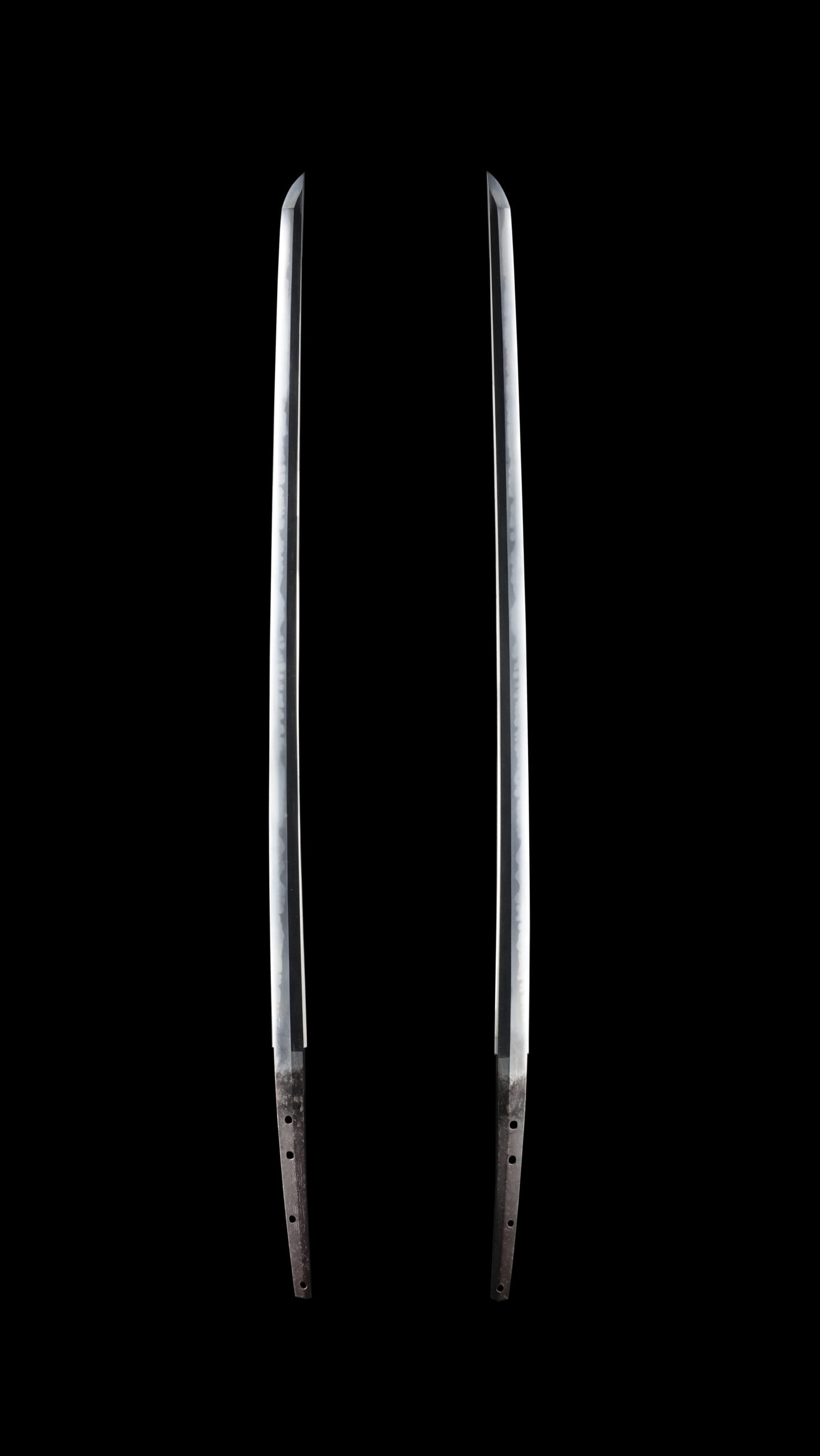
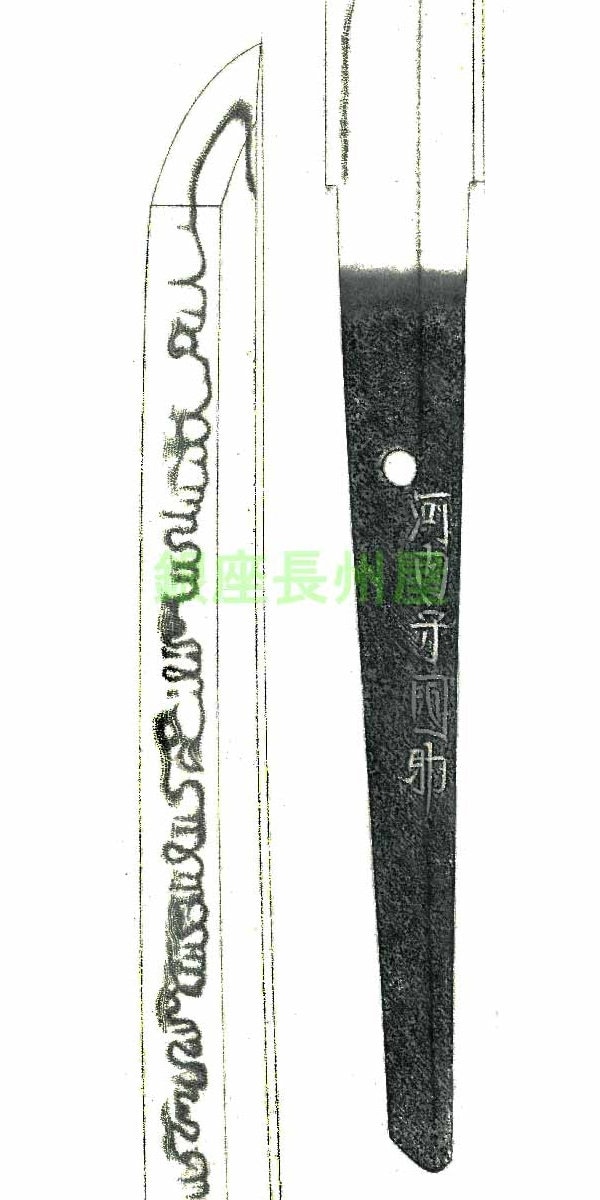
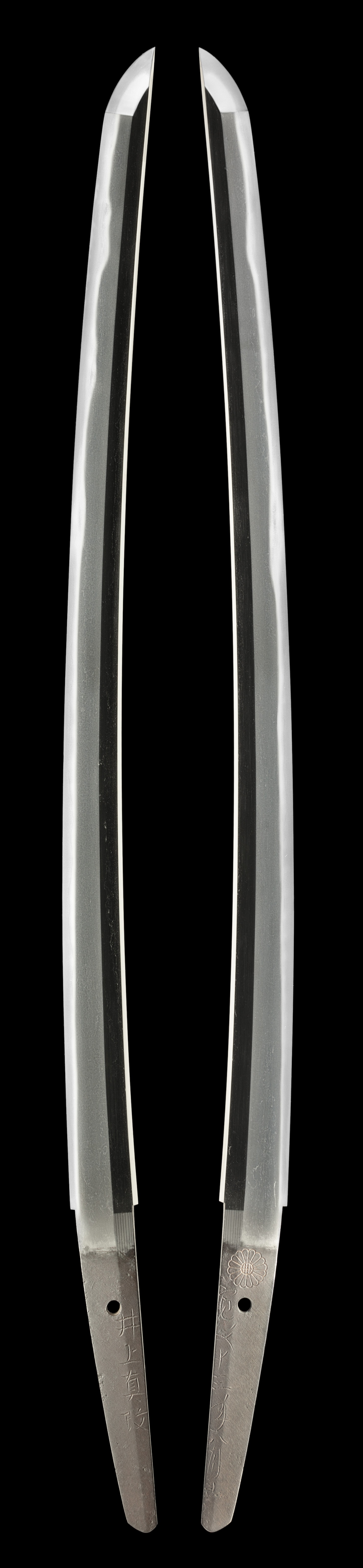
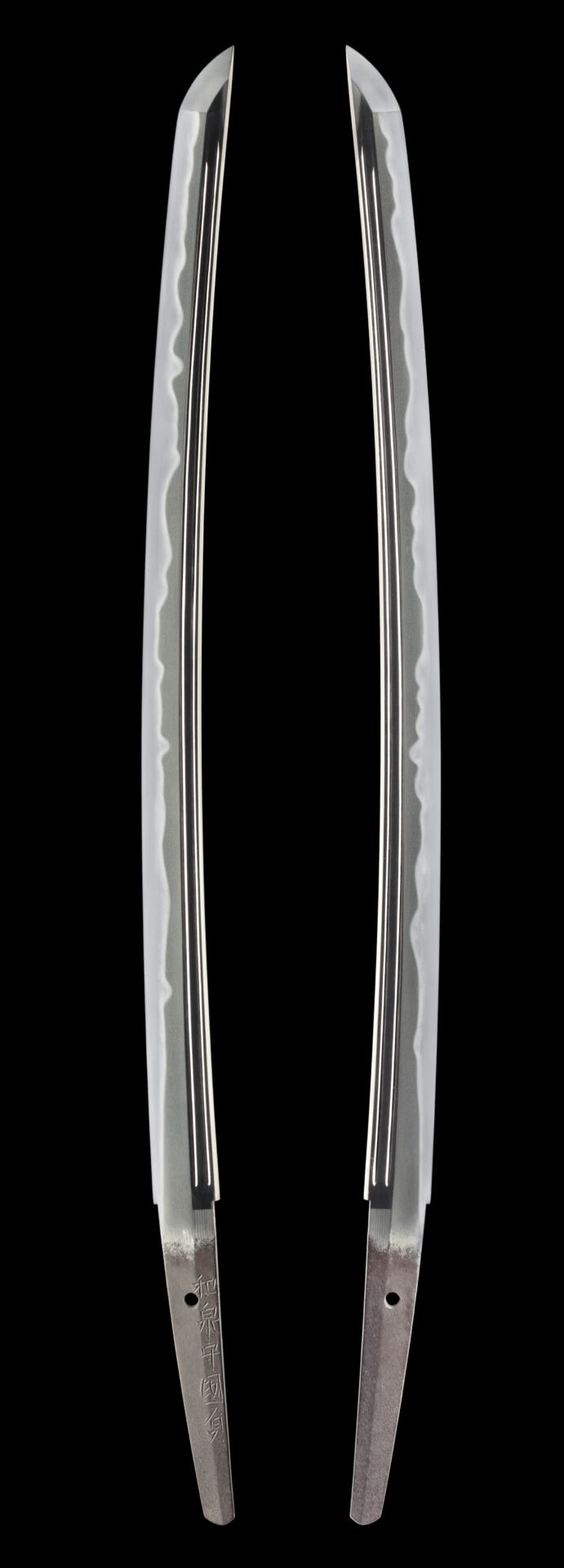
The nidai Kawachi no Kami Kunisuke, commonly called Naka-Kawachi (中河内), is the leading clove-temper master of the early Osaka Shinto and the figure who gave the school its single most recognisable temper. He was the son of the shodai Kawachi no Kami Kunisuke, who is counted among the youngest disciples of Horikawa Kunihiro and who relocated to Osaka together with Kunisada after Kunihiro's death in Keicho 19 (1614). The Kunisuke house, however, traced its origin not to the Horikawa line but to the Ishido group of Seishu, and that descent shaped the second generation decisively. He turned away from his father's Horikawa manner and tempered a pure Ishido-style choji; the published sources state the point flatly, that he forged the Ishido clove outright and that the Horikawa style is not to be seen in his work. The published sources date his career from the death register of Ryūkai-ji in Osaka, which records his father's death in the fifth month of Shōhō 4: his own work begins with a katana dated the eighth month of that year, and dated pieces of Manji 4 and Kanbun 3 follow.
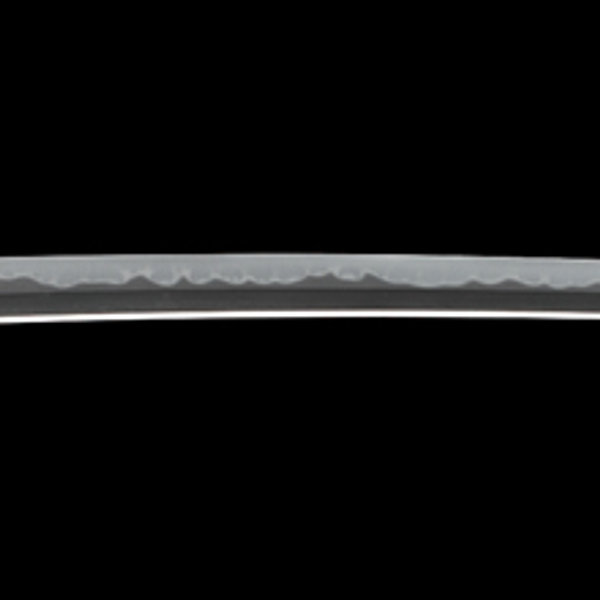
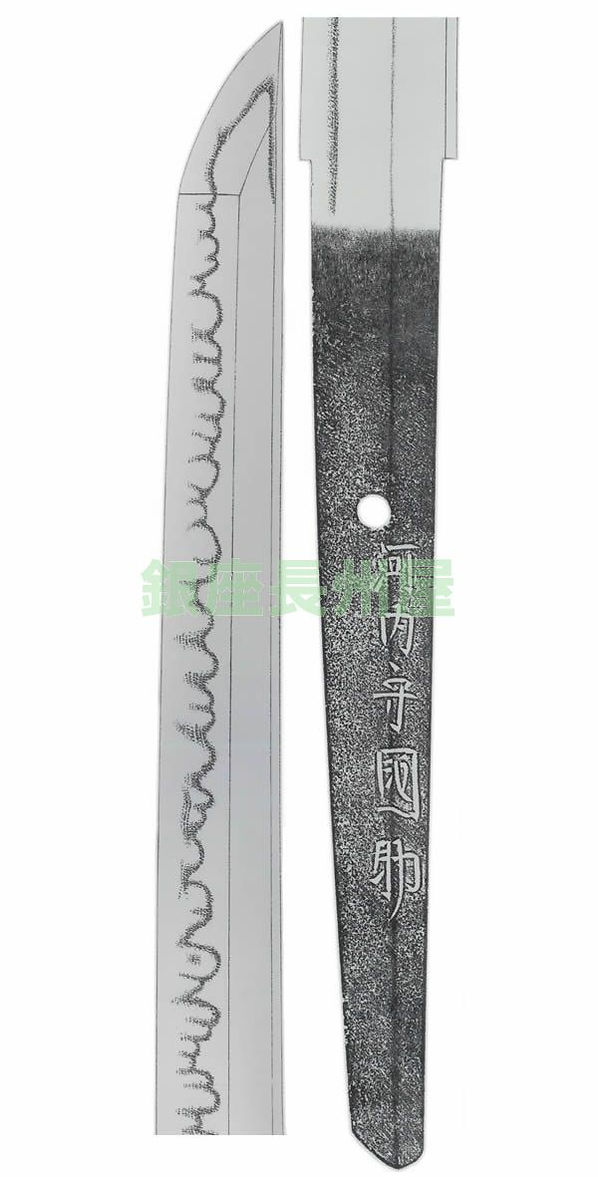
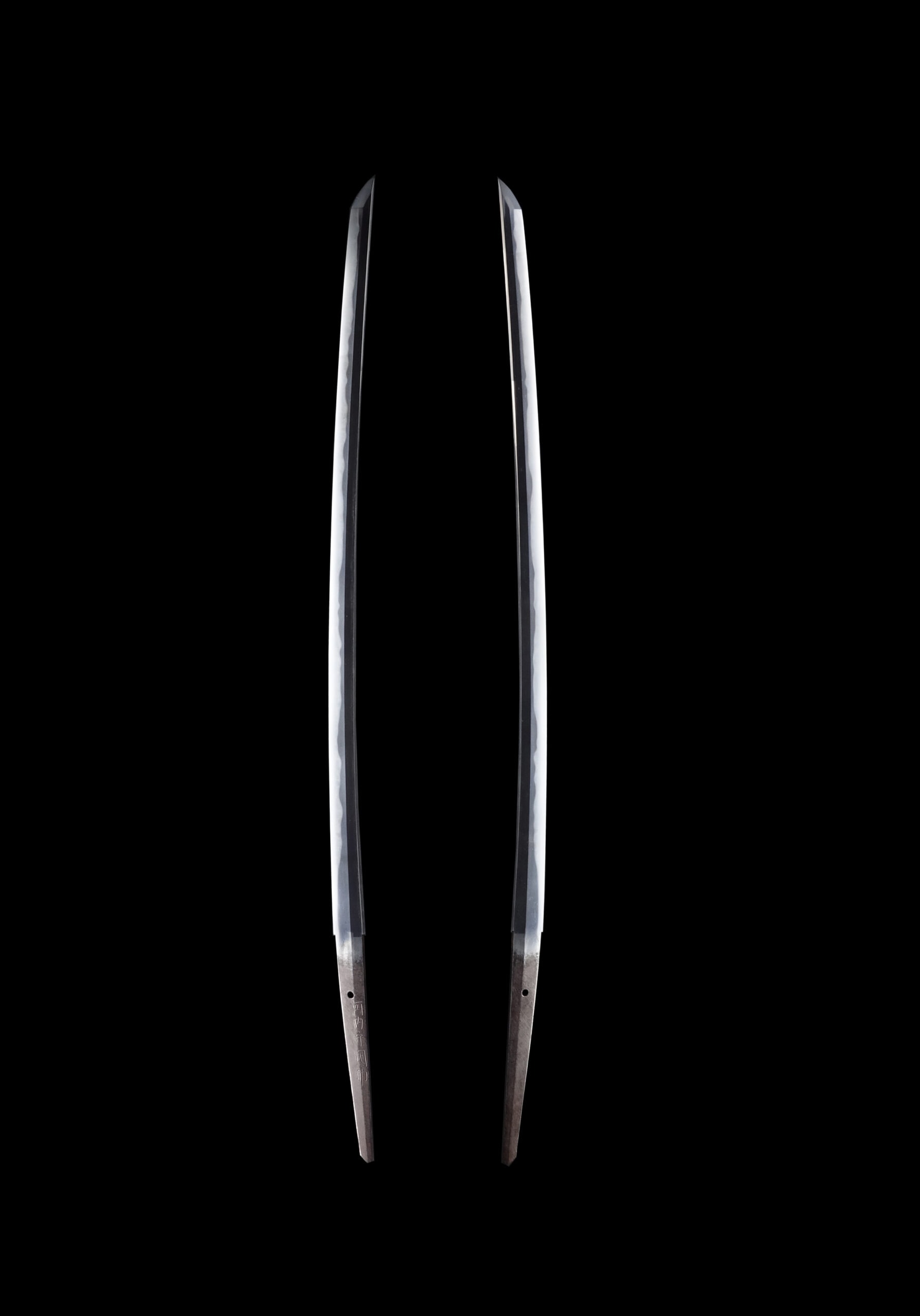
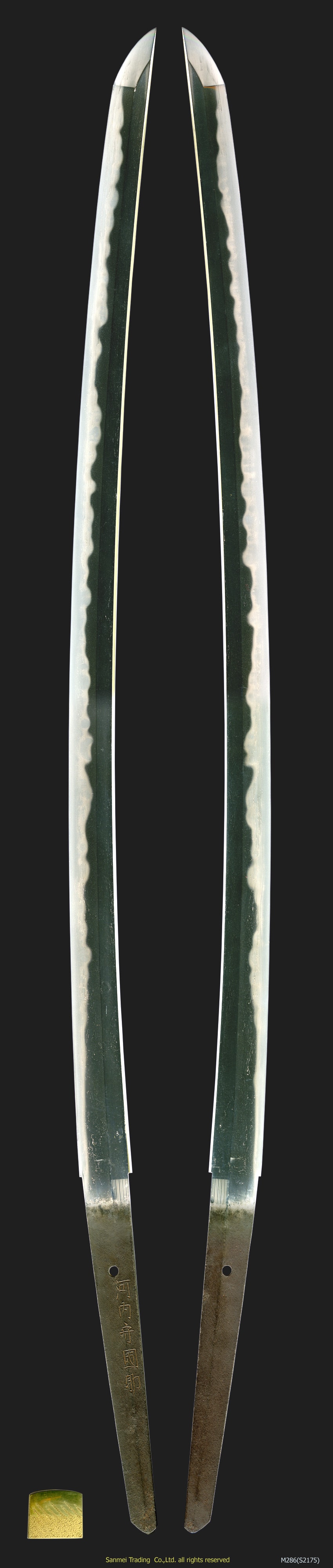
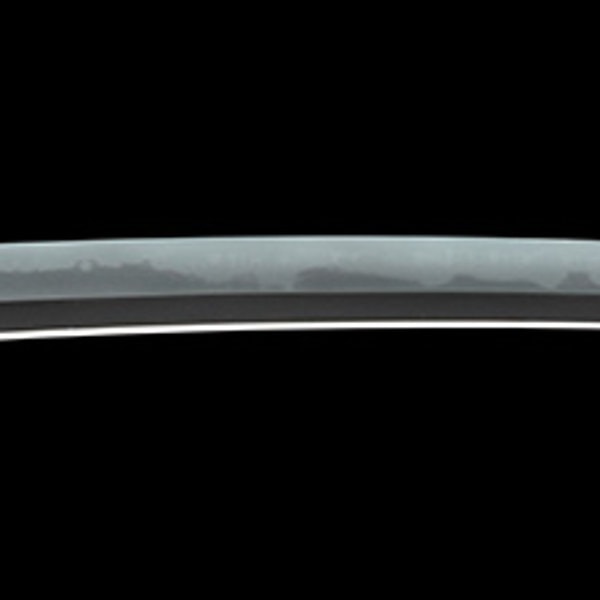
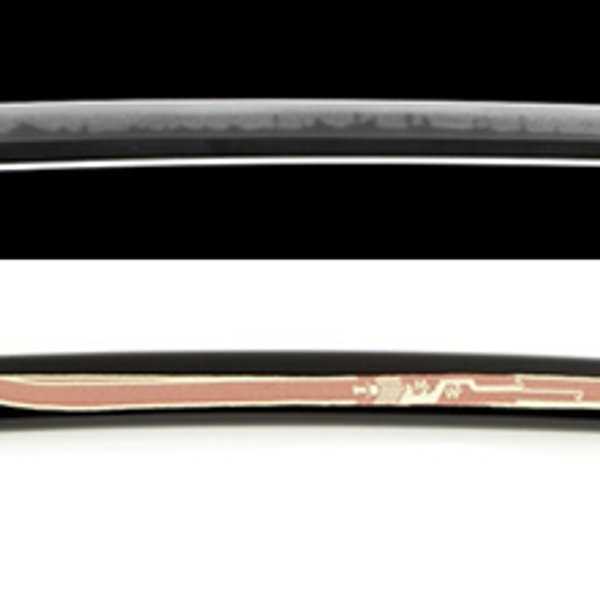
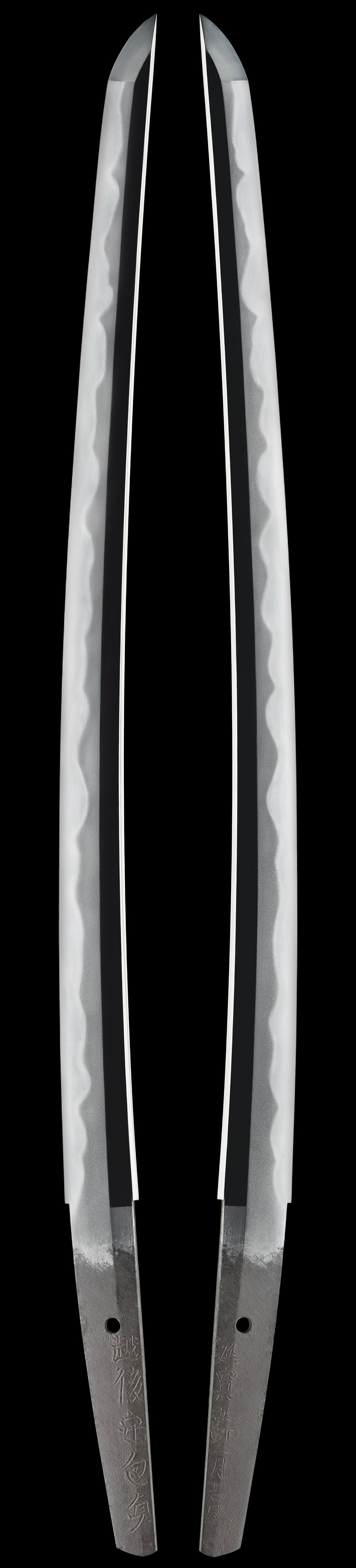
His characteristic hand is a brilliant choji-midare into which he mixes a clove of his own devising: a clenched-fist-headed clove the published sources describe as the distinctive one he originated and which the world came to call kobushigata-choji (拳形丁子). It is the central point of appreciation in his work and the feature by which he is known above all others. The temper is laid down nioi-dominant with ko-nie adhering, the ashi are long and enter well, with yo intermingled, and the nioiguchi is bright and clear. A constant of his construction is the opening: however irregular the midare becomes above it, the blade begins from a long, straight suguha yakidashi at the base, an Osaka Shinto convention he keeps without exception. The boshi answers it in kind, running sugu and turning back in ko-maru, the tip frequently becoming hakikake.
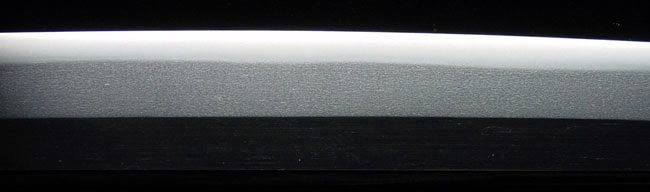
The jigane is the second half of his signature and the half the judges most admired. It is a ko-itame forged tightly and finely, with ji-nie well adhering and at times fine chikei entering, producing the refined and bright steel proper to Osaka, what the published sources call "the refined and bright steel characteristic of Osaka Shinto"[[c:1]]. Of his typical work the published sources say simply that the jigane is well-ordered and beautiful, a point of appreciation in itself; the recurring judgement is that "the well-ordered beauty of the jigane is a point of appreciation"[[c:2]]. This is the clean, packed Osaka ji, and it stands as the deliberate opposite of the loose, rustic zanguri forging his father had carried over from the Horikawa school, the contrast the commentary draws when it sets the son apart from the father.
Within this one well-defined manner the published record marks his variations. The typical blade is read as a representative example, his true strengths shown to their fullest in a wide yakihaba flamboyantly midare on a base of kobushigata-choji. A smaller number of works depart from it: in these the fist-shaped clove recedes and the yakiba carries stronger nie, with kinsuji and conspicuous sunagashi standing out, the sunagashi at times running through the long ashi as if to cut across the choji-ashi. In one such katana the published sources find in this manner "something that calls to mind Isshoshi Tadatsuna of the same province"[[c:3]], and judge it an uncommon but well-controlled piece, the hamon tempered without breakdown yet vividly flamboyant. On another the nie is stronger than usual and the hamon shows more change than is his habit, features the commentary calls unusual for Naka-Kawachi. A further idiom recurs across the line: above the koshi on both faces a temper occasionally rises in a shape that evokes Mount Fuji, something the sources note is seen from time to time in his work and in that of his successors. His earliest work stands apart: blades signed Kawachi no Kami Fujiwara Kunisuke are taken to be his early pieces, made just after his father's death, and the sources note that "almost all of them look like the first generation's work"[[c:4]]. One katana tempers kobushigata-choji on one face and suguha on the other, the two-faced konotegashiwa manner the sources otherwise know from Echizen and Hizen.
What sets his blades apart is read entirely from their own traits rather than by appeal to what other schools lack. His is the bright, packed Osaka ko-itame, the long straight yakidashi, and above it the flamboyant clove crowned by the fist-shaped heads he alone made his own; the most recent designation commentary names "the kobushigata-choji originated by this smith"[[c:5]] outright. The Tadatsuna resemblance is a recurring point of comparison, not a borrowing, drawn only on the rarer nie-laden works and always returned to his own well-ordered manner. Placed in the school, he is the celebrated peak of the Kunisuke name, which continued through several generations, and a central figure of the early Osaka Shinto choji tradition, the smith through whom the Ishido clove took its definitive Osaka form. The lowering of the temper below the yokote and the forging of the boshi in suguha, the published sources add, is a habit frequently encountered in Osaka work, placing his hand squarely within that regional grammar.
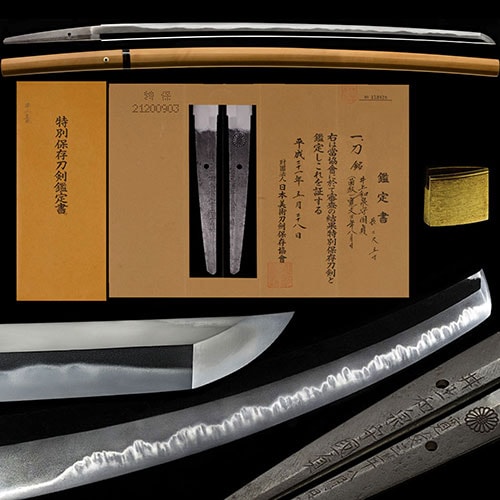
Twenty-five of his blades stand in the Jūyō rank. Most are katana in the Kanbun-Shinto shape of shallow curvature and a compact chu-kissaki, though one wakizashi is unusually wide with an extended point and is called by the published sources the summit of his shinogi-zukuri wakizashi, and one deeply curved katana signed in tachi-mei is thought to have been made as a tachi. A single collaborative katana with Kunimitsu is, in the sources' words, the only such joint work they have seen. Fujishiro rates him Jō saku. His blades carry no designation above Jūyō and no recorded provenance; these are the well-made katana of a productive Osaka master rather than heirloom meibutsu. That places him within reach in a way the greatest names are not: his designated blades appear from time to time, and a signed katana opening from the long straight yakidashi into the fist-shaped clove over the bright Osaka jigane is one of the most satisfying pieces the early Osaka Shinto can offer.