Muromachi turned sword making into an industry: the uchigatana rose with massed infantry warfare, Osafune and Seki produced bundle swords beside custom orders, and the Ming trade carried Japanese blades abroad by the tens of thousands.
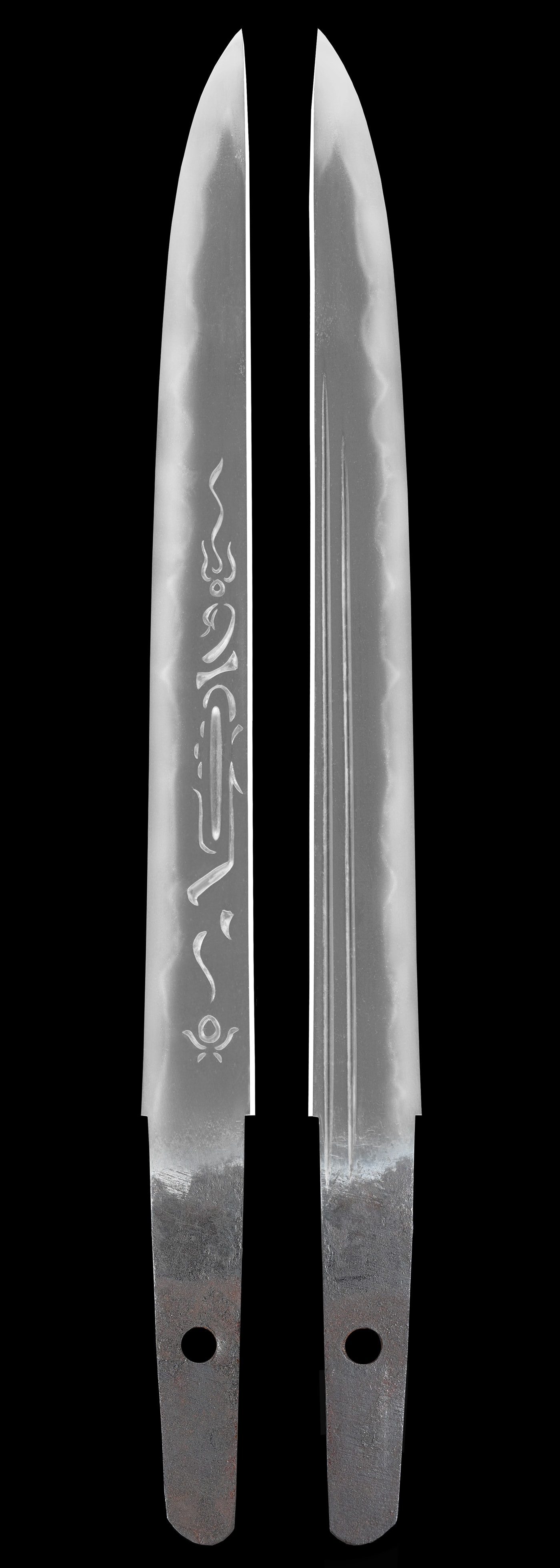
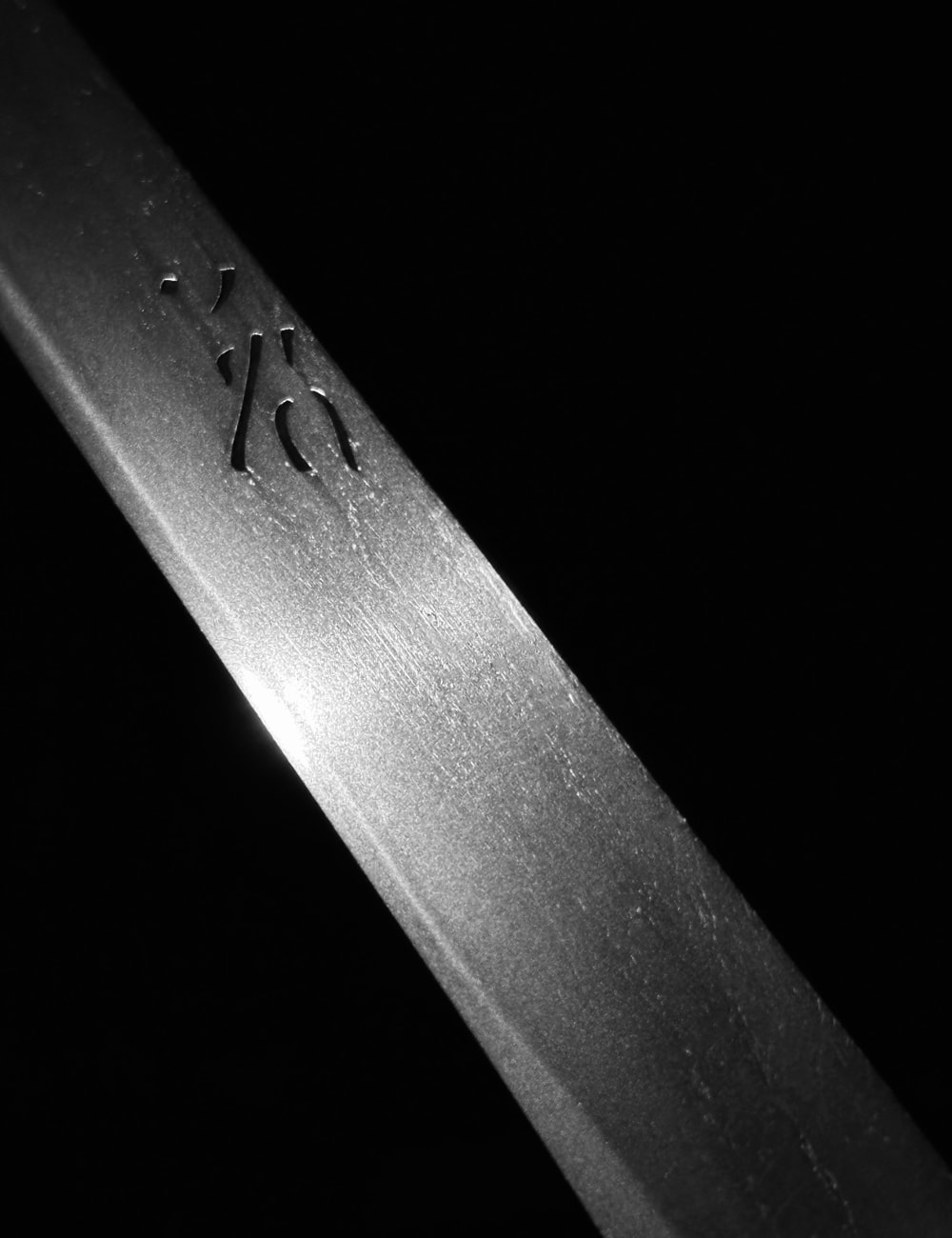
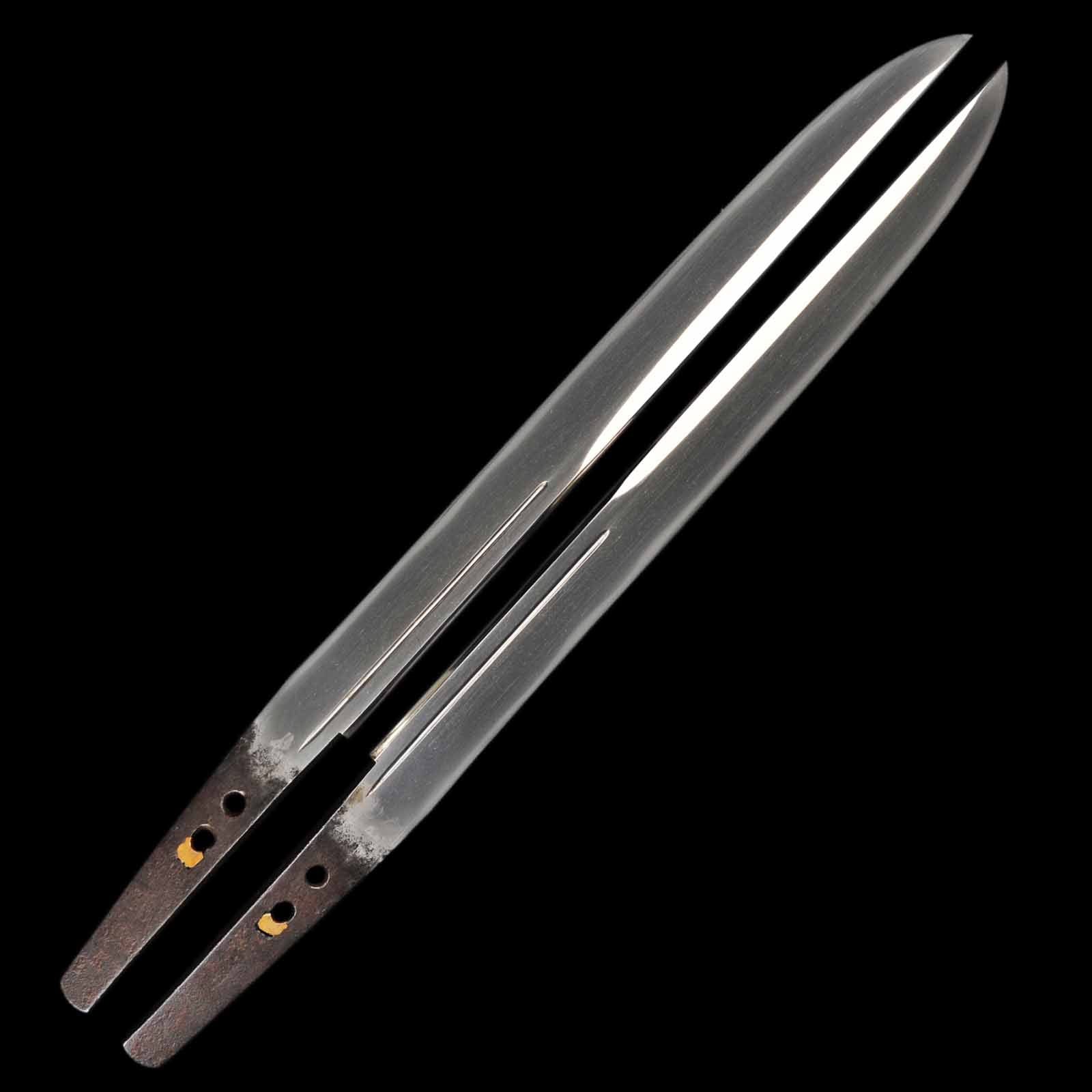
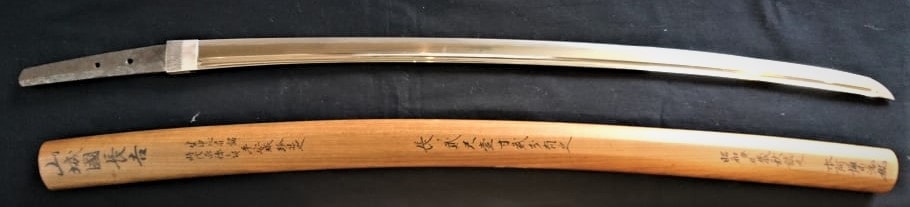
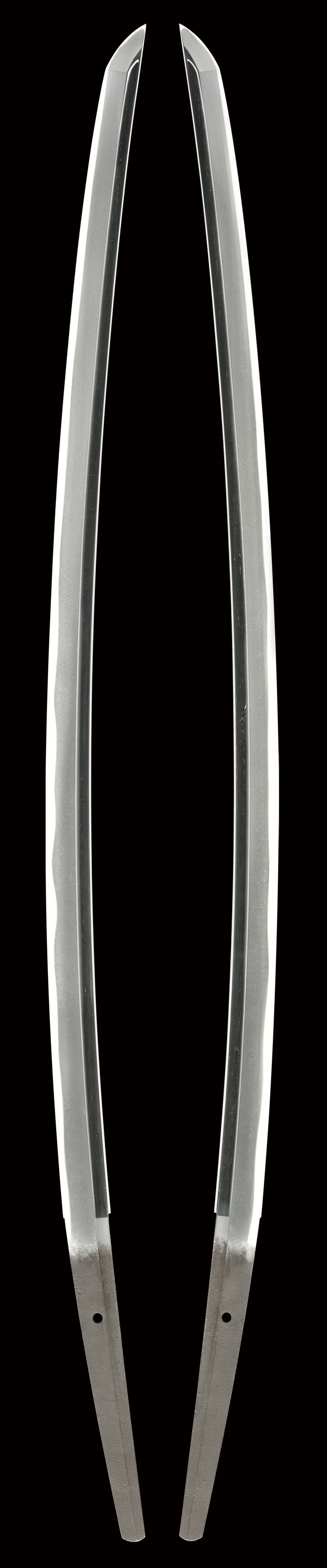
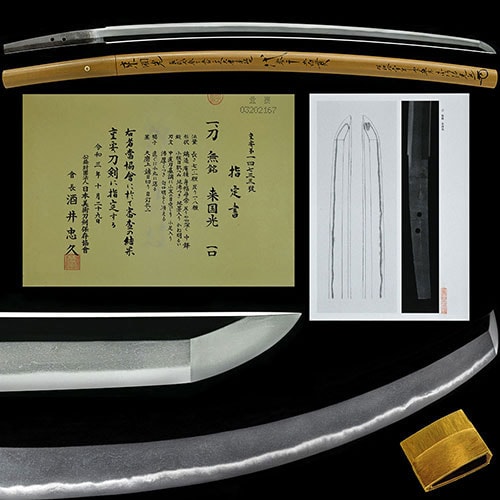
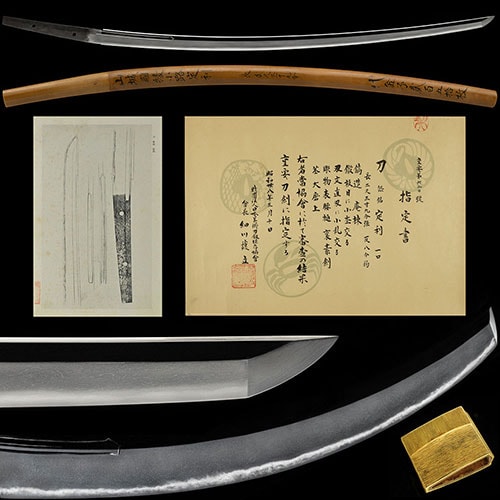
This is a katana signed by Nagayoshi, a swordsmith active in Kyoto Sanjo after the Onin War. He was skilled in sword carving and exchanged techniques with Ise Muramasa. This particular sword, with its short tang and bo-hi groove, was adjusted for weight, making it suitable for one-handed use, favored by Sengoku period warriors.
 NihontoWatch
mei · Muromachi
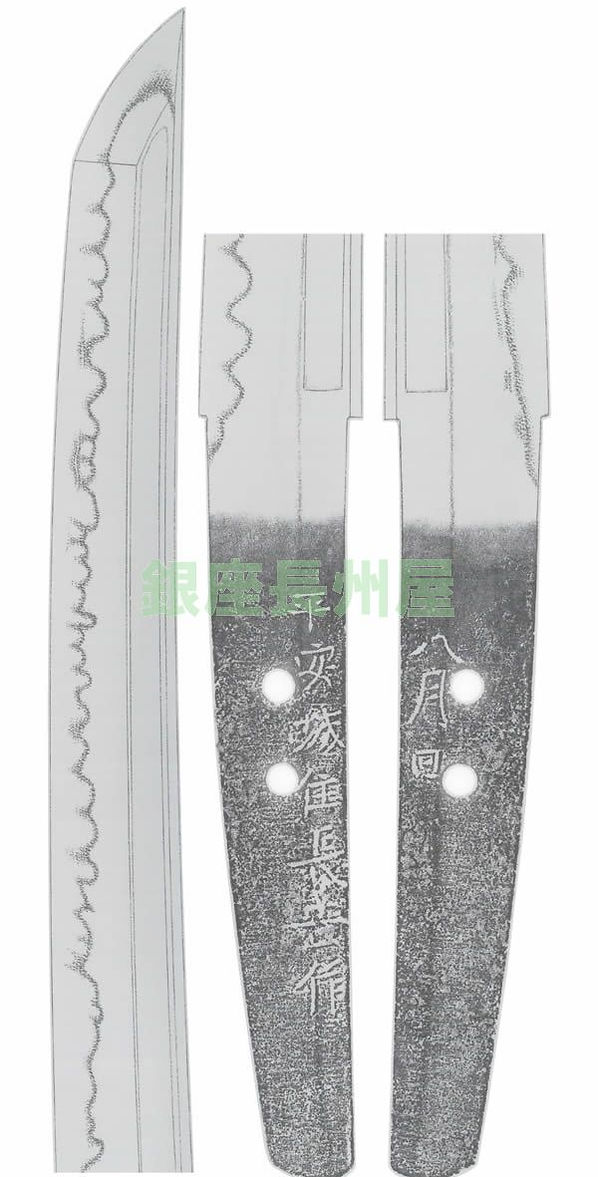
Heianjō (Kyoto / Yamashiro) · Yamashiro · around 1469-1492
Fujishiro Jo-jo saku · Tōken Taikan top 26%
1 piece on the market now
Heianjō Nagayoshi is the Kyoto smith whom the published sources name, again and again, in a single breath with Sanjō Yoshinori as a representative maker of Kyō-mono in the Muromachi period. He is said to descend from Mitsunaga of Heianjō, a smith of the late Kamakura, and the swordbooks carry his name back to the Nanbokuchō; but the surviving record does not reach that far. No work looks so early, none is dated before the Muromachi, and the body of his blades falls between the Bunmei and Tenbun eras, the earliest dates clustering around Bunmei and Meiō. One signed katana carries a Meiō date that the published sources value as documentary material for the name itself. The name is understood as one borne by several smiths across several generations, so that Heianjō Nagayoshi is less a single man than a Kyoto workshop hand carried forward through the late Muromachi.
What makes that hand recognizable is not one temper but a manner, and its clearest mark is in the hamon. The published sources single out the close correspondence of the hamon on the omote and the ura, the temper of one face answering the other, and on this point above all they bind his work to Muramasa of Ise. Of one tantō the commentary says plainly that in workmanship and in the cut of the tang it resembles Muramasa, 「すべて勢州の村正によく似ている」[[c:1]], and infers a deep relationship between the two; of another it finds the matching faces a distinctive feature, 「表裏の刃文が揃うところに特色」[[c:2]], shared with the Sengo line of Muramasa. Over a finely worked Kyoto jigane he sets a small notare mixed with gunome, ashi entering, the nioiguchi tending tight with ko-nie, the bōshi a ko-maru. His tantō are often broad for their length and stocky, scarcely curved, a stance the commentary calls one frequently met in his work.
The jigane is the constant beneath the changing temper. It is a ko-itame or itame, tightly packed and mixed with flowing masame, with ji-nie adhering and at times fine chikei, and over it lies a faint whitish cast, the shirake that places him after the great Kamakura schools of the capital rather than among them. On his finest katana the forging tightens into a dense Kyoto ko-itame and a mizukage rises from below the hamachi to become a shirake-utsuri. It is a refined steel, the Kyō-mono surface the published sources expect of him, quiet and clean rather than brilliant, the late-Yamashiro jigane against which his more decorative tempers read.
His range across that jigane is unusually broad for one hand, and the published sources lay it out as such. On his katana and yari the temper is most often a broad or medium suguha, set over a notare-toned lower half where small linked gunome form a koshiba-like base, with small ashi and a tight, bright nioiguchi; one Jūyō katana shows the canonical division, a ko-notare with pointed togariba at the base running up into a wide suguha. At the other pole stands his most flamboyant register, an all-over hitatsura of gunome-midare with pointed and angular elements and a yahazu-like form, into which tobiyaki, yubashiri and muneyaki enter until the temper covers the whole blade, the bōshi turning back long into the muneyaki with sunagashi and kinsuji throughout. The published sources call this temper comparatively uncommon in his work and read it as a private emulation of the Nanbokuchō Kyoto master Hasebe, 「京の先達長谷部の皆焼に私淑」[[c:3]], noting that, unlike the older Sōshū hitatsura, his nioiguchi stays tight, and that the thin kasane and the long kaeri together point to the Hasebe model.
What separates Nagayoshi from the company he keeps is exactly what the judges name. From Sanjō Yoshinori and the ordinary Sue-Yamashiro smiths he is set apart by the matching of his two faces and by the sheer breadth of his hand, the same maker passing from a Muramasa-akin notare to a quiet suguha to a Hasebe hitatsura; from the older Sōshū hitatsura he is held apart by the restraint of his nioiguchi. Above all he is known as a carver. The published sources call him an outstanding master of horimono, 「彫物の名手としてもその名が高い」[[c:4]], and his grass-style kurikara runs through the great majority of his blades, the dragon's tail cut where it crosses the sword so that the sword appears raised in relief, a manner they hold scarcely confusable with any hand other than his own. The carving is part of the kantei, not an ornament on it.
For the collector he is a Kyoto name of the late Muromachi, graded Jō-jō saku by Fujishiro. His designated record runs entirely through the Jūyō rank, with fifteen blades on record and no National Treasure or Important Cultural Property among them; the value of his name rests instead on the signed, often dated works and on the diversity of his oeuvre, katana, tantō, wakizashi and yari together with the carvings he excelled in. The published commentary calls one of his katana 「同工屈指の優品」, foremost among the smith's own works, and several of his tantō typical superior examples. Provenance is sparsely recorded for his blades, so the safest thing to say is that signed Heianjō Nagayoshi works are held quietly across private collections rather than concentrated in famous houses. Only a small number fall in the tradeable tiers, so a signed example comes to light from time to time rather than often, and a sound, signed, carved blade by him is a satisfying thing for a collector to encounter, a document of how the Kyoto forges worked on at the close of the koto age.
Where Nagayoshi stands among comparable artisans: across all of nihontō, and within tradition, era, and period. The tiers (Foremost · Leading · Major · Notable) weigh official designations from the NBTHK and Japan's Agency for Cultural Affairs, together with historical honors of lasting repute such as the Sansaku and Meibutsu-chō.
Select a lens to see how it's measured.
Years he was demonstrably active, proven by signed-and-dated blades
Yamashiro-den · Kyoto
13 pieces on the market now
The Heianjō school (平安城) of swordsmiths represents the principal lineage of Kyōto sword production during the Muromachi period. "Heianjō" is the classical name for Kyōto (Heian-kyō), and the school's smiths — resident in the Sanjō district of the capital — signed variously with the 平安城 (Heianjō) and 三条 (Sanjō) prefixes, a usage that has often caused them to be confused with the far earlier Sanjō school of Munechika. They are an entirely distinct, late group: its two representative masters, Heianjō Nagayoshi (平安城長吉, also read Chōkichi) and Sanjō Yoshinori (三条吉則, of the Fuse 布施 family), are counted as the leading makers of Muromachi-period Kyō-mono (Kyoto-made blades), carrying forward the capital's swordmaking after the Nanbokuchō-period Nobukuni and Hasebe lineages. Both names continued through several generations from the late Nanbokuchō era into the sixteenth century, and the smiths are known to have travelled to forge (desaku) in provinces such as Izumi, Mikawa, and Echizen during the late Muromachi period. The Heianjō style is dominated by a flamboyant hitatsura (full-temper) idiom adopted from Sōshū tradition: a foundation of large gunome-midare mixed with chōji, togariba, and yahazu-ba, with abundant tobiyaki and muneyaki spreading temper across the entire blade surface, nie adhering strongly, and sunagashi and kinsuji coursing through a bright, clear nioiguchi.
The finest examples are so accomplished that they are difficult to distinguish from late Sōshū (Sue-Sōshū) work. A quieter suguha- and ko-notare-based mode close to the Nobukuni tradition is also seen. High-quality horimono — kurikara, bonji, suken, and gomabashi — frequently accompany the blades. The school is not to be confused with the unrelated Heianjō-zōgan (平安城象嵌) inlay tradition of tōsōgu makers. Learn more →
| Smith | Era | Designated |
|---|---|---|
| Nagayoshi長吉 | 1469-1492 | 15 |
| Yoshinori吉則 | 1469-1487 | 3 |
| Chokichi長吉 | 1384-1394 | 1 |
| Kunitsugu國次 | 1648-1652 | 2 |
| Yoshinori吉則 | 1362-1368 | 1 |
The Muromachi period (1392 to 1573)
Muromachi turned sword making into an industry: the uchigatana rose with massed infantry warfare, Osafune and Seki produced bundle swords beside custom orders, and the Ming trade carried Japanese blades abroad by the tens of thousands.
We could not find an authenticity certificate on the seller’s listing. Japanese swords and fittings are normally papered by the NBTHK (or the NTHK). Without one, the attribution is the seller’s own assessment and has not been independently verified — treat it with caution and ask the dealer about certification before buying.
If, due to our fault, the item differs significantly from its proper condition, the item may be returned. Cooling-off is within one week of the item's arrival.
This is a katana signed by Nagayoshi, a swordsmith active in Kyoto Sanjo after the Onin War. He was skilled in sword carving and exchanged techniques with Ise Muramasa. This particular sword, with its short tang and bo-hi groove, was adjusted for weight, making it suitable for one-handed use, favored by Sengoku period warriors.
NihontoWatchmei · Muromachi
Heianjō (Kyoto / Yamashiro) · Yamashiro · around 1469-1492
Fujishiro Jo-jo saku · Tōken Taikan top 26%
1 piece on the market now
Heianjō Nagayoshi is the Kyoto smith whom the published sources name, again and again, in a single breath with Sanjō Yoshinori as a representative maker of Kyō-mono in the Muromachi period. He is said to descend from Mitsunaga of Heianjō, a smith of the late Kamakura, and the swordbooks carry his name back to the Nanbokuchō; but the surviving record does not reach that far. No work looks so early, none is dated before the Muromachi, and the body of his blades falls between the Bunmei and Tenbun eras, the earliest dates clustering around Bunmei and Meiō. One signed katana carries a Meiō date that the published sources value as documentary material for the name itself. The name is understood as one borne by several smiths across several generations, so that Heianjō Nagayoshi is less a single man than a Kyoto workshop hand carried forward through the late Muromachi.
What makes that hand recognizable is not one temper but a manner, and its clearest mark is in the hamon. The published sources single out the close correspondence of the hamon on the omote and the ura, the temper of one face answering the other, and on this point above all they bind his work to Muramasa of Ise. Of one tantō the commentary says plainly that in workmanship and in the cut of the tang it resembles Muramasa, 「すべて勢州の村正によく似ている」[[c:1]], and infers a deep relationship between the two; of another it finds the matching faces a distinctive feature, 「表裏の刃文が揃うところに特色」[[c:2]], shared with the Sengo line of Muramasa. Over a finely worked Kyoto jigane he sets a small notare mixed with gunome, ashi entering, the nioiguchi tending tight with ko-nie, the bōshi a ko-maru. His tantō are often broad for their length and stocky, scarcely curved, a stance the commentary calls one frequently met in his work.
The jigane is the constant beneath the changing temper. It is a ko-itame or itame, tightly packed and mixed with flowing masame, with ji-nie adhering and at times fine chikei, and over it lies a faint whitish cast, the shirake that places him after the great Kamakura schools of the capital rather than among them. On his finest katana the forging tightens into a dense Kyoto ko-itame and a mizukage rises from below the hamachi to become a shirake-utsuri. It is a refined steel, the Kyō-mono surface the published sources expect of him, quiet and clean rather than brilliant, the late-Yamashiro jigane against which his more decorative tempers read.
His range across that jigane is unusually broad for one hand, and the published sources lay it out as such. On his katana and yari the temper is most often a broad or medium suguha, set over a notare-toned lower half where small linked gunome form a koshiba-like base, with small ashi and a tight, bright nioiguchi; one Jūyō katana shows the canonical division, a ko-notare with pointed togariba at the base running up into a wide suguha. At the other pole stands his most flamboyant register, an all-over hitatsura of gunome-midare with pointed and angular elements and a yahazu-like form, into which tobiyaki, yubashiri and muneyaki enter until the temper covers the whole blade, the bōshi turning back long into the muneyaki with sunagashi and kinsuji throughout. The published sources call this temper comparatively uncommon in his work and read it as a private emulation of the Nanbokuchō Kyoto master Hasebe, 「京の先達長谷部の皆焼に私淑」[[c:3]], noting that, unlike the older Sōshū hitatsura, his nioiguchi stays tight, and that the thin kasane and the long kaeri together point to the Hasebe model.
What separates Nagayoshi from the company he keeps is exactly what the judges name. From Sanjō Yoshinori and the ordinary Sue-Yamashiro smiths he is set apart by the matching of his two faces and by the sheer breadth of his hand, the same maker passing from a Muramasa-akin notare to a quiet suguha to a Hasebe hitatsura; from the older Sōshū hitatsura he is held apart by the restraint of his nioiguchi. Above all he is known as a carver. The published sources call him an outstanding master of horimono, 「彫物の名手としてもその名が高い」[[c:4]], and his grass-style kurikara runs through the great majority of his blades, the dragon's tail cut where it crosses the sword so that the sword appears raised in relief, a manner they hold scarcely confusable with any hand other than his own. The carving is part of the kantei, not an ornament on it.
For the collector he is a Kyoto name of the late Muromachi, graded Jō-jō saku by Fujishiro. His designated record runs entirely through the Jūyō rank, with fifteen blades on record and no National Treasure or Important Cultural Property among them; the value of his name rests instead on the signed, often dated works and on the diversity of his oeuvre, katana, tantō, wakizashi and yari together with the carvings he excelled in. The published commentary calls one of his katana 「同工屈指の優品」, foremost among the smith's own works, and several of his tantō typical superior examples. Provenance is sparsely recorded for his blades, so the safest thing to say is that signed Heianjō Nagayoshi works are held quietly across private collections rather than concentrated in famous houses. Only a small number fall in the tradeable tiers, so a signed example comes to light from time to time rather than often, and a sound, signed, carved blade by him is a satisfying thing for a collector to encounter, a document of how the Kyoto forges worked on at the close of the koto age.
Where Nagayoshi stands among comparable artisans: across all of nihontō, and within tradition, era, and period. The tiers (Foremost · Leading · Major · Notable) weigh official designations from the NBTHK and Japan's Agency for Cultural Affairs, together with historical honors of lasting repute such as the Sansaku and Meibutsu-chō.
Select a lens to see how it's measured.
Years he was demonstrably active, proven by signed-and-dated blades
Yamashiro-den · Kyoto
13 pieces on the market now
The Heianjō school (平安城) of swordsmiths represents the principal lineage of Kyōto sword production during the Muromachi period. "Heianjō" is the classical name for Kyōto (Heian-kyō), and the school's smiths — resident in the Sanjō district of the capital — signed variously with the 平安城 (Heianjō) and 三条 (Sanjō) prefixes, a usage that has often caused them to be confused with the far earlier Sanjō school of Munechika. They are an entirely distinct, late group: its two representative masters, Heianjō Nagayoshi (平安城長吉, also read Chōkichi) and Sanjō Yoshinori (三条吉則, of the Fuse 布施 family), are counted as the leading makers of Muromachi-period Kyō-mono (Kyoto-made blades), carrying forward the capital's swordmaking after the Nanbokuchō-period Nobukuni and Hasebe lineages. Both names continued through several generations from the late Nanbokuchō era into the sixteenth century, and the smiths are known to have travelled to forge (desaku) in provinces such as Izumi, Mikawa, and Echizen during the late Muromachi period. The Heianjō style is dominated by a flamboyant hitatsura (full-temper) idiom adopted from Sōshū tradition: a foundation of large gunome-midare mixed with chōji, togariba, and yahazu-ba, with abundant tobiyaki and muneyaki spreading temper across the entire blade surface, nie adhering strongly, and sunagashi and kinsuji coursing through a bright, clear nioiguchi.
The finest examples are so accomplished that they are difficult to distinguish from late Sōshū (Sue-Sōshū) work. A quieter suguha- and ko-notare-based mode close to the Nobukuni tradition is also seen. High-quality horimono — kurikara, bonji, suken, and gomabashi — frequently accompany the blades. The school is not to be confused with the unrelated Heianjō-zōgan (平安城象嵌) inlay tradition of tōsōgu makers. Learn more →
| Smith | Era | Designated |
|---|---|---|
| Nagayoshi長吉 | 1469-1492 | 15 |
| Yoshinori吉則 | 1469-1487 | 3 |
| Chokichi長吉 | 1384-1394 | 1 |
| Kunitsugu國次 | 1648-1652 | 2 |
| Yoshinori吉則 | 1362-1368 | 1 |
The Muromachi period (1392 to 1573)
Muromachi turned sword making into an industry: the uchigatana rose with massed infantry warfare, Osafune and Seki produced bundle swords beside custom orders, and the Ming trade carried Japanese blades abroad by the tens of thousands.
We could not find an authenticity certificate on the seller’s listing. Japanese swords and fittings are normally papered by the NBTHK (or the NTHK). Without one, the attribution is the seller’s own assessment and has not been independently verified — treat it with caution and ask the dealer about certification before buying.
If, due to our fault, the item differs significantly from its proper condition, the item may be returned. Cooling-off is within one week of the item's arrival.