NihontoWatch MonNihontoWatch
Market
Encyclopedia
Kantei
NihontoWatch MonNihontoWatch
Market
Encyclopedia
Kantei

Description

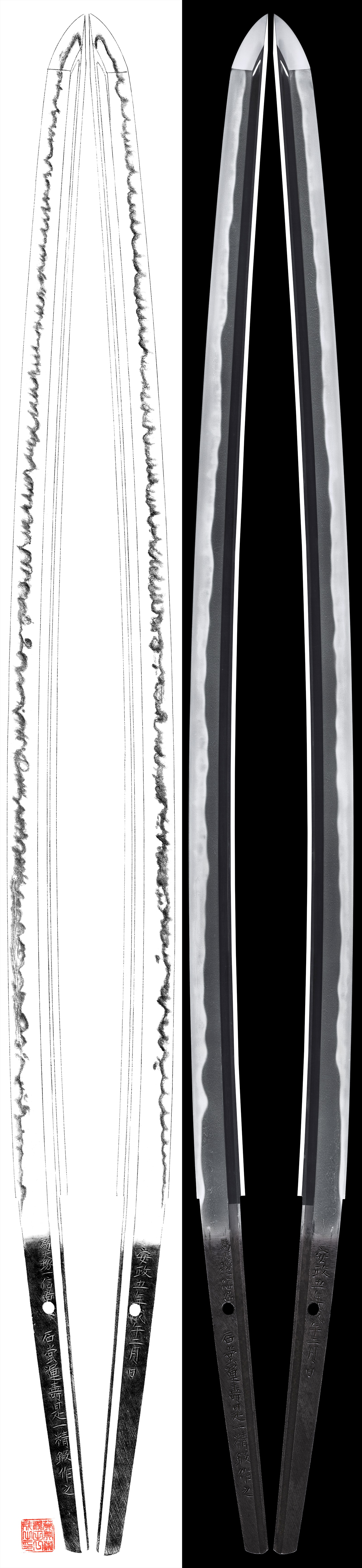
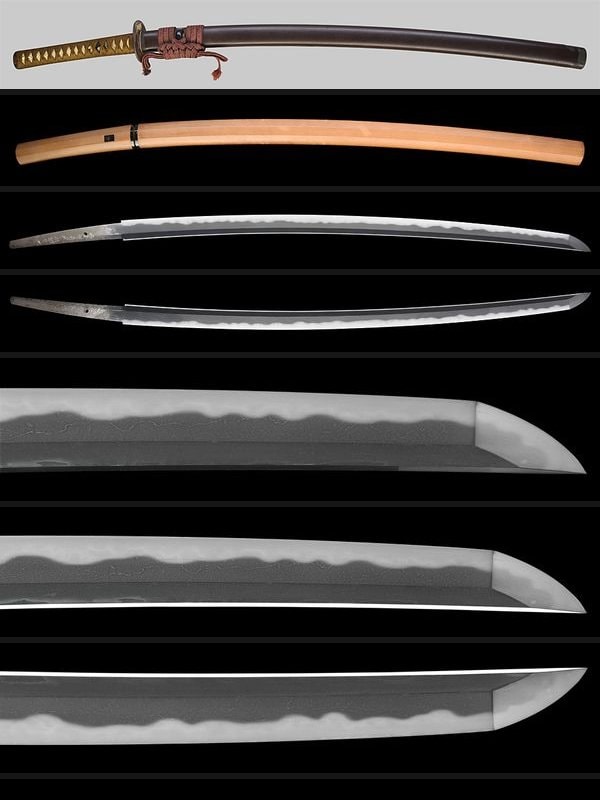
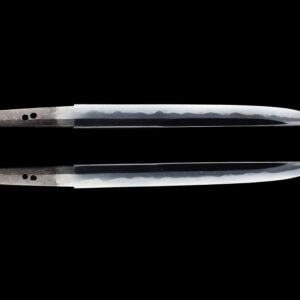
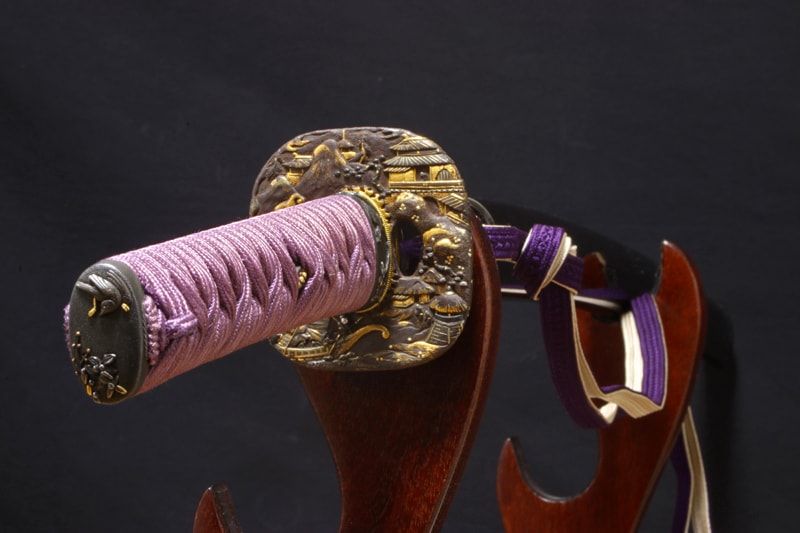
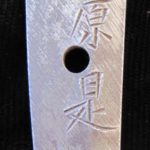
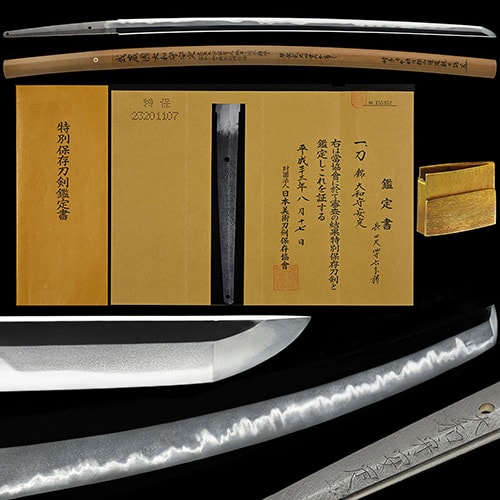
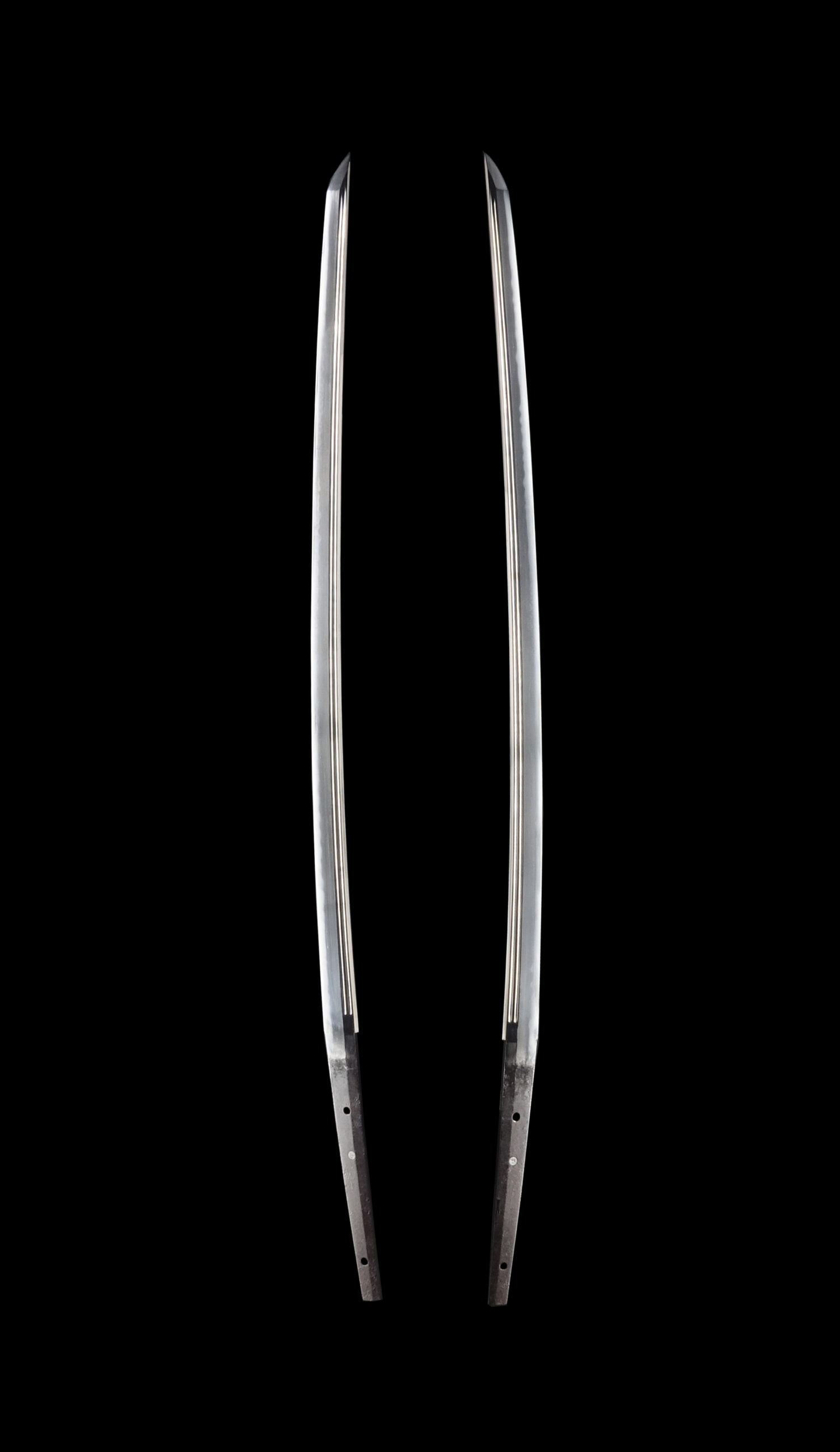
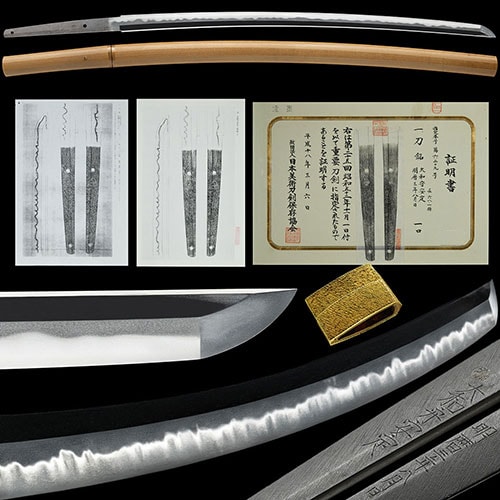
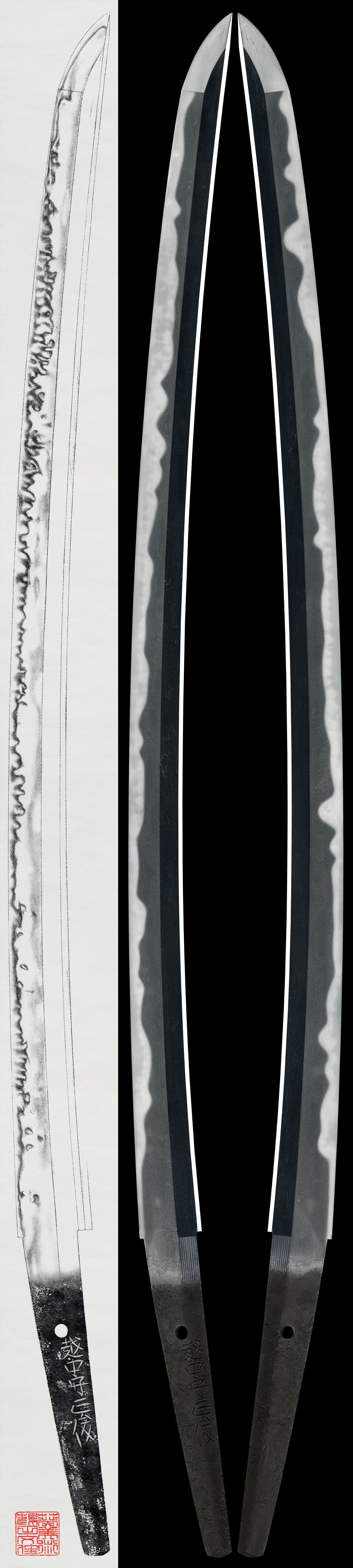
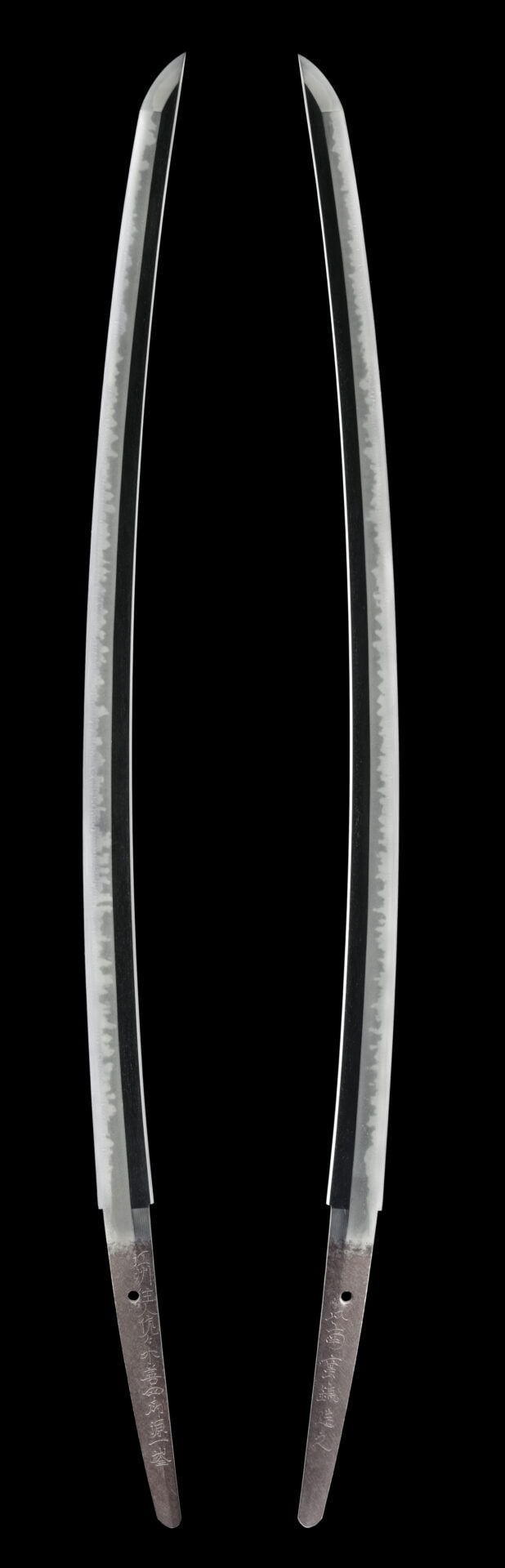
This is a katana made by Ishido Unju Korekazu in Man'en Gannen (1860). The smith, Unju Korekazu, was the son of Nagatsune Tsunatoshi and inherited the 7th generation of Ishido Korekazu, who served the shogunate. This particular sword was carried in Edo by Inoue Kaoru, who became a page to a feudal lord and was granted the name Monta.

NihontoWatch MonNihontoWatch
MarketEncyclopediaKantei
Swords›Ishido›Edo Ishido›Korekazu›Mei: Ishido Fujiwara Korekazu, Man'en Gannen Hachigatsu Hi
katana
Ishido Korekazu

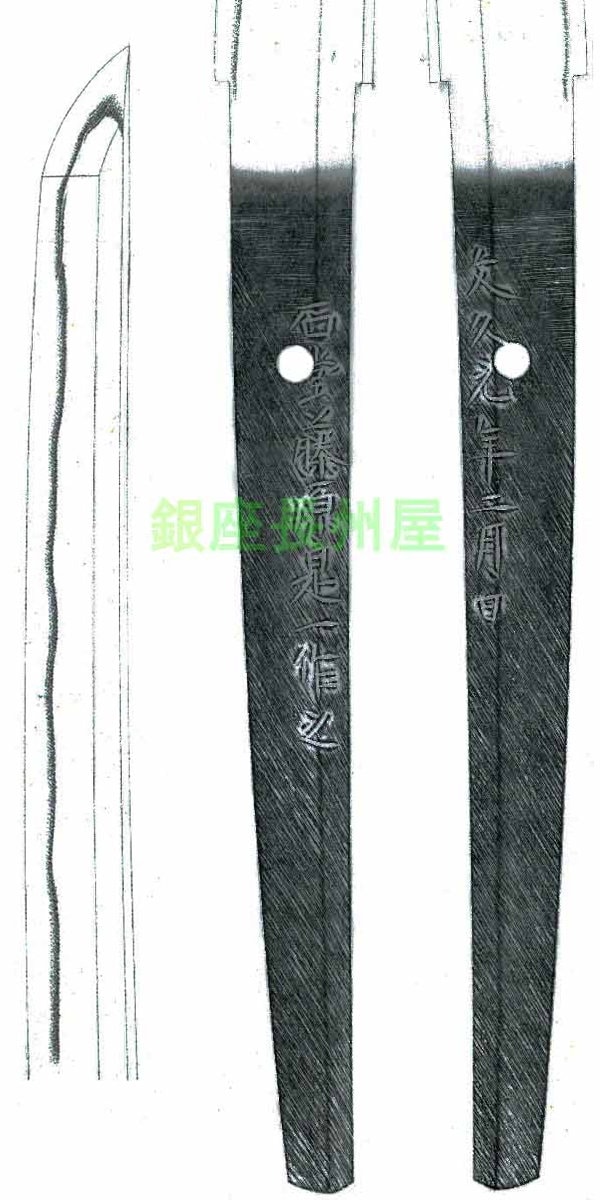
Mei: Ishido Fujiwara Korekazu, Man'en Gannen Hachigatsu Hi

mei · Bunka–Meiji (1817-1891)

SOLD
Ishido Korekazu (是一) · Bunka–Meiji (1817-1891)9 works for sale · median ask ¥3,650,000 →
Katana
Could you name the smith from the blade alone? Today’s kantei →
Ishido Korekazu — 1 of 2
Ishido Korekazu — 2 of 2
1 / 2
1 / 2
Ishido Korekazu — 1 of 2Ishido Korekazu — 2 of 2
Ishido Korekazu (是一) · Bunka–Meiji (1817-1891)9 works for sale · median ask ¥3,650,000 →
Katana
Could you name the smith from the blade alone? Today’s kantei →
Measurements & details
Smith
Ishido Korekazu
Type
Katana
School
Edo Ishido
Period
Around 1817–1891(Bunka–Meiji)
Province
Musashi
Signature
Signed(100% of this smith's designated works are signed)
Description

This is a katana made by Ishido Unju Korekazu in Man'en Gannen (1860). The smith, Unju Korekazu, was the son of Nagatsune Tsunatoshi and inherited the 7th generation of Ishido Korekazu, who served the shogunate. This particular sword was carried in Edo by Inoue Kaoru, who became a page to a feudal lord and was granted the name Monta.

About the maker

Korekazu

是一

Edo Ishidō (Korekazu line, 7th generation) · Musashi · around 1817-1891

Fujishiro Jo saku · Tōken Taikan top 37%

9 pieces on the market now

›

Korekazu, by common name Masatarō, was the seventh-generation head of the Edo Ishidō line, the house that carried the Bizen chōji tradition into the capital and kept it alive through the Shinshintō revival of the nineteenth century. The published sources fix his biography in a nearly fixed formula repeated across his designation entries: he was a nephew of the Yonezawa domain smith Katō Chōunsai Tsunatoshi, learned forging first under Tsunatoshi, then married into and succeeded the sixth Ishidō Korekazu, and died in Meiji 24 (1891) at the age of seventy-five. His working life ran from the closing years of Tenpō into early Meiji, and comparatively many of his blades survive, nearly all of them signed and dated katana. He stands among the leading masters of the late Edo period; the published commentary ranks his skill alongside Jirōtarō Naokatsu and Hosokawa Masayoshi.

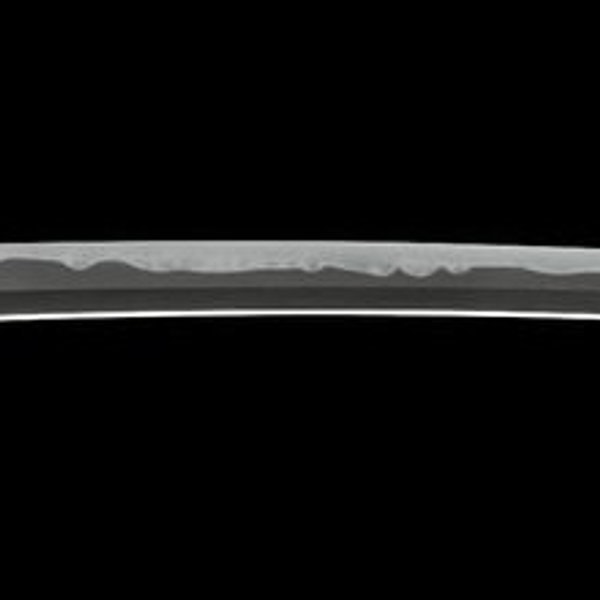
His hand is defined not by a motif but by a method, and the published sources state it the same way again and again. His works divide broadly into two modes, Bizen-den and Sōshū-den, but his true strength lay in the Bizen chōji that may be called the hereditary specialty of the Ishidō house. Where the other Shinshintō smiths working in the Bizen manner tempered their chōji in nioi-deki, Korekazu tempered his in nie-deki, and the commentary locates his originality precisely there, summing it up as the work of a smith popularly described as having "tempered Bizen-style chōji-midare in nie"[[c:1]], so that "in this one can discern his originality"[[c:2]]. Over a well-packed ko-itame he sets a chōji mixed with gunome, ko-chōji, ko-gunome and slightly pointed elements, the ashi entering long and frequently, the nioi deep, the nie thick with patches of coarser nie that leave the temper a little uneven, and through it run sunagashi and long kinsuji. It is a Bizen pattern carried on a Sōshū base, and the sunagashi threading nearly four of every five of his blades is the visible proof of it.

The jigane is the constant that underwrites the temper. His ko-itame is tightly forged, at times mixing flowing grain or mokume, the ji-nie laid in a dust-fine, thick cover with fine chikei entering frequently, and where the forging tightens hardest it approaches a muji-fū, near-featureless surface. The published sources single this forging out as especially strong even within his own work. The bōshi runs midare-komi to a ko-maru, often with hakikake at the tip and on his boldest pieces a flame-like sweep, and one entry notes that the handling of the bōshi betrays the mannerisms of his teacher Tsunatoshi, allowing a stylistic line to be drawn back to the older smith. The blades themselves are robust ubu katana, wide in body with thick kasane, the sori from shallow to deep and the point a long chū-kissaki or a generous ō-kissaki, the tang cut with bold ō-sujikai keshō file marks and a long six-character signature.

Within this one perfected manner the published sources read a style split rather than a sequence of periods. The Bizen nie-deki chōji is the core and the bulk of the record, and the judges call its finest examples the typical and outstanding work of the smith. The Sōshū-den register he himself claimed as a strength stands beside it: here the grain rises and flows rather than packs, and the temper turns toward ko-notare and gunome carried in nie with sunagashi, a manner allied to the Sōshū-leaning nie work fashionable in his day. The Ansei 2 (1855) daishō with its formal rō-nuri mounting and the Aizu collaboration with Kakuda-suke Gengō, where Gengō forged the blade and Korekazu set the temper, are its successes, the latter a sword the judges found to seem "entirely the work of Korekazu"[[c:3]]. A third, rarer face is the quiet one: on rare occasions he made suguha, and one Ansei 5 katana is singled out as comparatively gentle and restrained for him, a suguha-chō with gunome over a muji-fū jigane. Because all three share his deep-nioi, nie-deki temper, they read as one nie-based hand worked over different jigane rather than as opposed styles.

What sets Korekazu apart within the crowded Bizen revival is therefore not a feature but a technique, and the published sources are careful to draw the line the same way each time. Many Shinshintō smiths could reproduce the chōji-midare of old Bizen in nioi; Korekazu held the house chōji but forged it in nie, deep in nioi and thick in nie, with sunagashi, kinsuji and nie-suji working within the edge and a bright, clear nioiguchi. The link to Tsunatoshi is real and acknowledged in the bōshi, yet the nie-deki approach is his own departure from his teacher's tighter nioi-bound chōji. He is the smith who took the most academic of the Shinshintō programs, the literal copying of Kamakura Bizen, and made it personal by changing how the steel was hardened rather than what pattern it drew.

For the collector Korekazu is one of the more attainable of the major Shinshintō names, and his record should be read for what it is. Fujishiro grades him Jō saku, and the Tōkō Taikan values him at four hundred. He has no National Treasures and no Important Cultural Properties; his standing rests instead on the modern designation tiers, where roughly two dozen of his katana have reached the Jūyō rank across sessions spanning from 1964 to 2022, a steady presence that reflects how many sound, dated, signed works of his survive. The published commentary repeatedly calls his best the representative and typical work of the smith, and of one Jūyō katana it writes that it is "a blade in which the true specialty of Korekazu is brought forth without reservation, demonstrating an exceptionally distinguished workmanship"[[c:4]]. Among the recorded provenance is one blade held by the Imperial Family. His pieces also carry the texture of their late-Edo moment: one bears a carved slogan voicing the jōi ("expel the barbarians") sentiment of the day, and a Sanada-commissioned katana is inscribed in man'yōgana with the line "this tachi holds but one stored intent, to protect, indeed, for my lord"[[c:5]]. A signed, dated Korekazu katana comes to the serious collector with some regularity rather than as a once-in-a-lifetime event, and a well-made example in his hallmark nie-deki chōji is among the most rewarding ways to hold a piece of the Bizen tradition's final flowering.

Historical importance

Where Korekazu stands among comparable artisans: across all of nihontō, and within tradition, era, and period. The tiers (Foremost · Leading · Major · Notable) weigh official designations from the NBTHK and Japan's Agency for Cultural Affairs, together with historical honors of lasting repute such as the Sansaku and Meibutsu-chō.

随一
Foremost
屈指
Leading
有数
Major
著名
Notable

Select a lens to see how it's measured.

Designation record
25 designated works
Gyobutsu (Imperial)
1
Jūyō
24
9 works by Korekazu on the market→
Korekazu — full profileEdo Ishidō (Korekazu line, 7th generation) school

Dated Works

Years he was demonstrably active, proven by signed-and-dated blades

Active period
1854–1866Editorial estimate: 1817–1891
19 of 24 designated works carry a date
1850
1860
1870

Study this maker →

About the school

Edo Ishido

江戸石堂

Shinto · Musashi

20 pieces on the market now

›

The Edo Ishido school (江戸石堂) is the capital branch of the Ishido lineage, a body of shinto-era smiths who carried the Bizen choji tradition into Edo and there pursued a single deliberate project: the revival, in the brighter steel of the early-Edo forges, of the flamboyant choji-midare worked by the medieval Fukuoka-Ichimonji masters of Bizen. The school's makers came up from Omi by way of Kyoto rather than directly, the Akasaka-signed blades of Mitsuhira fixing that route, and several of its leading hands trace to the Kyo-Ishido line before the move to the capital; Heki Mitsuhira, eldest son of Yamashiro-no-kami Ippo, and Tsushima-no-kami Tsunemitsu stand as the twin pillars of the early school, while the Edo Ishido Korekazu line carried the house specialty forward, the seventh-generation Korekazu keeping it alive through the nineteenth-century shinshinto revival. A separate Edo strand runs through Yamato-no-kami Yasusada, whom recent research and the Shinto Bengi place within the Kishu Ishido group, a Kanbun-era master of the capital whose temper turns toward the angular rather than the choji of his school-fellows. What binds the school is a shared vocabulary rather than a single hand. The defining work is the choji-midare tempered over a bright shinto ko-itame, a crowded line mixing gunome, ko-gunome, round-topped choji and small choji with angular and pointed elements, the yakiba rising and falling in marked height, the ashi and yo entering vigorously, the nioiguchi clear; on the most successful pieces a midare-utsuri stands in the jigane, the koto-Bizen reflection raised again on a shinto blade, the single feature that carries the Ichimonji comparison furthest. Mitsuhira tempers this revival chiefly in nioi, and the NBTHK reads his choji over its utsuri as the fullest realization of the school's program, a splendid choji-midare that recalls the old Ichimonji. Korekazu departs precisely here: where the other Bizen-leaning smiths held their choji in nioi-deki, he forged the house pattern in nie-deki, deep in nioi and thick in nie over a ko-itame approaching a muji-fu tightness, with sunagashi, kinsuji and nie-suji threading the edge, a Bizen pattern carried on a Soshu-leaning base.

Yasusada marks the school's outer divergence, working a notare mixed with gunome that boxes at peak and valley, the nioiguchi inclining to a subdued shizumi and a steeply raised iori-mune among his marks, his Soshu-leaning nie temper inherited through Kaneshige. Across all of them the jigane is the constant that underwrites the edge, a densely forged ko-itame, sometimes mixed with mokume, the ji-nie laid dust-fine and chikei entering well. To kantei an Edo Ishido blade is to read a revived Bizen choji set on an unmistakably shinto ji: the choji-midare draws the eye to old Ichimonji, but the steel beneath is the bright, clean forging of the Kanbun and later forges, frequently on the broad body, thick kasane and contracted chu-kissaki of the era, with Mitsuhira's transitional silhouette retaining a touch of funbari and standing sori. The utsuri when present confirms the school's intent; the choice of nie-deki over nioi-deki separates Korekazu from his fellows; the boxed notare and shizumi nioiguchi mark out Yasusada, whose hand is read against Kotetsu rather than against his school. The NBTHK ranks the best of these makers among the leading smiths of their respective ages, Mitsuhira as one of the most skilled to represent the Edo Ishido and Korekazu beside Jirotaro Naokatsu and Hosokawa Masayoshi among the late-Edo masters. Provenance is generally quiet, held in private and public hands rather than great houses, though the school's blades carry the texture of their moment: the Yamano gold-inlaid cutting-test inscriptions recur on Yasusada and on Mitsuhira's earliest dated work, one Korekazu blade is held by the Imperial Family, and his man'yogana and joi-slogan inscriptions voice the late-Edo current that the school's final flowering of Bizen-den outlived. Learn more →

4 recorded smiths55 designated works
Leading smiths
SmithEraDesignated
Korekazu是一1817-189125
Yasusada安定1618-168511
Yasusada安定1673-16819
Mitsuhira光平1619-168510
Explore the Edo Ishido school →

Historical context

Edo: the shogun’s market

›

Edo held Japan’s largest sword-wearing population, gathered by the alternate attendance system. The shogunal smith Yasutsugu was granted the Aoi crest for his tangs; many of Kotetsu’s blades carry gold-inlaid cutting attestations. Proof mattered here.

Edo: the shogun’s market →

Warning — certificate not found

We could not find an authenticity certificate on the seller’s listing. Japanese swords and fittings are normally papered by the NBTHK (or the NTHK). Without one, the attribution is the seller’s own assessment and has not been independently verified — treat it with caution and ask the dealer about certification before buying.

Seller
C
Choshuya
🇯🇵Ships from Japan
›
✓Verified dealerwww.choshuya.co.jp
✓Ships worldwide✓English support
Return policy

If, due to our fault, the item differs significantly from its proper condition, the item may be returned. Cooling-off is within one week of the item's arrival.

View all of Choshuya’s listings→View this item on the dealer’s site→

More works by Ishido Korekazu

View all →
Aoi Art
Jūyō
Katana - Jūyō - by Ishido Korekazu - Sekido Unju KorekazuKatana - Jūyō - by Ishido Korekazu - Sekido Unju Korekazu

Katana

ByIshido Korekazu
¥4,500,000
Token-Net
Jūyō
Katana - Jūyō - by Ishido Korekazu - Fujiwara Korekazu, August, Bunkyu 2Katana - Jūyō - by Ishido Korekazu - Fujiwara Korekazu, August, Bunkyu 2

Katana

ByIshido Korekazu
¥5,500,000
Token-Net
Jūyō
Katana - Jūyō - by Ishido Korekazu - Ishido Unju Korekazu - Bunkyu Gannen Hachigatsu HiKatana - Jūyō - by Ishido Korekazu - Ishido Unju Korekazu - Bunkyu Gannen Hachigatsu Hi

Katana

ByIshido Korekazu
¥5,500,000
Goushuya
Jūyō
Katana - Jūyō - by Ishido Korekazu - Ishido Unju KorekazuKatana - Jūyō - by Ishido Korekazu - Ishido Unju Korekazu

Katana

ByIshido Korekazu
Ask
Sanmei
Tokuho
Tachi - Tokuho - by Ishido Korekazu - Ishido Unju Korekazu with Tachi KoshiraeTachi - Tokuho - by Ishido Korekazu - Ishido Unju Korekazu with Tachi Koshirae

Tachi

ByIshido Korekazu
Ask
Nihonto Australia
Hozon
Tanto - Hozon - by Ishido Korekazu - Korekazu with NBTHK Hozon CertificateTanto - Hozon - by Ishido Korekazu - Korekazu with NBTHK Hozon Certificate

Tantō

ByIshido Korekazu
¥4,500
Iida Koendo
Tokuho
Katana - Tokuho - by Ishido Korekazu - Unjyu KorekazuKatana - Tokuho - by Ishido Korekazu - Unjyu Korekazu

Katana

ByIshido Korekazu
¥2,750,000
Choshuya
Tokuho
Katana - Tokuho - by Ishido Korekazu - Ishido Unju KorekazuKatana - Tokuho - by Ishido Korekazu - Ishido Unju Korekazu

Katana

ByIshido Korekazu
Ask

Previously sold by Ishido Korekazu

View all →
Choshuya
Tachi - by Ishido Korekazu - Fujiwara Korekazu - Genji Gannen Hachigatsu HiTachi - by Ishido Korekazu - Fujiwara Korekazu - Genji Gannen Hachigatsu Hi
Sold

Tachi

ByIshido Korekazu
SOLD
Touken Matsumoto
Fuchi-Kashira - by Ishido Korekazu - Ishido Unju KorekazuFuchi-Kashira - by Ishido Korekazu - Ishido Unju Korekazu
Sold

Fuchi-Kashira

ByIshido Korekazu
SOLD
Giheiya
Jūyō
Katana - Jūyō - by Ishido Korekazu - Juyo Token Katana: Ishido Fujiwara Korekazu with Koshirae and ShirasayaKatana - Jūyō - by Ishido Korekazu - Juyo Token Katana: Ishido Fujiwara Korekazu with Koshirae and Shirasaya
Sold

Katana

ByIshido Korekazu
SOLD
Choshuya
by Ishido Korekazu - Ishido Fujiwara Korekazu - Dated August, Man'en 1st Yearby Ishido Korekazu - Ishido Fujiwara Korekazu - Dated August, Man'en 1st Year
Sold

Ishido Fujiwara Korekazu - Dated August, Man'en 1st Year

ByIshido Korekazu
SOLD
Choshuya
Gendaitō
Katana - by Ishido Korekazu - Ishido Fujiwara Korekazu, August Meiji 21st year, Ishido Fujiwara Mitsukazu forgedKatana - by Ishido Korekazu - Ishido Fujiwara Korekazu, August Meiji 21st year, Ishido Fujiwara Mitsukazu forged
Sold

Katana

ByIshido Korekazu
SOLD
World Seiyudo
Tokuho
Katana - Tokuho - by Ishido Korekazu - Fujiwara Korekazu - NBTHK Tokubetsu Hozon TokenKatana - Tokuho - by Ishido Korekazu - Fujiwara Korekazu - NBTHK Tokubetsu Hozon Token
Sold

Katana

ByIshido Korekazu
SOLD
Choshuya
Katana - by Ishido Korekazu - Japanese Sword for Sale | Ginza Choshuya | Signed Ishido Fujiwara Korekazu, Bunkyu Gannen Nigatsu Hi, 73Katana - by Ishido Korekazu - Japanese Sword for Sale | Ginza Choshuya | Signed Ishido Fujiwara Korekazu, Bunkyu Gannen Nigatsu Hi, 73
Sold

Katana

ByIshido Korekazu
SOLD
Japanese Sword Books and Tsuba
Tokubetsu Kichō
Tokubetsu Kichō - by Ishido Korekazu - Fujiwara Korekazu - Signed and PaperedTokubetsu Kichō - by Ishido Korekazu - Fujiwara Korekazu - Signed and Papered
Sold

Fujiwara Korekazu - Signed and Papered

ByIshido Korekazu
SOLD

More from the Edo Ishido school

View all →
Nipponto
Tokuho
Katana - Tokuho - by Ishido Yasusada - Japanese Sword Katana by Yamatonokami Yasusada (Famous as the beloved sword of Shinsengumi Captain Okita Soji)Katana - Tokuho - by Ishido Yasusada - Japanese Sword Katana by Yamatonokami Yasusada (Famous as the beloved sword of Shinsengumi Captain Okita Soji)

Katana

ByIshido Yasusada
Ask
Eirakudo
Tokuho
Katana - Tokuho - by Ishido Yasusada - Yamatonokami Yasusada - Tokubetsu Hozon TokenKatana - Tokuho - by Ishido Yasusada - Yamatonokami Yasusada - Tokubetsu Hozon Token

Katana

ByIshido Yasusada
¥3,300,000
Nihonto Australia
Tokuho
Katana - Tokuho - by Ishido Yasusada - YasusadaKatana - Tokuho - by Ishido Yasusada - Yasusada

Katana

ByIshido Yasusada
Ask
E-sword
Tokuho
Katana - Tokuho - by Ishido Yasusada - Yamato no Kami YasusadaKatana - Tokuho - by Ishido Yasusada - Yamato no Kami Yasusada

Katana

ByIshido Yasusada
¥1,980,000
Nipponto
Tokuho
Wakizashi - Tokuho - by Ishido Yasusada - Wakizashi by Yamatonokami Yasusada with Gold Inlay Test Cut Inscription, Tokubetsu HozonWakizashi - Tokuho - by Ishido Yasusada - Wakizashi by Yamatonokami Yasusada with Gold Inlay Test Cut Inscription, Tokubetsu Hozon

Wakizashi

ByIshido Yasusada
Ask
Shoubudou
Tokuho
Katana - Tokuho - by Ishido Mitsuhira - Heki Dewa no Kami MitsuhiraKatana - Tokuho - by Ishido Mitsuhira - Heki Dewa no Kami Mitsuhira

Katana

ByIshido Mitsuhira
¥1,600,000
Samurai Museum
Hozon
Katana - Hozon - by Edo Ishido School - Antique Japanese Sword Katana Attributed to KorekazuKatana - Hozon - by Edo Ishido School - Antique Japanese Sword Katana Attributed to Korekazu

Katana

ByEdo Ishido School
¥6,802
Eirakudo
Jūyō
Katana - Jūyō - by Ishido Yasusada - Yasusada Katana Juyo TokenKatana - Jūyō - by Ishido Yasusada - Yasusada Katana Juyo Token

Katana

ByIshido Yasusada
¥6,300,000

More from the Ishido school

View all →
Aoi Art
Hozon
Katana - Hozon - by Kishu Ishido Masatoshi - Ecchu-no-kami MasatoshiKatana - Hozon - by Kishu Ishido Masatoshi - Ecchu-no-kami Masatoshi

Katana

ByKishu Ishido Masatoshi
Starting Bid¥1,150,000
Touken Hataya
Tokuho
Katana - Tokuho - by Ishido Yasutsuna - Tokubetsu Hozon Katana by Yasutsuna of KinokuniKatana - Tokuho - by Ishido Yasutsuna - Tokubetsu Hozon Katana by Yasutsuna of Kinokuni

Katana

ByIshido Yasutsuna
¥770,000
Toushin
Tokuho
Katana - Tokuho - by Ishido Tsunahiro - Kishu ju Tsunahiro - 2-1689Katana - Tokuho - by Ishido Tsunahiro - Kishu ju Tsunahiro - 2-1689

Katana

ByIshido Tsunahiro
¥990,000
Touken Matsumoto
Tokuho
Katana - Tokuho - by Ishido School - Unju KorekazuKatana - Tokuho - by Ishido School - Unju Korekazu

Katana

ByIshido School
¥3,500,000
Yakiba
Hozon
Naginata - Hozon - by Kishu Ishido School - Naginata by Kii IshidoNaginata - Hozon - by Kishu Ishido School - Naginata by Kii Ishido

Naginata

ByKishu Ishido School
¥2,500
Touken Komachi
Tokuho
Katana - Tokuho - by Fukuoka Ishido School - Moritsugu - with Shirasaya and KoshiraeKatana - Tokuho - by Fukuoka Ishido School - Moritsugu - with Shirasaya and Koshirae

Katana

ByFukuoka Ishido School
¥1,250,000
Giheiya
Tokuho
Yari - Tokuho - by Ishido Nagatsugu - Nagatsugu (Kishu Shinto) - 60.2cm, with ShirasayaYari - Tokuho - by Ishido Nagatsugu - Nagatsugu (Kishu Shinto) - 60.2cm, with Shirasaya

Yari

ByIshido Nagatsugu
¥450,000
Goushuya
Jūyō
Katana - Jūyō - by Ishido Ippo - Goshu Junin Sasaki Yoshishiro Minamoto Ippou - Made with Nanban TetsuKatana - Jūyō - by Ishido Ippo - Goshu Junin Sasaki Yoshishiro Minamoto Ippou - Made with Nanban Tetsu

Katana

ByIshido Ippo
Ask

Swords

  • Katana
  • Wakizashi
  • Tantō
  • Tachi
  • Naginata
  • Yari
  • Japanese Swords
  • Samurai Swords

Fittings

  • Tsuba
  • Fuchi-Kashira
  • Kozuka
  • Menuki
  • Sword Guards (Tsuba)

Armor

  • Kabuto
  • Samurai Armor
  • All Samurai Armor

By Certification

  • Tokujū
  • Jūyō
  • Tokuho
  • Hozon

Resources

  • Dealer Directory
  • Artist Directory
  • The Daily Kantei
  • Glossary
  • Browse All
Nihontowatch© 2026
TermsPrivacyCookiesAbout
Sold

Description

This is a katana made by Ishido Unju Korekazu in Man'en Gannen (1860). The smith, Unju Korekazu, was the son of Nagatsune Tsunatoshi and inherited the 7th generation of Ishido Korekazu, who served the shogunate. This particular sword was carried in Edo by Inoue Kaoru, who became a page to a feudal lord and was granted the name Monta.

NihontoWatch MonNihontoWatch
MarketEncyclopediaKantei
Swords›Ishido›Edo Ishido›Korekazu›Mei: Ishido Fujiwara Korekazu, Man'en Gannen Hachigatsu Hi
katana
Ishido Korekazu

Mei: Ishido Fujiwara Korekazu, Man'en Gannen Hachigatsu Hi

mei · Bunka–Meiji (1817-1891)

SOLD
Ishido Korekazu (是一) · Bunka–Meiji (1817-1891)9 works for sale · median ask ¥3,650,000 →
Katana
Could you name the smith from the blade alone? Today’s kantei →
Ishido Korekazu — 1 of 2
Ishido Korekazu — 2 of 2
1 / 2
1 / 2
Ishido Korekazu — 1 of 2Ishido Korekazu — 2 of 2
Ishido Korekazu (是一) · Bunka–Meiji (1817-1891)9 works for sale · median ask ¥3,650,000 →
Katana
Could you name the smith from the blade alone? Today’s kantei →
Measurements & details
Smith
Ishido Korekazu
Type
Katana
School
Edo Ishido
Period
Around 1817–1891(Bunka–Meiji)
Province
Musashi
Signature
Signed(100% of this smith's designated works are signed)
Description

This is a katana made by Ishido Unju Korekazu in Man'en Gannen (1860). The smith, Unju Korekazu, was the son of Nagatsune Tsunatoshi and inherited the 7th generation of Ishido Korekazu, who served the shogunate. This particular sword was carried in Edo by Inoue Kaoru, who became a page to a feudal lord and was granted the name Monta.

About the maker

Korekazu

是一

Edo Ishidō (Korekazu line, 7th generation) · Musashi · around 1817-1891

Fujishiro Jo saku · Tōken Taikan top 37%

9 pieces on the market now

›

Korekazu, by common name Masatarō, was the seventh-generation head of the Edo Ishidō line, the house that carried the Bizen chōji tradition into the capital and kept it alive through the Shinshintō revival of the nineteenth century. The published sources fix his biography in a nearly fixed formula repeated across his designation entries: he was a nephew of the Yonezawa domain smith Katō Chōunsai Tsunatoshi, learned forging first under Tsunatoshi, then married into and succeeded the sixth Ishidō Korekazu, and died in Meiji 24 (1891) at the age of seventy-five. His working life ran from the closing years of Tenpō into early Meiji, and comparatively many of his blades survive, nearly all of them signed and dated katana. He stands among the leading masters of the late Edo period; the published commentary ranks his skill alongside Jirōtarō Naokatsu and Hosokawa Masayoshi.

His hand is defined not by a motif but by a method, and the published sources state it the same way again and again. His works divide broadly into two modes, Bizen-den and Sōshū-den, but his true strength lay in the Bizen chōji that may be called the hereditary specialty of the Ishidō house. Where the other Shinshintō smiths working in the Bizen manner tempered their chōji in nioi-deki, Korekazu tempered his in nie-deki, and the commentary locates his originality precisely there, summing it up as the work of a smith popularly described as having "tempered Bizen-style chōji-midare in nie"[[c:1]], so that "in this one can discern his originality"[[c:2]]. Over a well-packed ko-itame he sets a chōji mixed with gunome, ko-chōji, ko-gunome and slightly pointed elements, the ashi entering long and frequently, the nioi deep, the nie thick with patches of coarser nie that leave the temper a little uneven, and through it run sunagashi and long kinsuji. It is a Bizen pattern carried on a Sōshū base, and the sunagashi threading nearly four of every five of his blades is the visible proof of it.

The jigane is the constant that underwrites the temper. His ko-itame is tightly forged, at times mixing flowing grain or mokume, the ji-nie laid in a dust-fine, thick cover with fine chikei entering frequently, and where the forging tightens hardest it approaches a muji-fū, near-featureless surface. The published sources single this forging out as especially strong even within his own work. The bōshi runs midare-komi to a ko-maru, often with hakikake at the tip and on his boldest pieces a flame-like sweep, and one entry notes that the handling of the bōshi betrays the mannerisms of his teacher Tsunatoshi, allowing a stylistic line to be drawn back to the older smith. The blades themselves are robust ubu katana, wide in body with thick kasane, the sori from shallow to deep and the point a long chū-kissaki or a generous ō-kissaki, the tang cut with bold ō-sujikai keshō file marks and a long six-character signature.

Within this one perfected manner the published sources read a style split rather than a sequence of periods. The Bizen nie-deki chōji is the core and the bulk of the record, and the judges call its finest examples the typical and outstanding work of the smith. The Sōshū-den register he himself claimed as a strength stands beside it: here the grain rises and flows rather than packs, and the temper turns toward ko-notare and gunome carried in nie with sunagashi, a manner allied to the Sōshū-leaning nie work fashionable in his day. The Ansei 2 (1855) daishō with its formal rō-nuri mounting and the Aizu collaboration with Kakuda-suke Gengō, where Gengō forged the blade and Korekazu set the temper, are its successes, the latter a sword the judges found to seem "entirely the work of Korekazu"[[c:3]]. A third, rarer face is the quiet one: on rare occasions he made suguha, and one Ansei 5 katana is singled out as comparatively gentle and restrained for him, a suguha-chō with gunome over a muji-fū jigane. Because all three share his deep-nioi, nie-deki temper, they read as one nie-based hand worked over different jigane rather than as opposed styles.

What sets Korekazu apart within the crowded Bizen revival is therefore not a feature but a technique, and the published sources are careful to draw the line the same way each time. Many Shinshintō smiths could reproduce the chōji-midare of old Bizen in nioi; Korekazu held the house chōji but forged it in nie, deep in nioi and thick in nie, with sunagashi, kinsuji and nie-suji working within the edge and a bright, clear nioiguchi. The link to Tsunatoshi is real and acknowledged in the bōshi, yet the nie-deki approach is his own departure from his teacher's tighter nioi-bound chōji. He is the smith who took the most academic of the Shinshintō programs, the literal copying of Kamakura Bizen, and made it personal by changing how the steel was hardened rather than what pattern it drew.

For the collector Korekazu is one of the more attainable of the major Shinshintō names, and his record should be read for what it is. Fujishiro grades him Jō saku, and the Tōkō Taikan values him at four hundred. He has no National Treasures and no Important Cultural Properties; his standing rests instead on the modern designation tiers, where roughly two dozen of his katana have reached the Jūyō rank across sessions spanning from 1964 to 2022, a steady presence that reflects how many sound, dated, signed works of his survive. The published commentary repeatedly calls his best the representative and typical work of the smith, and of one Jūyō katana it writes that it is "a blade in which the true specialty of Korekazu is brought forth without reservation, demonstrating an exceptionally distinguished workmanship"[[c:4]]. Among the recorded provenance is one blade held by the Imperial Family. His pieces also carry the texture of their late-Edo moment: one bears a carved slogan voicing the jōi ("expel the barbarians") sentiment of the day, and a Sanada-commissioned katana is inscribed in man'yōgana with the line "this tachi holds but one stored intent, to protect, indeed, for my lord"[[c:5]]. A signed, dated Korekazu katana comes to the serious collector with some regularity rather than as a once-in-a-lifetime event, and a well-made example in his hallmark nie-deki chōji is among the most rewarding ways to hold a piece of the Bizen tradition's final flowering.
Historical importance

Where Korekazu stands among comparable artisans: across all of nihontō, and within tradition, era, and period. The tiers (Foremost · Leading · Major · Notable) weigh official designations from the NBTHK and Japan's Agency for Cultural Affairs, together with historical honors of lasting repute such as the Sansaku and Meibutsu-chō.

随一
Foremost
屈指
Leading
有数
Major
著名
Notable

Select a lens to see how it's measured.

Designation record
25 designated works
Gyobutsu (Imperial)
1
Jūyō
24
9 works by Korekazu on the market→
Korekazu — full profileEdo Ishidō (Korekazu line, 7th generation) school

Dated Works

Years he was demonstrably active, proven by signed-and-dated blades

Active period
1854–1866Editorial estimate: 1817–1891
19 of 24 designated works carry a date
1850
1860
1870

Study this maker →

About the school

Edo Ishido

江戸石堂

Shinto · Musashi

20 pieces on the market now

›

The Edo Ishido school (江戸石堂) is the capital branch of the Ishido lineage, a body of shinto-era smiths who carried the Bizen choji tradition into Edo and there pursued a single deliberate project: the revival, in the brighter steel of the early-Edo forges, of the flamboyant choji-midare worked by the medieval Fukuoka-Ichimonji masters of Bizen. The school's makers came up from Omi by way of Kyoto rather than directly, the Akasaka-signed blades of Mitsuhira fixing that route, and several of its leading hands trace to the Kyo-Ishido line before the move to the capital; Heki Mitsuhira, eldest son of Yamashiro-no-kami Ippo, and Tsushima-no-kami Tsunemitsu stand as the twin pillars of the early school, while the Edo Ishido Korekazu line carried the house specialty forward, the seventh-generation Korekazu keeping it alive through the nineteenth-century shinshinto revival. A separate Edo strand runs through Yamato-no-kami Yasusada, whom recent research and the Shinto Bengi place within the Kishu Ishido group, a Kanbun-era master of the capital whose temper turns toward the angular rather than the choji of his school-fellows. What binds the school is a shared vocabulary rather than a single hand. The defining work is the choji-midare tempered over a bright shinto ko-itame, a crowded line mixing gunome, ko-gunome, round-topped choji and small choji with angular and pointed elements, the yakiba rising and falling in marked height, the ashi and yo entering vigorously, the nioiguchi clear; on the most successful pieces a midare-utsuri stands in the jigane, the koto-Bizen reflection raised again on a shinto blade, the single feature that carries the Ichimonji comparison furthest. Mitsuhira tempers this revival chiefly in nioi, and the NBTHK reads his choji over its utsuri as the fullest realization of the school's program, a splendid choji-midare that recalls the old Ichimonji. Korekazu departs precisely here: where the other Bizen-leaning smiths held their choji in nioi-deki, he forged the house pattern in nie-deki, deep in nioi and thick in nie over a ko-itame approaching a muji-fu tightness, with sunagashi, kinsuji and nie-suji threading the edge, a Bizen pattern carried on a Soshu-leaning base.

Yasusada marks the school's outer divergence, working a notare mixed with gunome that boxes at peak and valley, the nioiguchi inclining to a subdued shizumi and a steeply raised iori-mune among his marks, his Soshu-leaning nie temper inherited through Kaneshige. Across all of them the jigane is the constant that underwrites the edge, a densely forged ko-itame, sometimes mixed with mokume, the ji-nie laid dust-fine and chikei entering well. To kantei an Edo Ishido blade is to read a revived Bizen choji set on an unmistakably shinto ji: the choji-midare draws the eye to old Ichimonji, but the steel beneath is the bright, clean forging of the Kanbun and later forges, frequently on the broad body, thick kasane and contracted chu-kissaki of the era, with Mitsuhira's transitional silhouette retaining a touch of funbari and standing sori. The utsuri when present confirms the school's intent; the choice of nie-deki over nioi-deki separates Korekazu from his fellows; the boxed notare and shizumi nioiguchi mark out Yasusada, whose hand is read against Kotetsu rather than against his school. The NBTHK ranks the best of these makers among the leading smiths of their respective ages, Mitsuhira as one of the most skilled to represent the Edo Ishido and Korekazu beside Jirotaro Naokatsu and Hosokawa Masayoshi among the late-Edo masters. Provenance is generally quiet, held in private and public hands rather than great houses, though the school's blades carry the texture of their moment: the Yamano gold-inlaid cutting-test inscriptions recur on Yasusada and on Mitsuhira's earliest dated work, one Korekazu blade is held by the Imperial Family, and his man'yogana and joi-slogan inscriptions voice the late-Edo current that the school's final flowering of Bizen-den outlived. Learn more →

4 recorded smiths55 designated works
Leading smiths
SmithEraDesignated
Korekazu是一1817-189125
Yasusada安定1618-168511
Yasusada安定1673-16819
Mitsuhira光平1619-168510
Explore the Edo Ishido school →

Historical context

Edo: the shogun’s market

›

Edo held Japan’s largest sword-wearing population, gathered by the alternate attendance system. The shogunal smith Yasutsugu was granted the Aoi crest for his tangs; many of Kotetsu’s blades carry gold-inlaid cutting attestations. Proof mattered here.

Edo: the shogun’s market →

Warning — certificate not found

We could not find an authenticity certificate on the seller’s listing. Japanese swords and fittings are normally papered by the NBTHK (or the NTHK). Without one, the attribution is the seller’s own assessment and has not been independently verified — treat it with caution and ask the dealer about certification before buying.

Seller
C
Choshuya
🇯🇵Ships from Japan
›
✓Verified dealerwww.choshuya.co.jp
✓Ships worldwide✓English support
Return policy

If, due to our fault, the item differs significantly from its proper condition, the item may be returned. Cooling-off is within one week of the item's arrival.

View all of Choshuya’s listings→View this item on the dealer’s site→

More works by Ishido Korekazu

View all →
Aoi Art
Jūyō
Katana - Jūyō - by Ishido Korekazu - Sekido Unju KorekazuKatana - Jūyō - by Ishido Korekazu - Sekido Unju Korekazu

Katana

ByIshido Korekazu
¥4,500,000
Token-Net
Jūyō
Katana - Jūyō - by Ishido Korekazu - Fujiwara Korekazu, August, Bunkyu 2Katana - Jūyō - by Ishido Korekazu - Fujiwara Korekazu, August, Bunkyu 2

Katana

ByIshido Korekazu
¥5,500,000
Token-Net
Jūyō
Katana - Jūyō - by Ishido Korekazu - Ishido Unju Korekazu - Bunkyu Gannen Hachigatsu HiKatana - Jūyō - by Ishido Korekazu - Ishido Unju Korekazu - Bunkyu Gannen Hachigatsu Hi

Katana

ByIshido Korekazu
¥5,500,000
Goushuya
Jūyō
Katana - Jūyō - by Ishido Korekazu - Ishido Unju KorekazuKatana - Jūyō - by Ishido Korekazu - Ishido Unju Korekazu

Katana

ByIshido Korekazu
Ask
Sanmei
Tokuho
Tachi - Tokuho - by Ishido Korekazu - Ishido Unju Korekazu with Tachi KoshiraeTachi - Tokuho - by Ishido Korekazu - Ishido Unju Korekazu with Tachi Koshirae

Tachi

ByIshido Korekazu
Ask
Nihonto Australia
Hozon
Tanto - Hozon - by Ishido Korekazu - Korekazu with NBTHK Hozon CertificateTanto - Hozon - by Ishido Korekazu - Korekazu with NBTHK Hozon Certificate

Tantō

ByIshido Korekazu
¥4,500
Iida Koendo
Tokuho
Katana - Tokuho - by Ishido Korekazu - Unjyu KorekazuKatana - Tokuho - by Ishido Korekazu - Unjyu Korekazu

Katana

ByIshido Korekazu
¥2,750,000
Choshuya
Tokuho
Katana - Tokuho - by Ishido Korekazu - Ishido Unju KorekazuKatana - Tokuho - by Ishido Korekazu - Ishido Unju Korekazu

Katana

ByIshido Korekazu
Ask

Previously sold by Ishido Korekazu

View all →
Choshuya
Tachi - by Ishido Korekazu - Fujiwara Korekazu - Genji Gannen Hachigatsu HiTachi - by Ishido Korekazu - Fujiwara Korekazu - Genji Gannen Hachigatsu Hi
Sold

Tachi

ByIshido Korekazu
SOLD
Touken Matsumoto
Fuchi-Kashira - by Ishido Korekazu - Ishido Unju KorekazuFuchi-Kashira - by Ishido Korekazu - Ishido Unju Korekazu
Sold

Fuchi-Kashira

ByIshido Korekazu
SOLD
Giheiya
Jūyō
Katana - Jūyō - by Ishido Korekazu - Juyo Token Katana: Ishido Fujiwara Korekazu with Koshirae and ShirasayaKatana - Jūyō - by Ishido Korekazu - Juyo Token Katana: Ishido Fujiwara Korekazu with Koshirae and Shirasaya
Sold

Katana

ByIshido Korekazu
SOLD
Choshuya
by Ishido Korekazu - Ishido Fujiwara Korekazu - Dated August, Man'en 1st Yearby Ishido Korekazu - Ishido Fujiwara Korekazu - Dated August, Man'en 1st Year
Sold

Ishido Fujiwara Korekazu - Dated August, Man'en 1st Year

ByIshido Korekazu
SOLD
Choshuya
Gendaitō
Katana - by Ishido Korekazu - Ishido Fujiwara Korekazu, August Meiji 21st year, Ishido Fujiwara Mitsukazu forgedKatana - by Ishido Korekazu - Ishido Fujiwara Korekazu, August Meiji 21st year, Ishido Fujiwara Mitsukazu forged
Sold

Katana

ByIshido Korekazu
SOLD
World Seiyudo
Tokuho
Katana - Tokuho - by Ishido Korekazu - Fujiwara Korekazu - NBTHK Tokubetsu Hozon TokenKatana - Tokuho - by Ishido Korekazu - Fujiwara Korekazu - NBTHK Tokubetsu Hozon Token
Sold

Katana

ByIshido Korekazu
SOLD
Choshuya
Katana - by Ishido Korekazu - Japanese Sword for Sale | Ginza Choshuya | Signed Ishido Fujiwara Korekazu, Bunkyu Gannen Nigatsu Hi, 73Katana - by Ishido Korekazu - Japanese Sword for Sale | Ginza Choshuya | Signed Ishido Fujiwara Korekazu, Bunkyu Gannen Nigatsu Hi, 73
Sold

Katana

ByIshido Korekazu
SOLD
Japanese Sword Books and Tsuba
Tokubetsu Kichō
Tokubetsu Kichō - by Ishido Korekazu - Fujiwara Korekazu - Signed and PaperedTokubetsu Kichō - by Ishido Korekazu - Fujiwara Korekazu - Signed and Papered
Sold

Fujiwara Korekazu - Signed and Papered

ByIshido Korekazu
SOLD

More from the Edo Ishido school

View all →
Nipponto
Tokuho
Katana - Tokuho - by Ishido Yasusada - Japanese Sword Katana by Yamatonokami Yasusada (Famous as the beloved sword of Shinsengumi Captain Okita Soji)Katana - Tokuho - by Ishido Yasusada - Japanese Sword Katana by Yamatonokami Yasusada (Famous as the beloved sword of Shinsengumi Captain Okita Soji)

Katana

ByIshido Yasusada
Ask
Eirakudo
Tokuho
Katana - Tokuho - by Ishido Yasusada - Yamatonokami Yasusada - Tokubetsu Hozon TokenKatana - Tokuho - by Ishido Yasusada - Yamatonokami Yasusada - Tokubetsu Hozon Token

Katana

ByIshido Yasusada
¥3,300,000
Nihonto Australia
Tokuho
Katana - Tokuho - by Ishido Yasusada - YasusadaKatana - Tokuho - by Ishido Yasusada - Yasusada

Katana

ByIshido Yasusada
Ask
E-sword
Tokuho
Katana - Tokuho - by Ishido Yasusada - Yamato no Kami YasusadaKatana - Tokuho - by Ishido Yasusada - Yamato no Kami Yasusada

Katana

ByIshido Yasusada
¥1,980,000
Nipponto
Tokuho
Wakizashi - Tokuho - by Ishido Yasusada - Wakizashi by Yamatonokami Yasusada with Gold Inlay Test Cut Inscription, Tokubetsu HozonWakizashi - Tokuho - by Ishido Yasusada - Wakizashi by Yamatonokami Yasusada with Gold Inlay Test Cut Inscription, Tokubetsu Hozon

Wakizashi

ByIshido Yasusada
Ask
Shoubudou
Tokuho
Katana - Tokuho - by Ishido Mitsuhira - Heki Dewa no Kami MitsuhiraKatana - Tokuho - by Ishido Mitsuhira - Heki Dewa no Kami Mitsuhira

Katana

ByIshido Mitsuhira
¥1,600,000
Samurai Museum
Hozon
Katana - Hozon - by Edo Ishido School - Antique Japanese Sword Katana Attributed to KorekazuKatana - Hozon - by Edo Ishido School - Antique Japanese Sword Katana Attributed to Korekazu

Katana

ByEdo Ishido School
¥6,802
Eirakudo
Jūyō
Katana - Jūyō - by Ishido Yasusada - Yasusada Katana Juyo TokenKatana - Jūyō - by Ishido Yasusada - Yasusada Katana Juyo Token

Katana

ByIshido Yasusada
¥6,300,000

More from the Ishido school

View all →
Aoi Art
Hozon
Katana - Hozon - by Kishu Ishido Masatoshi - Ecchu-no-kami MasatoshiKatana - Hozon - by Kishu Ishido Masatoshi - Ecchu-no-kami Masatoshi

Katana

ByKishu Ishido Masatoshi
Starting Bid¥1,150,000
Touken Hataya
Tokuho
Katana - Tokuho - by Ishido Yasutsuna - Tokubetsu Hozon Katana by Yasutsuna of KinokuniKatana - Tokuho - by Ishido Yasutsuna - Tokubetsu Hozon Katana by Yasutsuna of Kinokuni

Katana

ByIshido Yasutsuna
¥770,000
Toushin
Tokuho
Katana - Tokuho - by Ishido Tsunahiro - Kishu ju Tsunahiro - 2-1689Katana - Tokuho - by Ishido Tsunahiro - Kishu ju Tsunahiro - 2-1689

Katana

ByIshido Tsunahiro
¥990,000
Touken Matsumoto
Tokuho
Katana - Tokuho - by Ishido School - Unju KorekazuKatana - Tokuho - by Ishido School - Unju Korekazu

Katana

ByIshido School
¥3,500,000
Yakiba
Hozon
Naginata - Hozon - by Kishu Ishido School - Naginata by Kii IshidoNaginata - Hozon - by Kishu Ishido School - Naginata by Kii Ishido

Naginata

ByKishu Ishido School
¥2,500
Touken Komachi
Tokuho
Katana - Tokuho - by Fukuoka Ishido School - Moritsugu - with Shirasaya and KoshiraeKatana - Tokuho - by Fukuoka Ishido School - Moritsugu - with Shirasaya and Koshirae

Katana

ByFukuoka Ishido School
¥1,250,000
Giheiya
Tokuho
Yari - Tokuho - by Ishido Nagatsugu - Nagatsugu (Kishu Shinto) - 60.2cm, with ShirasayaYari - Tokuho - by Ishido Nagatsugu - Nagatsugu (Kishu Shinto) - 60.2cm, with Shirasaya

Yari

ByIshido Nagatsugu
¥450,000
Goushuya
Jūyō
Katana - Jūyō - by Ishido Ippo - Goshu Junin Sasaki Yoshishiro Minamoto Ippou - Made with Nanban TetsuKatana - Jūyō - by Ishido Ippo - Goshu Junin Sasaki Yoshishiro Minamoto Ippou - Made with Nanban Tetsu

Katana

ByIshido Ippo
Ask

Swords

  • Katana
  • Wakizashi
  • Tantō
  • Tachi
  • Naginata
  • Yari
  • Japanese Swords
  • Samurai Swords

Fittings

  • Tsuba
  • Fuchi-Kashira
  • Kozuka
  • Menuki
  • Sword Guards (Tsuba)

Armor

  • Kabuto
  • Samurai Armor
  • All Samurai Armor

By Certification

  • Tokujū
  • Jūyō
  • Tokuho
  • Hozon

Resources

  • Dealer Directory
  • Artist Directory
  • The Daily Kantei
  • Glossary
  • Browse All
Nihontowatch© 2026
TermsPrivacyCookiesAbout
Sold
NihontoWatch MonNihontoWatch
Market
Encyclopedia
Kantei
NihontoWatch MonNihontoWatch
Market
Encyclopedia
Kantei