NihontoWatch MonNihontoWatchBETA
MarketEncyclopedia
NihontoWatch Mon

NihontoWatchBETA

Market
Encyclopedia
Overview·Kantei·Designations·Provenance·Blade Forms·Signatures·Lineage·School
OverviewKanteiDesignationsProvenanceBlade FormsSignaturesLineageSchool
  1. Schools
  2. Ishido
  3. Edo Ishido
  4. Korekazu

Ishido Korekazu

是一

Jūyō
Vol. 23, No. 430 · Katana

Ishido Korekazu

是一

25 ranked works

ProvinceMusashiEraBunka–Meiji (1817–1891)PeriodMeijiSchoolIshido>Edo IshidoTraditionShintoGeneration7thFujishiroJo sakuToko Taikan400(top 37%)TypeSwordsmithCodeKOR23
1Gyobutsu
24Jūyō Tōken

Overview

Korekazu, by common name Masatarō, was the seventh-generation head of the Ishidō line, the house that carried the tradition into the capital and kept it alive through the revival of the nineteenth century. The published sources fix his biography in a nearly fixed formula repeated across his designation entries: he was a nephew of the Yonezawa domain smith Katō Chōunsai Tsunatoshi, learned forging first under Tsunatoshi, then married into and succeeded the sixth Ishidō Korekazu, and died in Meiji 24 (1891) at the age of seventy-five. His working life ran from the closing years of Tenpō into early Meiji, and comparatively many of his blades survive, nearly all of them signed and dated . He stands among the leading masters of the late period; the published commentary ranks his skill alongside Jirōtarō Naokatsu and Hosokawa Masayoshi.

His hand is defined not by a motif but by a method, and the published sources state it the way again and again. His works divide broadly into two modes, - and Sōshū-den, but his true strength lay in the that may be called the hereditary specialty of the Ishidō house. Where the other smiths working in the manner tempered their in , Korekazu tempered his in , and the commentary locates his originality precisely there, summing it up as the work of a smith popularly described as having "tempered -style in " (備前伝の丁子乱れを沸で焼いた), so that "in this one can discern his originality" (ここに彼の独創性が窺える). Over a well-packed he sets a mixed with , , and slightly pointed elements, the entering long and frequently, the deep, the thick with patches of coarser that leave the temper a little uneven, and through it run and long . It is a pattern carried on a base, and the threading nearly four of every five of his blades is the visible proof of it.

The is the constant that underwrites the temper. His is tightly forged, at times mixing flowing grain or , the laid in a dust-fine, thick cover with fine entering frequently, and where the forging tightens hardest it approaches a -, near-featureless surface. The published sources single this forging out as especially strong even within his own work. The runs to a , often with at the tip and on his boldest pieces a flame-like sweep, and one entry notes that the handling of the betrays the mannerisms of his teacher Tsunatoshi, allowing a stylistic line to be drawn back to the older smith. The blades themselves are robust , wide in body with thick , the from shallow to deep and the point a long or a generous , the tang cut with bold file marks and a long six-character signature.

Within this one perfected manner the published sources read a style split rather than a sequence of periods. The is the core and the bulk of the record, and the judges call its finest examples the typical and outstanding work of the smith. The Sōshū-den register he himself claimed as a strength stands beside it: here the grain rises and flows rather than packs, and the temper turns toward and carried in with , a manner allied to the -leaning work fashionable in his day. The Ansei 2 (1855) with its formal rō-nuri mounting and the Aizu collaboration with Kakuda- Gengō, where Gengō forged the blade and Korekazu set the temper, are its successes, the latter a sword the judges found to seem "entirely the work of Korekazu" (全く是一の作と見える). A third, rarer face is the quiet one: on rare occasions he made , and one Ansei 5 is singled out as comparatively gentle and restrained for him, a with over a - . Because all three share his deep-, temper, they read as one -based hand worked over different rather than as opposed styles.

What sets Korekazu apart within the crowded revival is therefore not a feature but a technique, and the published sources are careful to draw the line the way each time. Many smiths could reproduce the of old in ; Korekazu held the house but forged it in , deep in and thick in , with , and working within the edge and a bright, clear . The link to Tsunatoshi is real and acknowledged in the , yet the approach is his own departure from his teacher's tighter -bound . He is the smith who took the most academic of the programs, the literal copying of , and made it personal by changing how the steel was hardened rather than what pattern it drew.

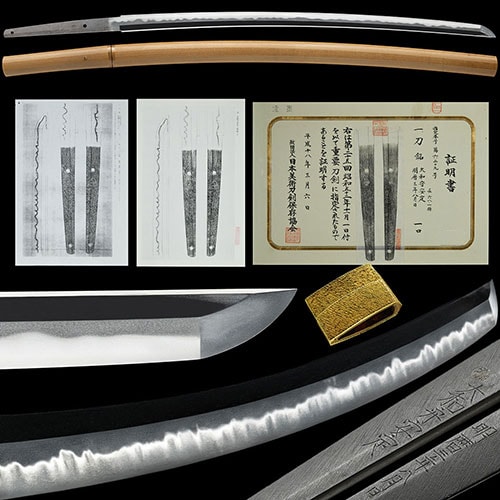
For the collector Korekazu is one of the more attainable of the major names, and his record should be read for what it is. Fujishiro grades him Jō , and the Tōkō Taikan values him at four hundred. He has no National Treasures and no Important Cultural Properties; his standing rests instead on the modern designation tiers, where roughly two dozen of his have reached the rank across sessions spanning from 1964 to 2022, a steady presence that reflects how many sound, dated, signed works of his survive. The published commentary repeatedly calls his best the representative and typical work of the smith, and of one it writes that it is "a blade in which the true specialty of Korekazu is brought forth without reservation, demonstrating an exceptionally distinguished workmanship" (運寿是一の本領が遺憾無く発揮された一口で、秀抜な出来映えを示している). Among the recorded provenance is one blade held by the Imperial Family. His pieces also carry the texture of their late- moment: one bears a carved slogan voicing the jōi ("expel the barbarians") sentiment of the day, and a Sanada-commissioned is inscribed in man'yōgana with the line "this holds but one stored intent, to protect, indeed, for my lord" (この太刀に貯めし心は身一つよ、守るたまかは我が君のため). A signed, dated Korekazu comes to the serious collector with some regularity rather than as a once-in-a-lifetime event, and a well-made example in his hallmark is among the most rewarding ways to hold a piece of the tradition's final flowering.

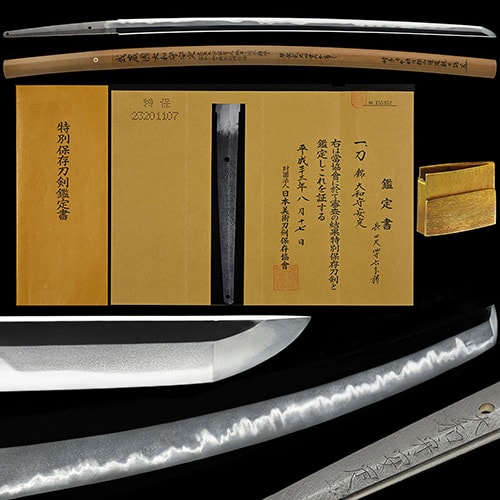
Kantei

one perfected hand read as a style split, not a temporal one: the hallmark Bizen-den chōji tempered in nie-deki (his stated originality, the bulk of the record), a more openly Sōshū-den register in itame with standing grain and nie activity, and a quieter suguha-toned variant; across all of them the constant tells are the deep-nioi nie-deki temper with sunagashi and kinsuji and the strong ko-itame ji-nie ground

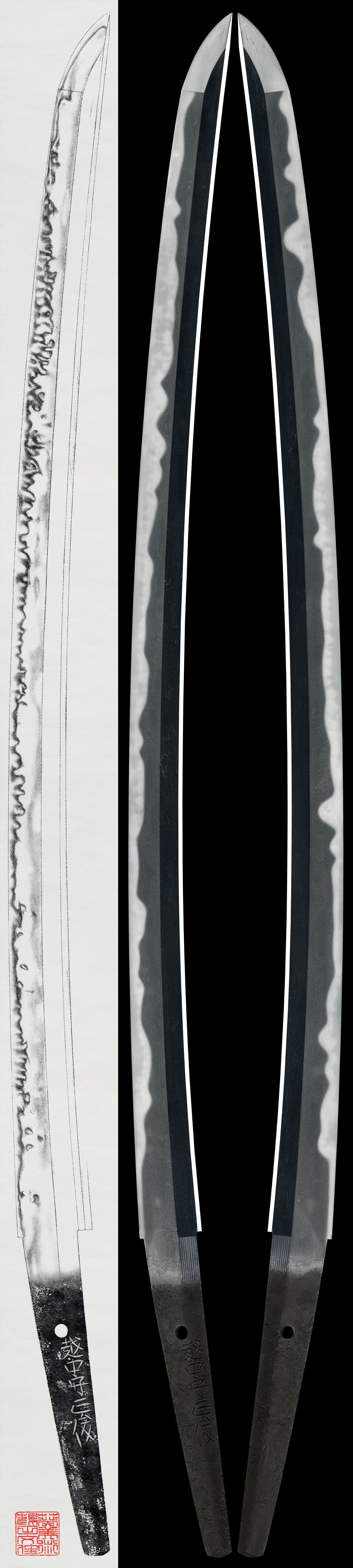
Korekazu is the seventh-generation head of the Edo Ishidō line, the Shinshintō revival of Bizen chōji in the capital: by his common name Masatarō, nephew of the Yonezawa domain smith Katō Chōunsai Tsunatoshi, under whom he first learned forging before marrying into and succeeding the sixth Ishidō Korekazu, and he died in Meiji 24 (1891) at seventy-five. The published sources divide his work into Bizen-den and Sōshū-den but agree his true forte was the Bizen chōji that is the Ishidō house's hereditary specialty, and they fix his fingerprint with one repeated formula: where the other Shinshintō Bizen-den smiths tempered their chōji in nioi-deki, Korekazu tempered his in nie-deki, and in this lies his originality. His typical katana is a robust ubu blade, wide in body with thick kasane and a long chū- or ō-kissaki, the jigane a well-packed ko-itame with fine ji-nie laid in a dust-fine cover and frequent chikei, often tightening to a muji-fū surface; over it a chōji mixed with gunome, ko-chōji and pointed elements, ashi entering long and well, the nioi deep, the nie thick with patches of coarser nie, sunagashi and kinsuji running freely, the nioiguchi bright and clear, the bōshi midare-komi to a ko-maru, frequently with hakikake. The published sources call this 'Bizen chōji-midare tempered in nie' the typical manner of Unju Korekazu.

Diagnostic discriminators

unique vs other Shinshintō Bizen-den smiths (chōji in nioi-deki)

Observation by phase

Bizen-den chōji tempered in nie (his hallmark and stated originality)

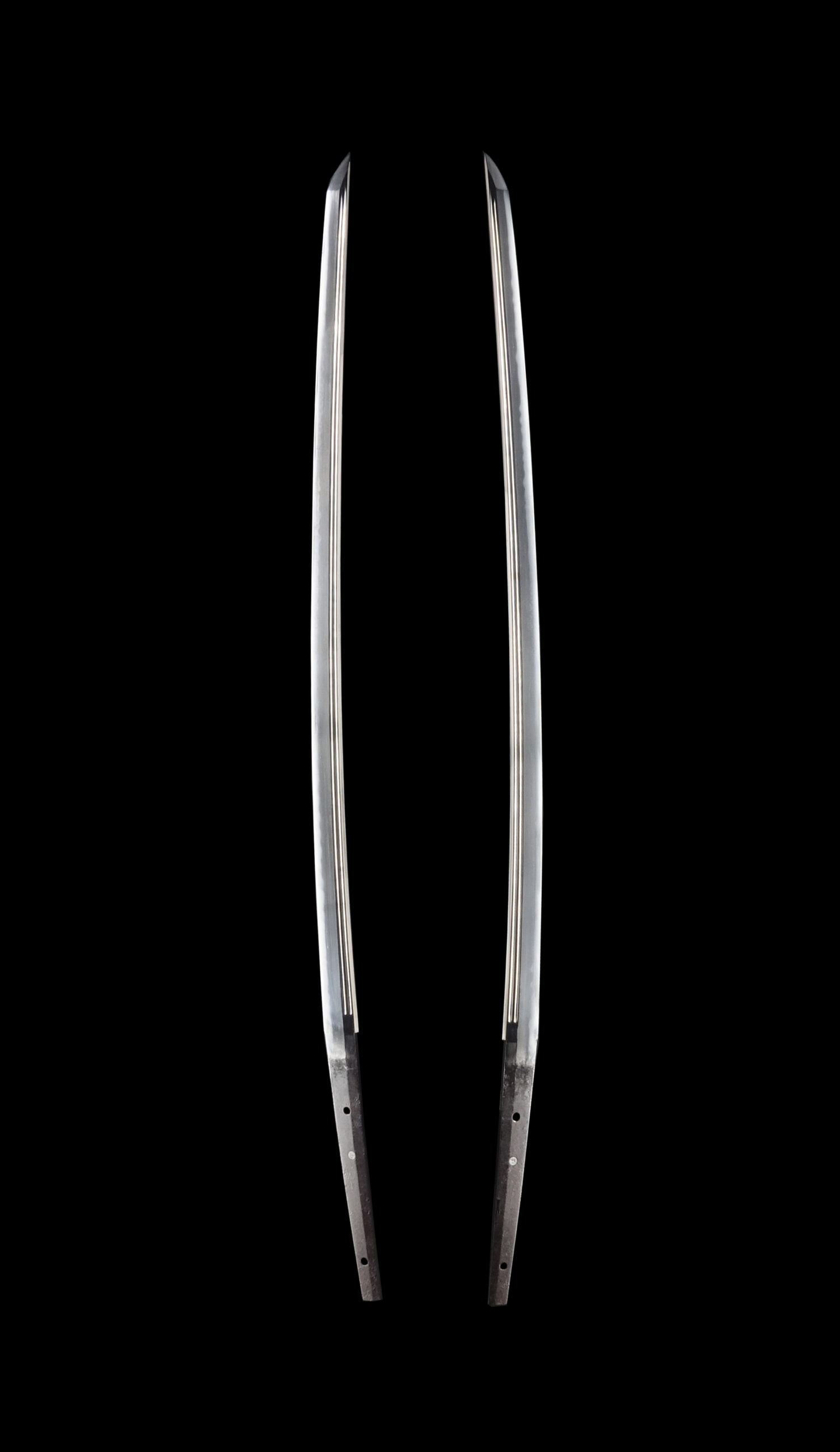
His core and finest record is the Bizen-den chōji, and the published sources state his individuality through a single contrast repeated across his entries: whereas the other Shinshintō Bizen-den smiths tempered their chōji in nioi-deki, Korekazu tempered his in nie-deki. The jigane is a well-packed ko-itame, at times mixing nagare or mokume, with ji-nie laid dust-fine and thick and fine chikei entering frequently, often tightening toward a muji-fū surface. Over it stands a chōji mixed with gunome, ko-chōji, ko-gunome and pointed-tending elements, ashi entering long and frequently, yō intermixed; the nioi is deep, the nie thick with patches of coarser nie that leave the temper a little uneven, sunagashi running well and kinsuji and nie-suji entering, the nioiguchi bright and clear. The bōshi runs midare-komi to a ko-maru, often with hakikake at the tip. The blades are robust ubu katana, wide in body with thick kasane, the sori shallow to deep and the point a long chū-kissaki or ō-kissaki, the nakago ubu with ō-sujikai keshō yasuri and long six-character signatures. The published sources call repeated examples the typical work of this smith, and at his peak find an unusual strength and vigor, with the bōshi mannerisms betraying the hand of his teacher Tsunatoshi.

Sugata 姿
Jigane 地鉄
Hamon 刃文
Bōshi 帽子

The Sōshū-den register (his second mode)

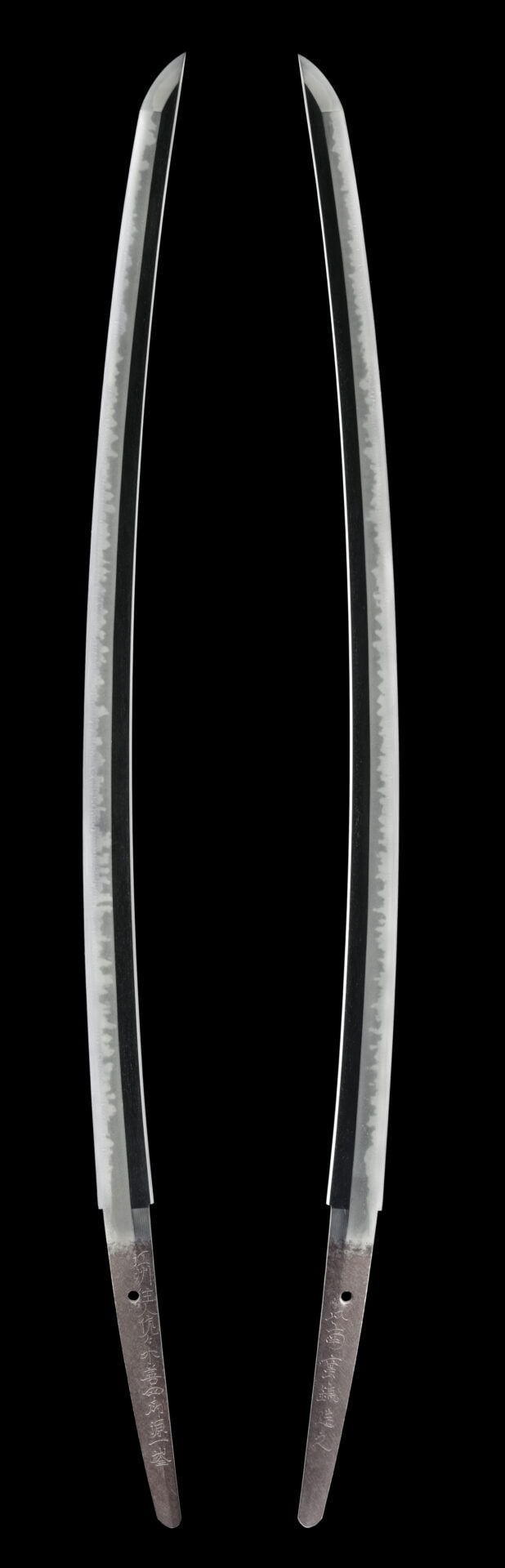
Alongside the Bizen chōji the published sources record a Sōshū-den mode that he himself claimed as a strength, and they name the Aizu collaboration and his daishō among its successes. Here the jigane stands rather than packs, an itame that flows and rises (hadadachi), and the temper turns toward ko-notare and gunome carried in nie, with sunagashi and ko-nie; on the wakizashi of the daishō the kitae is a flowing itame with standing grain and the bōshi sweeps in hakikake. The judges note that this register is closely allied to the Sōshū-leaning nie work that was the fashion of his day; on the gassaku katana, where Kakuda-suke Gengō forged and Korekazu set the temper, they find a blade that 'seems entirely the work of Korekazu.' The mode shares his deep-nioi nie-deki signature with the Bizen work, so the two faces are not opposed but read as one nie-based hand worked over two grounds.

Jigane 地鉄
Hamon 刃文
Bōshi 帽子

The quiet suguha-toned variant (his rare calm manner)

less firmly established

On rare occasions, the published sources note, Korekazu also made suguha; the surviving example of this quieter manner is the Ansei 5 katana the judges single out as 'comparatively gentle and restrained for Korekazu.' Over a ko-itame so tightly forged it becomes muji-fū, he sets a suguha-chō mixed with gunome, ashi entering well, the nioi deep, ko-nie adhering and the nioiguchi bright. It is the same deep-nioi nie-deki temper held in check, the chōji withdrawn, and it shows the calm pole of one hand rather than a separate phase.

Jigane 地鉄
Hamon 刃文
Bōshi 帽子
Scholarship

The published sources fix Korekazu's identity with a near-fixed biographical formula repeated across his entries: commonly known as Masatarō, nephew of Katō Chōunsai Tsunatoshi, first a pupil of Tsunatoshi, then son-in-law and seventh-generation successor of the Ishidō Korekazu line, dead in Meiji 24 at seventy-five, his work divided into Bizen-den and Sōshū-den with the Bizen the house specialty and his forte; his working span ran from the close of Tenpō into early Meiji, and comparatively many works survive.

His central scholarly tell is stated as a contrast, not a feature: the published sources record that whereas many Shinshintō Bizen-den smiths tempered chōji in nioi-deki, Korekazu tempered his in nie-deki, and one entry sums up the popular epithet that he 'tempered Bizen-style chōji-midare in nie' as his typical manner; another finds the bōshi handling reveals Tsunatoshi's mannerisms, inferring a stylistic link to his teacher.

Designations

Kokuhō—
Jūyō Bunkazai—
Jūyō Bijutsuhin—
Gyobutsu1
Tokubetsu Jūyō—
Jūyō Tōken24

Elite Standing

0.13 across 25 designated works

Top 15% among smiths

Provenance

1 documented provenance across certified works by Korekazu

Provenance Standing

1 works held in elite collections across 1 documented provenances

Top 100% among smiths

Raw score: 1.77 / 10

Blade Forms

Distribution across 25 ranked works

Signatures

Signature types across 25 ranked works

Currently Available

Lineage

Korekazu
Students (2)
  1. 1.Nobukazu信一
  2. 2.Tomochika知近

Edo Ishido School

Other artisans of the Edo Ishido school

  1. 1.Yasusada安定6 for sale11designated
  2. 2.Yasusada安定9designated
  3. 3.Mitsuhira光平10designated