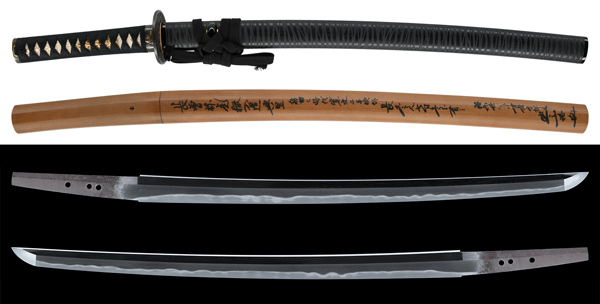
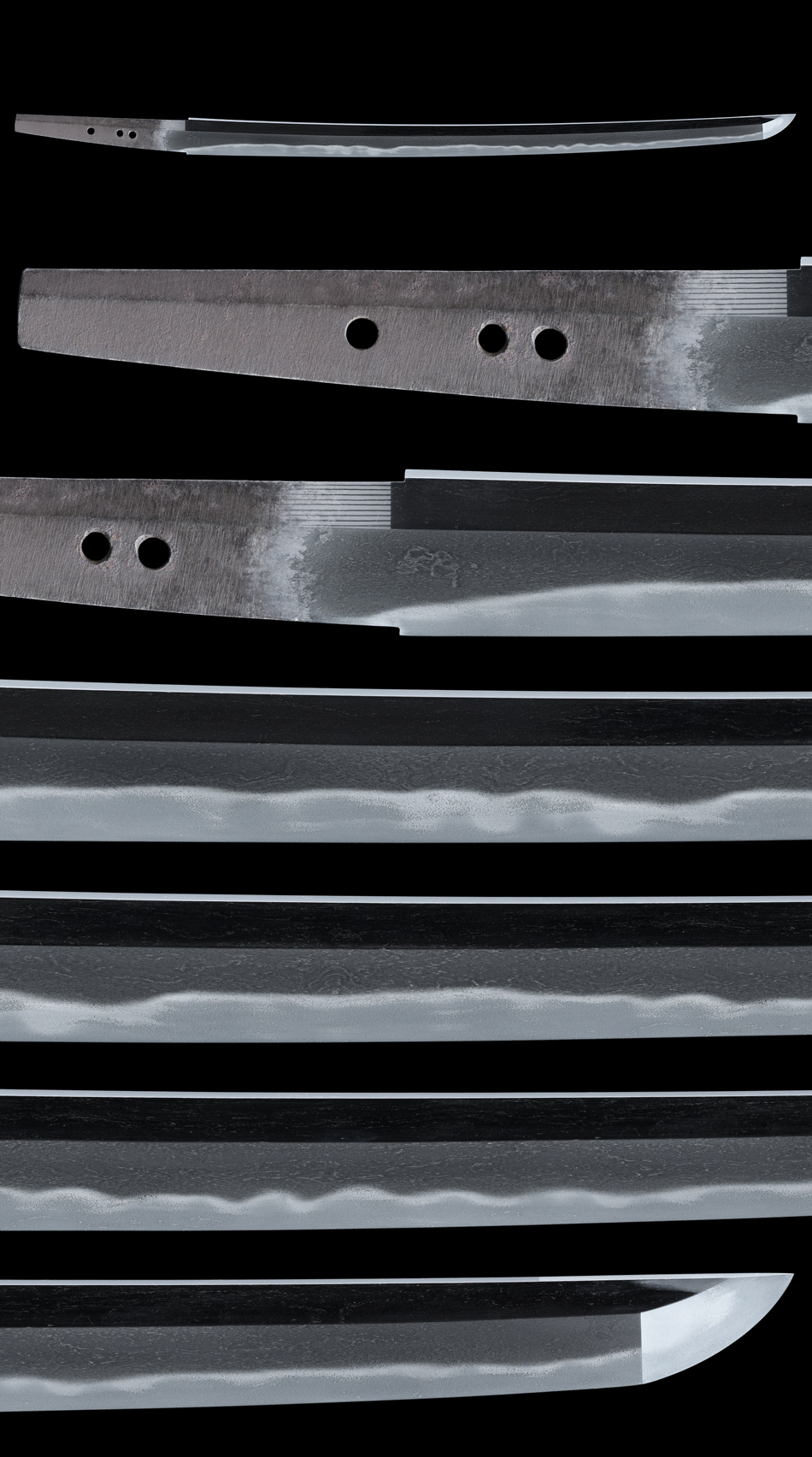
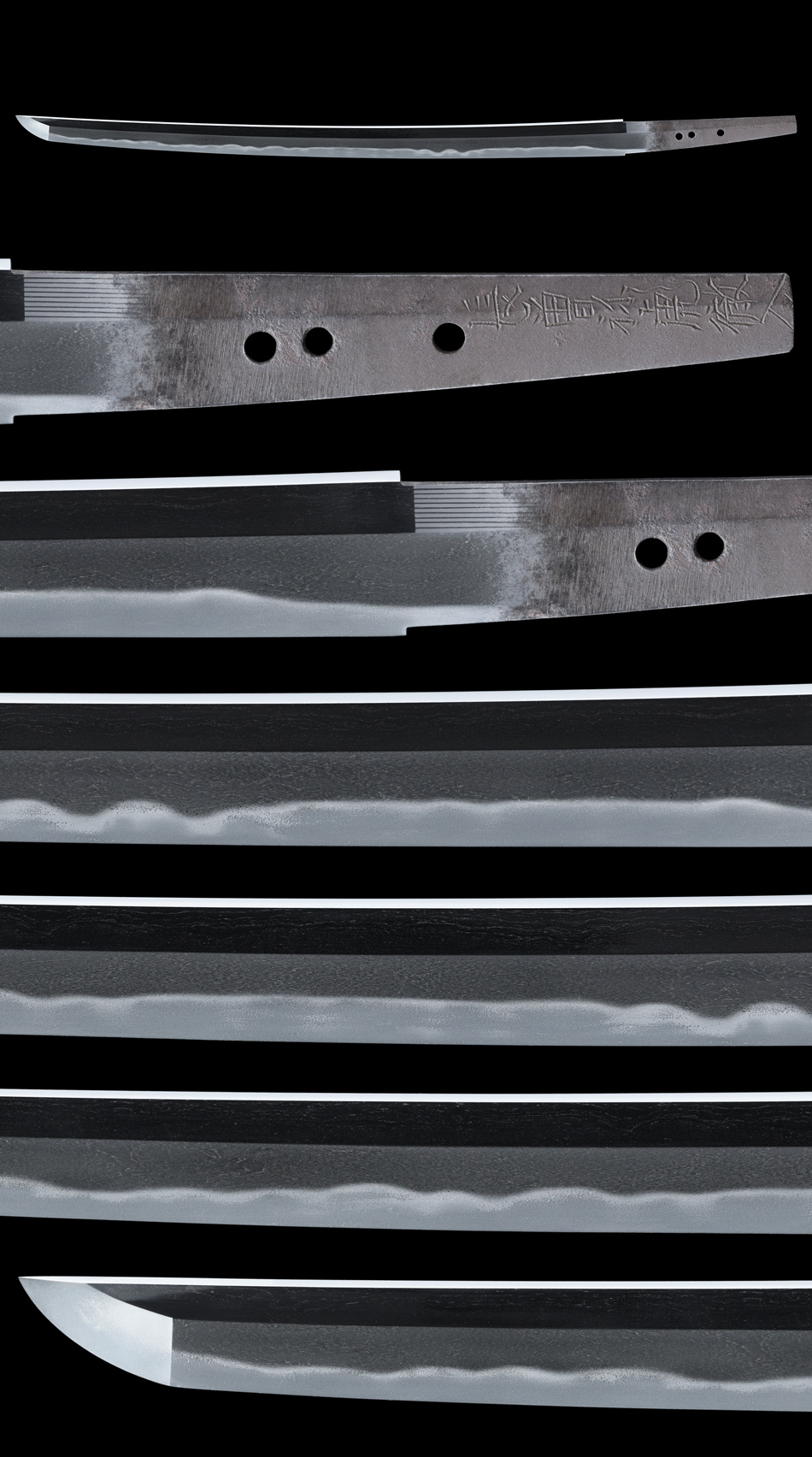
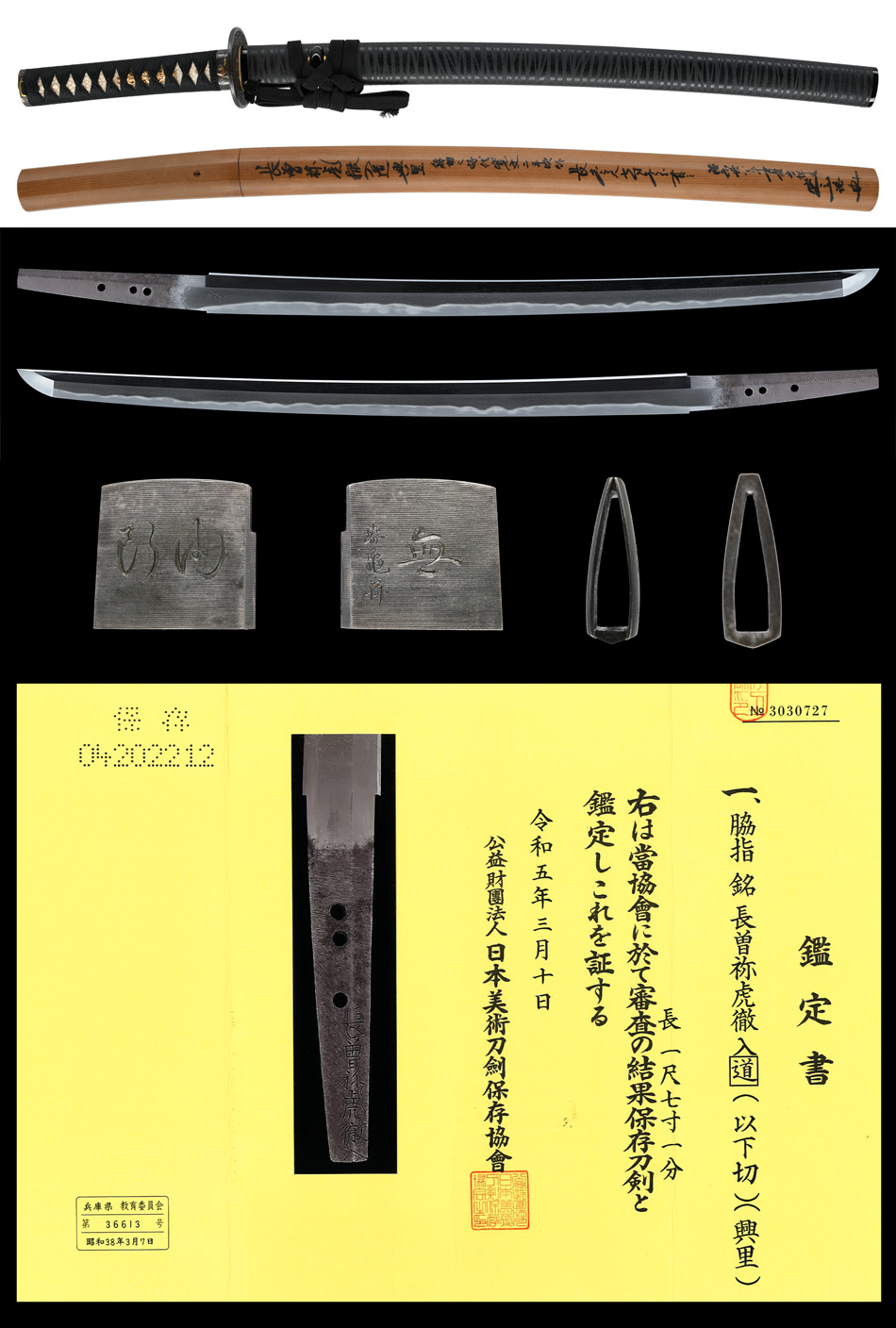
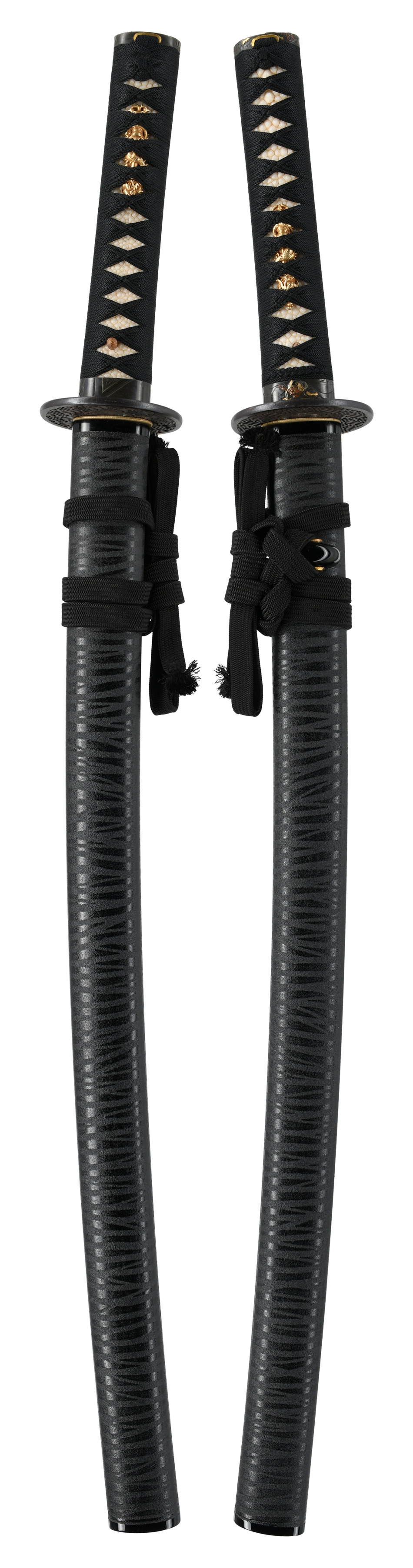
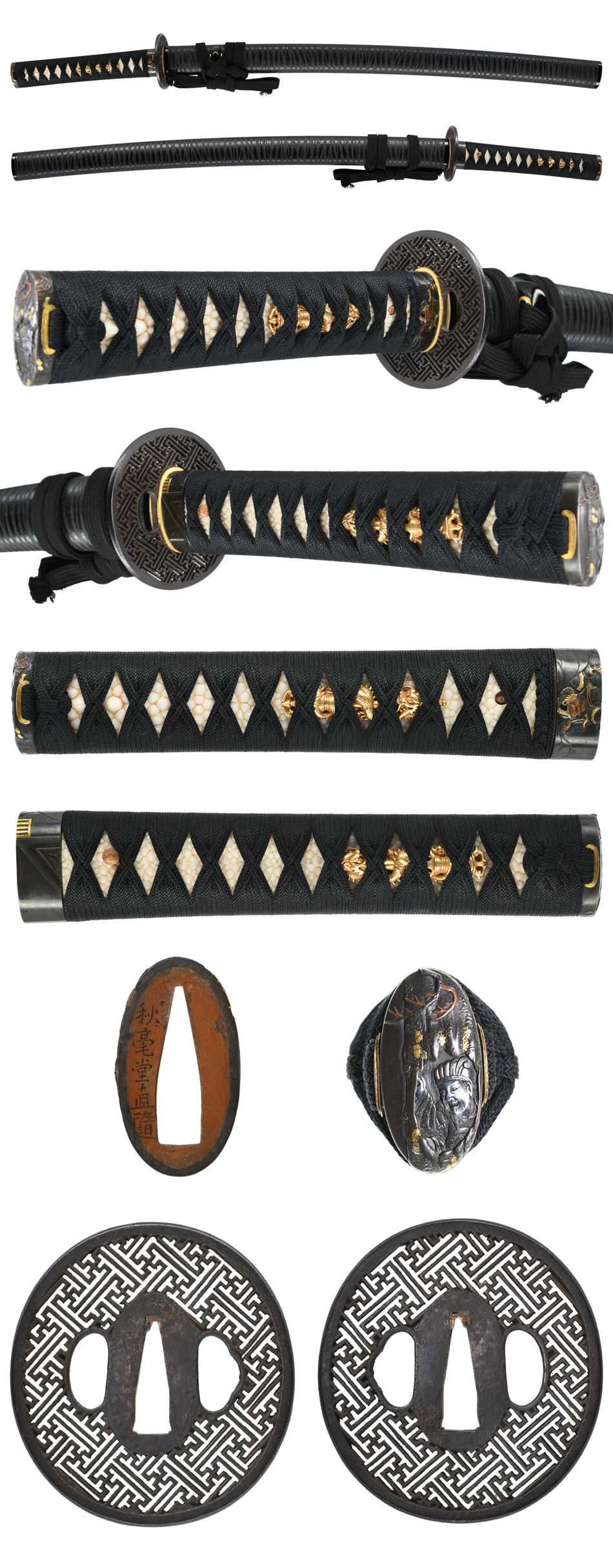
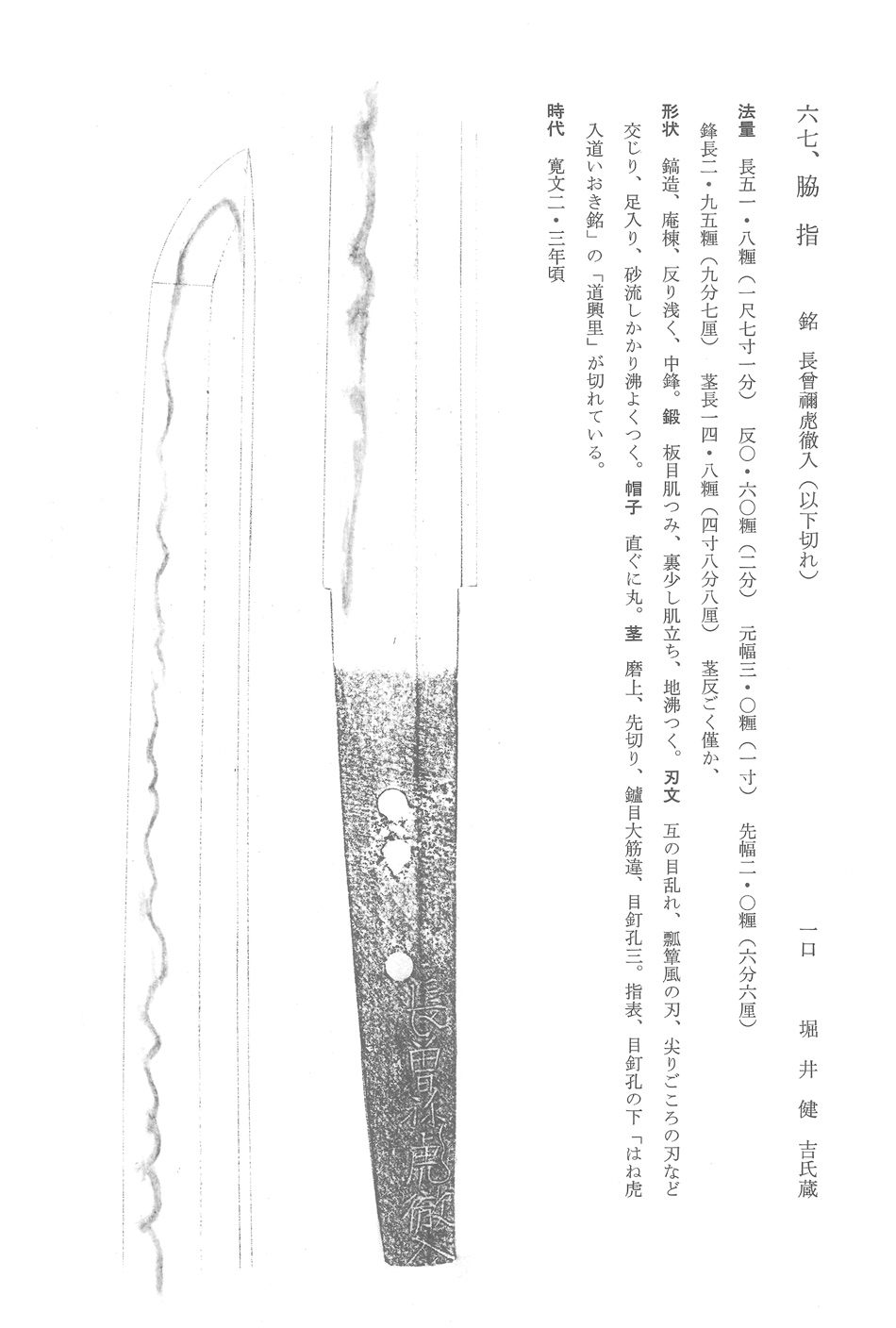
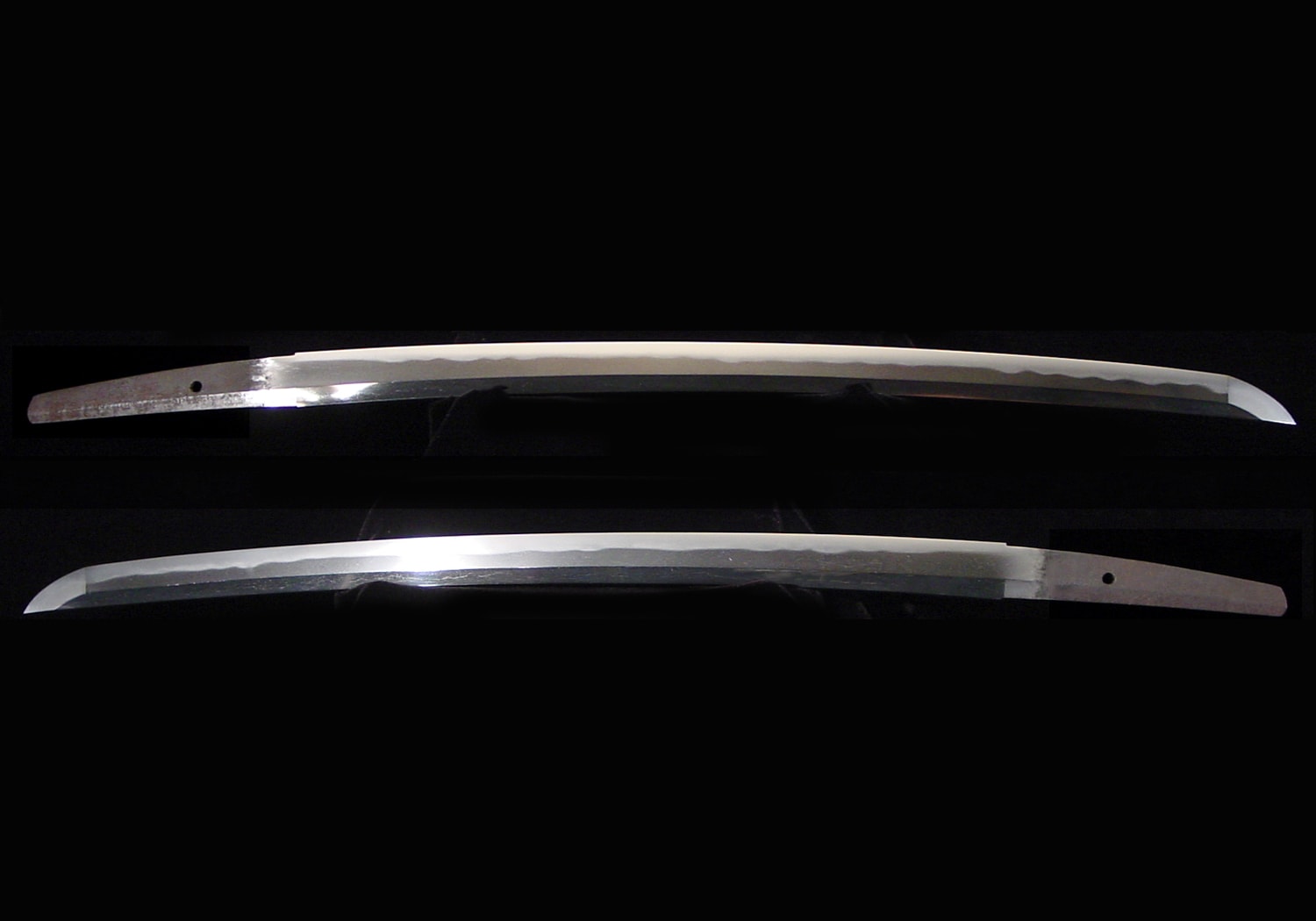
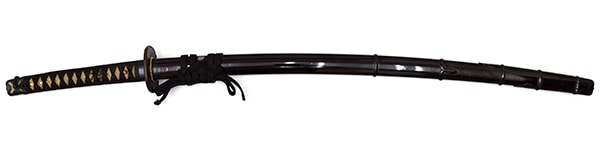
Nagasone Okisato, who took the smithing name Kotetsu (虎徹), began his career not at the forge of the swordsmith but at that of the armorer, working as a katchūshi in Echizen Province. Around Meireki 2 (1656), when he was about fifty years of age, he relocated to Edo and changed his profession to swordsmithing, settling in the area of Tōeizan and Shinobugaoka. The setsumei record that his common name was Sannojō; he first signed Okisato, and after taking Buddhist vows styled himself Kotetsu Nyūdō. The written form of the name itself moved through stages, beginning with the characters 古鉄 ("old iron"), shifting to 虎徹, and from the eighth month of Kanbun 4 (1664) onward to the variant forms 乕徹 and 馬徹. His dated blades run from Meireki 2 to Enpō 5 (1677), the latter being the last year for which work survives. His pupil and adopted son Nagasone Okimasa (興正) succeeded him as the second generation, working from Kanbun 13 (1673) to Genroku 3 (1690); the registers note that certain blades signed by the master were in fact Okimasa's daisaku, or substitute work. The setsumei describe a shared vocabulary that holds across the line. The foundation is a strong jigane, forged as a tightly packed ko-itame in which ji-nie adheres thickly, fine chikei enter, and the steel reads bright and clear; a mottled inclusion the catalogues call teko-tetsu or tekkotsu appears as a recognized trait. The sugata is the robust Kanbun-shinto silhouette, with shallow sori, marked taper from base to tip, and a chū-kissaki. Most blades open with a short straight yakidashi.
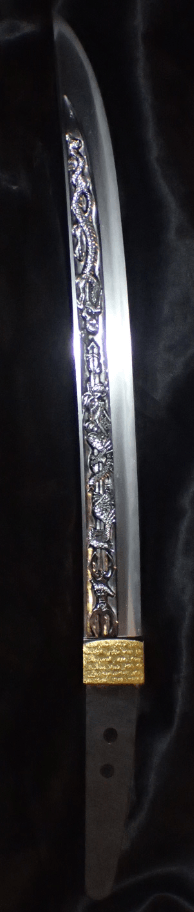
The hamon falls into two recorded phases: the earlier hyōtan-ba, a gourd pattern in which large and small gunome connect with pronounced rises and falls, and the later juzu-ba, the rosary-bead temper of round-headed gunome linked along an even line, often worked over a shallow notare. Thick ashi enter, the nioi runs deep, ko-nie lies thickly, and kinsuji and sunagashi play within the nioiguchi, which is consistently bright. " Several blades carry horimono cut by the smith's own hand, from Fūjin and Raijin to Kurikara and Sanskrit seed-syllables, and the cutting reputation is documented through gold-inlaid kinzōgan test inscriptions on the tang. For the collector, recognition turns on these named points: the juzu-ba of the mature work, the bright order of ji and ha, the teko-tetsu in the ground, and the long signature in fine chisel-work centered on the shinogi-suji, with the first character cut so as to overlap the mekugi-ana. The catalogues distinguish the earlier hane-tora manner of writing the tora character from the later hako-tora phase, which they treat as a dating tool. The cutting-test inscriptions give Kotetsu a place among the swords valued for performance as well as form, and the rarity of certain shapes adds weight: tantō by his hand number perhaps fewer than ten, and in those the Sōshū-den feeling is described as especially strong. Named works carry provenance through the front rank of collecting, among them a katana transmitted in the Nabeshima family of Hizen and known as "Nabeshima Tetsu," confirmed by a sayagaki of Satō Kanzan, and blades formerly held by figures such as Inukai Bokudō. Okimasa stands a step behind his master in the registers, his deeper nioi and thicker nie read as a personal voice within the inherited juzu-ba. The line occupies a central position in the study of Edo shinto, its work measured by the strength of its steel and the discipline of its bright temper. Learn more →