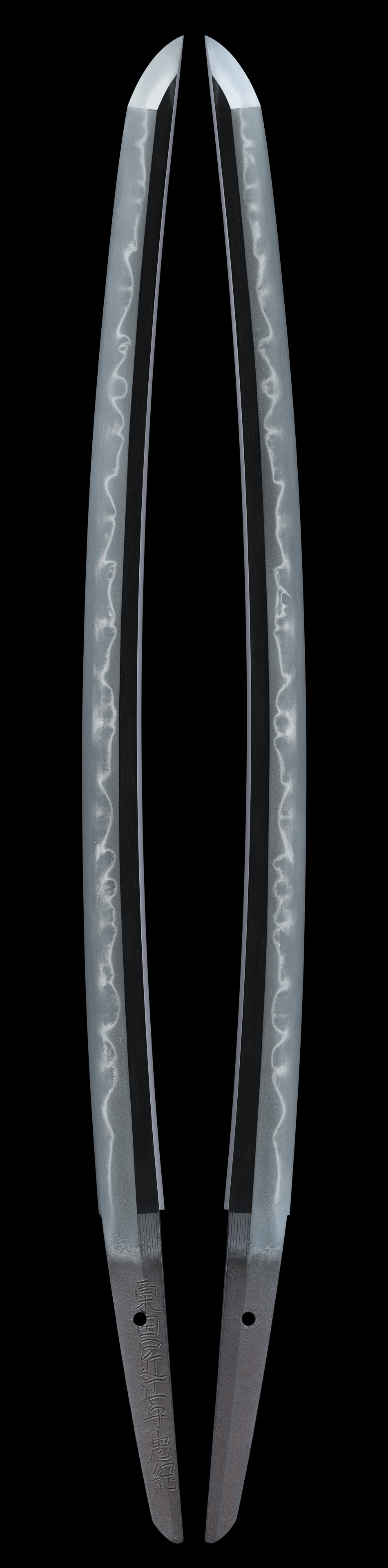
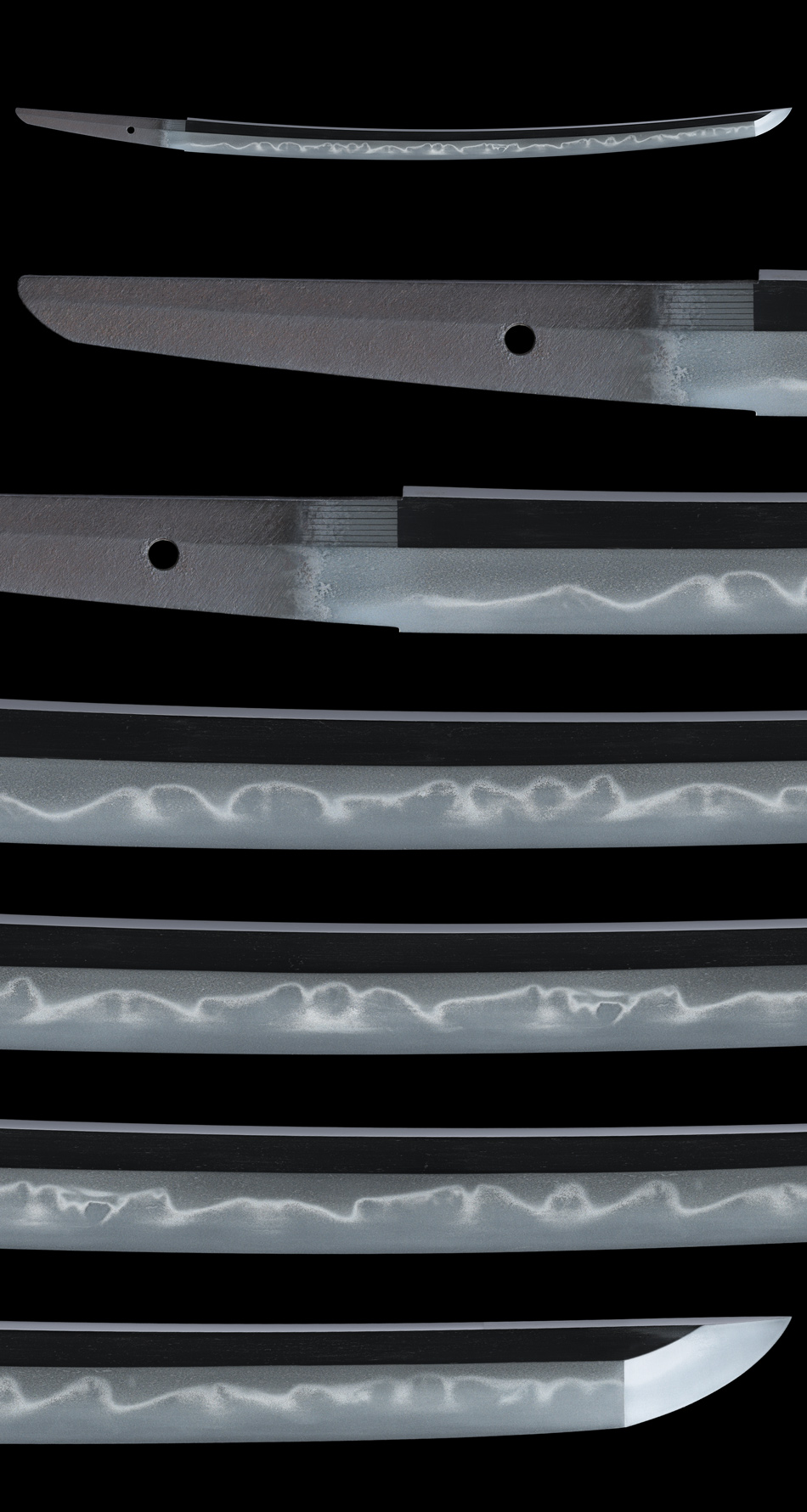
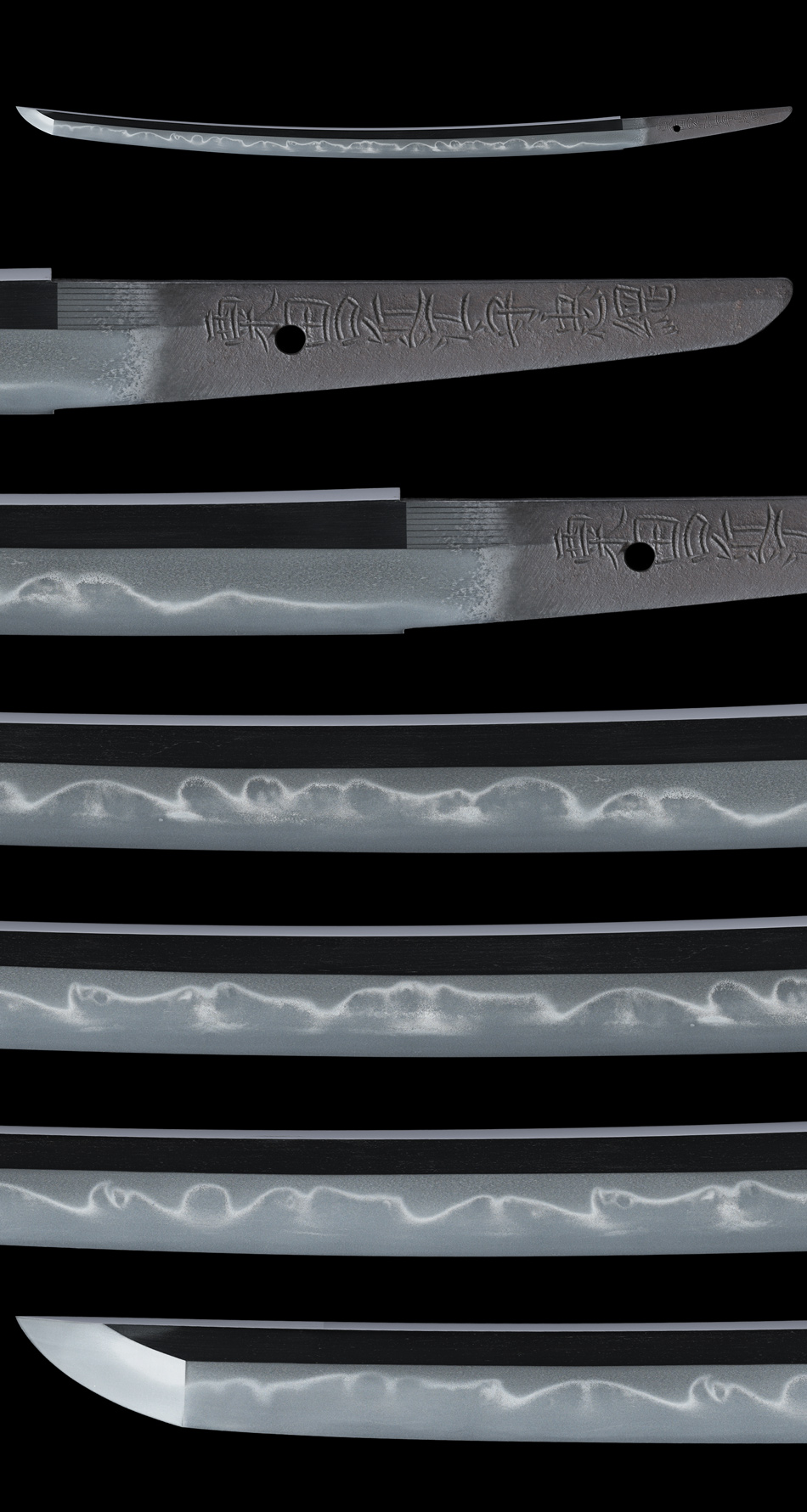
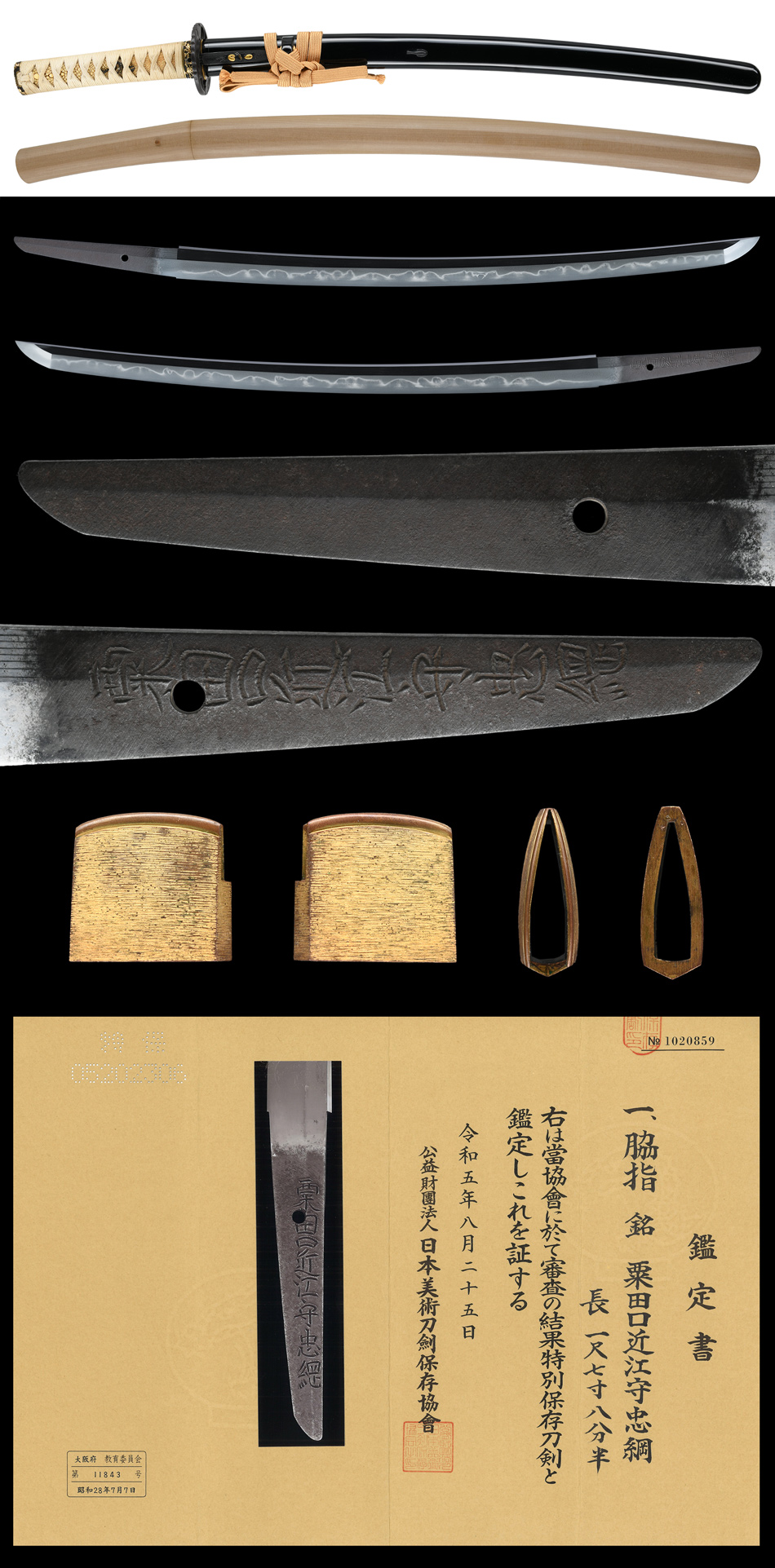
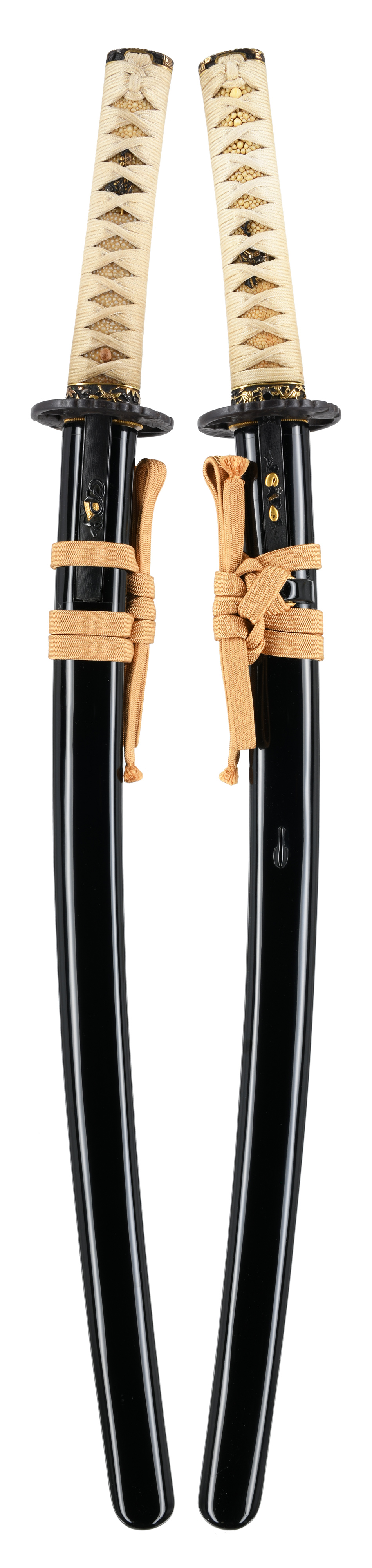
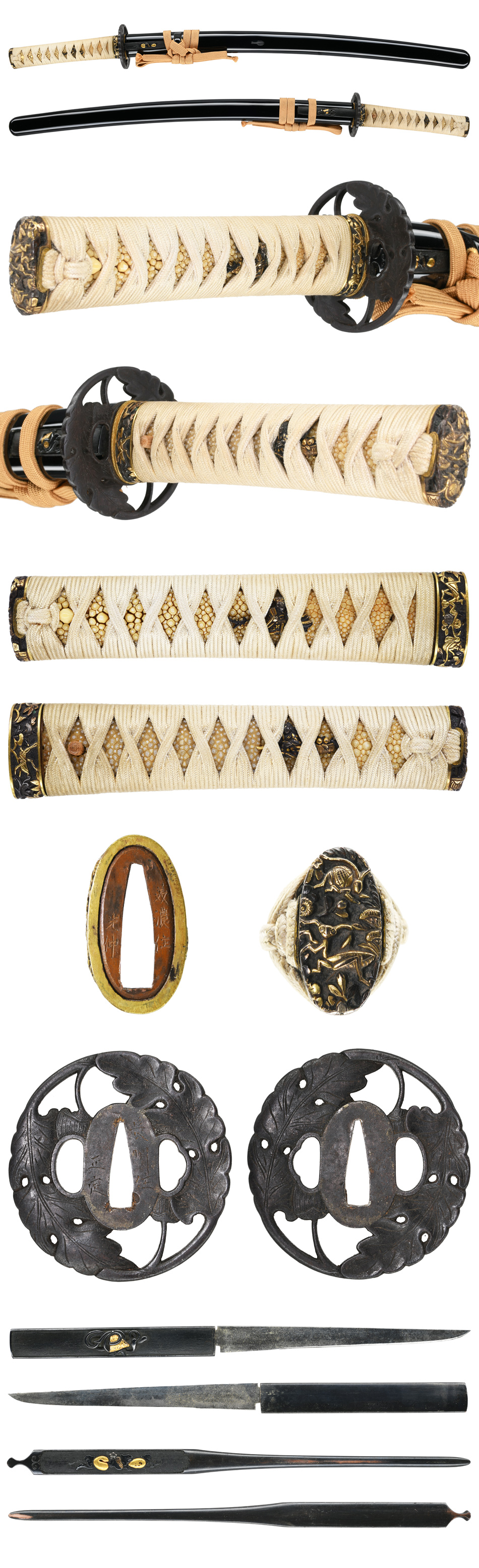
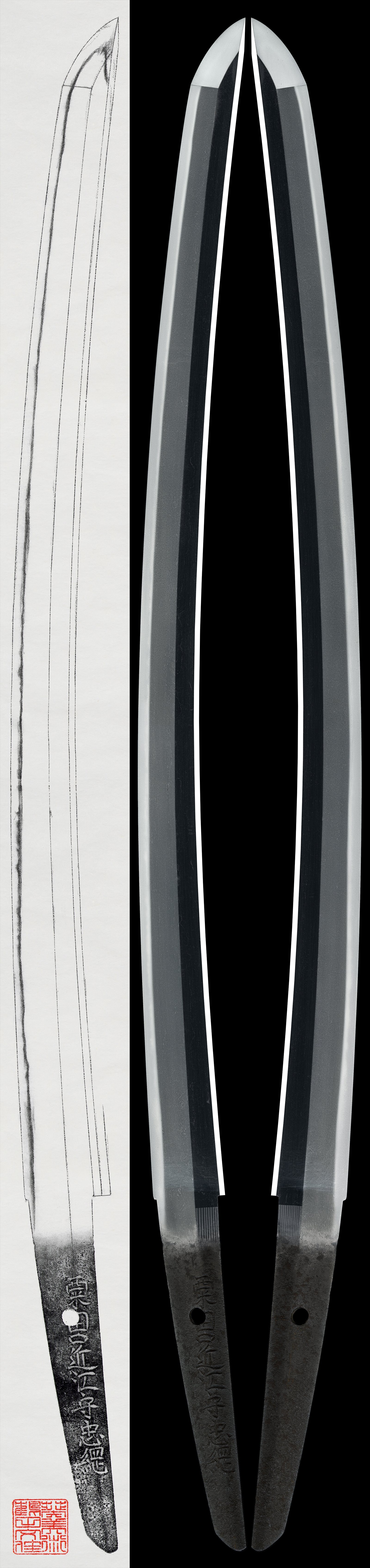
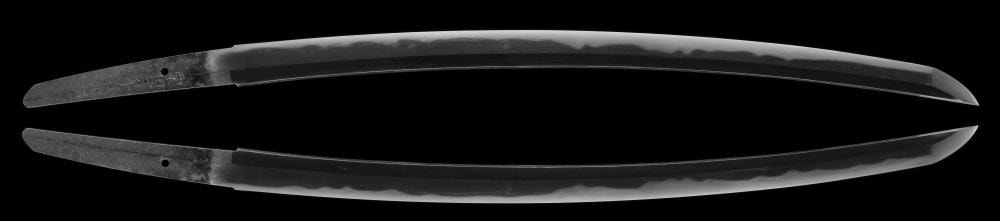
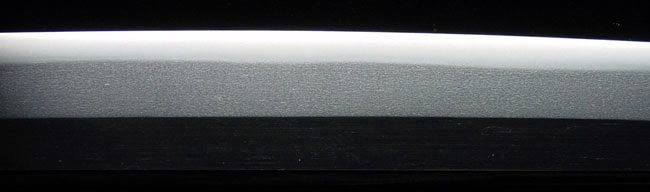
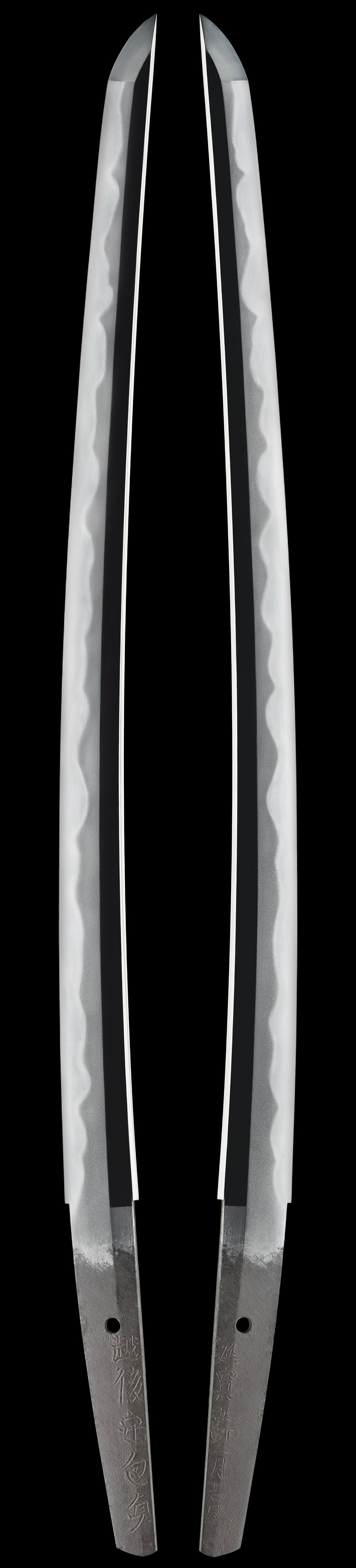
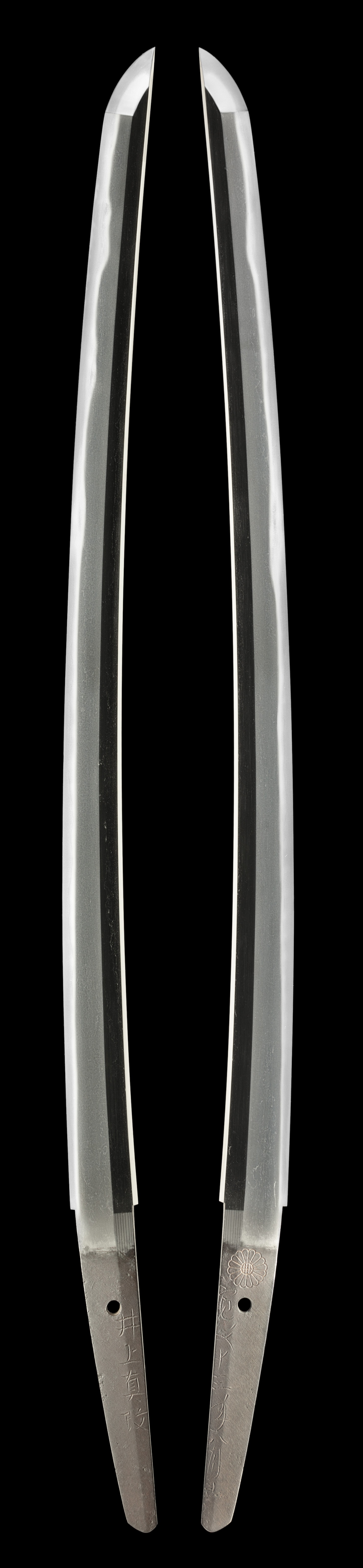
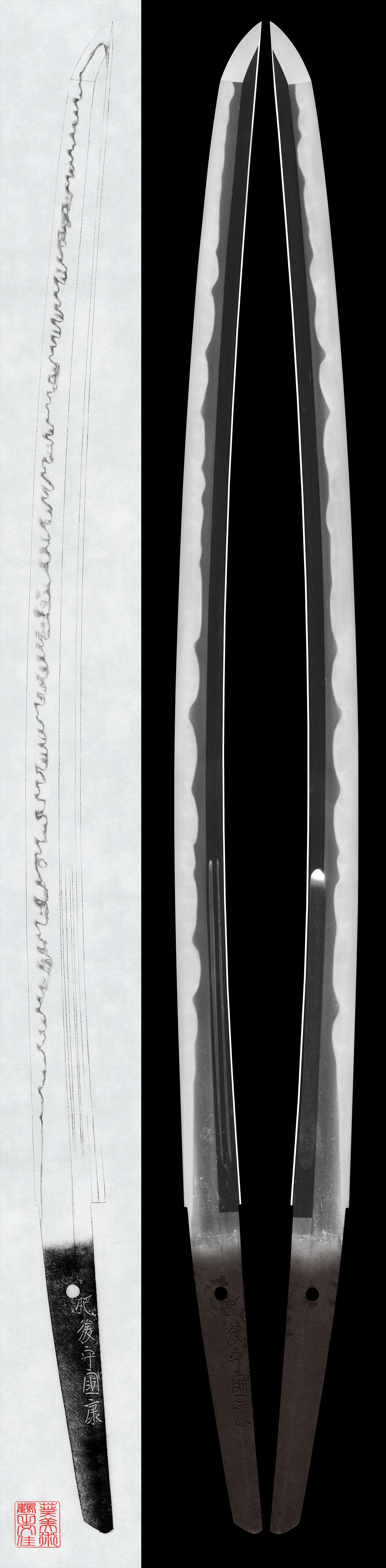
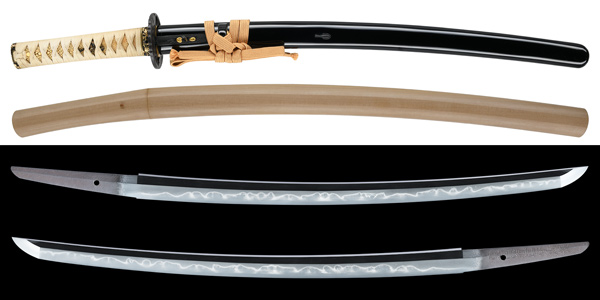
This is a wakizashi by Awataguchi Omi no Kami Tadatsuna from Settsu province, dating to the middle Edo period around 1688. It has a Tokubetsu Hozon Token certificate from the NBTHK. The blade measures 54.1cm in length with a curve of 1.3cm.
mei · Kanbun (1661-1673) · nagasa 54.1cm · sori 1.3cm


Awataguchi (Ikkanshi) Tadatsuna, Osaka Shinto (Settsu) · Settsu · around 1673-1717
Fujishiro Jo-jo saku · Tōken Taikan top 8%
3 pieces on the market now
Ikkanshi Tadatsuna is the second-generation Awataguchi Ōmi no Kami Tadatsuna, son of the shodai Ōmi no Kami Tadatsuna and one of the representative Osaka smiths of the Genroku years. The published sources record his common name as Mantayū, that he succeeded his father as the second to bear the title Ōmi no Kami, that he claimed descent from Awataguchi Kunitsuna and so prefixed Awataguchi to his signature, and that around Genroku 2 he began to style himself by the gō Ikkanshi. They place him among the leading Osaka makers of his day, one who is, in their words, "renowned for the brilliance of his ji and ha and the decorative beauty of his carving"[[c:1]]. His early manner follows his father closely, and the heart of his record is the broad, signed and dated katana that doubles as a field for the carving on which his fame chiefly rests.
His characteristic hand is read first in the temper. Over a tightly forged ko-itame he opens a straight suguha yakidashi at the base and then runs two related manners. The earlier and more inherited of them is a chōji with well-aligned yakigashira and long ashi, the very style in which the shodai excelled, the long chōji-ashi entering and the sunagashi and kinsuji cutting across them. The published sources call him "a master who surpassed his father"[[c:2]], and they locate the difference precisely: where the first generation's chōji is aligned and dignified, the nidai's is deeper in nioi, brighter in nioiguchi and firmer in ko-nie, talent they name shutsuran, the dye that outdoes the indigo.
His mature and most personal manner is the tōran-midare, the surging-wave temper collectors know as sudareba. The published sources tie it to the Tsuda Sukehiro circle and call it on one wakizashi his "favoured Tsuda-style tōran temper"[[c:3]]. Over the tight ko-itame, the ji-nie applied thickly in minute particles and fine chikei entering, he builds a shallow notare base mixed with gunome and chōji-like elements that swells into the wave, the long chōji-ashi still entering, the nioi deep, ko-nie thickly adhered, sunagashi and kinsuji running frequently, the nioiguchi bright and clear. The bōshi is a shallow notare-komi to ko-maru with hakikake. A quieter suguha survives on a small number of blades, the calmest and rarest of his three faces, set over the same bright ko-itame.
That jigane is the constant beneath all three manners. The forging is a ko-itame tightly and finely packed, the ji-nie gathering thickly and at its best falling in minute particles, with fine chikei threading the surface, the steel bright and clear. It is the well-made Osaka jigane rather than a rustic one, and it is the field his temper and his carving both sit upon. The reference texts list his oeuvre as the aligned chōji after the shodai, the tōran, and the occasional suguha, all opened from the long straight yakidashi that marks the Osaka start.
What sets him apart, more than any single feature of ji or ha, is the carving. The published sources treasure his tōshin horimono as Ikkanshi-bori, recording that he "earned a high reputation for surpassing his teacher, and his blade carvings in particular are admired and treasured as Ikkanshi carving"[[c:4]]; "his blade carving is skillful and is treasured by the world as Ikkanshi-bori"[[c:5]]. He cut a relief shin-no-kurikara within the groove, the ume-kurikara, jewel-chasing dragons, and the koi-no-takinobori, a carp ascending a waterfall that the sources believe he was the first to attempt and which they note has "not been encountered on any of his blades other than this one"[[c:6]]. He worked closely with the Osaka carving master Fujita Tsūi, and he cut the added inscription horimono dōsaku to mark the carving as his own hand, a feature, the sources observe, not seen on the shodai at all and one that established a model within Shintō horimono.
For the collector Ikkanshi Tadatsuna is a leading Osaka Shintō name whose work can still be sought, though the very best is held rather than traded. Fujishiro grades him Jō-jō saku. He has no National Treasures; his record runs instead through the Jūyō rank in number, with several pieces reaching Tokubetsu Jūyō and a long signed ōdachi raised to Important Cultural Property. The published sources call one of his Tokubetsu Jūyō katana a representative work from the period when he was at the height of his powers, excellent in both ji and ha, its Ikkanshi-bori exceptionally splendid. About fifty-two of his blades stand in the Tokubetsu Jūyō and Jūyō tiers, with a recorded example held by the Kyoto National Museum and a documented blade once in the keeping of the Asai house. Because his work is signed and dated and survives in fair number, a Tadatsuna comes to light more readily than most Osaka masters of his rank, yet a dated katana carrying his own Ikkanshi-bori is a landmark when it appears, and the finest, with the carp and the kurikara cut by the smith himself, are documents of the carving craft at its Osaka height.
Where Tadatsuna stands among comparable artisans: across all of nihontō, and within tradition, era, and period. The tiers (Foremost · Leading · Major · Notable) weigh official designations from the NBTHK and Japan's Agency for Cultural Affairs, together with historical honors of lasting repute such as the Sansaku and Meibutsu-chō.
Select a lens to see how it's measured.
Years he was demonstrably active, proven by signed-and-dated blades
Shinto · Settsu
73 pieces on the market now
Osaka in the early-to-mid Edo period was a merchant capital, a city of commerce and capital rather than a castle town tied to a single daimyo house, and the swordsmiths who gathered there worked for a wealthy townsman clientele as much as for warriors. The grouping known as Osaka Shinto (大坂新刀) took shape in Settsu from two feeder currents. Learn more →
| Smith | Era | Designated |
|---|---|---|
| Shinkai真改 | 1649-1682 | 79 |
| Tadatsuna忠綱 | 1673-1717 | 53 |
| Kanesada包貞 | 1673-1682 | 78 |
| Kanesada包貞 | 1648-1652 | 10 |
| Kunisuke國助 | 1658-1663 | 10 |
A Hozon-certified blade judged to show notably superior workmanship and a better state of preservation. The bar is higher: re-tempered blades and most unsigned Muromachi/Edo works are excluded.
The NBTHK (Nihon Bijutsu Tōken Hozon Kyōkai, the Society for the Preservation of Japanese Art Swords) is a public-interest incorporated foundation founded in 1948 and supervised by Japan’s Agency for Cultural Affairs (Bunkachō); it is based at the Japanese Sword Museum in Tokyo. Its expert panels physically examine each submitted work (shinsa) and issue a certificate (kanteishō) ranking it by artistic and historical merit. NBTHK papers are the most widely recognized standard of authentication for Japanese swords and fittings.
NBTHK official siteNo cooling-off period or returns; refund only if the purchased sword is proven fake, capped at purchase price (excludes commission sales, accessories, auction items).

This is a wakizashi by Awataguchi Omi no Kami Tadatsuna from Settsu province, dating to the middle Edo period around 1688. It has a Tokubetsu Hozon Token certificate from the NBTHK. The blade measures 54.1cm in length with a curve of 1.3cm.
mei · Kanbun (1661-1673) · nagasa 54.1cm · sori 1.3cm


Awataguchi (Ikkanshi) Tadatsuna, Osaka Shinto (Settsu) · Settsu · around 1673-1717
Fujishiro Jo-jo saku · Tōken Taikan top 8%
3 pieces on the market now
Ikkanshi Tadatsuna is the second-generation Awataguchi Ōmi no Kami Tadatsuna, son of the shodai Ōmi no Kami Tadatsuna and one of the representative Osaka smiths of the Genroku years. The published sources record his common name as Mantayū, that he succeeded his father as the second to bear the title Ōmi no Kami, that he claimed descent from Awataguchi Kunitsuna and so prefixed Awataguchi to his signature, and that around Genroku 2 he began to style himself by the gō Ikkanshi. They place him among the leading Osaka makers of his day, one who is, in their words, "renowned for the brilliance of his ji and ha and the decorative beauty of his carving"[[c:1]]. His early manner follows his father closely, and the heart of his record is the broad, signed and dated katana that doubles as a field for the carving on which his fame chiefly rests.
His characteristic hand is read first in the temper. Over a tightly forged ko-itame he opens a straight suguha yakidashi at the base and then runs two related manners. The earlier and more inherited of them is a chōji with well-aligned yakigashira and long ashi, the very style in which the shodai excelled, the long chōji-ashi entering and the sunagashi and kinsuji cutting across them. The published sources call him "a master who surpassed his father"[[c:2]], and they locate the difference precisely: where the first generation's chōji is aligned and dignified, the nidai's is deeper in nioi, brighter in nioiguchi and firmer in ko-nie, talent they name shutsuran, the dye that outdoes the indigo.
His mature and most personal manner is the tōran-midare, the surging-wave temper collectors know as sudareba. The published sources tie it to the Tsuda Sukehiro circle and call it on one wakizashi his "favoured Tsuda-style tōran temper"[[c:3]]. Over the tight ko-itame, the ji-nie applied thickly in minute particles and fine chikei entering, he builds a shallow notare base mixed with gunome and chōji-like elements that swells into the wave, the long chōji-ashi still entering, the nioi deep, ko-nie thickly adhered, sunagashi and kinsuji running frequently, the nioiguchi bright and clear. The bōshi is a shallow notare-komi to ko-maru with hakikake. A quieter suguha survives on a small number of blades, the calmest and rarest of his three faces, set over the same bright ko-itame.
That jigane is the constant beneath all three manners. The forging is a ko-itame tightly and finely packed, the ji-nie gathering thickly and at its best falling in minute particles, with fine chikei threading the surface, the steel bright and clear. It is the well-made Osaka jigane rather than a rustic one, and it is the field his temper and his carving both sit upon. The reference texts list his oeuvre as the aligned chōji after the shodai, the tōran, and the occasional suguha, all opened from the long straight yakidashi that marks the Osaka start.
What sets him apart, more than any single feature of ji or ha, is the carving. The published sources treasure his tōshin horimono as Ikkanshi-bori, recording that he "earned a high reputation for surpassing his teacher, and his blade carvings in particular are admired and treasured as Ikkanshi carving"[[c:4]]; "his blade carving is skillful and is treasured by the world as Ikkanshi-bori"[[c:5]]. He cut a relief shin-no-kurikara within the groove, the ume-kurikara, jewel-chasing dragons, and the koi-no-takinobori, a carp ascending a waterfall that the sources believe he was the first to attempt and which they note has "not been encountered on any of his blades other than this one"[[c:6]]. He worked closely with the Osaka carving master Fujita Tsūi, and he cut the added inscription horimono dōsaku to mark the carving as his own hand, a feature, the sources observe, not seen on the shodai at all and one that established a model within Shintō horimono.
For the collector Ikkanshi Tadatsuna is a leading Osaka Shintō name whose work can still be sought, though the very best is held rather than traded. Fujishiro grades him Jō-jō saku. He has no National Treasures; his record runs instead through the Jūyō rank in number, with several pieces reaching Tokubetsu Jūyō and a long signed ōdachi raised to Important Cultural Property. The published sources call one of his Tokubetsu Jūyō katana a representative work from the period when he was at the height of his powers, excellent in both ji and ha, its Ikkanshi-bori exceptionally splendid. About fifty-two of his blades stand in the Tokubetsu Jūyō and Jūyō tiers, with a recorded example held by the Kyoto National Museum and a documented blade once in the keeping of the Asai house. Because his work is signed and dated and survives in fair number, a Tadatsuna comes to light more readily than most Osaka masters of his rank, yet a dated katana carrying his own Ikkanshi-bori is a landmark when it appears, and the finest, with the carp and the kurikara cut by the smith himself, are documents of the carving craft at its Osaka height.
Where Tadatsuna stands among comparable artisans: across all of nihontō, and within tradition, era, and period. The tiers (Foremost · Leading · Major · Notable) weigh official designations from the NBTHK and Japan's Agency for Cultural Affairs, together with historical honors of lasting repute such as the Sansaku and Meibutsu-chō.
Select a lens to see how it's measured.
Years he was demonstrably active, proven by signed-and-dated blades
Shinto · Settsu
73 pieces on the market now
Osaka in the early-to-mid Edo period was a merchant capital, a city of commerce and capital rather than a castle town tied to a single daimyo house, and the swordsmiths who gathered there worked for a wealthy townsman clientele as much as for warriors. The grouping known as Osaka Shinto (大坂新刀) took shape in Settsu from two feeder currents. Learn more →
| Smith | Era | Designated |
|---|---|---|
| Shinkai真改 | 1649-1682 | 79 |
| Tadatsuna忠綱 | 1673-1717 | 53 |
| Kanesada包貞 | 1673-1682 | 78 |
| Kanesada包貞 | 1648-1652 | 10 |
| Kunisuke國助 | 1658-1663 | 10 |
A Hozon-certified blade judged to show notably superior workmanship and a better state of preservation. The bar is higher: re-tempered blades and most unsigned Muromachi/Edo works are excluded.
The NBTHK (Nihon Bijutsu Tōken Hozon Kyōkai, the Society for the Preservation of Japanese Art Swords) is a public-interest incorporated foundation founded in 1948 and supervised by Japan’s Agency for Cultural Affairs (Bunkachō); it is based at the Japanese Sword Museum in Tokyo. Its expert panels physically examine each submitted work (shinsa) and issue a certificate (kanteishō) ranking it by artistic and historical merit. NBTHK papers are the most widely recognized standard of authentication for Japanese swords and fittings.
NBTHK official siteNo cooling-off period or returns; refund only if the purchased sword is proven fake, capped at purchase price (excludes commission sales, accessories, auction items).