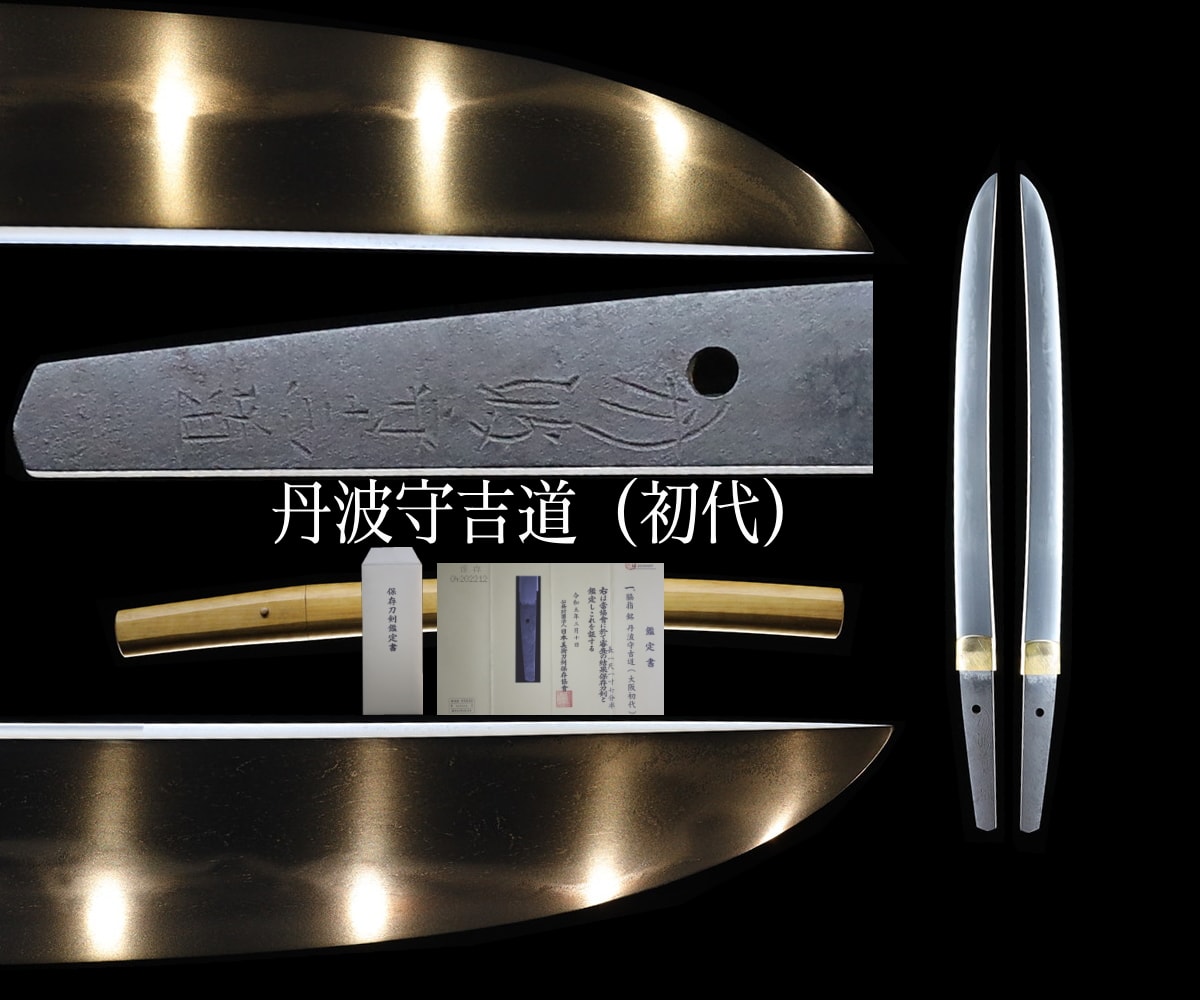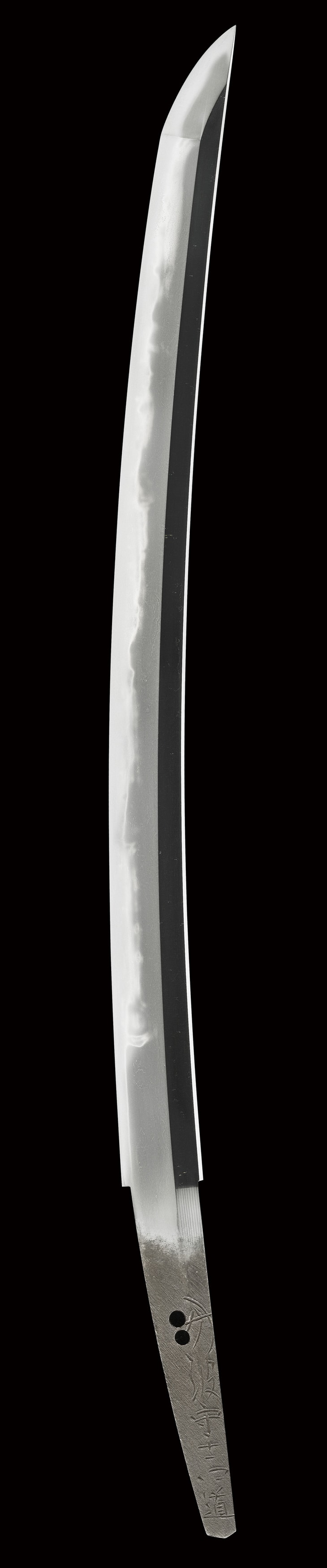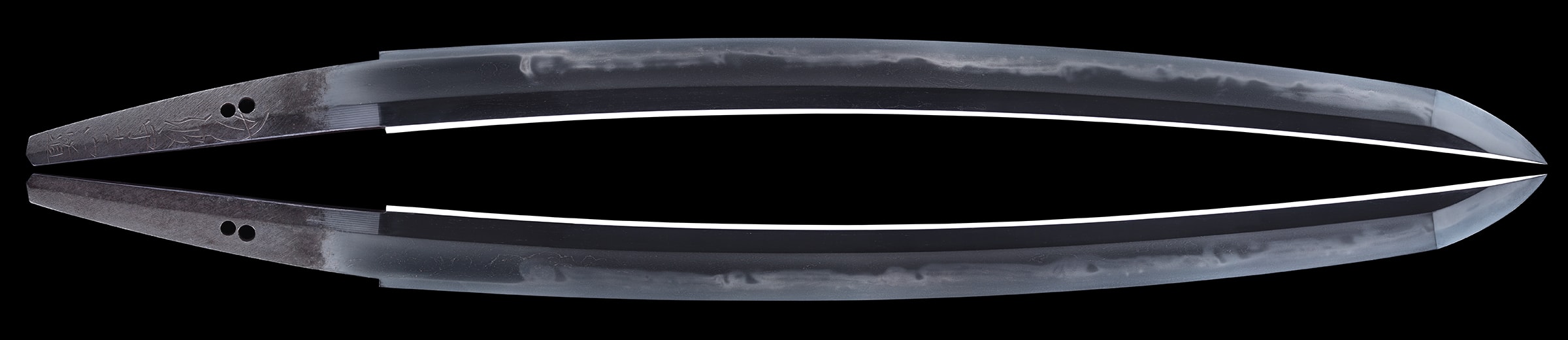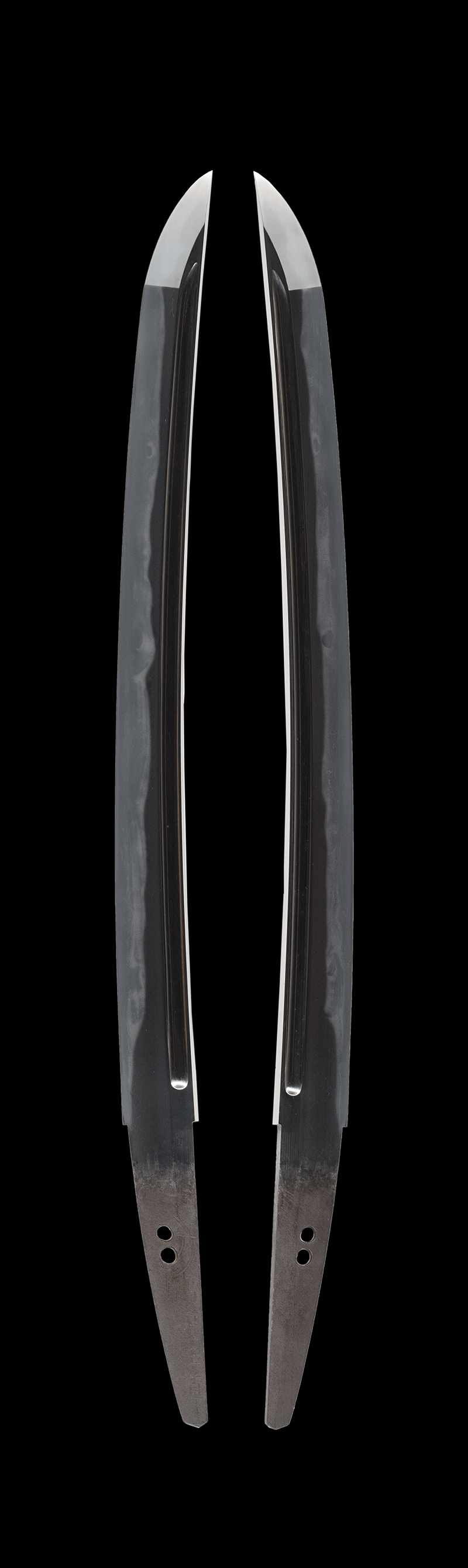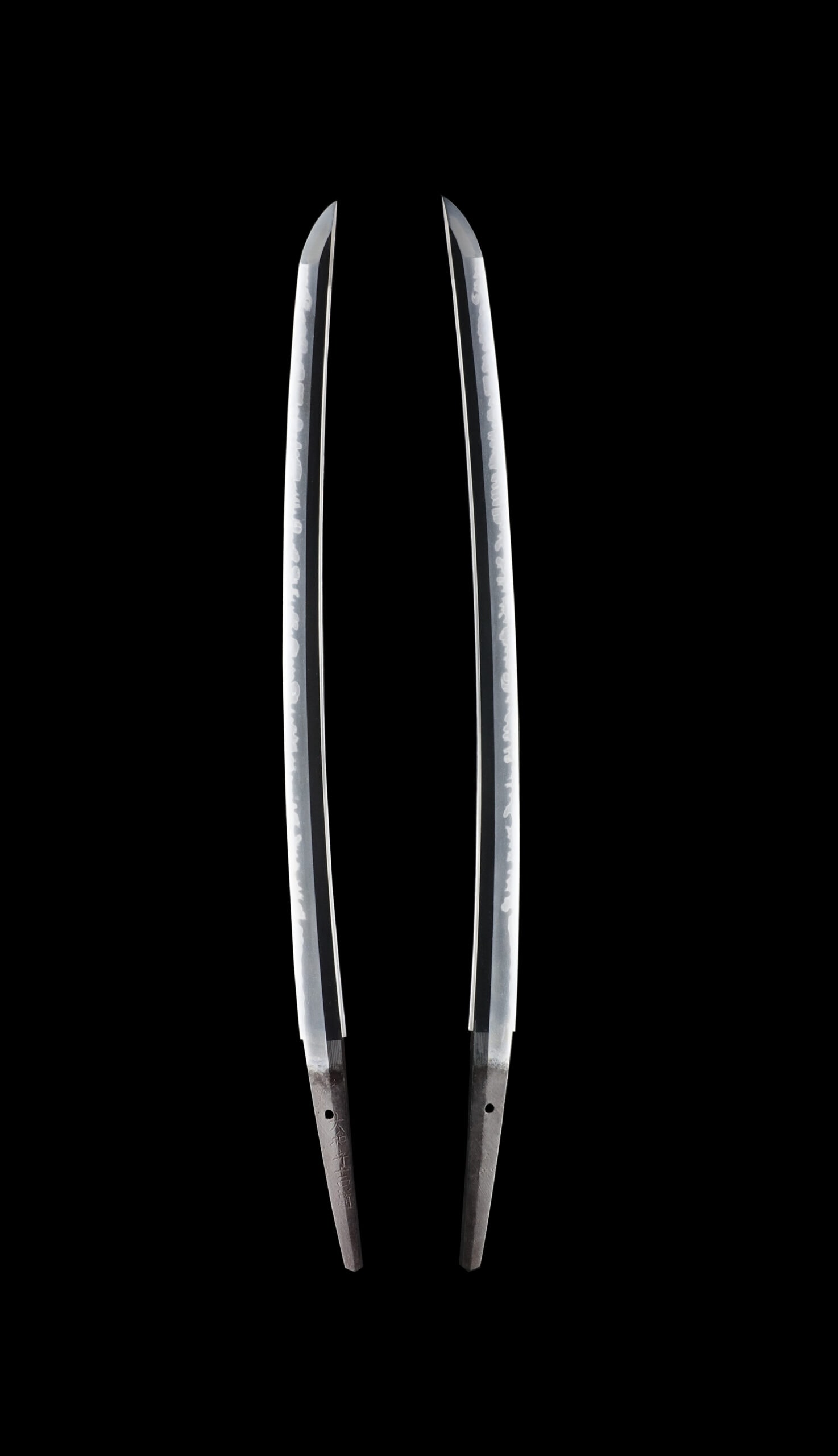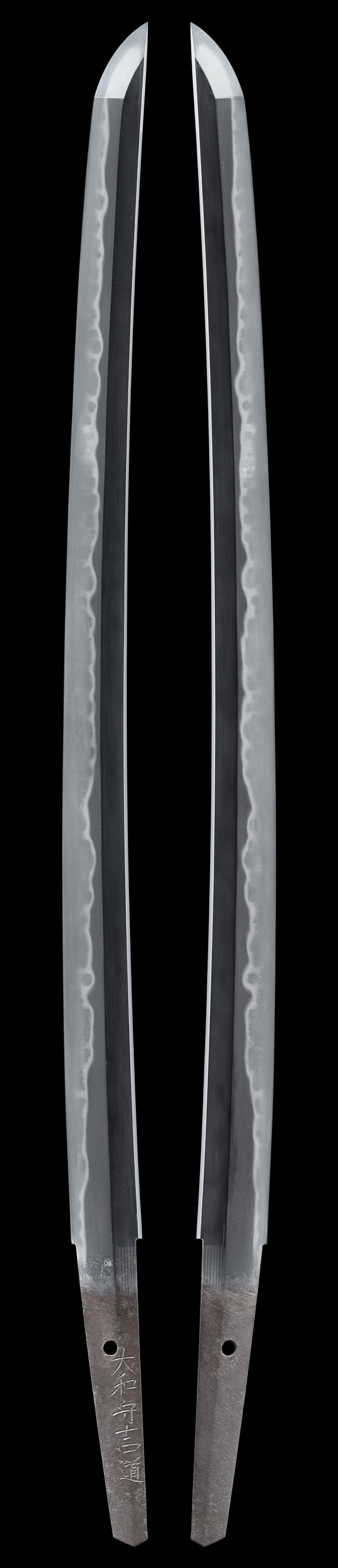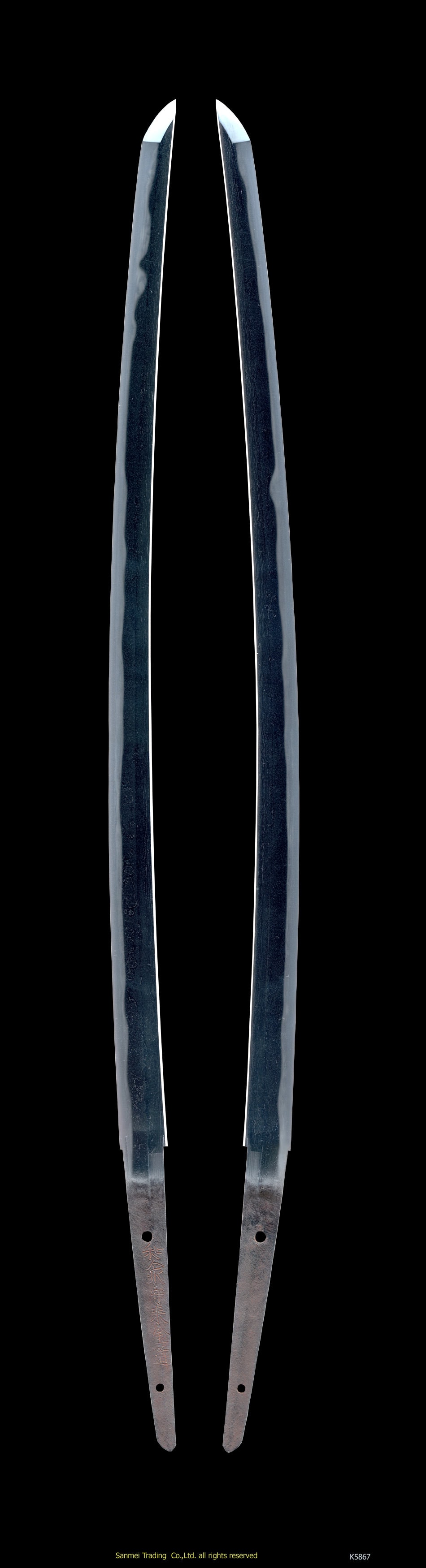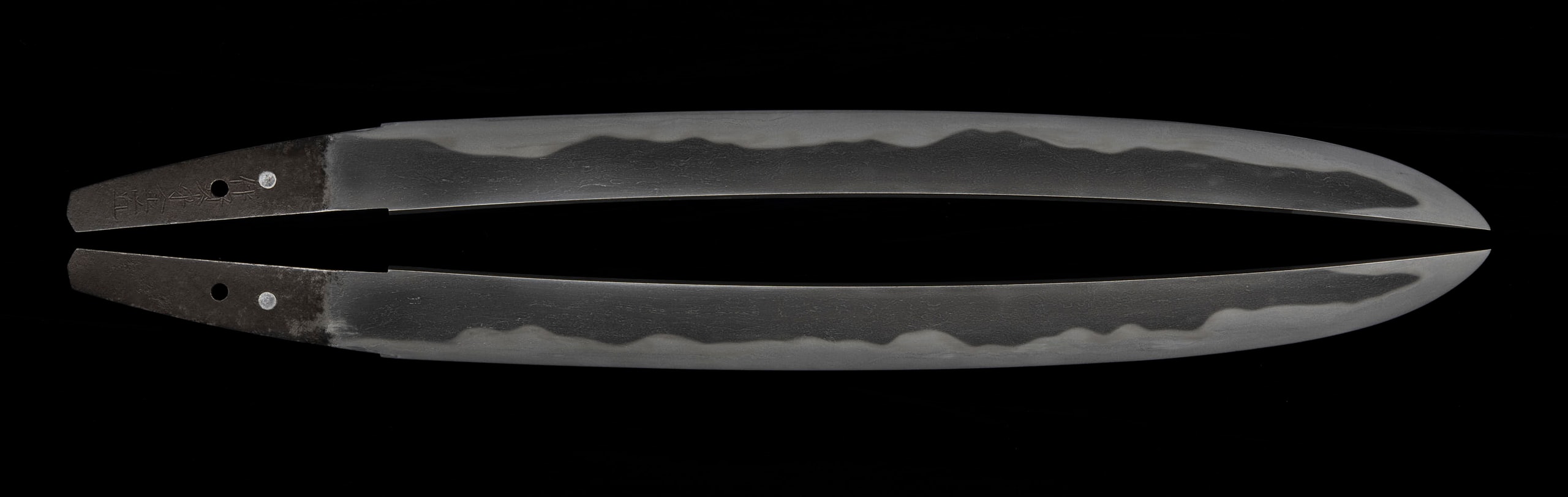


-, 12th Session — Designated February 19, 1992
, : Yamashiro province, Tanba no Kami Yoshimichi (吉道)
by Hirose Yukio (廣瀬幸夫)
Measurements 77.9 cm, 1.4 cm, 3.05 cm, 2.15 cm, 3.7 cm, 20.5 cm, almost none
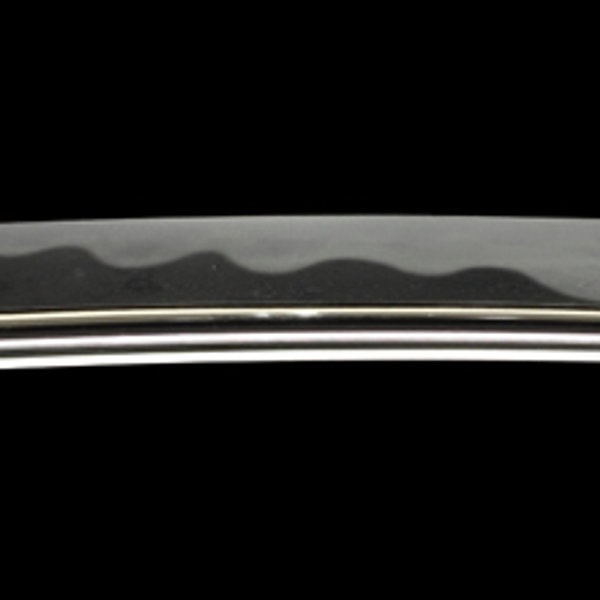
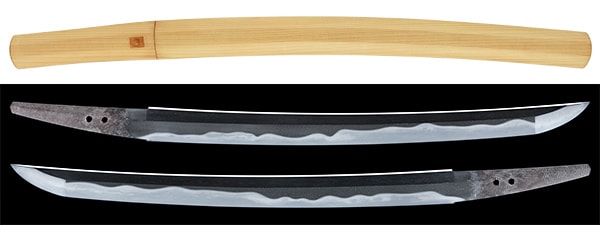
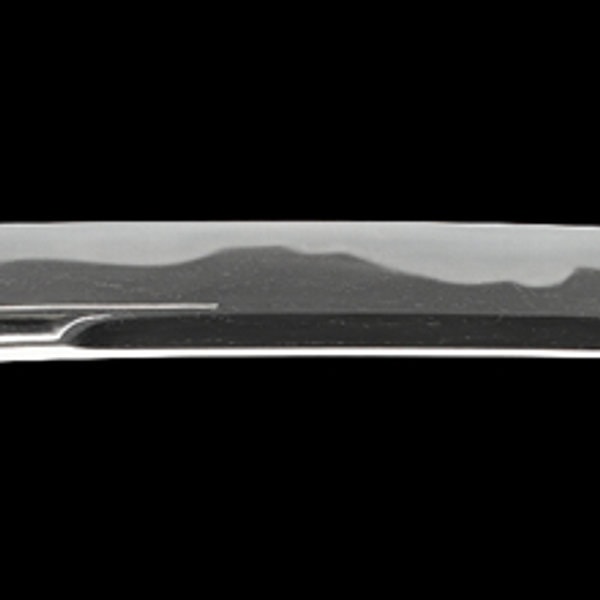
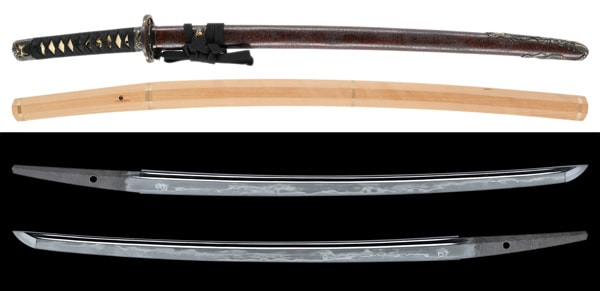
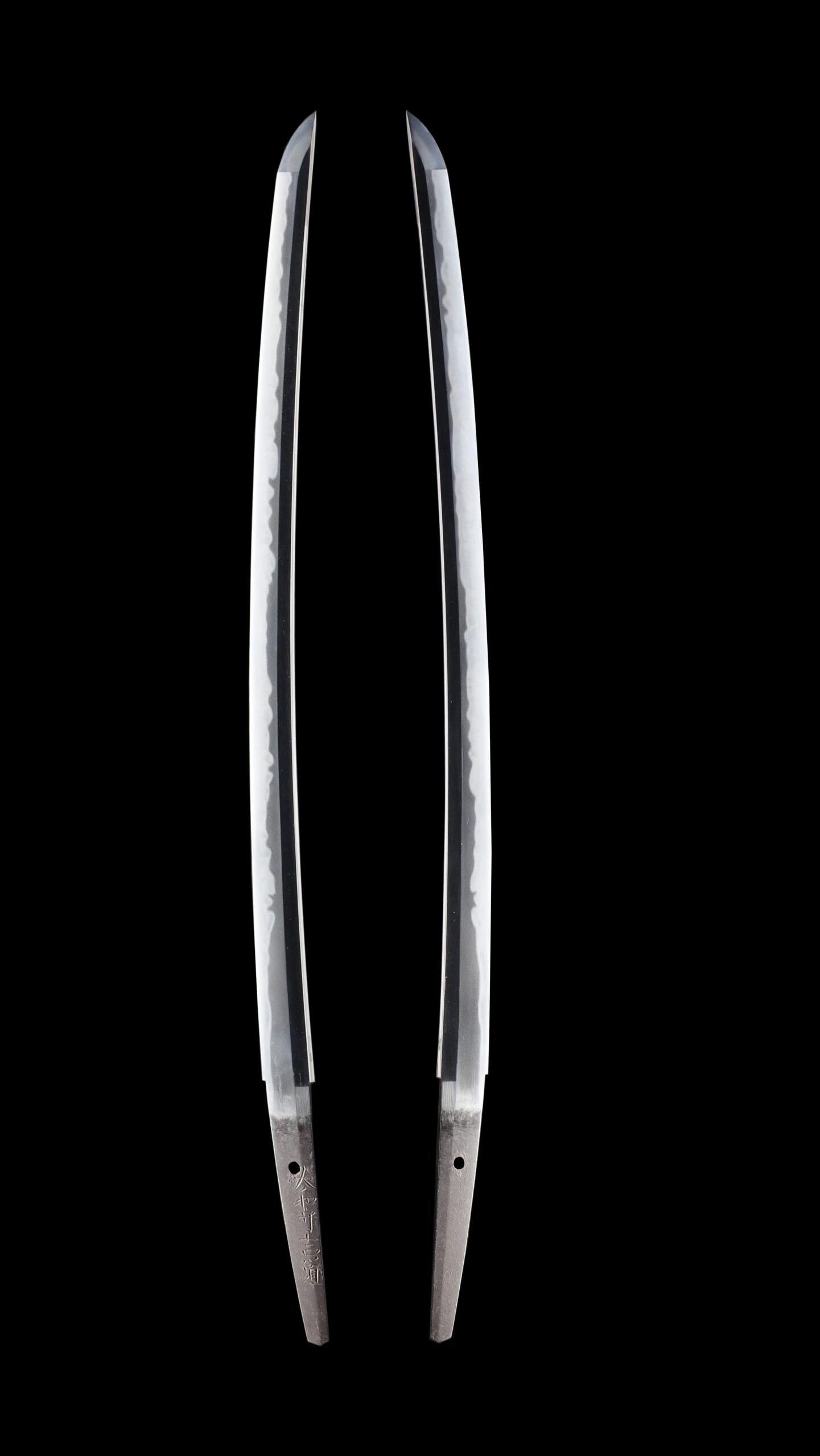
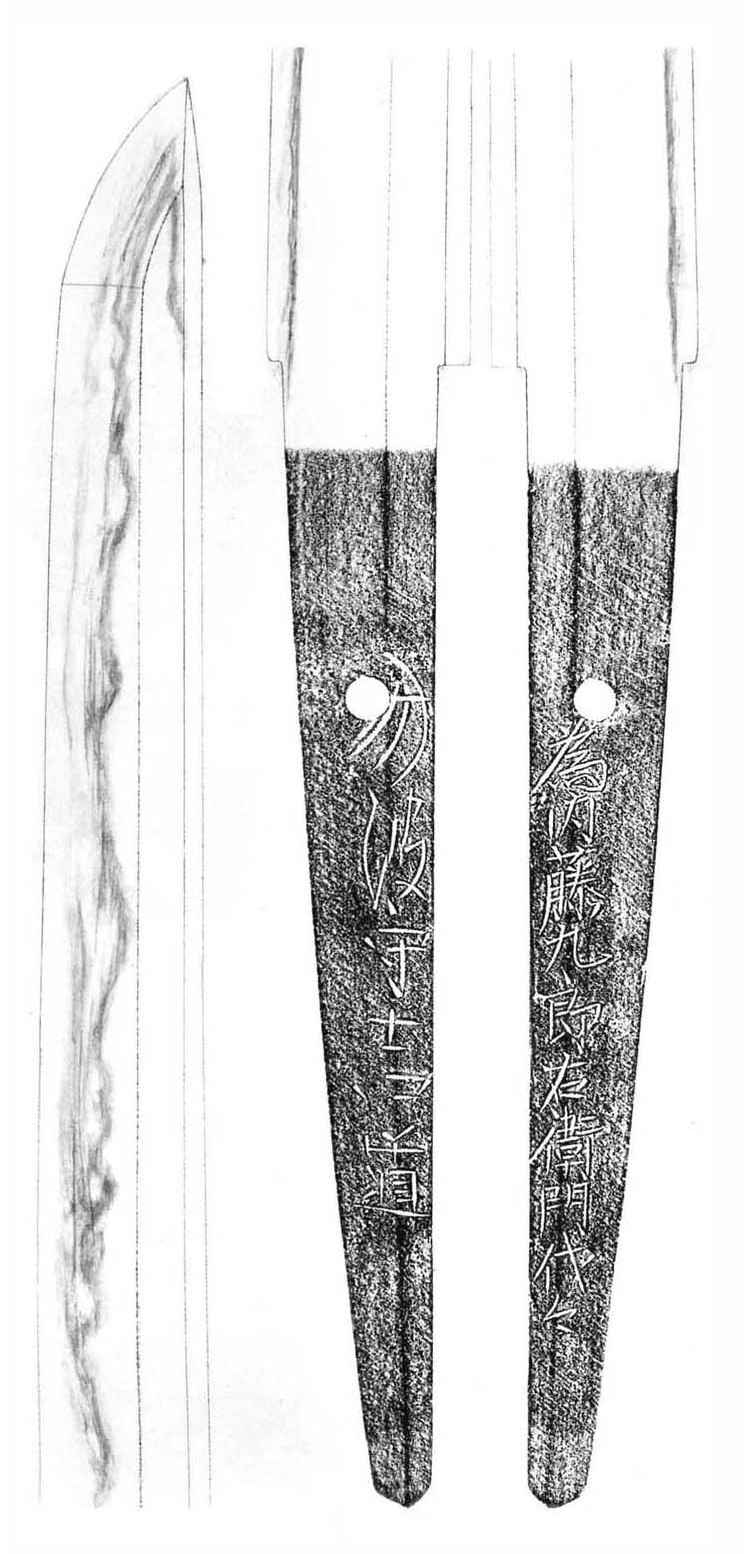
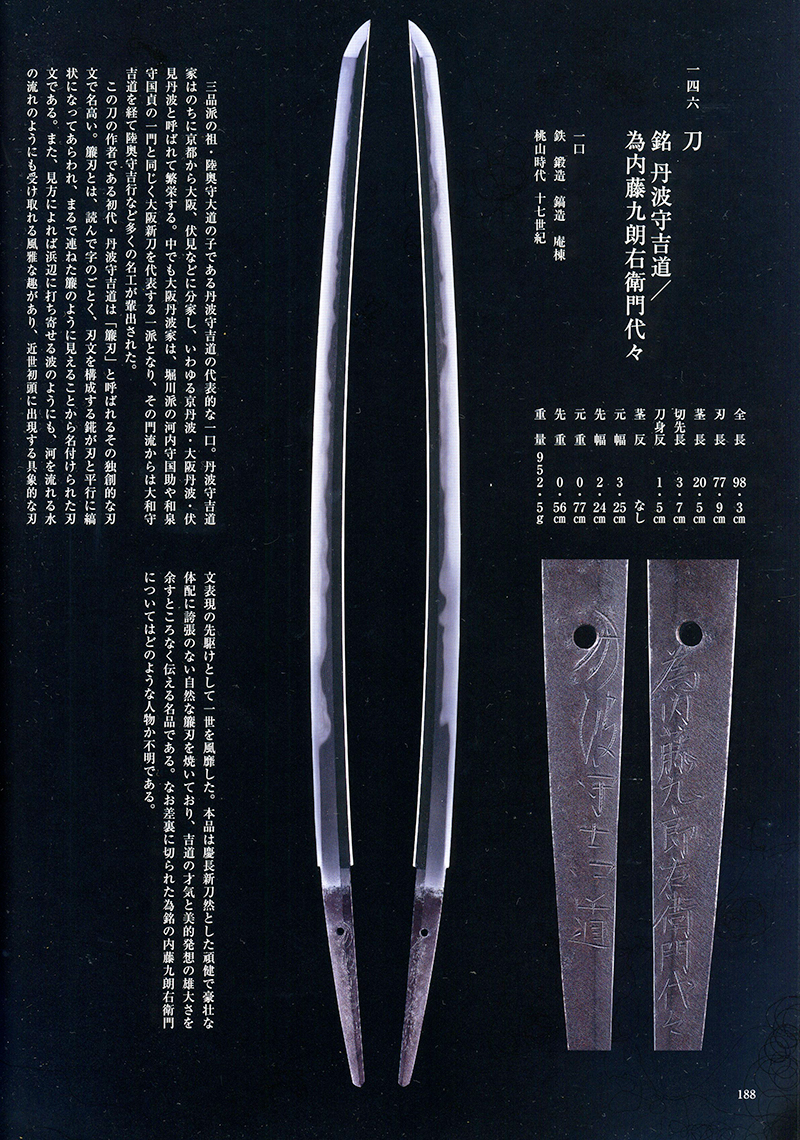
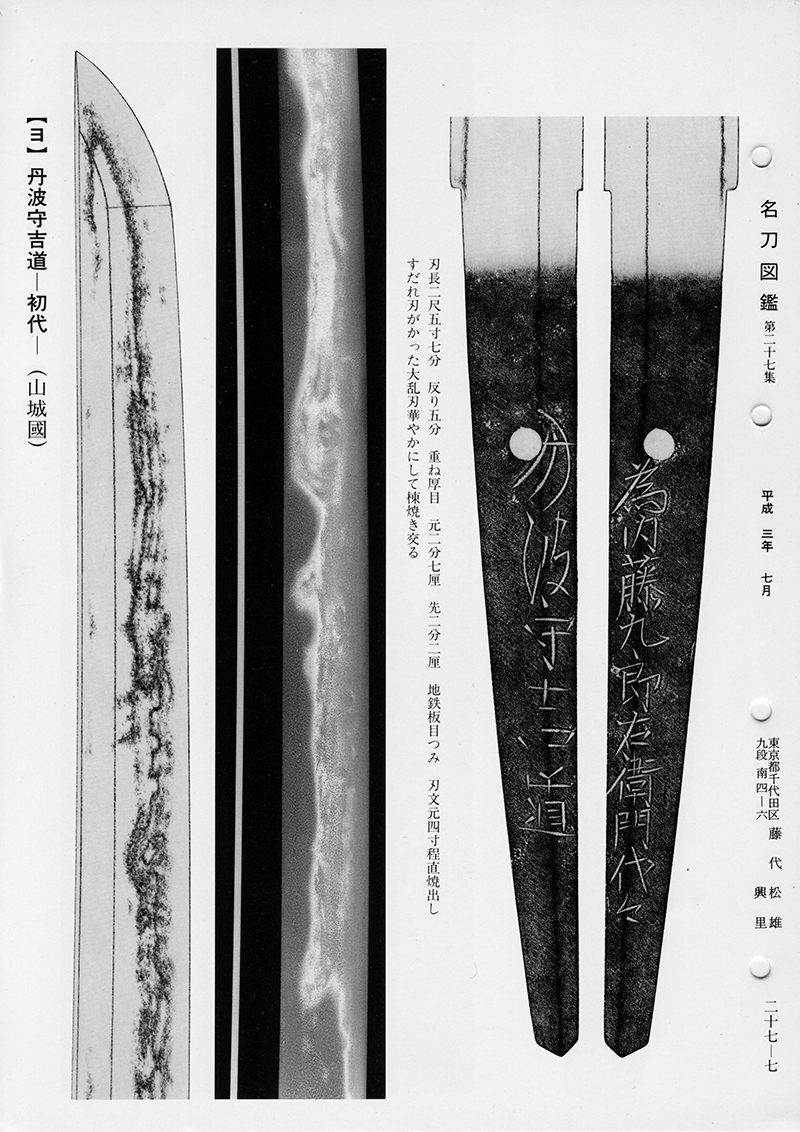
Description Keijō: , ; wide with a somewhat noticeable taper from base to tip; thick ; shallow ; an extended-looking . : mixed with and ; thickly adhering, with . : A long in ; above this the is broad, forming mixed with large and , with and . In places , , and a -like effect appear; the pattern becomes stripe-like and takes on a (bamboo-blind) aspect. adheres thickly and strongly, with some mixed in and a slightly uneven quality overall; runs strongly throughout, with ; the shows a (subdued) tendency. : Deeply tempered; and then turns back roundly with a deep return; at the tip it shows vigorous . : None. : ; tip is ; ; one . On the , toward the , there is a large, distinctive signature; on the , below the and likewise toward the , there is a similarly large ownership inscription.
Artisan Yamashiro province, Tanba no Kami Yoshimichi.
Era period (from Keichō through around ’ei).
Explanation The Tanba no Kami Yoshimichi was the third son of Kanemichi of . His elder brothers were Iga no Kami Kinmichi and Kinmichi, and his younger brother was Ecchū no Kami Masatoshi. Together with his father and brothers, he relocated from to Kyōto, and he was active from the Keichō through ’ei eras. Thereafter, his descendants and students continued to work splendidly, greatly enhancing the fame of the Yoshimichi line.
Relatively many blades by the survive today; however, pieces bearing dates are rare. No example with a Keichō date has yet been encountered, and only a single dated work has been examined firsthand: a dated Genna 7 (1621). His style is distinguished by the unique known as , which he devised. It is a strongly individual expression, in which are mixed into , while and act vigorously to create a stripe-like effect, and the is richly -based.
This is wide and thick in cross-section, giving a weighty, solid feel in hand and presenting a robust and magnificent overall bearing. The is taken broad, and adheres thickly and strongly; as described above, it displays the that was Yoshimichi’s greatest specialty. The ’s , as characterized in the Bengi, has the quality that “within the patterned arrangement of the there is the intent of .” It differs in flavor from the later generations’ work, which tends to be more technical and exaggerated; here, and break into a semi-cursive, disorderly vitality, and the fact that it is not yet a fully fixed and perfected is precisely where the interest lies. This is also the source of the power and savor that the blade conveys. This work unfolds exactly such a territory of expression, and among comparable works it shows an outstanding level of achievement.