Muromachi turned sword making into an industry: the uchigatana rose with massed infantry warfare, Osafune and Seki produced bundle swords beside custom orders, and the Ming trade carried Japanese blades abroad by the tens of thousands.
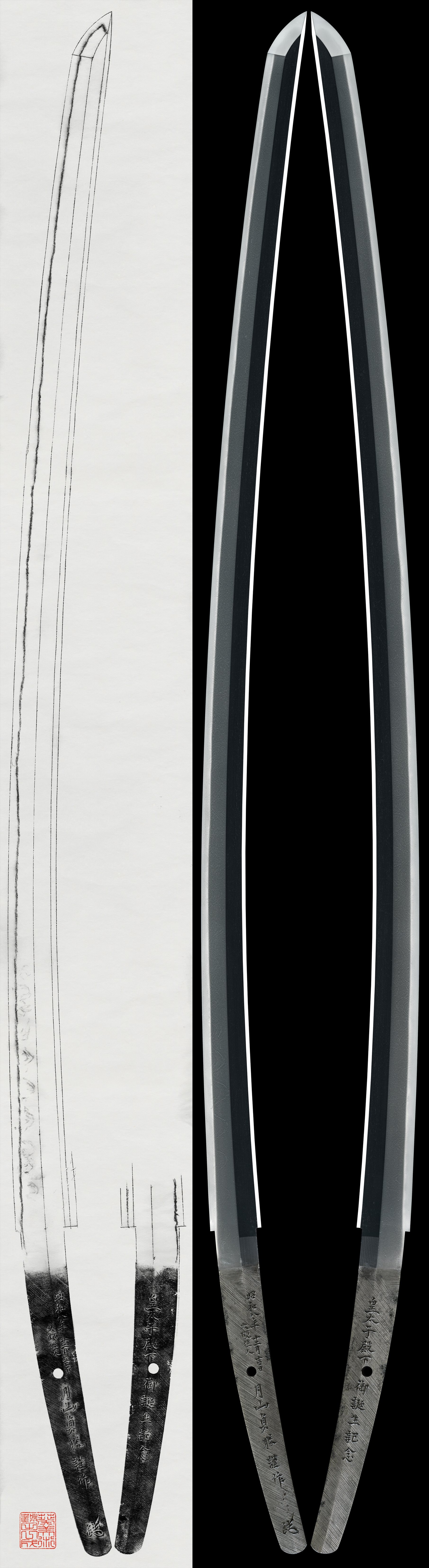
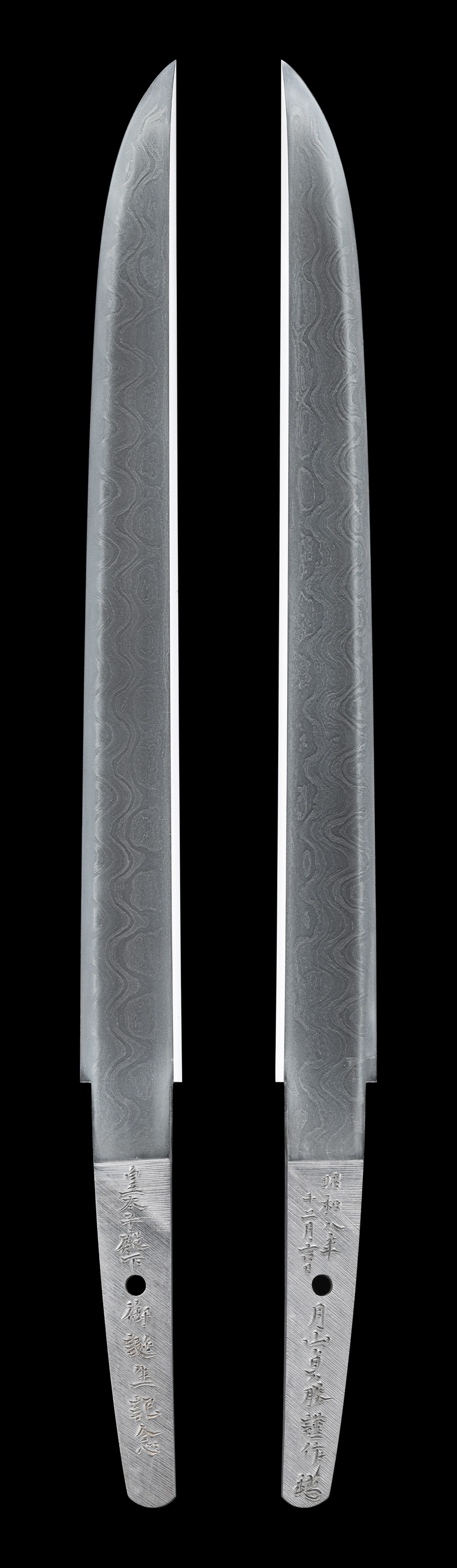
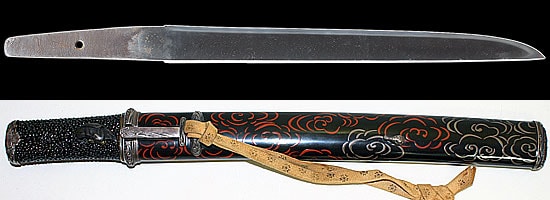
This is a tanto by Gassan school from Dewa province. It was made in the late Muromachi period (天文). The blade features a unique ayasugi hada.
 NihontoWatch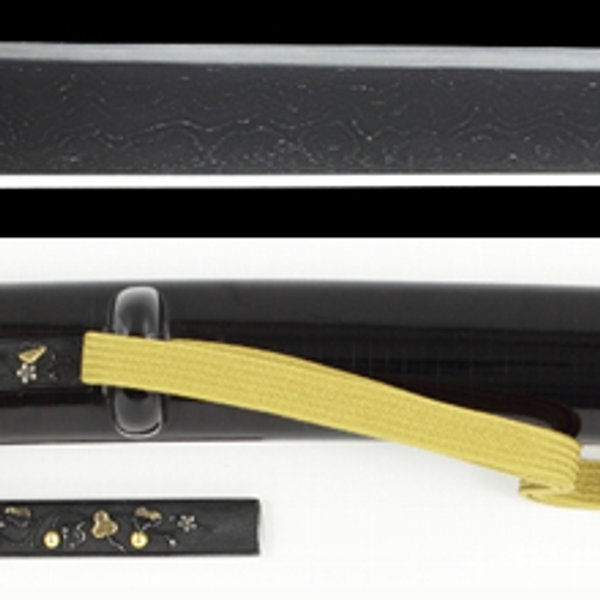
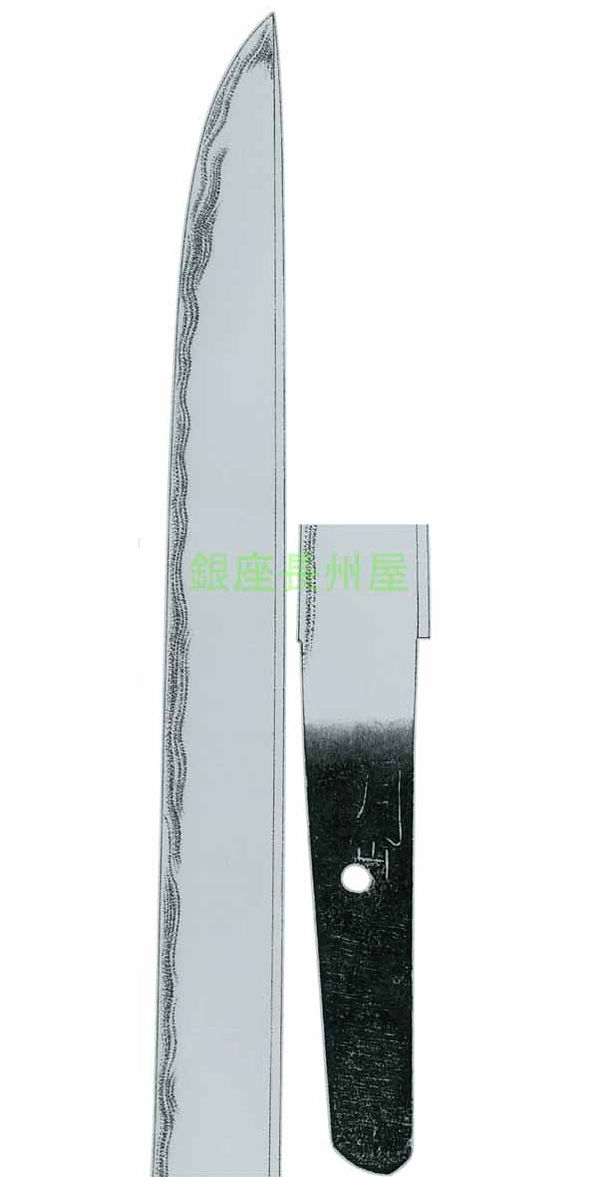
Wakimono · Dewa · around 1394-1428
Tōken Taikan top 60%
1 piece on the market now
Where Gassan stands among comparable artisans: across all of nihontō, and within tradition, era, and period. The tiers (Foremost · Leading · Major · Notable) weigh official designations from the NBTHK and Japan's Agency for Cultural Affairs, together with historical honors of lasting repute such as the Sansaku and Meibutsu-chō.
Select a lens to see how it's measured.
Wakimono · Dewa
46 pieces on the market now
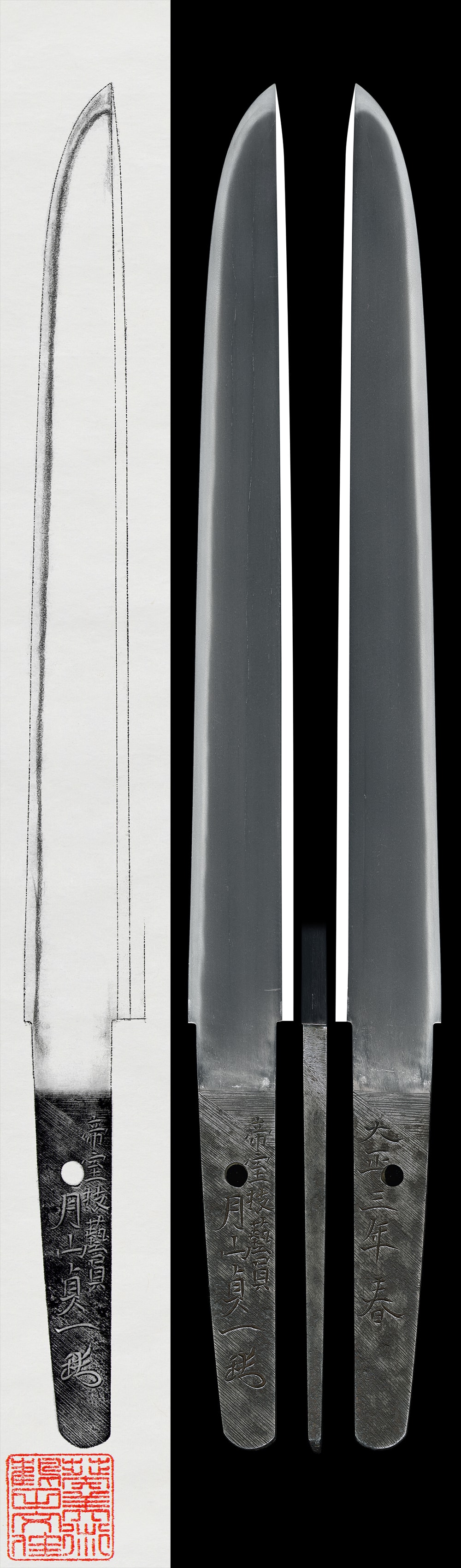
Mount Gassan rises among the Dewa Sanzan, the three sacred peaks of northern Japan bound to the mountain asceticism of Shugendō, and the swordsmiths who took the mountain's name worked in its shadow in Ōshū, Dewa Province. The setsumei record that smiths signing "Gassan" are noted in the Kanchiin-bon Meizukushi as early as the Heian period, and the lineage's oldest surviving signed blade is a tachi simply signed Gassan, kept at the Gassan Shrine and judged to date from the late Nanbokuchō to early Muromachi period. Around that same early Nanbokuchō moment the corpus places Gassan Nagamitsu, whose signed tachi answers to the "Ushū Gassan group, around the Ryakuō era" recorded in the Meikan, and Shōgun, a Nanbokuchō hand sometimes identified with Gunshō, dated Genchū 3 (1386). A later branch is carried by Gassan Chikanori, working into the mid and late Muromachi (an ubu wakizashi dated Eishō 9, 1512). The line was revived in Osaka in the closing Tokugawa and Meiji years by Gassan Sadayoshi and his adopted son Gassan Sadakazu, who endured the Haitōrei edict and was appointed Teishitsu Gigei-in (Artist to the Imperial Household) in Meiji 39; his own adopted son Gassan Sadaichi continued the title into Taishō. The forging is the school's signature. " Over the itame base the grain flows (nagare) and tends to stand; ji-nie adheres and chikei enter, and the northern steel takes a dark, metal-like (kana-iro) hue read as Ōshū temperament.
The temper of the old line is a suguha whose nioiguchi is shizumi (subdued), at times mixed with gunome and ko-midare and softened toward urumi, the bōshi turning back in ko-maru. Departures within the corpus mark the lineage's range: Chikanori's late work can drop the ayasugi entirely and absorb Sue-Bizen and Osafune manners, while the Osaka revival smiths command itame with thick ji-nie, flamboyant nie-laden midare, kinsuji, and sunagashi in a full Sōshū idiom, and both Sadakazu and Sadaichi added meticulous horimono, from Bishamonten kurikara to taki kaen Fudō and dragon carvings carved by the same hand that forged the blade. For recognition the setsumei point first to the wave-grain ayasugi and the subdued, often slightly urumi northern nioiguchi, and where these recede, to the dark steel and standing grain that still betray an Ōshū hand. Signed examples of the old line are described as extremely rare, which raises the documentary weight of Nagamitsu's tachi and Shōgun's dated tantō. Provenance threads through the school's own sanctuary: the founding tachi and an Important Art Object tachi both reside at the Dewa Sanzan and Gassan Shrines. The Osaka revival is anchored in the Imperial collection, where Sadaichi tantō signed Teishitsu Gigeiin survive, alongside a Sadakazu wakizashi made on commission for Prince Kuni. Across six centuries the setsumei track a single mountain workshop, from the subdued ayasugi of the Dewa founders through a Muromachi offshoot that turned toward Bizen, to the Imperial-rank carvers of Osaka who reproduced the old wave-grain while mastering the wider traditions. Learn more →
| Smith | Era | Designated |
|---|---|---|
| Naonori直則 | 1830-1844 | 0 |
| Toshiyasu俊安 | 1504-1521 | 0 |
| Nagahisa長久 | 1334-1338 | 0 |
| Kiyoyasu清安 | 1532-1555 | 0 |
| Tomosada友定 | 1532-1555 | 0 |
The Muromachi period (1392 to 1573)
Muromachi turned sword making into an industry: the uchigatana rose with massed infantry warfare, Osafune and Seki produced bundle swords beside custom orders, and the Ming trade carried Japanese blades abroad by the tens of thousands.
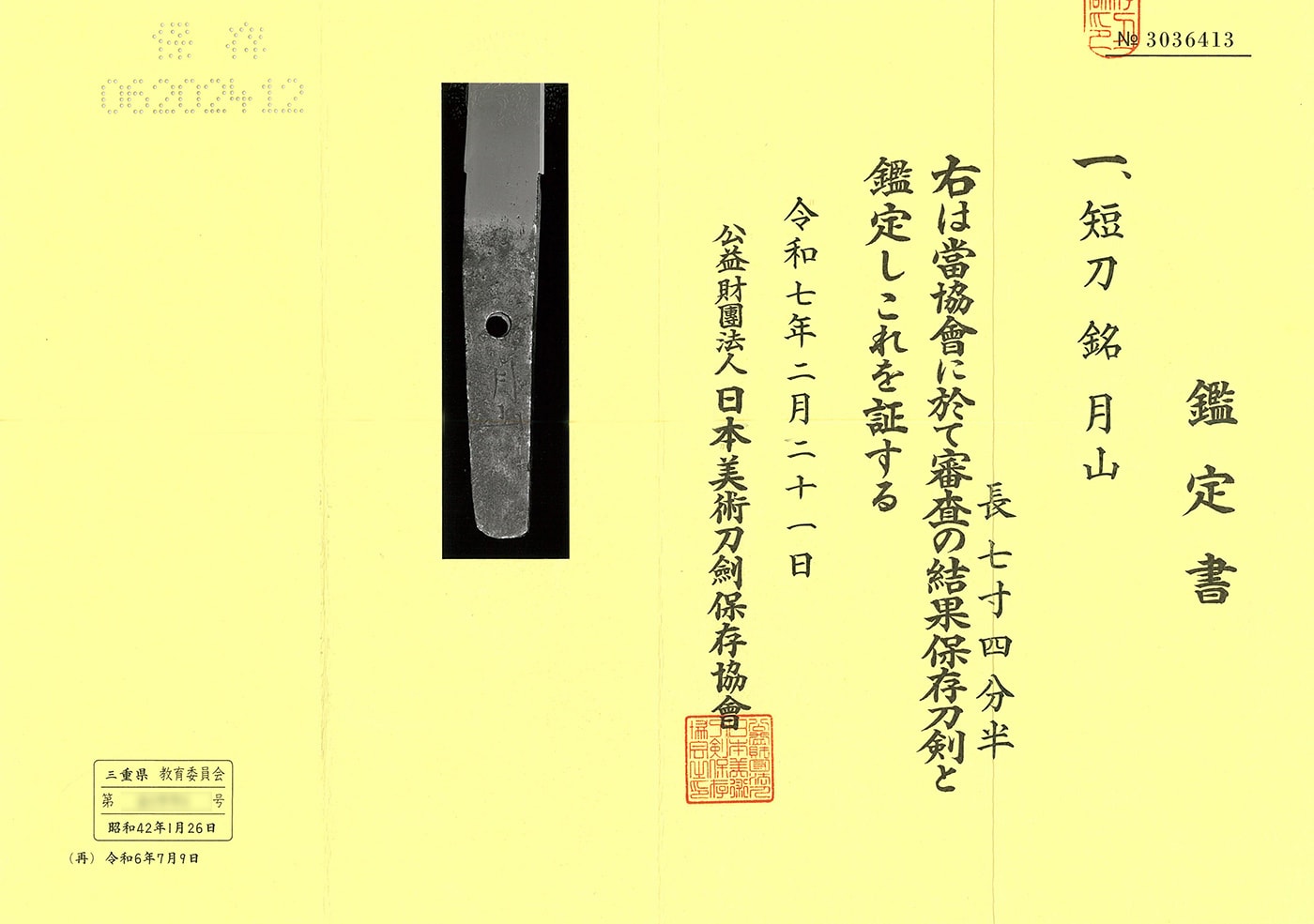
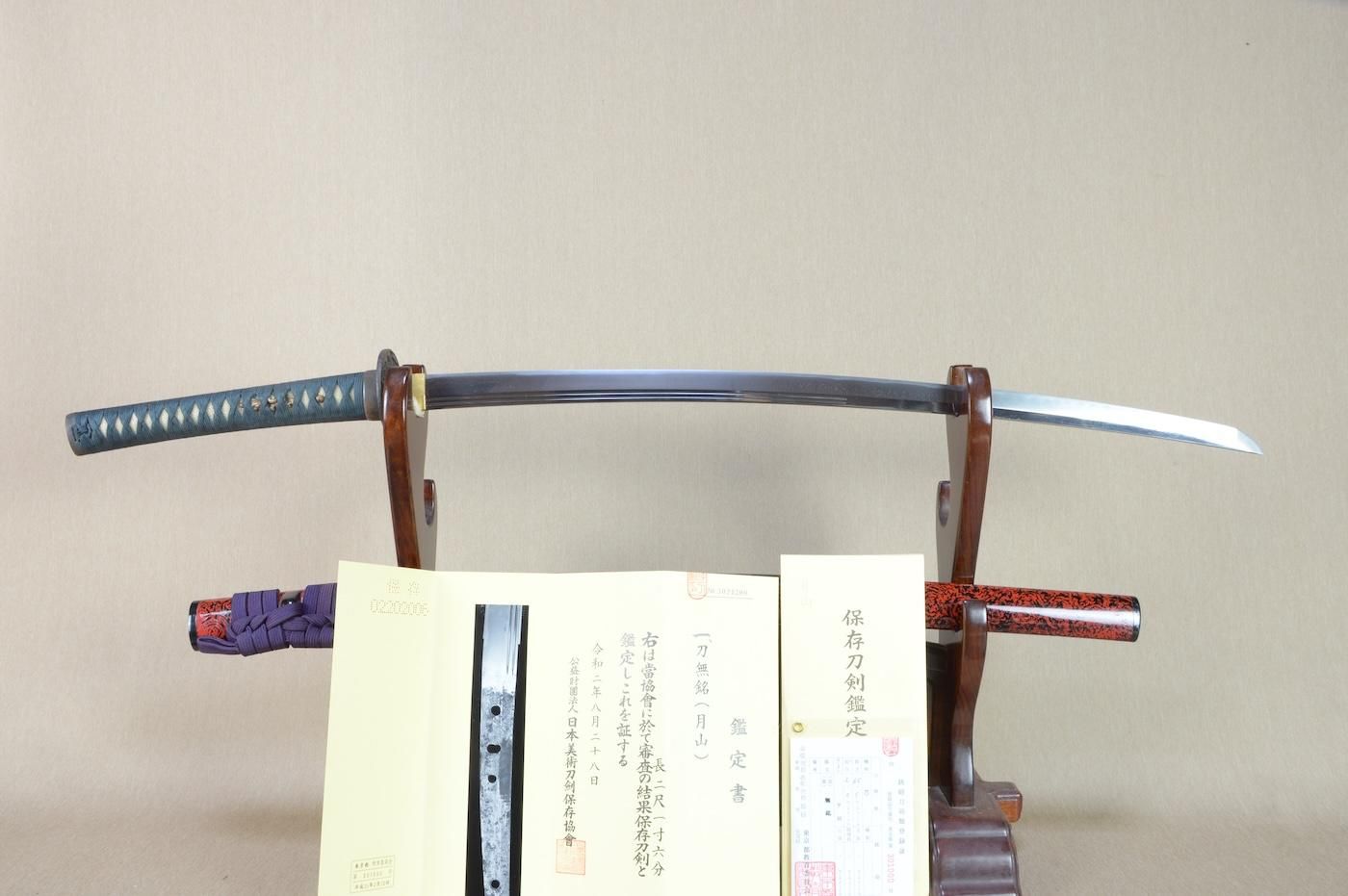
We could not find an authenticity certificate on the seller’s listing. Japanese swords and fittings are normally papered by the NBTHK (or the NTHK). Without one, the attribution is the seller’s own assessment and has not been independently verified — treat it with caution and ask the dealer about certification before buying.
If, due to our fault, the item differs significantly from its proper condition, the item may be returned. Cooling-off is within one week of the item's arrival.




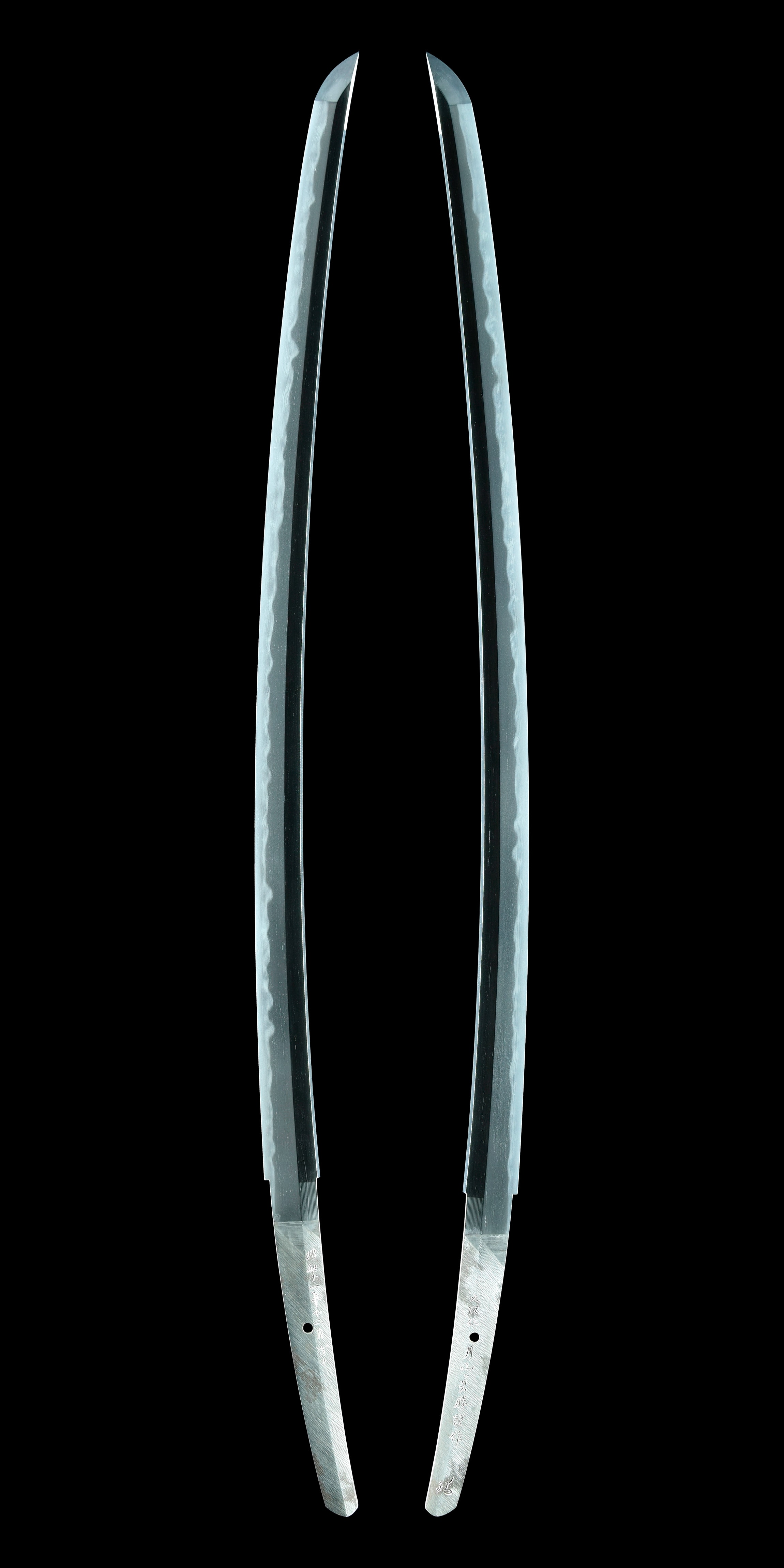
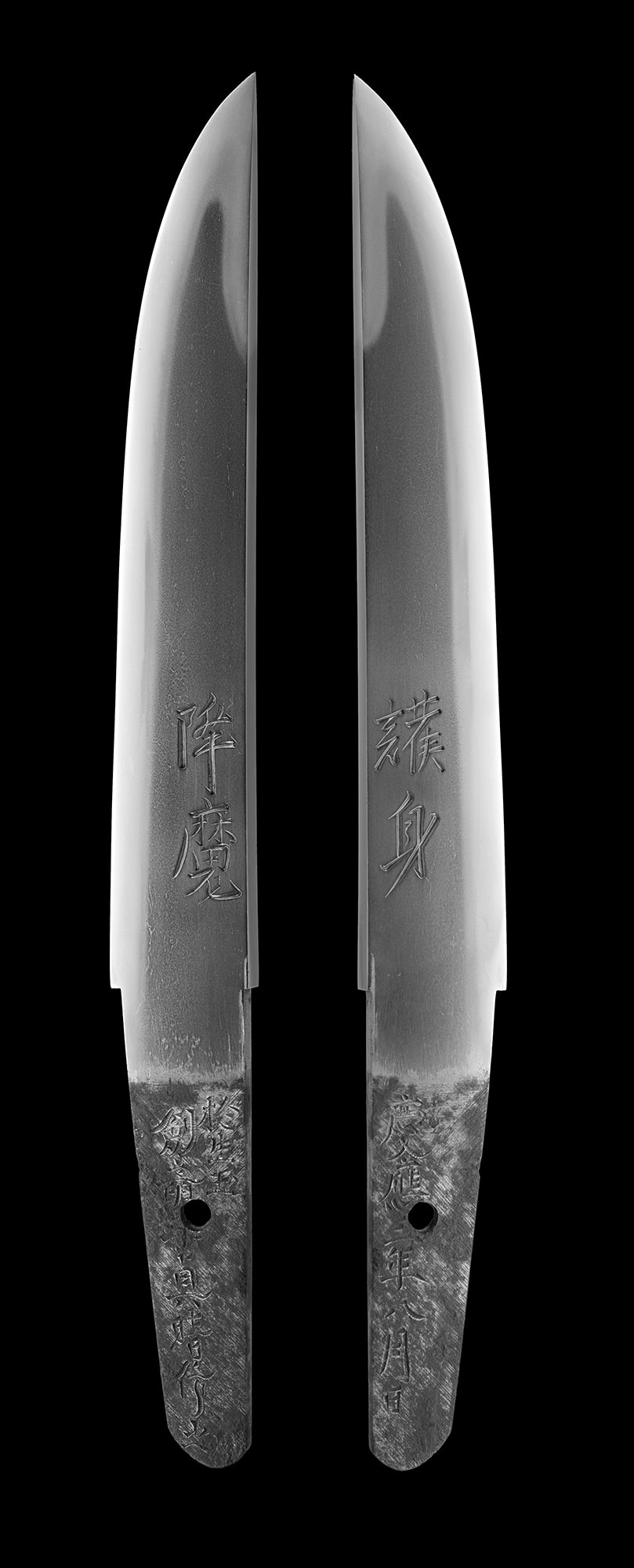
![Katana - Tokuho - by Gassan Sadakazu - Signed Naniwa ju Gassan Unryushi Sadakazu tsukuru [Seal] Keio gannen 11 gatsujitsu](/_next/image?url=https%3A%2F%2Fitbhfhyptogxcjbjfzwx.supabase.co%2Fstorage%2Fv1%2Fobject%2Fpublic%2Flisting-images%2Fchoshuya%2FL805711%2F00.jpg&w=2560&q=90)