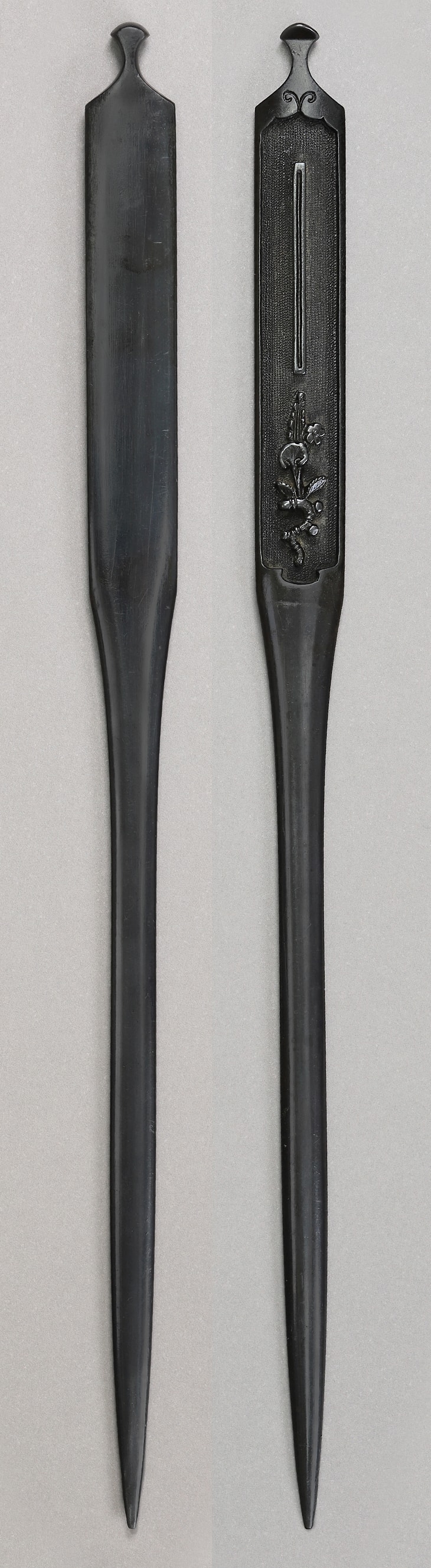
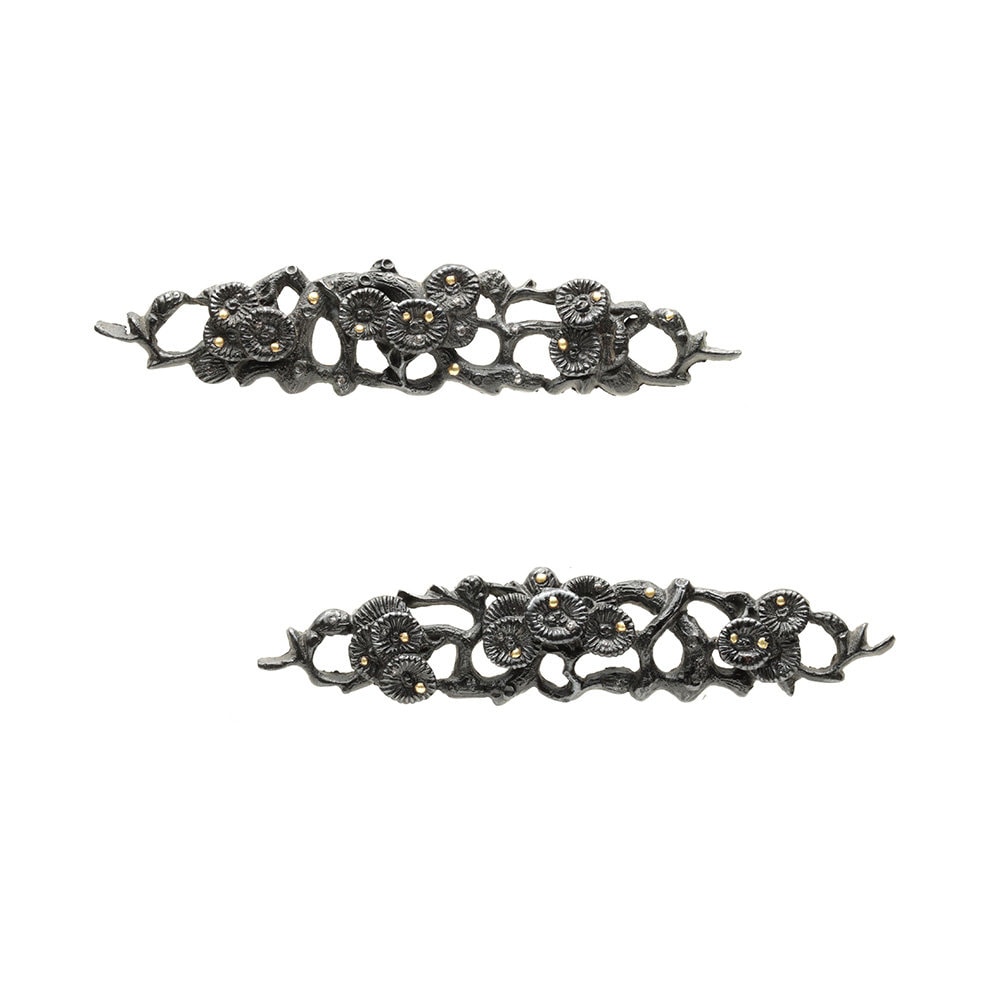
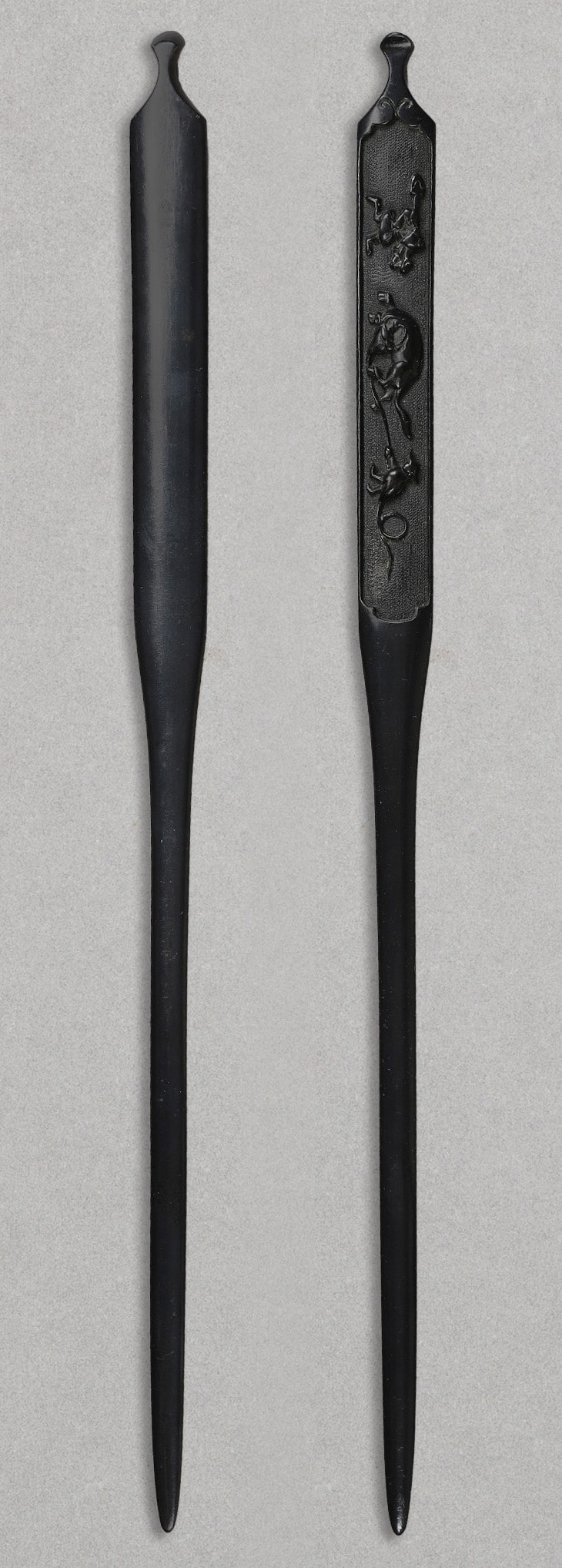
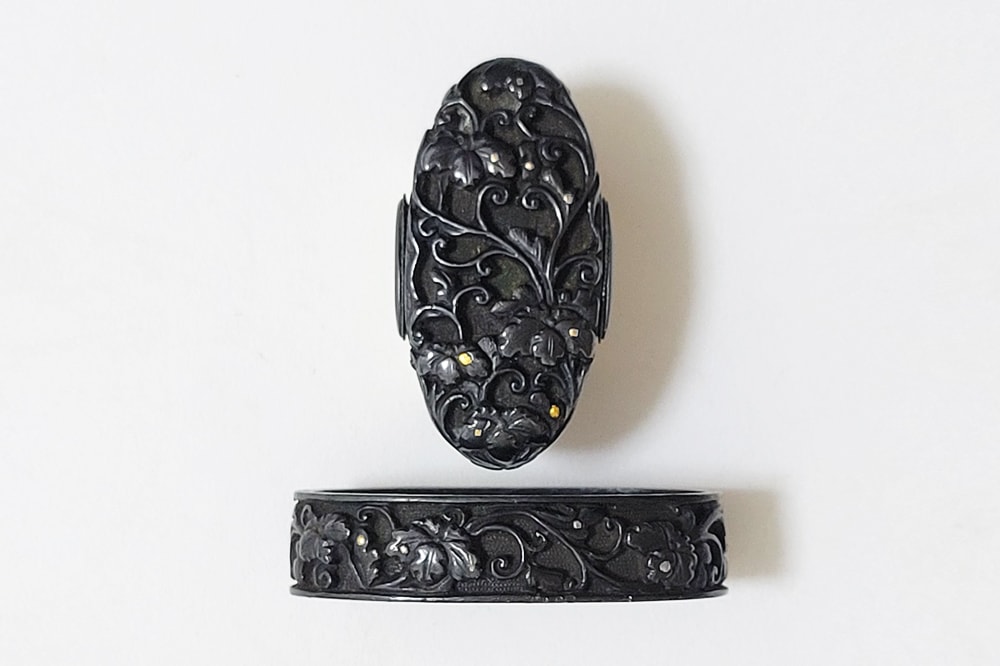
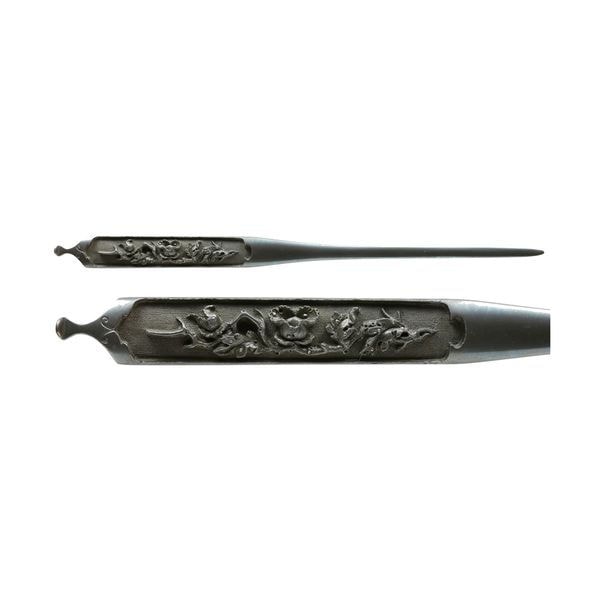
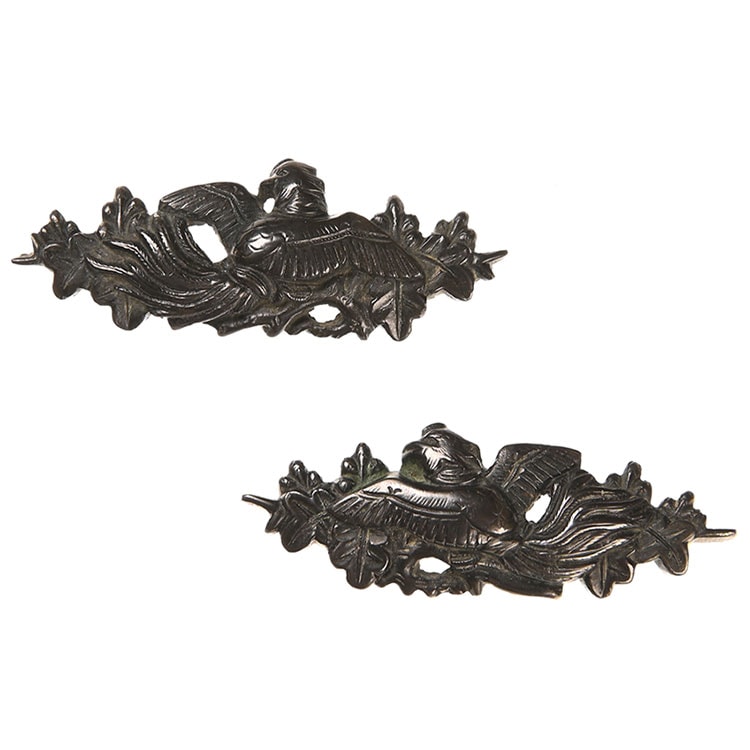
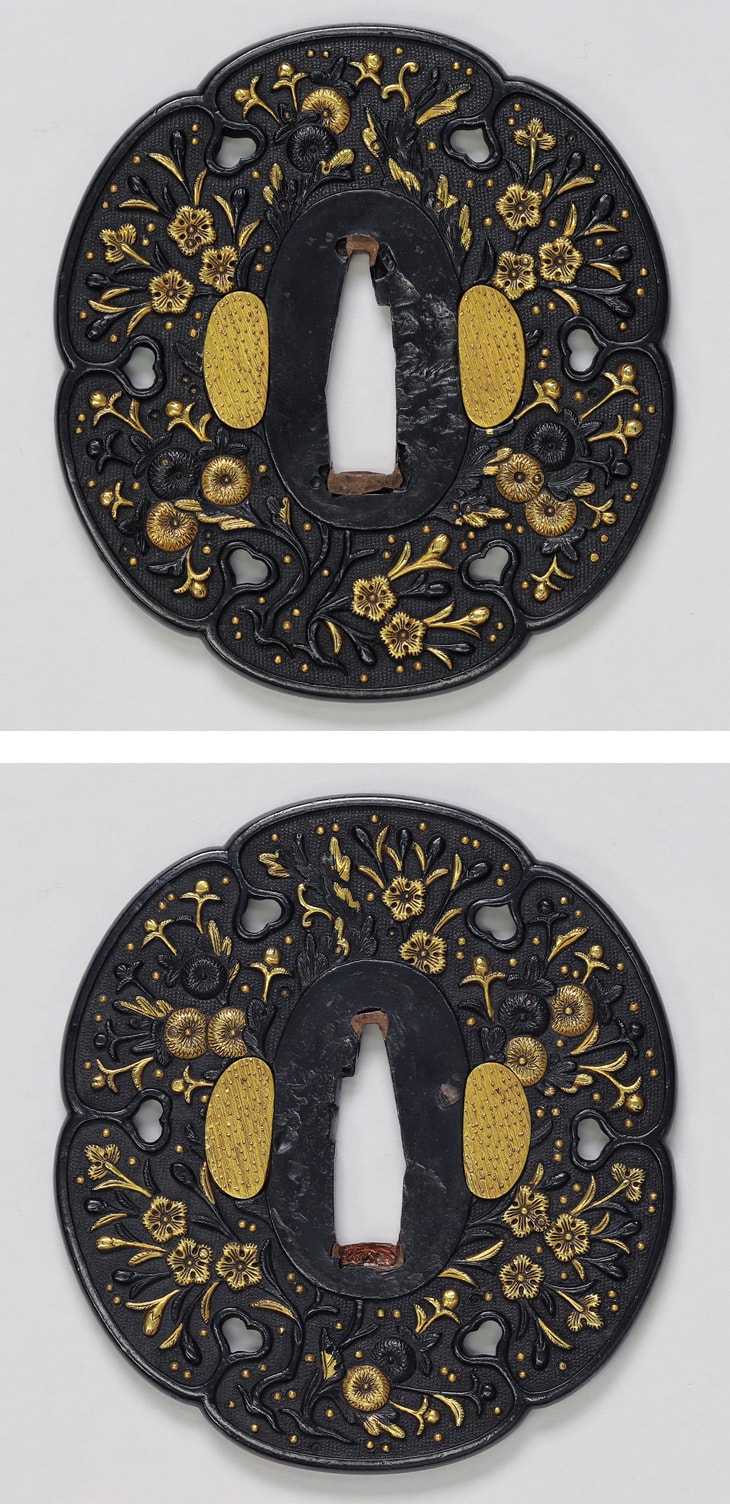
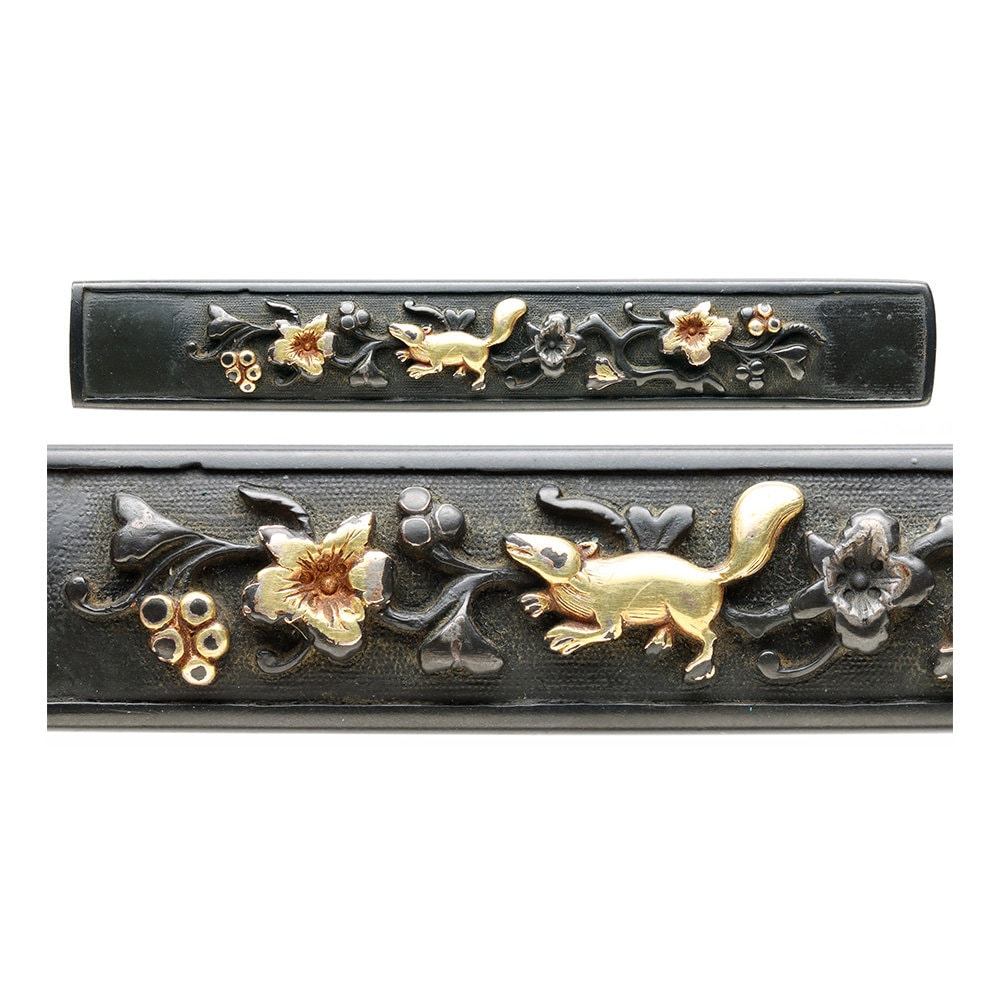
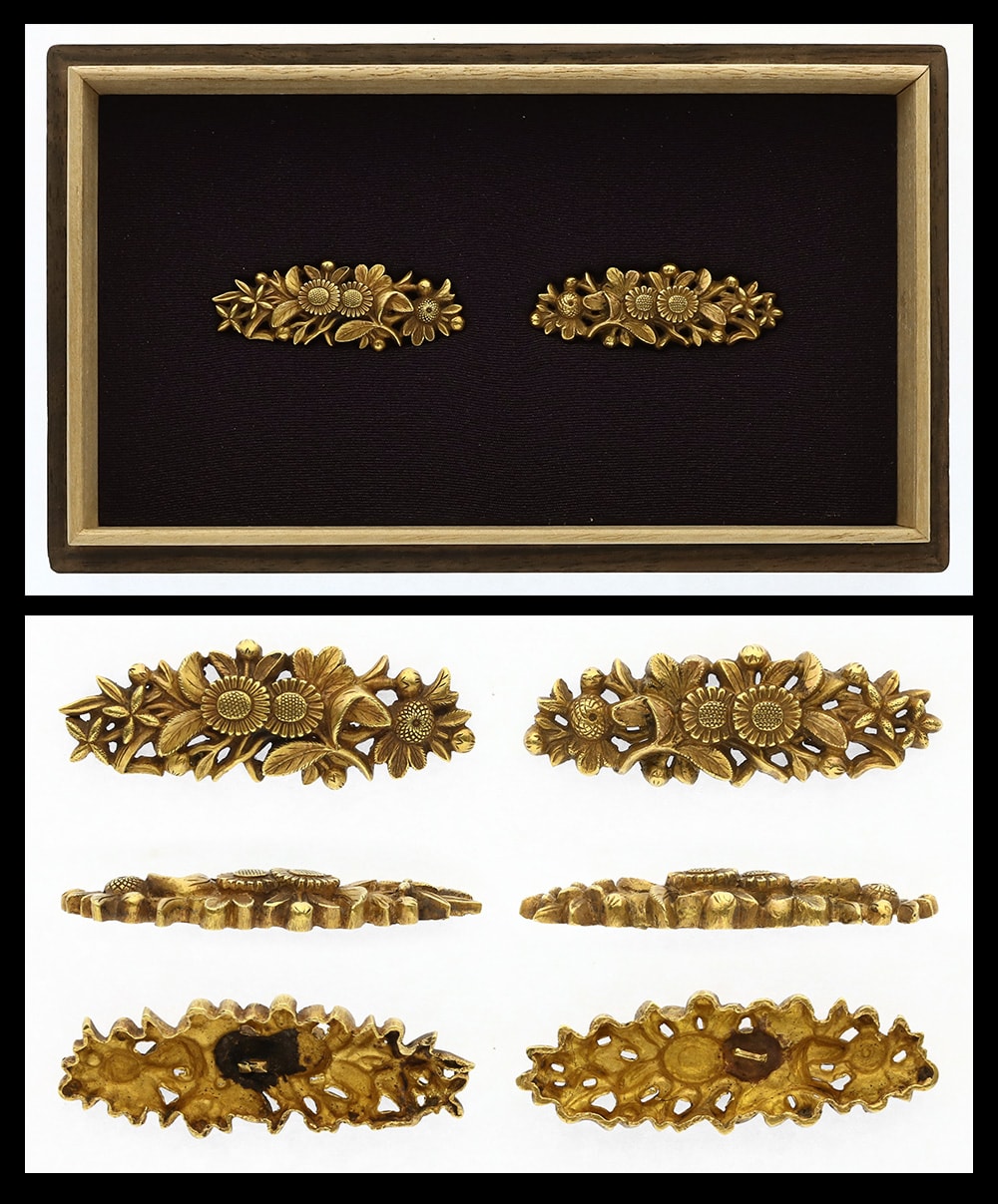
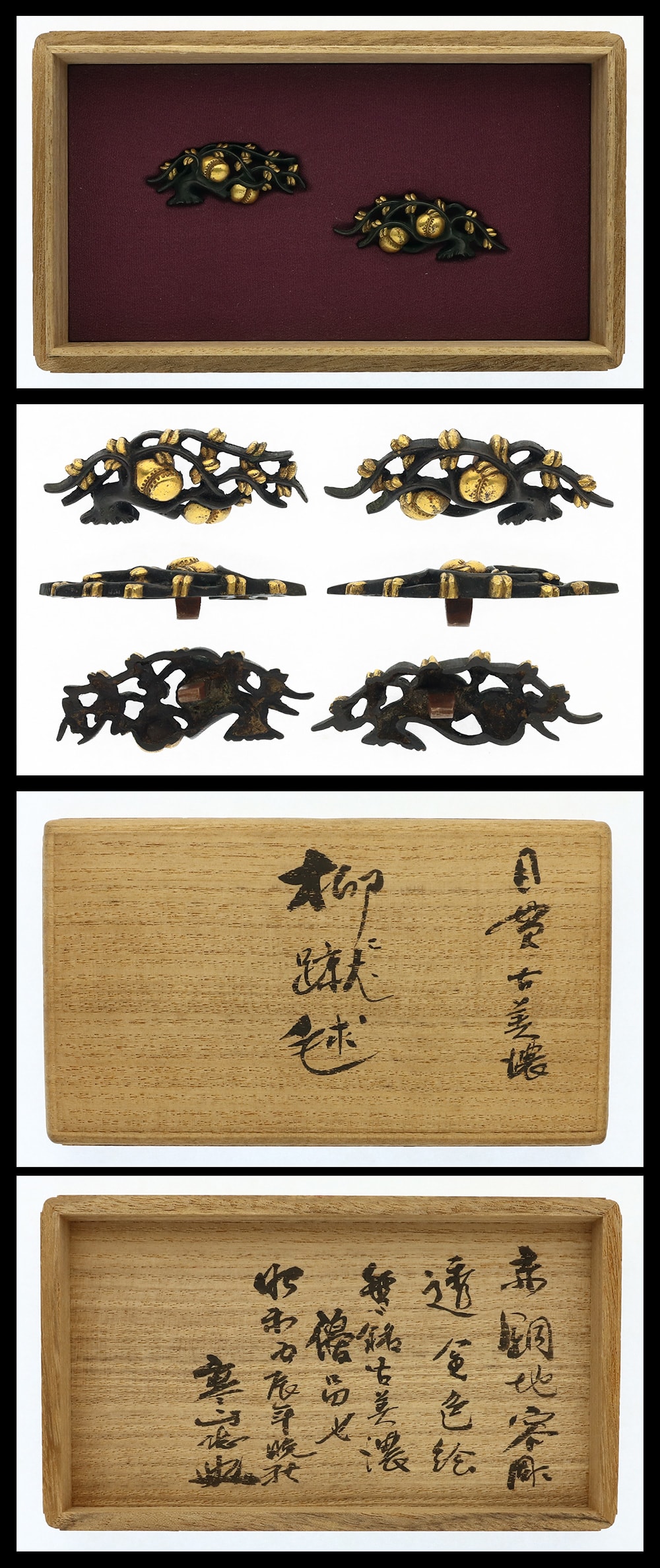
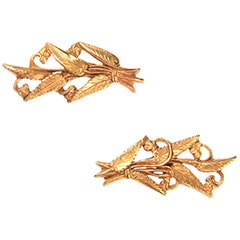
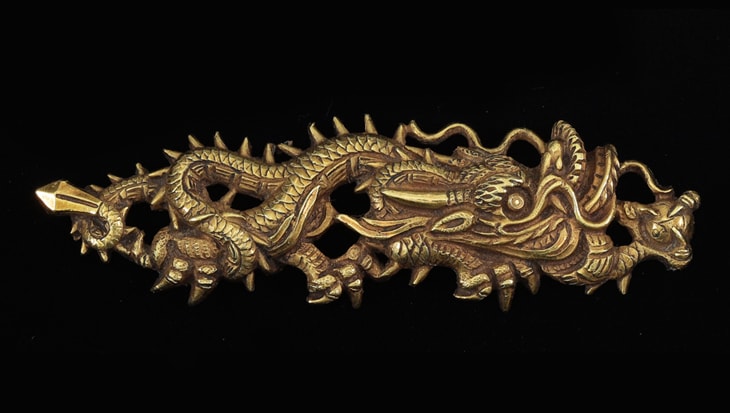
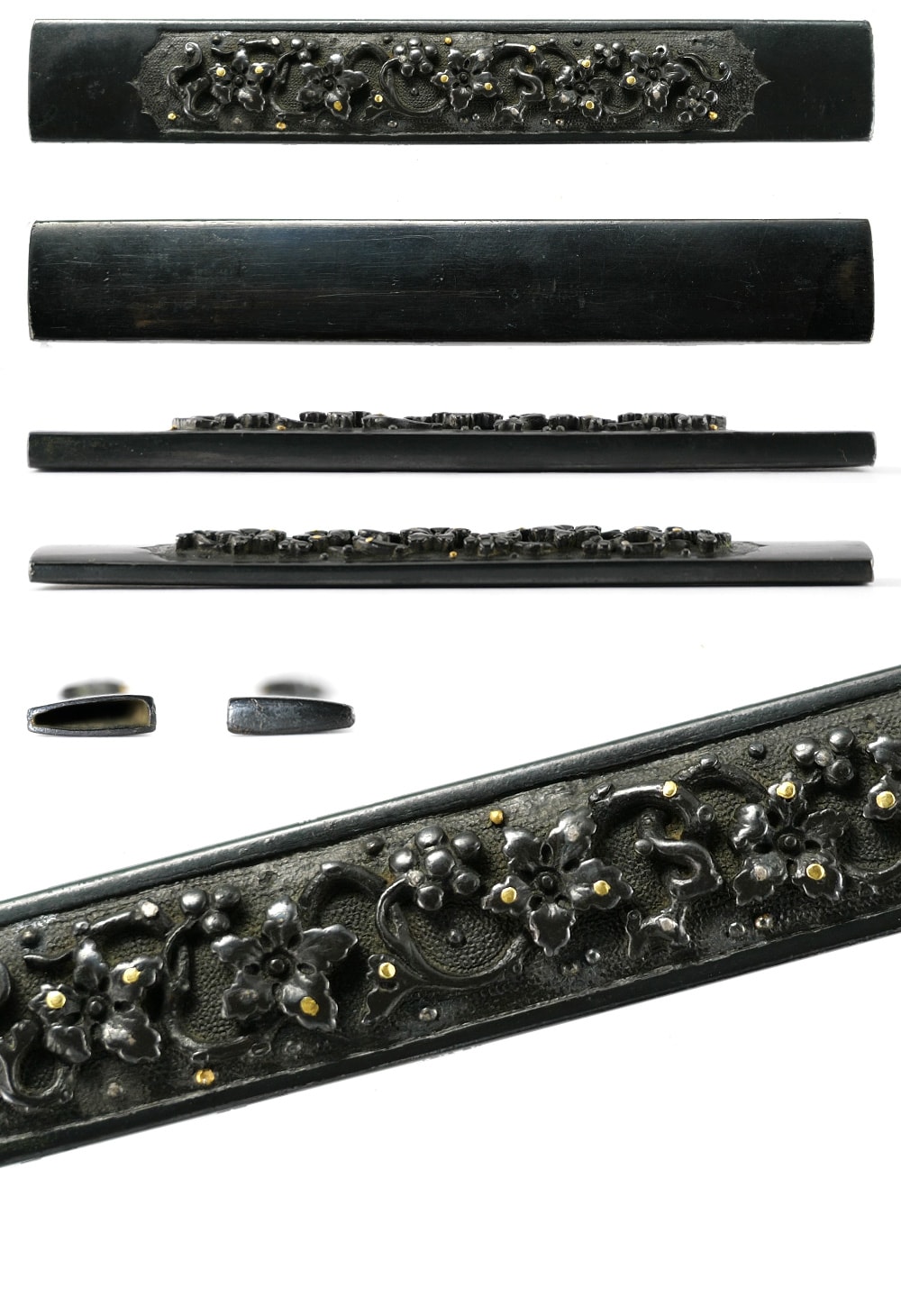
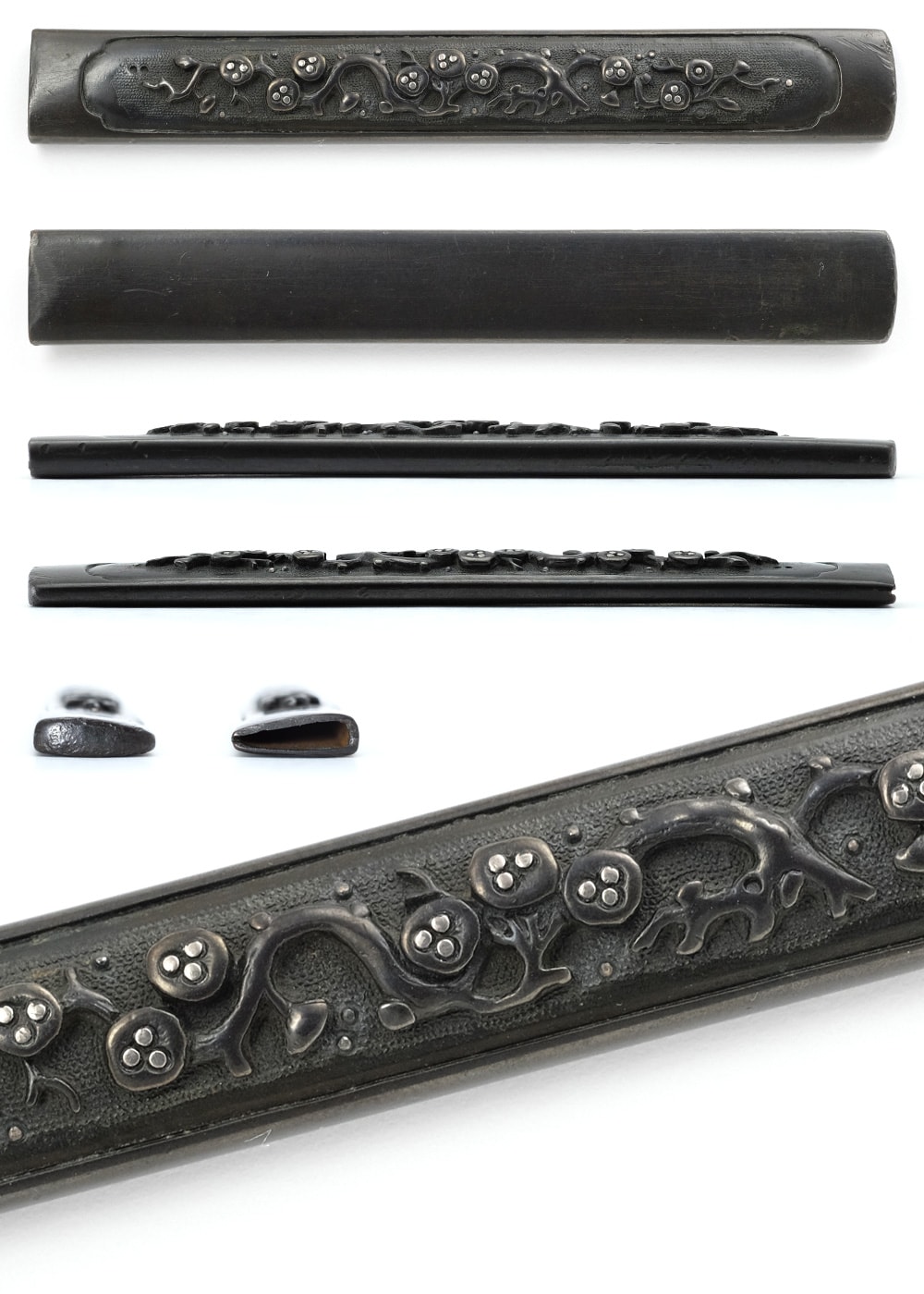
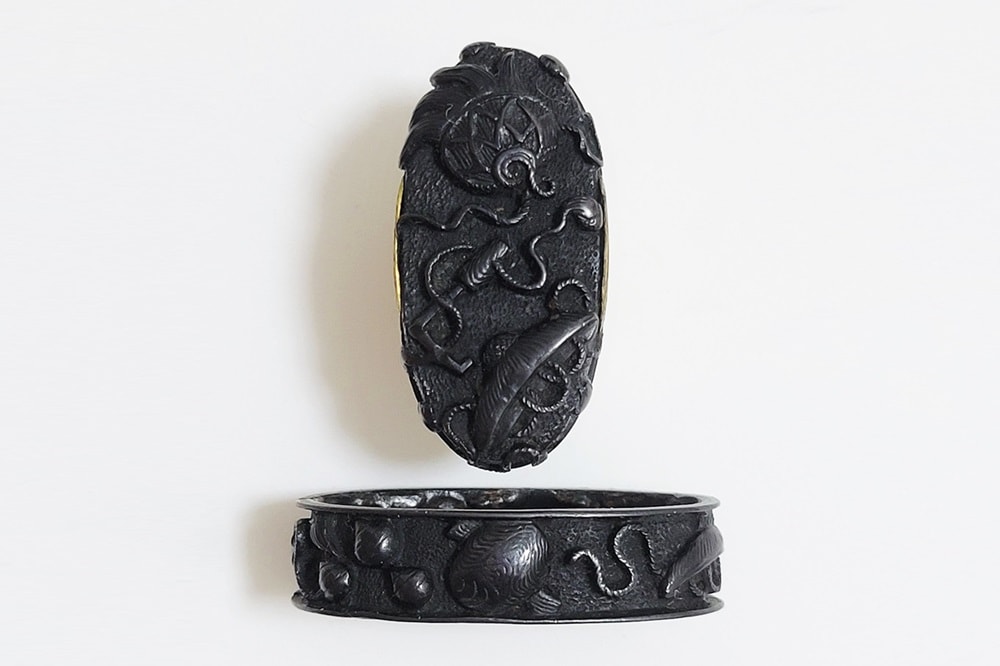
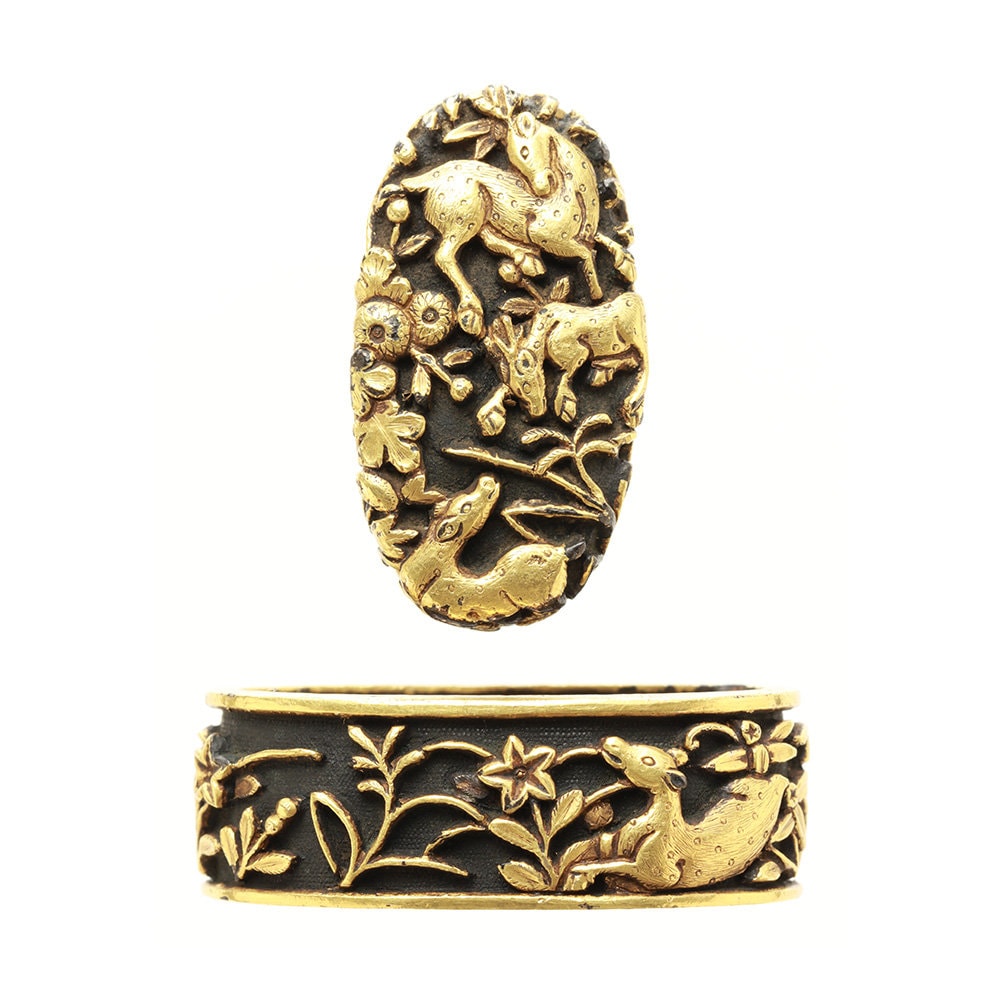
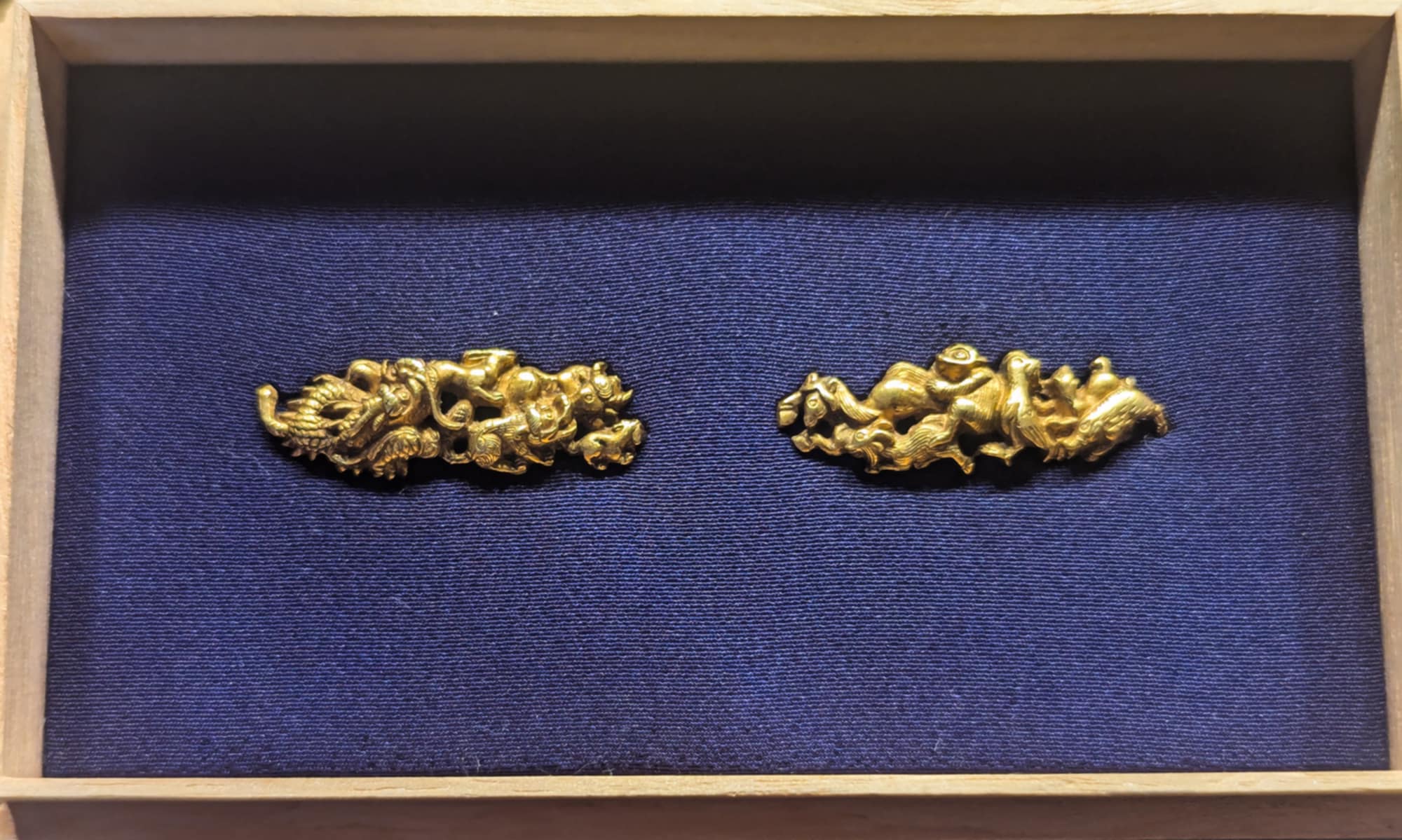
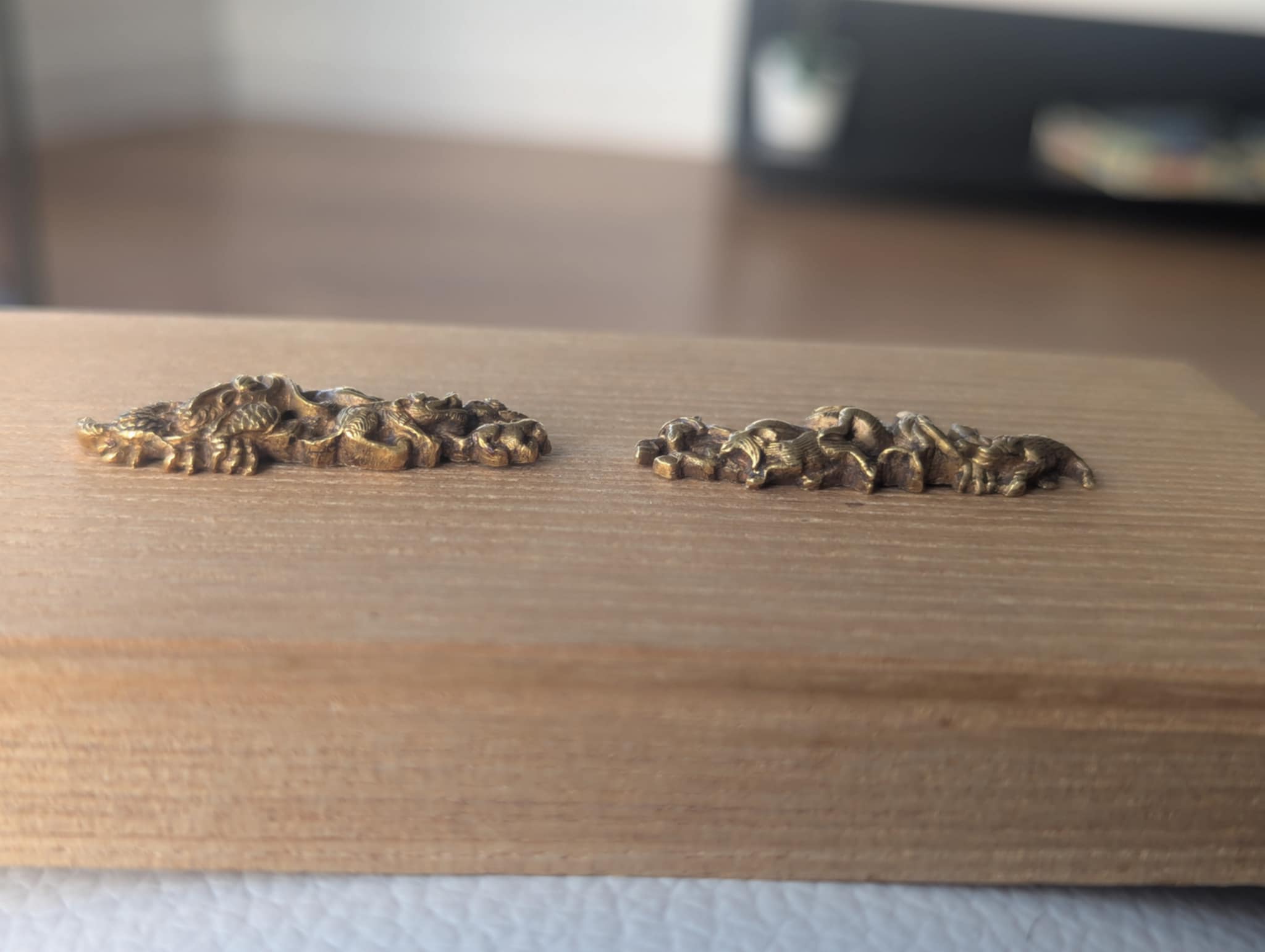
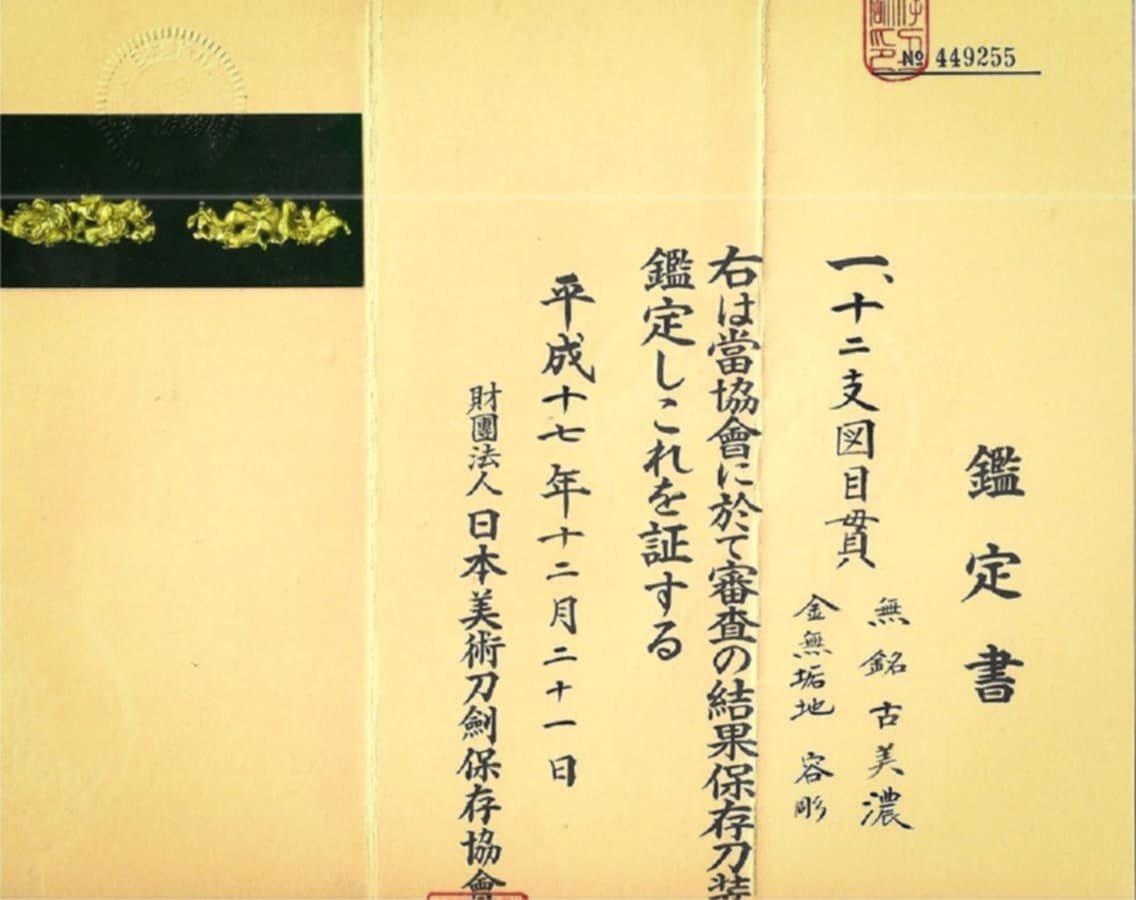
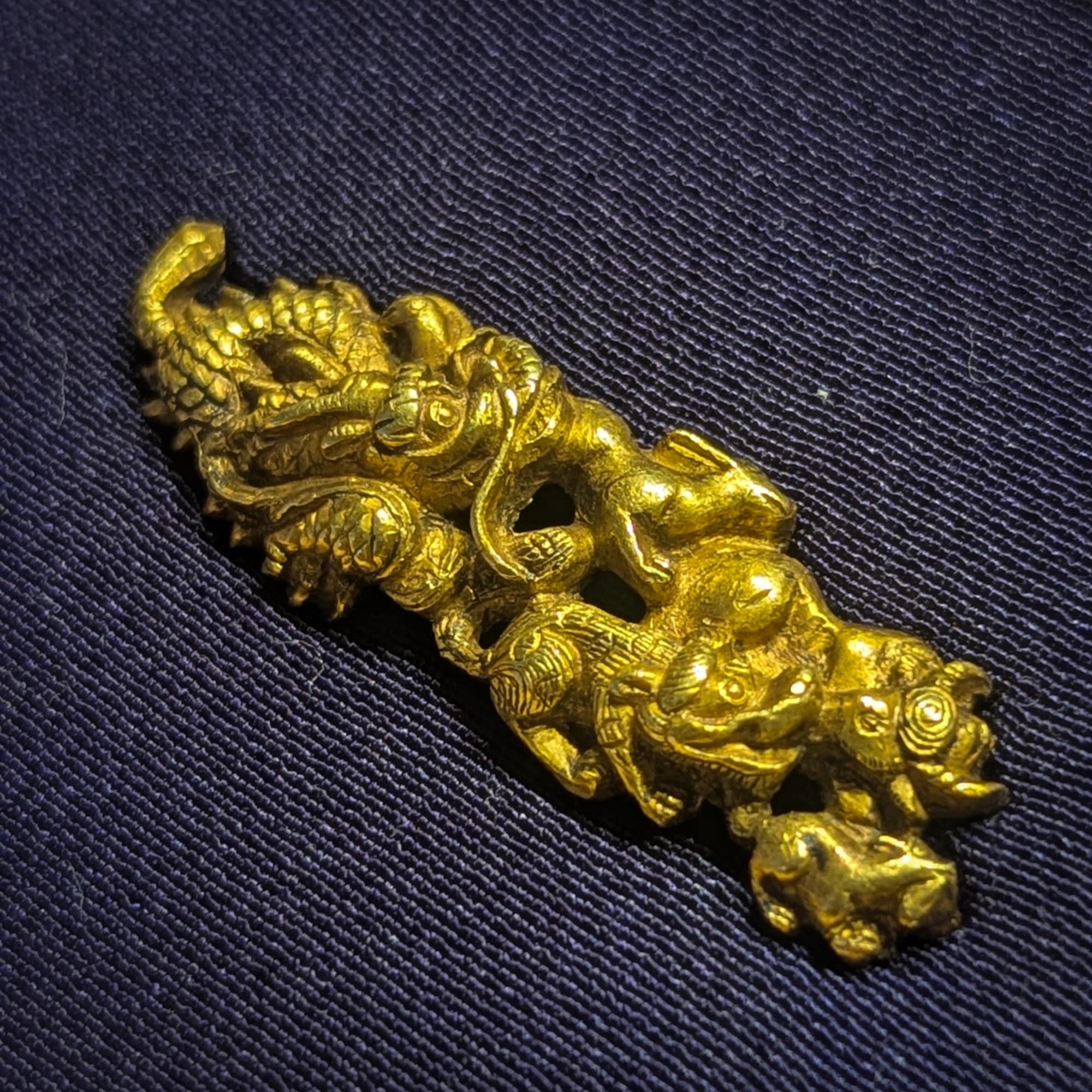
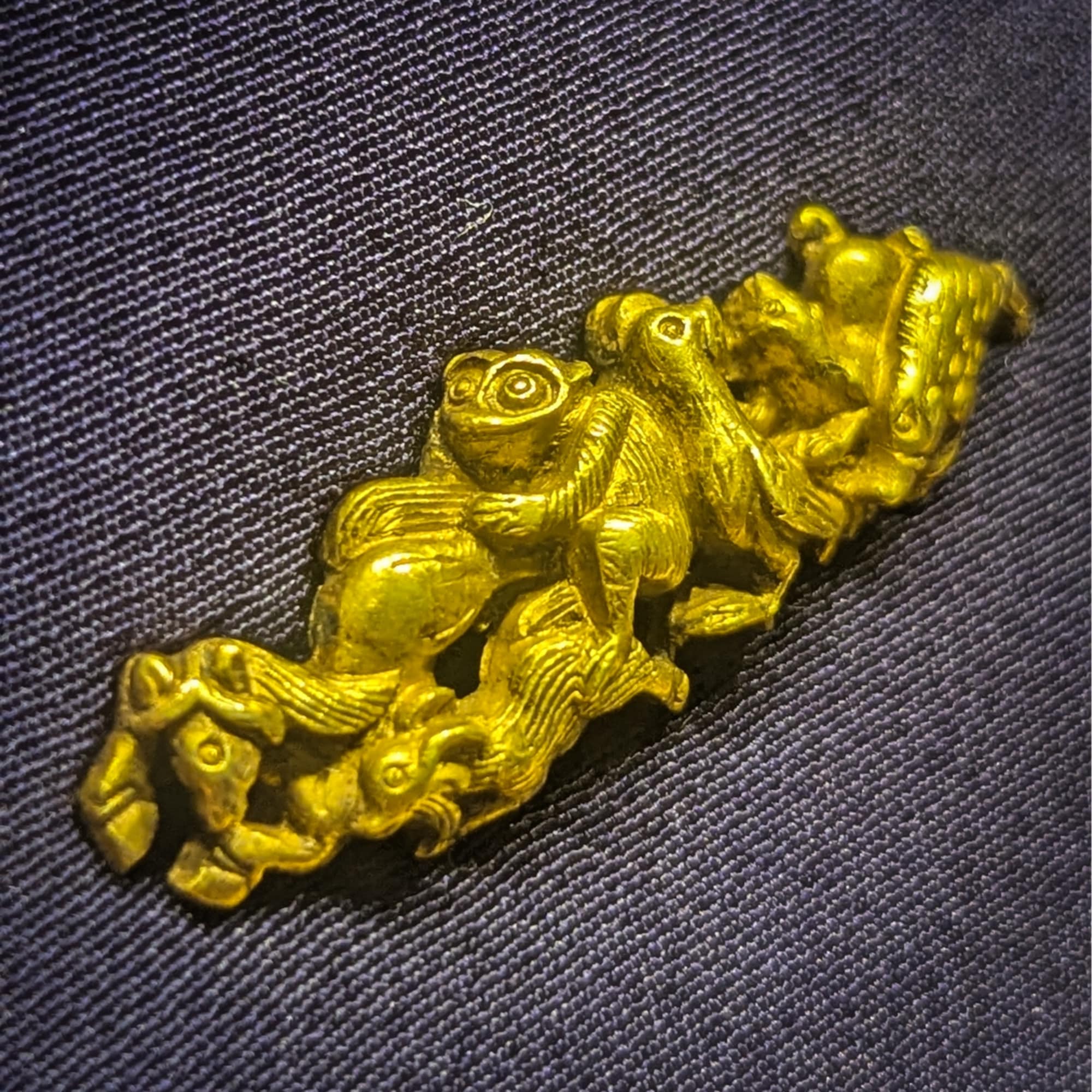
A rare set of solid gold Ko-Mino menuki dating to the Muromachi period, featuring a Chinese zodiac theme. Each menuki depicts six zodiac animals, representing the complete cycle of the Eastern zodiac. The set has been awarded the Hozon Tōsōgu certificate by the NBTHK, affirming its authenticity and historical importance.
 NihontoWatch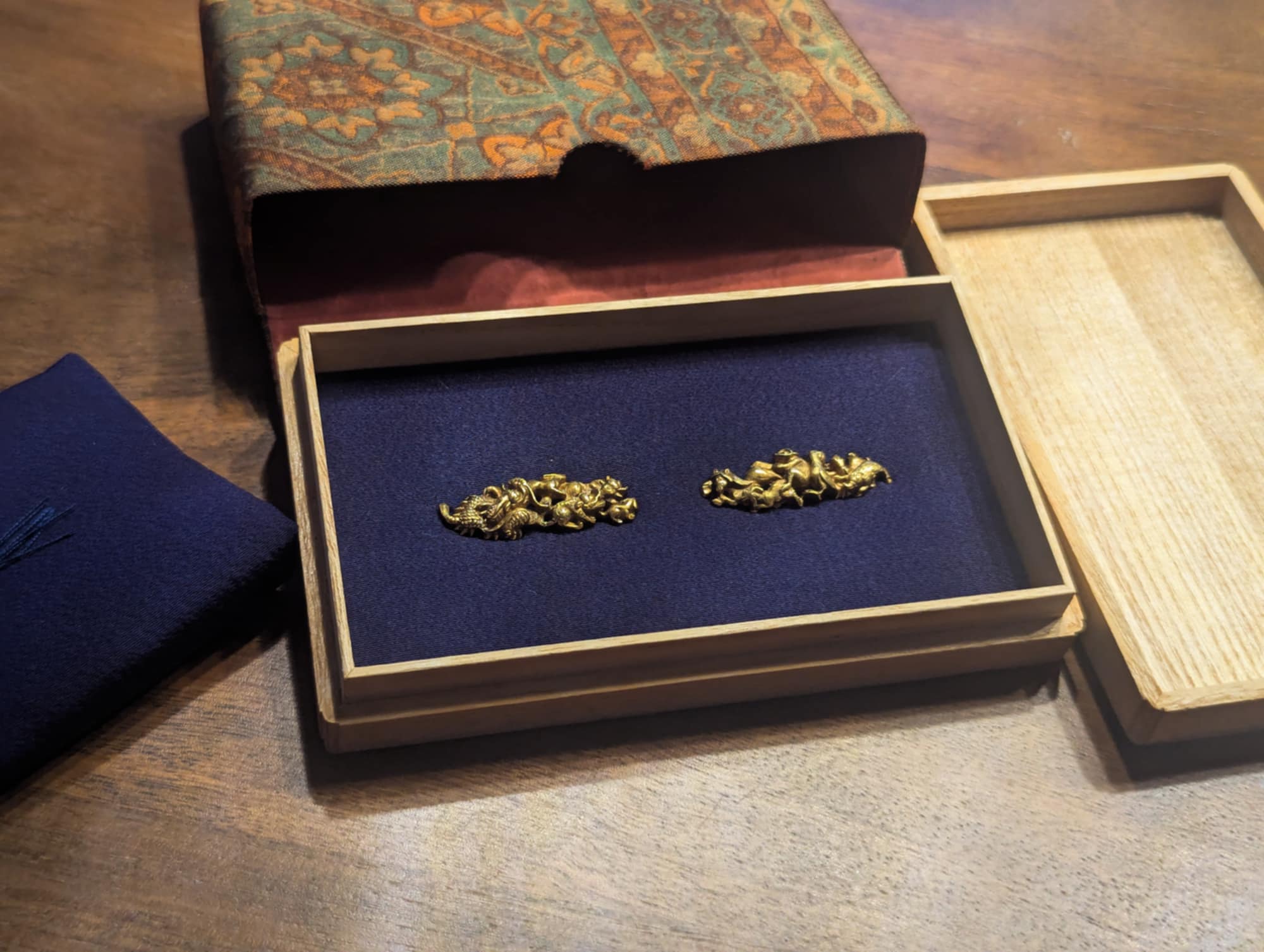
Ko-Mino School
Kotō
Mino
Unsigned
Tokuho (NBTHK)
Kinko · Mino
39 pieces on the market now
The Ko-Mino school emerged during the mid-to-late Muromachi period, arising at approximately the same time as the Gotō family within the broader tradition of early metalworkers (ko-kinkō). While the Gotō lineage served the Ashikaga shogunal house from the first master Yūjō onward, Ko-Mino artisans operated outside official patronage, maintaining independence and at times working within the cultural sphere of the imperial capital. Learn more →
A Hozon-certified fitting of notably superior craftsmanship and condition, often with signature or workmanship of high reference value.
The NBTHK (Nihon Bijutsu Tōken Hozon Kyōkai, the Society for the Preservation of Japanese Art Swords) is a public-interest incorporated foundation founded in 1948 and supervised by Japan’s Agency for Cultural Affairs (Bunkachō); it is based at the Japanese Sword Museum in Tokyo. Its expert panels physically examine each submitted work (shinsa) and issue a certificate (kanteishō) ranking it by artistic and historical merit. NBTHK papers are the most widely recognized standard of authentication for Japanese swords and fittings.
NBTHK official siteA rare set of solid gold Ko-Mino menuki dating to the Muromachi period, featuring a Chinese zodiac theme. Each menuki depicts six zodiac animals, representing the complete cycle of the Eastern zodiac. The set has been awarded the Hozon Tōsōgu certificate by the NBTHK, affirming its authenticity and historical importance.
NihontoWatchKo-Mino School
Kotō
Mino
Unsigned
Tokuho (NBTHK)
Kinko · Mino
39 pieces on the market now
The Ko-Mino school emerged during the mid-to-late Muromachi period, arising at approximately the same time as the Gotō family within the broader tradition of early metalworkers (ko-kinkō). While the Gotō lineage served the Ashikaga shogunal house from the first master Yūjō onward, Ko-Mino artisans operated outside official patronage, maintaining independence and at times working within the cultural sphere of the imperial capital. Learn more →
A Hozon-certified fitting of notably superior craftsmanship and condition, often with signature or workmanship of high reference value.
The NBTHK (Nihon Bijutsu Tōken Hozon Kyōkai, the Society for the Preservation of Japanese Art Swords) is a public-interest incorporated foundation founded in 1948 and supervised by Japan’s Agency for Cultural Affairs (Bunkachō); it is based at the Japanese Sword Museum in Tokyo. Its expert panels physically examine each submitted work (shinsa) and issue a certificate (kanteishō) ranking it by artistic and historical merit. NBTHK papers are the most widely recognized standard of authentication for Japanese swords and fittings.
NBTHK official site