Summary
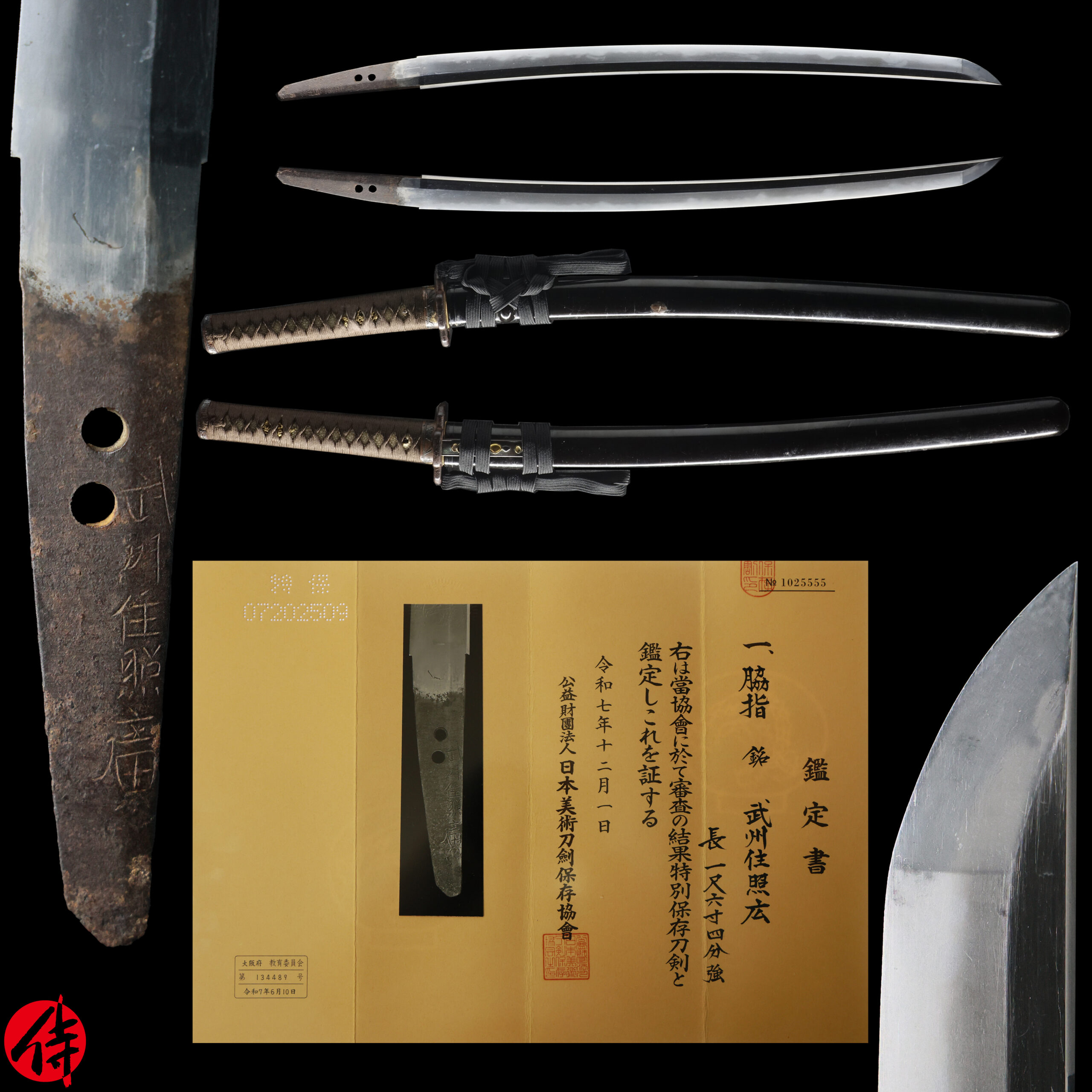
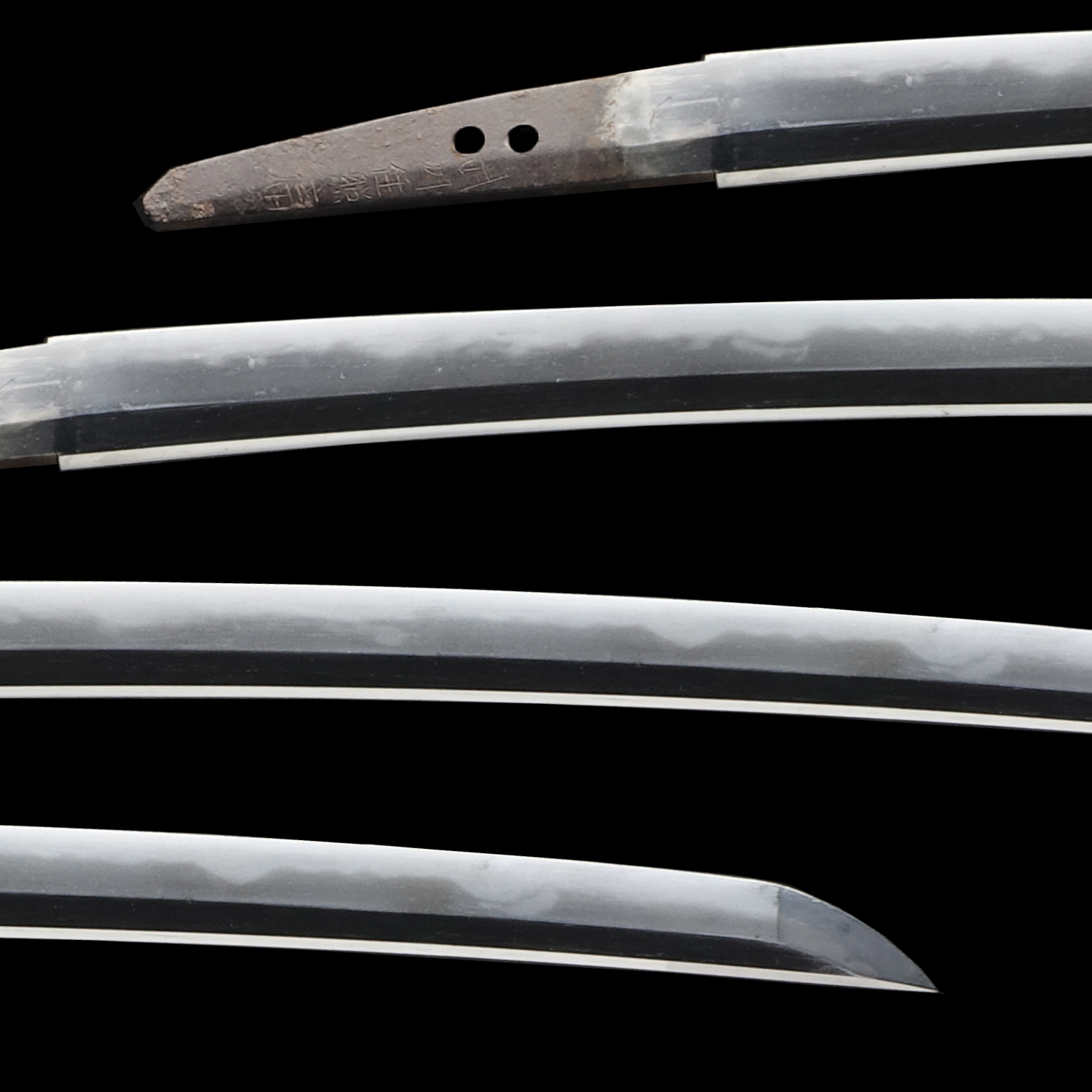
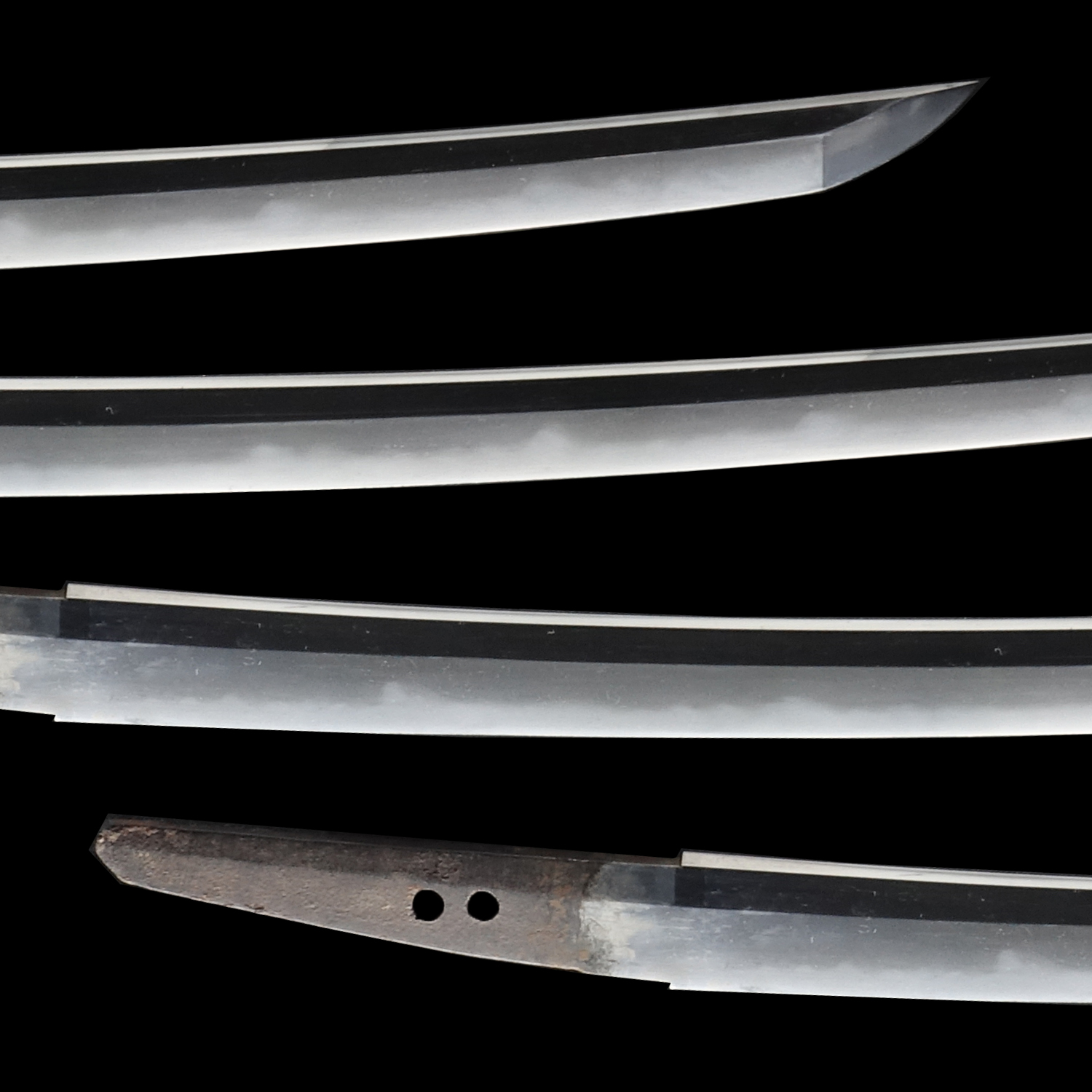
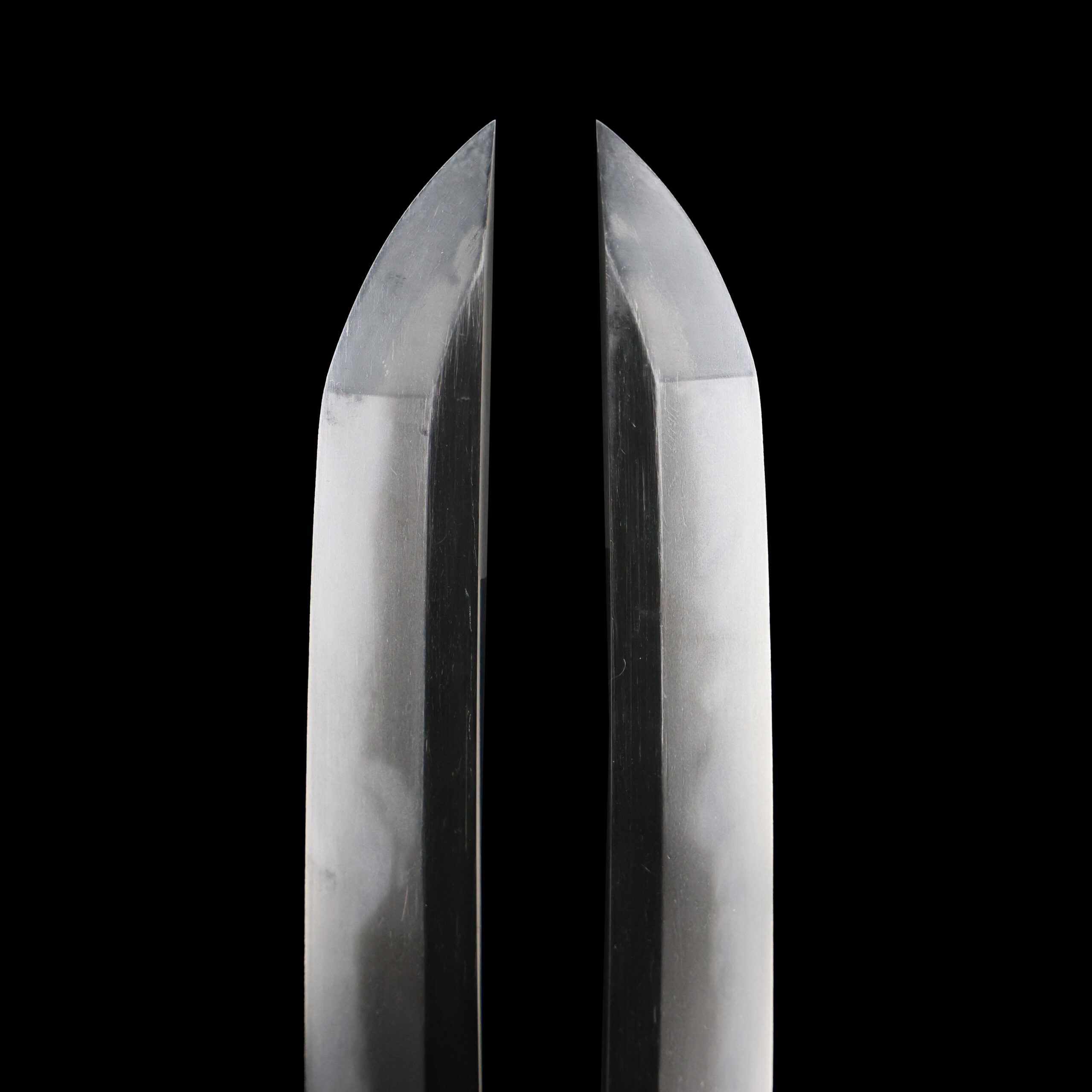
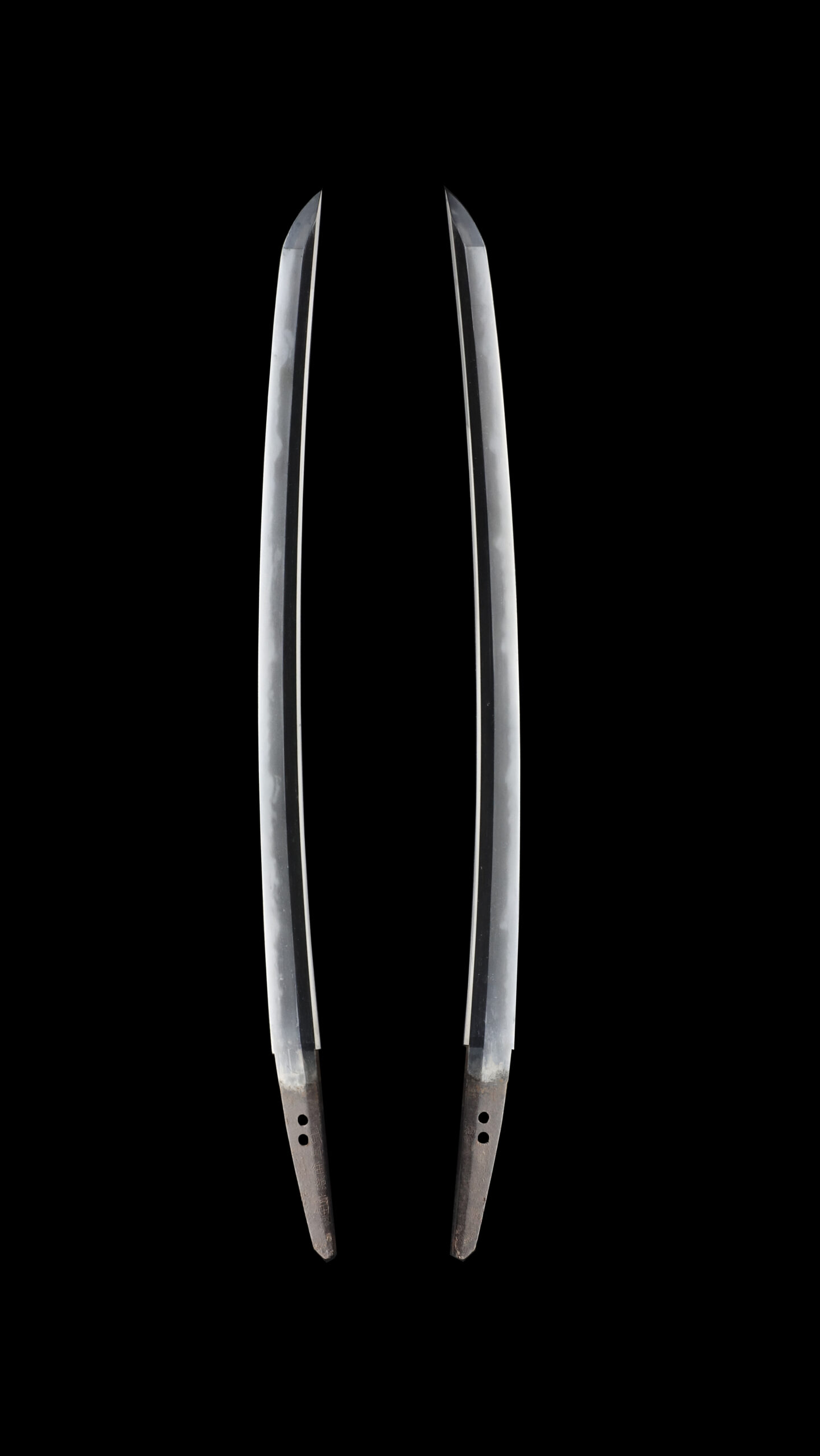
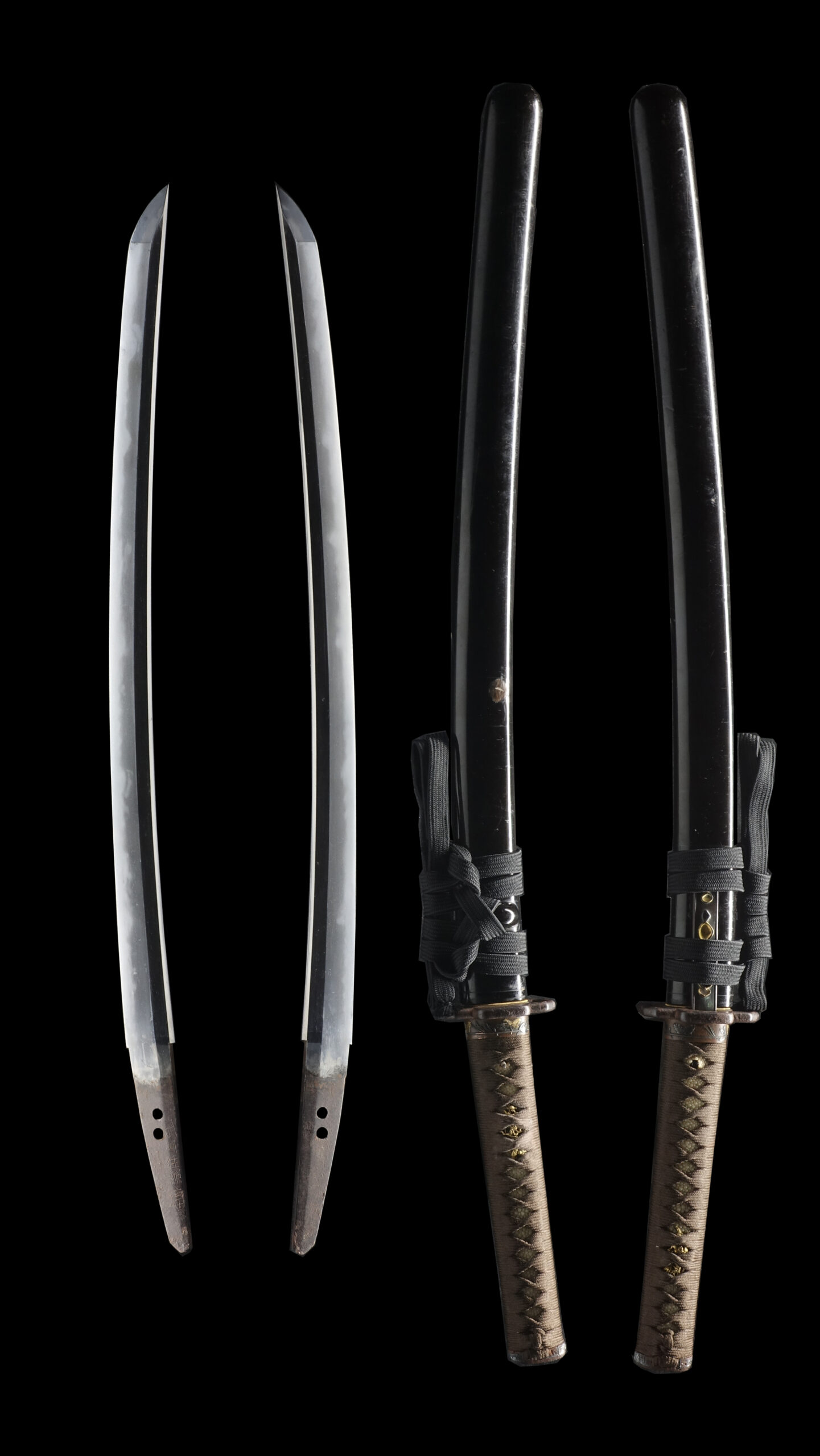
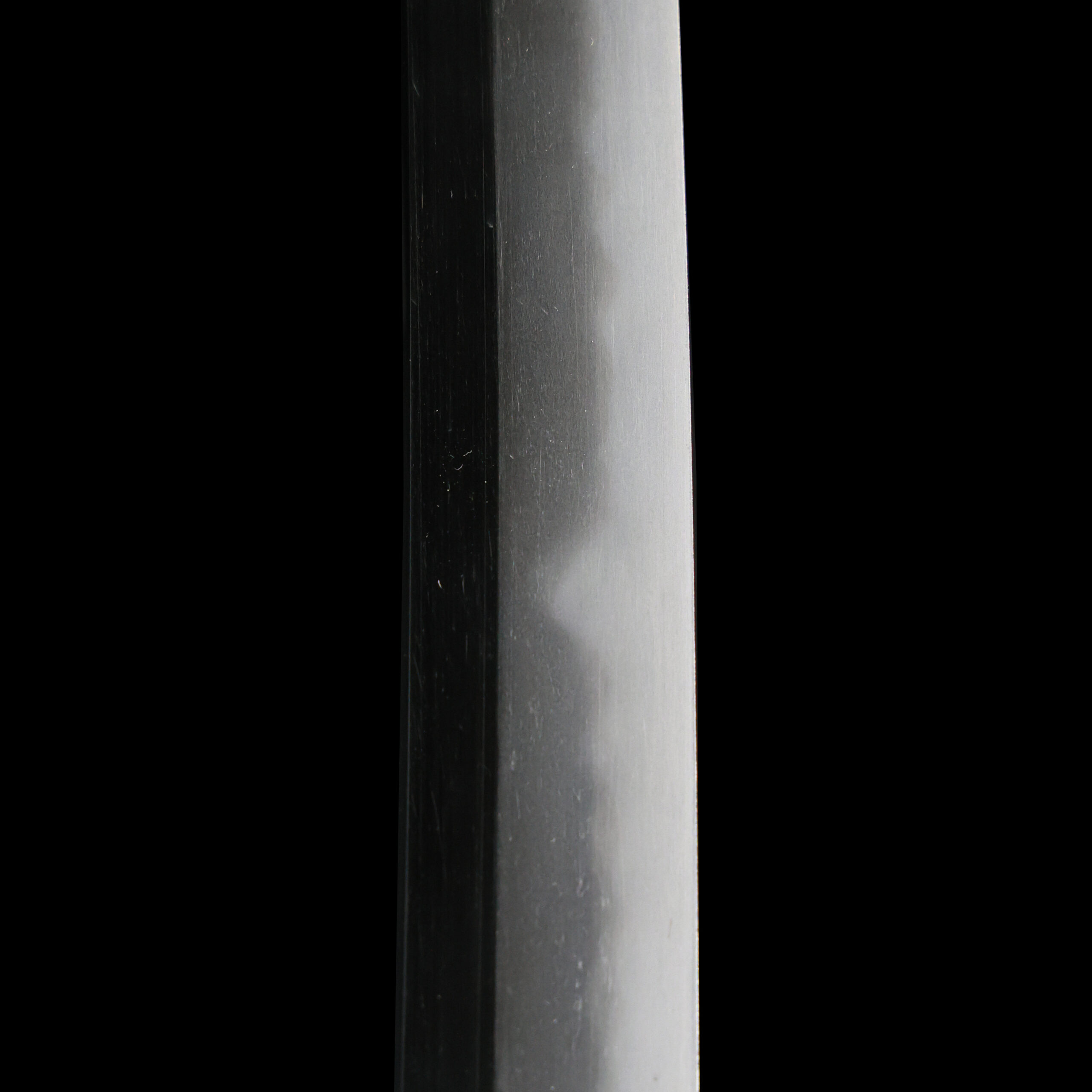
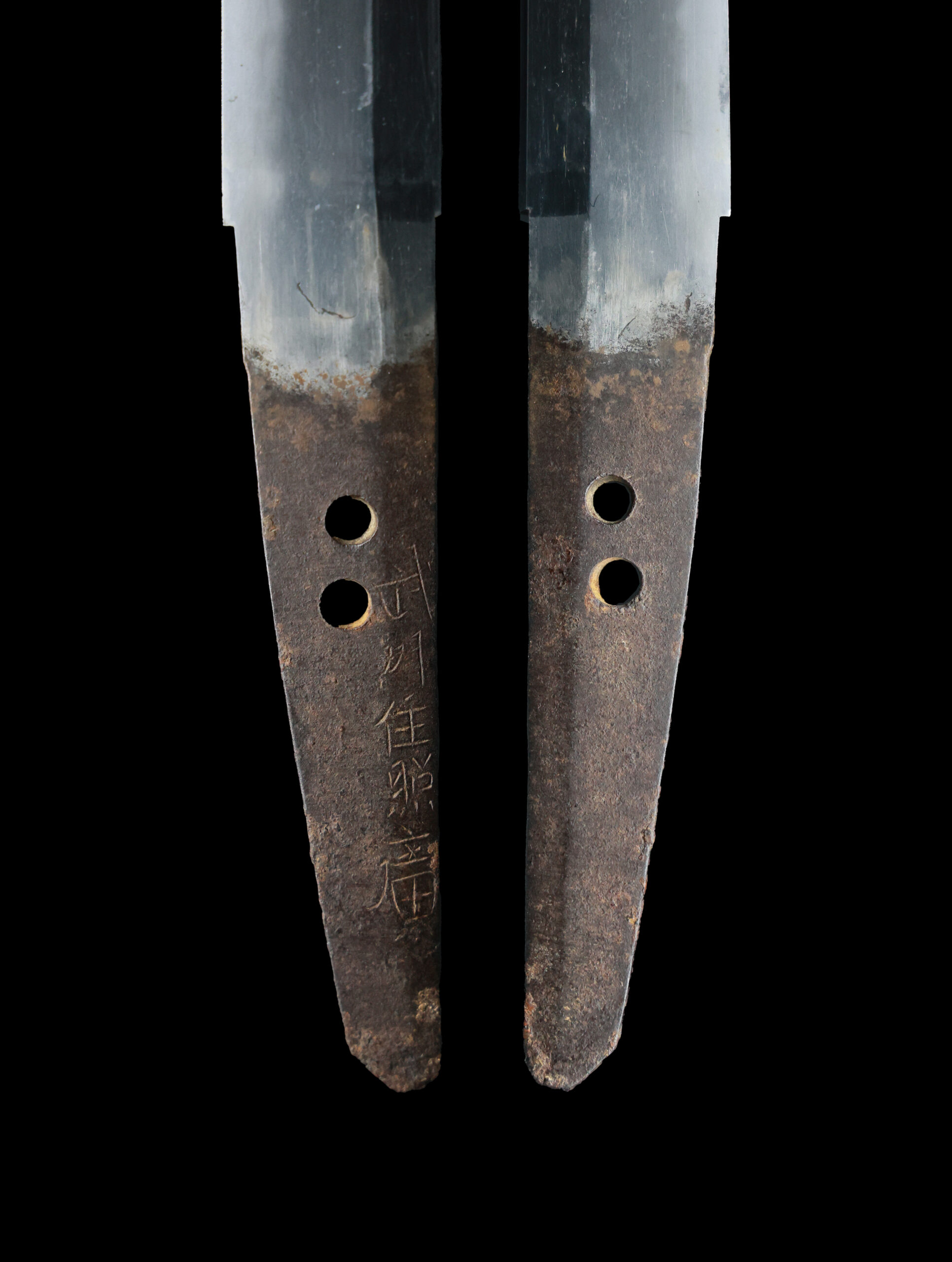
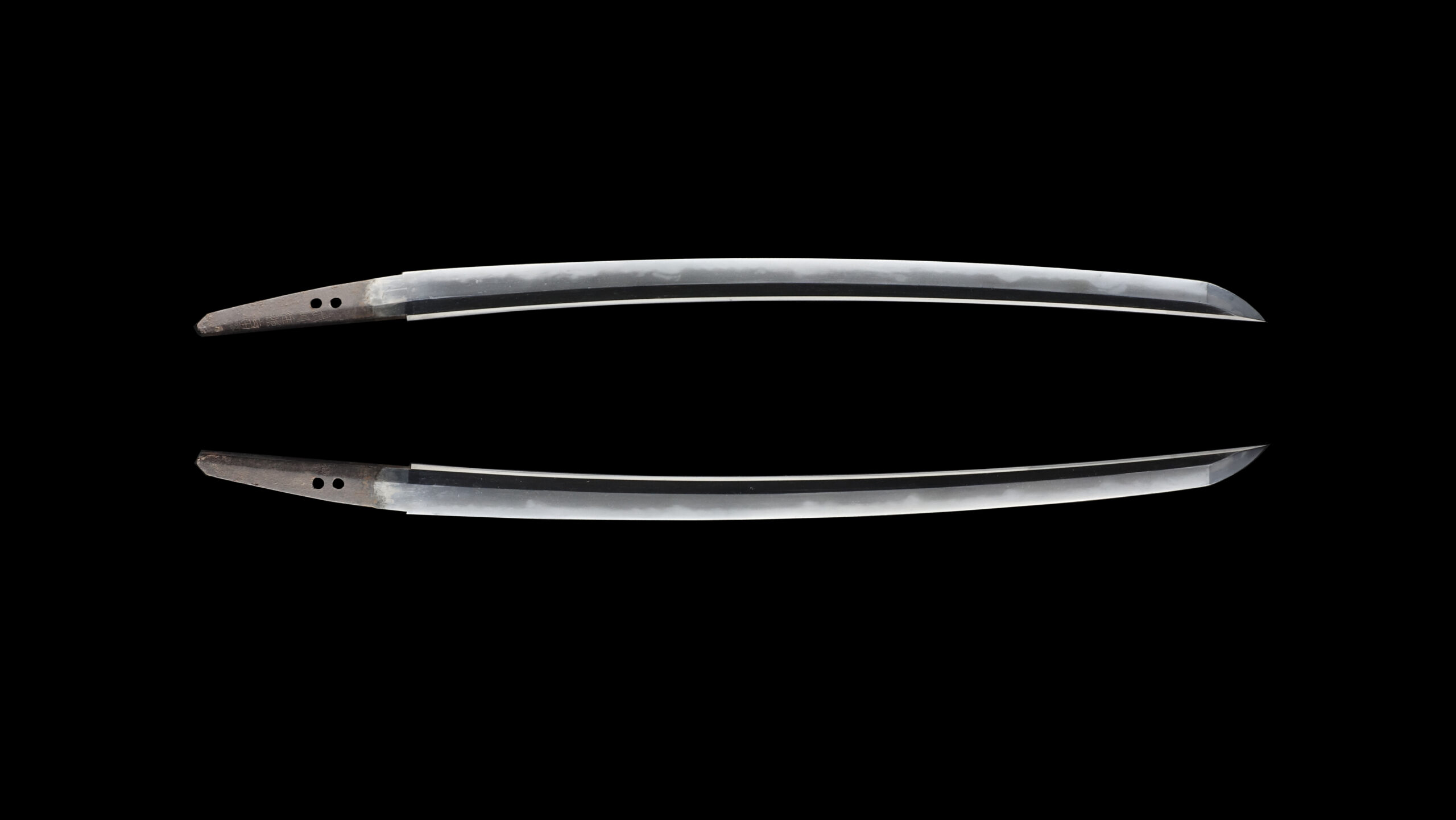
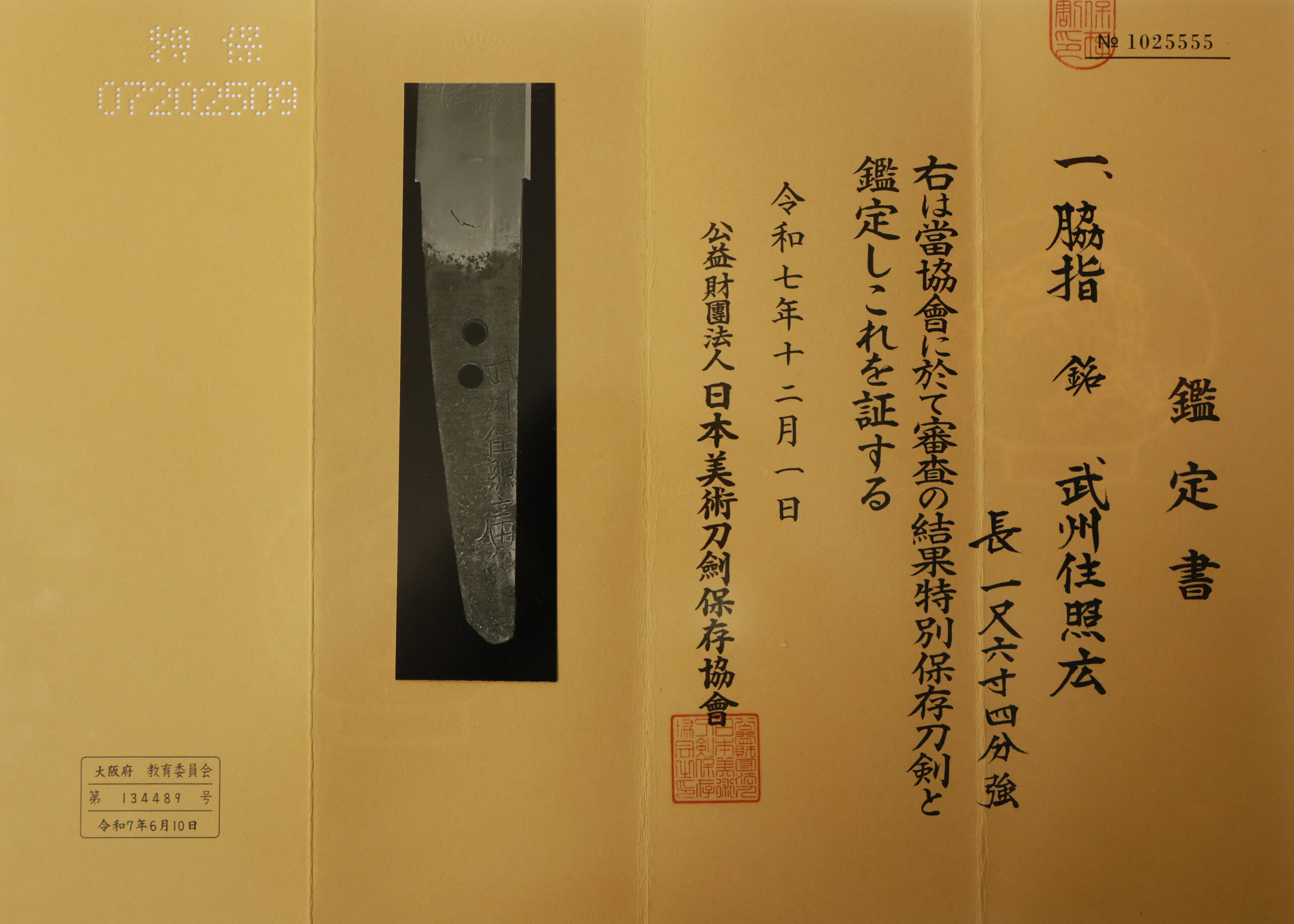
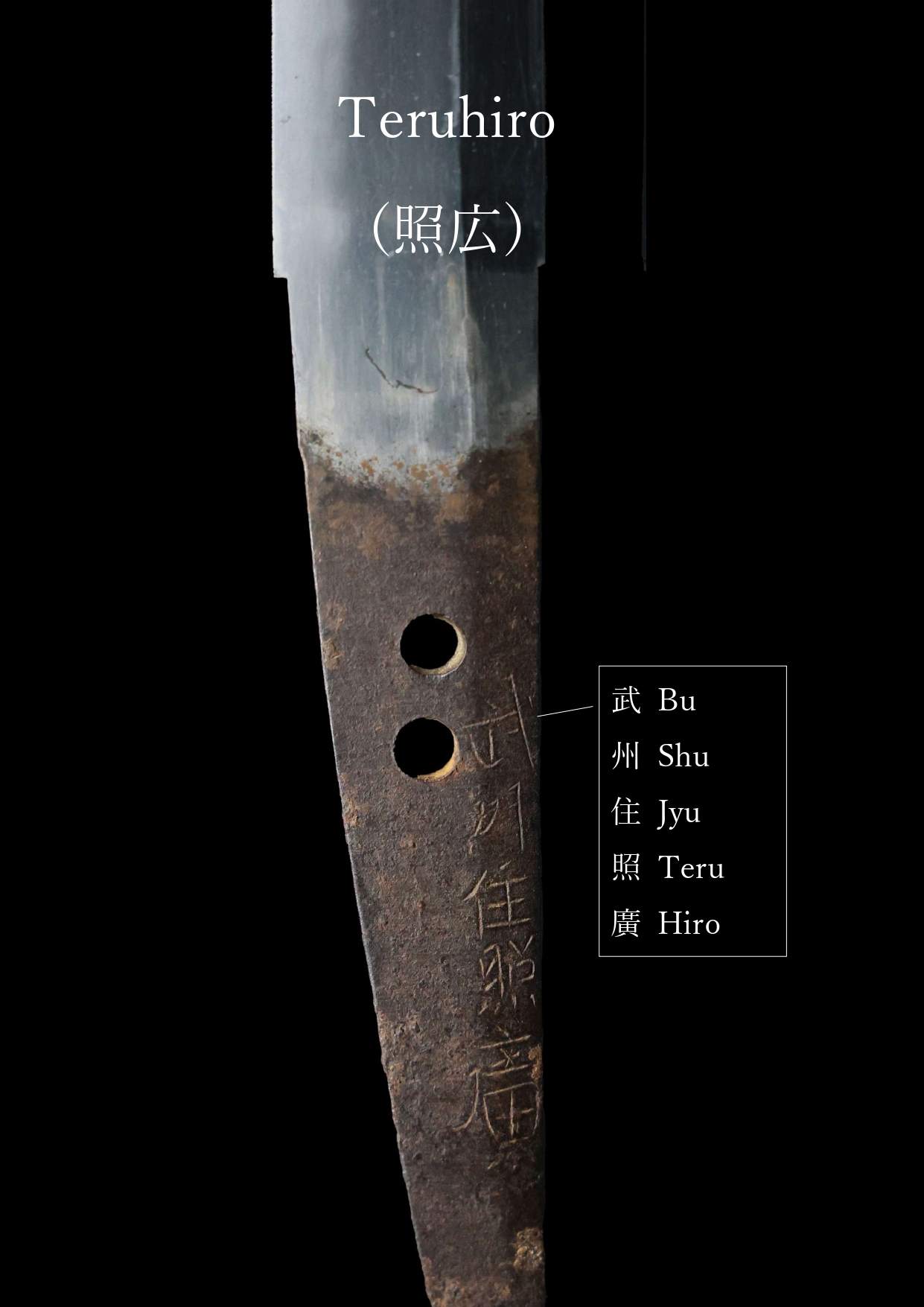
This Wakizashi bears the signature Bushu-jū Teruhiro (武州住照広). Bushu refers to the historical Musashi Province, which corresponds to modern-day Tokyo and parts of Saitama. Teruhiro is the swordsmith’s name, indicating that this blade was forged by him while residing in Musashi. He was active during Late Azuchi Momoyama-early Edo period (late 16th-early 17th century) and is associated with the Bushu Shitahara tradition (下原派).
About the Shitahara School
The Shitahara school (Shitahara-ha, 下原派) originated in the late Muromachi period in Musashi Province. The swordsmiths of this school initially worked under the powerful Hōjō clan, a dominant feudal family in the Kantō region. After the Hōjō were defeated by Toyotomi Hideyoshi in the late 16th century, the Shitahara smiths entered the service of the Tokugawa shogunate as Okakae Kaji—exclusive swordsmiths dedicated to a specific feudal lord or domain.
Most Shitahara swordsmiths bore the family name Yamamoto. They were particularly active from the late Muromachi through the early Edo periods, producing swords for the Tokugawa until the very end of the Edo era. The Hiroshige lineage was among the most famous within this group, but other smiths, including Shigeyoshi, contributed to the school’s reputation for crafting robust and practical swords suited to the needs of working Samurai.
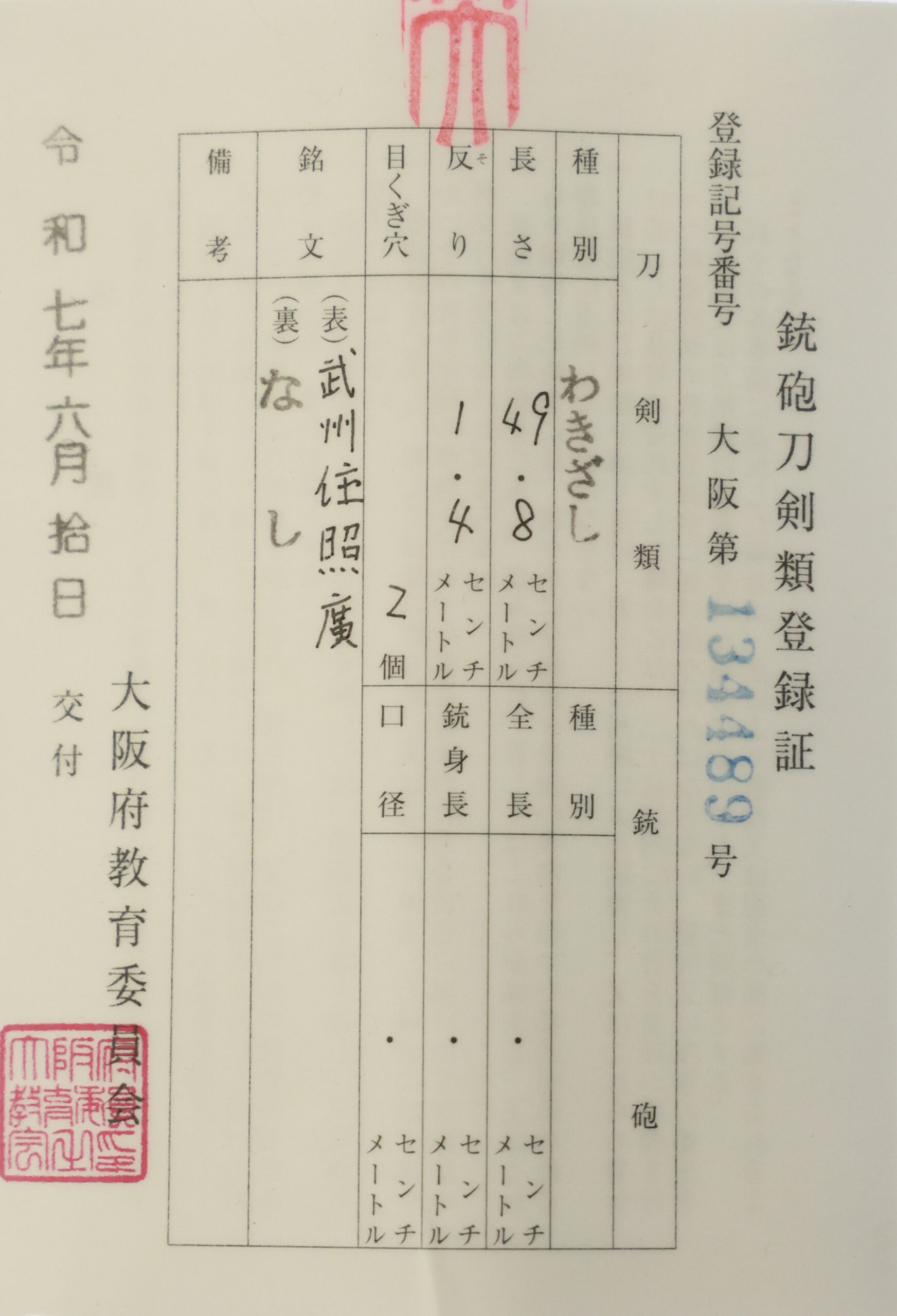
It is appraised as a Tokubetsu Hozon Token (特別保存刀剣) issued by NBTHK (Nihon Bijutsu Touken Hozon Kyokai: 日本美術刀剣保存協会).
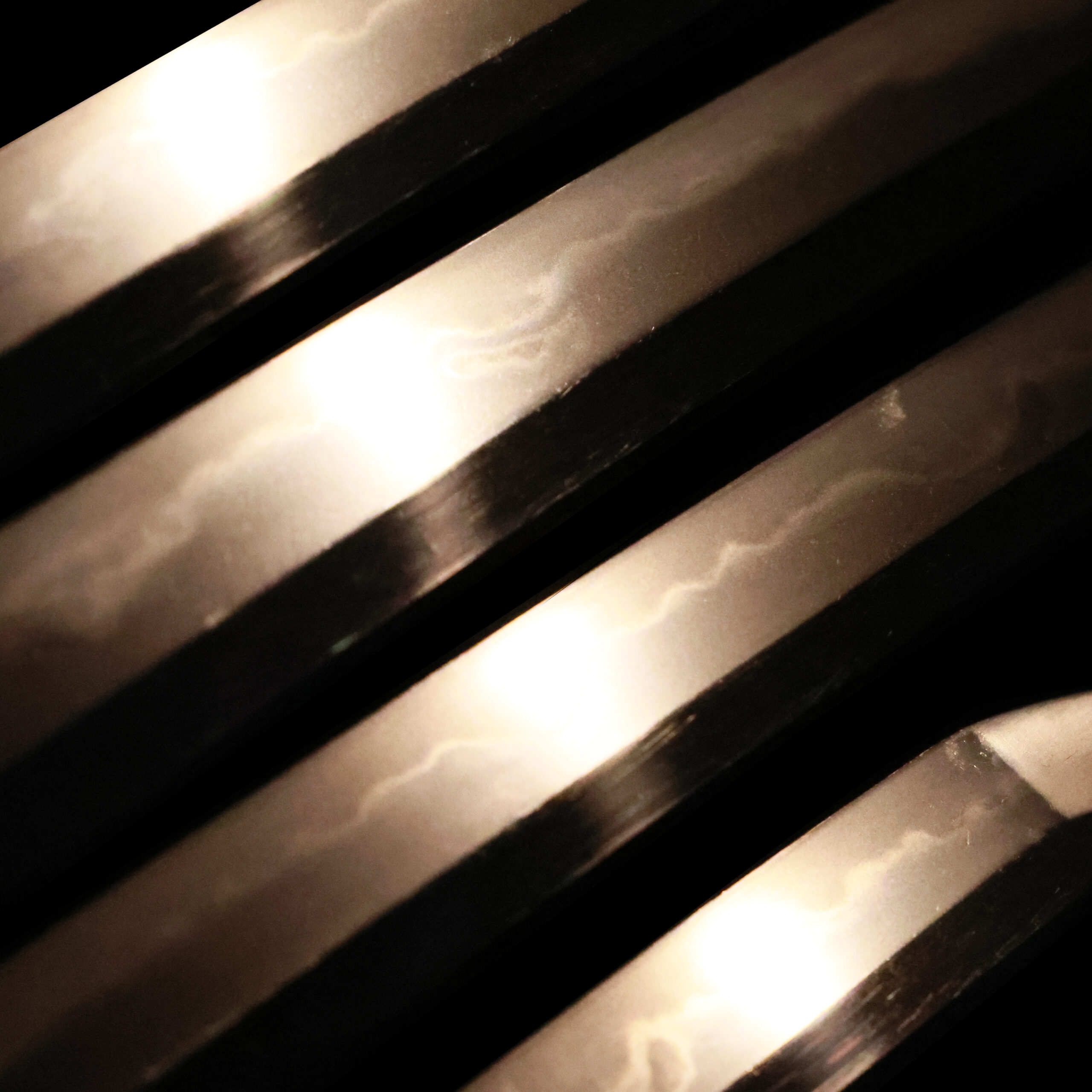
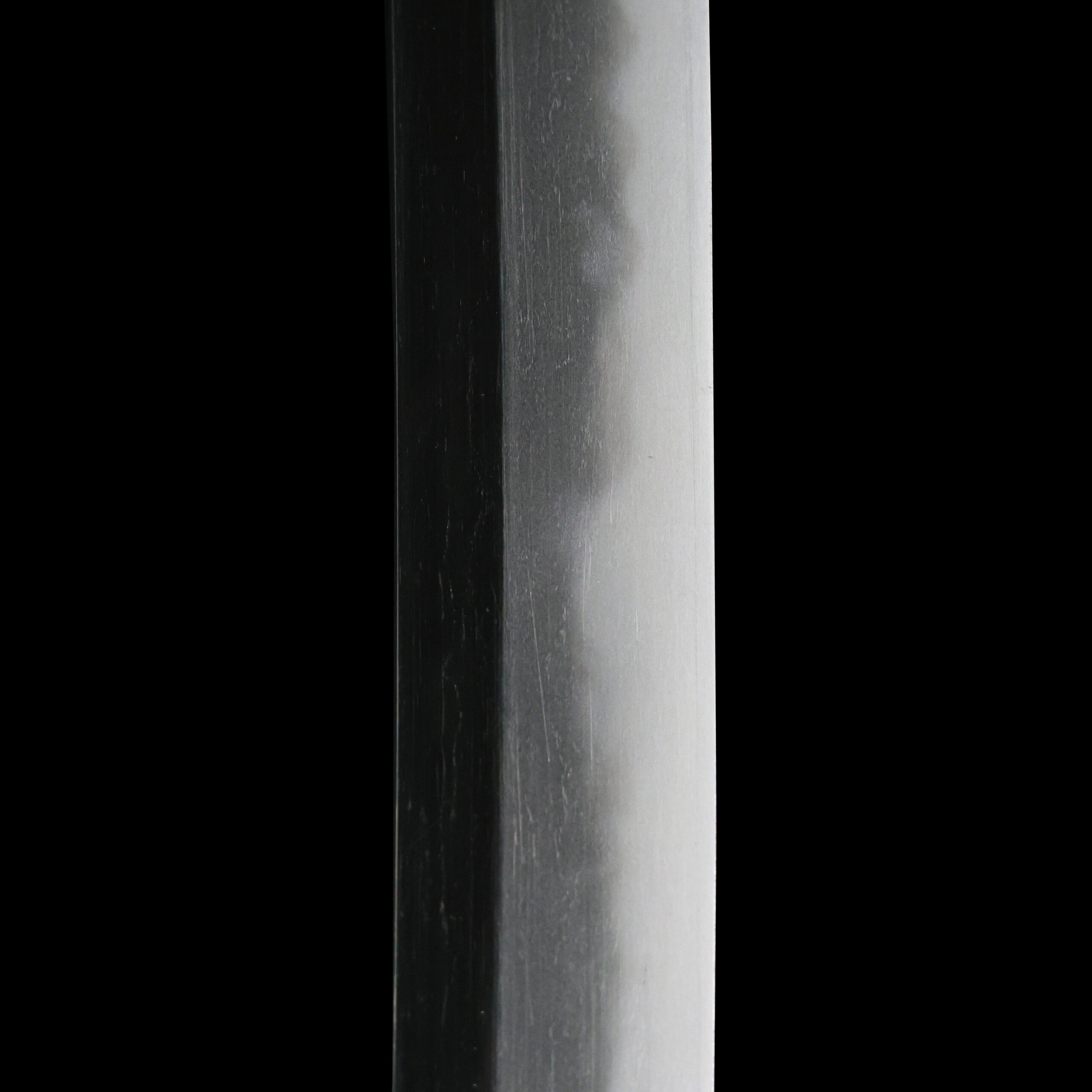
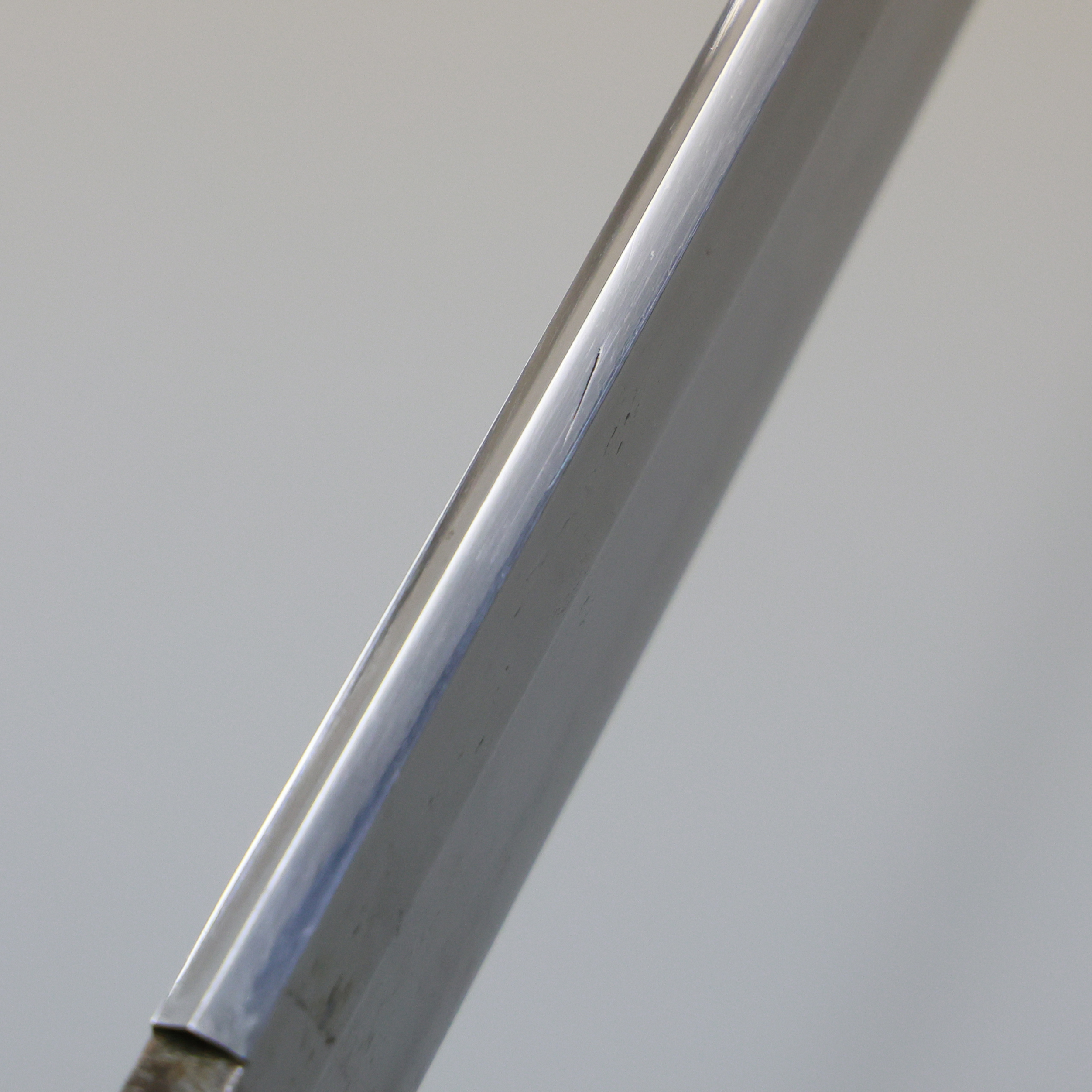
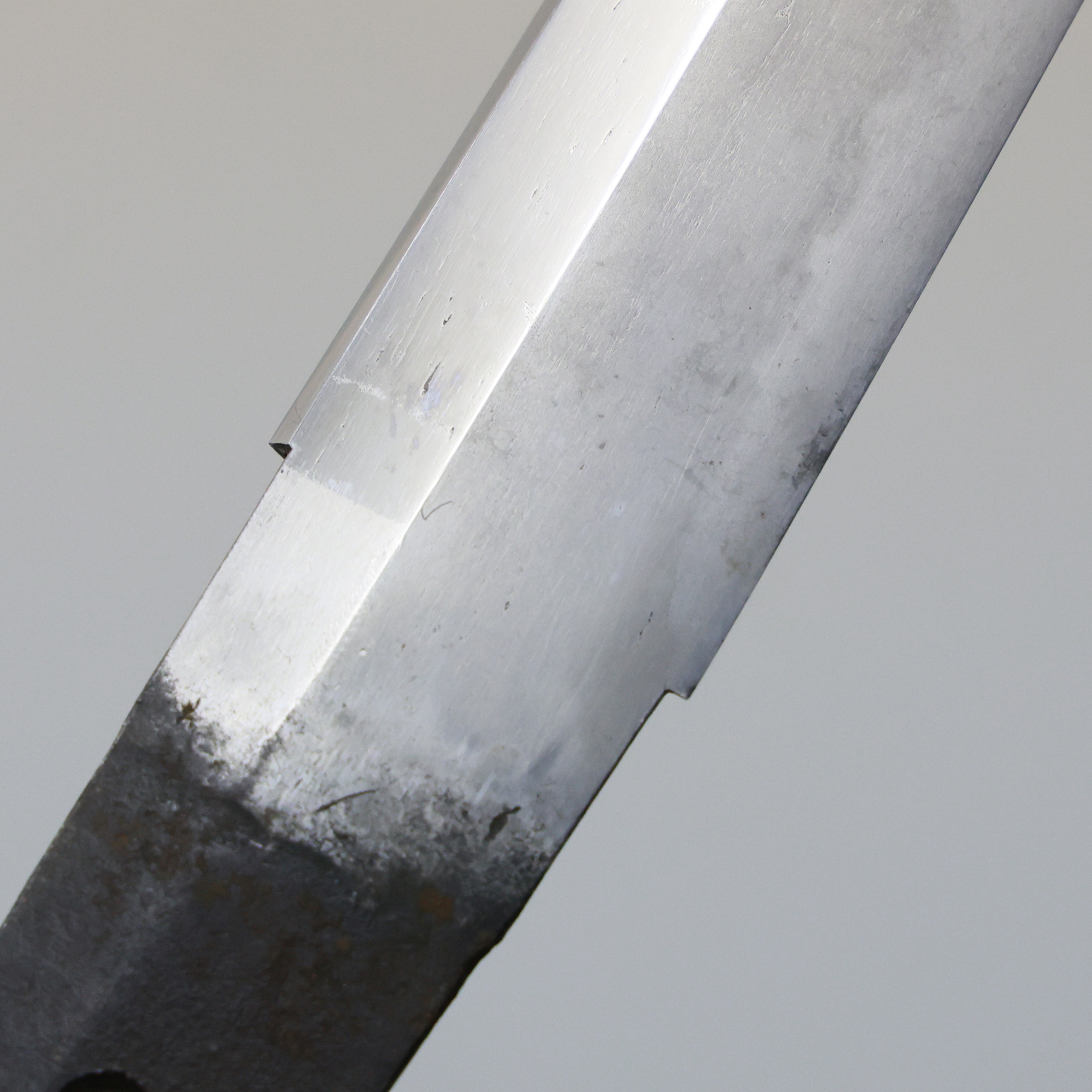
*Please keep in mind that there are a few kitae kizu and black rust spots on this blade.
Fuchi-Kashira
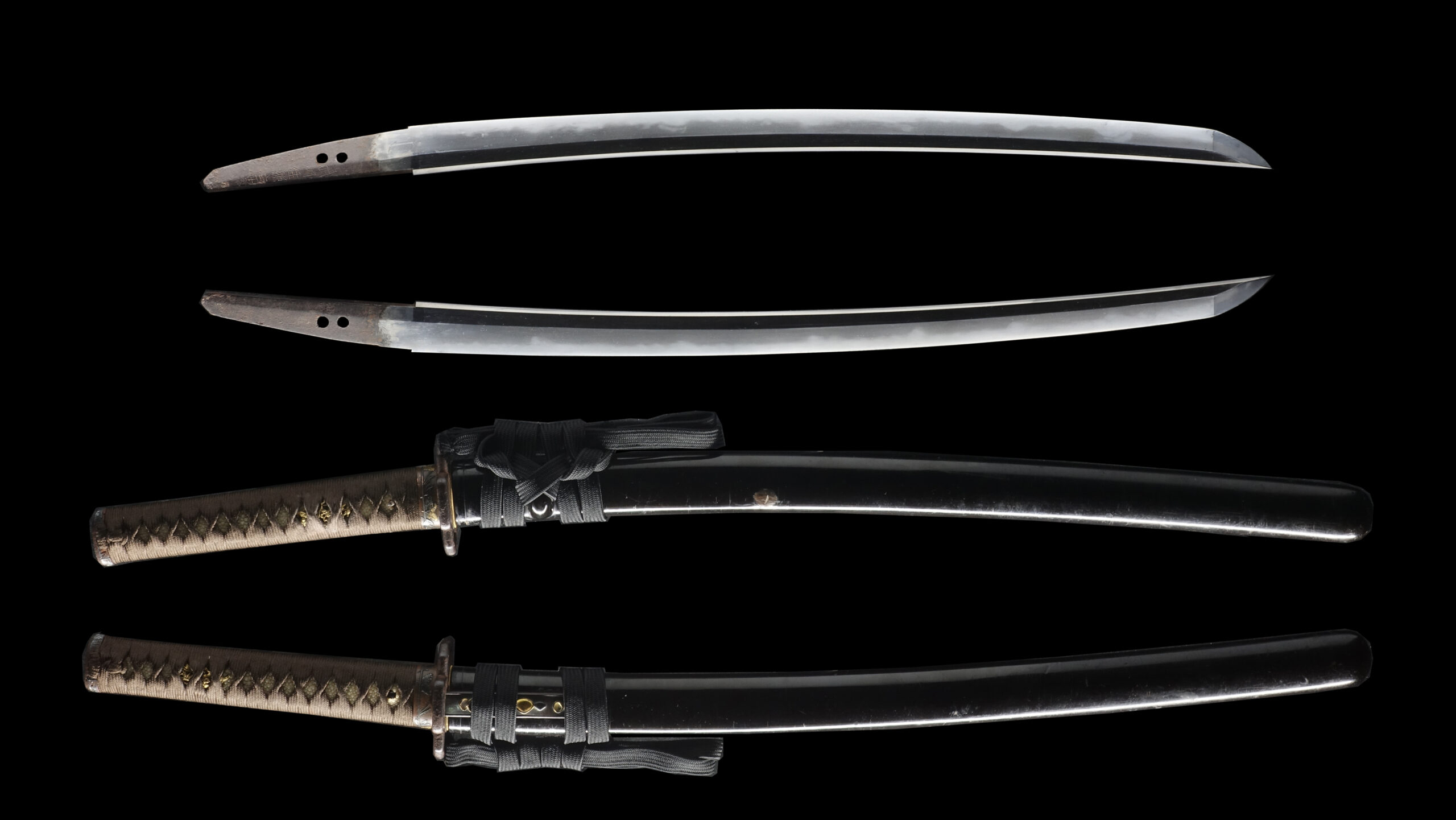
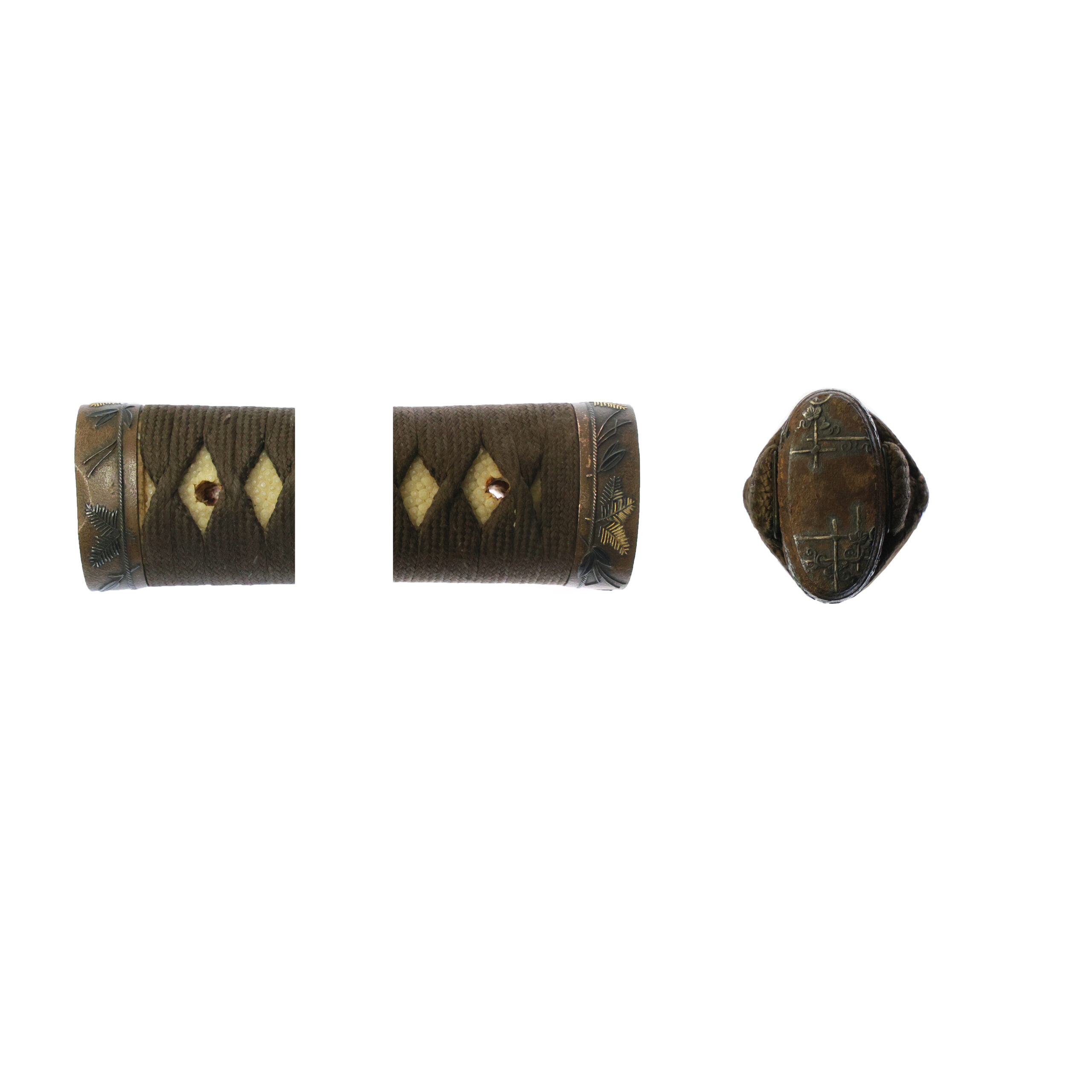
The theme of this Fuchi-Kashira is the pine tree (松, Matsu) and the Japenese apricot blossom (梅, Ume).
As pine trees keep their green color throughout the years by withstanding severe heat and cold, people thought this plant pattern represents eternal youth. Furthermore, its color is called Tokiwa-Iro (常盤色, evergreen trees’ dark green color with brown), and pine trees have another name “Tokiwa-Gi (常盤木).” Tokiwa means immutability, so Tokiwa-Iro is a color that praises green with a wish for longevity and prosperity. It is said this color was appreciated, especially in the Edo period, as a good-luck color. The pine tree design gives us an elegant and noble impression; it might be another reason that people love this motif.
Japanese apricot blossoms begin to bloom in winter that snow still covers its tree so that people thought this flower tells the arrival of spring. Same as cherry blossom, it has been appreciated for a long time in Japan. People enjoy its adorable petal shape and scent, gracefully branched tree, and compose many poems. As it comes out in the cold season, it symbolizes the power of perseverance and vitality.
Tsuka and Menuki
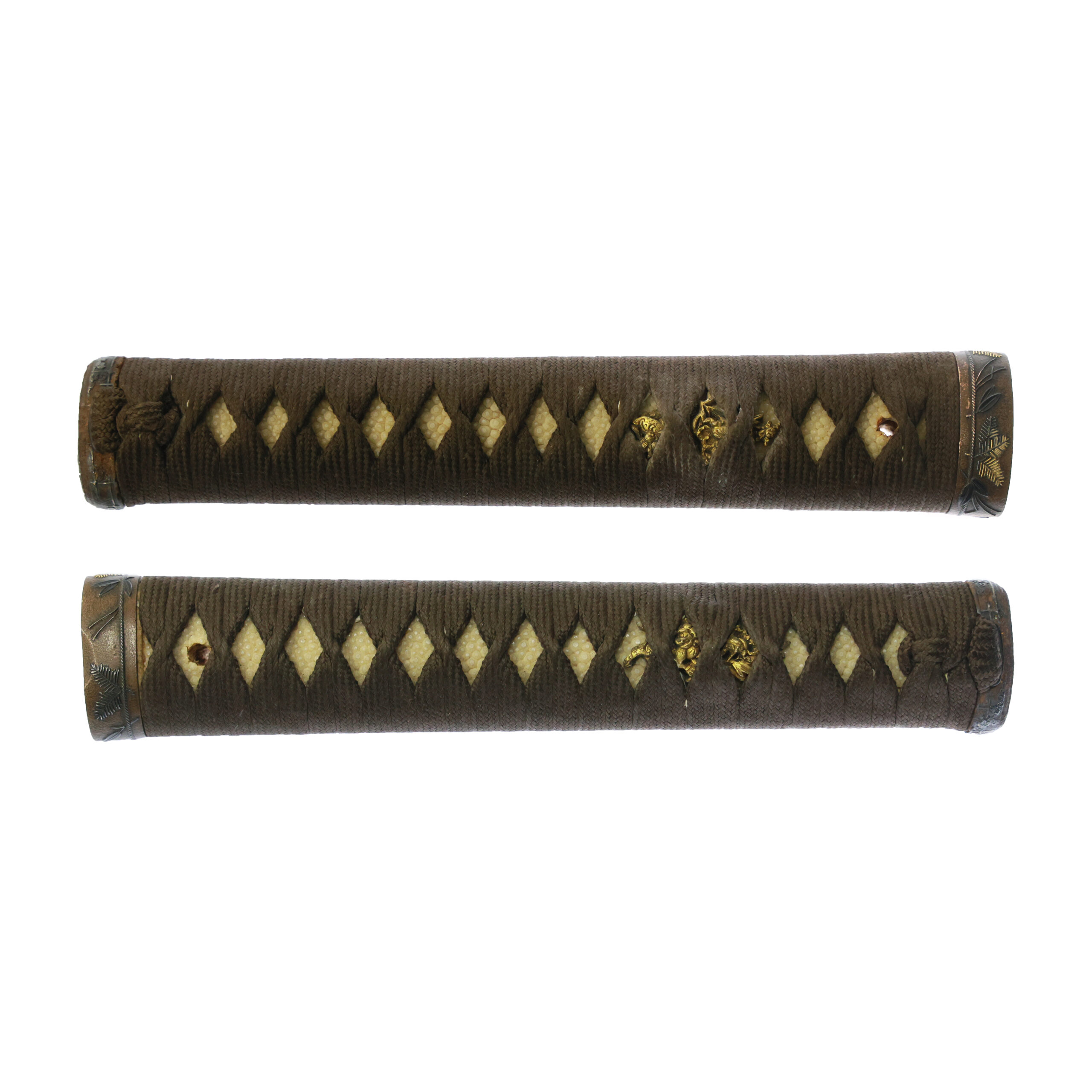
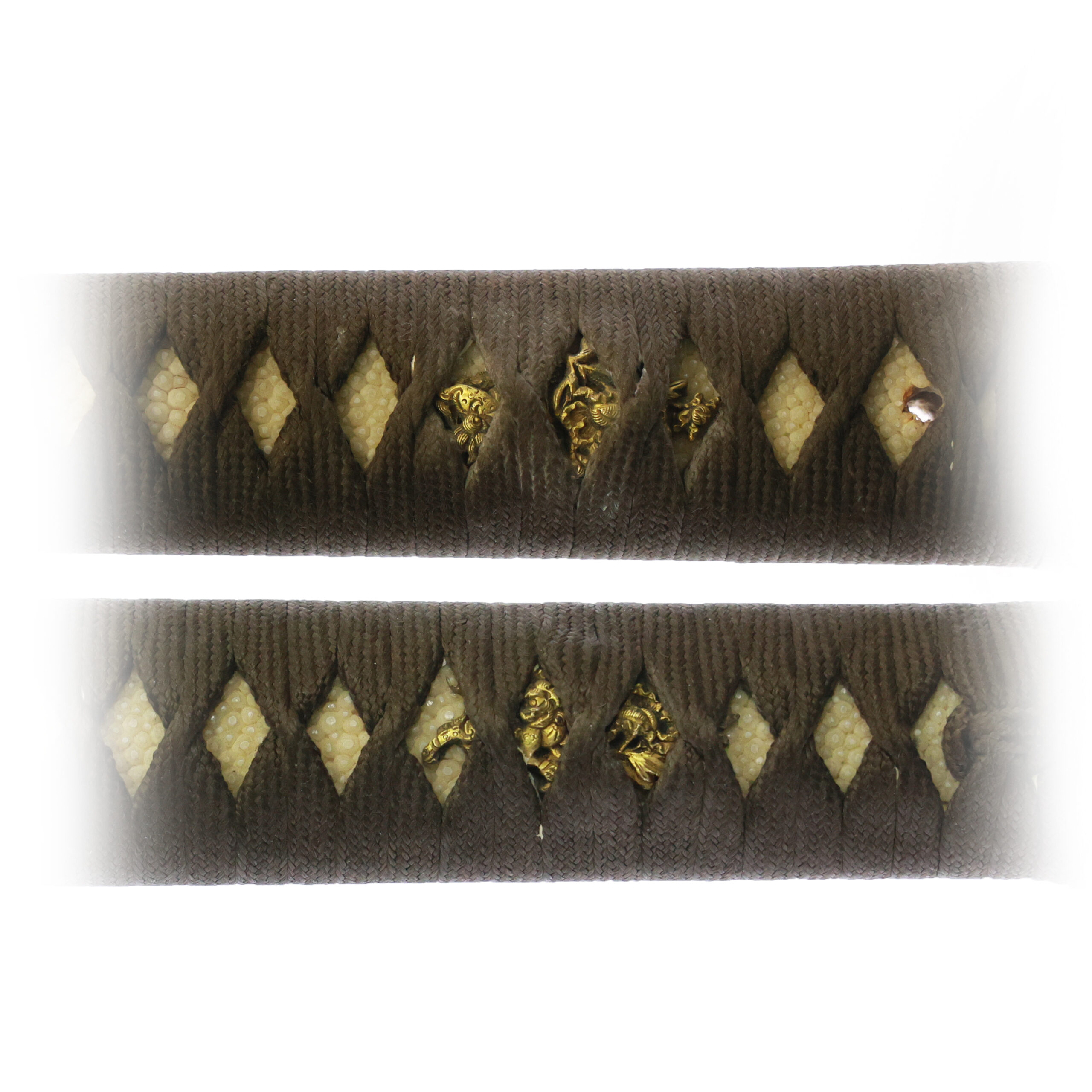
The pattern designed on this Menuki is called Shishi Botan (獅子牡丹), which is a combination of Karajishi (唐獅子, lion) and Botan (牡丹, peony). While lions have been known as the “king of beasts”, peonies have also been called the “king of flowers.” Therefore, this combination motif has been favored since ancient times.
The Shishi (獅子) means a lion in Japanese, and the Karajishi is a lion brought from the continent to Japan in the Toh period (唐, Tang dynasty, 618-907). The Karajishi typically has curly hair for its head, neck, body, and tail, as seen on this work. In Buddhism, the Karajishi is regarded as a symbol of wisdom, and Monju Bosatu (文殊菩薩, Manjushri Bodhisattva) rides lions. According to a theory, the Karajishi is the origin of Komainu (狛犬, stone guardian dogs that exorcize evil spirits). It shows this animal motif has been familiar to Japanese people since ancient times.
There is a Houwa (法話, Buddhist monks tell the story of Buddhism in an easy-to-understand manner) that treats the Karajishi and this flower. The lion is called the king of the beasts. However, even this invincible animal has only one fear: a bug in the lion’s body. This pest grows in the lion’s hair and eventually breaks the skin and bites the flesh. Nevertheless, it dies if it is exposed to the night dew of a peony. Therefore, the lion rests under peony flowers at night, looking for a haven. The design of these sword mountings might have been quoted from this story.
Peony represents happiness, wealth, nobleness, and gorgeousness. This flower pattern has been treated as a kind of good-omen motif; people regarded it as a rich harvest sign. Peony is called “Botan” in Japanese. When we write this flower’s name in Japanese, its second letter means mountain hermit medicine that would give us eternal youth. Based on the meaning of this letter, the peony pattern symbolizes eternal youth and longevity.
Tsuba and Habaki
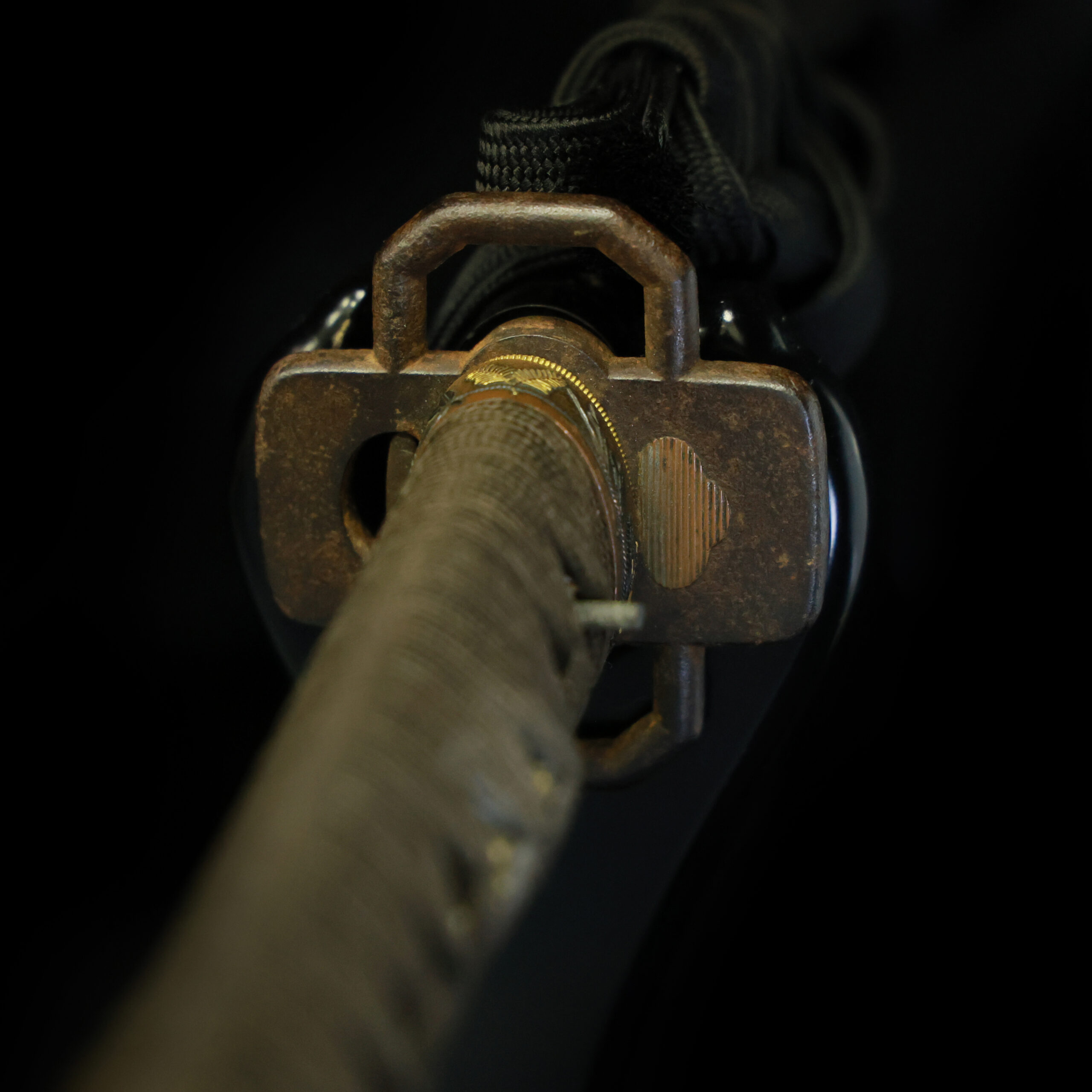
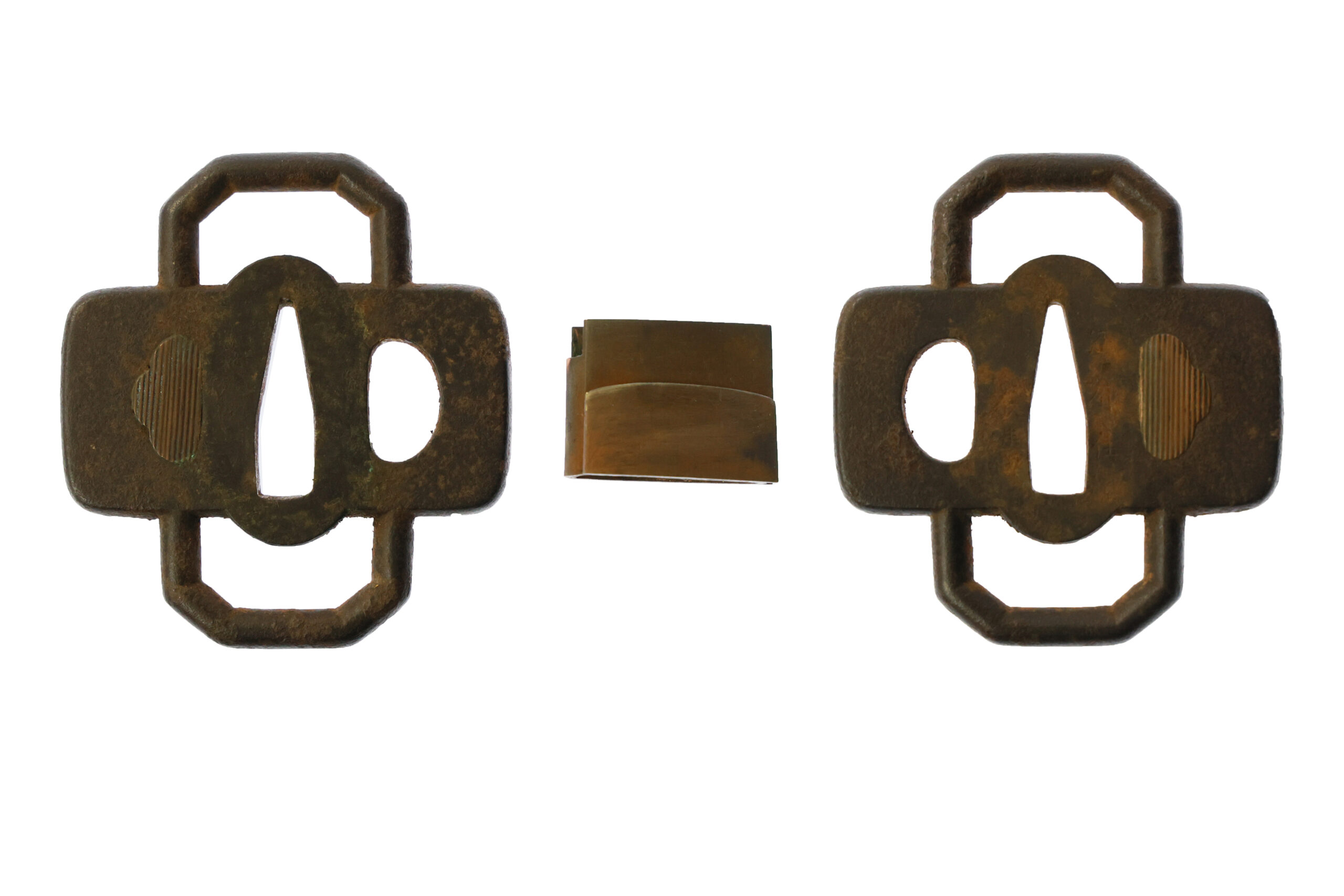
This Tsuba is made of iron in a four-lobed mokkō shape (四つ木瓜), with a distinctive design where the top and bottom are cut open, leaving only the rim in an openwork structure.
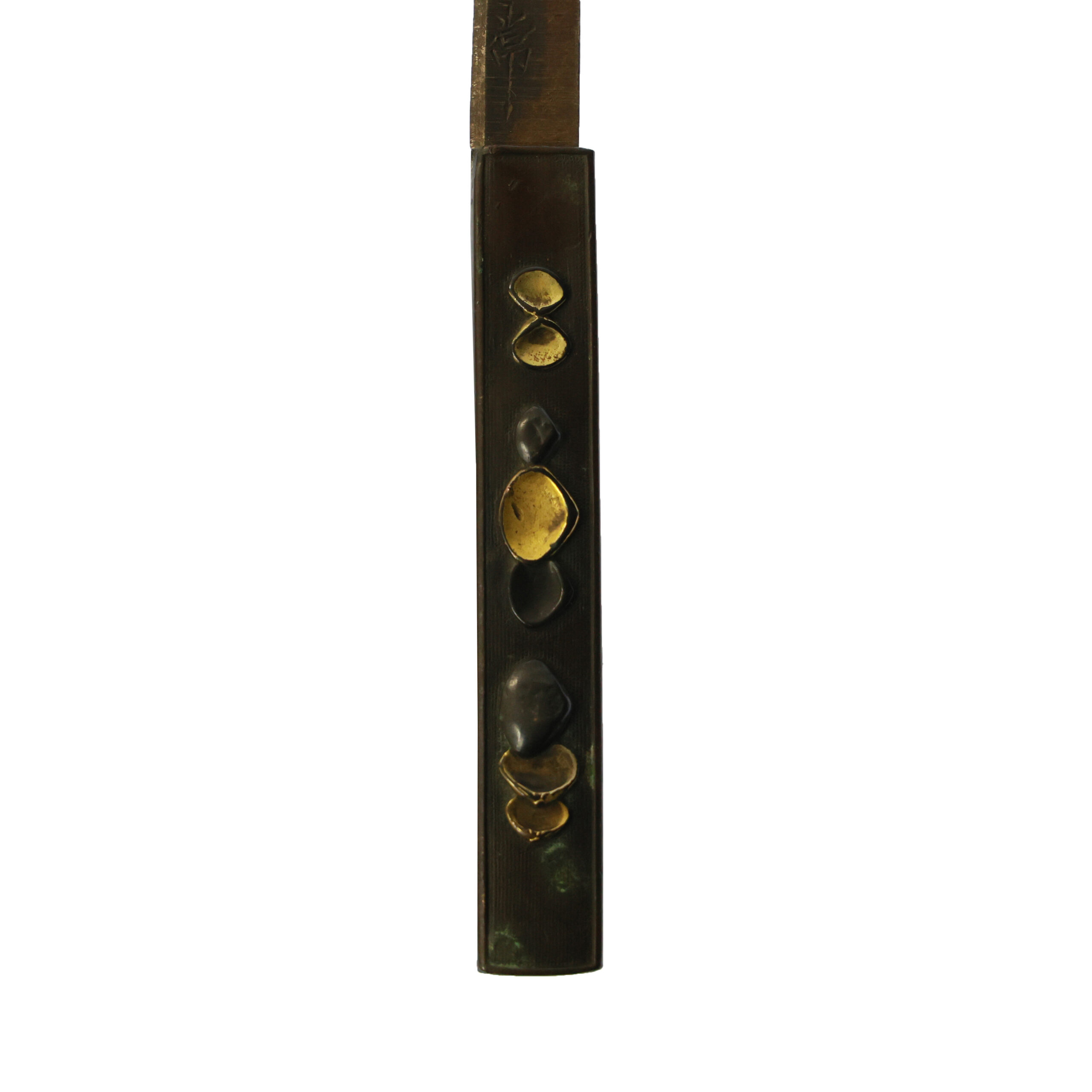
Kozuka
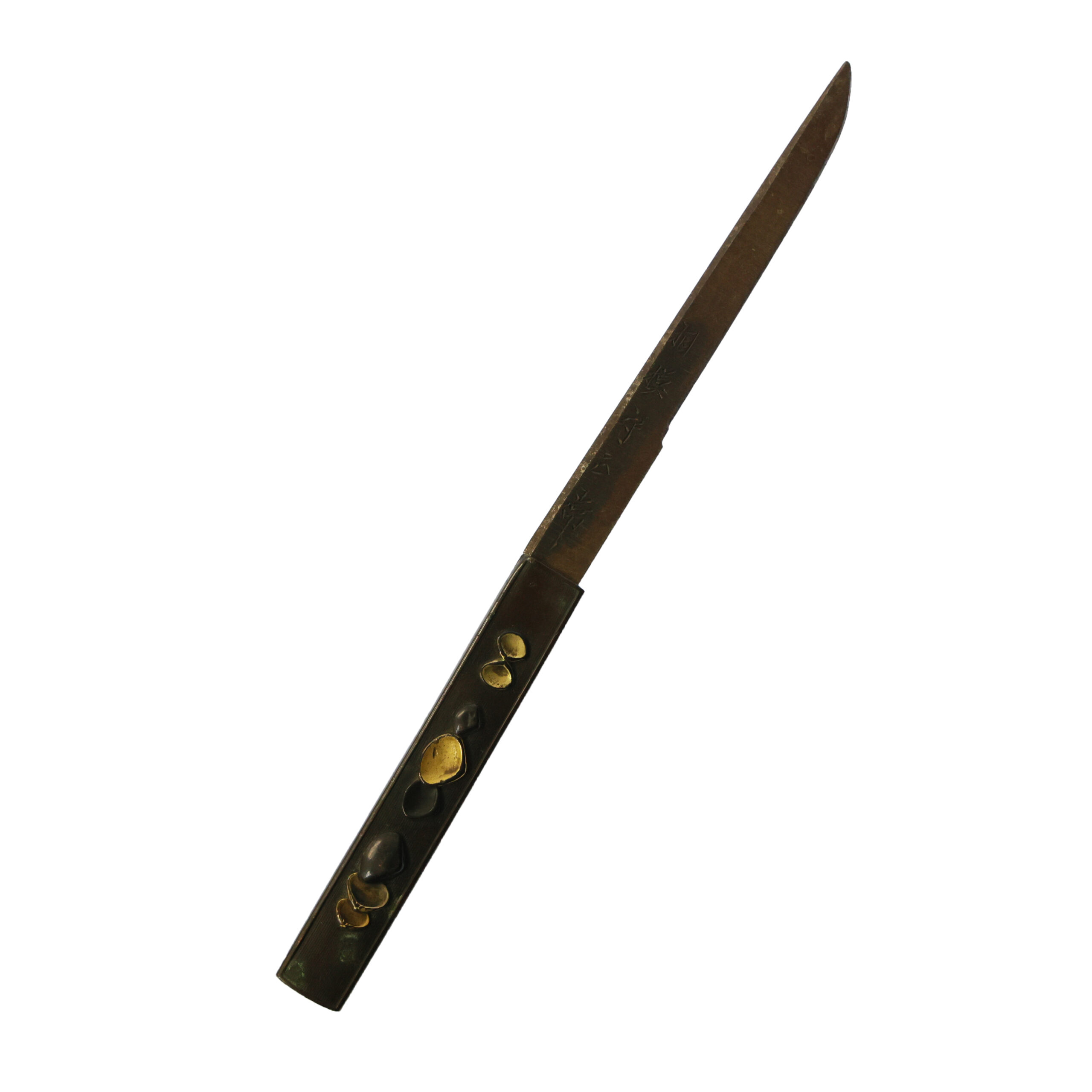
The motif of this Kozuka is a clam (蛤: Hamaguri). The clam symbolizes marital harmony, as its two shells fit perfectly together, and it also represents strength due to the hardness of its shell. Seashell is called Kai (貝) in Japanese. Because of its pronunciation, the seashell has another meaning. There is a word Yarigai (やりがい, worthwhile). As a part of this word has the same accent as Kai (貝 is read Gai in some cases), Japanese people found this meaning. Also, since seashells are hard and combine only with their pair, people thought it represented a robust defense. Due to these meanings that inspire warriors who go to the battlefields, Samurais might have loved this motif.
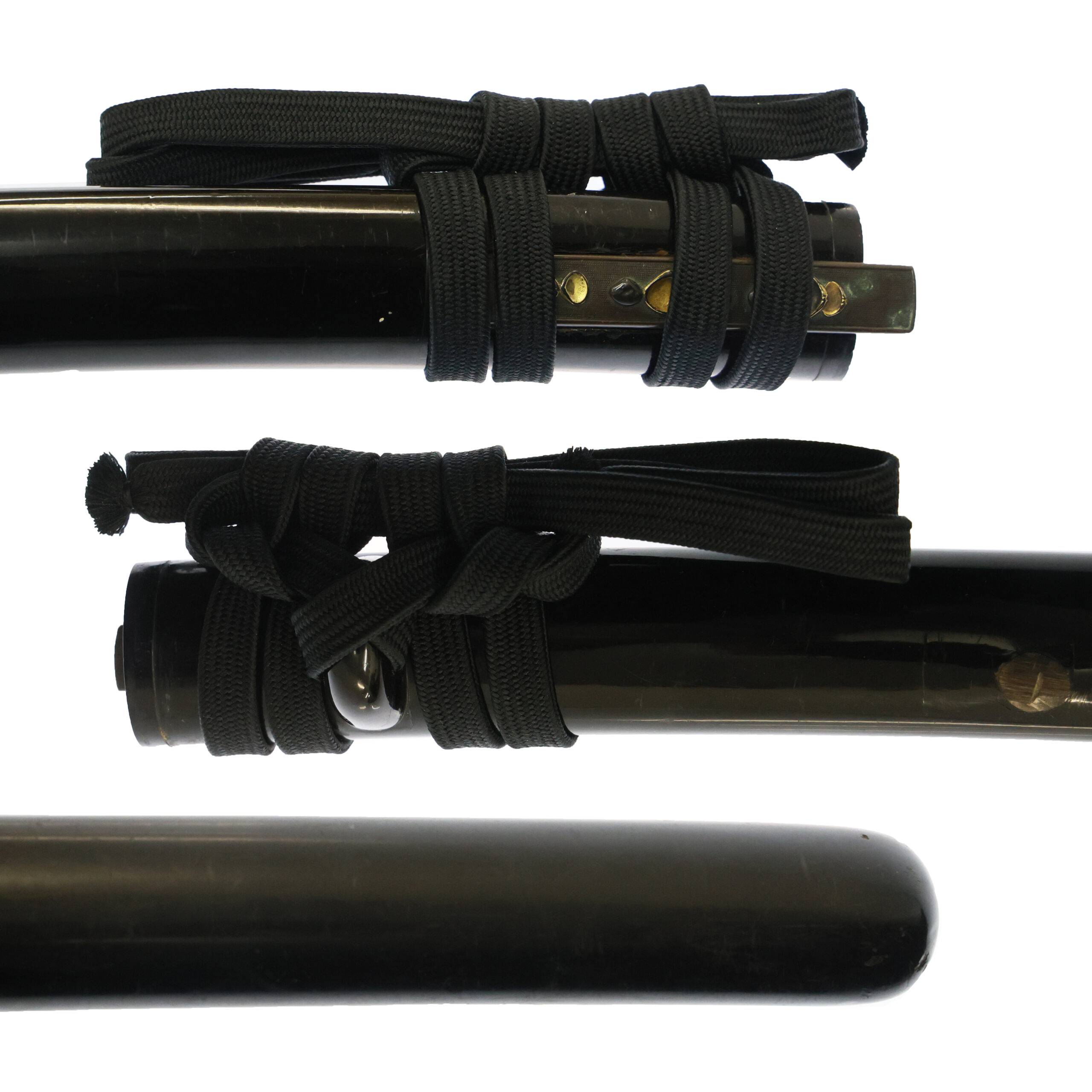
Saya
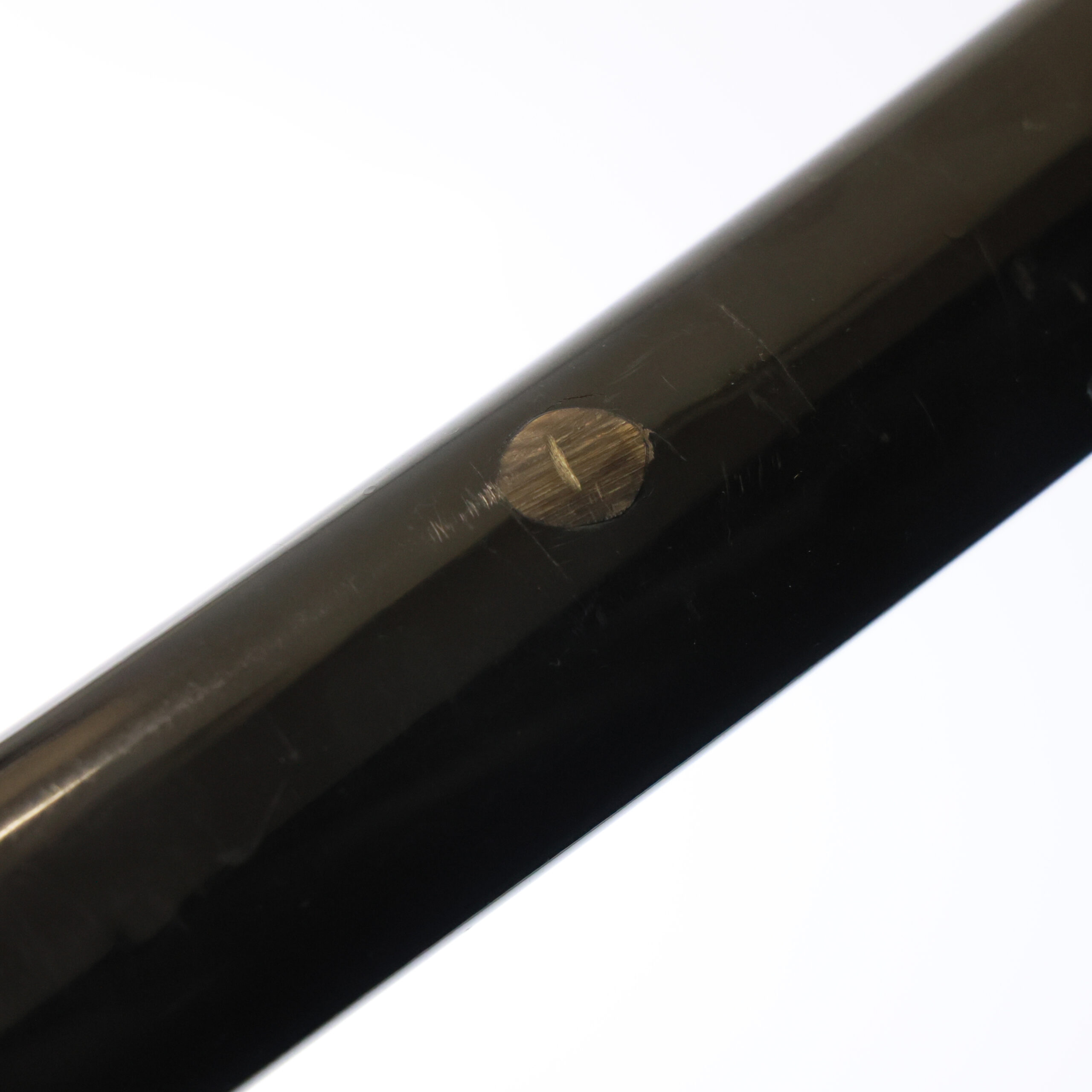
*Please note that there is an area of lacquer deterioration and surface scratches on part of the saya,
This scabbard is covered with black lacquer. Due to its high waterproof effect, lacquer has been used since ancient times in Asia. The blade of a Japanese sword is made of iron, and moisture is the greatest enemy of iron. For the purpose of carrying the blade without degrading it, people devised a method of coating the scabbard with lacquer. To prevent not only moisture but also rain and snow from penetrating the inside of the scabbard, it was necessary to apply multiple layers of lacquer. The Nurushi (塗師, lacquerers) was born precisely because advanced techniques were required to handle the complicated processes.
Authentication Paper
They authenticated the blade on December 1st in the 7th year of Reiwa (2025). They appraised it as Tokubetsu Hozon Touken, the blade especially worth preserving for Japanese society.


 NihontoWatch