 NihontoWatchNihontoWatch
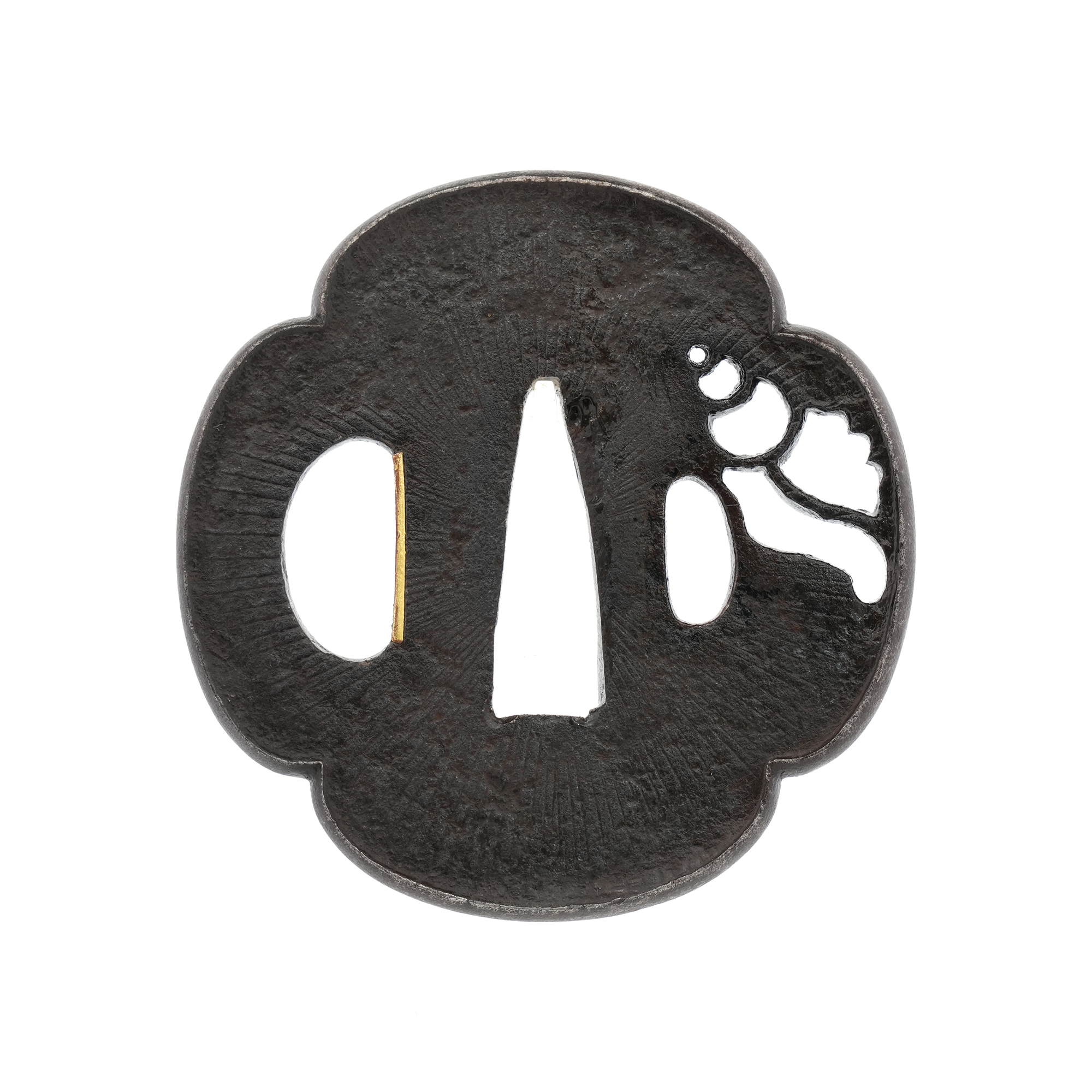
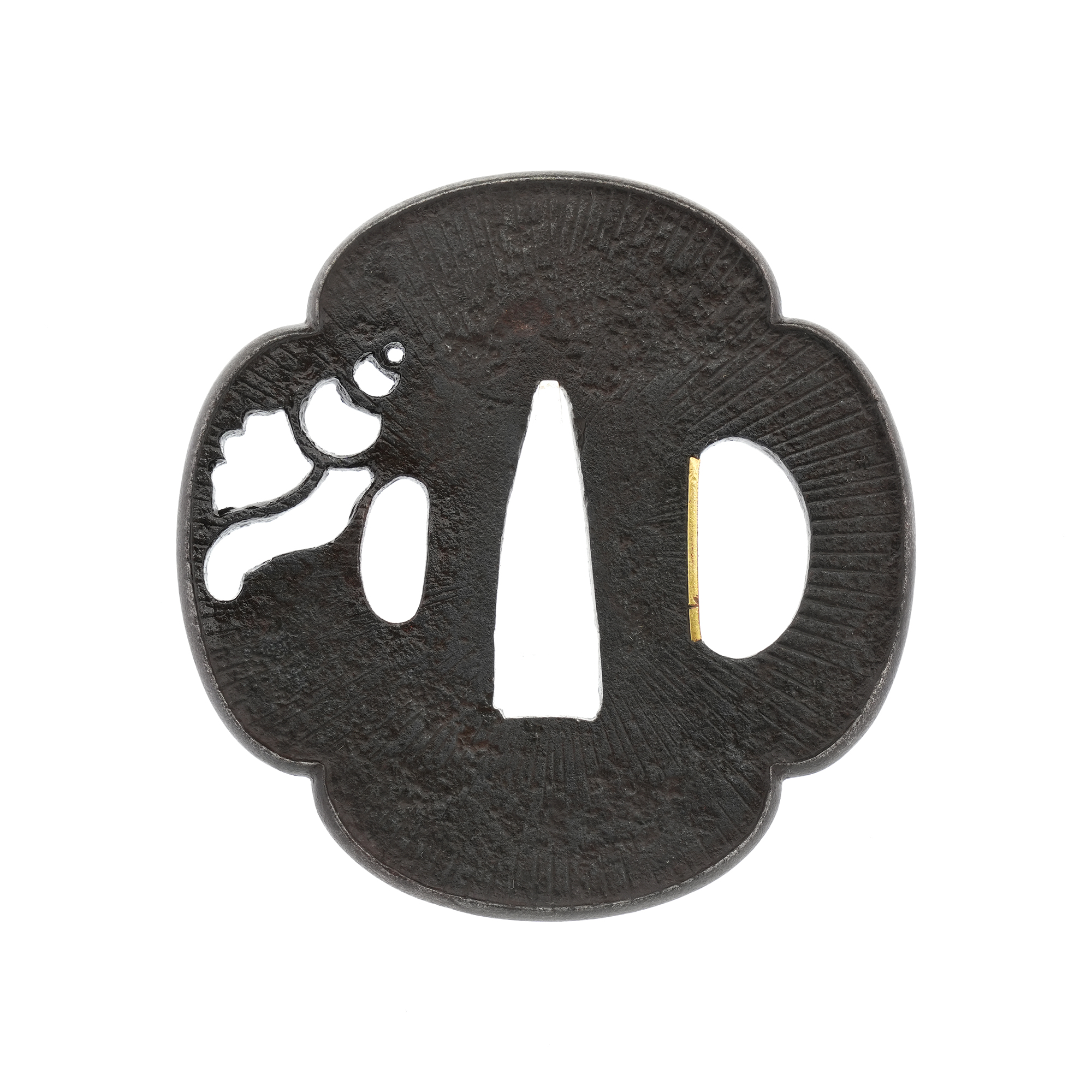
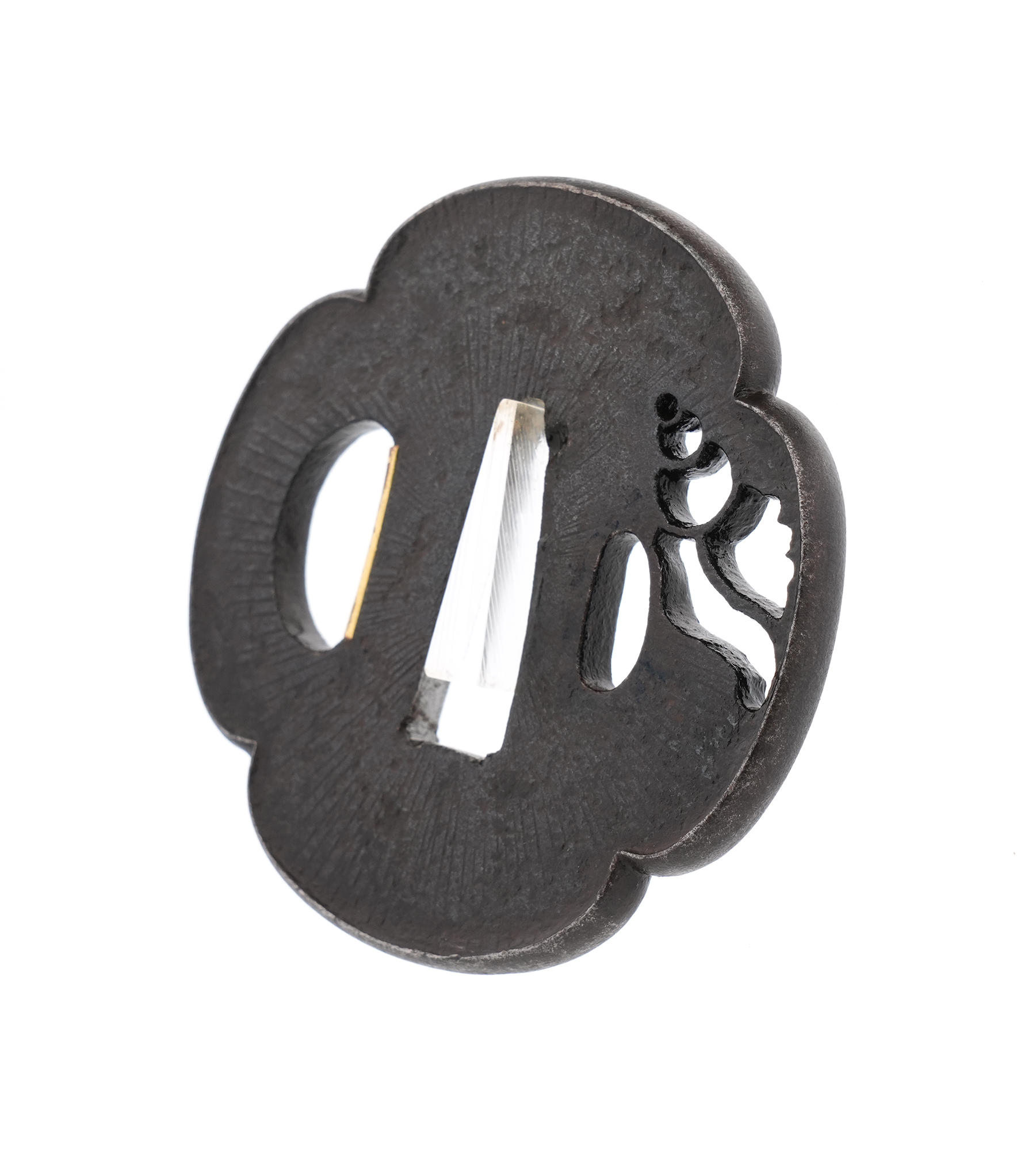
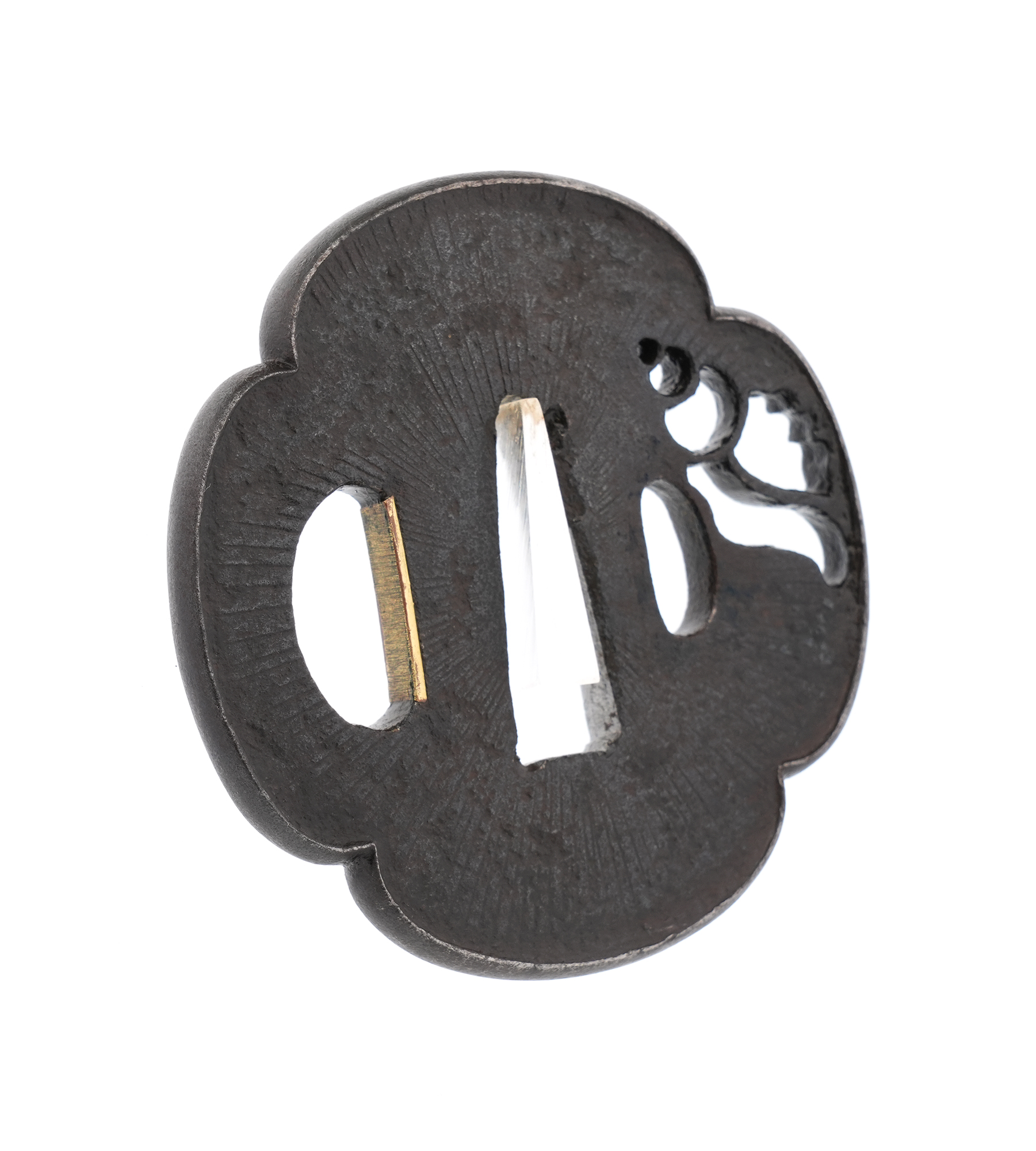
Myochin is known as a prestigious family of ironworkers involved in the production of armor, expanding to various regions from the medieval to the early modern period, and leaving behind many tsuba that utilize their forged iron techniques, in addition to kabuto, menpo, and armor fittings. Many of their works are characterized by a lack of excessive decoration, focusing instead on the texture of the forged iron, the nikuboki, the finish of the mimi, and the expression of the ji created by files and hammers, with a distinct style that establishes a concise design within a sturdiness rooted in practical use. Although this piece is mumei, it is kiwame as a work of Myochin by the Nihon Bijutsu Token Hozon Kyokai, and it is a piece that comes with a Hozon Tosogu Kanteisho. The horagai (conch shell) is a motif favored by the samurai class that evokes both spiritual power and martial prowess, as it was used by yamabushi as a ritual implement to send signals in the mountains, and was also sounded as a jingai to signal movements and gatherings on the battlefield. In this piece, rather than carving the shell itself, the outline of the horagai is rendered in kage-sukashi on the upper right of the tsuba face, with the swirling shell, the protruding aperture, and the long, extending siphonal canal clearly distinguished through large and small sukashi. Because it appears as a white negative space within the black iron ji, the impression of the design is vivid despite the small surface area, and when viewed by letting light pass through, the curves of the horagai emerge even more clearly. The ji is fashioned into a refined mokko-gata, and amida-yasuri that radiate thin lines in four directions from around the seppa-dai have been applied. By spreading these lines across the entire iron ji while maintaining slight variations in direction and spacing rather than aligning them mechanically, a movement is created as if light is radiating within the quiet jikei, a concept that even suggests the sound of the horagai being transmitted in all directions. When the tsuba is tilted, the ridges of the yasurime catch the light in sequence, and because fine light and shadow appear on the dark brown iron hada, one can enjoy a profound expression created by forged iron and chisel work, which is different from tsuba that make heavy use of irogane. While the sukashi of the horagai cuts out each part of the shell independently, it is unified into a single design by leaving thin iron connections at key points, and the rounded shell, the long-extending siphonal canal, and the mokko-gata outer circumference correspond with each other, creating a light rhythm in a limited area. The composition, which does not cut out too much of the ji and maintains a sufficient sense of volume in the iron, expresses the sensibility of a tsubako who balances strength as a mounting fitting with design quality, and another highlight is being able to appreciate the slight undulations at the edge of the sukashi and the thickness of the iron while following the same outline on the front and back. The mimi is an uchi-kaeshi mimi where the ji is folded outward, and it is neatly traced along the undulations of the mokko-gata. The uchi-kaeshi mimi not only adds visual thickness to the outer circumference but is a finish that tightens the rustic tetsu-aji and clarifies the outline; when viewed from an angle, the roundness of the mimi, the 4.3 mm thickness of the ji, and the depth of the sukashi edge appear as one. A gentle antique patina and the traces of the hammer remain on the iron ji that has passed through many long years, and the texture, which is not overly uniform, conveys a rugged style appropriate for a tsuba with a Myochin kiwame. A sekigane made of suaka with gold plating has been inserted into the kozuka-hitsu, adding a small and vivid gold colour to the deep dark brown iron ji. While it is a trace of the hitsu-ana having been adjusted to fit an actual koshirae, it is also the only bright accent colour in this piece, which is otherwise composed entirely in a sober iron colour, and it is an effective accent that leads the eye to the radiation of the amida-yasuri and the kage-sukashi of the horagai. The different textures—the iron with its antique patina, the powerful outline of the uchi-kaeshi mimi, and the gold-plated suaka sekigane—harmonize without excess or deficiency, providing a definite sense of fulfillment when appreciating it in hand, despite its small size. From the Myochin kiwame, the mokko-gata and uchi-kaeshi mimi that show an antique style, the amida-yasuri spreading across the entire iron ji, the stylish kage-sukashi that shows the horagai as negative space, to the gold-plated suaka sekigane added to the kozuka-hitsu, the charm of appreciation is condensed within a concise composition. The motif of the horagai, which possesses the dual characteristics of a ritual implement for ascetic practice and a jingai for the battlefield, looks very good on sword fittings, and combined with the reliable content accompanied by a Hozon Tosogu Kanteisho, this is a piece that I would like to recommend to those who favor Myochin tsuba, old tsuba, and designs related to martial equipment, and one where you can thoroughly enjoy the beauty of tetsu-aji and sukashi.
Offered by Toushin

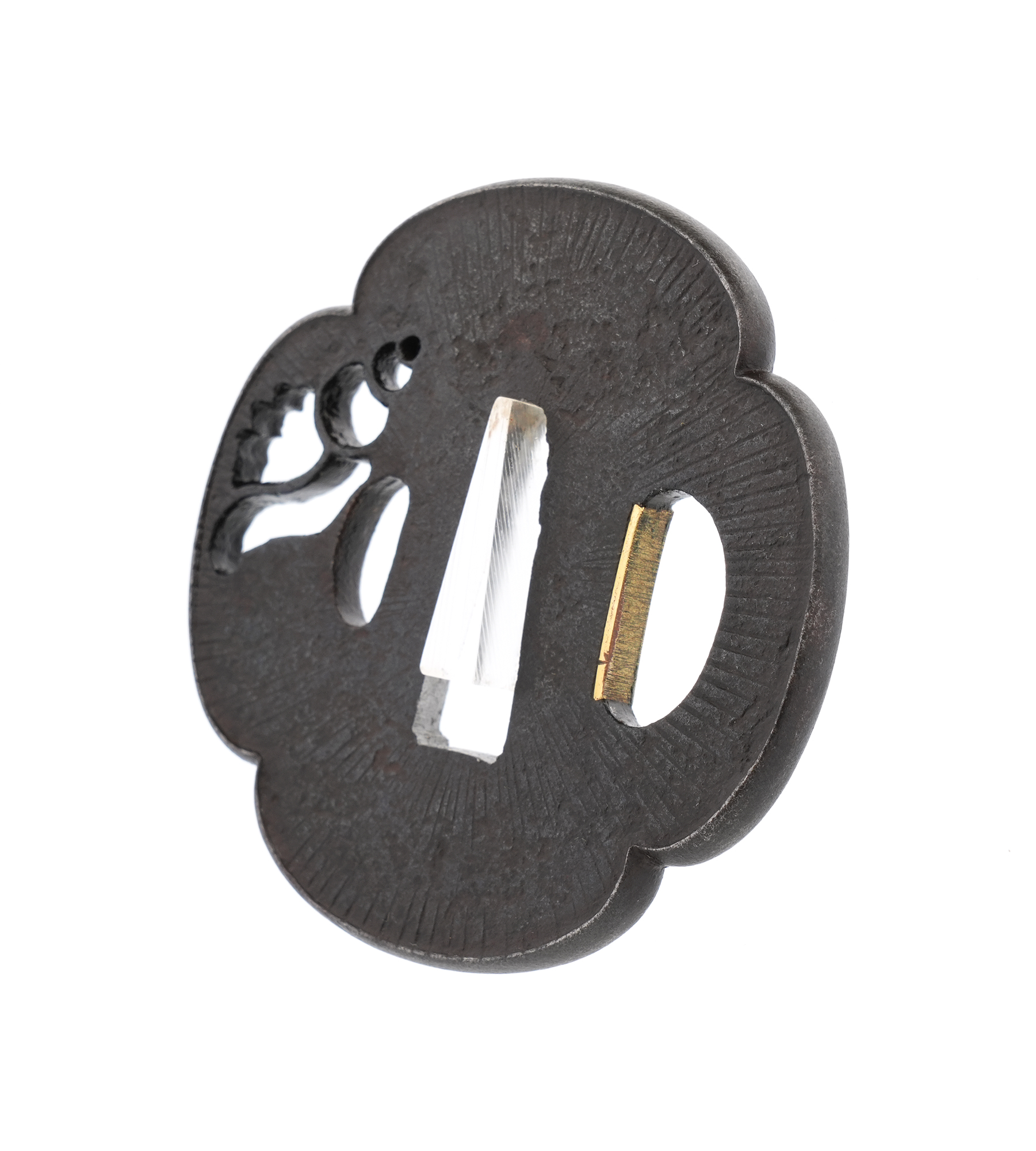
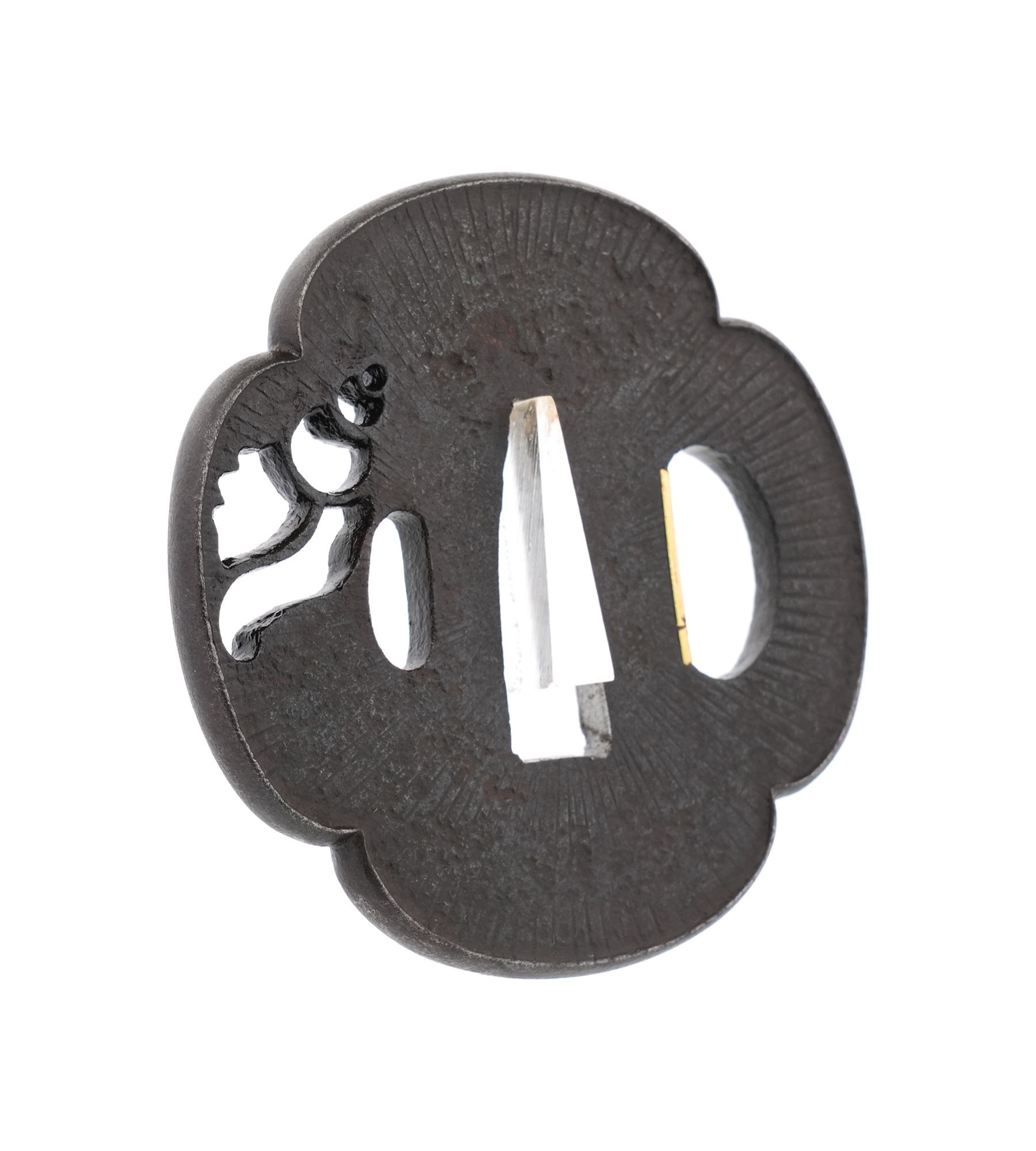
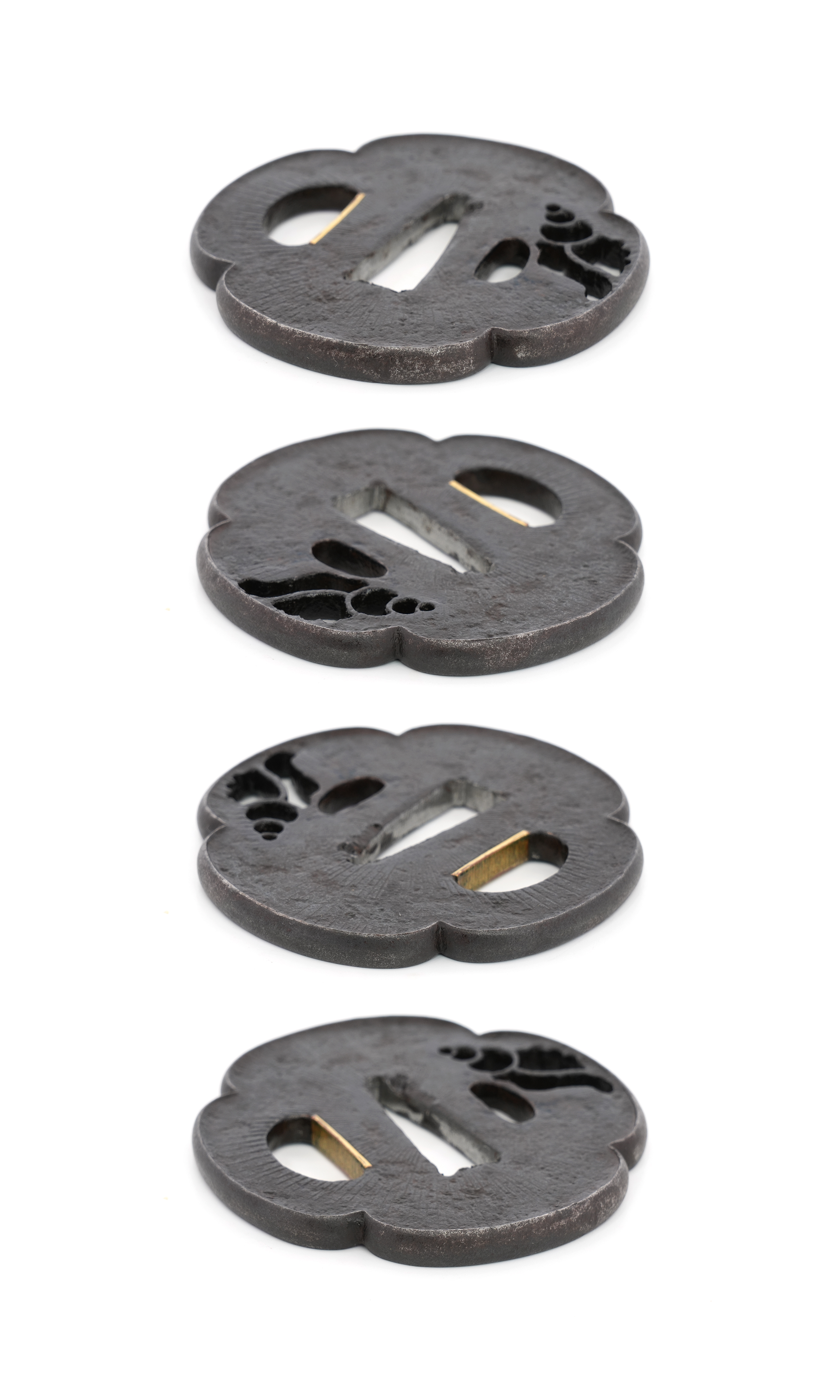
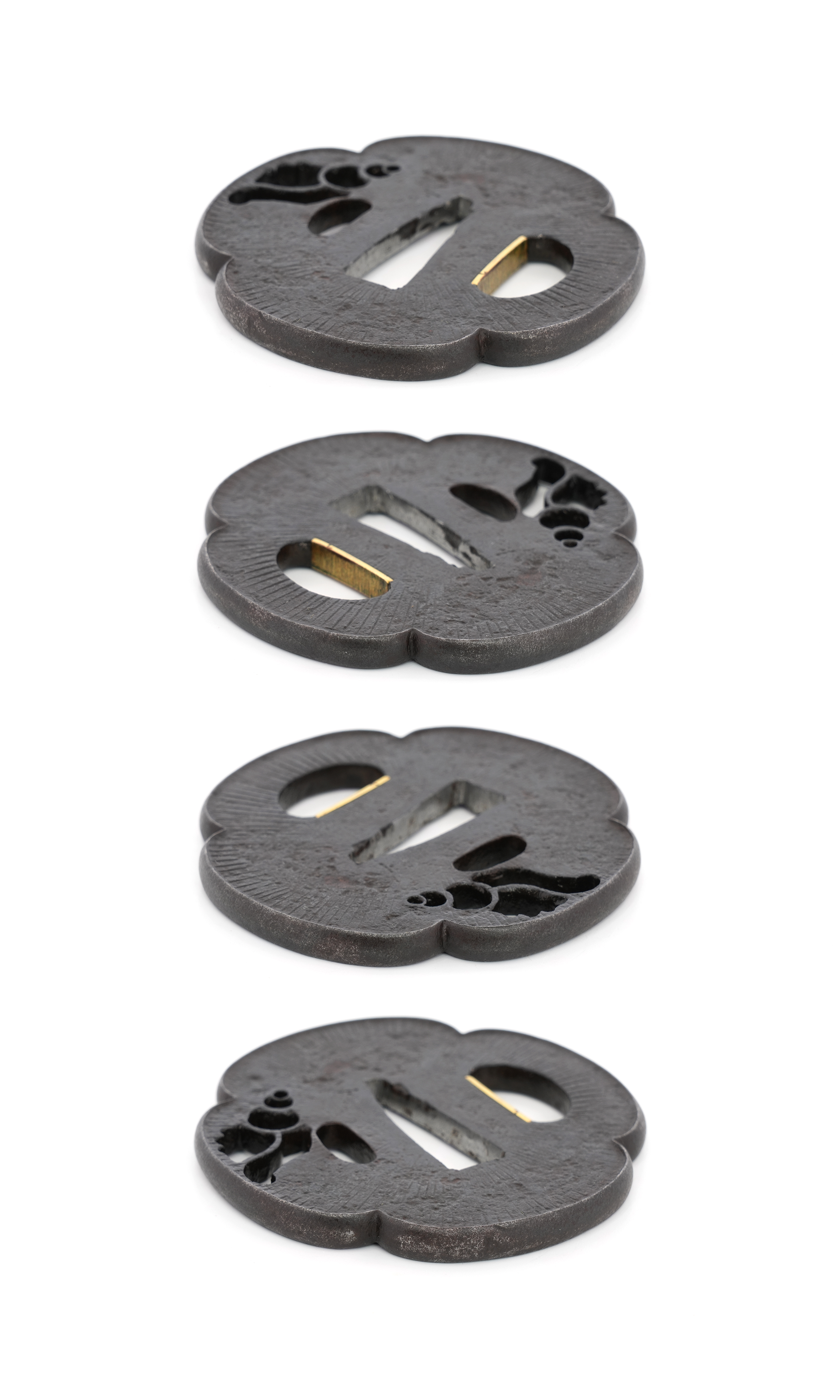
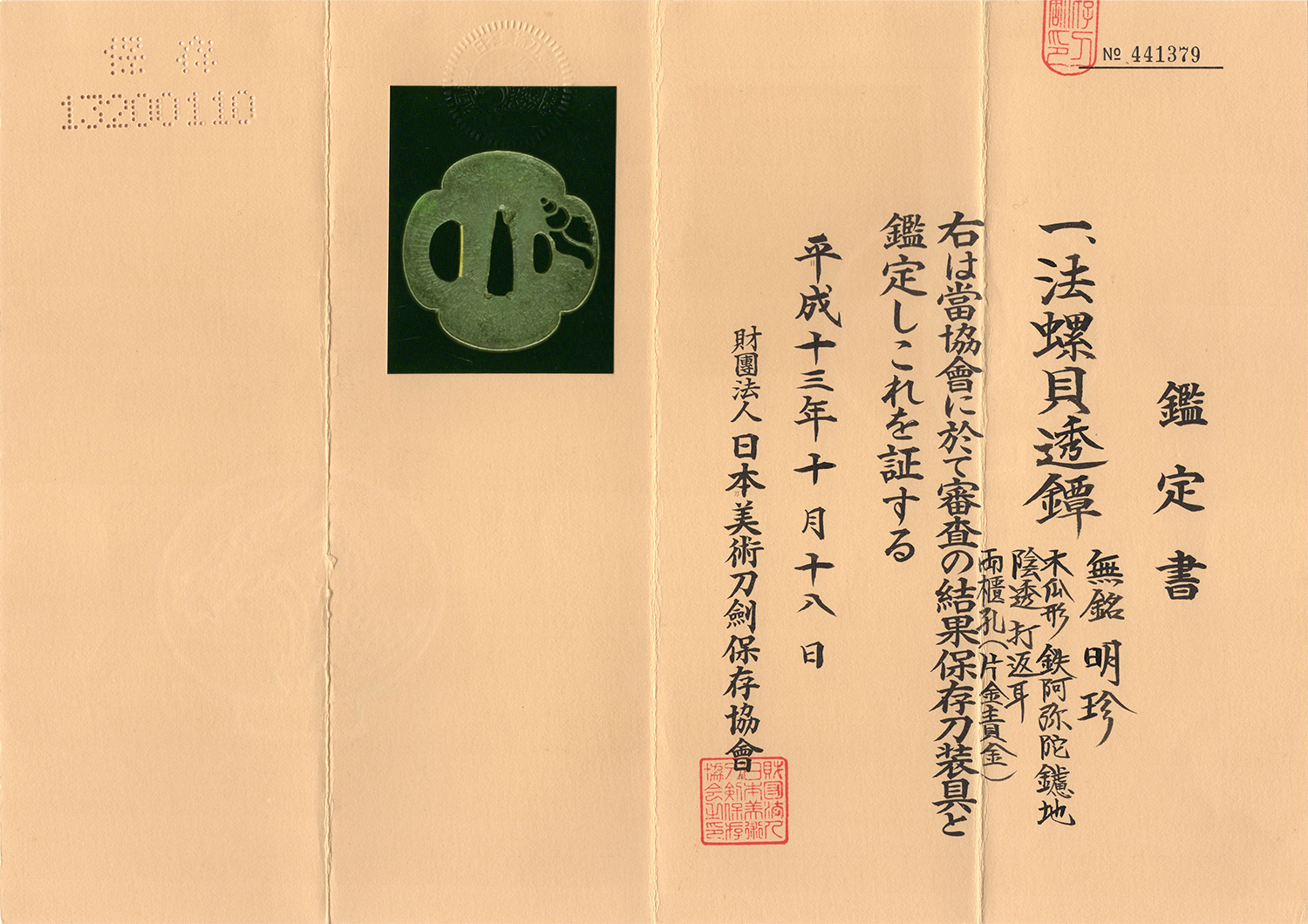
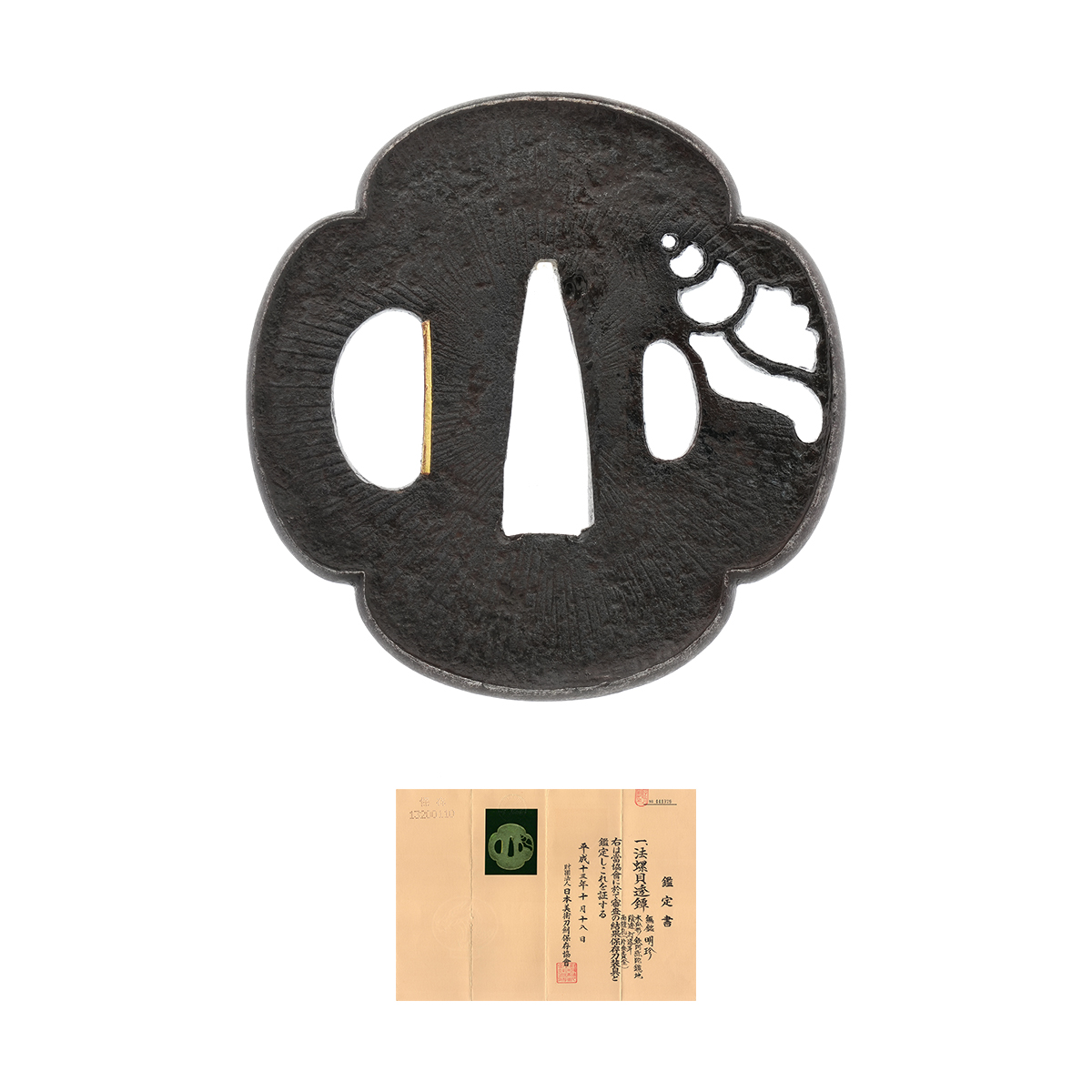
Machine translation of the shop's Japanese ·
Machine translation from the shop's Japanese · may contain errors ·
Tosho-Katchushi · Kyoto
23 pieces on the market now
| Smith | Era | Designated |
|---|---|---|
| Munemasa宗政 | — | 0 |
| Yasutsugu保次 | — | 0 |
| Munesada宗定 | — | 0 |
| Munetsugu宗次 | — | 0 |
| Yoshitada義忠 | — | 0 |
Certifies a genuine fitting worth preserving: a correct signature, or, if unsigned, an identifiable era and school, with recognized artistic and craft value.
The NBTHK (Nihon Bijutsu Tōken Hozon Kyōkai, the Society for the Preservation of Japanese Art Swords) is a public-interest incorporated foundation founded in 1948 and supervised by Japan’s Agency for Cultural Affairs (Bunkachō); it is based at the Japanese Sword Museum in Tokyo. Its expert panels physically examine each submitted work (shinsa) and issue a certificate (kanteishō) ranking it by artistic and historical merit. NBTHK papers are the most widely recognized standard of authentication for Japanese swords and fittings.
NBTHK official siteAs a rule we do not accept returns, except when we have sent a different item from the one ordered or when there is a significant discrepancy between the description and the item. If you wish to return an item, please contact us within 3 days of its arrival and then send it back.
¥198,000