 NihontoWatchNihontoWatch
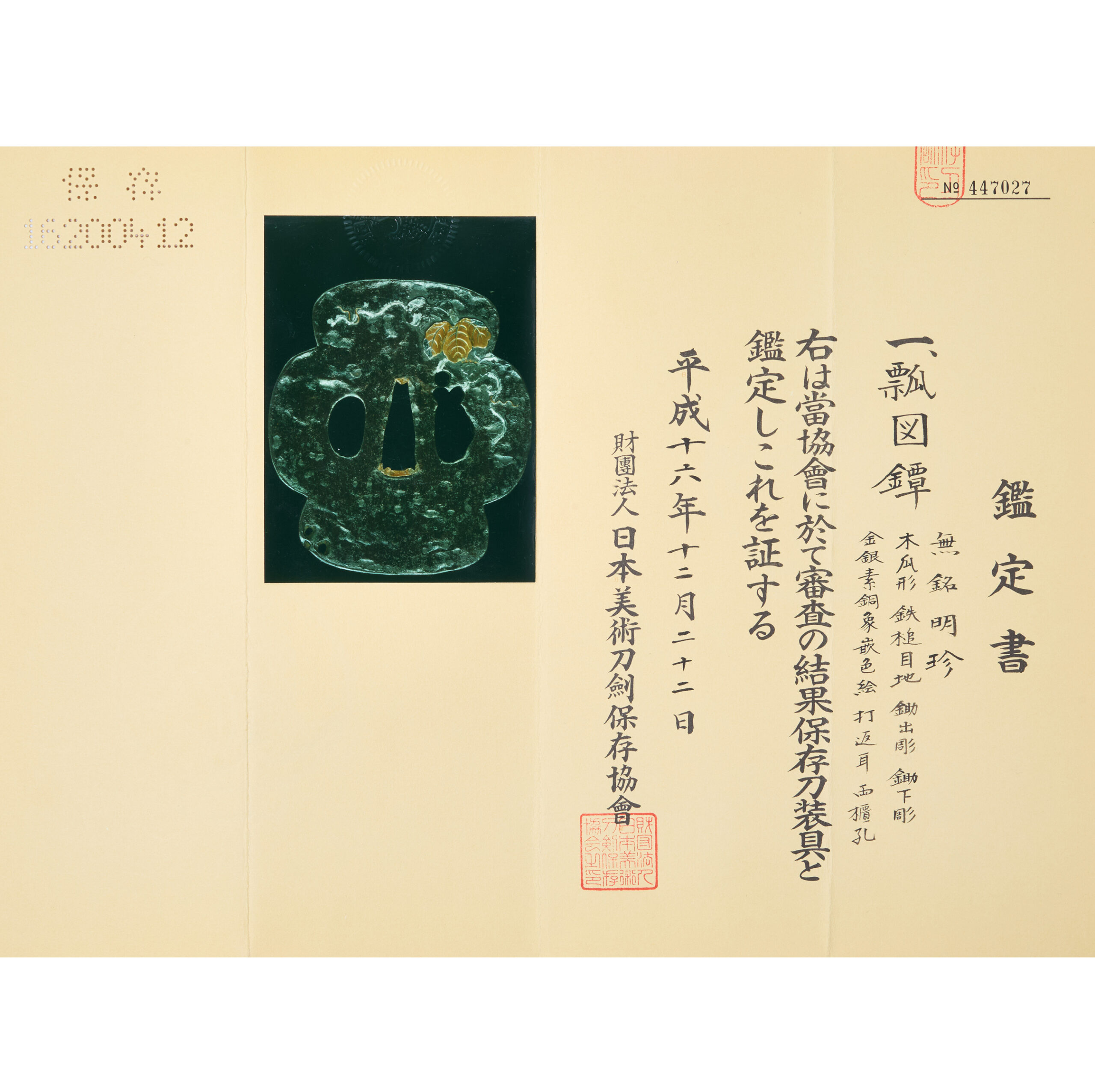
This mokko-shaped iron Tsuba is recognized by The Society for Preservation of Japanese Art Swords, which is known as NBTHK. Also, this Tsuba is unsigned, but is appraised as the attribution to the work of Myōchin (明珍) school by NBTHK. This school has its origin from the Kamakura Period, and it lasted until the late Edo Period. Myochin Tsubas typically used iron and did not use other materials such as copper or brass. They imported the Nanban Tetsu (南蛮鉄, Nanban iron) from India, China, and Europe. Myochin is well-known as the top class of iron metalworkers. The theme of this tsuba is Byō-zu (瓢図), a design featuring gourds (hyōtan, 瓢箪). Gourds have long been regarded as auspicious in Japan. Because their vines grow vigorously and bear many fruits, they symbolize prosperity, fertility, and the continuation of the family line. The motif is also associated with traditional Japanese wordplay. Three gourds are linked to sanbyōshi (三拍子), an expression suggesting a harmonious combination of favorable qualities. Six gourds are called mubyō (六瓢), which sounds like mubyō (無病), meaning “freedom from illness.” The design was therefore believed to bring good health and fortune. Gourds also have a famous connection with samurai culture. Toyotomi Hideyoshi (1537–1598), one of Japan’s most celebrated military leaders, used the Senari-byōtan (千成瓢箪, “Thousand Gourds”) as his uma-jirushi, a battlefield standard used to mark a commander’s position. According to popular tradition, he added another gourd each time he achieved a military victory. The gourd motif on this tsuba may therefore represent not only good health and prosperity but also success and advancement. Authentication Paper They authenticated the Tsuba on December 22nd in the 16th year of Heisei (2004). They appraised it as Hozon Tousougu, the Tsuba worth preserving for Japanese society.
NihontoWatchOffered by Samurai Museum

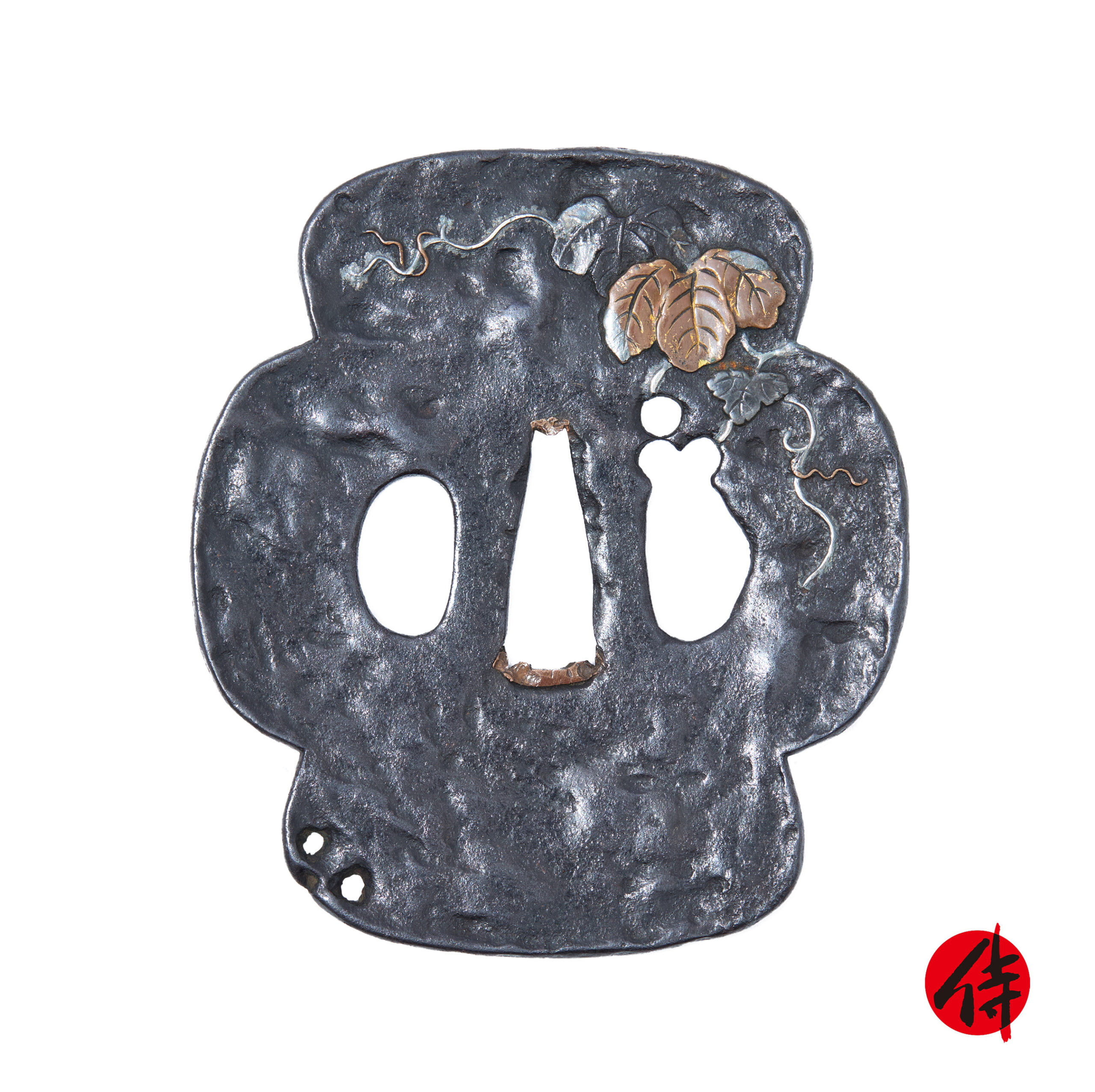
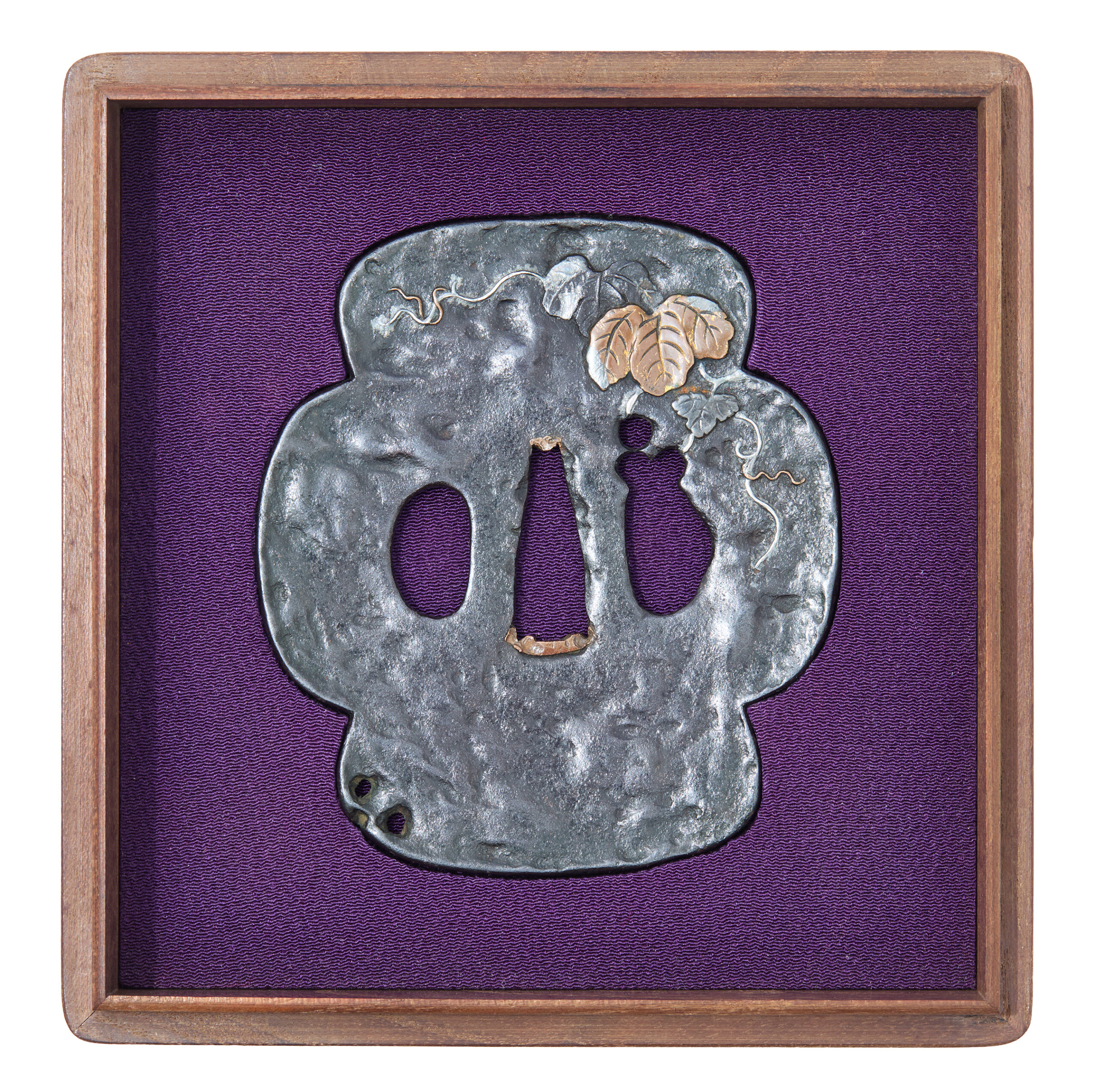
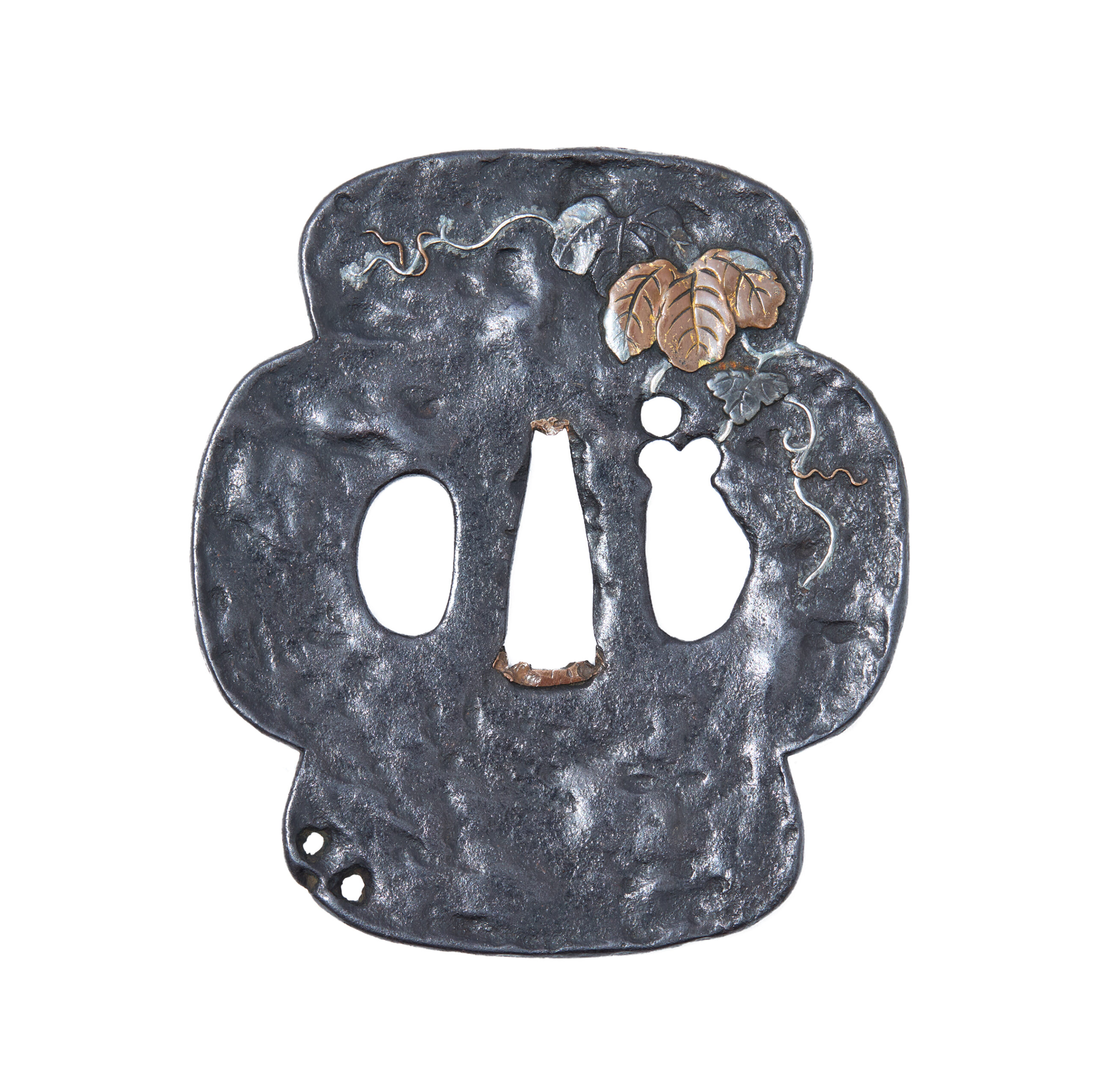
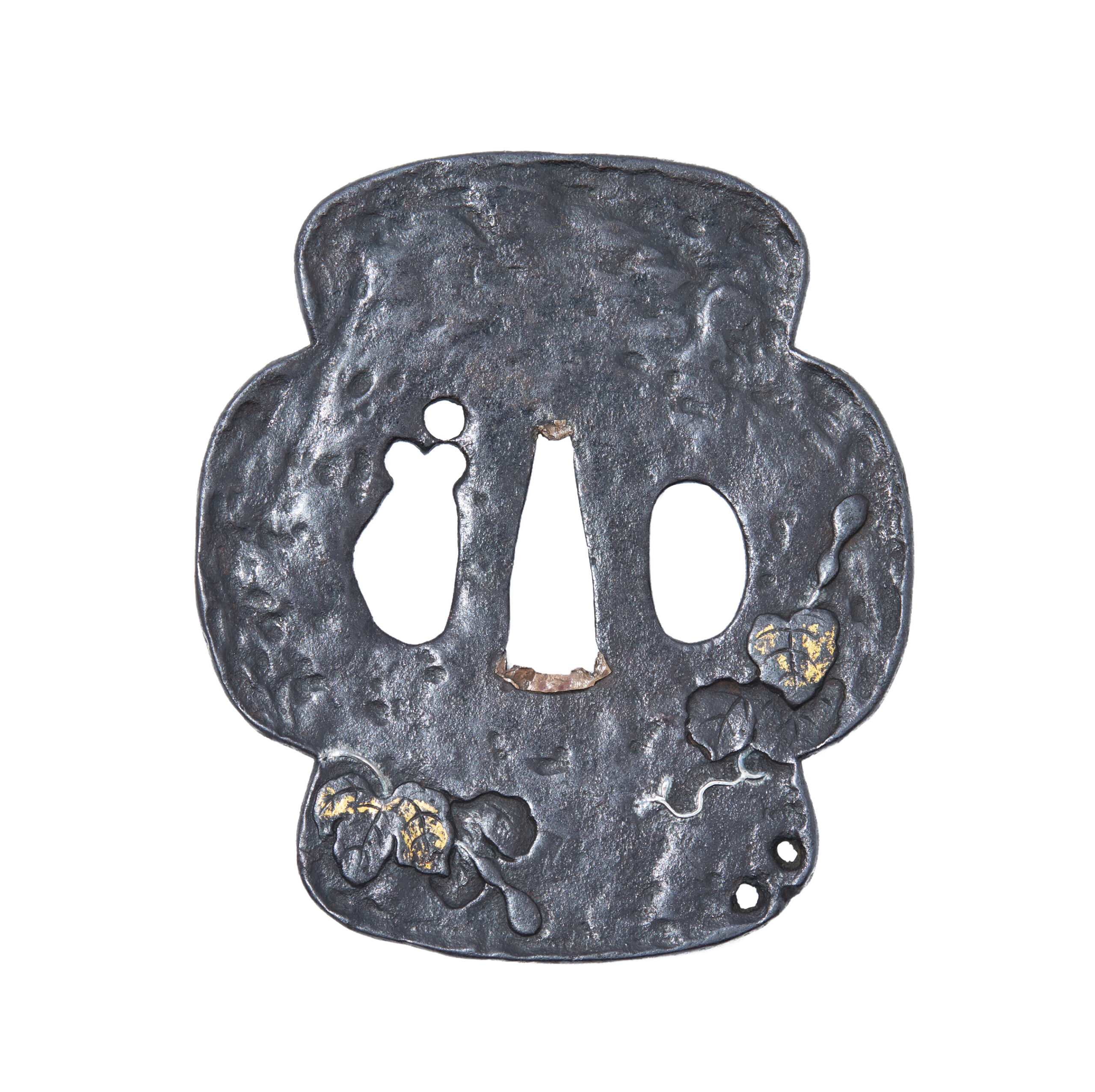
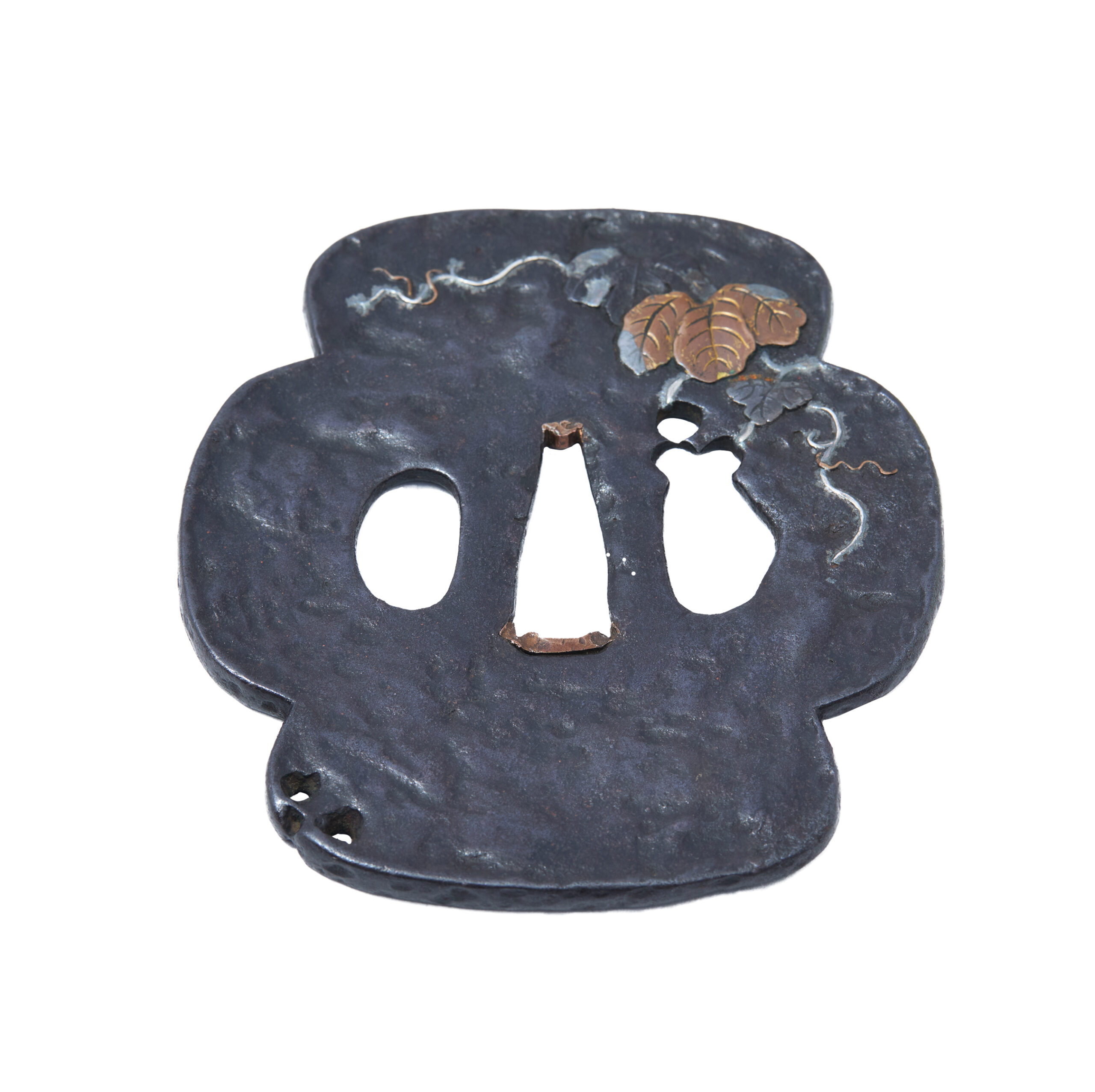
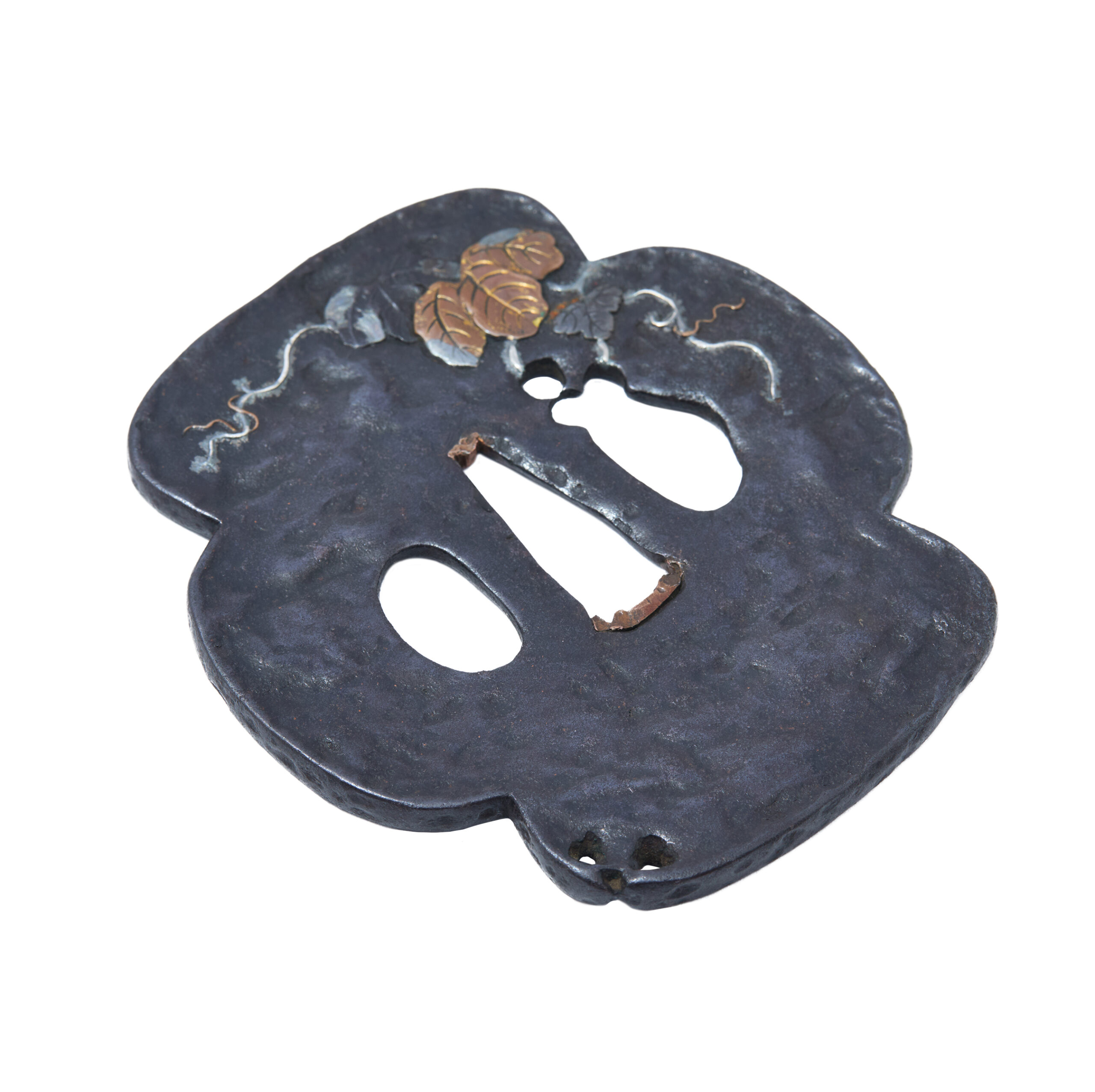
Tosho-Katchushi · Kyoto
20 pieces on the market now
| Smith | Era | Designated |
|---|---|---|
| Munemasa宗政 | — | 0 |
| Yasutsugu保次 | — | 0 |
| Munesada宗定 | — | 0 |
| Munetsugu宗次 | — | 0 |
| Yoshitada義忠 | — | 0 |
Certifies a genuine fitting worth preserving: a correct signature, or, if unsigned, an identifiable era and school, with recognized artistic and craft value.
The NBTHK (Nihon Bijutsu Tōken Hozon Kyōkai, the Society for the Preservation of Japanese Art Swords) is a public-interest incorporated foundation founded in 1948 and supervised by Japan’s Agency for Cultural Affairs (Bunkachō); it is based at the Japanese Sword Museum in Tokyo. Its expert panels physically examine each submitted work (shinsa) and issue a certificate (kanteishō) ranking it by artistic and historical merit. NBTHK papers are the most widely recognized standard of authentication for Japanese swords and fittings.
NBTHK official siteReturns/exchanges limited to defects caused by shipping (except willful misconduct or gross negligence by the company); customers must contact within 72 hours of receiving the product.
¥225,000