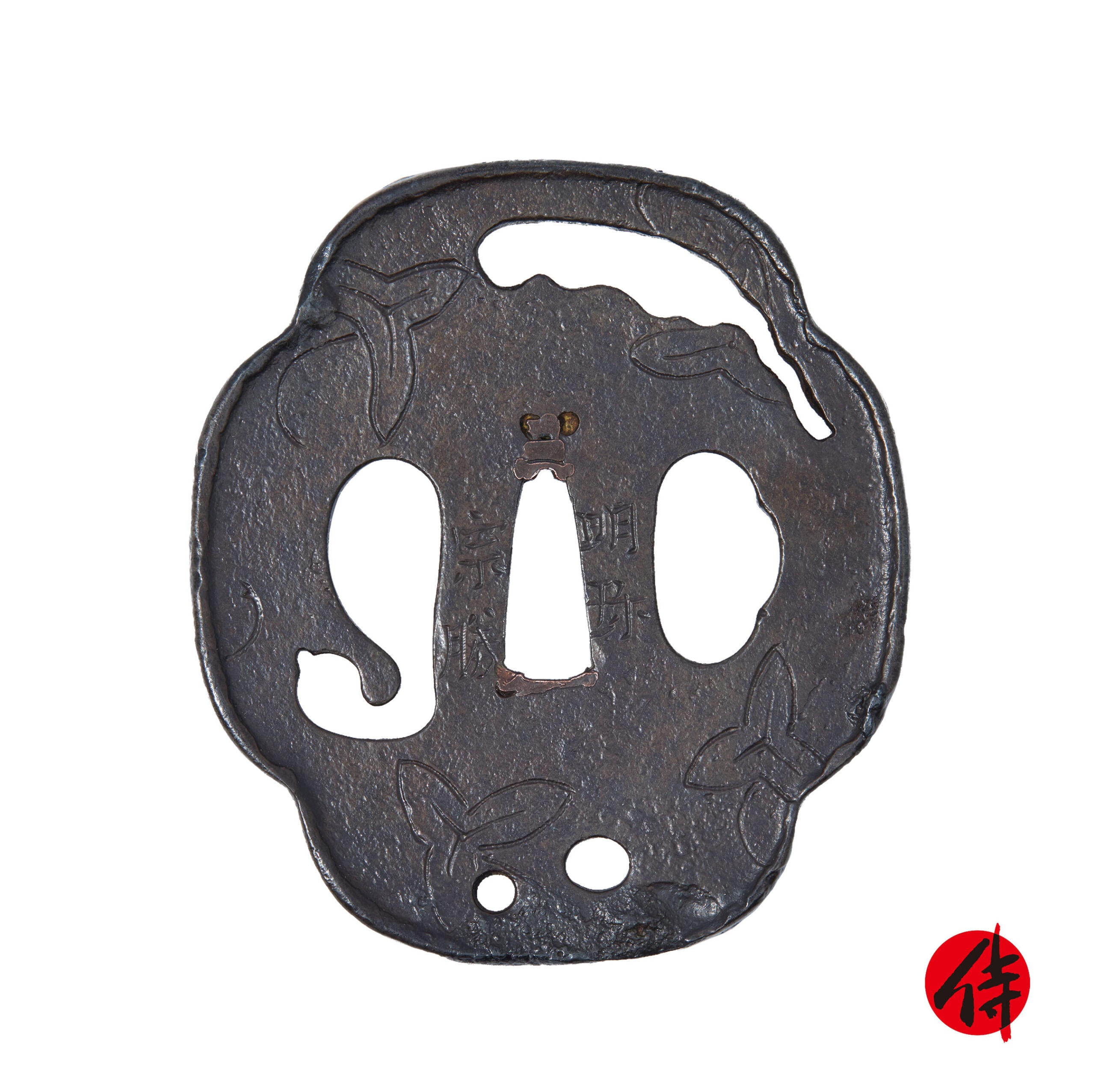
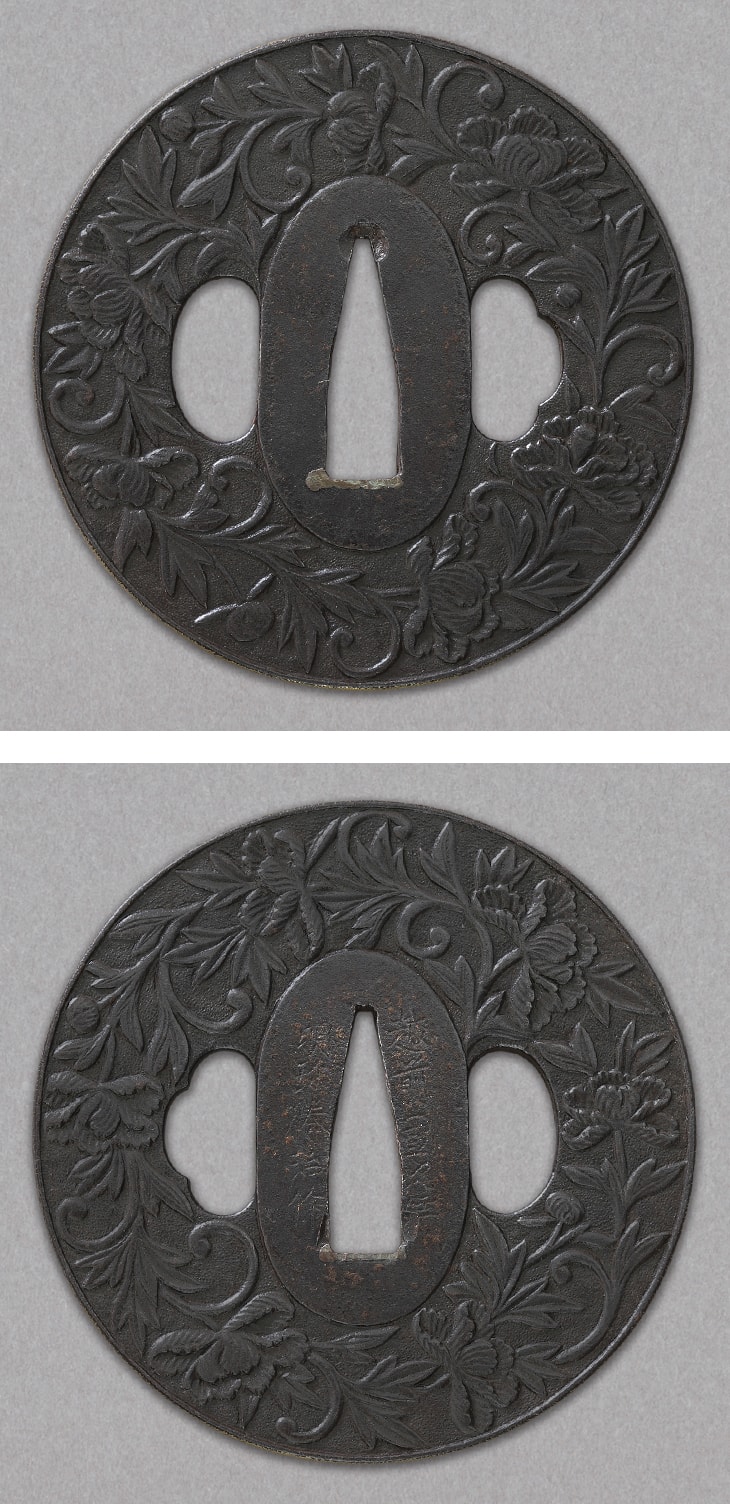
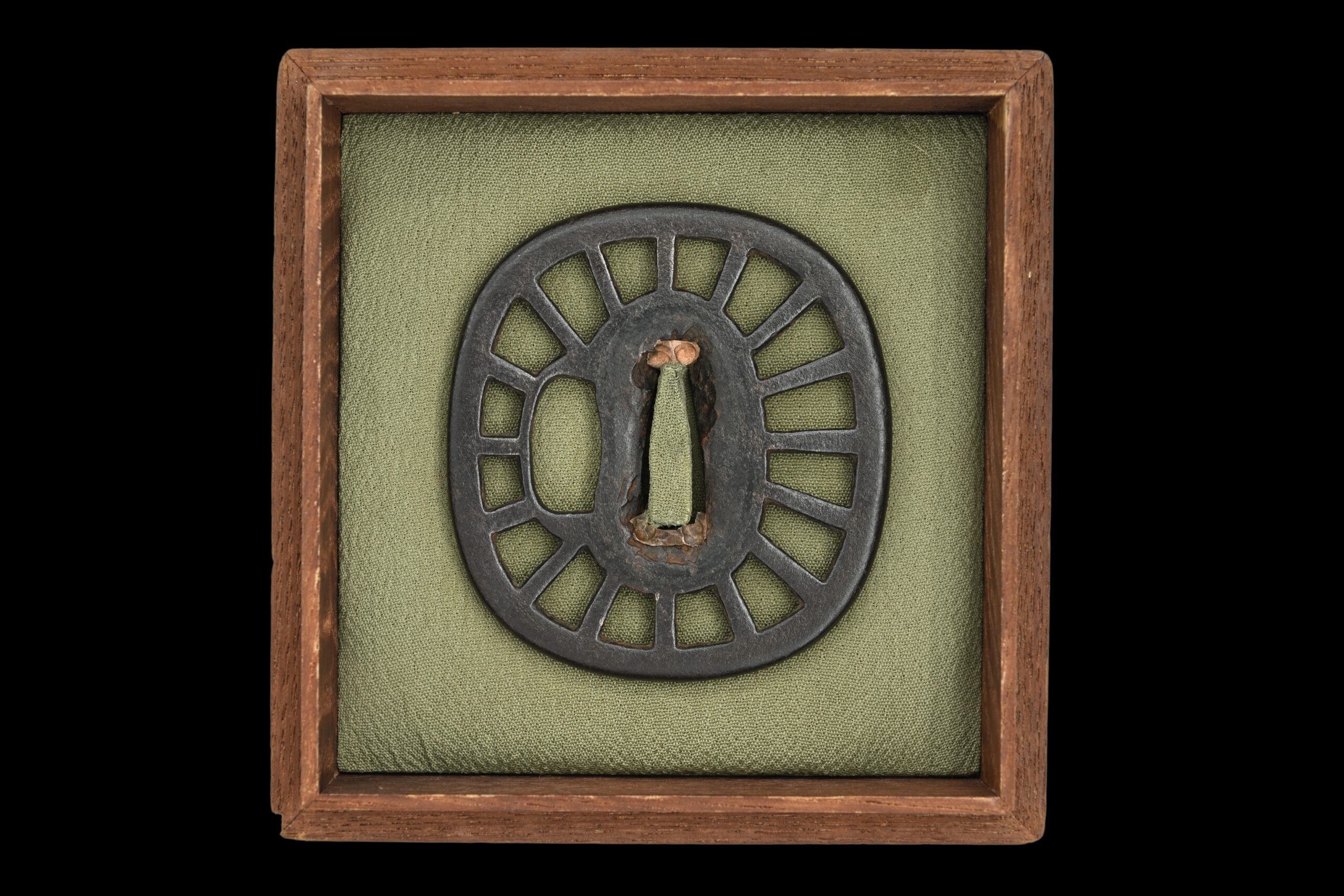
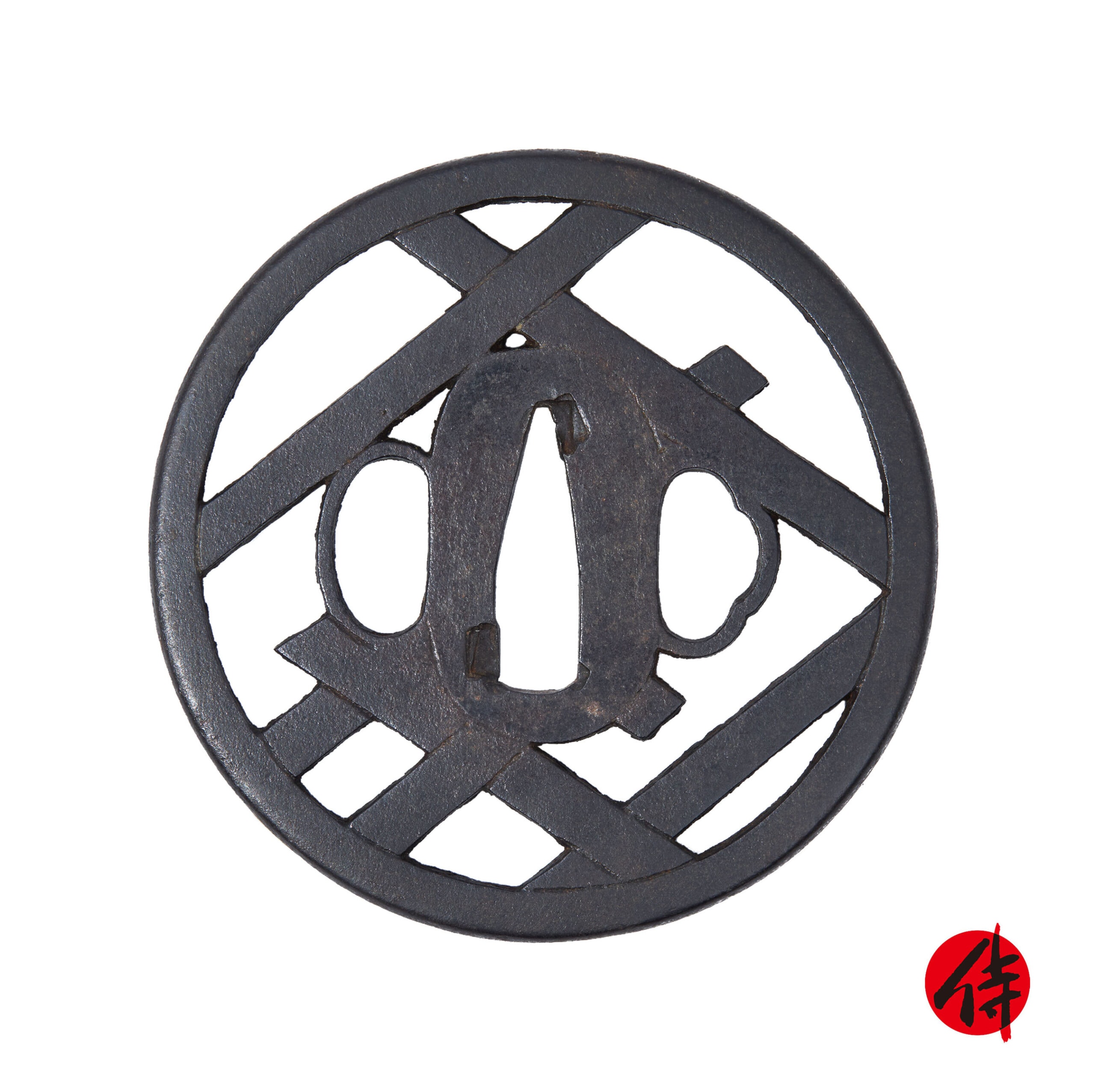
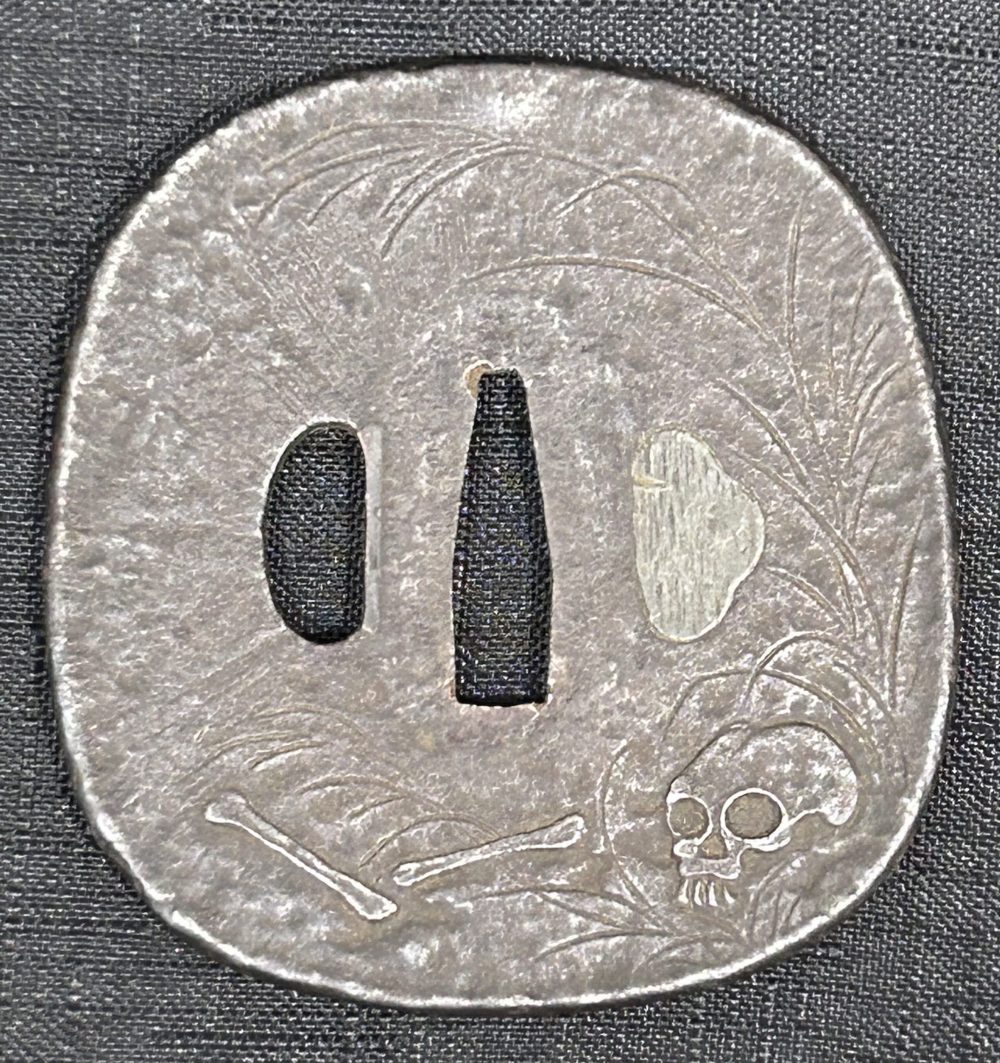
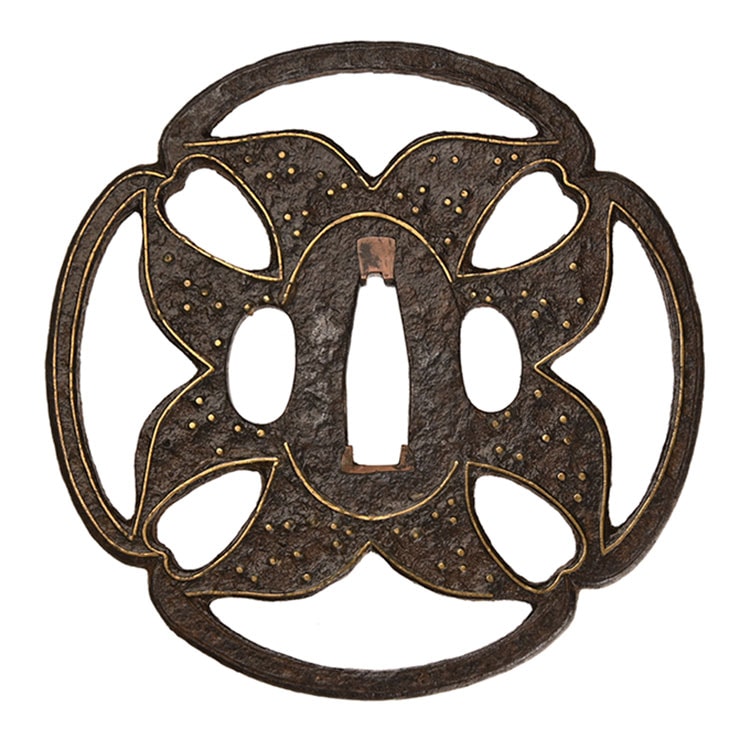
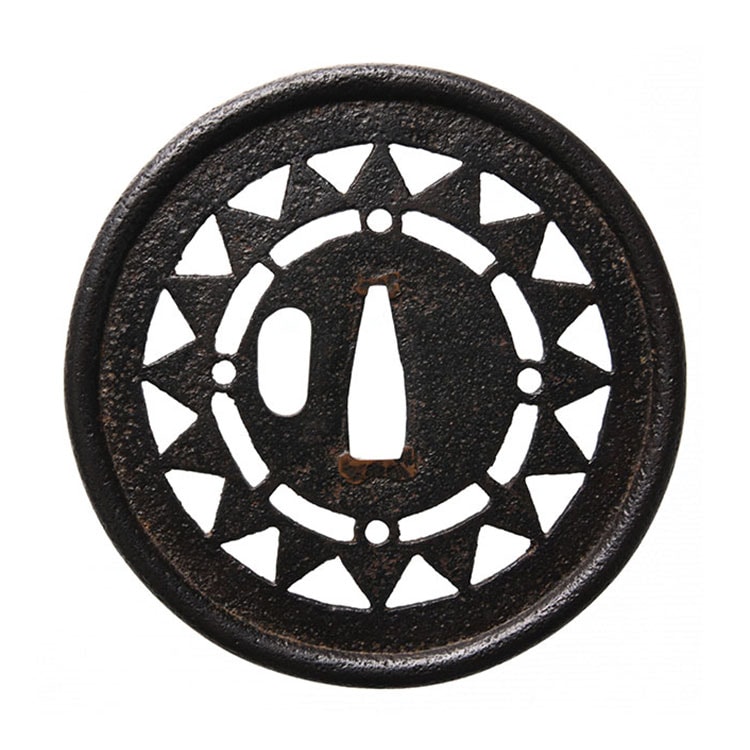
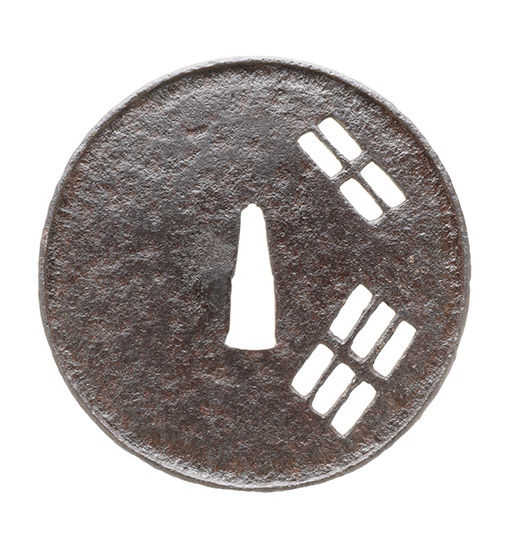
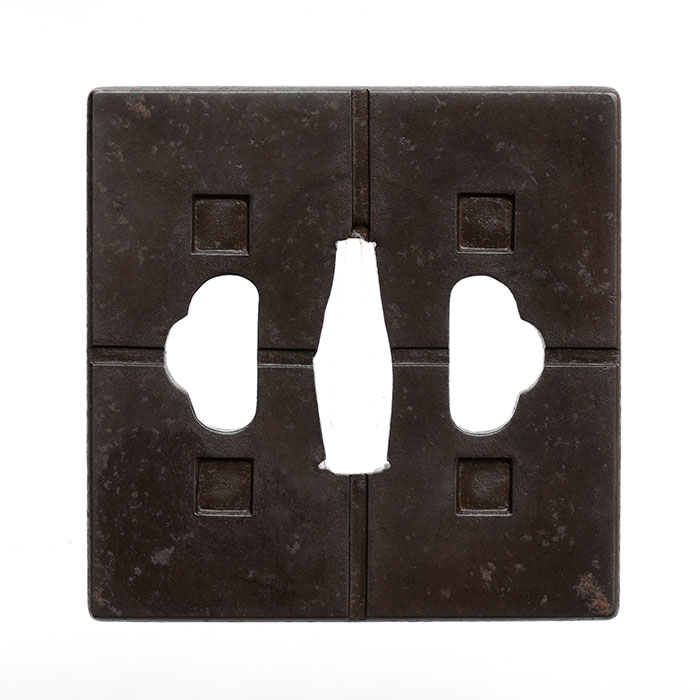
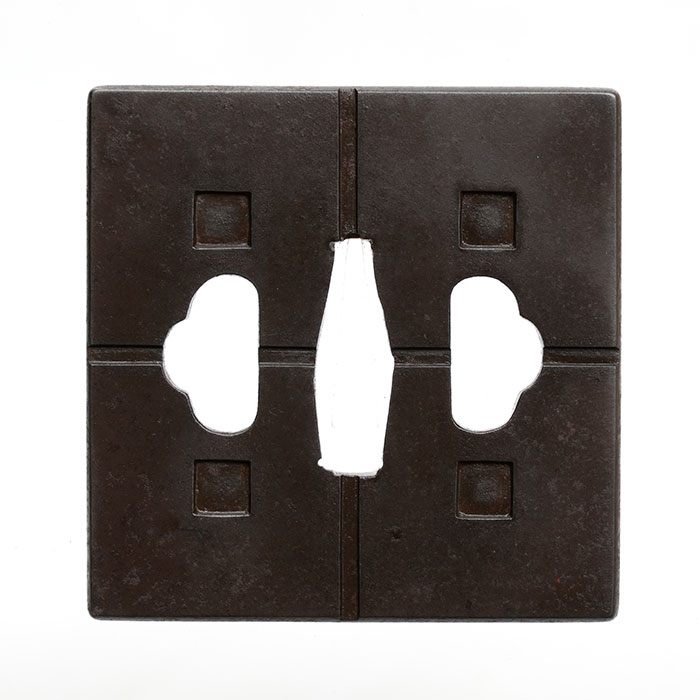
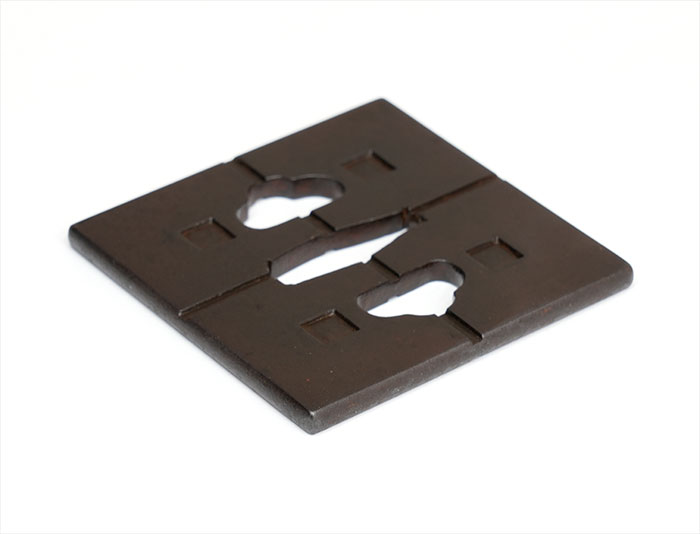
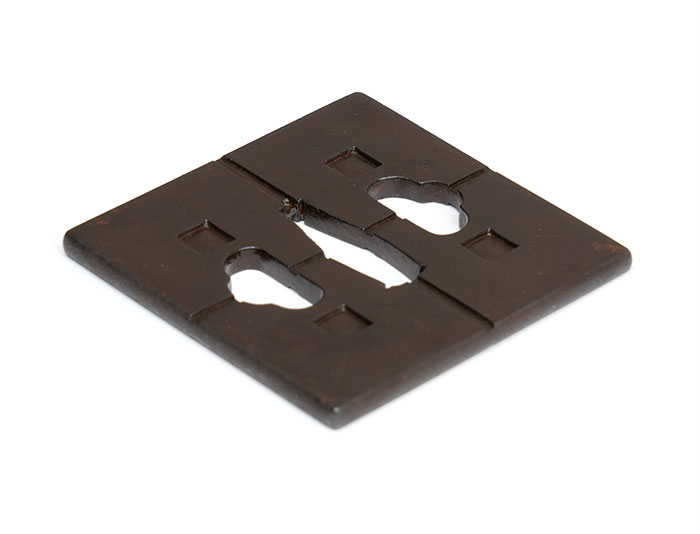
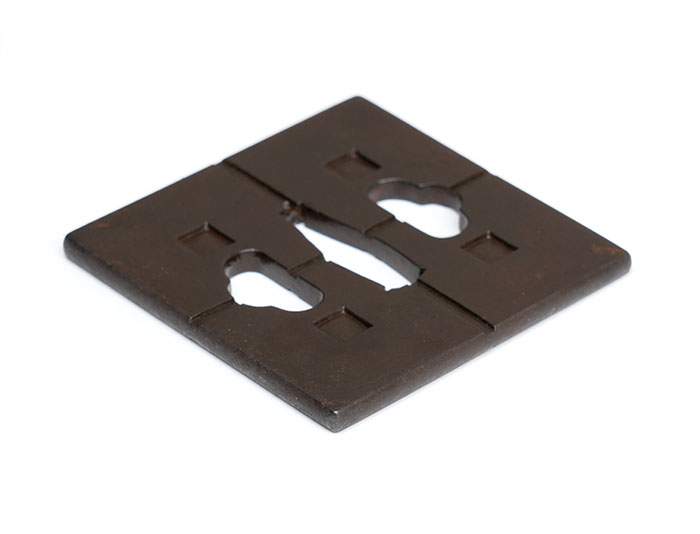
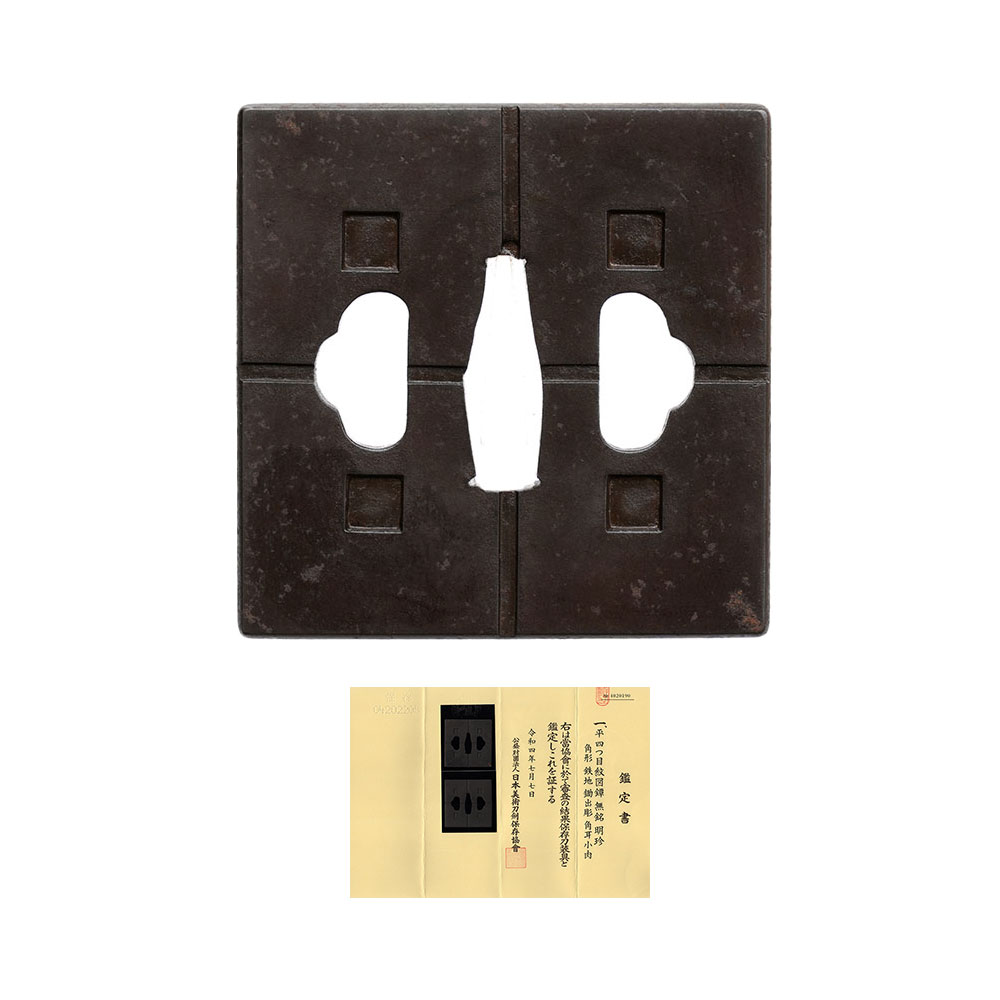
This tsuba, though unsigned, is attributed to the Myochin school, renowned armor makers. It exhibits a robust yet refined aesthetic, characteristic of the school's craftsmanship. The iron displays a rich, deep texture that retains its strength over time, and despite its small size, the precise execution of the design is evident, with sharp edges and a dignified presence. The composition features a simple Hirayotsume (flat four-eye) crest, offering a subtle charm that deepens with contemplation, making it a timeless piece to appreciate.
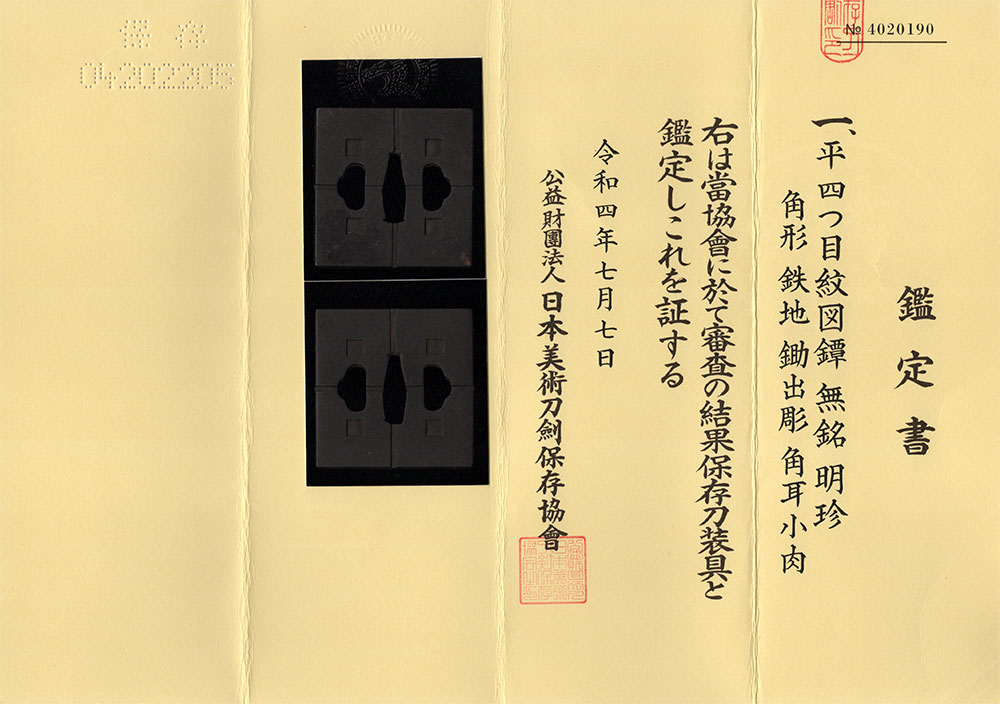
Certificate reading — 無銘(明珍)
 NihontoWatch
mumei · Edo
Tosho-Katchushi · Kyoto
20 pieces on the market now
| Smith | Era | Designated |
|---|---|---|
| Munemasa宗政 | — | 0 |
| Yasutsugu保次 | — | 0 |
| Munesada宗定 | — | 0 |
| Munetsugu宗次 | — | 0 |
| Yoshitada義忠 | — | 0 |
Certifies a genuine fitting worth preserving: a correct signature, or, if unsigned, an identifiable era and school, with recognized artistic and craft value.
The NBTHK (Nihon Bijutsu Tōken Hozon Kyōkai, the Society for the Preservation of Japanese Art Swords) is a public-interest incorporated foundation founded in 1948 and supervised by Japan’s Agency for Cultural Affairs (Bunkachō); it is based at the Japanese Sword Museum in Tokyo. Its expert panels physically examine each submitted work (shinsa) and issue a certificate (kanteishō) ranking it by artistic and historical merit. NBTHK papers are the most widely recognized standard of authentication for Japanese swords and fittings.
NBTHK official siteReturns accepted within 3 days of delivery for defective items or significant discrepancies; customer bears return shipping and bank fees.
¥165,000