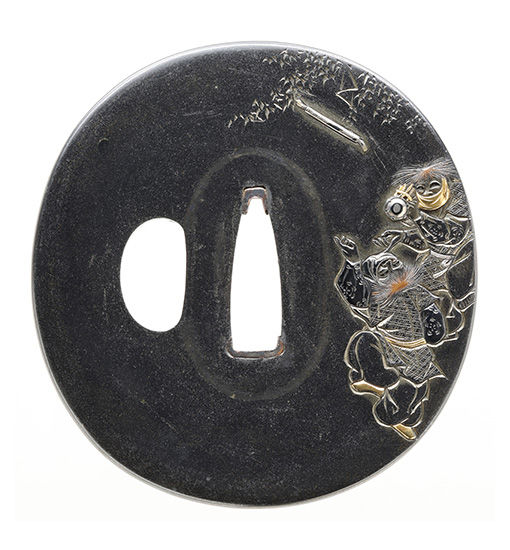
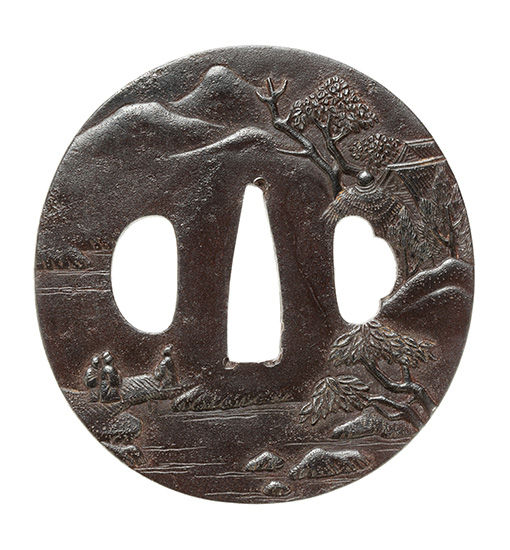
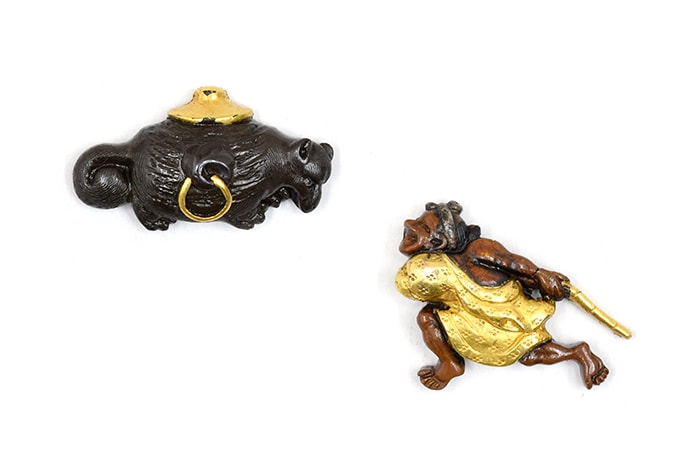
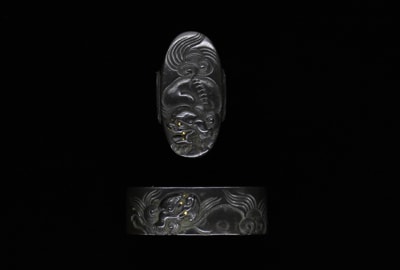
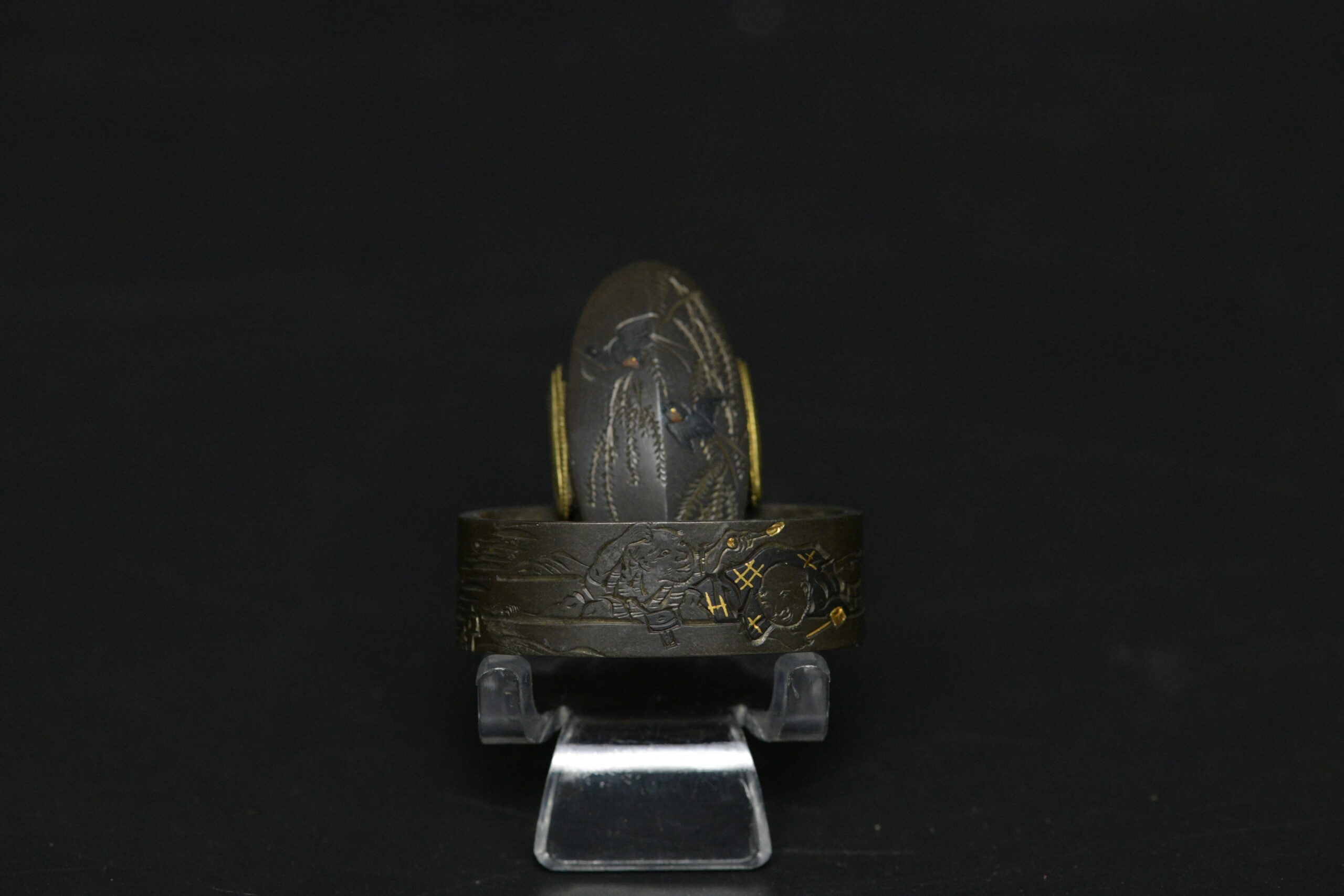
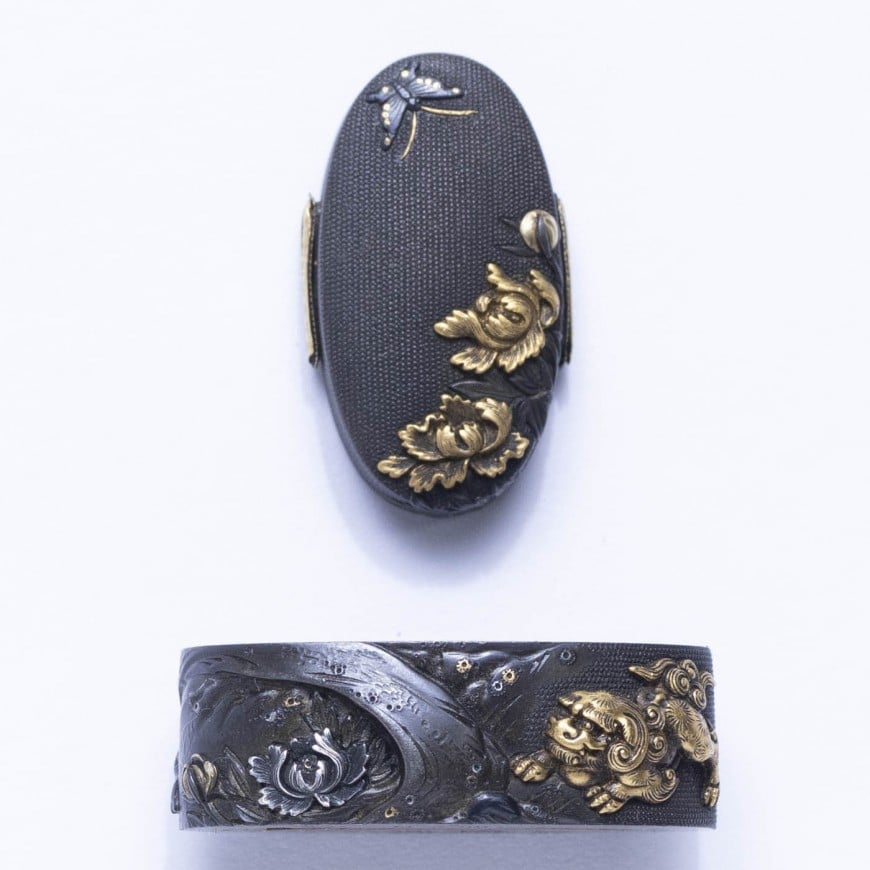
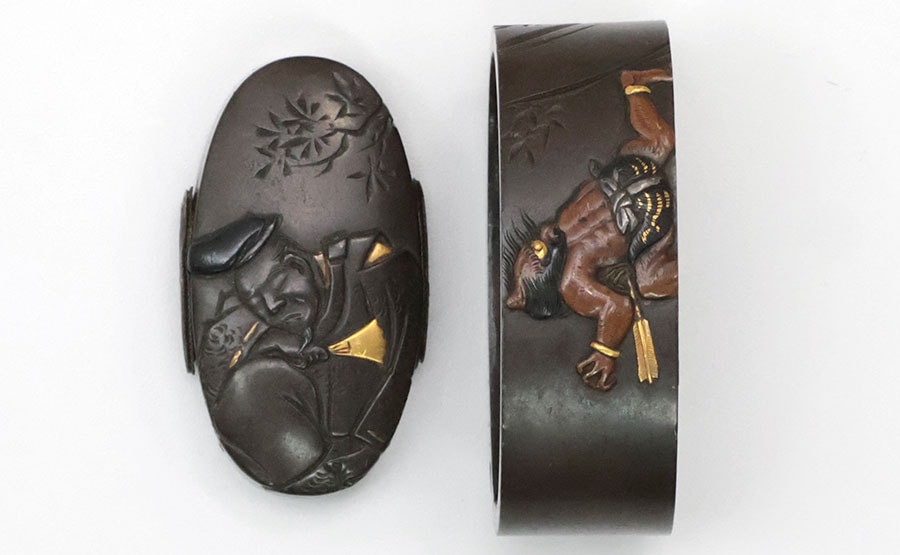
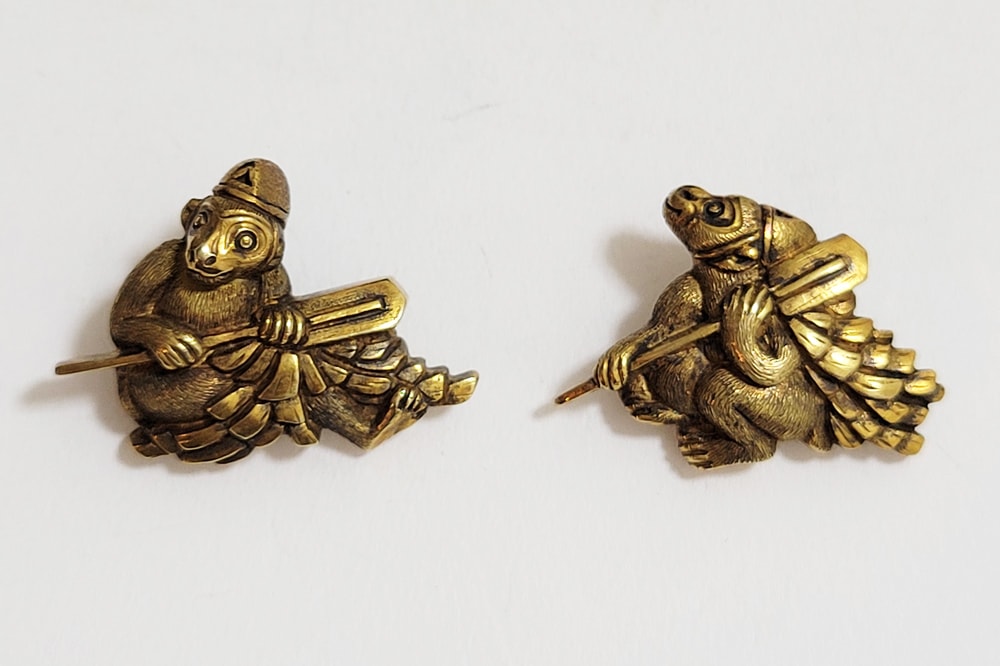
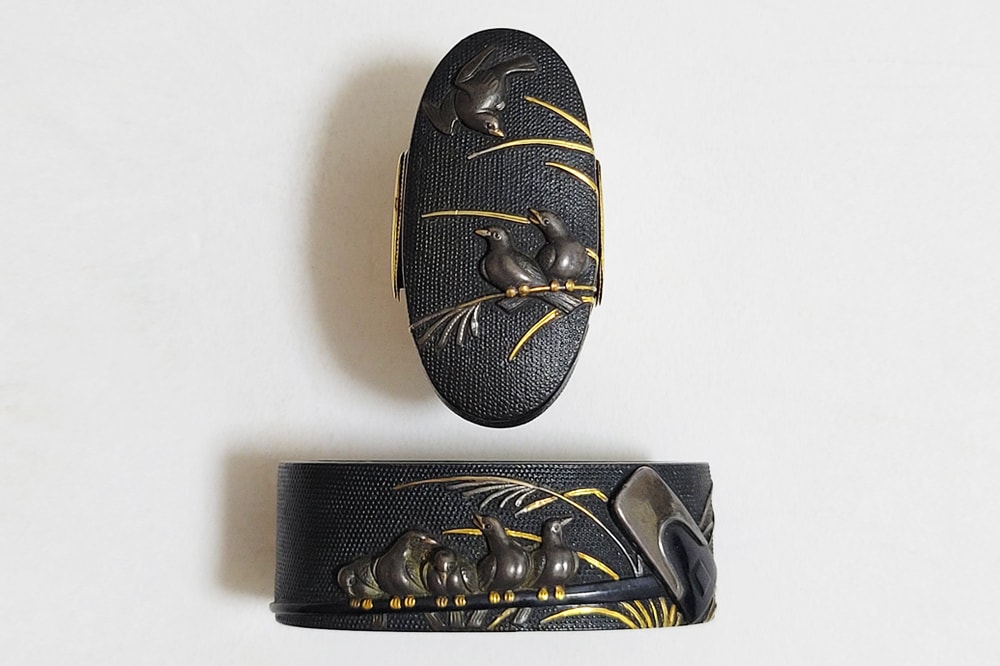
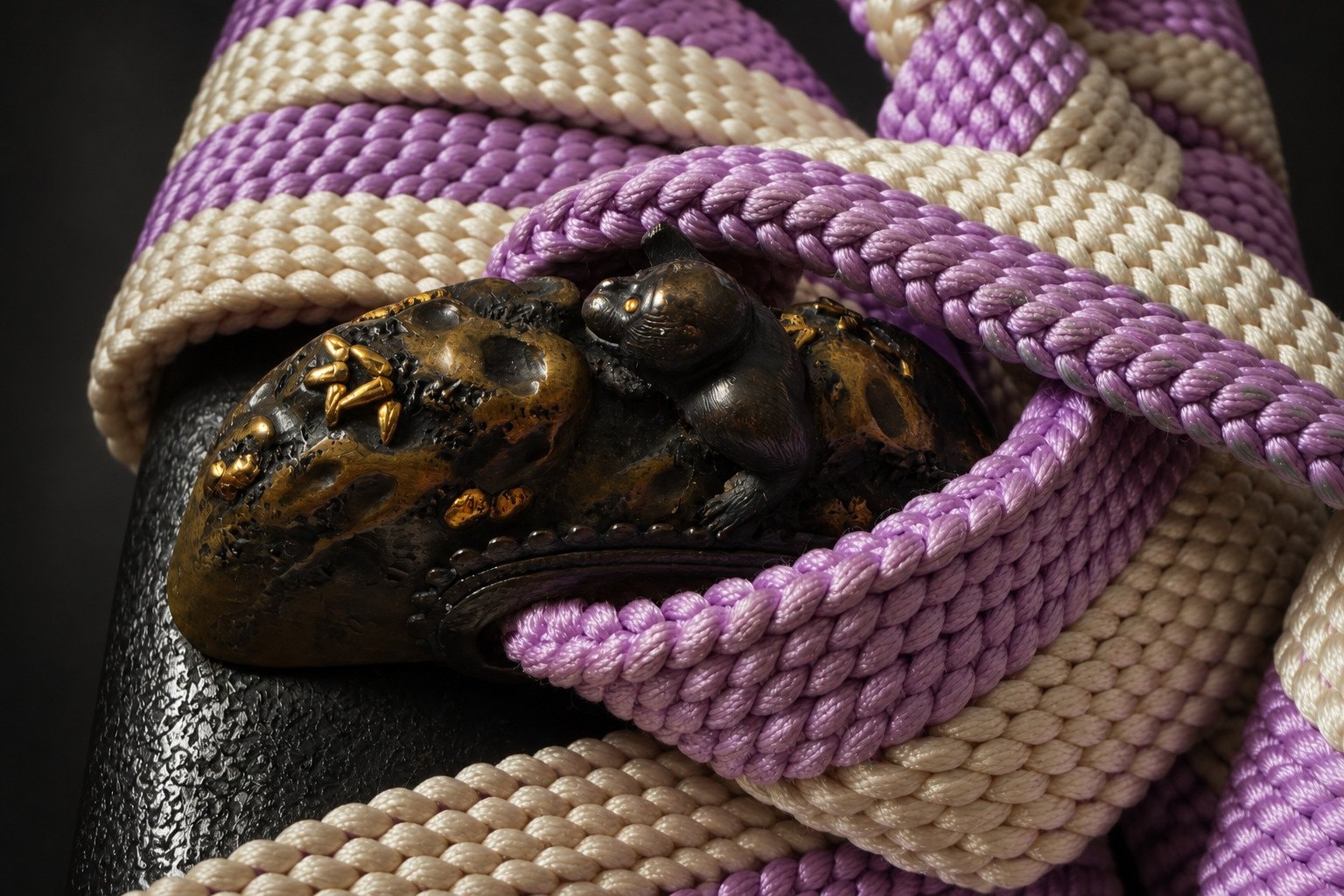
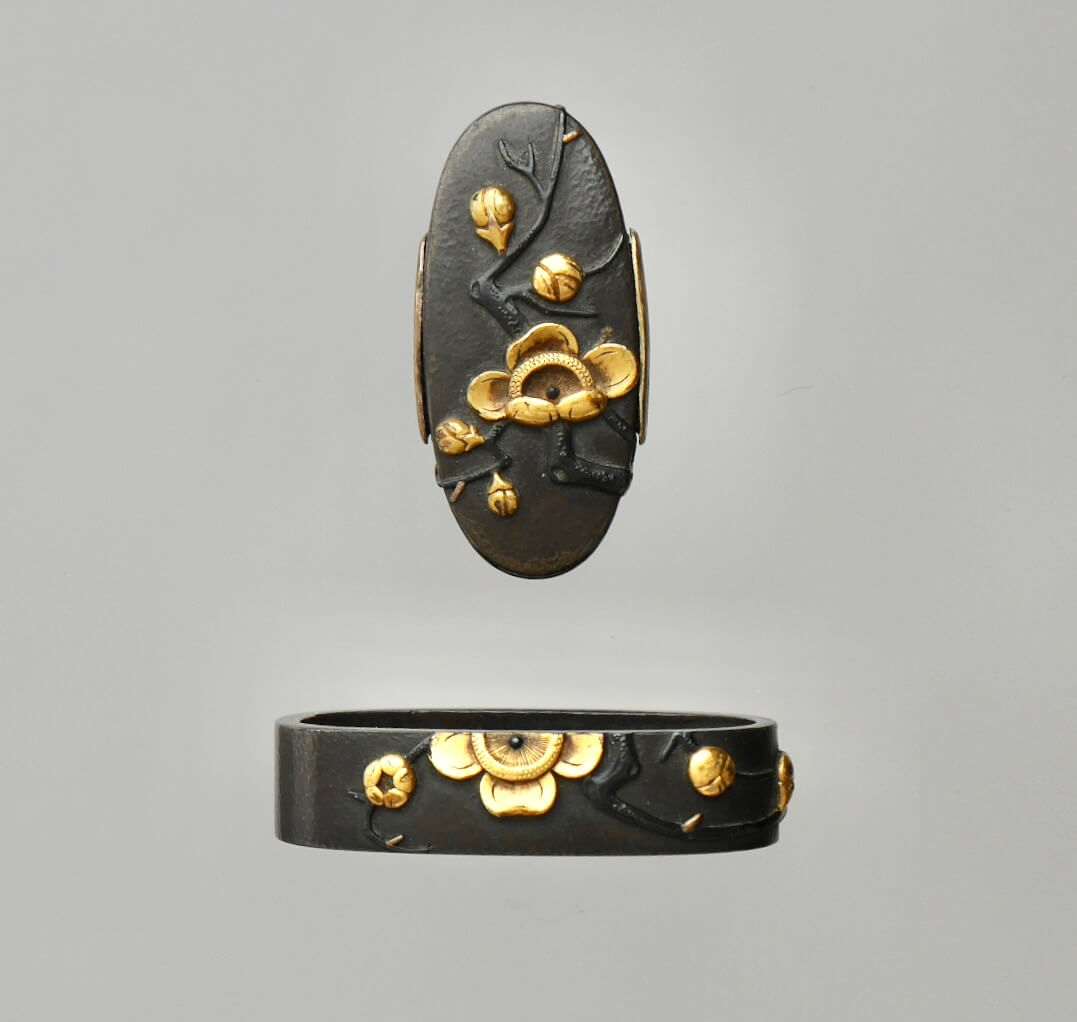
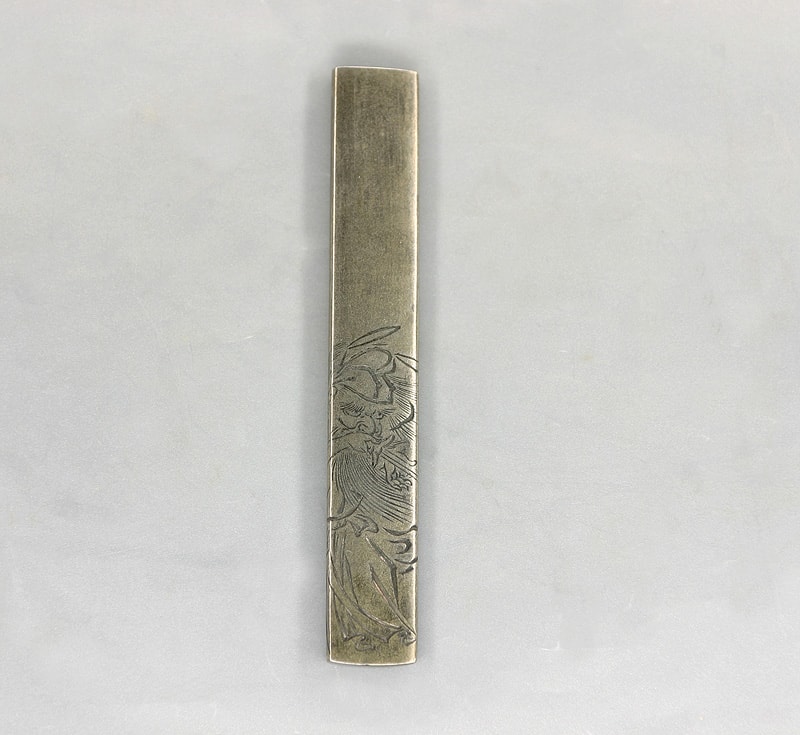
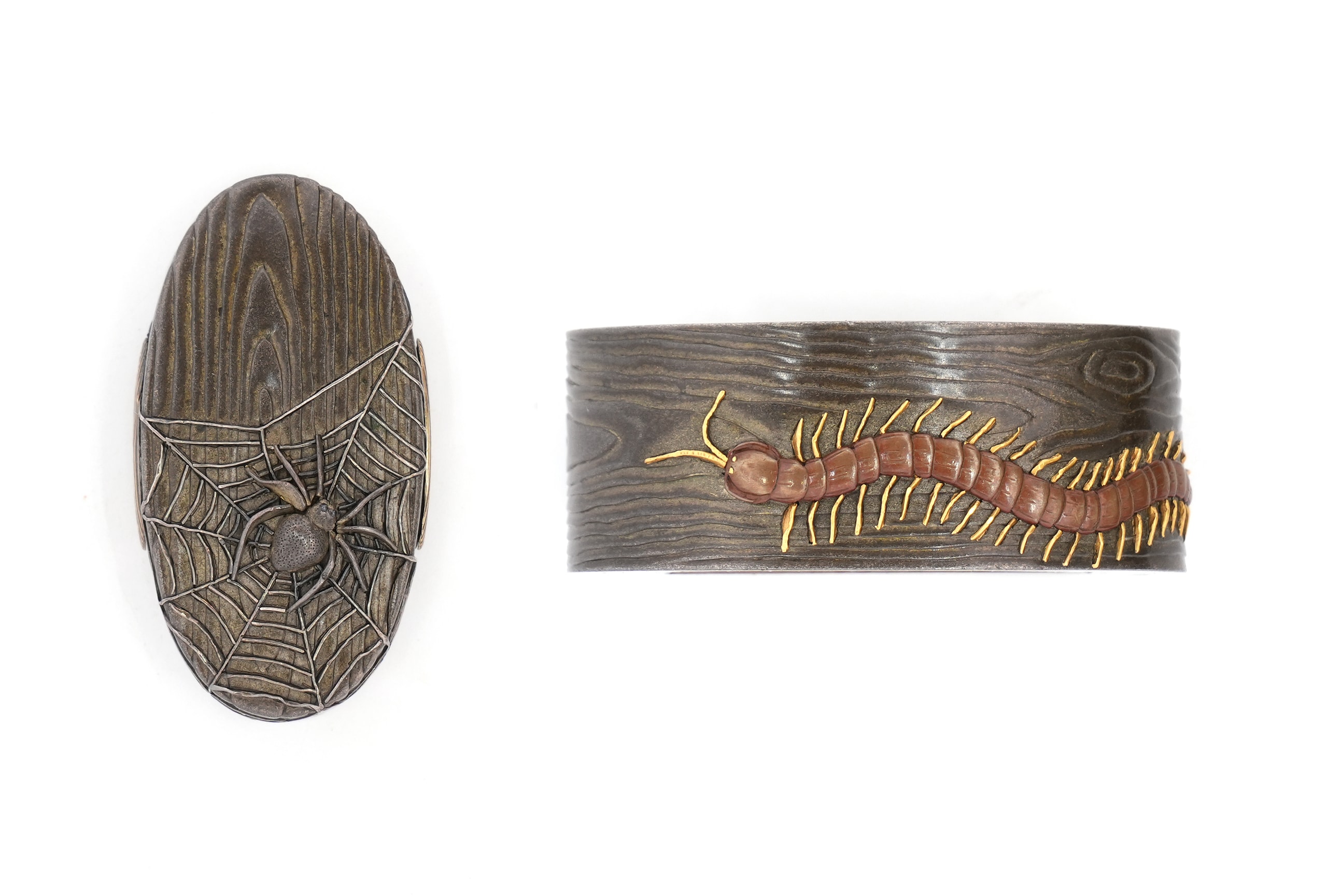
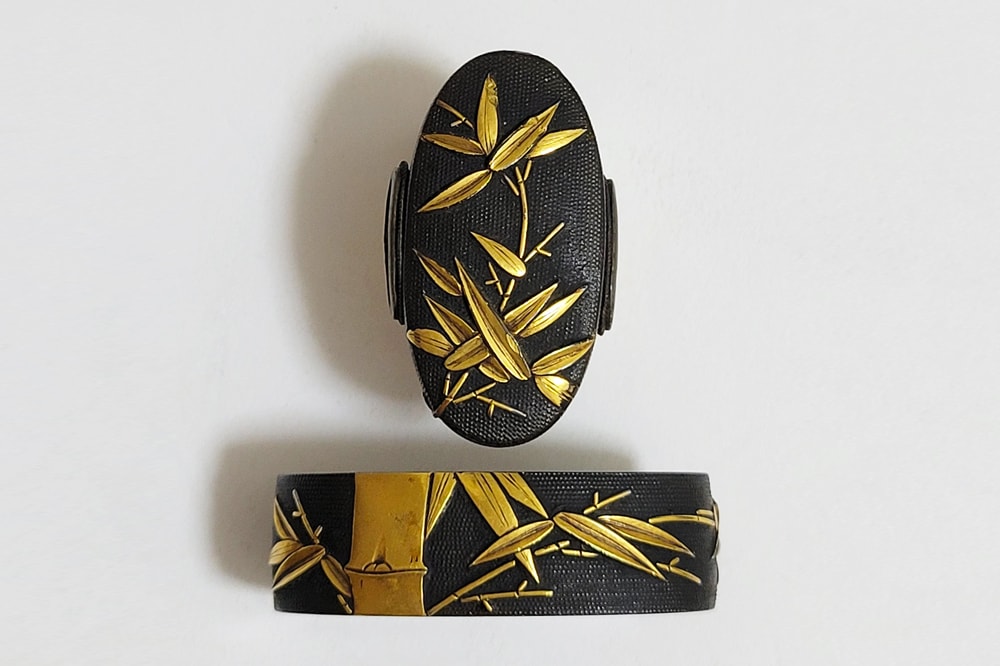
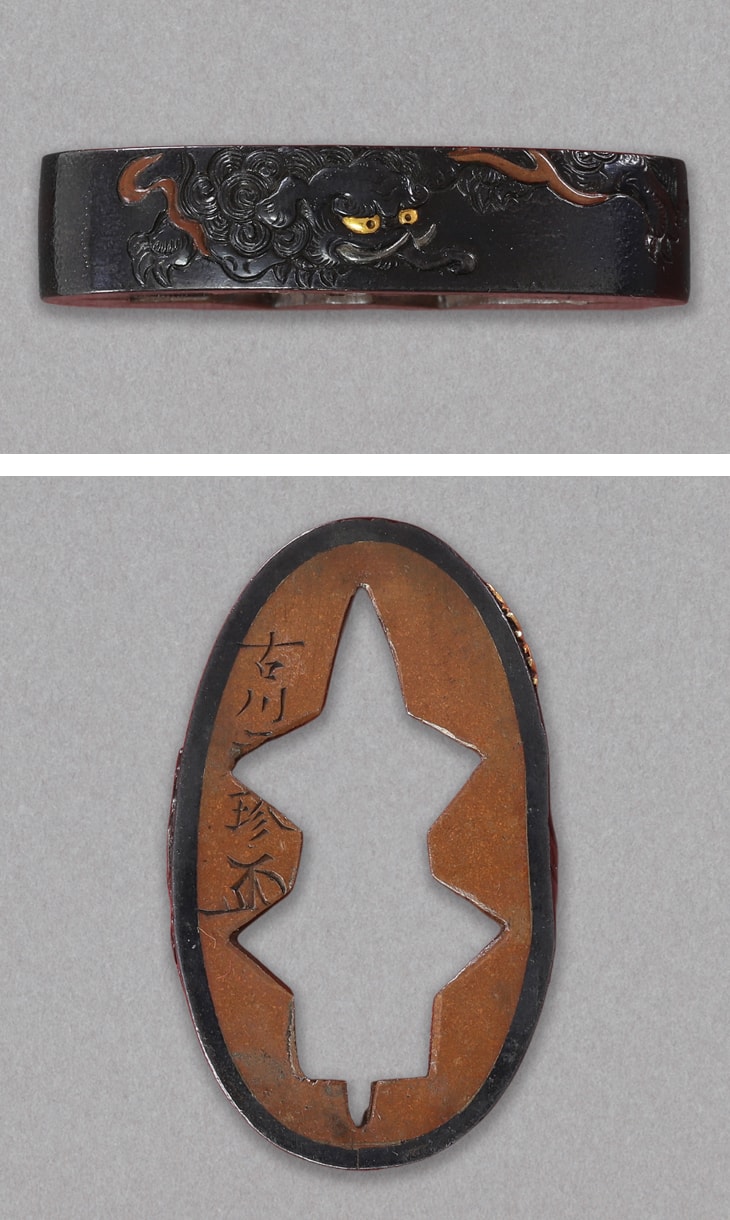
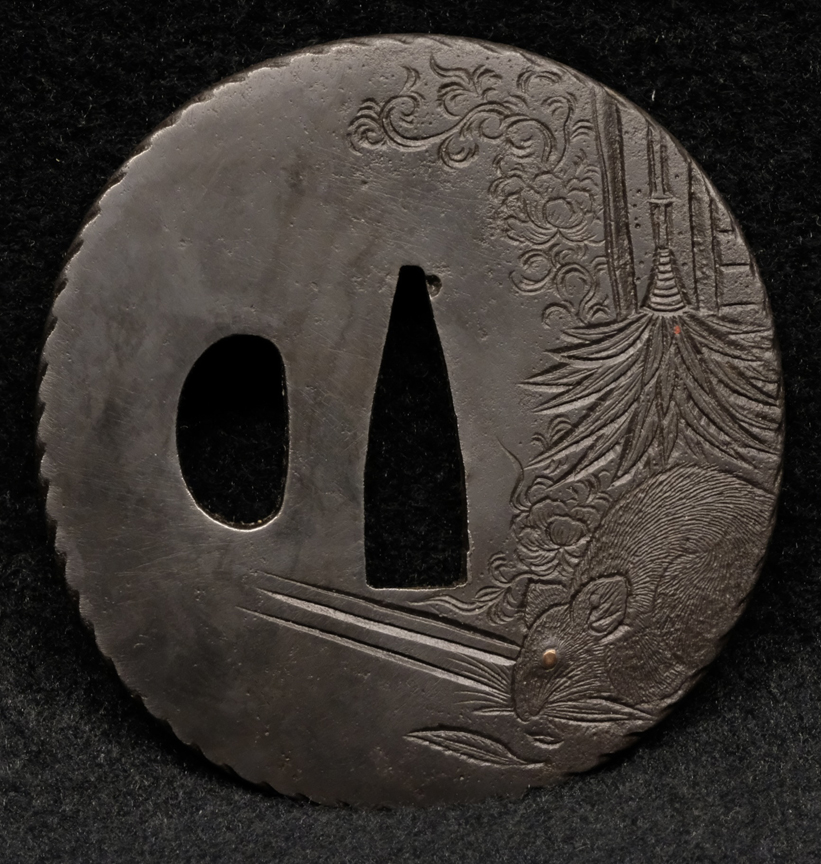
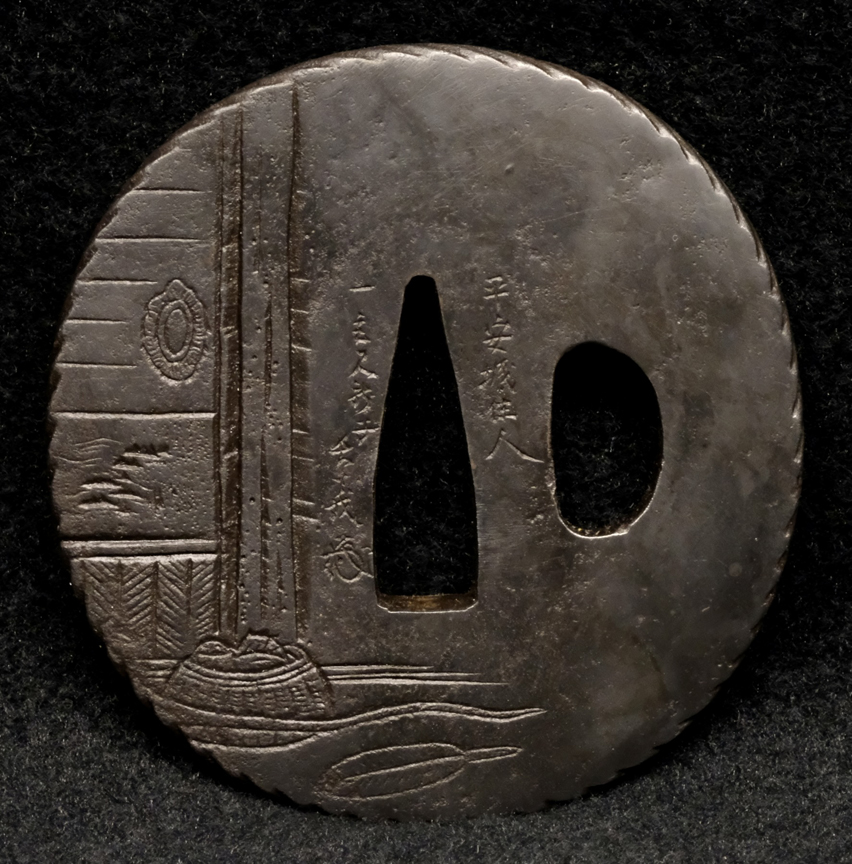
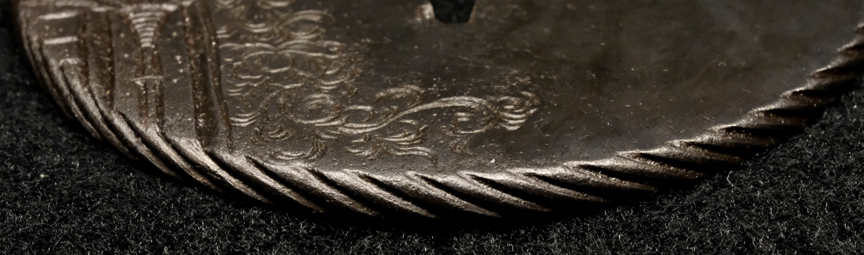
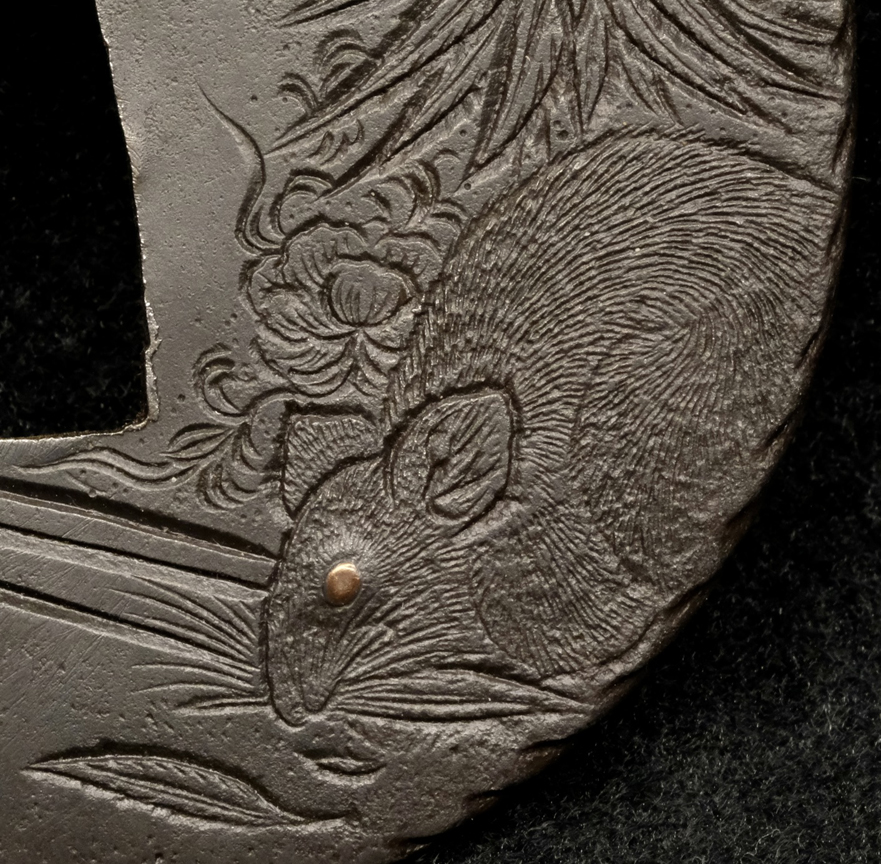
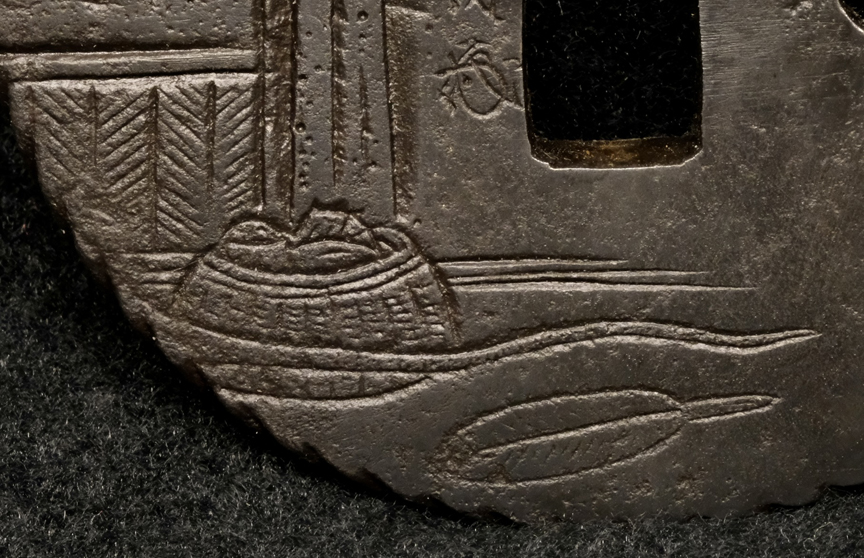
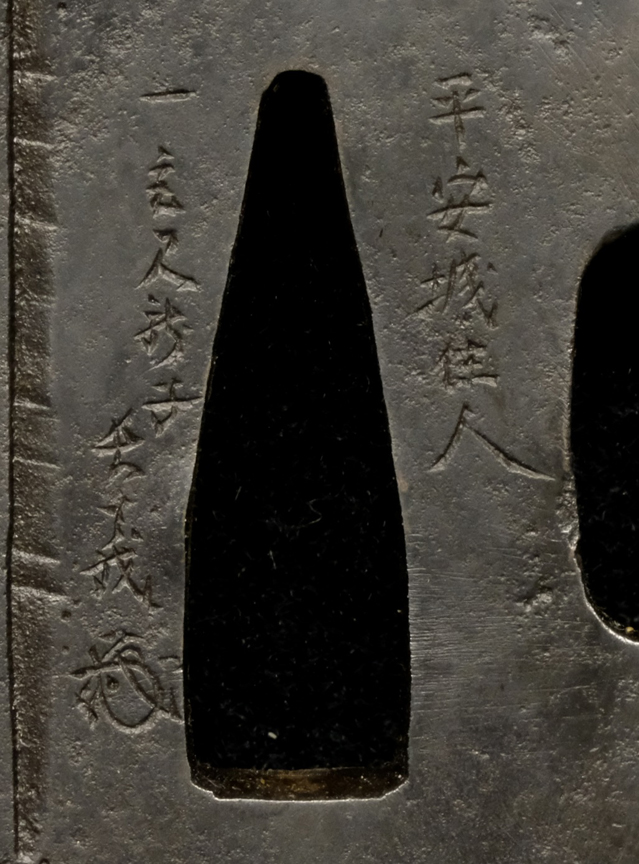
This is an iron Maru gata (round) tsuba by Ichinomiya Nagayoshi, depicting a mouse in a kitchen scene. Nagayoshi was the second master of the Ichinomiya school, a student and adopted son of its founder, Nagatsune. The tsuba dates from approximately 1756-1825.
 NihontoWatch
mei · Ichinomiya · Late Edo (c.1790-1850)
We couldn’t find current papers for this piece. Ask the dealer whether it has been, or can be, submitted to shinsa. — Hoshi
Ichinomiya Nagayoshi
Late Edo
Signed
Machibori · Yamashiro
1 piece on the market now
Machibori · Yamashiro
8 pieces on the market now
The Ichinomiya school is a Kyoto kinko (金工) lineage founded by Ichinomiya Nagatsune (一宮長常), who was born in Kyoho 6 (1721) at Tsuruga in Echizen Province. Known as Kashiwaya Chuhachi, Nagatsune began as a gilder (mekkinshi) before travelling to Kyoto, where he studied under Yasui Takanaga, a craftsman of Goto lineage. In his early period he signed "Setsuzan"[[c:1]], later adopting the name Nagatsune and the art name Ganshoshi (含章子). He also studied painting under Ishida Yutei, teacher of Maruyama Okyo; this grounding in shasei (sketching from life) became the distinguishing intellectual foundation of the Ichinomiya manner. At the age of fifty he received the court title Echizen Daijo, and he died at sixty-six in Tenmei 6 (1786). Members of the school characteristically bear the characters 長 (Naga-) or 常 (-tsune) in their names. The Ichinomiya style synthesizes Goto-lineage metalworking discipline with the observational acuity of Kyoto academic painting. While Nagatsune was highly proficient in Goto-style takabori (高彫, high-relief carving), the school achieved its renown through hira-zogan (平象嵌, flat inlay) combined with katakiribori (片切彫, single-cut engraving) — a technique pairing that became its signature. The preferred ground is polished shibuichi (migaki-ji), upon which modulated chisel-work of varied intensity and rhythm produces supple, painterly line. Colour is introduced with restraint through flat inlay in gold, silver, shakudo, suaka (素銅, plain copper), and shibuichi, the limited application heightening the beauty of the ground metal.
For sculptural subjects the school employs yobori (容彫, modeled relief) on suaka ground, sometimes varying the metal between obverse and reverse in the chuya-ji (昼夜地, "day-and-night ground") construction. Tsuba from the early Setsuzan period favour brass prepared in the yaki-te kusarashi-ji (焼き手腐らかし地) manner, carved in sukidashi takabori with polychrome iroe. Throughout the oeuvre, compositions unfold across front and back surfaces — continuing from the face of a kozuka onto its spine and reverse — prompting the viewer to discover the design in the round. Figural subjects draw on Chinese literary and martial themes — Guan Yu, the Three Laughers of Tiger Ravine, Huang Shigong and Zhang Liang, Ma Shi-huang, the archer Yoyuki — alongside naturalistic studies of turtles, snails, toads, and shishi, and genre scenes such as cormorant fishermen and Genroku-period Bon-odori dancers. The school's pictorial power derives from the accuracy of the underdrawing stage, where powers of observation cultivated through Maruyama-school training are evident before any chisel is taken up. Nagatsune's eminence in the tosogu canon is encapsulated in the phrase repeatedly cited in NBTHK records: "Somin of the East, Nagatsune of the West" (Higashi no Somin, Nishi no Nagatsune). Together with Tetsugendo Shoraku and Otsuki Mitsuoki, he was further lauded as one of the "Three Great Masters of Kyoto metalwork" (Kyoto kinko no sanketsu). " The Four Divine Symbols tsuba, inscribed "Carved in leisure" (kandori kore o horu), is a painstaking work made to the artist's own taste in intervals between commissions. From the robust sukidashi takabori of his early Setsuzan-period tsuba through to the refined katakiribori and flat inlay of his mature years, the Ichinomiya corpus attests to an artistic range and technical command that secured for its founder a permanent place among the foremost machibori metalworkers of the Edo period. Learn more →
| Smith | Era | Designated |
|---|---|---|
| Nagatsune長常 | — | 37 |
| Nagatoshi長年 | — | 0 |
| Tsunenao常直 | — | 0 |
| Sadanaka貞中 | — | 0 |
| Nagayoshi長義 | — | 0 |
We could not find an authenticity certificate on the seller’s listing. Japanese swords and fittings are normally papered by the NBTHK (or the NTHK). Without one, the attribution is the seller’s own assessment and has not been independently verified — treat it with caution and ask the dealer about certification before buying.
All swords sold for $5000 USD or less are considered final! Swords above the $5000 range may be returned for any reason within 48 hrs. Buyer will receive a full refund minus shipping/handling, insurance and or any fees incurred in shipping or sale.
$550