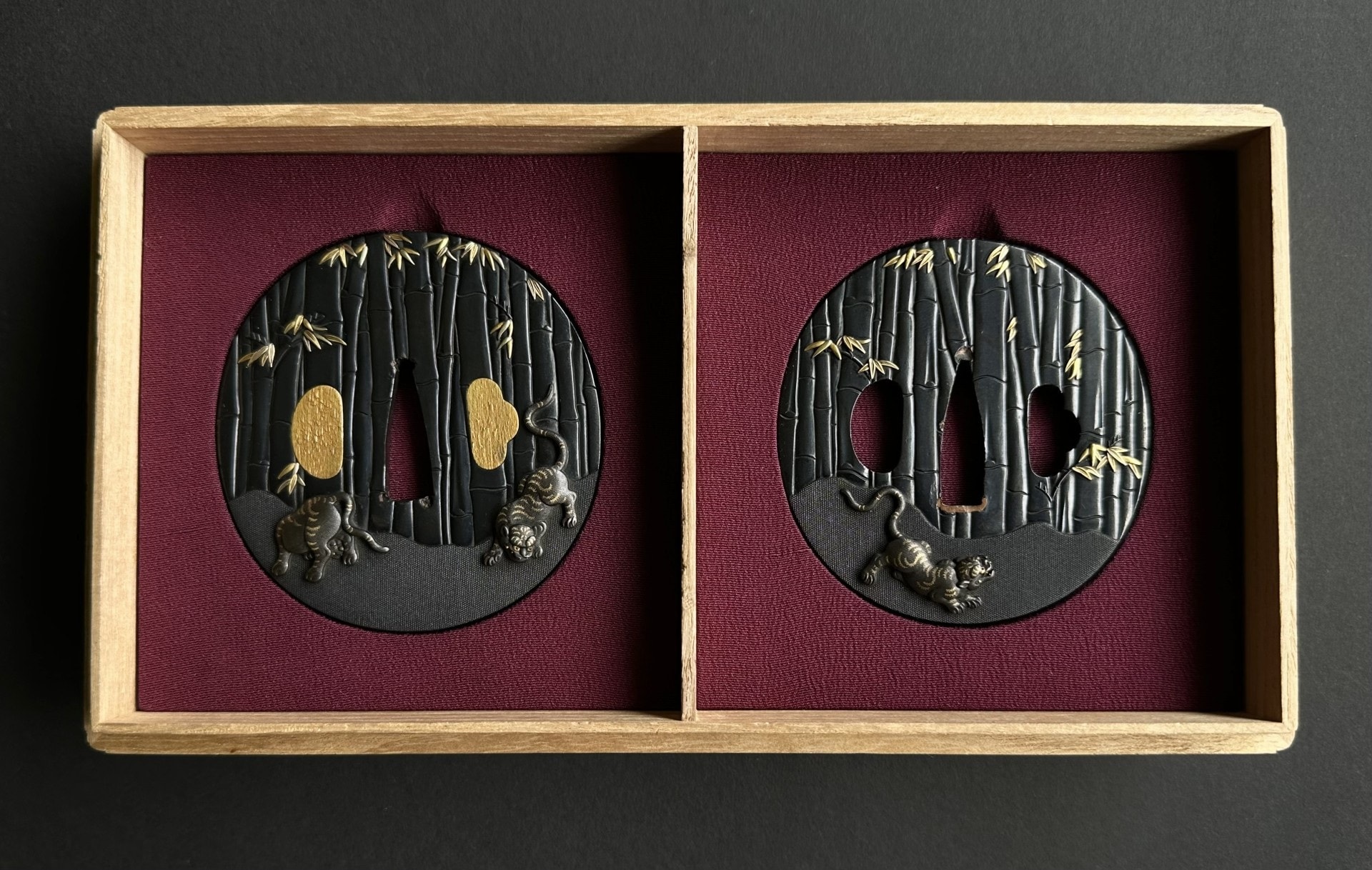
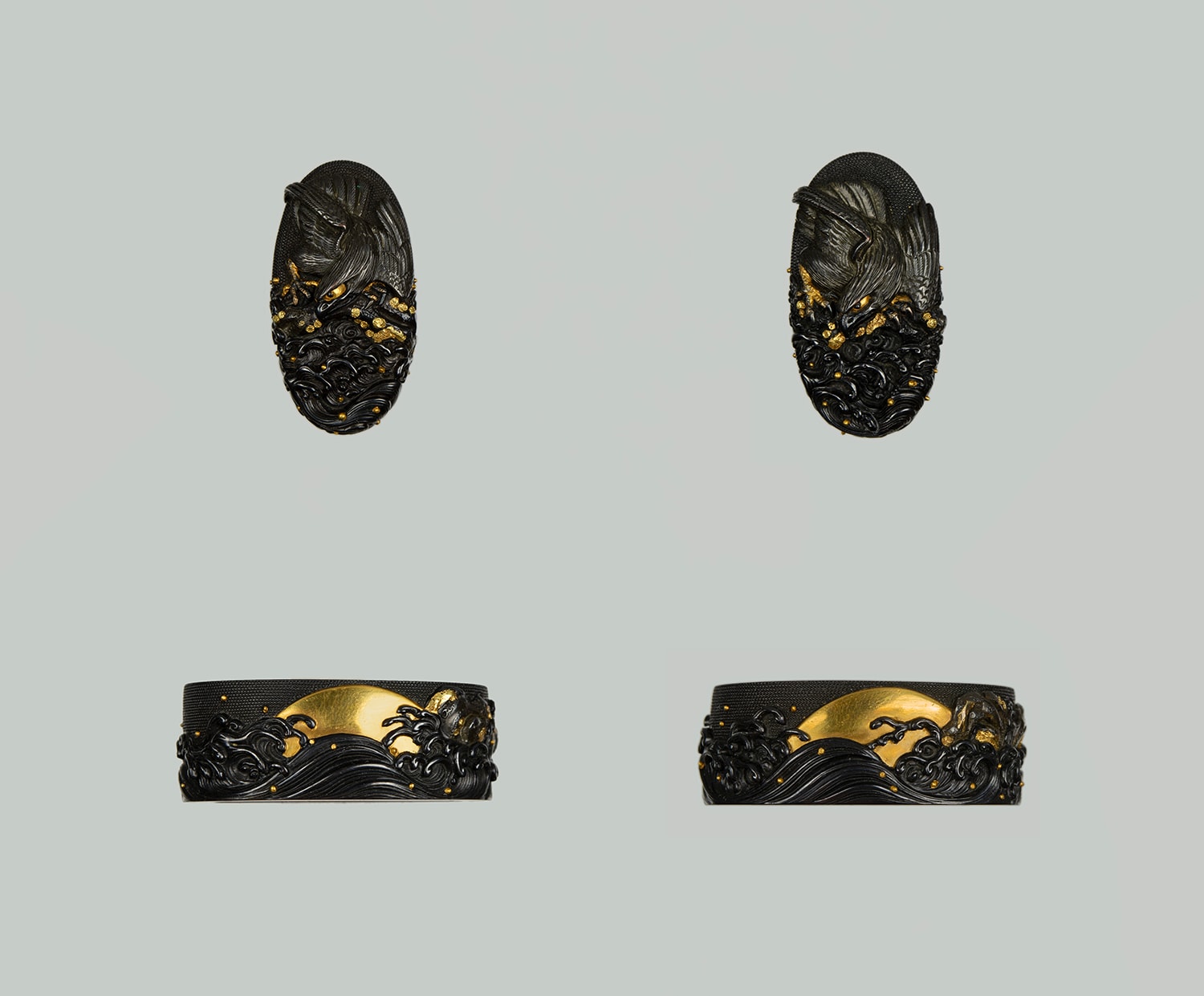
Ichinomiya Nagatsune was born in Kyoho 6 (1721) at Tsuruga in Province, where he was known by the name Kashiwaya Chuhachi. He began his career as a mekkinshi (gilder) before travelling to Kyoto, where he entered the atelier of Yasui Takanaga, a craftsman of Goto lineage. In his early period he signed "Setsuzan" or "Yukiyama," later adopting the name "Nagatsune" and the art name Ganshoshi. Crucially, he also studied painting under Ishida Yutei, who was the teacher of Maruyama Okyo -- a formation that would profoundly shape his powers of observation from life. At the age of fifty he received the court title Daijo. He died at sixty-six in Tenmei 6 (1786). Together with Tetsugendo Shoraku and Otsuki Mitsuoki, he was lauded as one of the "Three Great Masters of Kyoto metalwork," and his standing was further encapsulated in the celebrated saying, "Somin in the East, Nagatsune in the West."
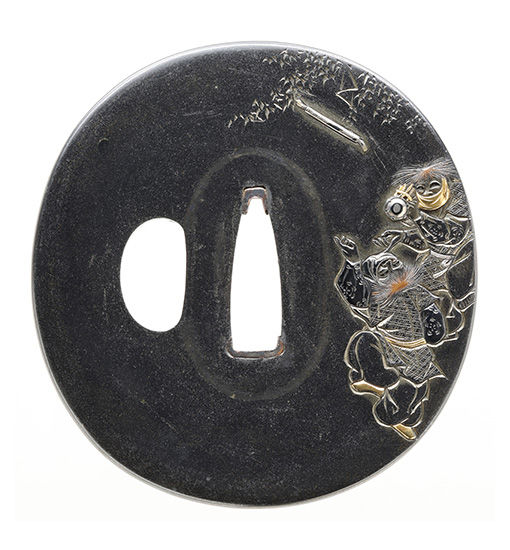
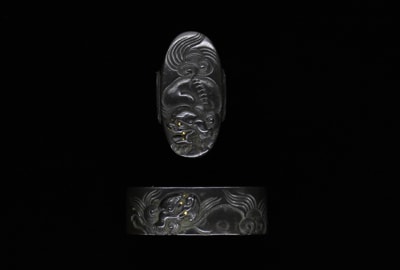
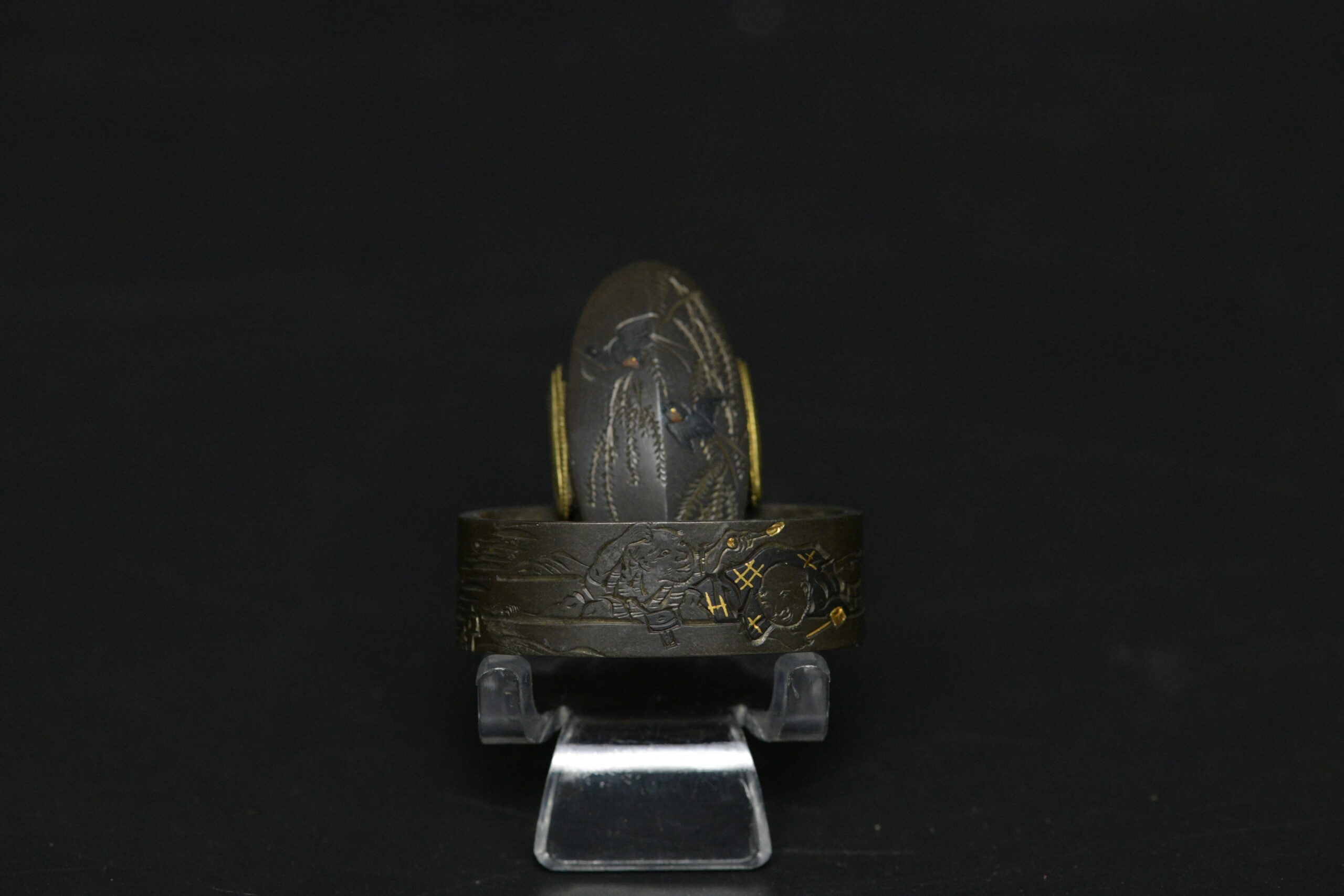
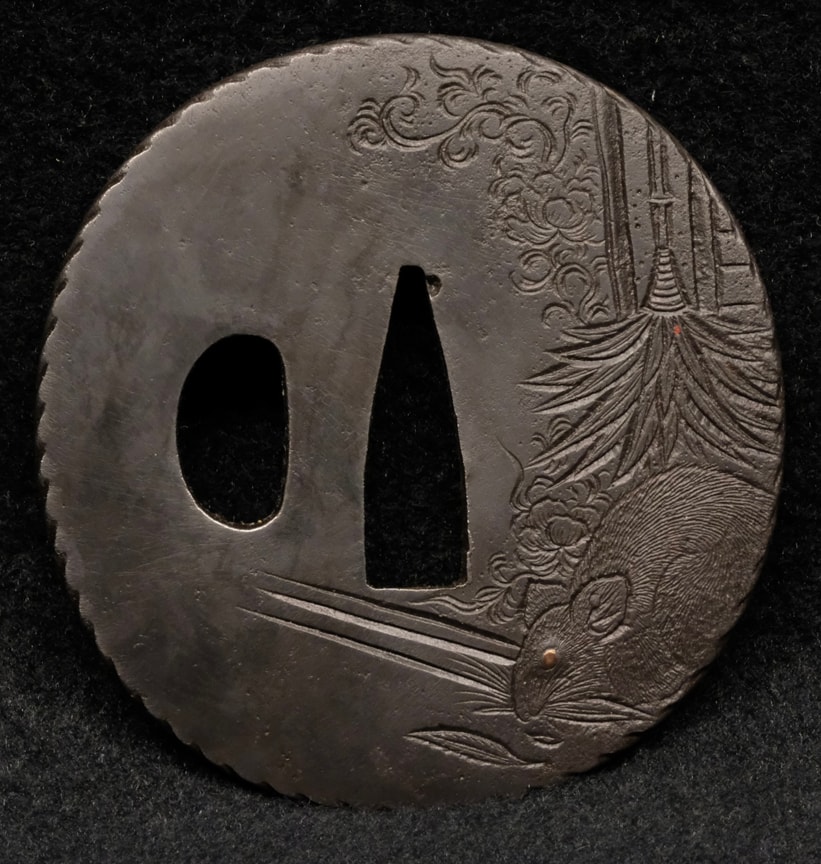
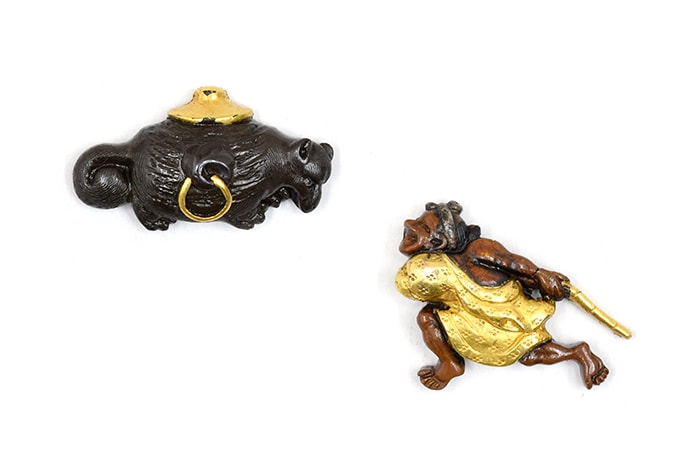
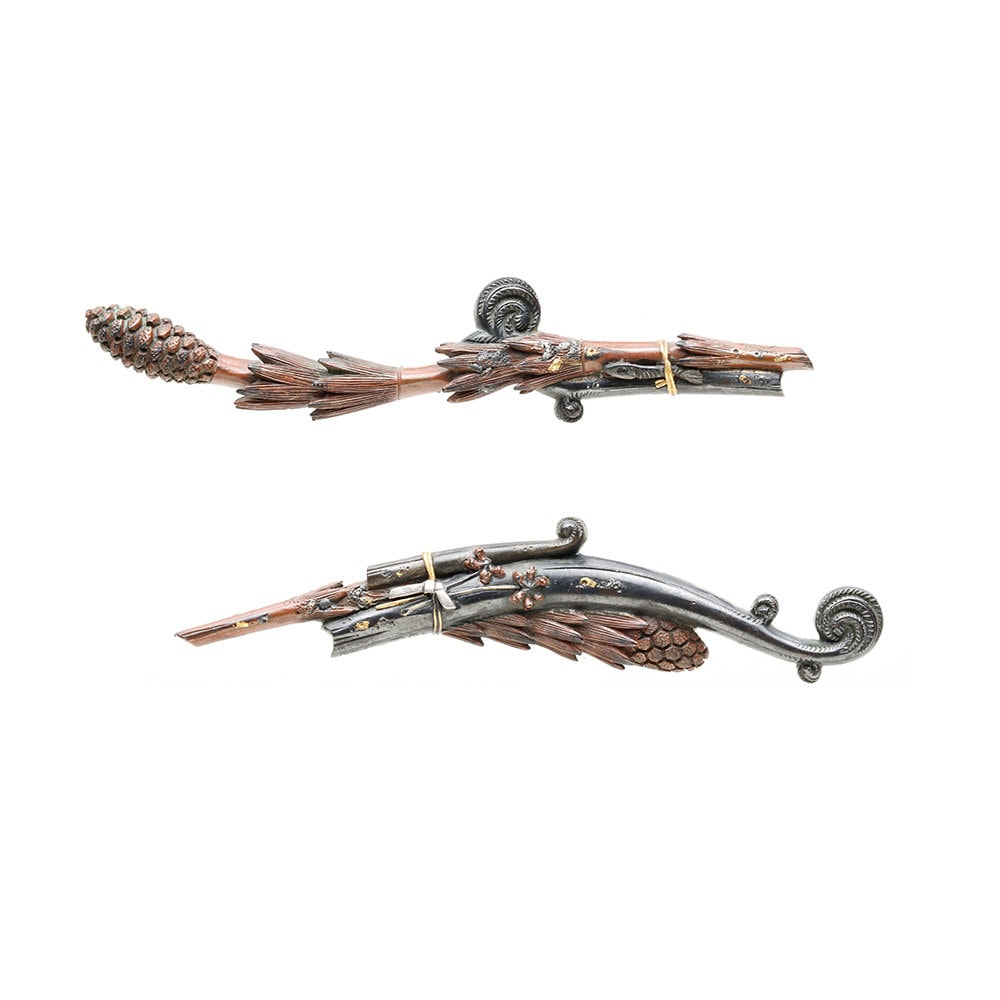
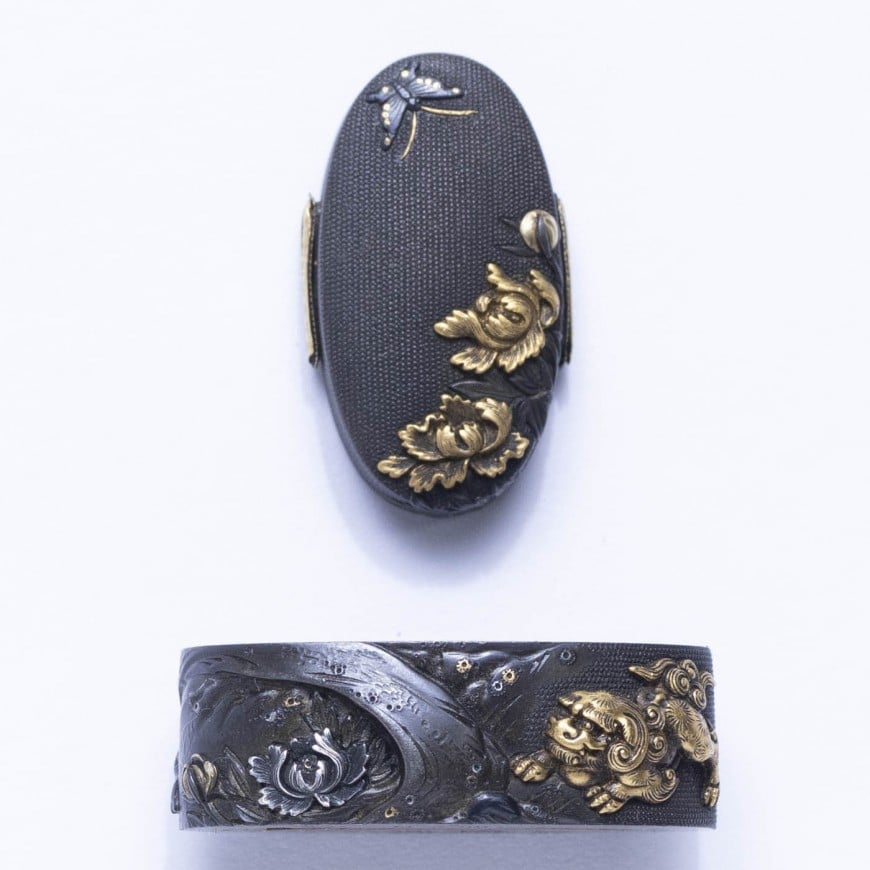
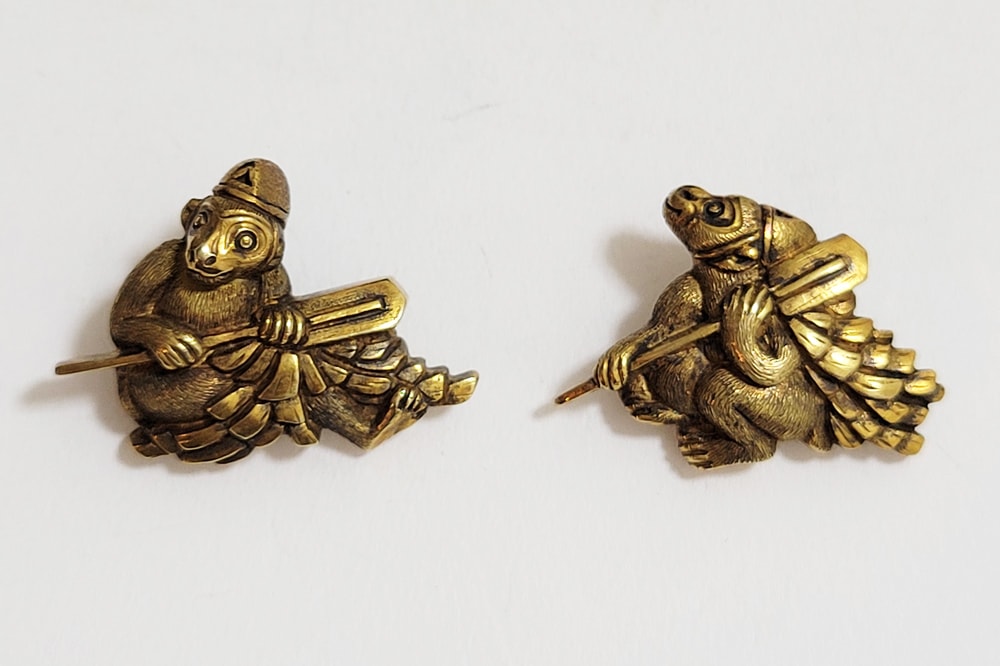
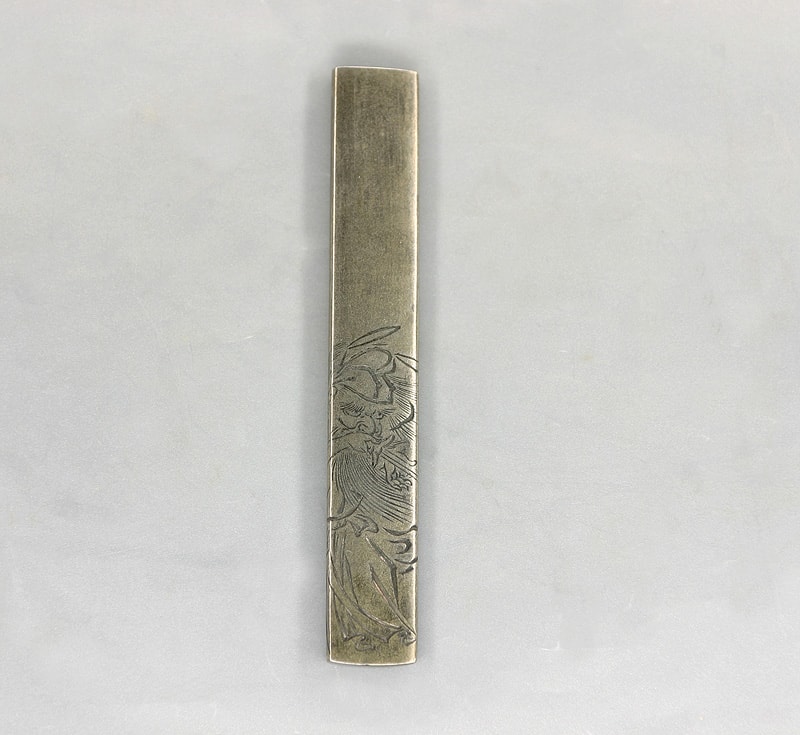
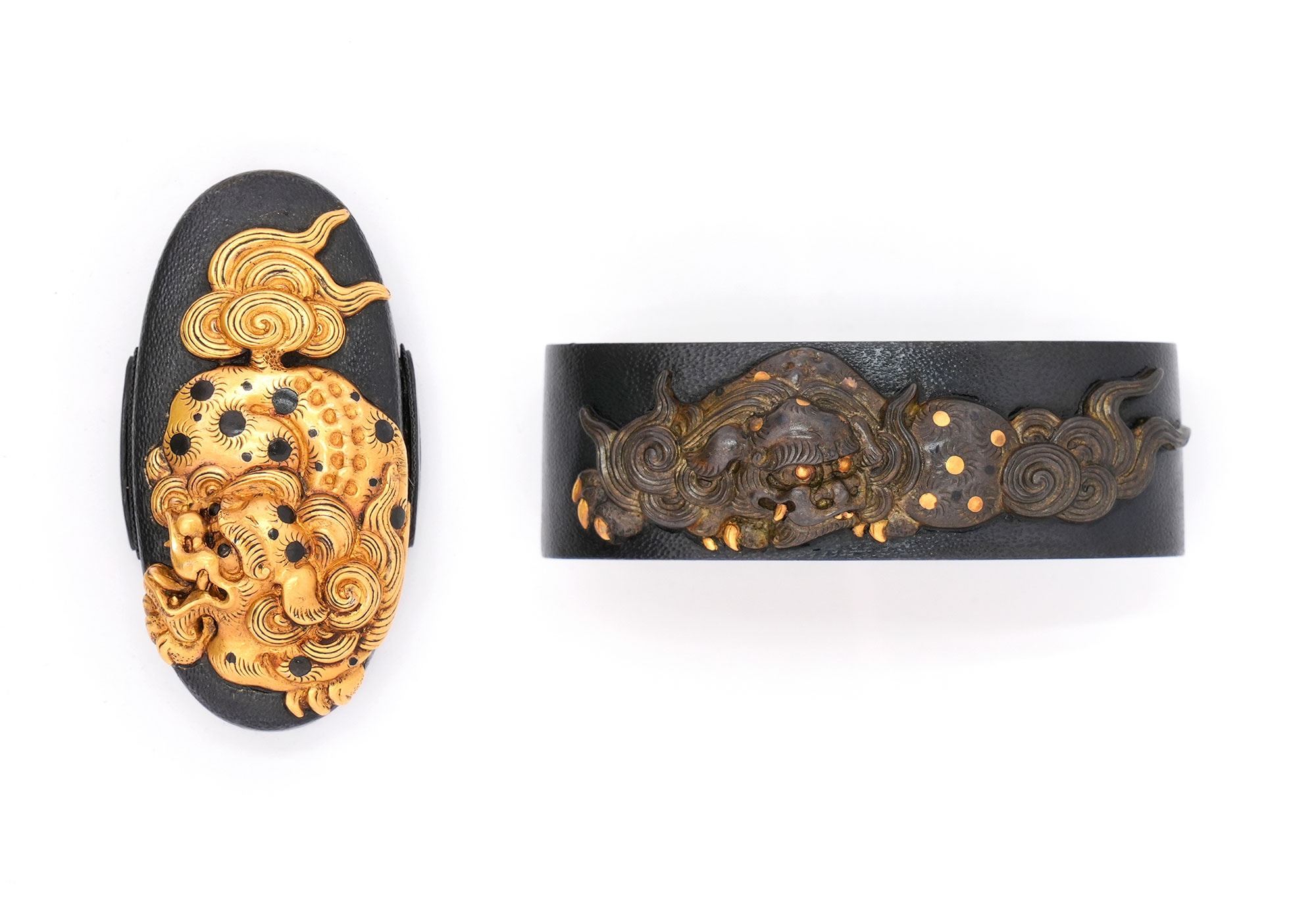
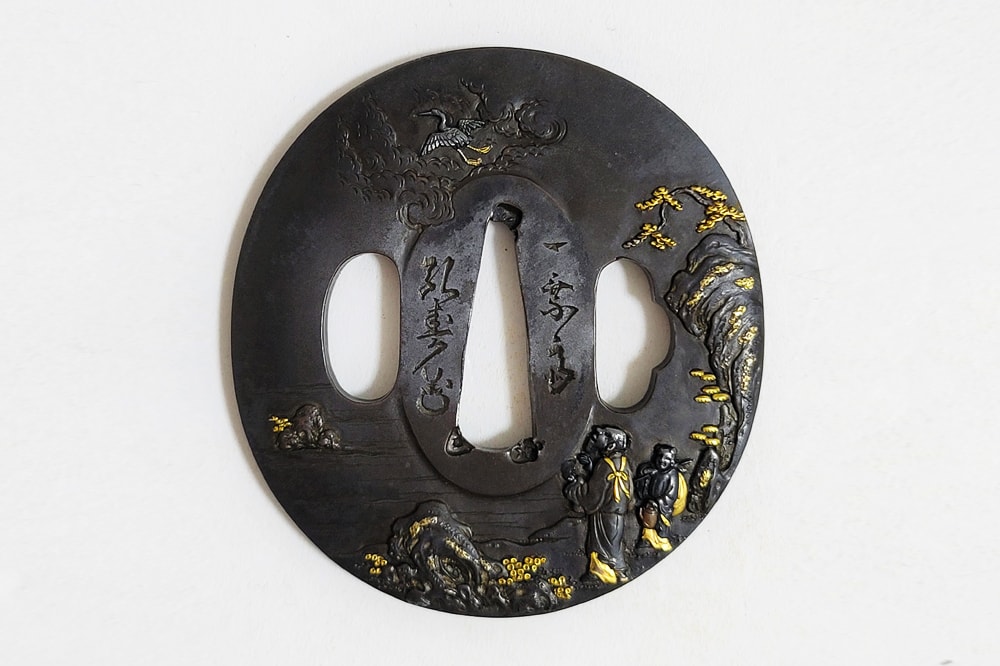
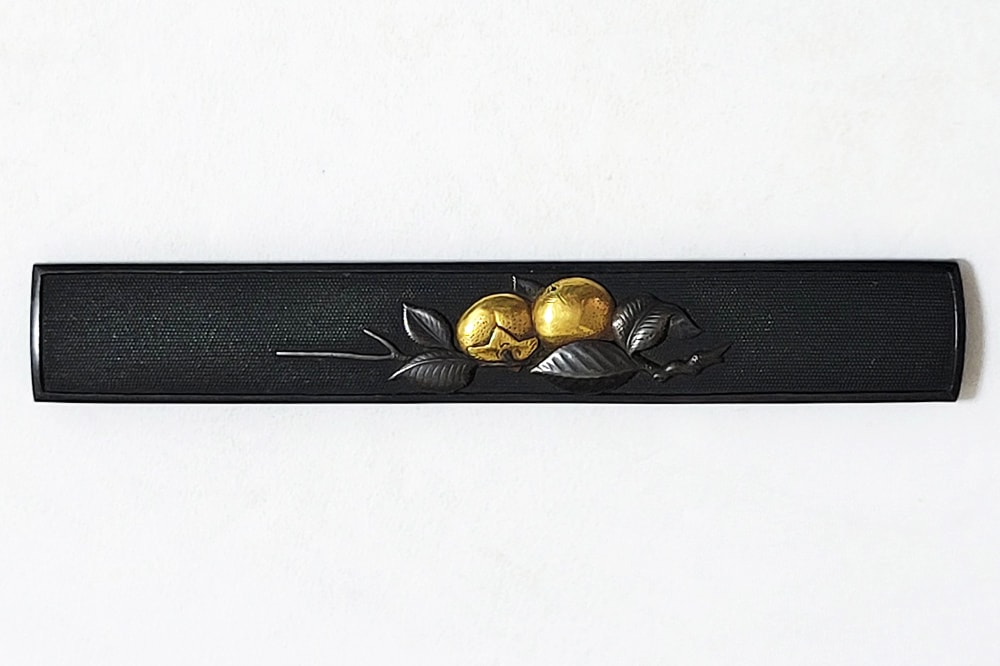
Although Nagatsune was highly skilled at Goto-style (high-relief carving), it was through - (flat inlay) combined with (single-chisel engraving) that he achieved his distinctive manner and lasting fame. On polished or grounds, he deployed modulated chisel strokes of varying depth and intensity, from forceful outlines to the finest facial details and textile patterns, producing compositions described by the as possessing "outstanding pictorial power" developed through his study of Maruyama-school painting. His is characterized by "modulated strengths and rhythmic inflections" and "supple chisel-work," while his inlay marshals gold, silver, , , and with what the examiners term "precise, well-judged" placement. In sculptural works such as , he drove the chisel along every surface to achieve fully three-dimensional expression -- rendering subjects "as if alive" with "animated movement." His favored subjects ranged widely from nature studies (turtles, toads, snails, chickens, monkeys) to Chinese literary figures (Guan Yu, Huang Shigong and Zhang Liang, Ma Shi-huang) and genre scenes (cormorant fishermen, Bon festival dancers, agricultural labourers at rest). A hallmark of his compositional intelligence was the extension of designs onto the reverse plate, prompting the viewer to "imagine and anticipate the scene continuing" -- a device the has repeatedly singled out as "truly superb." He also innovated freely within the format, sometimes varying the ground metal between and in chuya- ("day-and-night") pairings, or between solid gold and to differentiate the paired pieces.
Across the body of designated works, the returns with striking consistency to several core evaluations: that Nagatsune's pieces "fully reveal the stature" of a master craftsman; that they demonstrate "outstanding powers of close observation and the assured chiseling skill by which he gives them form"; and that they present, "in every respect, the distinctive world of Nagatsune." His ability to render subjects with penetrating realism -- whether the "distinctive tactile quality of the snail's skin," the "palpable, tense atmosphere" of toads about to strike, or the "flowing elegance" of a standing Guan Yu -- is repeatedly attributed to the pictorial training he received in the Maruyama school. Works such as the Four Divine Symbols , inscribed "Carved in leisure," reveal an artist whose painstaking private productions matched the virtuosity of his commissioned output. That the consistently invokes his honorific comparison with Somin and his place among the Three Great Masters of Kyoto metalwork testifies to the enduring assessment of Ichinomiya Nagatsune as a figure of the first rank within the -period chokin tradition.