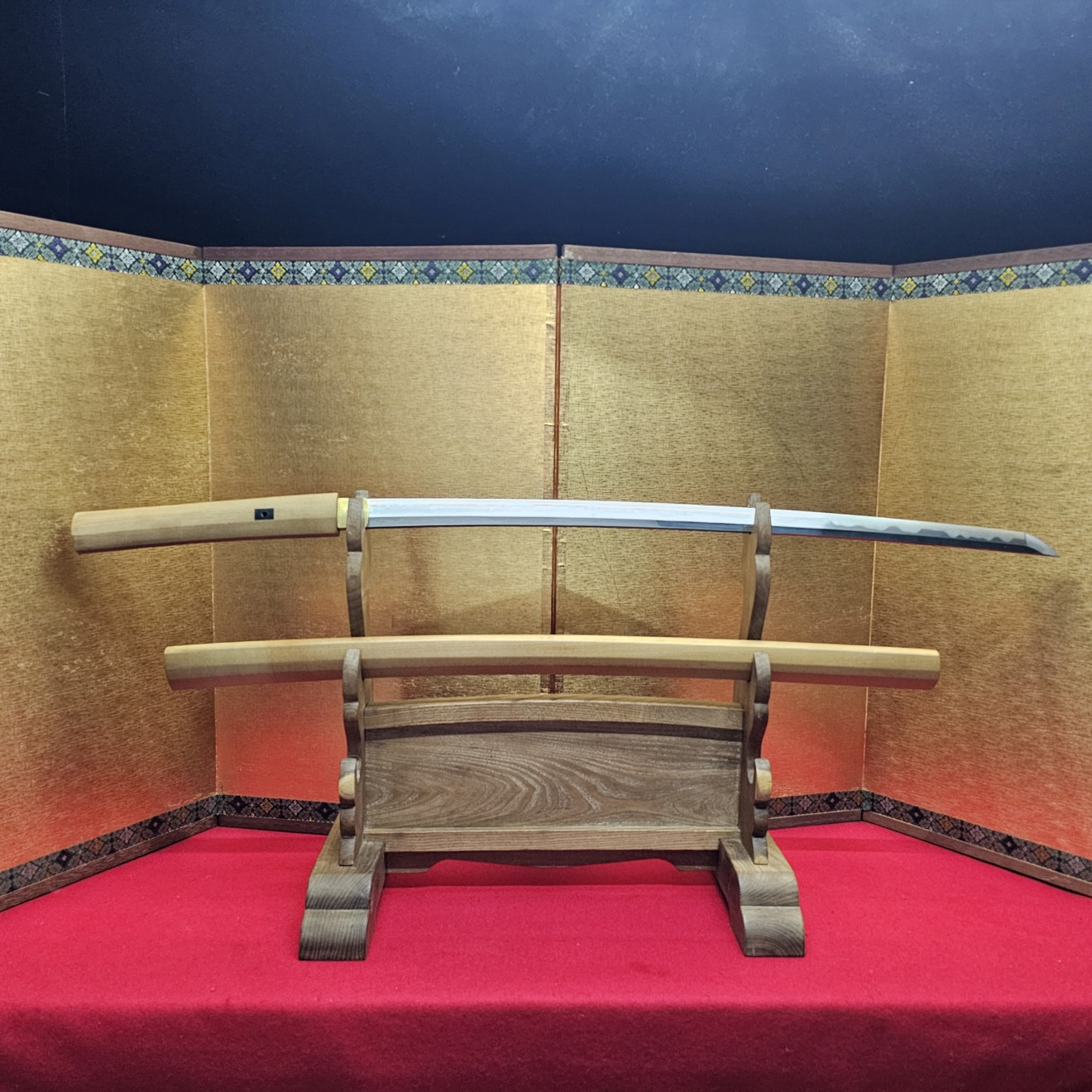
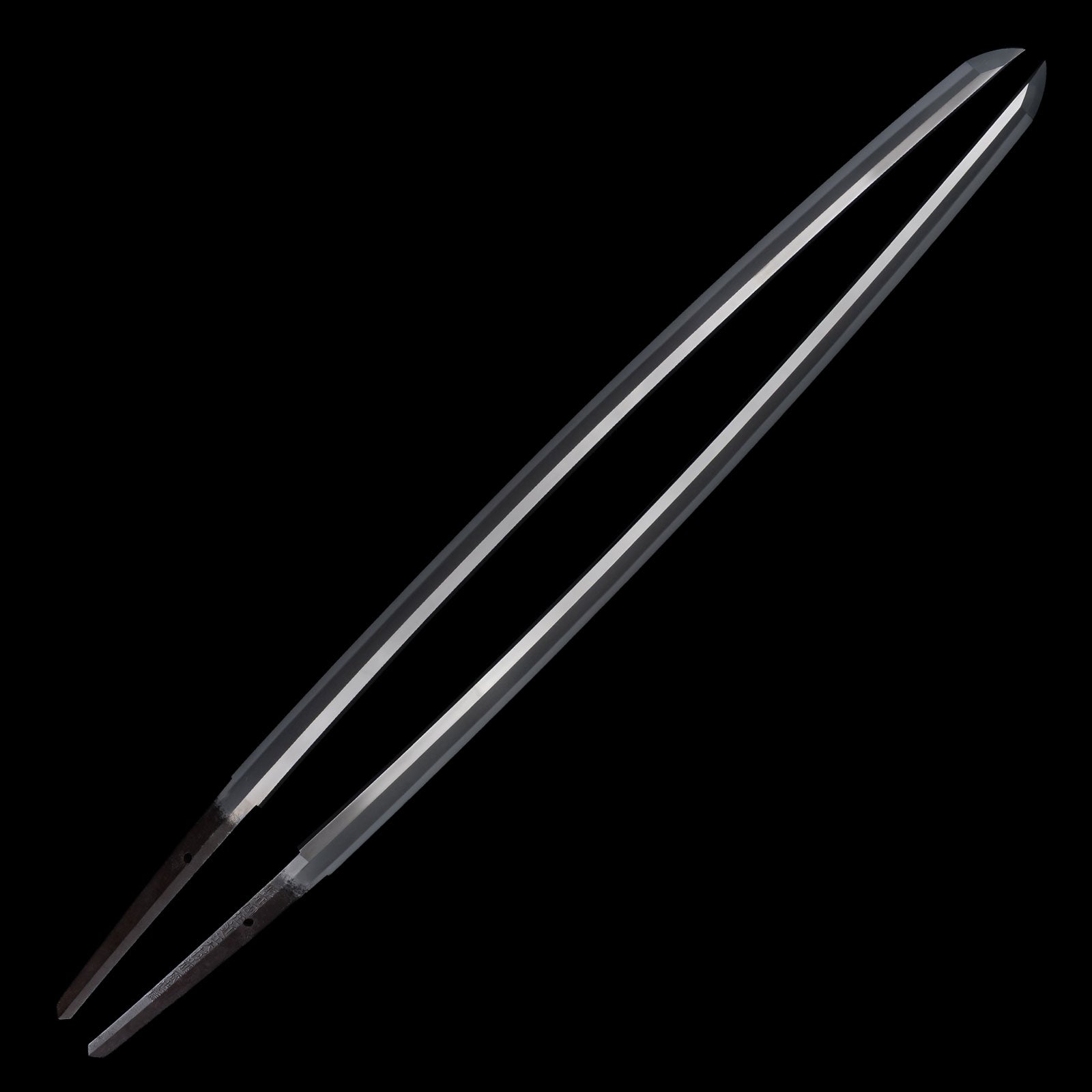
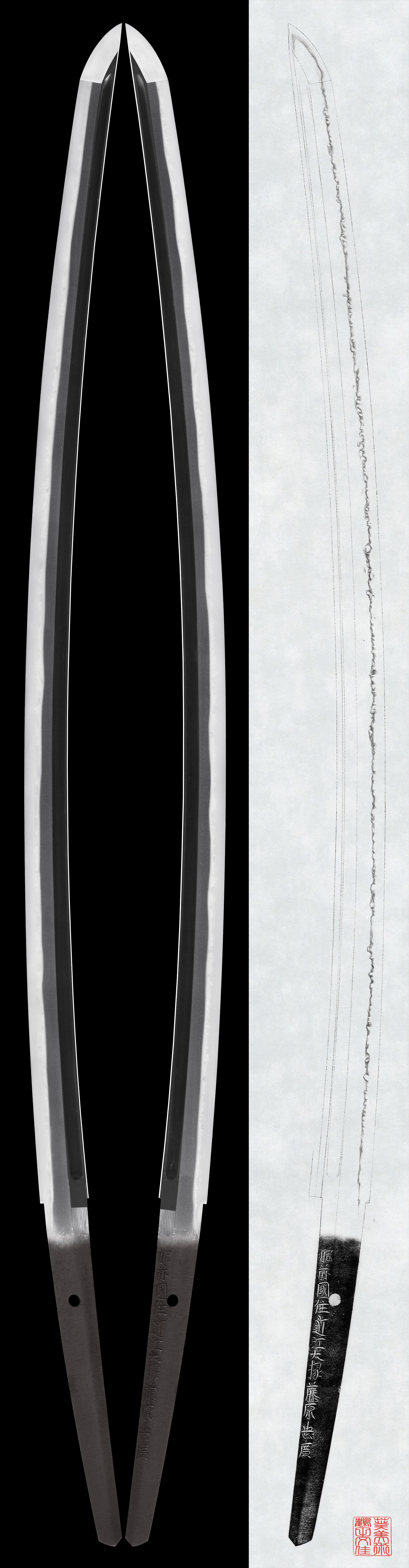
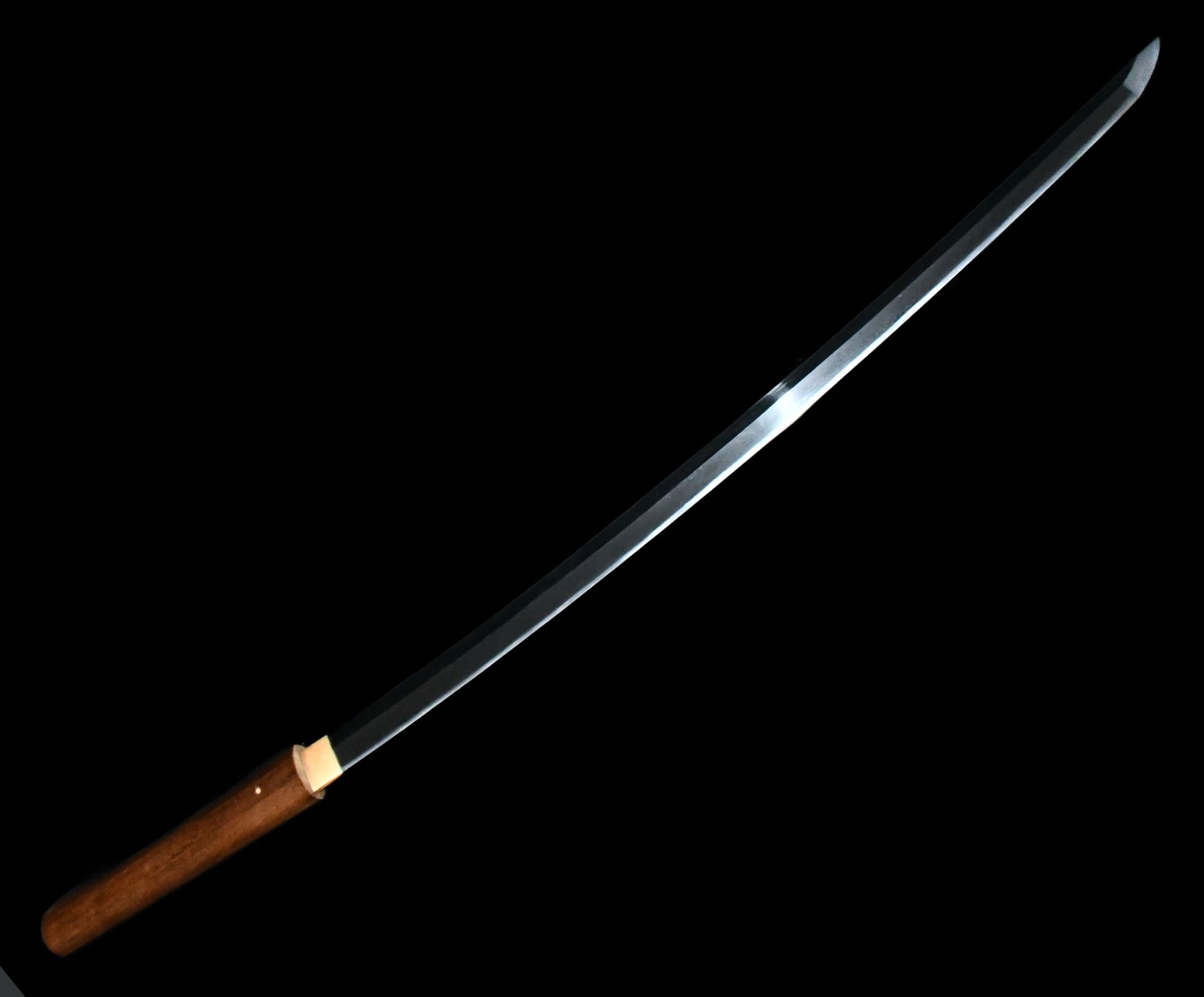
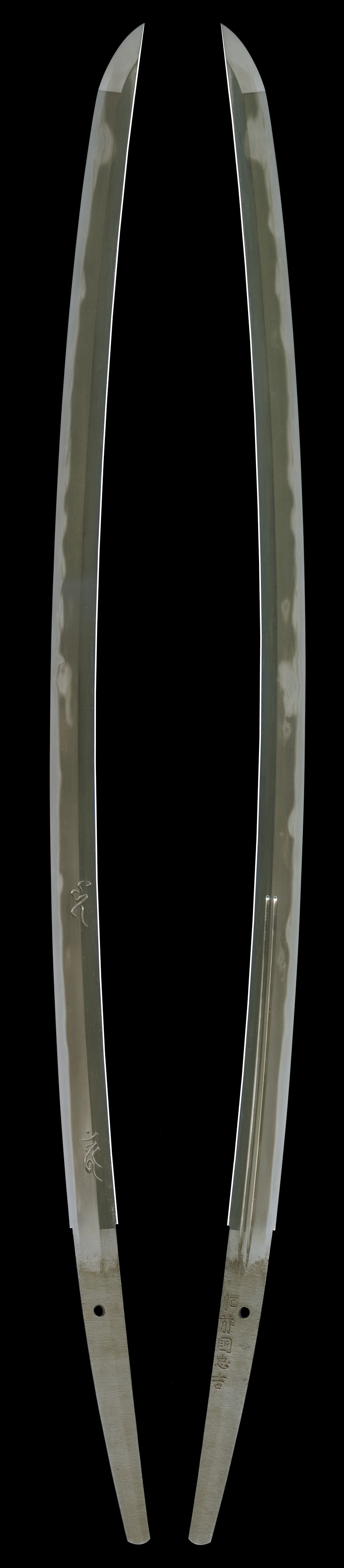
Tadahiro, called Heisakuro, was the legitimate son of the first-generation Hizen Tadayoshi and the second head of the main line at Saga. He was nineteen when his father, by then Musashi no Daijo Tadahiro, died in Kan'ei 9 (1632). The published sources credit both his own talent and the disciples his father had trained, who carried the young head of the house, and his dated work survives from Kan'ei 10. On the twenty-second day of the seventh month of Kan'ei 18 (1641) he received the title Omi no Daijo, and he worked until his death at eighty-one in Genroku 6 (1693). That career of more than sixty years left, in the words of the published sources, more works than any other Hizen smith[[c:1]].
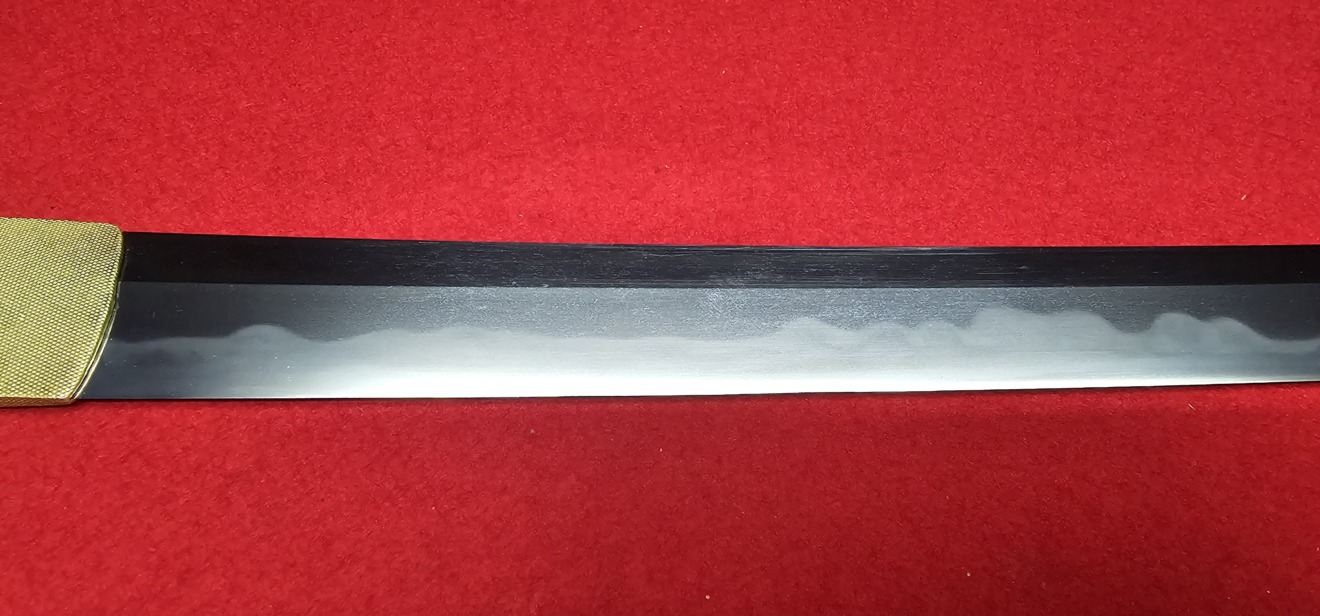
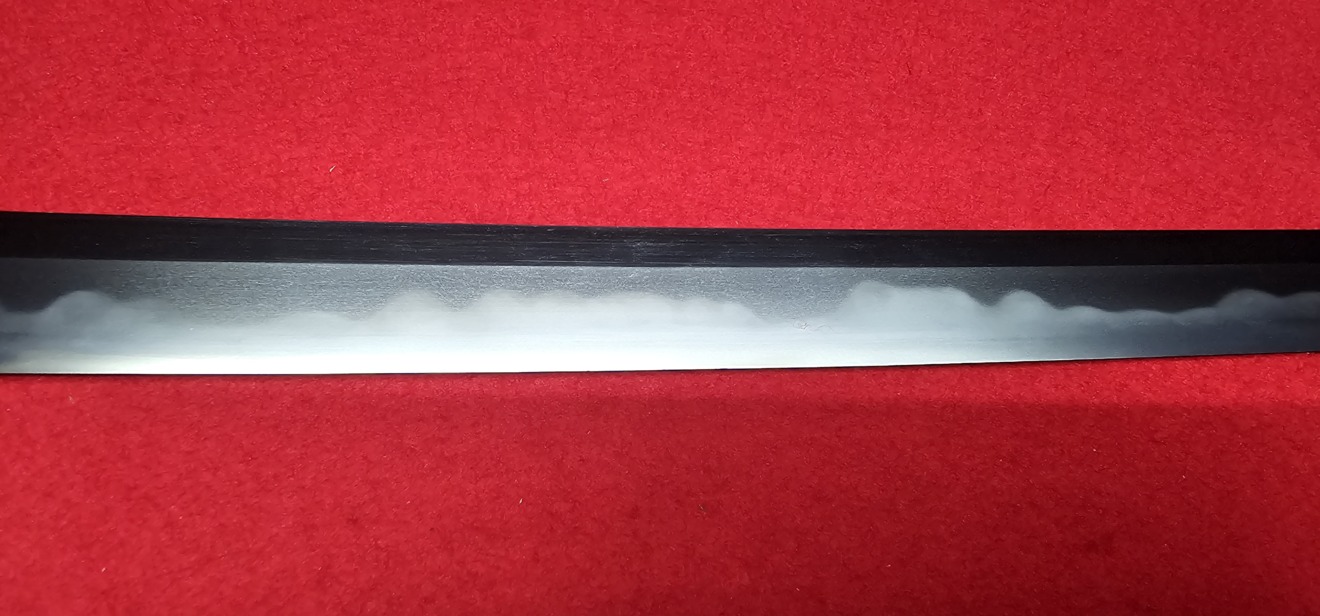
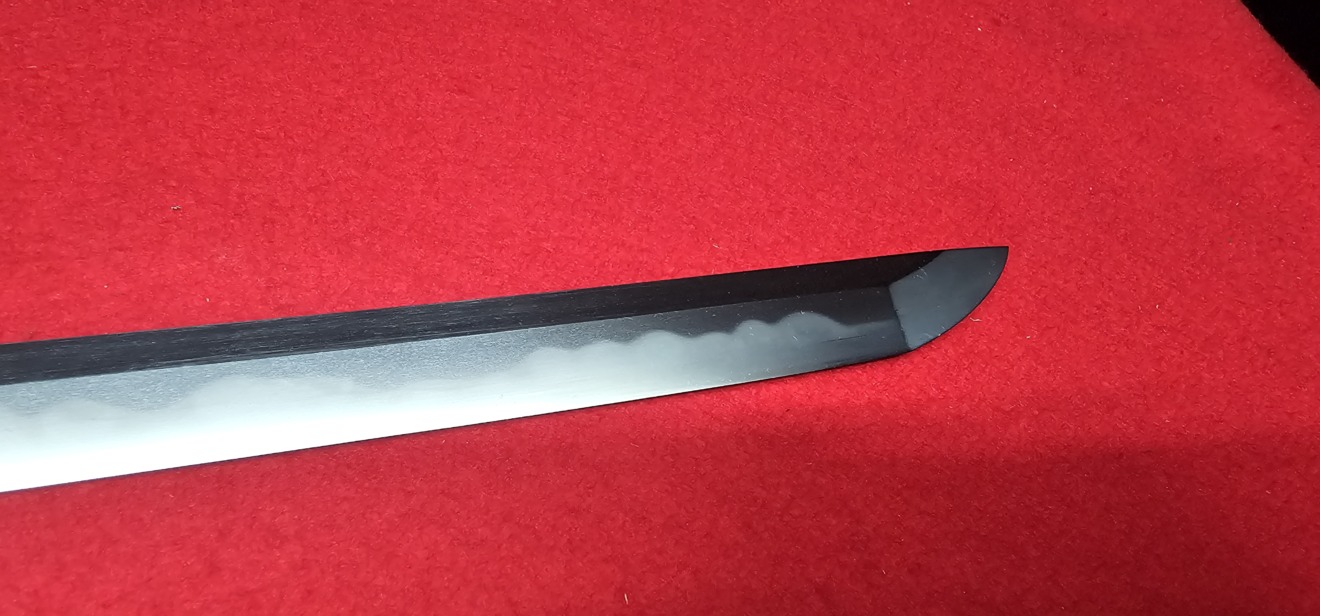
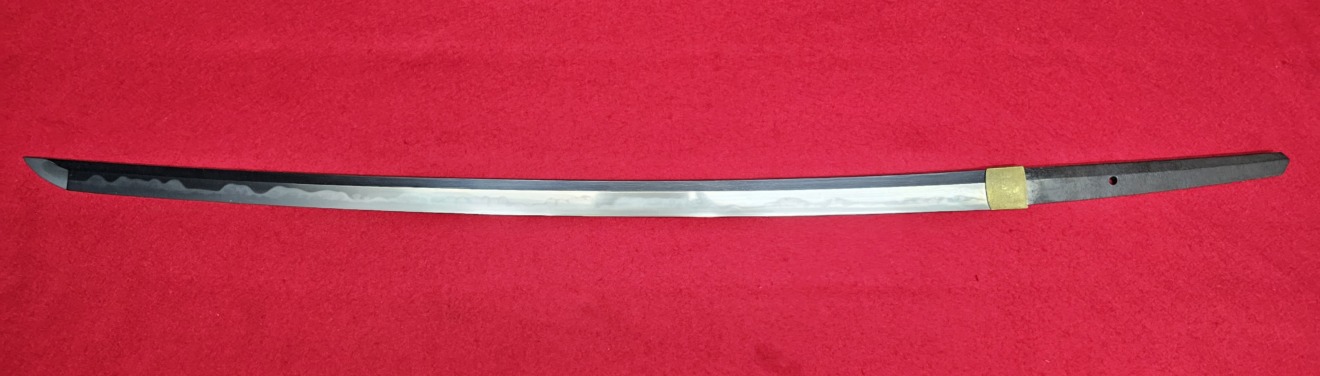
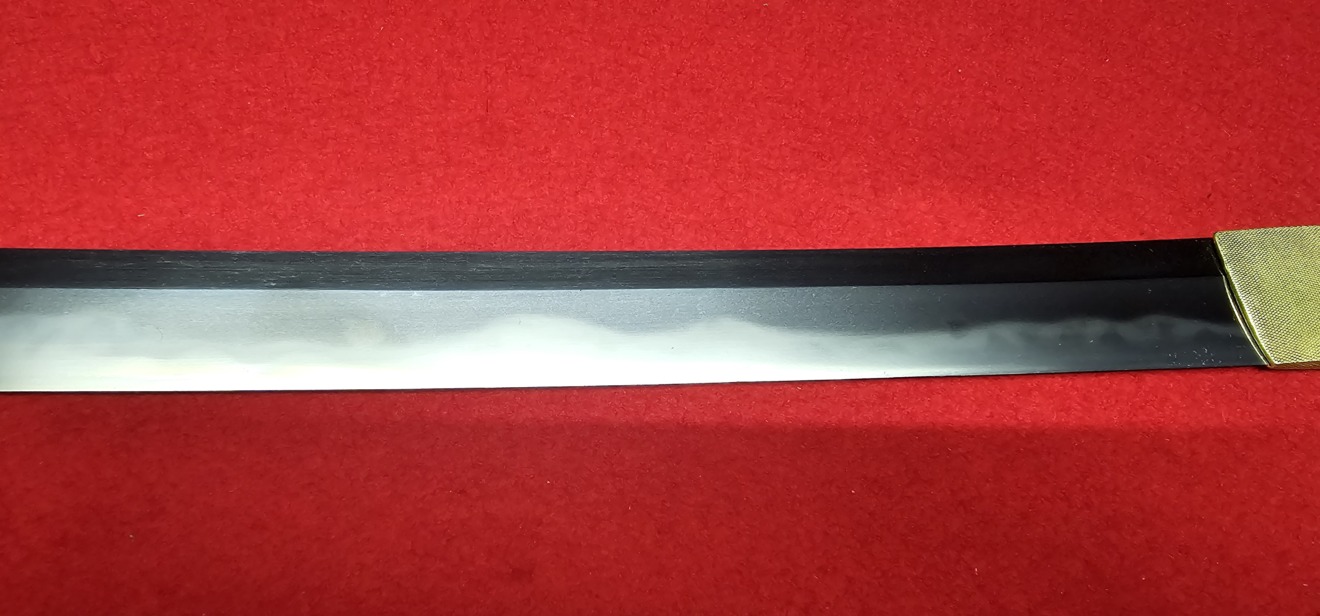
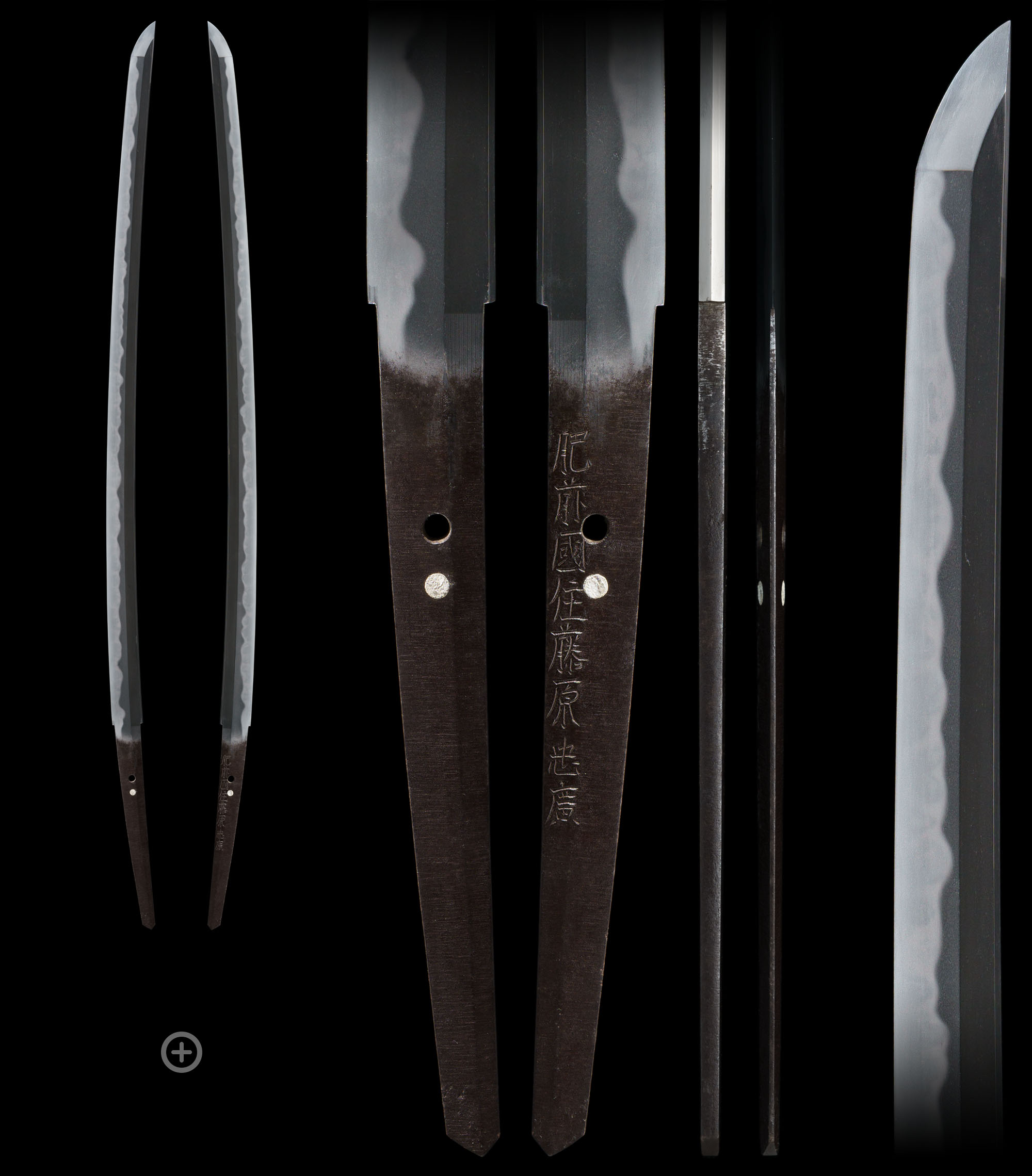
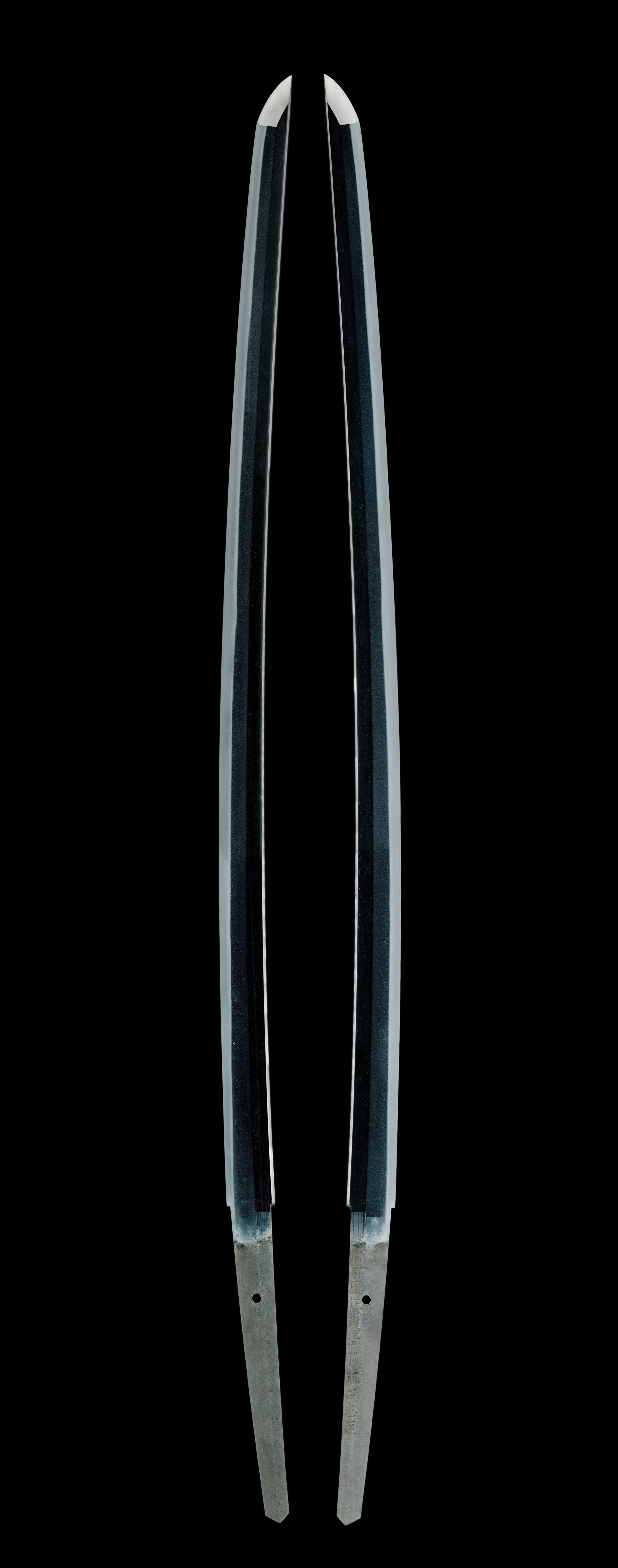
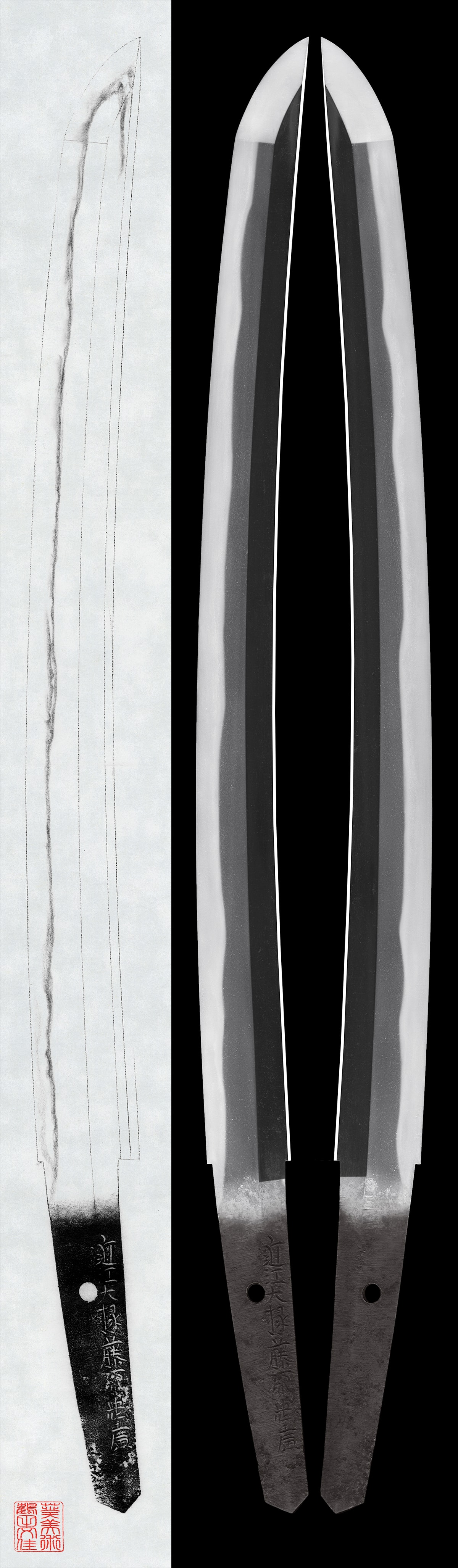
His work falls into two manners, suguha and choji-midare, and the published sources hold him highly accomplished in both, with suguha his greatest specialty[[c:2]]. It is a comparatively straight chu-suguha of deep nioi with ko-nie adhering thickly, at times tinged with a shallow notare and a little ko-gunome, ashi and yo entering well, fine kinsuji and sunagashi running through it. In places the nioiguchi thickens into a band, and it stays bright and clear. The boshi runs straight to a ko-maru. The sugata has the balanced curvature of Hizen work, and on some blades it is broad, long and heavy, with a touch of funbari at the base.
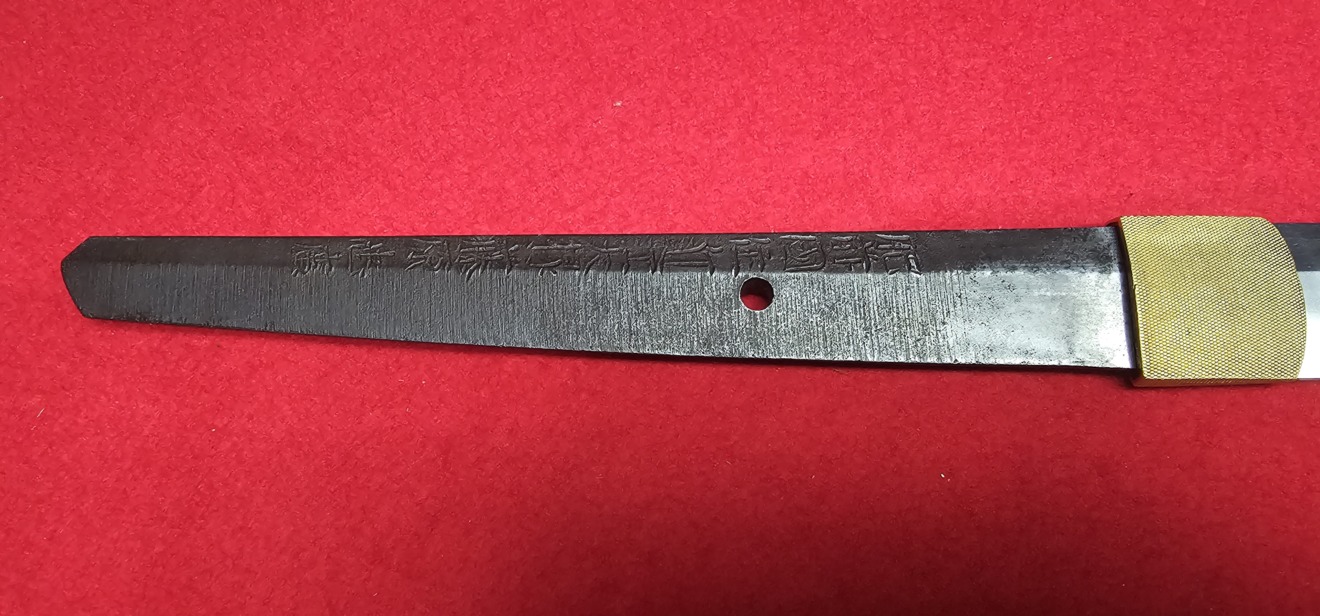
The jigane is the Hizen komenuka-hada: a tightly forged ko-itame with no looseness, ji-nie laid dust-fine and thick, fine chikei entering, the steel clear. On his best blades the published sources describe forging of unmatched quality and both ji and ha clear and brilliant. He was also the first Hizen smith to add the soemei shinkitae saku, "made of truly forged steel", and the published sources observe that this begins with him among Hizen smiths[[c:3]]. Blades bearing it are often of especially fine forging.
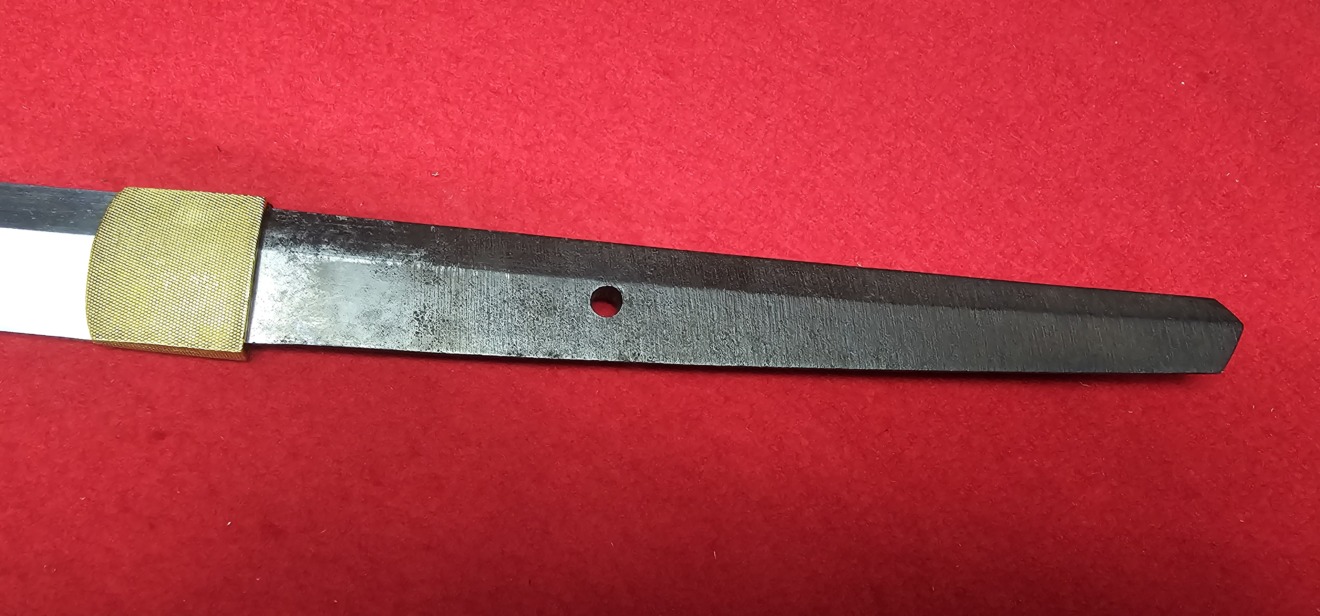
His work divides by period as well as by manner. Before the title he signed every blade Hizen no kuni ju Fujiwara Tadahiro, the same form as his father's presentation signature, and the published sources separate the two hands by the strokes of 藤 and 廣. Many of these early blades are dated; after the title dated pieces become rare, so the Shoho, Keian and Enpo dates on record are prized. The early work is read as the vigor of youth, showing an unconstrained boldness beside his later production[[c:4]], and some of it comes close to his father's Musashi no Daijo work, which the published sources attribute to his father's collaborators still working beside him. His choji-midare runs through both periods. In choji the published sources rank him above even the first generation[[c:5]]: a wide temper of choji with gunome, the heads comparatively even so that the cloves stand shoulder to shoulder, long ashi entering thickly and nie gathering in the valleys. They call it the so-called Hizen long-legged choji[[c:6]]. A Tokubetsu Juyo katana dated the very day he received his title, its chu-suguha written in an archaic manner after Rai work, is read as a commemorative piece[[c:7]]. A small tanto by him, carved probably by Yoshinaga, was aimed at old work such as Rai Kunimitsu[[c:8]].
Within the Hizen main line his long career joins the founder to the later generations. He trained many pupils, and the published sources record that the third-generation and fourth-generation Tadayoshi served as his substitute makers and signers[[c:9]]. Joint works with his son Mutsu no Kami Tadayoshi, each signing one side of the tang, survive in comparatively large numbers. On some of these the published sources judge the forging and temper to be largely the son's hand. His deep-nioi suguha over the komenuka-hada became the measure by which later Hizen work is read.
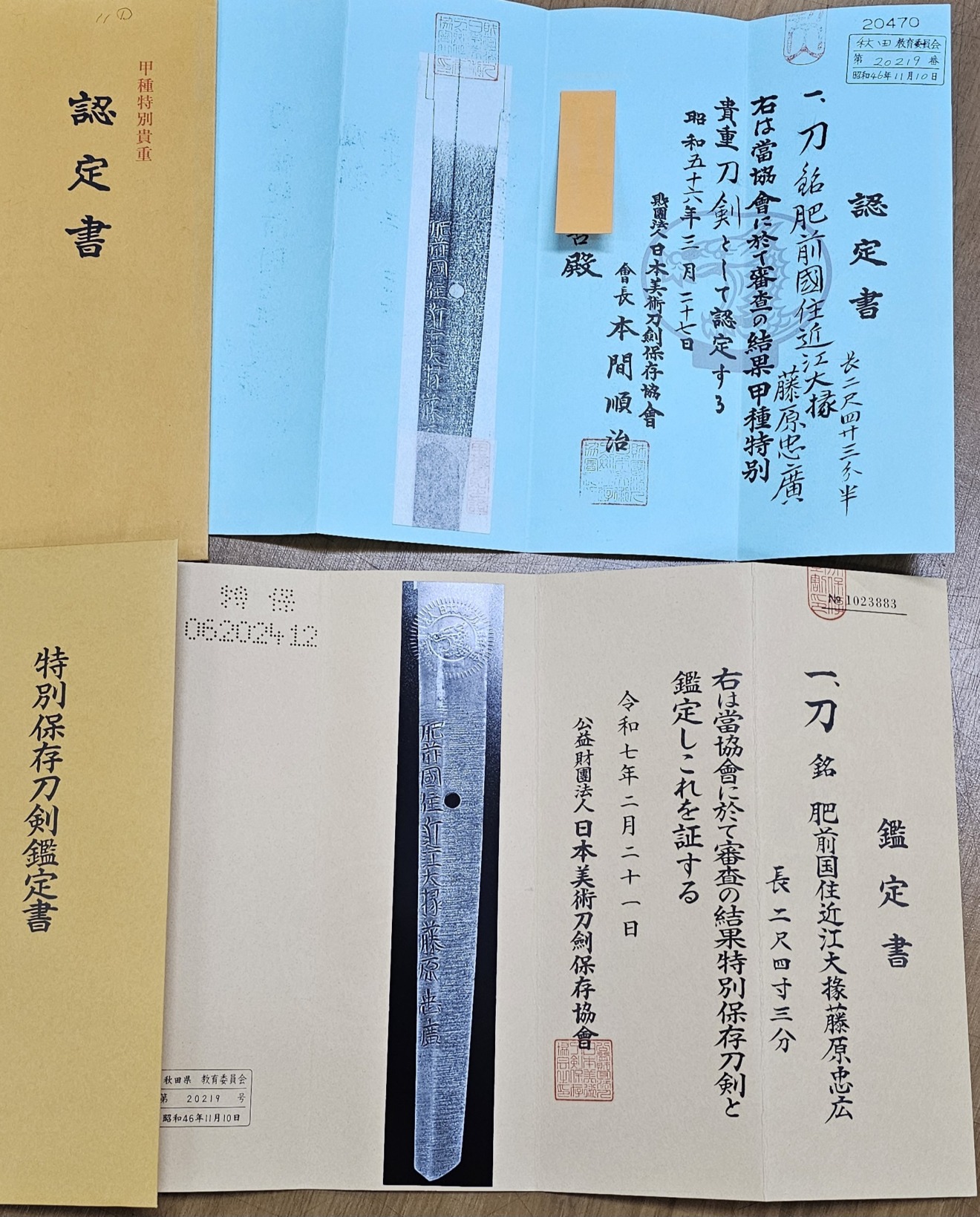
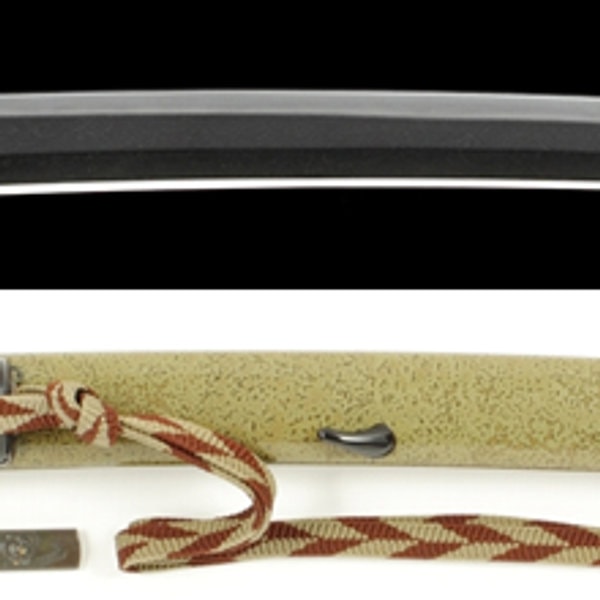
Fujishiro ranks him Jo-jo saku. He has no National Treasures or Important Cultural Properties on record. His standing rests on 131 blades in the Tokubetsu Juyo and Juyo tiers, three of them Tokubetsu Juyo. The published sources call one of these work outstanding among his production[[c:10]], forceful and bold in both ji and ha. Recorded provenance runs through the Imperial Family and the Nabeshima house his line served. One katana was the personal sword of the domain lord Nabeshima Katsushige[[c:11]], and a naginata blade survives in its Nabeshima family mounting for a woman of the house. Because he was so prolific, signed Omi no Daijo Tadahiro blades appear on the market with some regularity. A papered Juyo example is within reach of a patient collector. A Tokubetsu Juyo blade, or one of the dated pre-title pieces, appears only from time to time.