Born in 1884 in Nishimonai, Ogachi-gun, Akita Prefecture (present-day Ugo-machi). Born into a distinguished family, his father, Yosuke, served as town mayor for 30 years.
He studied tenkoku from around age 14 and used the go "Ka". His seals were favored by Inukai Tsuyoshi, Zhang Xueliang, and others, and Inukai praised him highly, saying, "Wherever there are brushes and inkstones, there must be a seal by Ka."
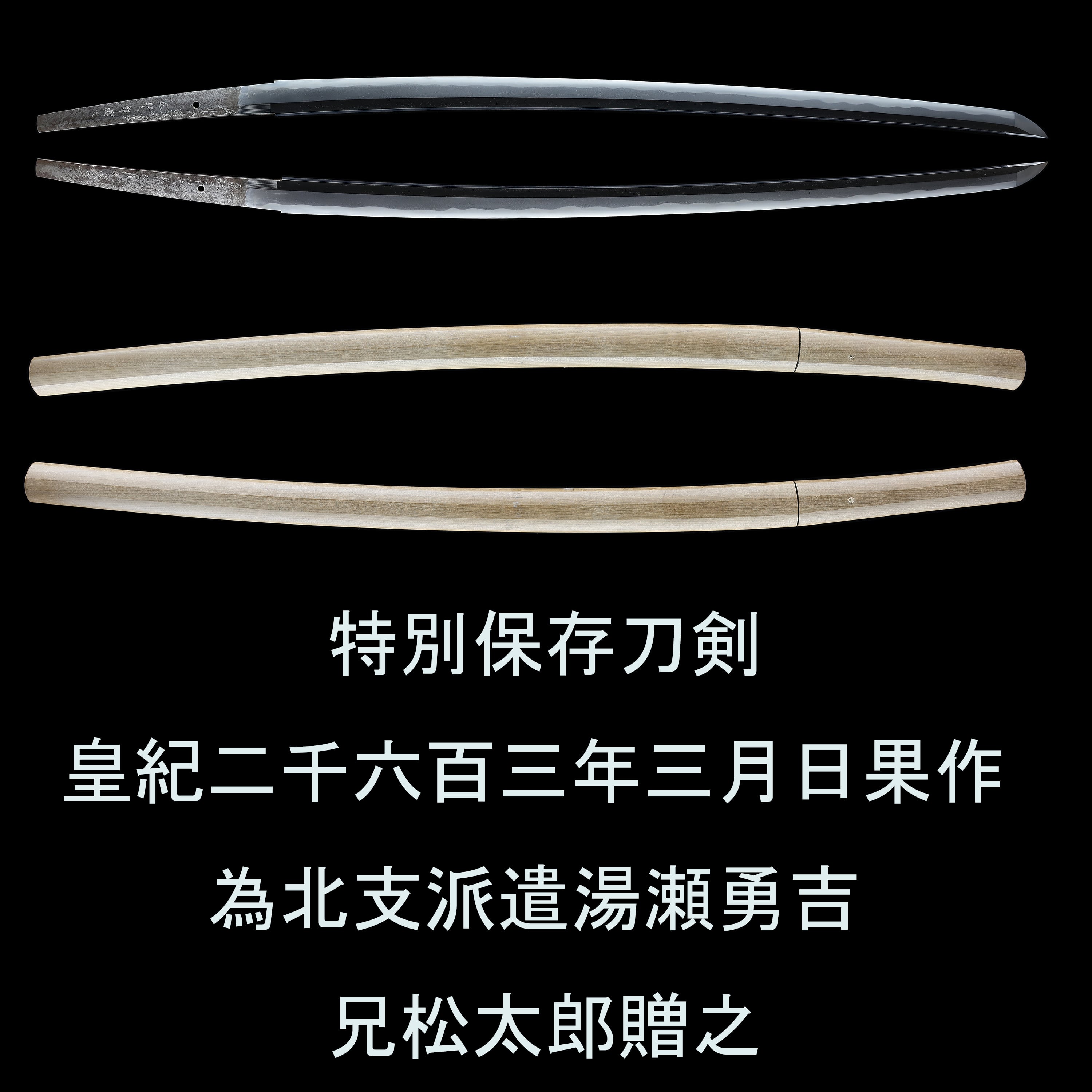
Familiar with swords through his grandfather's influence, he revived sword-forging methods that had died out in the Kamakura period. He produced mainly tanto and attracted attention at the Teiten in 1934. The following year, he won the highest award at the Shinsaku Nihonto Kyoshinkai, and thereafter received the Prime Minister's Award, the Minister of the Army Award, and others, and also produced swords for presentation to the Imperial Family. In 1937, he was granted the title of "Kokko" by the Dai Nihon Tosho Kyokai.
In 1942, he was ranked at the highest level, "Shinpin", in Kurihara Hikosaburo's "Seidai Tosho Iretsu Hyo", leaving his name as a representative tosho of the pre-war and wartime eras.
According to the Akita Kazuno City Public Relations:
Mr. Yuze Yukichi (born in Taisho 8 in Towada Oyu) reached his 100th birthday on August 22, 2019,
and Deputy Mayor Abe presented a certificate of recognition and celebratory money to celebrate his longevity.
Mr. Yuze enlisted in the military for 8 years and experienced military school and overseas service.
Machine translation from the shop's Japanese · may contain errors ·
Born in 1884 in Nishimonai, Ogachi-gun, Akita Prefecture (present-day Ugo-machi). Born into a distinguished family, his father, Yosuke, served as town mayor for 30 years.
He studied tenkoku from around age 14 and used the go "Ka". His seals were favored by Inukai Tsuyoshi, Zhang Xueliang, and others, and Inukai praised him highly, saying, "Wherever there are brushes and inkstones, there must be a seal by Ka."
Familiar with swords through his grandfather's influence, he revived sword-forging methods that had died out in the Kamakura period. He produced mainly tanto and attracted attention at the Teiten in 1934. The following year, he won the highest award at the Shinsaku Nihonto Kyoshinkai, and thereafter received the Prime Minister's Award, the Minister of the Army Award, and others, and also produced swords for presentation to the Imperial Family. In 1937, he was granted the title of "Kokko" by the Dai Nihon Tosho Kyokai.
In 1942, he was ranked at the highest level, "Shinpin", in Kurihara Hikosaburo's "Seidai Tosho Iretsu Hyo", leaving his name as a representative tosho of the pre-war and wartime eras.
According to the Akita Kazuno City Public Relations:
Mr. Yuze Yukichi (born in Taisho 8 in Towada Oyu) reached his 100th birthday on August 22, 2019,
and Deputy Mayor Abe presented a certificate of recognition and celebratory money to celebrate his longevity.
Mr. Yuze enlisted in the military for 8 years and experienced military school and overseas service.
The twentieth century nearly killed the craft twice: wartime distortion, then the occupation ban. The NBTHK’s founding in 1948 and licensed forging from 1953 rebuilt the sword as an art, crowned by Living National Treasures and the mukansa rank.
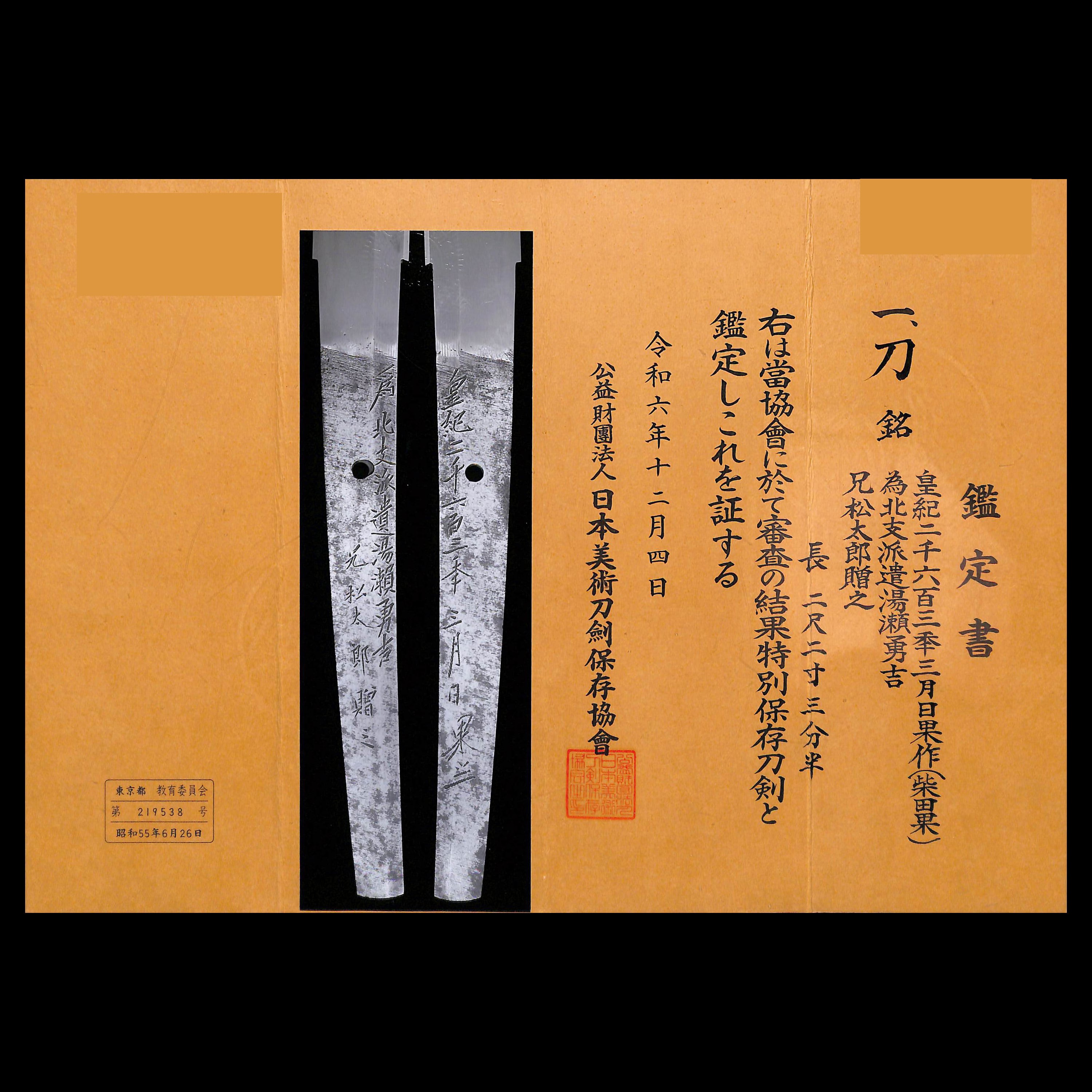
A Hozon-certified blade judged to show notably superior workmanship and a better state of preservation. The bar is higher: re-tempered blades and most unsigned Muromachi/Edo works are excluded.
About the NBTHK›
The NBTHK (Nihon Bijutsu Tōken Hozon Kyōkai, the Society for the Preservation of Japanese Art Swords) is a public-interest incorporated foundation founded in 1948 and supervised by Japan’s Agency for Cultural Affairs (Bunkachō); it is based at the Japanese Sword Museum in Tokyo. Its expert panels physically examine each submitted work (shinsa) and issue a certificate (kanteishō) ranking it by artistic and historical merit. NBTHK papers are the most widely recognized standard of authentication for Japanese swords and fittings.
Except where the item is defective, we do not accept returns as a rule. In the case of an error on our part, please contact us by email within 3 days of the item's arrival.

 NihontoWatch