Real name, Shibata Masataro. Born in Meiji 17 in Nishimonai, Ogachi-gun, Akita Prefecture (present-day Nishimonai, Ugo-machi). His family home was that of a long-standing wealthy landowner, and his father, Mr. Shibata Yosuke, served as the mayor of Ugo-machi for 30 years.
He began tenkoku (seal carving) around the age of 14. In his adulthood, he used the go Ka, and his works were so highly favored by figures such as Inukai Tsuyoshi and Zhang Xueliang (the eldest son of Zhang Zuolin) that Inukai is said to have praised him by saying, "Wherever my brush and inkstone are, Mr. Ka's seal must be there."
He also had a friendship with Dr. Honma Junji (Kunzan), and it is said that the "Kunzan" seal and the "Honma Junji" seal used by Dr. Honma Junji were both made by Shibata.
Known as a man of many talents and diverse interests, he claimed "three years for one art" and was a 4th dan in kendo, a 3rd dan in judo, a leading figure in Akita Kita-ryu yokyoku, and active in taiko, calligraphy, and haiku (haigo Ajisai). He also had a side as an inventor, obtaining over 30 patents including a disposable chopstick manufacturing machine. He also served one term in the Akita Prefectural Assembly.
Influenced by and respecting the thinker Yasuoka Masatsu, he took Mokkei as his go after Yasuoka wrote in a magazine about Masataro, "In the land of Akita, there is a man of vast and profound character; I name him Mokkei."
Attracted by the sword collecting hobby of his grandfather, Mr. Shibata Tasuke, he practiced sword forging from an early age and became a representative tosho of the pre-war and wartime eras. He is said to have revived forging methods thought to have died out around the Kamakura period by consulting old literature; in his work, tanto are numerous, while katana are few.
He achieved 2nd place in the Teiten of Showa 9 (1934). Despite being unknown at the time of his Teiten entry, the workmanship was so excellent that it was even rumored to be a plagiarism where he had cut his own mei into a work by Samonji, which instead caused his name to become widely known.
The following year, at the Shinsaku Nihonto Kyoshinkai Ten, he received the Special Highest Award out of five hundred entries. Thereafter, he achieved numerous awards such as the Prime Minister's Award, Special Award, and Army Minister's Award, and gained the honor of delivering kento to the Imperial Family; in January of Showa 12 (1937), he was granted the title of "Kokko" by the Dai Nippon Tosho Kyokai.
Even in the "Seitai Tosho Iretsuhyo," a provisional ranking table of modern tosho established by Kurihara Hikosaburo in Showa 17 (1942), he was placed in the highest rank, the "Shinpin no Retsu," and in Showa 21 (1946), he served as a member of the first sword judging committee under Imperial Edict No. 300, the "Ordinance for the Prohibition of Possession of Firearms and Other Weapons."
During the war, he also served as a Rikugun Jumei Tosho and cut his mei as "Ka." His eldest son, Mr. Shibata Seitaro, is also known as a tosho and cuts the mei "Ko."
He was known for possessing the meibutsu "Sayo Samonji," and out of his great love for it, he gave his own tea room the ango "Sayosa-an."
What he loved most was the tanto meibutsu Sayo Samonji, and because of this, he used the go Sayosa-an. Alongside this, he possessed tachi by Kobizen Masatsune and Awataguchi Kuniyoshi (Sayosa-an Kuniyoshi), and all three blades are Juyo Bunkazai. (Honma Junji, "Natsukashii Hitobito")
Died March 12, Showa 28 (1953).
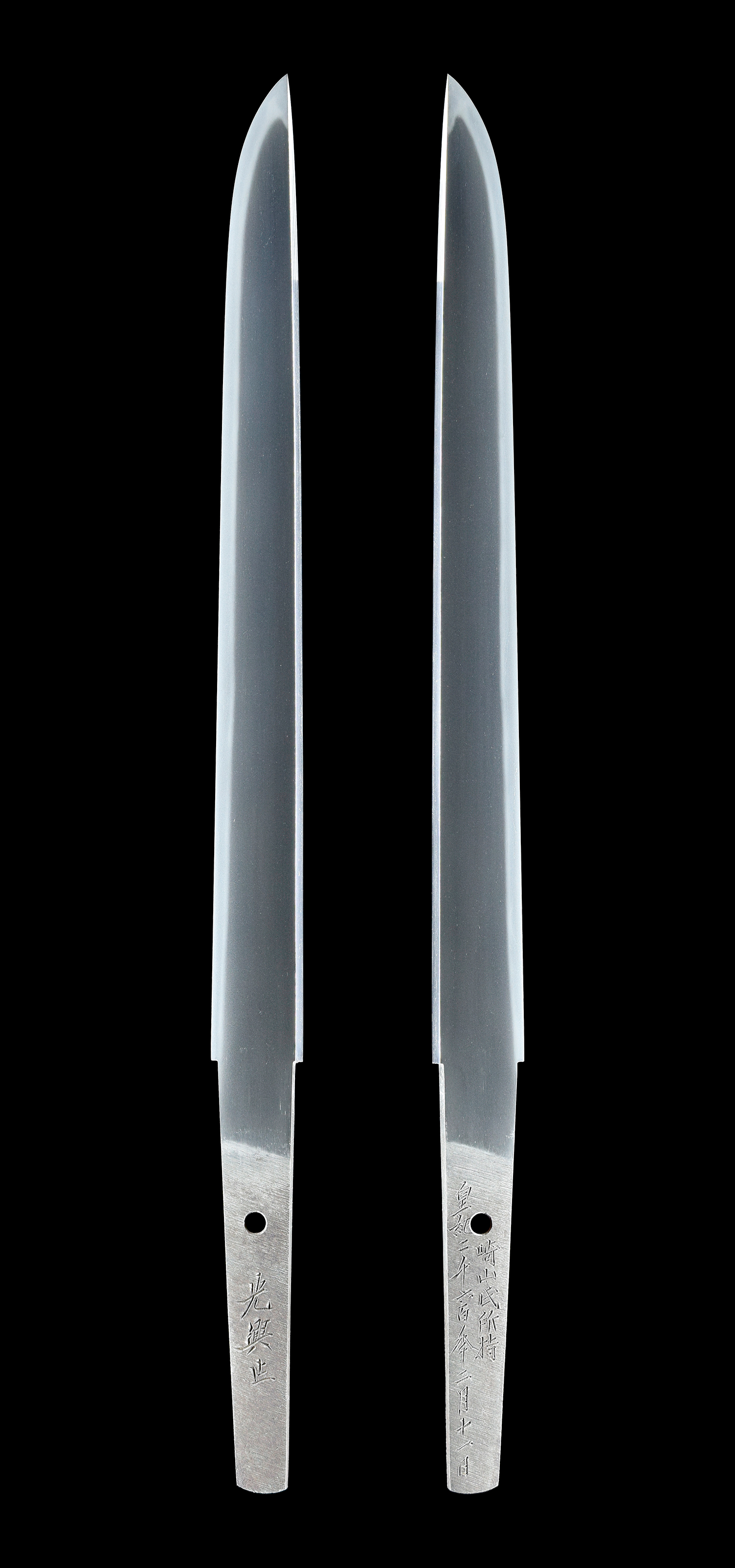
This tanto was forged by order of Mr. Sakiyama Yoshiharu, a Japanese businessman who served as the president of Daido Kaiun and chairman of Dainichi Kaiun, and who owned many famous swords as a dedicated collector; this is a masterpiece formerly in the collection of Mr. Sakiyama Yoshiharu, appearing in the world from the Sakiyama family for the first time.
*Katsuko, the former wife of Ishihara Kiyoshi—who was the biological father of the brothers Ishihara Shintaro, who served as Governor of Tokyo, and the actor Ishihara Yujiro—is the niece of Mr. Sakiyama Yoshiharu's wife.
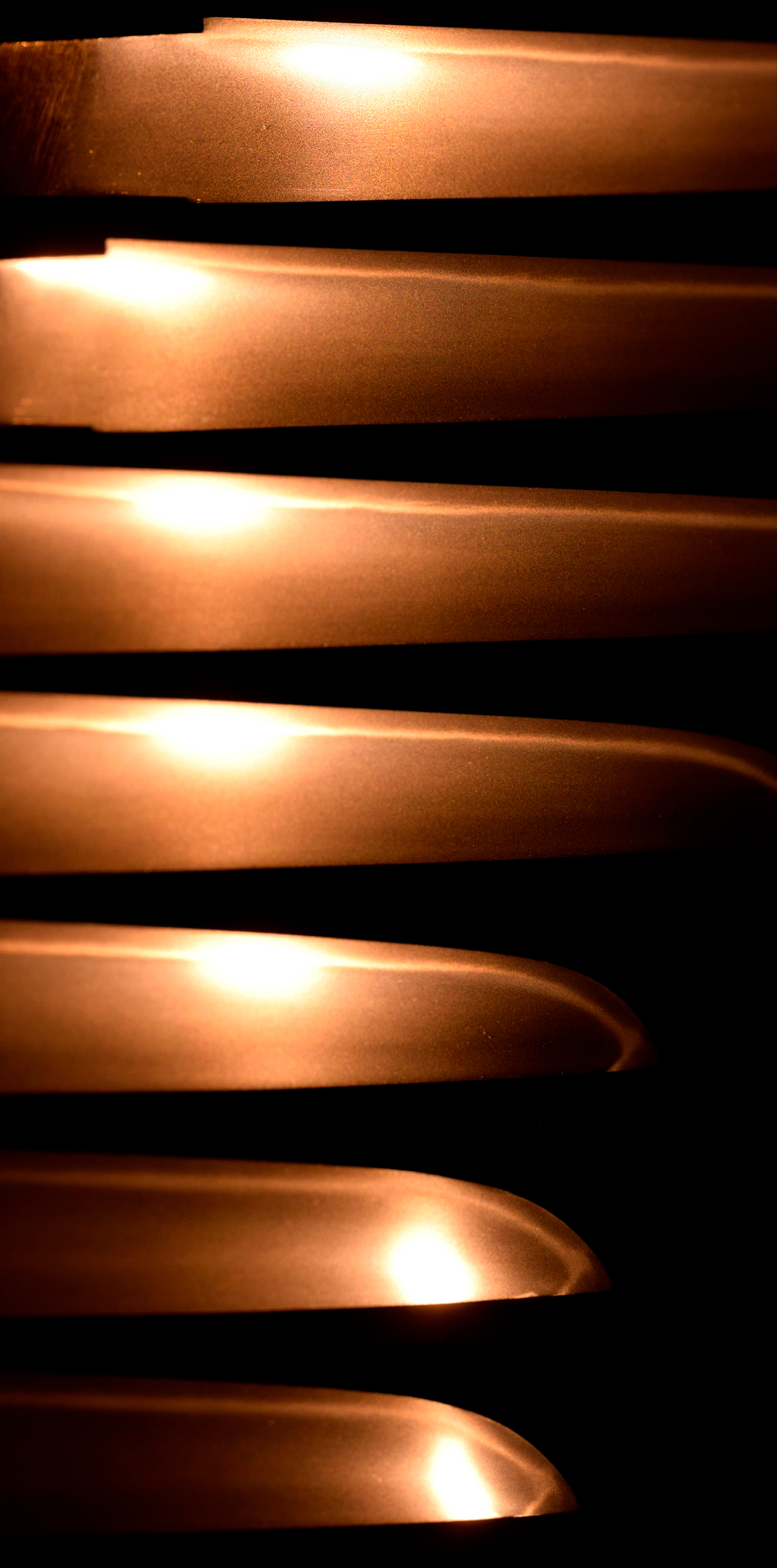
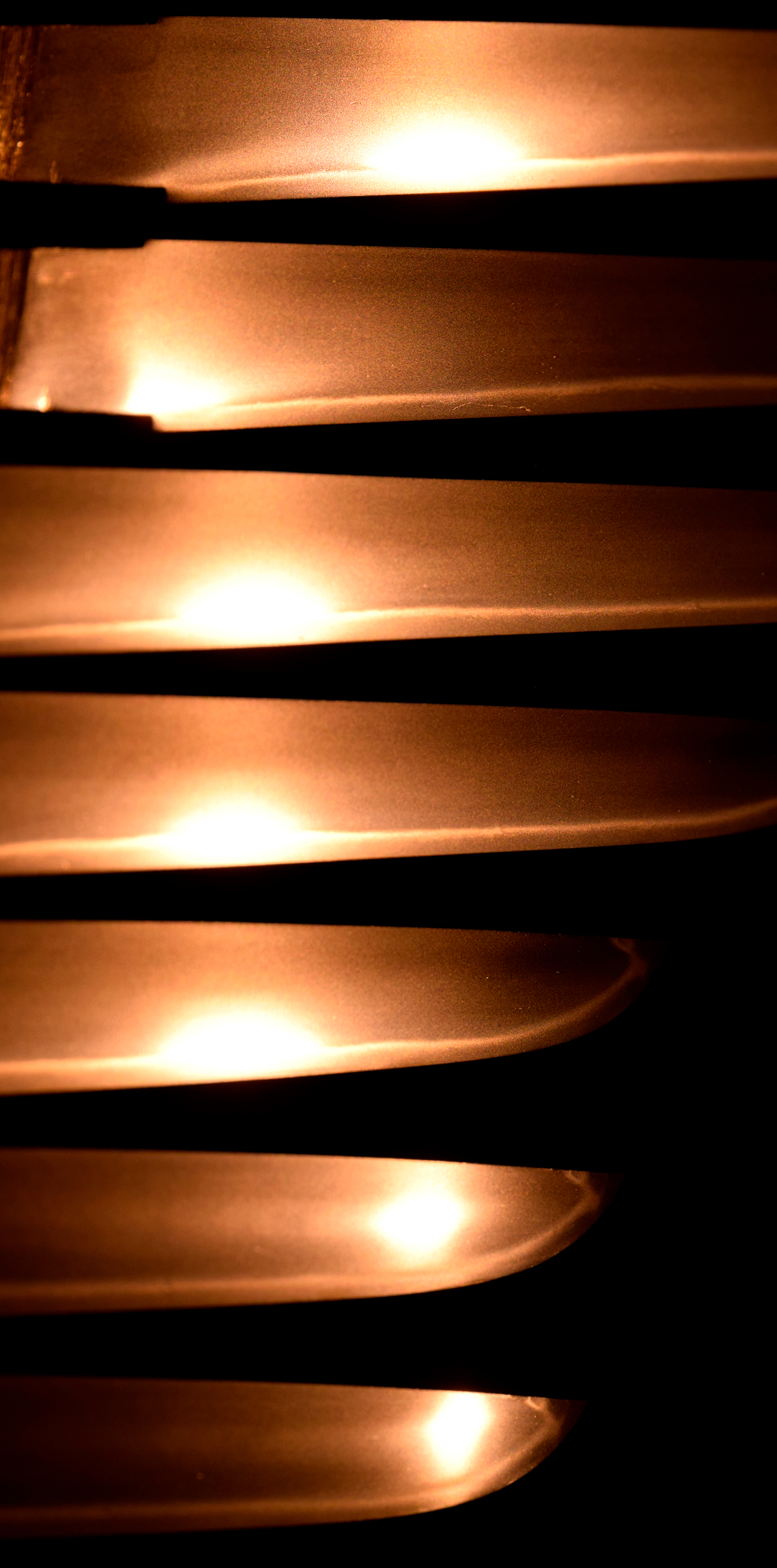
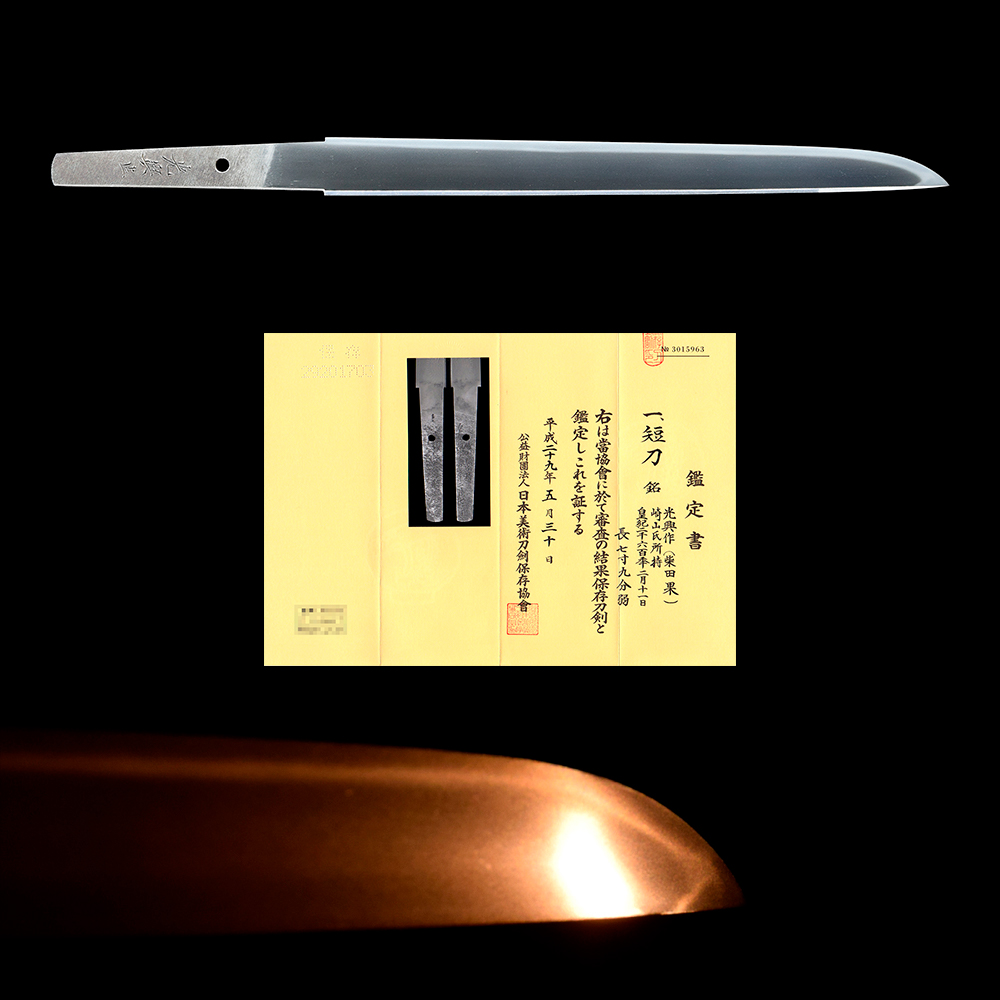
It is in hira-zukuri with a mitsumune, the shape is exceedingly good and elegant, the hira-niku is abundant, the jitetsu is a well-kneaded and tight ko-itame hada, with ji-nie attached and refined beauty, and fine chikei can be seen deep within the steel like sand patterns seen at the bottom of water; the hamon is a suguha tempered with a bright nioiguchi, kinsuji are seen within the ha, and minute yet abundant hataraki entwined with the jitetsu are prominently seen at the habuchi, while the boshi is sugu with a maru kaeri.
This sword, which came from the Sakiyama family, was in a somewhat cloudy state due to insufficient maintenance for a long time, but we have applied a high-quality polish at our shop this time. You can fully enjoy the clarity of the ji and ha just after being polished.
Machine translation from the shop's Japanese · may contain errors ·
Real name, Shibata Masataro. Born in Meiji 17 in Nishimonai, Ogachi-gun, Akita Prefecture (present-day Nishimonai, Ugo-machi). His family home was that of a long-standing wealthy landowner, and his father, Mr. Shibata Yosuke, served as the mayor of Ugo-machi for 30 years.
He began tenkoku (seal carving) around the age of 14. In his adulthood, he used the go Ka, and his works were so highly favored by figures such as Inukai Tsuyoshi and Zhang Xueliang (the eldest son of Zhang Zuolin) that Inukai is said to have praised him by saying, "Wherever my brush and inkstone are, Mr. Ka's seal must be there."
He also had a friendship with Dr. Honma Junji (Kunzan), and it is said that the "Kunzan" seal and the "Honma Junji" seal used by Dr. Honma Junji were both made by Shibata.
Known as a man of many talents and diverse interests, he claimed "three years for one art" and was a 4th dan in kendo, a 3rd dan in judo, a leading figure in Akita Kita-ryu yokyoku, and active in taiko, calligraphy, and haiku (haigo Ajisai). He also had a side as an inventor, obtaining over 30 patents including a disposable chopstick manufacturing machine. He also served one term in the Akita Prefectural Assembly.
Influenced by and respecting the thinker Yasuoka Masatsu, he took Mokkei as his go after Yasuoka wrote in a magazine about Masataro, "In the land of Akita, there is a man of vast and profound character; I name him Mokkei."
Attracted by the sword collecting hobby of his grandfather, Mr. Shibata Tasuke, he practiced sword forging from an early age and became a representative tosho of the pre-war and wartime eras. He is said to have revived forging methods thought to have died out around the Kamakura period by consulting old literature; in his work, tanto are numerous, while katana are few.
He achieved 2nd place in the Teiten of Showa 9 (1934). Despite being unknown at the time of his Teiten entry, the workmanship was so excellent that it was even rumored to be a plagiarism where he had cut his own mei into a work by Samonji, which instead caused his name to become widely known.
The following year, at the Shinsaku Nihonto Kyoshinkai Ten, he received the Special Highest Award out of five hundred entries. Thereafter, he achieved numerous awards such as the Prime Minister's Award, Special Award, and Army Minister's Award, and gained the honor of delivering kento to the Imperial Family; in January of Showa 12 (1937), he was granted the title of "Kokko" by the Dai Nippon Tosho Kyokai.
Even in the "Seitai Tosho Iretsuhyo," a provisional ranking table of modern tosho established by Kurihara Hikosaburo in Showa 17 (1942), he was placed in the highest rank, the "Shinpin no Retsu," and in Showa 21 (1946), he served as a member of the first sword judging committee under Imperial Edict No. 300, the "Ordinance for the Prohibition of Possession of Firearms and Other Weapons."
During the war, he also served as a Rikugun Jumei Tosho and cut his mei as "Ka." His eldest son, Mr. Shibata Seitaro, is also known as a tosho and cuts the mei "Ko."
He was known for possessing the meibutsu "Sayo Samonji," and out of his great love for it, he gave his own tea room the ango "Sayosa-an."
What he loved most was the tanto meibutsu Sayo Samonji, and because of this, he used the go Sayosa-an. Alongside this, he possessed tachi by Kobizen Masatsune and Awataguchi Kuniyoshi (Sayosa-an Kuniyoshi), and all three blades are Juyo Bunkazai. (Honma Junji, "Natsukashii Hitobito")
Died March 12, Showa 28 (1953).
This tanto was forged by order of Mr. Sakiyama Yoshiharu, a Japanese businessman who served as the president of Daido Kaiun and chairman of Dainichi Kaiun, and who owned many famous swords as a dedicated collector; this is a masterpiece formerly in the collection of Mr. Sakiyama Yoshiharu, appearing in the world from the Sakiyama family for the first time.
*Katsuko, the former wife of Ishihara Kiyoshi—who was the biological father of the brothers Ishihara Shintaro, who served as Governor of Tokyo, and the actor Ishihara Yujiro—is the niece of Mr. Sakiyama Yoshiharu's wife.
It is in hira-zukuri with a mitsumune, the shape is exceedingly good and elegant, the hira-niku is abundant, the jitetsu is a well-kneaded and tight ko-itame hada, with ji-nie attached and refined beauty, and fine chikei can be seen deep within the steel like sand patterns seen at the bottom of water; the hamon is a suguha tempered with a bright nioiguchi, kinsuji are seen within the ha, and minute yet abundant hataraki entwined with the jitetsu are prominently seen at the habuchi, while the boshi is sugu with a maru kaeri.
This sword, which came from the Sakiyama family, was in a somewhat cloudy state due to insufficient maintenance for a long time, but we have applied a high-quality polish at our shop this time. You can fully enjoy the clarity of the ji and ha just after being polished.
The twentieth century nearly killed the craft twice: wartime distortion, then the occupation ban. The NBTHK’s founding in 1948 and licensed forging from 1953 rebuilt the sword as an art, crowned by Living National Treasures and the mukansa rank.
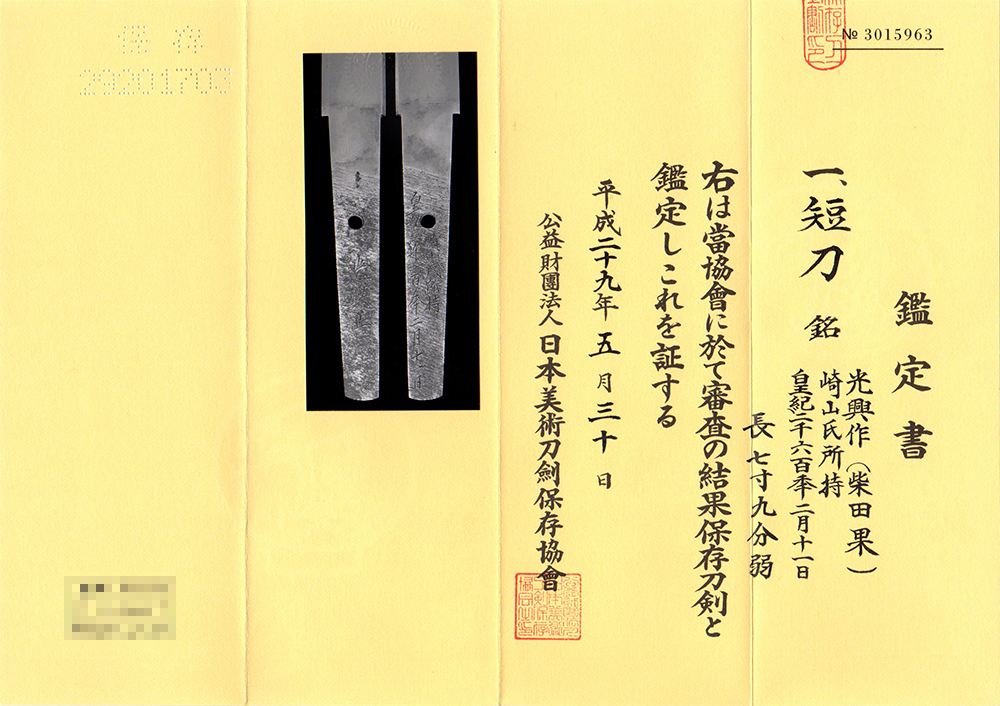
Certifies a genuine blade worth preserving: a signature confirmed correct, or, if unsigned, an era, province, and school that the NBTHK can reliably identify.
The NBTHK (Nihon Bijutsu Tōken Hozon Kyōkai, the Society for the Preservation of Japanese Art Swords) is a public-interest incorporated foundation founded in 1948 and supervised by Japan’s Agency for Cultural Affairs (Bunkachō); it is based at the Japanese Sword Museum in Tokyo. Its expert panels physically examine each submitted work (shinsa) and issue a certificate (kanteishō) ranking it by artistic and historical merit. NBTHK papers are the most widely recognized standard of authentication for Japanese swords and fittings.
As a rule we do not accept returns, except when we have sent a different item from the one ordered or when there is a significant discrepancy between the description and the item. If you wish to return an item, please contact us within 3 days of its arrival and then send it back.

 NihontoWatch