The twentieth century nearly killed the craft twice: wartime distortion, then the occupation ban. The NBTHK’s founding in 1948 and licensed forging from 1953 rebuilt the sword as an art, crowned by Living National Treasures and the mukansa rank.
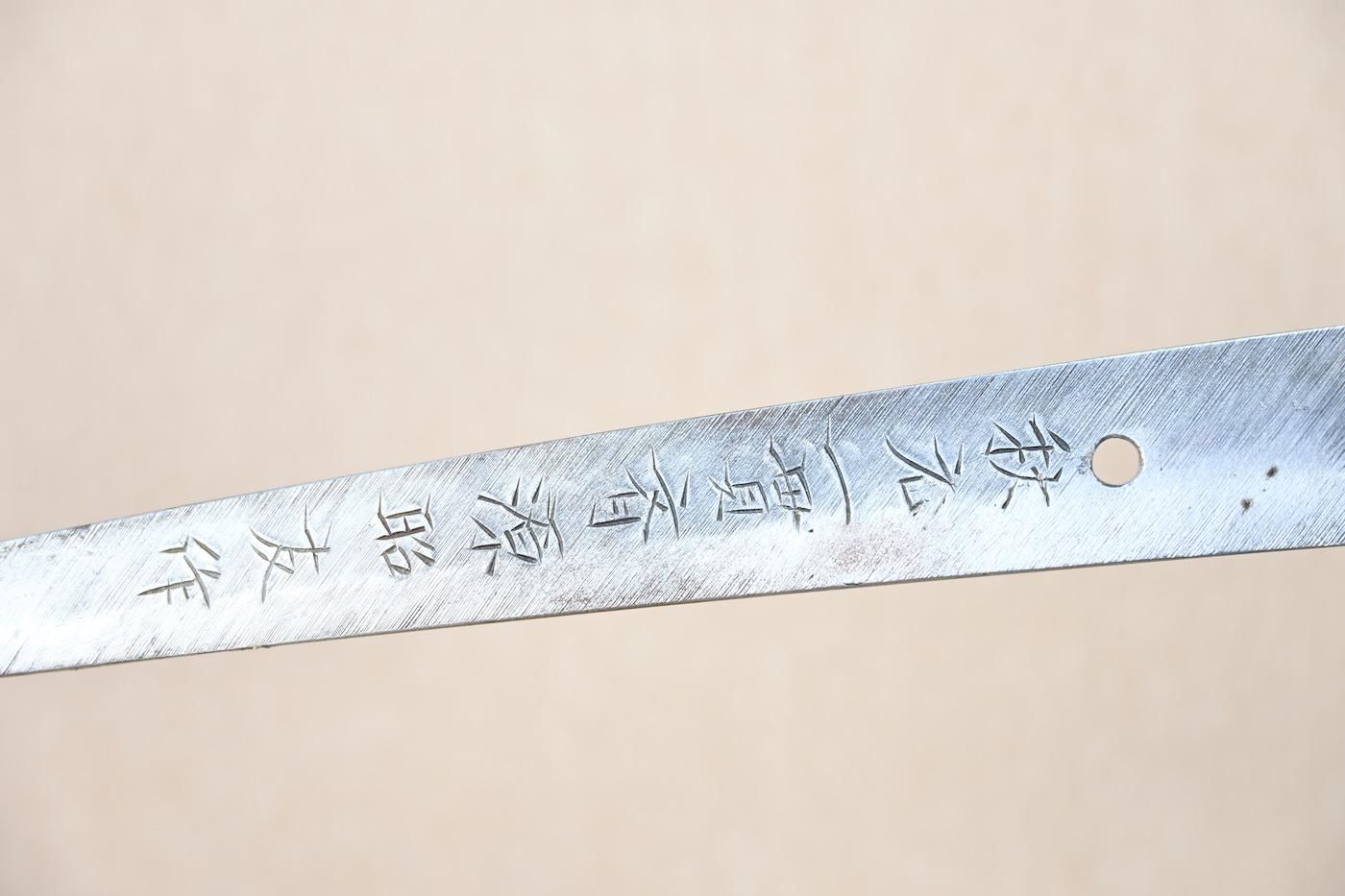
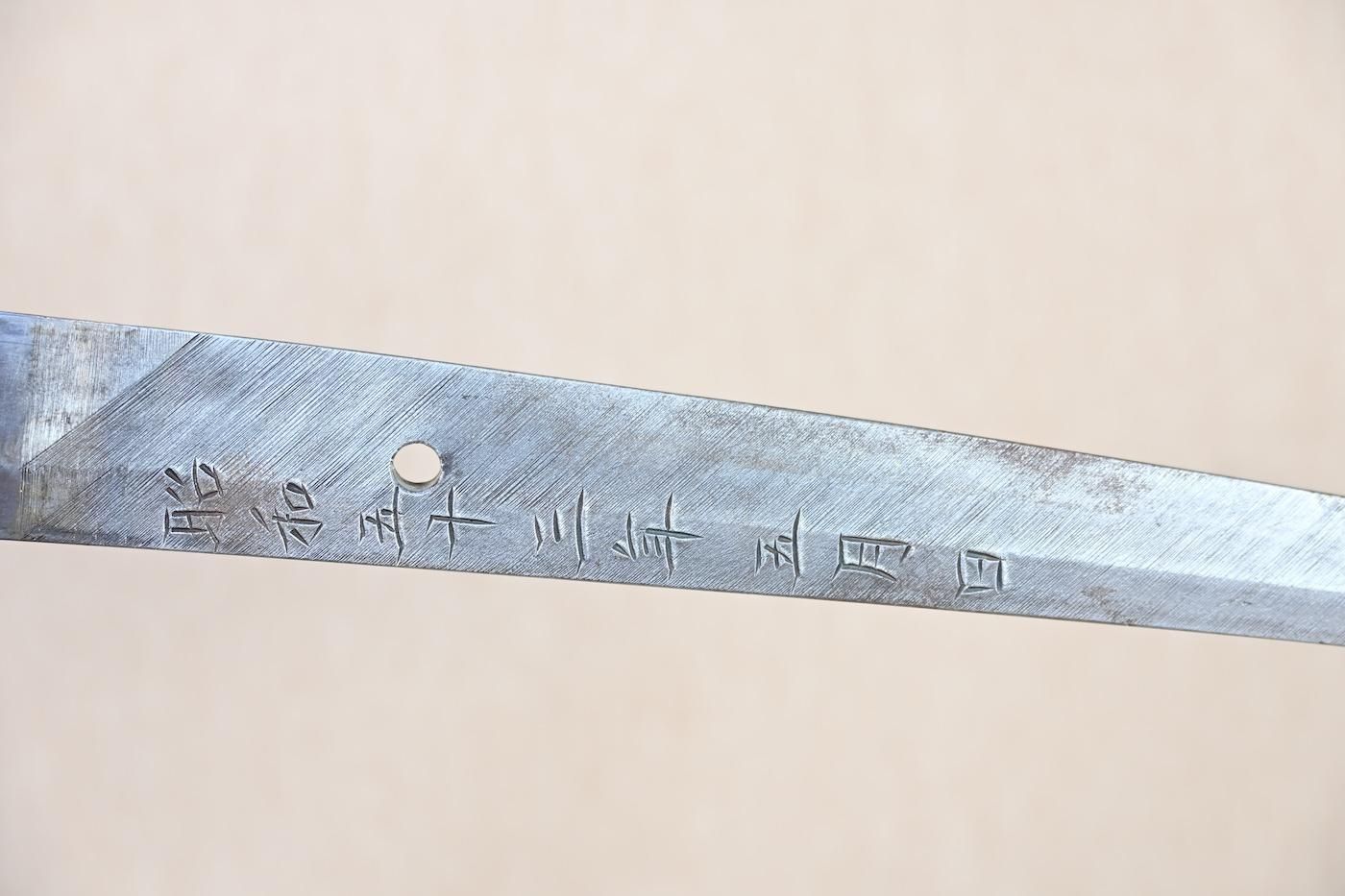
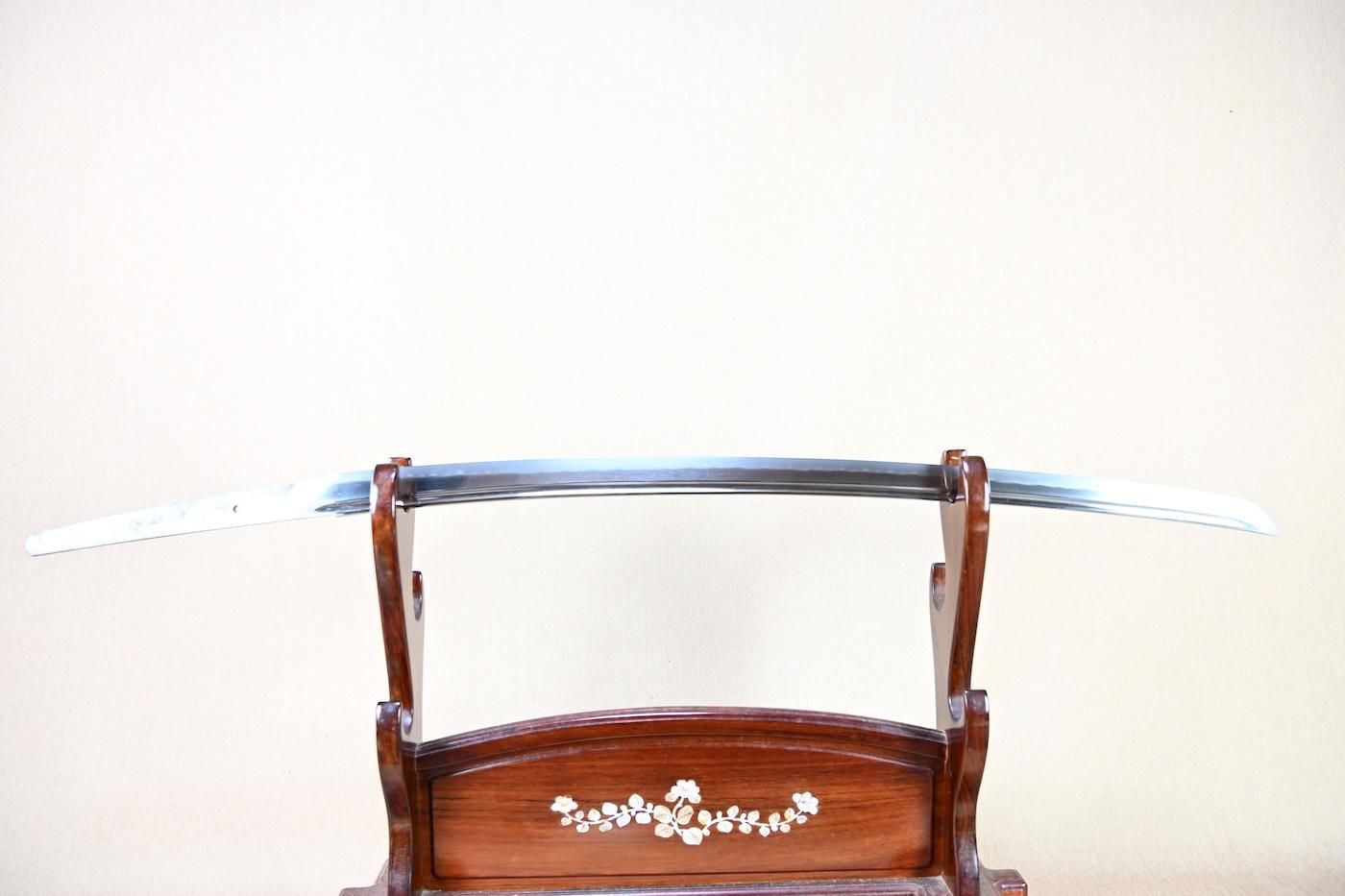
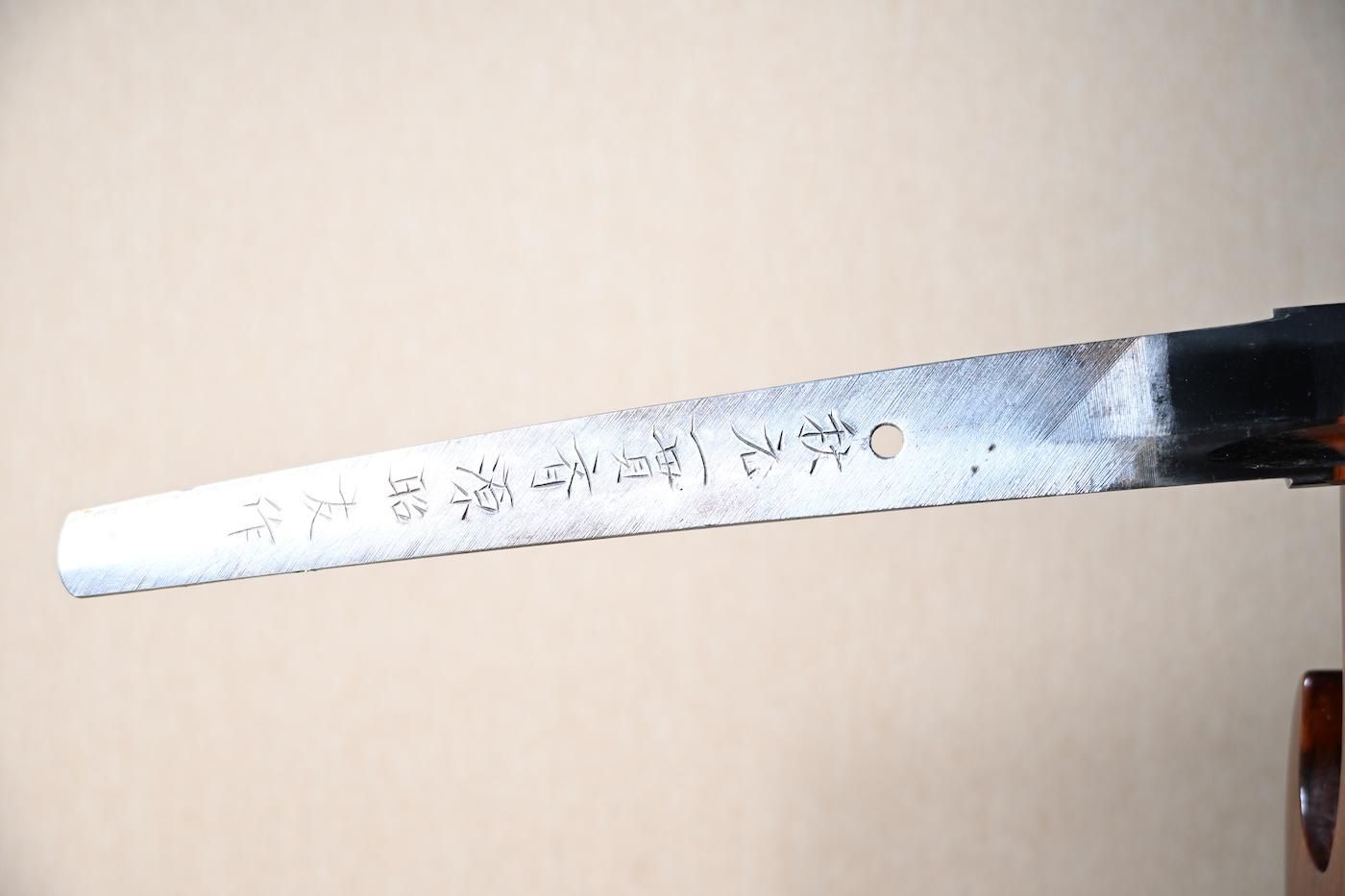
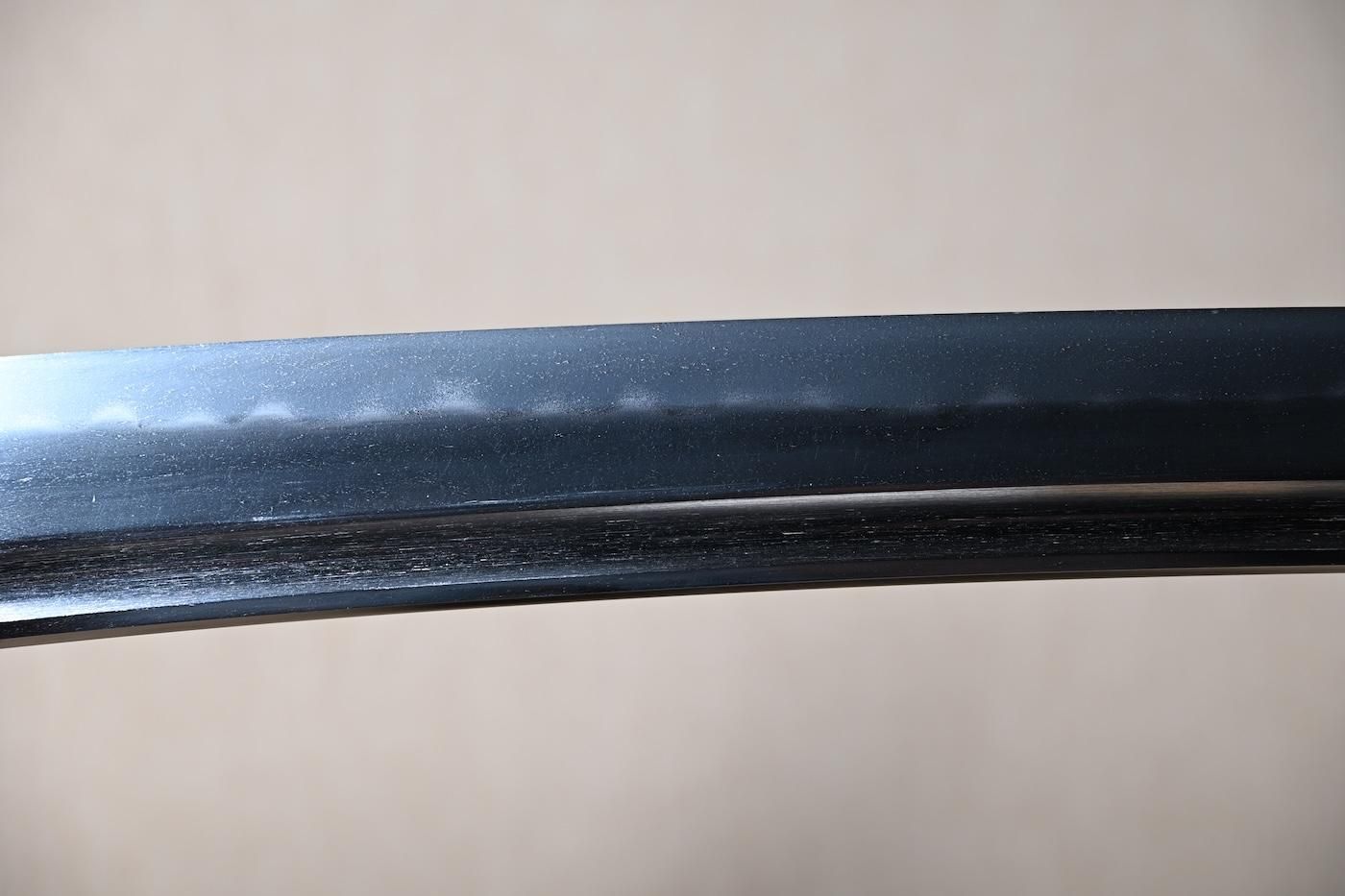
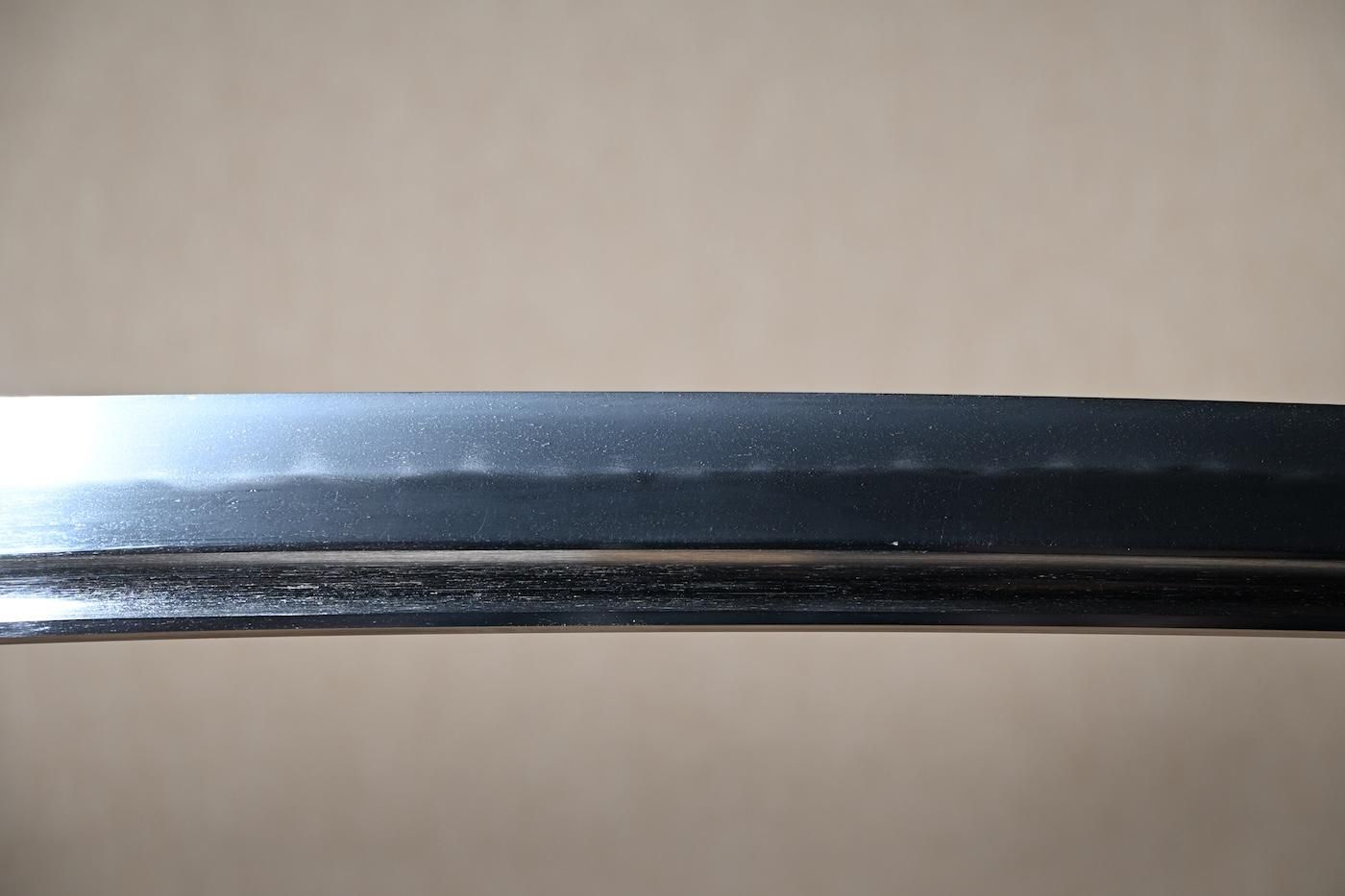
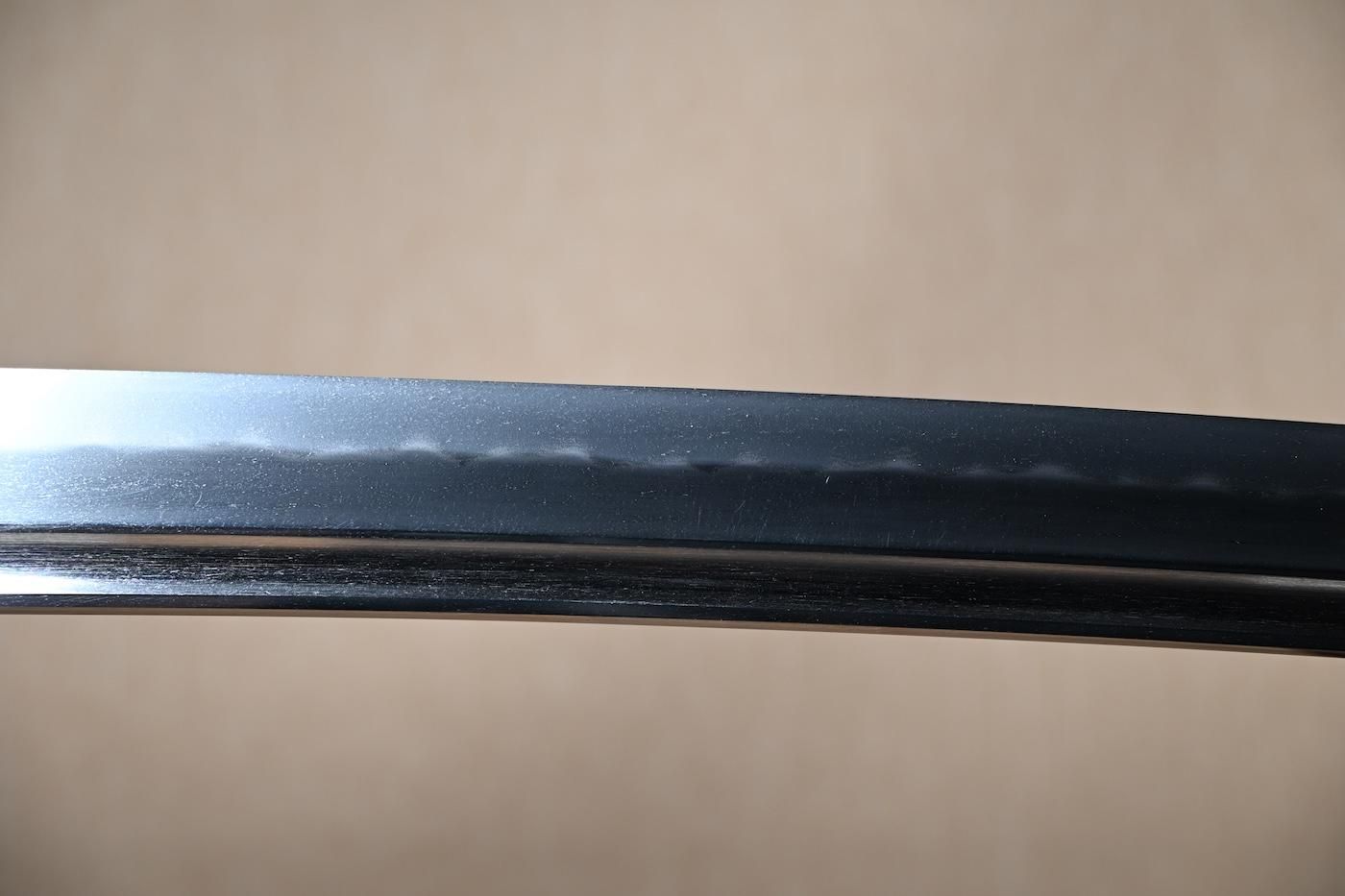
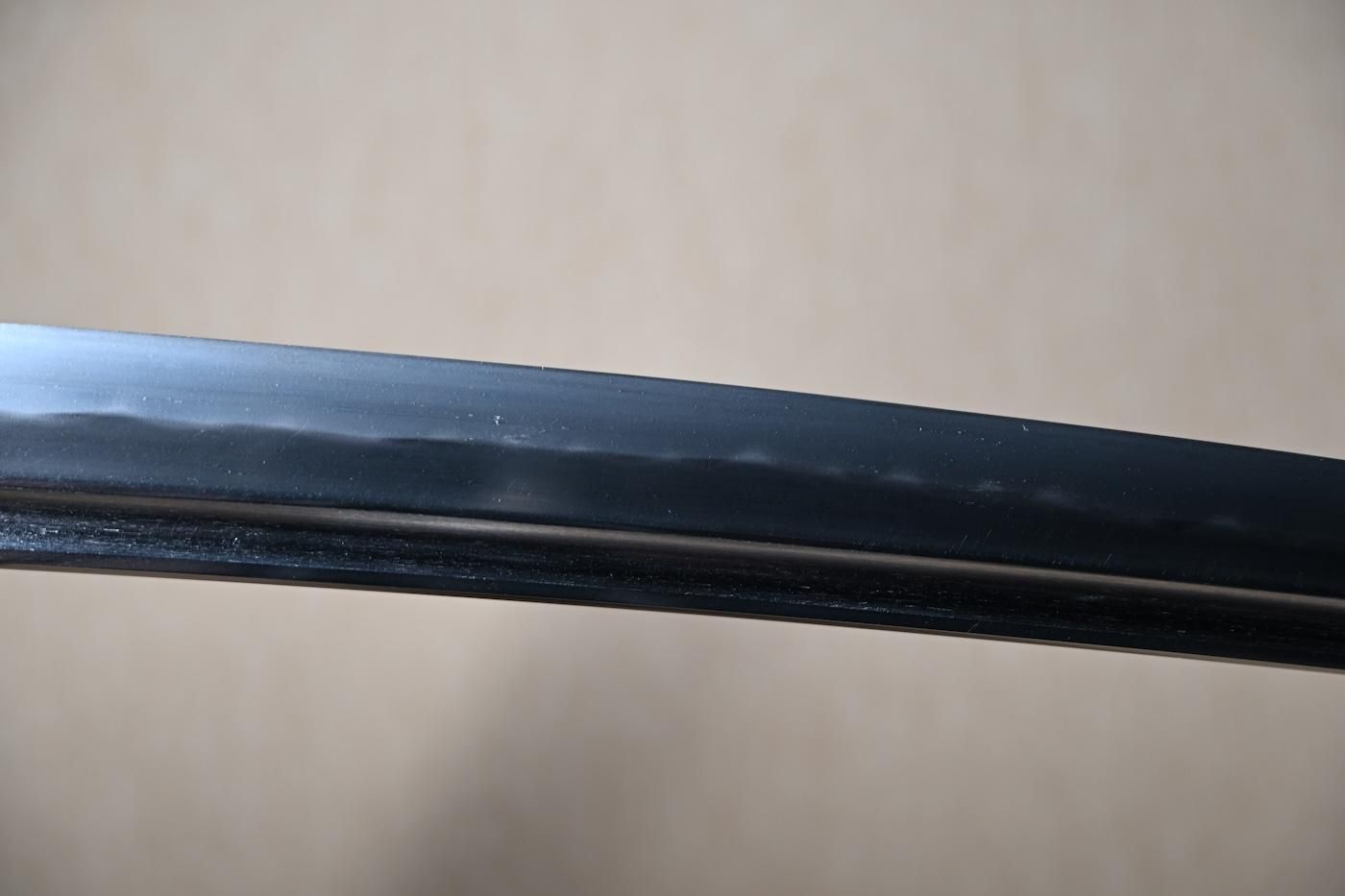
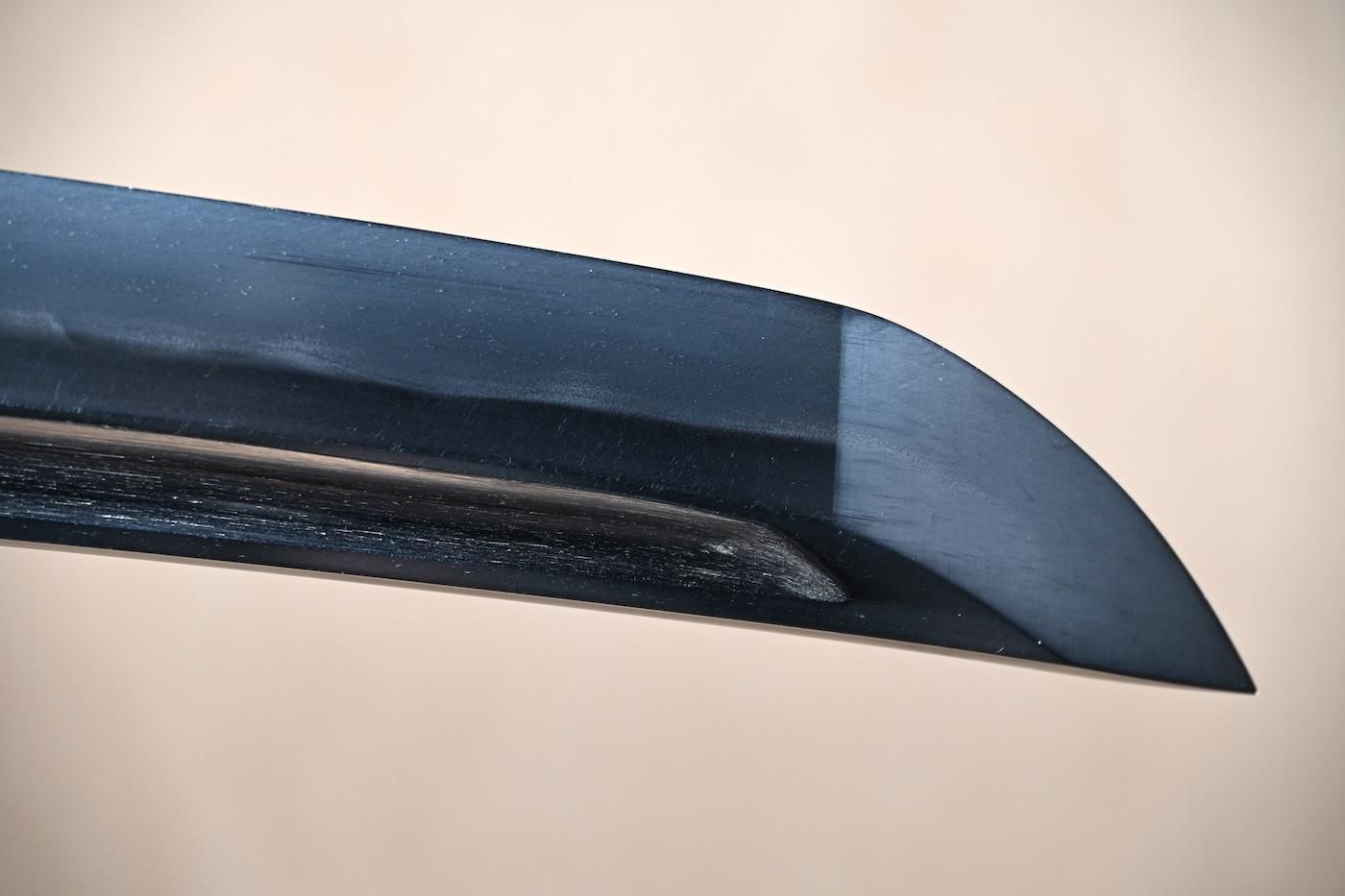
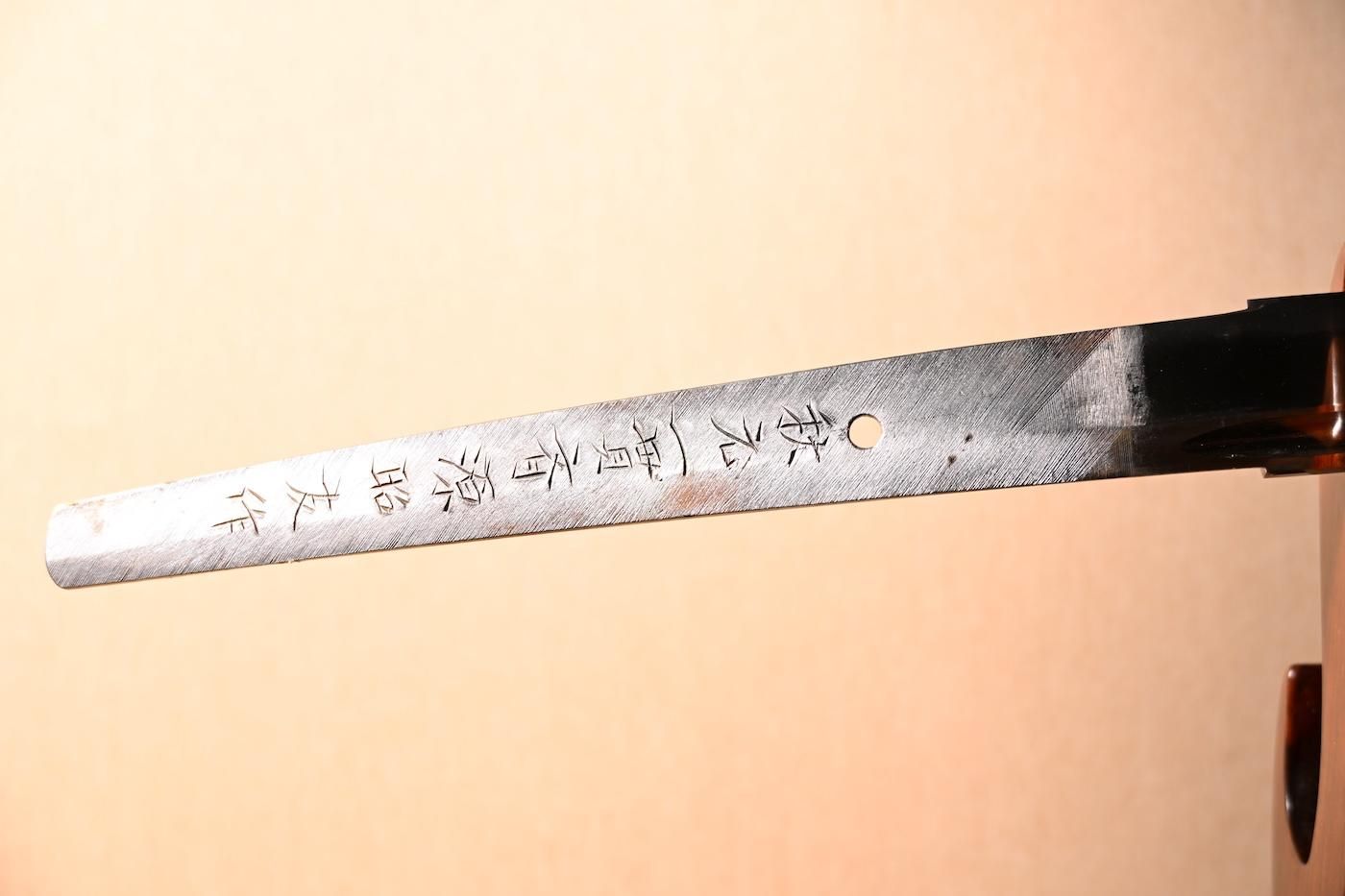
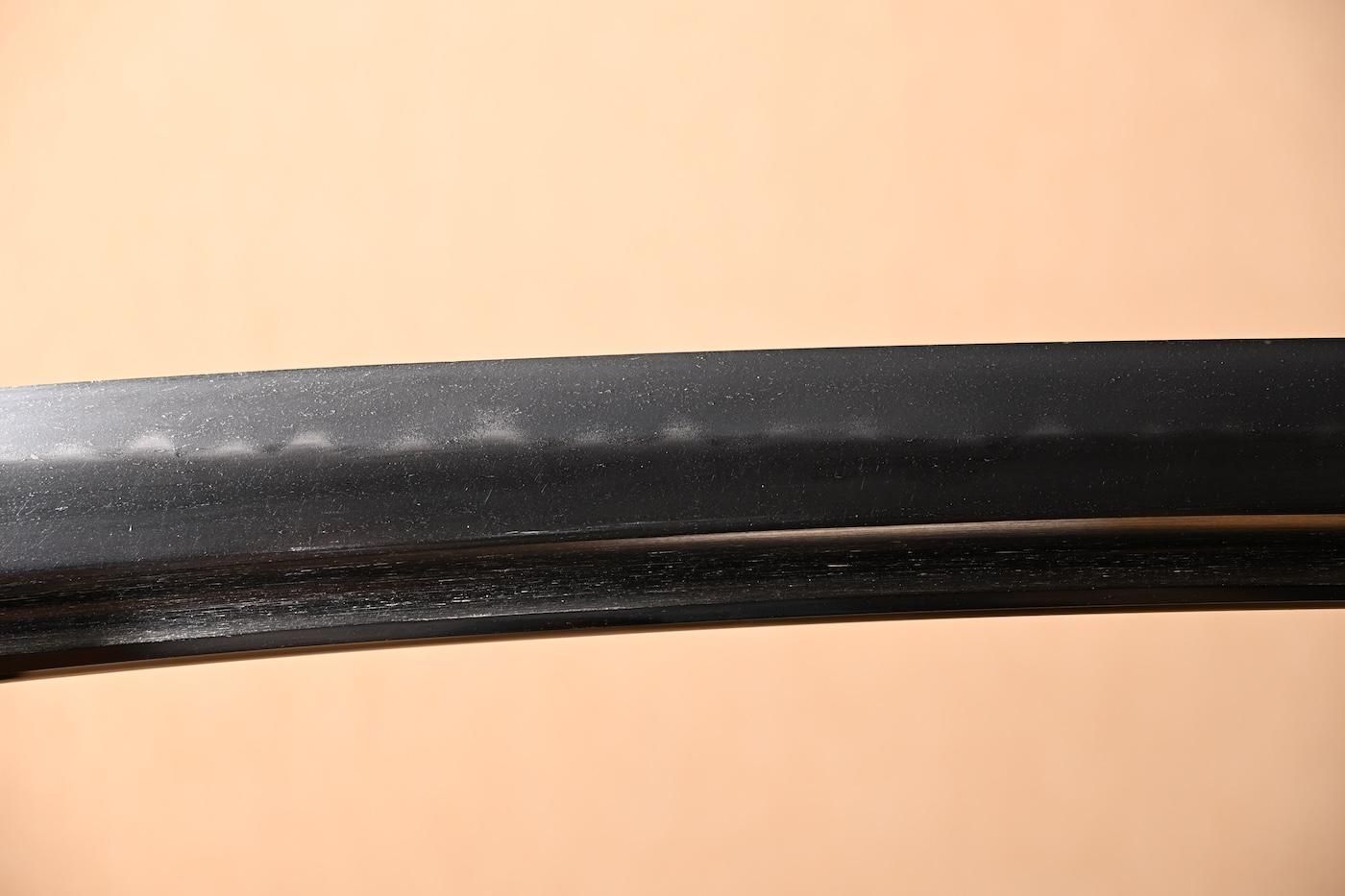
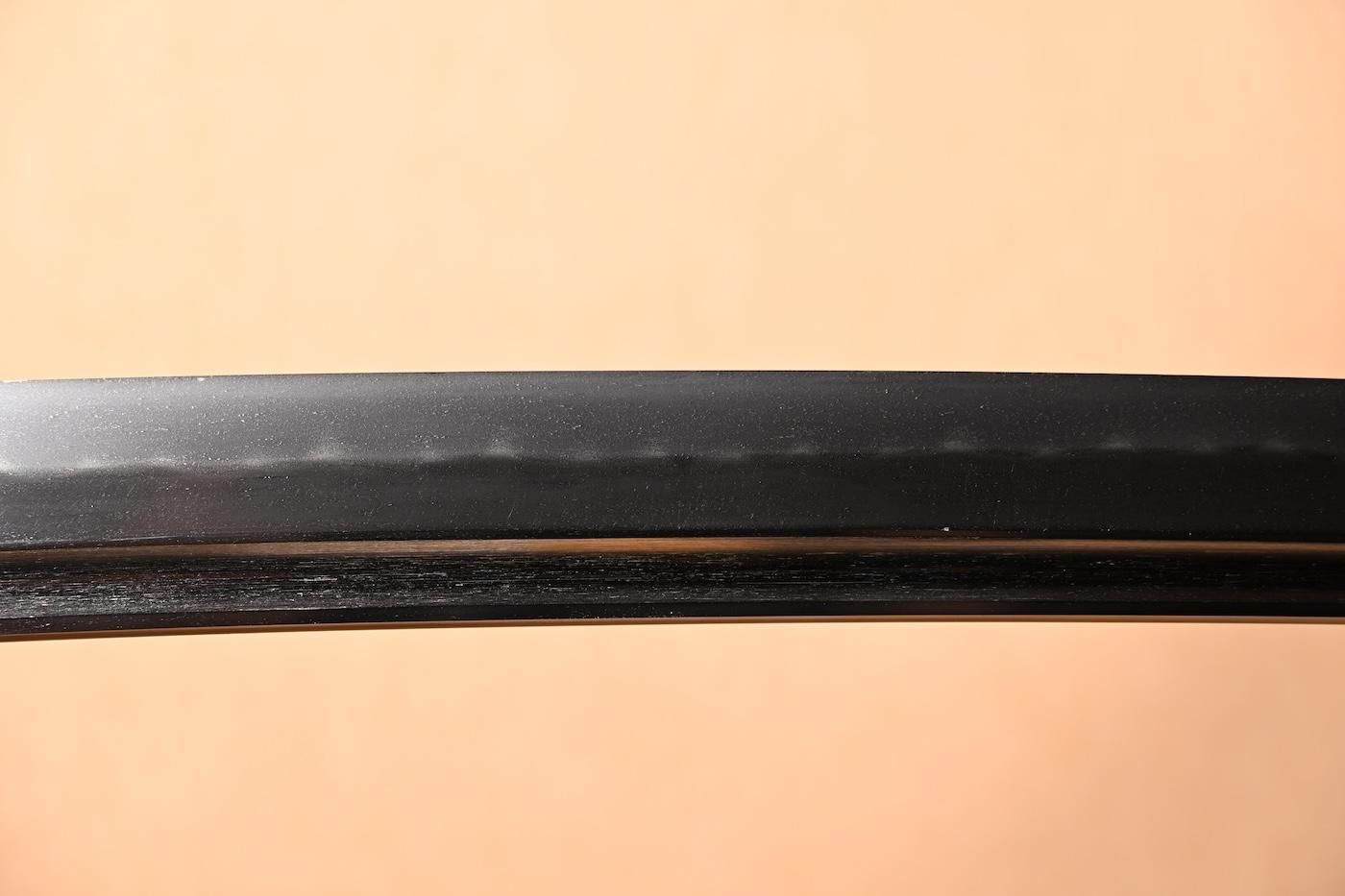
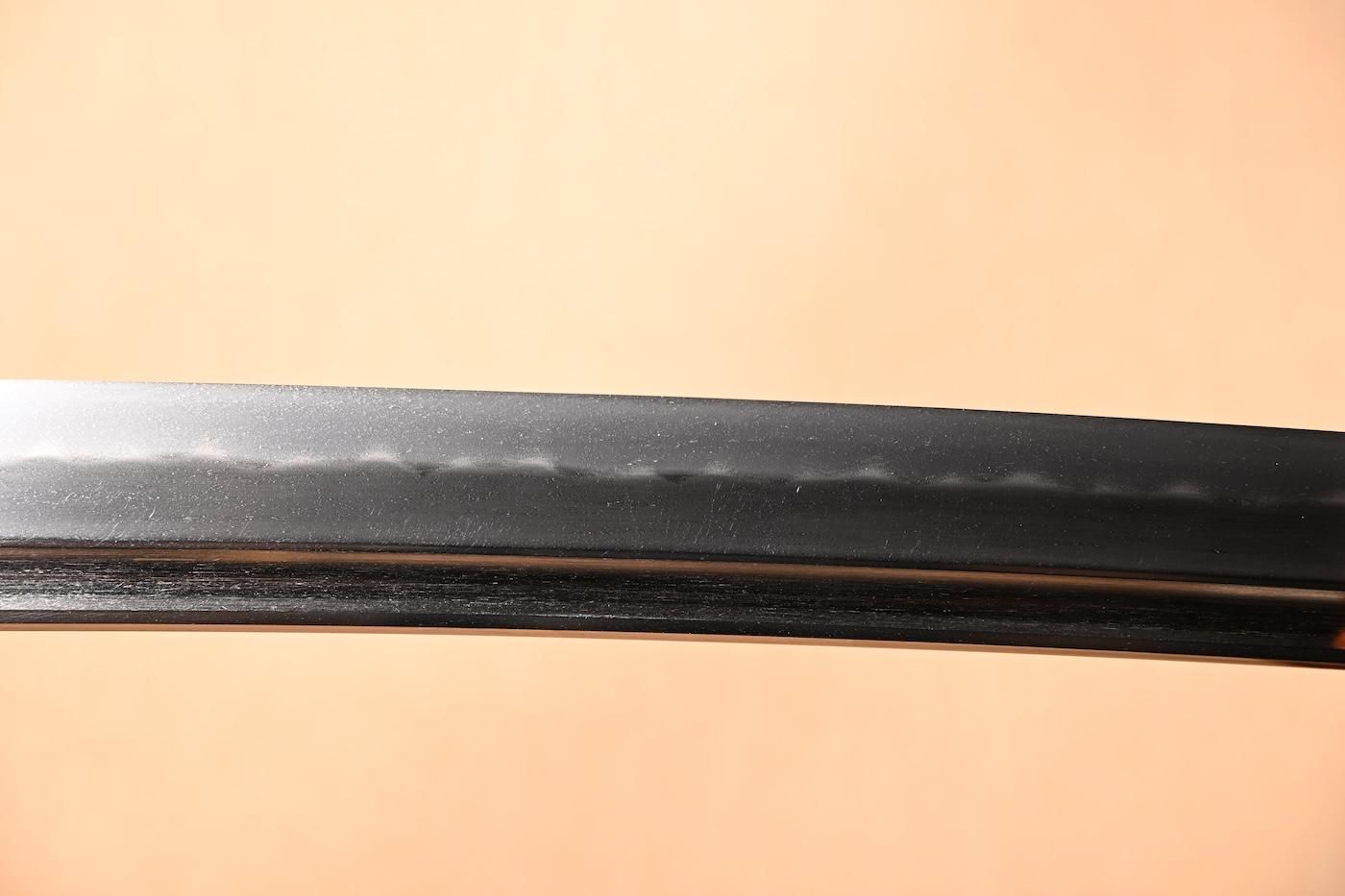
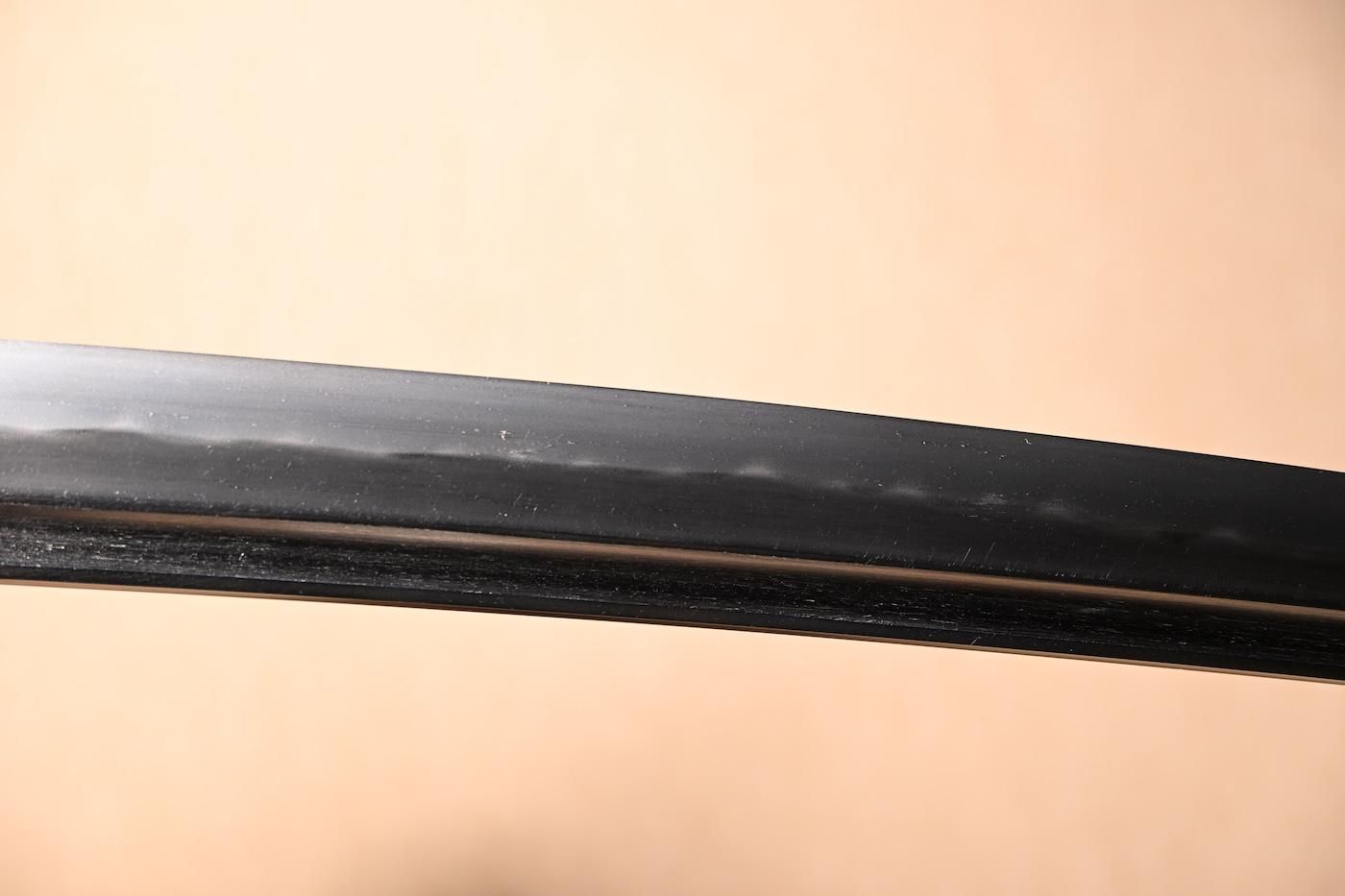
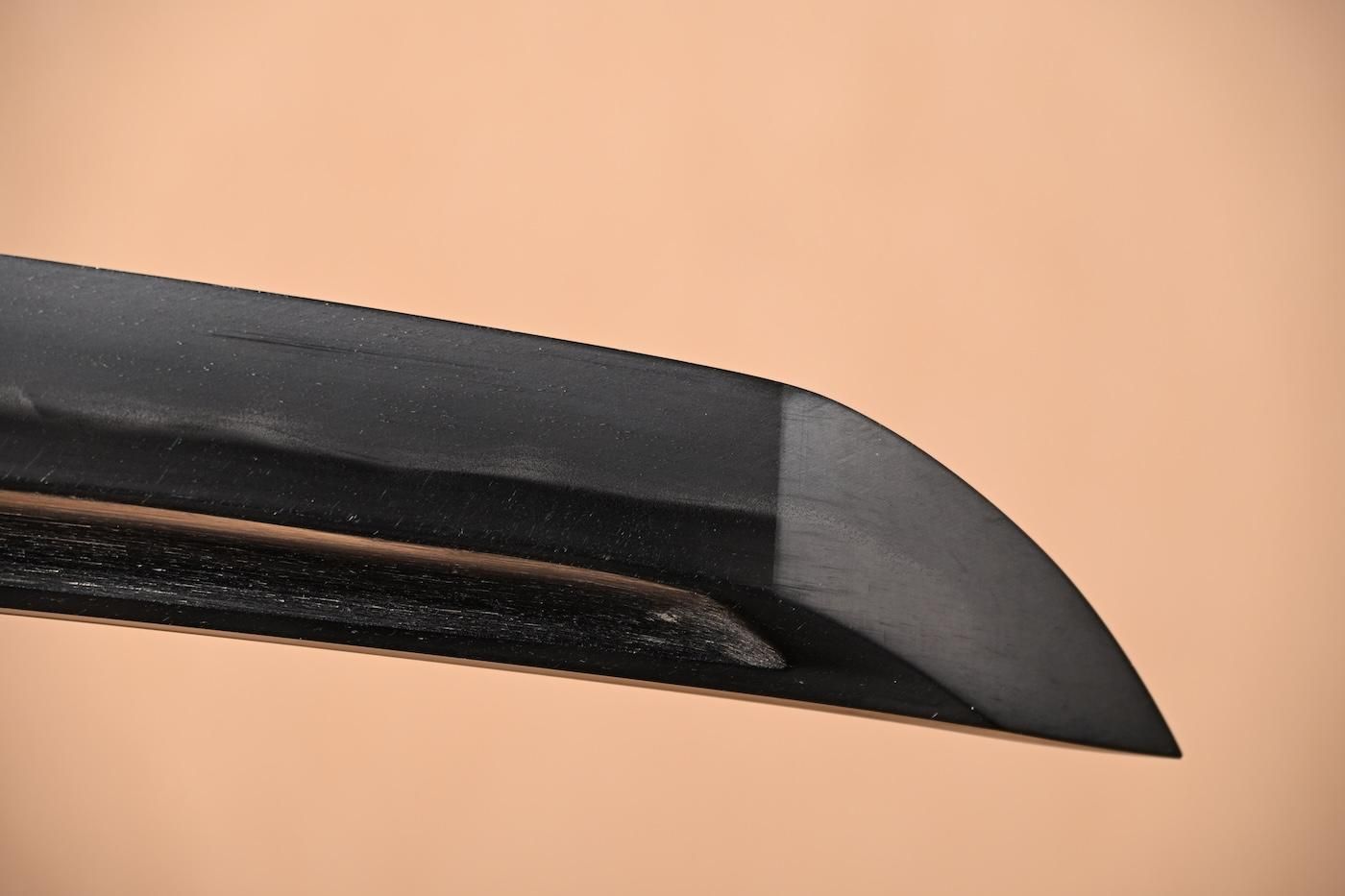
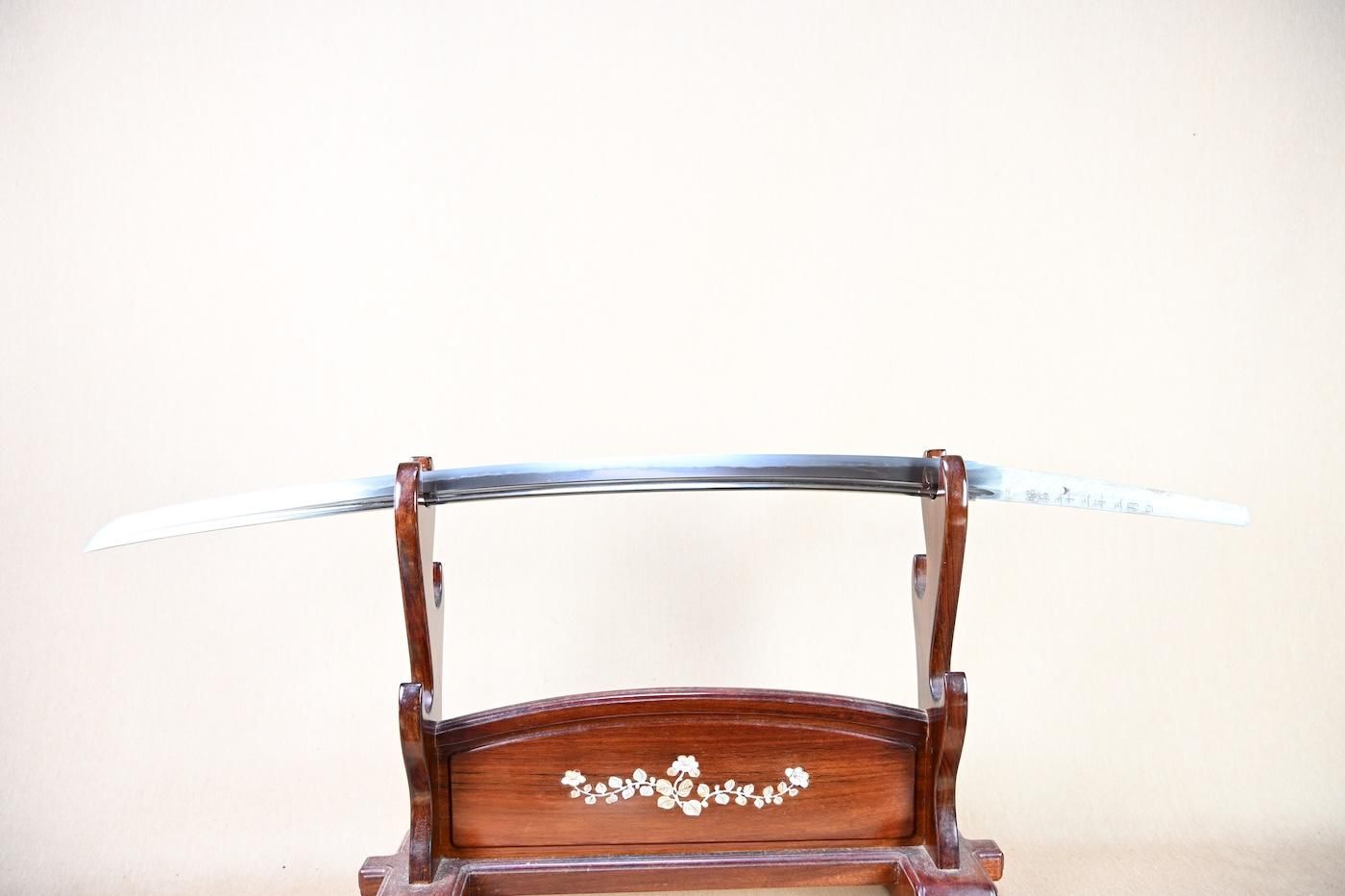
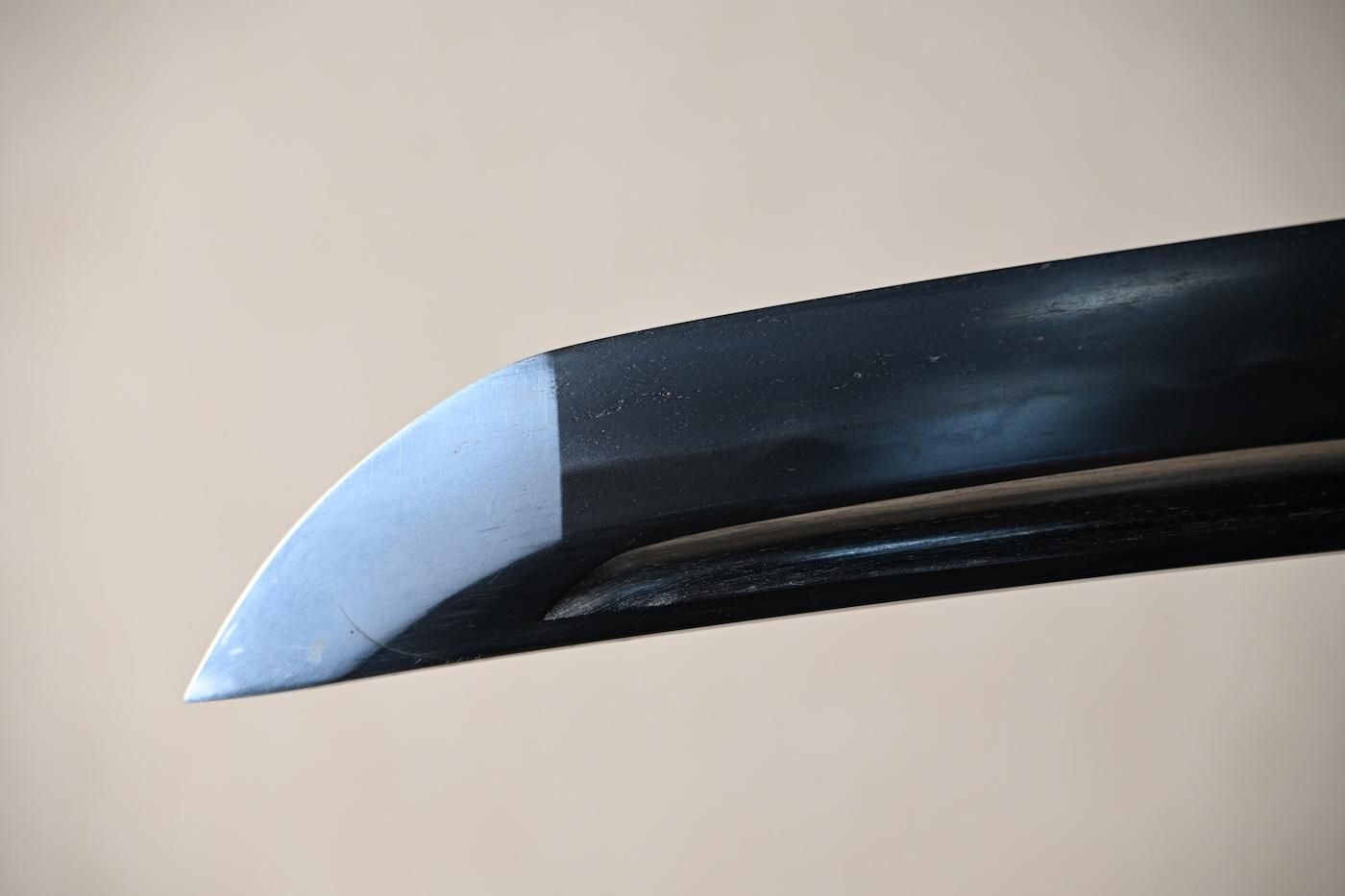
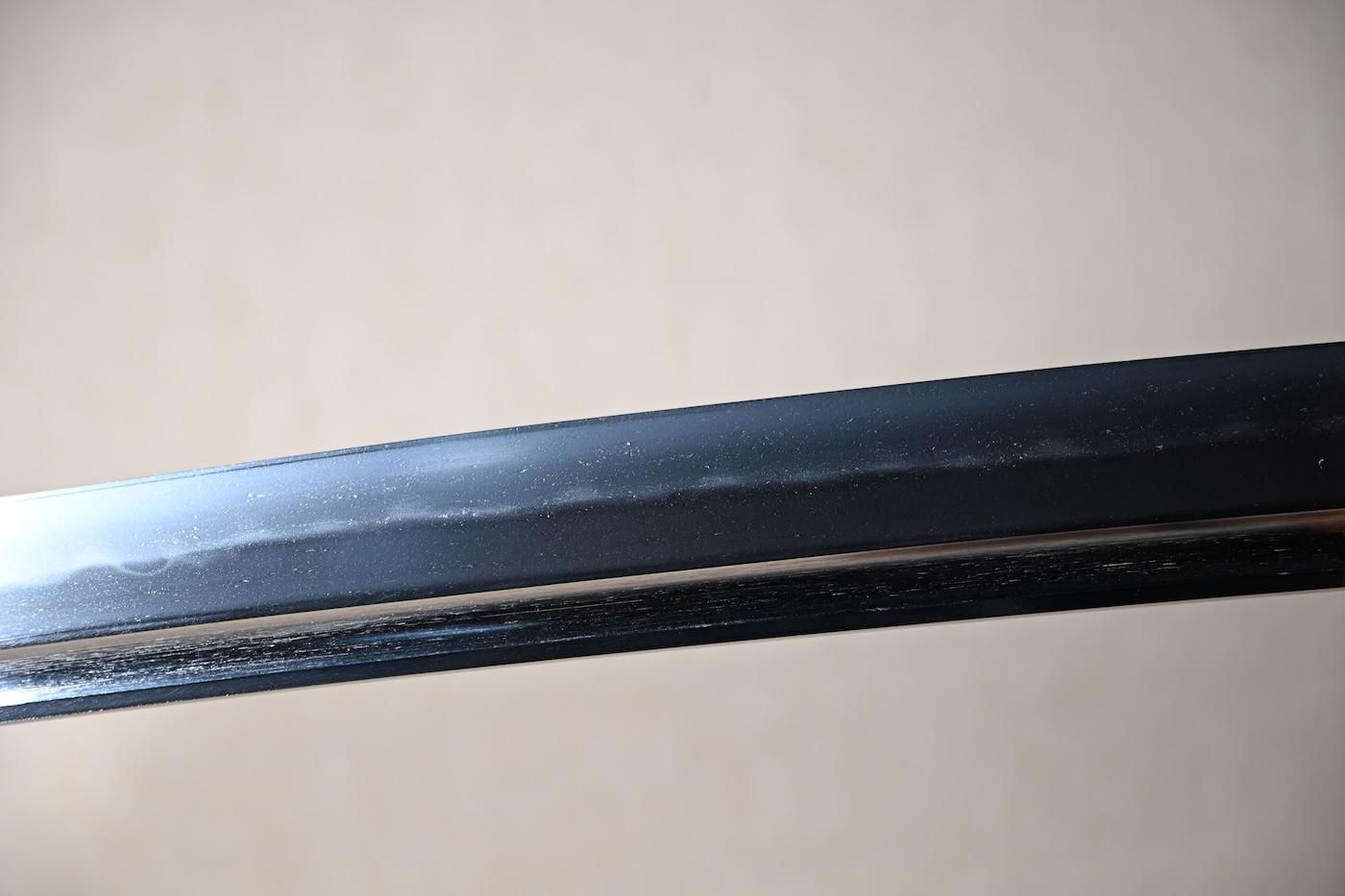
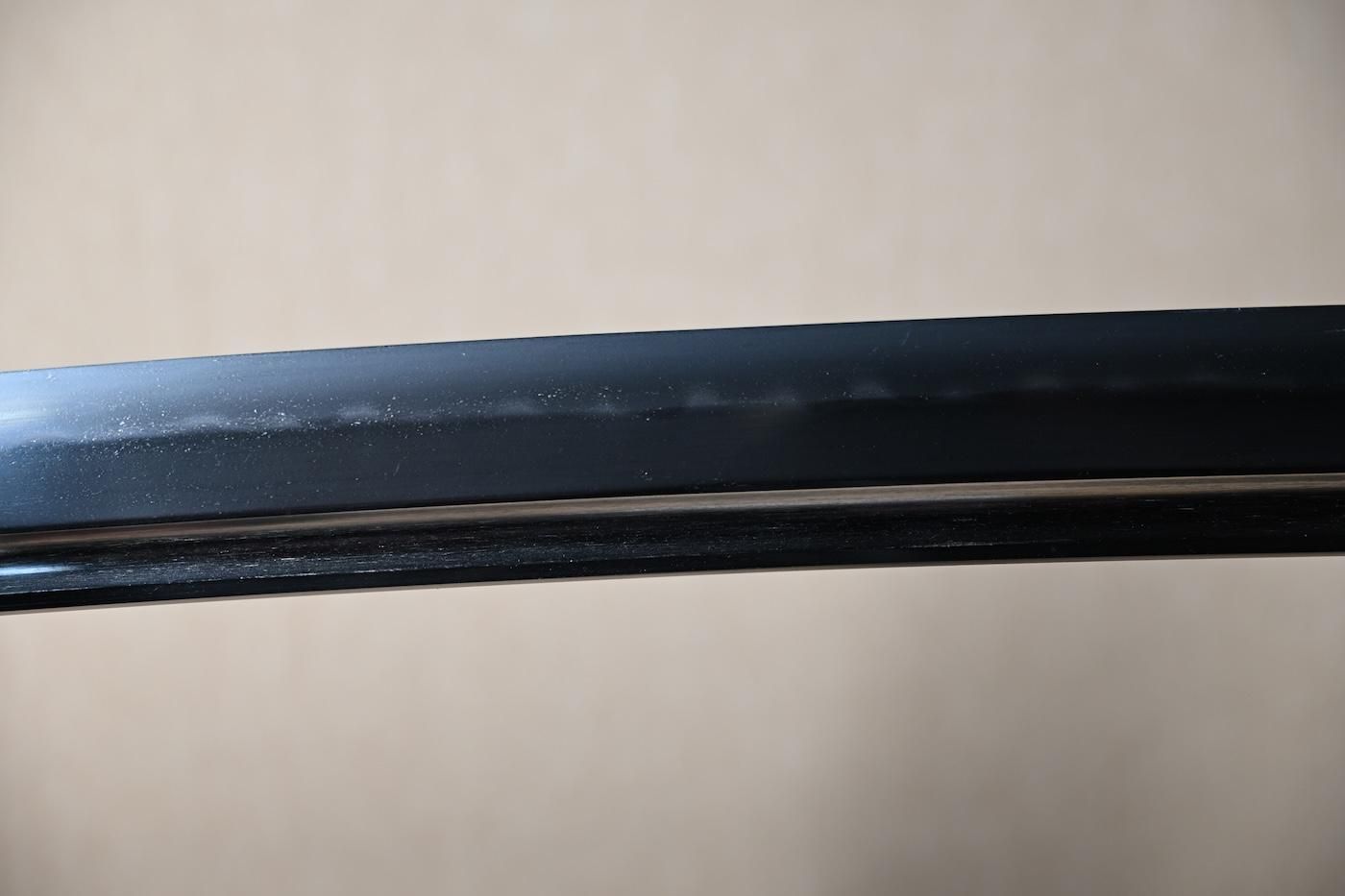
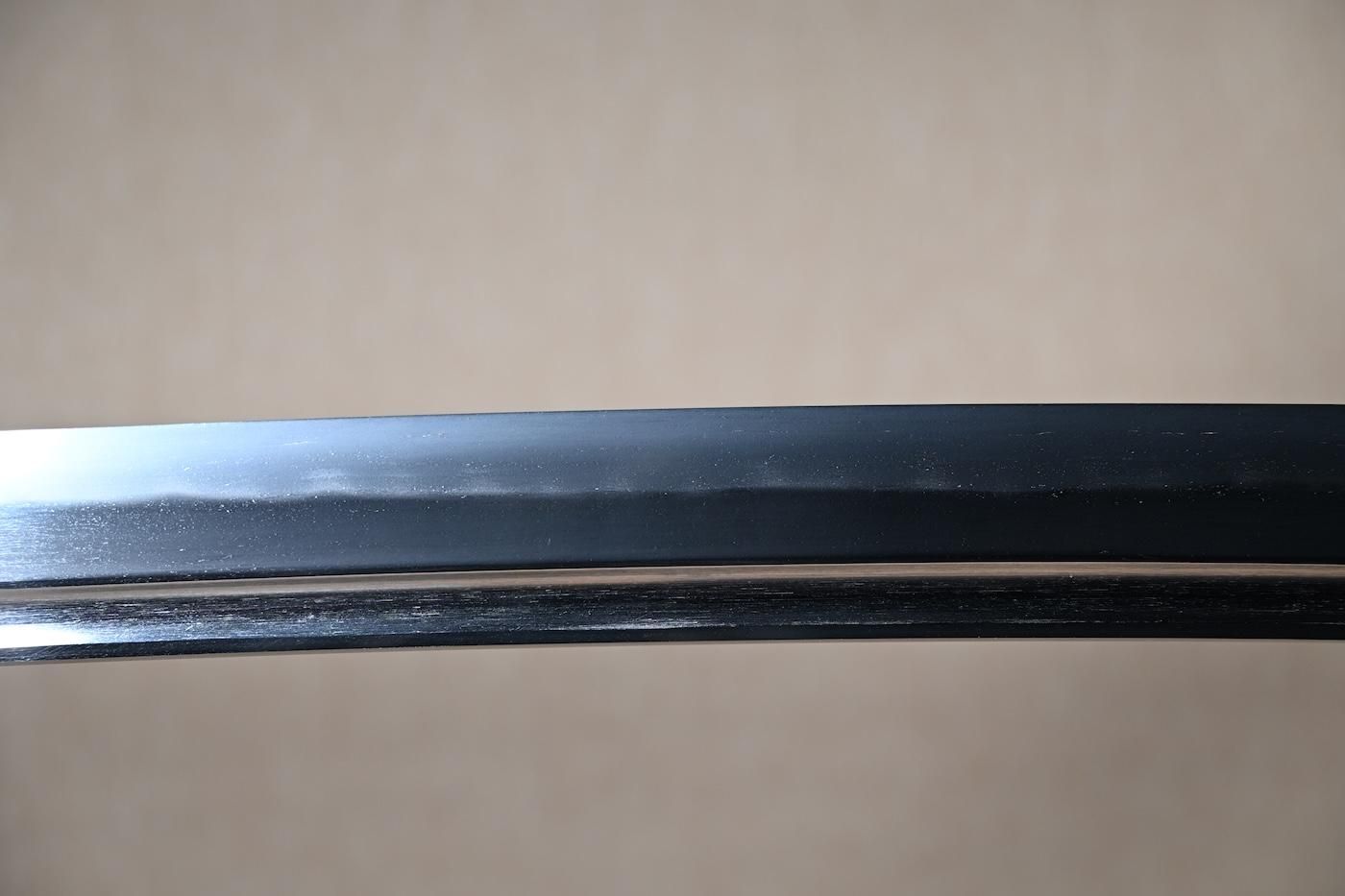
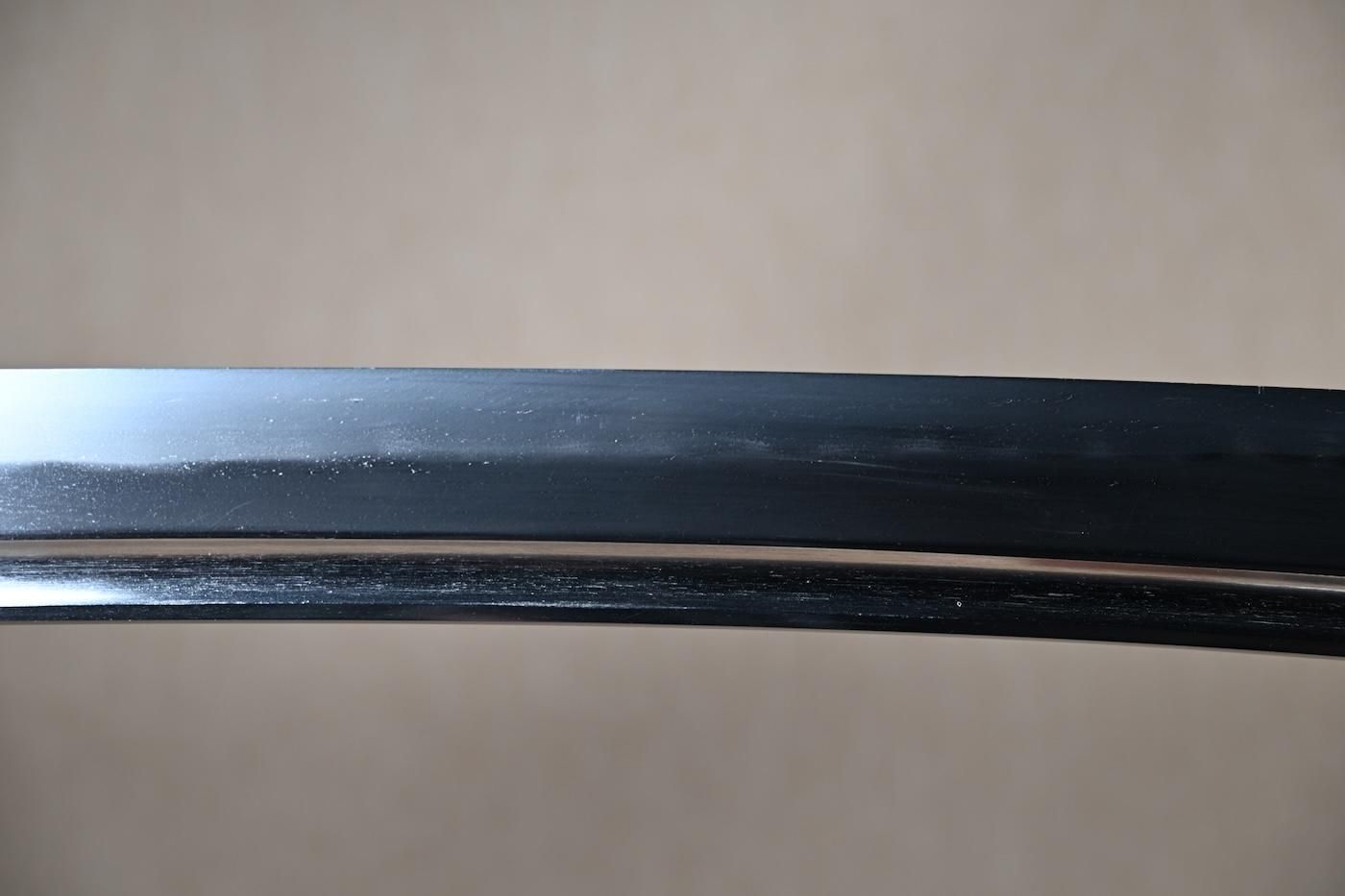
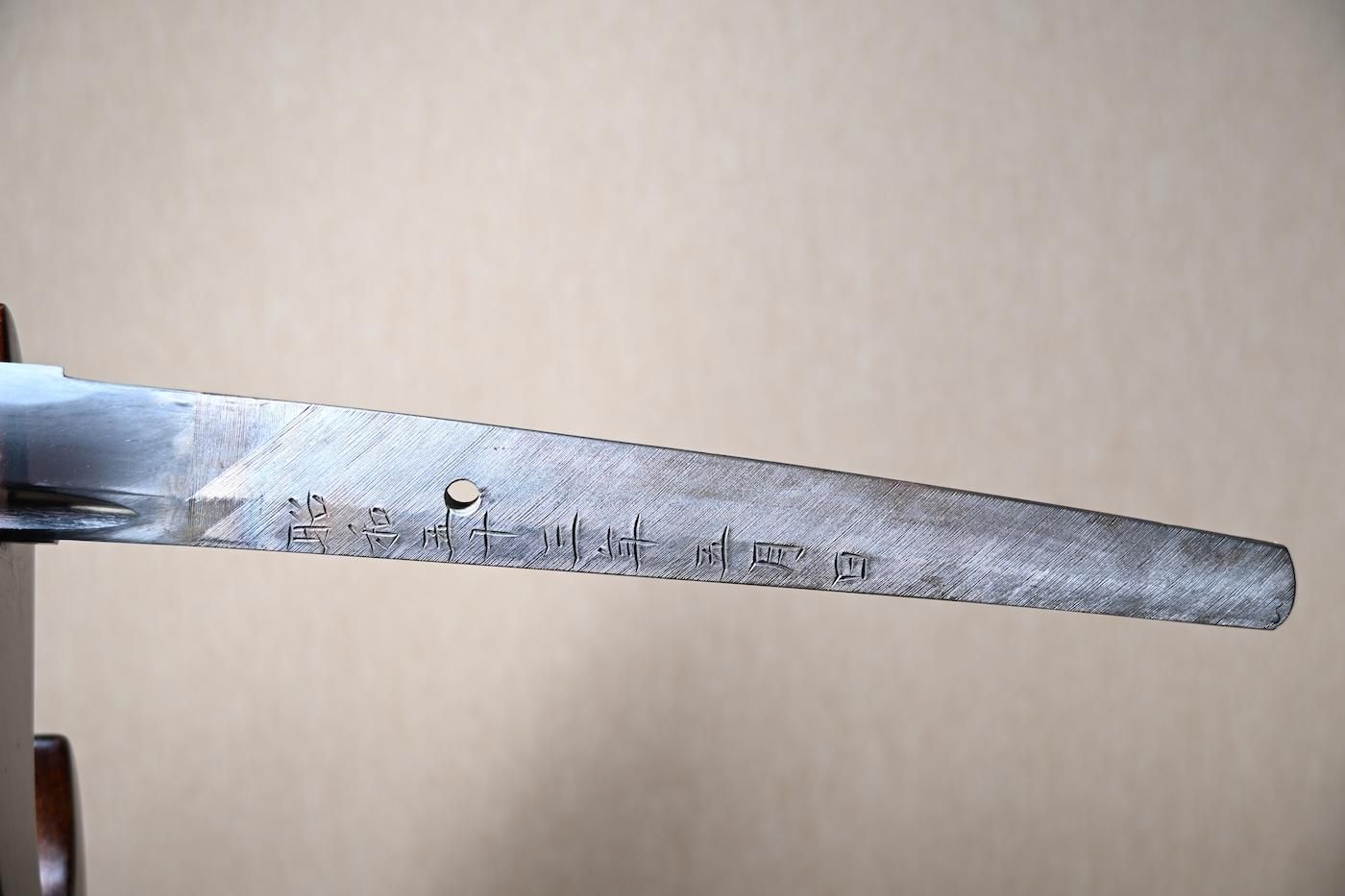
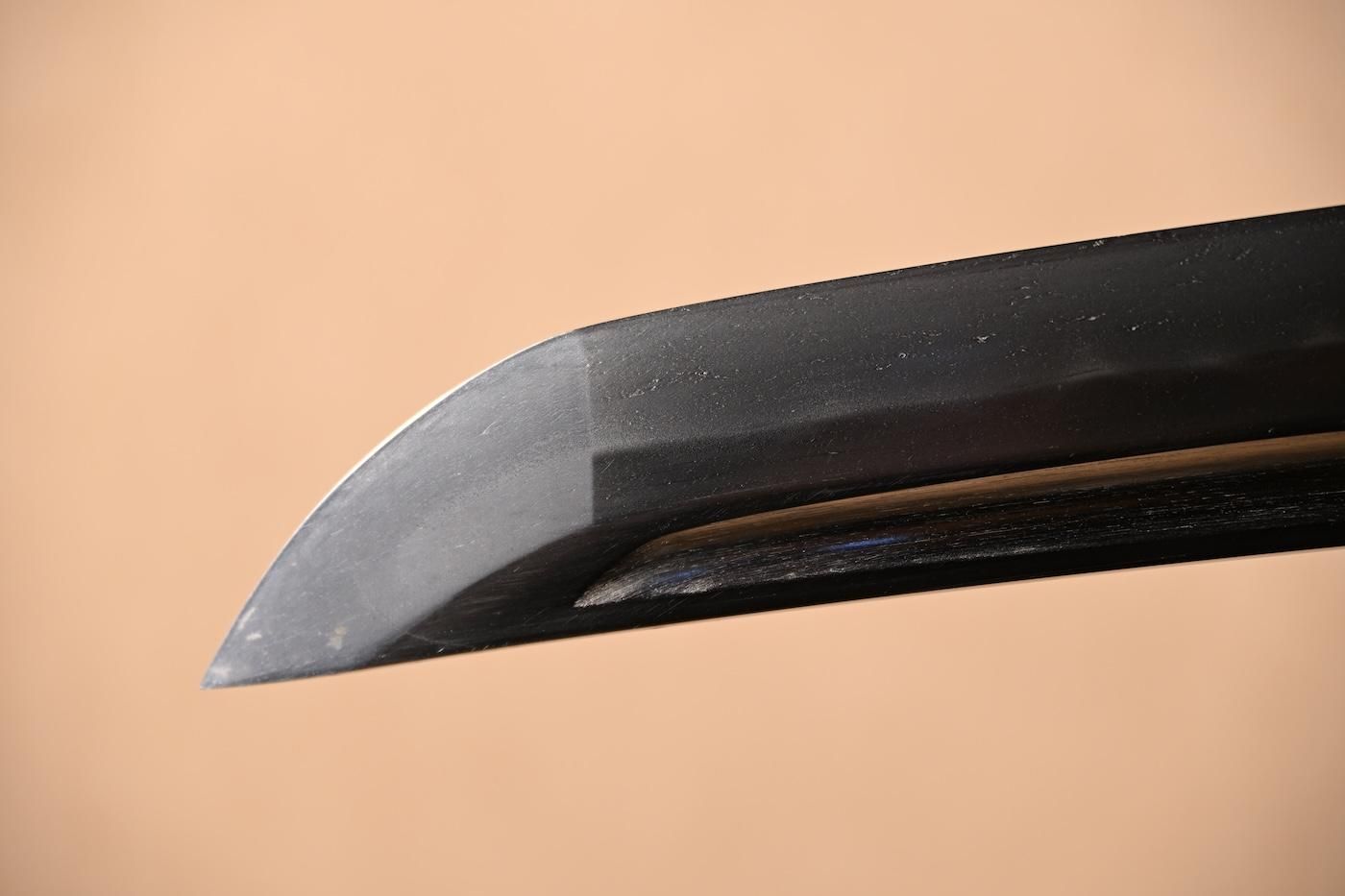
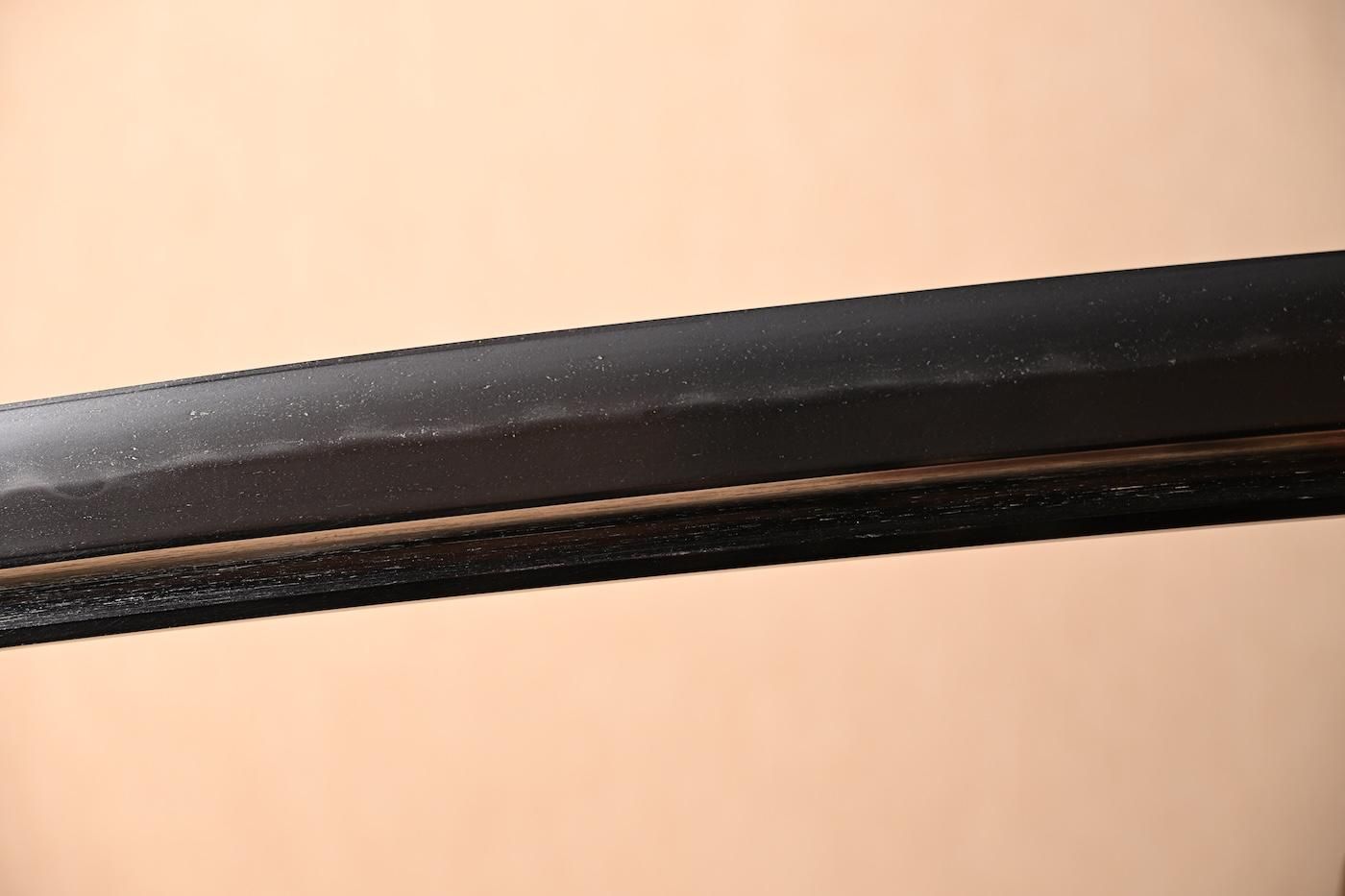
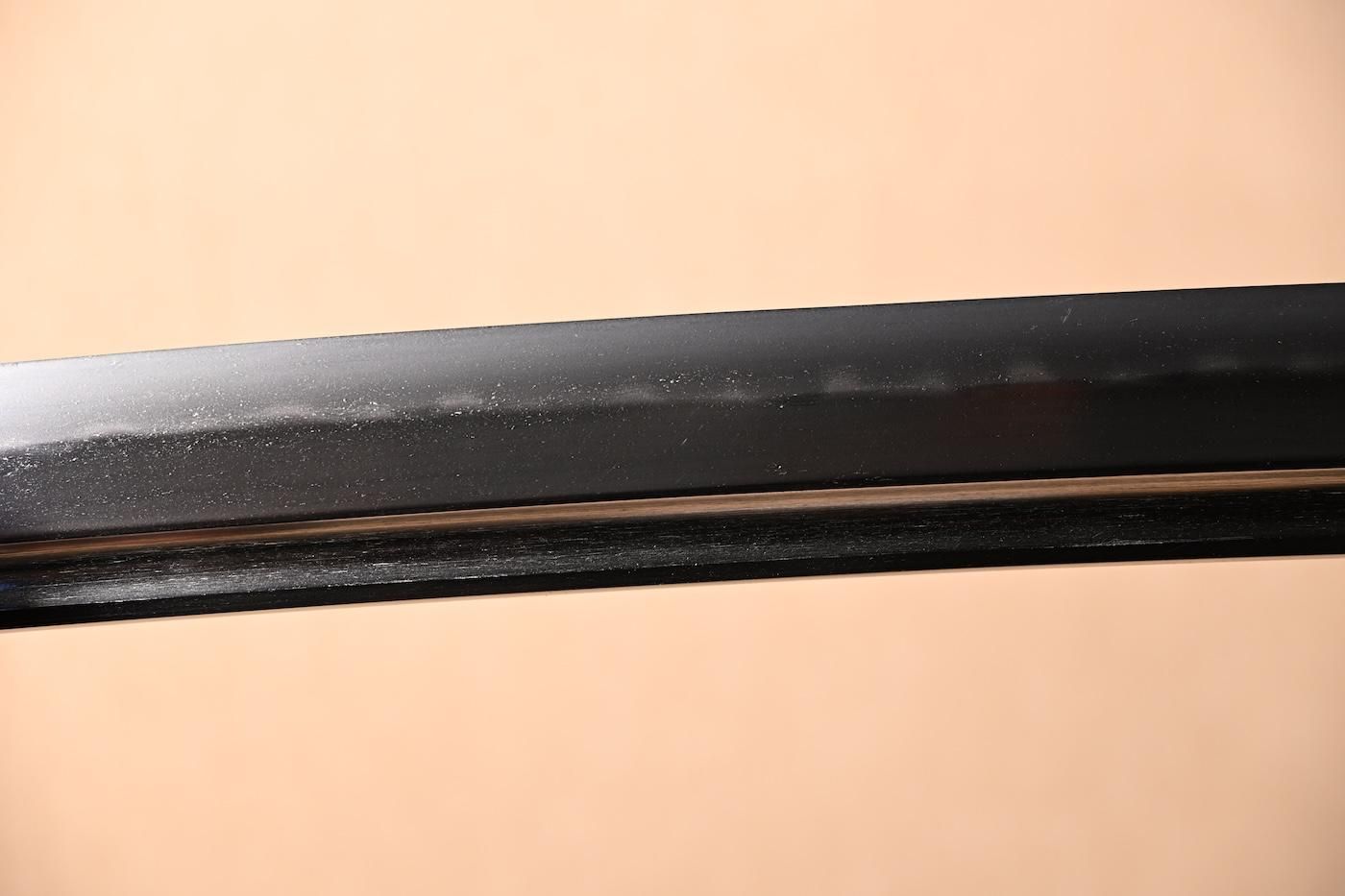
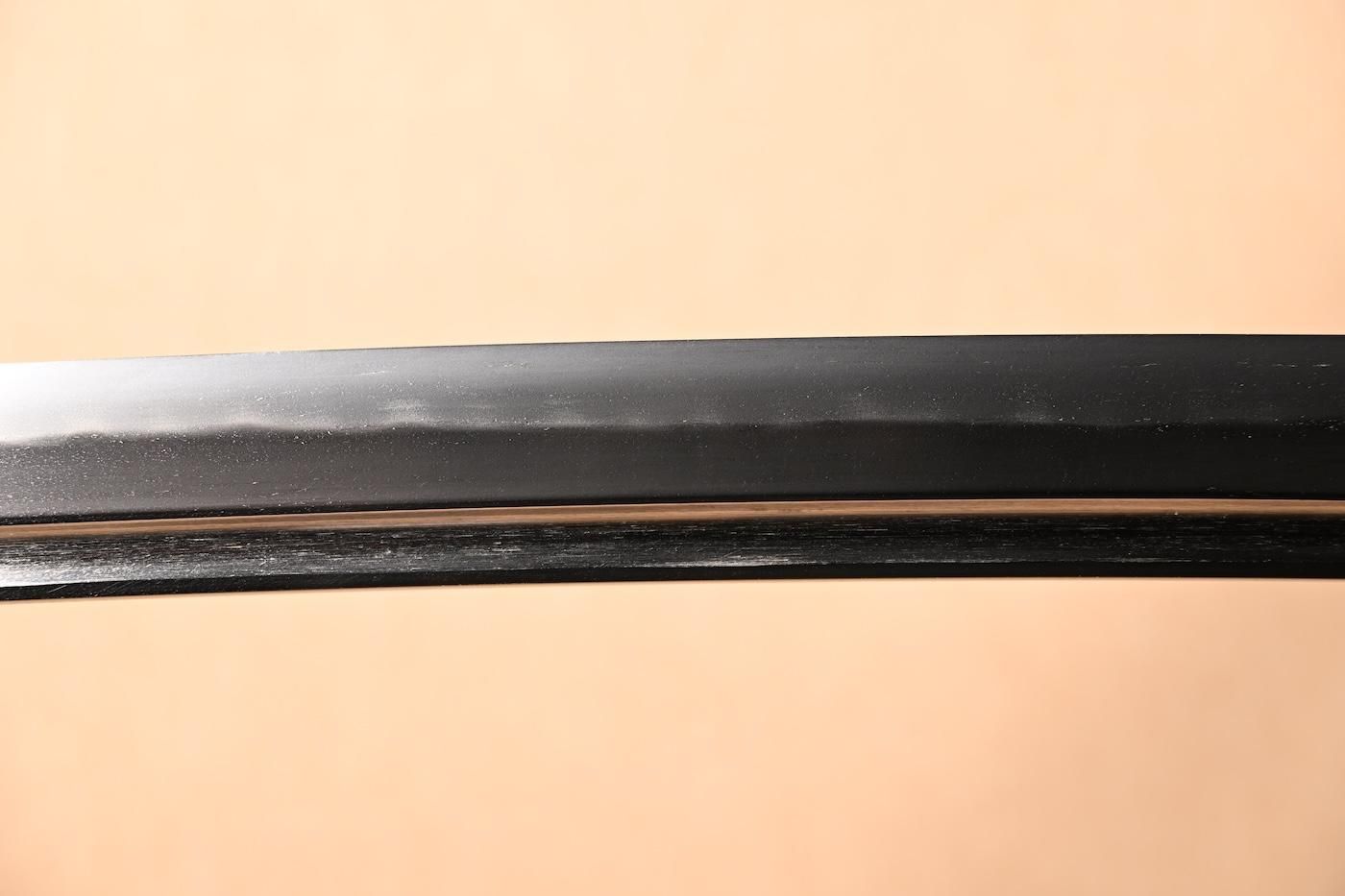
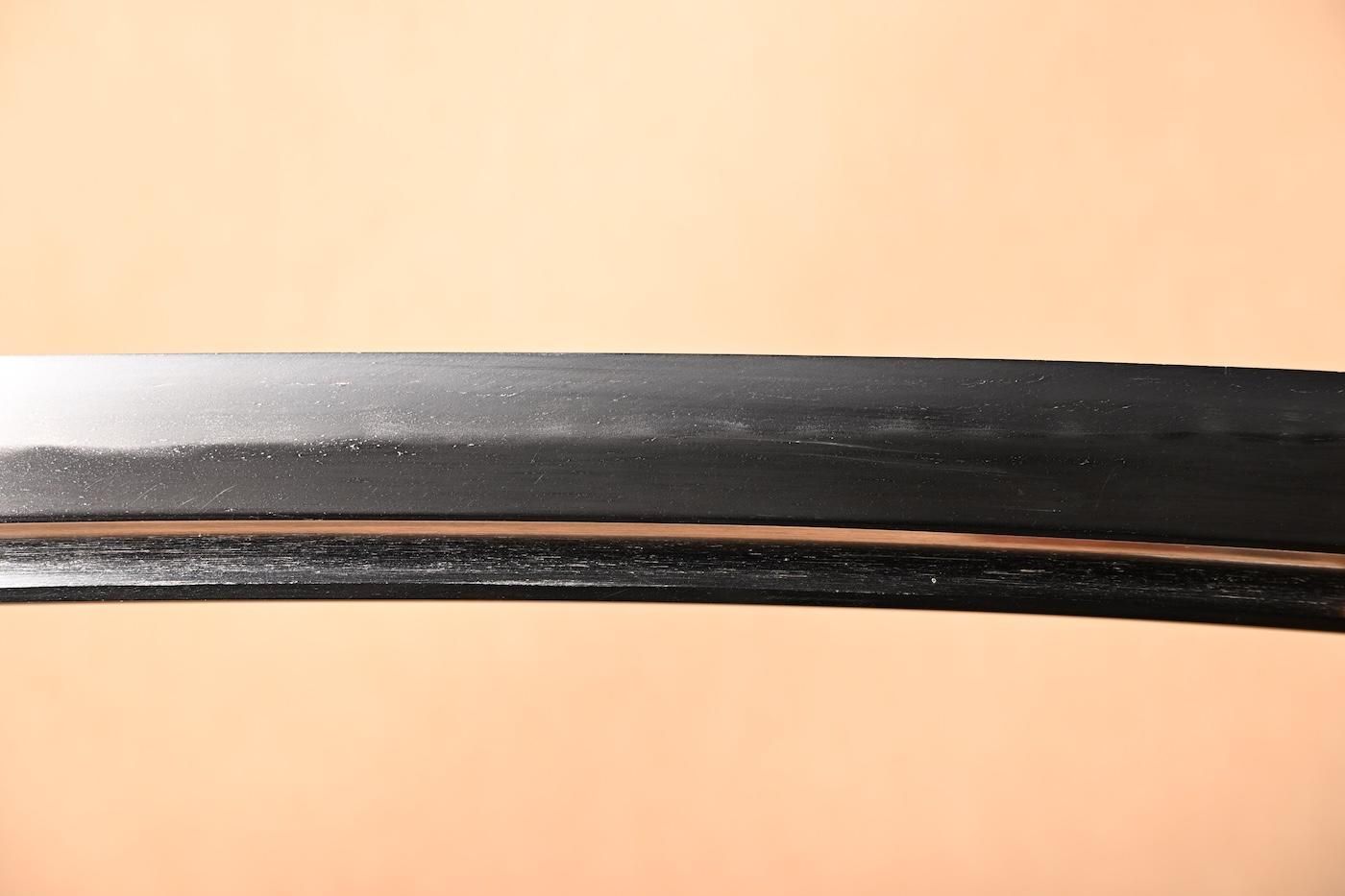
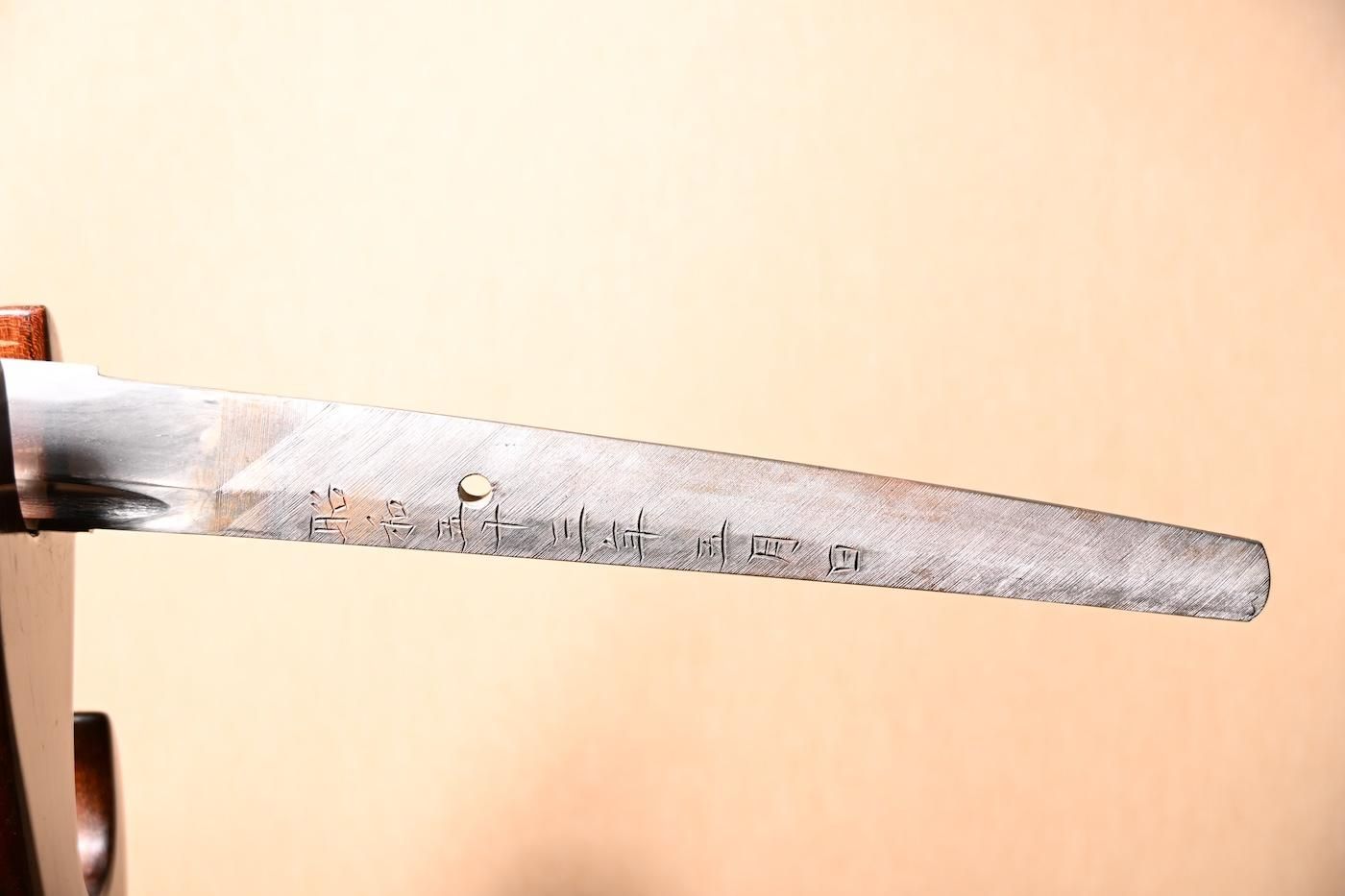
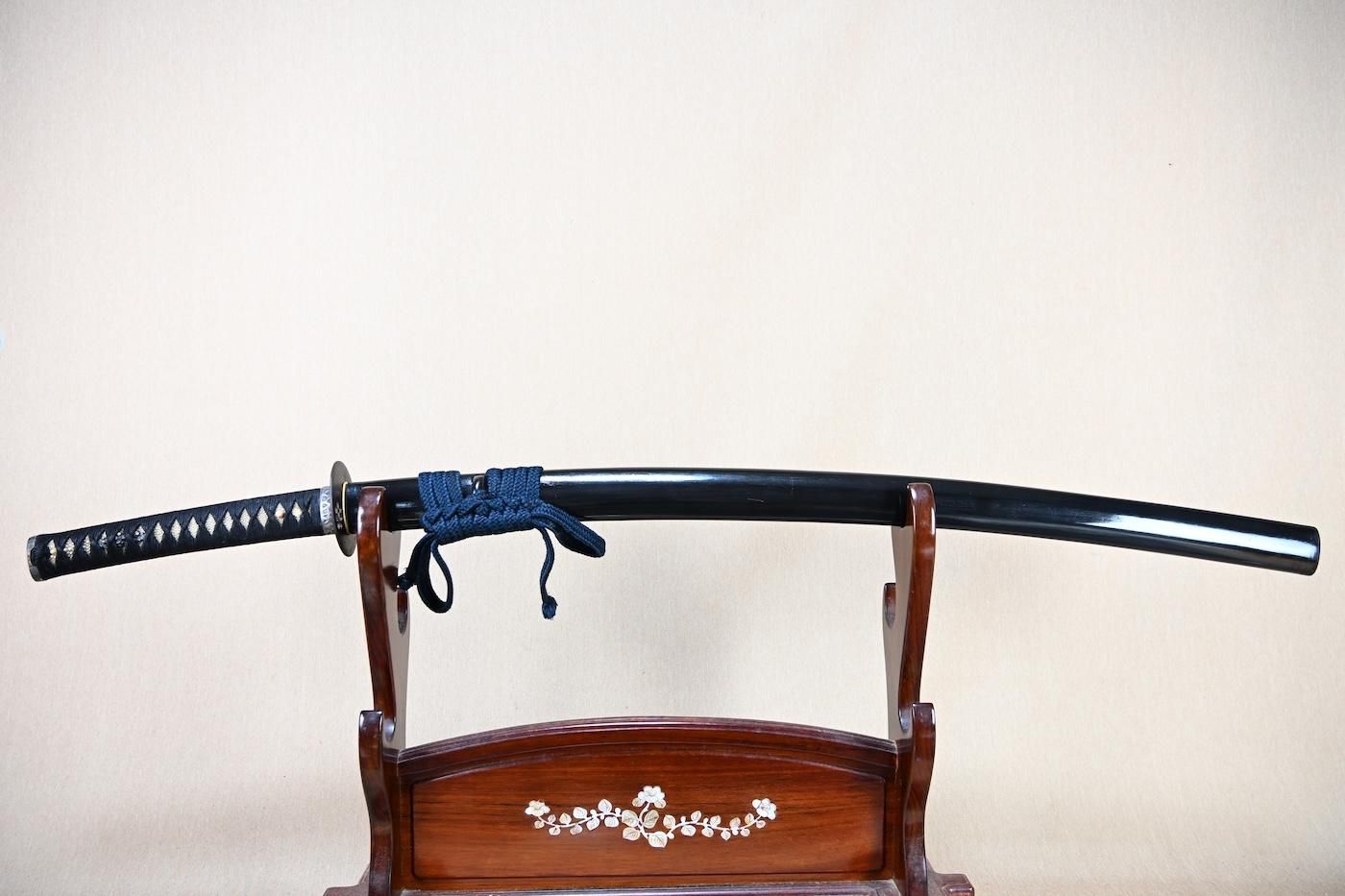
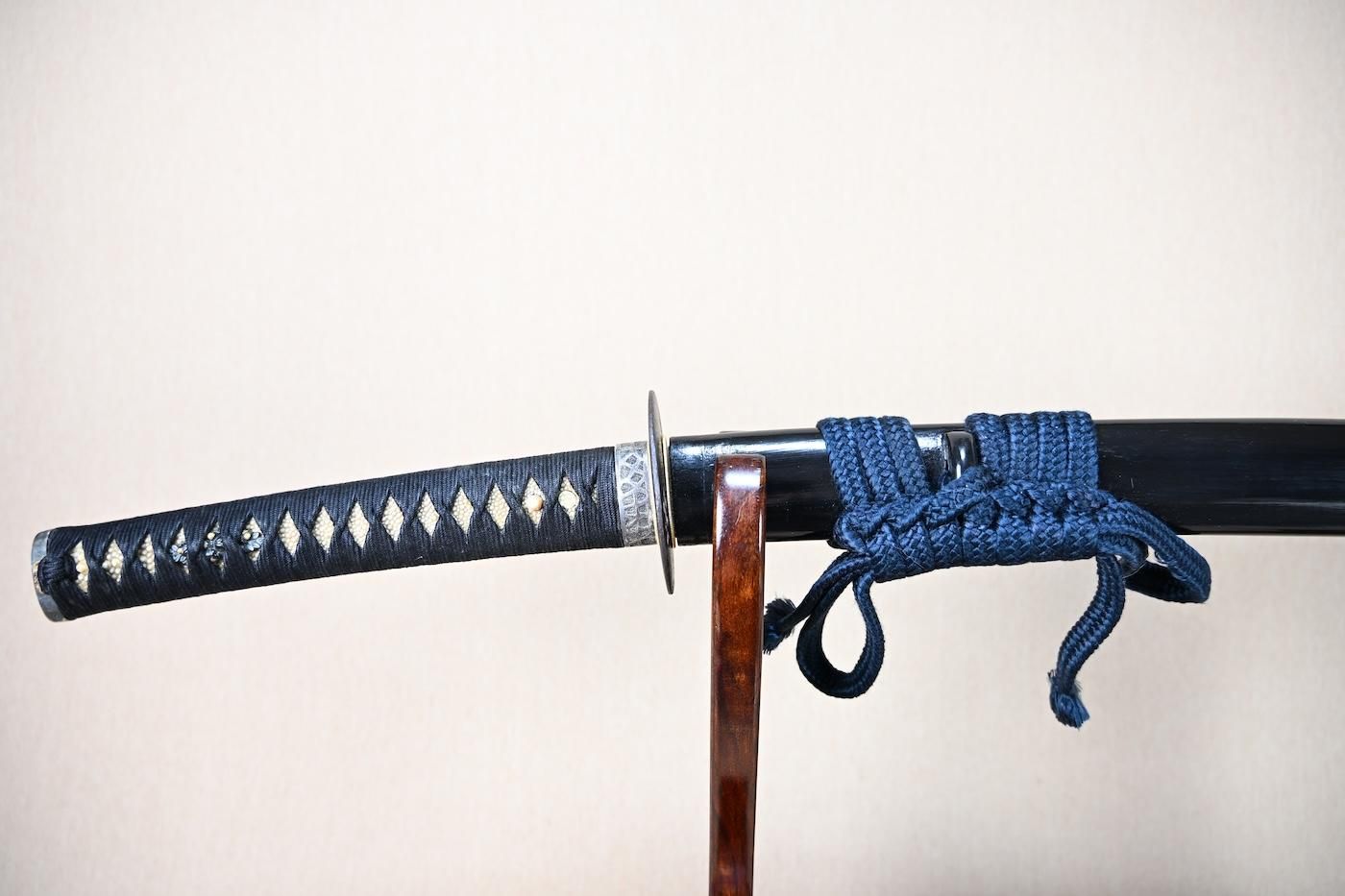
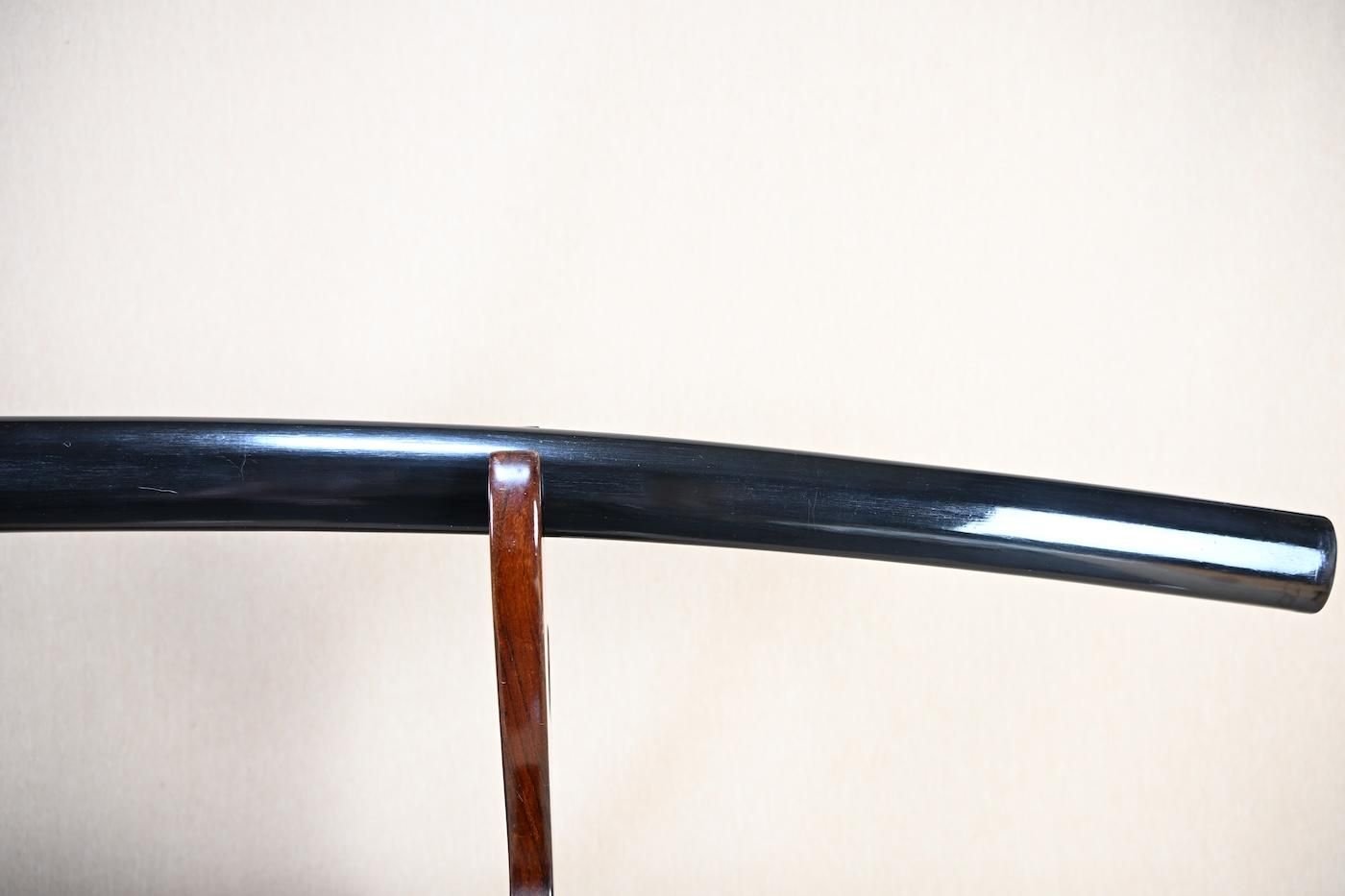
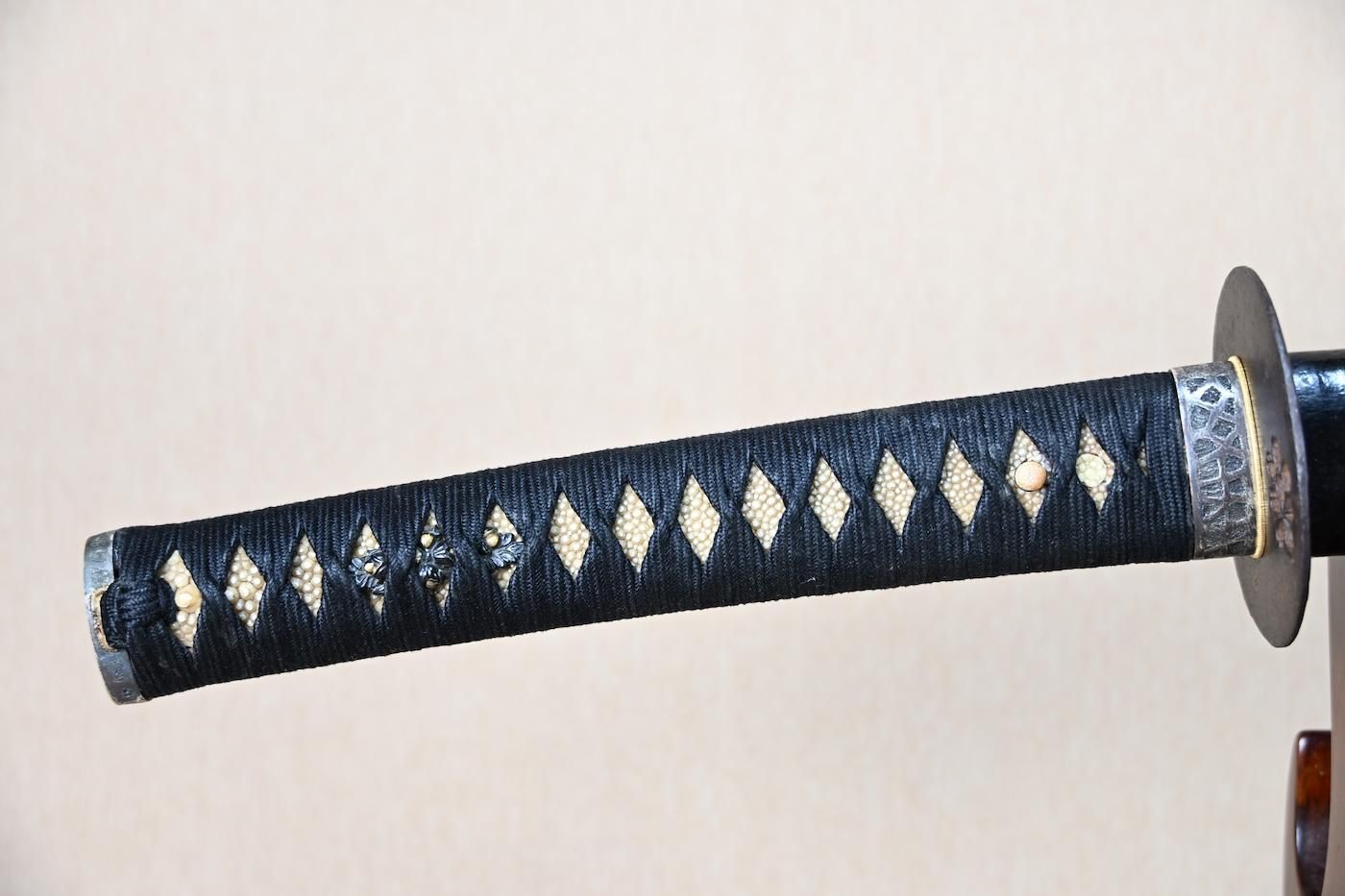
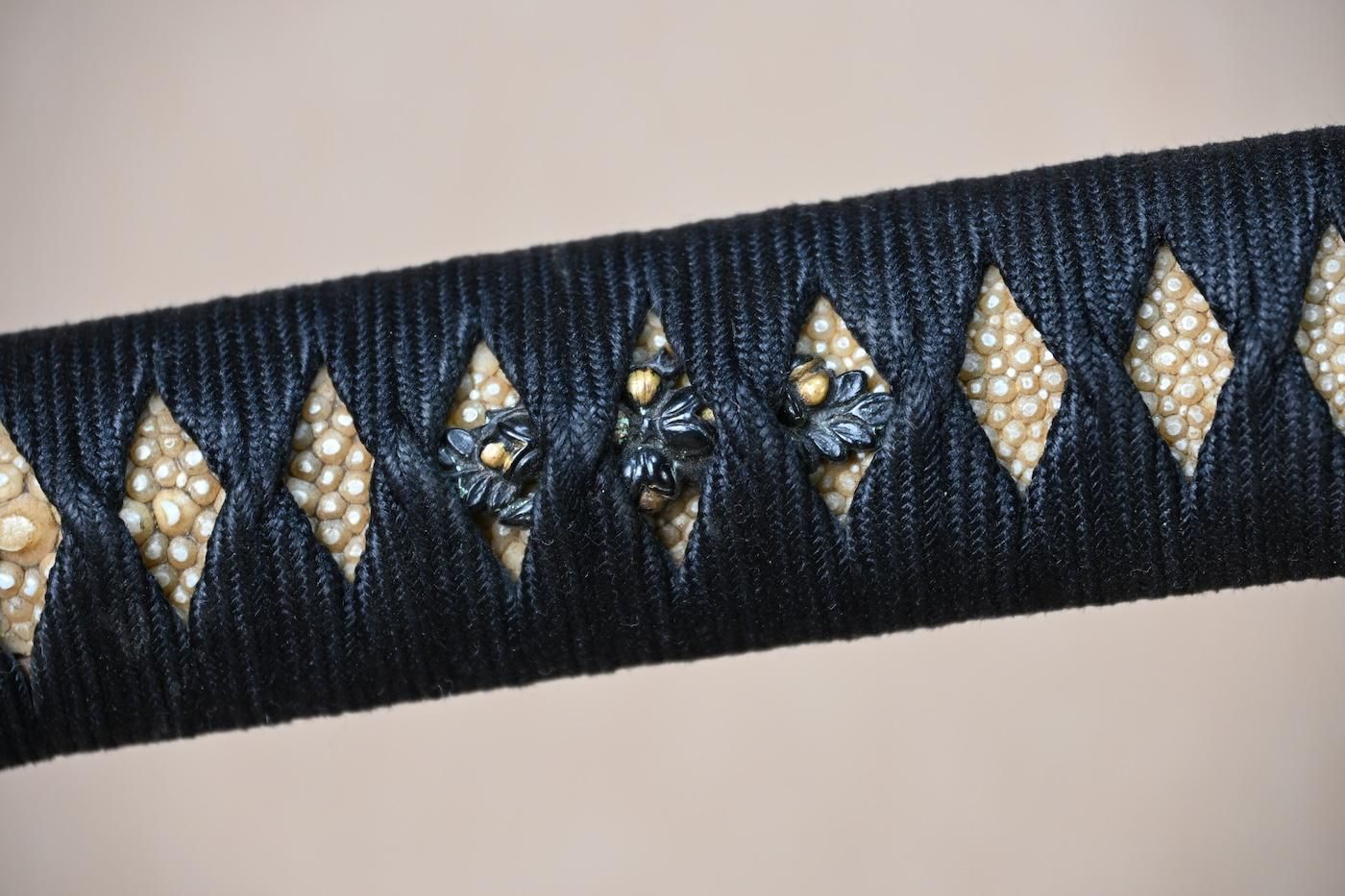
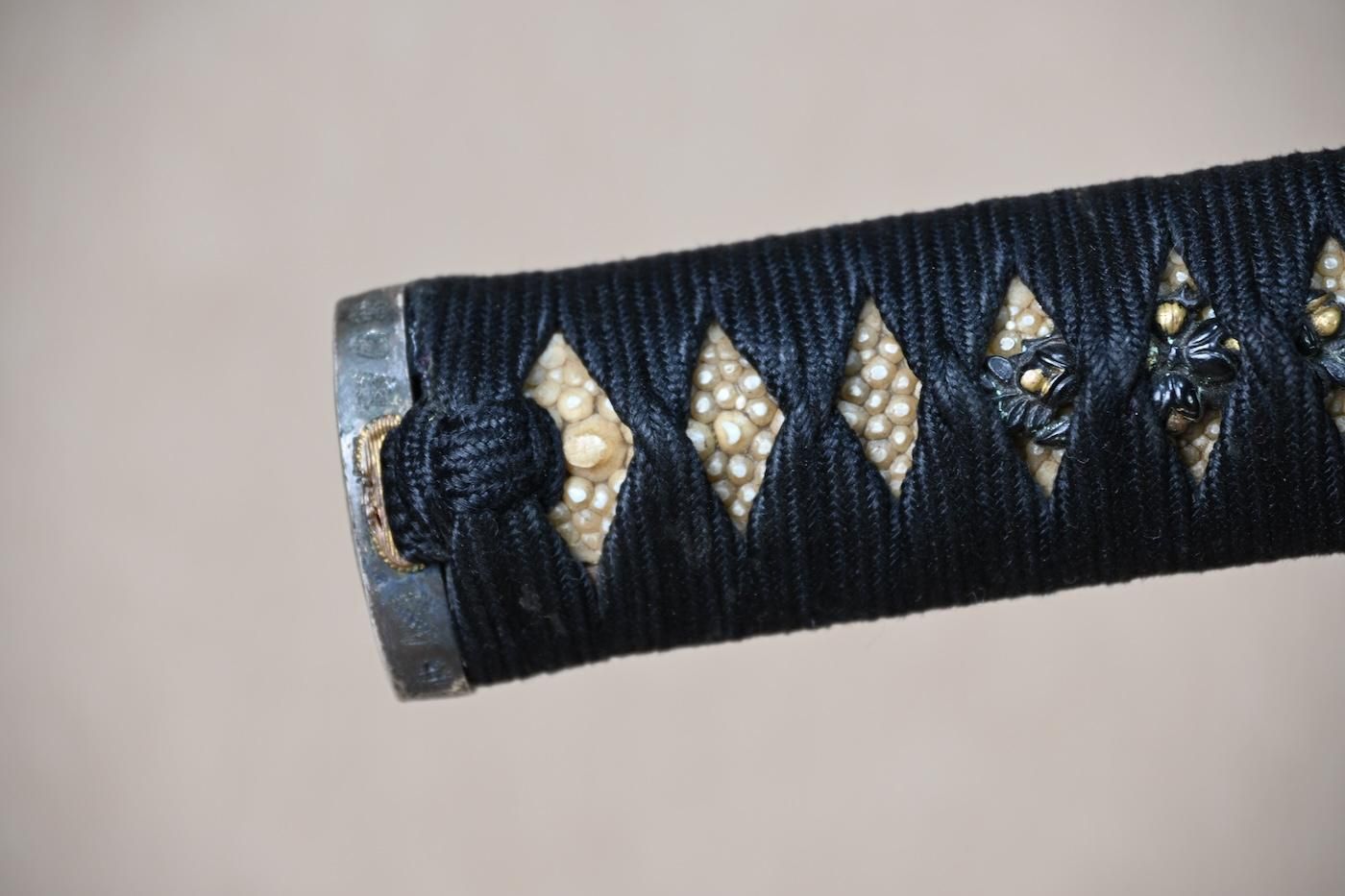
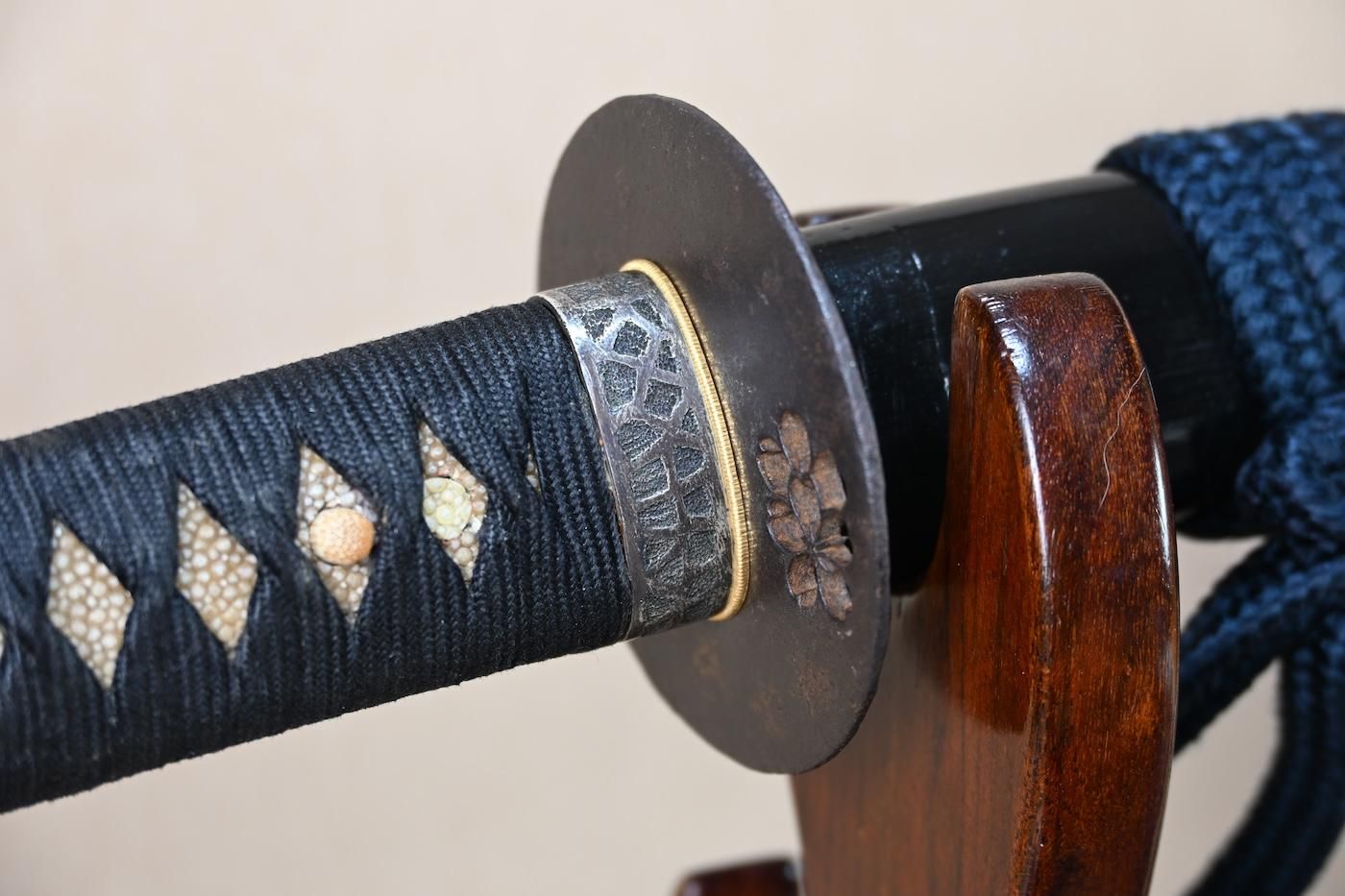
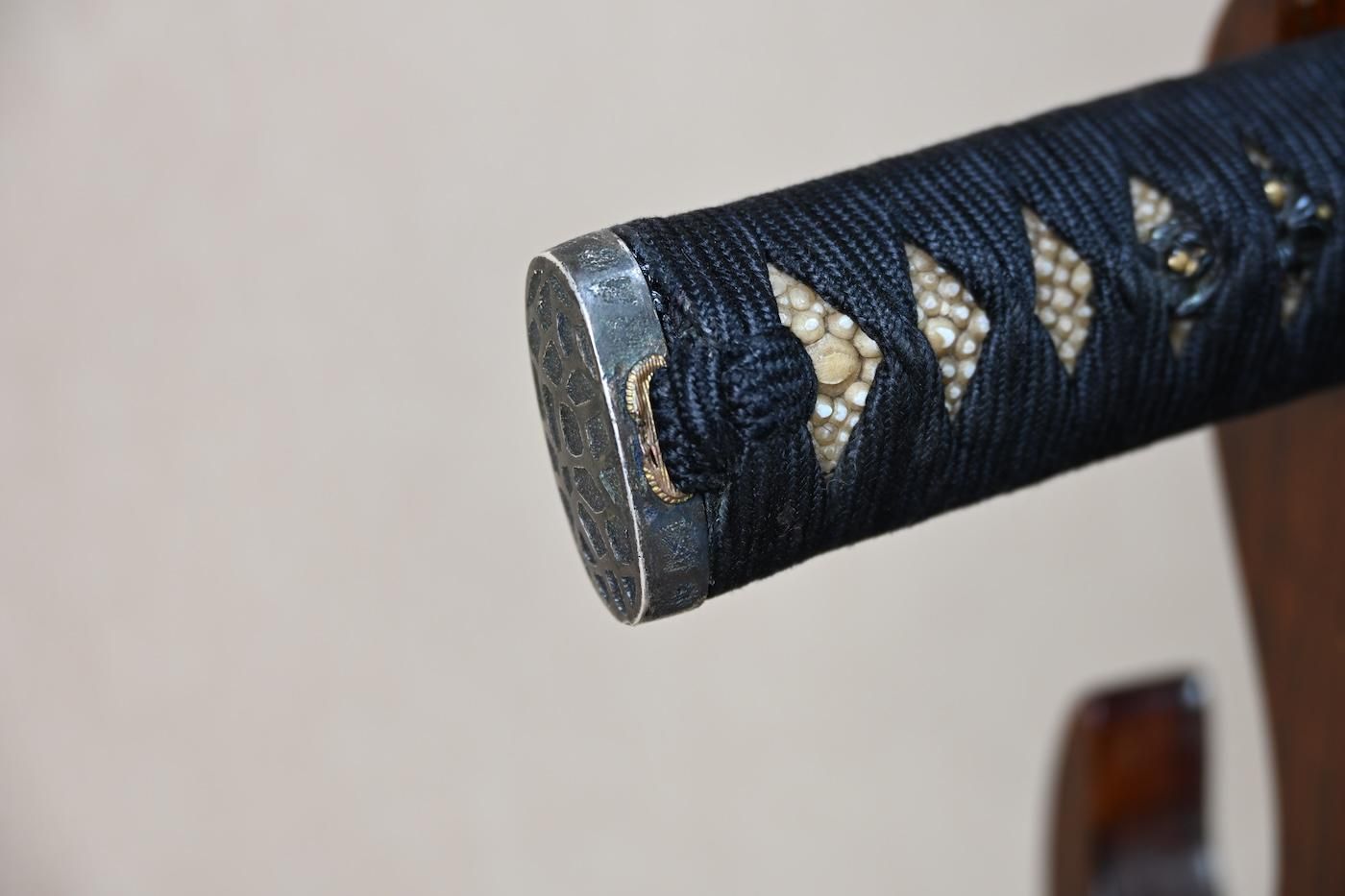
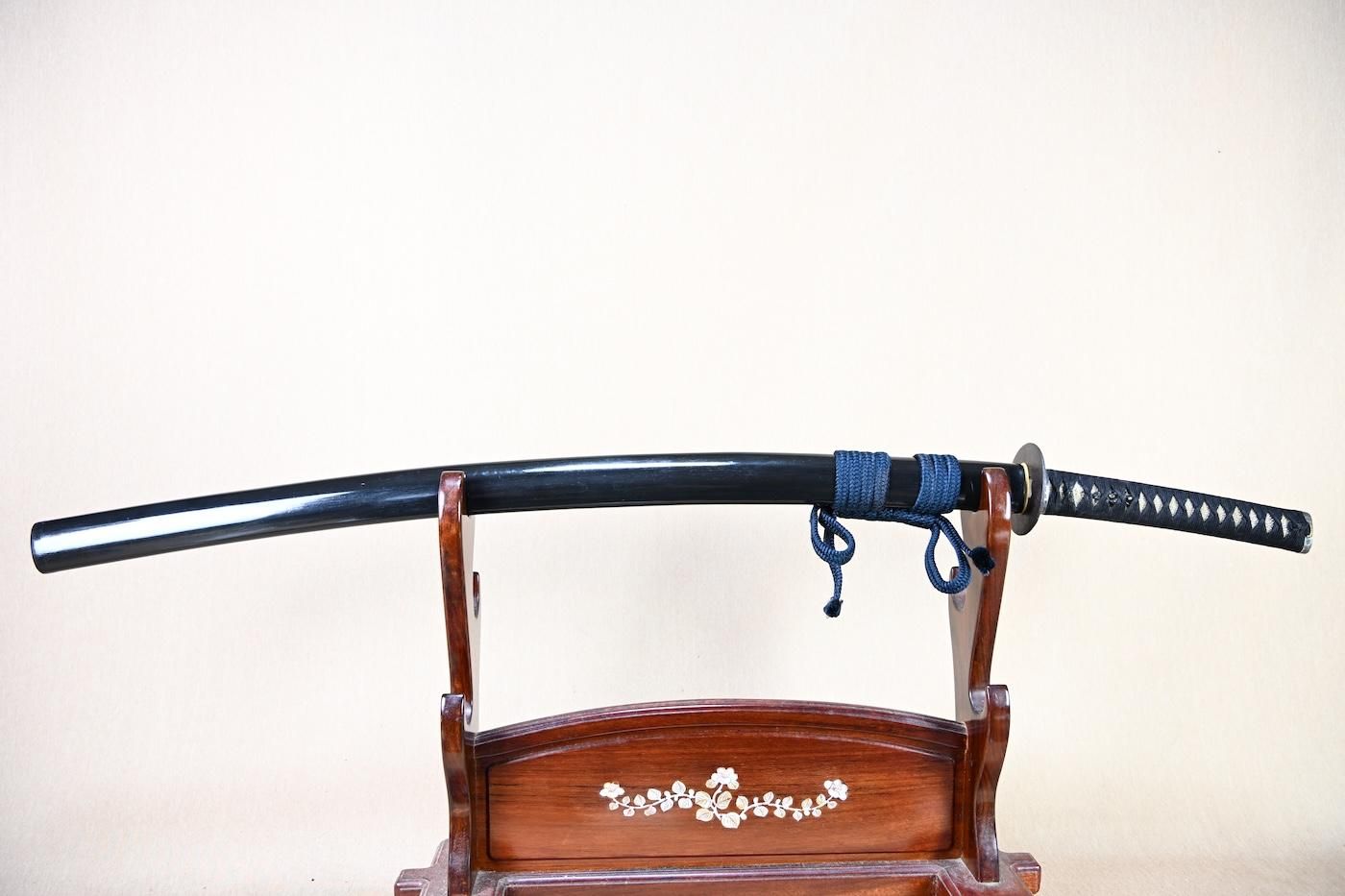
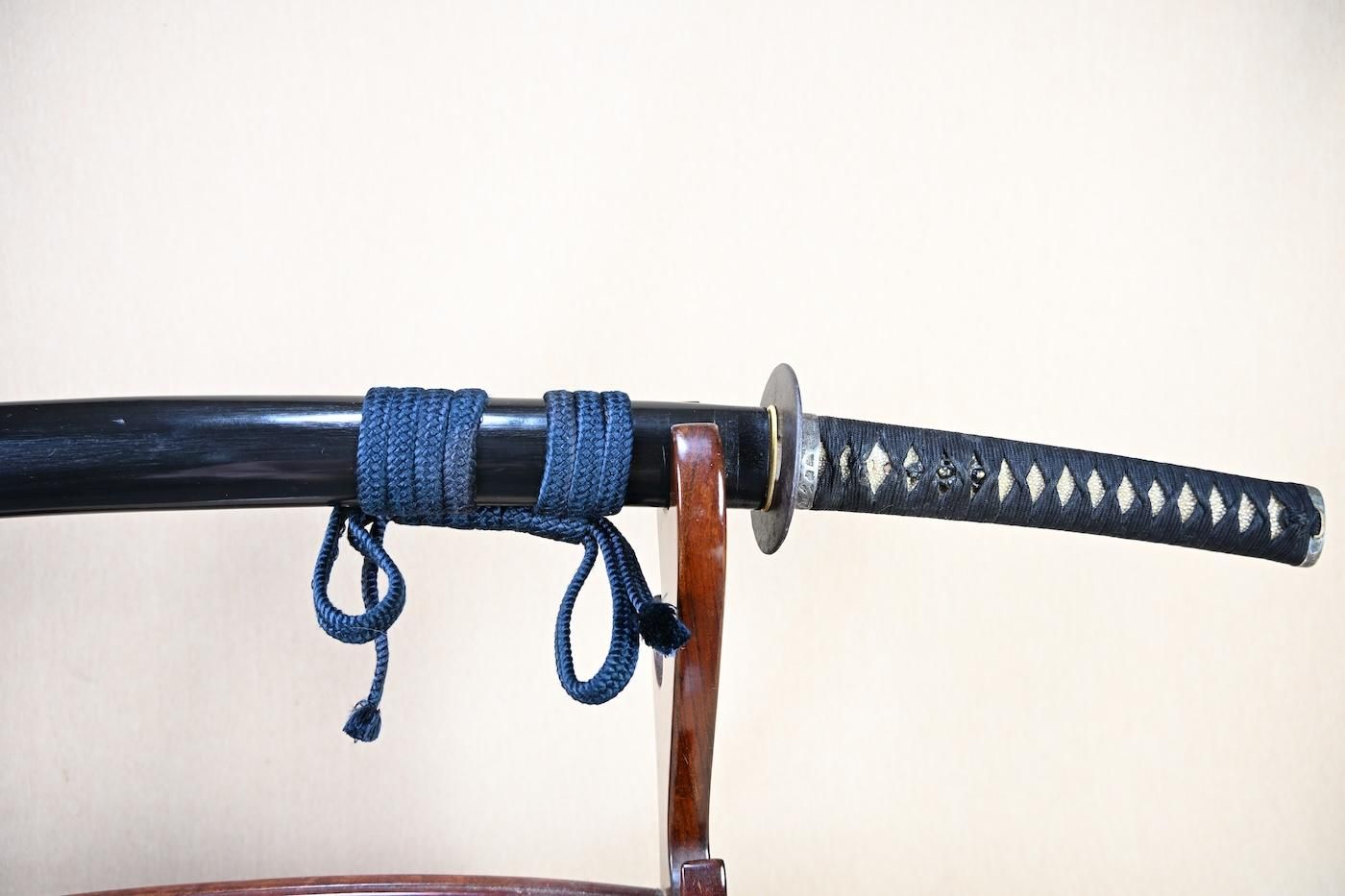
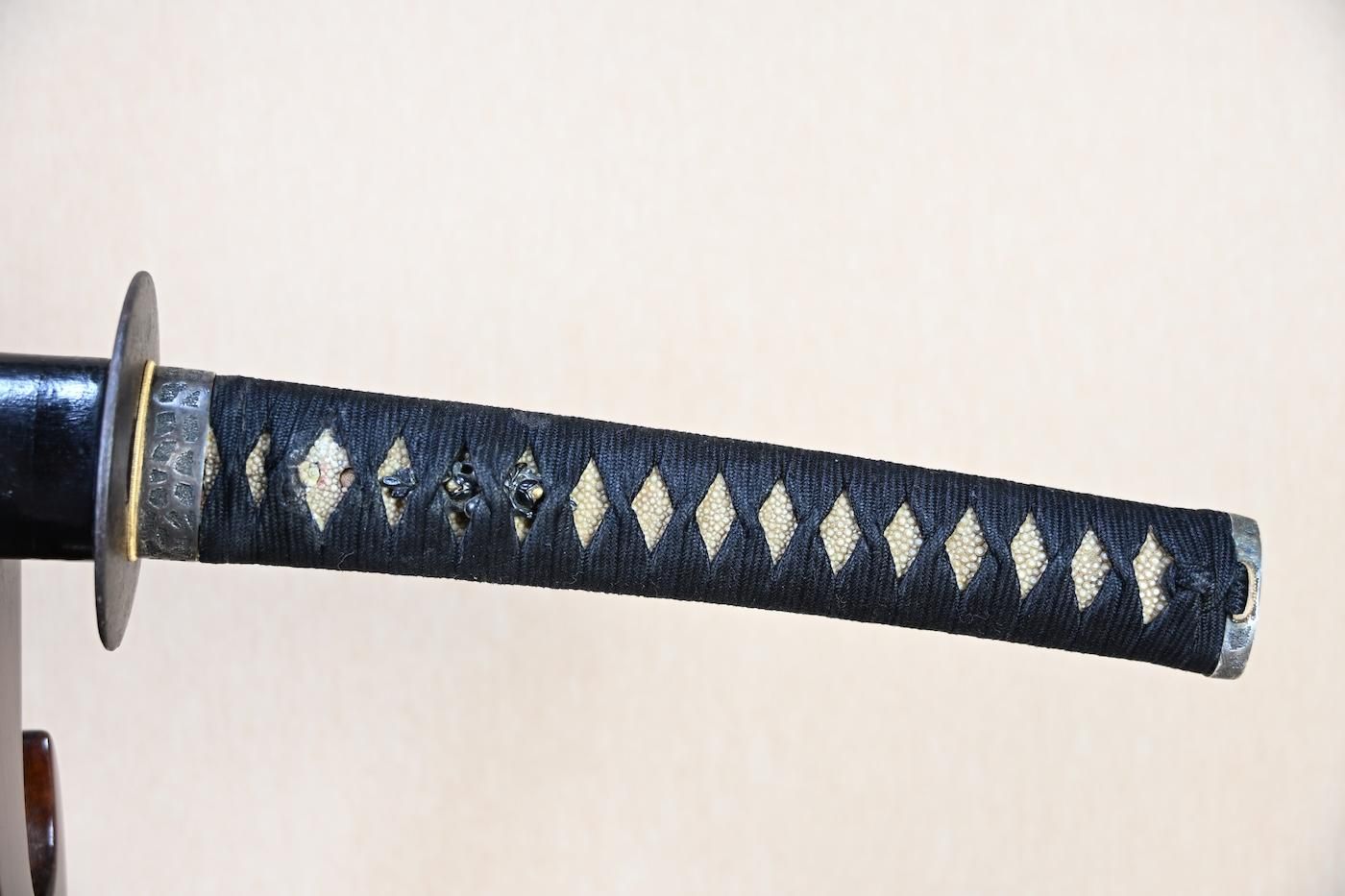
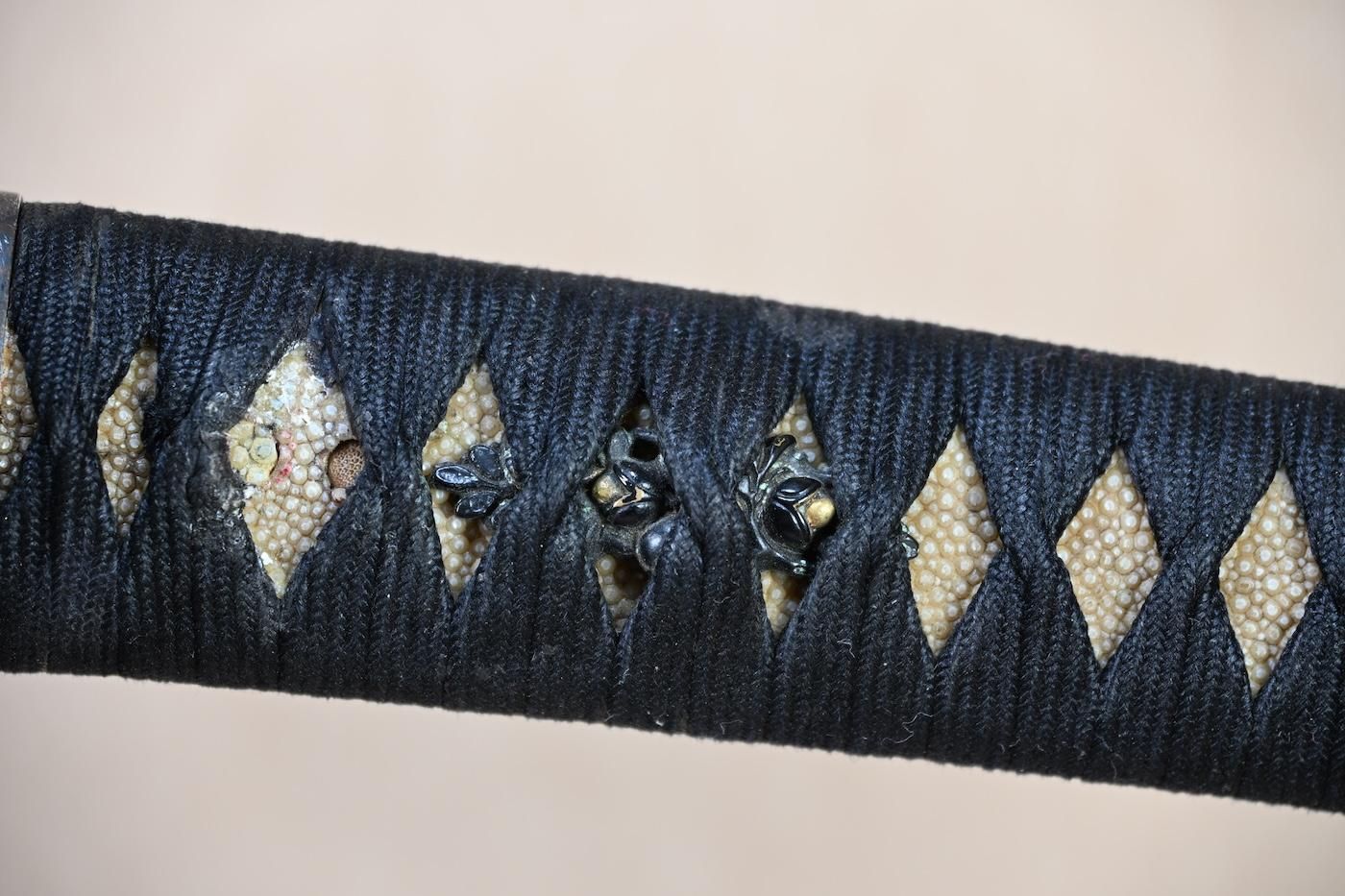
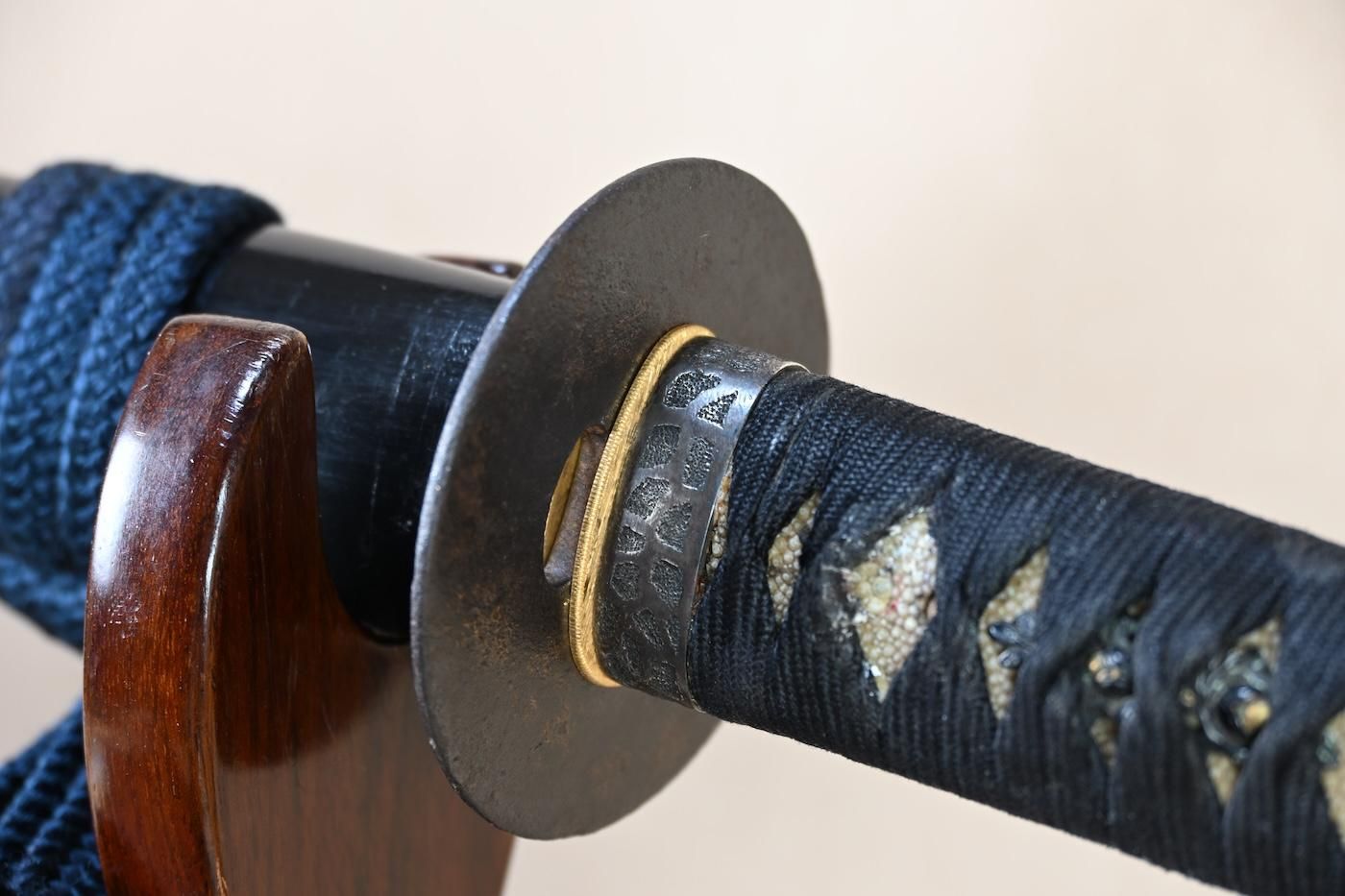
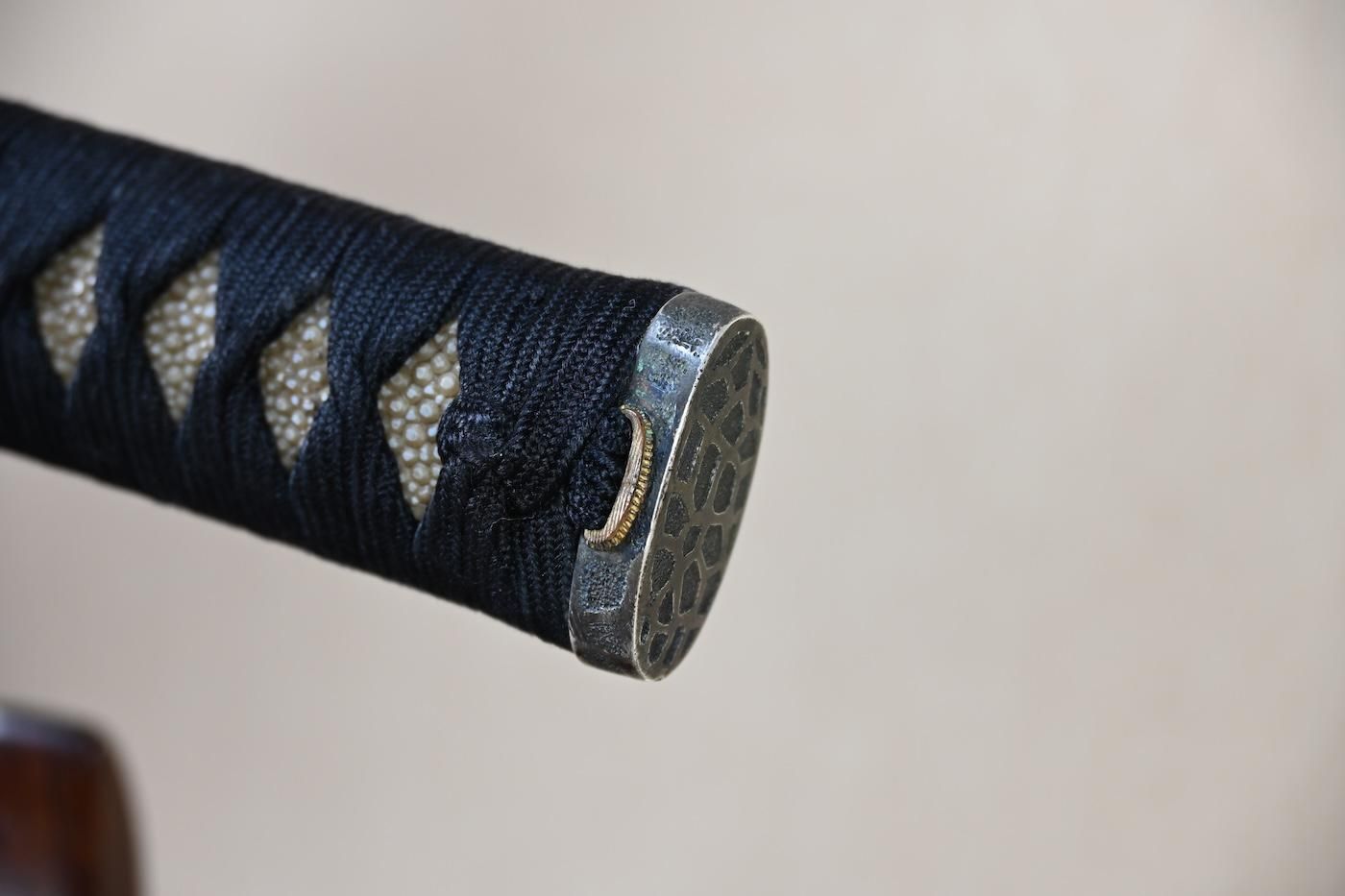
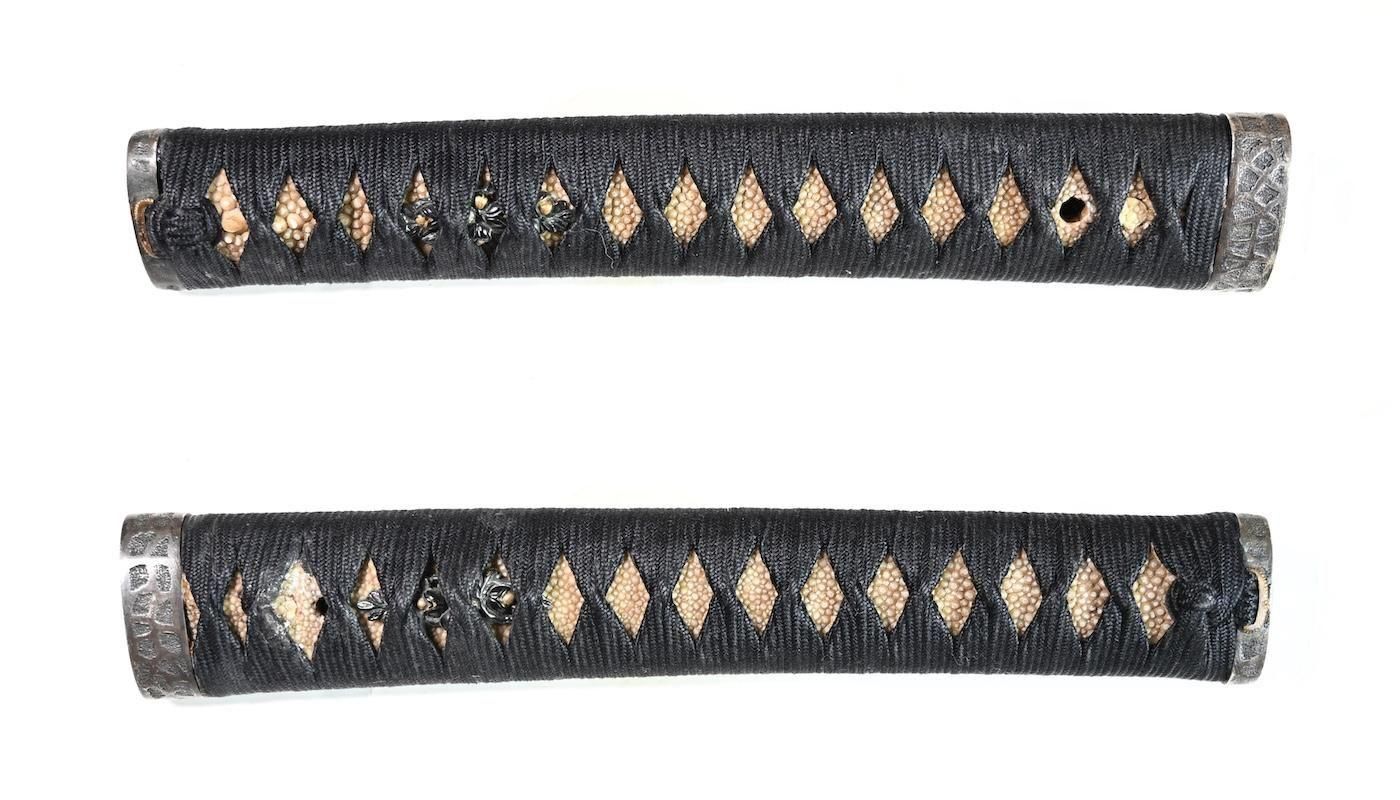
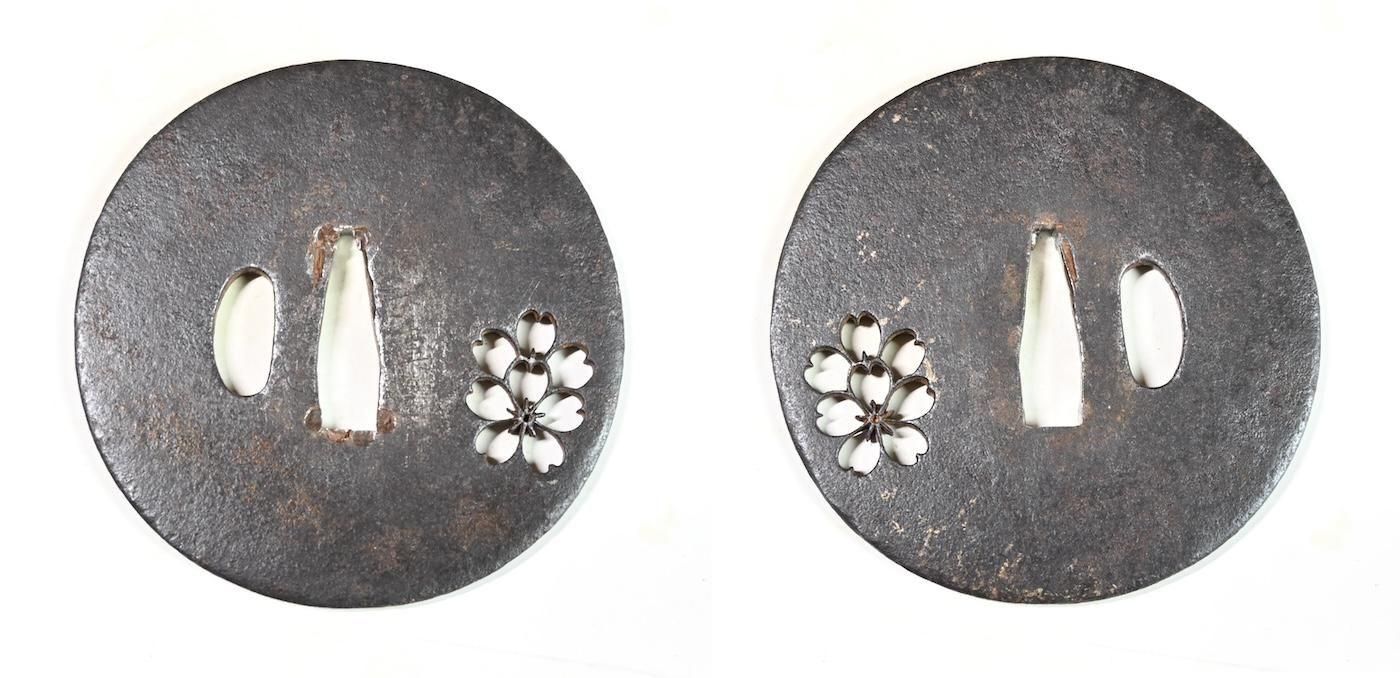
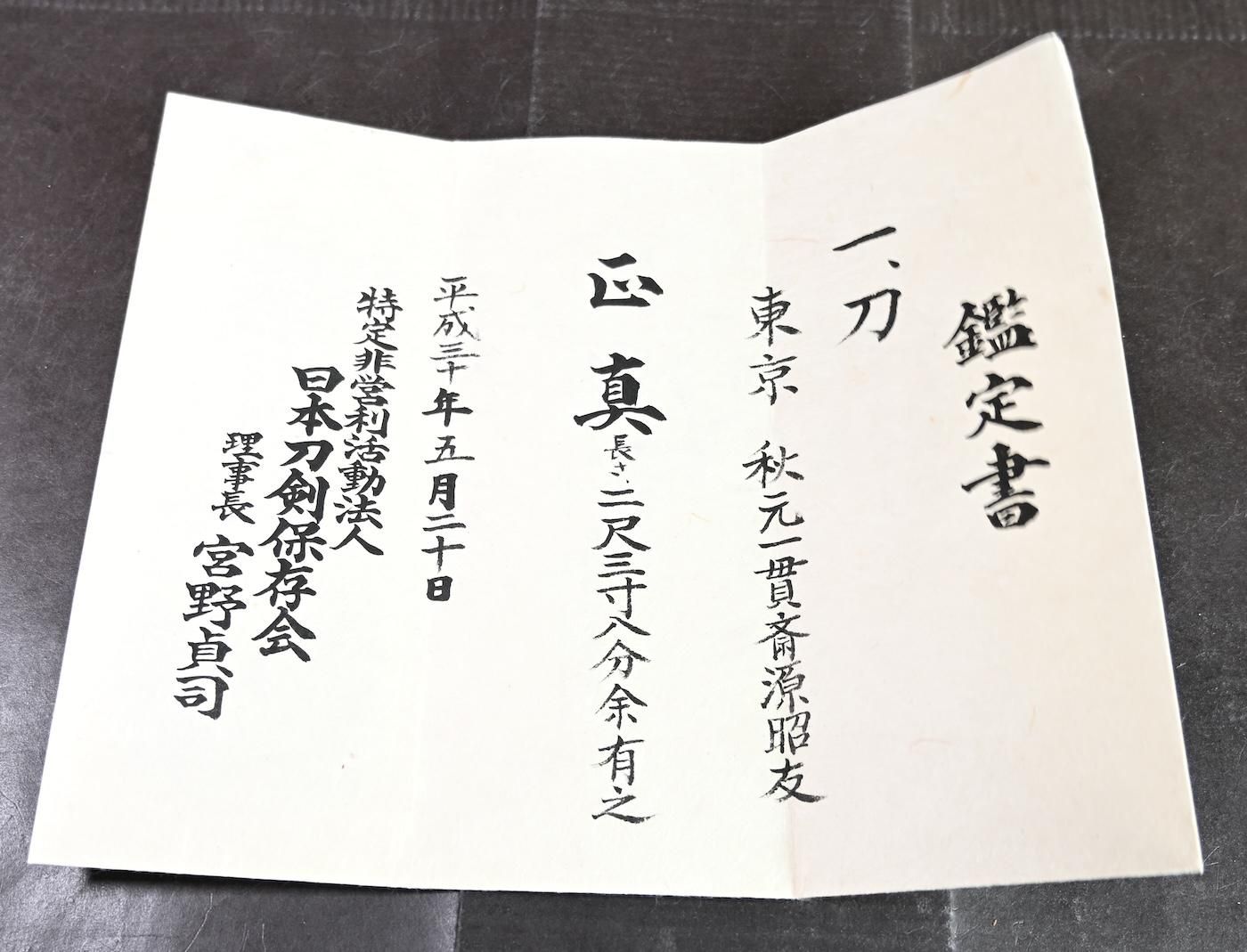
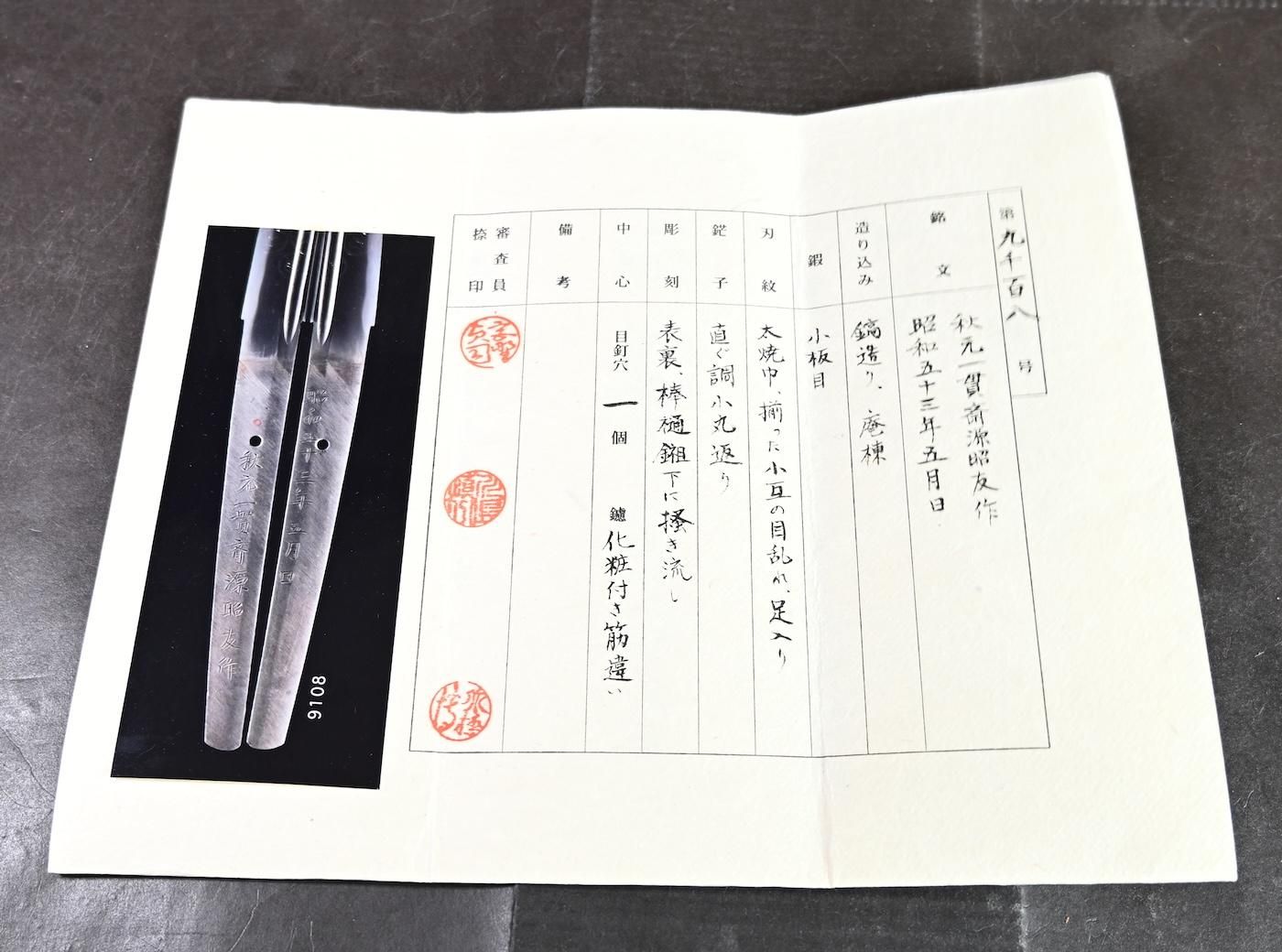
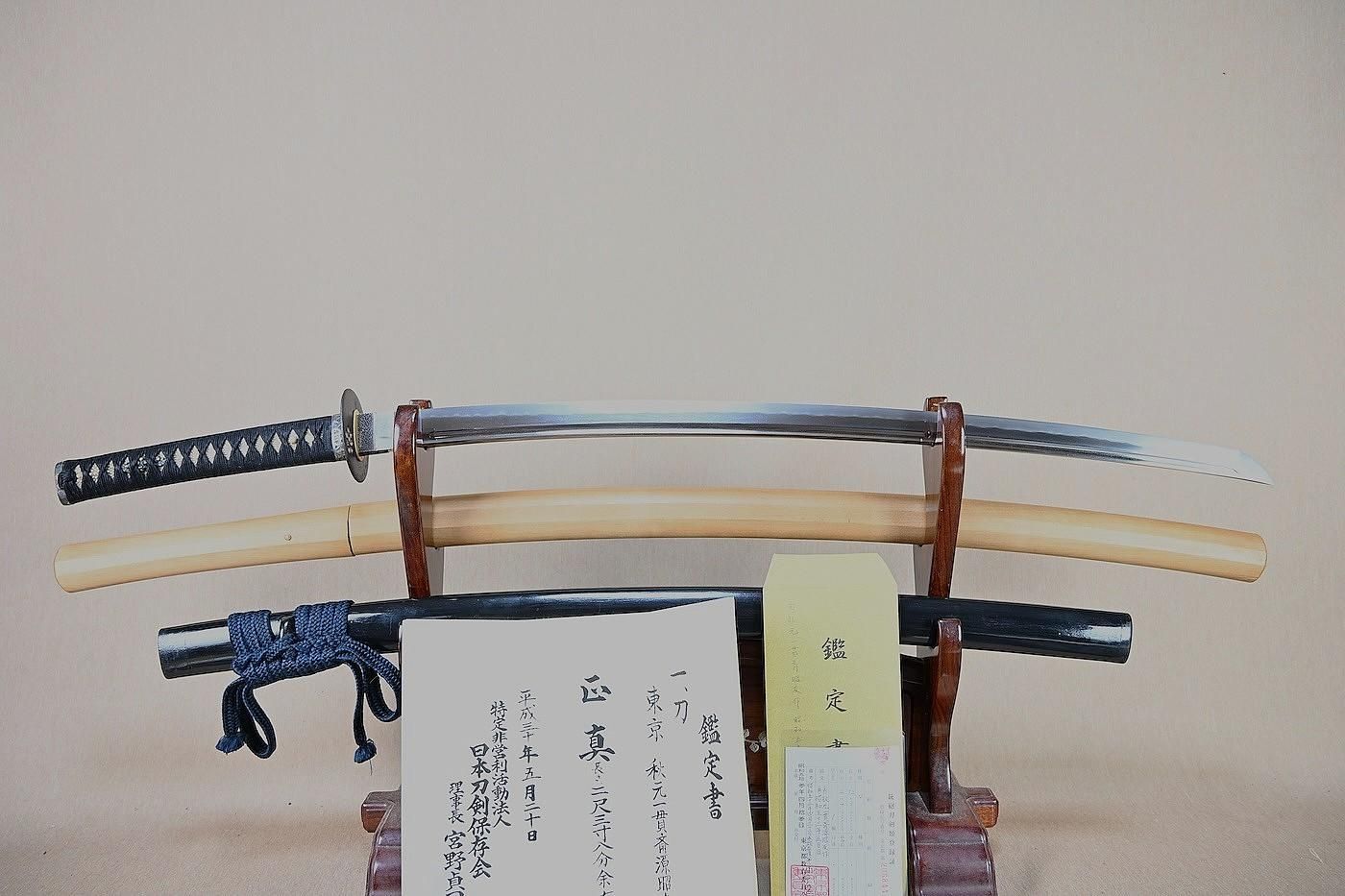
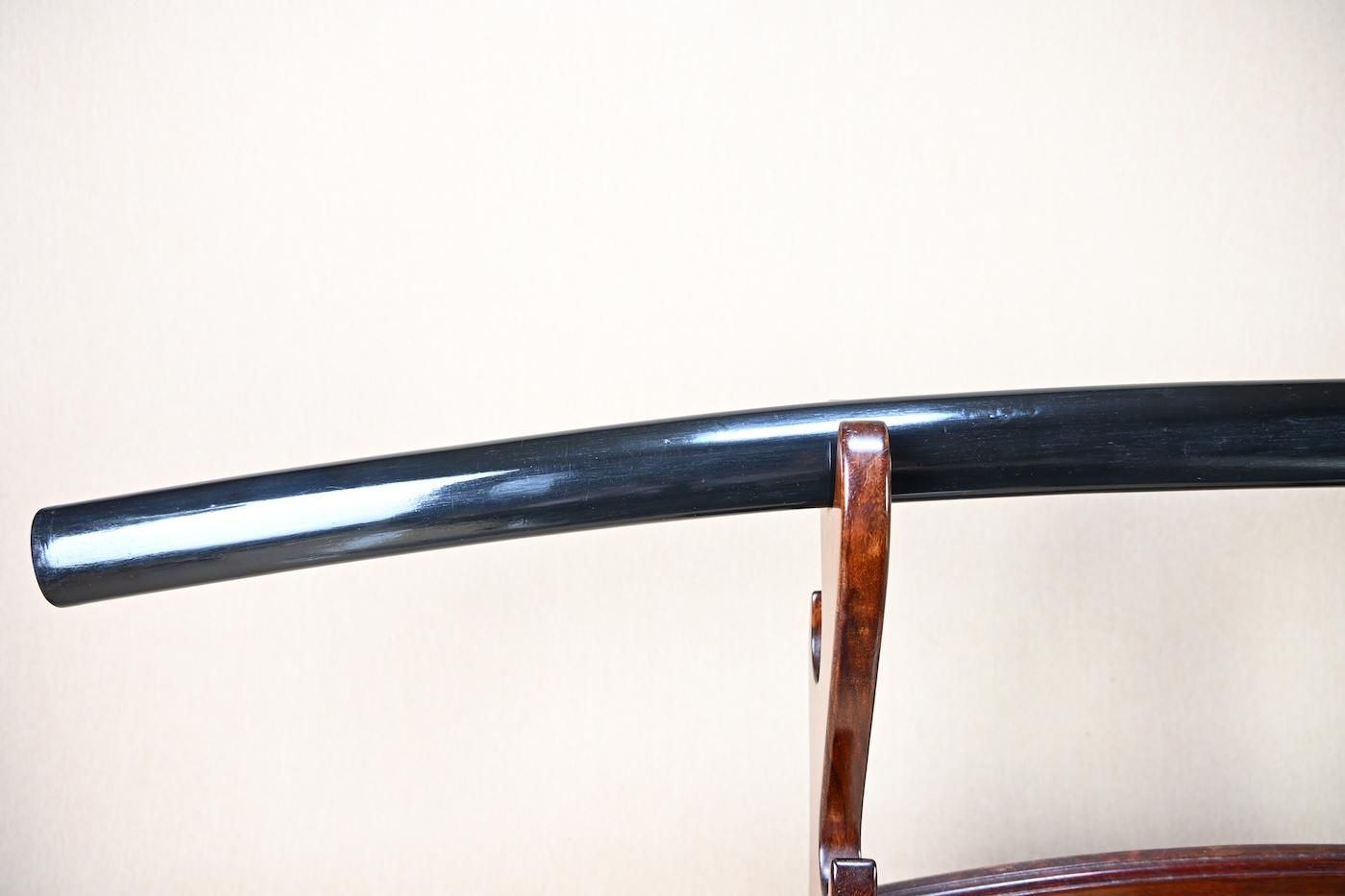
His real name was Akimoto Nobukazu, born in Meiji 43; he entered the Nihonto Tanrenkai in Showa 6 and studied under Kurihara Hikosaburo Akihide and Kasama Shigetsugu, and later when the Zama Nihonto Gakuin opened in Showa 16, he served as an instructor and was a modern master craftsman who guided the Ningen Kokuho swordsmith Miyairi Akihira and the Ningen Kokuho swordsmith Amata Akitsugu. Condition of the toshin In a sugata with deep sori reminiscent of a tachi, the jitetsu is a kitae with flowing itame and a kakinagashi bo-hi is carved with the hisaki slightly lowered; the hamon is a nioi-deki gunome with a soft habuchi and ashi, and the boshi on the chu-kissaki returns in komaru. It is a fine work carefully forged by the modern master craftsman, Akimoto Ikkansai Minamoto Akitomo. Koshirae Using period kanagu, the tsuka is slightly short and of appropriate thickness, with a period ko-sukashi tsuba inserted, and it is a koshirae housed in a kuro-ro saya. Furthermore, as it is a full set that also includes a shirasaya and tsunagi, it is a very good value.
Akimoto Ikkanzai Minamoto Akitomo
Offered by Ikeda Art


Machine translation of the shop's Japanese ·
Machine translation from the shop's Japanese · may contain errors ·
Shōwa to the present: destruction and revival
The twentieth century nearly killed the craft twice: wartime distortion, then the occupation ban. The NBTHK’s founding in 1948 and licensed forging from 1953 rebuilt the sword as an art, crowned by Living National Treasures and the mukansa rank.
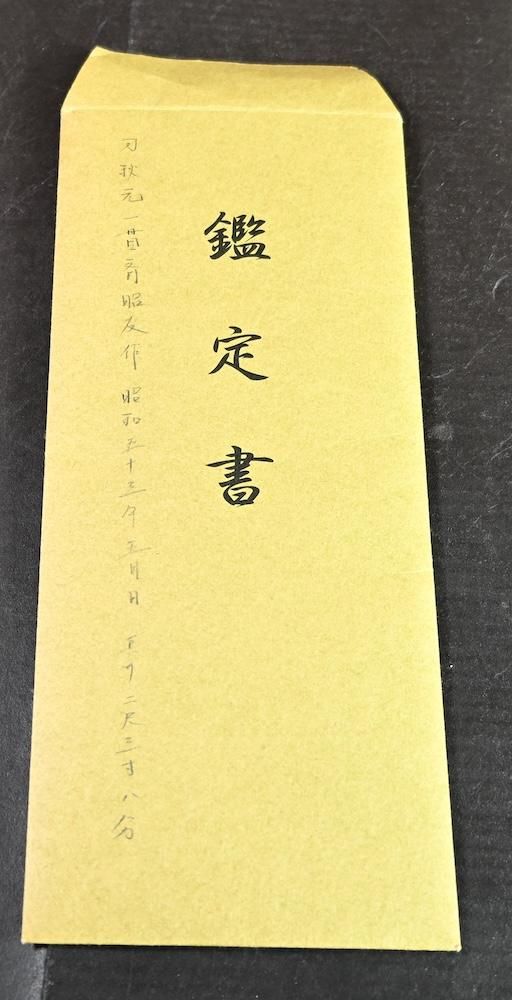
The NTHK’s principal certificate, issued for a blade of considerable quality. It confirms a genuine signature, or, for an unsigned (mumei) work, records the judges’ attribution to a smith or school. The paper carries a detailed worksheet with a numerical point score.
The NTHK (Nihon Tōken Hozon Kai, the Society for the Preservation of the Japanese Sword) is the oldest of Japan’s sword-appraisal bodies, founded in 1910, decades before the NBTHK. After the death of its long-serving head it divided into two successor societies, the NTHK and the NTHK-NPO, both of which continue to hold shinsa. NTHK blade certificates are known for a detailed worksheet that records a numerical point score alongside the judges’ written opinion (fitting papers carry the judges’ opinion without a point score), and the society is especially respected for its attribution of unsigned (mumei) work.
Please contact us promptly after the item's arrival. Except where the item is defective, we cannot accept returns. For returns due to customer circumstances, the cost is the customer's responsibility. In the case of a defective item, we bear the cost.
¥440,000