 NihontoWatchNihontoWatch
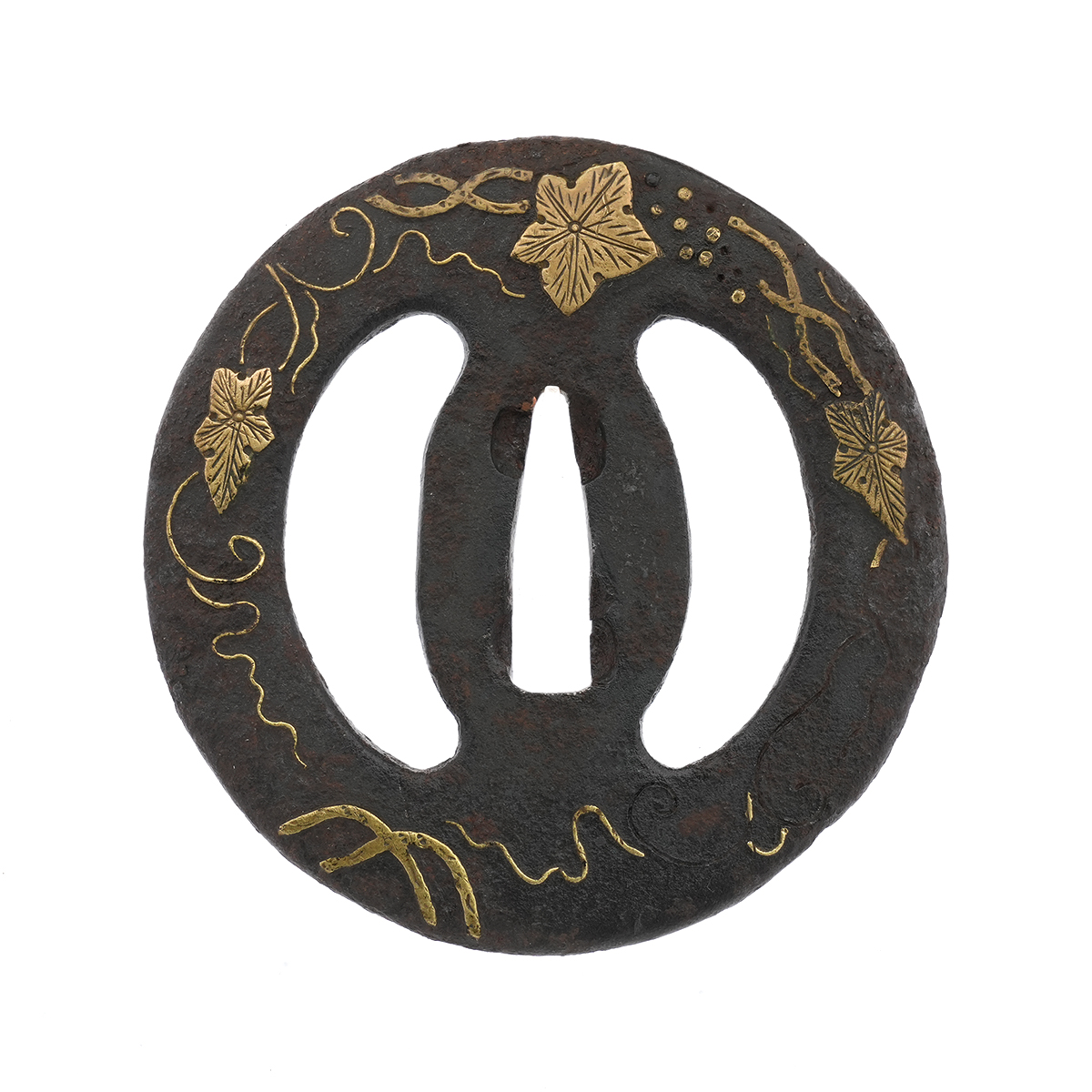
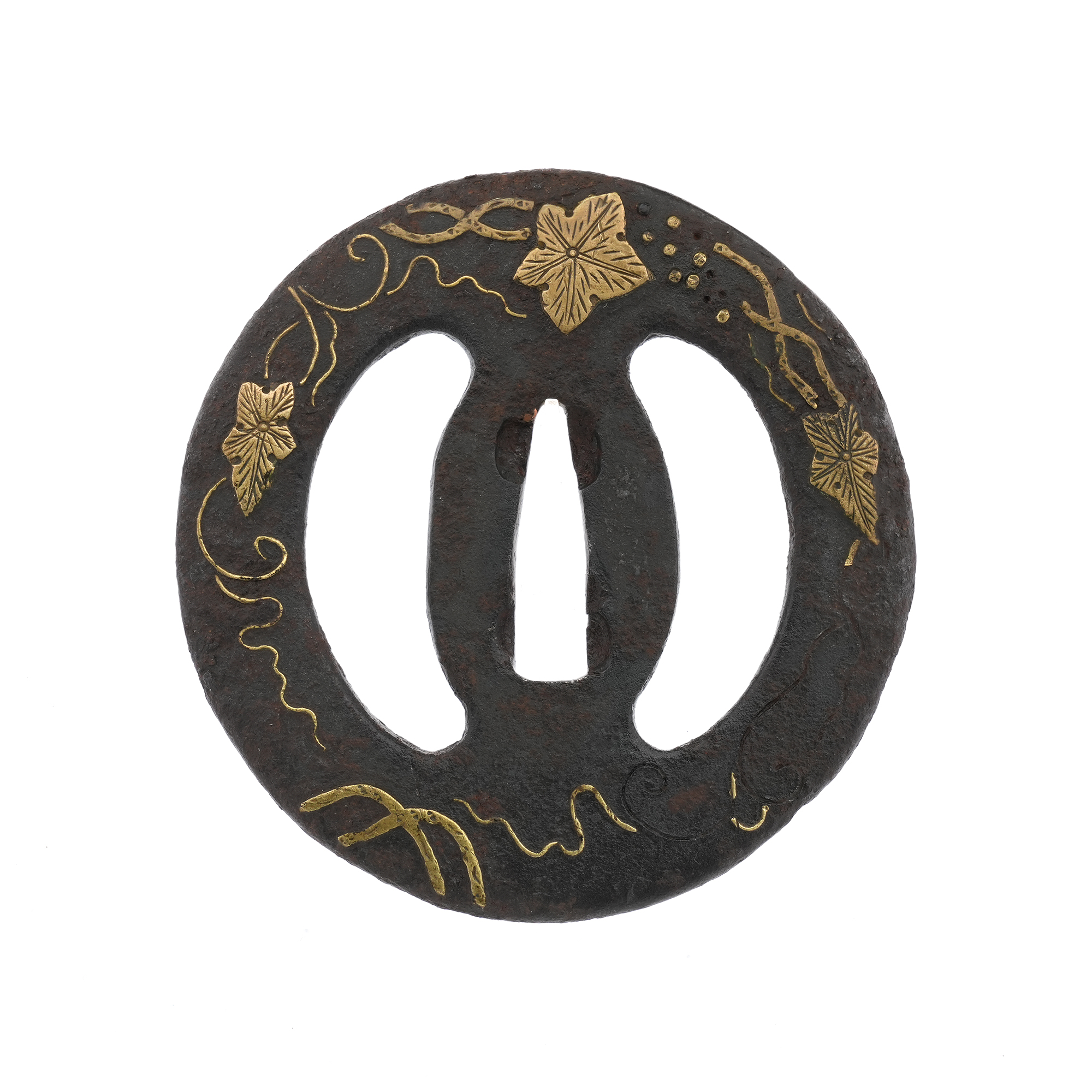
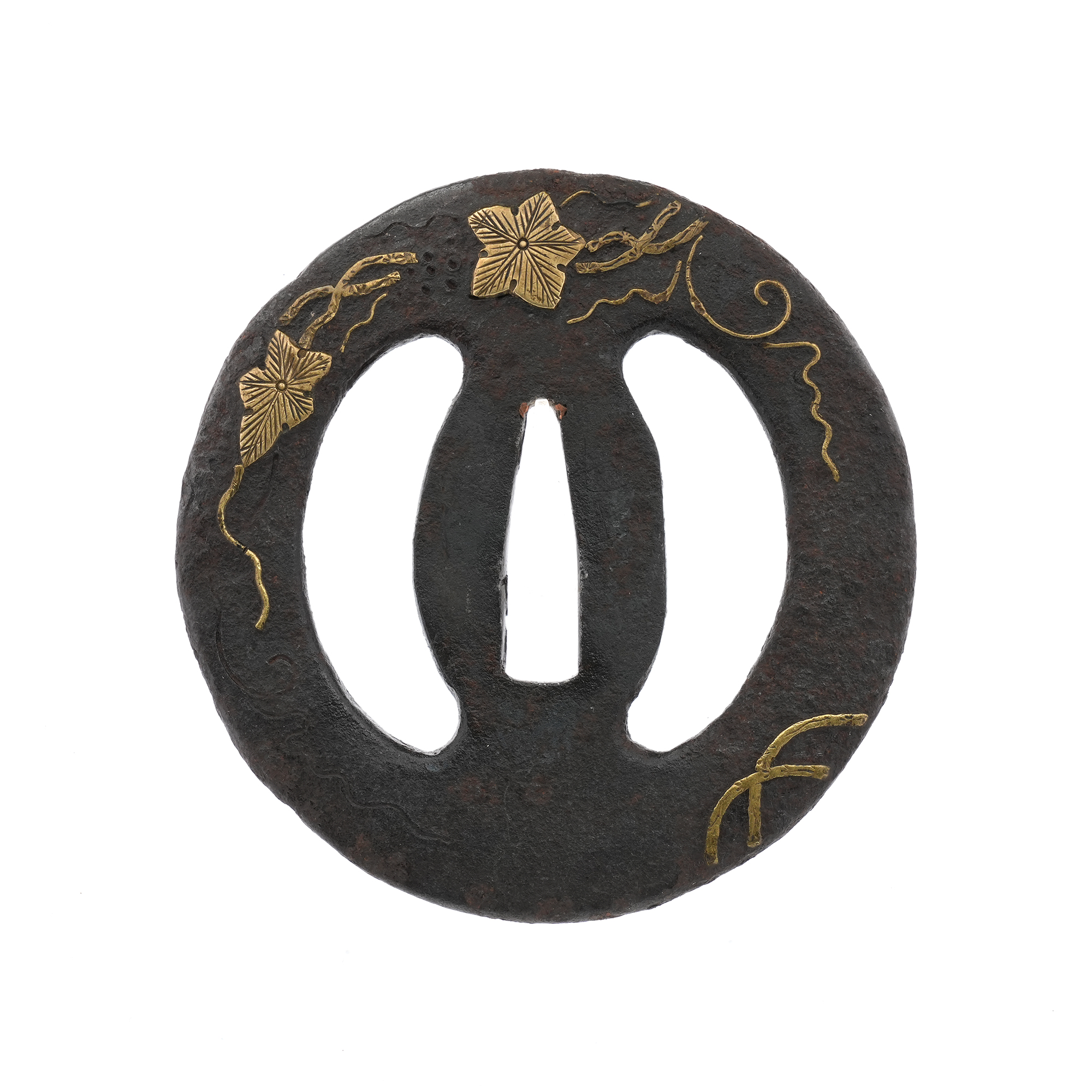
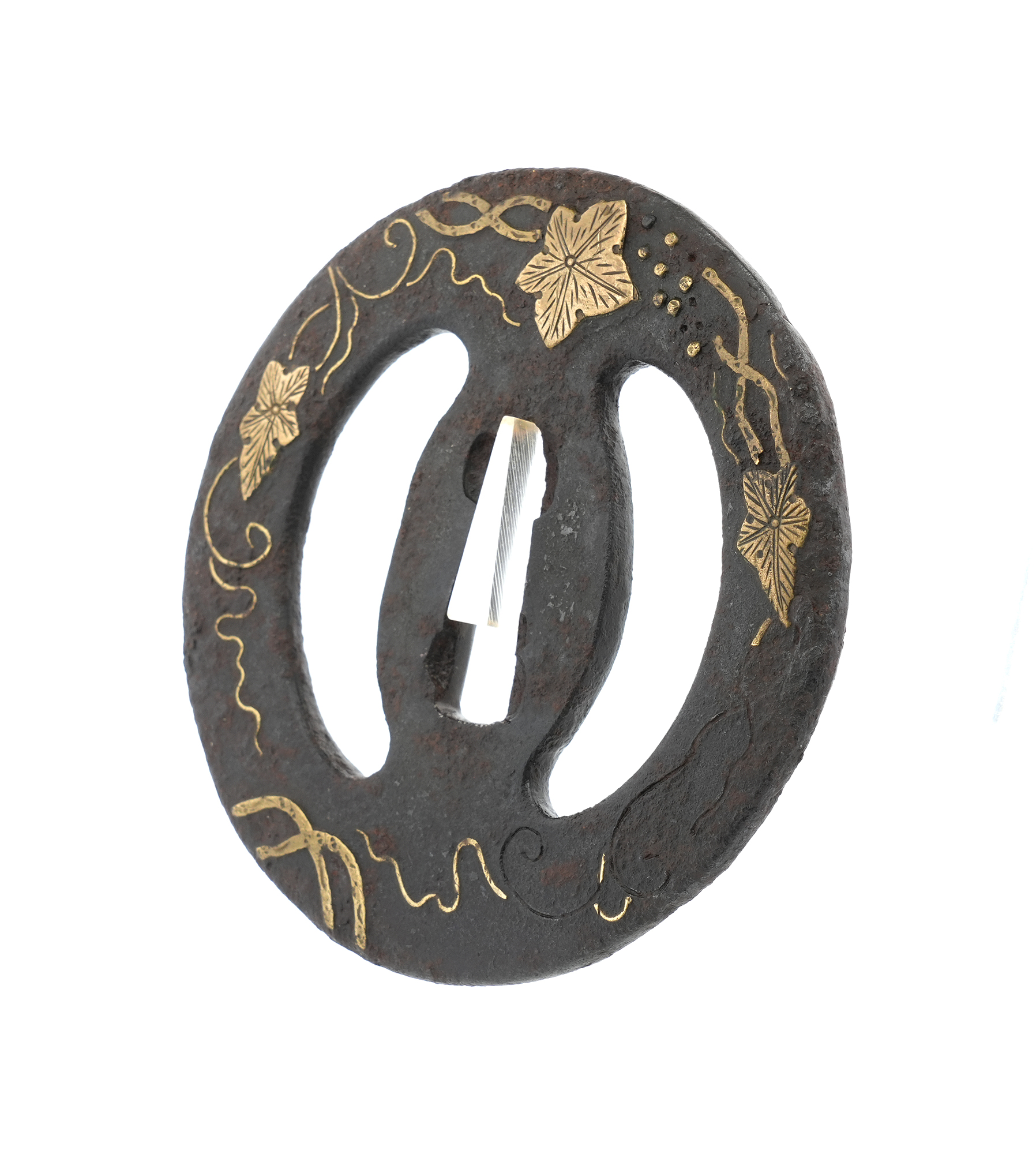
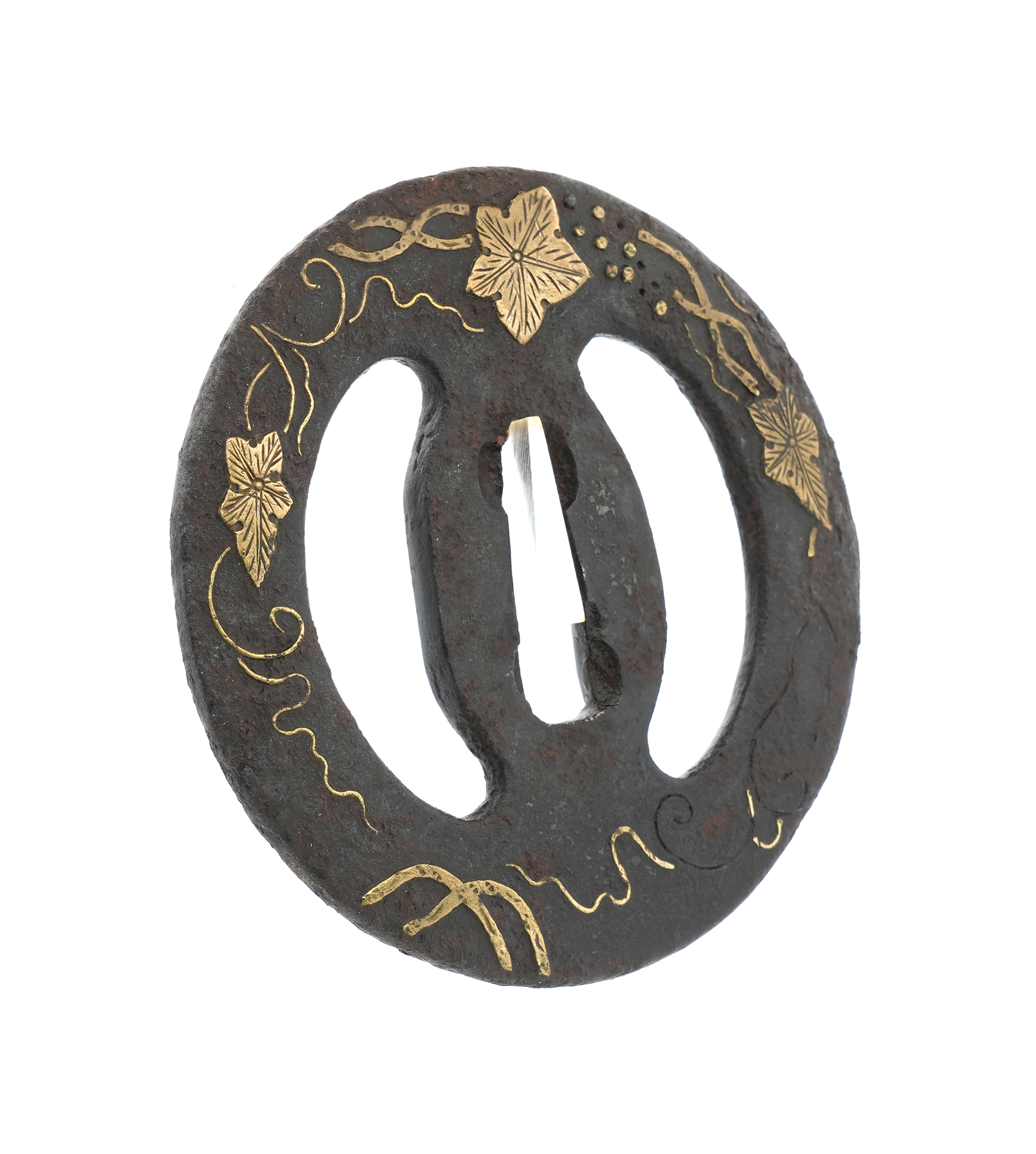
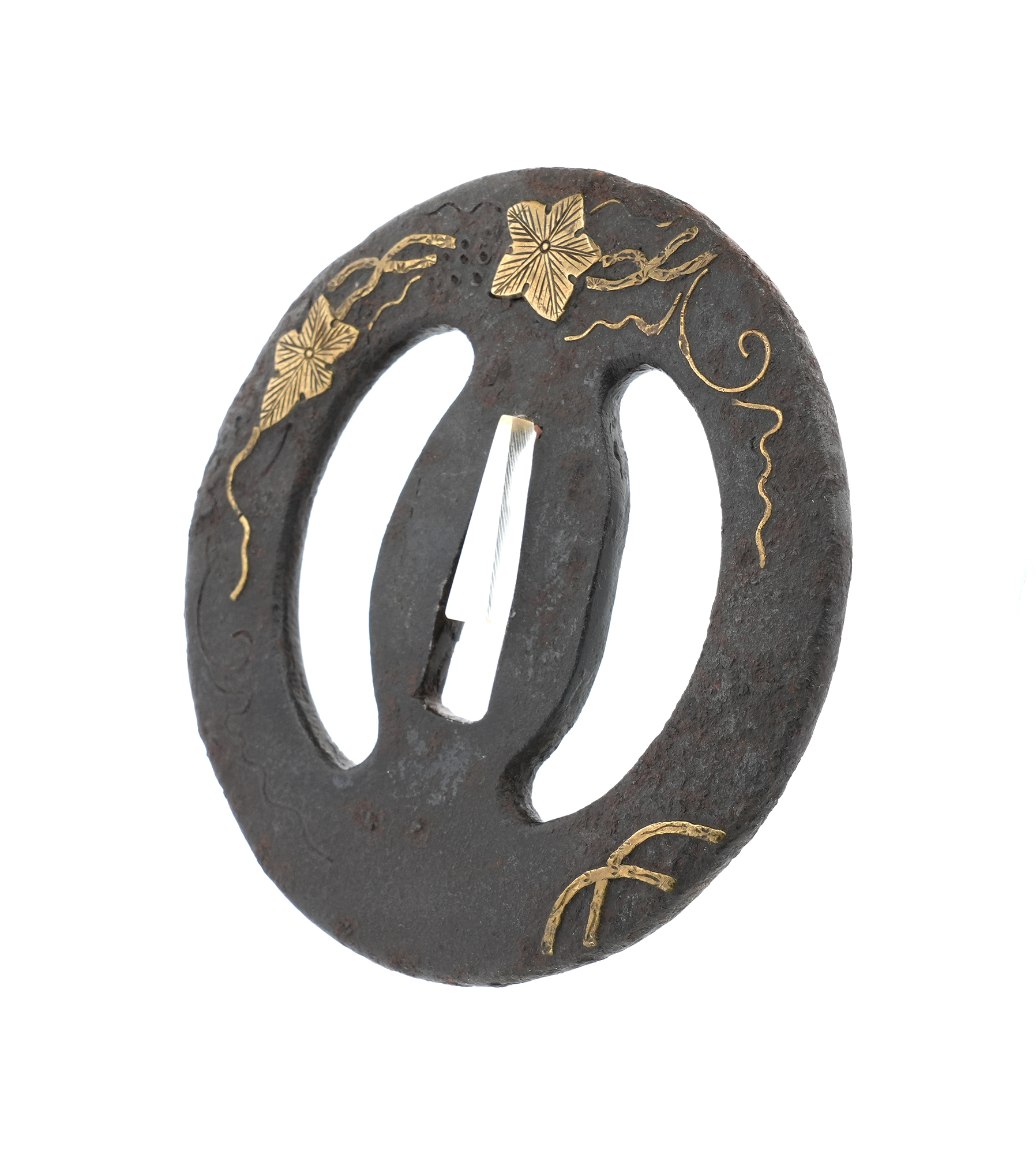
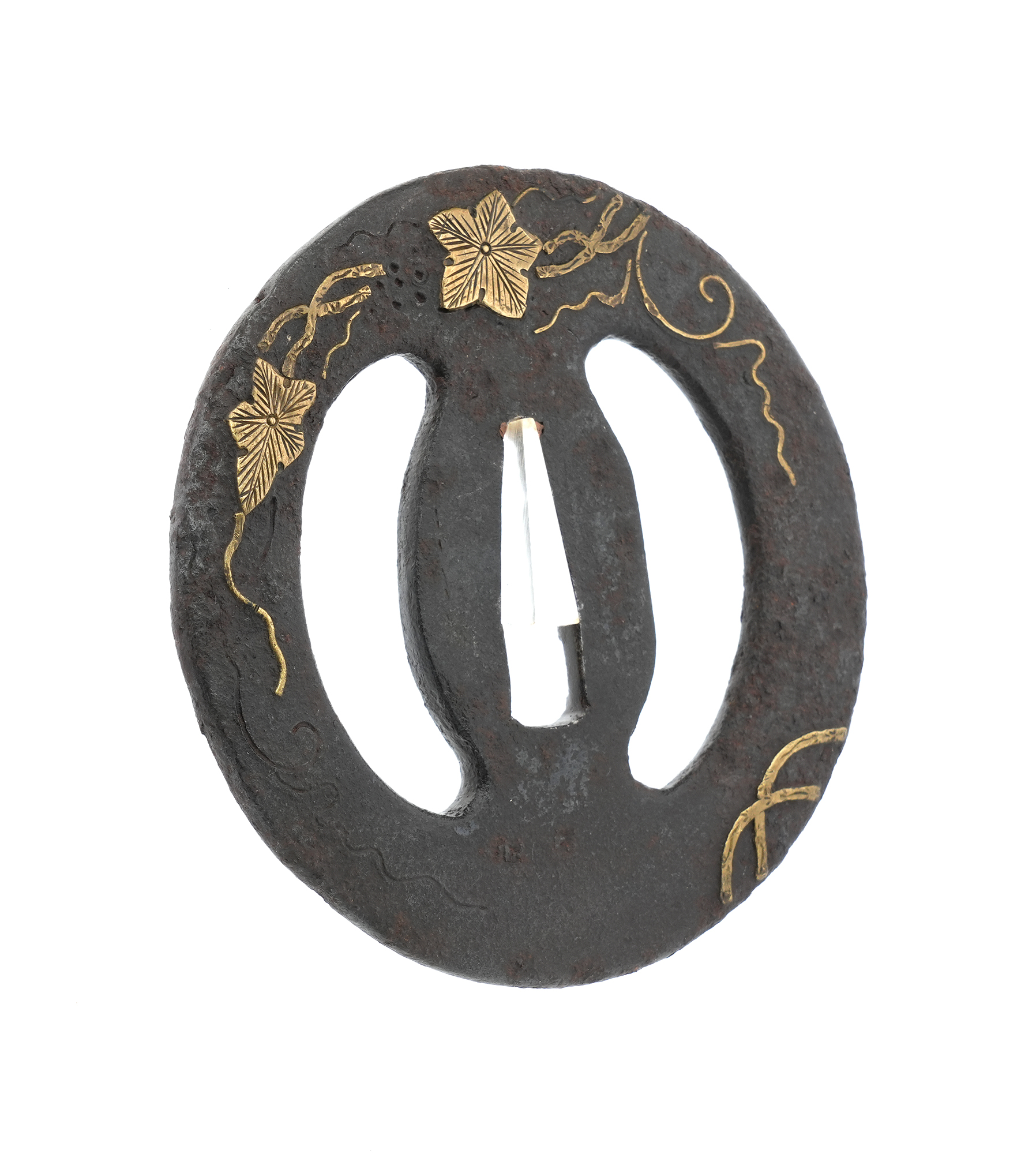
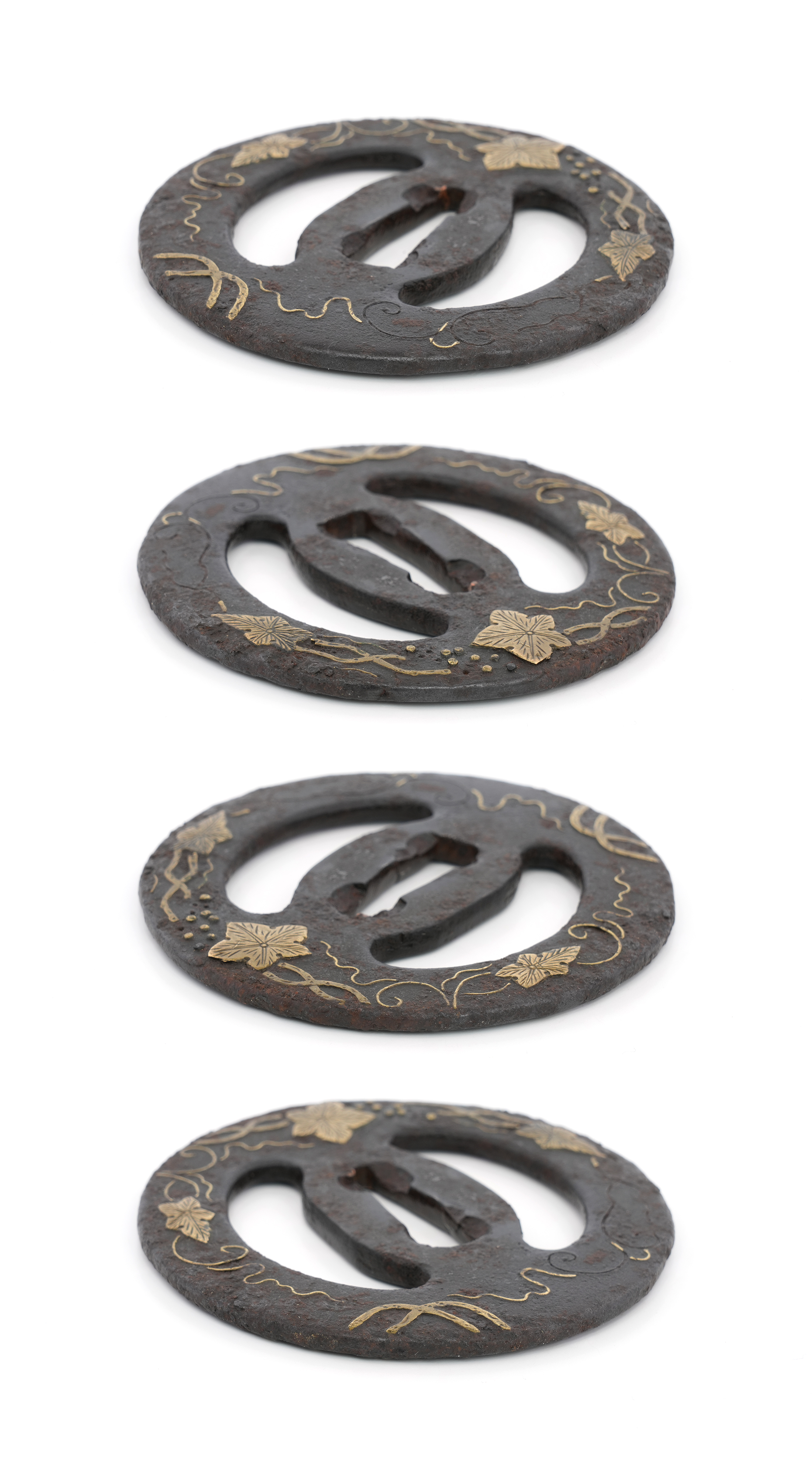
Heianjo zogan is a metalwork style in which iroe such as brass are inlaid into an iron ground, causing arabesque, family crests, and botanical motifs to stand out in a golden color, and it flourished from the end of the Muromachi period to the early Edo period. It is characterized by the vivid contrast created by the blackish iron and the bright tone of the brass, and in this piece, by running tessen karakusa around a powerful frame with large namako sukashi provided on the left and right, the antique tetsu-aji and the expansive botanical design are harmonized. Tessenka is a plant named by likening the appearance of its vines to iron wire because it blooms neat flowers while extending thin and sturdy vines, and it is a subject that goes well with karakusa-mon, possessing both the vitality of growing long while intertwining and a gorgeous floral appearance. In this piece, the tessenka with widely opened petals is represented by thin brass plates, and a rich expression is given by carving fine lines radially from the center of the flowers, and by continuing thin vines and tendrils around them, the flow of the tessen karakusa growing while circling the tsuba surface is vividly depicted. The left and right namako sukashi have a robust construction that leaves sufficient meat on the seppa-dai and mimi while taking large, soft, oval-shaped negative spaces, and golden flowers and vines unfold as if sewing around them. By combining large flowers, tightly closed buds, and small curling vines, and skillfully using thin plate zogan and fine line zogan, the clear outline of the namako sukashi and the gorgeousness of the brass stand out from a distance, and at hand, one can enjoy the carved lines of the petals and the delicate movement of the vines in turn. The zogan possesses a natural tone that has passed through many long years, and the deep antique color of the iron ground and the soft luster of the brass enhance each other. With a magnificent appearance of approximately 80 mm and a solid thickness of 5.0 mm, it is a piece that allows one to fully enjoy the clean modeling of the namako sukashi, the tessen karakusa running on the front and back, and the contrast between iron and brass unique to Heianjo zogan, and it is a tsuba rich in both koshirae-bae and appreciation value, adding the gracefulness of botanical motifs to the power of an old tsuba.
NihontoWatchOffered by Toushin

We couldn’t find current papers for this piece. Ask the dealer whether it has been, or can be, submitted to shinsa. — Hoshi

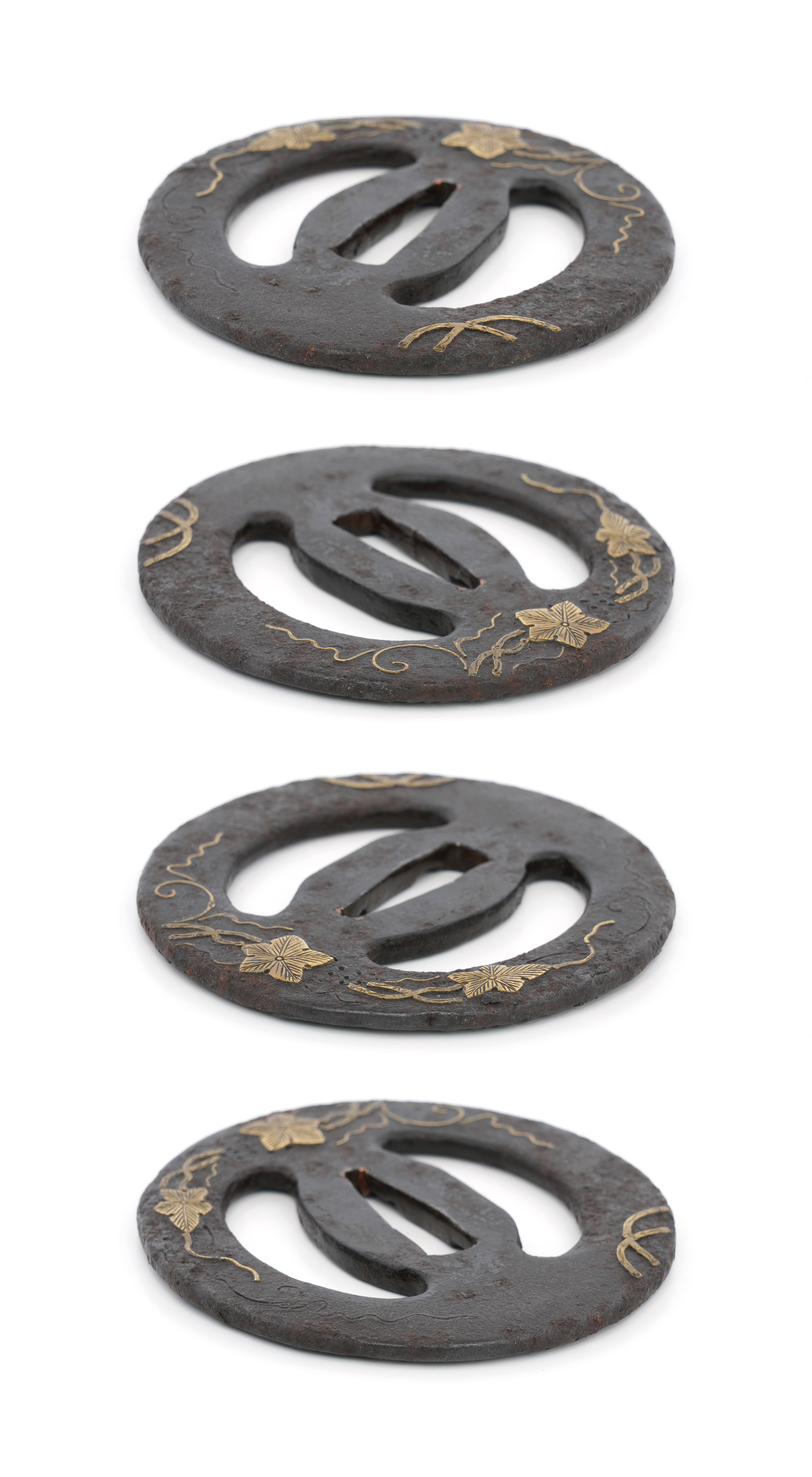
Unsigned
Machine translation of the shop's Japanese ·
Machine translation from the shop's Japanese · may contain errors ·
We could not find an authenticity certificate on the seller’s listing. Japanese swords and fittings are normally papered by the NBTHK (or the NTHK). Without one, the attribution is the seller’s own assessment and has not been independently verified — treat it with caution and ask the dealer about certification before buying.
As a rule we do not accept returns, except when we have sent a different item from the one ordered or when there is a significant discrepancy between the description and the item. If you wish to return an item, please contact us within 3 days of its arrival and then send it back.
¥176,000