 NihontoWatchNihontoWatch
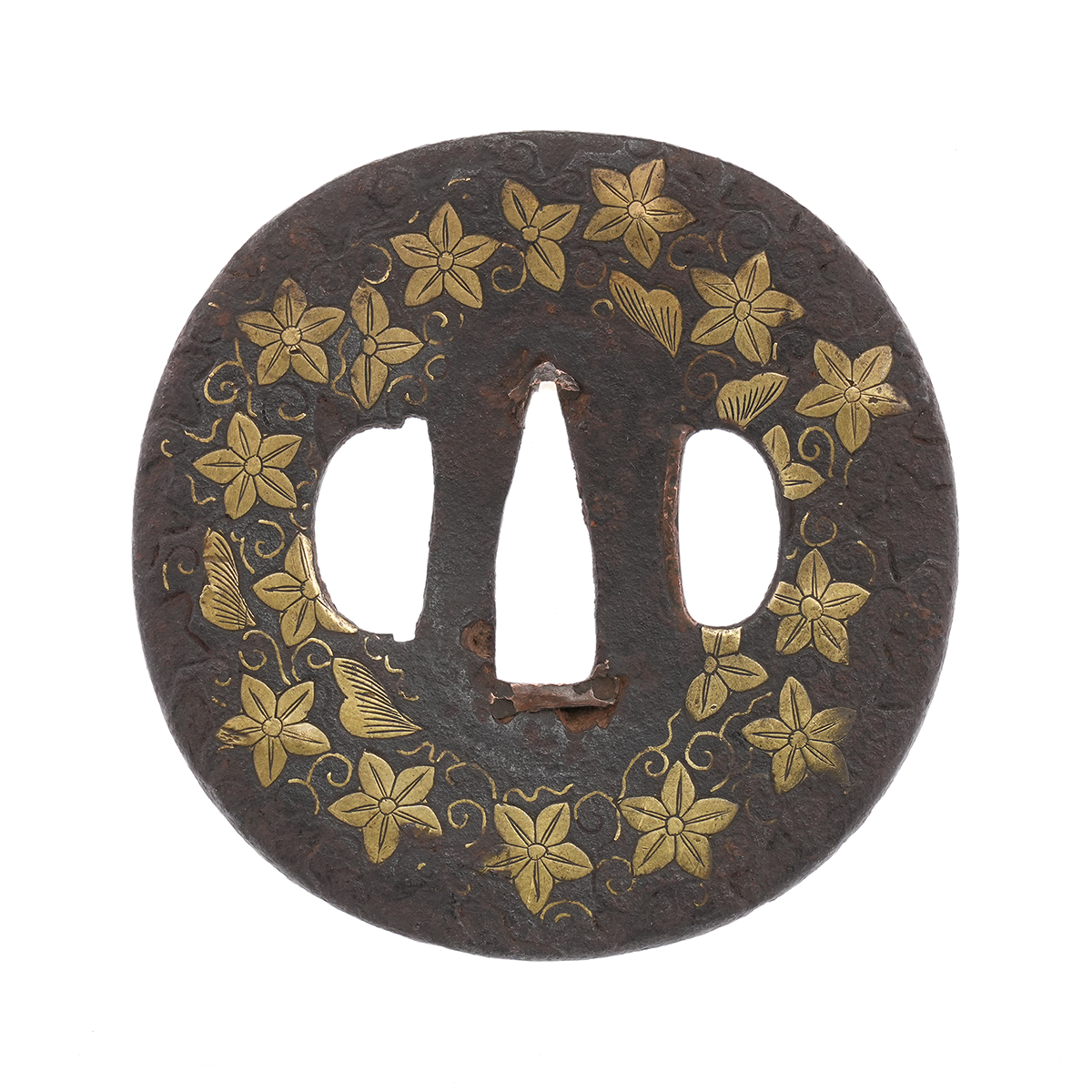
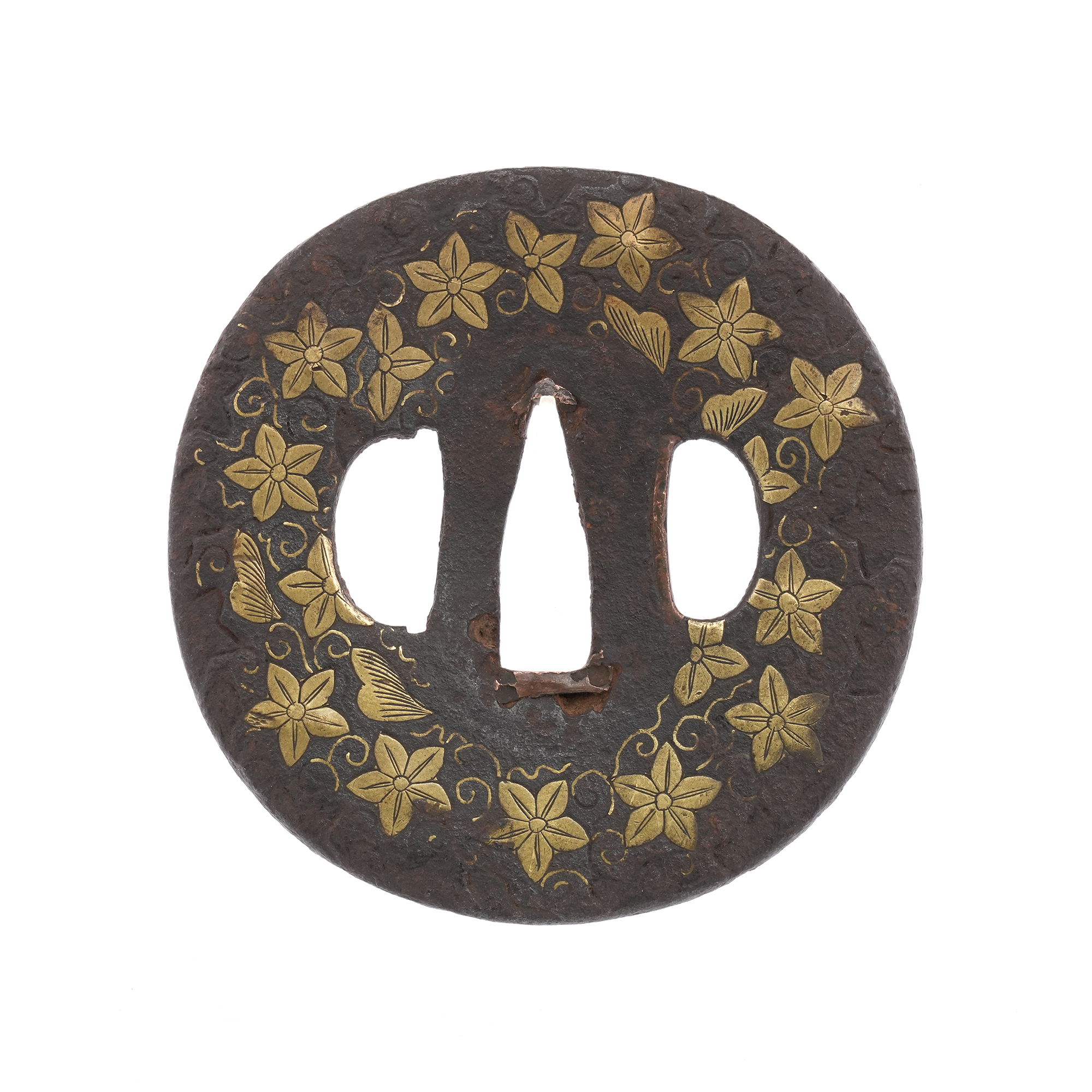
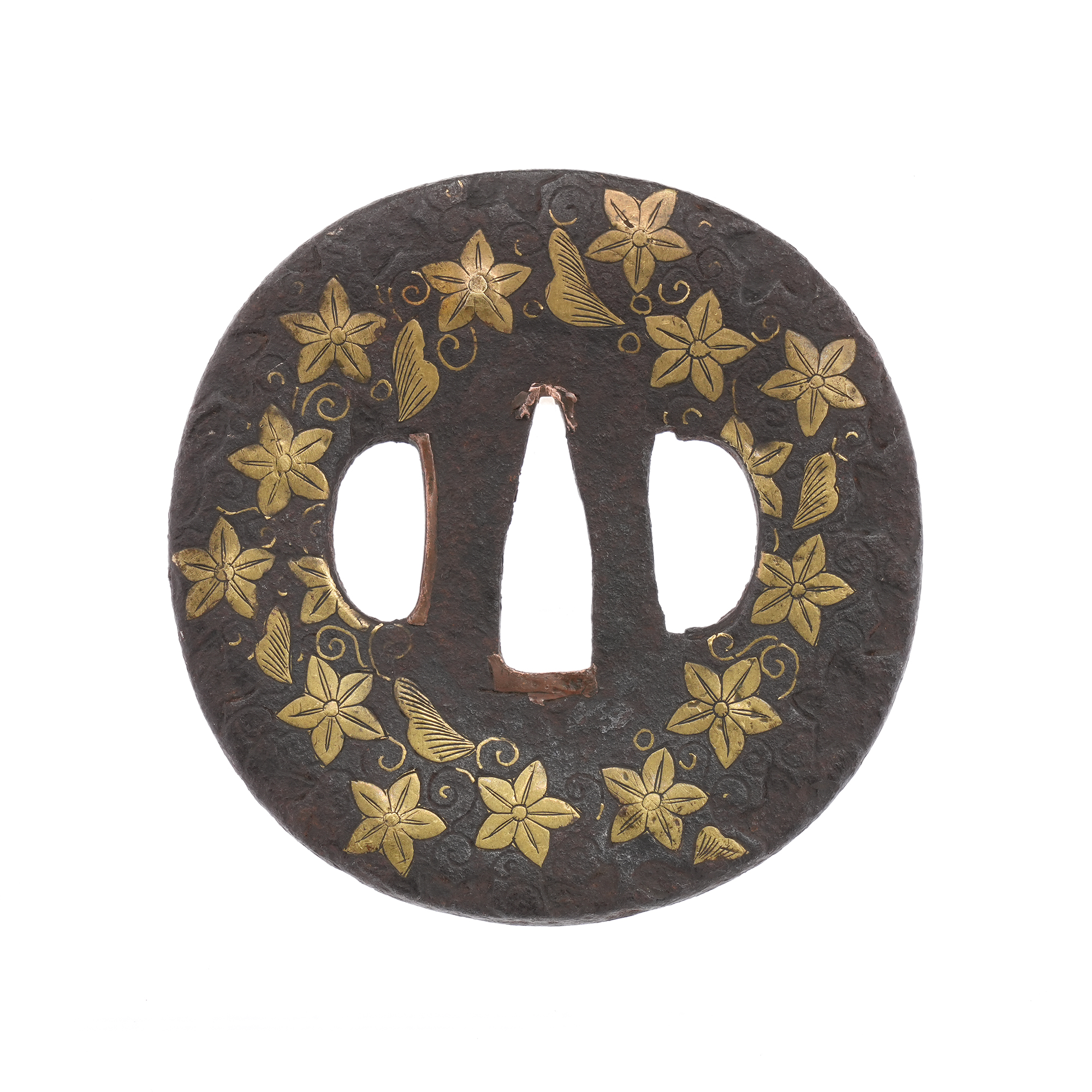
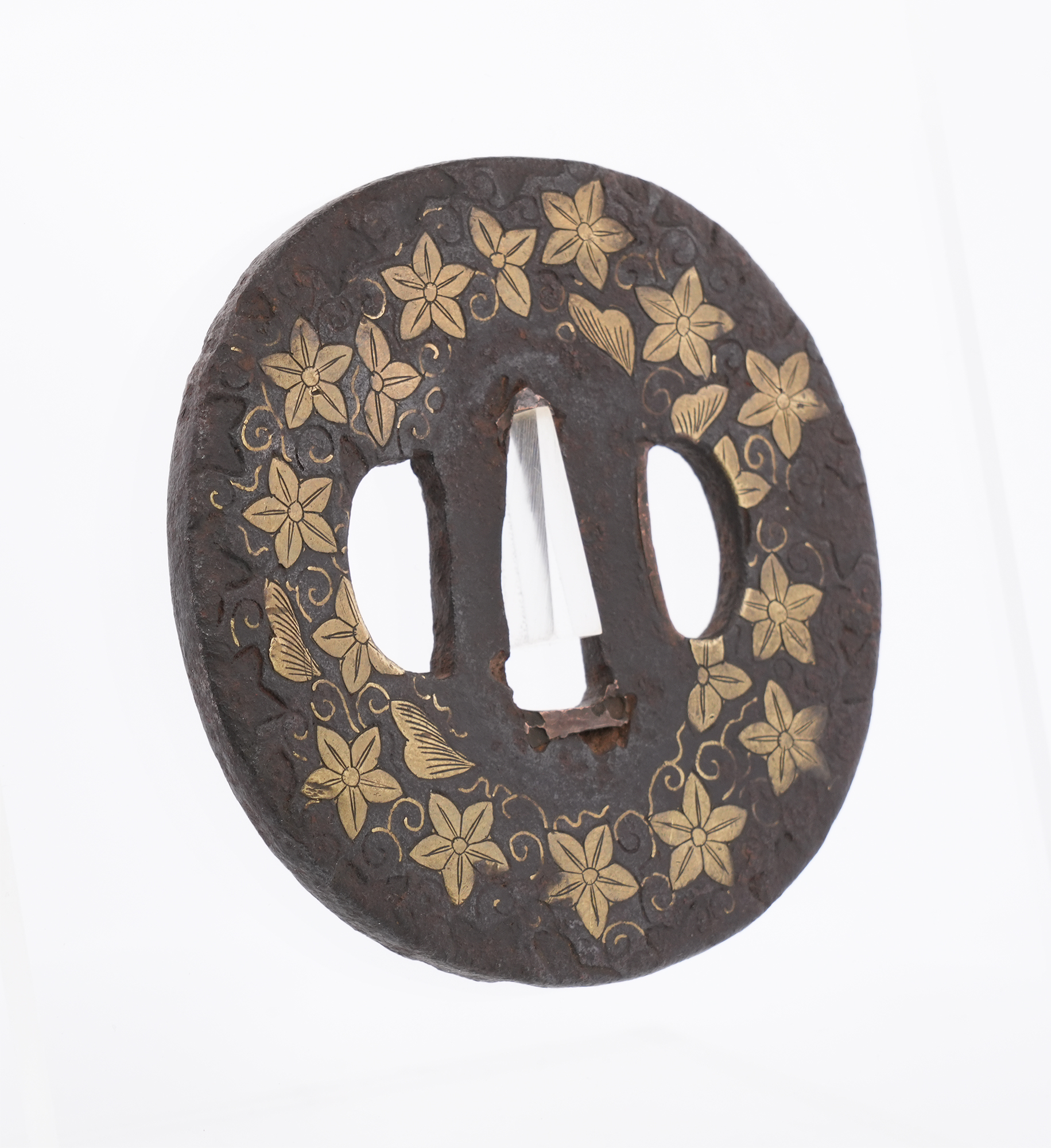
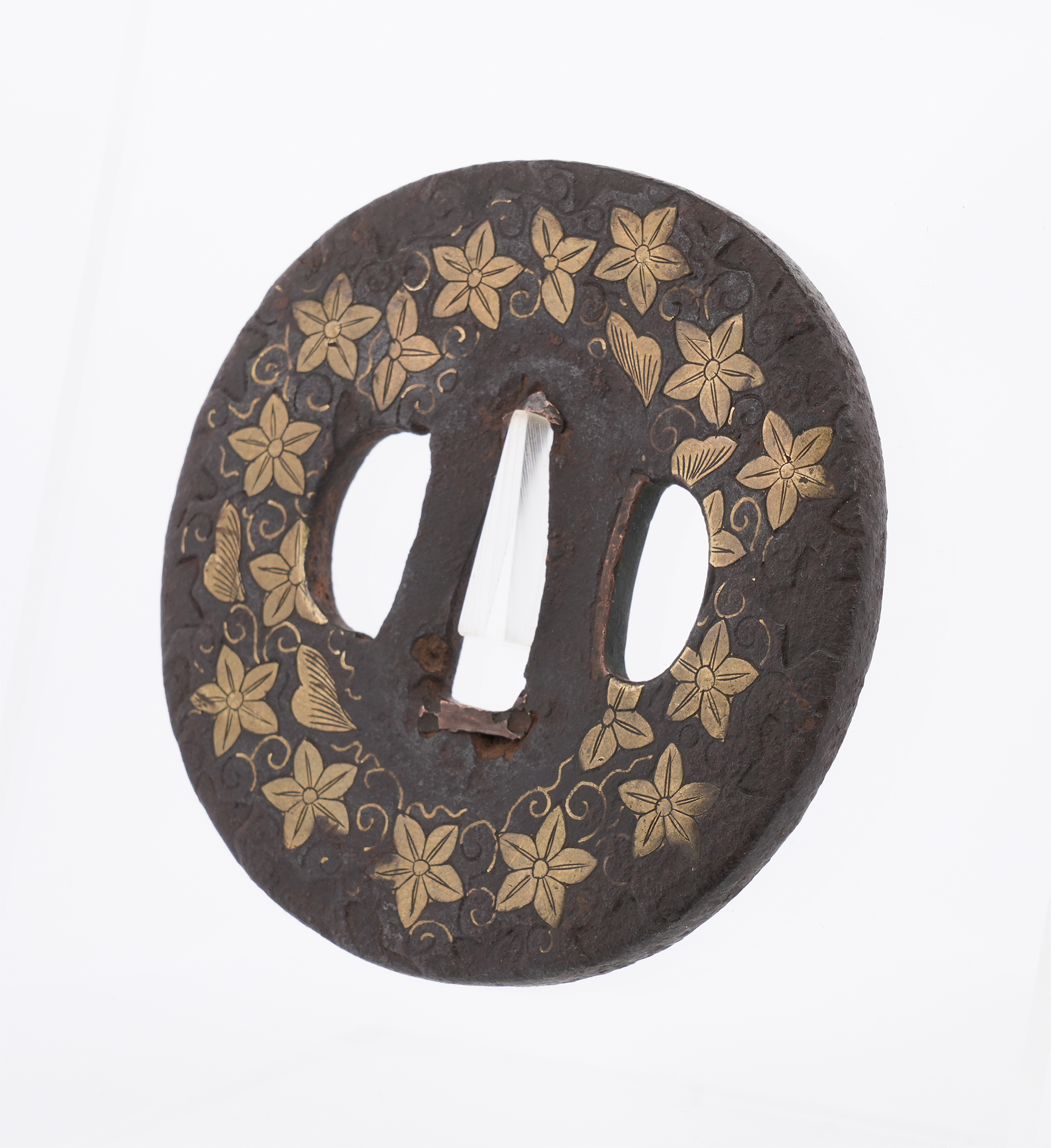
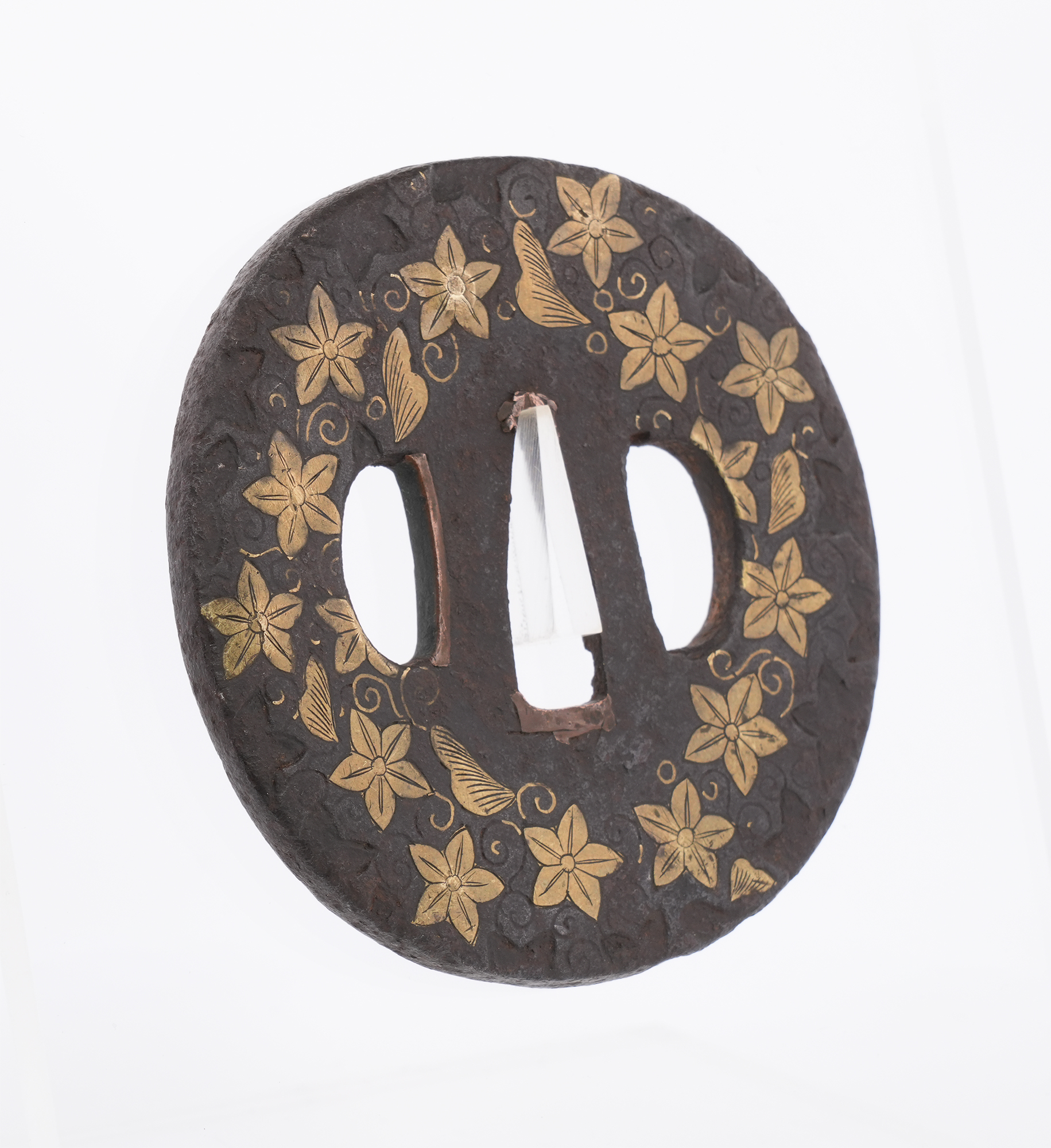
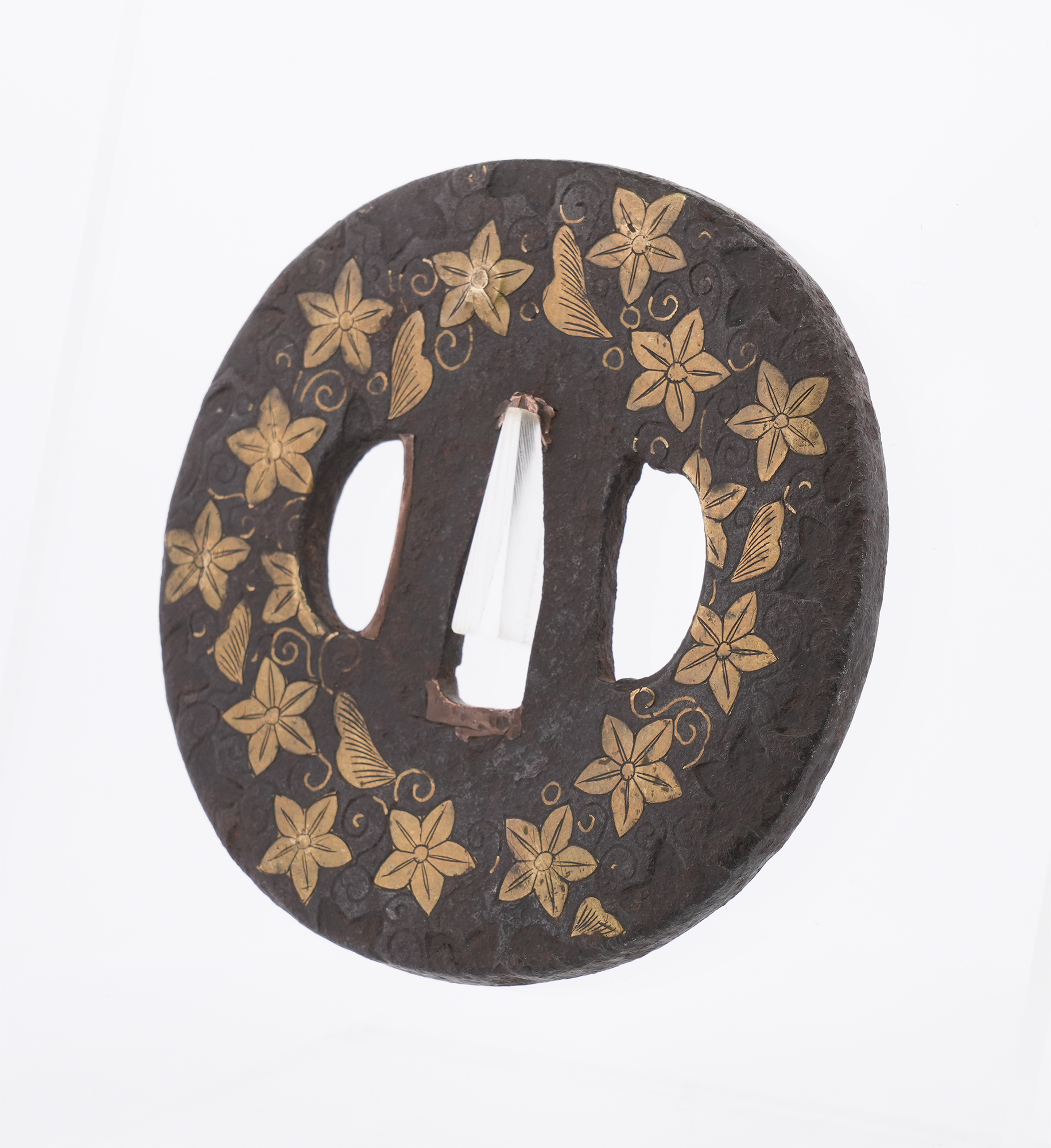
Heianjo zogan is a Kyoto-based tsubako technique that expresses patterns by inlaying brass into a tetsu-ji, and while inheriting the koga tetsu-aji connected to Onin tsuba, it is characterized by composing flowers, plants, and karakusa in a larger and clearer manner. The contrast between the tetsu-ji, which has sunk into a blackish-brown, and the brass, which exhibits a settled golden color over many years, creates a rustic hanayaka-sa different from chokoku or iroe, and it has been loved since ancient times as a form rich in decorative qualities while being a practical tosogu. The kikyo is often used in the kamon of samurai families due to its neat five-petaled flower shape, and it is a design that evokes dignity and integrity. By combining this with karakusa, whose vines extend without ceasing, an auspicious nature suggesting prosperity and continuous life is added; in this item, the flowers, leaves, and thinly winding vines are arranged to encircle the seppa-dai, creating a relaxed rhythm on the circular tsuba surface. Because the positions of the flowers and the movement of the vines are changed between the omote and ura, it does not become monotonous even when flipped and viewed, and the fine lines of petals and leaf veins carved in various places add a delicate expression to the brass surfaces. This work is a single piece with a kaku-maru gata tetsu-ji and double hitsu-ana, featuring kikyo karakusa in brass hira-zogan over a wide area of the ji-ita, and it possesses a reliable sense of volume with a vertical measurement of 74.5 mm and a weight of 143.6 g. In the ji-tetsu, undulations from forging and a blackish-brown koshoku nurtured over a long denrai appear, and while the surface, which is not overly uniform, shows a depth characteristic of kosaku, the outlines of the kikyo are kept clear, and the strength of the iron and the soft radiance of the brass complement each other. Around the nakago-ana and hitsu-ana, copper sekigane and umegane remain, giving a sense of its history of being actually mounted in koshirae and used with care while changing owners. Although partial loss due to age can be seen in the brass zogan, the main kikyo flowers and leaves remain well on both the omote and ura, and it is in a condition where the theme can be fully appreciated. The depressions in the tetsu-ji appearing in the lost areas are also a keshiki of a kosaku that has not been smoothed over by later repairs, creating shading and depth between them and the remaining zogan. From the front, one can enjoy the hanayaka composition where the hanakarakusa spreads in a ring, and from an angle, the thickness of the ji-ita, the gentle roundness of the mimi, and the subtle difference in height between the zogan and the tetsu-hada stand out, so the fact that the impression changes depending on the angle of the Teruaki is also a highlight. With the tetsu-aji and brass color tones characteristic of Heianjo zogan, the kikyo favored by samurai, and the karakusa symbolizing prosperity all present on the surface, this item, which allows one to appreciate the hanayaka-sa of the design while respecting the koshoku, can be recommended both to those picking up a ko-tsuba for the first time and to those systematically collecting zogan tsuba. Against a white background, the outlines of the kikyo and the remaining state of the zogan are reflected clearly, and if placed on a dark-colored cloth or stand, the golden color stands out even more; thus, it is a highly decorative piece that can be enjoyed as either koga or karei depending on the display arrangement.
Offered by Toushin

As written by the shop
Machine translation from the shop's Japanese · may contain errors ·
We could not find an authenticity certificate on the seller’s listing. Japanese swords and fittings are normally papered by the NBTHK (or the NTHK). Without one, the attribution is the seller’s own assessment and has not been independently verified — treat it with caution and ask the dealer about certification before buying.
As a rule we do not accept returns, except when we have sent a different item from the one ordered or when there is a significant discrepancy between the description and the item. If you wish to return an item, please contact us within 3 days of its arrival and then send it back.
¥88,000