 NihontoWatchNihontoWatch
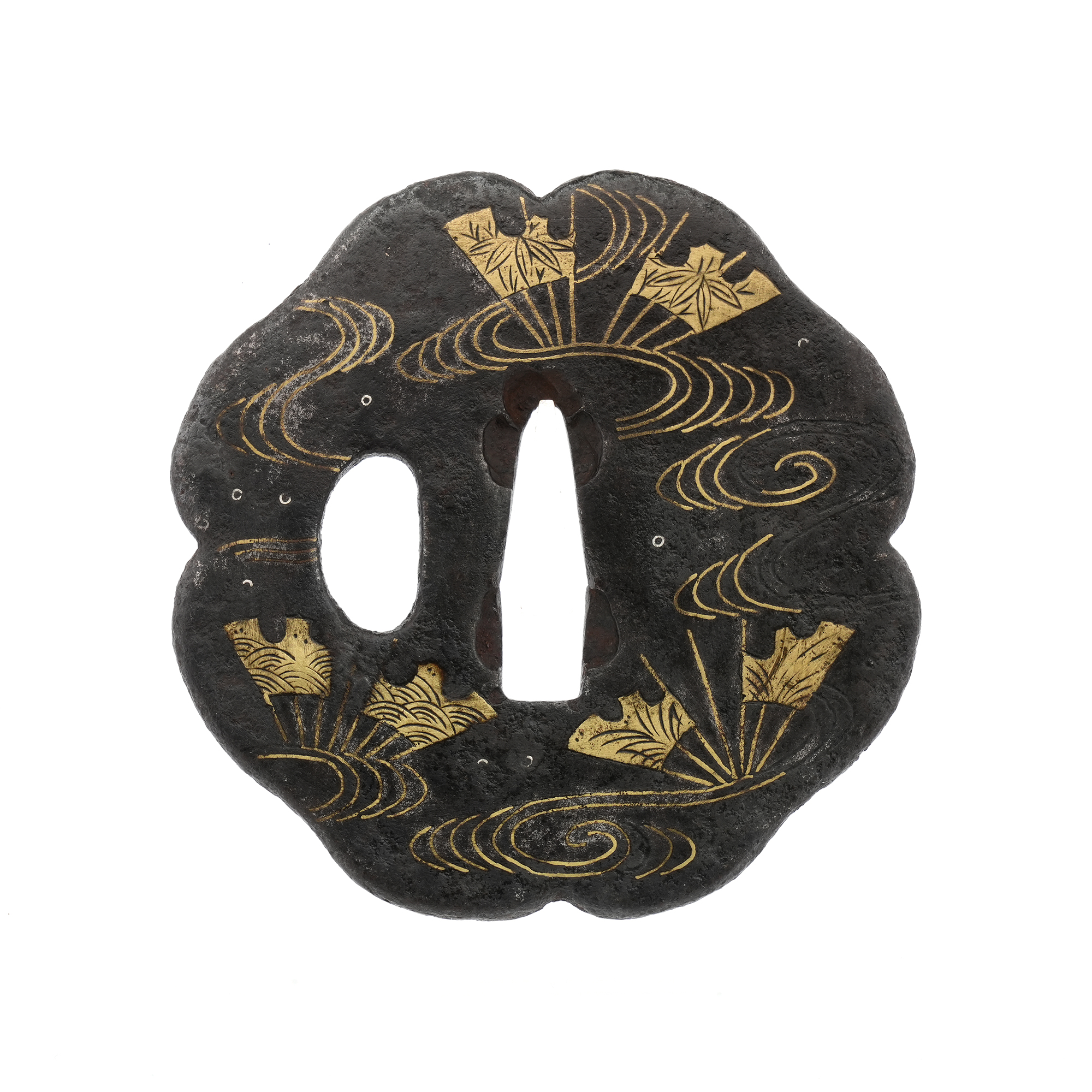
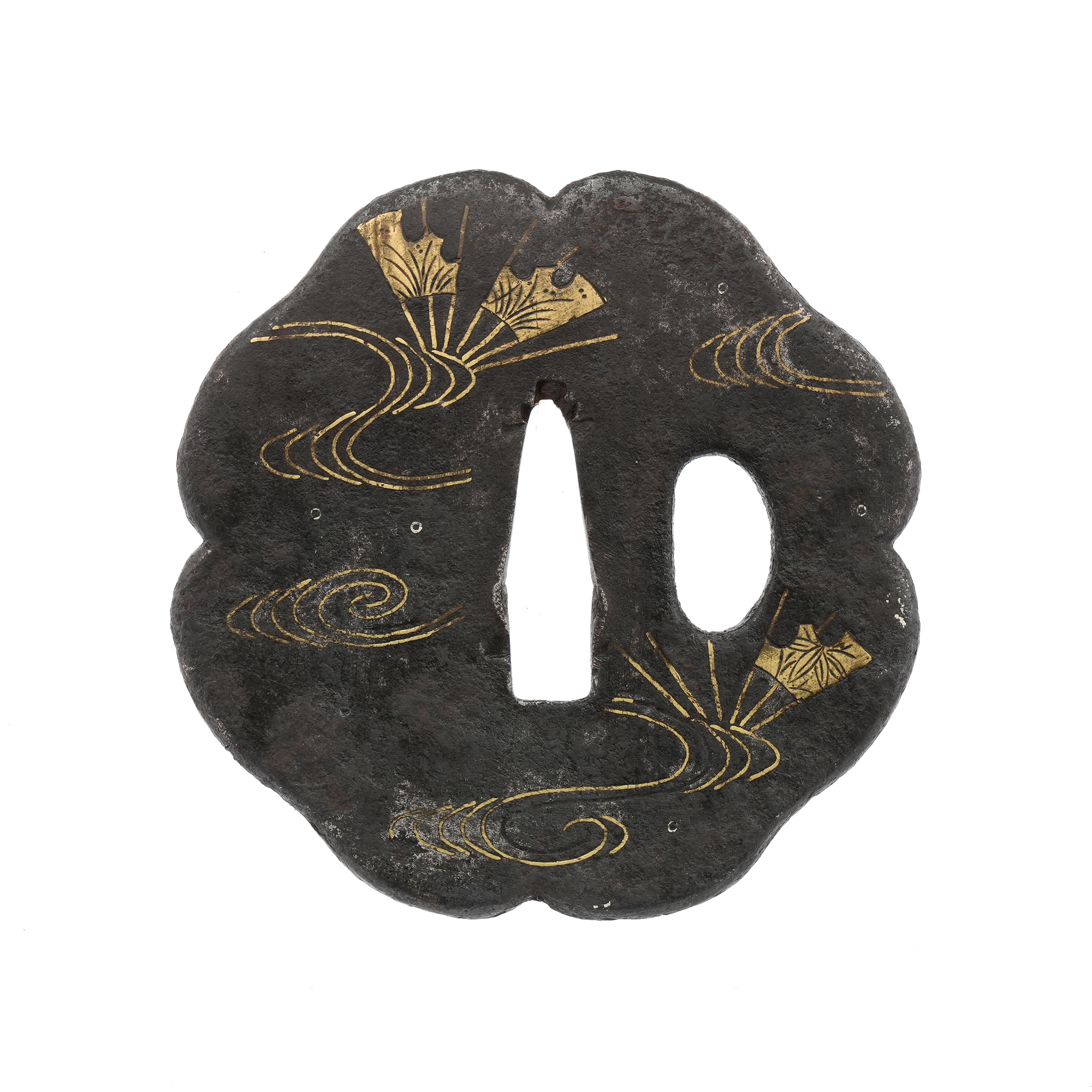
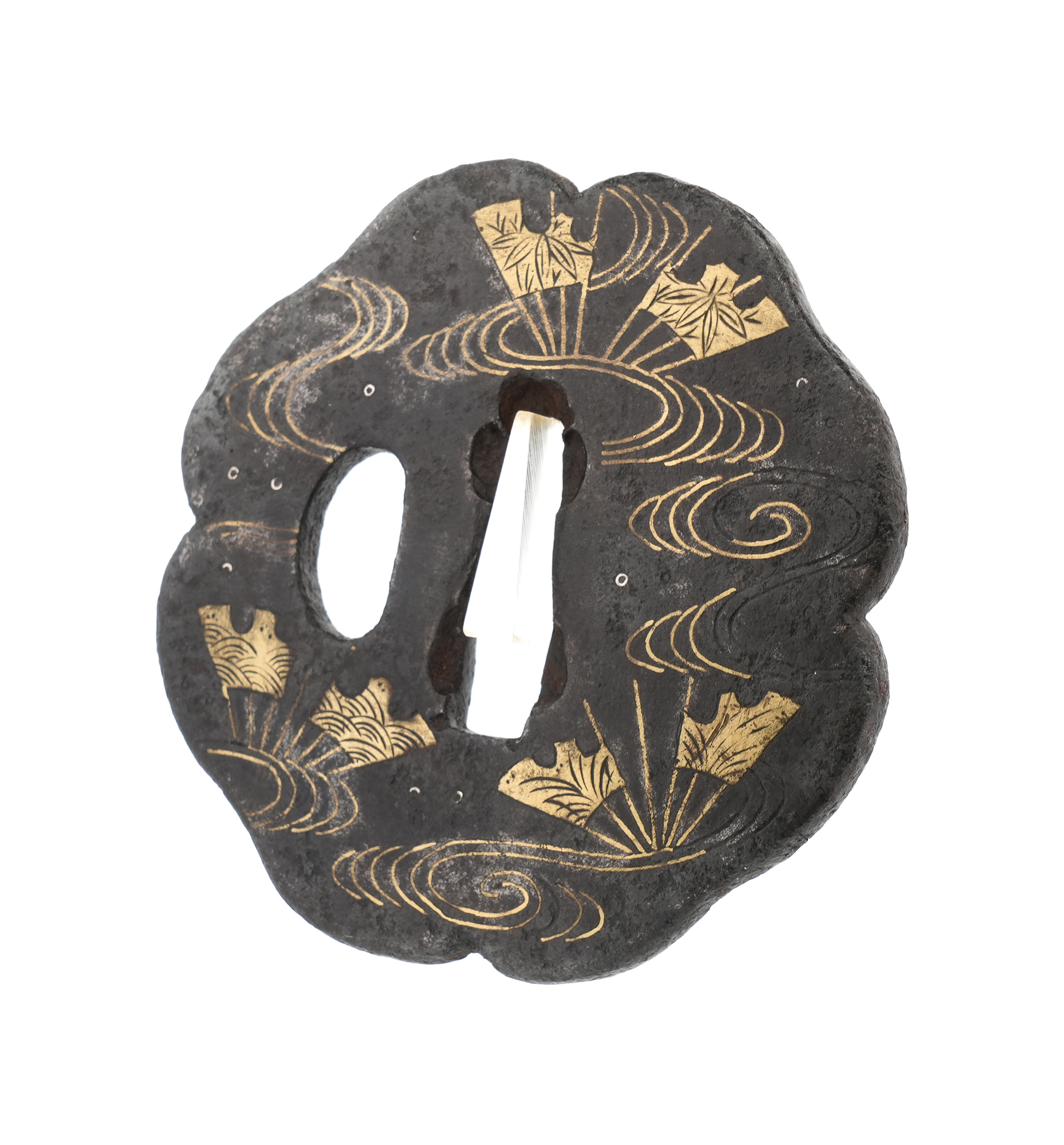
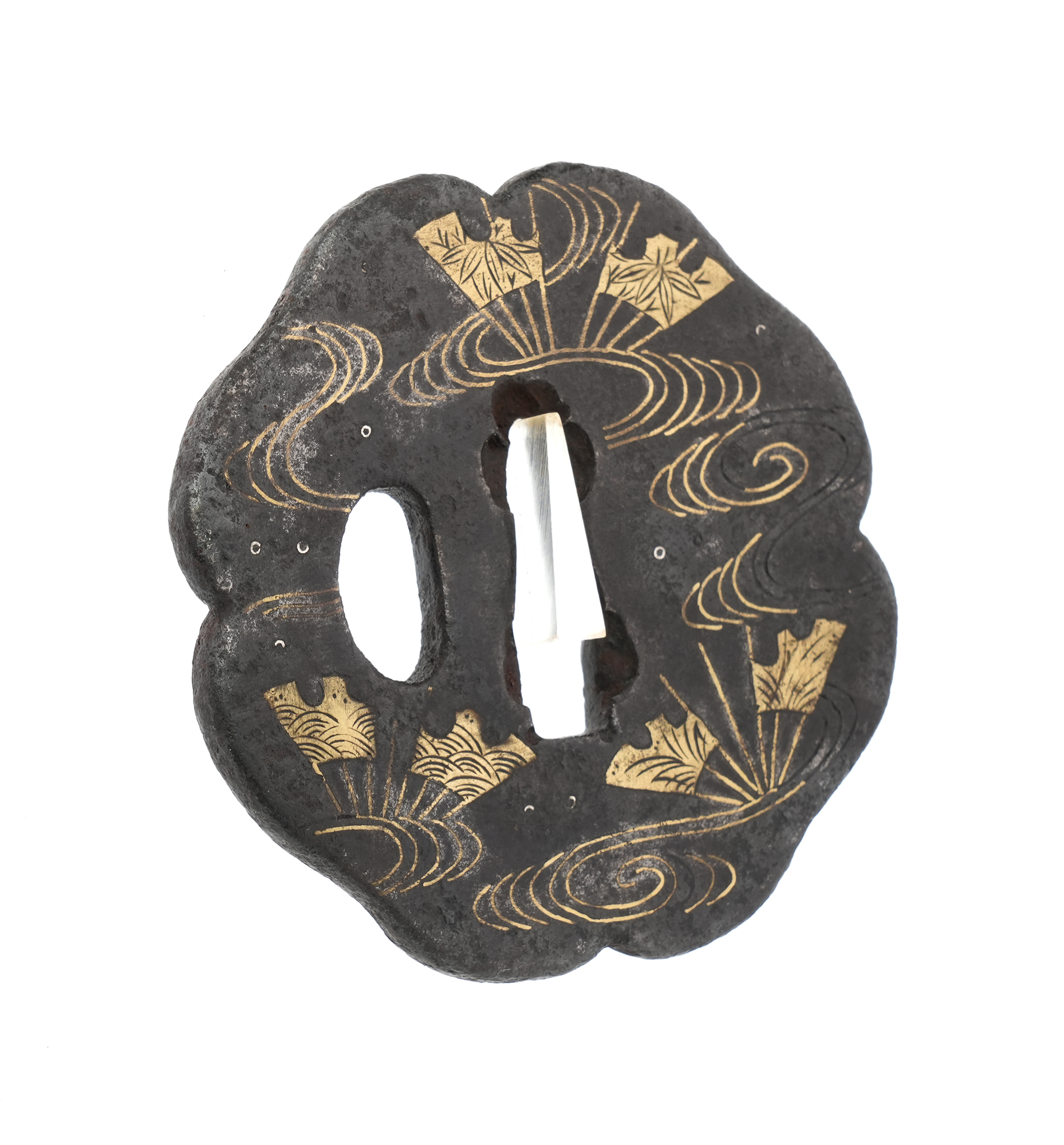
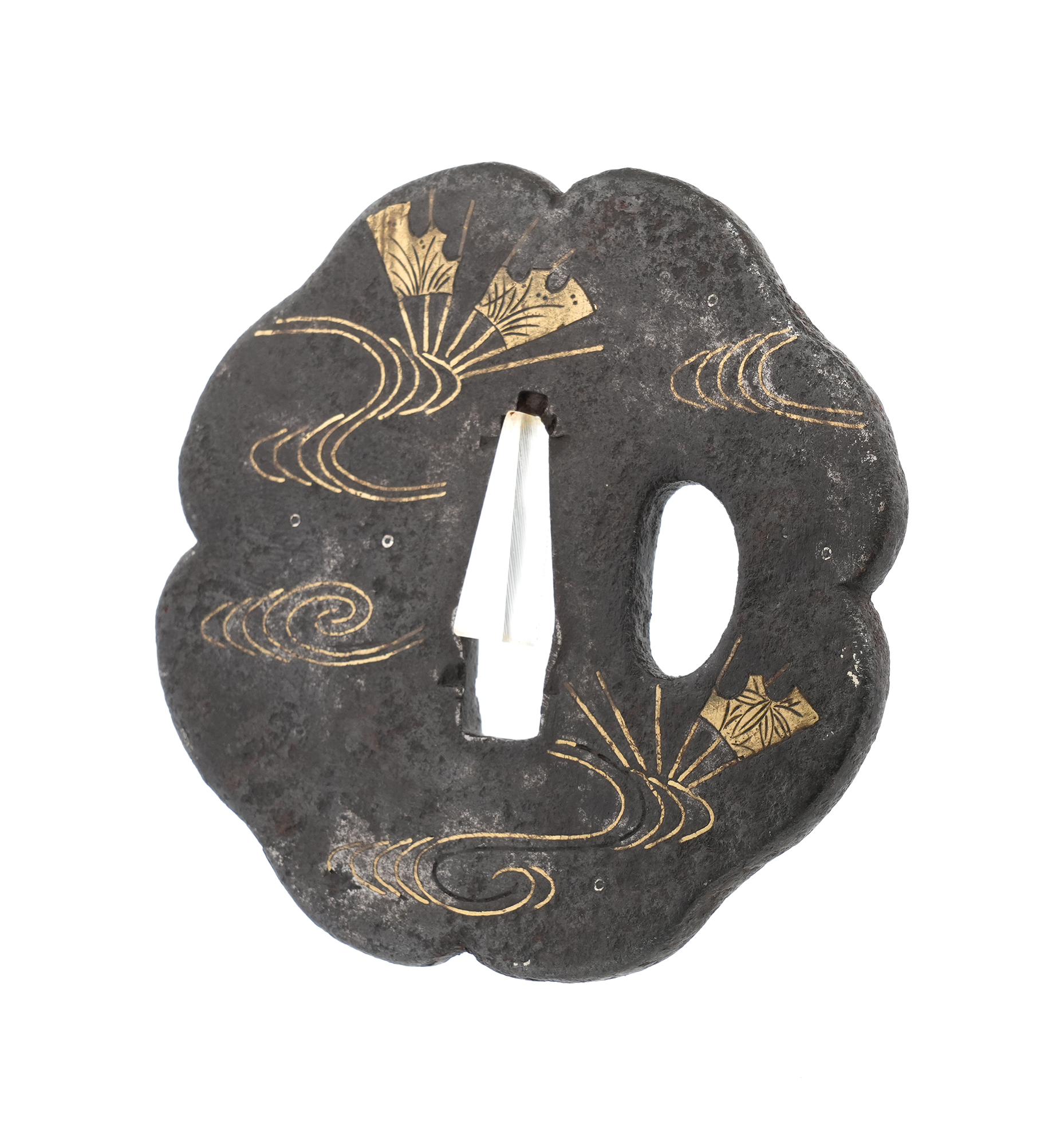
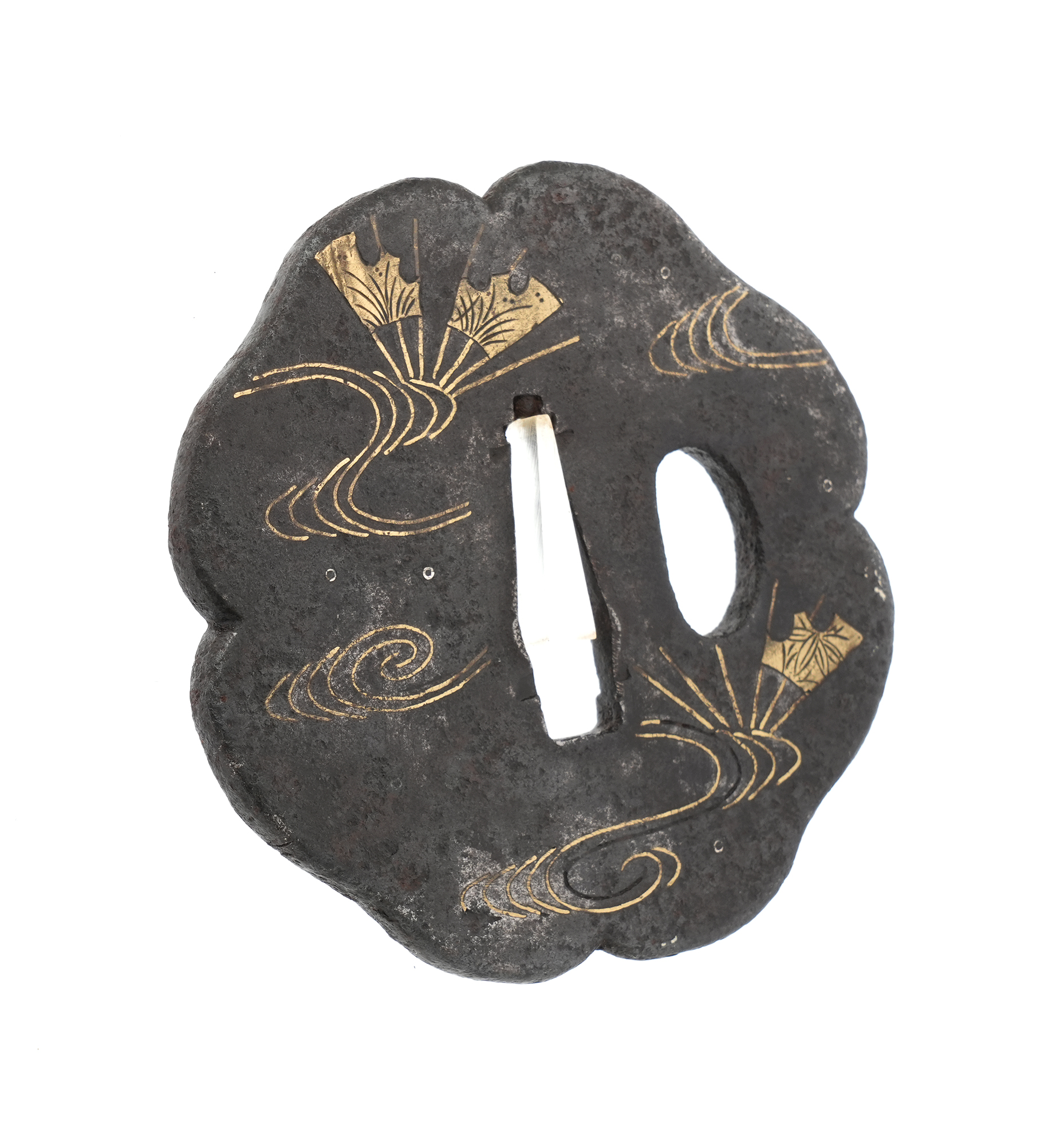
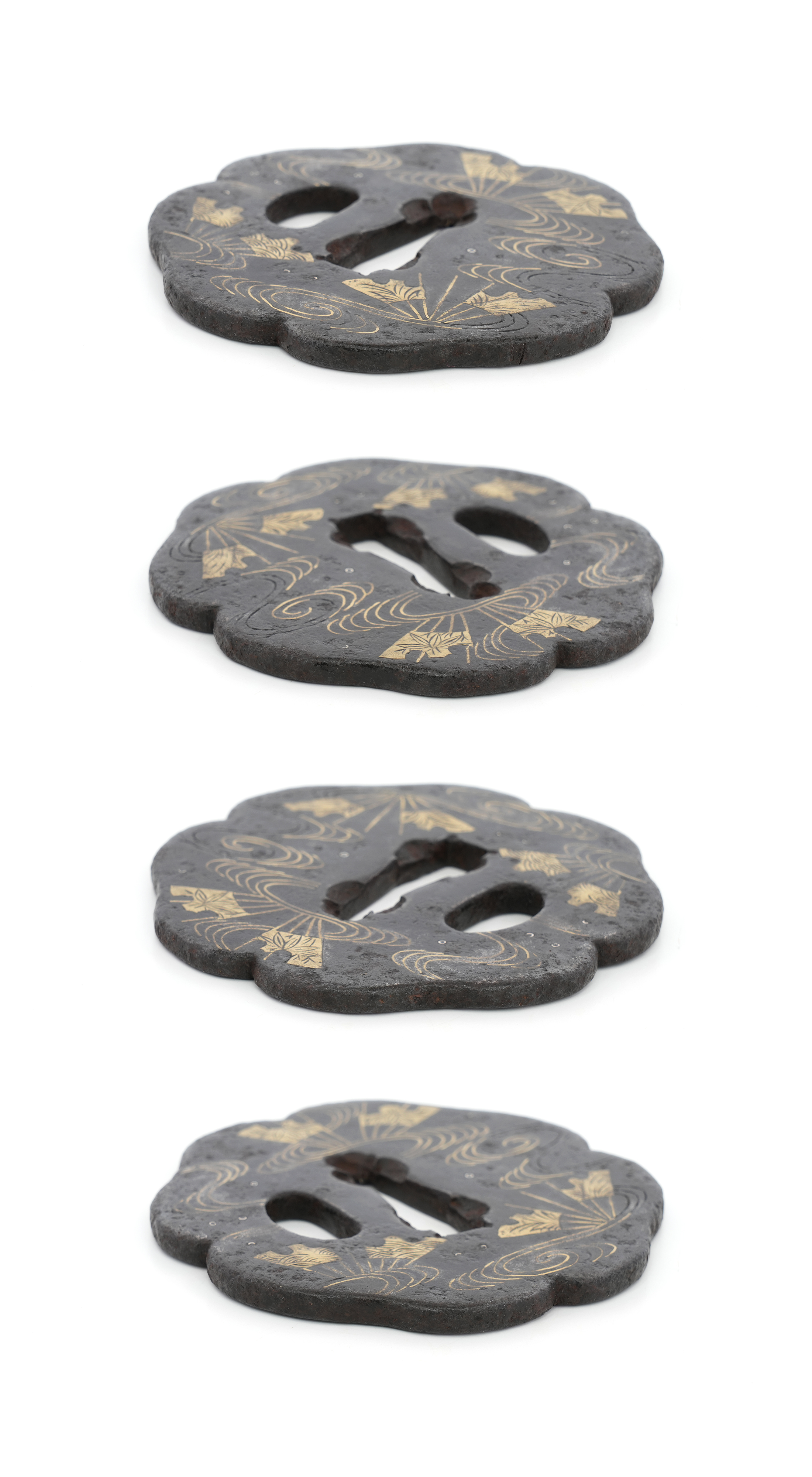
Heianjo zogan is a metalworking style in which thin plates or wires of brass are inlaid into an iron base, causing golden patterns to vividly emerge against a black ground; many excellent pieces were produced from the end of the Muromachi period to the early Edo period. This piece is a tsuba in which multiple broken fans are scattered in brass zogan upon a profound iron base that has taken on an antique patina, with bamboo grass, seigaiha, and autumn grasses depicted separately on the fan surfaces; it develops an elegant and varied design within the clear coloration and antique iron texture characteristic of Heianjo zogan. Broken fans are a subject that stylizes the appearance of fans that are partially missing or torn, bringing a lighthearted movement and lingering charm to the tsuba surface that is different from simply lining up complete fans. In this piece, the brass fan surfaces are not filled in uniformly, and by showing the black of the iron base through the fan sukashi in places, the shape of the broken fans is clearly expressed, while creating a pleasant light and shadow and rhythm in the golden zogan; the composition, in which the fine lines of the fan ribs and the sukashi of the fan surfaces correspond, shows ingenuity in skillfully utilizing the limited surface area. On the fans scattered on the front and back, bamboo grass with overlapping long, thin leaves, seigaiha with semicircular waves arranged in a regular sequence, and autumn grasses conveying the atmosphere of the seasons are carved separately with fine lines, giving each one a different expression despite all being broken fans. The fan surfaces inlaid with wide brass plates, the fan ribs and surrounding curves created by thin line zogan, and the scattered small silver dots add changes in technique and color tone; from a distance, the golden broken fans float gorgeously, and close at hand, there is the pleasure of deciphering the outlines of the fan sukashi and the minute differences in each pattern. The iron base is a kawari mokko-gata with variations in the tension and constriction of the four sides, possessing a substantial weight of 128.2 grams and a solid thickness of 4.8 millimeters, and from the suaka sekigane remaining above and below the seppadai, one can feel the history of it having been carefully used in an actual koshirae. The outline, which differs from round or standard mokko-gata, receives the movement of the scattered broken fans, and because the composition is not interrupted whether viewed from the front or back, new fans and patterns appear each time the tsuba is turned. The zogan possesses a gentle color tone that has passed through many long years, and the black-brown iron base and the soft luster of the brass harmonize to create a deep jidai-aji that does not lean too far toward gaudiness. With the classical technique of Heianjo zogan, the stylish concept combining broken fans and fan sukashi, the rich patterns depicting bamboo grass, seigaiha, and autumn grasses separately, and the dignified appearance of the kawari mokko-gata, this is a tsuba rich in highlights for appreciation that I would like to recommend not only to those who like zogan tsuba and fan designs, but also to those who wish to add an antique splendor to a koshirae.
Offered by Toushin

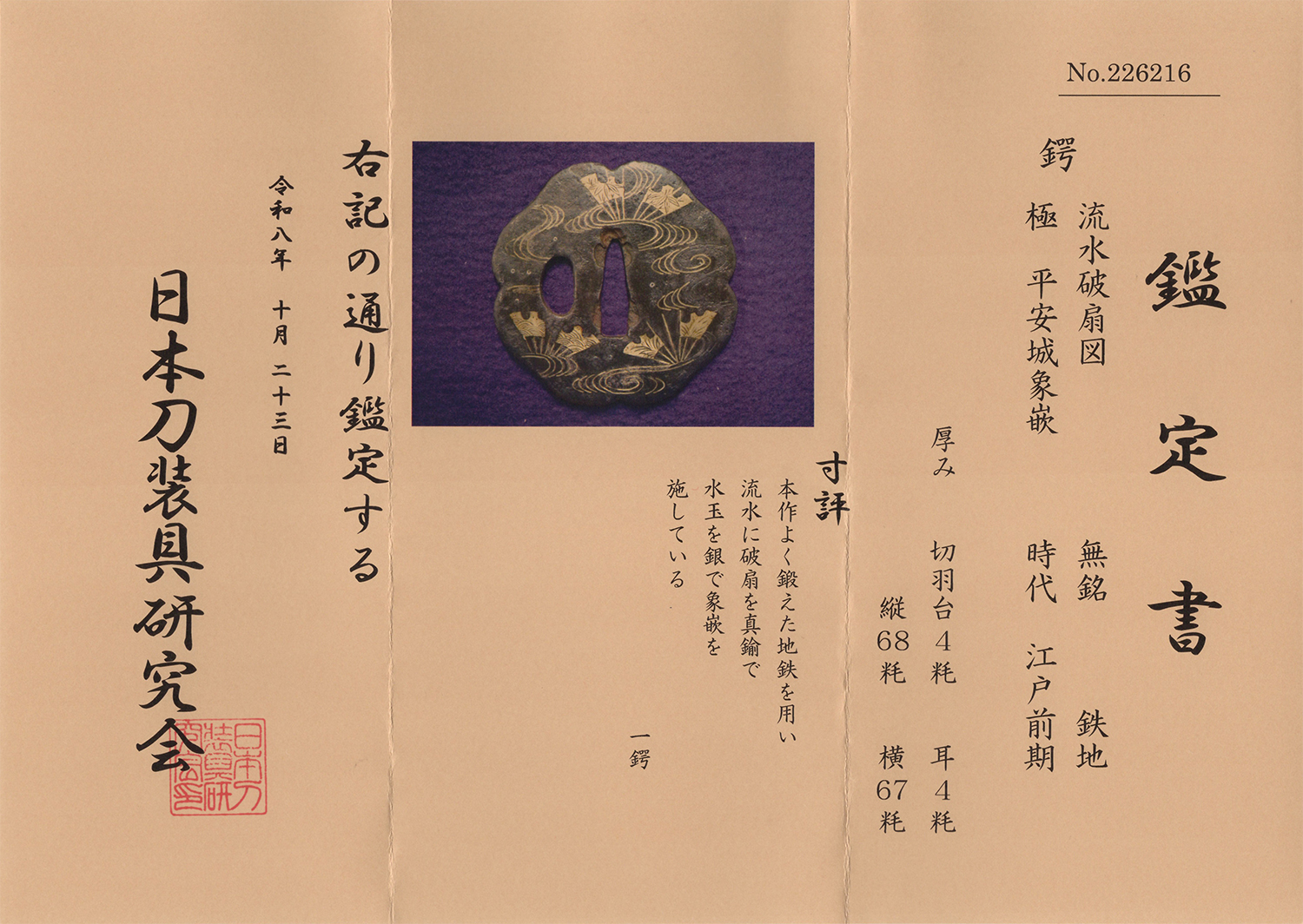
Its photos show a certificate that isn’t in our records yet. Papers can come from different bodies (the NBTHK, the NTHK and smaller societies), and only current NBTHK or NTHK shinsa papers are the independent check we rely on. Please ask the dealer which body issued them. — Hoshi

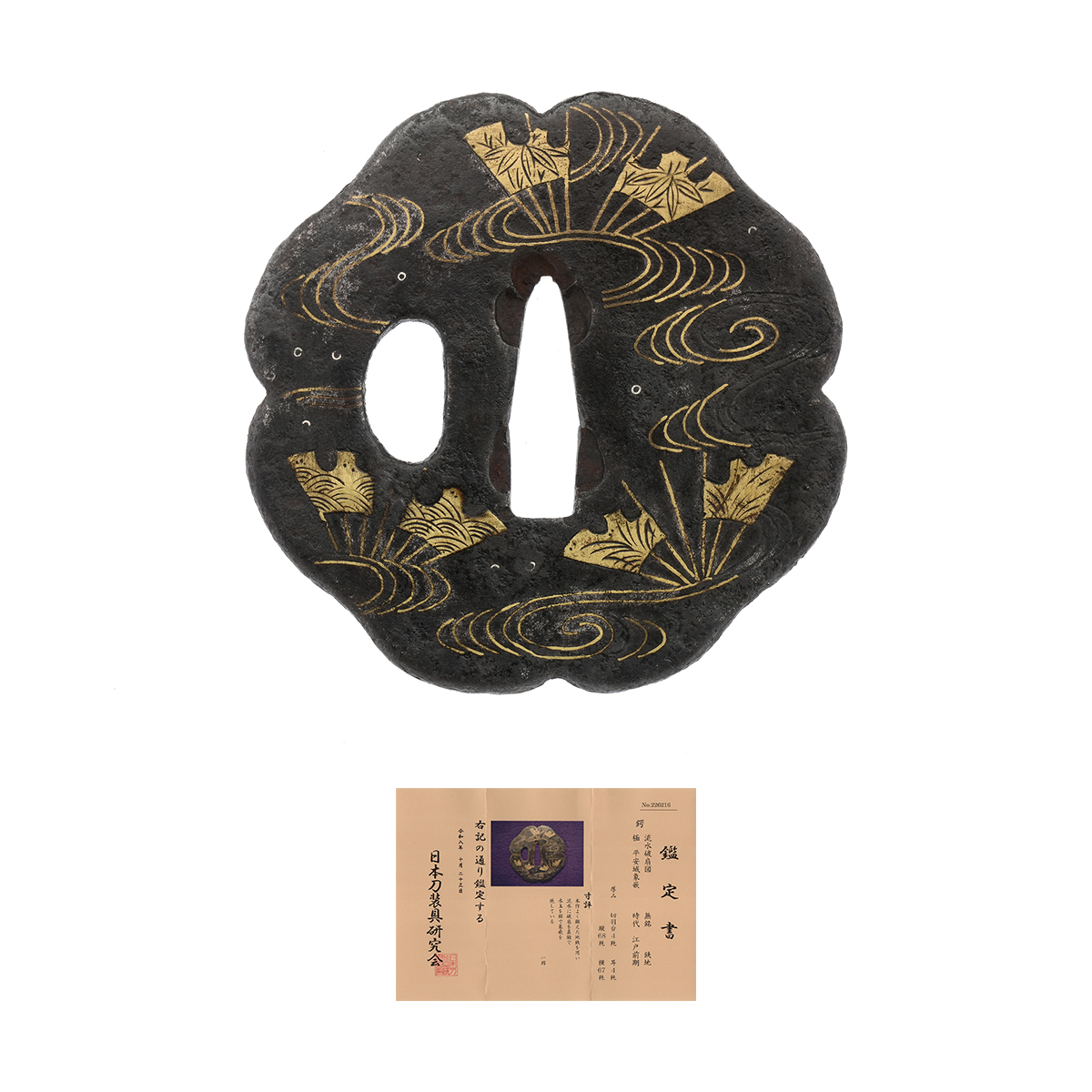
Unsigned
Machine translation of the shop's Japanese ·
Machine translation from the shop's Japanese · may contain errors ·
We could not find an authenticity certificate on the seller’s listing. Japanese swords and fittings are normally papered by the NBTHK (or the NTHK). Without one, the attribution is the seller’s own assessment and has not been independently verified — treat it with caution and ask the dealer about certification before buying.
As a rule we do not accept returns, except when we have sent a different item from the one ordered or when there is a significant discrepancy between the description and the item. If you wish to return an item, please contact us within 3 days of its arrival and then send it back.
¥220,000