 NihontoWatchNihontoWatch
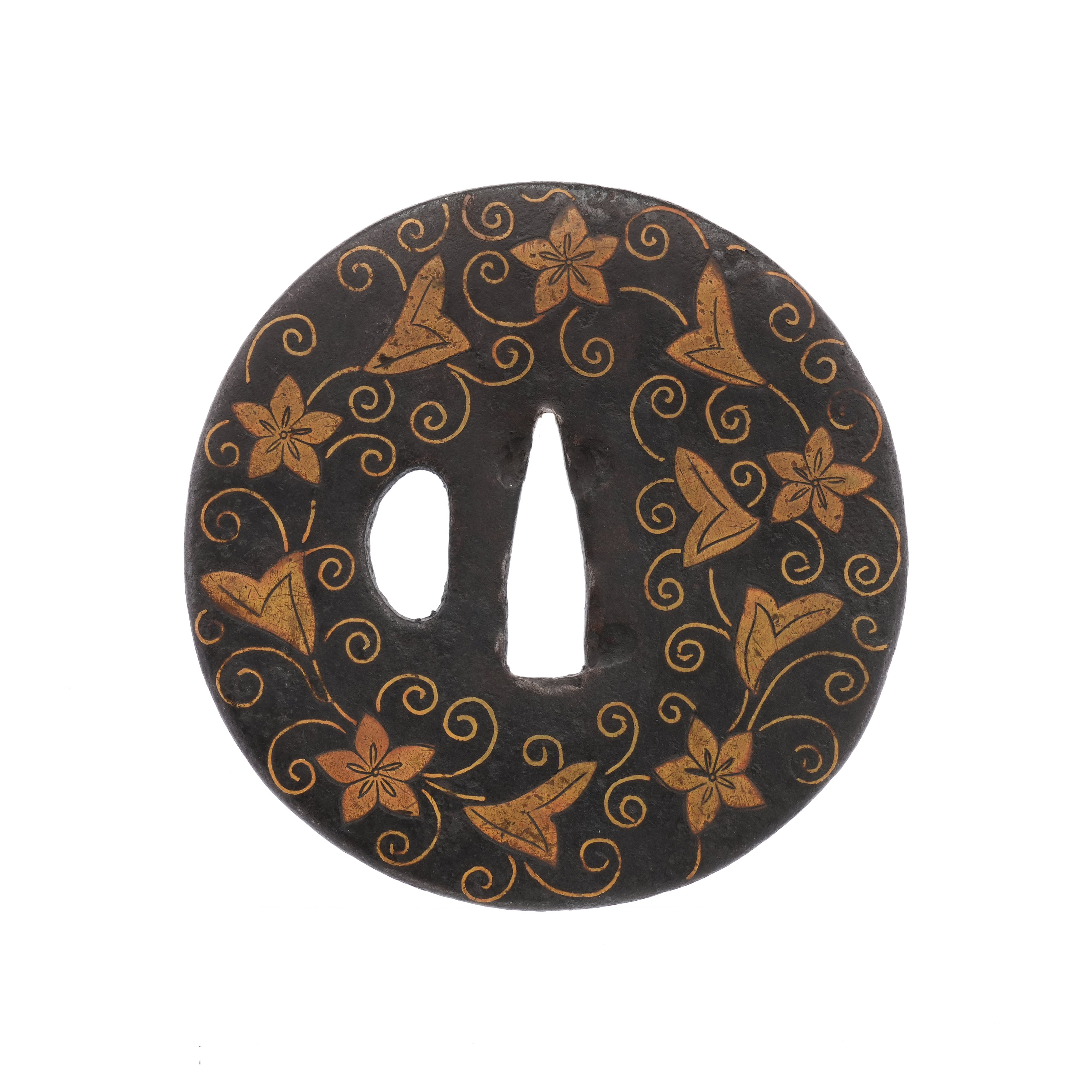
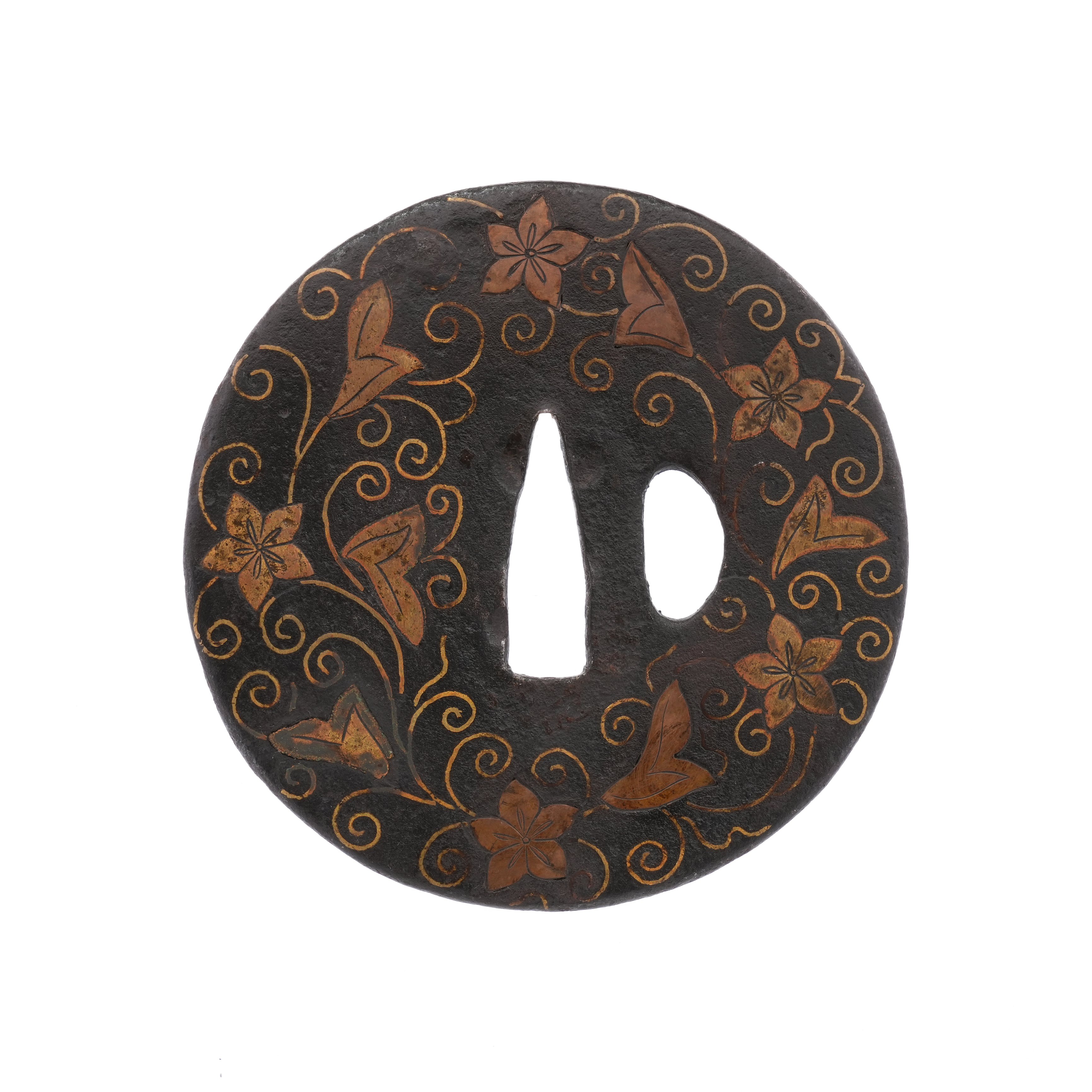
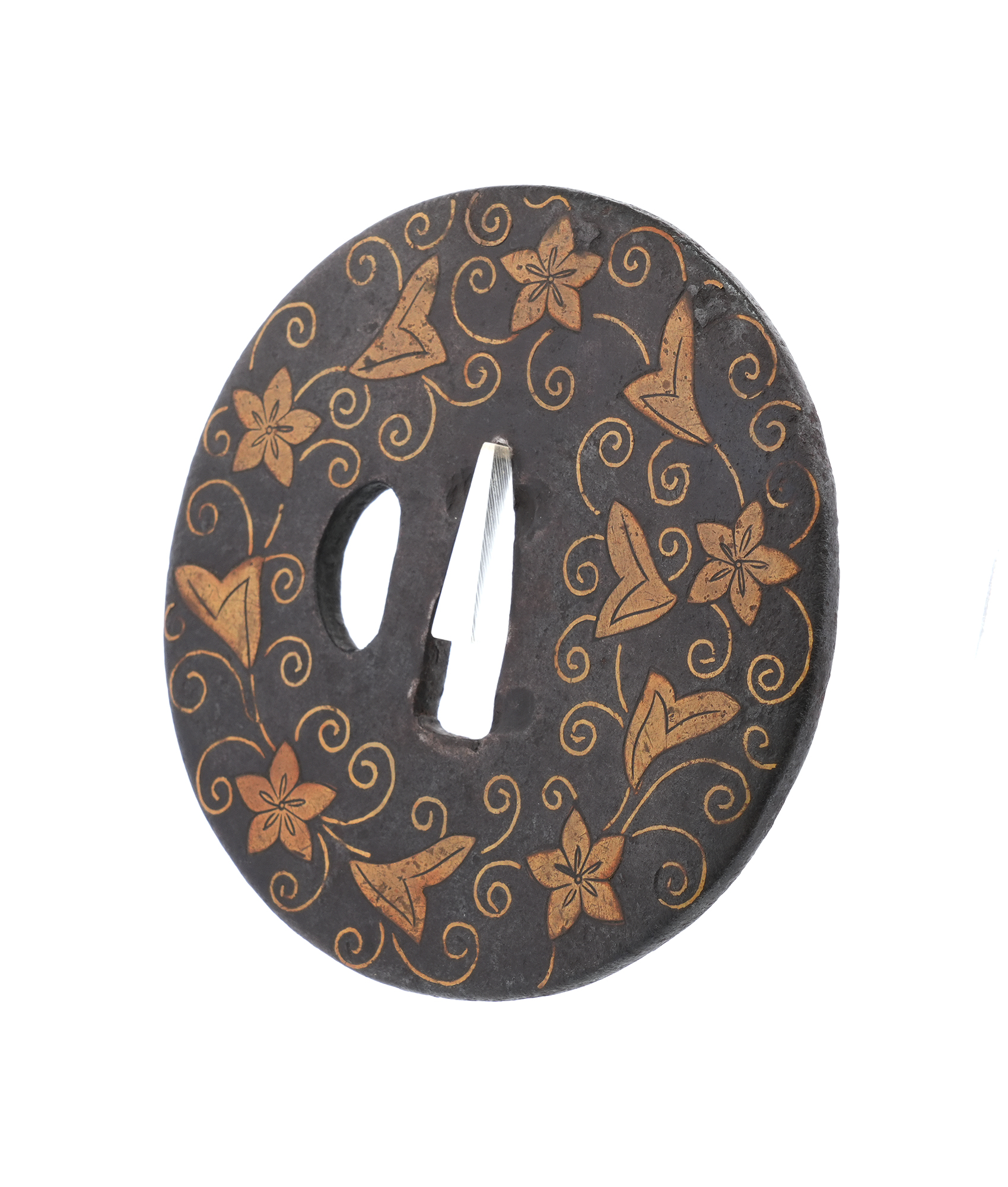
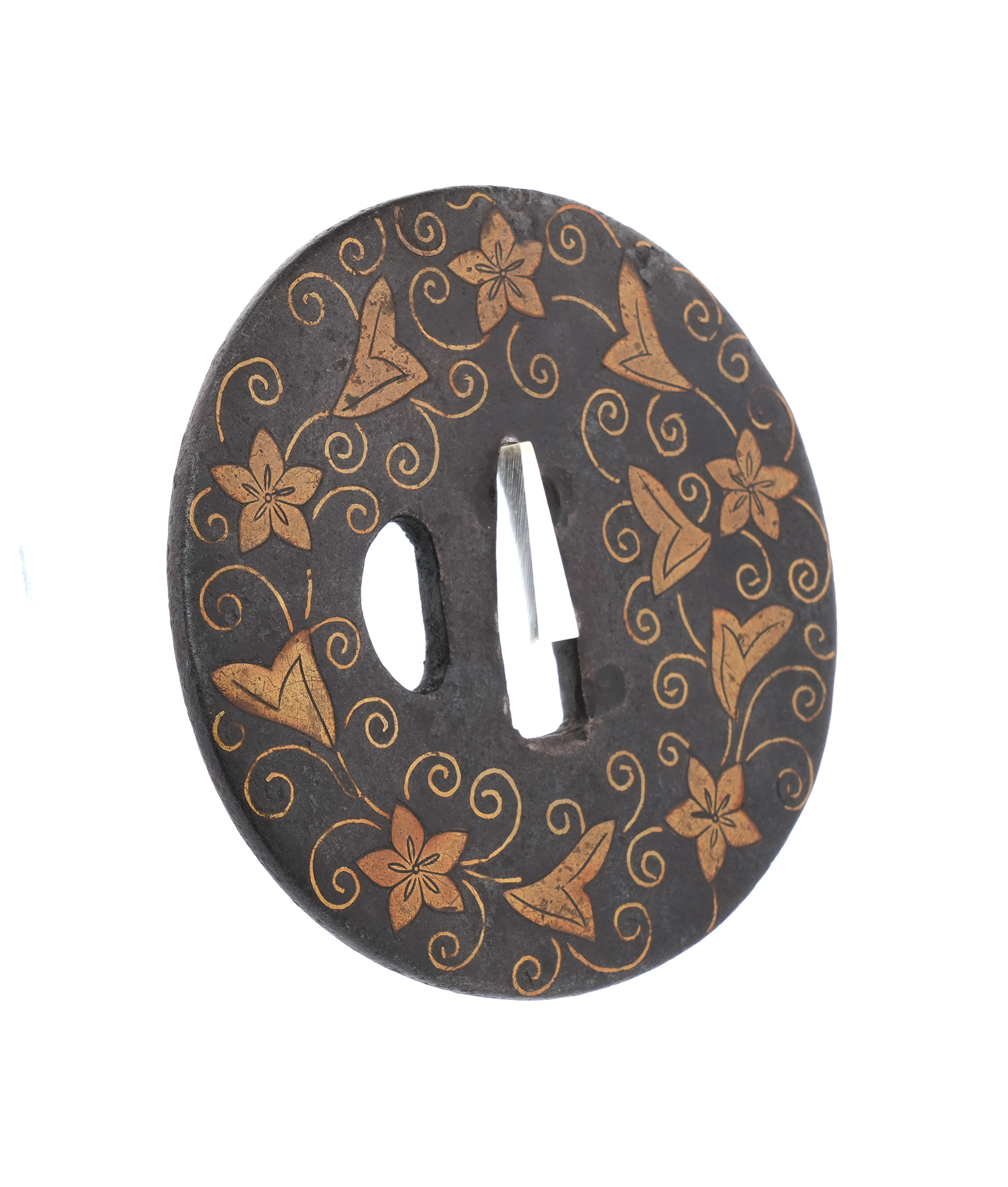
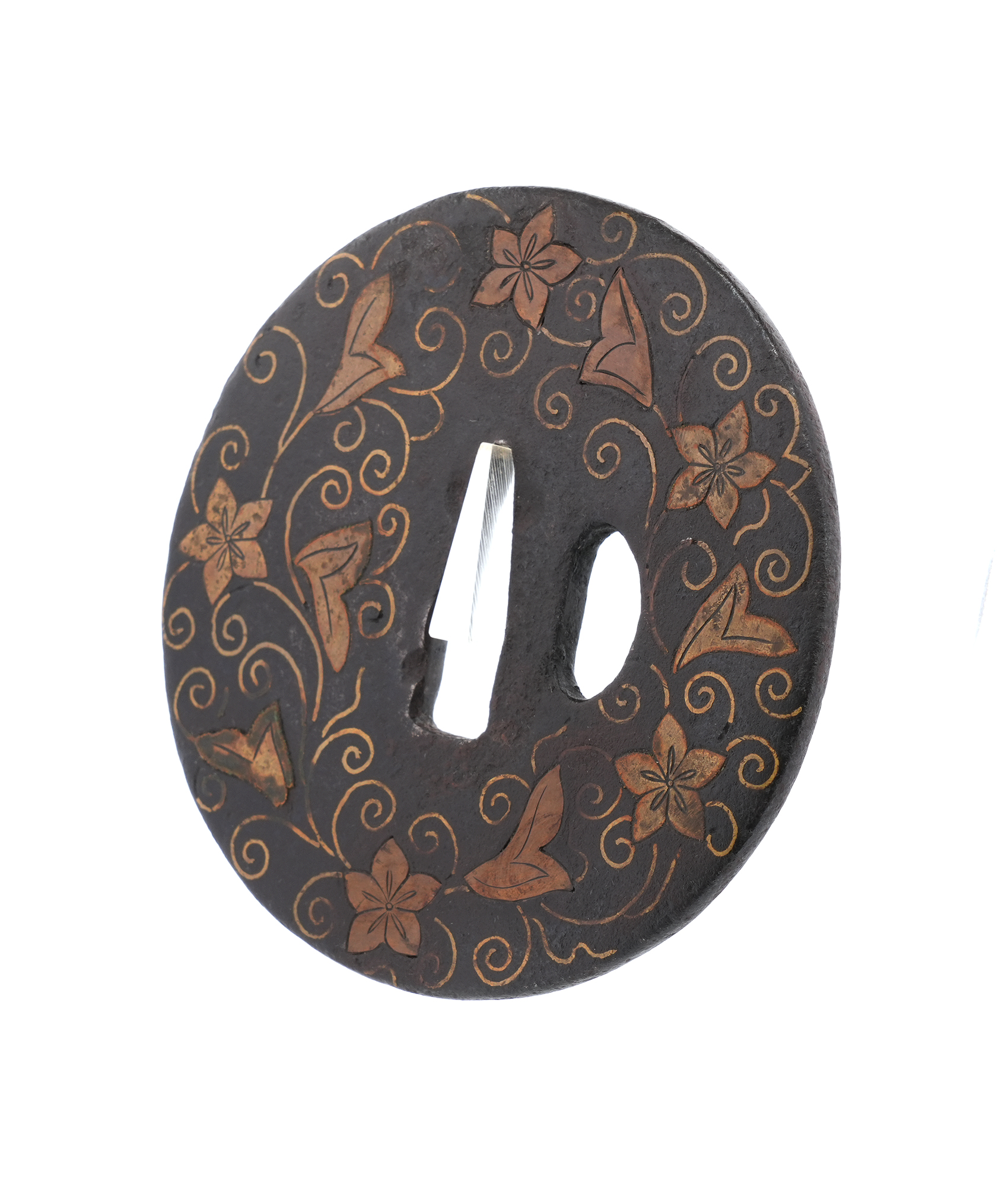
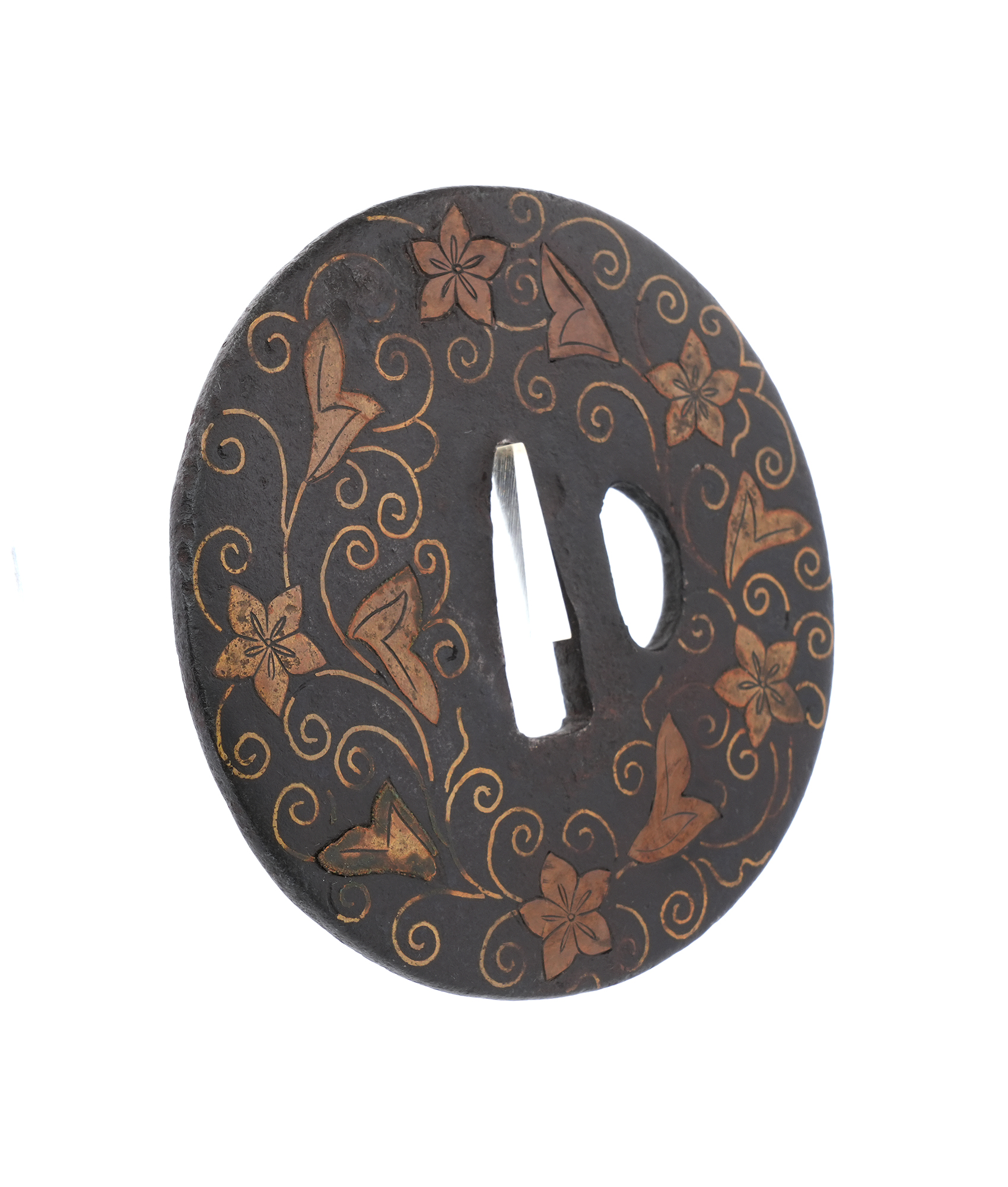
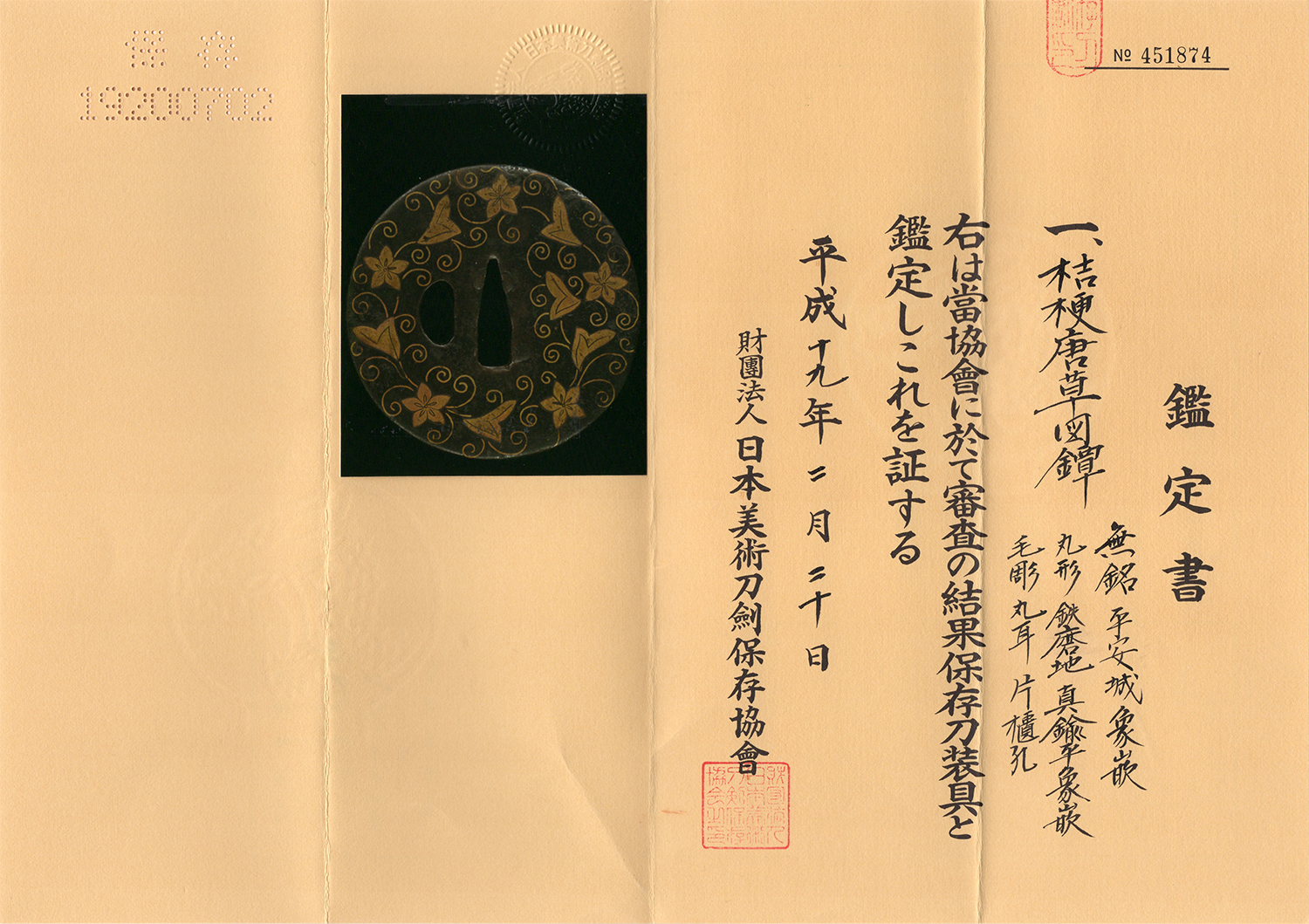
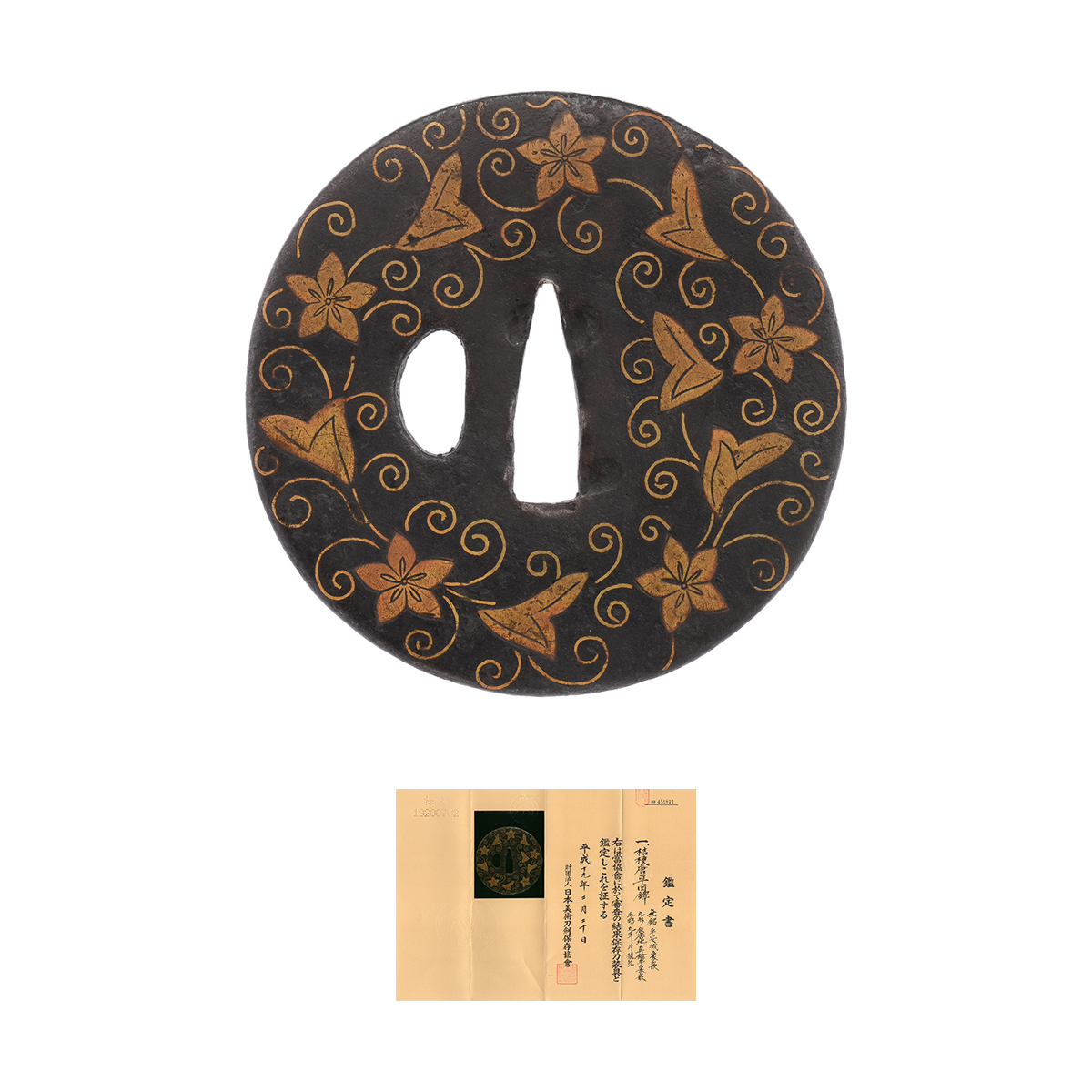
Heianjo zogan is a group of tsuba featuring brass-based zogan applied to a tetsu-ji plate, known as a lineage of tosogu kinko that developed primarily in Kyoto. Examples can be seen from as early as the late Muromachi period, and the style flourished from Momoyama to the early Edo period, characterized by the zogan of vine grass, flowers, leaves, and family crests in brass on a tetsu-ji plate. In addition to linear zogan, there are works that combine hira-zogan where patterns are inlaid as flat surfaces, and the vivid contrast between the blackish tetsu-ji and the golden brass is a highlight of Heianjo zogan. Even in overseas markets, Heianjo zogan is treated as an independent lineage, and masterworks attributed to the late Momoyama to early Edo period have been identified. This work is a gorgeous piece featuring kikyo and karakusa encircling the entirety of the front and back of a maru-gata tetsu-ji plate; brass hira-zogan is used for the flowers and leaves, while thin sen-zogan is used for the flowing vines, causing the soft gold color of the brass to stand out vividly against the blackish tetsu-ji. Rather than a monotonous repetition of kikyo and leaves, the composition incorporates them into the flow of the karakusa while skillfully varying their orientations, creating a pleasant rhythm in the continuous pattern that circles the tsuba surface; the rich decoration fully adorns the large and substantial tetsu-ji plate, which measures 83.2 mm in length and 163 grams in weight. What warrants particular attention is the state of preservation of the zogan; despite such fine patterns covering the entire tsuba surface, there are no conspicuous losses, and the fact that the designs of the kikyo, leaves, and karakusa are well-preserved on both sides is a major attraction of this work. Although there are parts in the zogan on the reverse side that suggest the possibility of having been repaired in later generations, it does not detract from the overall appreciation, and the calm koshoku of the tetsu-ji harmonizes well with the color tones of the brass zogan. Considering the abundant zogan that unsparingly uses the large tsuba surface, the highly complete design developed on both sides, and the fact that the zogan has been passed down to the present day in good condition, this is a piece where one can fully enjoy the decorative beauty of Heianjo zogan, and as a study material accompanied by a Hozon Tosogu Kanteisho, it is a work that offers the pleasure of ownership.
NihontoWatchOffered by Toushin

As written by the shop
Machine translation from the shop's Japanese · may contain errors ·
Certifies a genuine fitting worth preserving: a correct signature, or, if unsigned, an identifiable era and school, with recognized artistic and craft value.
The NBTHK (Nihon Bijutsu Tōken Hozon Kyōkai, the Society for the Preservation of Japanese Art Swords) is a public-interest incorporated foundation founded in 1948 and supervised by Japan’s Agency for Cultural Affairs (Bunkachō); it is based at the Japanese Sword Museum in Tokyo. Its expert panels physically examine each submitted work (shinsa) and issue a certificate (kanteishō) ranking it by artistic and historical merit. NBTHK papers are the most widely recognized standard of authentication for Japanese swords and fittings.
NBTHK official siteAs a rule we do not accept returns, except when we have sent a different item from the one ordered or when there is a significant discrepancy between the description and the item. If you wish to return an item, please contact us within 3 days of its arrival and then send it back.
¥253,000