Gendai, Nagano
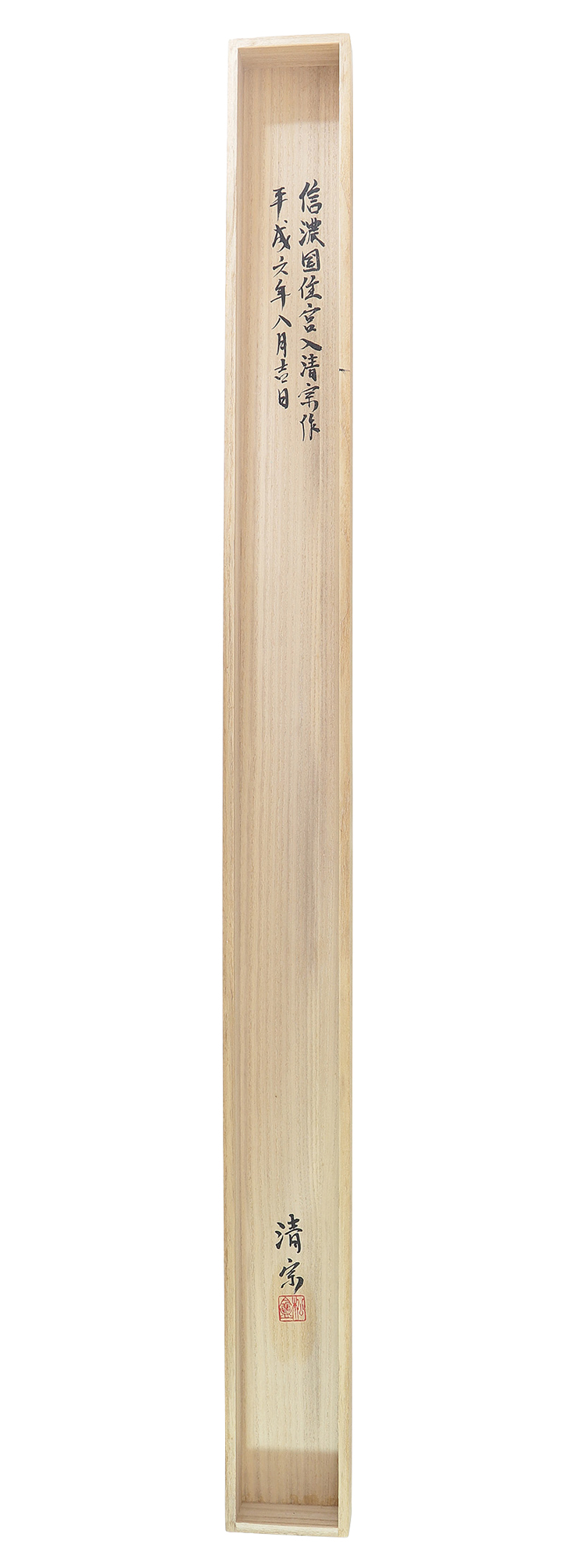
With handwritten hakogaki
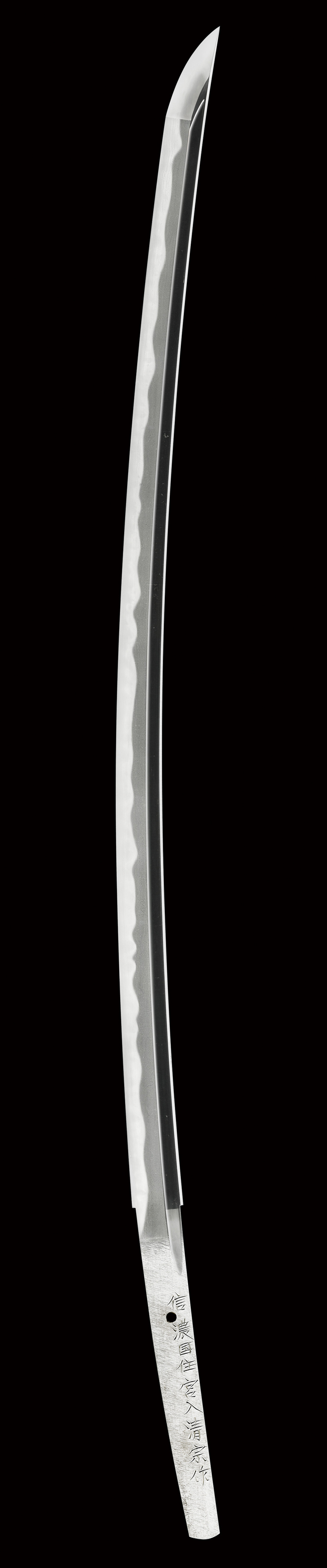
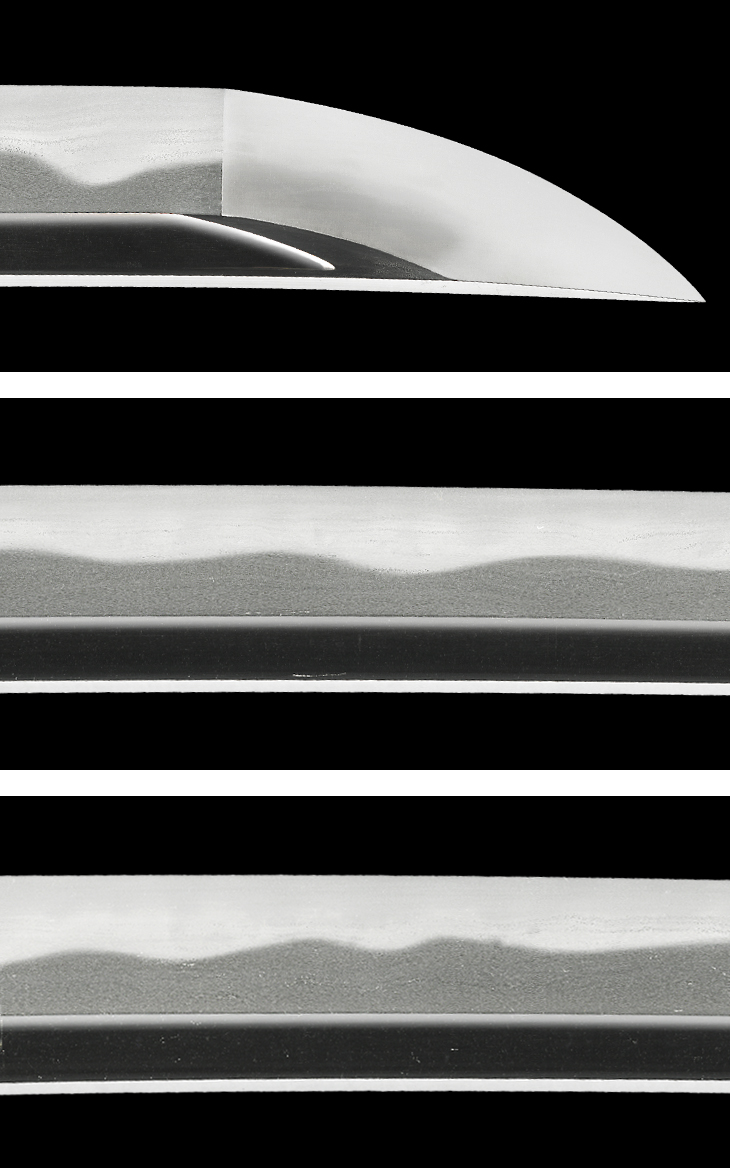
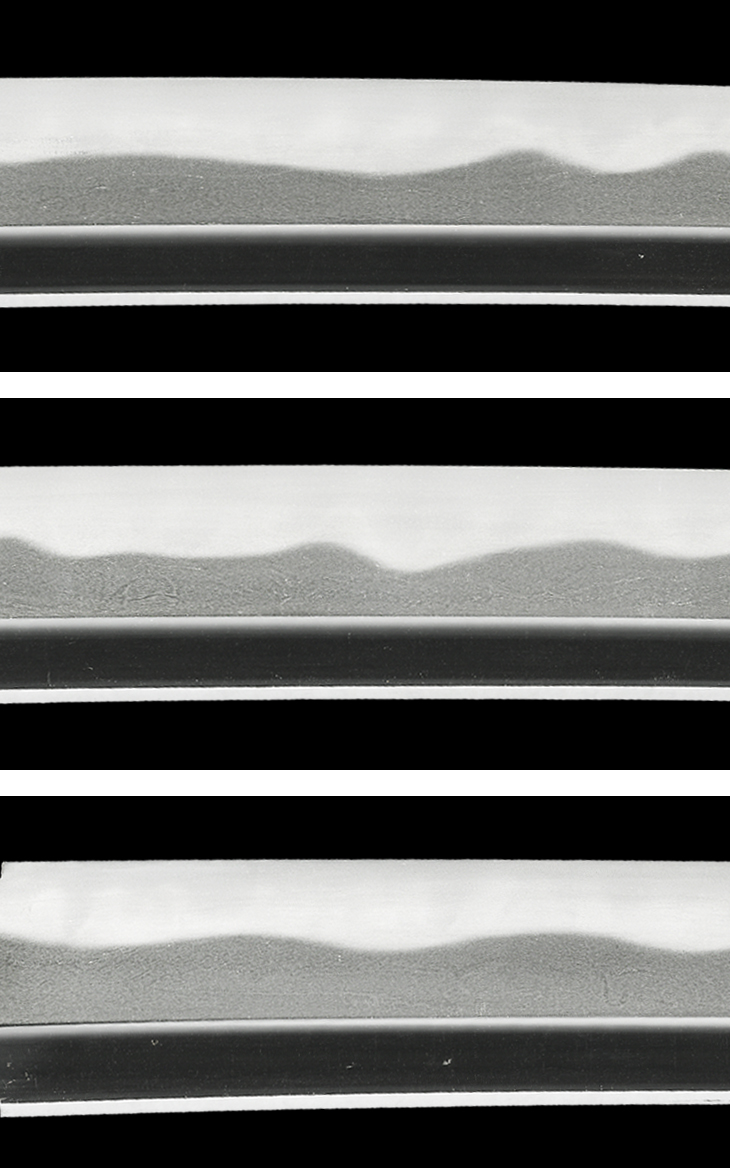
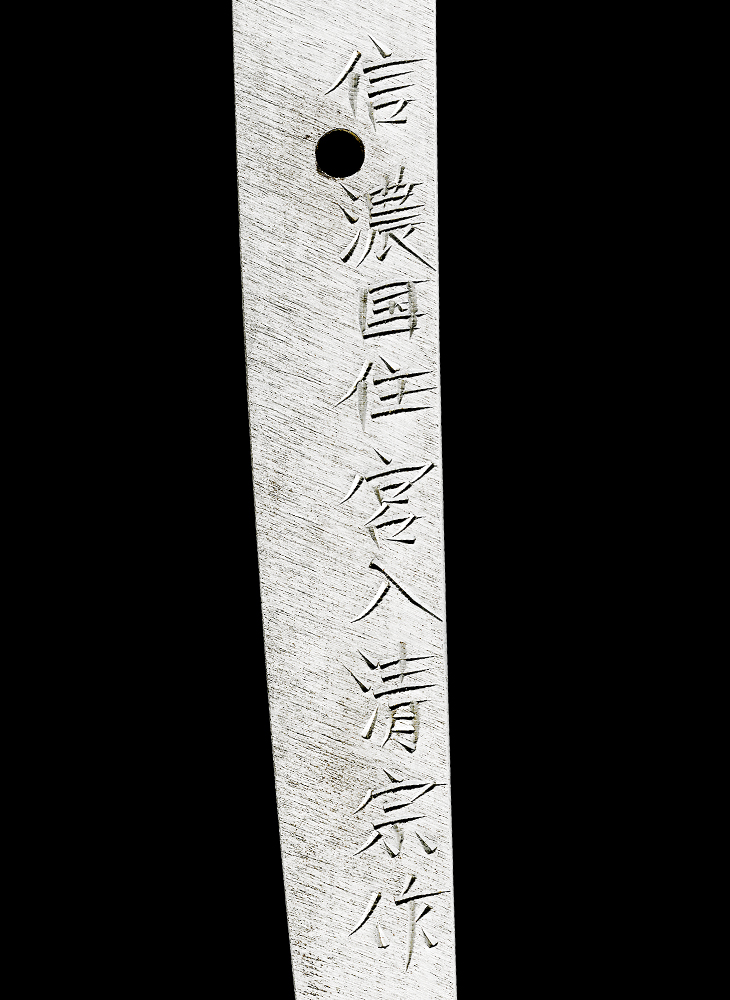
Shinogi-zukuri, shinogi is ordinary, iori-mune is low, o-kissaki becomes slightly acute. On both the omote and ura, bo-hi are kakinagasu below the habaki. Kitae, ko-itame with itame, mokume, and nagare-hada mixed, well-tightened, ji-nie attaches finely and thickly, fine chikei enters frequently, the jitetsu is generally excellent. Hamon, mainly gunome-midare mixed with ko-gunome, choji-style ha, slightly sakagakatta ha, and togari-style ha, the habuchi is well-covered in nie with deep nioi, inside the ha there are yo, gunome-ashi, and choji-ashi entering frequently, kinsuji and sunagashi overlap in many layers and are intensely active. Boshi, midare-komi with deep yaki, intensely covered in nie with kinsuji and sunagashi occurring frequently, the tip is togari-gokoro with hakikake and kaeri. Nakago is ubu, tip is kurijiri, yasurime is sujikai. Copper with gold-kise niju-habaki. Period polishing. In shirasaya. With handwritten hakogaki.
Kiyomune, whose name was Miyairi Eizo, was born in Taisho 13 (1924), a native of Sakaki-machi, Hanishina-gun, Nagano Prefecture, and was the younger brother of the Living National Treasure Miyairi Akihira (Yukihira) by eleven years.
From Showa 16 he studied sword forging under his older brother Akihira, and became independent in Showa 23; like his brother, he excelled in the Soshu-den, leaving behind many works modeled after Soshu Sadamune, Minamoto Kiyomaro, and others.
Initially named Kiyohira, he changed his mei to Kiyomune in Heisei 1 (1989), and died in Heisei 15 (2003) at the age of 79.
This work, made in Heisei 6 (1994) when the smith was 70 years old, is a masterpiece that can be called the true essence of this smith, modeled after the peerless genius smith from the same hometown, Minamoto Kiyomaro.
The nagasa is over 2 shaku 5 sun 6 bu, with an o-kissaki that is slightly acute, high sori, and a powerful, heroic tsukurikomi.
The jitetsu, well-tightened ko-itame mixed with itame, mokume, and nagare-hada, has ji-nie attached finely and thickly with fine chikei entering frequently; the ha, mainly gunome-midare, has a habuchi well-covered in nie with deep nioi, with yo, gunome-ashi, and choji-ashi entering frequently, and kinsuji and sunagashi overlapping in many layers and being intensely active, as is the boshi.
Usually, when one says "Kiyomaro-utsushi," the majority are in a grand style, but this work is not that ostentatious. It is indeed faithful to the honka, and one feels an indescribable dread and power, sensing the high level of skill and good taste of this smith.
With a precious handwritten hakogaki, it is an excellent piece that can undoubtedly be considered a representative work from the smith's mature period.
Machine translation from the shop's Japanese · may contain errors ·
Gendai, Nagano
With handwritten hakogaki
Shinogi-zukuri, shinogi is ordinary, iori-mune is low, o-kissaki becomes slightly acute. On both the omote and ura, bo-hi are kakinagasu below the habaki. Kitae, ko-itame with itame, mokume, and nagare-hada mixed, well-tightened, ji-nie attaches finely and thickly, fine chikei enters frequently, the jitetsu is generally excellent. Hamon, mainly gunome-midare mixed with ko-gunome, choji-style ha, slightly sakagakatta ha, and togari-style ha, the habuchi is well-covered in nie with deep nioi, inside the ha there are yo, gunome-ashi, and choji-ashi entering frequently, kinsuji and sunagashi overlap in many layers and are intensely active. Boshi, midare-komi with deep yaki, intensely covered in nie with kinsuji and sunagashi occurring frequently, the tip is togari-gokoro with hakikake and kaeri. Nakago is ubu, tip is kurijiri, yasurime is sujikai. Copper with gold-kise niju-habaki. Period polishing. In shirasaya. With handwritten hakogaki.
Kiyomune, whose name was Miyairi Eizo, was born in Taisho 13 (1924), a native of Sakaki-machi, Hanishina-gun, Nagano Prefecture, and was the younger brother of the Living National Treasure Miyairi Akihira (Yukihira) by eleven years.
From Showa 16 he studied sword forging under his older brother Akihira, and became independent in Showa 23; like his brother, he excelled in the Soshu-den, leaving behind many works modeled after Soshu Sadamune, Minamoto Kiyomaro, and others.
Initially named Kiyohira, he changed his mei to Kiyomune in Heisei 1 (1989), and died in Heisei 15 (2003) at the age of 79.
This work, made in Heisei 6 (1994) when the smith was 70 years old, is a masterpiece that can be called the true essence of this smith, modeled after the peerless genius smith from the same hometown, Minamoto Kiyomaro.
The nagasa is over 2 shaku 5 sun 6 bu, with an o-kissaki that is slightly acute, high sori, and a powerful, heroic tsukurikomi.
The jitetsu, well-tightened ko-itame mixed with itame, mokume, and nagare-hada, has ji-nie attached finely and thickly with fine chikei entering frequently; the ha, mainly gunome-midare, has a habuchi well-covered in nie with deep nioi, with yo, gunome-ashi, and choji-ashi entering frequently, and kinsuji and sunagashi overlapping in many layers and being intensely active, as is the boshi.
Usually, when one says "Kiyomaro-utsushi," the majority are in a grand style, but this work is not that ostentatious. It is indeed faithful to the honka, and one feels an indescribable dread and power, sensing the high level of skill and good taste of this smith.
With a precious handwritten hakogaki, it is an excellent piece that can undoubtedly be considered a representative work from the smith's mature period.
Historical context
Shōwa to the present: destruction and revival
›
The twentieth century nearly killed the craft twice: wartime distortion, then the occupation ban. The NBTHK’s founding in 1948 and licensed forging from 1953 rebuilt the sword as an art, crowned by Living National Treasures and the mukansa rank.
For one-of-a-kind items such as swords, sword fittings and antiques, other customers may be waiting for the item, so please contact us about a return within 3 days of its arrival and ship it back within 8 days. Refunds are made on the day the returned item arrives.

 NihontoWatch