Kazuhira (Kazuhira) tosho was born in Mutsuura, Yokohama City in Showa 18 and was a monjin of Miyairi Akihira. He became independent in Showa 42 and strove in sakuto aiming for Soshu joko such as Masamune and Shizu, but he suddenly suffered facial fractures from a shattered maruto and faced the crisis of losing sight in his right eye; for a while he could not even hold a tsuchi and spent his days in recuperation aiming for a comeback. Later, he had the opportunity to closely observe the Okadagiri Yoshifusa and became immersed in the study of Fukuoka Ichimonji. He won numerous tokusho at the Shinsaku Meito Ten and was certified as Mukansa in Heisei 12. Even after that, he pushed forward with research setting the high goal of reproducing all hataraki such as utsuri, but he passed away on February 24, Heisei 15 at the age of 59. His far too early death is still lamented today.
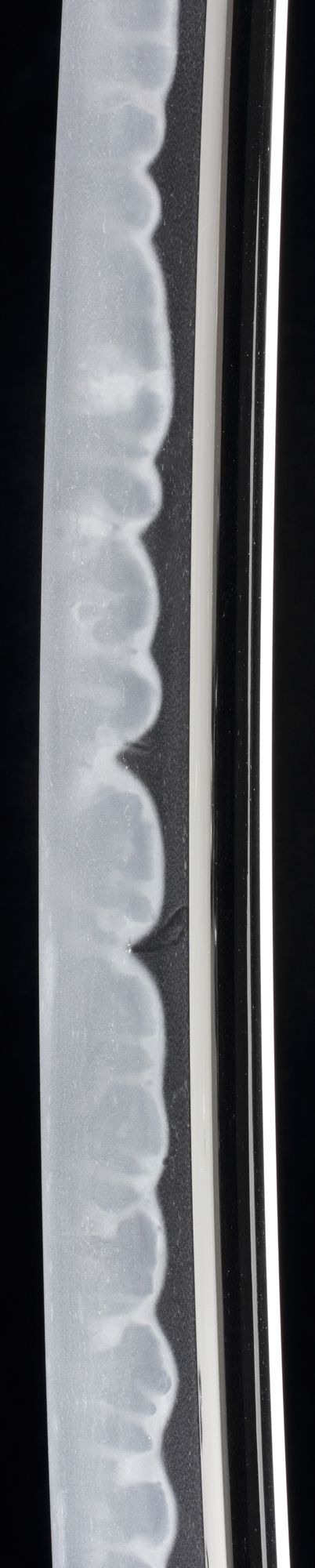
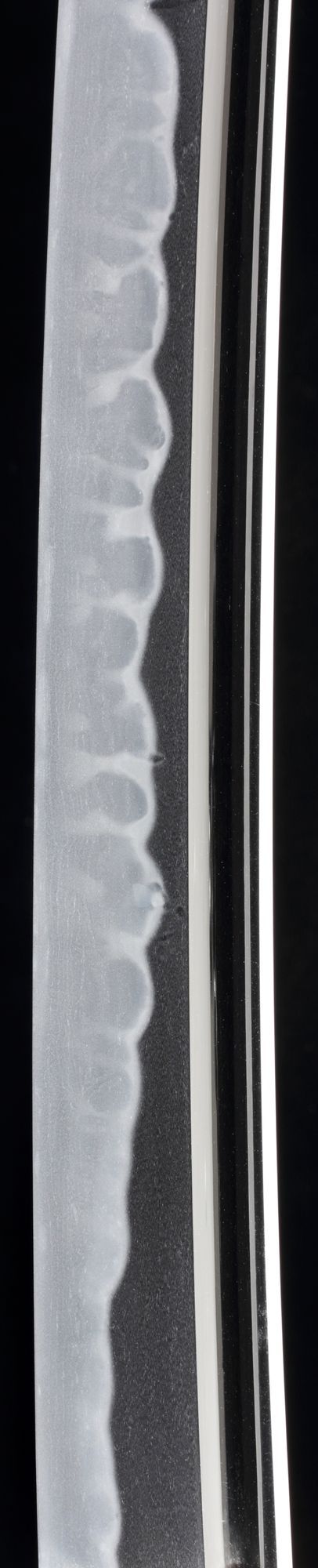
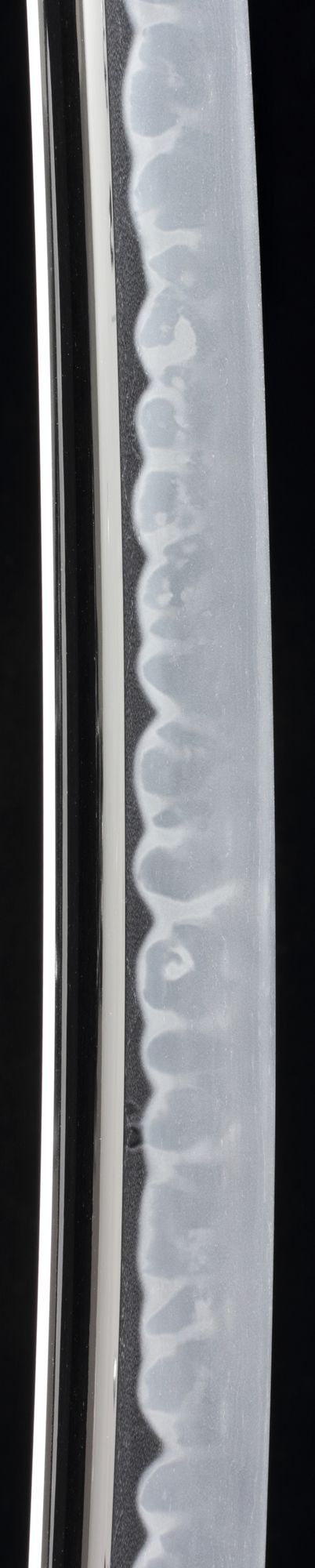
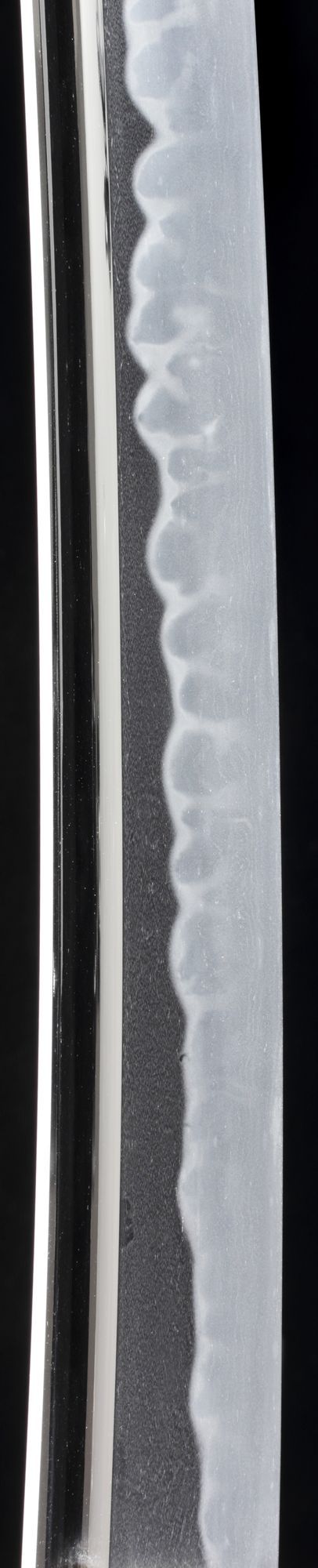
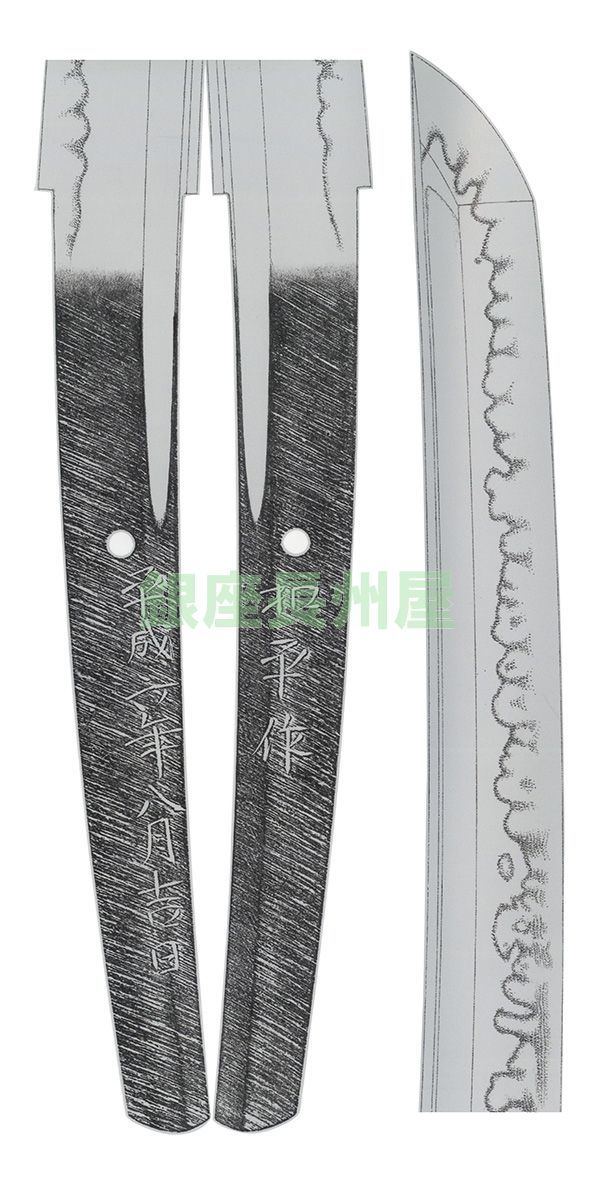
This tachi is a kageuchi forged at the same time as his work that won the First Seat Excellence Award at the Shinsaku Meito Ten in Heisei 6; it has a wide mihaba, thick kasane, deeply carved bo-hi, high koshizori, and is fashioned with an ikubi kissaki, possessing a majestic sugata just like a tachi of the mid-Kamakura period. The jigane is ko-itame hada deeply refined and tight, chikei works densely, ji-nie wells up abundantly, and the hada is fresh, moist, and clear. The high-fired choji midareba becomes juka choji, mixing fukuro-shaped ha, fusa-shaped ha, and ko-choji like continuous cherry blossoms; it is nioi-gachi with ko-nie attached and a bright habuchi, nioi-ashi enter actively and yo float, fine kinsen and sunagashi are present, and the hachu is clear with nioi. The boshi is deeply fired, magnificently midare-konde and returns in ko-maru. The mei characters are carefully carved into the shallowly curved, old-style nakago. This is a daisaku for which Kazuhira tosho swung his tsuchi with his whole soul, aiming for the Fukuoka Ichimonji that fascinated famous busho such as Ieyasu, Uesugi Kenshin, and Kagekatsu.
Note... Published in "Gendai Nihonto Sakka Yuhin Shu".
Machine translation from the shop's Japanese · may contain errors ·
Kazuhira (Kazuhira) tosho was born in Mutsuura, Yokohama City in Showa 18 and was a monjin of Miyairi Akihira. He became independent in Showa 42 and strove in sakuto aiming for Soshu joko such as Masamune and Shizu, but he suddenly suffered facial fractures from a shattered maruto and faced the crisis of losing sight in his right eye; for a while he could not even hold a tsuchi and spent his days in recuperation aiming for a comeback. Later, he had the opportunity to closely observe the Okadagiri Yoshifusa and became immersed in the study of Fukuoka Ichimonji. He won numerous tokusho at the Shinsaku Meito Ten and was certified as Mukansa in Heisei 12. Even after that, he pushed forward with research setting the high goal of reproducing all hataraki such as utsuri, but he passed away on February 24, Heisei 15 at the age of 59. His far too early death is still lamented today.
This tachi is a kageuchi forged at the same time as his work that won the First Seat Excellence Award at the Shinsaku Meito Ten in Heisei 6; it has a wide mihaba, thick kasane, deeply carved bo-hi, high koshizori, and is fashioned with an ikubi kissaki, possessing a majestic sugata just like a tachi of the mid-Kamakura period. The jigane is ko-itame hada deeply refined and tight, chikei works densely, ji-nie wells up abundantly, and the hada is fresh, moist, and clear. The high-fired choji midareba becomes juka choji, mixing fukuro-shaped ha, fusa-shaped ha, and ko-choji like continuous cherry blossoms; it is nioi-gachi with ko-nie attached and a bright habuchi, nioi-ashi enter actively and yo float, fine kinsen and sunagashi are present, and the hachu is clear with nioi. The boshi is deeply fired, magnificently midare-konde and returns in ko-maru. The mei characters are carefully carved into the shallowly curved, old-style nakago. This is a daisaku for which Kazuhira tosho swung his tsuchi with his whole soul, aiming for the Fukuoka Ichimonji that fascinated famous busho such as Ieyasu, Uesugi Kenshin, and Kagekatsu.
Note... Published in "Gendai Nihonto Sakka Yuhin Shu".
The twentieth century nearly killed the craft twice: wartime distortion, then the occupation ban. The NBTHK’s founding in 1948 and licensed forging from 1953 rebuilt the sword as an art, crowned by Living National Treasures and the mukansa rank.
If, due to our fault, the item differs significantly from its proper condition, the item may be returned. Cooling-off is within one week of the item's arrival.






 NihontoWatch