The twentieth century nearly killed the craft twice: wartime distortion, then the occupation ban. The NBTHK’s founding in 1948 and licensed forging from 1953 rebuilt the sword as an art, crowned by Living National Treasures and the mukansa rank.
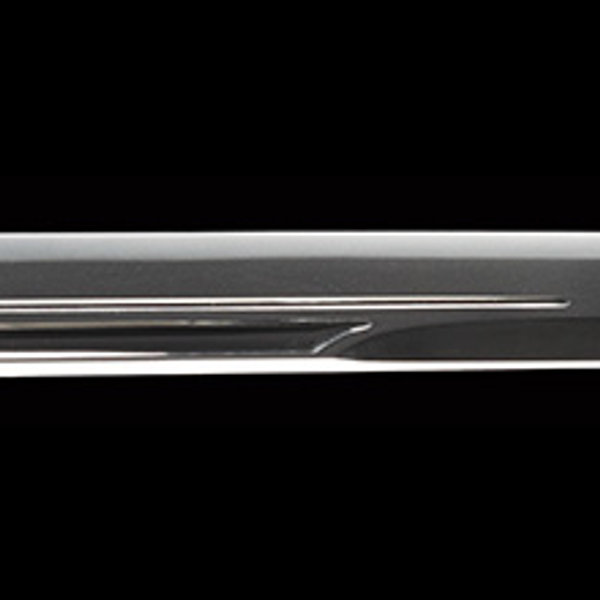
This listing features a tanto made by the smith Kazuhira, dated February, Heisei 6 (1994). Kazuhira, born in Yokohama in 1943, trained under Miyairi Akihira and became independent in 1967. He is known for his dedication to creating swords in the style of old masterworks and has received continuous awards at the New Sword Exhibition, achieving Mukansa status in 2000.

Sagami · around 1926-1989
4 pieces on the market now
The twentieth century nearly killed the craft twice: wartime distortion, then the occupation ban. The NBTHK’s founding in 1948 and licensed forging from 1953 rebuilt the sword as an art, crowned by Living National Treasures and the mukansa rank.
We could not find an authenticity certificate on the seller’s listing. Japanese swords and fittings are normally papered by the NBTHK (or the NTHK). Without one, the attribution is the seller’s own assessment and has not been independently verified — treat it with caution and ask the dealer about certification before buying.
If, due to our fault, the item differs significantly from its proper condition, the item may be returned. Cooling-off is within one week of the item's arrival.
This listing features a tanto made by the smith Kazuhira, dated February, Heisei 6 (1994). Kazuhira, born in Yokohama in 1943, trained under Miyairi Akihira and became independent in 1967. He is known for his dedication to creating swords in the style of old masterworks and has received continuous awards at the New Sword Exhibition, achieving Mukansa status in 2000.

Sagami · around 1926-1989
4 pieces on the market now
The twentieth century nearly killed the craft twice: wartime distortion, then the occupation ban. The NBTHK’s founding in 1948 and licensed forging from 1953 rebuilt the sword as an art, crowned by Living National Treasures and the mukansa rank.
We could not find an authenticity certificate on the seller’s listing. Japanese swords and fittings are normally papered by the NBTHK (or the NTHK). Without one, the attribution is the seller’s own assessment and has not been independently verified — treat it with caution and ask the dealer about certification before buying.
If, due to our fault, the item differs significantly from its proper condition, the item may be returned. Cooling-off is within one week of the item's arrival.