The twentieth century nearly killed the craft twice: wartime distortion, then the occupation ban. The NBTHK’s founding in 1948 and licensed forging from 1953 rebuilt the sword as an art, crowned by Living National Treasures and the mukansa rank.
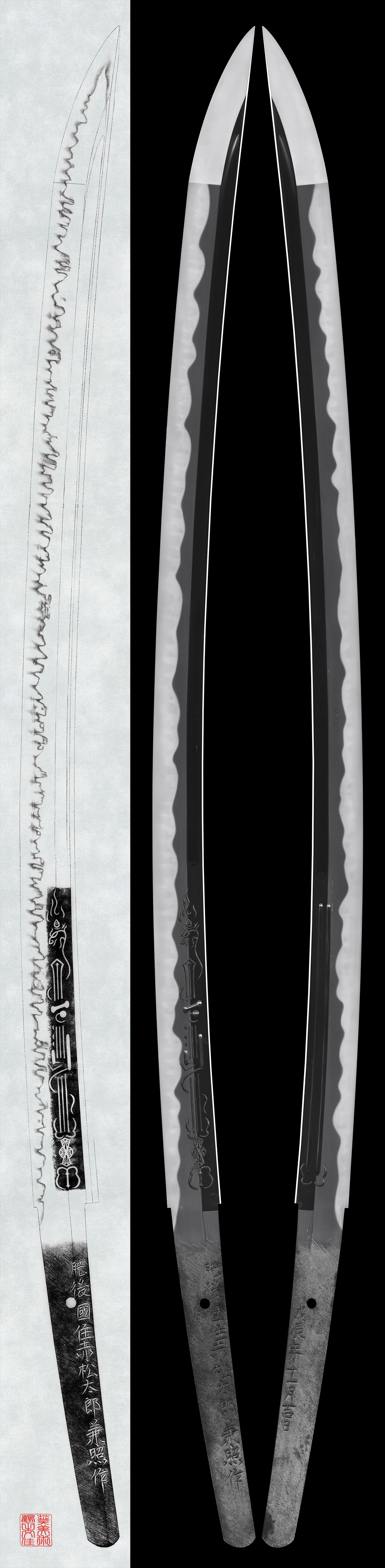
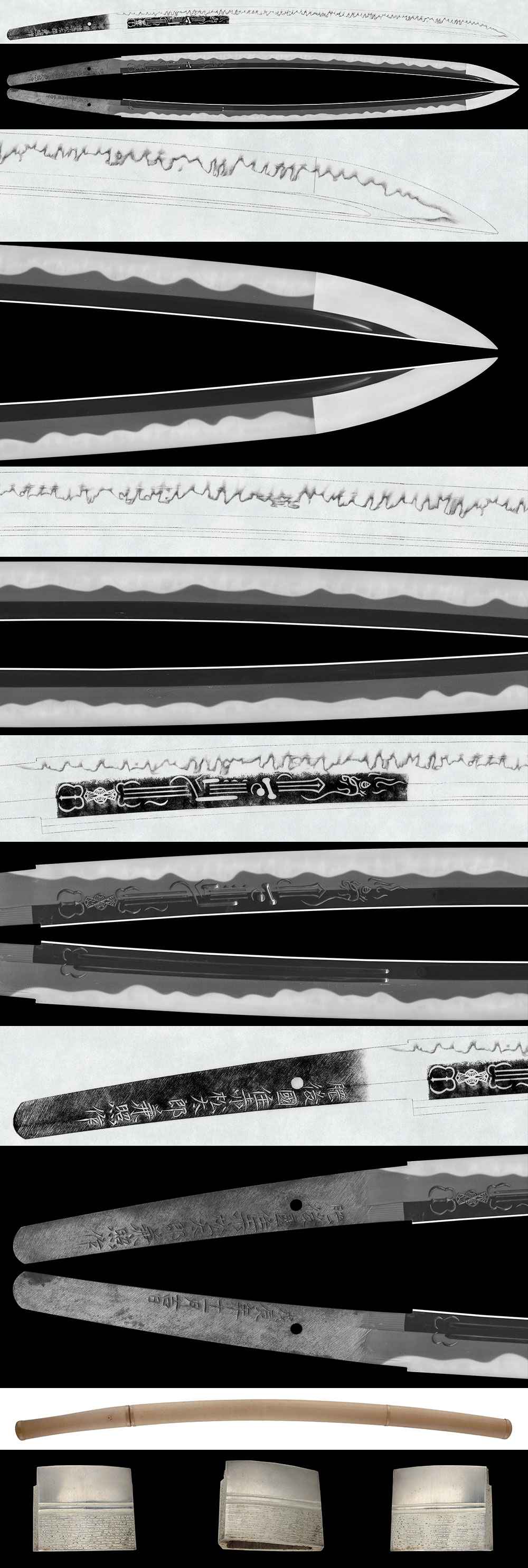
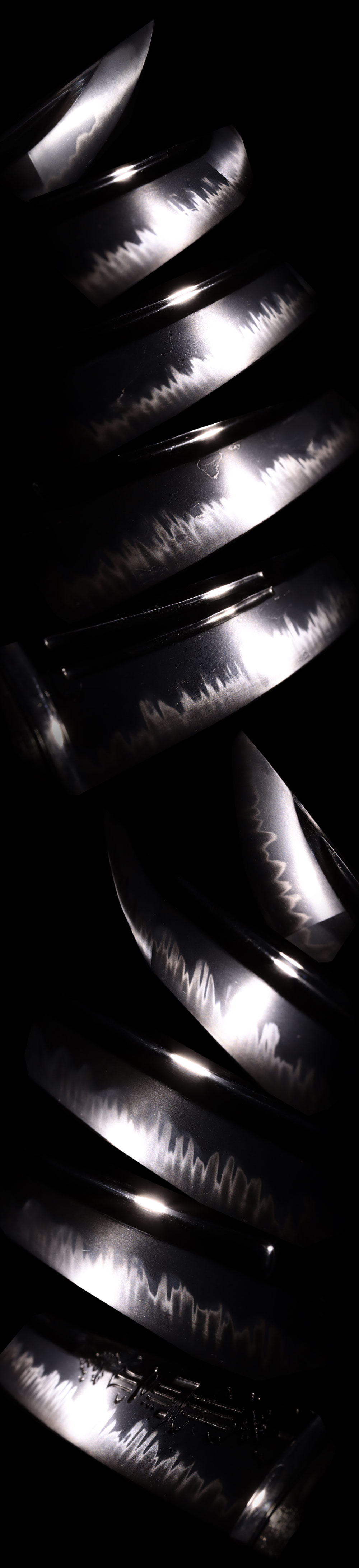
This is a modern Katana made by Akamatsu Tarou Kaneteru in 1988, a swordsmith from Kumamoto Prefecture known for works inspired by Kiyomaro. The blade is wide and thick with a carving of Kusa-no-Kurikara, exhibiting a robust Kyushu-style appearance. It features a plain-like jigane with fine Jinie and a Gunome midare hamon with Ashi, Kinsuji, and Sunagashi.
mei · Gendaito · nagasa 74.6cm · sori 2cm


Higo (Yatsushiro) · Heisei-Reiwa
5 pieces on the market now
The twentieth century nearly killed the craft twice: wartime distortion, then the occupation ban. The NBTHK’s founding in 1948 and licensed forging from 1953 rebuilt the sword as an art, crowned by Living National Treasures and the mukansa rank.
We could not find an authenticity certificate on the seller’s listing. Japanese swords and fittings are normally papered by the NBTHK (or the NTHK). Without one, the attribution is the seller’s own assessment and has not been independently verified — treat it with caution and ask the dealer about certification before buying.
If you wish to return an item, please notify us within 3 days of receipt. After this period we cannot accept cancellations. Please ship the return to us within 5 business days. Cancellation is conditional on the item being kept in the same condition as at the time of sale, so please handle it with care.
This is a modern Katana made by Akamatsu Tarou Kaneteru in 1988, a swordsmith from Kumamoto Prefecture known for works inspired by Kiyomaro. The blade is wide and thick with a carving of Kusa-no-Kurikara, exhibiting a robust Kyushu-style appearance. It features a plain-like jigane with fine Jinie and a Gunome midare hamon with Ashi, Kinsuji, and Sunagashi.
mei · Gendaito · nagasa 74.6cm · sori 2cm


Higo (Yatsushiro) · Heisei-Reiwa
5 pieces on the market now
The twentieth century nearly killed the craft twice: wartime distortion, then the occupation ban. The NBTHK’s founding in 1948 and licensed forging from 1953 rebuilt the sword as an art, crowned by Living National Treasures and the mukansa rank.
We could not find an authenticity certificate on the seller’s listing. Japanese swords and fittings are normally papered by the NBTHK (or the NTHK). Without one, the attribution is the seller’s own assessment and has not been independently verified — treat it with caution and ask the dealer about certification before buying.
If you wish to return an item, please notify us within 3 days of receipt. After this period we cannot accept cancellations. Please ship the return to us within 5 business days. Cancellation is conditional on the item being kept in the same condition as at the time of sale, so please handle it with care.