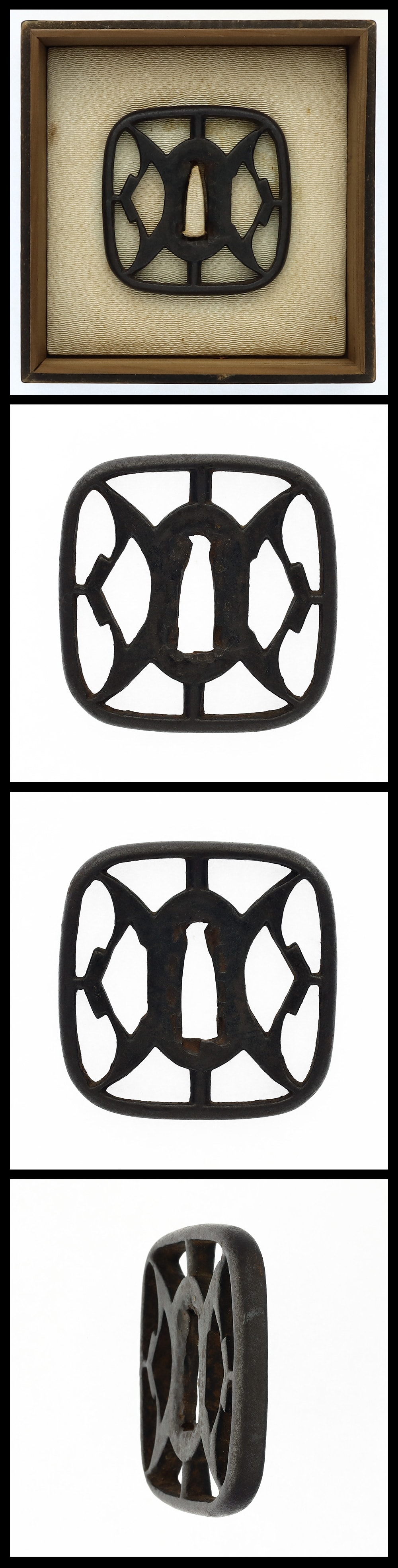
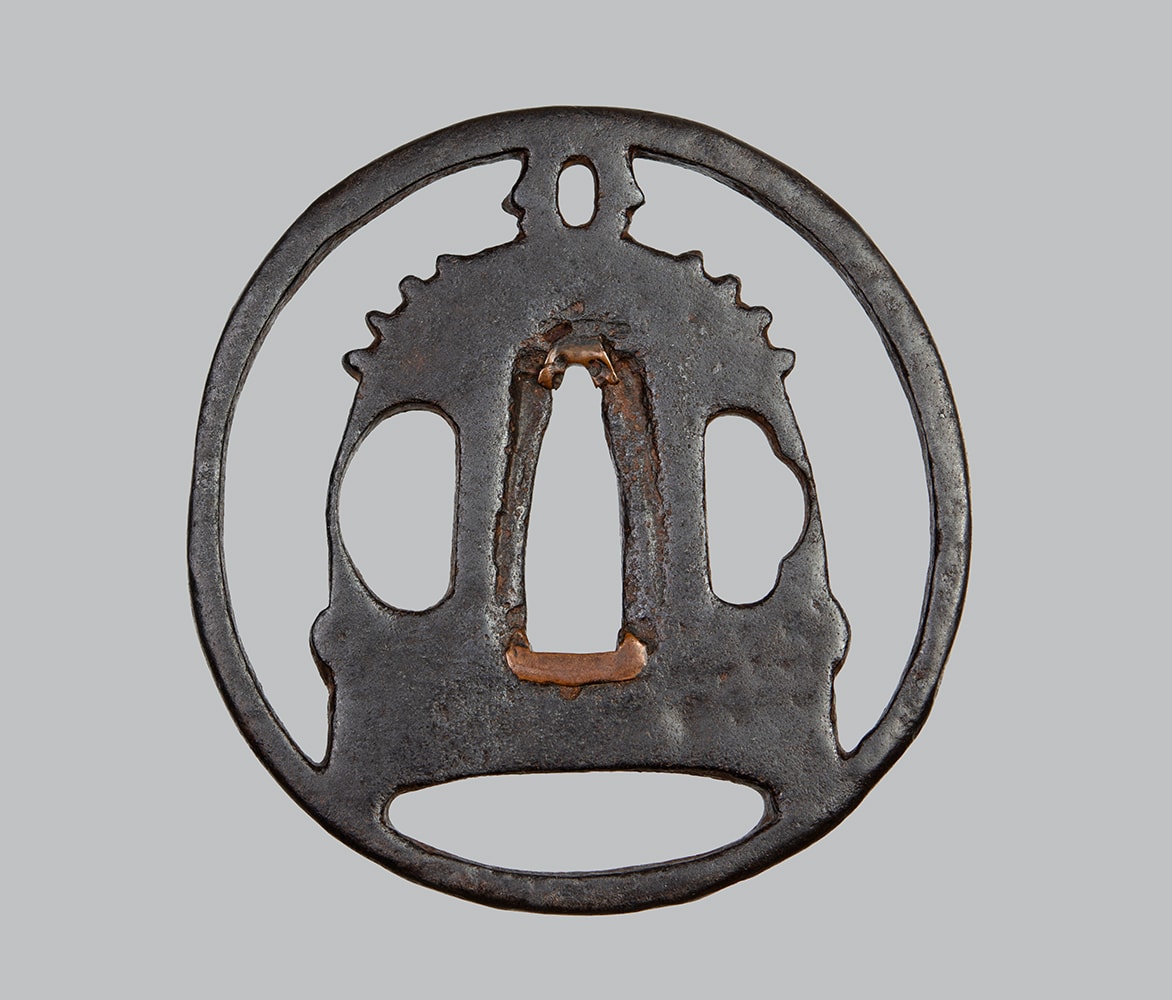
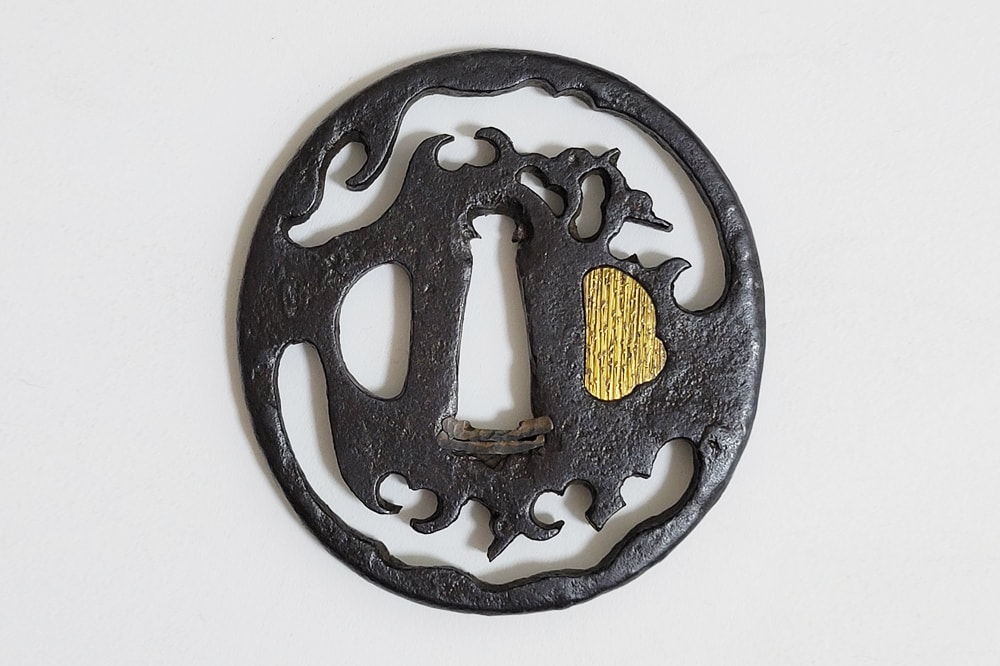
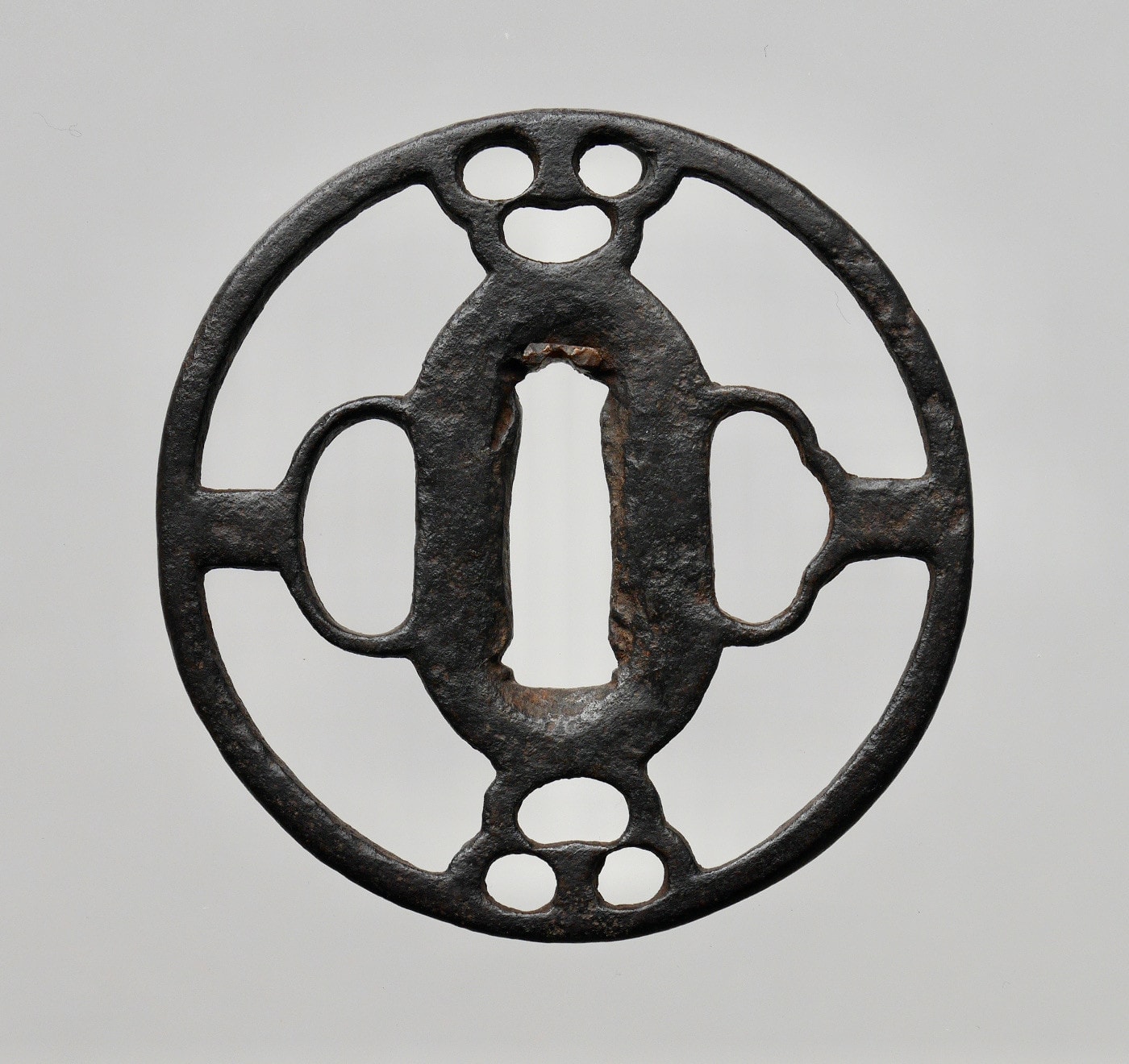
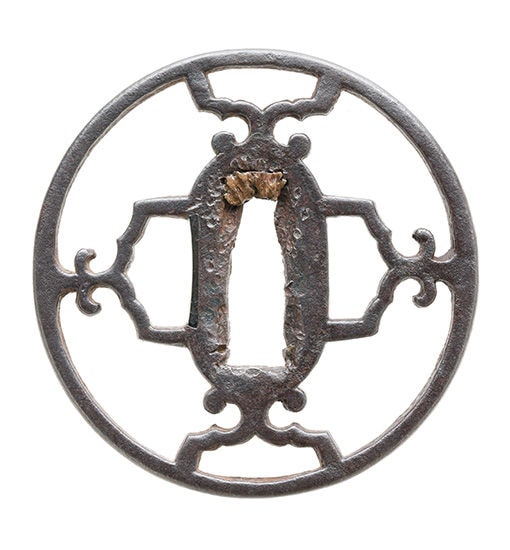
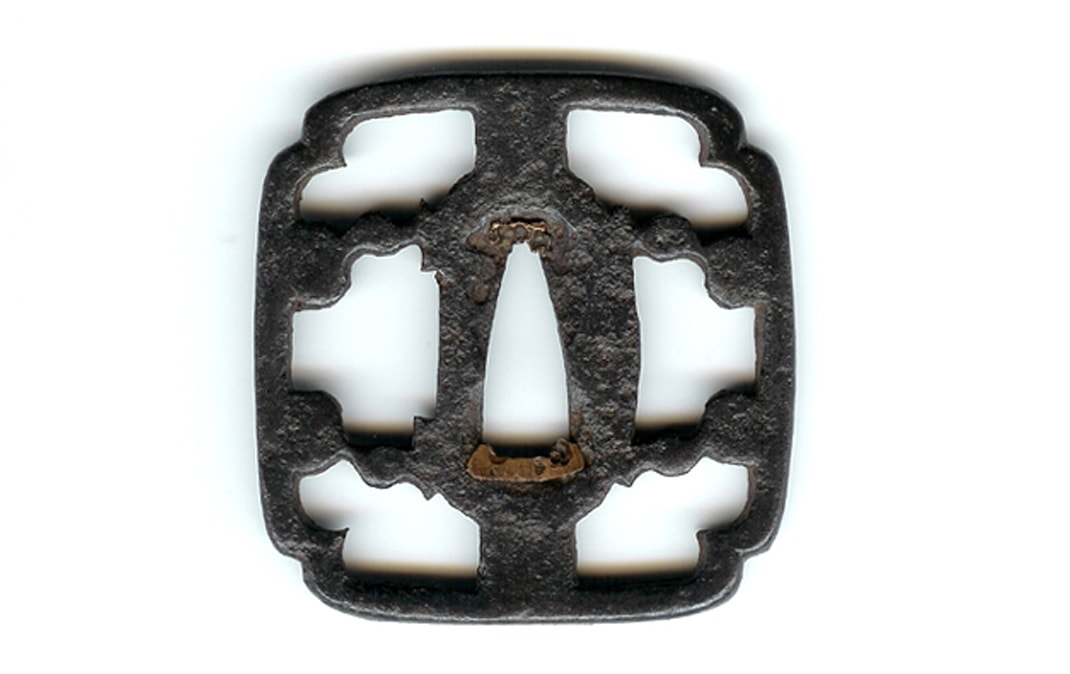
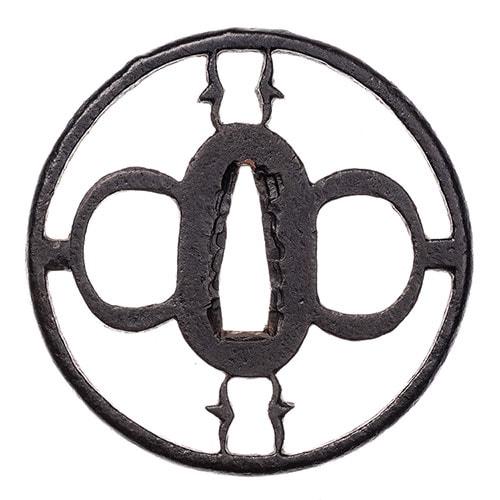
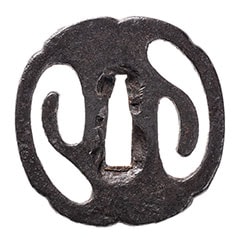
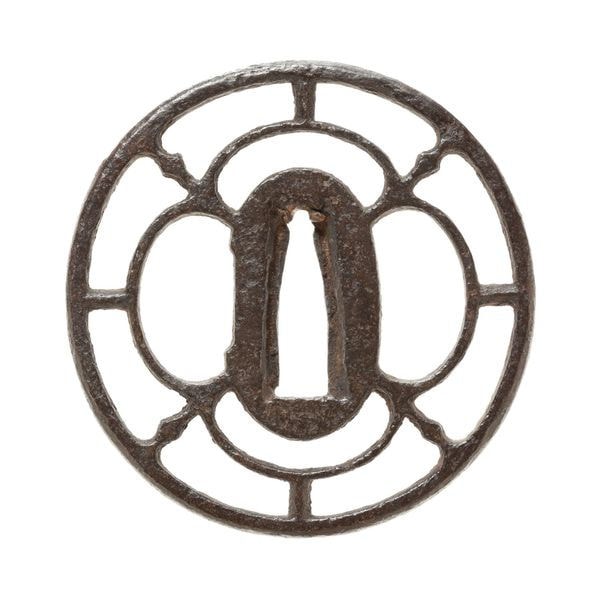
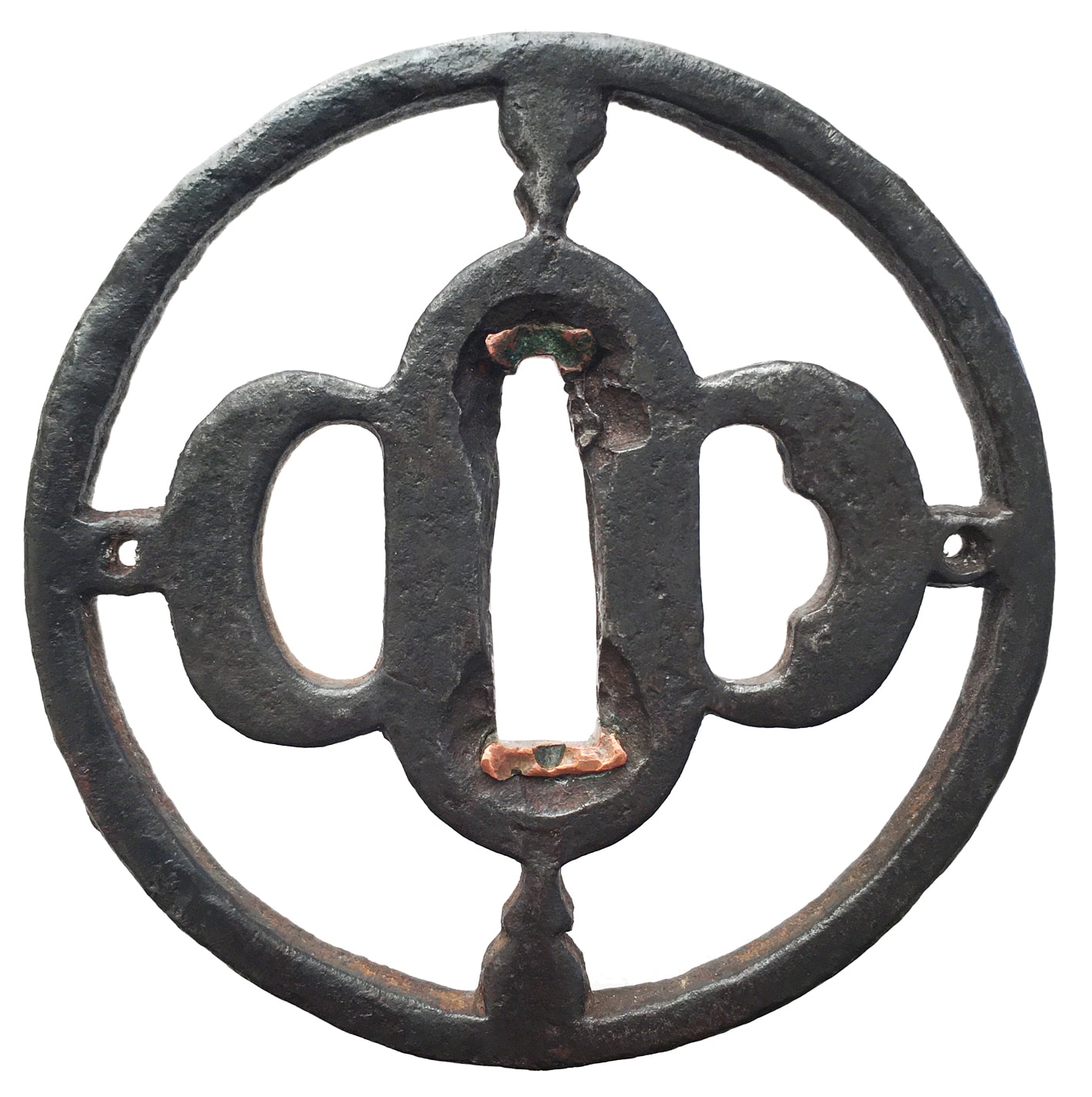
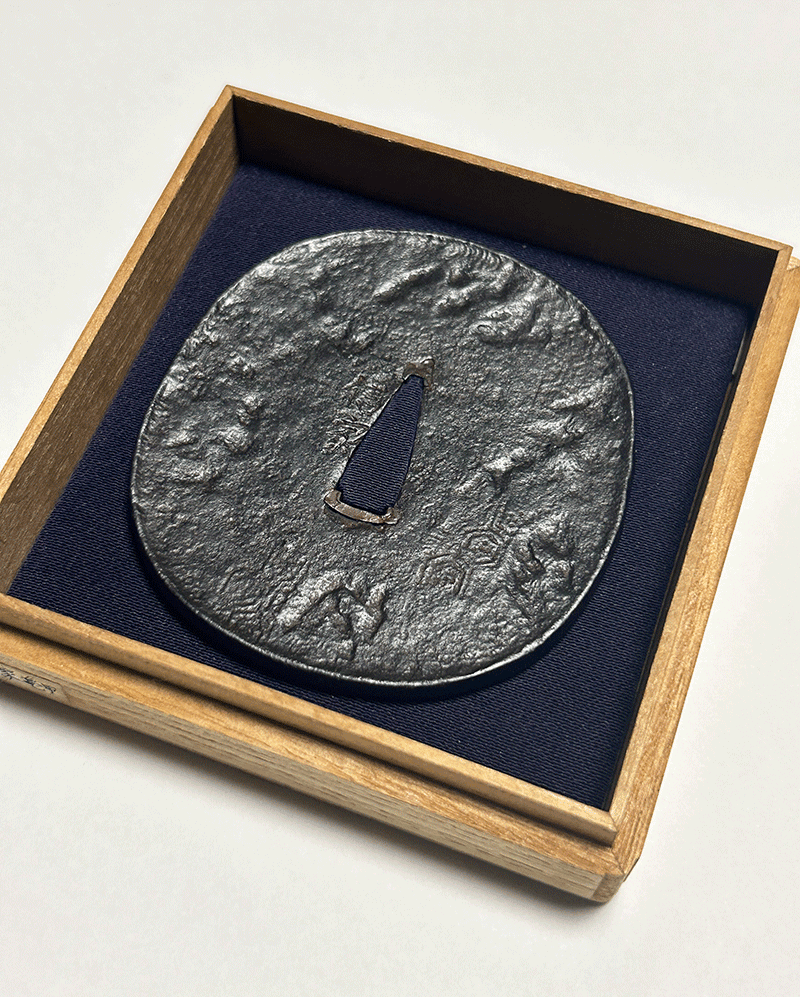
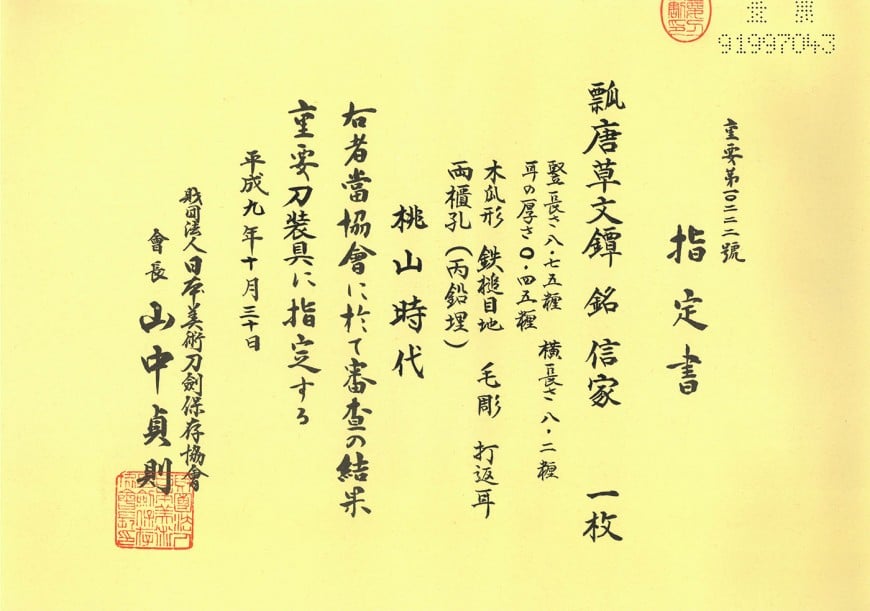
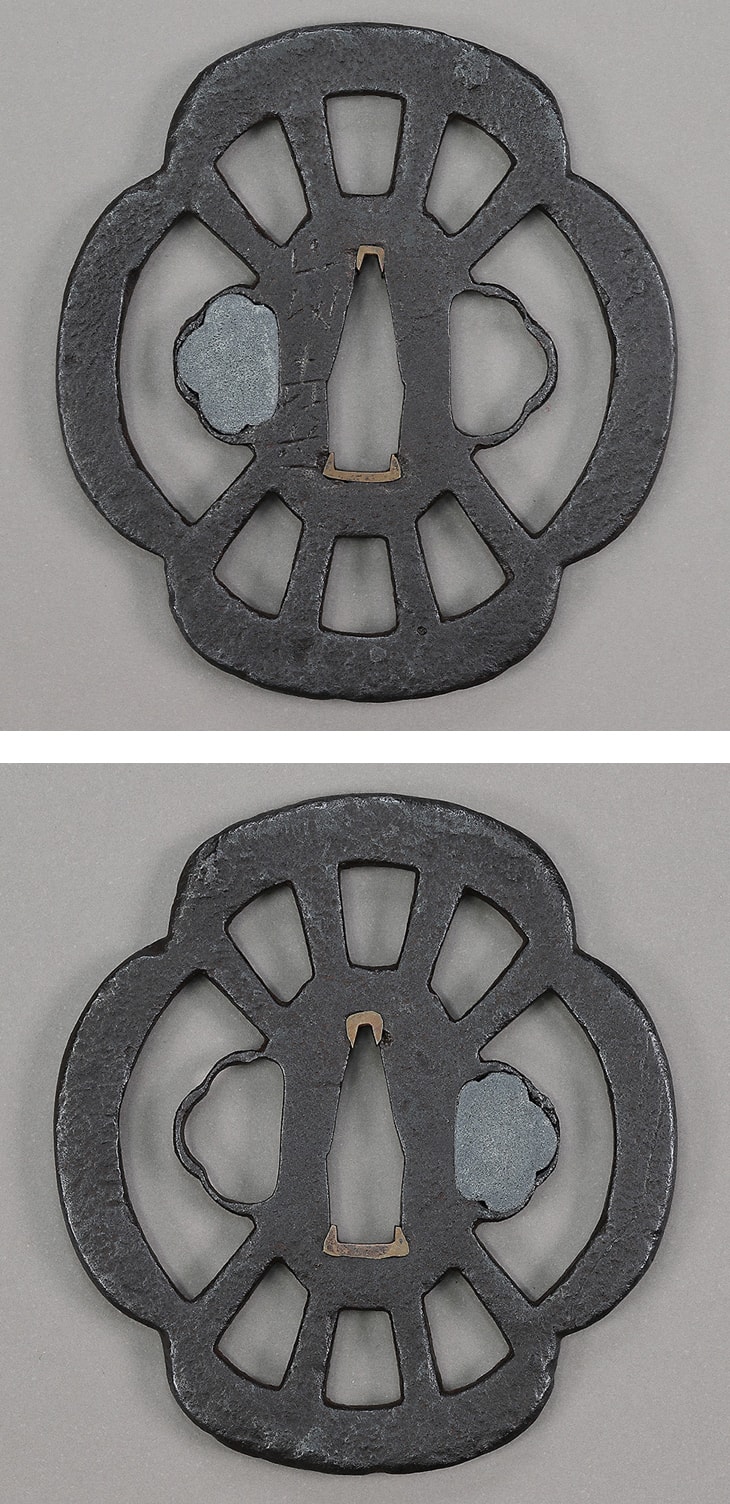
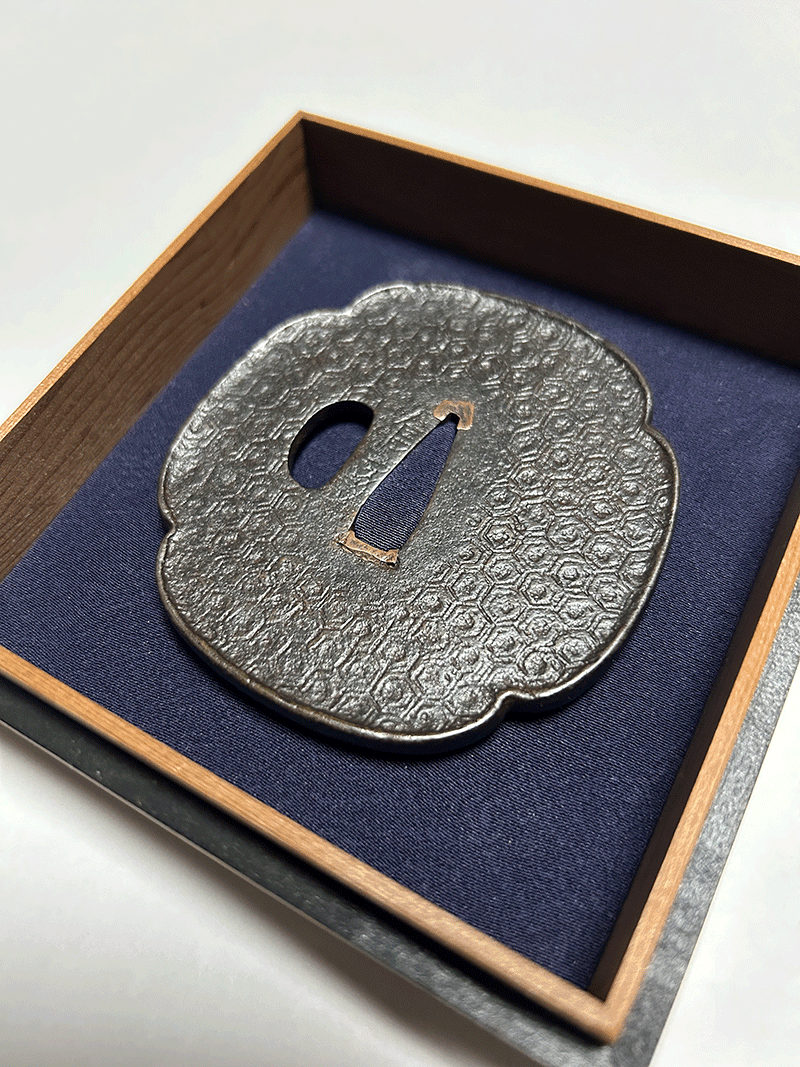
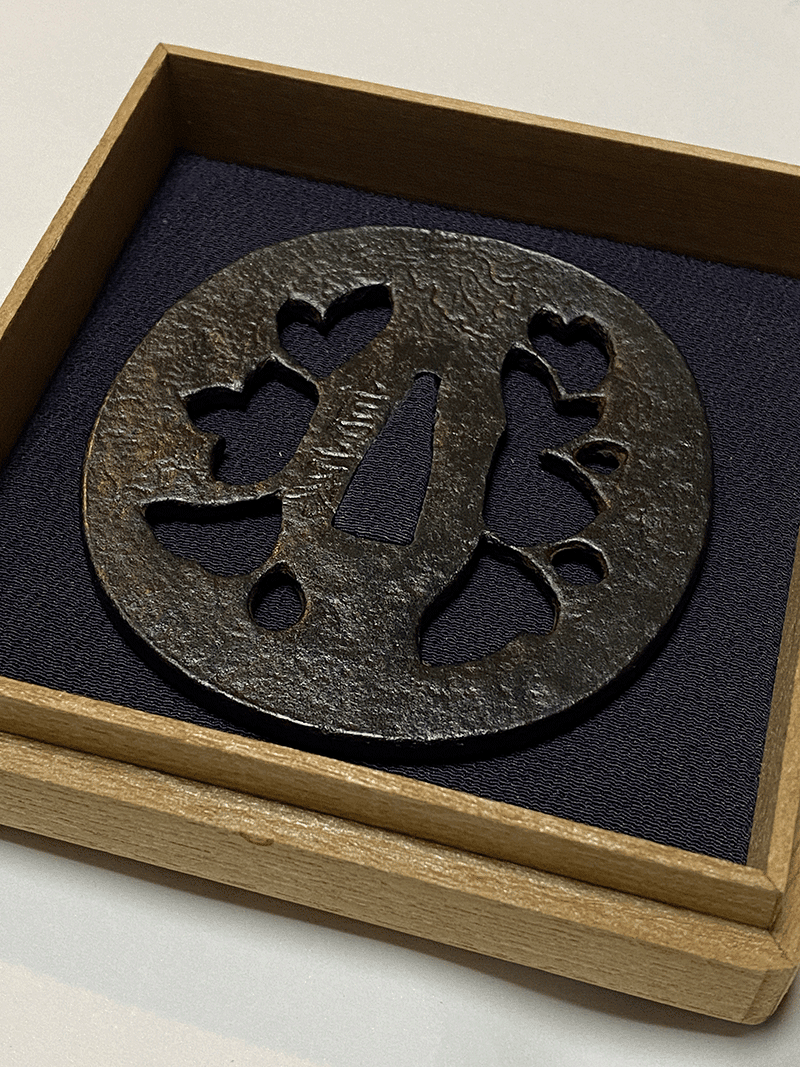
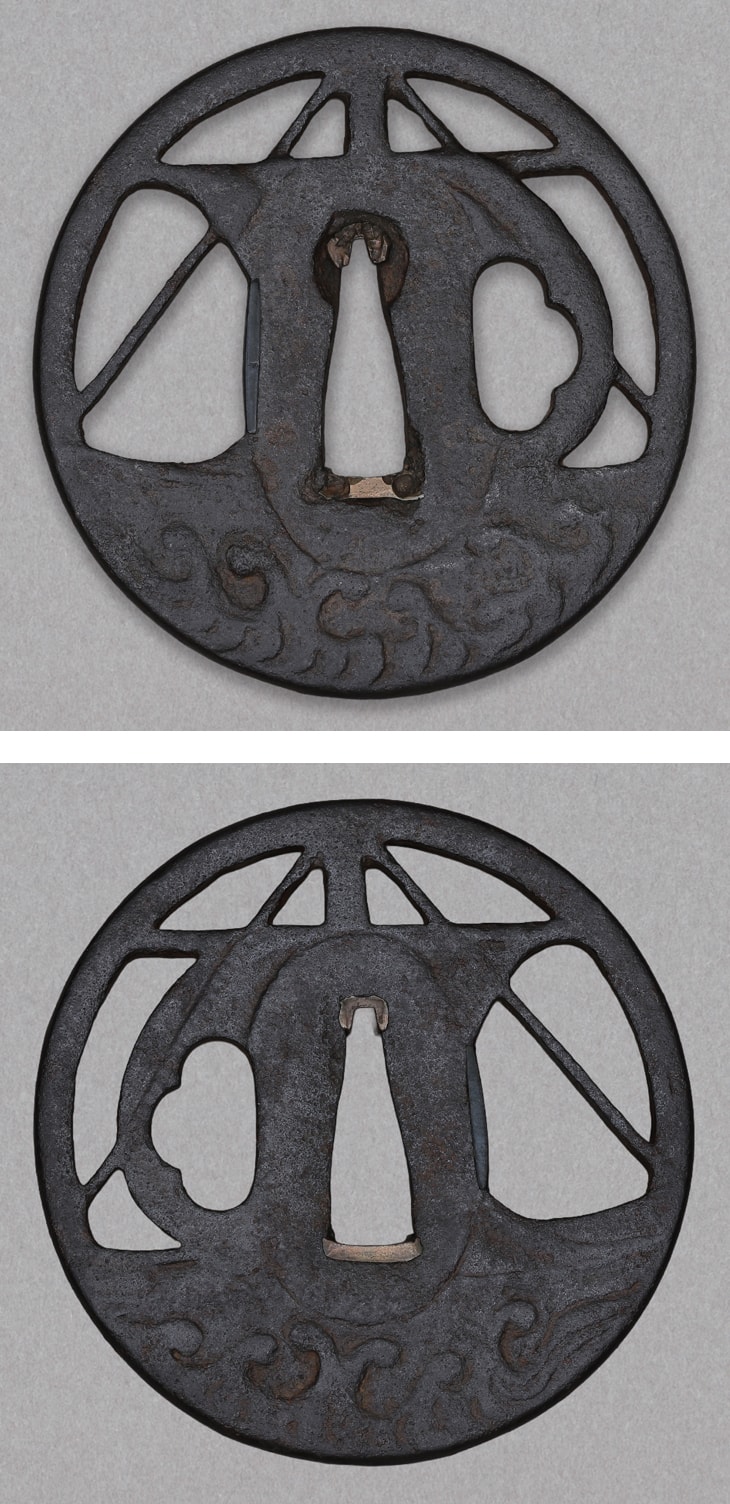
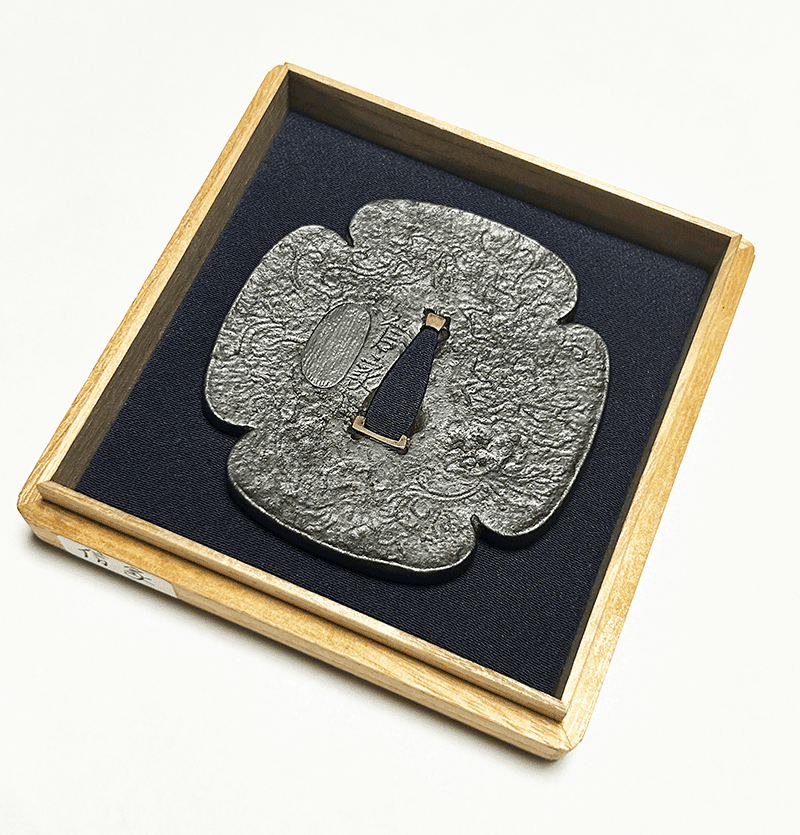
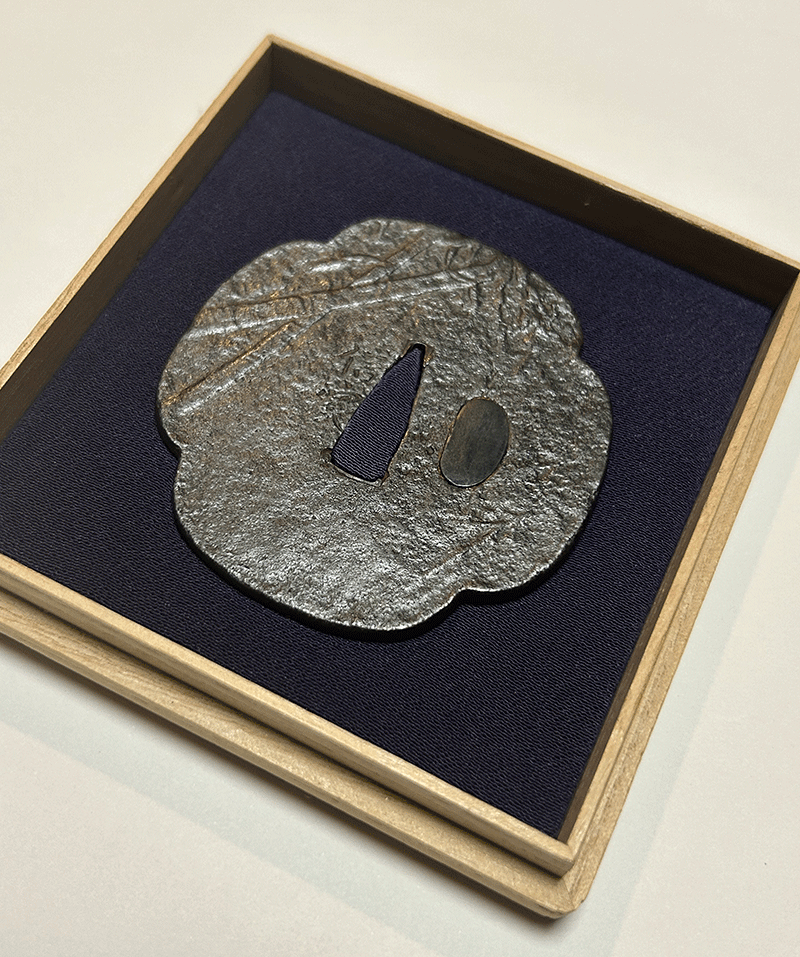
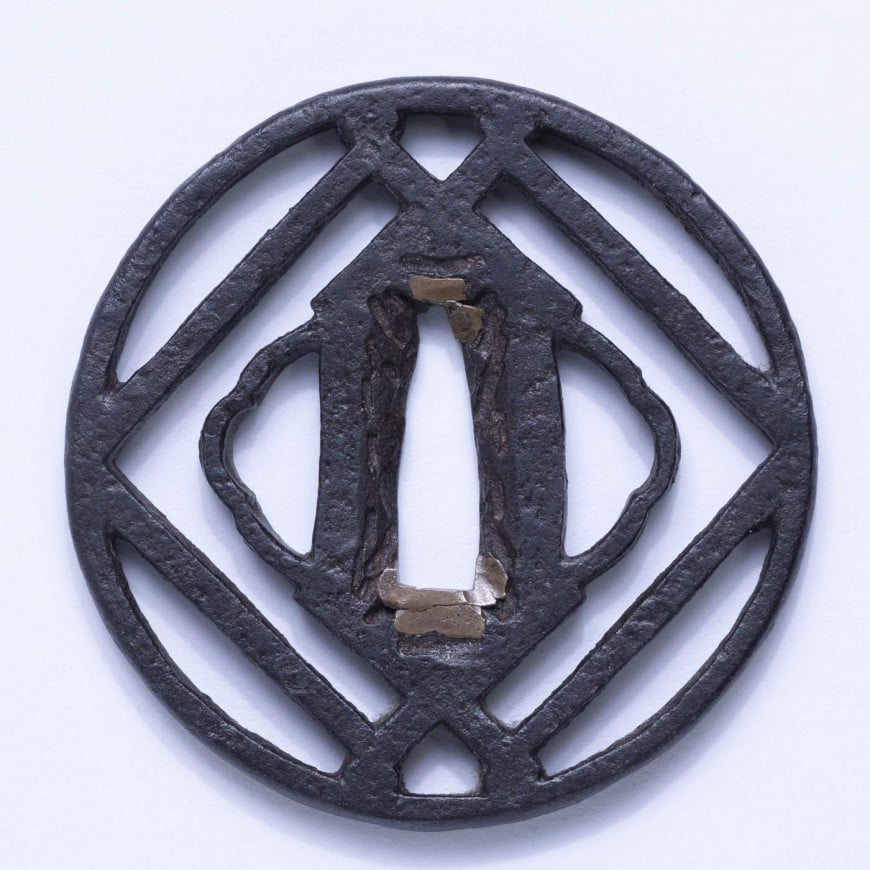
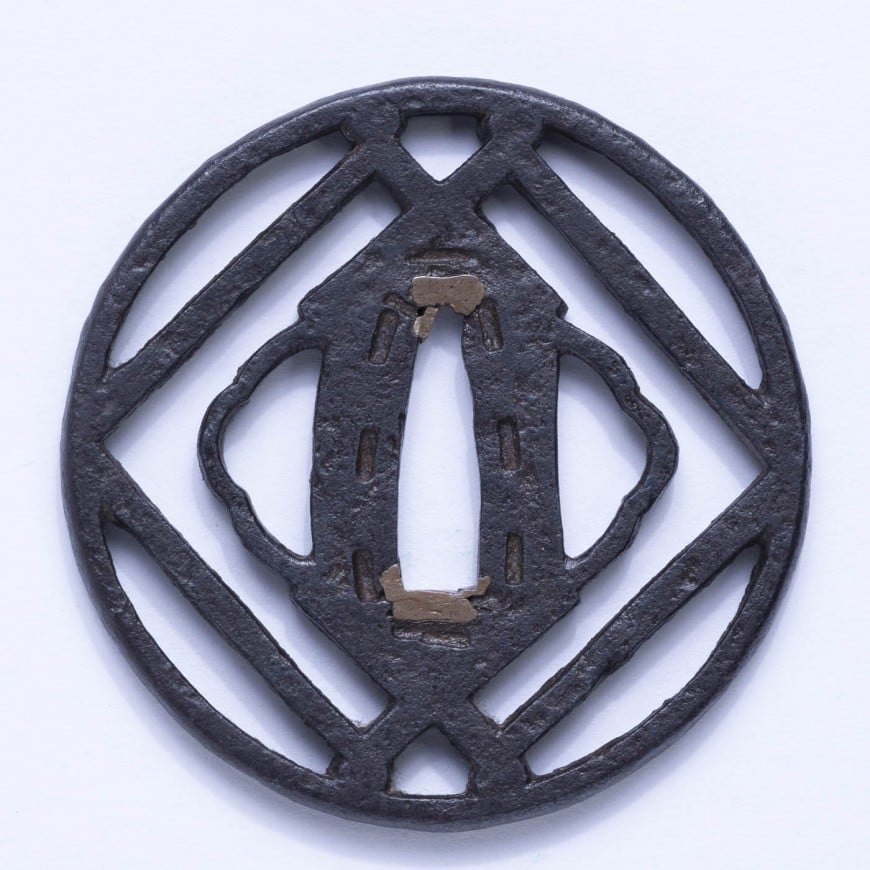
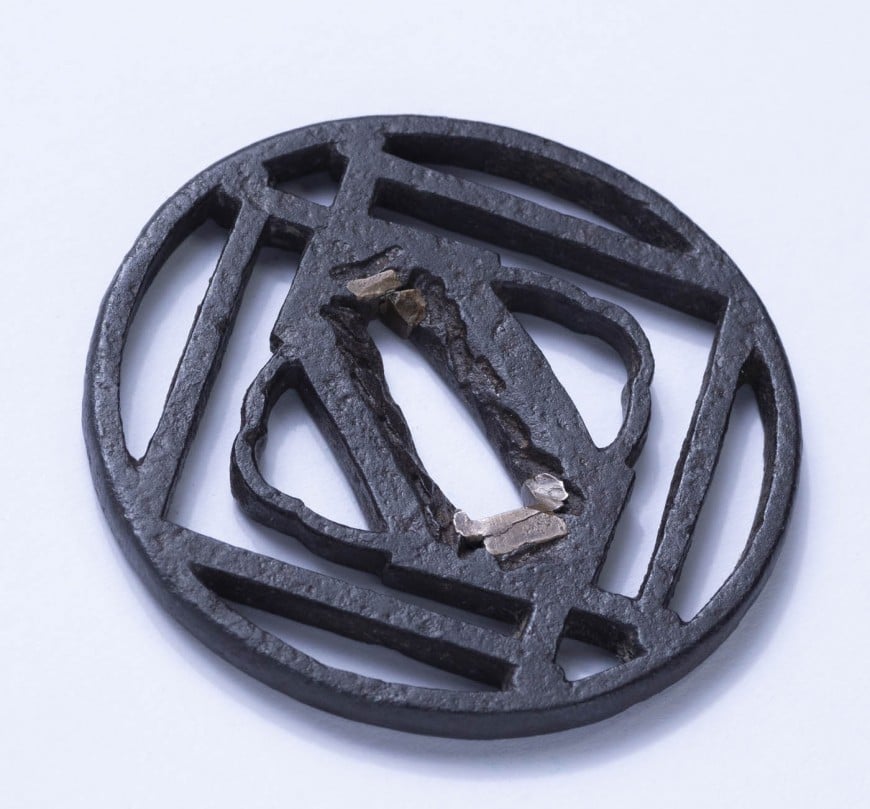
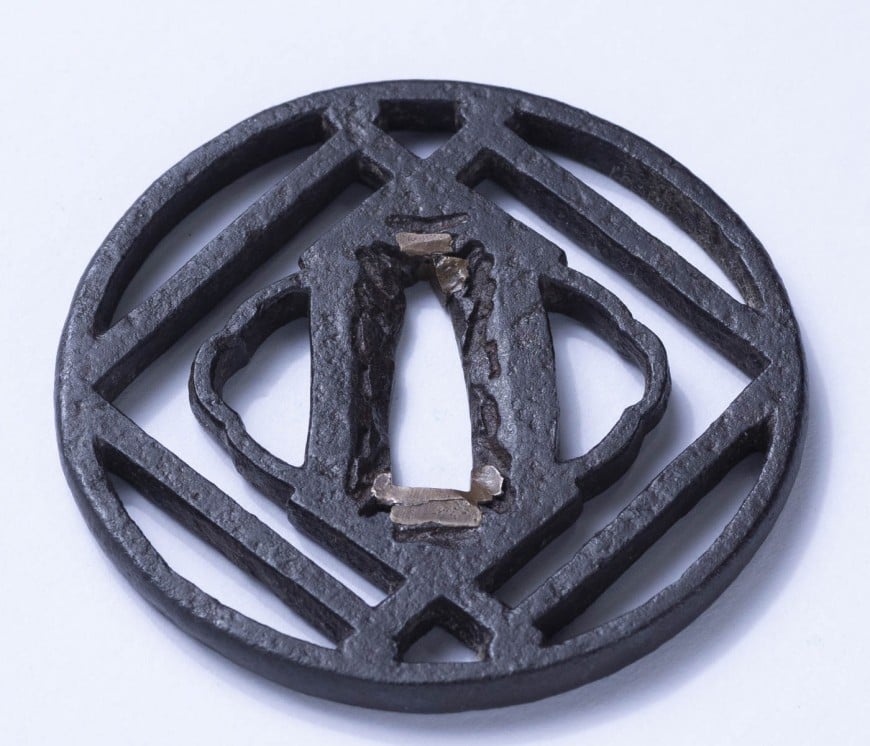
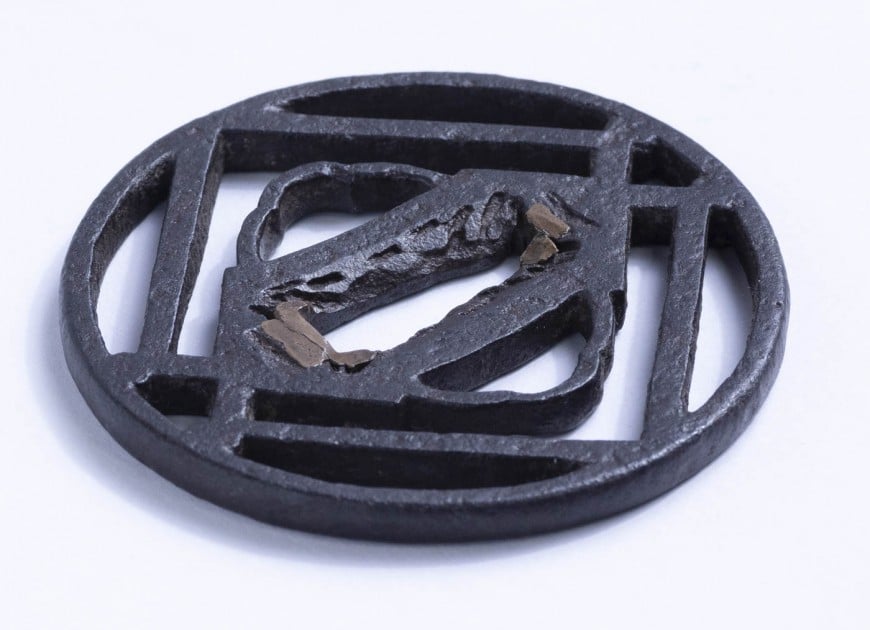
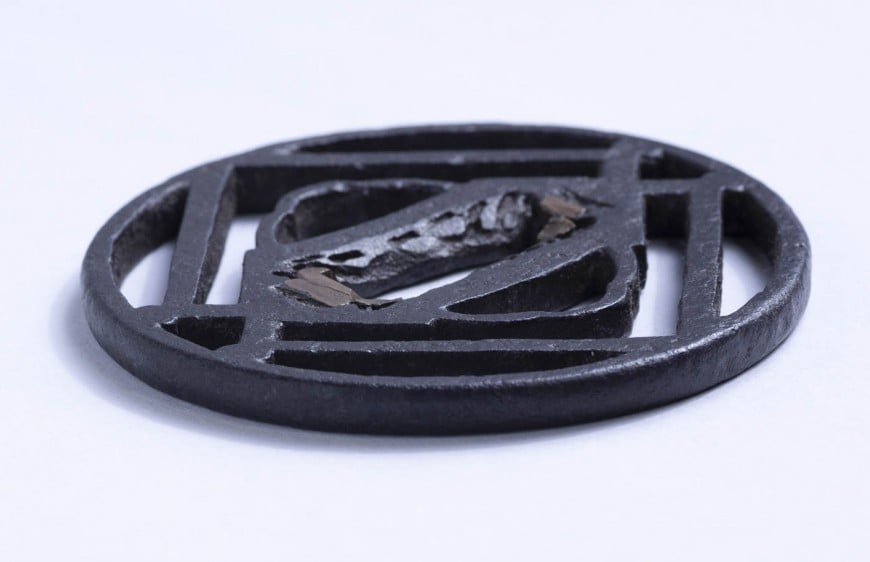
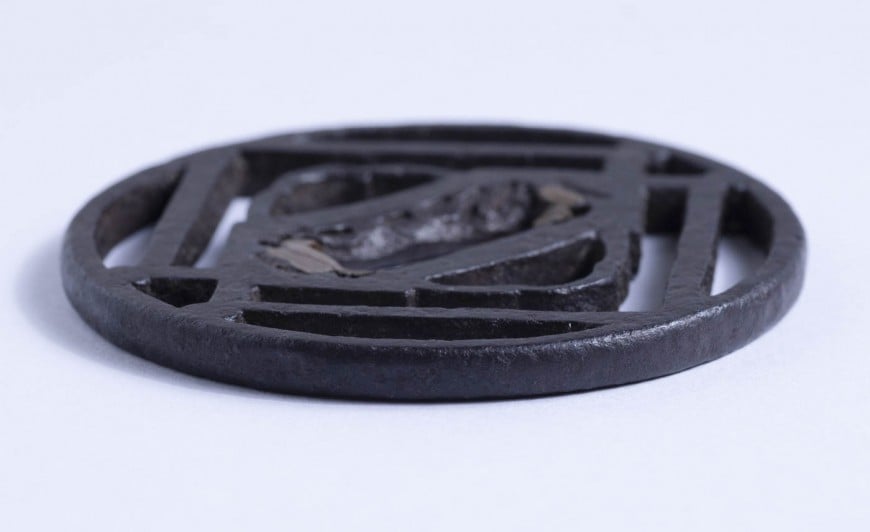
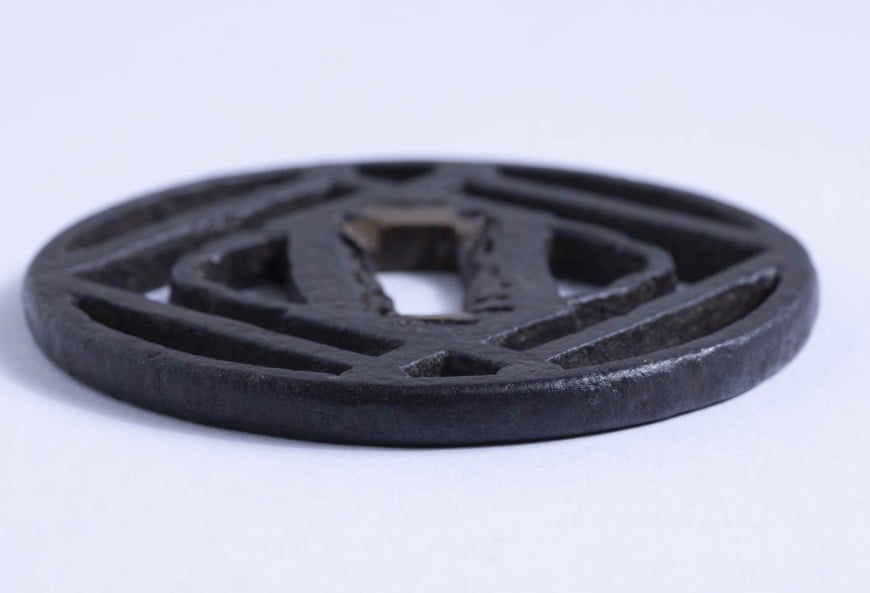
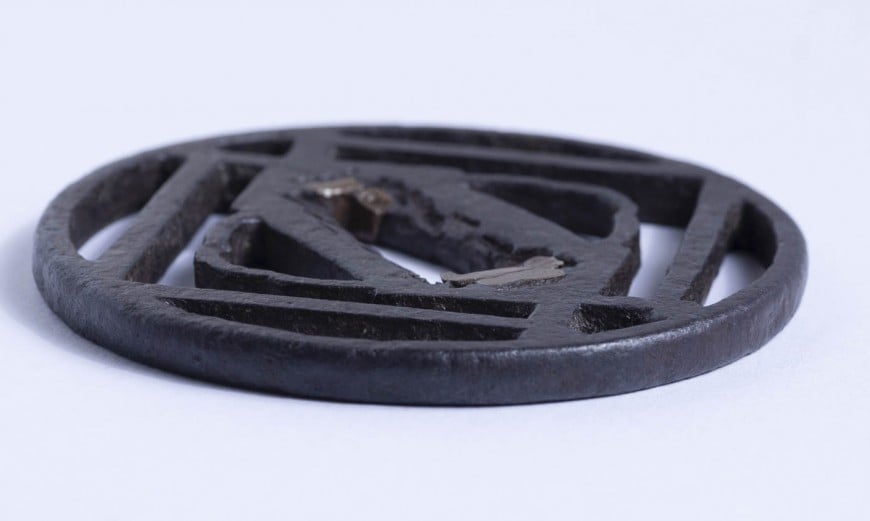
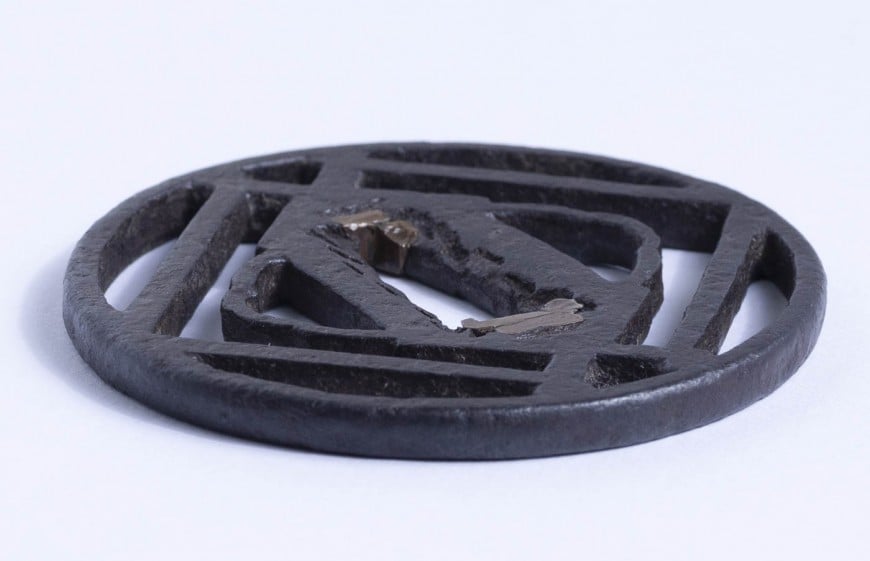
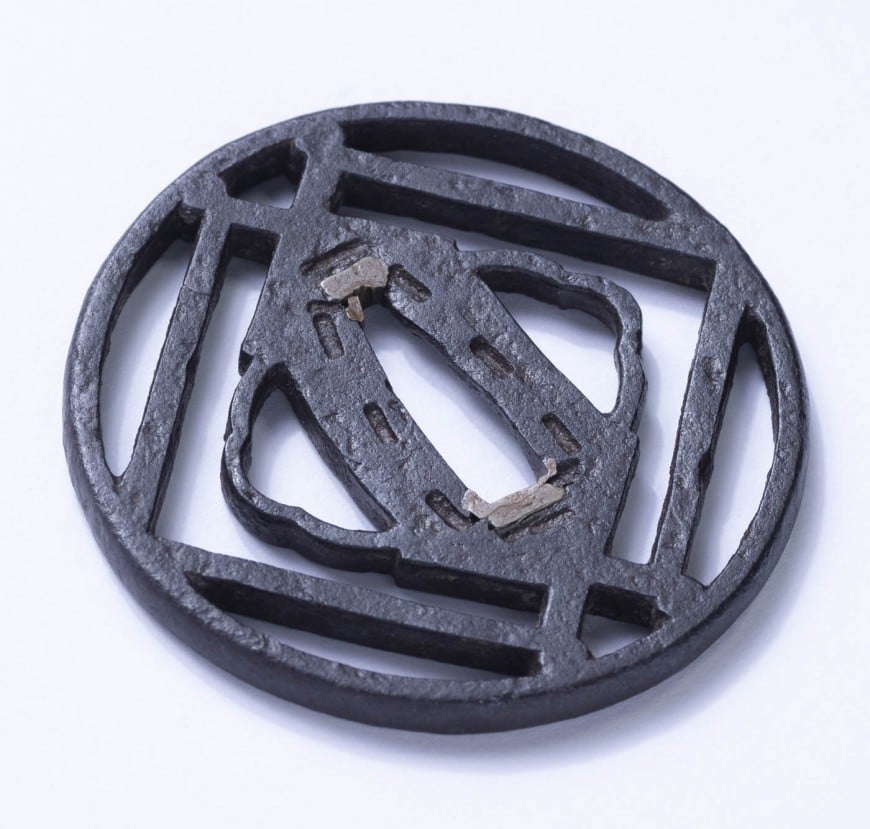
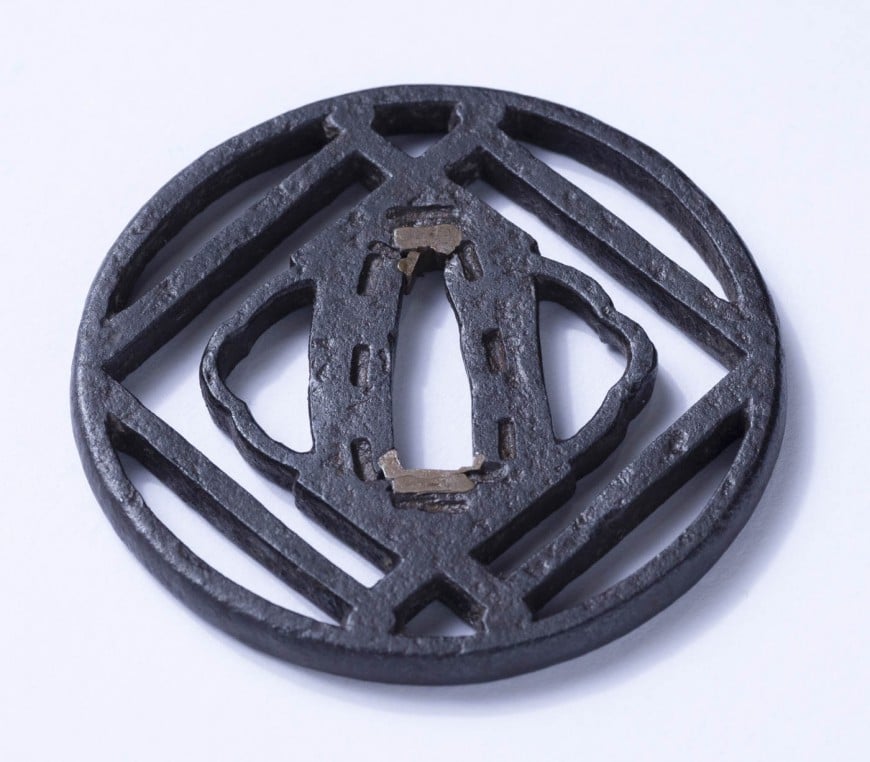
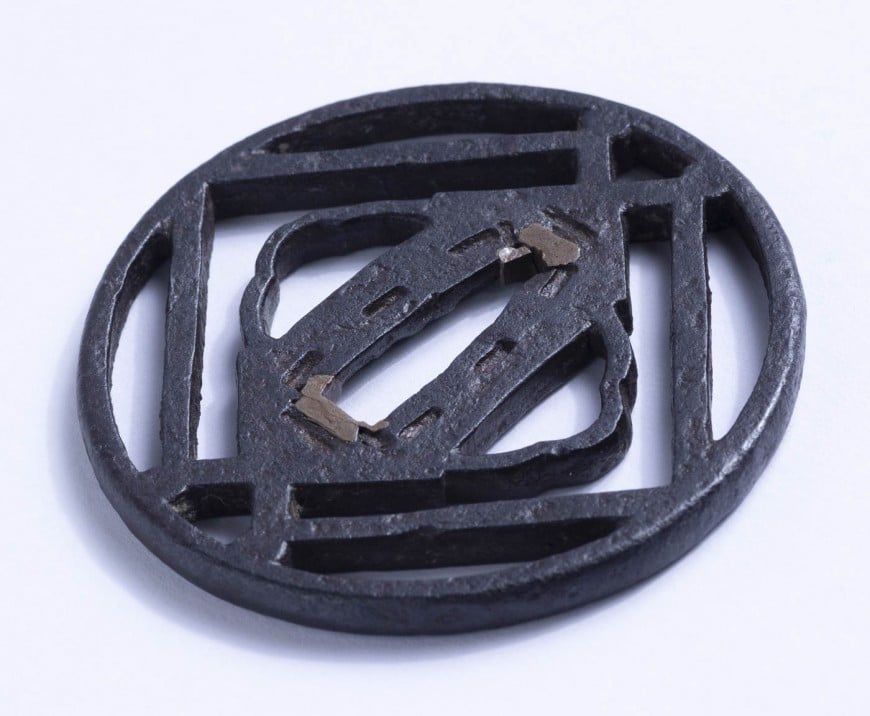
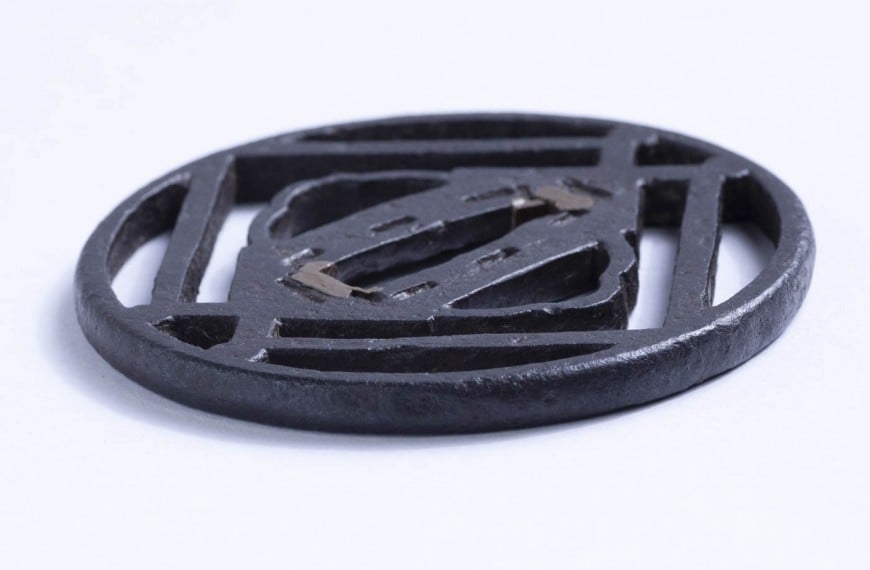
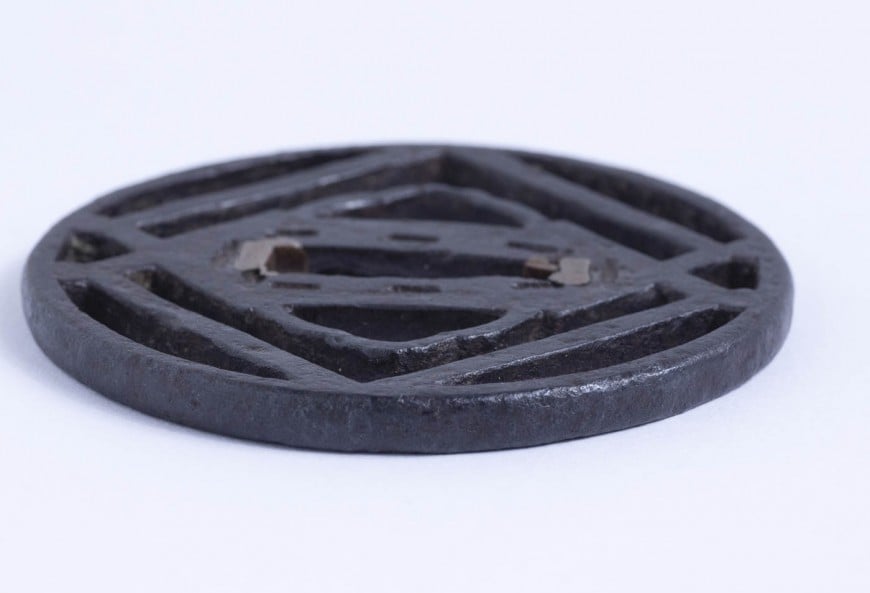
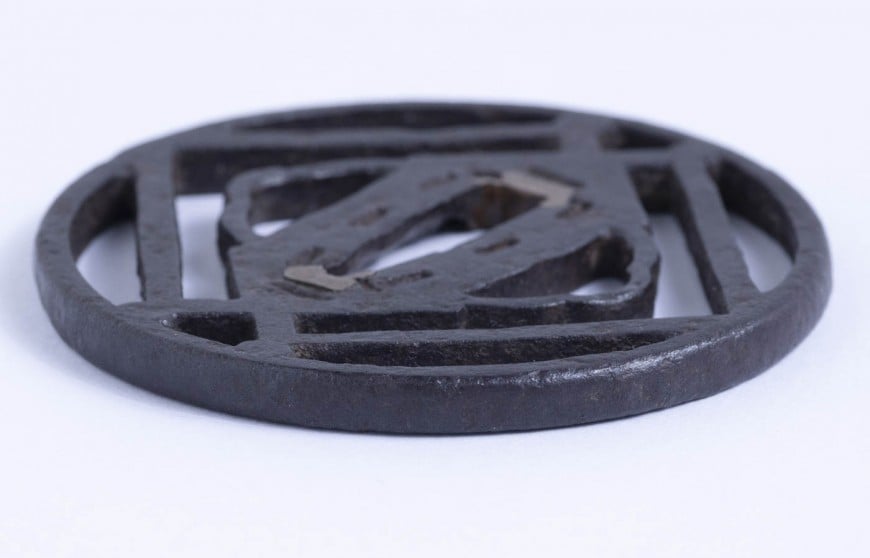
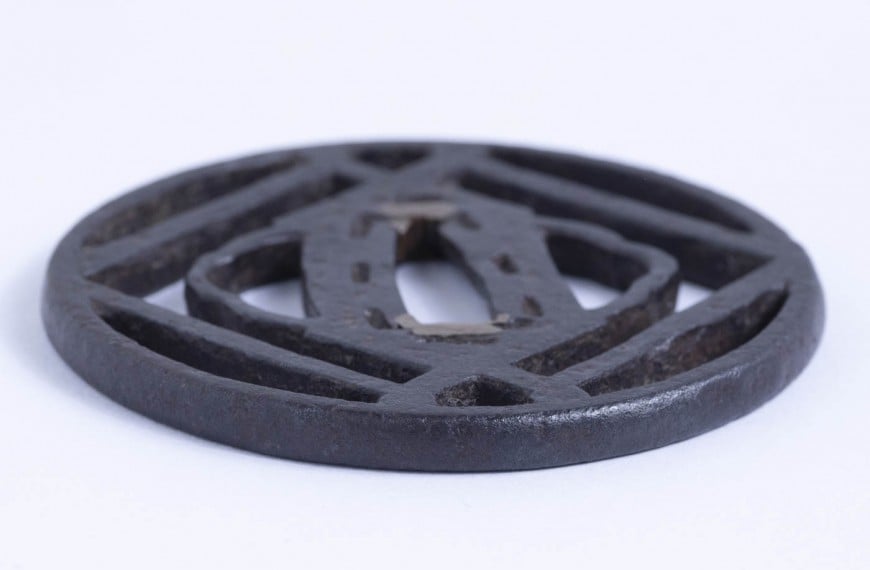
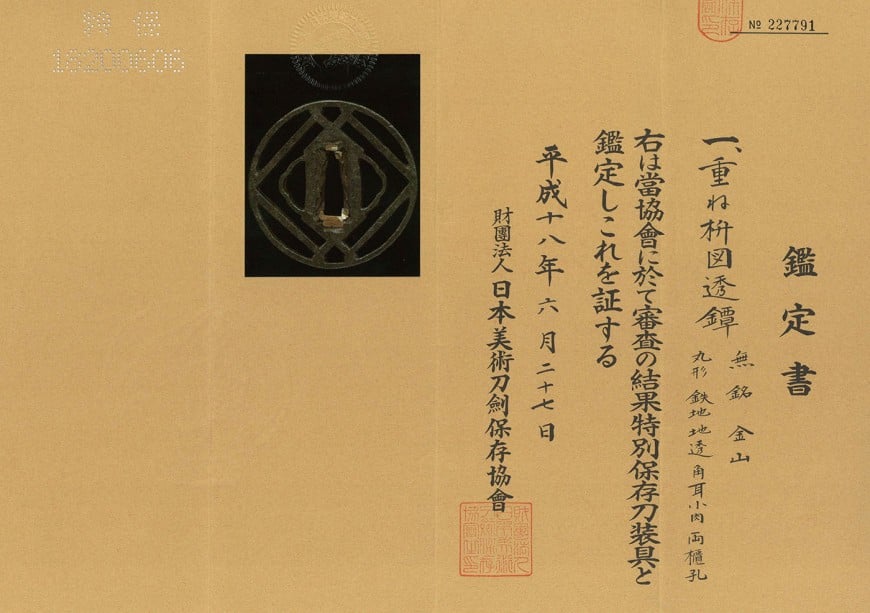
This is an unsigned Kanayama tsuba from the Momoyama period, featuring a 'kasane kine' (stacked pestle) openwork design. It has excellent iron quality and prominent iron bones on the rim, showcasing the charm of Kanayama tsuba. Certified as Tokubetsu Hozon Tosogu by the NBTHK.
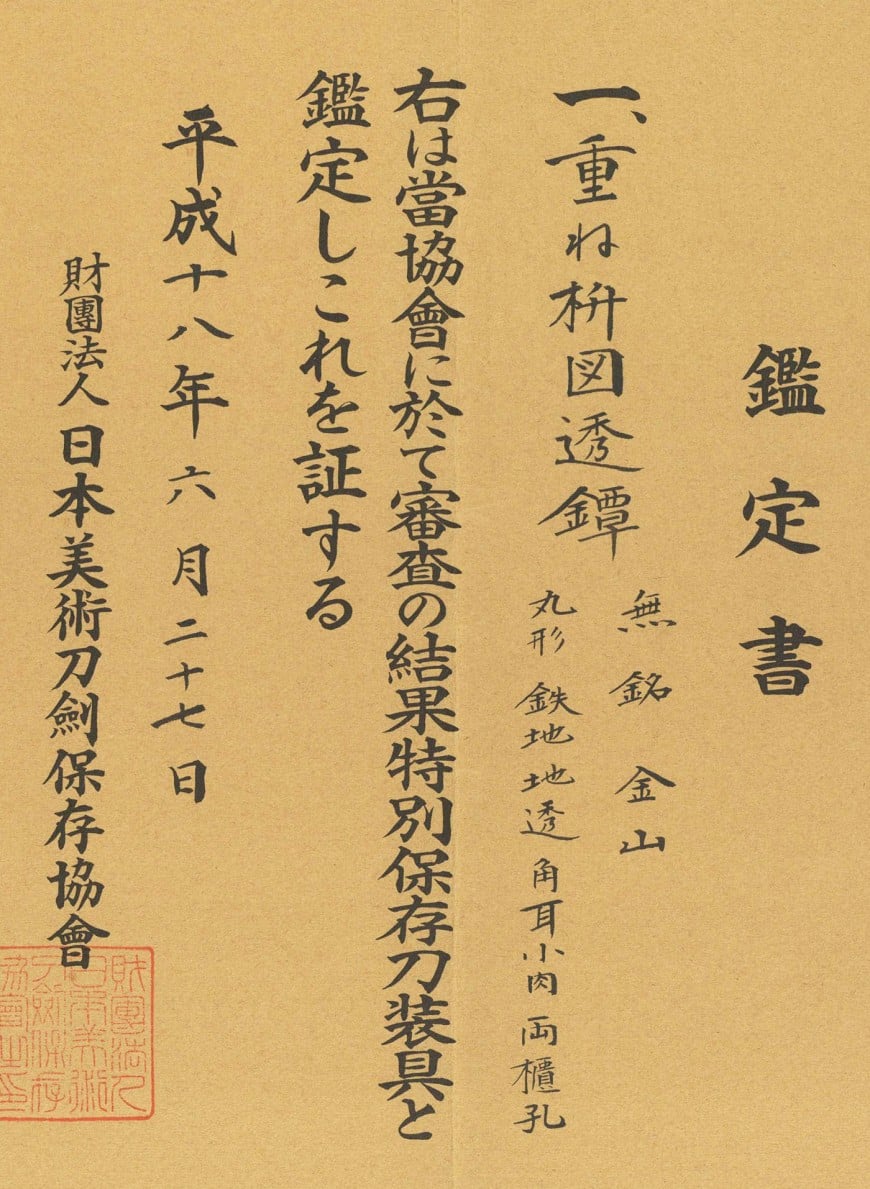
Certificate reading — 無銘(金山)
 NihontoWatchBETA
mumei · Kanayama · Momoyama
Kanayama School
Momoyama
Owari
Unsigned
Tokuho (NBTHK)
Iron-tsuba · Owari
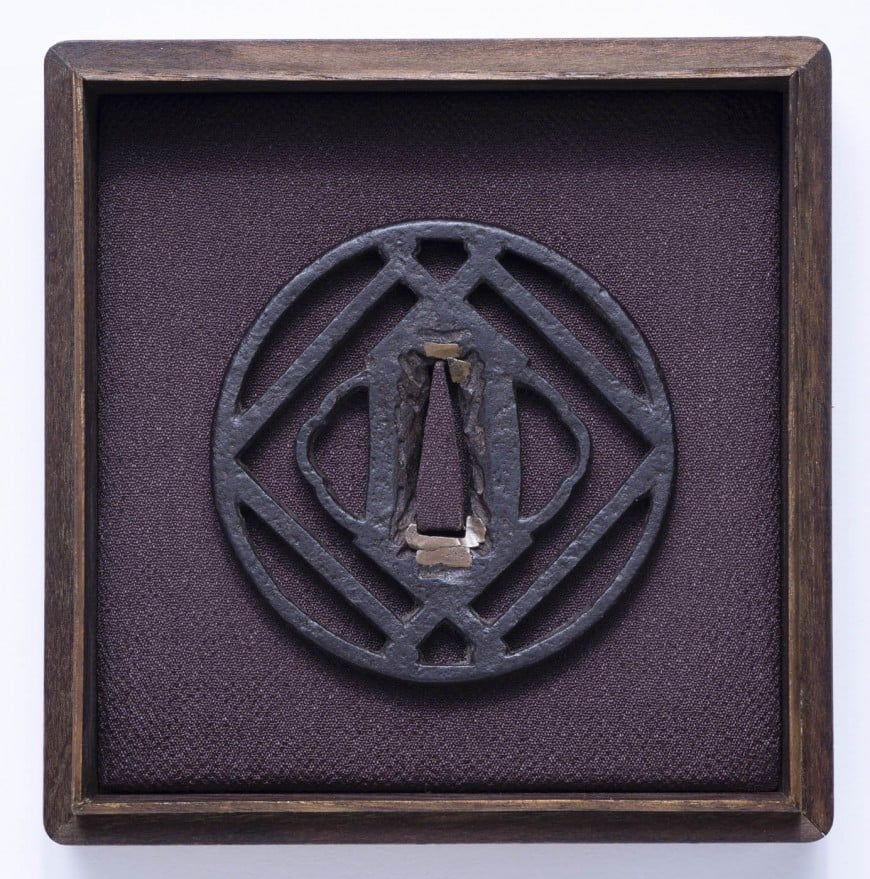
The Kanayama school of iron tsuba emerged in the vicinity of Kanayama, a district near Atsuta Shrine in Owari Province, flourishing from the late Muromachi through the Momoyama period. The locality took its name from the enshrinement of the deity Kanayama-hiko, and local metalworkers developed a distinctive tradition of sword guards characterized by exceptional plate iron and an unadorned aesthetic sensibility. Learn more →
A Hozon-certified fitting of notably superior craftsmanship and condition, often with signature or workmanship of high reference value.
The NBTHK (Nihon Bijutsu Tōken Hozon Kyōkai, the Society for the Preservation of Japanese Art Swords) is a public-interest incorporated foundation founded in 1948 and supervised by Japan’s Agency for Cultural Affairs (Bunkachō); it is based at the Japanese Sword Museum in Tokyo. Its expert panels physically examine each submitted work (shinsa) and issue a certificate (kanteishō) ranking it by artistic and historical merit. NBTHK papers are the most widely recognized standard of authentication for Japanese swords and fittings.
NBTHK official siteReturns accepted within 7 days for internet purchases.
This is an unsigned Kanayama tsuba from the Momoyama period, featuring a 'kasane kine' (stacked pestle) openwork design. It has excellent iron quality and prominent iron bones on the rim, showcasing the charm of Kanayama tsuba. Certified as Tokubetsu Hozon Tosogu by the NBTHK.
Certificate reading — 無銘(金山)
NihontoWatchBETAmumei · Kanayama · Momoyama
Kanayama School
Momoyama
Owari
Unsigned
Tokuho (NBTHK)
Iron-tsuba · Owari
The Kanayama school of iron tsuba emerged in the vicinity of Kanayama, a district near Atsuta Shrine in Owari Province, flourishing from the late Muromachi through the Momoyama period. The locality took its name from the enshrinement of the deity Kanayama-hiko, and local metalworkers developed a distinctive tradition of sword guards characterized by exceptional plate iron and an unadorned aesthetic sensibility. Learn more →
A Hozon-certified fitting of notably superior craftsmanship and condition, often with signature or workmanship of high reference value.
The NBTHK (Nihon Bijutsu Tōken Hozon Kyōkai, the Society for the Preservation of Japanese Art Swords) is a public-interest incorporated foundation founded in 1948 and supervised by Japan’s Agency for Cultural Affairs (Bunkachō); it is based at the Japanese Sword Museum in Tokyo. Its expert panels physically examine each submitted work (shinsa) and issue a certificate (kanteishō) ranking it by artistic and historical merit. NBTHK papers are the most widely recognized standard of authentication for Japanese swords and fittings.
NBTHK official siteReturns accepted within 7 days for internet purchases.