 NihontoWatchNihontoWatch
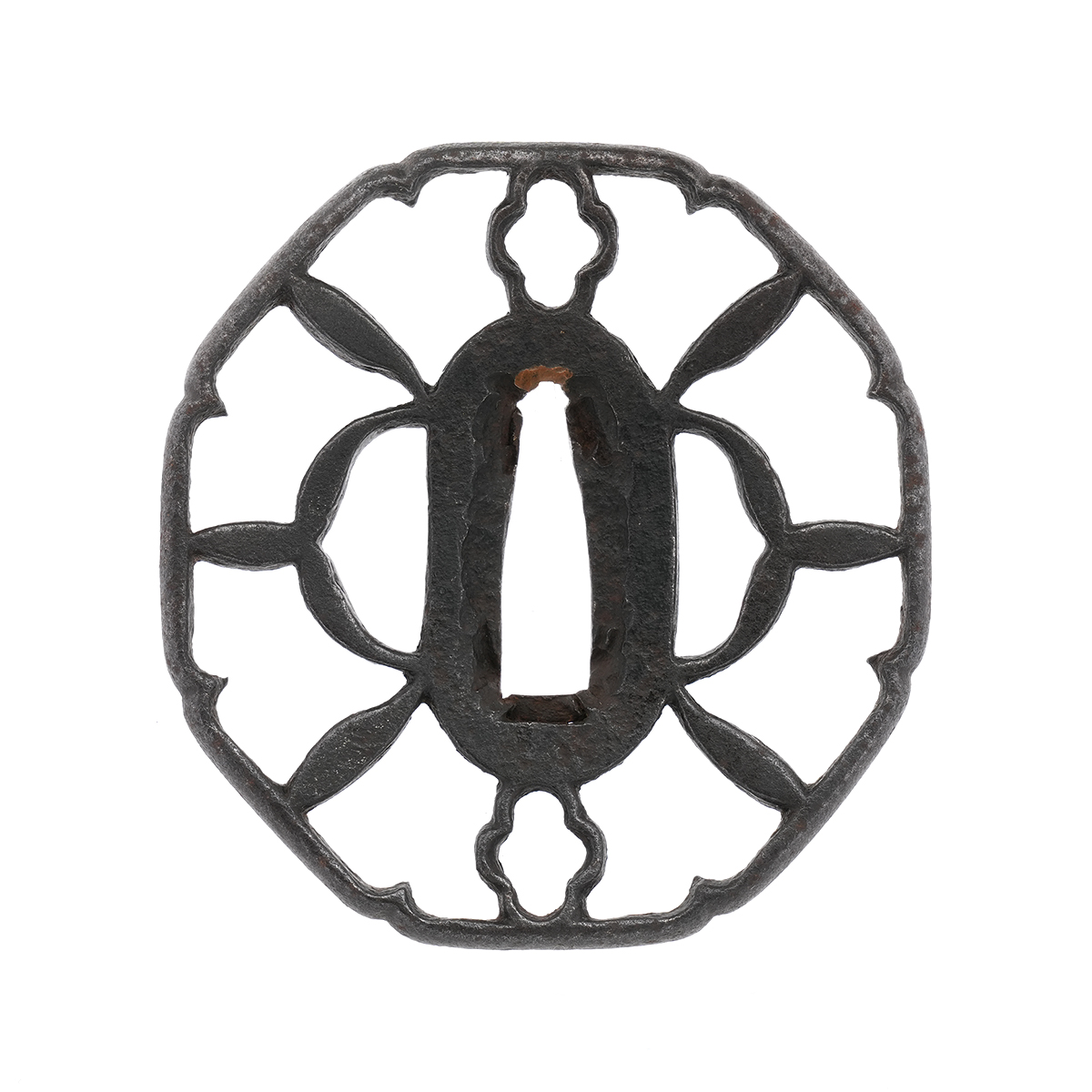
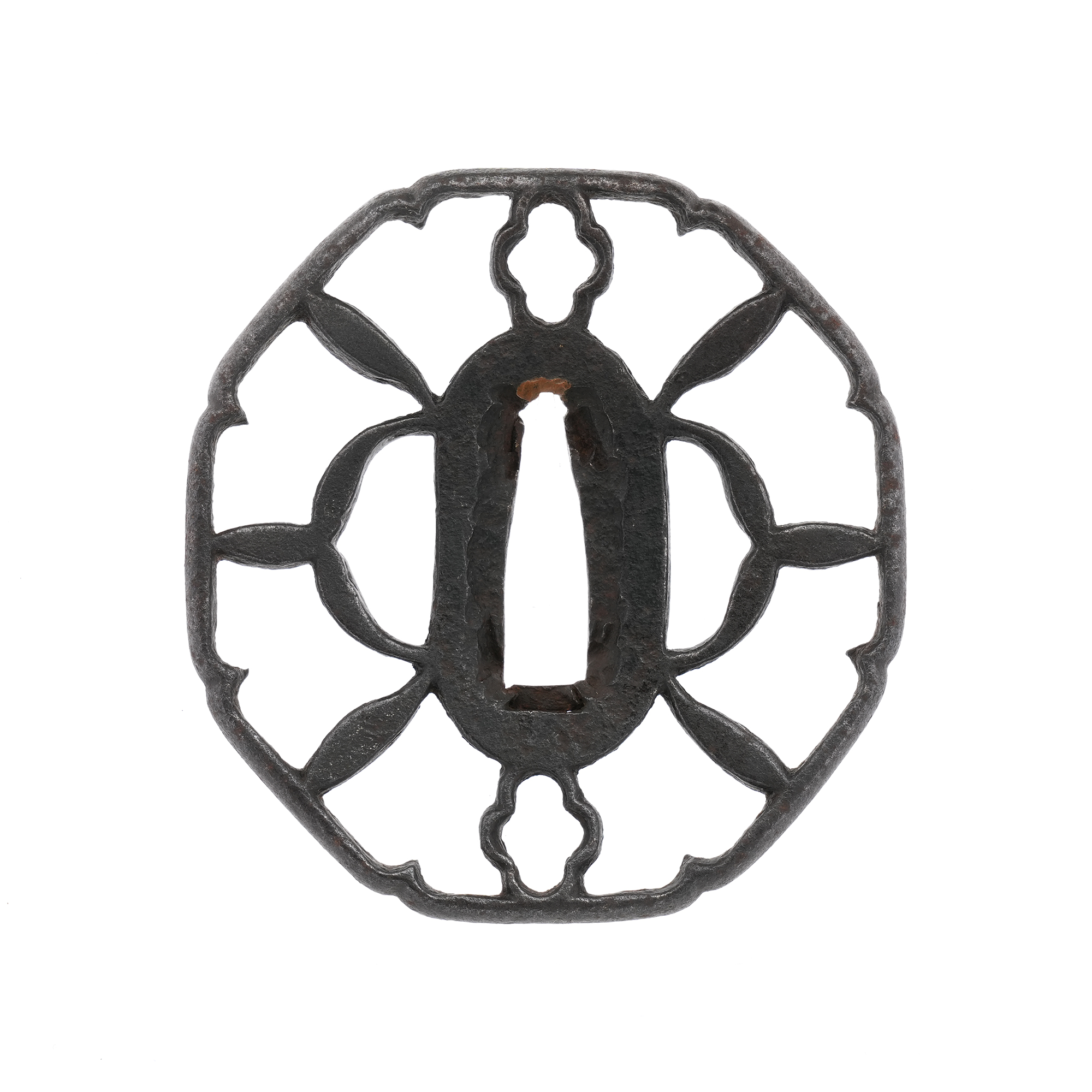
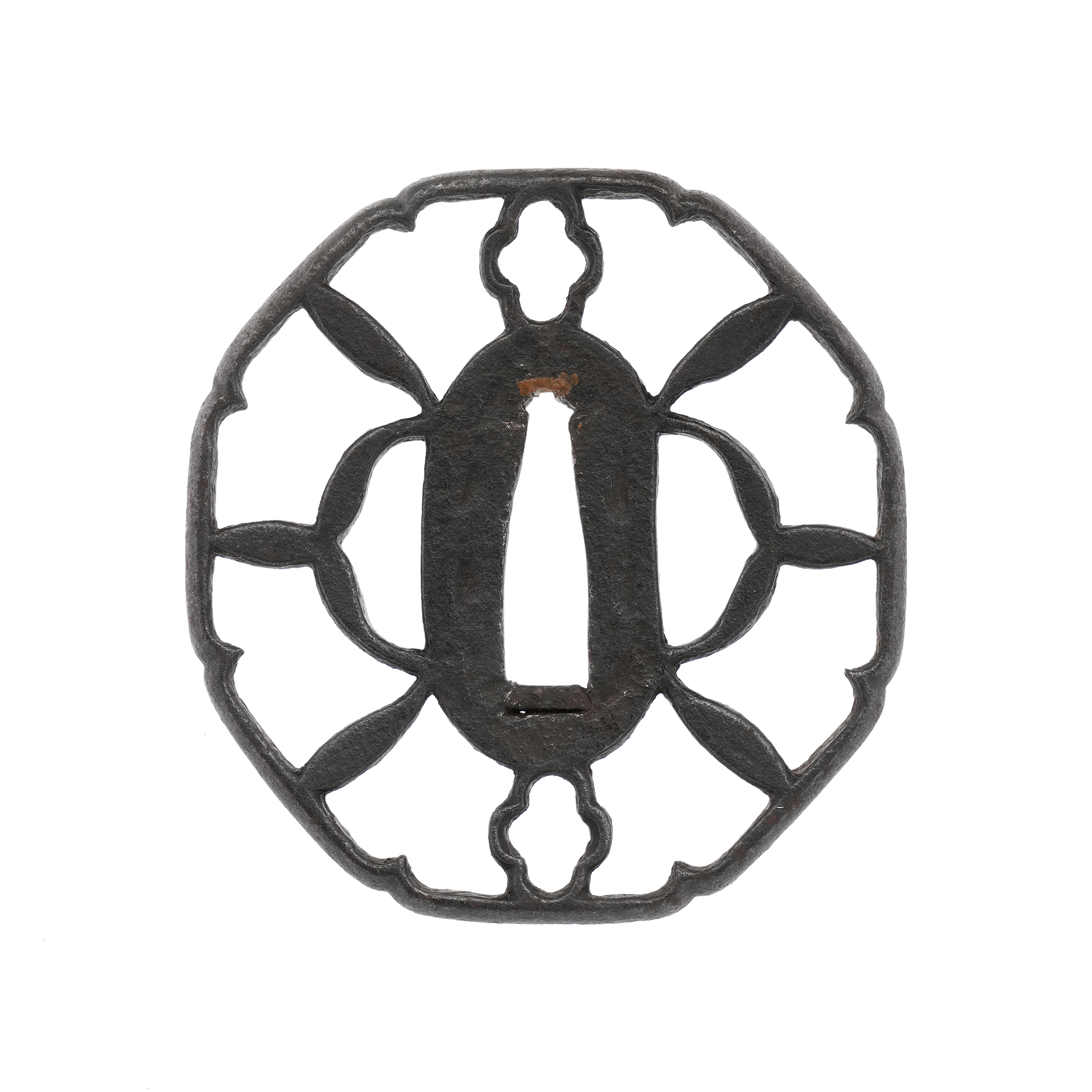
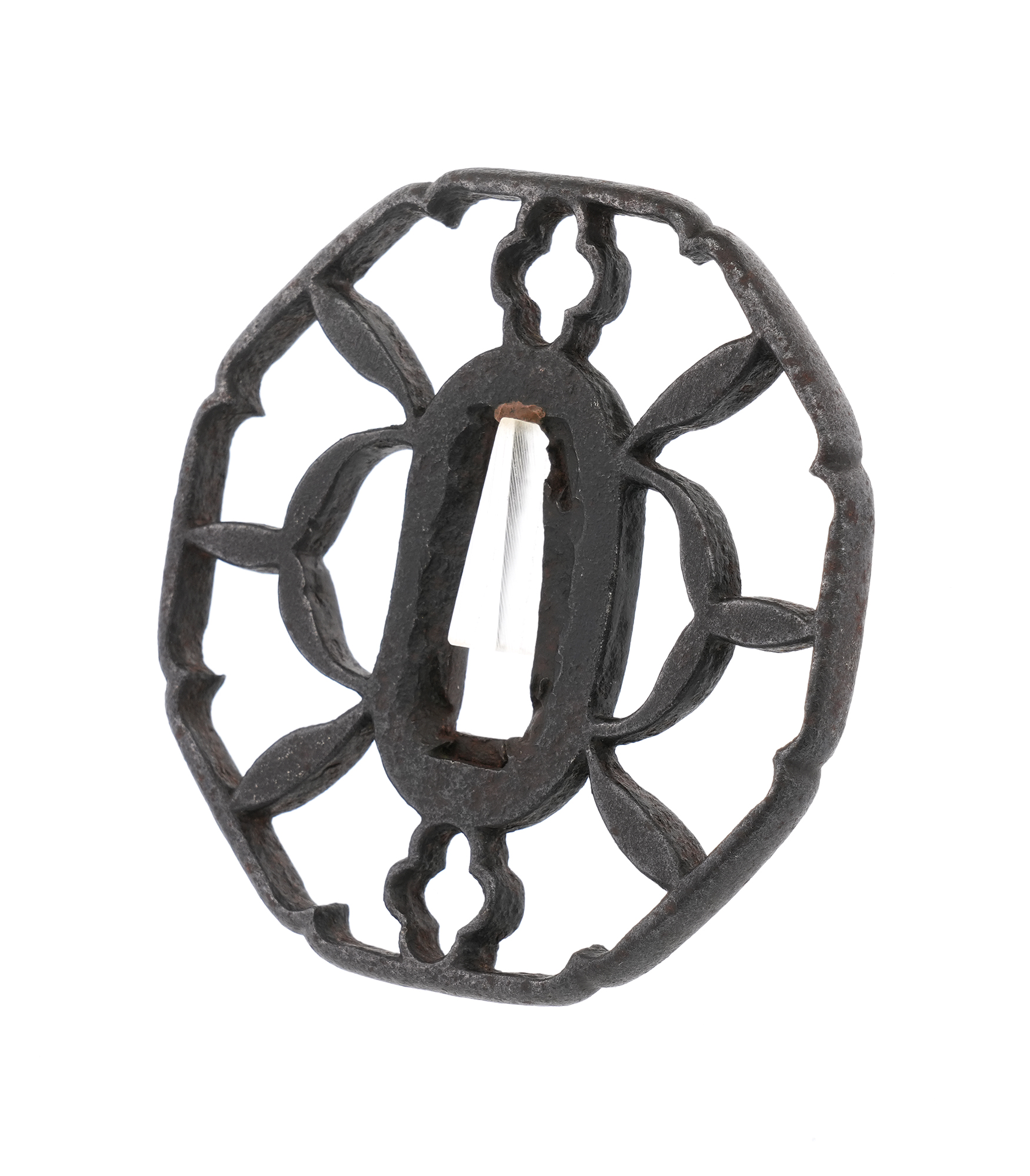
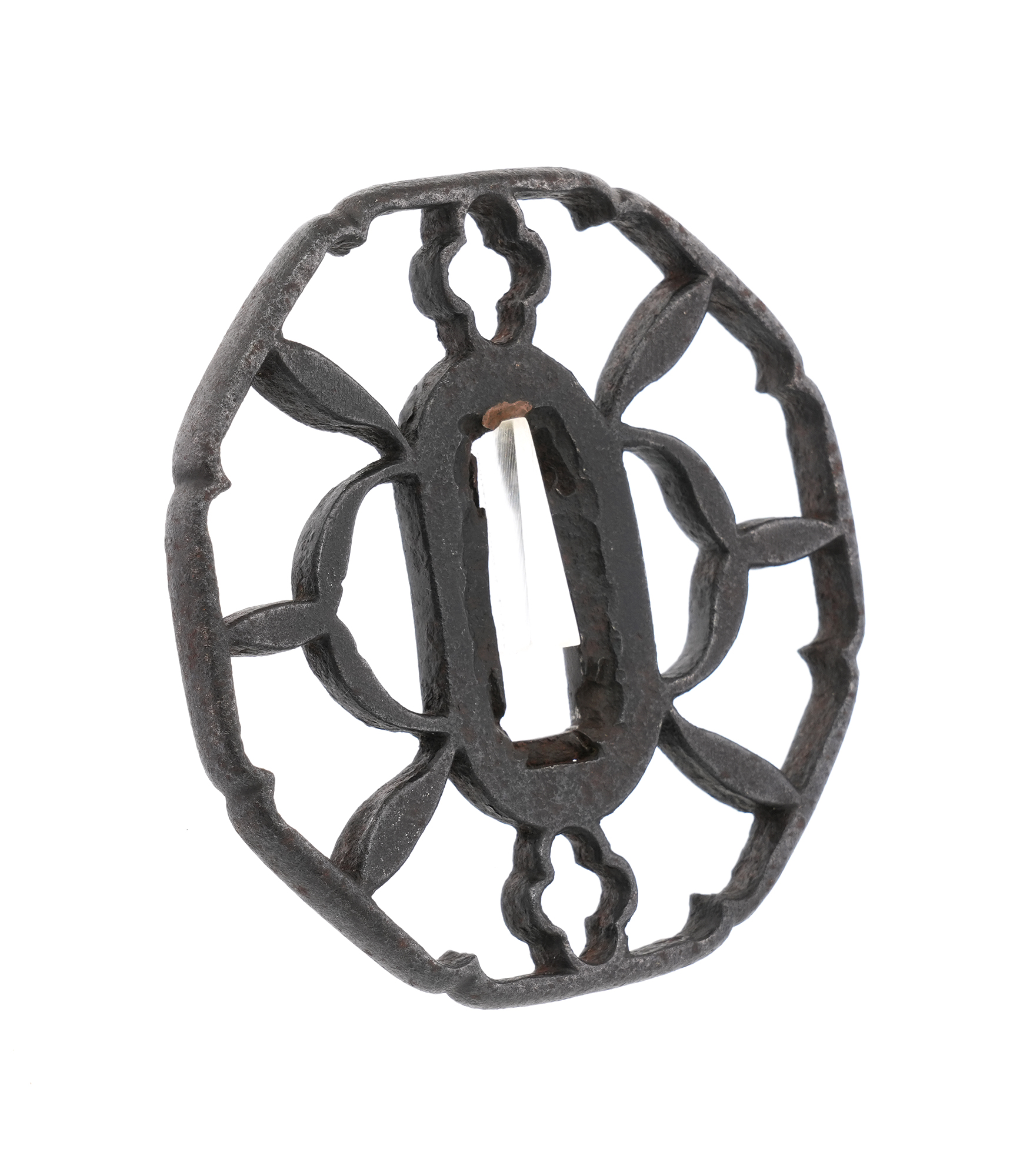
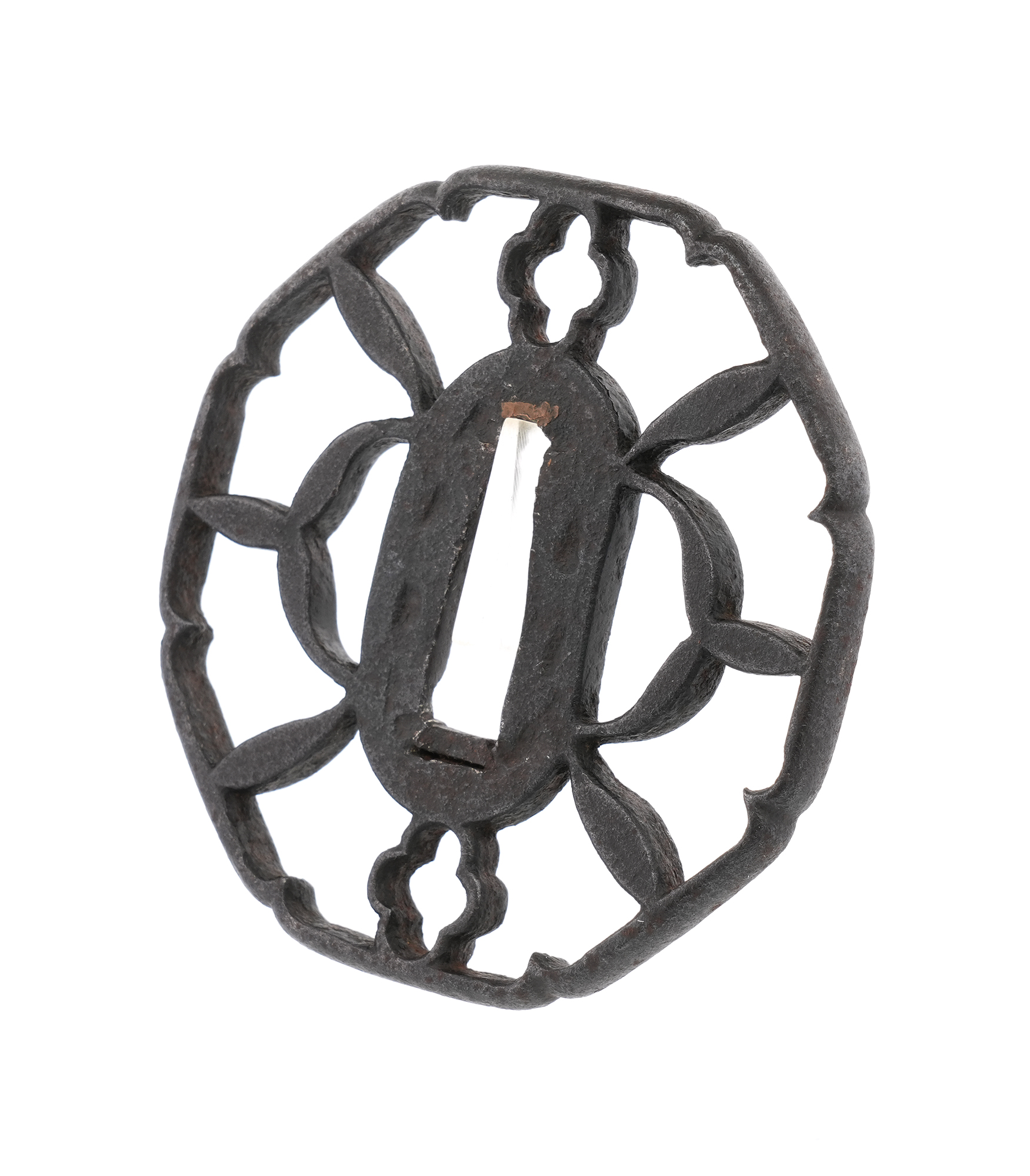
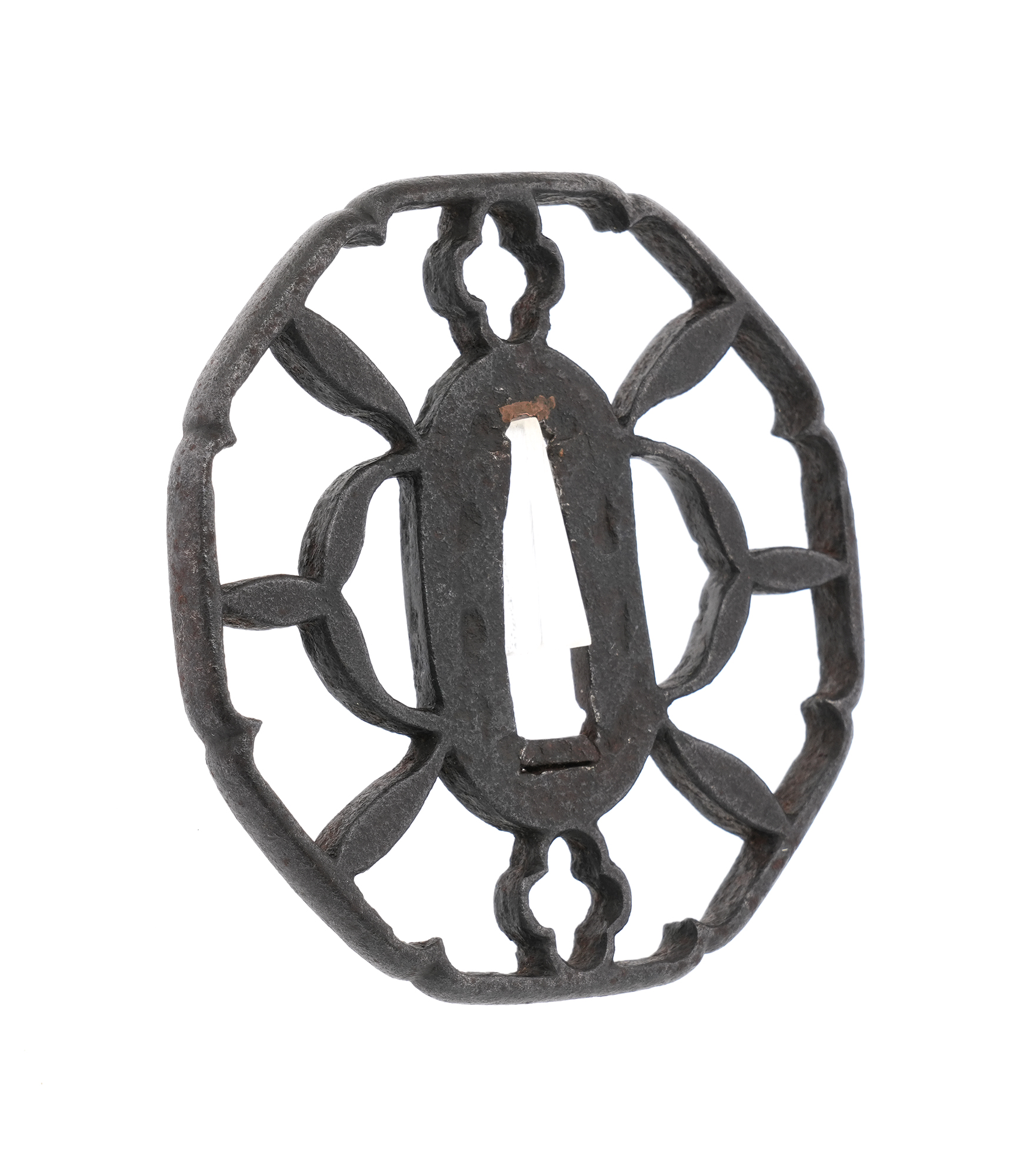
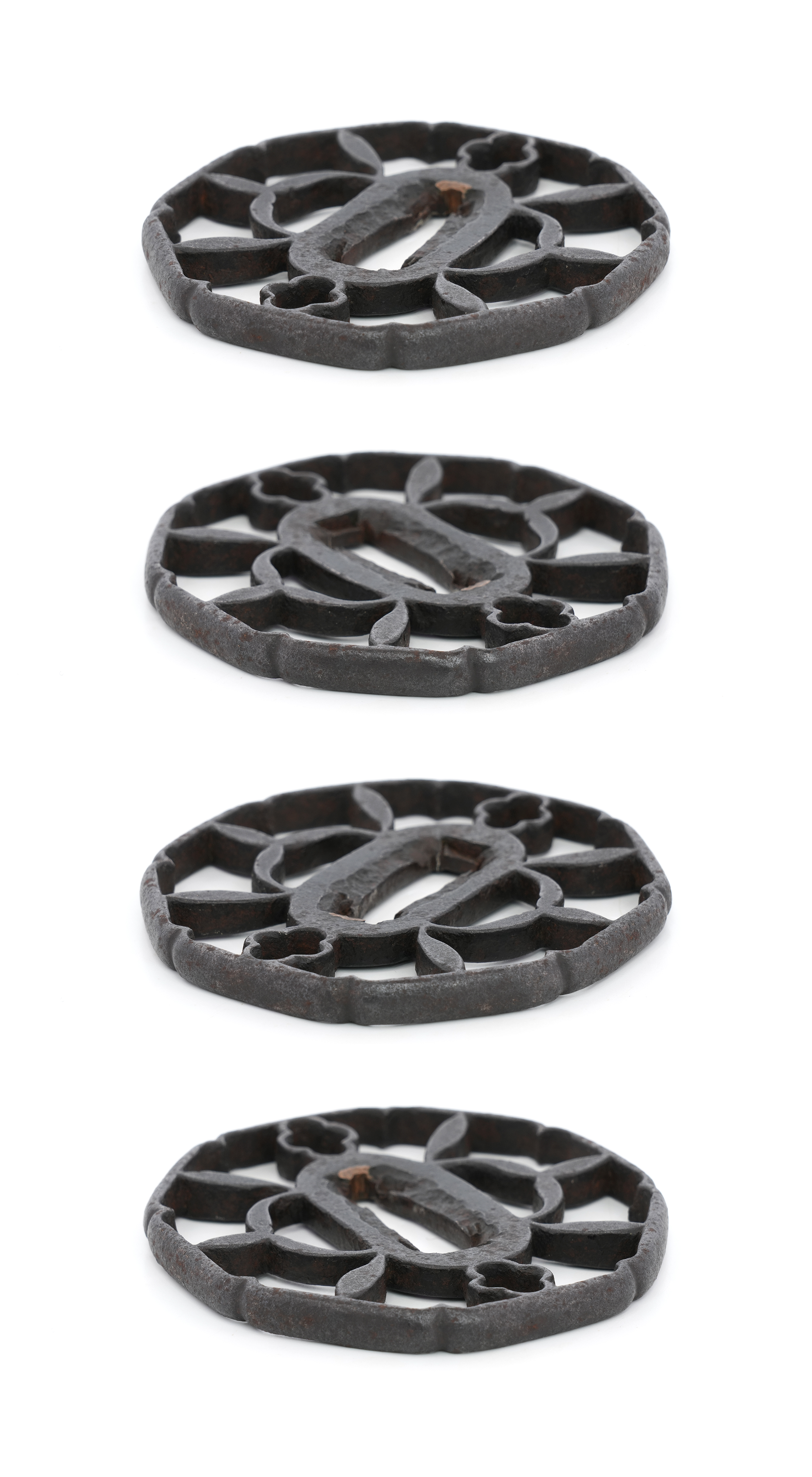
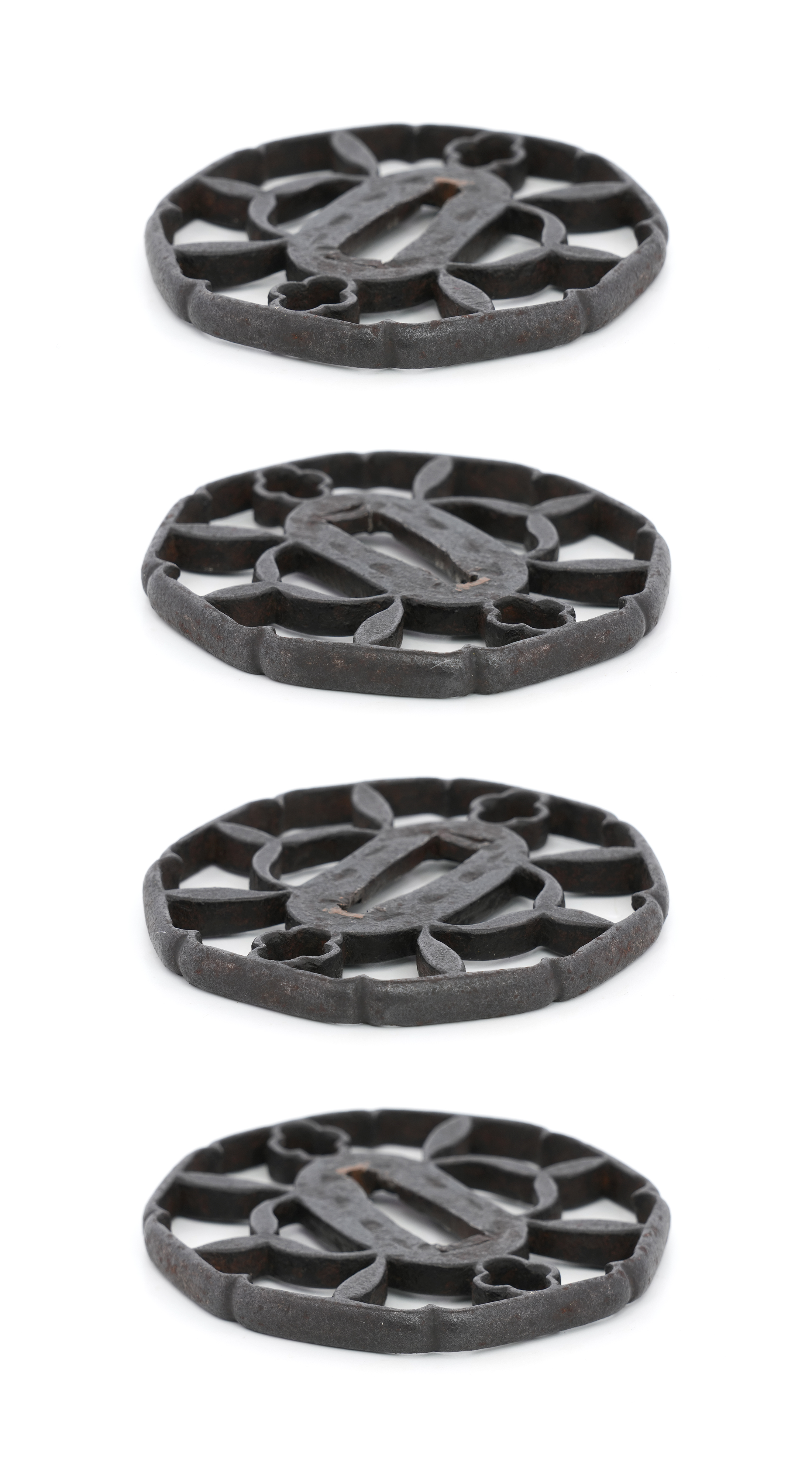
Length 72.8 mm, Width 69.4 mm, Seppa-dai thickness 4.6 mm, Mimi thickness 6.2 to 6.4 mm Owari sukashi tsuba is a school characterized by boldly carving well-forged iron while maintaining a powerful connection between the mimi and the design, featuring clear compositions based on bilateral symmetry and a nakago-hiku niku-oki where the ji becomes lower toward the seppa-dai; this piece, with its thick, standing mimi, tightened seppa-dai, and sukashi connecting konoha on the left and right, is a work I wish to appreciate as an Owari production despite being mumei. The design, formed solely from blackish-brown tetsu-ji, allows the movement of the leaves and the wide margins to stand out without added decoration, conveying the dignified style unique to old iron tsuba. The mimi is an yatsu-mokko shape based on an octagon with each side softly bulging outward, and three slender konoha extending from the central seppa-dai to the left and right are arranged to give a movement as if the leaf tips are opening outward. The iron lines connecting the left and right leaves utilize varying thickness and thinness and continue without interruption until reaching the mimi, giving a certain cohesion even to the large ji-sukashi; every time the tsuba is held and its orientation changed, different expressions emerge from the overlapping of the outline and the leaves. Small yotsu-mokko sukashi are placed above and below the seppa-dai, catching the movement of the konoha spreading to the left and right from a vertical direction while also quietly echoing the yatsu-mokko outer contour; while maintaining the balance of top, bottom, left, and right, the orientation of each leaf and the opening of the leaf tips add variety to the scenery. The way the white margins spread widely between the broadly set seppa-dai, the thinly passed konoha, and the surrounding mimi makes the outline clearer the more it is viewed through light, and when paired with an outfit, it changes the scenery by reflecting the color of the saya. Compared to the seppa-dai thickness of 4.6 mm, the mimi has a solid thickness of 6.2 to 6.4 mm, and from the side, the nakago-hiku construction where the center is lower than the mimi is distinct; the contrast between the volume of the mimi supporting the sukashi and the tightened appearance of the seppa-dai well expresses the power characteristic of Owari sukashi tsuba. A gentle roundness acquired over time can be seen at the edges of the sukashi connecting the front and back, which, along with the calm tetsu-hada, becomes a highlight to be savored by tilting it in one's hand; for sword lovers who favor old sukashi tsuba from the late Muromachi to early Edo periods, this is a piece I would like them to carefully appreciate for its modeling that refined the shapes of konoha and mokko, and the beauty of the iron and the margins.
Offered by Toushin

We couldn’t find current papers for this piece. Ask the dealer whether it has been, or can be, submitted to shinsa. — Hoshi

As written by the shop
Machine translation from the shop's Japanese · may contain errors ·
We could not find an authenticity certificate on the seller’s listing. Japanese swords and fittings are normally papered by the NBTHK (or the NTHK). Without one, the attribution is the seller’s own assessment and has not been independently verified — treat it with caution and ask the dealer about certification before buying.
As a rule we do not accept returns, except when we have sent a different item from the one ordered or when there is a significant discrepancy between the description and the item. If you wish to return an item, please contact us within 3 days of its arrival and then send it back.
¥143,000