 NihontoWatchNihontoWatch
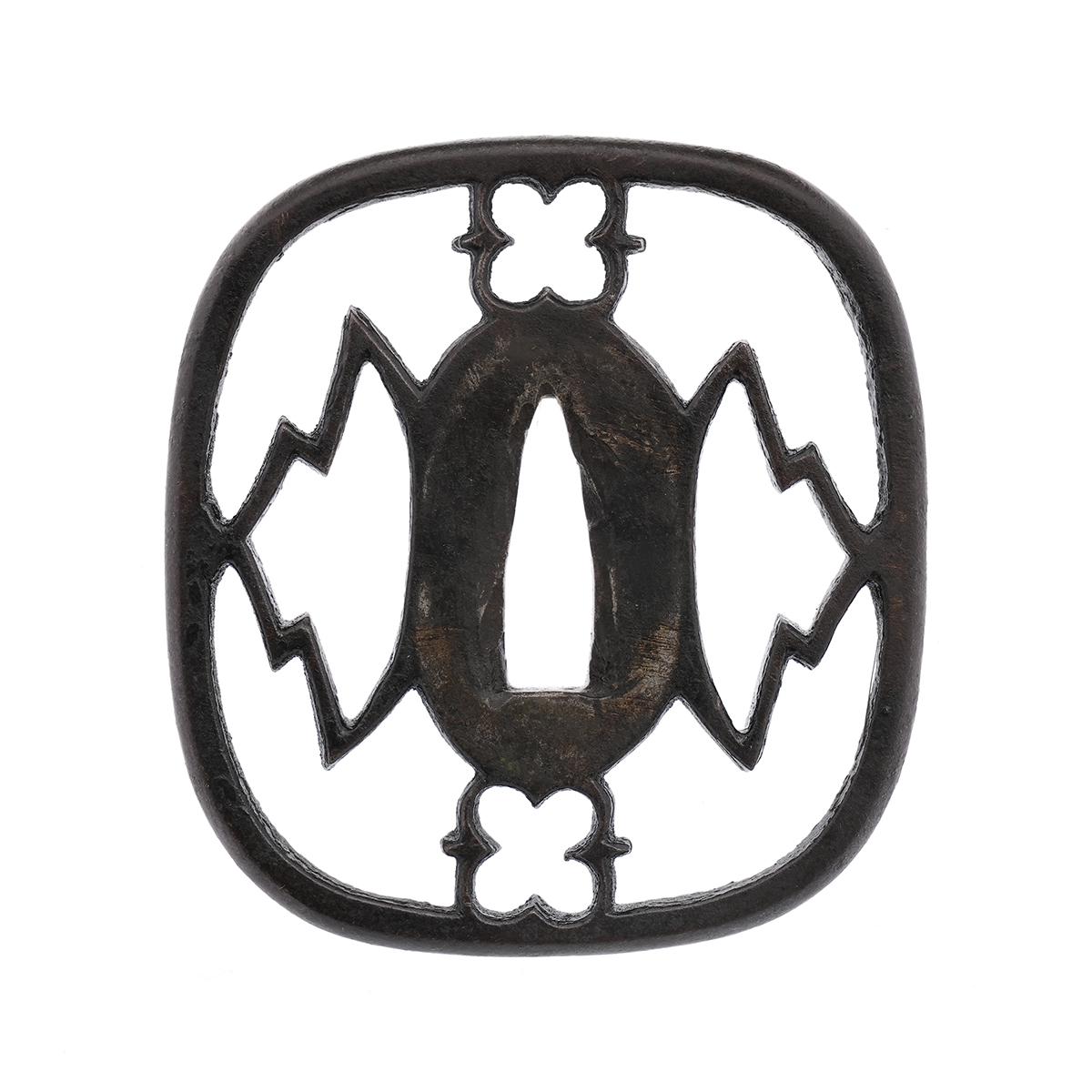
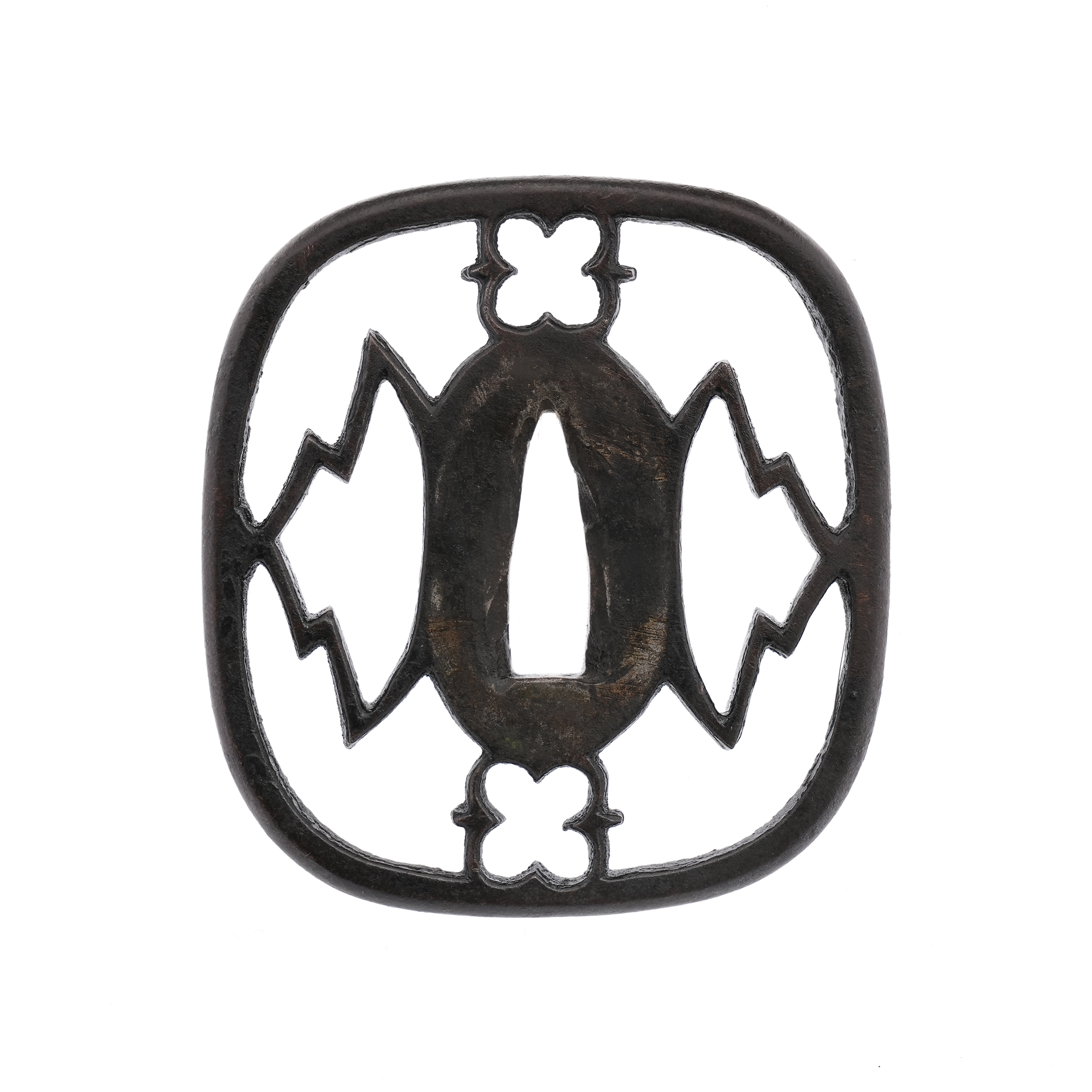
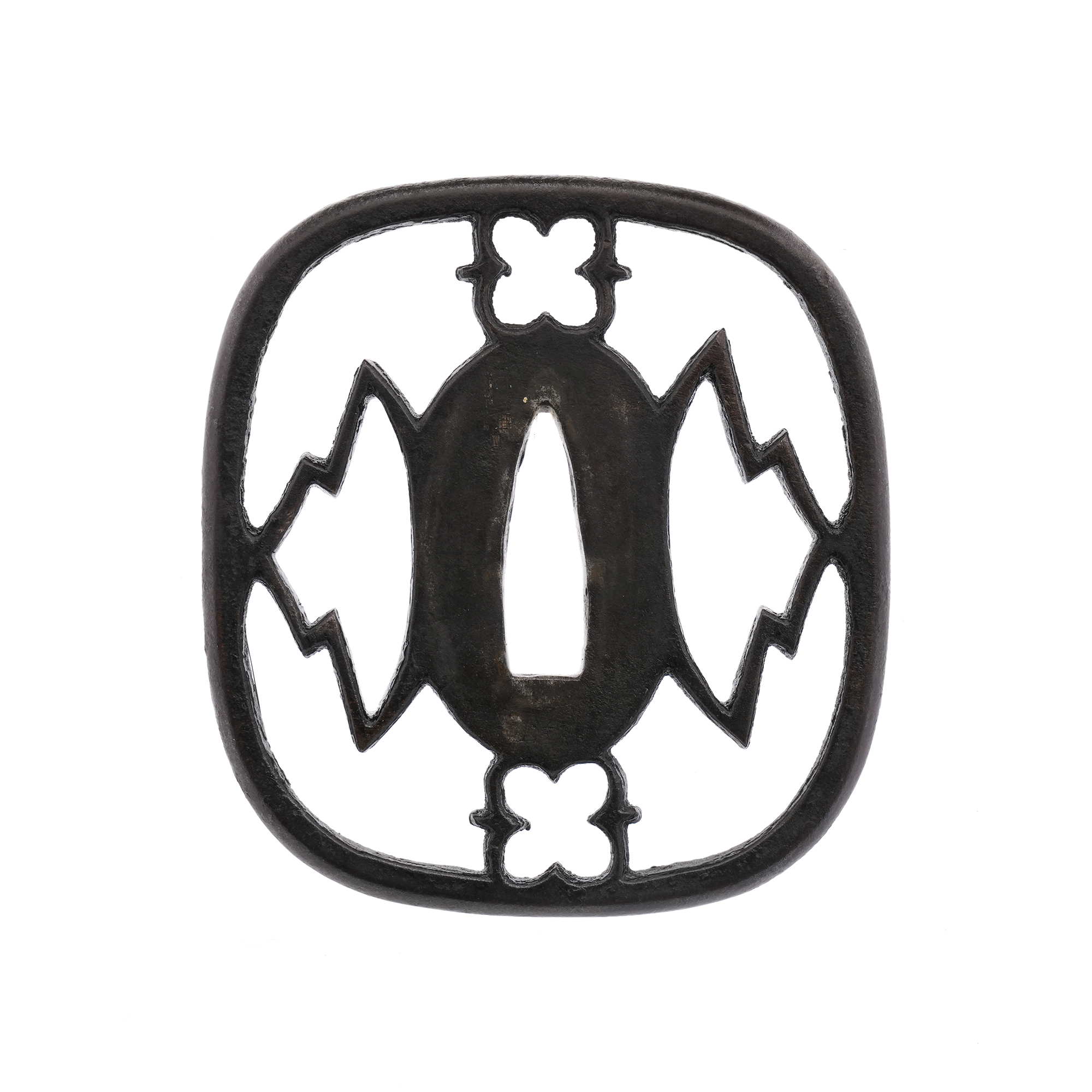
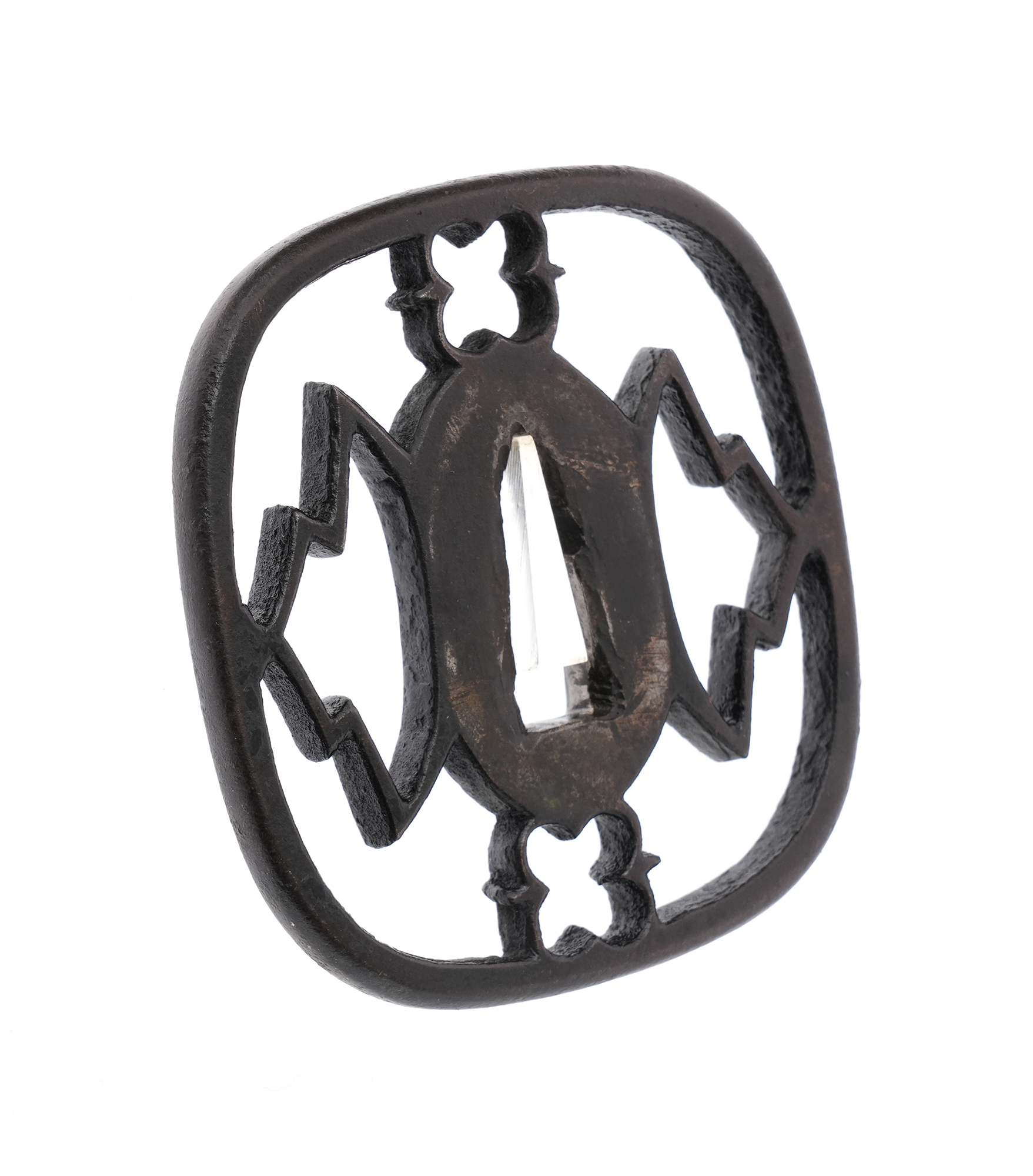
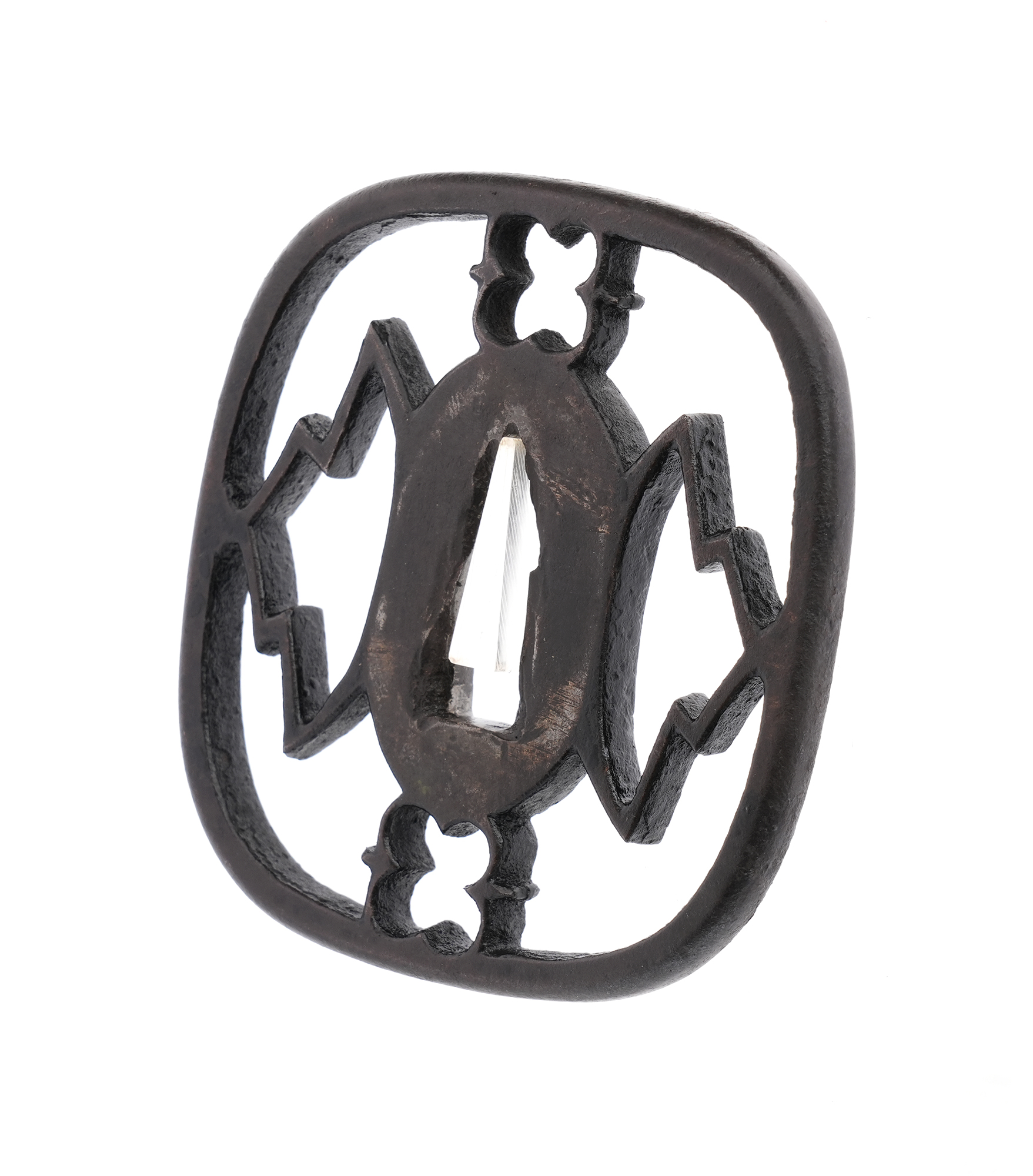
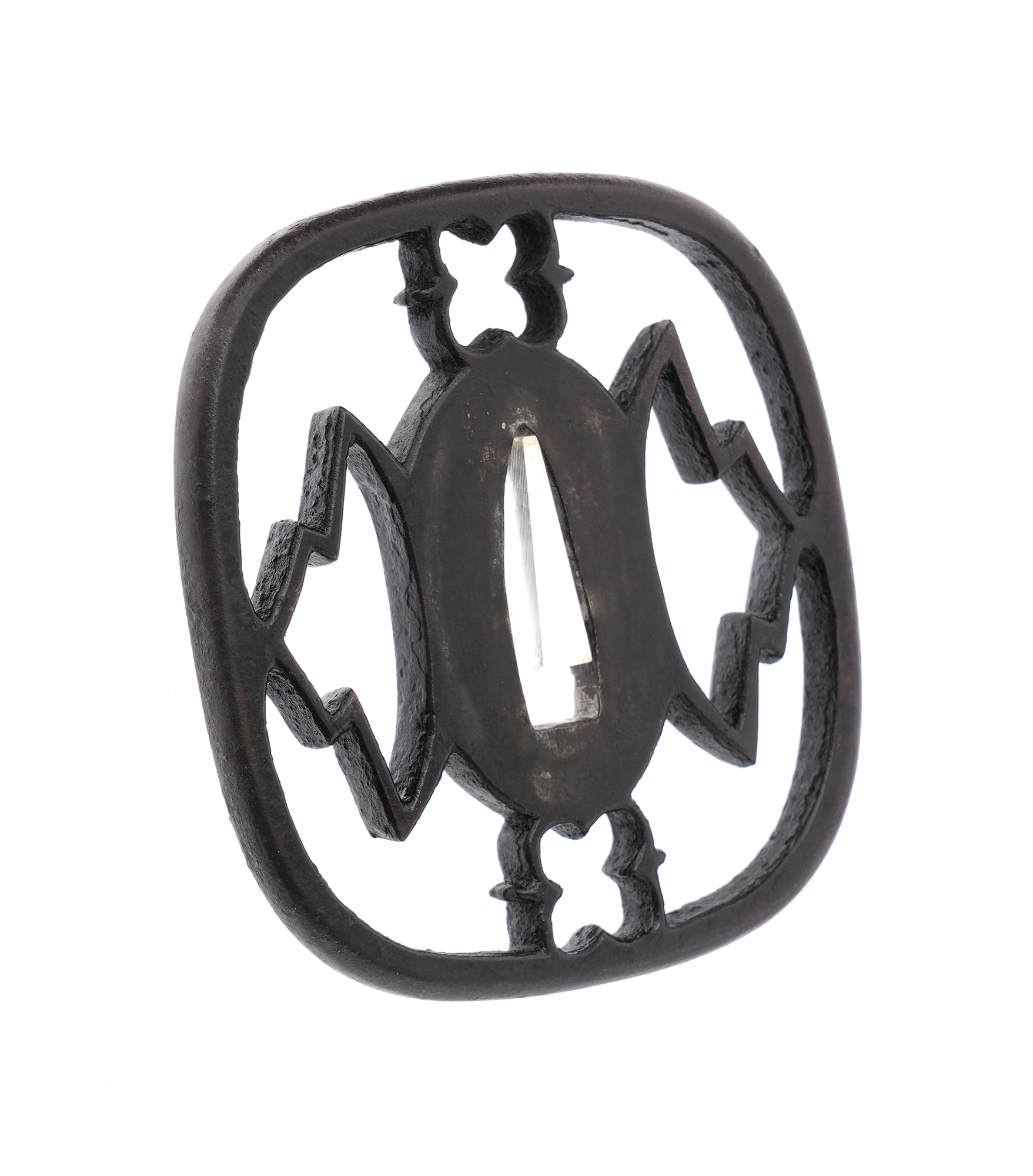
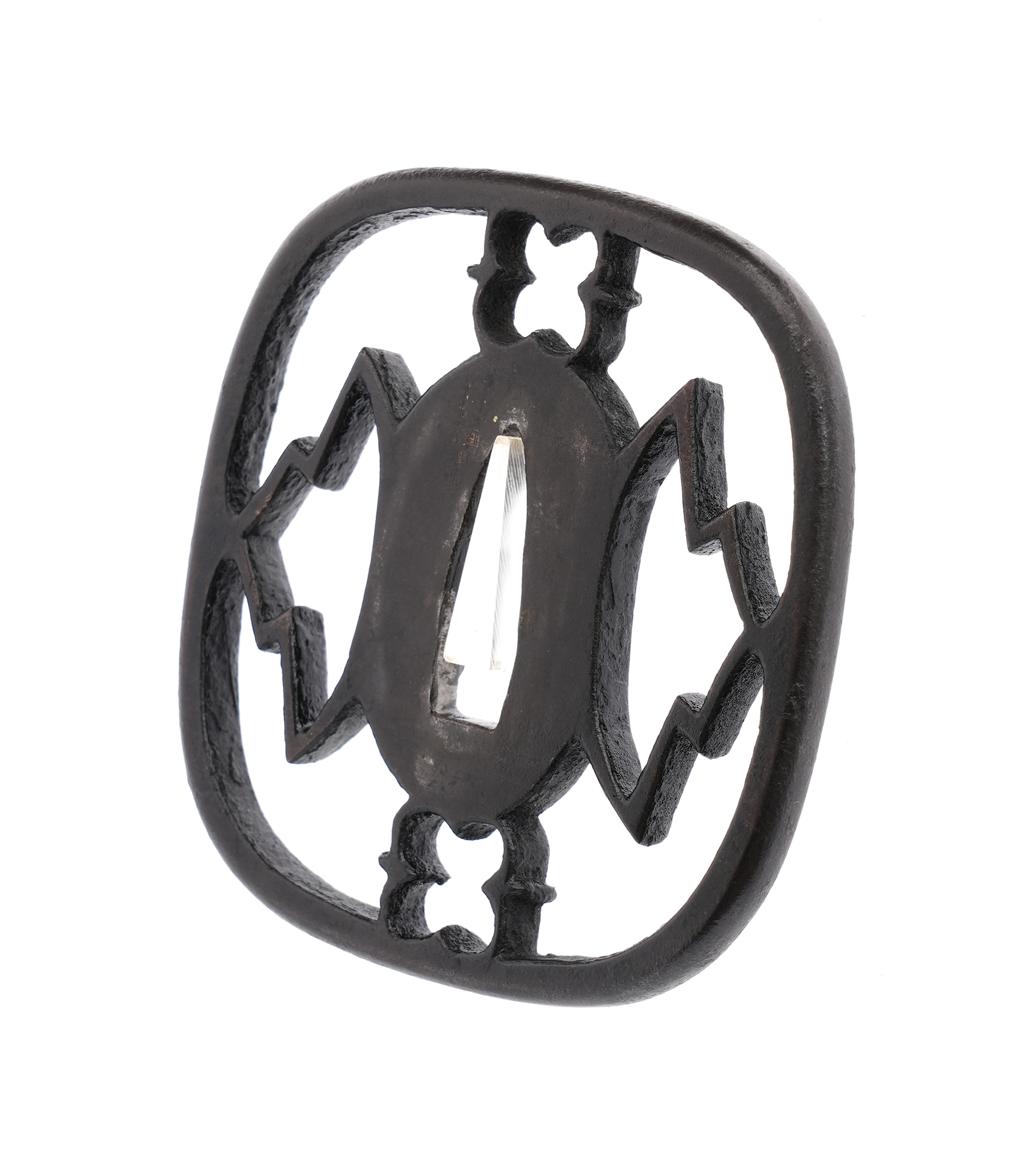
This piece is a tsuba featuring the Nikaibishi and Karigane motifs, known as classic designs of Owari sukashi tsuba, boldly pierced into a thick tetsu-ji. Owari sukashi tsuba is a representative lineage of ji-sukashi tsuba that developed from the late Muromachi period through the Momoyama period; rather than layering minute decorations, it expresses the aesthetic preferences of the samurai class through the color of the well-forged iron itself, stout patterns, and the balance of the pierced spaces. While there are famous examples of the same Nikaibishi Karigane design attributed to Owari works of the late Muromachi period, this piece, with its thick maru-mimi, a substantial construction reaching 6.7 mm in thickness, and relatively orderly sukashi-guchi, is thought to have been produced in the early Edo period inheriting such archaic designs, and a simple, sturdy character typical of a buyo tsuba is recognized in the thick patterns and powerful ji-sukashi. The Nikaibishi is a neat mon consisting of diamond shapes stacked vertically, and its continuous sharp angles evoke a sense of unwavering unity and strength, while the Karigane, a pattern stylizing the form of wild geese flying in formation, has been widely adopted for samurai family crests. In this piece, by opening the Nikaibishi large to the left and right of the seppa-dai and placing the Karigane above and below, the tension of the linear diamonds resonates with the soft curves reminiscent of birds spreading their wings. Rather than simply lining up patterns, the thick iron lines connect powerfully from the seppa-dai toward the mimi, and because it is composed so that the gaze expands in four directions, it is a form that remains in the memory at a glance despite its simplicity. The thickness of the seppa-dai reaches 6.7 mm, and when held in the hand, a certain thickness and volume beyond its appearance is conveyed. The mimi also maintains sufficient flesh, and there is no weakness in the iron lines running between the sukashi; it is finished in a way that does not compromise its robustness as a practical tsuba despite the large areas of ji being removed, and the calm tsuchime scenery remaining on the surface and the deep blackish-brown sabi-iro create a composure unique to iron that has passed through many years. The mounting marks seen on the seppa-dai also quietly tell the history of it being actually mounted on a sword and passed down, adding a natural sense of age that cannot be obtained through artificial coloring. The charm of this piece lies in how the scenery is established using only iron, patterns, and negative space without relying on irogane or zogan; from the front, the Nikaibishi and Karigane float in an orderly fashion, and from an angle, the thick jigane and the depth of the sukashi edges stand out, changing the impression depending on the viewing angle. As it is mumei and not accompanied by a certificate, I will refrain from concluding it belongs to a specific school, but the content, which allows one to appreciate the archaic design, thick and powerful construction, and the concise composition typical of a buyo tsuba in a single plate, is substantial; it is a tsuba where the tetsu-aji and formal beauty can be fully enjoyed, recommended not only for lovers of ko-tsuba but also for those who emphasize presence when actually matching it to a koshirae.
Offered by Toushin

The listing mentions papers that aren’t in our records yet. Papers can come from different bodies (the NBTHK, the NTHK and smaller societies), and only current NBTHK or NTHK shinsa papers are the independent check we rely on. Please ask the dealer which body issued them. — Hoshi

As written by the shop
Machine translation from the shop's Japanese · may contain errors ·
We could not find an authenticity certificate on the seller’s listing. Japanese swords and fittings are normally papered by the NBTHK (or the NTHK). Without one, the attribution is the seller’s own assessment and has not been independently verified — treat it with caution and ask the dealer about certification before buying.
As a rule we do not accept returns, except when we have sent a different item from the one ordered or when there is a significant discrepancy between the description and the item. If you wish to return an item, please contact us within 3 days of its arrival and then send it back.
¥55,000