Edo was the sword’s age of connoisseurship: the Hon’ami appraisers, the shogunal register of famous blades of 1719, and a thriving literature turned the sword into an object of study even as it ceased to be drawn in war.
 NihontoWatchNihontoWatch
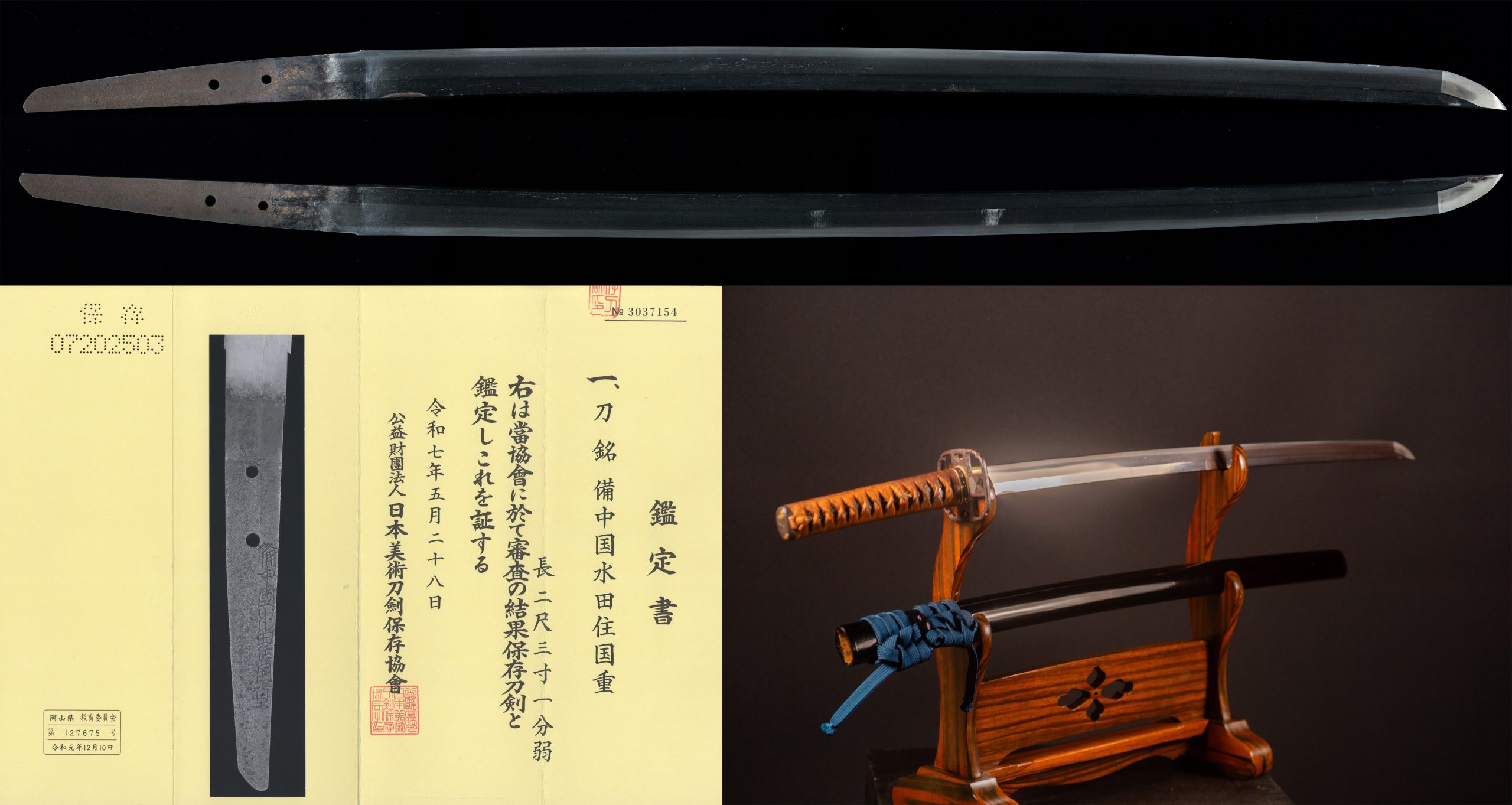
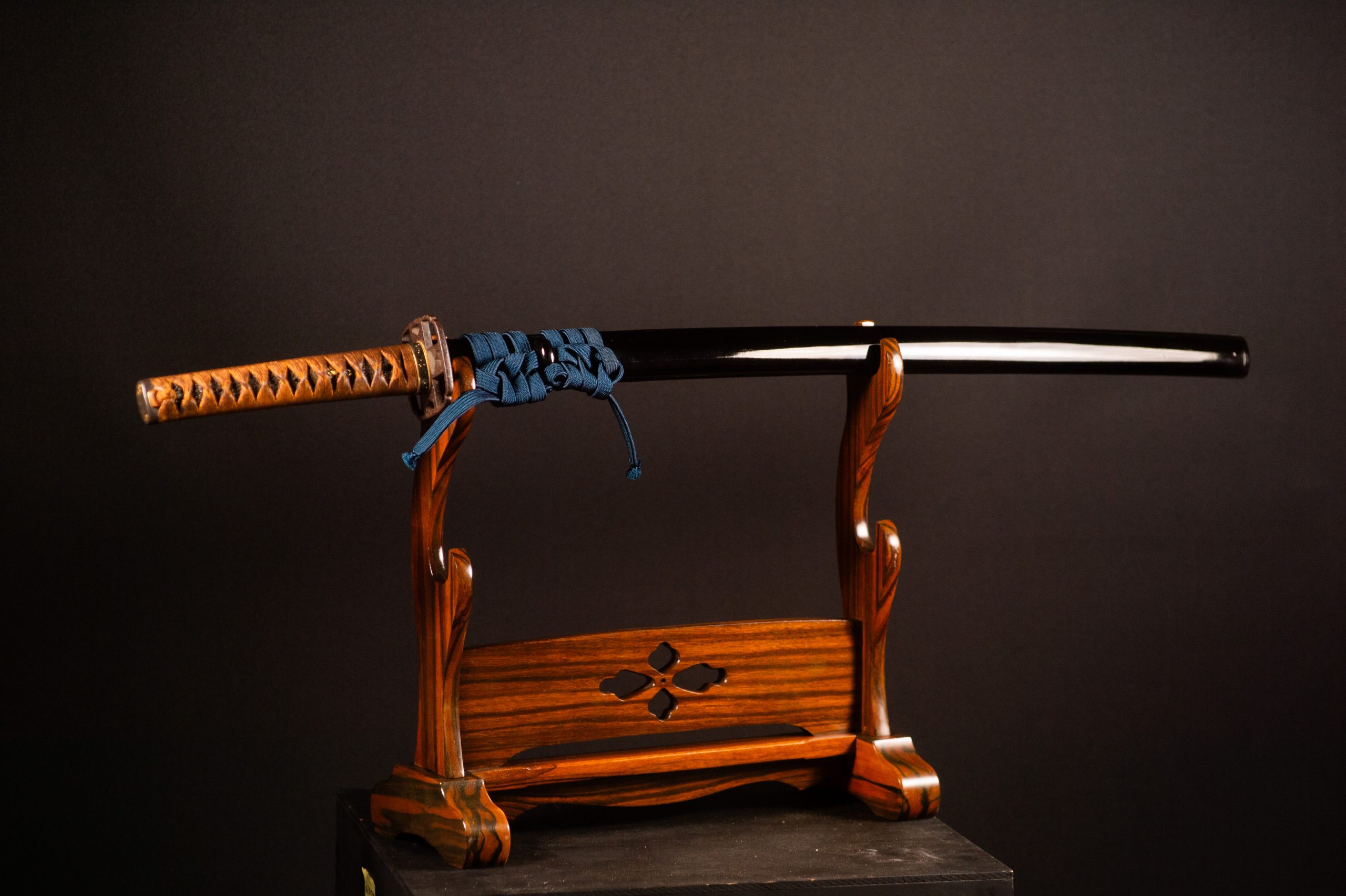
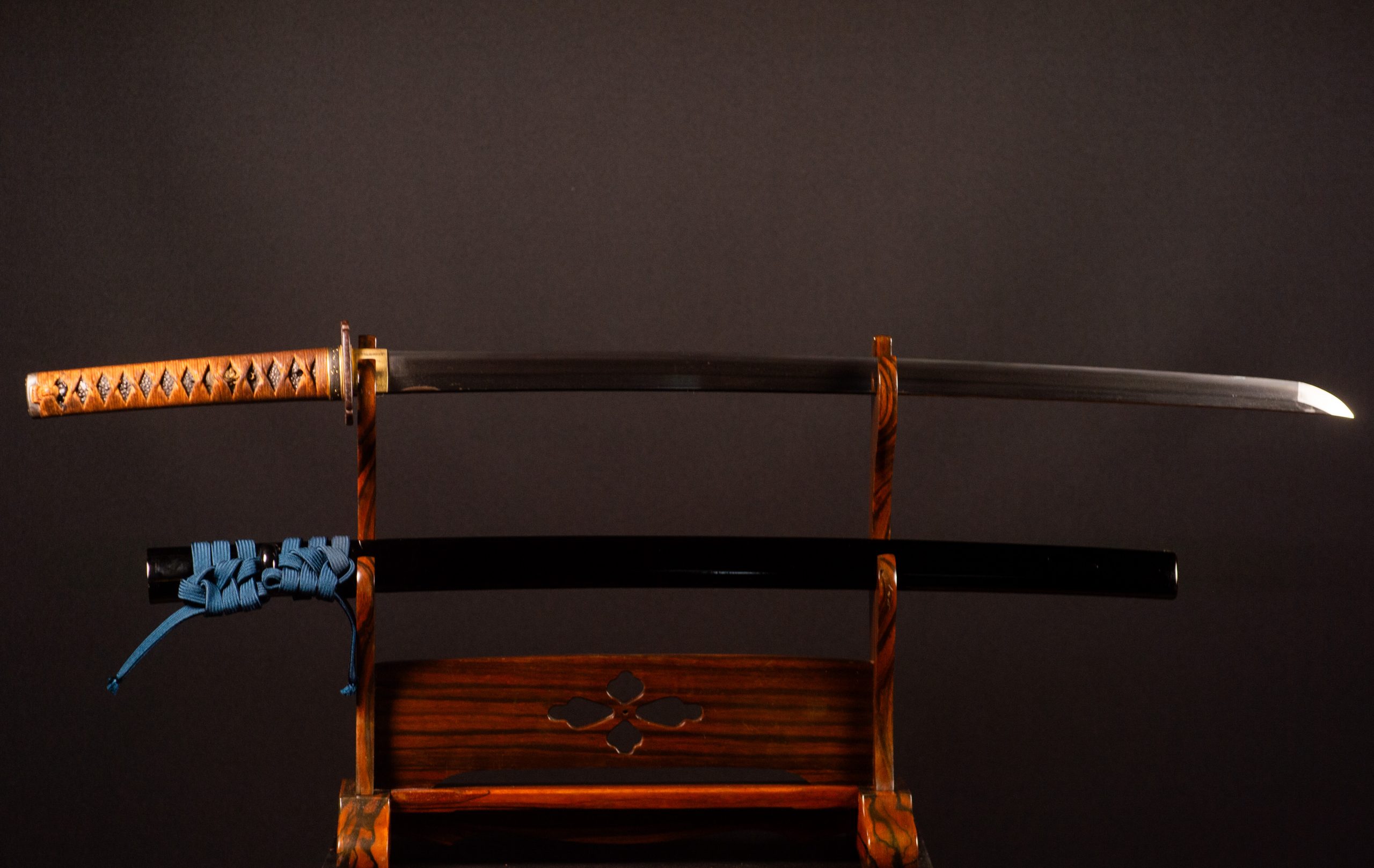
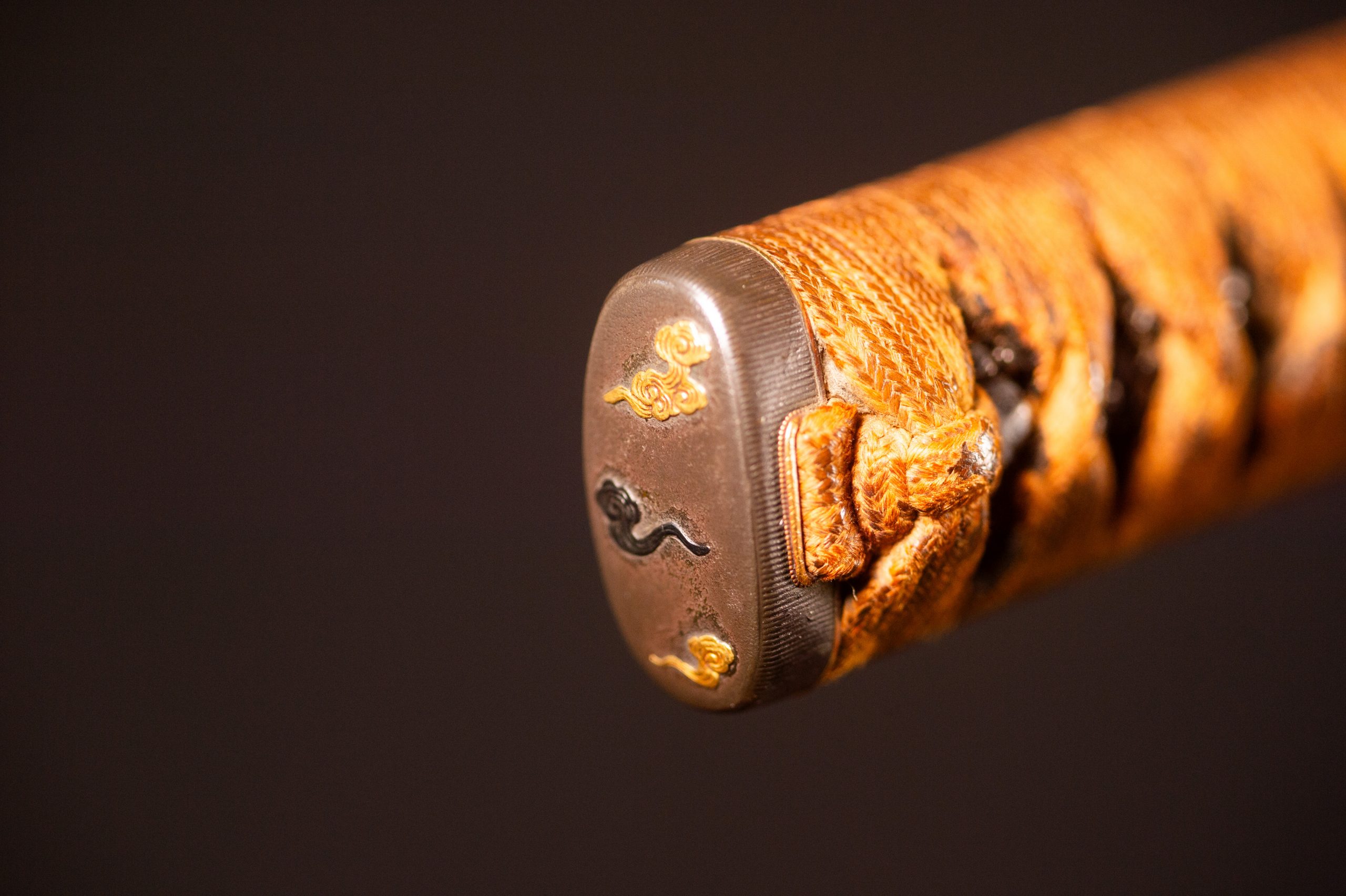
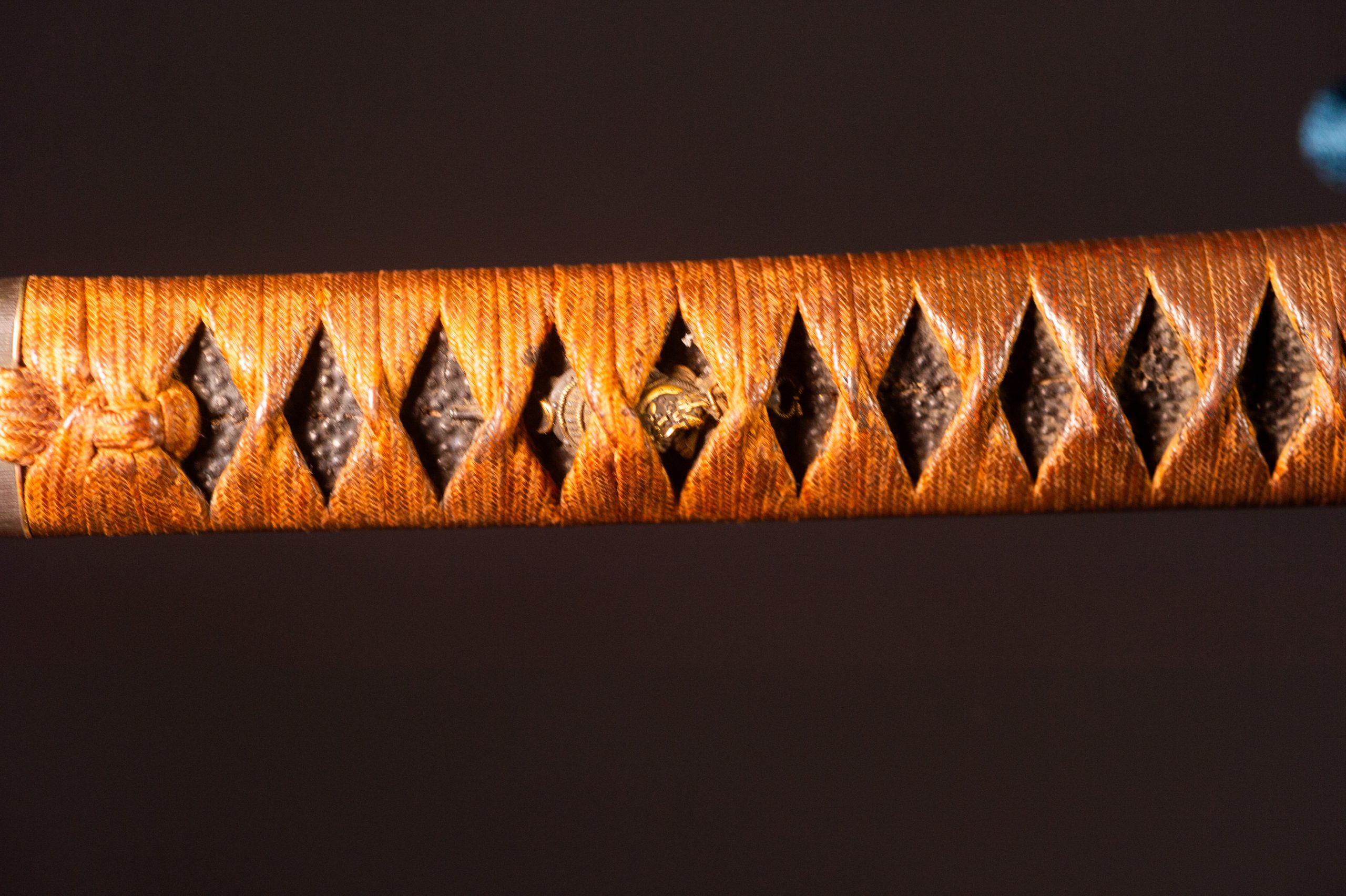
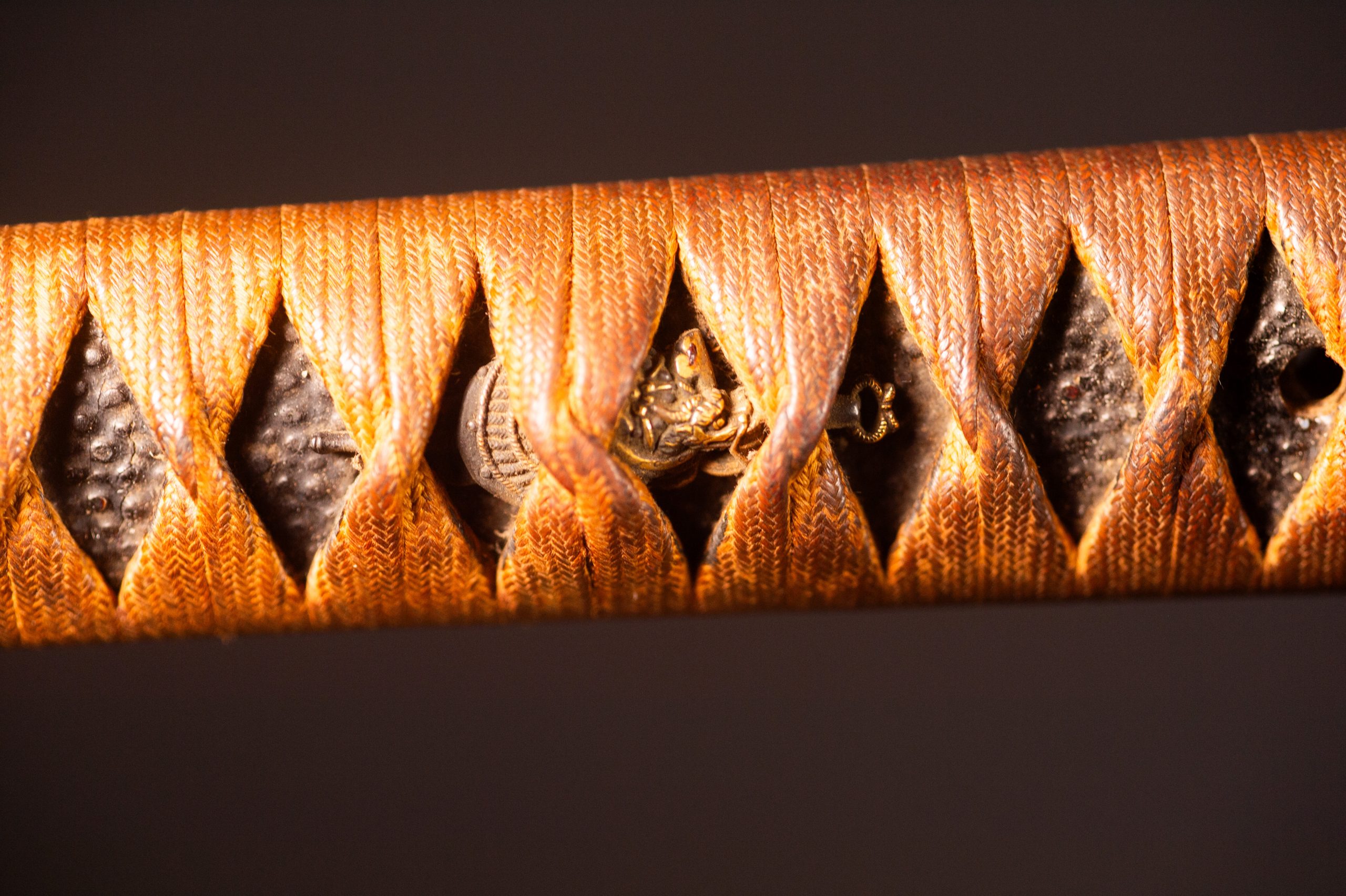
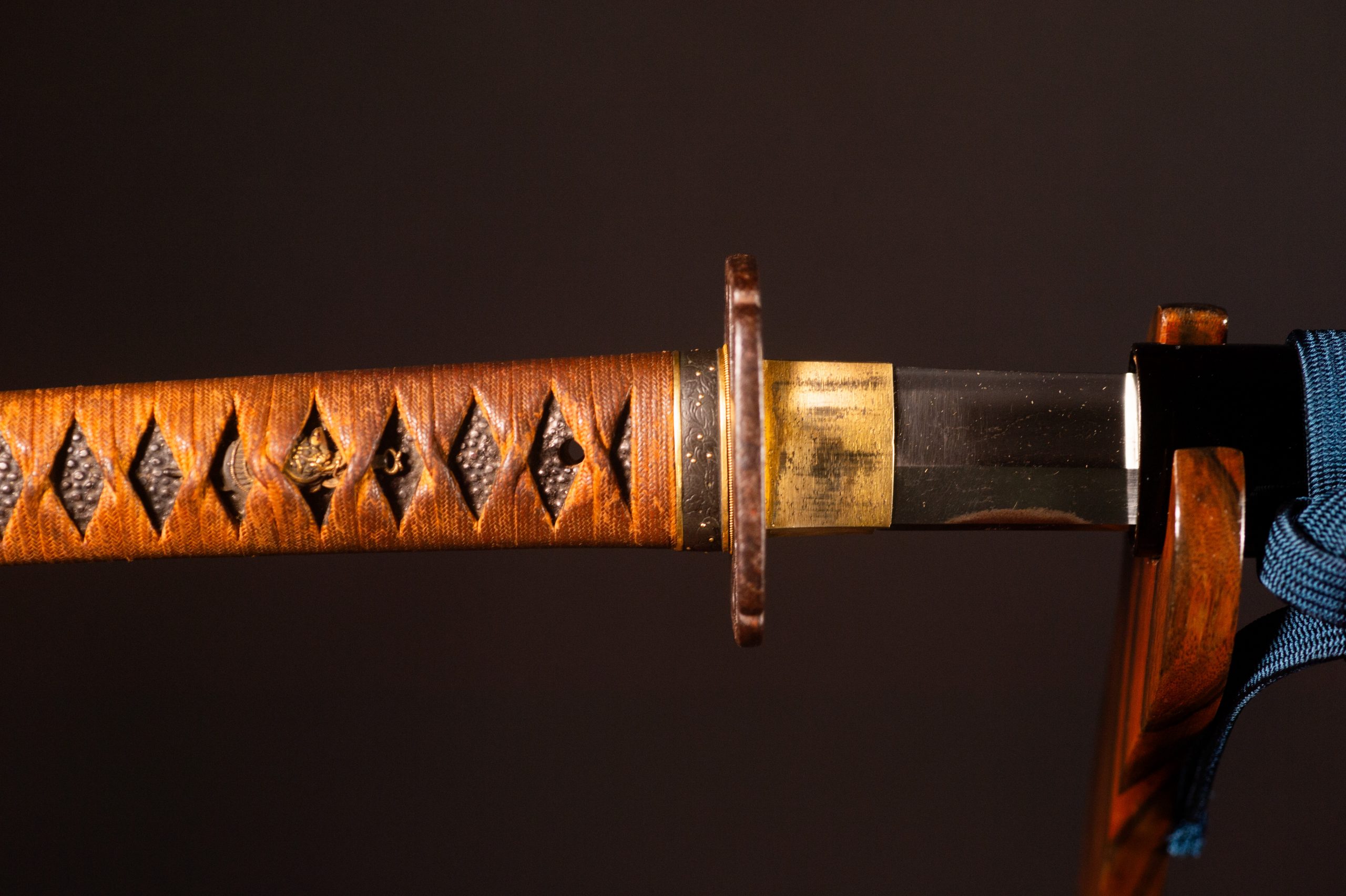
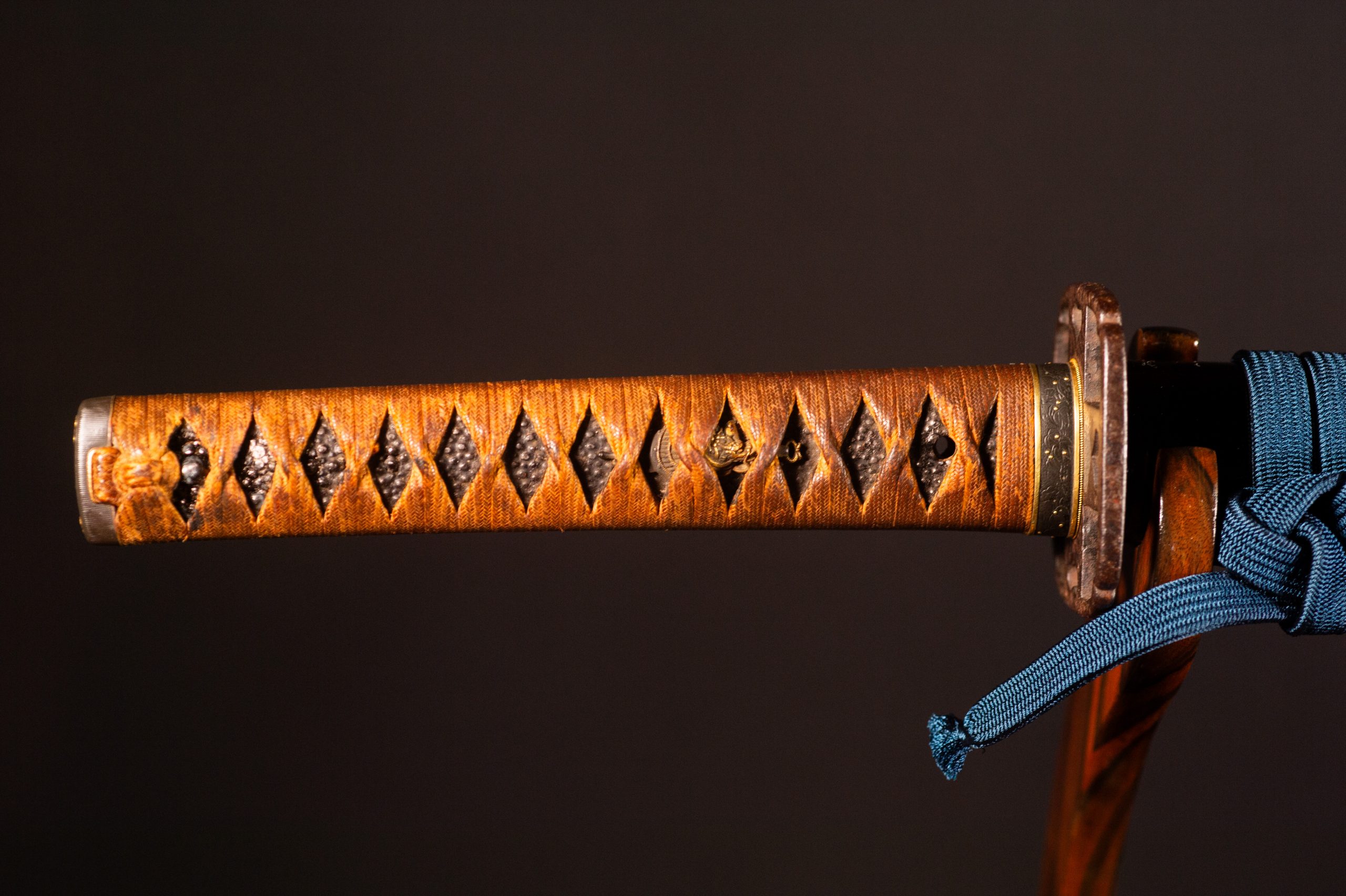
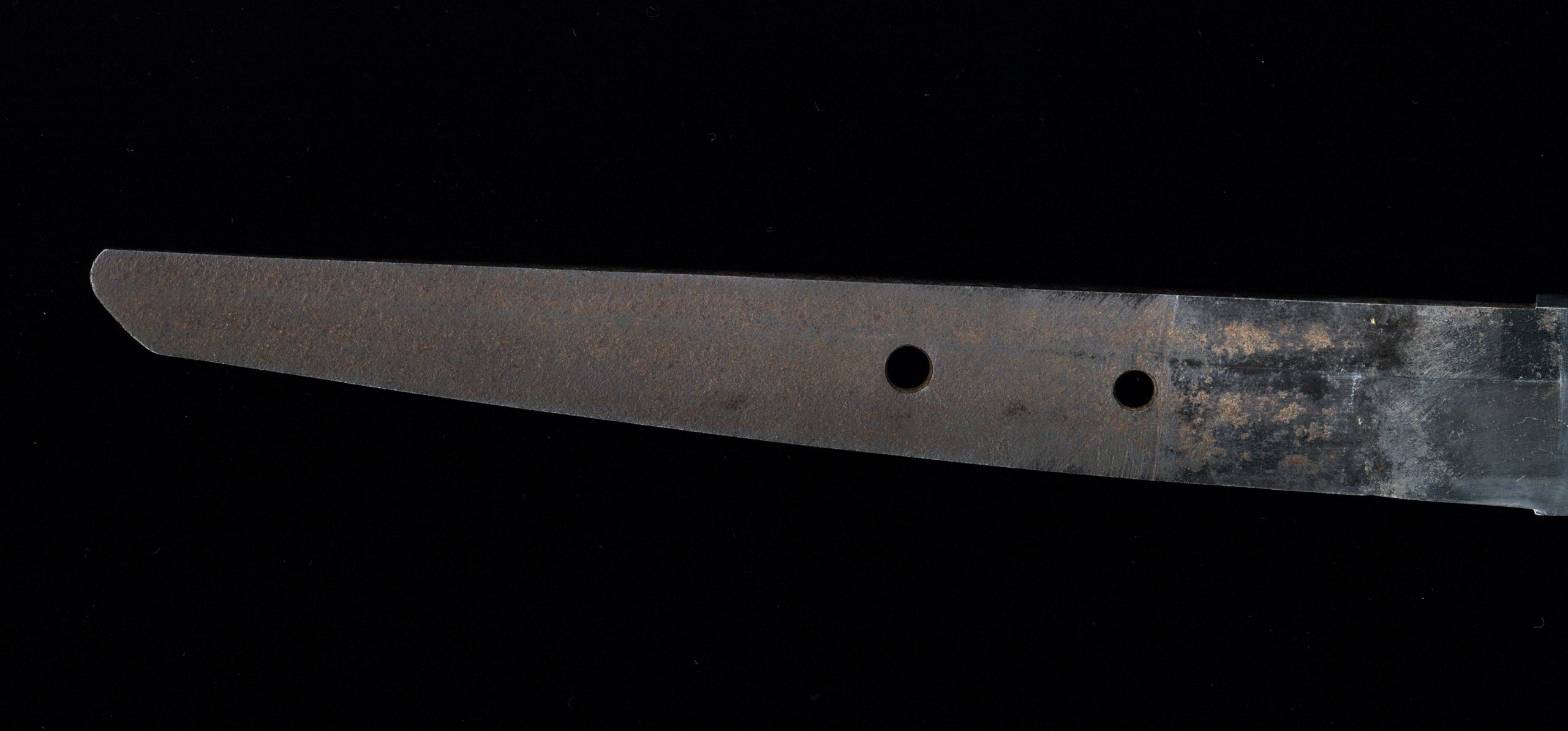
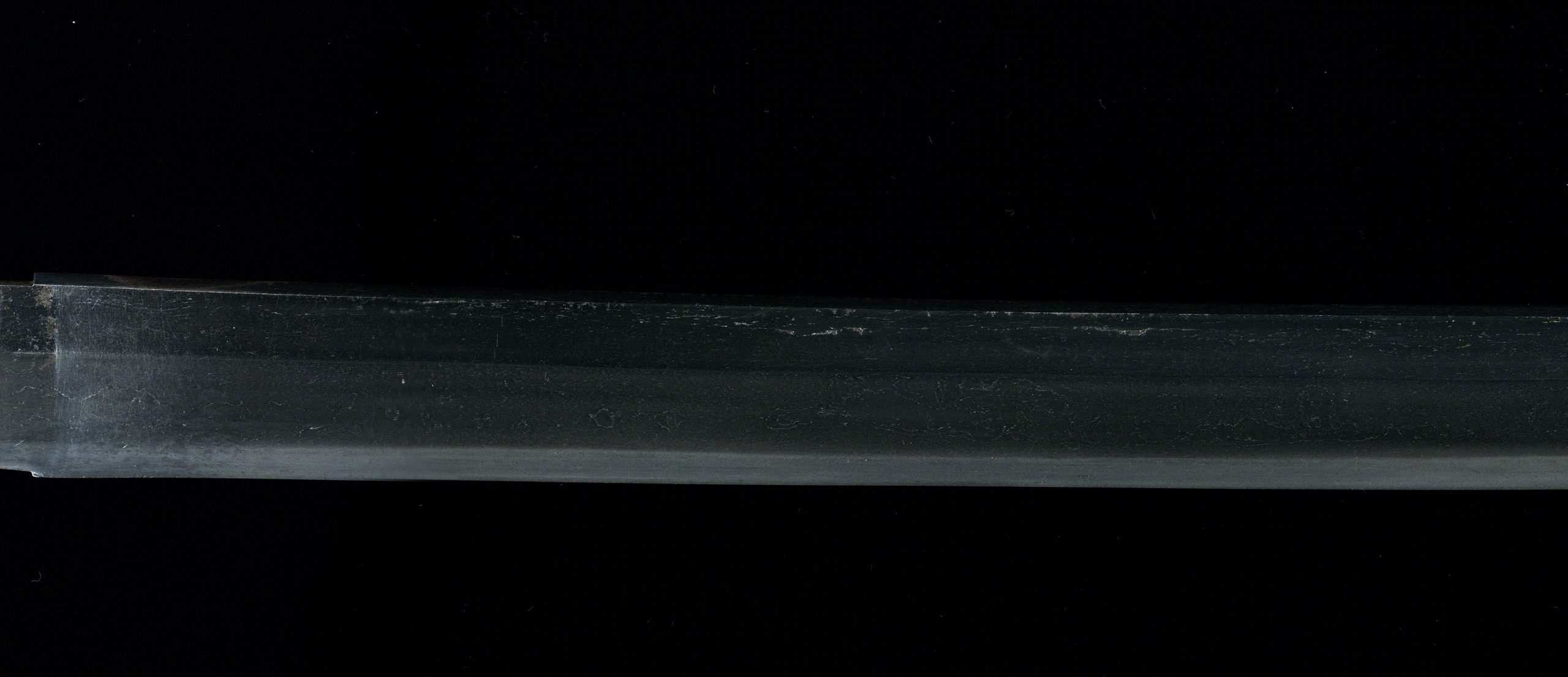
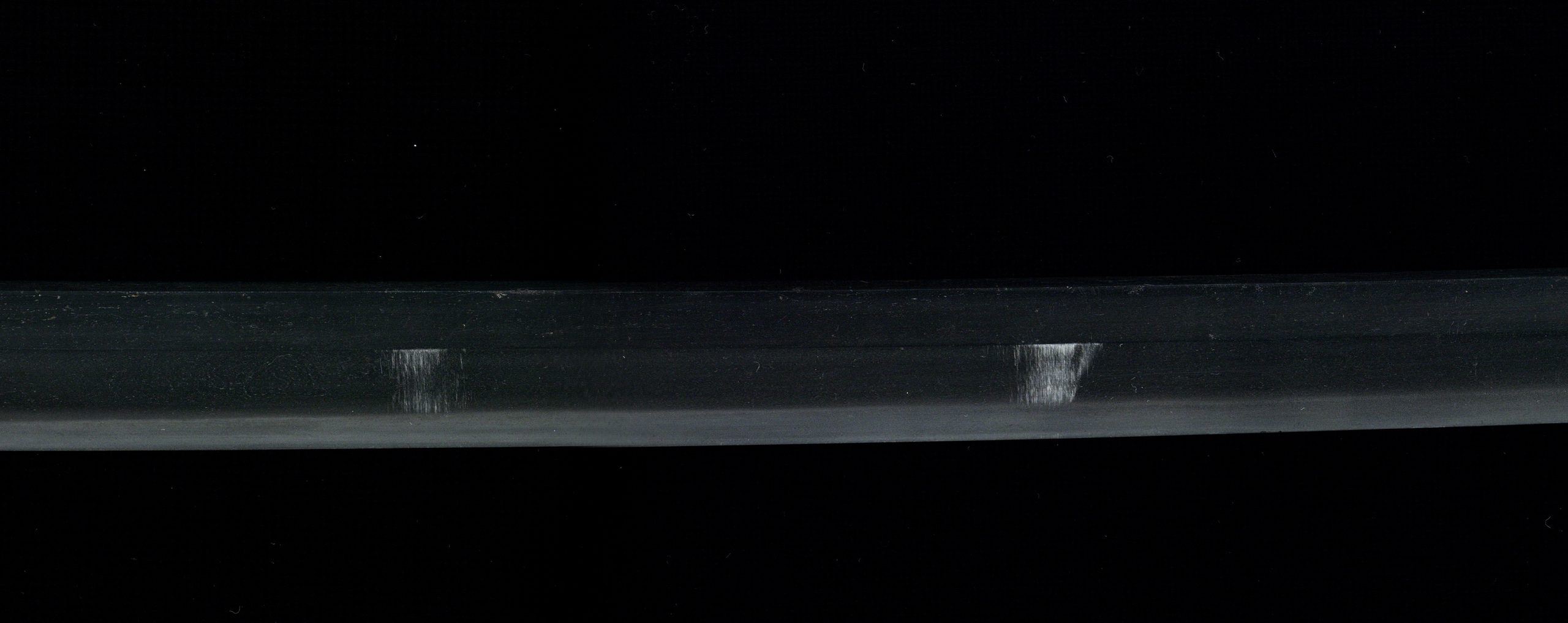
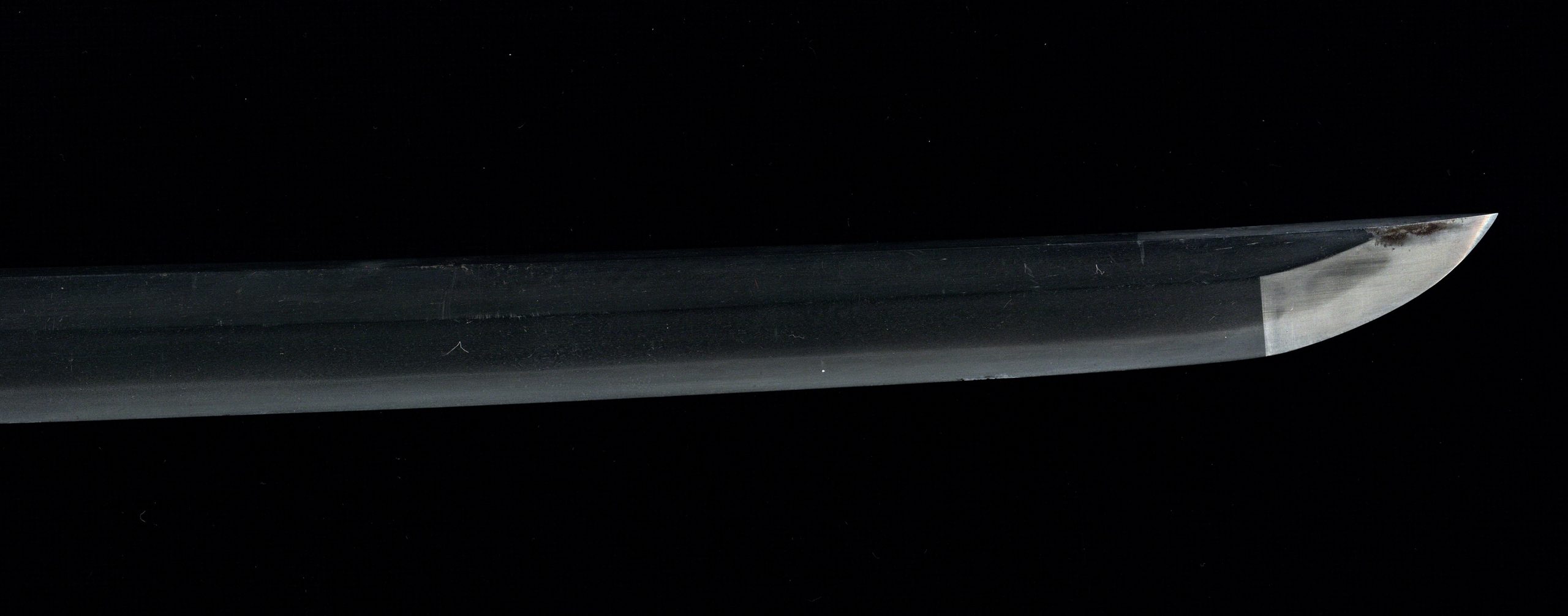
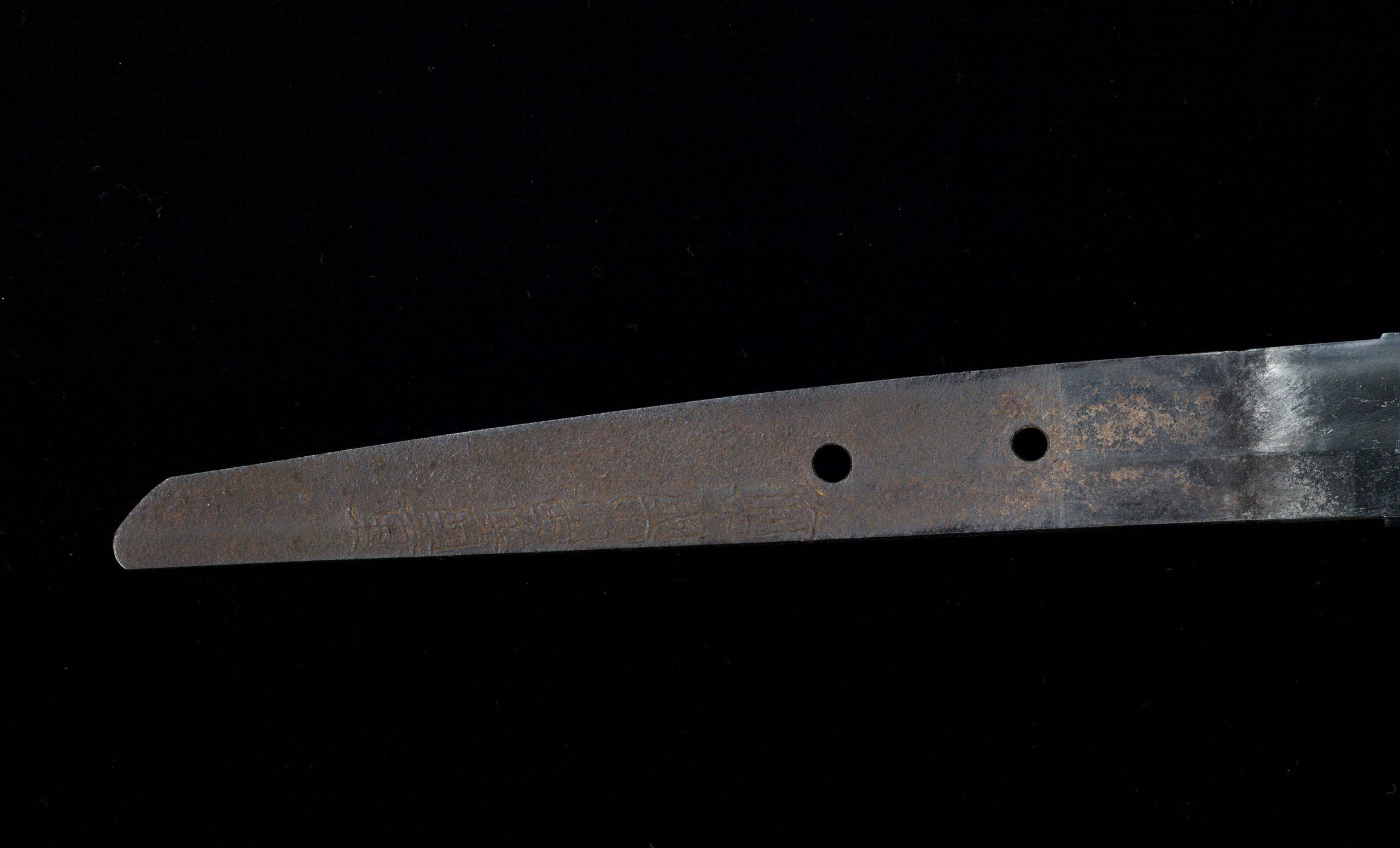
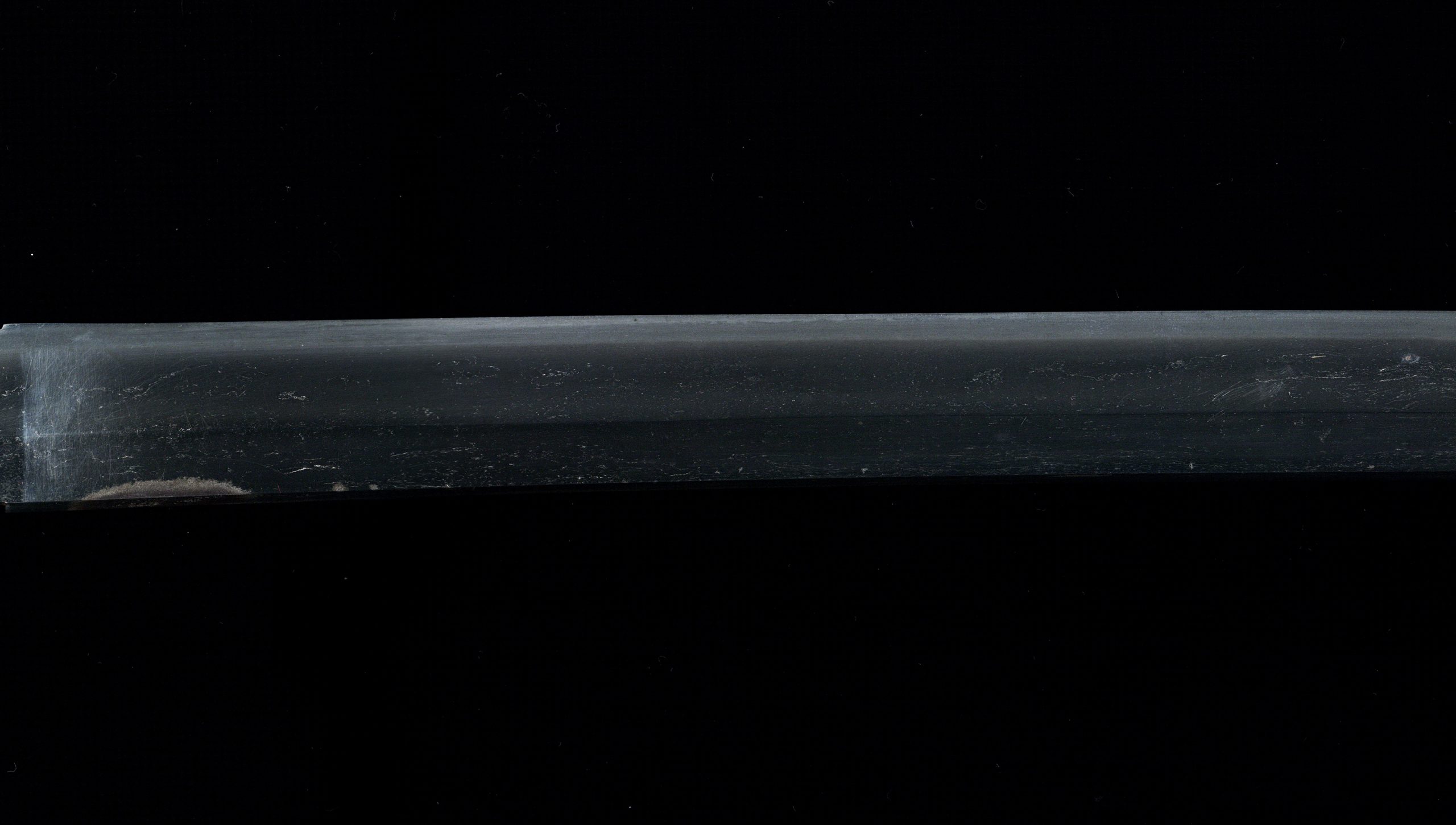
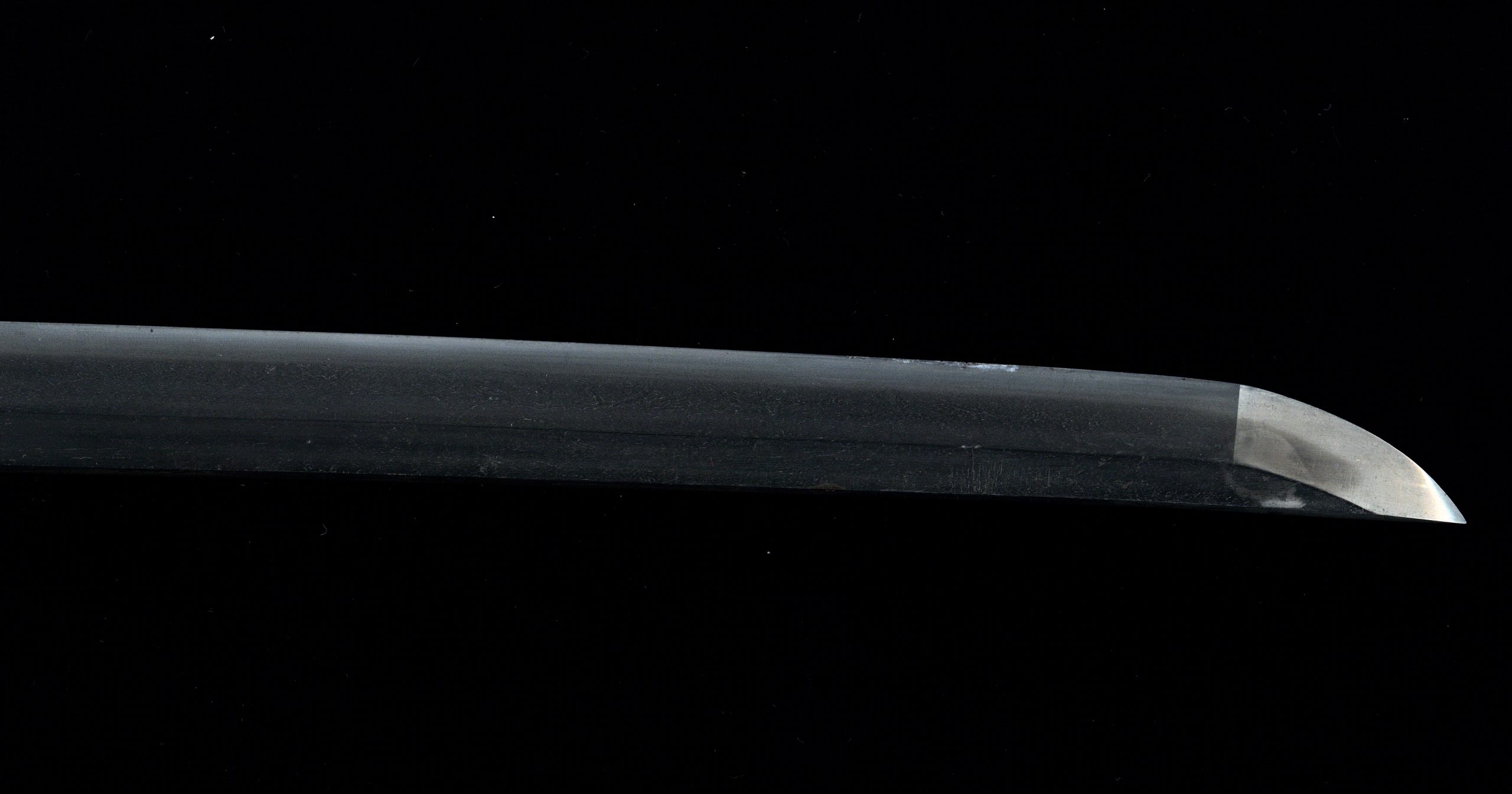
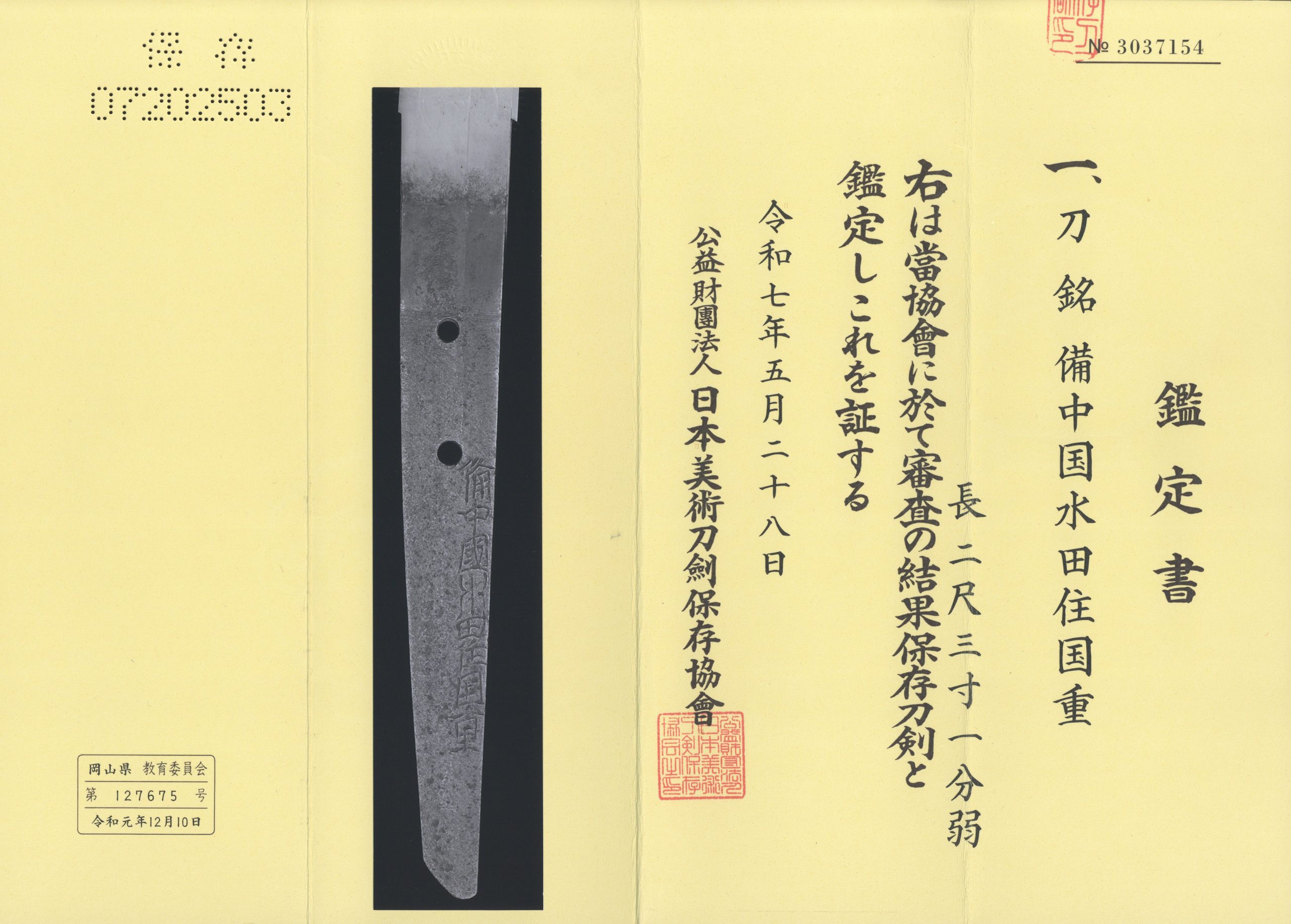
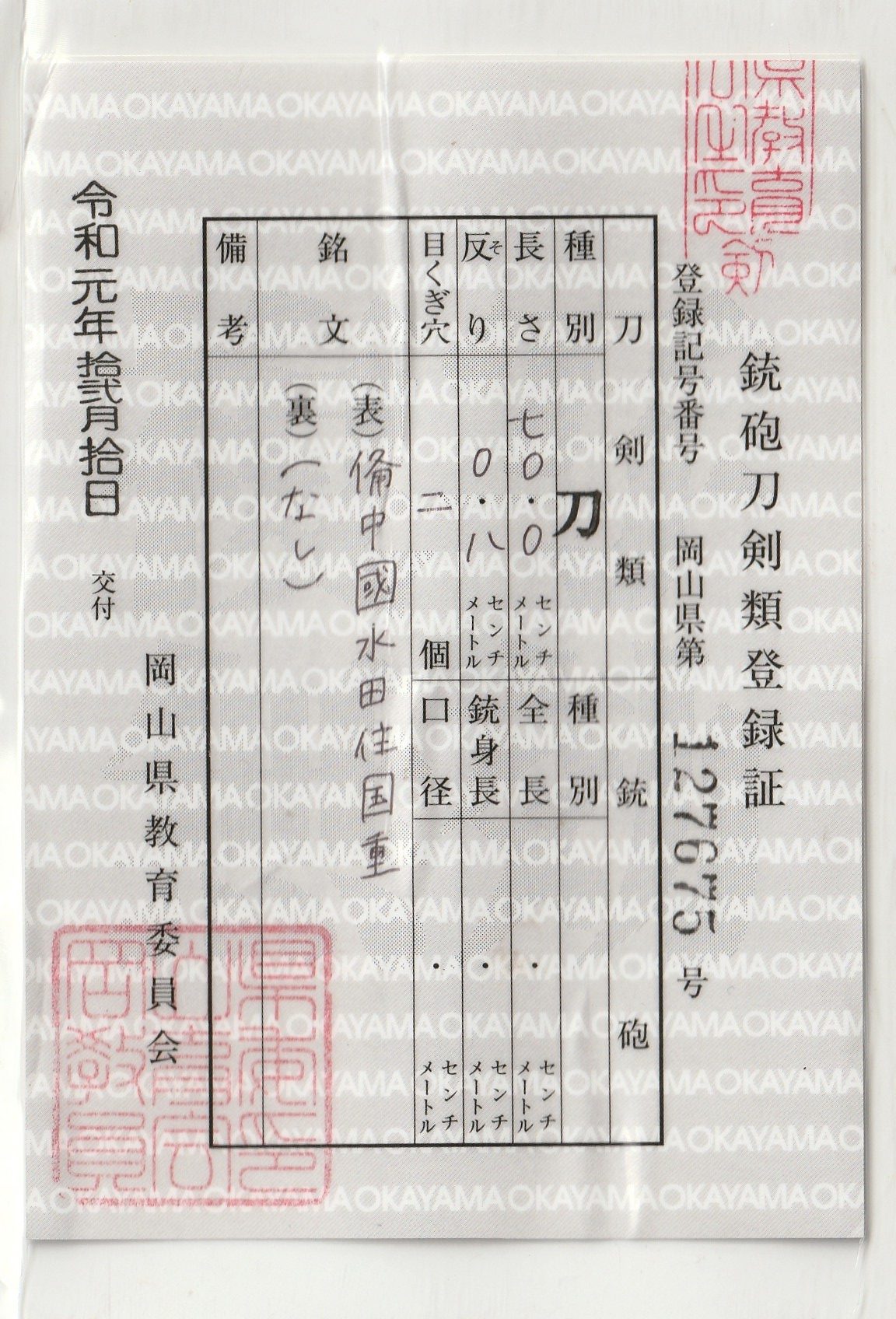
Description ITEM DESCRIPTION: Comes with kimono or cotton bag. Comes with certificate of supein Nihonto. Comes with copy of Tokorusho. Comes with NBTHK Hozon. Documentation 銃砲刀剣類登録証 Firearms and Sword Registration Certificate 種別:刀 Type: katana 長さ:70.0 cm Blade length: 70.0 cm 反り:0.8 cm Curvature: 0.8 cm 目くぎ穴:二個 Mekugi-ana: 2 銘文(表):備中国水田住国重 Signature (omote): Bitchū no Kuni Mizuta-jū Kunishige The sword is also accompanied by an NBTHK Hozon Token authentication paper. Authentication certificate 刀 銘 備中国水田住国重 Katana, signed: Bitchū no Kuni Mizuta-jū Kunishige 長 二尺三寸一分弱 Length: slightly under 2 shaku 3 sun 1 bu 右は当協会に於て審査の結果保存刀剣と鑑定しこれを証する Following examination by this association, the piece has been judged Hozon Tōken and is hereby certified as such. The consistency between signature, registration, and authentication paper gives the sword a strong and reassuring documentary coherence. Smith, school, and context The signature 備中国水田住国重 reads Bitchū no Kuni Mizuta-jū Kunishige , meaning “Kunishige, resident of Mizuta in Bitchū Province.” The name belongs to the tradition of the Mizuta smiths , a school associated with Bitchū Province and well regarded within the sword production of the early Edo period, inheriting regional elements linked to the later Sue-Bizen tradition and the western Japanese shintō milieu. This sword stands as a signed work within that respected Mizuta tradition, and its Hozon Token status confirms that the NBTHK recognizes it as a genuine Japanese sword worthy of preservation. Blade This is a katana of elegant and well-balanced proportions. The blade is formed in shinogi-zukuri with iori-mune , showing moderate curvature and a properly proportioned chū-kissaki . The overall sugata is restrained, classical, and functional, conveying the quiet authority of a traditionally shaped Japanese sword rather than relying on flamboyance. The hamon appears to be a rather restrained, suguha-based temper line, perhaps with very slight undulation, visible yet somewh
NihontoWatchOffered by Supein Nihonto
This piece has sold
14 on the market
Get an email when new Mizuta School work hits the market.





Shinto · Bitchu
14 pieces on the market now
In Bitchū Province at the close of the Muromachi period, the Mizuta group emerged at the village of that name, and successive generations took the name Kunishige. The setsumei trace their work across Matsuyama, Toribe, Ihara, Ebara, and Niimi, with their vitality carrying into the shintō era. The smiths the records cover form a recognizable line: Ko-Mizuta Kunishige, whose dated blade reaches Tenshō 20 (1592); the Niimi Saburōzaemon no Jō Kunishige, said by signature references (meikan) to have come from Bingo into the Niimi estate and afterward to have served the Mimura family, lords of Matsuyama Castle; Kunishige of Ihara, who signed "Bitchū no kuni Ihara-jū Kunishige saku"; Kunishige styled Ōtsukiyo Goemon, recorded as forging also at Fukuyama in Bingo and at Kawanami; and Ōtsuki Yogorō Kunishige, abbreviated "Daiyogo," son of Ōtsuki Saburōbei Kunishige, who came after the old Mizuta period and worked from the Kan'ei years. So many smiths bore the name Kunishige that the setsumei call the group's reliance on it overwhelming. The shared vocabulary is consistent across the entries. The jigane is itame, sometimes flowing and sometimes standing out, with ji-nie adhering and chikei entering; utsuri is visible on the older pieces. The hamon of the shintō hand rests on a notare or ko-notare base mixed with gunome, deep in nioi, with nie forming vigorously and at times breaking into coarse ara-nie; sunagashi and kinsuji run through, and muneyaki recurs frequently. On the Daiyogo katana the temper rises until the upper half is nearly hitatsura, an ō-midare in notare style with the bōshi burning down long toward the mune-machi.
The bōshi elsewhere goes midare-komi with hakikake, taking a flame-like (kaen) cast or becoming ichimai-like. The Niimi blade adds yakidaka composition with angular and yahazu-like elements. These are the marks of the hand: a strong nie-laden Sōshū bearing on a serviceable, iori-mune shinogi-zukuri build, the signatures cut long toward the mune. For kantei the records single out the notare foundation worked with gunome and intense nie, the yahazu shapes and ichimai bōshi the setsumei name as "the highlights of the Mizuta manner," and the ha-agari kurijiri tang that rises markedly toward the edge. The shintō smiths are read by their pronounced Sōshū emphasis, the kotō-period Ko-Mizuta by a busier (kosekose) gunome-midare carrying ko-chōji and a tight nioiguchi. The setsumei describe these as cutting, utilitarian blades, and the Ihara daishō carries elaborate carving, including kurikara, "Marishiten," and the Nine Syllables. Named pieces anchor the line: the Niimi Kunishige is published in the Kōzan Oshigata and, by the record on its old scabbard, once served as the camp sword (jin-tō) of Bunjō-in, Tokugawa Ienobu, the sixth shōgun. Of Daiyogo the setsumei say few signed works survive, the loss attributed to mei being removed or blades shortened and reworked, yet they name him the leading master of the group and credit the school's spread through the Edo period to smiths of his ability. Learn more →
| Smith | Era | Designated |
|---|---|---|
| Kunishige國重 | 1592-1596 | 2 |
| Kunishige國重 | 1624-1644 | 2 |
| Kunishige國重 | 1673-1681 | 1 |
| Kunishige國重 | 1554-1573 | 1 |
| Kunisada國定 | 1688-1704 | 0 |
The Edo period (1615 to 1868)
Edo was the sword’s age of connoisseurship: the Hon’ami appraisers, the shogunal register of famous blades of 1719, and a thriving literature turned the sword into an object of study even as it ceased to be drawn in war.
Certifies a genuine blade worth preserving: a signature confirmed correct, or, if unsigned, an era, province, and school that the NBTHK can reliably identify.
The NBTHK (Nihon Bijutsu Tōken Hozon Kyōkai, the Society for the Preservation of Japanese Art Swords) is a public-interest incorporated foundation founded in 1948 and supervised by Japan’s Agency for Cultural Affairs (Bunkachō); it is based at the Japanese Sword Museum in Tokyo. Its expert panels physically examine each submitted work (shinsa) and issue a certificate (kanteishō) ranking it by artistic and historical merit. NBTHK papers are the most widely recognized standard of authentication for Japanese swords and fittings.
NBTHK official site14-day return if items arrive damaged or in unexpected condition; customer bears return shipping + insurance; items returned in original condition with all accessories; antique armour non-returnable; only regular priced items refundable; shipping costs non-refundable.