 NihontoWatchNihontoWatch
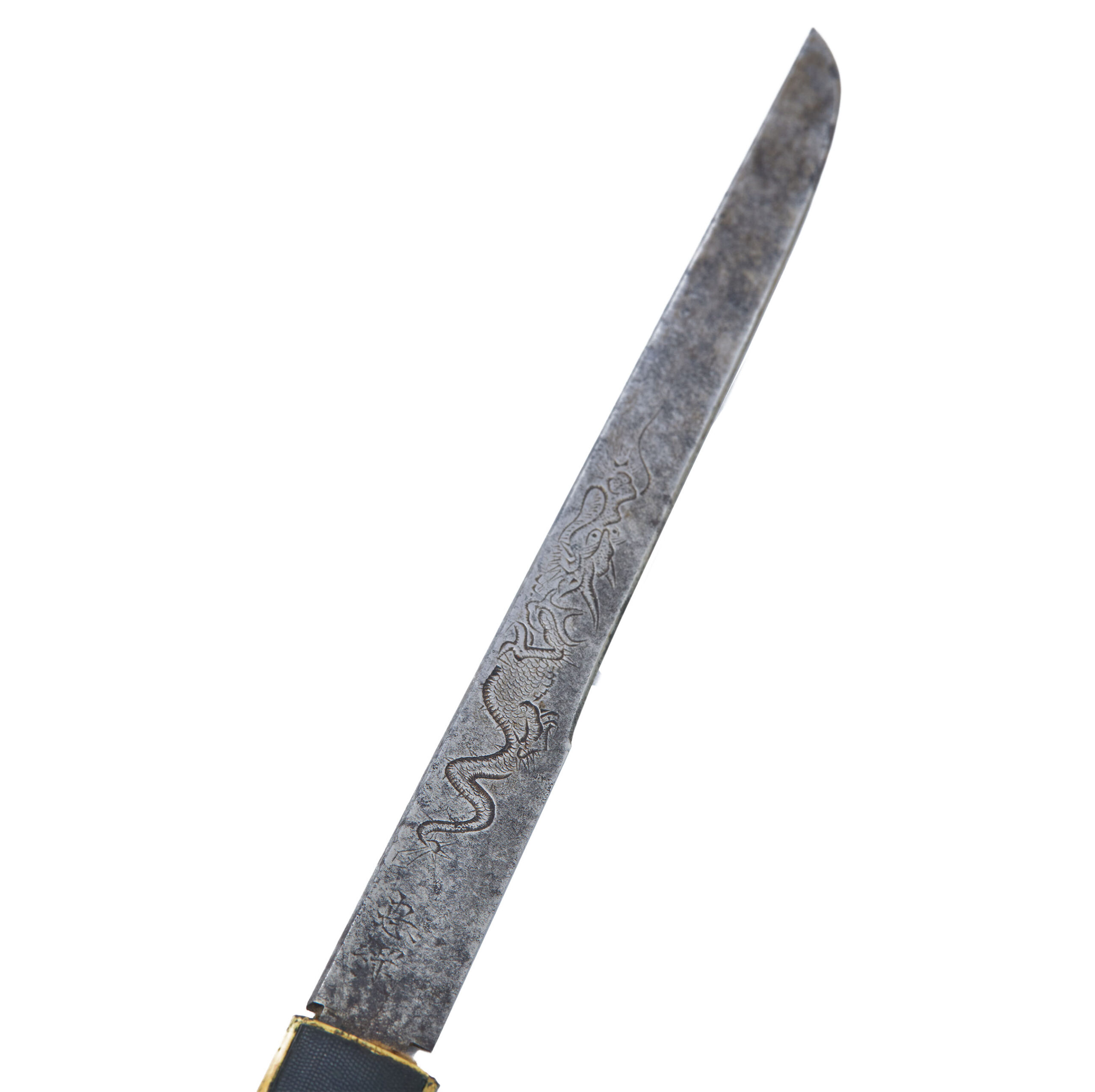
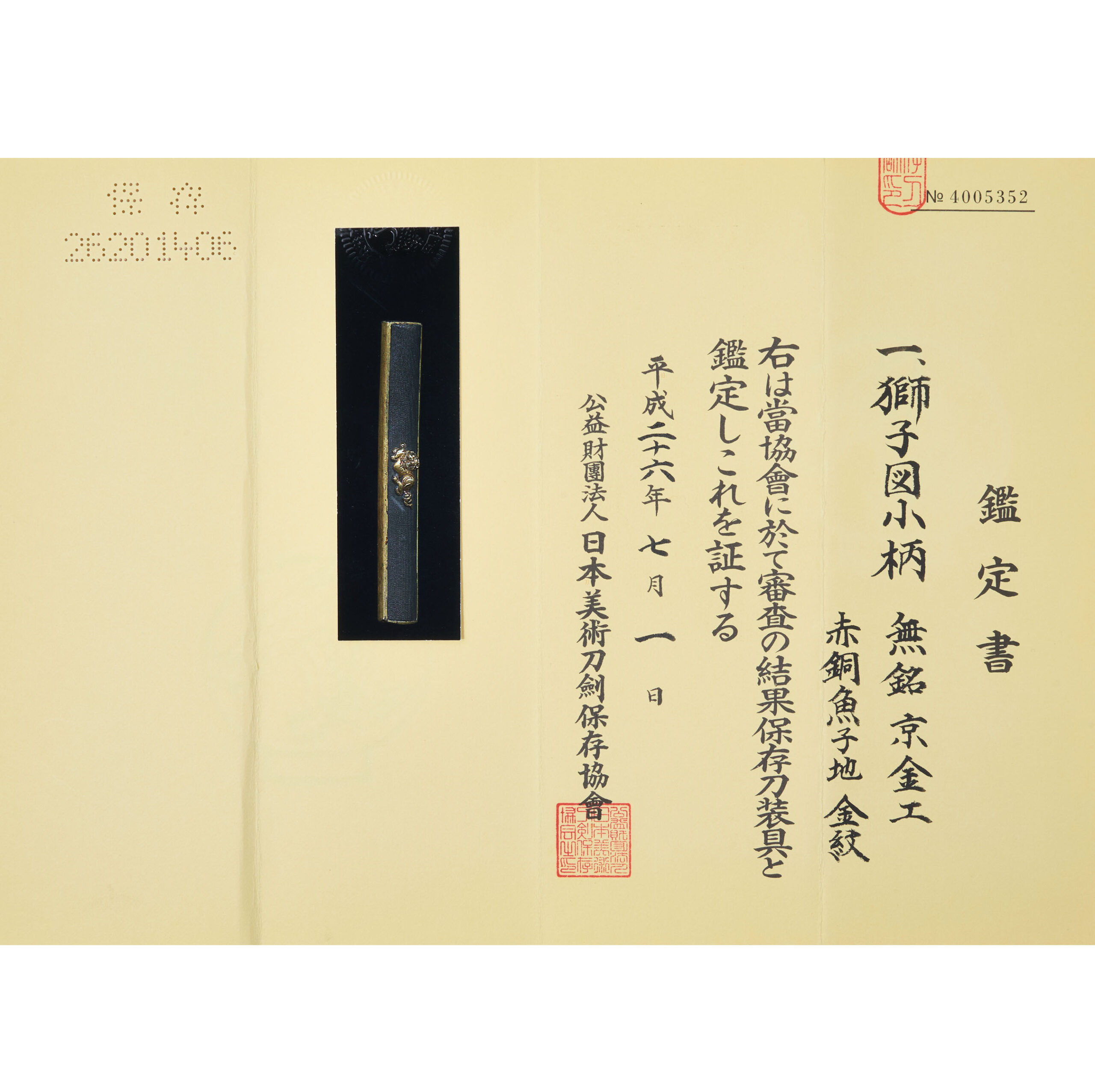
This kozuka (the handle of a small utility knife carried alongside a Japanese sword) is crafted in shakudō nanako-ji (赤銅魚々子地) and decorated with a gold lion motif (kin-mon, 金紋). The nanako ground consists of tiny, regularly arranged raised dots resembling fish roe, providing a finely textured, dark background that highlights the gold decoration. The design depicts a shishi (獅子), a stylized lion also known as karajishi (唐獅子). This imaginary representation of a lion reached Japan through continental Asian art and Buddhist imagery. Unlike a naturalistic lion, the karajishi is typically depicted with curling locks of hair and a flowing, curled tail. In Buddhist art, Monju Bosatsu (文殊菩薩, Mañjuśrī), the bodhisattva associated with wisdom, is often shown riding a lion. Lions also appear as guardians in Japanese religious art and are closely associated with the paired guardian figures commonly called komainu (狛犬), seen at shrine entrances. These associations make the shishi a motif of strength and protection, with the Buddhist connection adding a further association with wisdom. According to the NBTHK (Society for the Preservation of Japanese Art Swords) appraisal certificate, this kōgai is attributed to Kyō-kinkō (京金工). This designation identifies metalwork associated with Kyoto rather than a particular named artisan. Kyō-kinkō encompasses sword fittings produced by Kyoto metalworkers, primarily during the Edo period (1603–1868), including tsuba, menuki, kozuka, and kōgai. Rather than referring to a single, uniform lineage, the term covers a variety of workshops and artistic styles. The blade of this kozuka is also engraved with a dragon (龍, Ryū). In traditional Japanese art, both the lion and dragon are revered as powerful mythical creatures believed to ward off evil. The lion symbolizes courage and protection, while the dragon represents power and prosperity. Together, they form an auspicious design symbolizing strength, protection, and good fortune. Authentication Paper They authenticated the Kozuka on July 1st in the 26th year of Heisei (2014). They appraised it as Hozon Tousougu, the Kozuka worth preserving for Japanese society.
NihontoWatchOffered by Samurai Museum

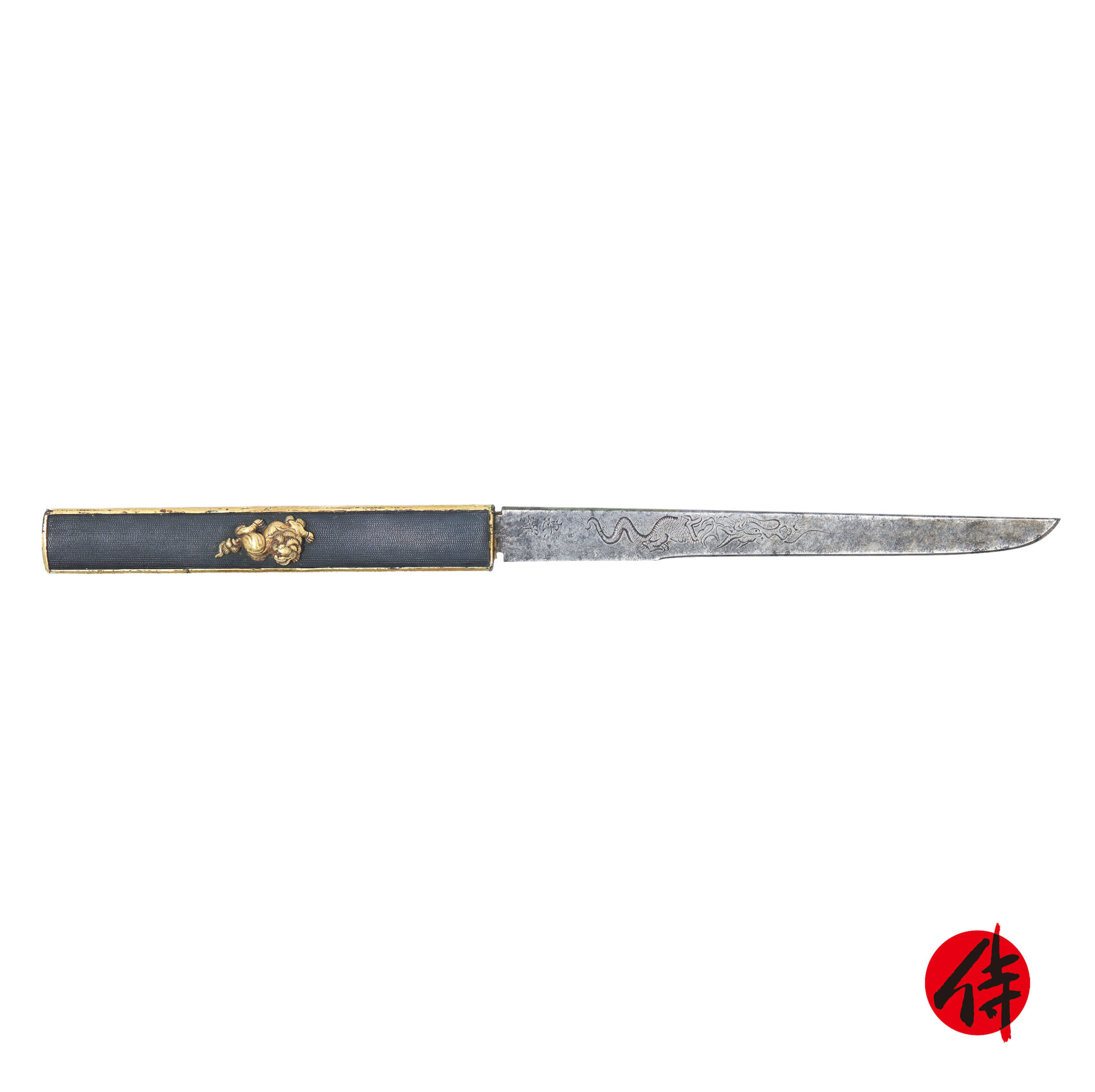
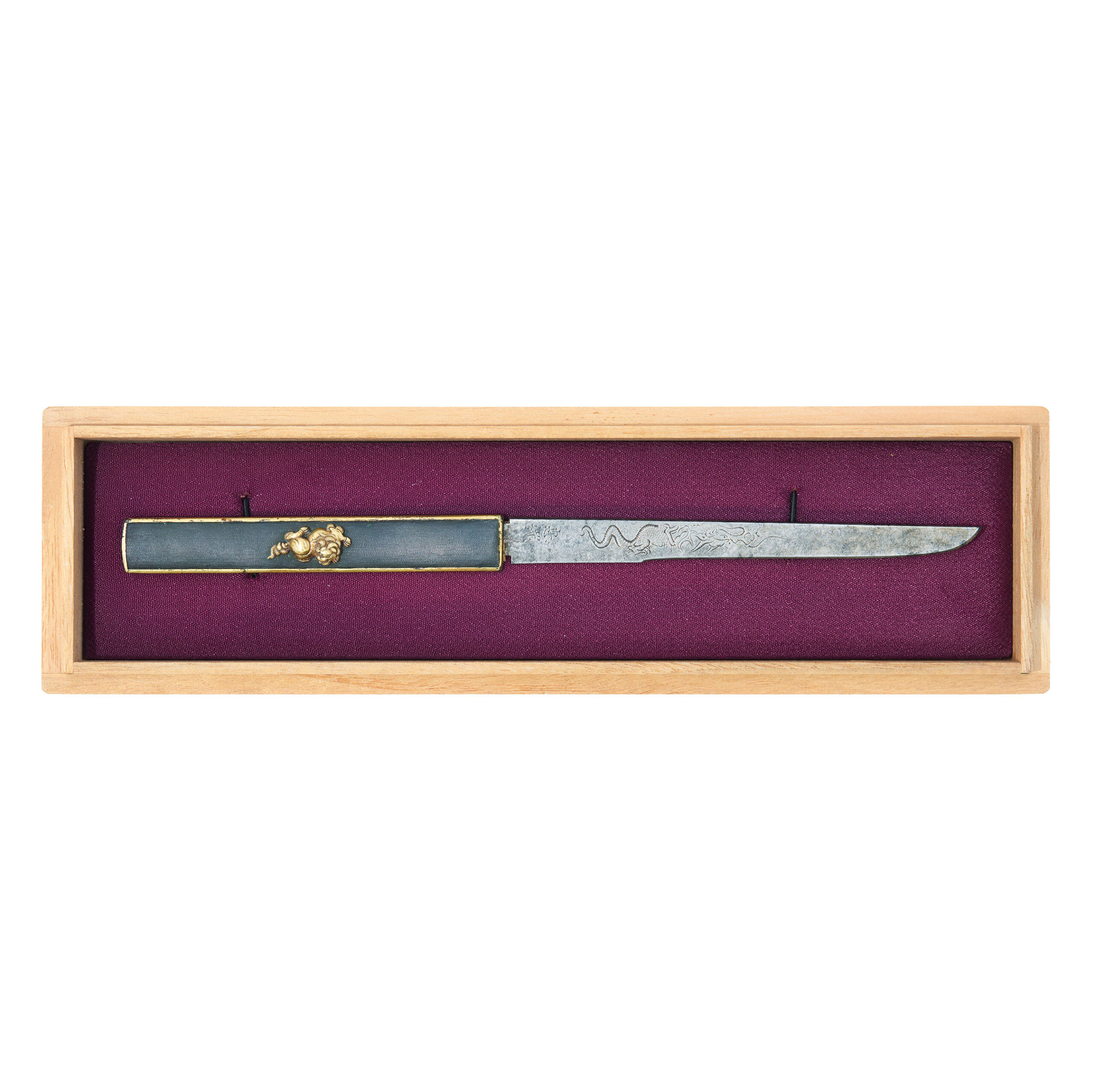
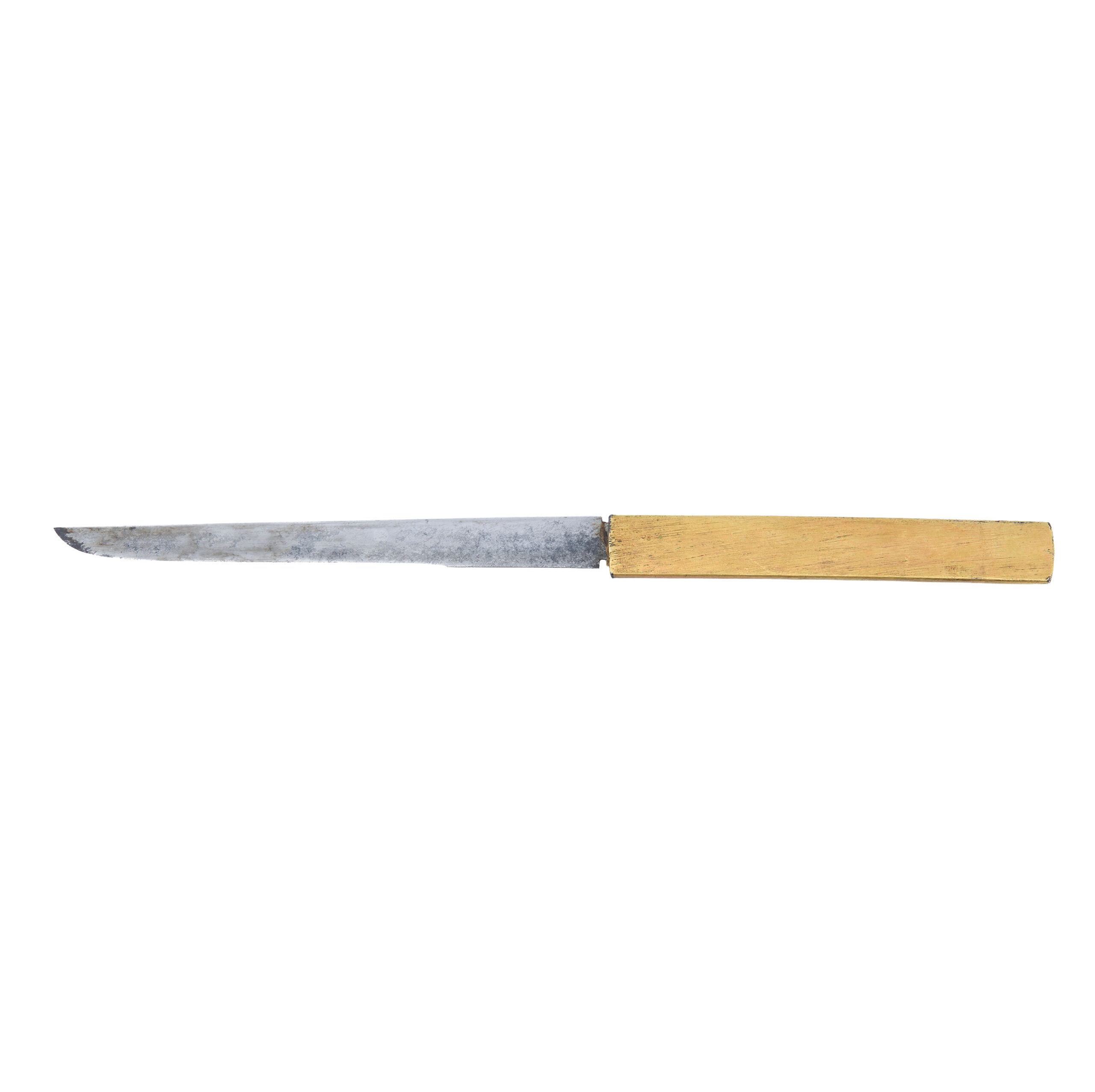
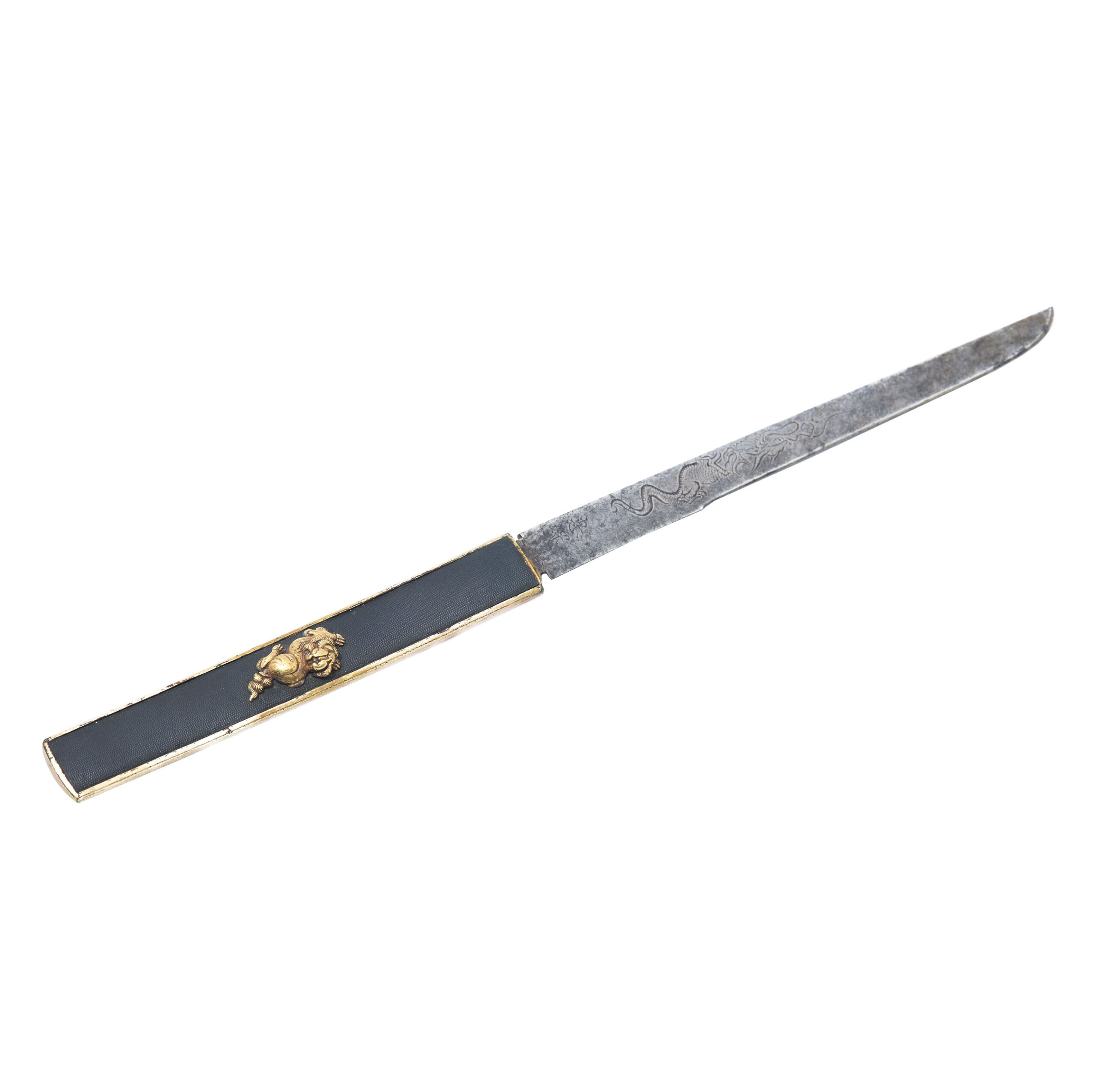
Edo
Unsigned
Hozon (NBTHK)
Certifies a genuine fitting worth preserving: a correct signature, or, if unsigned, an identifiable era and school, with recognized artistic and craft value.
The NBTHK (Nihon Bijutsu Tōken Hozon Kyōkai, the Society for the Preservation of Japanese Art Swords) is a public-interest incorporated foundation founded in 1948 and supervised by Japan’s Agency for Cultural Affairs (Bunkachō); it is based at the Japanese Sword Museum in Tokyo. Its expert panels physically examine each submitted work (shinsa) and issue a certificate (kanteishō) ranking it by artistic and historical merit. NBTHK papers are the most widely recognized standard of authentication for Japanese swords and fittings.
NBTHK official siteReturns/exchanges limited to defects caused by shipping (except willful misconduct or gross negligence by the company); customers must contact within 72 hours of receiving the product.
¥120,000