 NihontoWatchNihontoWatch
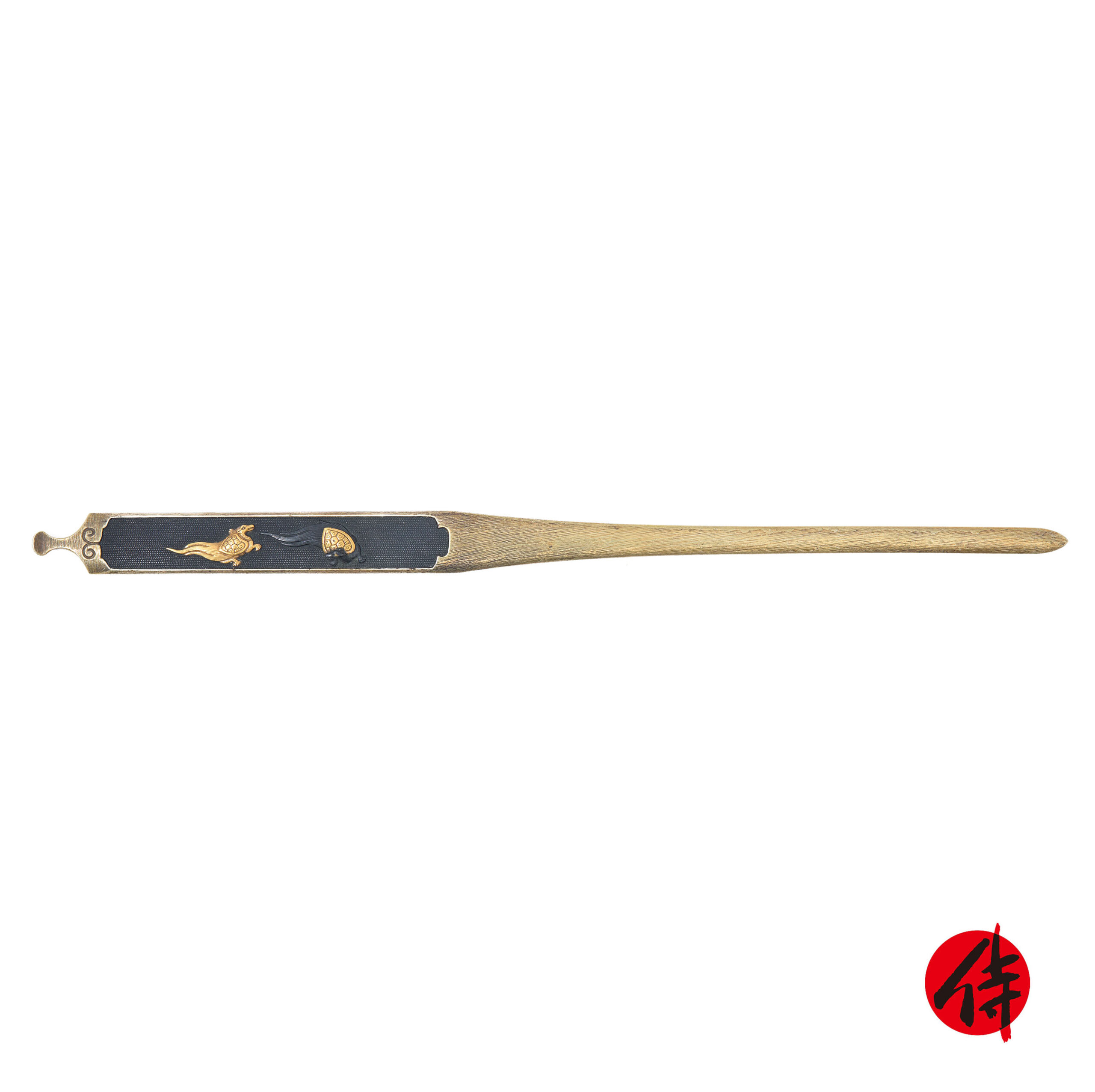
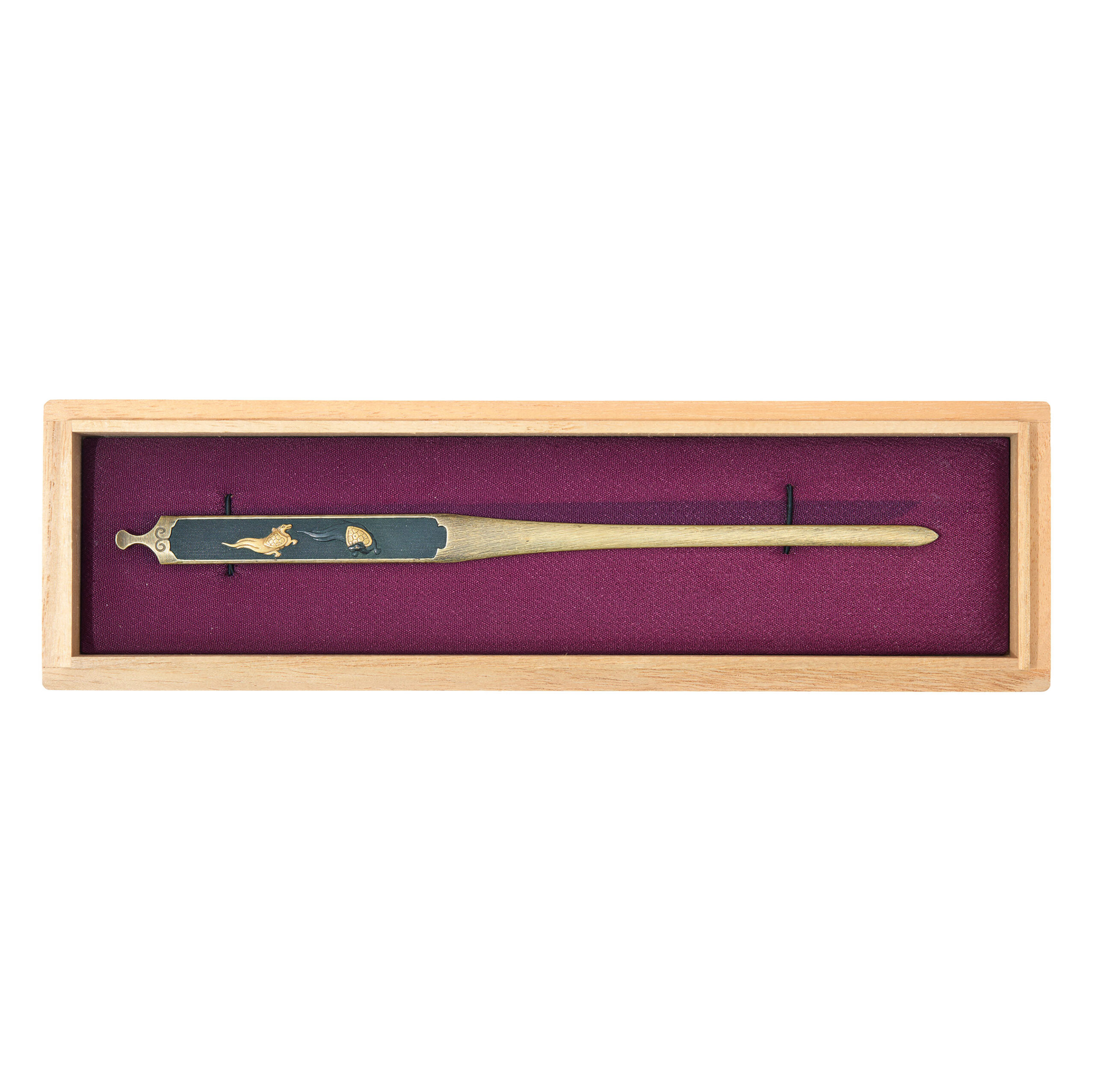
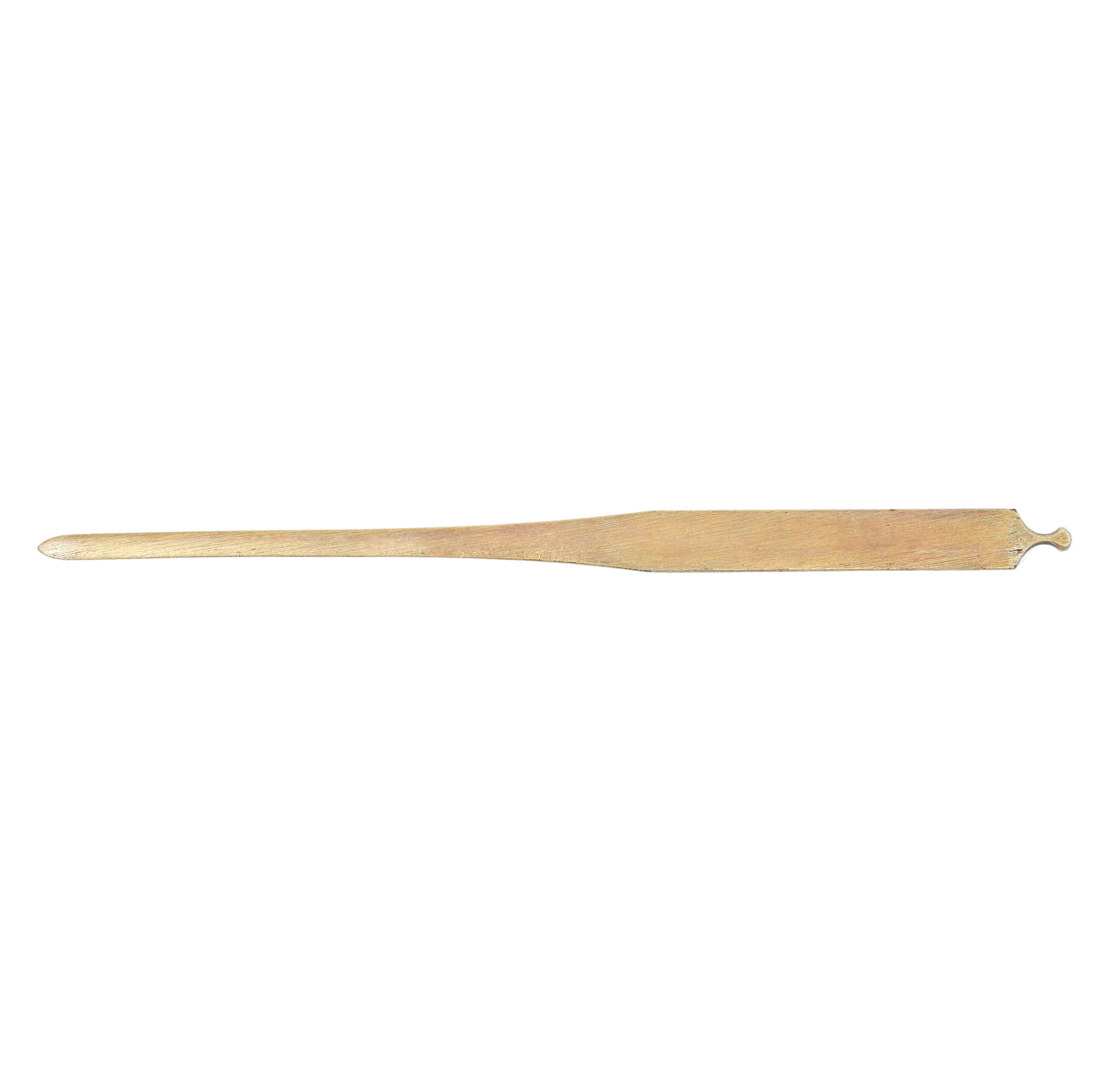
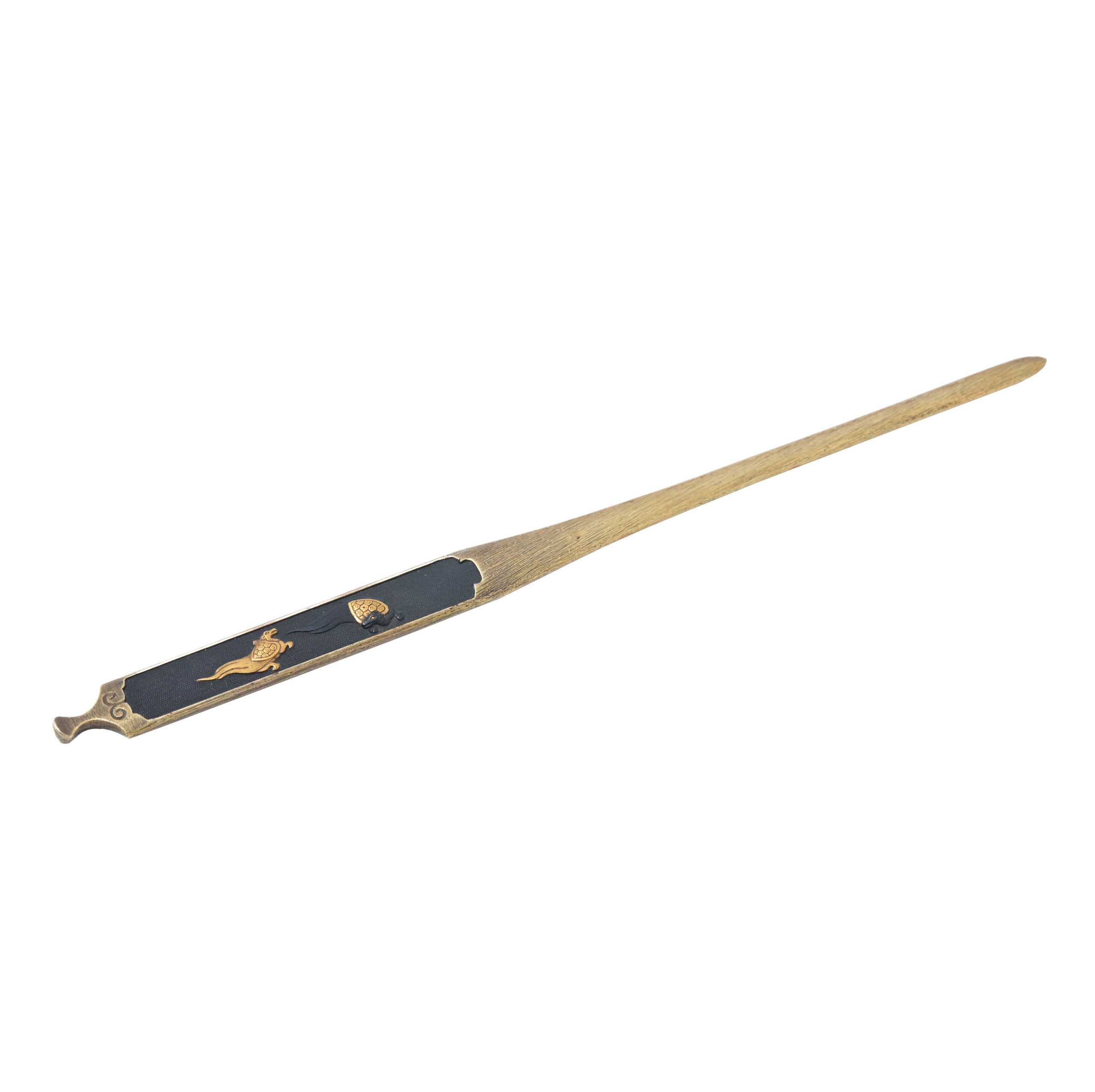
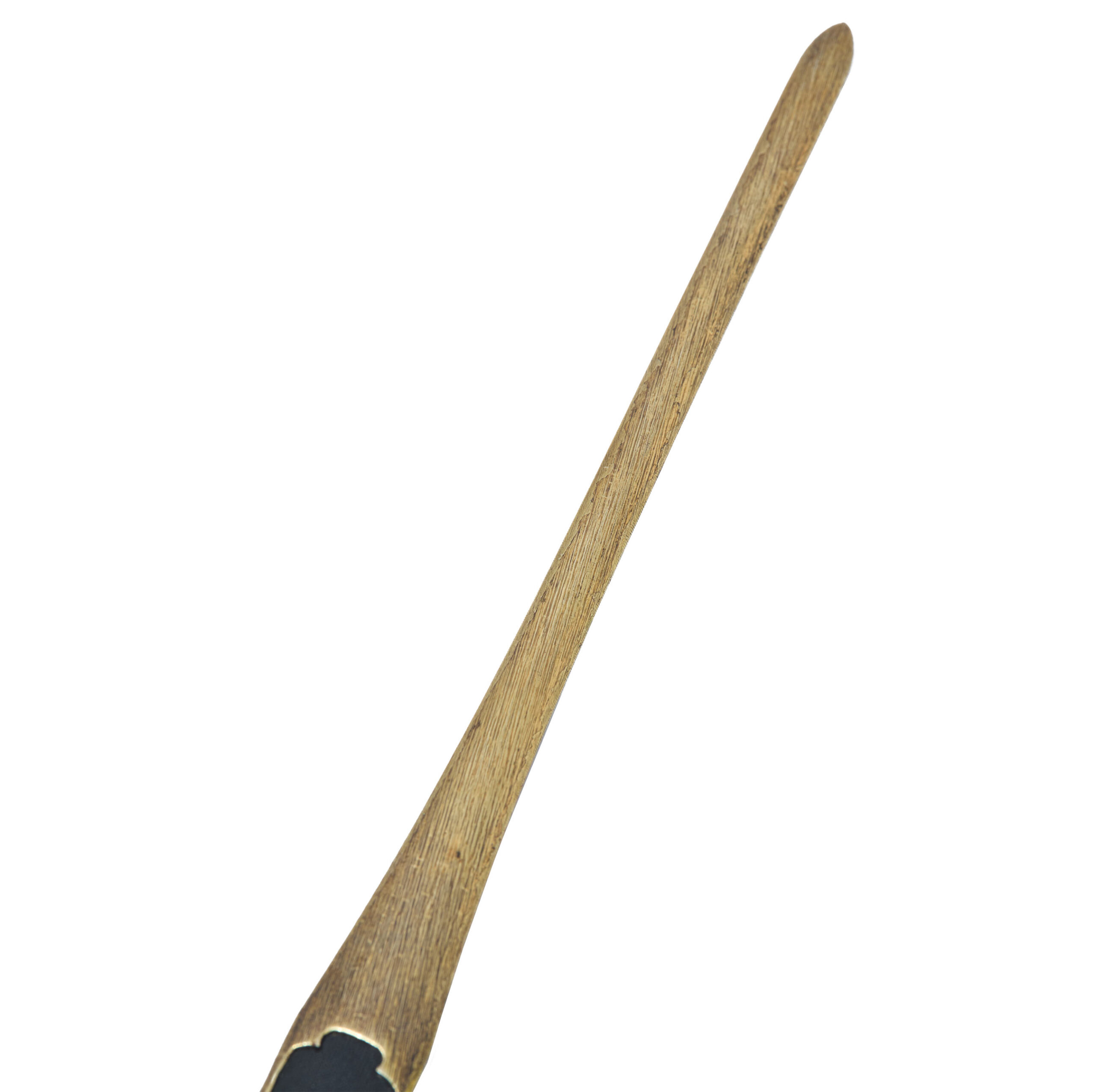
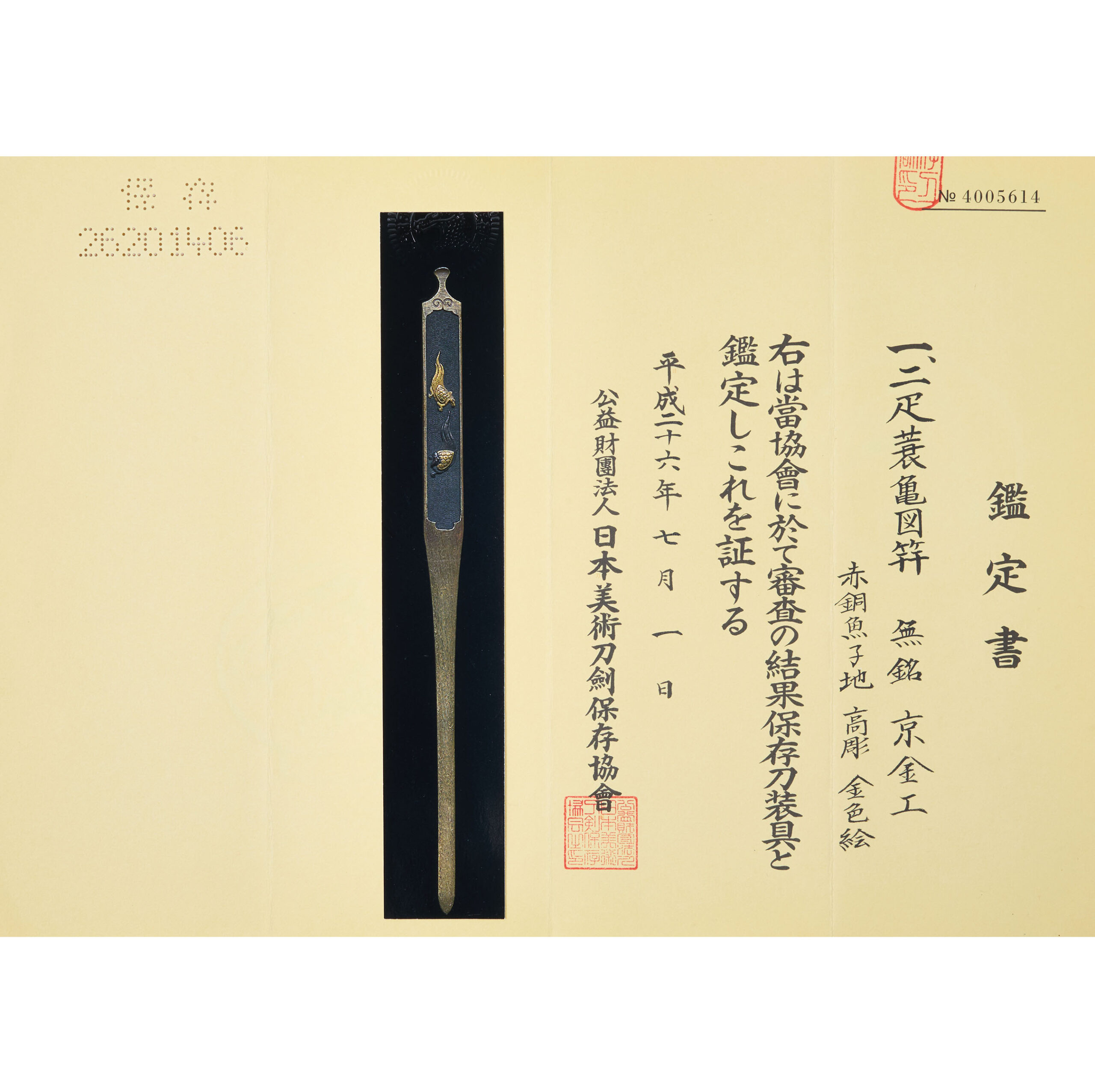
This kōgai (a hair-grooming implement carried in a slot in a Japanese sword’s scabbard) is crafted in shakudō nanako-ji (赤銅魚々子地) and decorated with high-relief carving (takabori, 高彫) and gold detailing (kin-iroe, 金色絵). Shakudō is a copper–gold alloy traditionally patinated to produce a deep, dark surface. The nanako ground consists of tiny, regularly arranged raised dots resembling fish roe, which enhance the contrast with the sculpted figures and gold decoration. The design depicts a pair of minogame (蓑亀), auspicious turtles with long, trailing strands resembling a mino (蓑), a traditional straw raincoat. Their appearance draws on turtles with algae growing on their shells. In decorative art, this growth is stylized into long, flowing, tail-like forms. In Japanese tradition, minogame are associated with exceptional longevity. Their trailing algae are interpreted as a sign of having lived for many years, making the motif an expression of wishes for longevity and good fortune. Here, the solid forms of the two turtles’ shells contrast with the flowing lines of their trailing strands, adding movement to the compact decorative surface of the kōgai. According to the NBTHK (Society for the Preservation of Japanese Art Swords) appraisal certificate, this kōgai is attributed to Kyō-kinkō (京金工). This designation identifies metalwork associated with Kyoto rather than a particular named artisan. Kyō-kinkō encompasses sword fittings produced by Kyoto metalworkers, primarily during the Edo period (1603–1868), including tsuba, menuki, kozuka, and kōgai. Rather than referring to a single, uniform lineage, the term covers a variety of workshops and artistic styles. Authentication Paper They authenticated the Kozuka on July 1st in the 26th year of Heisei (2014). They appraised it as Hozon Tousougu, the Kozuka worth preserving for Japanese society.
NihontoWatchOffered by Samurai Museum
Edo
Yamashiro
Unsigned
Hozon (NBTHK)
Certifies a genuine fitting worth preserving: a correct signature, or, if unsigned, an identifiable era and school, with recognized artistic and craft value.
The NBTHK (Nihon Bijutsu Tōken Hozon Kyōkai, the Society for the Preservation of Japanese Art Swords) is a public-interest incorporated foundation founded in 1948 and supervised by Japan’s Agency for Cultural Affairs (Bunkachō); it is based at the Japanese Sword Museum in Tokyo. Its expert panels physically examine each submitted work (shinsa) and issue a certificate (kanteishō) ranking it by artistic and historical merit. NBTHK papers are the most widely recognized standard of authentication for Japanese swords and fittings.
NBTHK official siteReturns/exchanges limited to defects caused by shipping (except willful misconduct or gross negligence by the company); customers must contact within 72 hours of receiving the product.
¥120,000