 NihontoWatchNihontoWatch
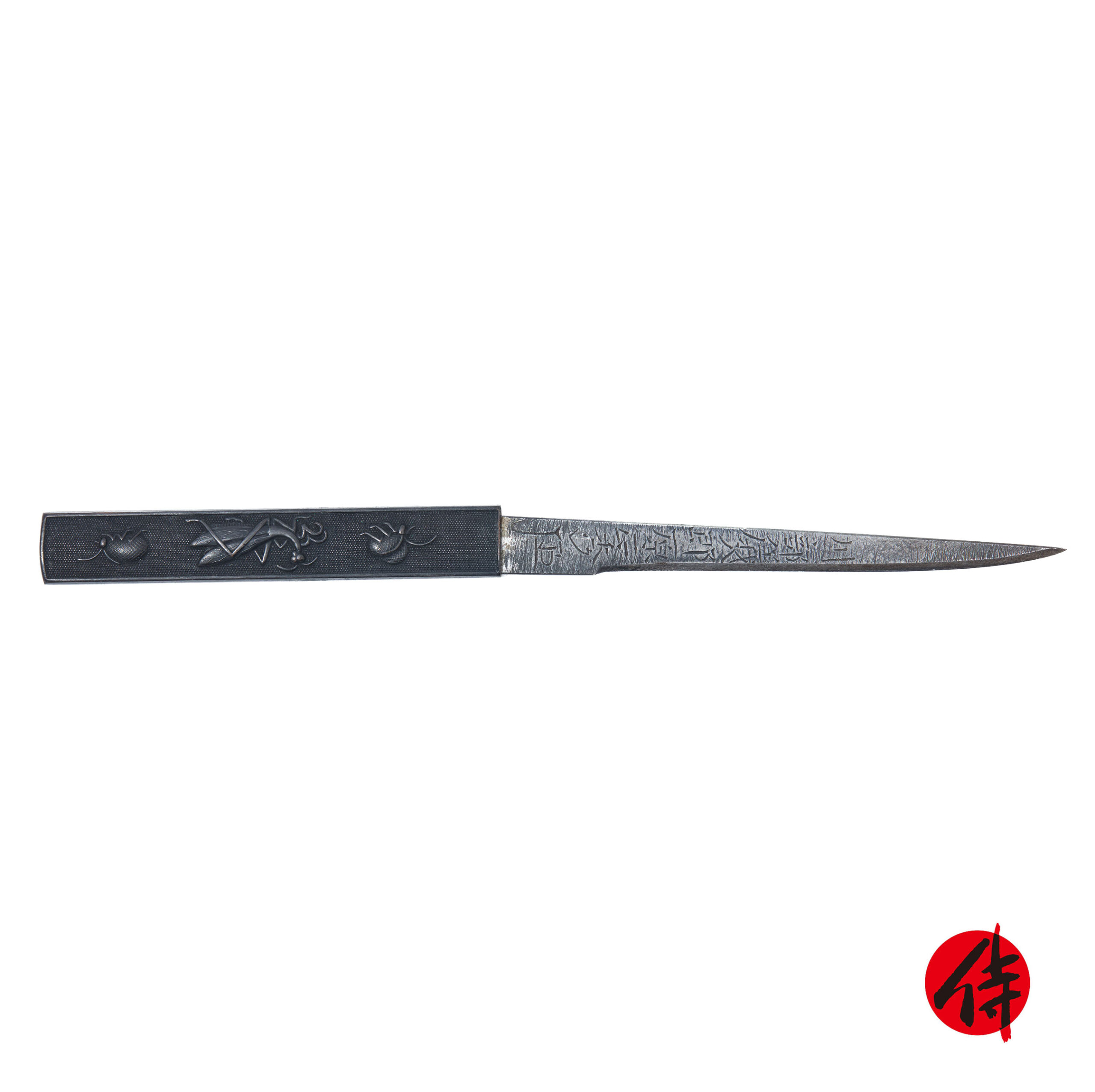
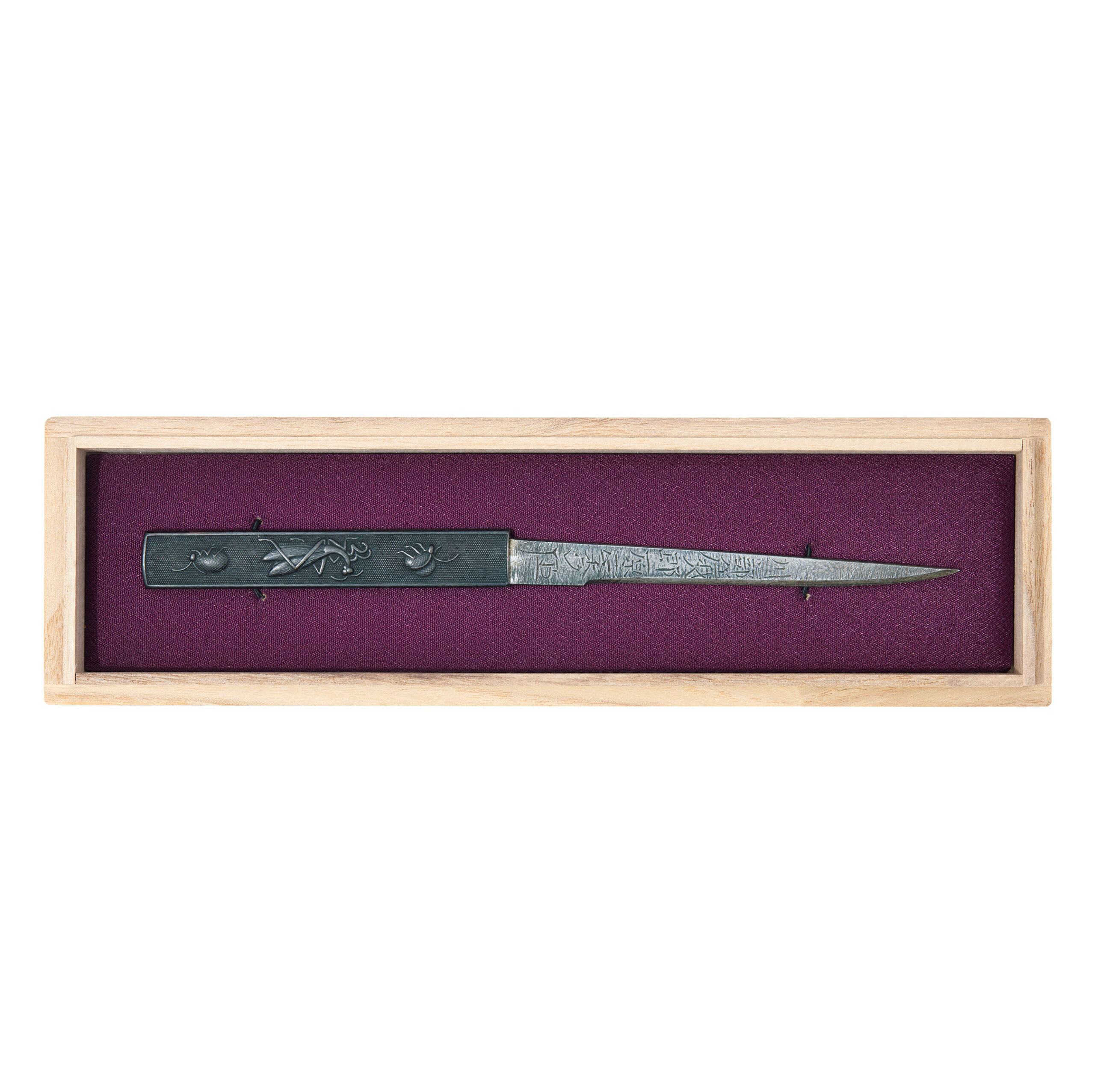
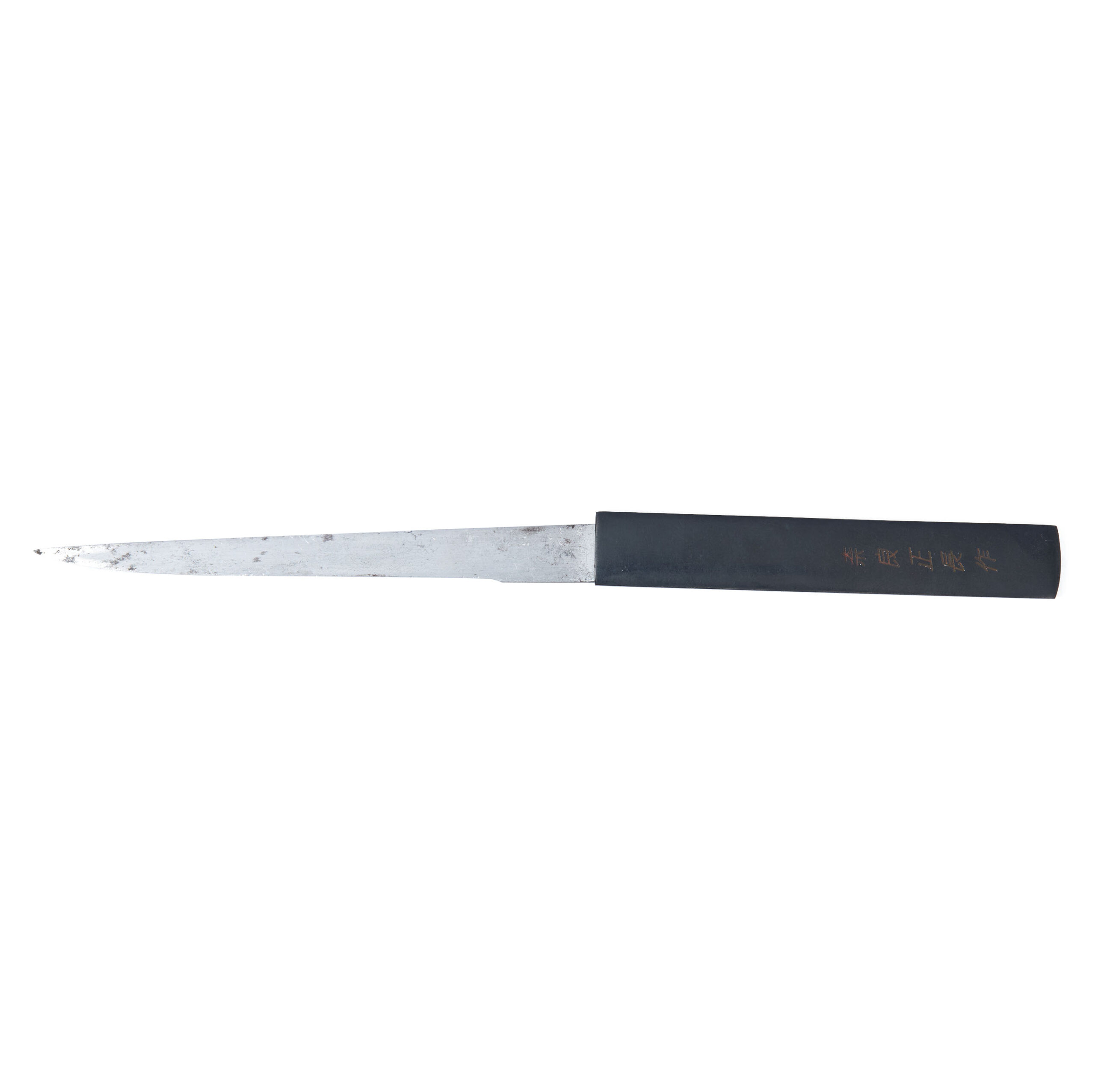
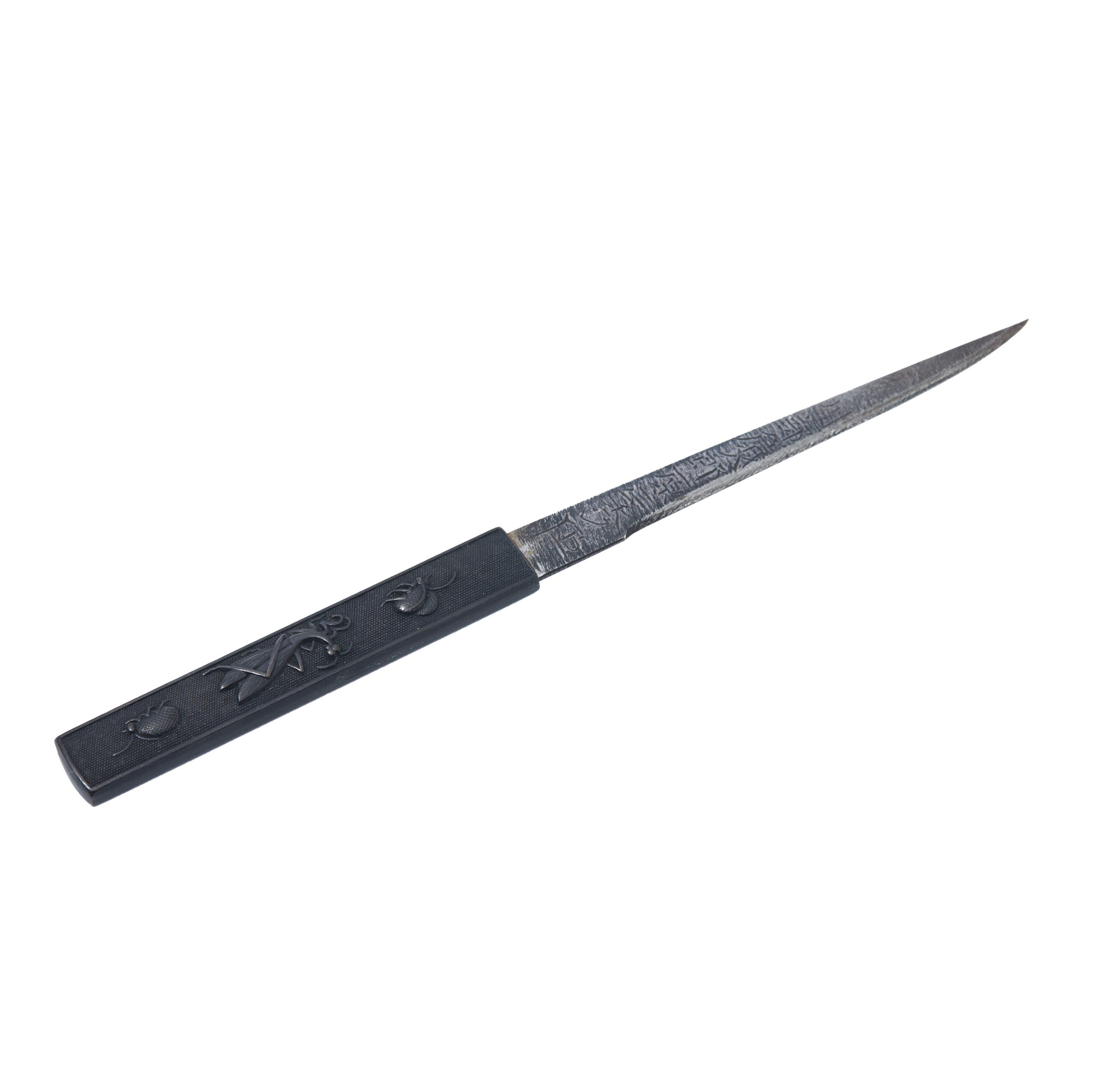
This kozuka features a bell cricket (suzumushi, 鈴虫) and a mantis (kamakiri, 蟷螂), both represented here as akimushi (秋虫), or autumn insects. Its surface is also decorated with nanako-ji (魚々子地), a technique that creates closely arranged, tiny raised dots resembling fish roe, providing a finely textured background for the insect motifs. The suzumushi is admired for its clear, bell-like song; suzu (鈴) means “bell.” It is closely associated with mushikiki (虫聞き), the traditional practice of listening to insects and appreciating the arrival of autumn through their calls. Enjoyed in courtly culture during the Heian period, this pastime also became popular among townspeople during the Edo period. The mantis is also known in Japanese as ogami-mushi (拝み虫) or inori-mushi (祈り虫), both referring to a “praying insect.” These names come from its folded forelegs, which resemble hands held together in prayer—the same resemblance reflected in the English name “praying mantis.”
NihontoWatchOffered by Samurai Museum

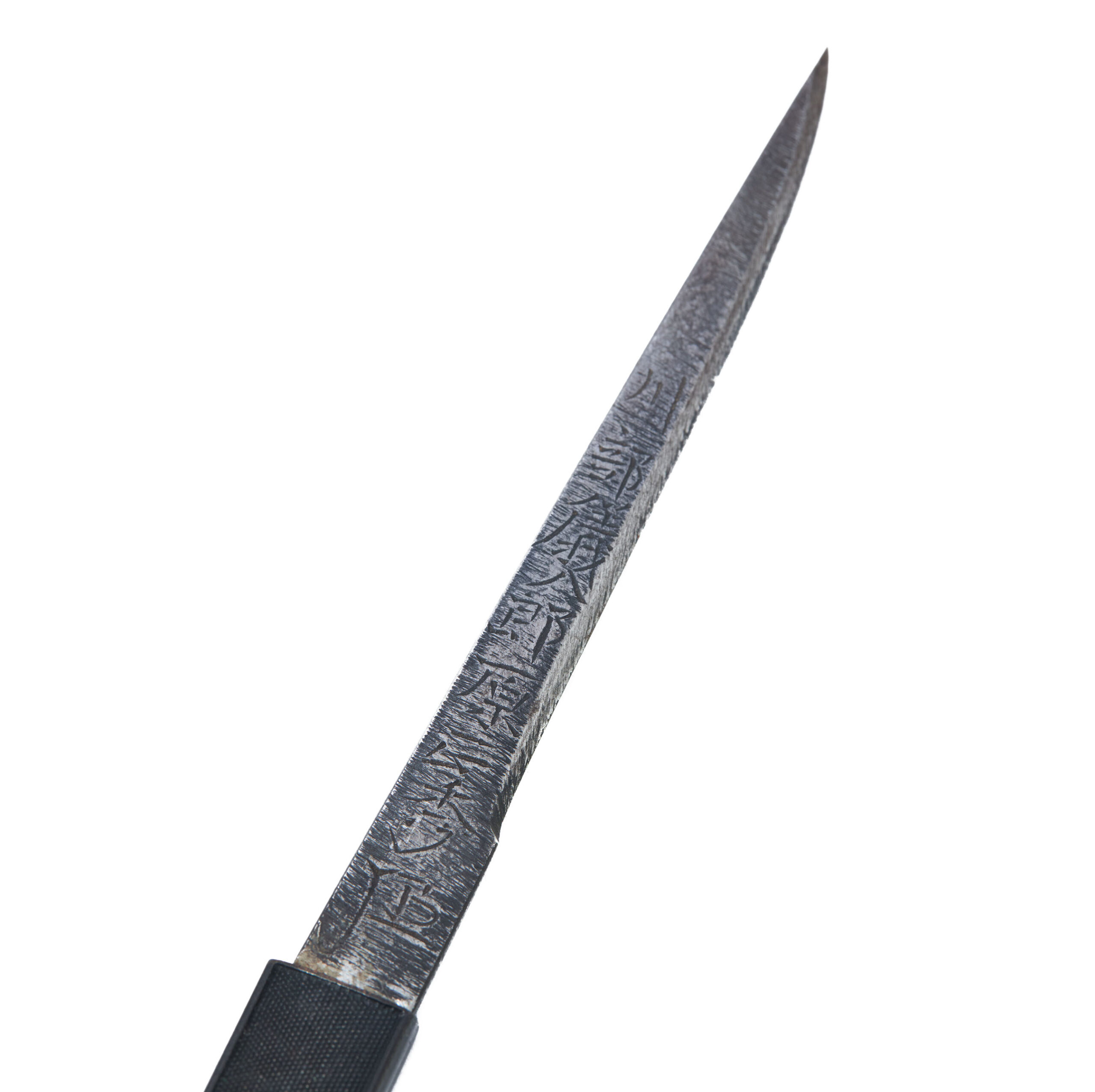
Edo
Unsigned
We could not find an authenticity certificate on the seller’s listing. Japanese swords and fittings are normally papered by the NBTHK (or the NTHK). Without one, the attribution is the seller’s own assessment and has not been independently verified — treat it with caution and ask the dealer about certification before buying.
Returns/exchanges limited to defects caused by shipping (except willful misconduct or gross negligence by the company); customers must contact within 72 hours of receiving the product.
¥70,000