Edo was the sword’s age of connoisseurship: the Hon’ami appraisers, the shogunal register of famous blades of 1719, and a thriving literature turned the sword into an object of study even as it ceased to be drawn in war.
 NihontoWatchNihontoWatch
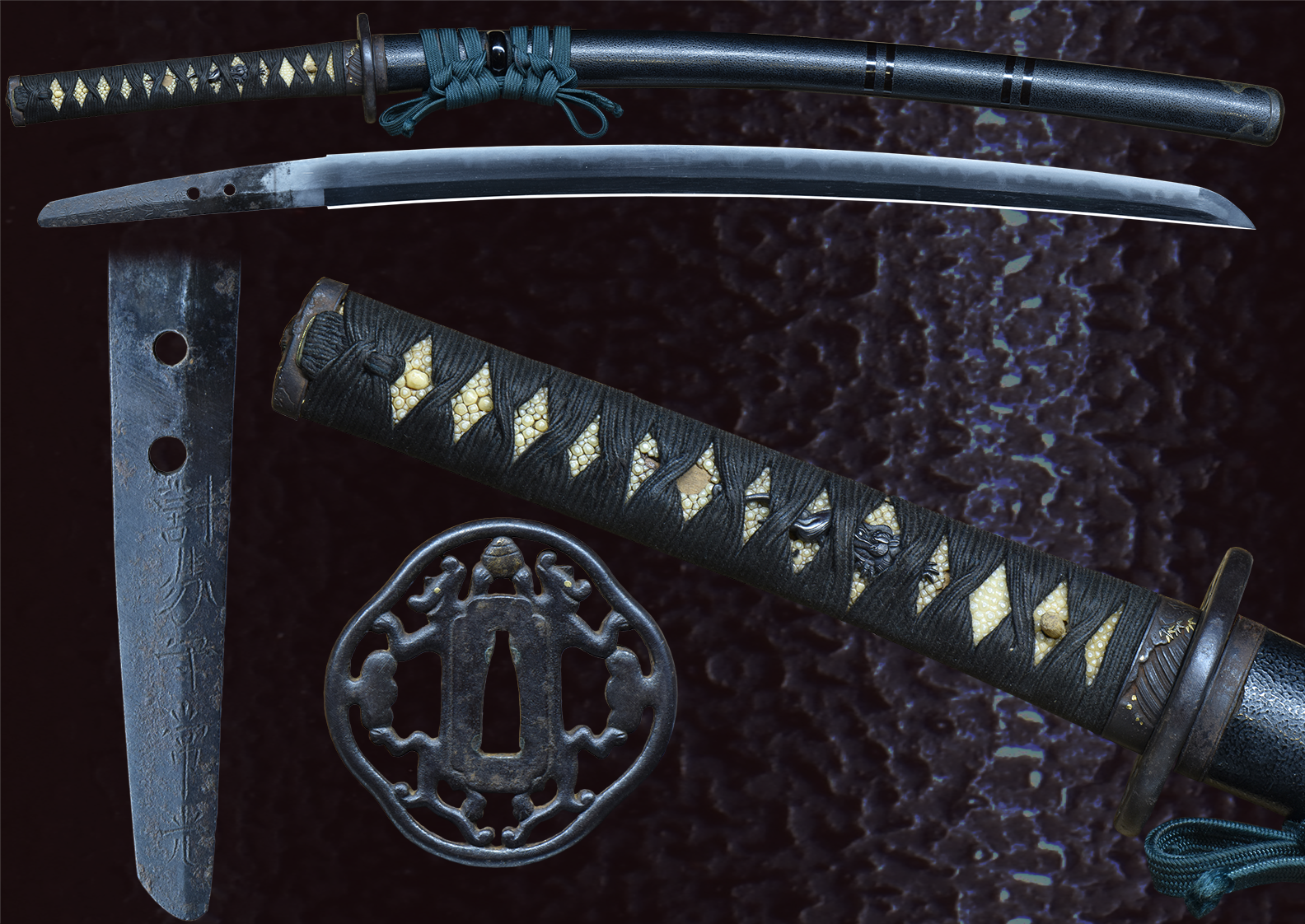
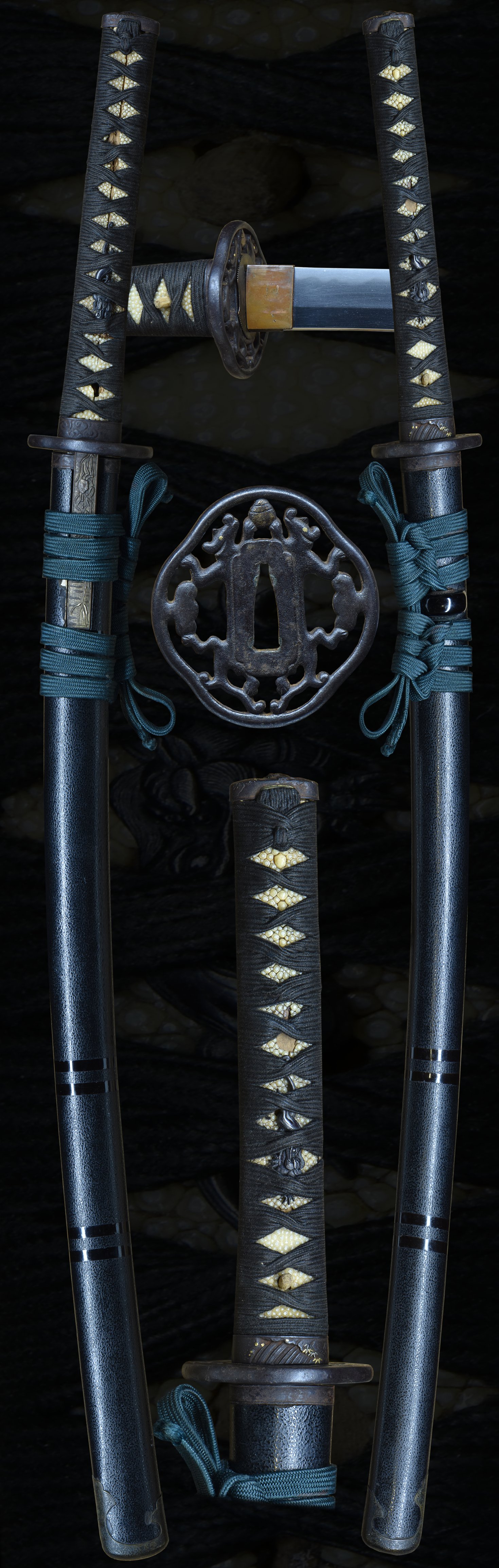
This is a interesting Edo wakizashi signed” Tsushima no Kami Tsunemitsu “. The smiths of the Ishido school lived in OMI and moved to various locations during the Shinto period. This particular group was headed by the famous MUSASHI DAIJO KOREKAZU. He moved to Edo and founded the Edo Ishido school which included the famous Tsushima no Kami Tsunemitsu. This blade should go to Shinsa the shape and traits point to an Ishido blade but should be authenticate properly. The blade is shinogi-zukuri and eerily reminiscent of old koto blades. It has a very elegant shape and a very nice finish to the tang called Ha-agari-kurijiri. There are 2 mekugi-ana but ubu. The hada is a nicely done mokume blend. There is utsuri of a whitish nature. The shinogi-ji has masame-hada. The hamon is something special on this blade. There is no typical yakidashi and the is an O-Choji midare and what looks to be saka choji also. Some of the Choji-midare kisses the shinogi-ji almost. The Nioi-guchi is very fine and tight. The boshi is ko-maru. This blade has the look and feel of a Ichimonji blade. It has a koto feel to it. Please note that the mounts are what’s referred to as a married set. They are not original to the sword but fit together and will not be perfectly fitted. The koshirae is a pleasant mix of dragons though obvious made or put together for this blade at a later date. The tsuka is wrapped in a black ito with shakudo water dragon menuki as well as the fuchi kashira. The tsuba is an iron stylized nambum style sukashi with facing dragons.The saya is an edo period lacquered piece in a black stone finish with black lacquered bands and kojiri. The sageo is a teal colr which accentuates the blade. All and all a beautiful piece. There is a copper habaki. This sword is on consignment.
NihontoWatchOffered by Nihonto Antiques
We couldn’t find current papers for this piece. Ask the dealer whether it has been, or can be, submitted to shinsa. — Hoshi

The Edo period (1615 to 1868)
Edo was the sword’s age of connoisseurship: the Hon’ami appraisers, the shogunal register of famous blades of 1719, and a thriving literature turned the sword into an object of study even as it ceased to be drawn in war.
We could not find an authenticity certificate on the seller’s listing. Japanese swords and fittings are normally papered by the NBTHK (or the NTHK). Without one, the attribution is the seller’s own assessment and has not been independently verified — treat it with caution and ask the dealer about certification before buying.
We offer a 48 hour inspection period for all Antique items shipped within the United States only. If the item is not to your satisfaction, we will gladly refund your money less any shipping and handling fees. All sales are final after the 48 hour inspection period. Please note that all discounted items are a final sale and not returnable.
$3,200