NihontoWatch Mon

NihontoWatchBETA

MarketAuctions
Encyclopedia
NihontoWatch Mon

NihontoWatchBETA

MarketAuctions
Encyclopedia

Description

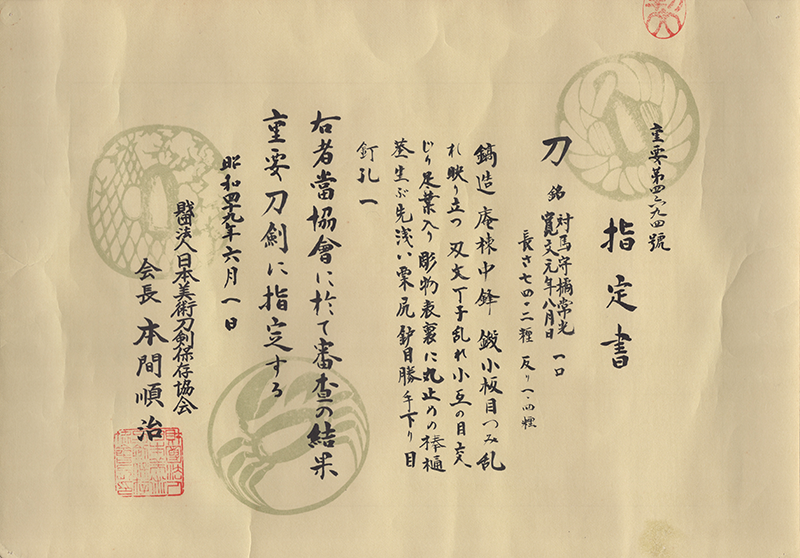
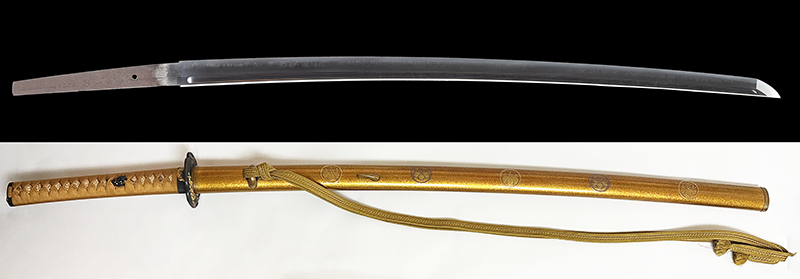
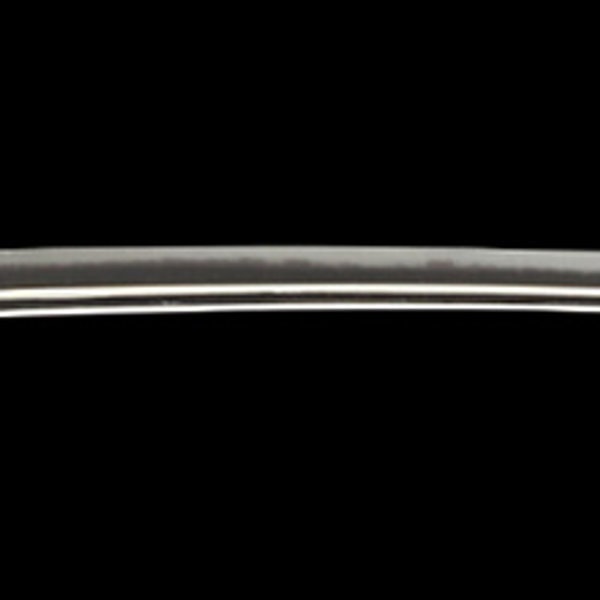
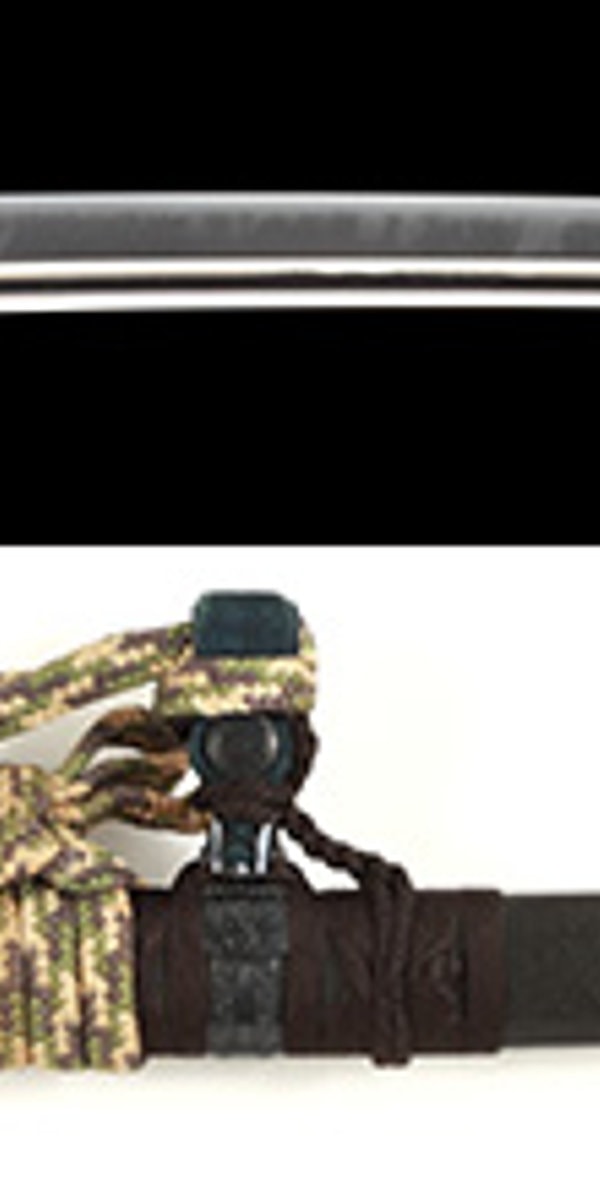
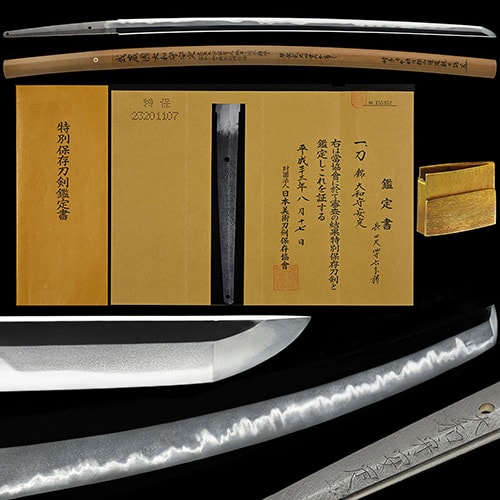
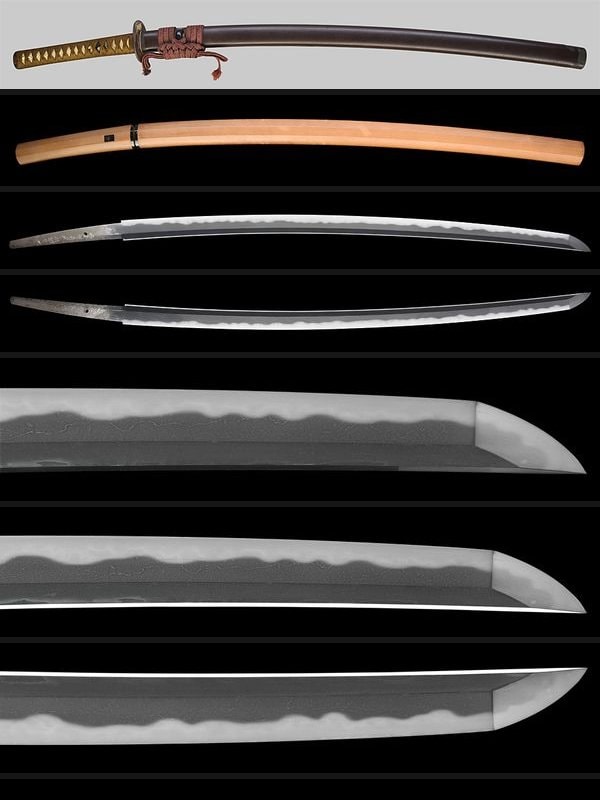
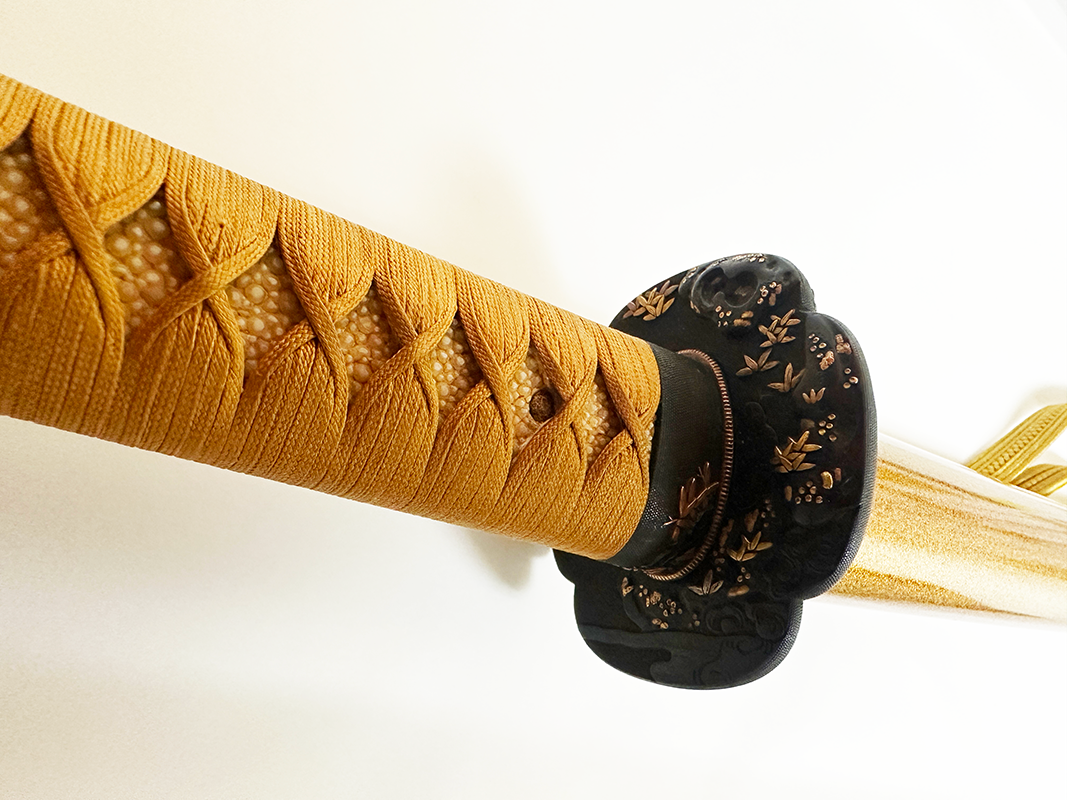
This is a katana made by Tsunemitsu, a smith of the Ishido school who worked in Musashi province during the Edo period. The blade is designated as Juyo Token by NBTHK. It features a choji-midare hamon with abundant activity and comes with a koshirae.

NBTHK Setsumei

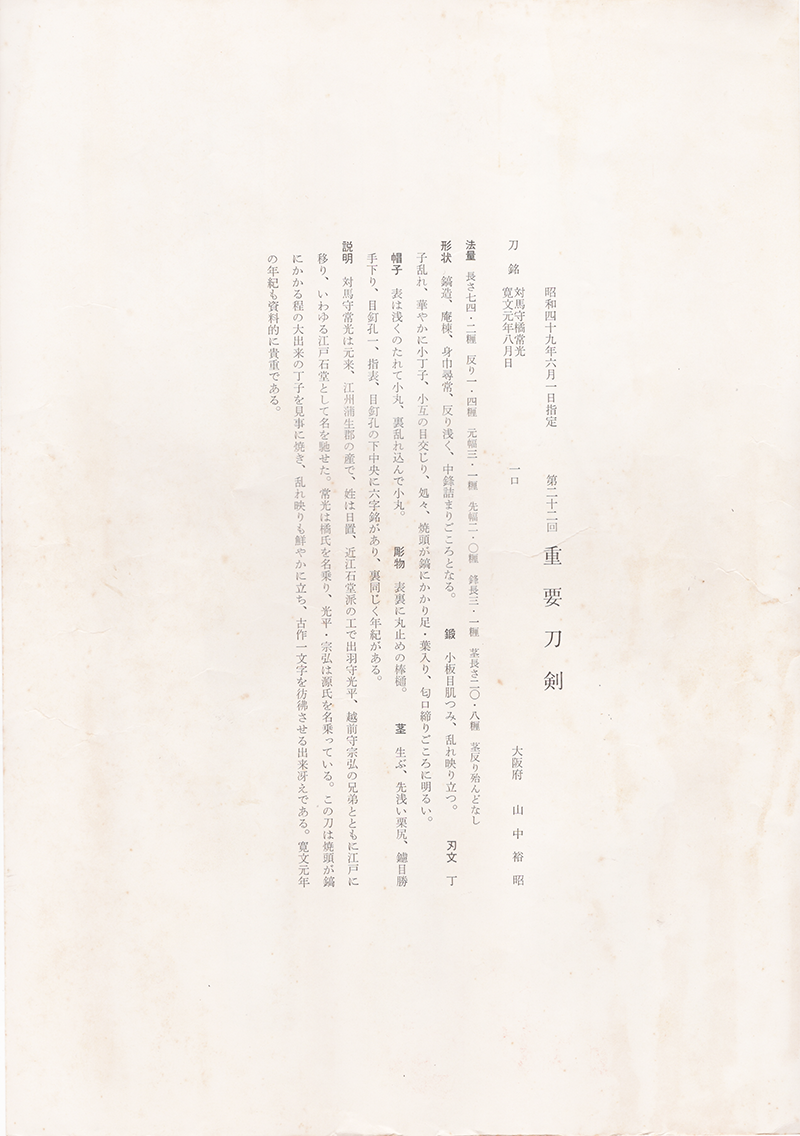
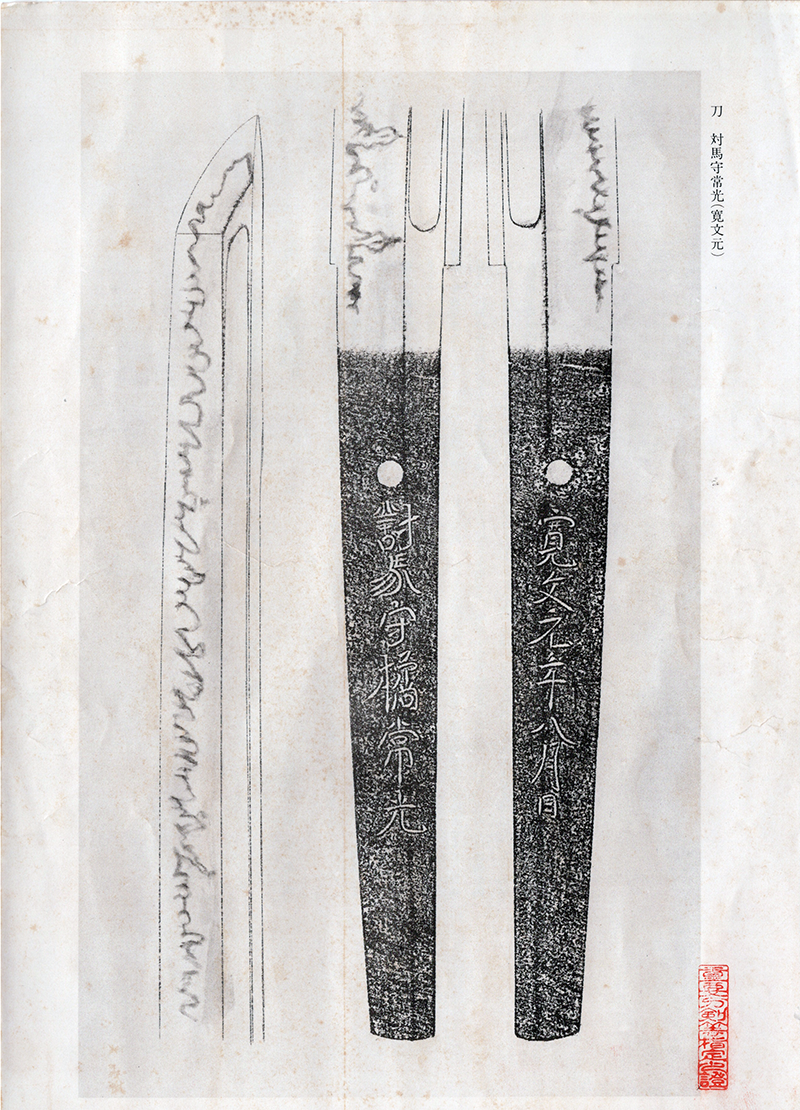
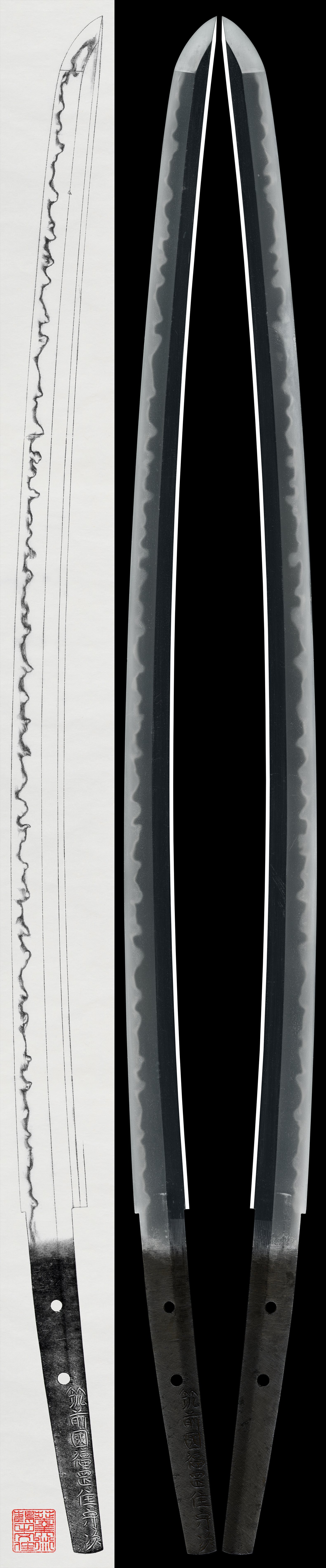
Jūyō-Tōken, 22nd Session — Designated June 1, 1974 Katana, mei: Tsushima no Kami Tachibana Tsunemitsu (対馬守橘常光) Measurements Nagasa 74.2 cm, sori 1.4 cm, motohaba 3.1 cm, sakihaba 2.0 cm, kissaki-nagasa 3.1 cm, nakago-nagasa 20.8 cm, nakago-sori: almost none Description Keijō: shinogi-zukuri, iori-mune; normal mihaba; shallow sori; a somewhat compact chū-kissaki. Kitae: Dense ko-itame-hada; midare-utsuri appears. Hamon: chōji-midare; showy, with small chōji and small gunome mixed in; in places the yakigashira rises to reach the shinogi; ashi and yō enter; the nioiguchi tends toward tightness and is bright. Bōshi: On the omote, gently notare and turns back in ko-maru; on the ura, midare-komi and turns back in ko-maru. Horimono: On both sides, a bō-hi with maru-dome. Nakago: Ubu; nakago-jiri is a shallow kurijiri; yasurime katte-sagari; one mekugi-ana; on the omote, below the mekugi-ana at the center, there is a six-character signature; on the ura there is likewise a date inscription. Artisan Tsushima no Kami Tachibana Tsunemitsu (対馬守橘常光) Era Kanbun 1 (1661), 8th month (day unspecified) — early Edo period Explanation Tsushima no Kami Tsunemitsu was originally from Gamō District in Gōshū (Ōmi Province). His family name was Hioki. He was a smith of the Ōmi Ishidō lineage, and together with his brothers—Dewa no Kami Mitsuhira and Echizen no Kami Munehiro—he moved to Edo, where they gained renown as the so-called Edo Ishidō. Tsunemitsu styled himself of the Tachibana clan, whereas Mitsuhira and Munehiro styled themselves of the Minamoto clan. This katana superbly displays a grandly executed chōji in which the yakigashira rises so far as to reach the shinogi; and its midare-utsuri stands out vividly as well. The workmanship is clear and striking, calling to mind the old works of the Ichimonji school. The Kanbun 1 date inscription is also of great value as documentary material.

NihontoWatch MonNihontoWatchBETA
MarketAuctionsEncyclopedia
Swords›Ishido›Tsunemitsu›Katana: Tsushima no Kami Tsunemitsu
katanaJūyō
Ishido Tsunemitsu

Katana: Tsushima no Kami Tsunemitsu

mei · Ishido · Keian (1648-1652) · nagasa 74.2cm · sori 1.4cm

¥7,700,000
Visit seller website →
Ishido Tsunemitsu — 1 of 8
Ishido Tsunemitsu — 2 of 8
Ishido Tsunemitsu — 3 of 8
Ishido Tsunemitsu — 4 of 8
Ishido Tsunemitsu — 5 of 8
Ishido Tsunemitsu — 6 of 8
Ishido Tsunemitsu — 7 of 8
Ishido Tsunemitsu — 8 of 8
1 / 8
1 / 8
Ishido Tsunemitsu — 1 of 8Ishido Tsunemitsu — 2 of 8Ishido Tsunemitsu — 3 of 8Ishido Tsunemitsu — 4 of 8Ishido Tsunemitsu — 5 of 8Ishido Tsunemitsu — 6 of 8Ishido Tsunemitsu — 7 of 8Ishido Tsunemitsu — 8 of 8
Measurements & details
Smith
Ishido Tsunemitsu
Type
Katana
School
Ishido
Period
Around 1648–1661(Keian)
Province
Musashi
Signature
Signed(100% of this smith's designated works are signed)
Measurements
Nagasa 74.2cmSori 1.4cmMotohaba 3.1cmSakihaba 2cmKasane 0.7cm
Description

This is a katana made by Tsunemitsu, a smith of the Ishido school who worked in Musashi province during the Edo period. The blade is designated as Juyo Token by NBTHK. It features a choji-midare hamon with abundant activity and comes with a koshirae.

NBTHK Zufu Commentary

Juyo #22

AI translation — may contain errors

-, 22nd Session — Designated June 1, 1974

, : Tsushima no Kami Tachibana Tsunemitsu (対馬守橘常光)

Measurements 74.2 cm, 1.4 cm, 3.1 cm, 2.0 cm, 3.1 cm, 20.8 cm, : almost none

Description Keijō: , ; normal ; shallow ; a somewhat compact . : Dense ; appears. : ; showy, with small and small mixed in; in places the rises to reach the ; and enter; the tends toward tightness and is bright. : On the , gently and turns back in ; on the , and turns back in . : On both sides, a with . : ; is a shallow ; ; one ; on the , below the at the center, there is a six-character signature; on the there is likewise a date inscription.

Artisan Tsushima no Kami Tachibana Tsunemitsu (対馬守橘常光)

Era 1 (1661), 8th month (day unspecified) — early period

Explanation Tsushima no Kami Tsunemitsu was originally from Gamō District in Gōshū (Ōmi Province). His family name was Hioki. He was a smith of the Ōmi Ishidō lineage, and together with his brothers—Dewa no Kami Mitsuhira and no Kami Munehiro—he moved to , where they gained renown as the so-called Ishidō. Tsunemitsu styled himself of the Tachibana clan, whereas Mitsuhira and Munehiro styled themselves of the Minamoto clan.

This superbly displays a grandly executed in which the rises so far as to reach the ; and its stands out vividly as well. The workmanship is clear and striking, calling to mind the old works of the school. The 1 date inscription is also of great value as documentary material.

About the maker

Tsunemitsu

常光

Edo Ishido (Shinto) · Musashi · around 1648-1661

Fujishiro Jo saku · Tōken Taikan top 31%

1 piece on the market now

›

A katana on this record signed Tsushima Nyudo Tachibana Tsunemitsu and dated Genroku 11 (1698) gives the smith's age as seventy-three, and from that one inscription his long working life can be reckoned back to a birth around Kan'ei 3. Tsunemitsu was surnamed Hioki, used the common name Ichinojo and later styled himself Saburozaemon, and was born in Gamo District of Omi Province. He belonged to the Ishido line, the early-Edo school that set out to revive the clove-flower chOji of old Ichimonji and Ko-Bizen, complete with the utsuri the medieval Bizen masters had carried in their steel. With Dewa no Kami Mitsuhira and Echizen no Kami Munehiro he went up from Omi to Kyoto and afterward down to Edo, where these makers became known as the Edo Ishido. He took the Tachibana name where Mitsuhira used Minamoto, and the published sources name him, with Mitsuhira, a representative smith of the Edo Ishido group[[c:1]].

His hand is a single flamboyant manner held at full power across every blade on record. Over a tightly forged itame, often a well-packed ko-itame mixing mokume and a little nagare-hada, he tempers a chOji-midare crowded with double-flower jUka-chOji, large and small chOji, round-headed chOji, gunome and small gunome, with pointed elements set among them, so the temper line shows pronounced height as it crests and falls. Ashi and yO enter in profusion and the work turns showy, nioi-dominant with attached ko-nie, fine sunagashi running through and kinsuji appearing here and there. The published sources call one such katana a work in which his true strengths are fully realized[[c:2]] and another, of large-pattern jUka-chOji with ashi and yO entering thickly, the piece that should be regarded as his finest[[c:3]]. The dense, height-varied clove temper, not the bare clove root that every Bizen-descended smith shares, is what makes his chOji his own.

The jigane beneath is the surer half of the recognition. It is a well-forged itame, on his calmer pieces a ko-itame that packs down finely, carrying ji-nie that gathers in minute particles, and across it stands a midare-utsuri. Utsuri on a new-sword blade is rare and deliberate, and its recovery was the Ishido school's whole purpose, so a flamboyant chOji standing over a clear irregular reflection is the first thing that separates an Ishido katana from any other Shinto chOji. The published sources describe the reflection in his most vivid pieces as standing brilliantly[[c:4]], the clove temper bright above it. The boshi enters midare-komi and turns back in ko-maru, at times running straight on the omote with a constriction at the point, occasionally with a little hakikake; the sugata is the broad mid-Edo katana, wide in mihaba with a noticeable taper, thick in kasane, the chu-kissaki sometimes compact and sometimes tending to extend.

The published sources draw him not as a sequence of style periods but as one accomplished manner, and the only axis they trace is read off the nakago. The nakago is ubu, the signature cut centrally below the mekugi-ana in a large, thickly chiseled six-character mei, with a long full signature and date on the most completely inscribed pieces. Some of the works carry the title Tsushima no Jo and others Tsushima no Kami, and a minority view has held the Tsushima no Jo blades to be a separate second generation. The judges rather find that in the overall tone of the inscription and the manner of chisel work the Tsushima no Jo signatures share much with the Tsushima no Kami ones, and prefer to read the former as works made before he received the higher Tsushima no Kami rank, one such katana viewed as a piece made prior to that promotion[[c:5]], the matter left open for new evidence. The signature thus carries the only temporal information in an oeuvre whose hand does not otherwise change, and a related question hangs over his very kinship: he was long held to be Mitsuhira's elder brother, but extant dated signatures, calculated backward, show Mitsuhira the elder by six years, and the difference of Tachibana against Minamoto has brought even the brother theory into doubt.

Within the Edo Ishido group Tsunemitsu and Mitsuhira are the two by whom the branch is known, and what sets Tsunemitsu apart is grounded in his own steel rather than in any borrowed comparison. His bright, height-varied chOji-midare with jUka-chOji and his standing midare-utsuri are the features the judges return to, and the recurring verdict is that his work recalls the old Ichimonji of classical times, described on the JUyO katana of the fiftieth and thirty-fourth sessions as bringing old Ichimonji to mind[[c:6]] and on the twenty-second session piece as calling it vividly to memory[[c:7]]. That recovered Bizen idiom, tempered in new-sword steel and carried on an utsuri the medieval smiths would have recognized, is the manner the Edo branch is remembered for, and one katana is singled out simply as a typical work that clearly displays his distinctive characteristics[[c:8]]. Where the Tsushima no Jo and Tsushima no Kami generation debate, if ever resolved toward two hands, would extend his line, the published sources keep it as one hand whose signature alone moved with his rank.

For the collector Tsunemitsu is a first-rank name of the Edo Ishido, and Fujishiro grades him Jo saku. He has no National Treasures and no Important Cultural Properties; his record on this account runs entirely through the JUyO tier, where seven of his works are held, every one of them an ubu, signed katana or wakizashi cut with the large six-character mei, several carrying dates across the Kanbun, Enpo and Genroku years that make the chronology of his long career legible. None of the seven carries a recorded former owner, so no daimyo provenance or holding institution can honestly be named for them; what can be said is that they are designated works held in public and long-private collections, more often kept than traded. A signed Tsunemitsu of his flamboyant chOji manner is among the more attainable of the Ishido swords precisely because so much of his record sits in the tradeable JUyO tier rather than locked as national heritage, yet a fine one reaches the market only from time to time and with patience, and a dated katana showing the bright jUka-chOji over a standing utsuri remains a substantial acquisition, a document of how the Edo Ishido brought the old Ichimonji clove back to life in a Shinto blade.


Historical importance

Where Tsunemitsu stands among comparable artisans: across all of nihontō, and within tradition, era, and period. The tiers (Foremost · Leading · Major · Notable) weigh official designations from the NBTHK and Japan's Agency for Cultural Affairs, together with historical honors of lasting repute such as the Sansaku and Meibutsu-chō.

随一
Foremost
屈指
Leading
有数
Major
著名
Notable

Select a lens to see how it's measured.

Designation record
7 designated works
Jūyō
7
1 work by Tsunemitsu on the market→
Tsunemitsu — full profileEdo Ishido (Shinto) school

Dated Works

Years he was demonstrably active, proven by signed-and-dated blades

Active period
1661Editorial estimate: 1648–1661
1 of 7 designated works carry a date
About the school

Ishido

石堂

Shinto · Omi

46 pieces on the market now

›

The Ishido school (石堂) traces its root to Omi Province, where smiths surnamed Hioki and bearing names such as Ishido worked before the line dispersed across the country in the early Edo period. From that Omi stem grew four principal branches: the Fukuoka Ishido of Chikuzen, the Edo Ishido carried east by makers who had first gone up from Omi to Kyoto, the Osaka Ishido seeded by smiths who settled in the merchant city, and the Kishu Ishido working under the Kii daimyo. Learn more →

15 recorded smiths101 designated works
Leading smiths
SmithEraDesignated
Tsunemitsu常光1648-16617
Yasuhiro安廣1661-16734
Tsunahiro綱廣1673-16810
Nagatsugu長次1345-13500
Nagatsugu長次1681-16840
Explore the Ishido school →
NBTHK Certificate
Jūyō Tōken重要刀剣
Important Sword
›

A blade of top-grade workmanship and condition, formally judged to rank with a nationally recognized Important Art Object (Jūyō Bijutsuhin). Awarded only at the NBTHK’s competitive annual examination.

Of Japan’s roughly 2.5 million registered swords, only 12,358 (about 1 in 202) have ever attained Jūyō.

About the NBTHK›

The NBTHK (Nihon Bijutsu Tōken Hozon Kyōkai, the Society for the Preservation of Japanese Art Swords) is a public-interest incorporated foundation founded in 1948 and supervised by Japan’s Agency for Cultural Affairs (Bunkachō); it is based at the Japanese Sword Museum in Tokyo. Its expert panels physically examine each submitted work (shinsa) and issue a certificate (kanteishō) ranking it by artistic and historical merit. NBTHK papers are the most widely recognized standard of authentication for Japanese swords and fittings.

NBTHK official site→
Seller
I
Iida Koendo
Established 1880 · 146 yrs on the market
🇯🇵Ships from Japan
›
✓Verified dealeriidakoendo.com
Settles in JPY
✓Ships worldwide✓English supportWire transfer
Return policy

Customer-initiated returns accepted within two days of arrival; return shipping paid by customer and fees non-refundable. Returns/refunds unavailable for overseas deliveries.

View all of Iida Koendo’s listings→View this item on the dealer’s site→

Previously sold by Ishido Tsunemitsu

Choshuya
Katana - by Ishido Tsunemitsu - Tsushima no Kami Tachibana Tsunemitsu (1st Gen.)Katana - by Ishido Tsunemitsu - Tsushima no Kami Tachibana Tsunemitsu (1st Gen.)
Sold

Katana

ByIshido Tsunemitsu
SOLD
Token-Net
Tokuho
Wakizashi - Tokuho - by Ishido Tsunemitsu - Tsushima Nyudo Tsunemitsu (Musashi)Wakizashi - Tokuho - by Ishido Tsunemitsu - Tsushima Nyudo Tsunemitsu (Musashi)
Sold

Wakizashi

ByIshido Tsunemitsu
SOLD
Choshuya
Katana - by Ishido Tsunemitsu - Tsushima no Kami Tachibana TsunemitsuKatana - by Ishido Tsunemitsu - Tsushima no Kami Tachibana Tsunemitsu
Sold

Katana

ByIshido Tsunemitsu
SOLD

More from the Ishido school

View all →
Aoi Art
Jūyō
Katana - Jūyō - by Ishido Korekazu - Sekido Unju KorekazuKatana - Jūyō - by Ishido Korekazu - Sekido Unju Korekazu

Katana

ByIshido Korekazu
¥4,500,000
Tokyo Sword
Hozon
Wakizashi - Hozon - by Kishu Ishido School - Amazing Hamon Kishu Ishido Yasumitsu Wakizashi Shakudo Nanako FittingsWakizashi - Hozon - by Kishu Ishido School - Amazing Hamon Kishu Ishido Yasumitsu Wakizashi Shakudo Nanako Fittings

Wakizashi

ByKishu Ishido School
¥1,350
Hyozaemon
Tokuho
Katana - Tokuho - by Ishido School - Katana by Tatarachōkō, a master of the Shinto Bizen tradition and Saijo Owazamono smithKatana - Tokuho - by Ishido School - Katana by Tatarachōkō, a master of the Shinto Bizen tradition and Saijo Owazamono smith

Katana

ByIshido School
Ask
Token-Net
Jūyō
Katana - Jūyō - by Ishido Korekazu - Ishido Ikkanshi Tadakazu - Bunkyu 1st Year, 8th MonthKatana - Jūyō - by Ishido Korekazu - Ishido Ikkanshi Tadakazu - Bunkyu 1st Year, 8th Month

Katana

ByIshido Korekazu
¥5,500,000
Token-Net
Jūyō
Katana - Jūyō - by Ishido Korekazu - Fujiwara KorekazuKatana - Jūyō - by Ishido Korekazu - Fujiwara Korekazu

Katana

ByIshido Korekazu
¥5,500,000
Goushuya
Jūyō
Katana - Jūyō - by Ishido Korekazu - Ishido Unju KorekazuKatana - Jūyō - by Ishido Korekazu - Ishido Unju Korekazu

Katana

ByIshido Korekazu
Ask
Giheiya
Tokuho
Yari - Tokuho - by Ishido Nagatsugu - Nagatsugu (Kishu Shinto) with ShirasayaYari - Tokuho - by Ishido Nagatsugu - Nagatsugu (Kishu Shinto) with Shirasaya

Yari

ByIshido Nagatsugu
¥450,000
Eirakudo
Tokuho
Katana - Tokuho - by Ishido Yasusada - Yamatonokami Yasusada - Tokubetsu Hozon TokenKatana - Tokuho - by Ishido Yasusada - Yamatonokami Yasusada - Tokubetsu Hozon Token

Katana

ByIshido Yasusada
¥3,300,000

Swords

  • Katana
  • Wakizashi
  • Tantō
  • Tachi
  • Naginata
  • Yari

Fittings

  • Tsuba
  • Fuchi-Kashira
  • Kozuka
  • Menuki

By Certification

  • Tokujū
  • Jūyō
  • Tokuho
  • Hozon

Resources

  • Dealer Directory
  • Artist Directory
  • Glossary
  • Browse All
Nihontowatch© 2026
TermsPrivacyCookies

Description

This is a katana made by Tsunemitsu, a smith of the Ishido school who worked in Musashi province during the Edo period. The blade is designated as Juyo Token by NBTHK. It features a choji-midare hamon with abundant activity and comes with a koshirae.

NBTHK Setsumei

Jūyō-Tōken, 22nd Session — Designated June 1, 1974 Katana, mei: Tsushima no Kami Tachibana Tsunemitsu (対馬守橘常光) Measurements Nagasa 74.2 cm, sori 1.4 cm, motohaba 3.1 cm, sakihaba 2.0 cm, kissaki-nagasa 3.1 cm, nakago-nagasa 20.8 cm, nakago-sori: almost none Description Keijō: shinogi-zukuri, iori-mune; normal mihaba; shallow sori; a somewhat compact chū-kissaki. Kitae: Dense ko-itame-hada; midare-utsuri appears. Hamon: chōji-midare; showy, with small chōji and small gunome mixed in; in places the yakigashira rises to reach the shinogi; ashi and yō enter; the nioiguchi tends toward tightness and is bright. Bōshi: On the omote, gently notare and turns back in ko-maru; on the ura, midare-komi and turns back in ko-maru. Horimono: On both sides, a bō-hi with maru-dome. Nakago: Ubu; nakago-jiri is a shallow kurijiri; yasurime katte-sagari; one mekugi-ana; on the omote, below the mekugi-ana at the center, there is a six-character signature; on the ura there is likewise a date inscription. Artisan Tsushima no Kami Tachibana Tsunemitsu (対馬守橘常光) Era Kanbun 1 (1661), 8th month (day unspecified) — early Edo period Explanation Tsushima no Kami Tsunemitsu was originally from Gamō District in Gōshū (Ōmi Province). His family name was Hioki. He was a smith of the Ōmi Ishidō lineage, and together with his brothers—Dewa no Kami Mitsuhira and Echizen no Kami Munehiro—he moved to Edo, where they gained renown as the so-called Edo Ishidō. Tsunemitsu styled himself of the Tachibana clan, whereas Mitsuhira and Munehiro styled themselves of the Minamoto clan. This katana superbly displays a grandly executed chōji in which the yakigashira rises so far as to reach the shinogi; and its midare-utsuri stands out vividly as well. The workmanship is clear and striking, calling to mind the old works of the Ichimonji school. The Kanbun 1 date inscription is also of great value as documentary material.

NihontoWatch MonNihontoWatchBETA
MarketAuctionsEncyclopedia
Swords›Ishido›Tsunemitsu›Katana: Tsushima no Kami Tsunemitsu
katanaJūyō
Ishido Tsunemitsu

Katana: Tsushima no Kami Tsunemitsu

mei · Ishido · Keian (1648-1652) · nagasa 74.2cm · sori 1.4cm

¥7,700,000
Visit seller website →
Ishido Tsunemitsu — 1 of 8
Ishido Tsunemitsu — 2 of 8
Ishido Tsunemitsu — 3 of 8
Ishido Tsunemitsu — 4 of 8
Ishido Tsunemitsu — 5 of 8
Ishido Tsunemitsu — 6 of 8
Ishido Tsunemitsu — 7 of 8
Ishido Tsunemitsu — 8 of 8
1 / 8
1 / 8
Ishido Tsunemitsu — 1 of 8Ishido Tsunemitsu — 2 of 8Ishido Tsunemitsu — 3 of 8Ishido Tsunemitsu — 4 of 8Ishido Tsunemitsu — 5 of 8Ishido Tsunemitsu — 6 of 8Ishido Tsunemitsu — 7 of 8Ishido Tsunemitsu — 8 of 8
Measurements & details
Smith
Ishido Tsunemitsu
Type
Katana
School
Ishido
Period
Around 1648–1661(Keian)
Province
Musashi
Signature
Signed(100% of this smith's designated works are signed)
Measurements
Nagasa 74.2cmSori 1.4cmMotohaba 3.1cmSakihaba 2cmKasane 0.7cm
Description

This is a katana made by Tsunemitsu, a smith of the Ishido school who worked in Musashi province during the Edo period. The blade is designated as Juyo Token by NBTHK. It features a choji-midare hamon with abundant activity and comes with a koshirae.

NBTHK Zufu Commentary

Juyo #22

AI translation — may contain errors

-, 22nd Session — Designated June 1, 1974

, : Tsushima no Kami Tachibana Tsunemitsu (対馬守橘常光)

Measurements 74.2 cm, 1.4 cm, 3.1 cm, 2.0 cm, 3.1 cm, 20.8 cm, : almost none

Description Keijō: , ; normal ; shallow ; a somewhat compact . : Dense ; appears. : ; showy, with small and small mixed in; in places the rises to reach the ; and enter; the tends toward tightness and is bright. : On the , gently and turns back in ; on the , and turns back in . : On both sides, a with . : ; is a shallow ; ; one ; on the , below the at the center, there is a six-character signature; on the there is likewise a date inscription.

Artisan Tsushima no Kami Tachibana Tsunemitsu (対馬守橘常光)

Era 1 (1661), 8th month (day unspecified) — early period

Explanation Tsushima no Kami Tsunemitsu was originally from Gamō District in Gōshū (Ōmi Province). His family name was Hioki. He was a smith of the Ōmi Ishidō lineage, and together with his brothers—Dewa no Kami Mitsuhira and no Kami Munehiro—he moved to , where they gained renown as the so-called Ishidō. Tsunemitsu styled himself of the Tachibana clan, whereas Mitsuhira and Munehiro styled themselves of the Minamoto clan.

This superbly displays a grandly executed in which the rises so far as to reach the ; and its stands out vividly as well. The workmanship is clear and striking, calling to mind the old works of the school. The 1 date inscription is also of great value as documentary material.

About the maker

Tsunemitsu

常光

Edo Ishido (Shinto) · Musashi · around 1648-1661

Fujishiro Jo saku · Tōken Taikan top 31%

1 piece on the market now

›

A katana on this record signed Tsushima Nyudo Tachibana Tsunemitsu and dated Genroku 11 (1698) gives the smith's age as seventy-three, and from that one inscription his long working life can be reckoned back to a birth around Kan'ei 3. Tsunemitsu was surnamed Hioki, used the common name Ichinojo and later styled himself Saburozaemon, and was born in Gamo District of Omi Province. He belonged to the Ishido line, the early-Edo school that set out to revive the clove-flower chOji of old Ichimonji and Ko-Bizen, complete with the utsuri the medieval Bizen masters had carried in their steel. With Dewa no Kami Mitsuhira and Echizen no Kami Munehiro he went up from Omi to Kyoto and afterward down to Edo, where these makers became known as the Edo Ishido. He took the Tachibana name where Mitsuhira used Minamoto, and the published sources name him, with Mitsuhira, a representative smith of the Edo Ishido group[[c:1]].

His hand is a single flamboyant manner held at full power across every blade on record. Over a tightly forged itame, often a well-packed ko-itame mixing mokume and a little nagare-hada, he tempers a chOji-midare crowded with double-flower jUka-chOji, large and small chOji, round-headed chOji, gunome and small gunome, with pointed elements set among them, so the temper line shows pronounced height as it crests and falls. Ashi and yO enter in profusion and the work turns showy, nioi-dominant with attached ko-nie, fine sunagashi running through and kinsuji appearing here and there. The published sources call one such katana a work in which his true strengths are fully realized[[c:2]] and another, of large-pattern jUka-chOji with ashi and yO entering thickly, the piece that should be regarded as his finest[[c:3]]. The dense, height-varied clove temper, not the bare clove root that every Bizen-descended smith shares, is what makes his chOji his own.

The jigane beneath is the surer half of the recognition. It is a well-forged itame, on his calmer pieces a ko-itame that packs down finely, carrying ji-nie that gathers in minute particles, and across it stands a midare-utsuri. Utsuri on a new-sword blade is rare and deliberate, and its recovery was the Ishido school's whole purpose, so a flamboyant chOji standing over a clear irregular reflection is the first thing that separates an Ishido katana from any other Shinto chOji. The published sources describe the reflection in his most vivid pieces as standing brilliantly[[c:4]], the clove temper bright above it. The boshi enters midare-komi and turns back in ko-maru, at times running straight on the omote with a constriction at the point, occasionally with a little hakikake; the sugata is the broad mid-Edo katana, wide in mihaba with a noticeable taper, thick in kasane, the chu-kissaki sometimes compact and sometimes tending to extend.

The published sources draw him not as a sequence of style periods but as one accomplished manner, and the only axis they trace is read off the nakago. The nakago is ubu, the signature cut centrally below the mekugi-ana in a large, thickly chiseled six-character mei, with a long full signature and date on the most completely inscribed pieces. Some of the works carry the title Tsushima no Jo and others Tsushima no Kami, and a minority view has held the Tsushima no Jo blades to be a separate second generation. The judges rather find that in the overall tone of the inscription and the manner of chisel work the Tsushima no Jo signatures share much with the Tsushima no Kami ones, and prefer to read the former as works made before he received the higher Tsushima no Kami rank, one such katana viewed as a piece made prior to that promotion[[c:5]], the matter left open for new evidence. The signature thus carries the only temporal information in an oeuvre whose hand does not otherwise change, and a related question hangs over his very kinship: he was long held to be Mitsuhira's elder brother, but extant dated signatures, calculated backward, show Mitsuhira the elder by six years, and the difference of Tachibana against Minamoto has brought even the brother theory into doubt.

Within the Edo Ishido group Tsunemitsu and Mitsuhira are the two by whom the branch is known, and what sets Tsunemitsu apart is grounded in his own steel rather than in any borrowed comparison. His bright, height-varied chOji-midare with jUka-chOji and his standing midare-utsuri are the features the judges return to, and the recurring verdict is that his work recalls the old Ichimonji of classical times, described on the JUyO katana of the fiftieth and thirty-fourth sessions as bringing old Ichimonji to mind[[c:6]] and on the twenty-second session piece as calling it vividly to memory[[c:7]]. That recovered Bizen idiom, tempered in new-sword steel and carried on an utsuri the medieval smiths would have recognized, is the manner the Edo branch is remembered for, and one katana is singled out simply as a typical work that clearly displays his distinctive characteristics[[c:8]]. Where the Tsushima no Jo and Tsushima no Kami generation debate, if ever resolved toward two hands, would extend his line, the published sources keep it as one hand whose signature alone moved with his rank.

For the collector Tsunemitsu is a first-rank name of the Edo Ishido, and Fujishiro grades him Jo saku. He has no National Treasures and no Important Cultural Properties; his record on this account runs entirely through the JUyO tier, where seven of his works are held, every one of them an ubu, signed katana or wakizashi cut with the large six-character mei, several carrying dates across the Kanbun, Enpo and Genroku years that make the chronology of his long career legible. None of the seven carries a recorded former owner, so no daimyo provenance or holding institution can honestly be named for them; what can be said is that they are designated works held in public and long-private collections, more often kept than traded. A signed Tsunemitsu of his flamboyant chOji manner is among the more attainable of the Ishido swords precisely because so much of his record sits in the tradeable JUyO tier rather than locked as national heritage, yet a fine one reaches the market only from time to time and with patience, and a dated katana showing the bright jUka-chOji over a standing utsuri remains a substantial acquisition, a document of how the Edo Ishido brought the old Ichimonji clove back to life in a Shinto blade.
Historical importance

Where Tsunemitsu stands among comparable artisans: across all of nihontō, and within tradition, era, and period. The tiers (Foremost · Leading · Major · Notable) weigh official designations from the NBTHK and Japan's Agency for Cultural Affairs, together with historical honors of lasting repute such as the Sansaku and Meibutsu-chō.

随一
Foremost
屈指
Leading
有数
Major
著名
Notable

Select a lens to see how it's measured.

Designation record
7 designated works
Jūyō
7
1 work by Tsunemitsu on the market→
Tsunemitsu — full profileEdo Ishido (Shinto) school

Dated Works

Years he was demonstrably active, proven by signed-and-dated blades

Active period
1661Editorial estimate: 1648–1661
1 of 7 designated works carry a date
About the school

Ishido

石堂

Shinto · Omi

46 pieces on the market now

›

The Ishido school (石堂) traces its root to Omi Province, where smiths surnamed Hioki and bearing names such as Ishido worked before the line dispersed across the country in the early Edo period. From that Omi stem grew four principal branches: the Fukuoka Ishido of Chikuzen, the Edo Ishido carried east by makers who had first gone up from Omi to Kyoto, the Osaka Ishido seeded by smiths who settled in the merchant city, and the Kishu Ishido working under the Kii daimyo. Learn more →

15 recorded smiths101 designated works
Leading smiths
SmithEraDesignated
Tsunemitsu常光1648-16617
Yasuhiro安廣1661-16734
Tsunahiro綱廣1673-16810
Nagatsugu長次1345-13500
Nagatsugu長次1681-16840
Explore the Ishido school →
NBTHK Certificate
Jūyō Tōken重要刀剣
Important Sword
›

A blade of top-grade workmanship and condition, formally judged to rank with a nationally recognized Important Art Object (Jūyō Bijutsuhin). Awarded only at the NBTHK’s competitive annual examination.

Of Japan’s roughly 2.5 million registered swords, only 12,358 (about 1 in 202) have ever attained Jūyō.

About the NBTHK›

The NBTHK (Nihon Bijutsu Tōken Hozon Kyōkai, the Society for the Preservation of Japanese Art Swords) is a public-interest incorporated foundation founded in 1948 and supervised by Japan’s Agency for Cultural Affairs (Bunkachō); it is based at the Japanese Sword Museum in Tokyo. Its expert panels physically examine each submitted work (shinsa) and issue a certificate (kanteishō) ranking it by artistic and historical merit. NBTHK papers are the most widely recognized standard of authentication for Japanese swords and fittings.

NBTHK official site→
Seller
I
Iida Koendo
Established 1880 · 146 yrs on the market
🇯🇵Ships from Japan
›
✓Verified dealeriidakoendo.com
Settles in JPY
✓Ships worldwide✓English supportWire transfer
Return policy

Customer-initiated returns accepted within two days of arrival; return shipping paid by customer and fees non-refundable. Returns/refunds unavailable for overseas deliveries.

View all of Iida Koendo’s listings→View this item on the dealer’s site→

Previously sold by Ishido Tsunemitsu

Choshuya
Katana - by Ishido Tsunemitsu - Tsushima no Kami Tachibana Tsunemitsu (1st Gen.)Katana - by Ishido Tsunemitsu - Tsushima no Kami Tachibana Tsunemitsu (1st Gen.)
Sold

Katana

ByIshido Tsunemitsu
SOLD
Token-Net
Tokuho
Wakizashi - Tokuho - by Ishido Tsunemitsu - Tsushima Nyudo Tsunemitsu (Musashi)Wakizashi - Tokuho - by Ishido Tsunemitsu - Tsushima Nyudo Tsunemitsu (Musashi)
Sold

Wakizashi

ByIshido Tsunemitsu
SOLD
Choshuya
Katana - by Ishido Tsunemitsu - Tsushima no Kami Tachibana TsunemitsuKatana - by Ishido Tsunemitsu - Tsushima no Kami Tachibana Tsunemitsu
Sold

Katana

ByIshido Tsunemitsu
SOLD

More from the Ishido school

View all →
Aoi Art
Jūyō
Katana - Jūyō - by Ishido Korekazu - Sekido Unju KorekazuKatana - Jūyō - by Ishido Korekazu - Sekido Unju Korekazu

Katana

ByIshido Korekazu
¥4,500,000
Tokyo Sword
Hozon
Wakizashi - Hozon - by Kishu Ishido School - Amazing Hamon Kishu Ishido Yasumitsu Wakizashi Shakudo Nanako FittingsWakizashi - Hozon - by Kishu Ishido School - Amazing Hamon Kishu Ishido Yasumitsu Wakizashi Shakudo Nanako Fittings

Wakizashi

ByKishu Ishido School
¥1,350
Hyozaemon
Tokuho
Katana - Tokuho - by Ishido School - Katana by Tatarachōkō, a master of the Shinto Bizen tradition and Saijo Owazamono smithKatana - Tokuho - by Ishido School - Katana by Tatarachōkō, a master of the Shinto Bizen tradition and Saijo Owazamono smith

Katana

ByIshido School
Ask
Token-Net
Jūyō
Katana - Jūyō - by Ishido Korekazu - Ishido Ikkanshi Tadakazu - Bunkyu 1st Year, 8th MonthKatana - Jūyō - by Ishido Korekazu - Ishido Ikkanshi Tadakazu - Bunkyu 1st Year, 8th Month

Katana

ByIshido Korekazu
¥5,500,000
Token-Net
Jūyō
Katana - Jūyō - by Ishido Korekazu - Fujiwara KorekazuKatana - Jūyō - by Ishido Korekazu - Fujiwara Korekazu

Katana

ByIshido Korekazu
¥5,500,000
Goushuya
Jūyō
Katana - Jūyō - by Ishido Korekazu - Ishido Unju KorekazuKatana - Jūyō - by Ishido Korekazu - Ishido Unju Korekazu

Katana

ByIshido Korekazu
Ask
Giheiya
Tokuho
Yari - Tokuho - by Ishido Nagatsugu - Nagatsugu (Kishu Shinto) with ShirasayaYari - Tokuho - by Ishido Nagatsugu - Nagatsugu (Kishu Shinto) with Shirasaya

Yari

ByIshido Nagatsugu
¥450,000
Eirakudo
Tokuho
Katana - Tokuho - by Ishido Yasusada - Yamatonokami Yasusada - Tokubetsu Hozon TokenKatana - Tokuho - by Ishido Yasusada - Yamatonokami Yasusada - Tokubetsu Hozon Token

Katana

ByIshido Yasusada
¥3,300,000

Swords

  • Katana
  • Wakizashi
  • Tantō
  • Tachi
  • Naginata
  • Yari

Fittings

  • Tsuba
  • Fuchi-Kashira
  • Kozuka
  • Menuki

By Certification

  • Tokujū
  • Jūyō
  • Tokuho
  • Hozon

Resources

  • Dealer Directory
  • Artist Directory
  • Glossary
  • Browse All
Nihontowatch© 2026
TermsPrivacyCookies
NihontoWatch Mon

NihontoWatchBETA

MarketAuctions
Encyclopedia
NihontoWatch Mon

NihontoWatchBETA

MarketAuctions
Encyclopedia