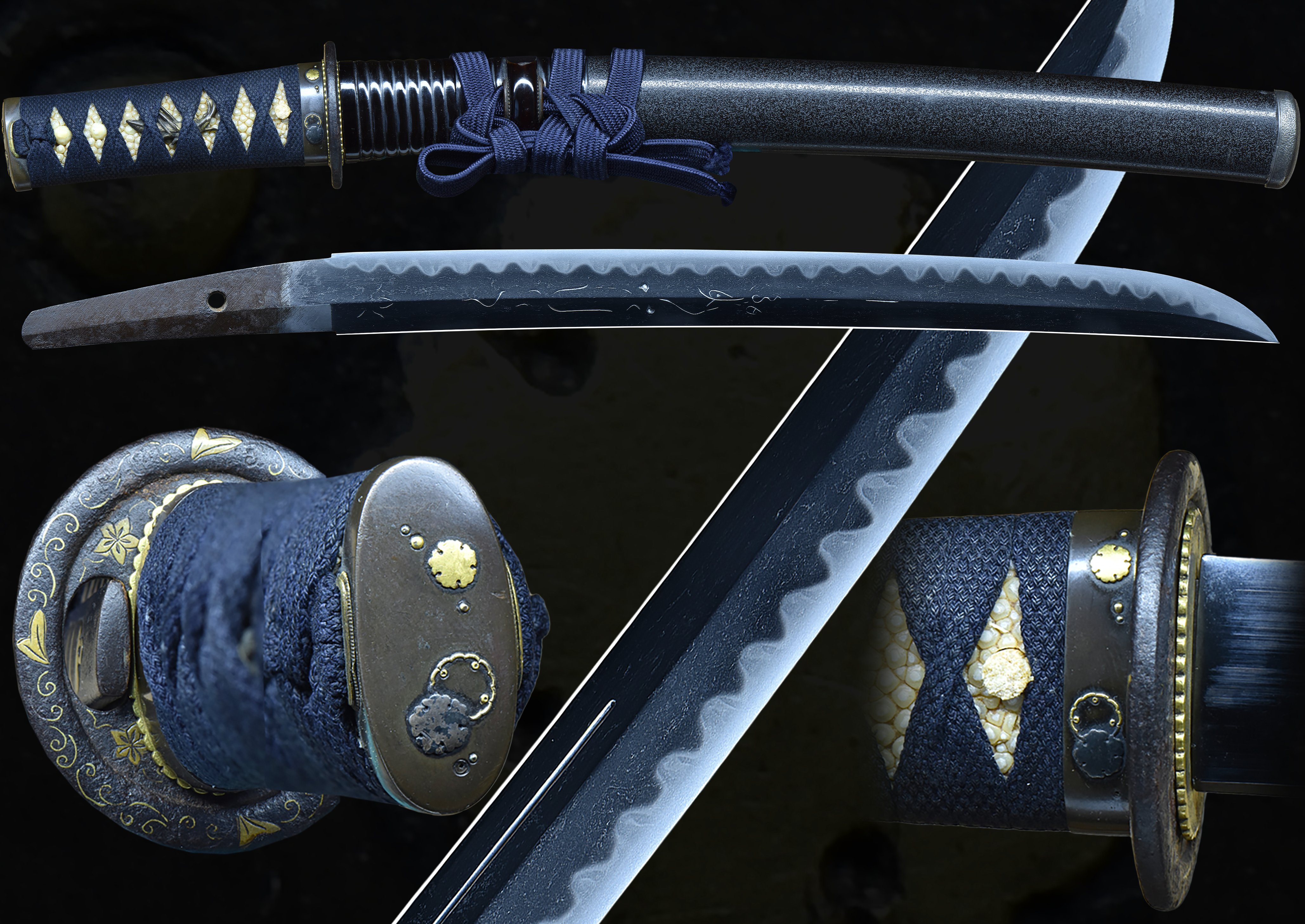
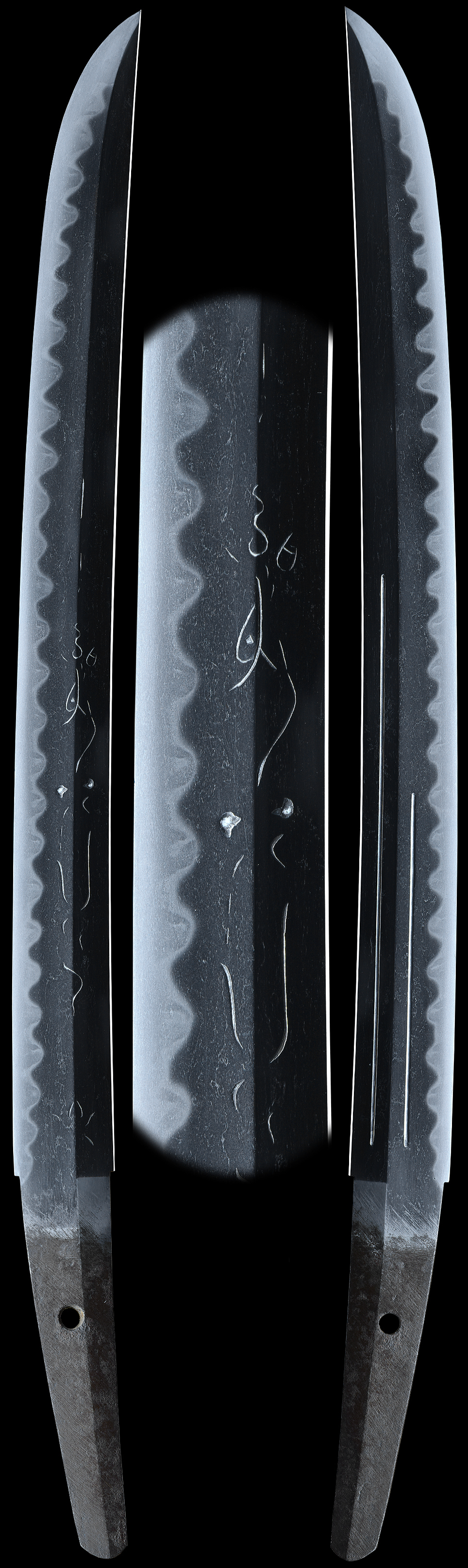
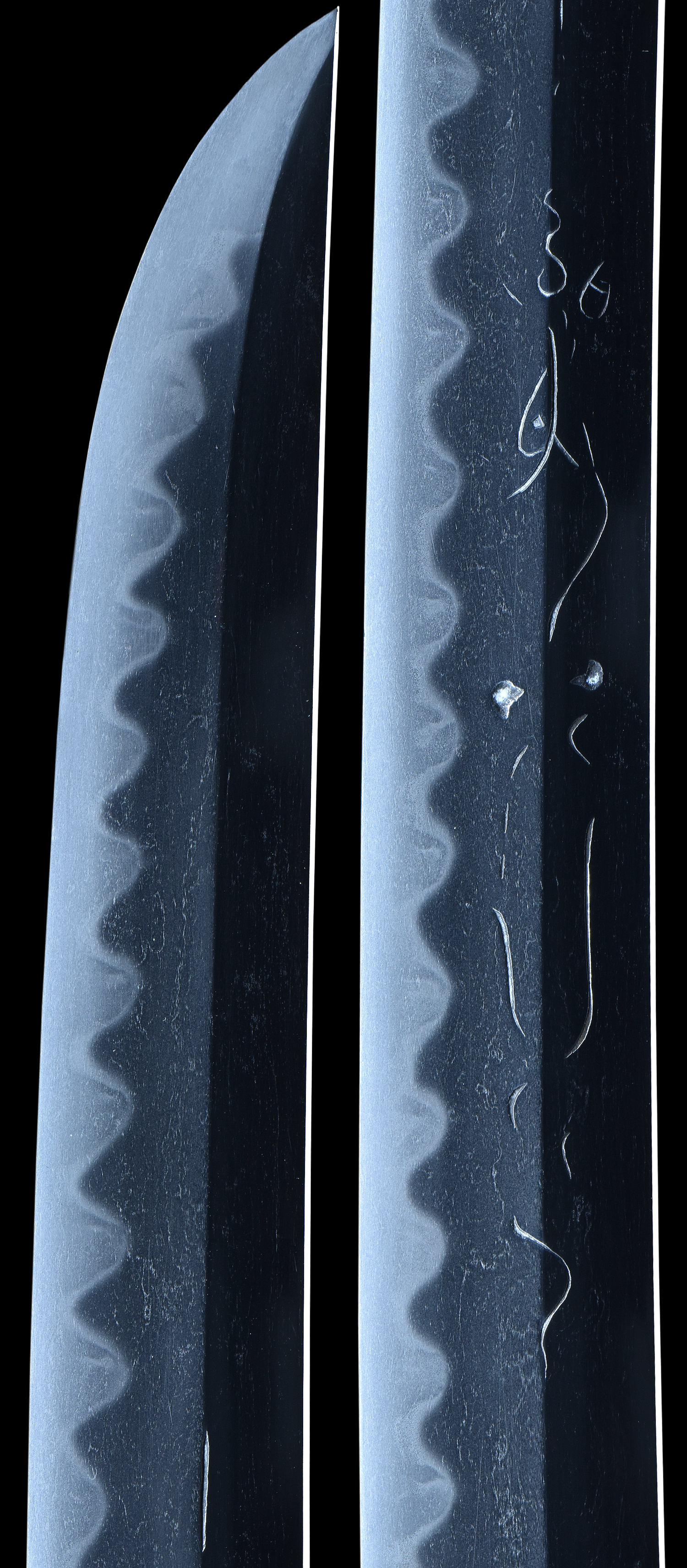
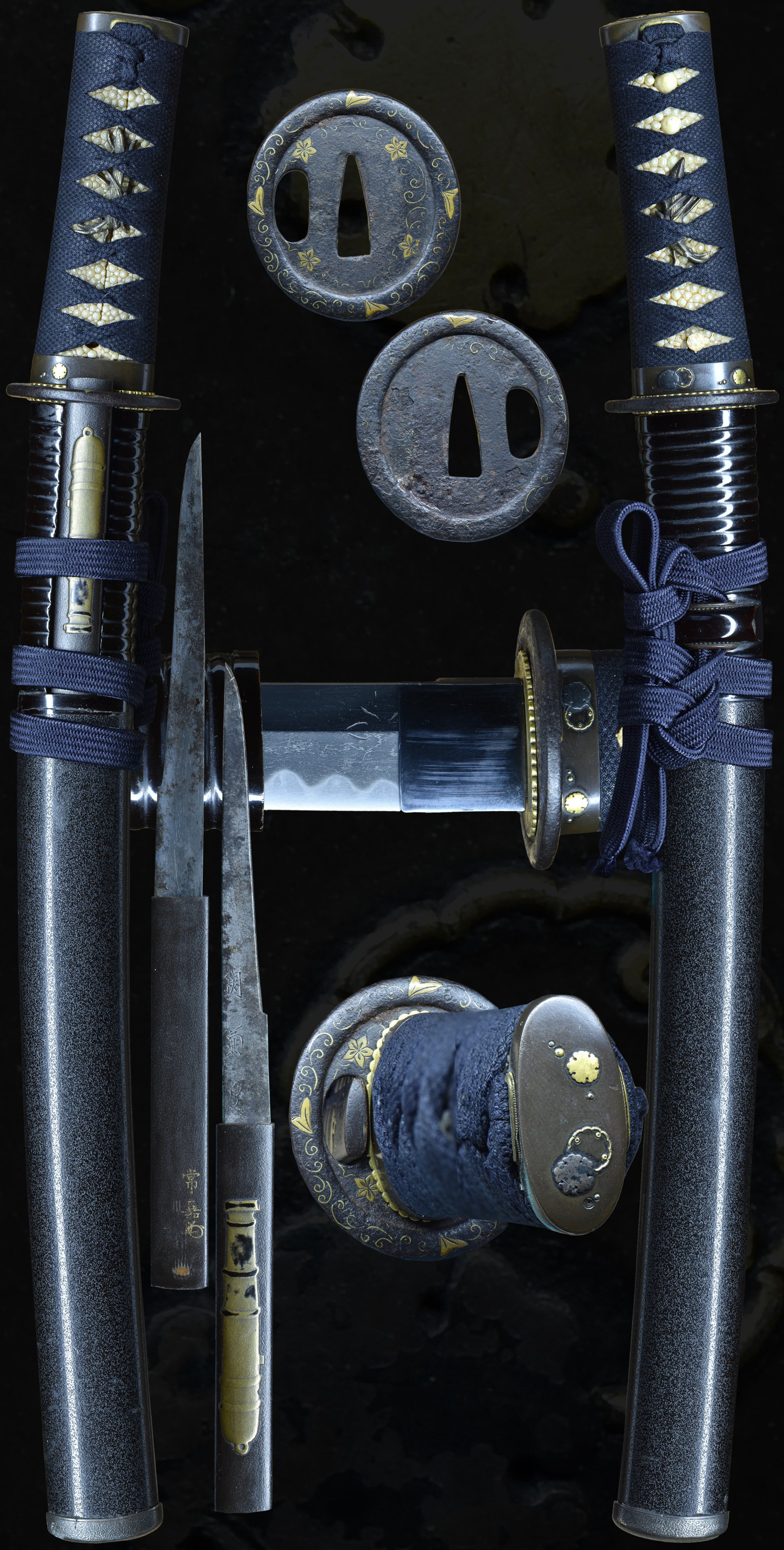
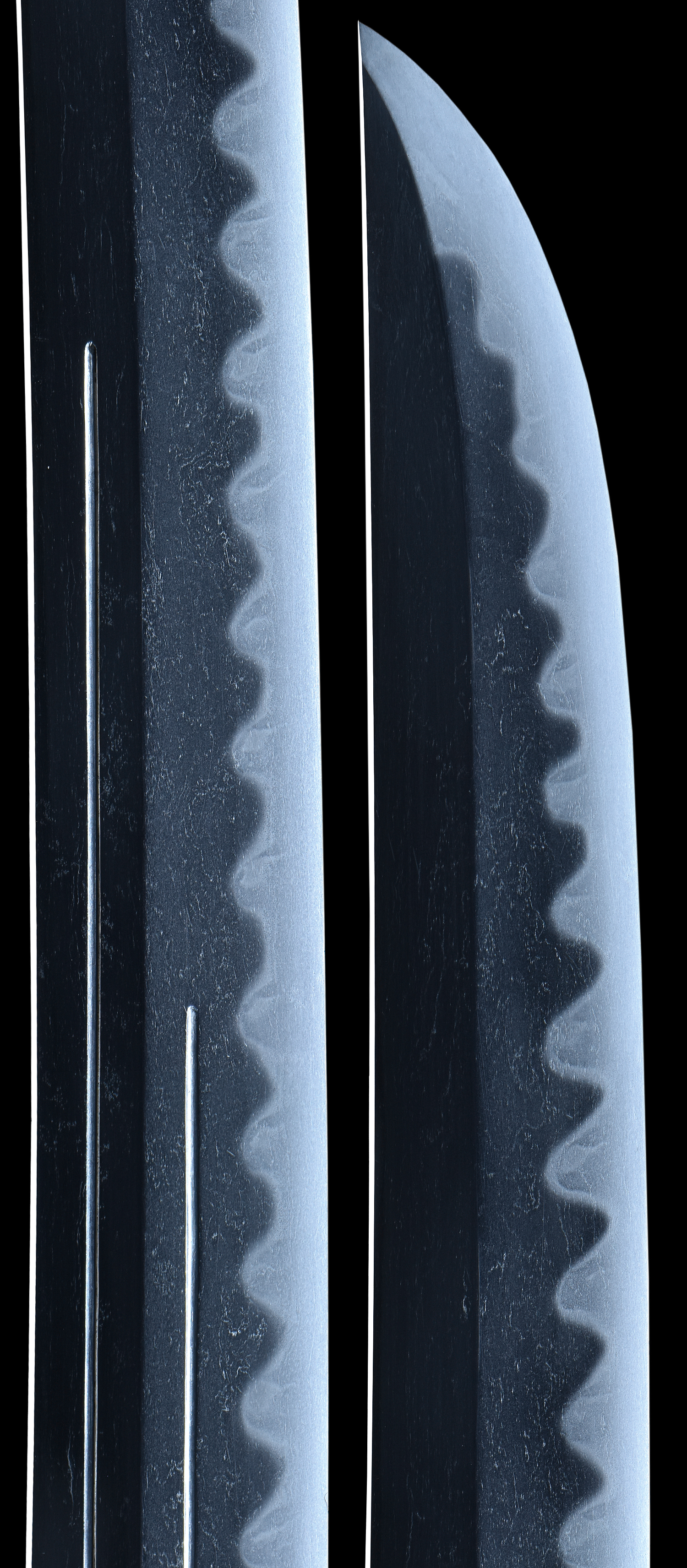
This is an exquisite tanto that has beautiful activity and is very well made. It is from the shin-shinto era around the 1700’s and accompanied with NBTHK papers attributing it to a Jumyo swordsmith and also attesting to its quality. The blade has a horimono though polished down a bit of a “So No Kurikara” or Dragon wrapped around a ken. Also there is a long and short so-hi. The hamon is gunome midare with crab claw like shapes throughout and it has many hataraki. The shape is elegant and well balanced. The hada is very rich and profoundly active. The mounts are an exquisite and also very interesting and attractive with its original old fittings that are also dating back to the shin-shinto era. The Ito is a dark blue as well as the Sageo. The habaki is shakudo and the saya is partially ribbed with a fine lacquer finish. The lacquer is of ishime style in a bluish grey color. The tsuba is a Heianjo style with gold accents and the fuchi /kashira have small snowflake like designs. The menuki are of a cricket. The kodzuka is signed in gold and with Kao. The design is of a cannon. A rare treat. The mounts are also papered by the NBTHK. This beautiful sword is even more interesting when viewing in hand. A fine collectable sword.Information on JUMYO:JUMYO(Toshinaga)寿命school, it’s founder was born in Seki town, Mino province in Tensho 8 (1580), real name was Kondo Sukezaemon近藤助左衛門. He had moved to Kiyosu castle town during Keicho(1596-1614) period and the enjoyed Tango-no-kami丹後守title in Kanei 2 (1625). JUMYO school had been prospered in 5 generations during Edo period under the patronage of Owari Tokugawa clans. JUMYO(Toshinaga)寿命, it exactly means [happy long life] so that most of Samurais treasured JUMYO works.
Mei:MumeiDate:(1800’s)Nagasa:12-1/8 inchesSori:3.0 mmWidth at the ha-machi:26.9 mmThickness at the mune-machi:6.0 mmConstruction:Mune:IoriNakago:UbuKitae:Itame/mokumeHamon:Midare GunomeBoshi:MaruCondition:Good polish
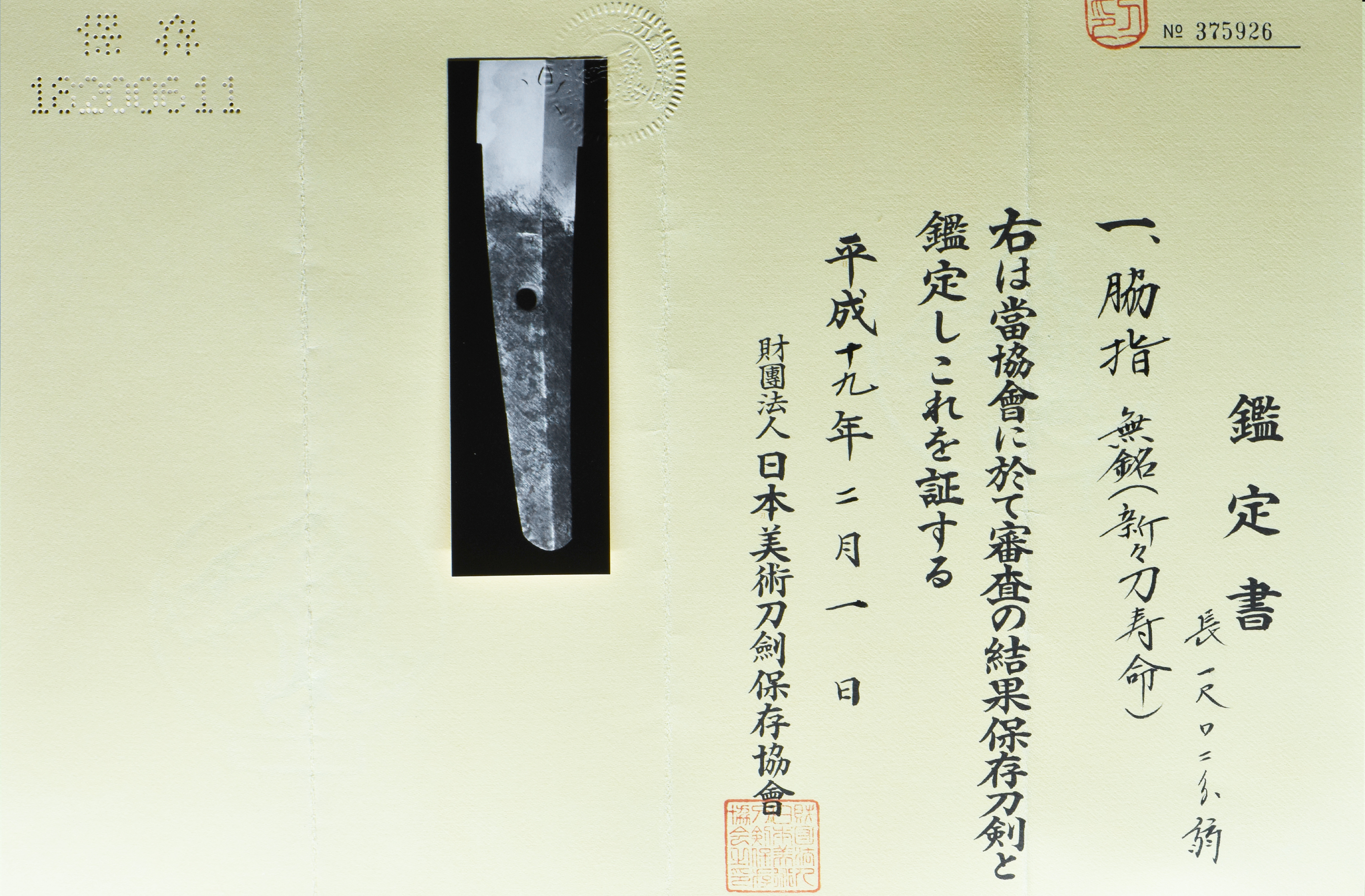
KANTEI-SHO (鑑定書) ‒ APPRAISALWakizashi, unsigned: Shinshintō Jumyō (新々刀寿命)No 375926nagasa ~ 30.9 cmAccording to the result of the shinsa committee of our society, we judge this work as authentic and rank it as Hozon Tōken.February 1, 2007[Foundation] Nihon Bijutsu Tōken Hozon Kyōkai, NBTHK (日本美術刀劍保存協會)
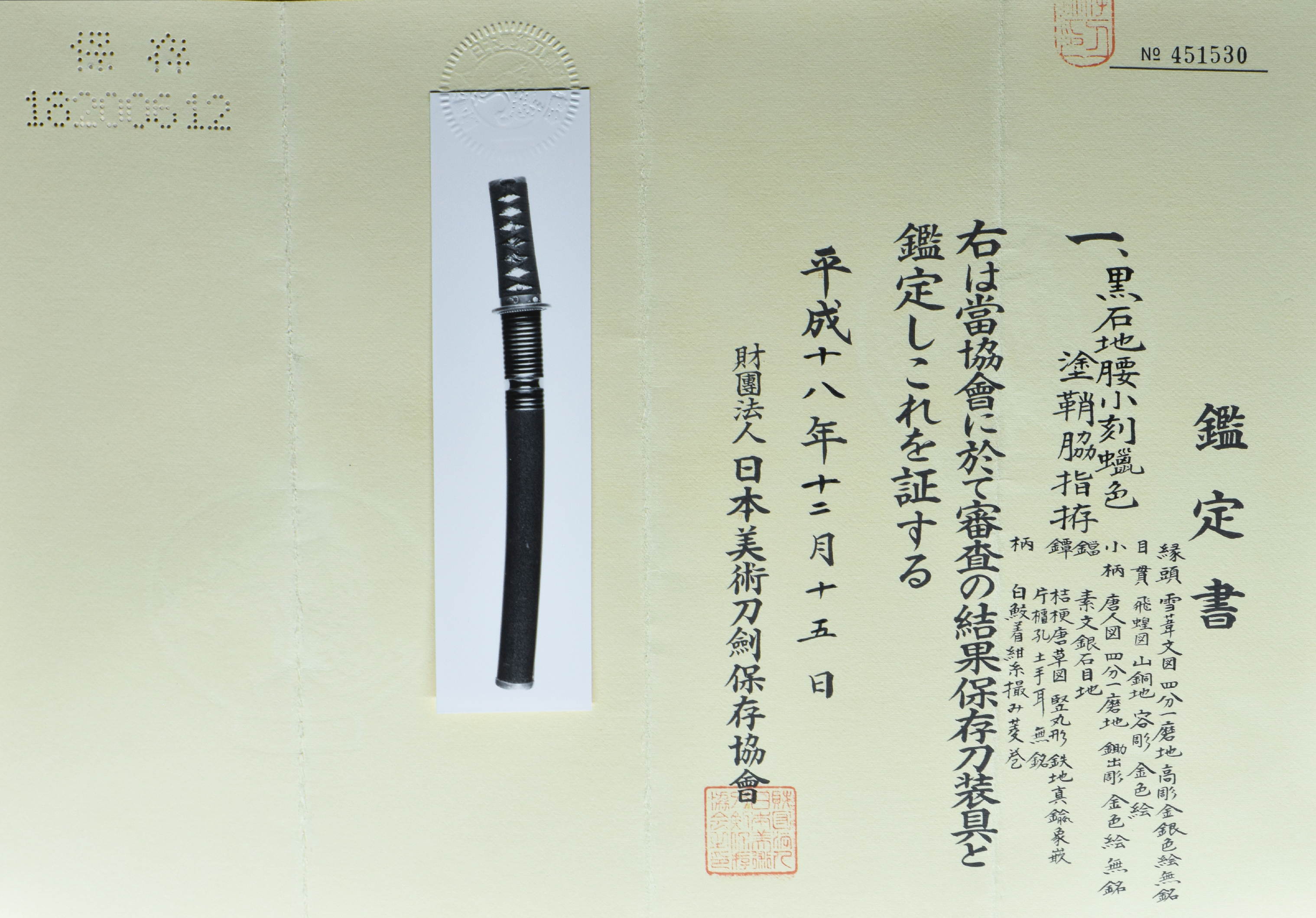
KANTEI-SHO (鑑定書) ‒ APPRAISALKuro ishiji koshi ko-kizami rōiro-nuri saya wakizashi koshirae (黑石地腰小刻蠟色塗鞘脇指拵) ‒ Wakizashi-koshirae with black stone-surface lacquer and ribbed base in glossy black lacquerFuchigashira :Menuki : Kozuka :Kojiri : Tsuba :Tsuka :Snow and reed décor, shibuichi, polished finish, takabori relief, gold and silver iroe accents, unsignedDepicting locusts, yamagane, katachibori, gold iroe accentsDepicting Chinese figure(s), shibuichi, polished finish, sukidashibori relief, gold iroe accents, unsignedUndecorated, silver, ishime groundDepicting Chinese bellflower and arabesques, tatemaru-gatga, iron, brass zōgan inlay, one hitsu-ana, raised dote-mimi, unsignedCovered with white same and wrapped tsumami-hishimaki style with navy-blue cordAccording to the result of the shinsa committee of our society, we judge this work as authentic and rank it as Hozon Tōsōgu.December 15, 2006[Foundation] Nihon Bijutsu Tōken Hozon Kyōkai, NBTHK (日本美術刀劍保存協會)
 NihontoWatch