Perry’s arrival in 1853 unraveled the Tokugawa peace and created the first mass demand for working swords in two centuries. Kiyomaro, called the Masamune of Yotsuya, died on its eve; Munetsugu and Yukihide carried the boom to the end.
 NihontoWatchNihontoWatch
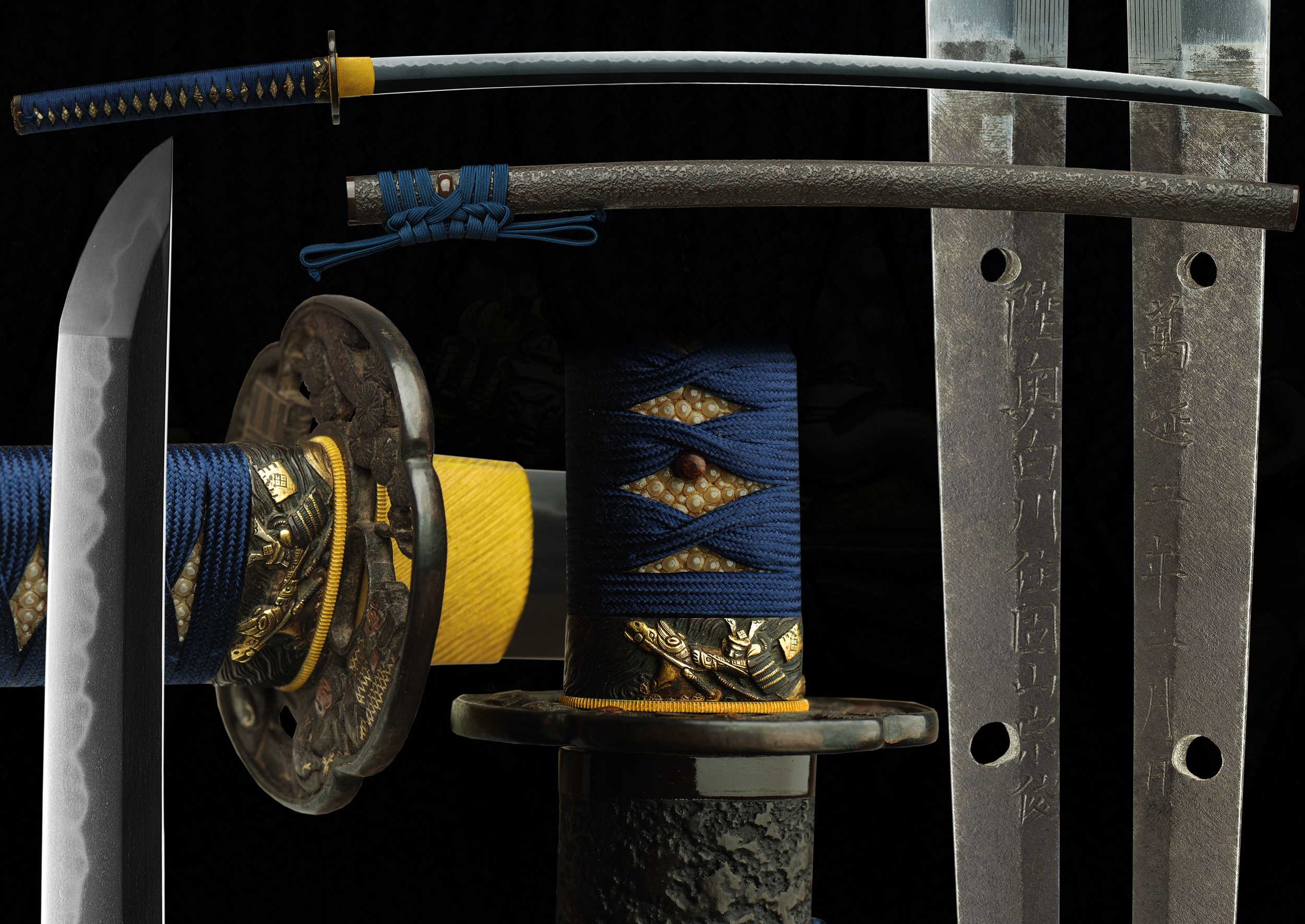
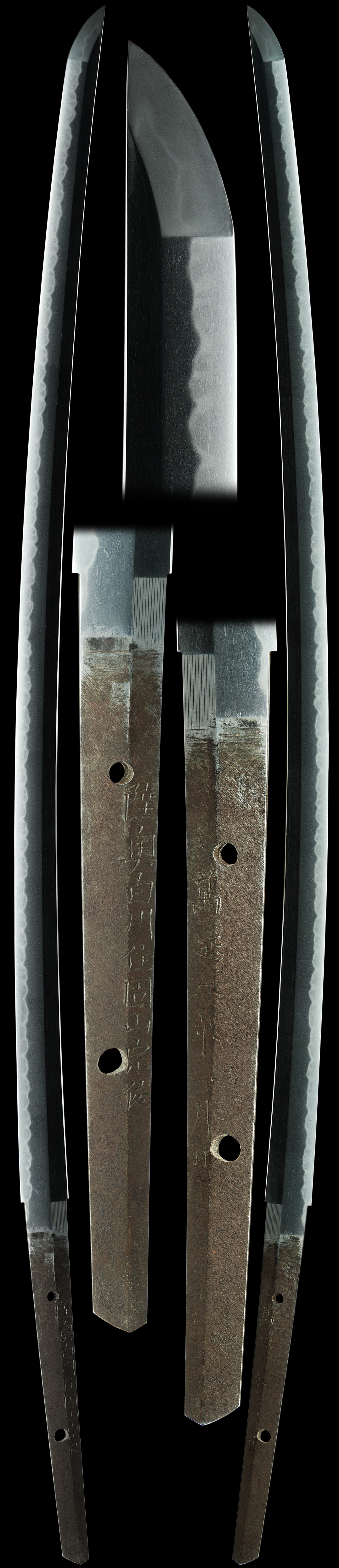
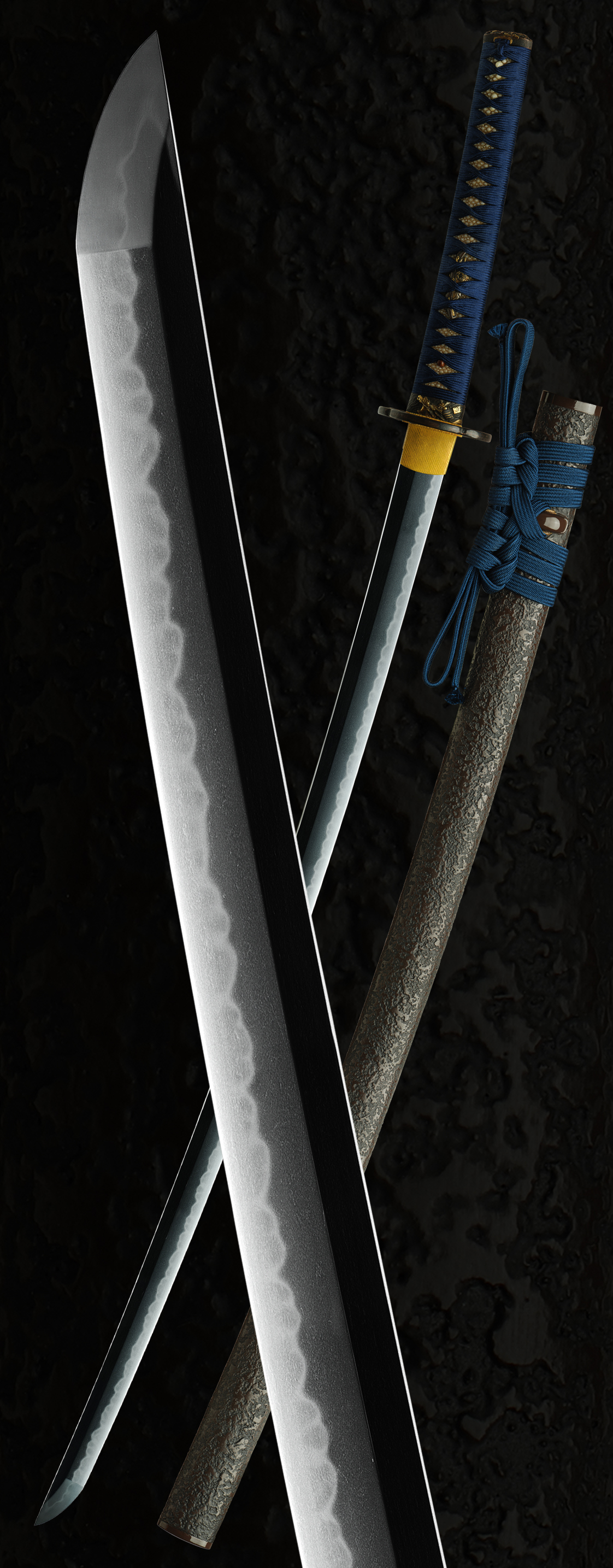
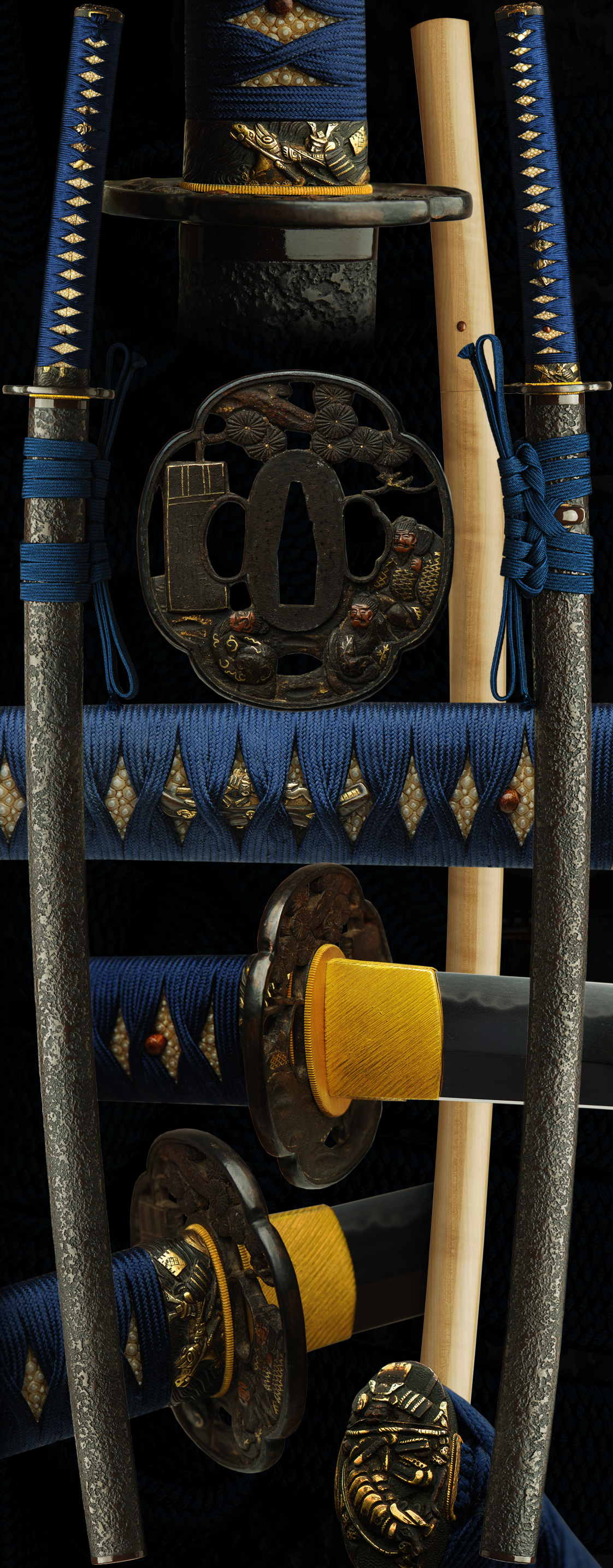
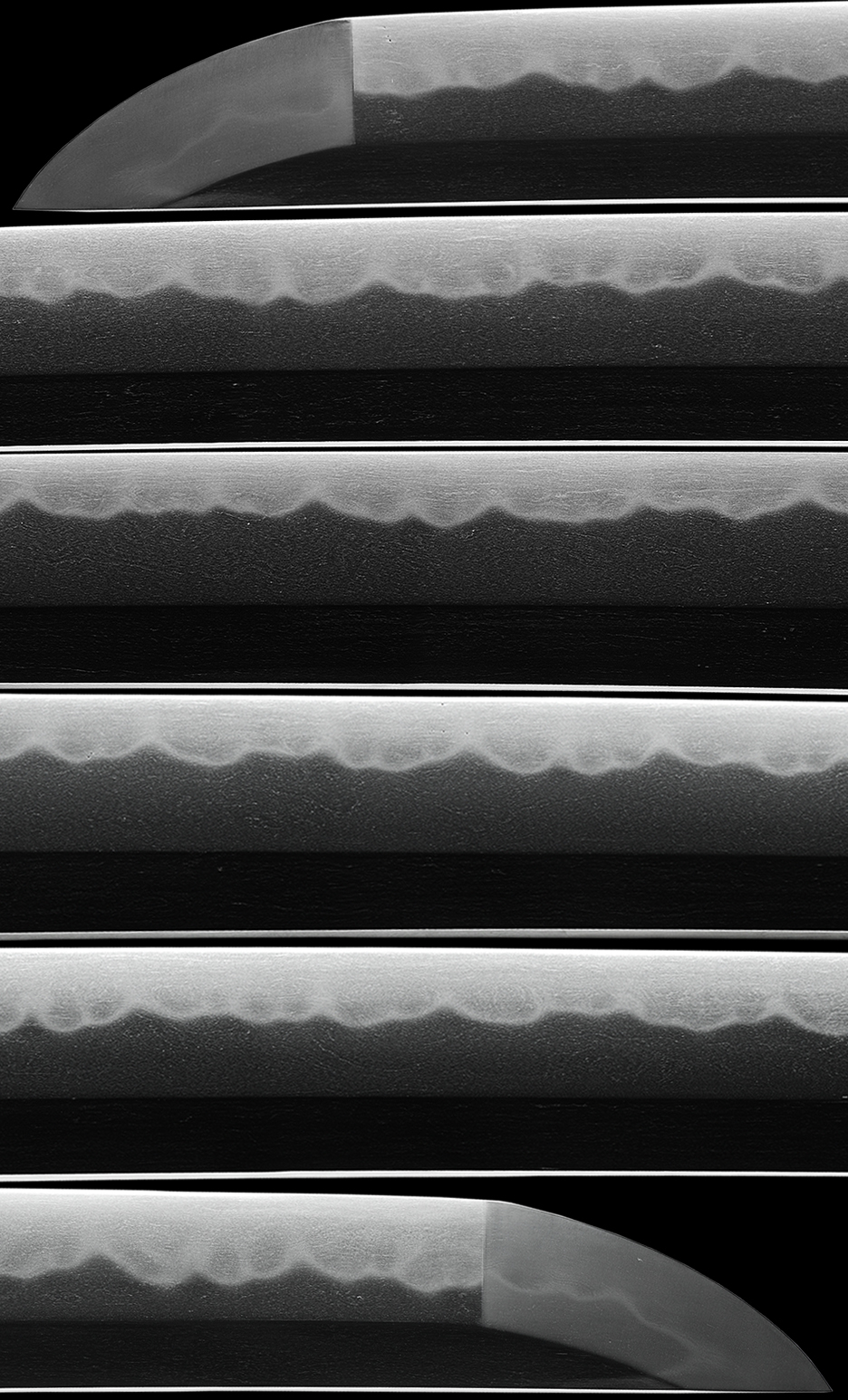
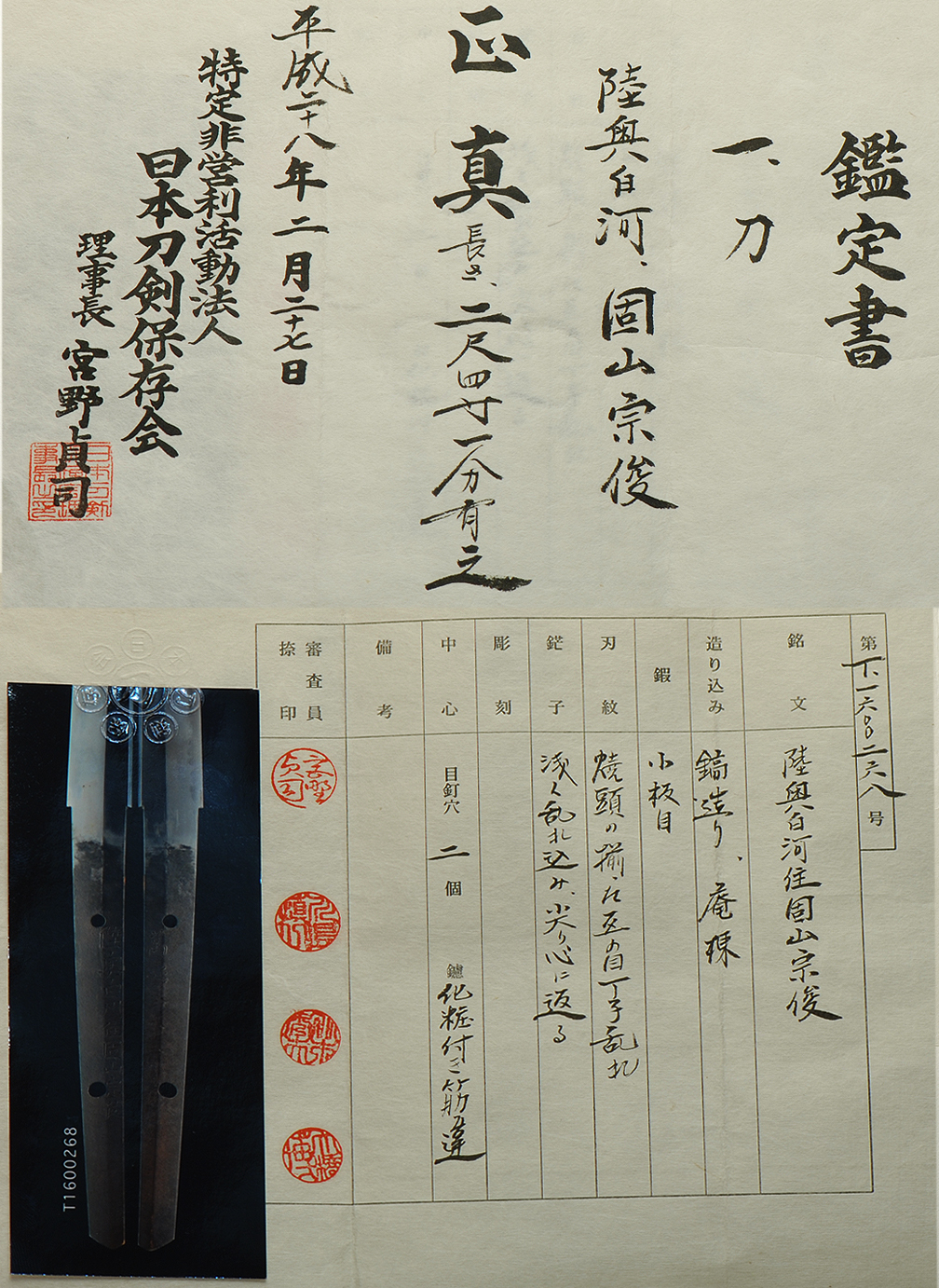
MUNETOSHI KOYAMA [BUNKYÛ 1861 IWAKI] SHINSHINTÔ CHÛJÔSAKUHe lived in Iwaki Shirakawa, and is said to be the older brother of Munetsugu. His works are like that of Munetsugu, and most of them are the larger size.Signature: SHIRAKAWA JÛ KOYAMA MUNETOSHIPlate I: KAEI SHICHINEN SANGATSU HIPlate II: SHIRAKAWA JÛ KOYAMA MUNETOSHIThis is a beautiful offering of a Koyama Munetoshi katana. This hamon is elegantly done in a choji-midare style.Munetoshi is the older brother of the famaus Munetsugu. Like Munetsugu, the Koyama brothers (munehira also) aimed to recreate the beautiful and distinctive hamon of the famous Bizen Ichimonji School. The hada has a deep rich feel to the surface with a well worked itame with swirls of mokume. Ji-nie abounds. The activity/hataraki in the hamon are abundant, and the hamon overall is extremely well made. It has very beautiful depth to it and expressed powerfully the work of this smith.The beautiful koshirae is adorned with matching royal blue sageo and tsuka ito. It is fully restored to original beauty. The fitting are from the 1800 also except for the tsuba as it appears to be 100 years older.The tsuba depicts great scholars under the pines. The fuchi kashira are of samurai on horseback. The saya has a deep, rich texture to it and adds greatly to the overall appearance of the koshirai/mounts. The habaki and seppa are gold washed in a rich golden finish.This blade is fully polished with shirasaya and papers.Info on the smith:MUNETOSHI (宗俊), 1st gen., Bunkyū (文久, 1861-1864), Ōshū – “Shirakawa-jū Koyama Munetoshi” (白川住固山宗俊), “Ōshū Shirakawa-jū Hakuryūshi Koyama Munetoshi” (奥州白河住白龍子固山宗俊), “Mutsu Shirakawa-jū Koyama Fujiwara Munetoshi” (陸奥白河住固山藤原宗俊), older brother of Koyama Munetsugu, he lived in Mutsu ́s Shirakawa which he signed with the characters (白川) and (白河), he used the gō Hakuryūshi (白龍子) and died in the third year of Meiji (明治, 1870) at the age of 76, he worked in the same style as Munetsugu, dense and beautifully forged ko-itame, gunome-chōji in nioi-deki with ko-nie, chūjō-sakuFrom the Fujishiro Taikon:MUNETOSHI KOYAMA [BUNKYÛ 1861 IWAKI] SHINSHINTÔ CHÛJÔSAKUHe lived in Iwaki Shirakawa, and is said to be the older brother of Munetsugu. His works are like that of Munetsugu, and most of them are the larger size.Signature: SHIRAKAWA JÛ KOYAMA MUNETOSHIPlate I: KAEI SHICHINEN SANGATSU HIPlate II: SHIRAKAWA JÛ KOYAMA MUNETOSHI Mei:Mutsu Shirakawa-jû Koyama Munetoshi (陸奥白河住固山宗俊)Date:“Man’en ninen nigatsu hi” (萬延二年二月日, “a day in the second month Man’en two [1861]”). Please note that the character for “Man” is executed in the old fashion (萬). Today it is mostly written simplified (万).Nagasa:28-3/4 inchesSori:15.0 mmWidth at the ha-machi:31.0 mmWidth at the yokote:21.2 mmThickness at the mune-machi:8.6 mmConstruction:Shinogi zukuriMune:IoriNakago:UbuKitae:Itame/mokumeHamon:Midare GunomeBoshi:MaruCondition:Good polish kantei-sho(鑑定書) – Appraisalkatana(刀) Mutsu Shirakawa, Koyama Munetoshi (陸奥白河、固山宗俊)shôshin(正真) – Authenticnagasa2shaku4sun1bu kore ari(長さ二尺四寸一分有之) – Blade length ~ 73.0 cmHeisei28nen2gatsu27nichi(平成二十八年二月二十七日) – February 27th2016Non Profit Organization (特定非営利活動法人)Nihon Tôken Hozon Kai(日本刀剣保存会) – NTHKBoard Chairman (理事長): Miyano Teiji (宮野貞司)No T16000268meibun(銘文) – Signature: Mutsu Shirakawa-jû Koyama Munetoshi (陸奥白河住固山宗俊)tsukurikomi(造り込み) – Shape:shinogi-zukuri,iori-munekitae(鍛) – Forging:ko-itamehamon(刃紋) – Hardening:gunome-chôji-midarewith uniformyakigashirabôshi(鋩子) – Hardening in tip: shallowmidare-komiwith a rather pointedkaerichôkoku(彫刻) – Engravings:nakago(中心) – Tang:mekugi-ana(目釘穴) 2,yasurime(鑢):sujikaiwithkeshôbikô(備考) – Remarks:shinsa’in natsu’in(審査員捺印) – Seals of Judges: 4 seals
NihontoWatchOffered by Nihonto Antiques

Mutsu · around 1860-1861
2 pieces on the market now
Bakumatsu: the last war market
Perry’s arrival in 1853 unraveled the Tokugawa peace and created the first mass demand for working swords in two centuries. Kiyomaro, called the Masamune of Yotsuya, died on its eve; Munetsugu and Yukihide carried the boom to the end.
The NTHK’s principal certificate, issued for a blade of considerable quality. It confirms a genuine signature, or, for an unsigned (mumei) work, records the judges’ attribution to a smith or school. The paper carries a detailed worksheet with a numerical point score.
The NTHK (Nihon Tōken Hozon Kai, the Society for the Preservation of the Japanese Sword) is the oldest of Japan’s sword-appraisal bodies, founded in 1910, decades before the NBTHK. After the death of its long-serving head it divided into two successor societies, the NTHK and the NTHK-NPO, both of which continue to hold shinsa. NTHK certificates are known for a detailed worksheet that records a numerical point score alongside the judges’ written opinion, and the society is especially respected for its attribution of unsigned (mumei) work.
We offer a 48 hour inspection period for all Antique items shipped within the United States only. If the item is not to your satisfaction, we will gladly refund your money less any shipping and handling fees. All sales are final after the 48 hour inspection period. Please note that all discounted items are a final sale and not returnable.