Edo was the sword’s age of connoisseurship: the Hon’ami appraisers, the shogunal register of famous blades of 1719, and a thriving literature turned the sword into an object of study even as it ceased to be drawn in war.
 NihontoWatchNihontoWatch
Stock number:KA-040525Paper(Certificate):[N.B.T.H.K] Tokubetsu Hozon TokenCountry・Era:Mutsu(Fukushima)・Late Edo period 1861Blade length(Cutting edge): 71.5cmCurve(SORI): 1.6cmWidth at the hamachi(Moto-Haba): 3.10cmThickness at the Moto-Kasane: 0.90cmWide at the Kissaki(Saki-Haba): 2.45cmThickness at the Saki-Kasane: 0.70cmHabaki: One part, gold foil HabakiSword tang(Nakago): Unaltered, Kesho file patternRivet Holes(Mekugiana): 1Lenghth of Koshirae: about 101cmShape(Taihai): Shinogizukuri,Iorimune,Chu-kissakiJigane(Hada): Ko-itameTemper patterns(Hamon): Gunome-midareTemper patterns in the point(Bohshi): Midare then komaru round tipRegistration Card: Shizuoka【Additional Information】固山宗俊は、生国奥州白川(福島県白河市)で、白竜子と号します。同国二本松古山宗次(陸奥介弘元)の門人で、江戸後期 備前伝の名手 固山宗次の一族であると伝わります。明治三年没。奥州白川住白竜子固山宗俊、陸奥白川住固山宗俊作、陸奥住固山宗俊作などと銘を切ります。本刀体配は、刃長が二尺三寸六分強。身幅重ね共に尋常で、反り適度にフクラ豊かな中切っ先となる健全で立派な刀姿の一作です。地鉄は良く練られた小板目肌で、地沸付き、潤いに富んだ精緻な鍛となります。刃文は匂勝ちの互の目乱れで、角がかった刃や尖り刃などを交え、華麗に乱れる焼刃となります。刃中には足がよく入り働き盛んです。帽子はそのまま乱れて先小丸へ返ります。茎は生ぶ、丁寧に化粧鑢で仕上げ、力強い鏨使いで刀工銘と年紀を刻します。拵は鉄金具を配し、変塗鞘となる趣ある品が附いております。本作は奥州白川を出身とする固山宗俊の一口。良く詰んだ綺麗な地肌と、華やかな互の目乱れがよく調和した同工傑出の優品です。白鞘、金着一重鎺、特別保存刀剣鑑定書。
NihontoWatchOffered by World Seiyudo

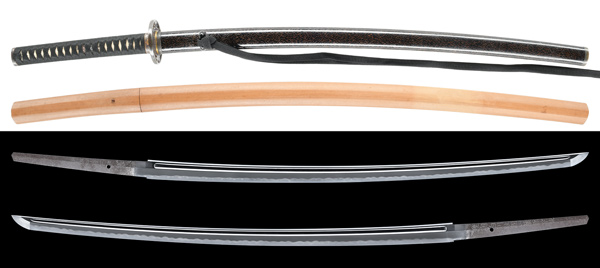

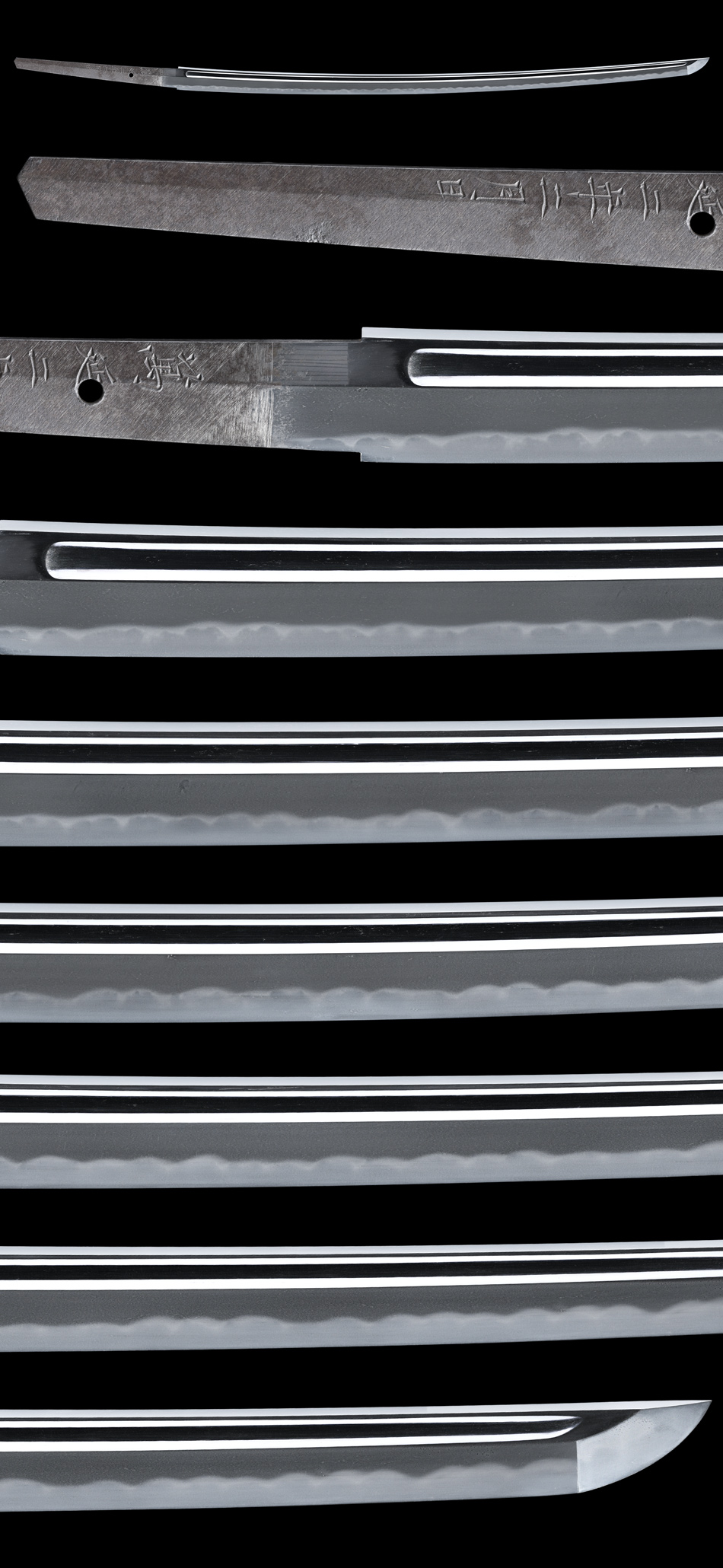
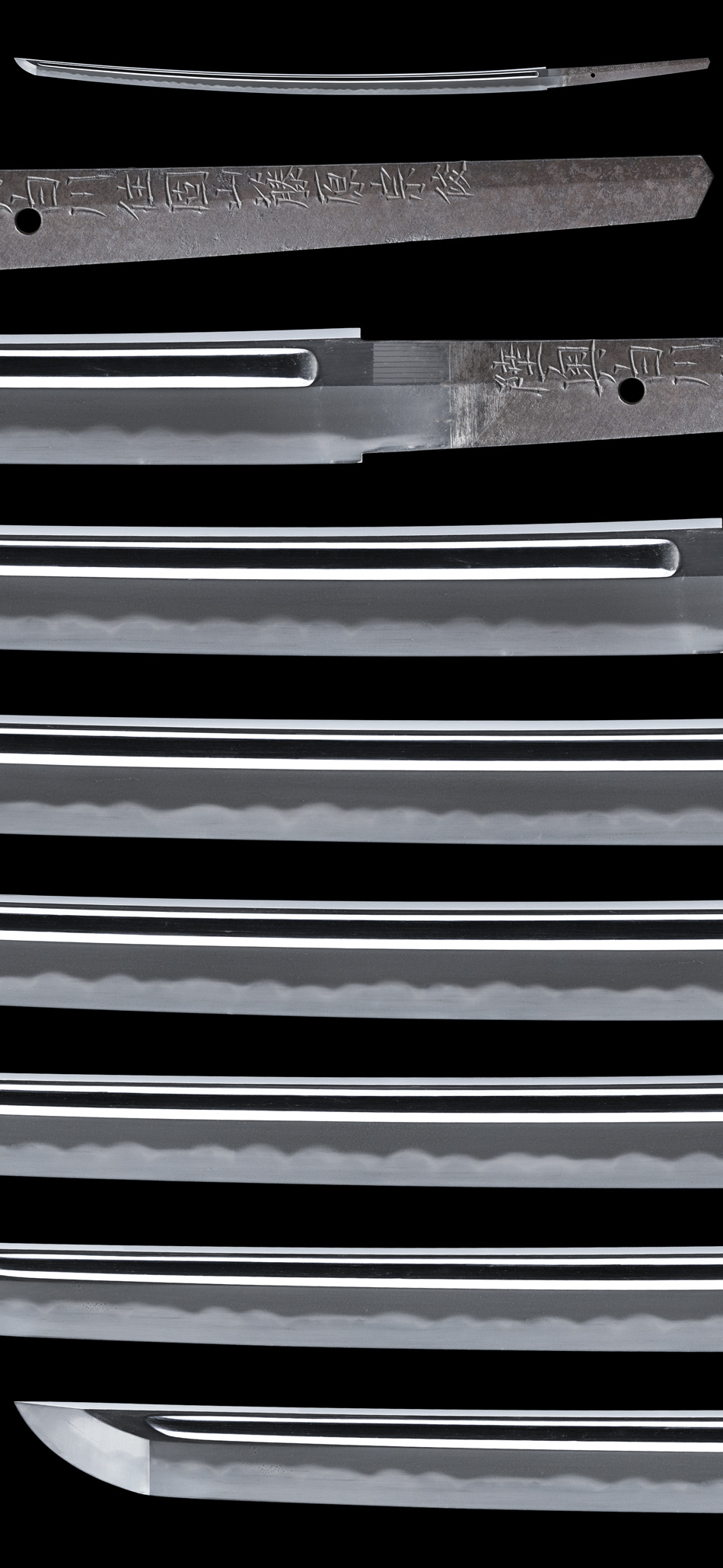
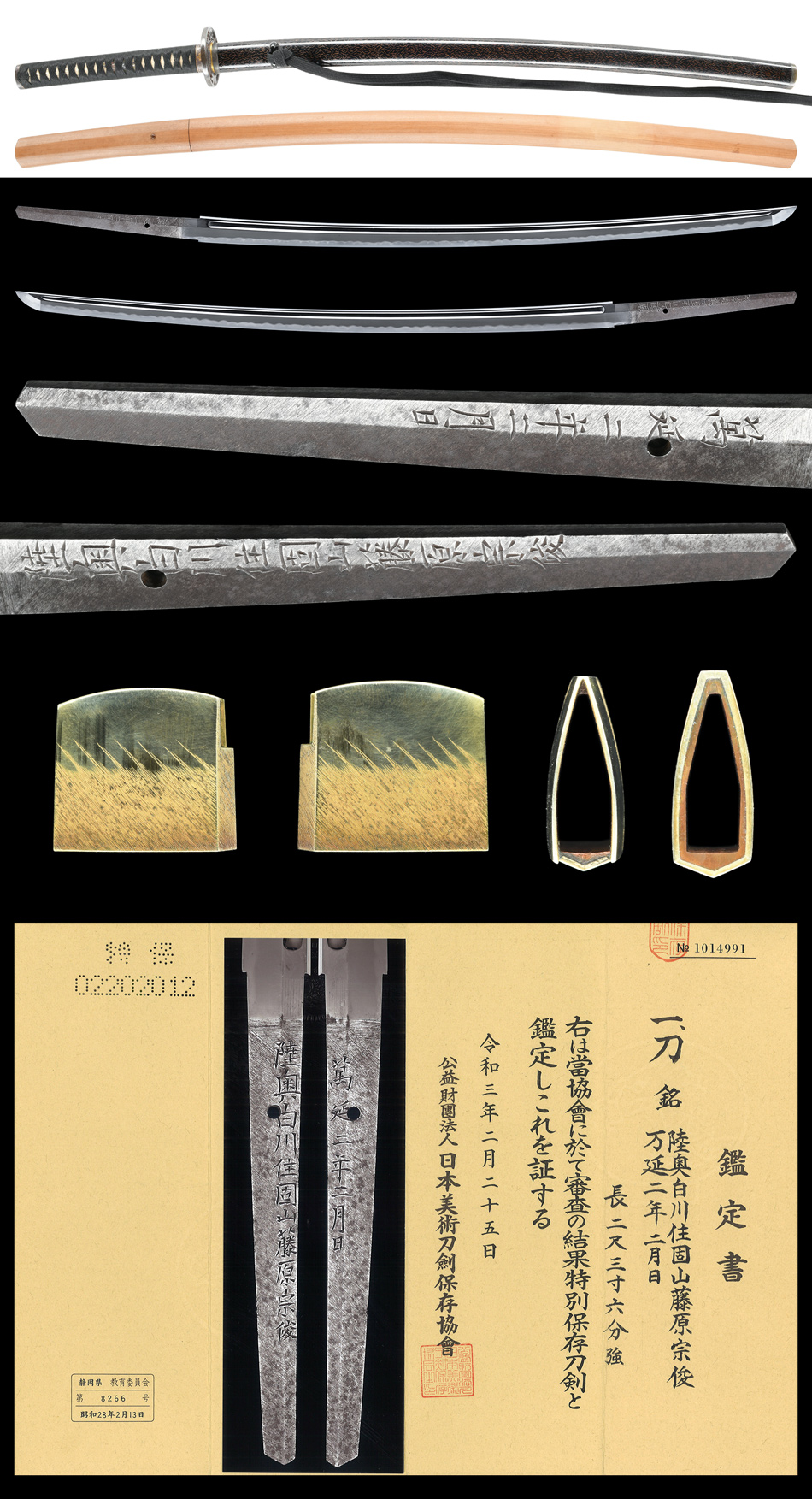
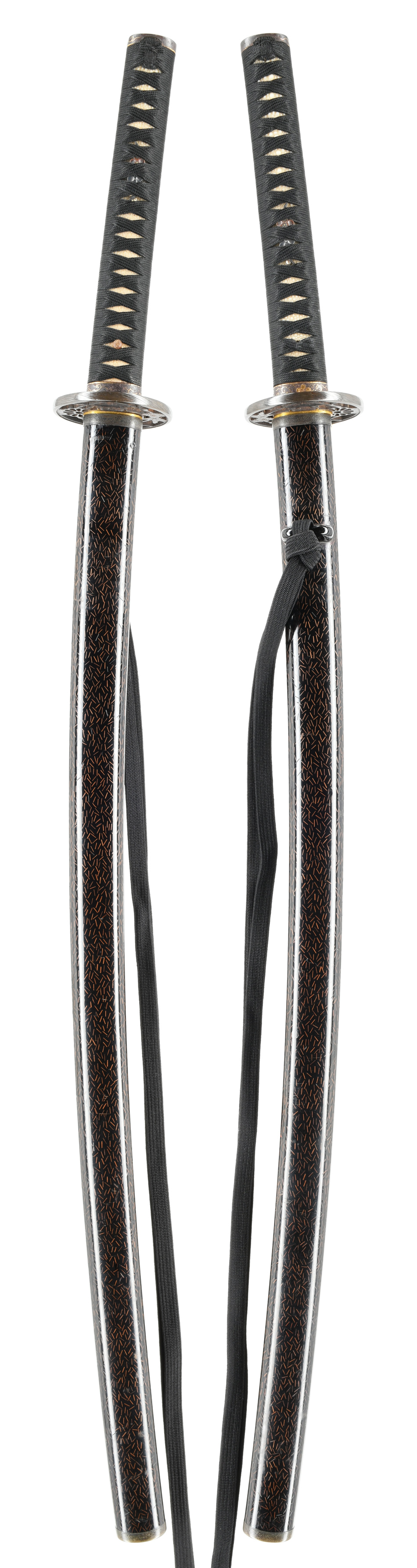
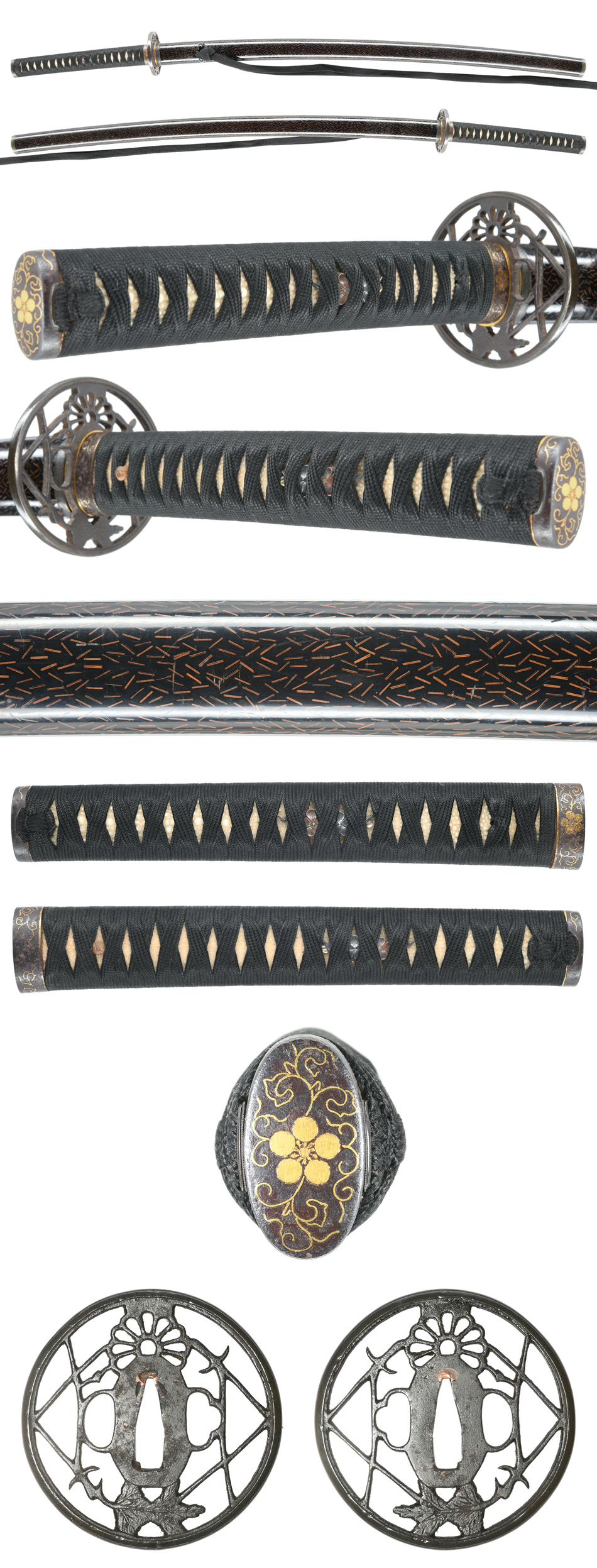
Mutsu · around 1860-1861
2 pieces on the market now
The Edo period (1615 to 1868)
Edo was the sword’s age of connoisseurship: the Hon’ami appraisers, the shogunal register of famous blades of 1719, and a thriving literature turned the sword into an object of study even as it ceased to be drawn in war.
A Hozon-certified blade judged to show notably superior workmanship and a better state of preservation. The bar is higher: re-tempered blades and most unsigned Muromachi/Edo works are excluded.
The NBTHK (Nihon Bijutsu Tōken Hozon Kyōkai, the Society for the Preservation of Japanese Art Swords) is a public-interest incorporated foundation founded in 1948 and supervised by Japan’s Agency for Cultural Affairs (Bunkachō); it is based at the Japanese Sword Museum in Tokyo. Its expert panels physically examine each submitted work (shinsa) and issue a certificate (kanteishō) ranking it by artistic and historical merit. NBTHK papers are the most widely recognized standard of authentication for Japanese swords and fittings.
NBTHK official siteNo cooling-off period or returns; refund only if the purchased sword is proven fake, capped at purchase price (excludes commission sales, accessories, auction items).