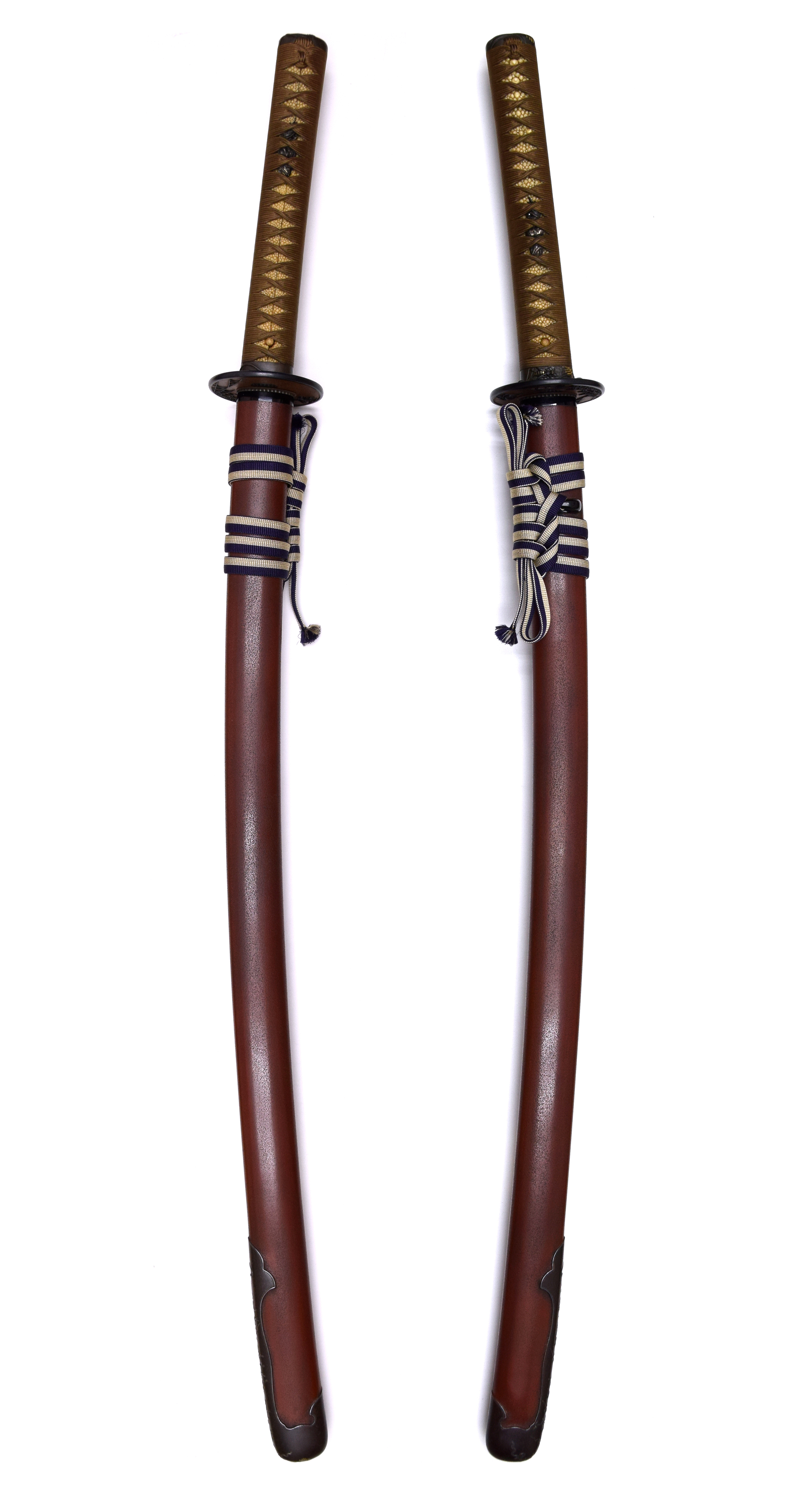
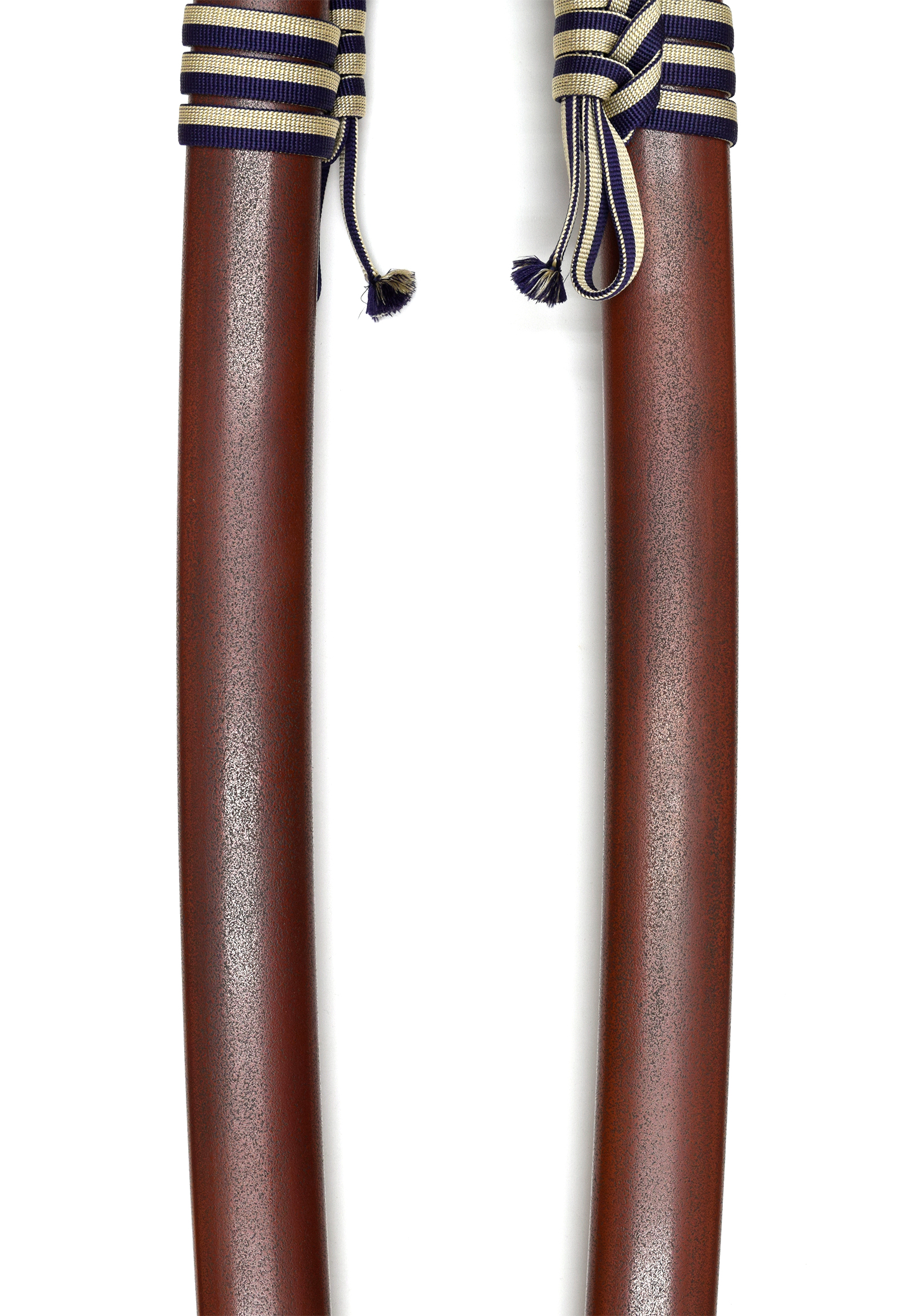
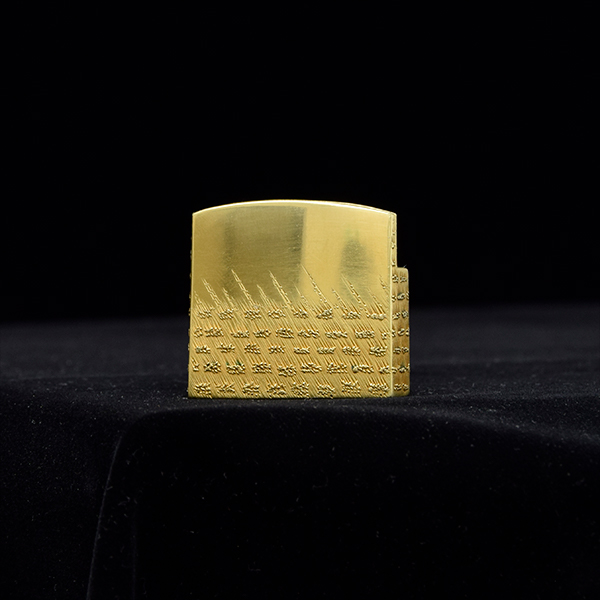
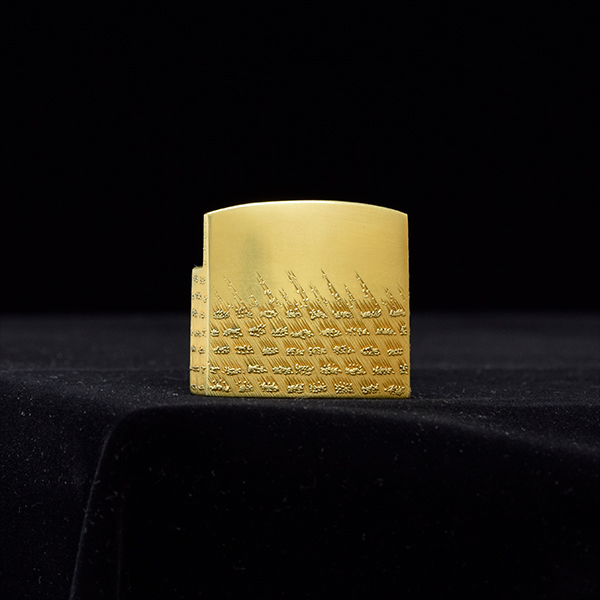
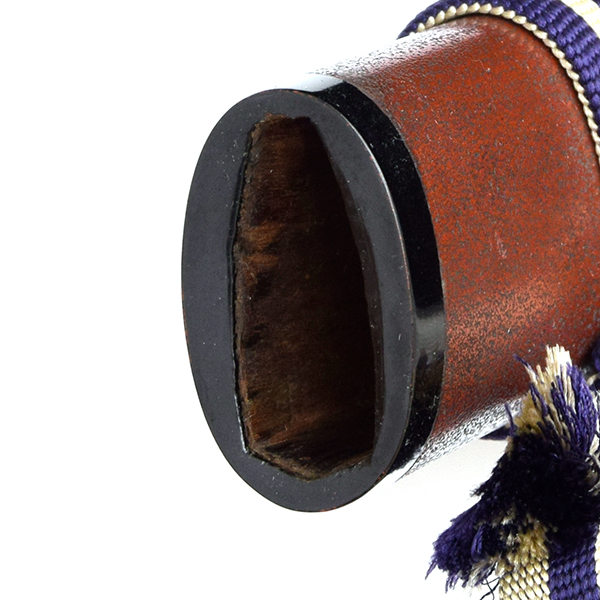
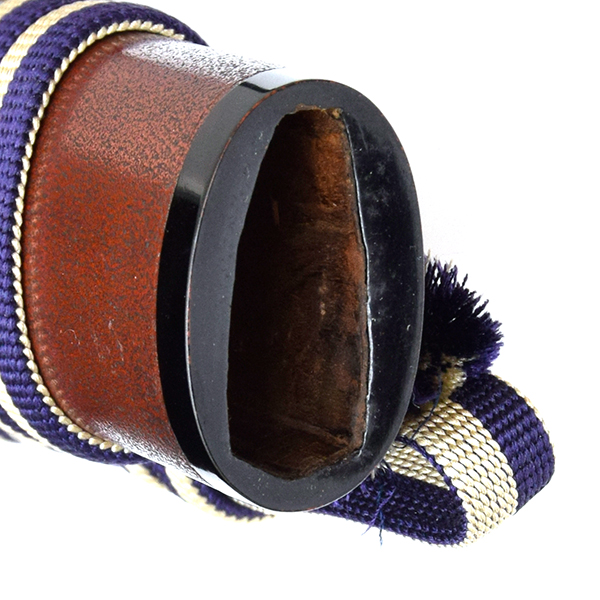
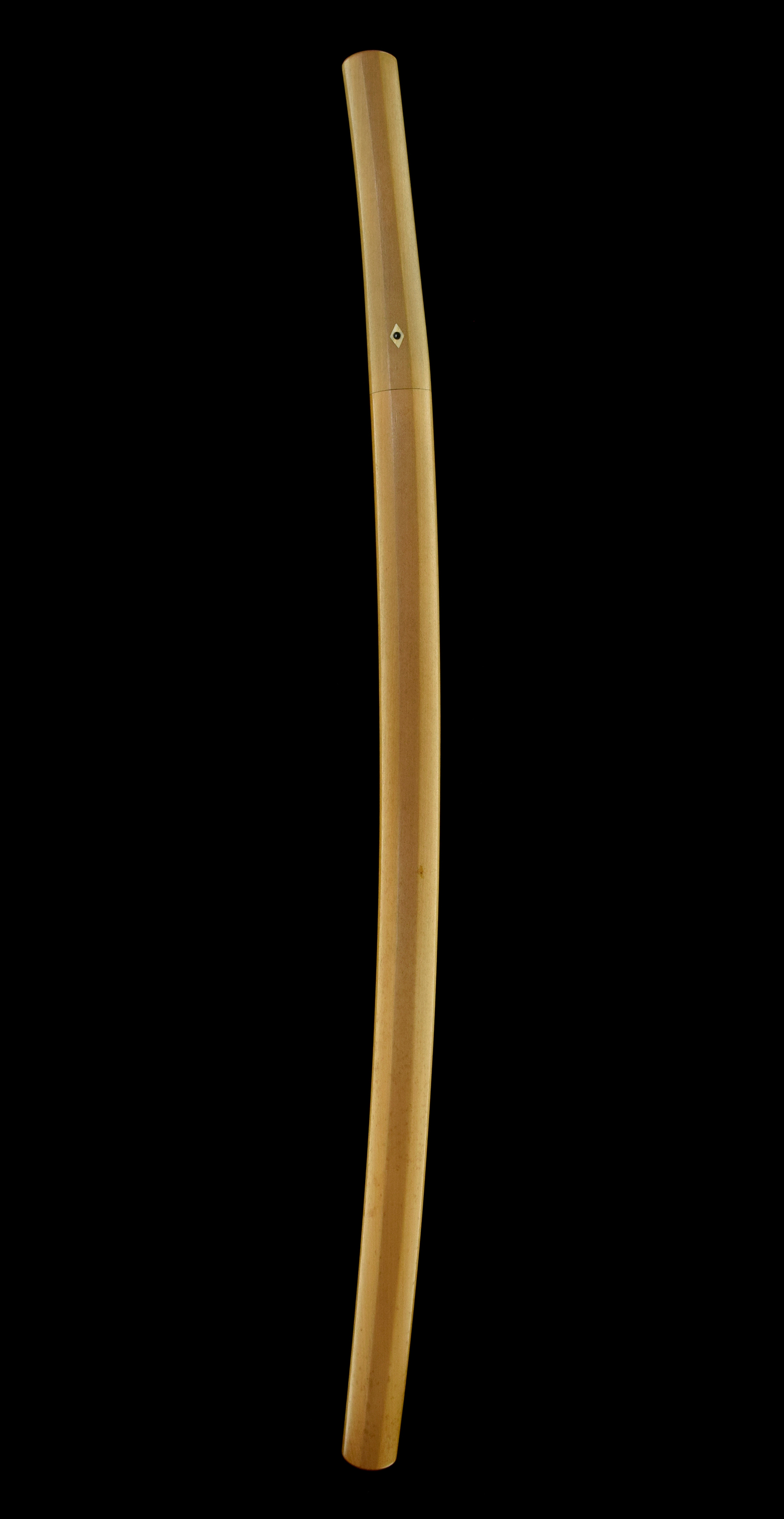
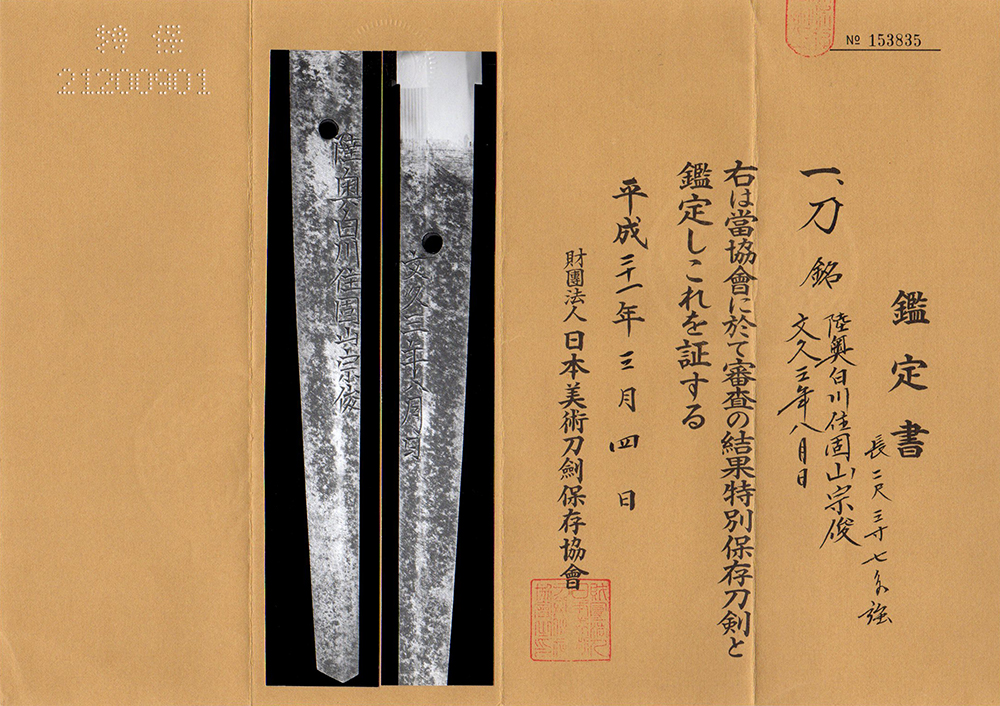
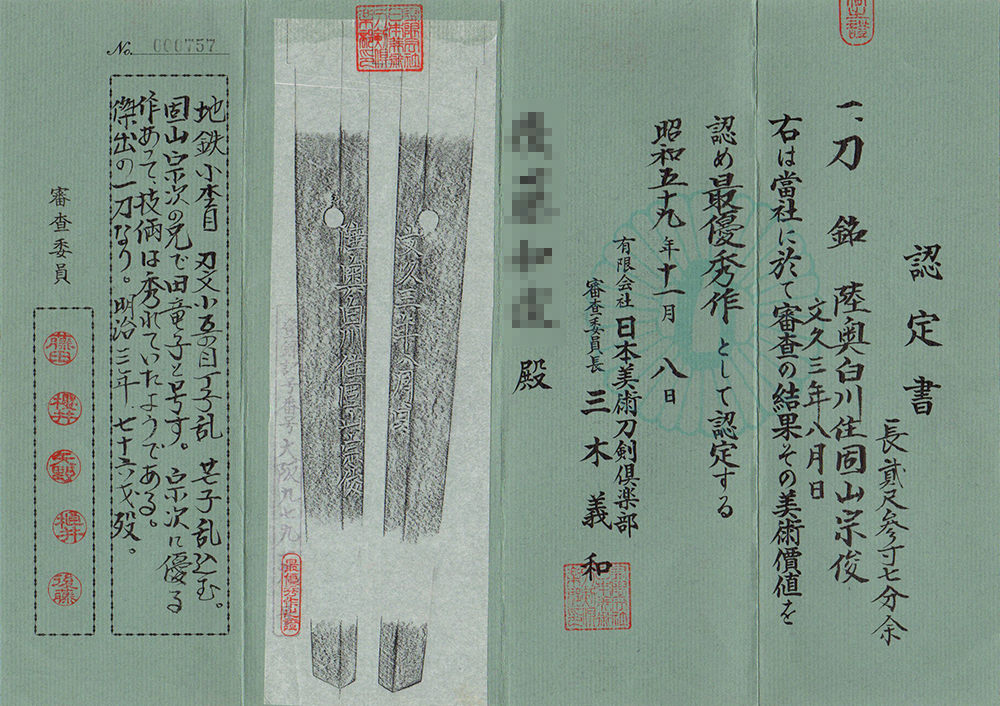
Accompanied by Tokubetsu Hozon Token Kanteisho, Nippon Bijutsu Token Kurabu Kanteisho, akacha ishime kawari-nuri saya uchigatana koshirae, suaka-ji kin-kise habaki, shirasaya, tsugiki.
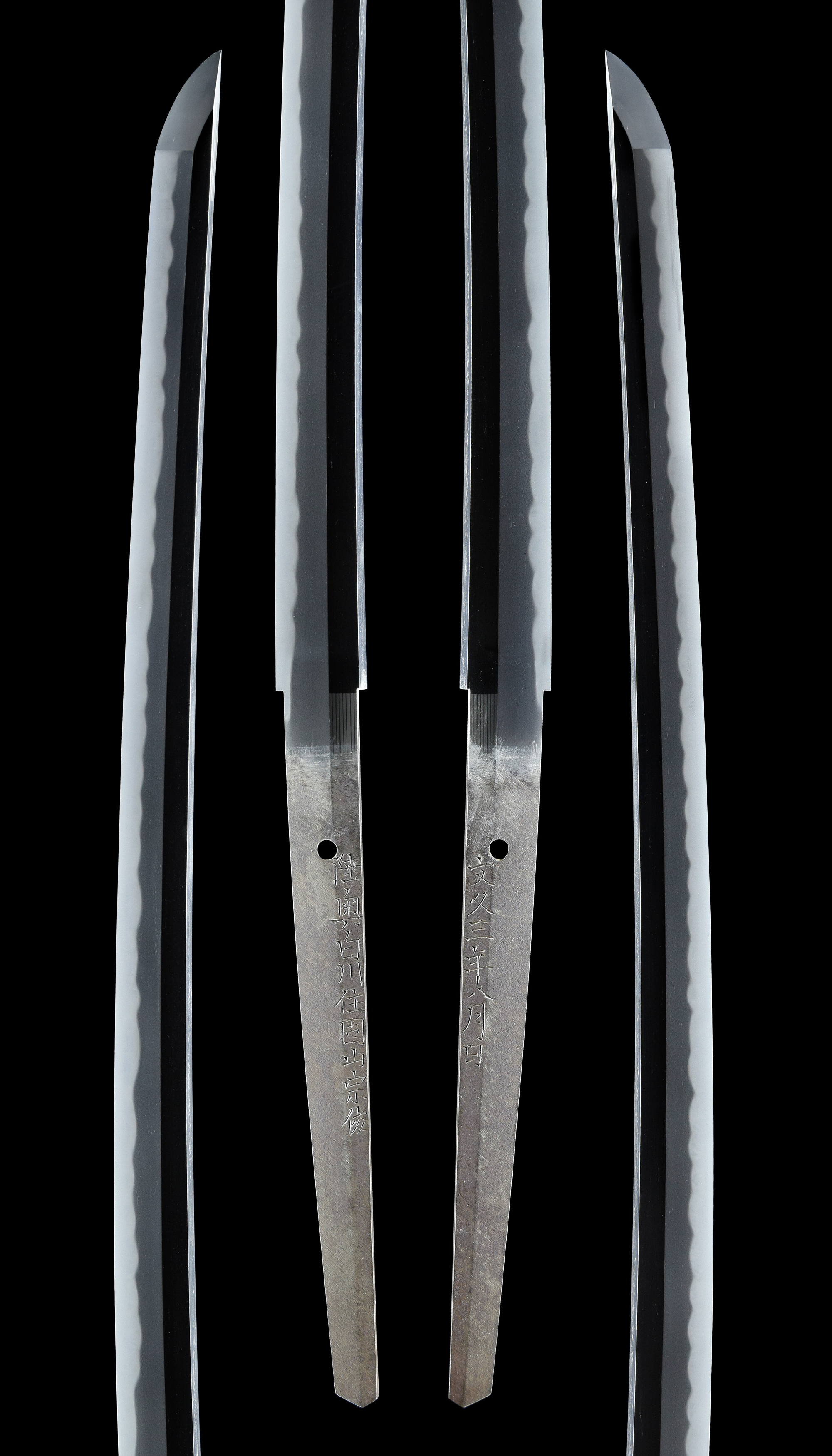
This is a magnificent work by Munetoshi, a member of the family of the late Edo period Bakumatsu master smith Koyama Munetsugu. As his name suggests, Munetoshi was a relative of the Bakumatsu master Koyama Munetsugu and wielded his hammer while residing in Oshu Shirakawa.
According to the Meikan, there were two generations with the same name in Oshu Shirakawa, and based on the date, this work is appraised as the work of the second generation Munetoshi.
Munetoshi's common name was "Isaburo," and he used the go "Hakuryushi." It is believed that his period of sword making was from 1854 to 1868 (Kaei 7 to the Keio era). It is deeply regretted that he was forced to abandon sword forging due to the influence of the times, such as the Meiji Haitorei, and partly because he passed away at the age of 53 in Meiji 21, his extant works are few, and every piece can be called a precious surviving work.
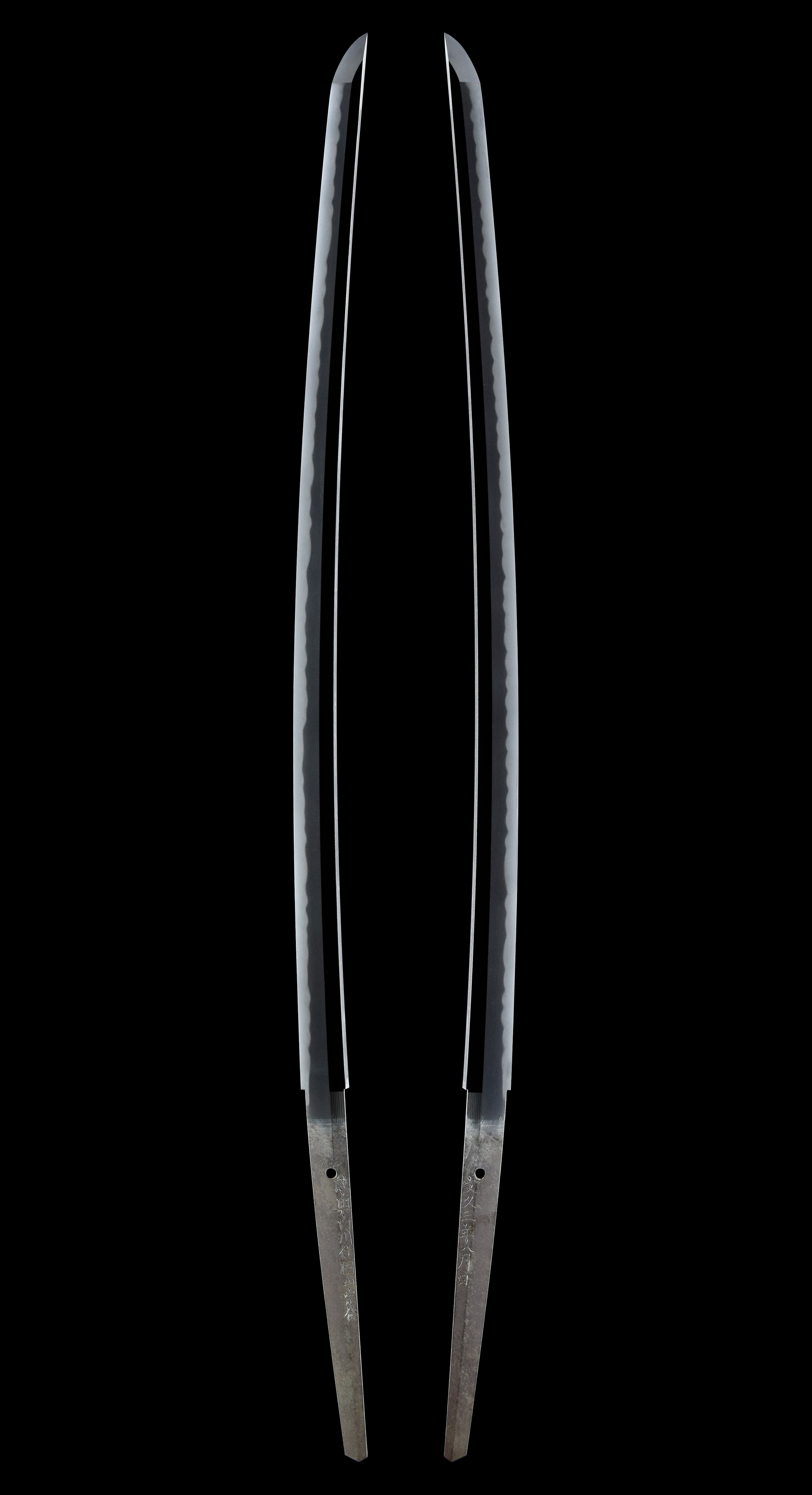
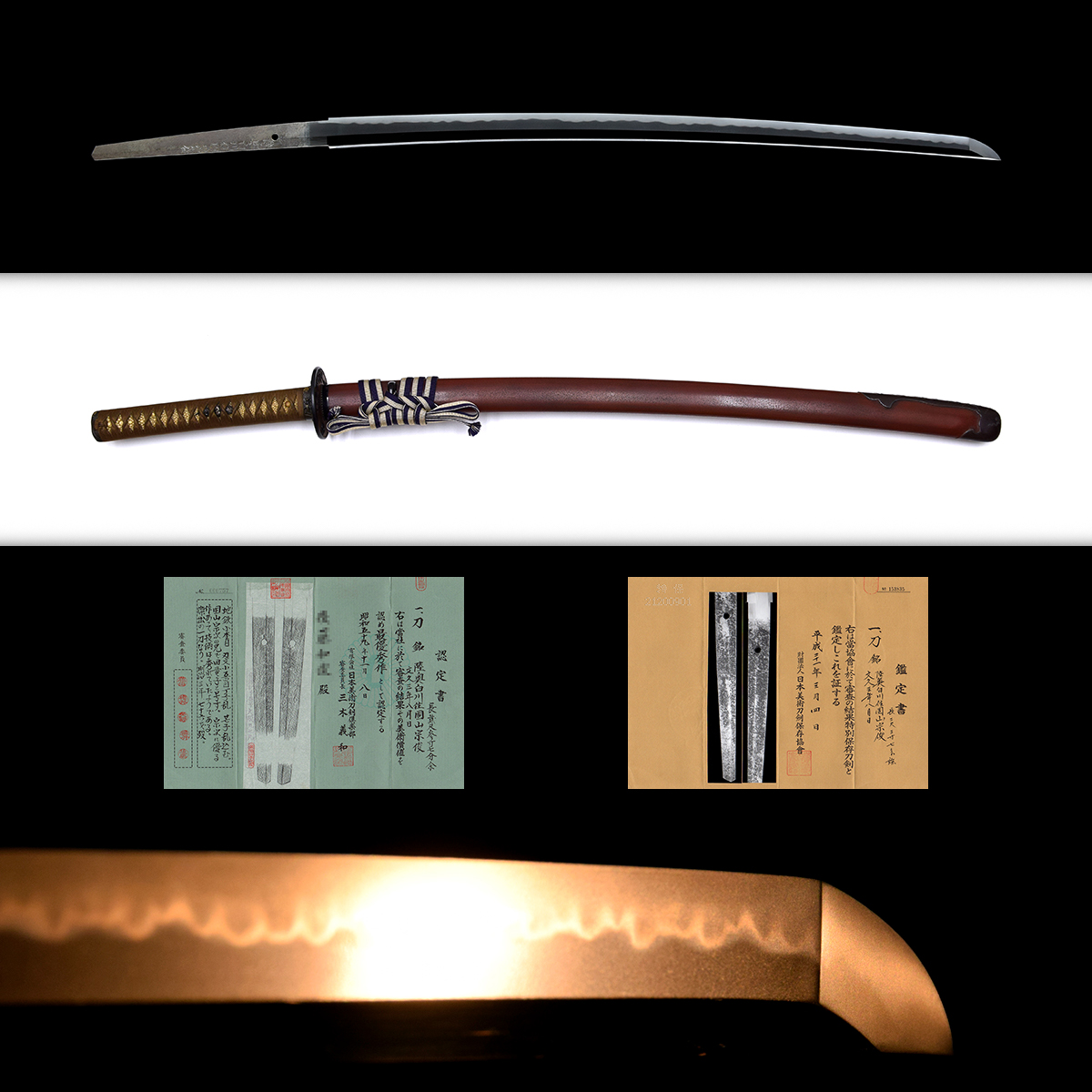
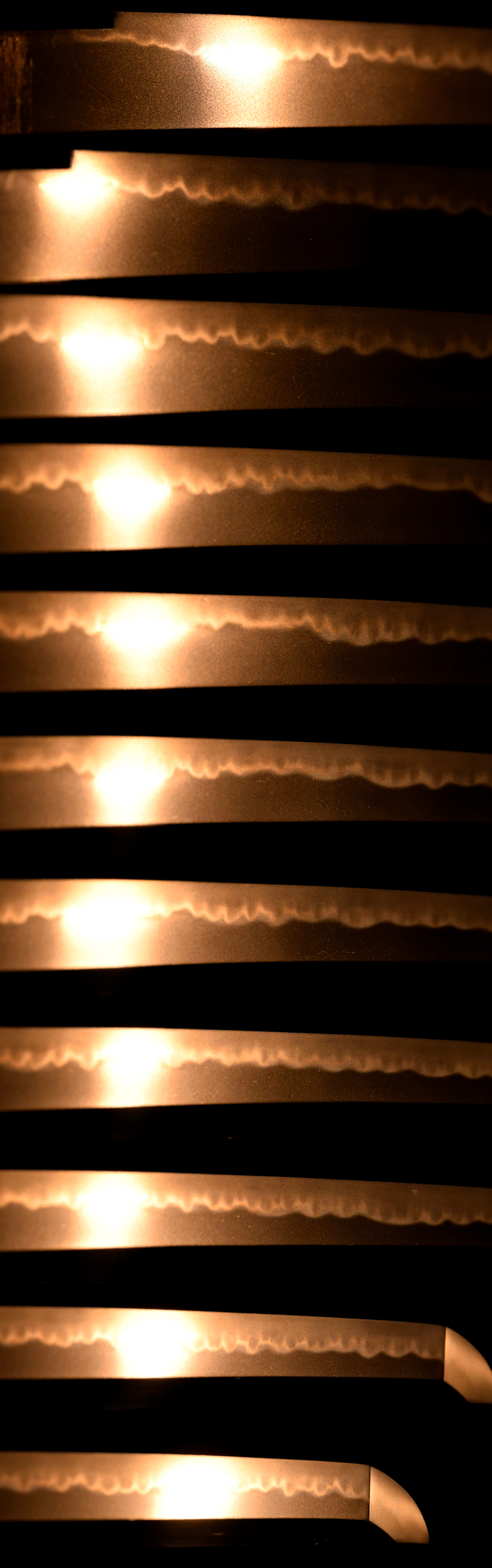
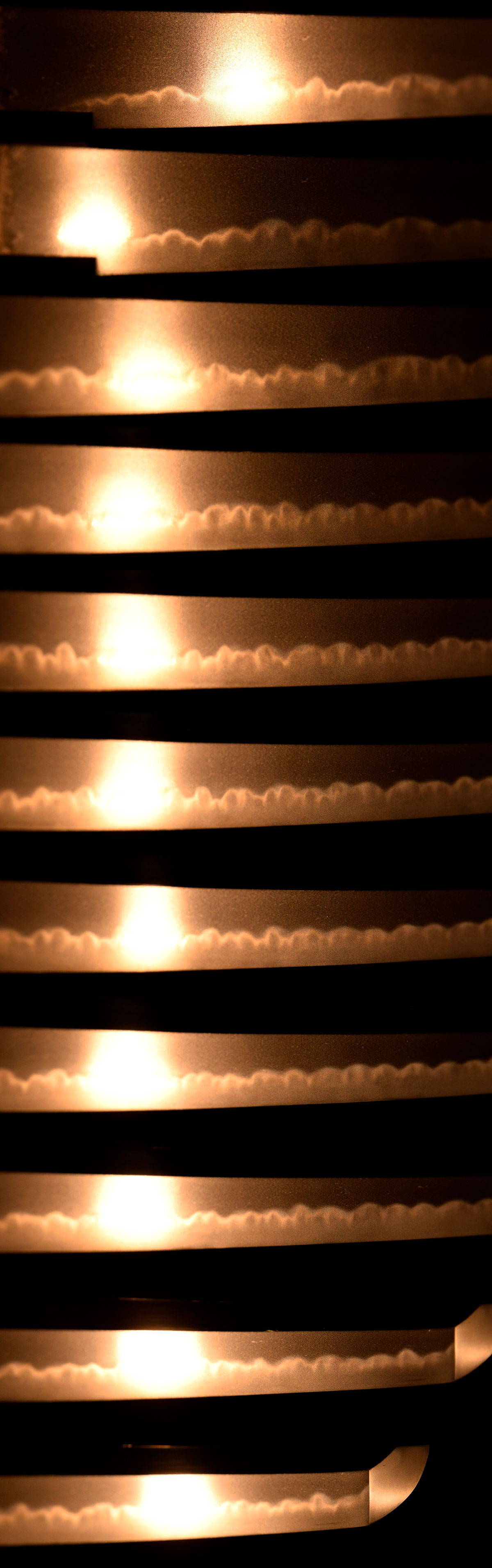
His style, including the tailoring of the nakago and the manner of the mei, all resemble the swords of Munetsugu; the characteristic features are a beautiful jigane with well-packed ko-itame, a hamon of gunome choji, and the presence of slight ko-nie. This sword has a pleasing difference between the moto-haba and saki-haba, with the kissaki slightly elongated. The sori is somewhat shallow, the nakago is long, and the kasane is thick, resulting in a sturdy tsukurikomi. The jigane closely resembles Koyama Munetsugu, with ko-itame hada well-kneaded and covered in ji-nie, with fine chikei entering, making it supremely exquisite. The hamon starts with gunome, is bright and clear, and while the nioiguchi is somewhat tight, it conveys a soft, airy feeling; inside the ha, ashi enter frequently, and the boshi fires gunome at the yokote with plenty of yaki, returning in sugu with a maru saki.
Despite being a magnificent gōtō, the overall balance is exceptionally excellent and beautiful, and the high level of skill shown in tempering both the ji and ha without a single flaw inspires awe, proving him a swordsman worthy of crowning the end of the master Munetsugu's lineage; despite being such a thick-kasane gōtō, one cannot help but feel its ease of handling due to the balance being towards the hand. It is truly a masterpiece among masterpieces that demonstrates Munetoshi's high technical ability to the fullest. The condition of the nakago is also maintained in outstanding condition, worthy of the phrase nakago senryo.
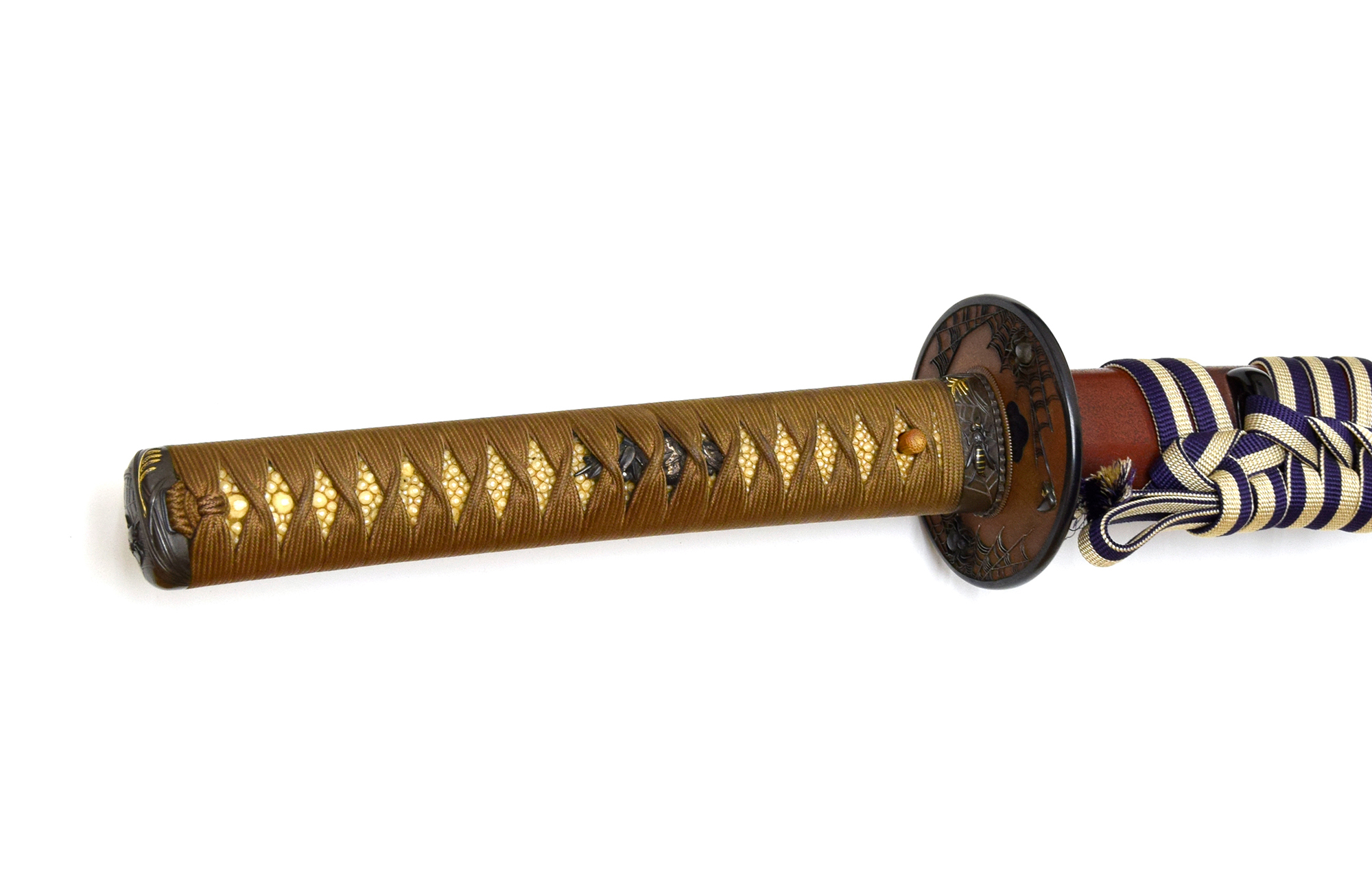
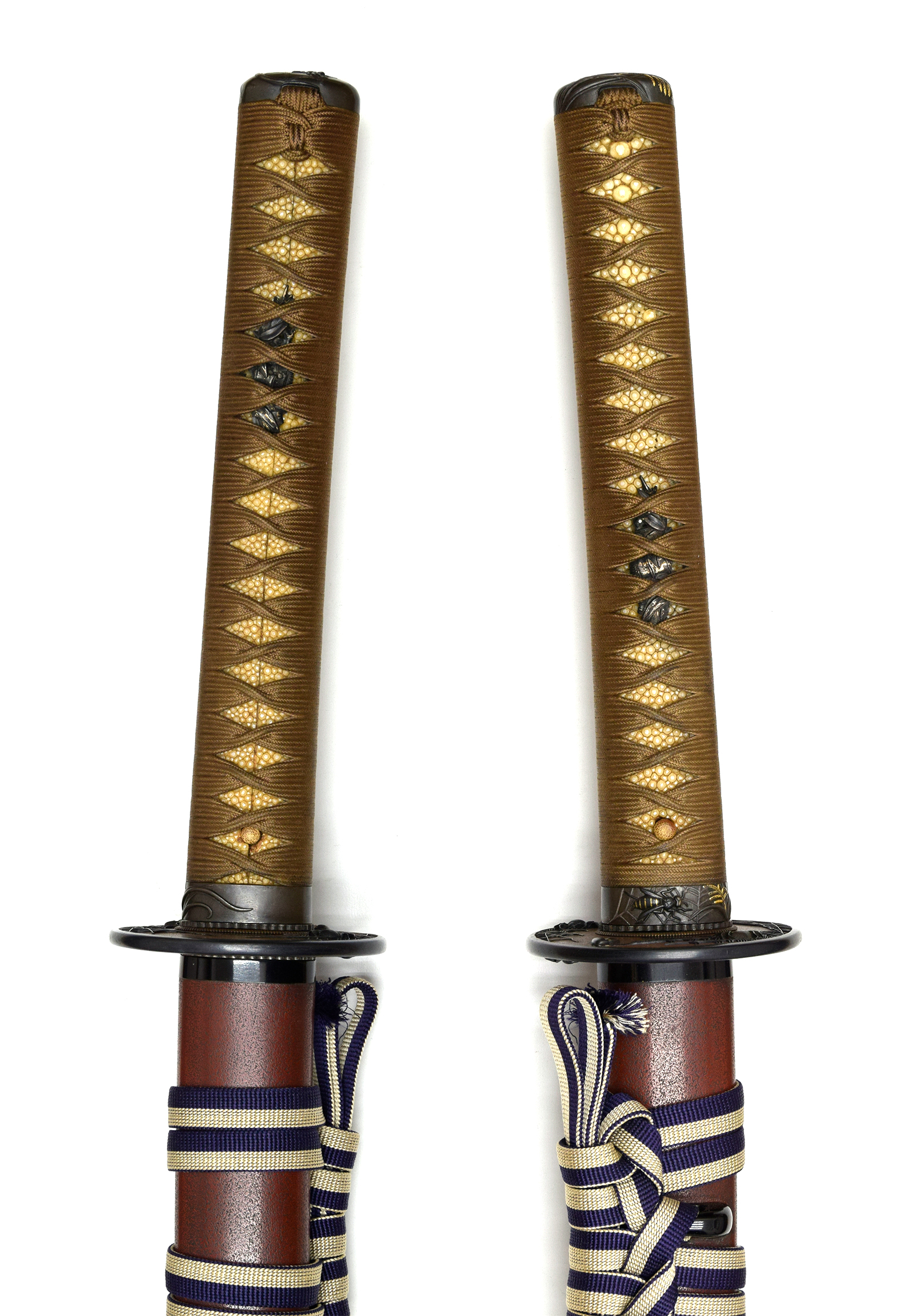
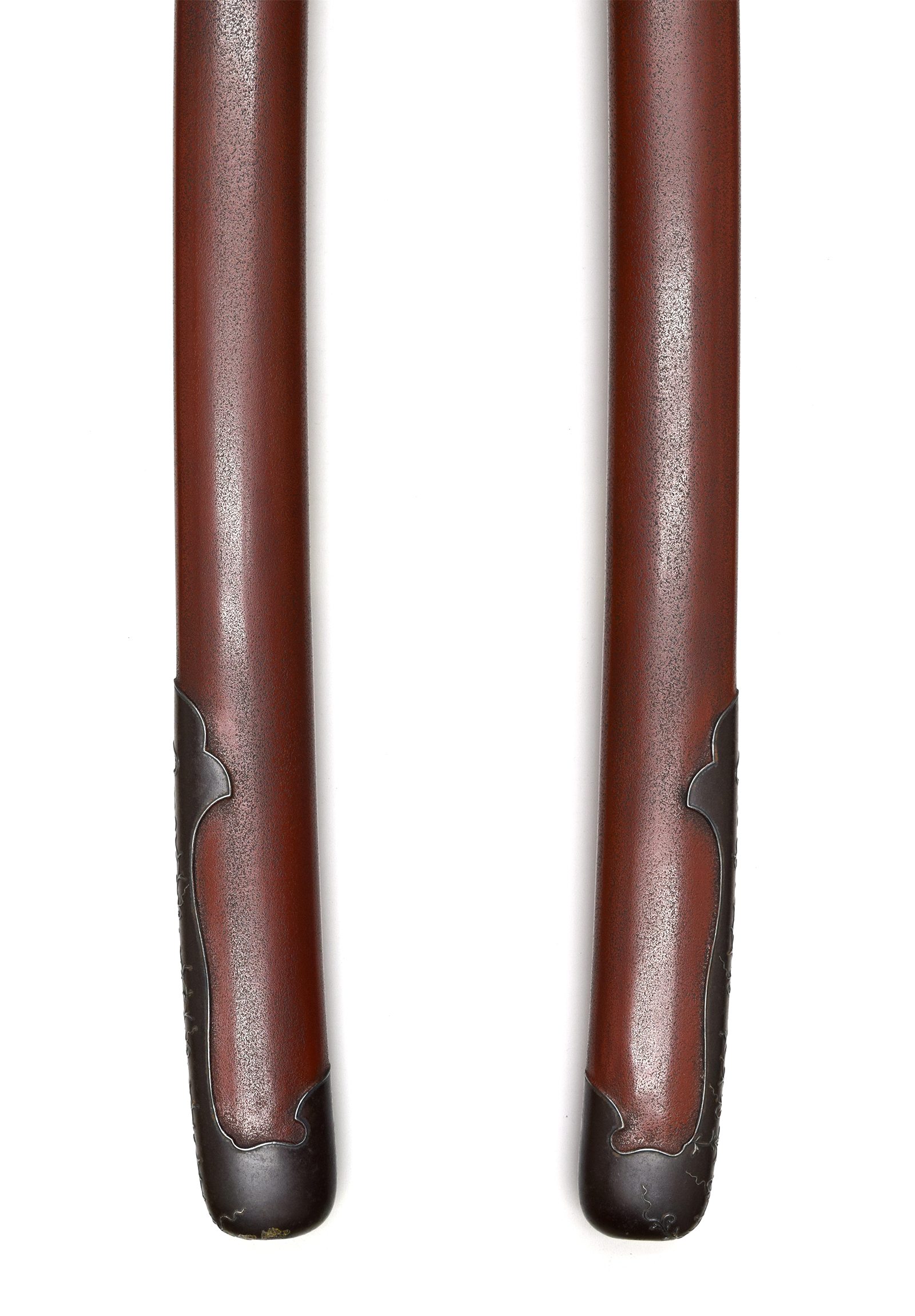
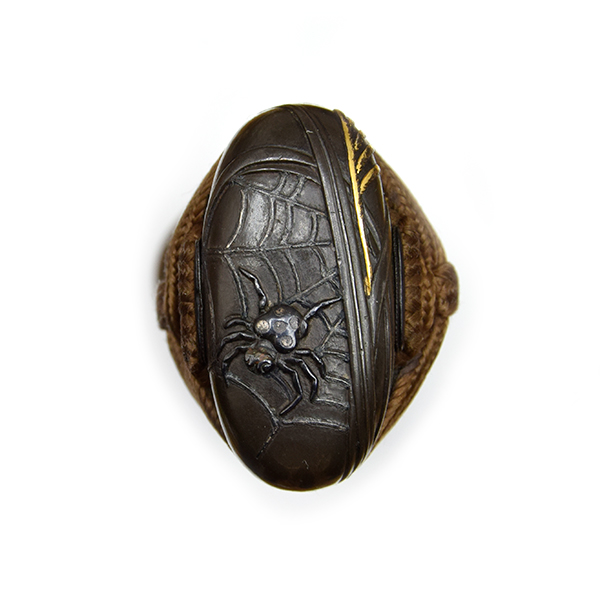
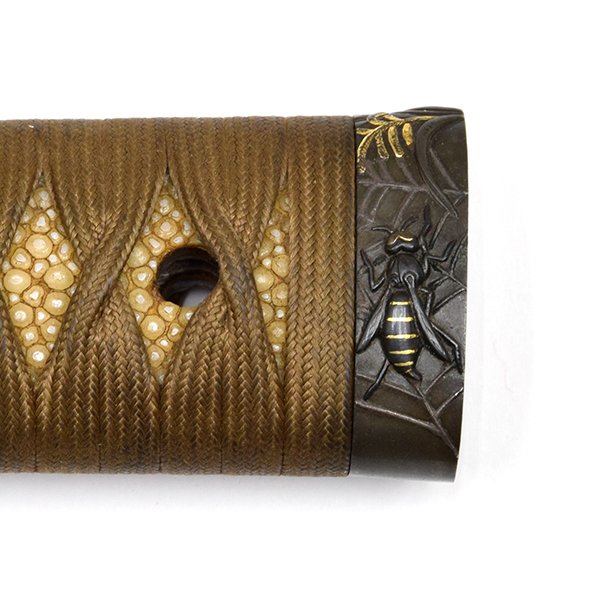
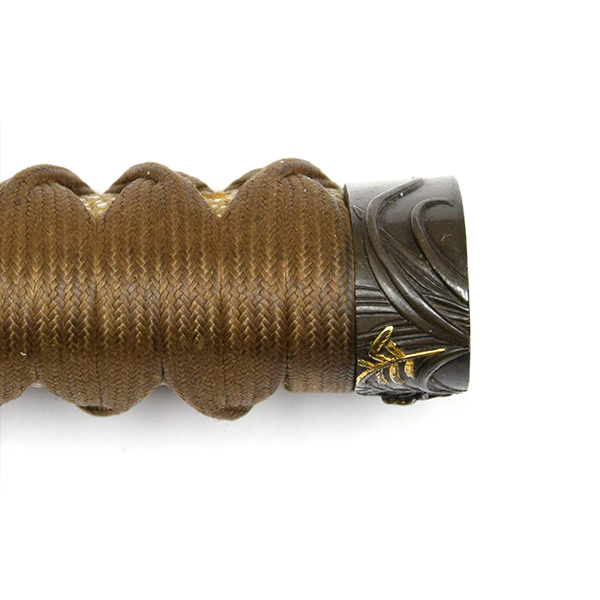
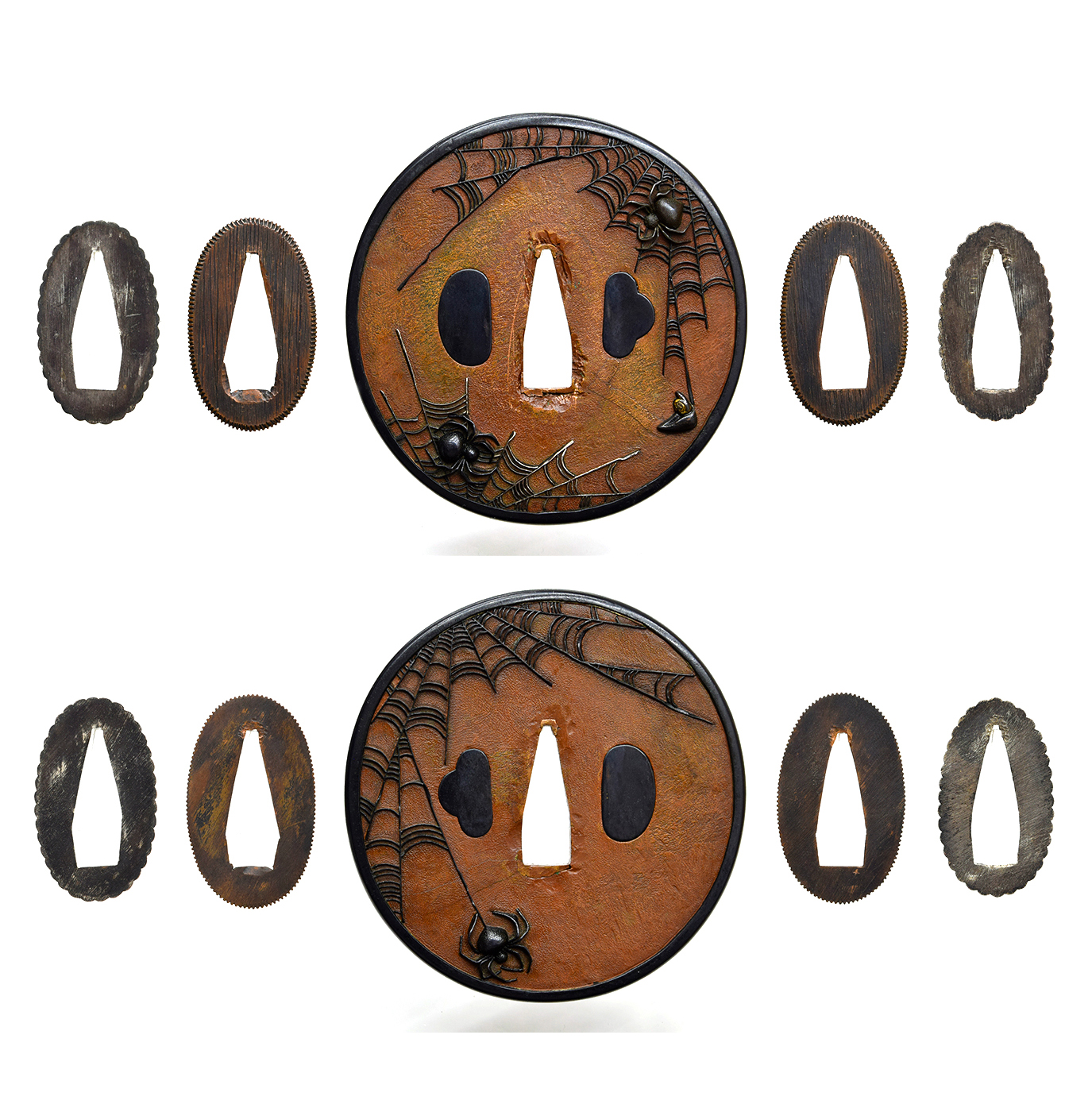
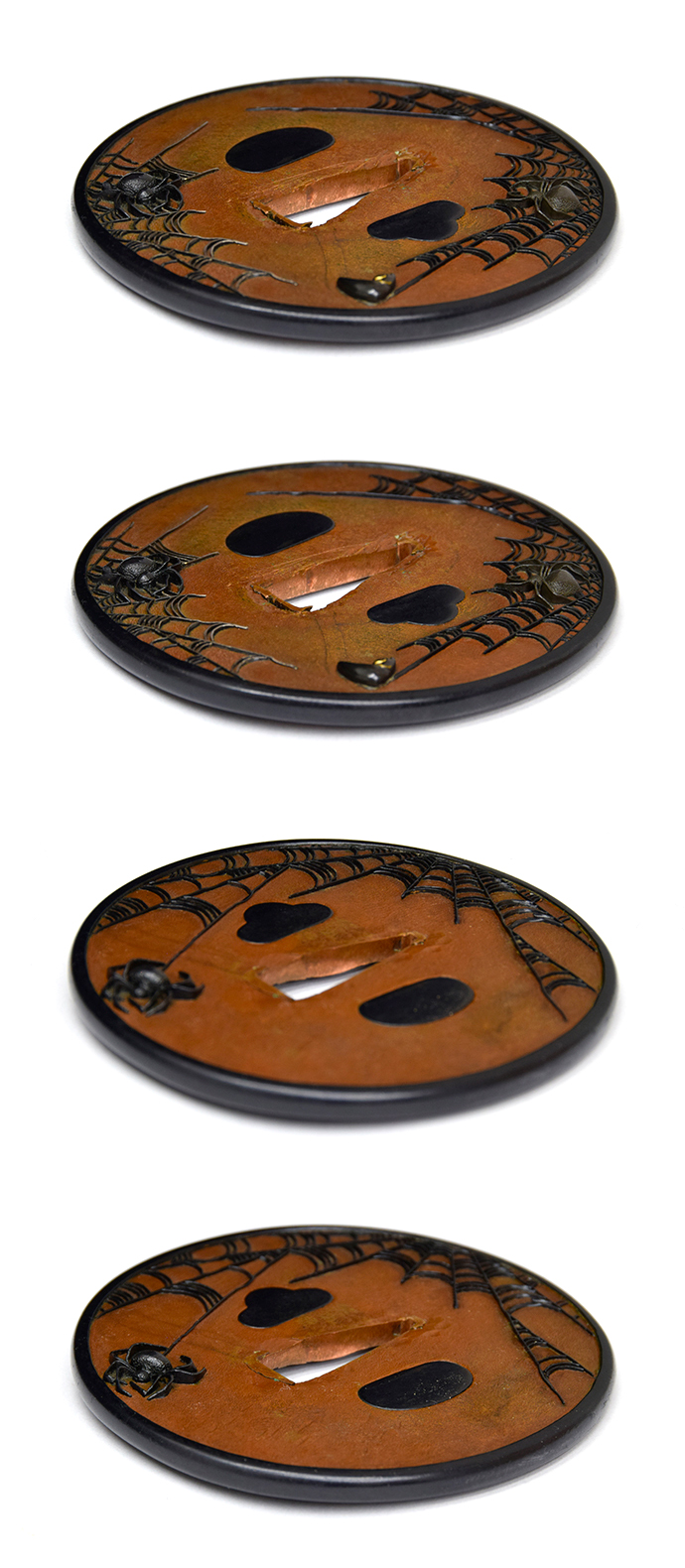
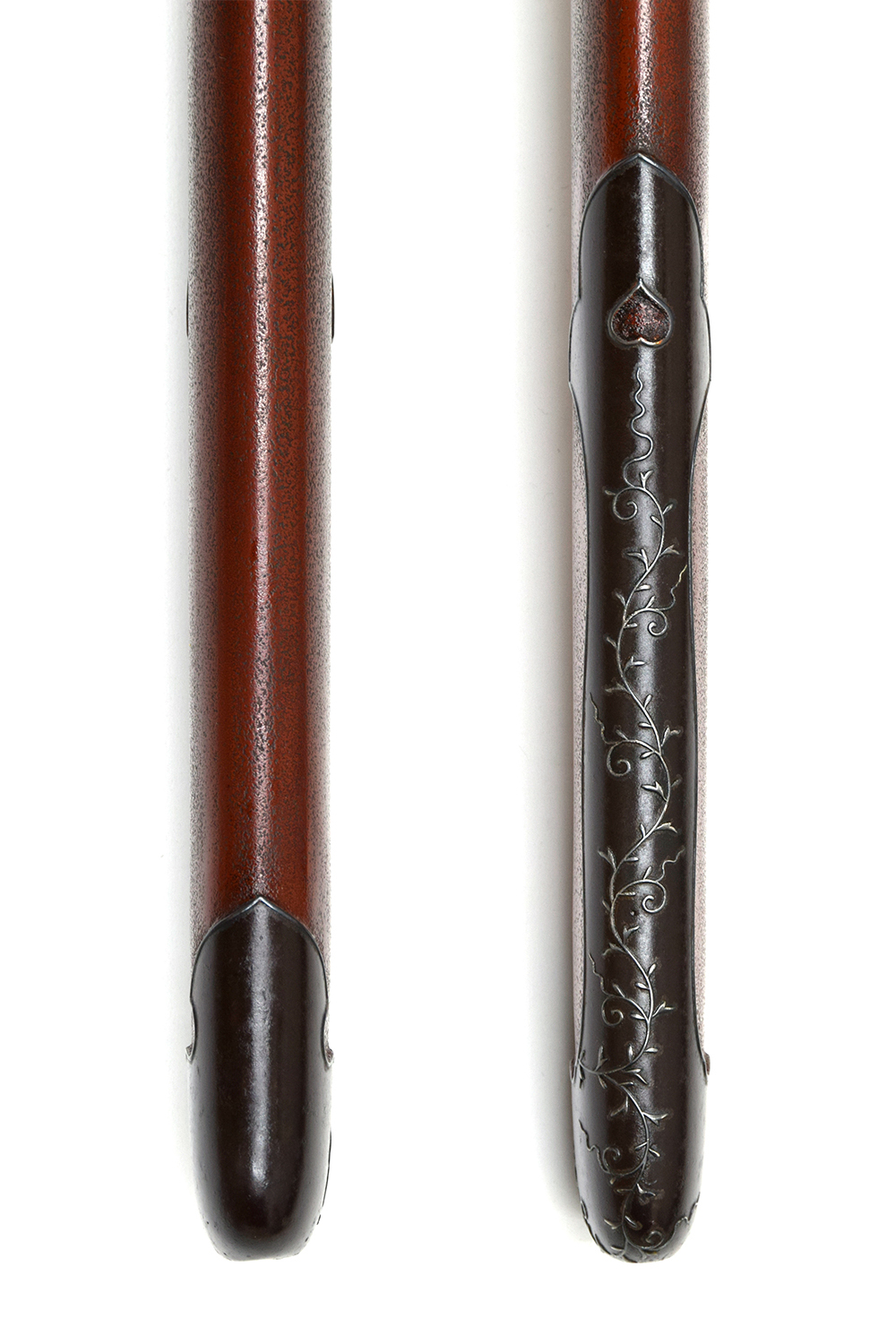
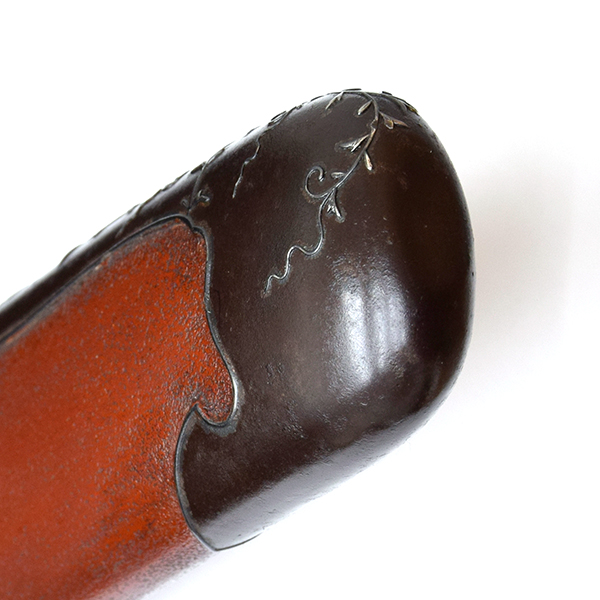
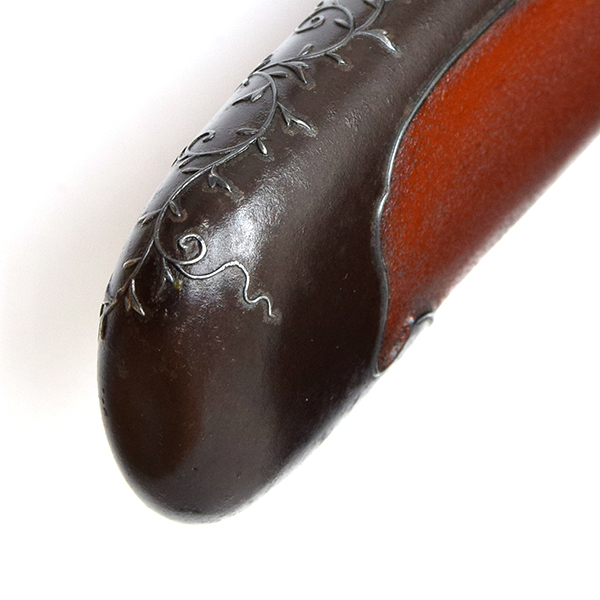
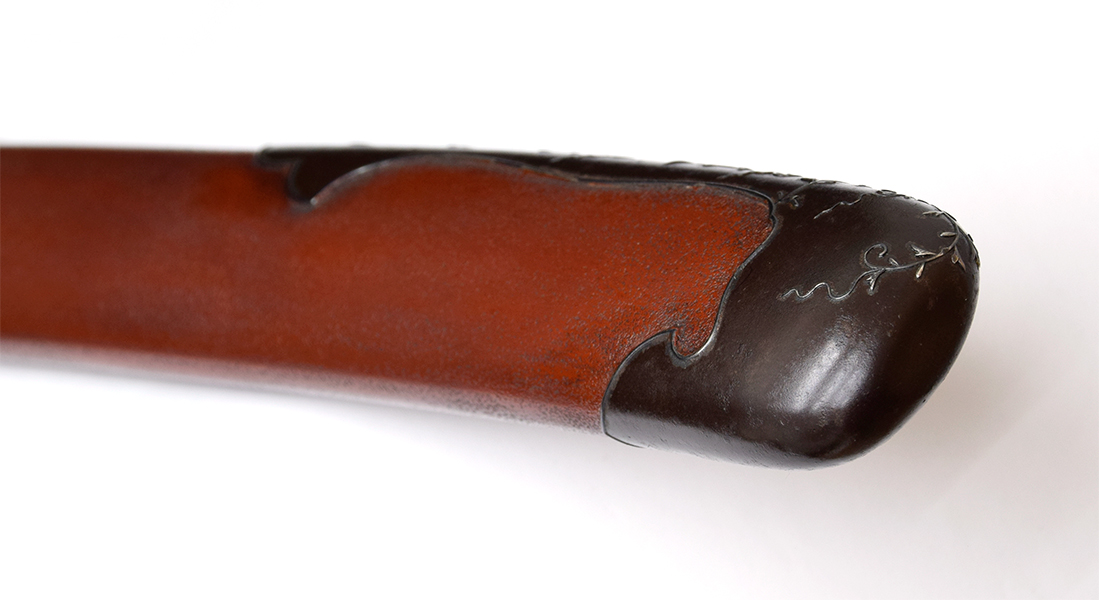
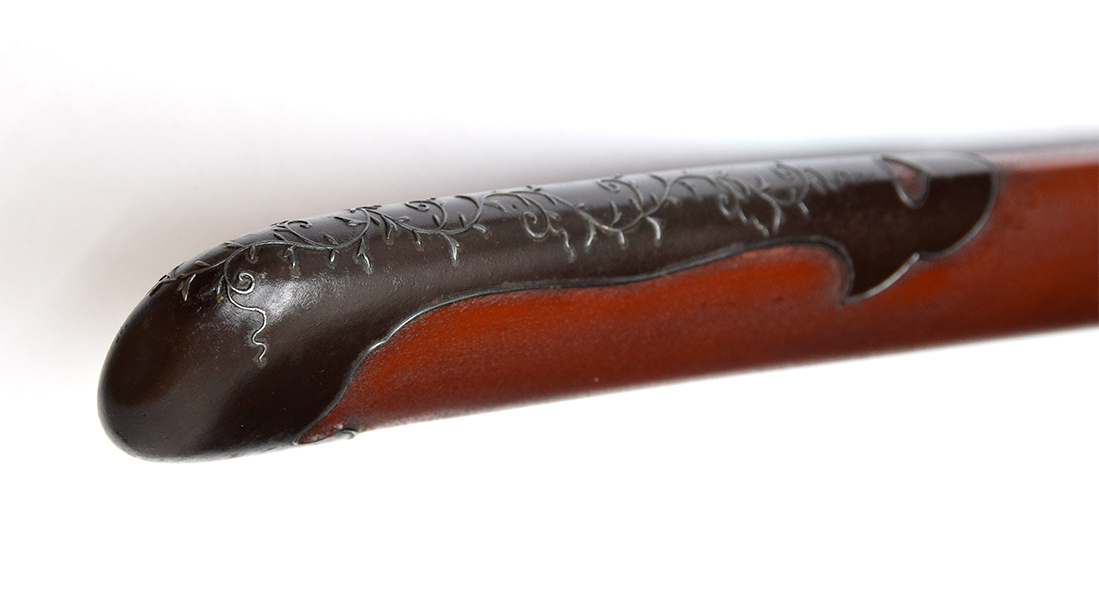
The accompanying koshirae is in extremely good preserved condition, such that one can tell at a glance it has been handled with great care for many years. In particular, the large, presence-filled kojiri and the fittings elaborately designed with a spider web motif strongly draw the viewer's gaze and leave a deep impression. Furthermore, no traces of later replacements or substitutions are seen even in a single seppa, telling the story of its correct transmission together with this sword; it is a truly high-rarity value gem.
Machine translation from the shop's Japanese · may contain errors ·
Accompanied by Tokubetsu Hozon Token Kanteisho, Nippon Bijutsu Token Kurabu Kanteisho, akacha ishime kawari-nuri saya uchigatana koshirae, suaka-ji kin-kise habaki, shirasaya, tsugiki.
This is a magnificent work by Munetoshi, a member of the family of the late Edo period Bakumatsu master smith Koyama Munetsugu. As his name suggests, Munetoshi was a relative of the Bakumatsu master Koyama Munetsugu and wielded his hammer while residing in Oshu Shirakawa.
According to the Meikan, there were two generations with the same name in Oshu Shirakawa, and based on the date, this work is appraised as the work of the second generation Munetoshi.
Munetoshi's common name was "Isaburo," and he used the go "Hakuryushi." It is believed that his period of sword making was from 1854 to 1868 (Kaei 7 to the Keio era). It is deeply regretted that he was forced to abandon sword forging due to the influence of the times, such as the Meiji Haitorei, and partly because he passed away at the age of 53 in Meiji 21, his extant works are few, and every piece can be called a precious surviving work.
His style, including the tailoring of the nakago and the manner of the mei, all resemble the swords of Munetsugu; the characteristic features are a beautiful jigane with well-packed ko-itame, a hamon of gunome choji, and the presence of slight ko-nie. This sword has a pleasing difference between the moto-haba and saki-haba, with the kissaki slightly elongated. The sori is somewhat shallow, the nakago is long, and the kasane is thick, resulting in a sturdy tsukurikomi. The jigane closely resembles Koyama Munetsugu, with ko-itame hada well-kneaded and covered in ji-nie, with fine chikei entering, making it supremely exquisite. The hamon starts with gunome, is bright and clear, and while the nioiguchi is somewhat tight, it conveys a soft, airy feeling; inside the ha, ashi enter frequently, and the boshi fires gunome at the yokote with plenty of yaki, returning in sugu with a maru saki.
Despite being a magnificent gōtō, the overall balance is exceptionally excellent and beautiful, and the high level of skill shown in tempering both the ji and ha without a single flaw inspires awe, proving him a swordsman worthy of crowning the end of the master Munetsugu's lineage; despite being such a thick-kasane gōtō, one cannot help but feel its ease of handling due to the balance being towards the hand. It is truly a masterpiece among masterpieces that demonstrates Munetoshi's high technical ability to the fullest. The condition of the nakago is also maintained in outstanding condition, worthy of the phrase nakago senryo.
The accompanying koshirae is in extremely good preserved condition, such that one can tell at a glance it has been handled with great care for many years. In particular, the large, presence-filled kojiri and the fittings elaborately designed with a spider web motif strongly draw the viewer's gaze and leave a deep impression. Furthermore, no traces of later replacements or substitutions are seen even in a single seppa, telling the story of its correct transmission together with this sword; it is a truly high-rarity value gem.
Under the Tokugawa peace the daishō became a regulated uniform, and demand gathered in the castle towns, above all Edo itself. The craft split two ways: brilliant display work for connoisseurs, and tested blades whose cutting results were sometimes inlaid in gold.
A Hozon-certified blade judged to show notably superior workmanship and a better state of preservation. The bar is higher: re-tempered blades and most unsigned Muromachi/Edo works are excluded.
About the NBTHK›
The NBTHK (Nihon Bijutsu Tōken Hozon Kyōkai, the Society for the Preservation of Japanese Art Swords) is a public-interest incorporated foundation founded in 1948 and supervised by Japan’s Agency for Cultural Affairs (Bunkachō); it is based at the Japanese Sword Museum in Tokyo. Its expert panels physically examine each submitted work (shinsa) and issue a certificate (kanteishō) ranking it by artistic and historical merit. NBTHK papers are the most widely recognized standard of authentication for Japanese swords and fittings.
As a rule we do not accept returns, except when we have sent a different item from the one ordered or when there is a significant discrepancy between the description and the item. If you wish to return an item, please contact us within 3 days of its arrival and then send it back.

 NihontoWatch